
The Urban Civility Crisis
You’re walking your dog through the lobby of your building.
The elevator doors open. A neighbor steps out with their young child.
Your dog—who is usually sweet and gentle—lunges forward, barking excitedly, jumping up with muddy paws. The child screams. The neighbor glares.
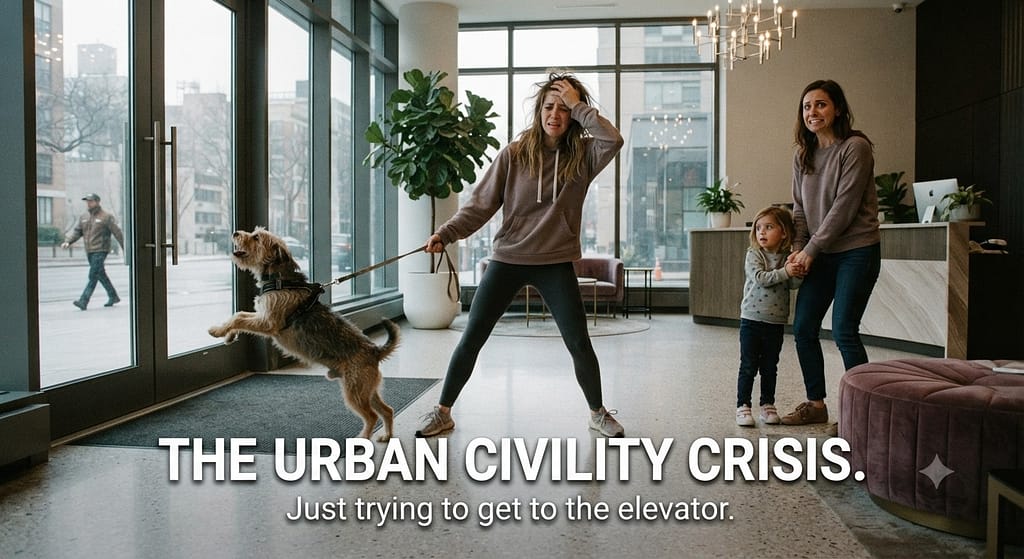
You apologize profusely, but the damage is done.
Another day: you’re trying to cook dinner. Your dog is weaving between your legs, whining, pawing at the counter, demanding attention.
You can’t take two steps without nearly tripping over them. The evening is chaos, not relaxation.
Then there’s the front door. Every time the delivery person rings the bell, your dog launches into a frenzy—barking, scratching, blocking the doorway.
You can’t receive packages, can’t have guests, can’t even open the door without a wrestling match.
This is the behavioral crisis of urban dog ownership. In a house, these behaviors are annoying.
In an apartment, they are relationship-ending. They annoy neighbors, strain relationships with landlords, and turn your home into a source of stress rather than comfort.
Welcome to the definitive guide on apartment dog behavioral training.
But here is the truth that changes everything:
Behavioral training isn’t about “obedience”—it’s about communication.
Your dog isn’t trying to be difficult. They are trying to communicate needs, desires, and fears in the only way they know how.
When you teach them a better way, you’re not “dominating” them—you’re giving them a language to express themselves.
The core of this journey is truly understanding dog communication and leveraging it to create harmony.
This guide covers the 5 Pillars of Urban Behavioral Training:
- Impulse Control (Wait, leave it, self-restraint).
- Leash Manners (Walking politely in tight spaces).
- Doorway Etiquette (Calm entries and exits).
- Polite Greetings (Meeting people and dogs without chaos).
- Stay & Settle (The art of doing nothing).
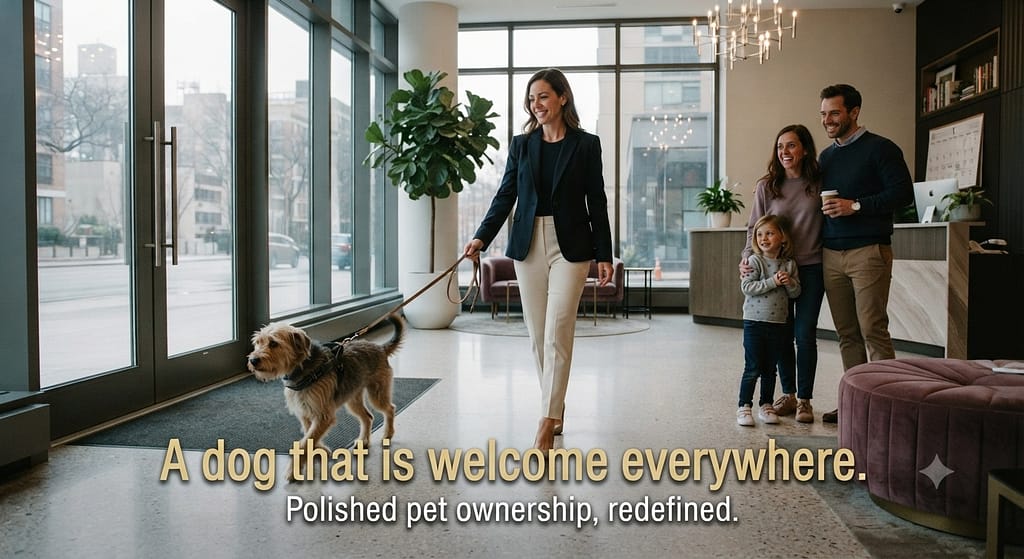
By the end, you will have a dog that is welcome everywhere—elevators, lobbies, sidewalks, and apartments.
This is the blueprint for urban dog etiquette at its finest.
Section 1: The 5 Pillars of Urban Behavioral Training (The Framework)

Before we dive into specific commands, understand the foundation. These urban behavioral training pillars operate on five core principles.
We aren’t just teaching tricks; we are improving dog manners from the ground up.
1. Impulse Control (The “Pause” Muscle)
Can your dog wait?
Can they resist the temptation of food, attention, or a squirrel?
Impulse control in dogs is the foundation of all good manners.
A dog that can wait is a dog that can be calm.
2. Leash Manners (The “Walk” Protocol)
In a house, you have a yard. In an apartment, every walk is a journey through tight hallways, crowded elevators, and busy sidewalks. Leash manners for dogs aren’t optional—they’re survival.
3. Doorway Etiquette (The “Gateway” Protocol)
The front door is the most triggering spot in any apartment. It’s where strangers appear, where walks begin, and where boundaries are tested.
We focus heavily on doorway etiquette for dogs here.
4. Polite Greetings (The “Meeting” Protocol)
Your dog will meet people in the elevator, in the lobby, and on the street. A dog that jumps, barks, or lunges makes enemies. A dog that sits and waits makes friends.
Mastering polite greetings with dogs is non-negotiable.
5. Stay & Settle (The “Off-Switch”)
Your dog needs to know how to do nothing. The stay and settle commands are the keys to a peaceful apartment.
Section 2: Pillar 1 – Impulse Control (The “Pause” Muscle)
Impulse control for dogs is the most important skill an apartment dog can learn. It translates to everything—waiting at doors, not barking at triggers, not begging at the table.
We teach this through specific dog training games that make patience fun.
Game 1: “It’s Yer Choice” (Frustration Tolerance)
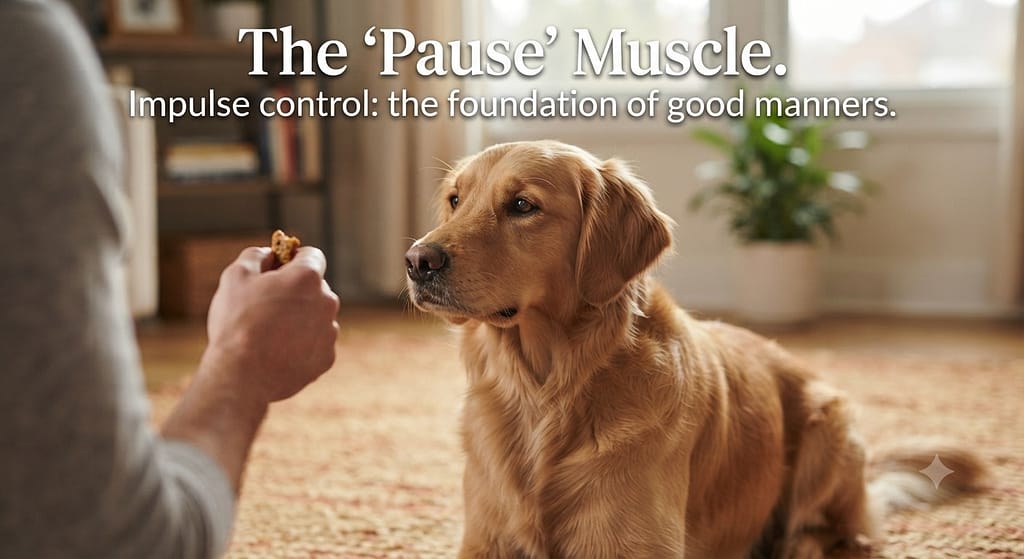
Why It Matters:
Your dog learns that patience pays off. Fixation on a treat doesn’t work; looking at you works. This builds foundational self-control training for reactive dogs.
Step-by-Step:
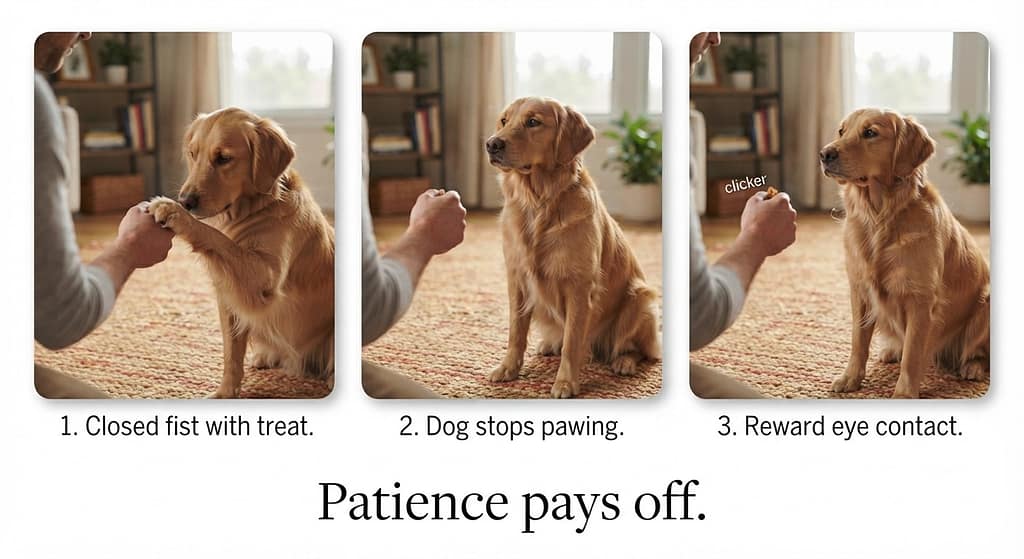
- Hold a treat in your closed fist.
- Your dog will paw, lick, and nibble. Wait.
- The moment they stop (even for a microsecond), open your fist and give the treat.
- Advanced: Wait for eye contact. Your dog learns that looking at you unlocks the reward.
Progression:
- Week 1: Treat in fist. Reward the pause.
- Week 2: Treat on the floor. Cover it with your hand. Reward when they stop trying to get it.
- Week 3: Treat on the floor. Say “Leave It!” and reward when they back away.
Game 2: The “Doorway Wait” (Generalized Patience)
Why It Matters:
Your dog learns that doors don’t mean chaos. They mean teaching dogs to wait until released.
Step-by-Step:
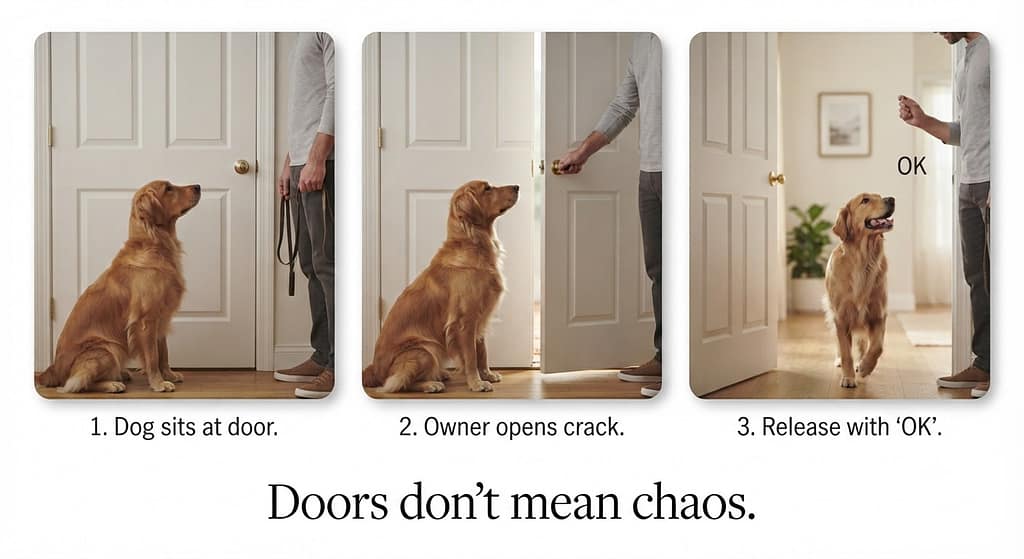
- Approach any door (bedroom, bathroom, front door) with your dog on leash.
- Say “Wait.” Place your hand on the handle.
- If they move, remove your hand and reset.
- Only open the door when they are still.
- Release with “OK” and step through together.
Progression:
- Week 1: Inside doors only (bedroom to living room).
- Week 2: Front door—open it just a crack. Reward stillness.
- Week 3: Front door—open fully. Wait for release.
Game 3: “Leave It” (The Ultimate Redirection)
Why It Matters:
City sidewalks are littered with hazards—dropped food, broken glass, toxic substances. “Leave it” is a life-saving command.
Step-by-Step:
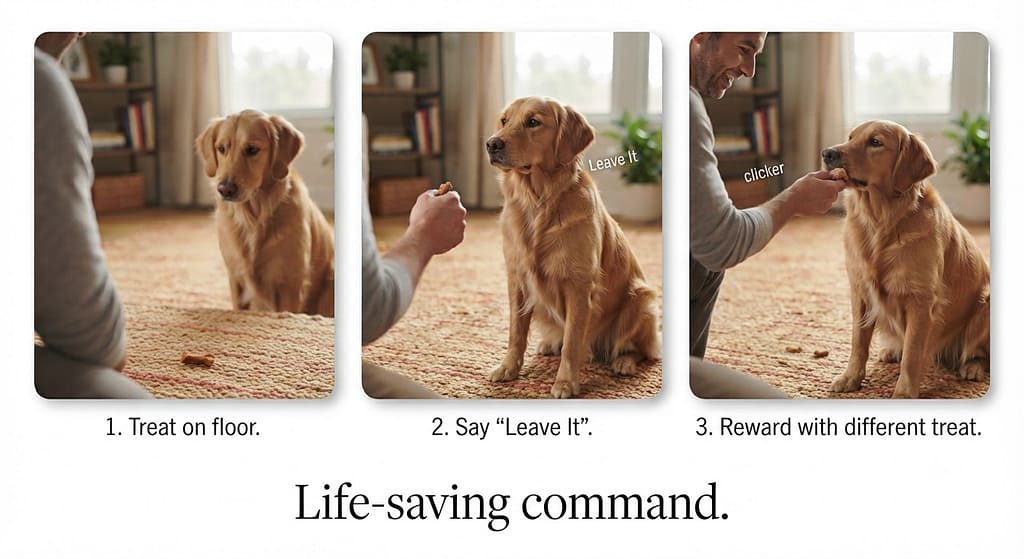
- Hold a treat in your closed fist.
- Say “Leave It” in a calm tone.
- Wait. The moment they stop trying to get the treat, say “Yes!” and give them a different treat from your other hand.
- Progression: Place the treat on the floor. Say “Leave It.” Cover with your foot if needed. Reward when they back away.
The Golden Rule: Never reward with the treat you asked them to leave. Use a separate, higher-value treat.
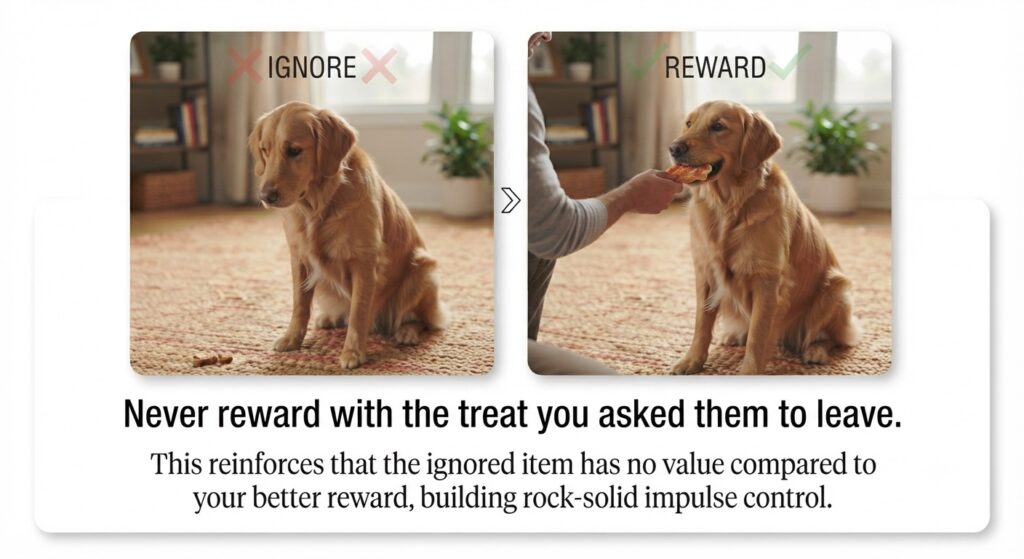
This teaches them that leaving something is more rewarding than having it.
Section 3: Pillar 2 – Leash Manners (The “Walk” Protocol)
In an apartment, every walk is a high-stakes journey. Tight hallways, crowded elevators, and busy sidewalks require precise leash manners in apartments.
This section covers the essentials of dog training for city living when you are out and about, including safely managing dog behavior in elevators.
The “Loose Leash” Foundation
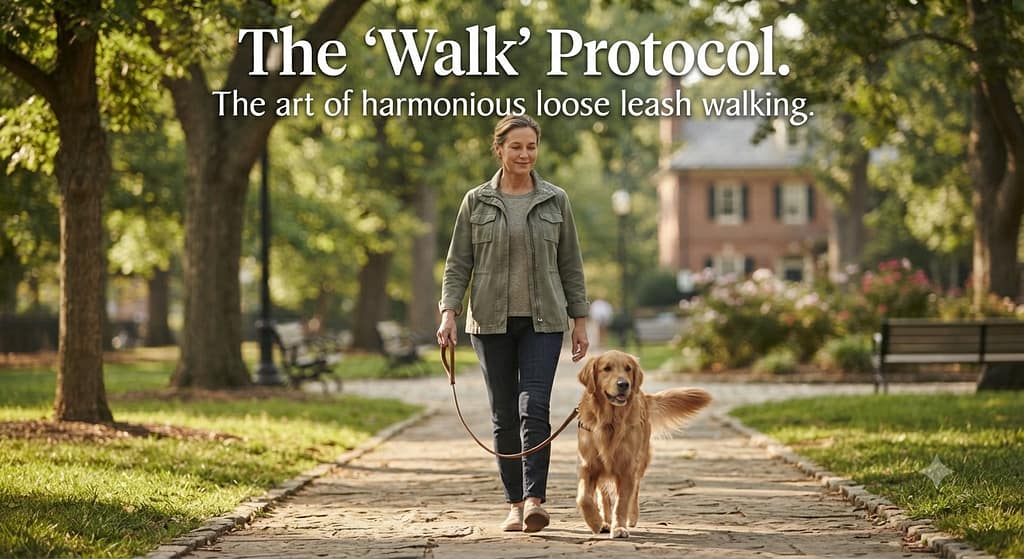
Why It Matters:
A tight leash signals stress. A loose leash signals safety. Your dog walks best when the leash is slack.
Step-by-Step:
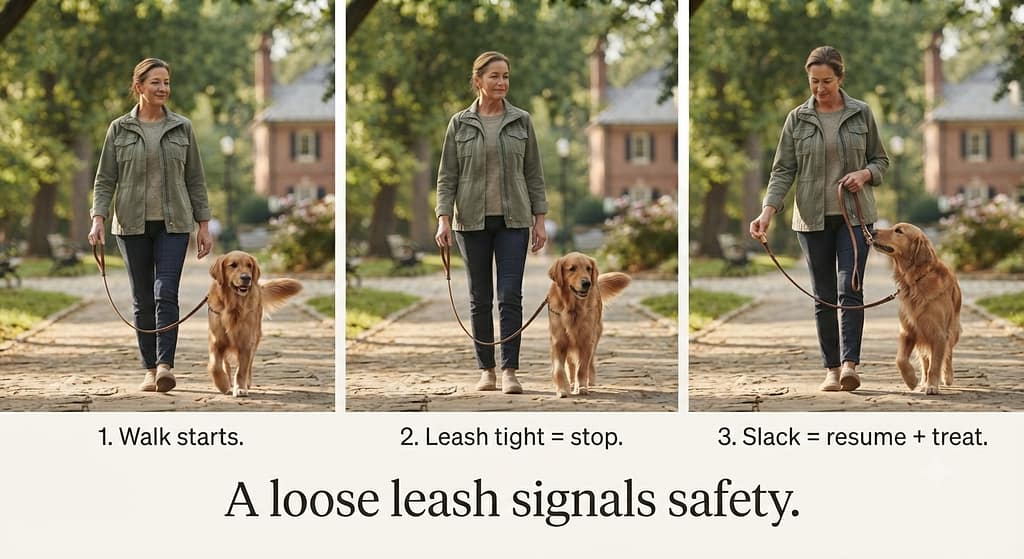
- Hold the leash in your right hand. The dog is on your left side.
- Start walking. The moment the leash goes tight, stop. Stand still.
- Wait. The moment your dog takes a step back or looks at you, resume walking.
- The Reward: Every time your dog walks with a loose leash, praise and treat.
Pro-Tip: Use a front-clip harness or a head halter if your dog is a strong puller. These tools give you control without causing harm.
The “Sidewalk” Protocol
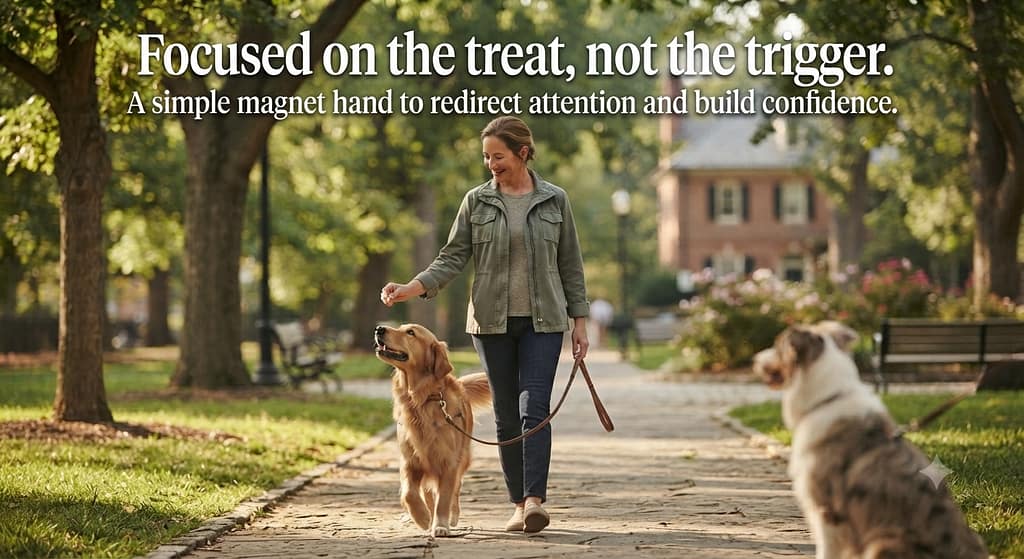
Why It Matters:
Sidewalks are crowded with strollers, bikes, and other dogs. Your dog must learn to navigate without reacting.
Step-by-Step:
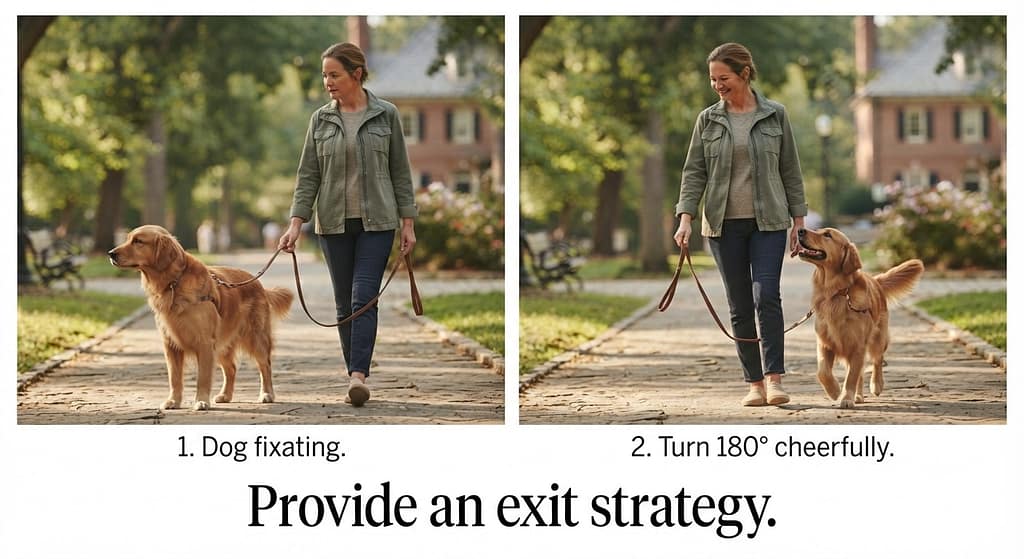
- The “Magnet Hand”: Keep a treat in your closed fist at your dog’s nose level. Walk past triggers. Your dog is focused on the treat, not the trigger.
- The “U-Turn”: If your dog is fixating, calmly turn 180 degrees and walk the other way. Say “Let’s Go!” in a cheerful tone.
- The “Sit at Intersections”: At every corner, have your dog sit. Wait for traffic. Reward. This builds impulse control and safety.
The “Elevator” Protocol (Managing Dog Behavior in Elevators)

Why It Matters:
The elevator is the most stressful part of the walk. Tight quarters + strangers = recipe for disaster.
Properly managing dog behavior in elevators is a hallmark of a well-trained city dog.
Step-by-Step:
- Approach the elevator. Have your dog sit in the corner of the hallway, facing you, not the doors.
- When the doors open, do not go in first. Wait. Ask others to go first.
- You enter last, backing into the corner.
- Have your dog sit in the corner, facing the wall. You are blocking their visual field.
- The Reward: Treats for calmness. Your dog learns that the elevator = treats, not fear.
Section 4: Pillar 3 – Doorway Etiquette (The “Gateway” Protocol)
The front door is the most triggering spot in any apartment. It’s where strangers appear, where walks begin, and where boundaries are tested.
The “Front Door” Protocol
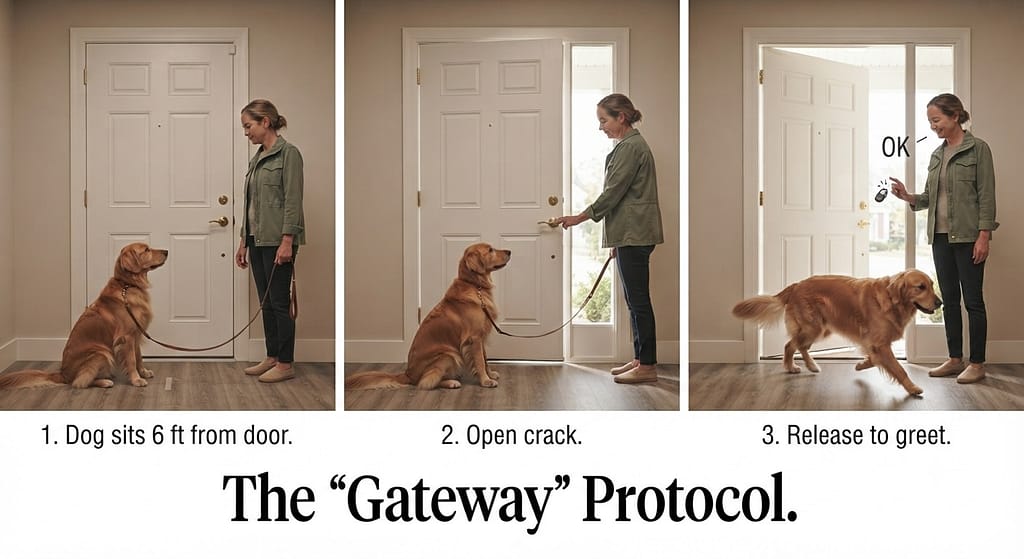
Why It Matters:
A dog that charges the door is a dog that can escape, knock over guests, or injure the delivery person.
Step-by-Step:
- Before Opening: Ask your dog to “Sit” and “Stay” at least 6 feet from the door.
- Open the Door: Open it just a crack. If your dog gets up, close the door. Reset.
- The “Release”: Once your dog is calm, say “OK” and allow them to greet the person at the door.
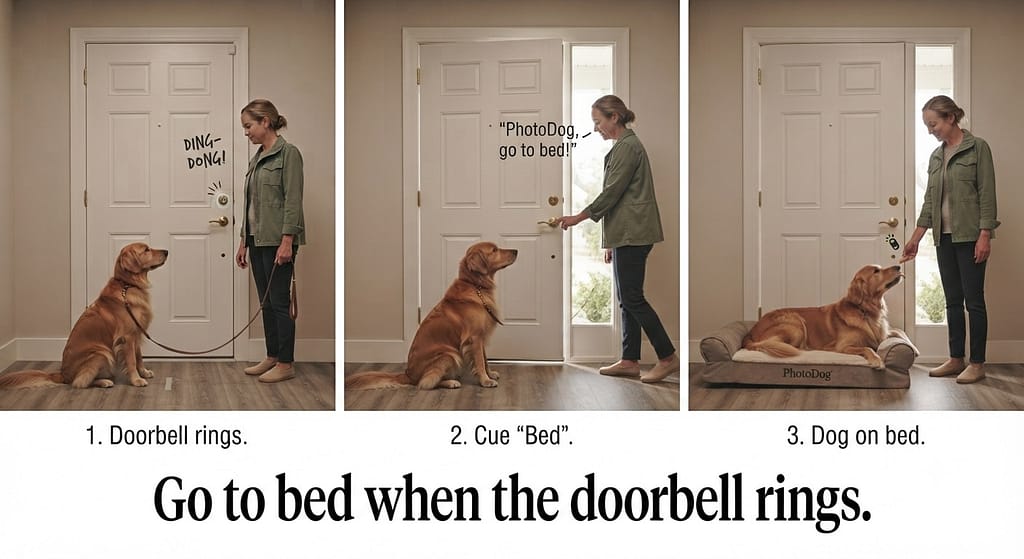
- The “Place” Alternative: Teach your dog to go to their bed when the doorbell rings. They stay until released.
The “Delivery Person” Desensitization
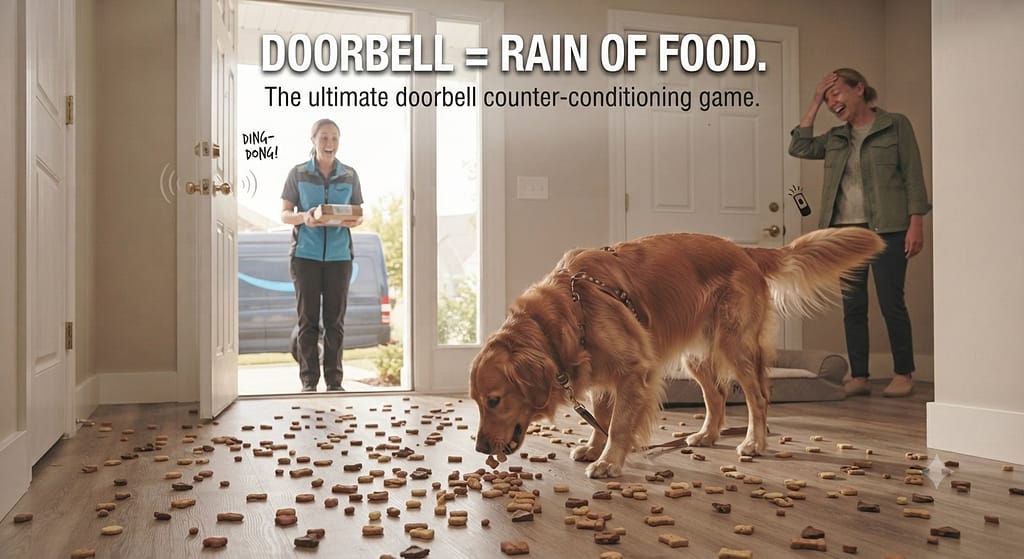
Why It Matters:
Delivery people are a constant source of stress. Effectively managing deliveries with dogs turns a frantic event into a non-event.
Step-by-Step:
- Have a friend ring the doorbell. Your dog barks. You do nothing.
- The moment they stop (even for a second), say “Quiet” and reward.
- Repeat. Extend the duration of silence before rewarding.
- The “Treat Party”: When the delivery person actually arrives, scatter treats on the floor while they open the door. Your dog associates the doorbell with a rain of food. This is a prime example of controlling dog barking through positive association.
Section 5: Pillar 4 – Polite Greetings With Dogs & Socializing Apartment Dog (The “Meeting” Protocol)
Your dog will meet people in the elevator, in the lobby, and on the street.
A dog that jumps, barks, or lunges makes enemies. A dog that sits and waits makes friends.
This pillar is dedicated to polite greetings with dogs, safe dog greetings, and effectively socializing apartment dogs.
The “Sit for Greetings” Protocol
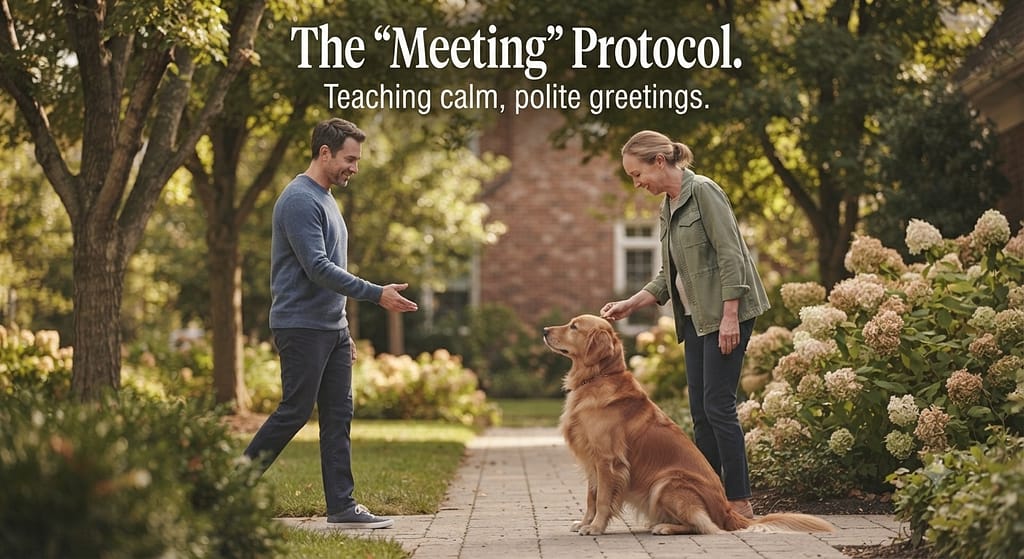
Why It Matters:
Jumping is the most common complaint from visitors. A dog that sits for greetings is welcome everywhere.
This is the essence of safe dog greetings.
Step-by-Step:
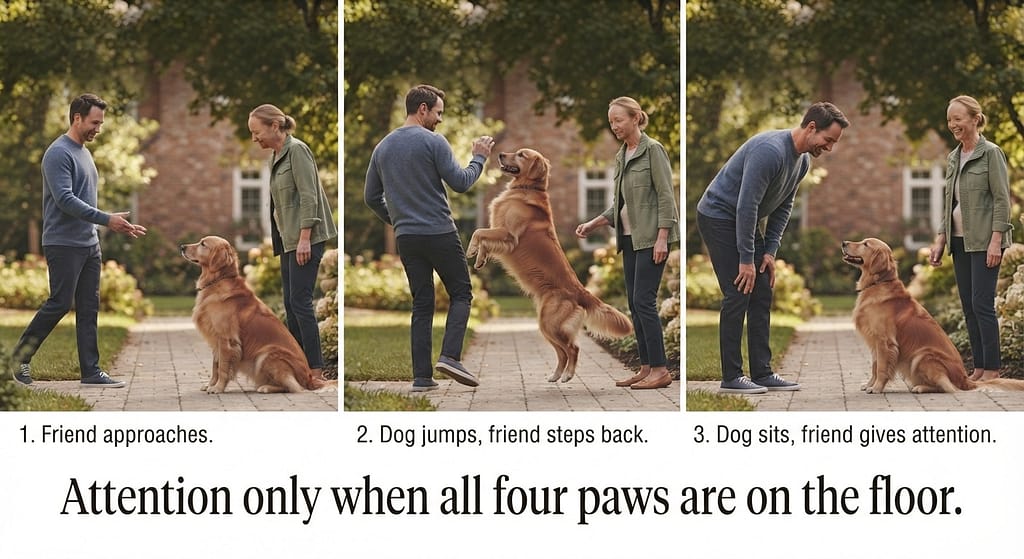
- Have a friend approach your dog.
- The moment your dog starts to jump, the friend steps back.
- The moment your dog sits (even briefly), the friend steps forward and gives attention.
- The Golden Rule: Attention only happens when all four paws are on the floor.
The “Neutral” Greeting (Coping With Reactive Dogs)
Why It Matters:
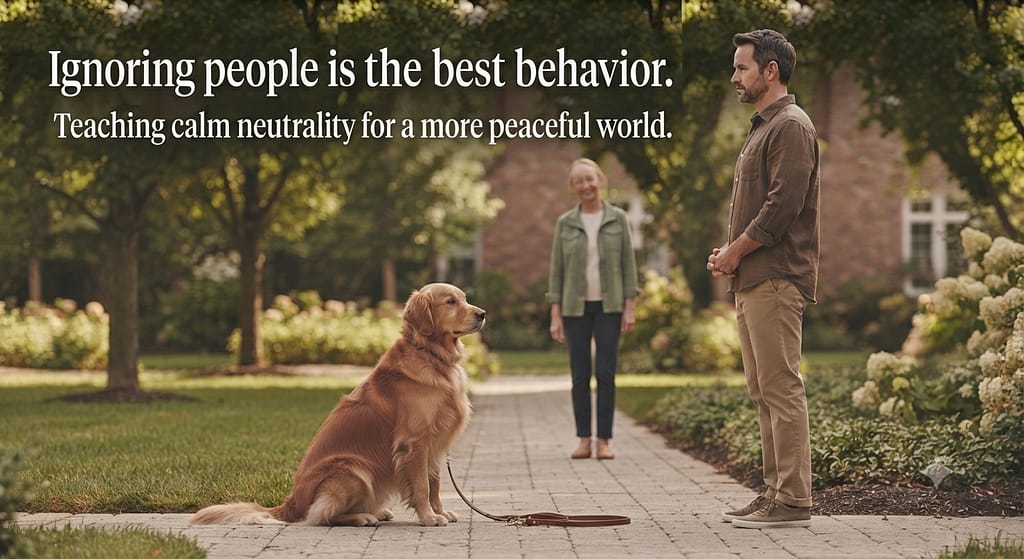
Some dogs get overexcited by greetings. They need to learn that ignoring people is the best behavior, which is key to coping with reactive dogs.
Step-by-Step:
- Have a friend ignore your dog completely—no eye contact, no talking, no petting.
- Reward your dog for being neutral (sitting or lying down).
- The friend can then offer a treat without making eye contact.
- Progression: The friend slowly offers attention, but only when your dog is calm.
Handling Dog Excitement & “Dog-to-Dog” Greeting
Why It Matters:
City sidewalks are full of other dogs. Handling dog excitement around other canines is critical for a peaceful walk.
Step-by-Step:
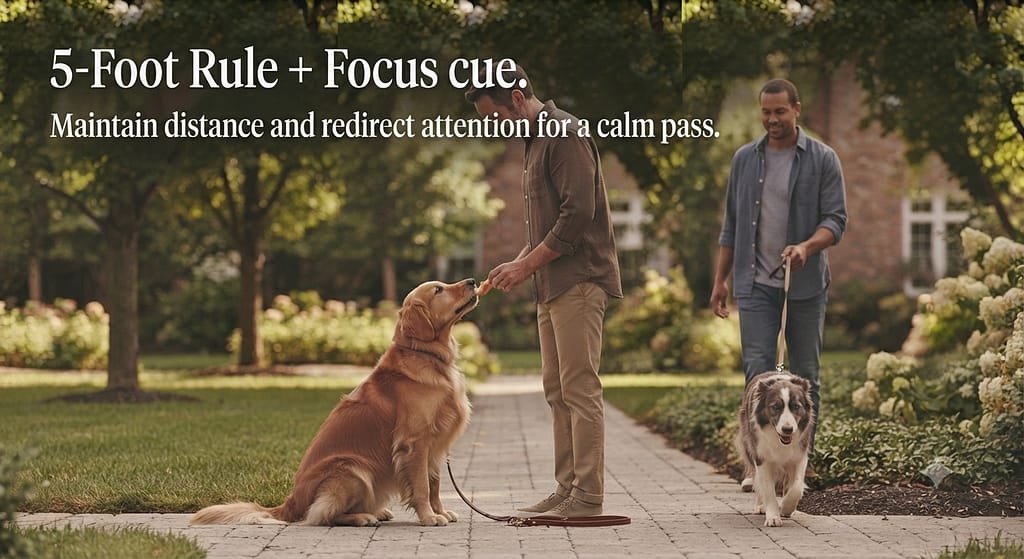
- The 5-Foot Rule: When you see another dog approaching, cross the street or create distance.
- The “Focus” Cue: Ask your dog to look at you. Reward.
- The “Pass” Protocol: Walk in a wide arc around the other dog. No greetings. Just passing.
- The “Sniff” Protocol: If you choose to allow a greeting, keep it brief (3 seconds). If either dog stiffens, move on.
Section 6: Pillar 5 – The Stay & Settle (The “Off-Switch”)
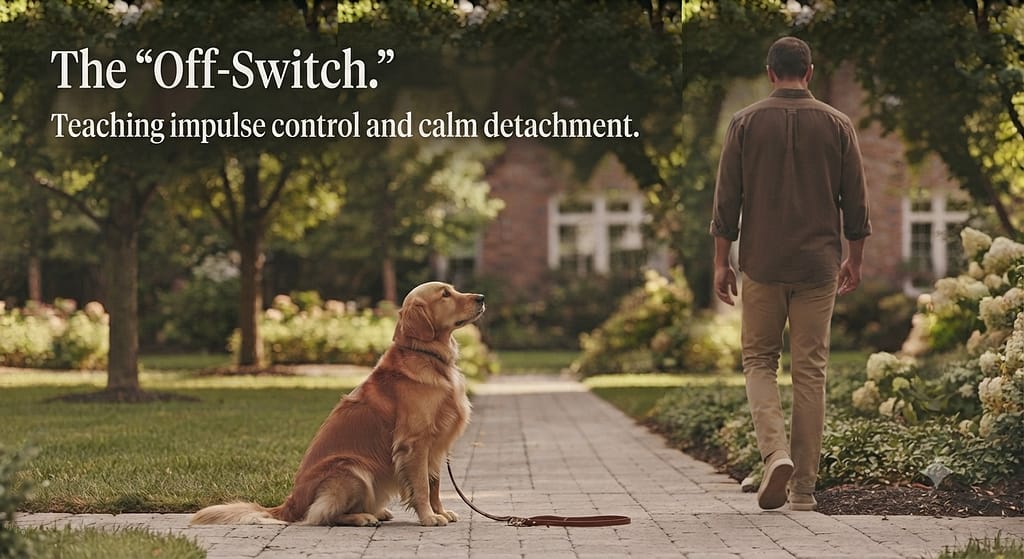
Your dog needs to know how to do nothing. The stay and settle commands are the keys to a peaceful apartment.
We are essentially teaching dogs to relax through structured practice and calming techniques for dogs.
The “Stay” Command (How to Train a Dog to Stay in an Apartment)
Why It Matters:
“Stay” is a lifesaver—it keeps your dog from bolting out the door, running into traffic, or bothering guests.
This is exactly how to train a dog to stay in an apartment environment.
Step-by-Step:

- Have your dog sit.
- Place your hand up (palm facing them) and say “Stay.”
- Take one step back. Return immediately and reward.
- Progression: Increase distance and duration.
- Week 1: 1 step, 1 second.
- Week 2: 3 steps, 5 seconds.
- Week 3: 5 steps, 10 seconds.
The Three D’s of Stay:
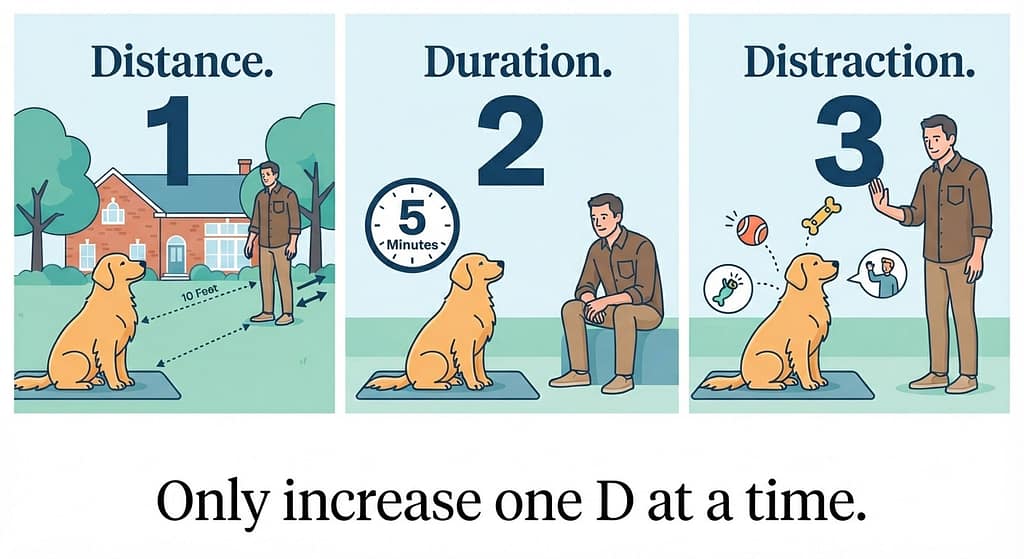
- Distance: How far away you are.
- Duration: How long they hold the stay.
- Distraction: What’s happening around them.
- Rule: Only increase one D at a time.
The “Settle” Command (Capturing Calmness)
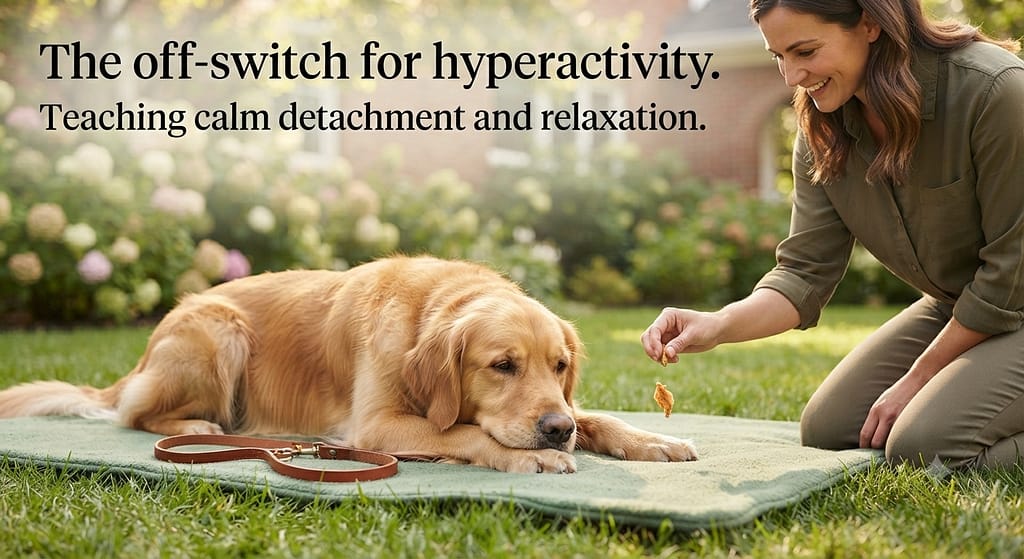
Why It Matters:
“Settle” tells your dog to relax. It’s the off-switch for hyperactivity and one of the most effective calming techniques for dogs.
Step-by-Step:
- Sit beside your dog while they’re lying down.
- Wait for a sigh, a head-drop, or a relaxed blink.
- Say “Settle” and gently drop a treat between their paws.
- Progression: Extend the duration of calm before treating.
The “Place” Command (The Apartment Essential)
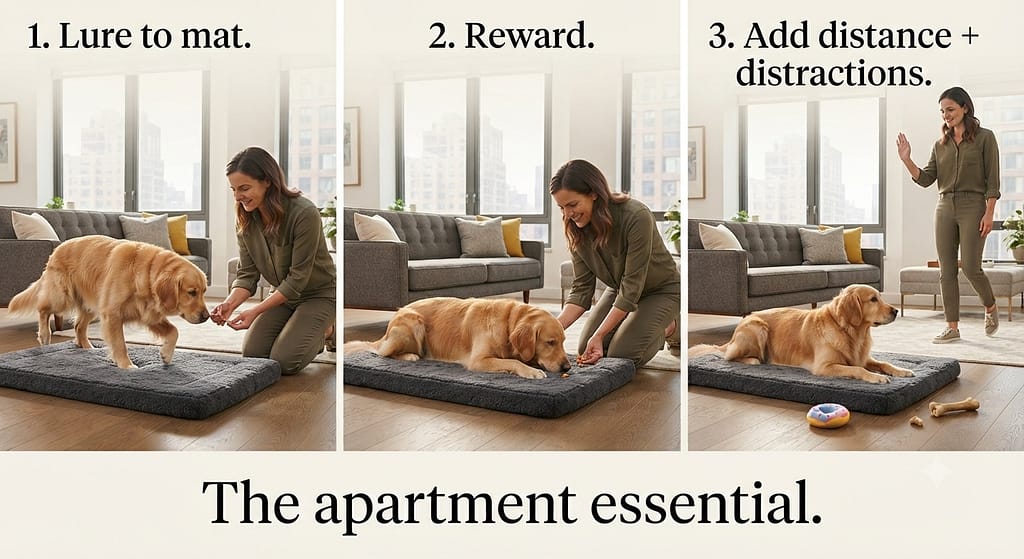
Why It Matters:
“Place” sends your dog to their bed or mat. It’s the foundation for a peaceful apartment and excellent for reinforcing positive dog behavior.
Step-by-Step:
- Choose a mat or bed (a bathmat works perfectly).
- Lure your dog onto the mat with a treat.
- The moment all four paws touch, say “Place!” and reward.
- Progression:
- Add distance: Walk away while they stay on the mat.
- Add duration: Wait 5 seconds, then 30, then 2 minutes.
- Add distractions: Ring the doorbell. Drop a toy. Walk past.
Section 7: Breed-Specific Training Strategies
Not all dogs are wired the same. Tailoring your approach with breed-specific training strategies ensures you are working with your dog’s genetics, not against them.
French Bulldogs
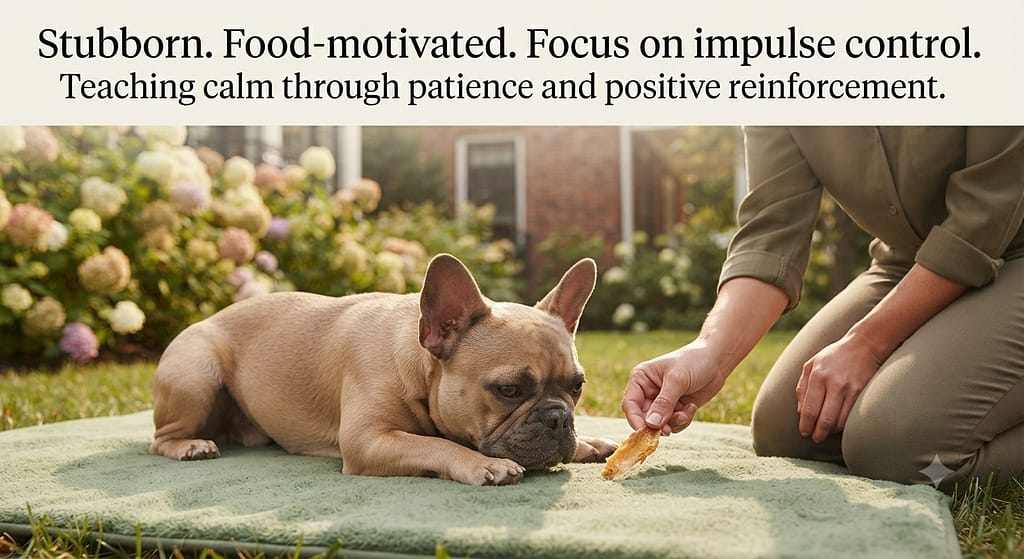
- Strengths: Highly food-motivated, eager to please, loves attention.
- Challenges: Stubborn, easily distracted, can be reactive.
- Focus Areas: Impulse control (they are stubborn), leash manners (they pull), and settling (they need to know how to relax).
Cavalier King Charles Spaniels
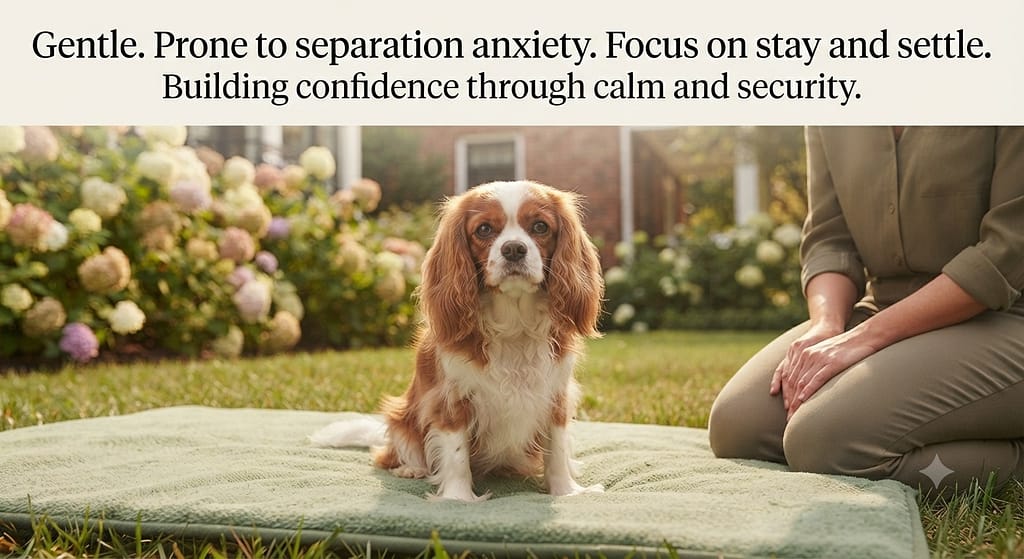
- Strengths: Gentle, eager to please, highly trainable.
- Challenges: Separation anxiety, sensitive to harsh corrections.
- Focus Areas: Stay (they struggle with being alone), settle (they thrive on calmness), and polite greetings (they love everyone).
Boston Terriers
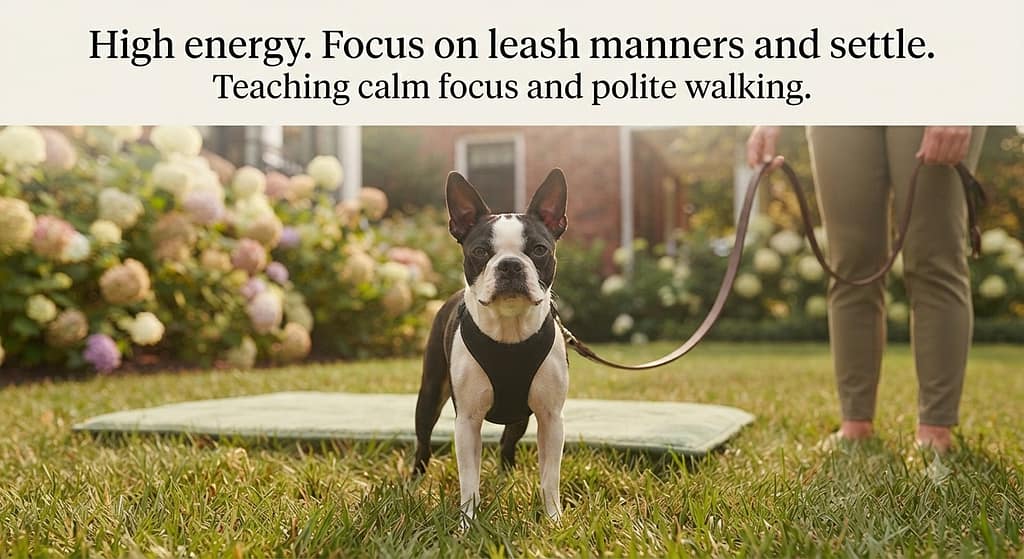
- Strengths: Smart, energetic, responsive to training.
- Challenges: High energy, can be reactive, prone to overexcitement.
- Focus Areas: Leash manners (high energy = pulling), polite greetings (overexcitement), and settling (they need an off-switch).
Section 8: The Daily Dog Training Schedule
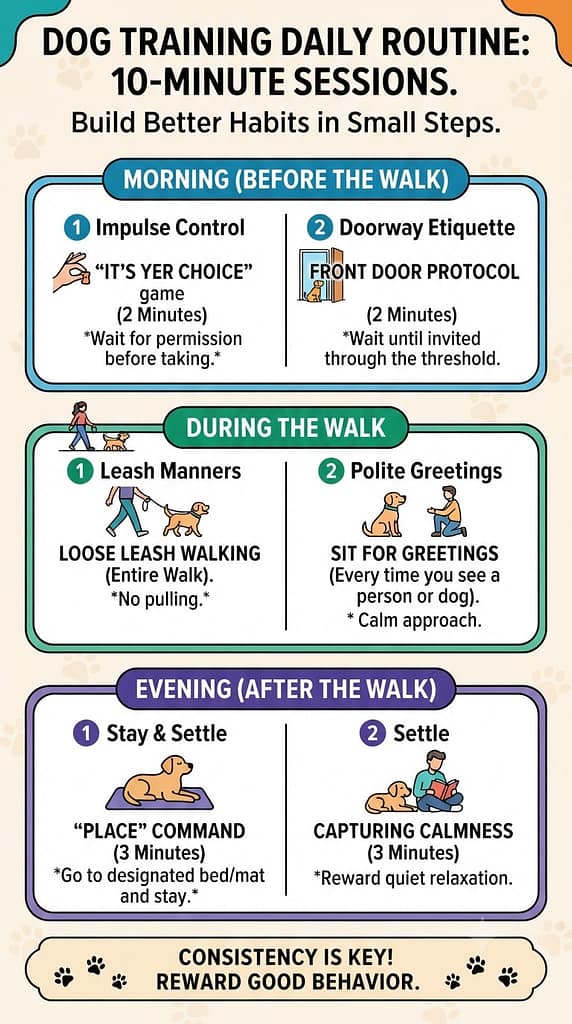
Consistency is king. Here is a 10-minute daily routine that covers all five pillars—your ultimate daily dog training schedule to cement these behaviors.
Morning (Before the Walk)
- Impulse Control: “It’s Yer Choice” (2 minutes).
- Doorway Etiquette: Front door protocol (2 minutes).
During the Walk
- Leash Manners: Loose-leash walking (entire walk).
- Polite Greetings: Sit for greetings (every time you see a person or dog).
Evening (After the Walk)
- Stay & Settle: “Place” command (3 minutes).
- Settle: Capturing calmness (3 minutes).
Conclusion: The Well-Trained Apartment Dog
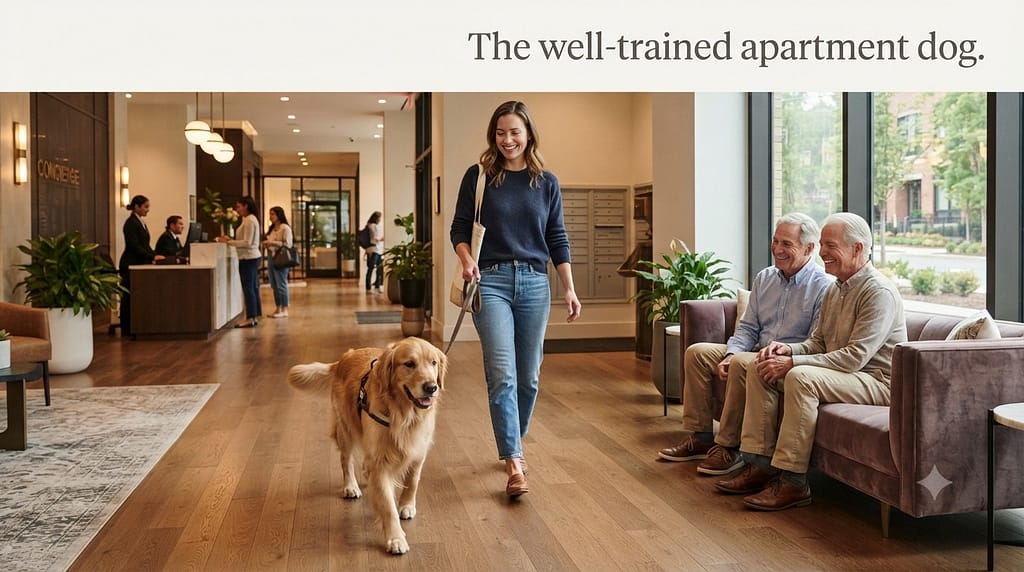
A well-trained dog isn’t a miracle. It’s the result of consistent, gentle, and patient training.
Every command you teach is a tool that makes your life easier, your apartment calmer, and your relationship stronger.
These are the foundational tips for apartment living with dogs that turn a chaotic household into a peaceful sanctuary.
The Golden Rule: Training is never punishment. It’s communication. Reward the good, ignore the bad, and redirect the unwanted.
This philosophy is at the heart of reinforcing positive dog behavior.
Your Final Checklist:
- Impulse Control: “It’s Yer Choice” and “Leave It.”
- Leash Manners: Loose leash walking, elevator protocol.
- Doorway Etiquette: Front door protocol, delivery desensitization.
- Polite Greetings: Sit for greetings, neutral greetings.
- Stay & Settle: “Stay,” “Settle,” and “Place.”
Your Next Steps:
- If your dog struggles with barking, visit our Urban Silence Protocol [Link].
- If your dog has separation anxiety, visit our Separation Anxiety Protocol [Link].
- For daily structure, visit our Indoor Enrichment Bible [Link].
🐾 — Apartment Dog Guide (ADG)
Living large in small spaces, one paw at a time. That’s the apartment dog life—see you in the next guide!.


