
The Fine Print Trap
You’ve found the perfect apartment. The location is ideal. The rent is reasonable.
The natural light is stunning. Your heart is set.
Then you flip to page 17 of the lease agreement, and your stomach drops.

“NO PETS.”
Two words that have crushed the dreams of countless urban dog lovers.
Navigating apartment pet policy can feel like a legal minefield.
But welcome to The Apartment Dog Lease & Rights Bible—your complete guide to pet ownership in urban apartments.
But here is the truth that changes everything:
“No pets” is often a starting position, not a final decision.

Many landlords use it as a filter, but they will negotiate for the right tenant.
The difference between getting evicted and getting approved comes down to one thing:
Understanding tenant rights with pets and mastering successful pet negotiation tips can make all the difference.
The difference between getting evicted and getting approved comes down to one thing: understanding your rights and knowing how to negotiate.
This guide is your roadmap to signing pet leases with confidence and pet ownership in urban apartments done right.
This guide covers the 4 Pillars of Pet-Friendly Leasing:
- Understanding Your Lease (Pet addendums, deposits, rent, and restrictions).
- Emotional Support Animals (Your legal rights under the Fair Housing Act).
- Petitioning for Change (When the lease says “no,” how to say “yes”).
- Liability & Insurance (Protecting yourself and your landlord).
By the end, you will know exactly how to navigate the legal landscape of urban pet ownership—without resorting to deception or risking eviction.
Section 1: Decoding the Pet Lease Agreement – Apartment Pet Policy & Lease Essentials
Before you sign anything, you must understand exactly what you’re agreeing to.
This section covers the apartment pet lease agreement in detail and the importance of the pet addendum.
Pet Clause vs. Pet Addendum (Pet Addendum Importance)
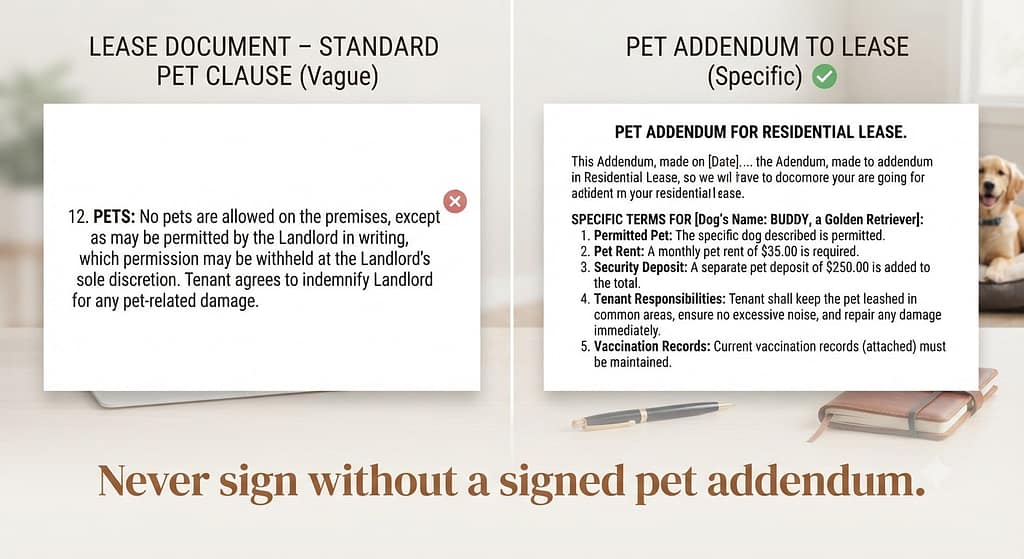
Pet Clause:
- A paragraph within the main lease that states whether pets are allowed.
- Usually vague: “Pets permitted with landlord approval.”
- The Danger: Vague clauses give landlords broad discretion to revoke permission.
Pet Addendum:
- A separate document you sign that outlines specific pet rules.
- Legally binding.
- The Advantage: Specificity protects you. It spells out exactly what is allowed.
The Golden Rule: Never sign a lease without a signed pet addendum. Verbal agreements are unenforceable. Get it in writing.
This is the foundation of signing pet leases safely.
Pet Deposits vs. Pet Rent (Negotiating Pet Deposits)
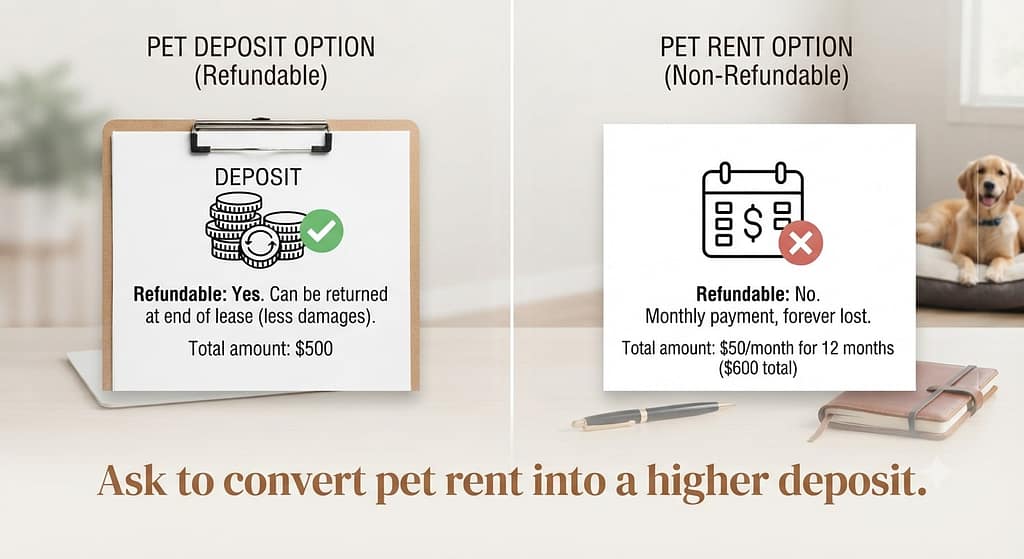
Pet Deposit (Refundable):
- A one-time fee (usually $200-$500) that covers potential damage.
- You can get this back if there’s no damage.
- The Law: Some states (like California) limit pet deposits to a certain percentage of rent.
Pet Rent (Non-Refundable):
- A monthly fee (usually $25-$50 per pet) added to your rent.
- Pure profit for the landlord.
- The Negotiation: Ask to convert pet rent into a higher pet deposit. This shows you’re serious about protecting their property and saves you money long-term. Mastering negotiating pet deposits is a key skill.
Breed Restrictions Apartments & Weight Limits

Common Restricted Breeds (Breed Restrictions Apartments):
- Pit Bulls (and mixes).
- Rottweilers.
- German Shepherds.
- Dobermans.
- Huskies.
- Akitas.
- Chow Chows.
- Sometimes Dalmatians and Boxers.
Weight Limits:

- Often capped at 25-30lbs.
- The Reality: Weight limits are often arbitrary. A 30lb dog can be calmer than a 15lb terrier.
The “Grandfather” Clause:
- If your dog is already living with you and the building changes policy, you may be “grandfathered in.”
- The Strategy: Move in before the policy changes. Document your dog’s residency.
How to Get a Restricted Breed Approved (Breed Restrictions Apartments)

- Provide a “Canine Good Citizen” (CGC) Certificate: This nationally recognized certification proves your dog is well-behaved.
- Offer a Higher Pet Deposit: $1,000 instead of $500.
- Provide Vet Records: Up-to-date vaccinations, spay/neuter.
- Provide a Trainer Letter: A professional trainer vouching for your dog’s temperament.
- Offer a “Trial Period”: “Let me have my dog for 3 months. If there are any complaints, I’ll remove them.”
“No Pets” vs. “Pets Negotiable”

- “No Pets” is often a starting position, not a final decision. This is where tenant negotiation strategies come into play.
- The “Good Tenant” Leverage: If you have excellent credit, a stable job, and great references, you have negotiating power. This is the essence of preparing for pet negotiations.
Section 2: Emotional Support Animals – Your Legal Rights Under the Fair Housing Act
This is the most misunderstood area of pet leasing. Let’s clarify the law.
This section covers legal rights for ESAs, the Fair Housing Act, and documentation for emotional support animals.
ESA vs. Service Dog – Know the Difference
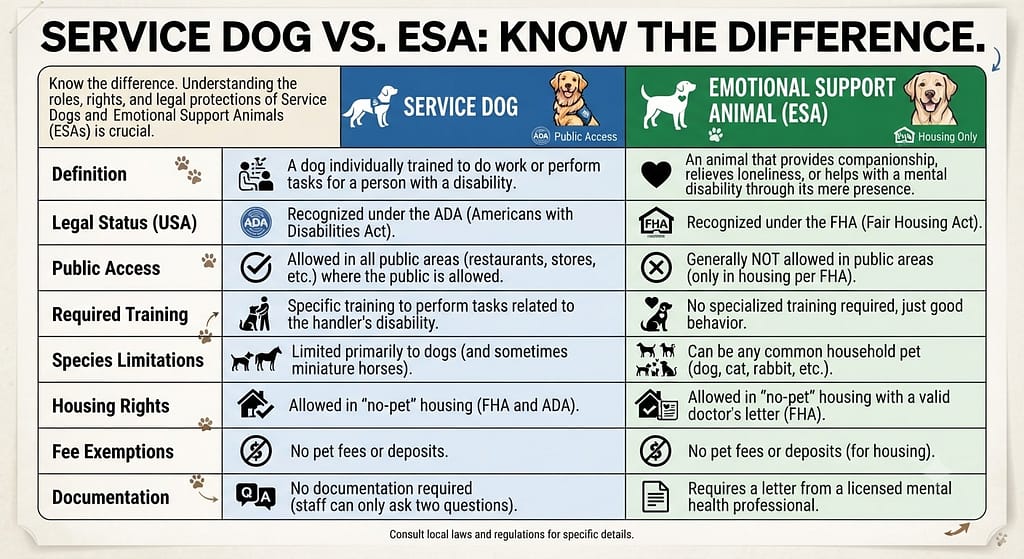
| Service Dog | Emotional Support Animal (ESA) | |
|---|---|---|
| Definition | Trained to perform specific tasks for a disability (e.g., guide dog, seizure alert, mobility assistance). | Provides comfort and emotional support through presence alone. |
| Legal Protection | Americans with Disabilities Act (ADA) – full access to public places. | Fair Housing Act (FHA) – housing protection ONLY. |
| Public Access | Yes – can go anywhere the handler goes. | No – not allowed in grocery stores, restaurants, etc. |
| Documentation | No certificate required by law (though many owners have one). | Letter from a licensed mental health professional. |
The Fair Housing Act (FHA) – Your Shield
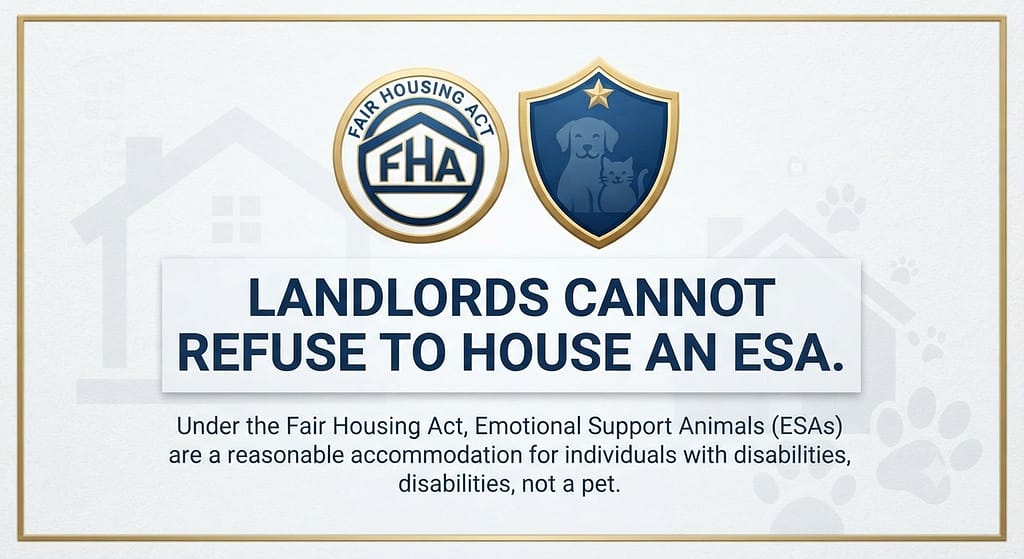
The FHA prohibits housing discrimination against people with disabilities.
Understanding ESA Fair Housing Act protections is essential.
Key Protection: Landlords cannot refuse to house an ESA, even in “no-pet” buildings.
Key Exemption: Landlords with 4 or fewer units (where the landlord lives in one) are exempt. Owner-occupied buildings with 4 or fewer units can deny ESAs.
Key Caveat: ESAs must be prescribed by a licensed professional as part of a treatment plan. You cannot just declare your dog an ESA.
How to Get an Emotional Support Animal Letter (Documentation for Emotional Support Animals)
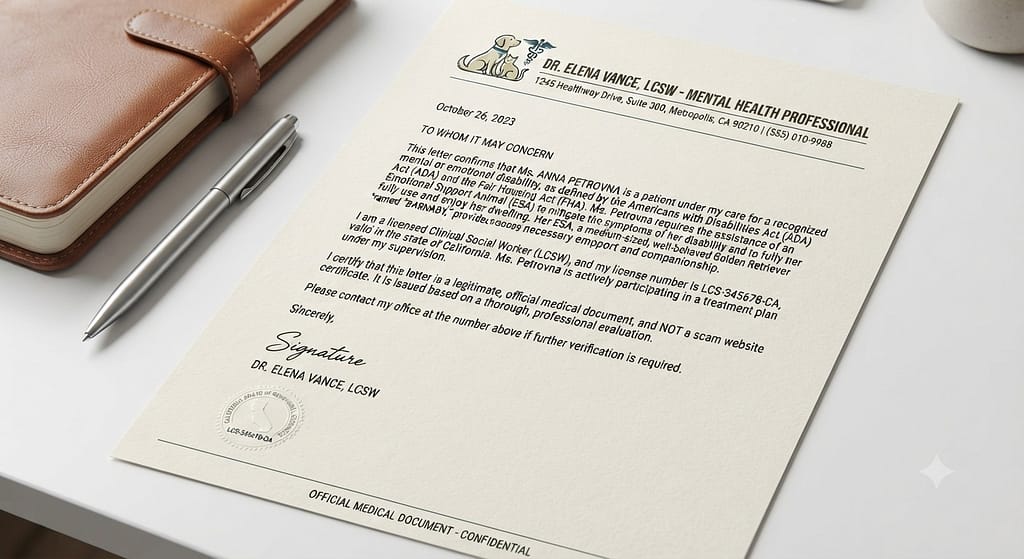
This is the definitive answer to how to get an emotional support animal letter.
The Legal Process:
- You must have a diagnosed mental health condition (anxiety, depression, PTSD, etc.) by a licensed professional (psychologist, psychiatrist, licensed therapist).
- The professional must recommend an ESA as part of your treatment plan.
- They write a letter on official letterhead confirming your need for the animal.
⚠️ CRITICAL WARNING:
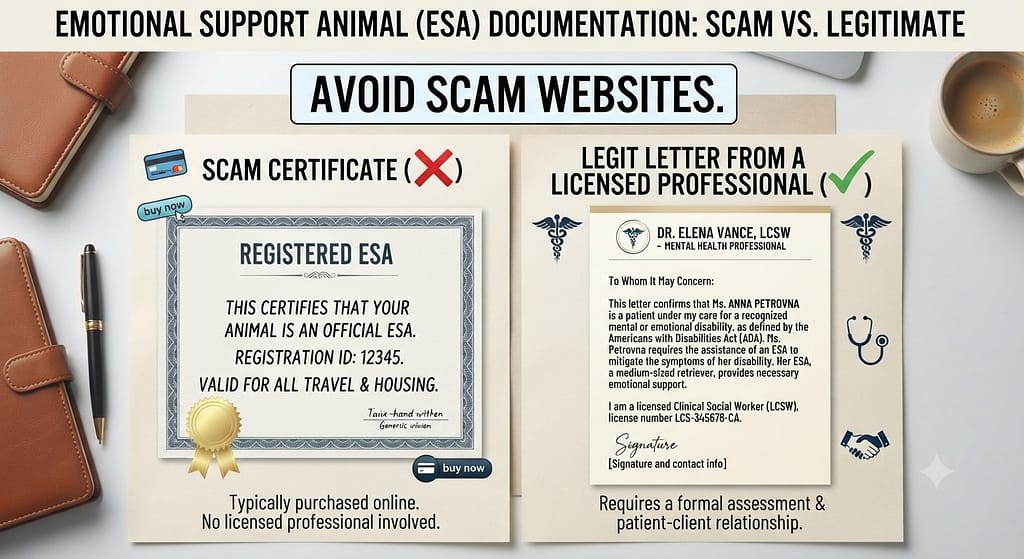
Avoid scam websites that sell “ESA registration” or “ESA certificates” for $50 without a real evaluation.
These are not legally valid. FHA requires a licensed professional to write the letter. Many landlords know the difference.
What the Letter Must Include (Documentation for Emotional Support Animals)
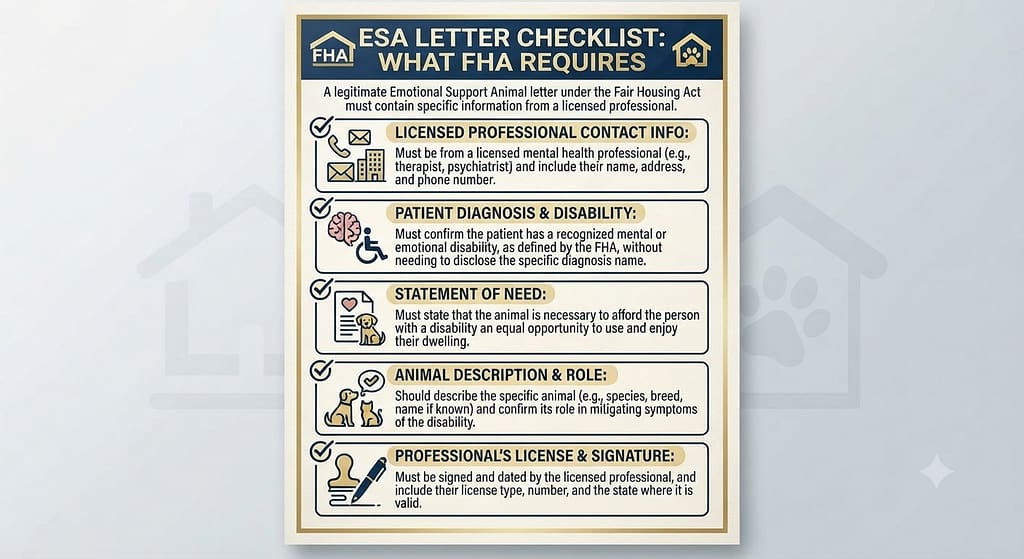
- Your diagnosis (DSM-5 code).
- The professional’s license number and signature.
- Statement that the ESA is part of your treatment.
- The professional’s contact information for verification.
Can the Landlord Charge Pet Fees for an ESA?
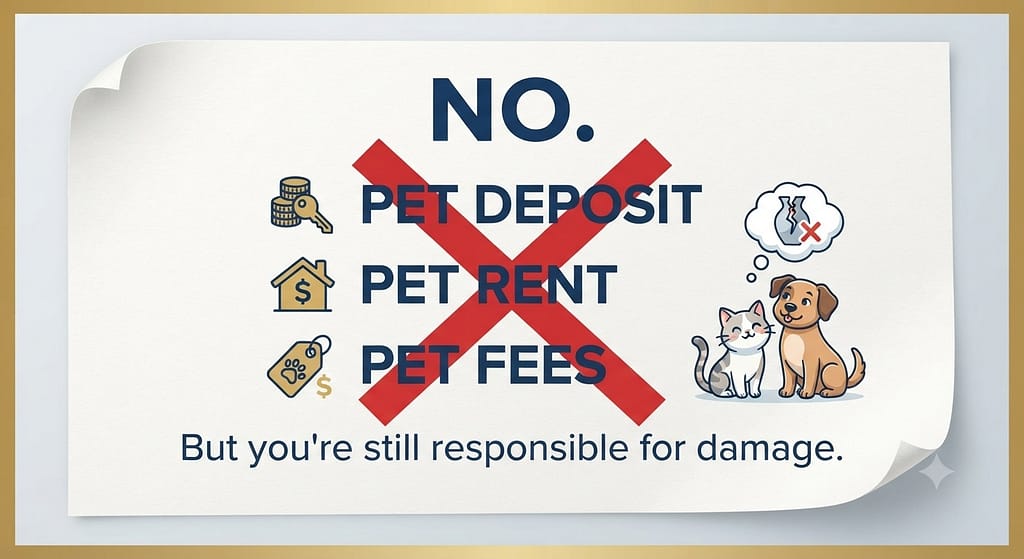
- NO. Under the FHA, landlords cannot charge pet deposits, pet rent, or pet fees for ESAs.
- BUT: You are still responsible for any damage your ESA causes. The landlord can charge you for repairs after you move out.
What If the Landlord Denies Your ESA?
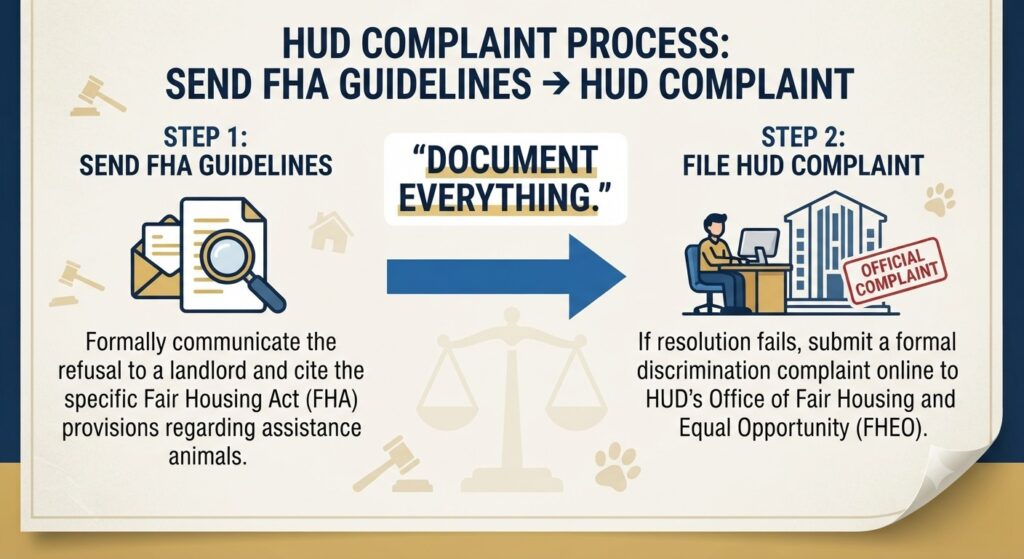
- Send them a copy of the FHA guidelines and your ESA letter.
- If they still refuse, file a complaint with HUD (Department of Housing and Urban Development).
- Document everything in writing. Every email, every letter, every phone call.
Section 3: Petitioning for Policy Change – The No-Dog Apartment Petition & Successful Pet Negotiation Tips
You live in a building that currently allows no pets. What can you do?
This section covers the no-dog apartment petition and successful pet negotiation tips.
When to Petition

- You are a model tenant (pay rent on time, no complaints, good neighbor).
- You have a well-behaved dog (or are planning to get one).
- You have the support of other tenants.
The “Pilot Program” Approach (Strategies for Pet Approvals)
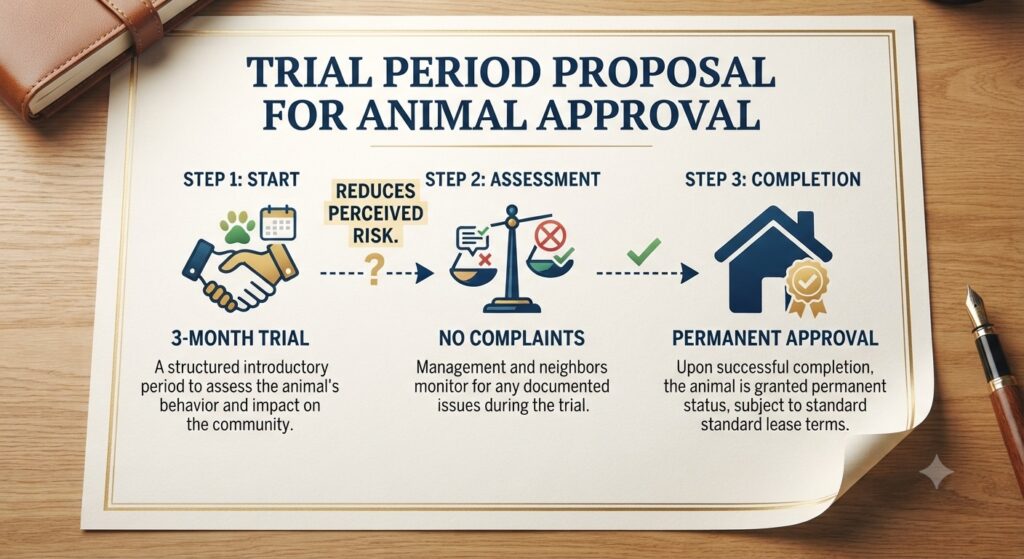
- The Proposal: “Let me have my dog for 3 months. If there are any complaints or damages, I’ll move out or rehome the dog.”
- The Benefit: Reduces the landlord’s perceived risk.
The Pet Resume (Proving Responsible Pet Ownership)
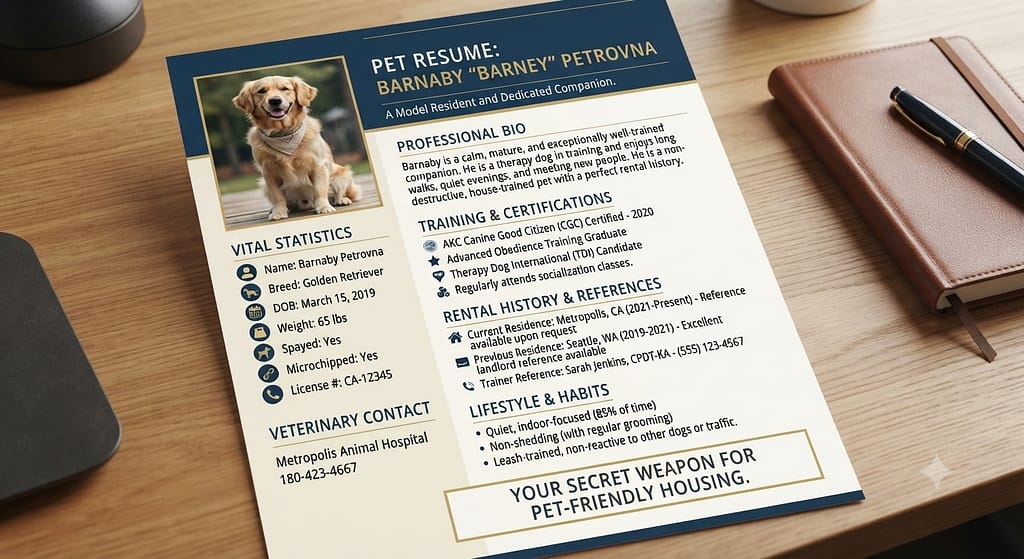
Create a professional document that includes:
- Your Dog’s Bio: Name, age, breed, weight, temperament.
- Training Certificates: CGC, obedience school, etc.
- Vet Records: Up-to-date vaccinations, spay/neuter.
- References: Previous landlords (who can confirm your dog caused no damage), trainers, groomers.
- Photo: A cute, non-threatening photo of your dog.
The “Pet Deposit” Offer (Negotiating Pet Terms)
- Offer a larger, non-refundable pet deposit (e.g., $1,000) to offset their risk.
- Offer to sign a “Pet Damage Addendum” that holds you financially responsible for any pet-related damage.
Getting Neighbors on Board (Pet-Friendly Building Checklist)

- A petition is more powerful with signatures.
- Get friendly neighbors to sign a letter supporting a pet-friendly building.
- The Persuasion: Point out that pet-friendly buildings often have higher rents and lower vacancy rates. It’s a win-win.
The “No-Dog” Building Success Story
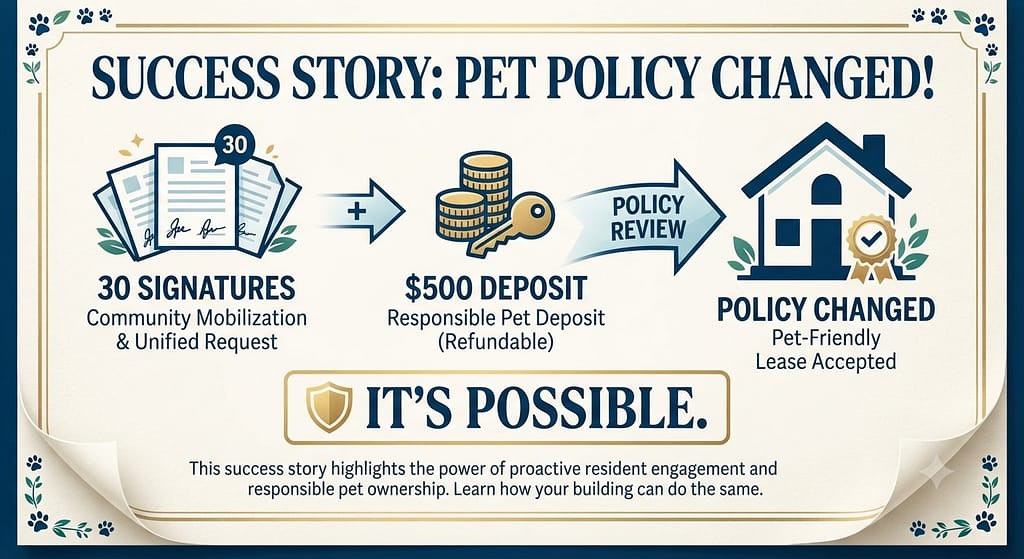
Include a short, anonymized case study: “A tenant in [Building Name] successfully petitioned the building management by gathering 30 signatures and offering a $500 pet deposit. The policy was changed to allow pets under 30lbs.”
Section 4: Liability & Insurance – Protecting Yourself and Your Landlord
Dog bites and property damage are the two biggest fears landlords have.
This section covers pet insurance liability, renter’s insurance requirements, and liability insurance for pets.
What Your Landlord’s Insurance Covers
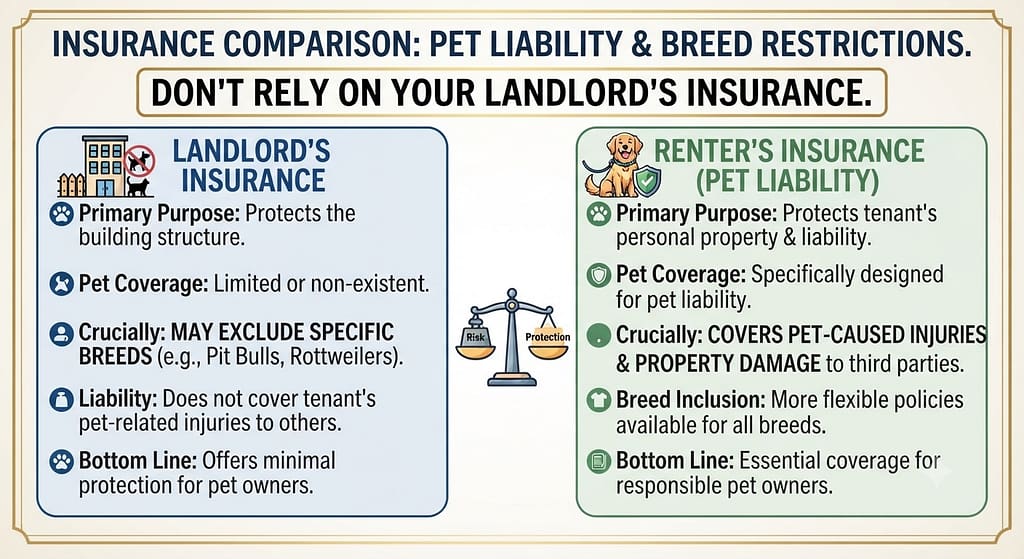
- Most landlords have liability insurance that covers injuries on the property.
- BUT: Many policies exclude dog bites or have breed-specific exclusions (Pit Bulls, Rottweilers, etc.).
- Question to Ask Your Landlord: “Does your insurance policy cover dog bites, and if so, are there any breed restrictions?”
Renter’s Insurance with Pet Liability (Pet Insurance for Renters)
- DO NOT rely on your landlord’s insurance. Get your own renter’s insurance with a pet liability rider.
- Typical Coverage: $100,000 – $300,000 liability for dog bites or property damage caused by your dog.
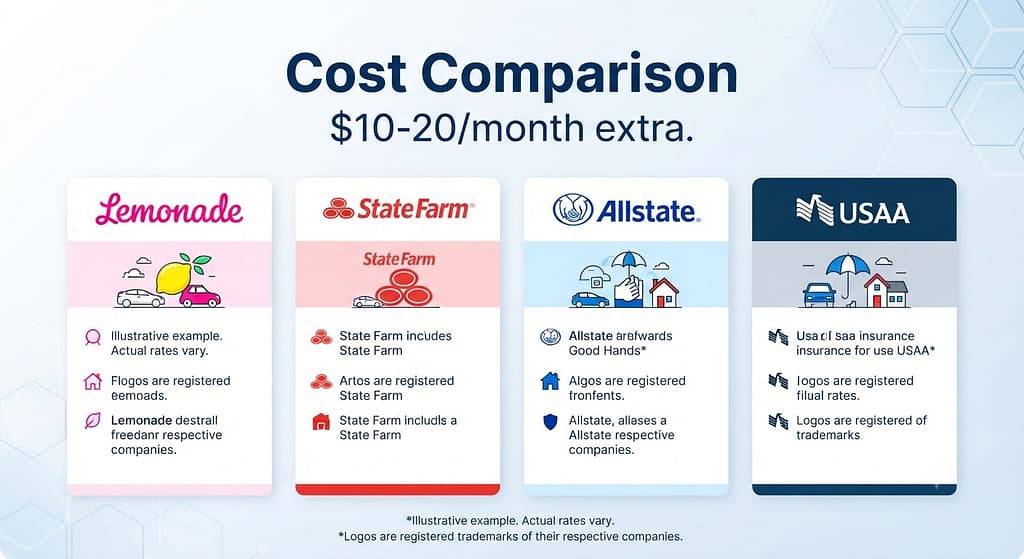
- Top Providers: Lemonade, State Farm, Allstate, USAA (all offer pet liability).
- Cost: Usually $10-$20/month extra.
Questions to Ask Your Insurance Provider (Renter’s Insurance Requirements)
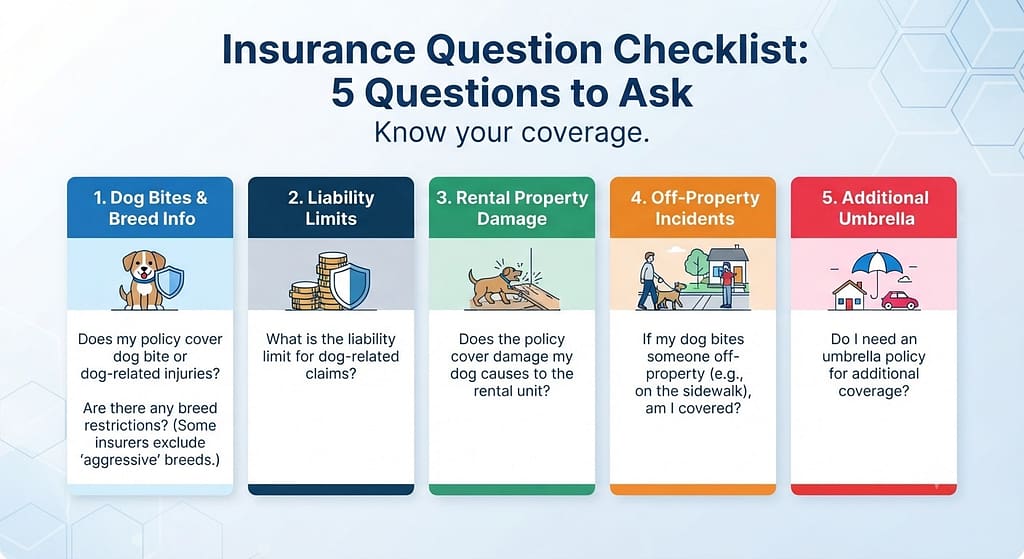
- Does my policy cover dog bites or dog-related injuries?
- Are there any breed restrictions? (Some insurers exclude “aggressive” breeds.)
- What is the liability limit for dog-related claims?
- Does the policy cover damage my dog causes to the rental unit?
- If my dog bites someone off-property (e.g., on the sidewalk), am I covered?
- Do I need an umbrella policy for additional coverage?
The “Umbrella Policy” (Liability Insurance for Pets)

- If you own a restricted breed or have significant assets, consider an umbrella liability policy ($1 million+).
- It covers you if a dog bite lawsuit exceeds your standard policy limits.
- Cost: ~$150-$300/year for $1 million coverage.
Section 5: The “Pet Interview” – Tips for Winning Over Your Landlord
Sometimes the best strategy is a face-to-face meeting.
This section covers pet interview tips and communicating with landlords.
Requesting a “Meet & Greet”

If possible, arrange for your landlord to meet your dog in person.
- The Advantage: A well-behaved dog can change a landlord’s mind instantly.
- The Preparation: Have your dog do a “sit,” “down,” and “stay” on command. Show them how well-trained your dog is.
The Reference Letter (Proving Responsible Pet Ownership)
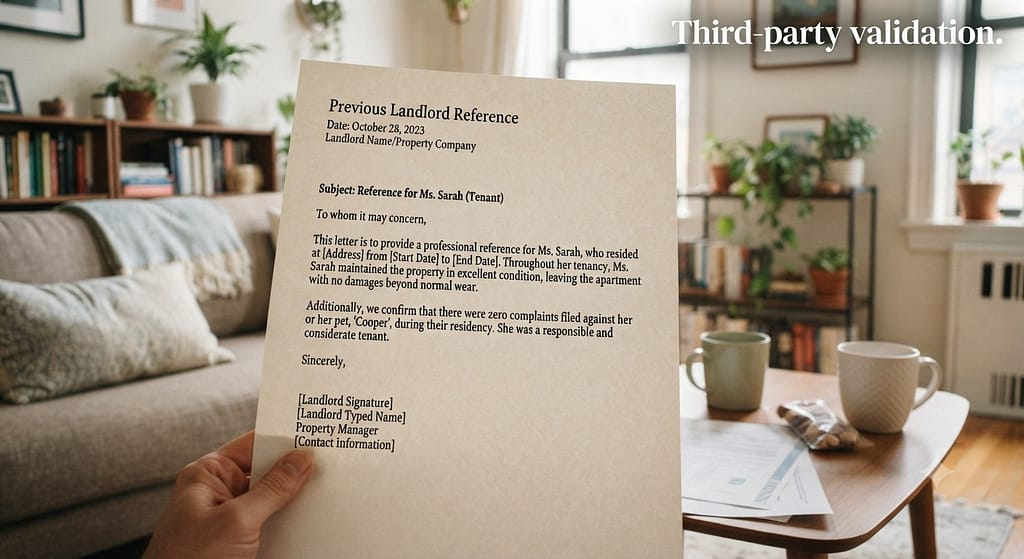
Ask your previous landlord to write a short letter confirming:
- Your dog caused no damage.
- No noise complaints.
- You were a responsible tenant.
The “Puppy” vs. “Adult” Advantage

- Adult dogs are often easier to approve. They are calmer, house-trained, and past the destructive chewing phase.
- If you’re getting a puppy, offer to sign an agreement that you’ll attend obedience classes.
The “First 30 Days” Clause

Offer a clause in the lease: “If there are any complaints or damage related to the dog within the first 30 days, the tenant will either remove the dog or pay an additional $500 deposit.”
Section 6: Handling Common Scenarios – Managing Neighbor Complaints & Handling Landlord Objections
This section covers handling landlord objections, managing neighbor complaints, and pet damage responsibility.
Scenario 1: Landlord Says “No” After You Already Got the Dog
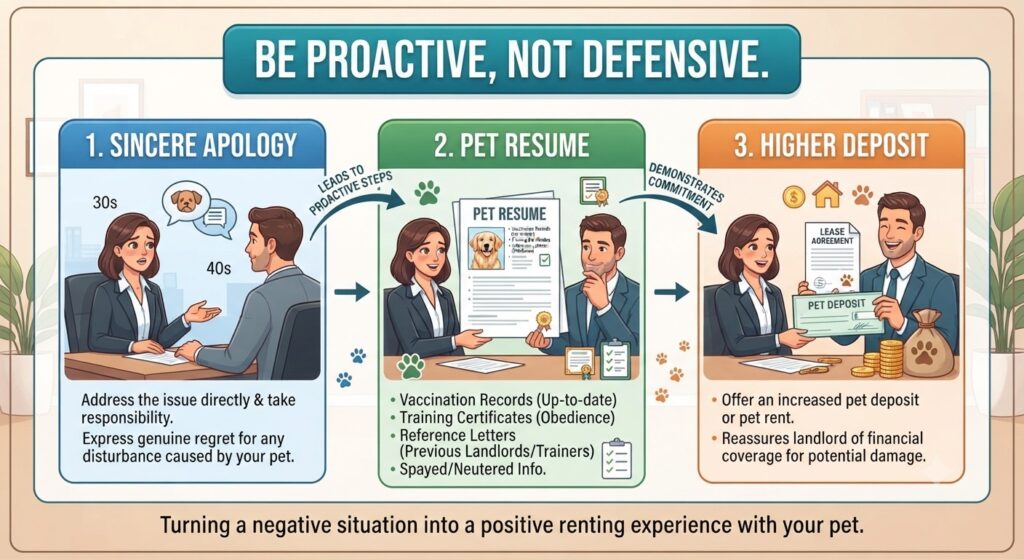
- The Reality: If you didn’t have written permission, you violated your lease.
- The Solution: Immediately approach the landlord with a sincere apology, a pet resume, and a higher deposit offer. Be proactive, not defensive.
Scenario 2: New Management Buys the Building and Bans Dogs
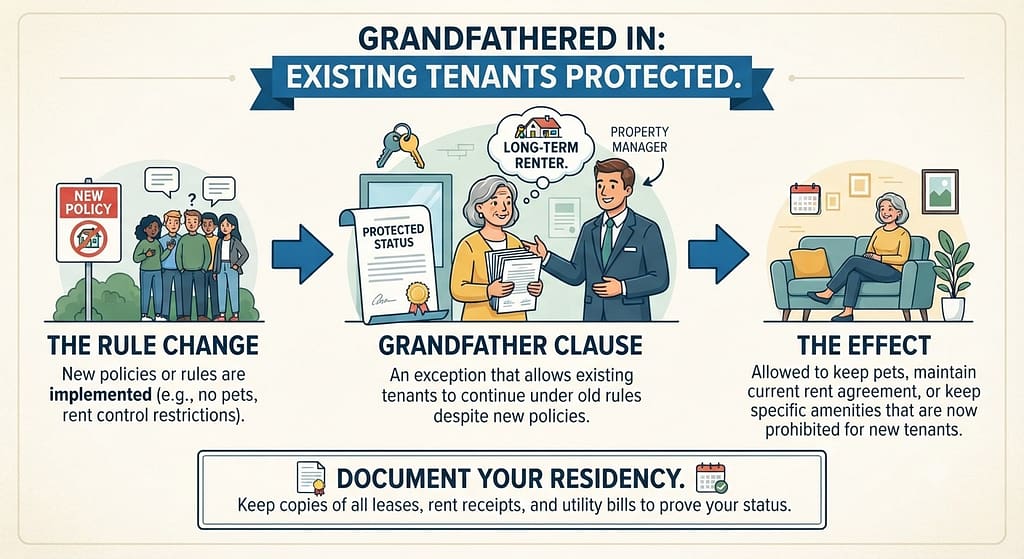
- The Reality: Existing tenants are usually “grandfathered in.”
- The Strategy: Document your residency and your dog’s presence. Your pet cannot be evicted mid-lease.
- The Warning: After the lease expires, they may not renew. Prepare to negotiate or move.
Scenario 3: Neighbor Complains About Barking (Managing Neighbor Complaints)

- The Reality: This is the #1 reason pets get evicted.
- The Solution: Show the landlord you are actively working on it. Provide proof of training (link to the Urban Silence Protocol), share your training schedule, and offer to install a bark monitor.
Scenario 4: Your Dog Scratches the Door or Damages the Floor (Pet Damage Responsibility)

- The Reality: Landlords hate surprise damage.
- The Solution: Be proactive. Offer to pay for repairs immediately. Don’t wait for the landlord to find out. Honesty preserves trust. Taking pet damage responsibility seriously builds goodwill.
Section 7: The “Pet-Friendly Building” Checklist – Ensuring Pet-Friendly Housing
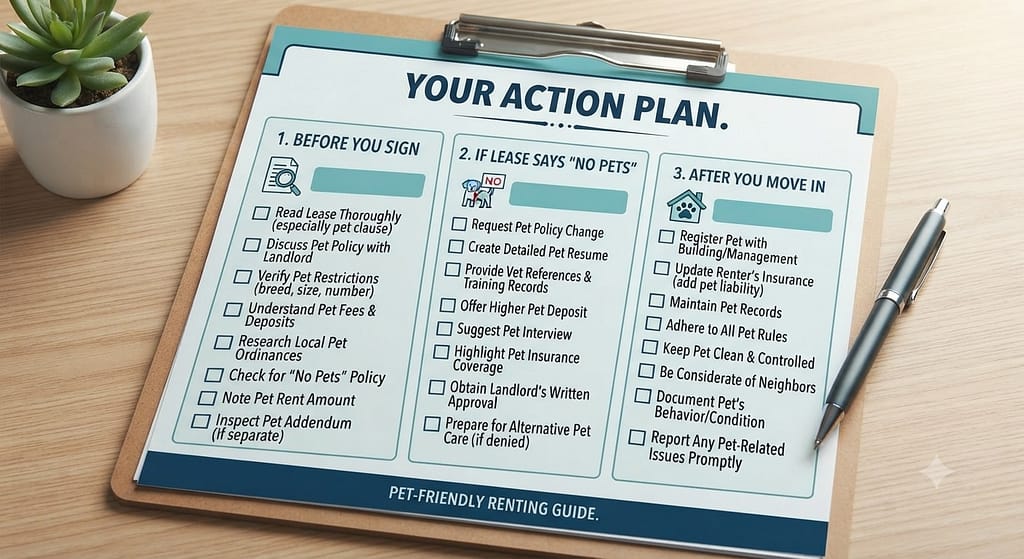
Before You Sign:
- □ Read the pet addendum thoroughly.
- □ Clarify pet deposit vs. pet rent.
- □ Confirm breed and weight restrictions.
- □ Ask about insurance requirements.
- □ Get everything in writing.
If the Lease Says “No Pets”:
- □ Prepare a pet resume with references.
- □ Offer a higher pet deposit.
- □ Request a meet-and-greet.
- □ Propose a trial period.
- □ Consider an ESA letter (if applicable).
After You Move In:
- □ Keep training records up-to-date.
- □ Address noise complaints immediately.
- □ Maintain good relationships with neighbors.
- □ Keep renter’s insurance active.
Conclusion: The Pet Lease Negotiation Mindset

Getting a dog in an apartment is not about tricking your landlord. It’s about convincing them that you are a responsible, low-risk tenant.
This is the essence of tenant negotiation strategies and strategies for pet approvals that actually work.
This is the foundation of preparing for pet negotiations.
The Golden Rule: Always put everything in writing. Verbal agreements are unenforceable. Get a signed pet addendum before moving in.
Your Final Checklist:
- Understand Your Lease: Know exactly what you’re signing.
- Know Your Rights: ESAs have legal protection under the FHA.
- Be a Model Tenant: Pay rent on time, be a good neighbor.
- Get Insurance: Renter’s insurance with pet liability.
- Document Everything: Every conversation, every email.
Your Next Steps:
- If you haven’t chosen a breed yet, visit our Selection Bible [Link].
- For daily wellness, visit our Health & Nutrition Manual [Link].
- Download our “Pet Lease Negotiation Script” below to send to your landlord.
🐾 — Apartment Dog Guide (ADG)
Living large in small spaces, one paw at a time. That’s the apartment dog life—see you in the next guide!.


