
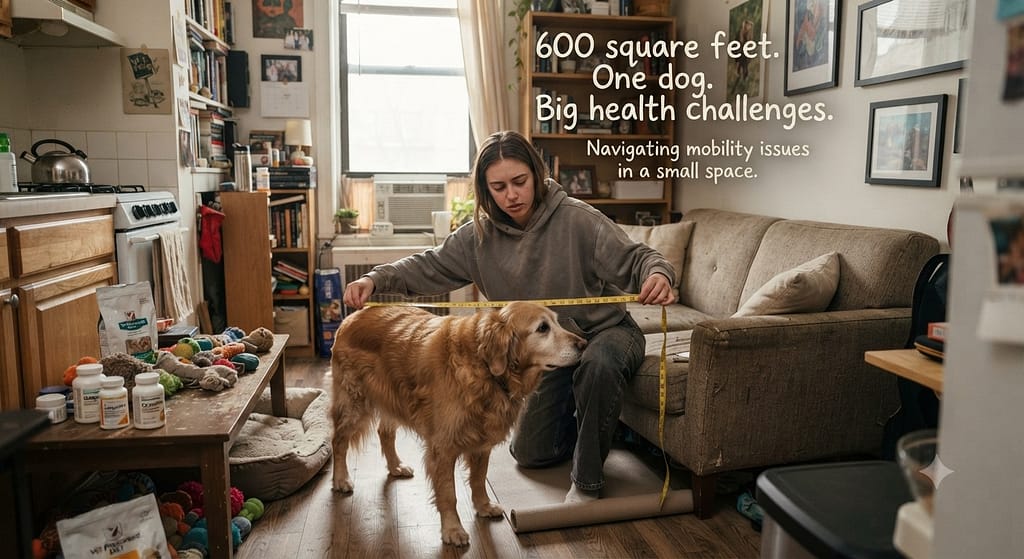
The 600-Square-Foot Health Challenge
You’ve chosen the perfect breed. You’ve trained them to be quiet and potty-trained.
You’ve enriched their life with indoor activities.
Now comes the marathon:
Keeping them healthy in a space the size of a hotel room.
Welcome to the definitive guide on apartment dog health and wellness—your complete manual for urban dog wellness.
Urban dogs face unique health challenges. Limited exercise space leads to obesity.
Concentrated allergens trigger skin issues. Restricted access to grass affects digestion.
And the constant proximity to their owners can mask subtle signs of illness.
These are the realities of urban dog health challenges that every city dweller must navigate.
For complete demand barking management, see our guide to stopping demand barking
But here is the truth that changes everything:
Prevention is cheaper than treatment. A $20 bag of dental chews is cheaper than a $1,000 dental extraction. A $50 weight check is cheaper than $3,000 in diabetes treatment.
This is the philosophy behind affordable dog health solutions that actually work.
This guide covers the 5 Pillars of Urban Canine Wellness:
- Nutrition (Food, odor, delivery, and picky eaters).
- Treats & Hydration (Homemade options and city-specific challenges).
- Weight Management (The small-space obesity epidemic).
- Dental Health (Tiny teeth, big problems).
- Breed-Specific Health & Grooming (Frenchies and Cavaliers).
By the end, you will have a complete daily wellness system for your apartment dog.
This is your roadmap to pet care in apartments done right.
Section 1: Dog Nutrition for Urban Living – The Apartment Diet
The food you choose affects not just your dog’s health, but the air quality of your tiny space.
This is the foundation of dog nutrition for urban living.
The “Low-Odor” Food Factor (Low-Odor Dog Food for Apartments)
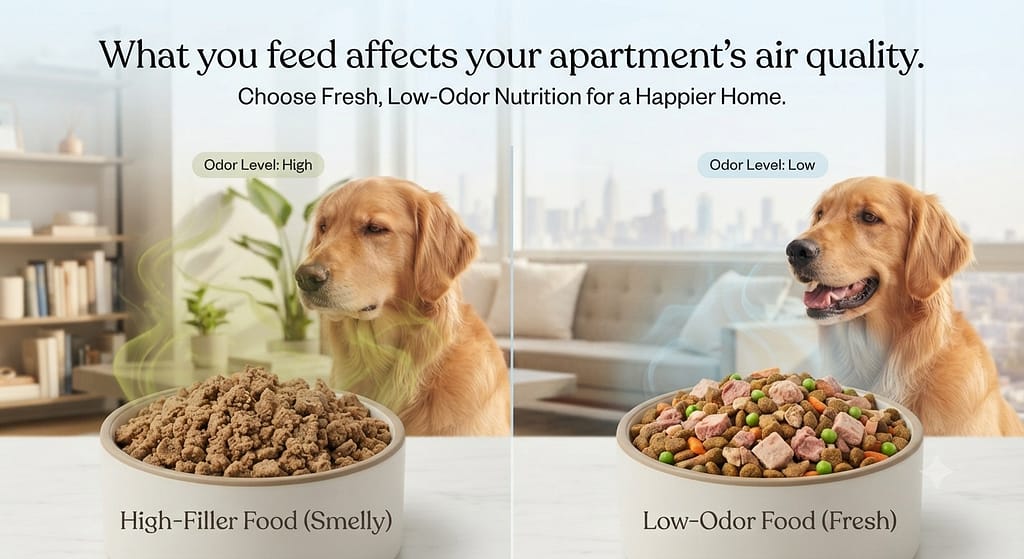
Why do some dog foods make your apartment smell like a farm? It’s the low-quality fillers (corn, wheat, by-products) and high-fat content.
Finding low-odor dog food for apartments is a game-changer.
What to Look For:
- Limited-Ingredient Diets (LID): Fewer ingredients = less gas and stool odor. Limited-ingredient diets for dogs are ideal for sensitive stomachs.
- High-Protein, Moderate-Fat: Better digestion = less pungent waste.
- Probiotics: Added probiotics = healthier gut flora = less stinky gas.
Top 3 Low-Odor Dry Foods (Best Dry Dog Food Low Odor Apartment):
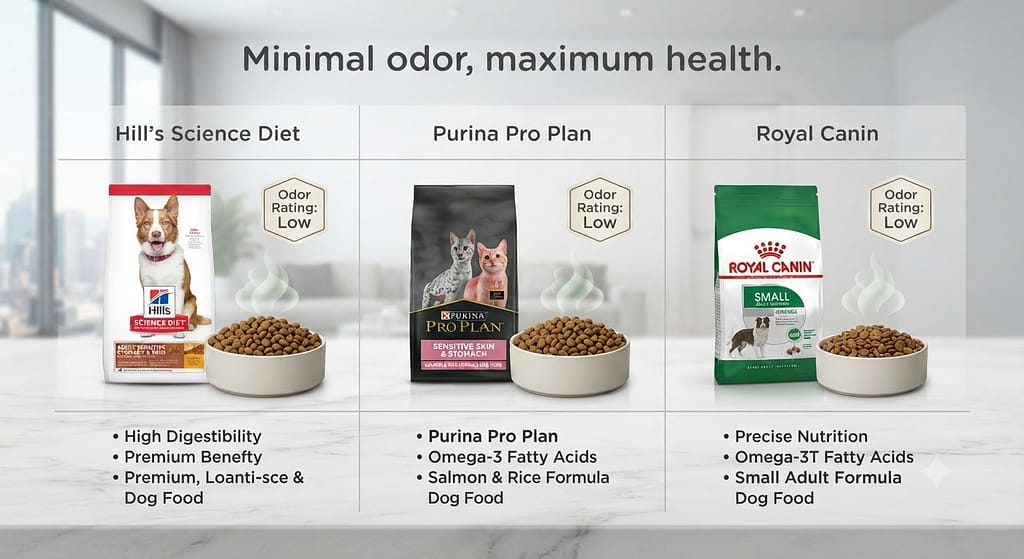
- Hill’s Science Diet Sensitive Stomach: Designed for easy digestion. Minimal odor.
- Purina Pro Plan Sensitive Skin & Stomach: Salmon-based, highly digestible.
- Royal Canin Small Breed: Moderate fat, formulated for tiny digestive systems.
Pro-Tip: Store dry food in an airtight container outside the apartment (on the balcony or in a hallway closet).
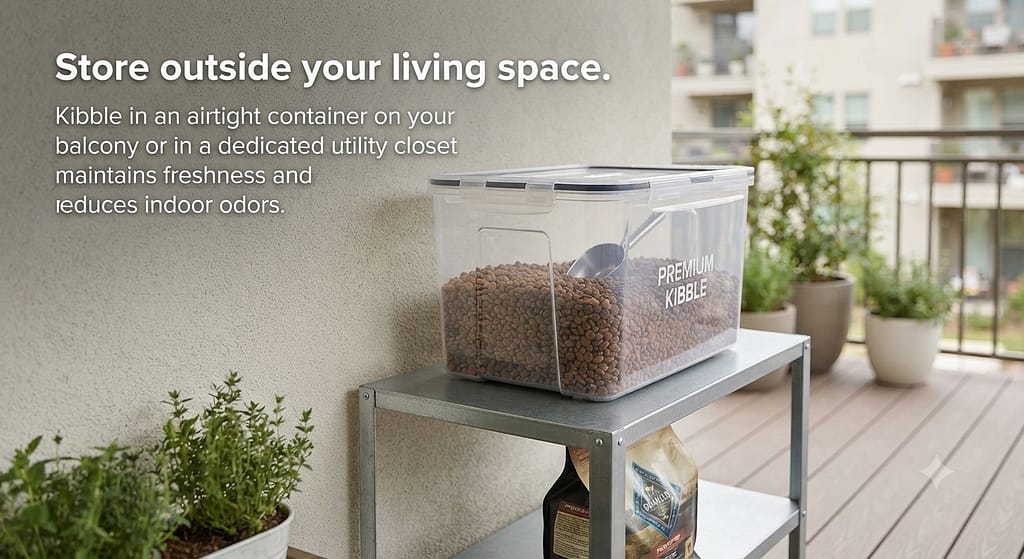
This prevents the smell from permeating your small space.
Fresh Food Delivery For Dogs – Worth the Hype?

Fresh food delivery (The Farmer’s Dog, Ollie, Nom Nom) is increasingly popular among city dwellers.
These are among the best fresh dog food delivery services available.
Pros:
- Human-grade ingredients.
- Portion-controlled (prevents overfeeding).
- Less smell (fresh food has a milder odor than kibble).
- Better skin and coat (omega-3s).
Cons:
- Expensive (often 2-3x kibble).
- Requires fridge and freezer space (premium real estate in a studio).
Who It’s Best For:
- Picky eaters.
- Dogs with allergies (fresh food has fewer preservatives).
- Owners who hate the smell of kibble.
Managing Picky Eaters (Homemade Dog Food Toppers for Picky Eaters)

Apartment dogs often become picky because they’re overfed or over-treated.
Managing picky eaters requires creativity and patience.
Homemade Toppers (Safe and Appetizing):
- Boiled Chicken: Shredded, plain, no salt.
- Bone Broth: Low-sodium, no onions or garlic.
- Pumpkin Puree: 100% pure, not pie filling.
- The “Rotation” Method: If your dog gets bored, rotate protein sources (chicken, beef, fish) to keep them interested without causing gut upset.
The “Rotation” Method: If your dog gets bored, rotate proteins (chicken, beef, fish) to keep them interested without gut upset.
These homemade dog food toppers for picky eaters are simple and effective.
The “Starve-Out” Protocol:
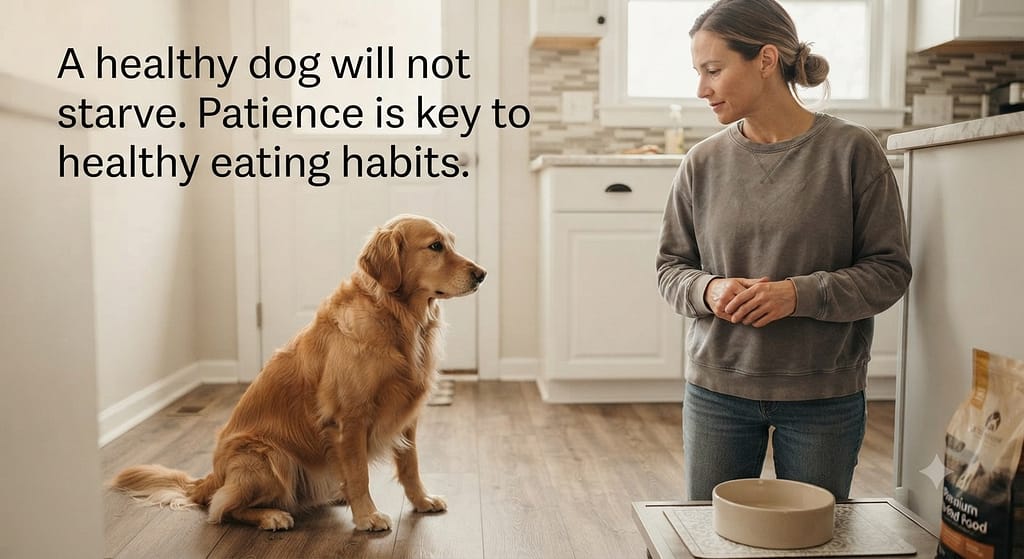
- The Reality: A healthy dog will not starve themselves.
- The Strategy: Put their food down for 15 minutes. If they don’t eat, pick it up. Offer again at the next meal.
- The Warning: If they refuse food for more than 24 hours, see a vet.
City-Specific Dog Allergies (Environmental Allergens for Dogs)
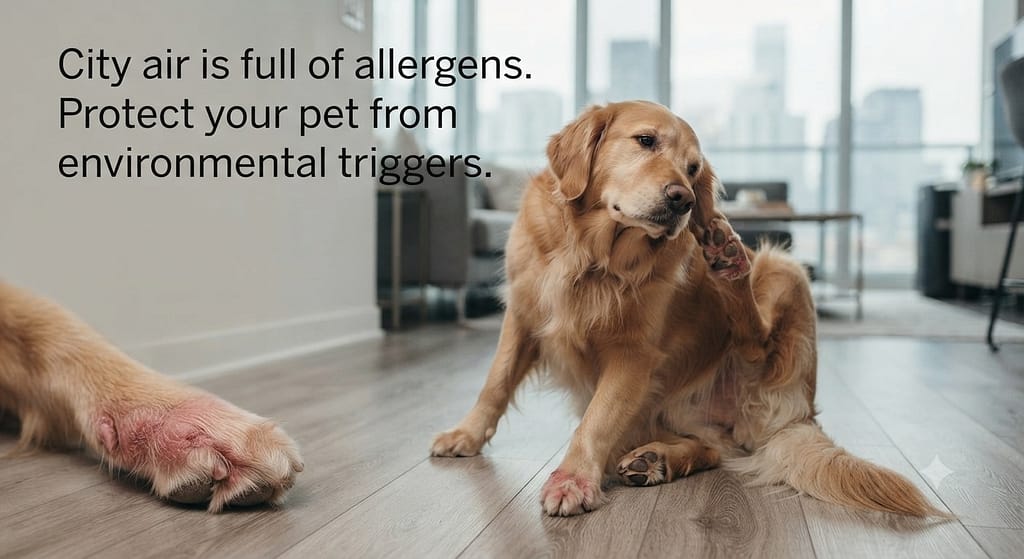
City air is full of allergens—dust mites, mold spores, and pollution.
If your apartment dog scratches constantly, it could be a food allergy.
City-specific dog allergies are a growing concern.
The Top Food Allergens:
- Chicken.
- Beef.
- Corn.
- Wheat.
- Soy.
The Solution: Try a limited-ingredient diet or hydrolyzed protein diet (requires a vet prescription).
This is key to managing environmental allergens for dogs that are exacerbated by city living.
Section 2: Healthy Treats for Dogs & Hydration – The Apartment-Friendly Approach
Treats are essential for training, but they can also fill your apartment with odors and add unnecessary calories.
This section focuses on healthy treats for dogs that are apartment-friendly.
The Apartment Treat Storage Hack
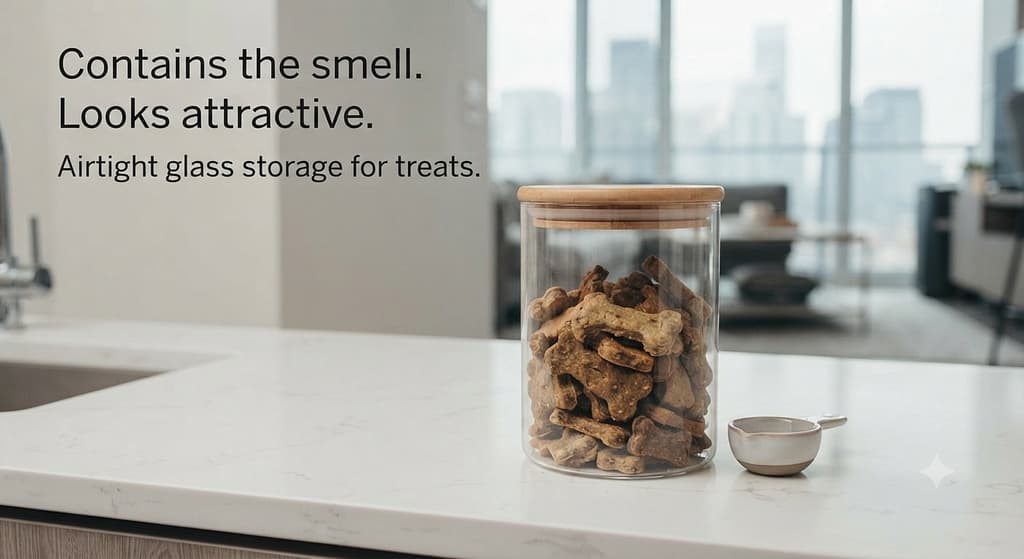
- The Problem: Cheese and meat-based treats reek.
- The Solution: Store treats in a glass jar with a tight seal. This contains the smell and looks attractive on your counter. This is a simple apartment dog grooming tip for your pantry.
DIY Frozen Treats (The Summer Saver)
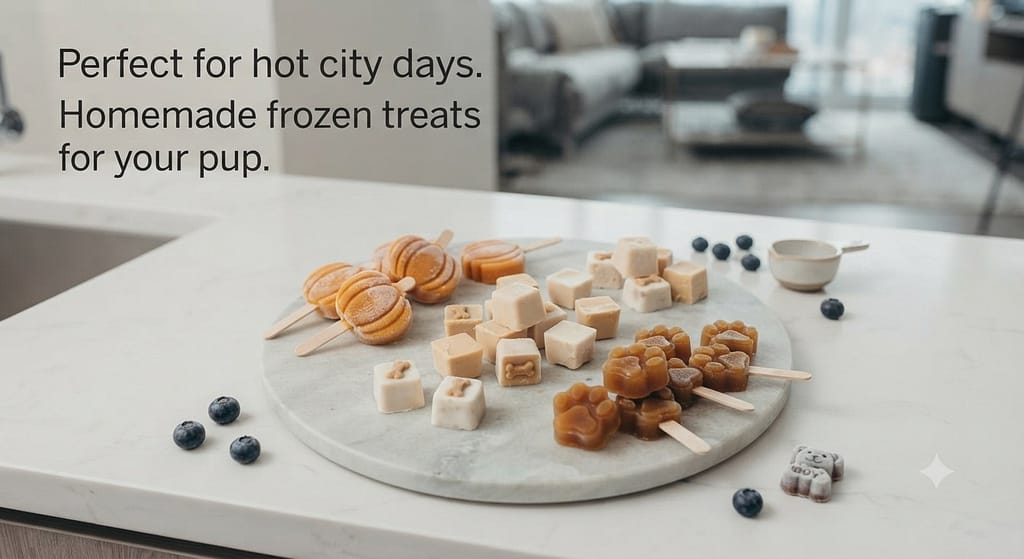
These are perfect for hot city days when you need to cool your dog down.
They’re excellent homemade dog treat recipes.
Pumpkin Pupsicles:
- Ingredients: 100% pure pumpkin puree + plain yogurt + water.
- Instructions: Mix, pour into ice cube trays, freeze.
- Benefit: Pumpkin aids digestion; yogurt provides probiotics.
Peanut Butter Cubes:
- Ingredients: Unsalted, xylitol-free peanut butter + banana + water.
- Instructions: Blend, pour into molds, freeze.
- Important: Always check for xylitol. It’s deadly to dogs.
Bone Broth Pops:
- Ingredients: Low-sodium bone broth.
- Instructions: Freeze in ice cube trays.
- Benefit: Great for hydration on hot days.
The “3-Ingredient Pumpkin Treat” Recipe (No-Bake)
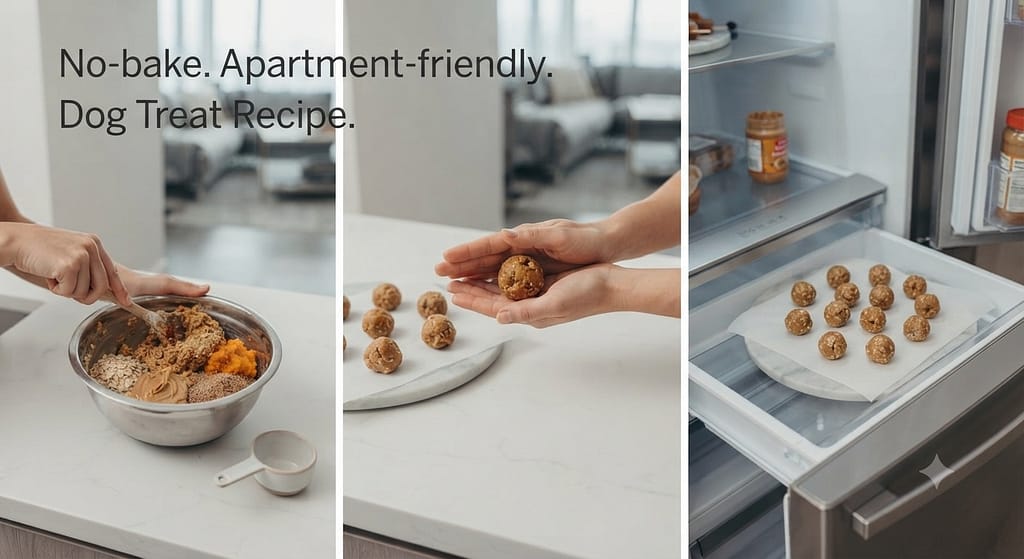
This is a simple, apartment-friendly recipe that requires no oven.
These homemade dog treat recipes are easy and healthy.
Ingredients:
- 1 cup pumpkin puree.
- 2 cups oat flour (or blended oats).
- 1/4 cup coconut oil.
Instructions:
- Mix all ingredients.
- Roll into bite-sized balls.
- Refrigerate for 1 hour.
- Store in the fridge.
Benefit: High in fiber, low in fat, and delicious.
Hydration Tips For Apartment Dog
Apartment dogs often dehydrate due to the “concrete heat.”
These hydration tips for apartment dogs are essential.
The 3-Bowl Rule:
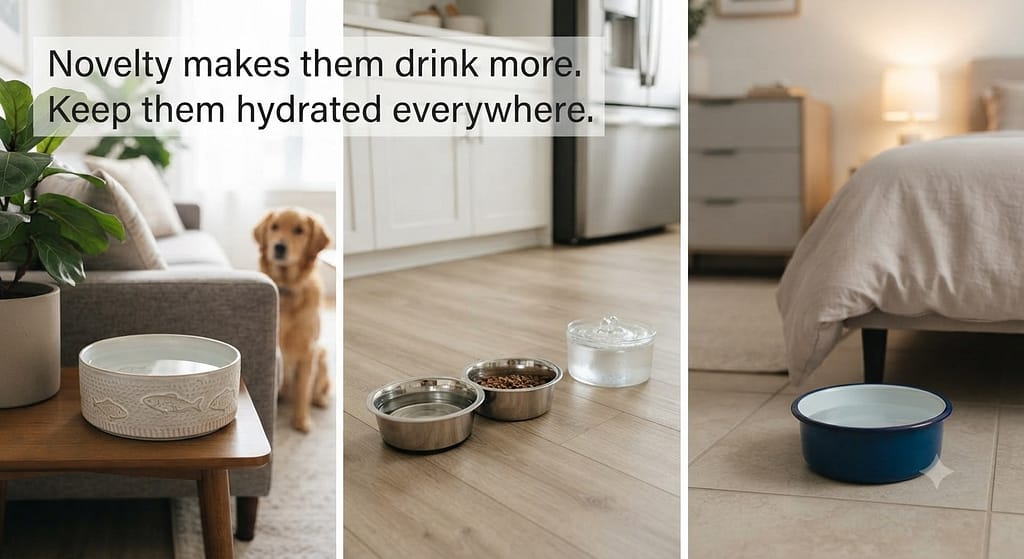
Keep 3 water bowls in different rooms. The novelty makes them drink more.
The “Tuna Water” Hack:
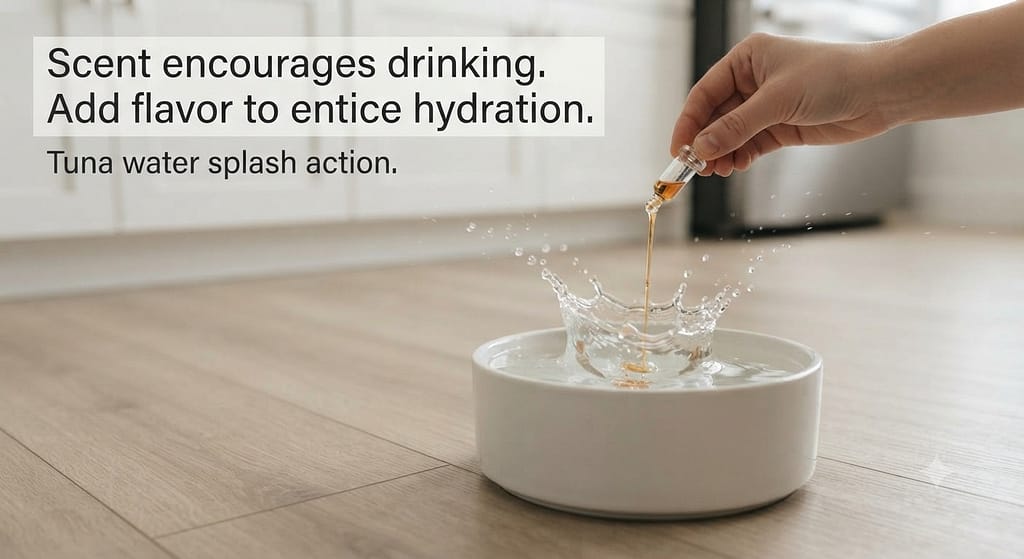
Add a splash of unsalted tuna water (not oil) to their water bowl. The scent encourages drinking.
Dog Hydration Options:
Beyond water, consider dog hydration options like pet-safe electrolyte solutions or adding water to their kibble.
Section 3: Managing Dog Weight in Apartments – Preventing Obesity in Small Dogs
Small spaces = less exercise = weight gain. A 1lb gain on a 10lb dog is the equivalent of a human gaining 15-20lbs.
This is the core challenge of managing dog weight in apartments and preventing obesity in small dogs.
The Body Condition Score (BCS)
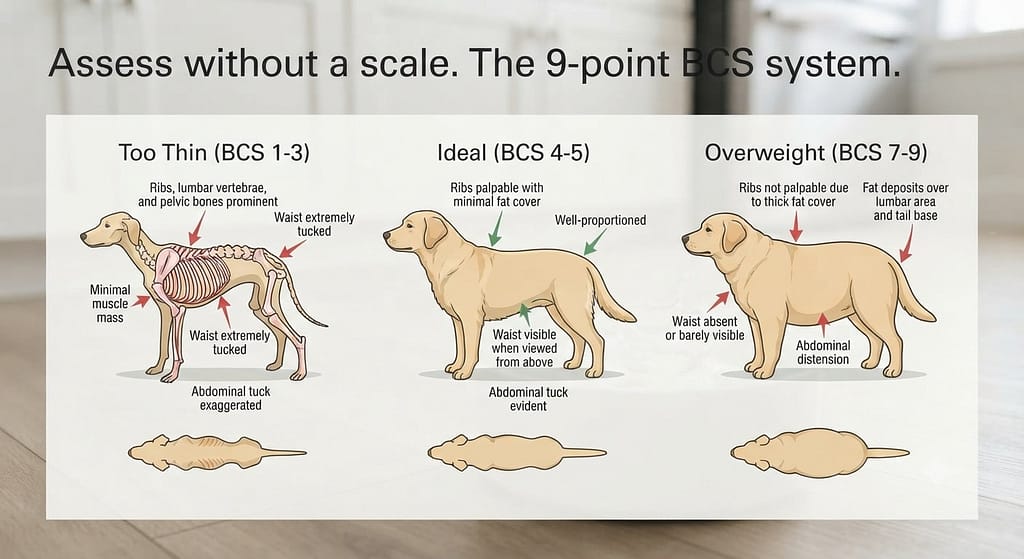
Teach owners how to assess their dog’s weight without a scale.
This is a key part of weight management for urban dogs.
The Rib Test:
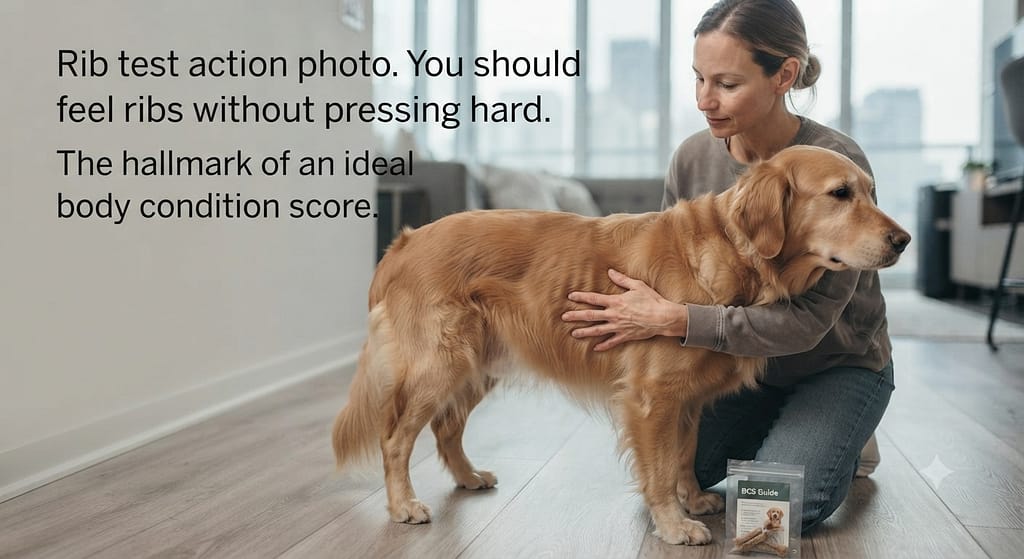
- Run your hands along their ribcage.
- Ideal: You can feel the ribs without pressing hard.
- Too Thin: Ribs are visibly prominent.
- Overweight: You cannot feel the ribs without pressing firmly.
The Waist Test:
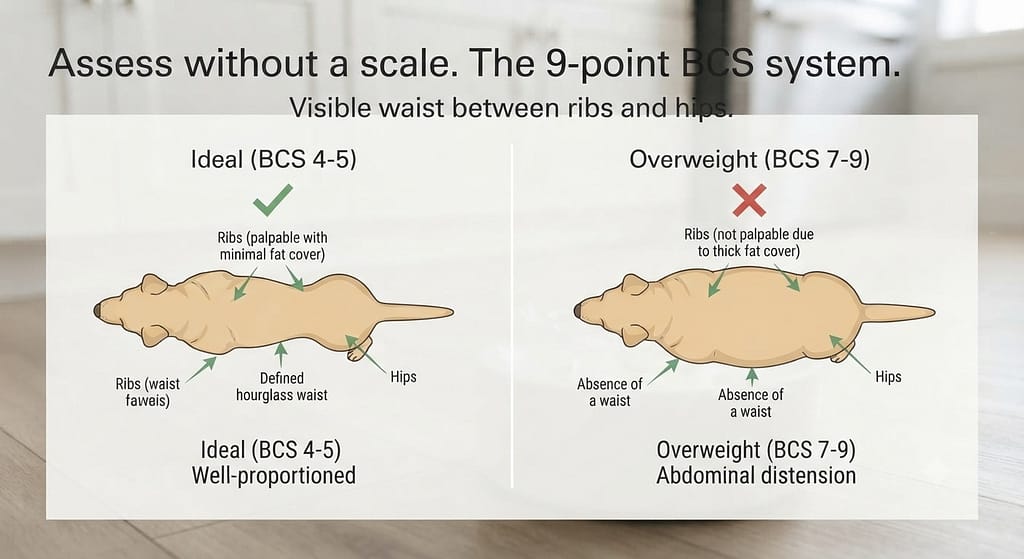
- Look at your dog from above.
- Ideal: A visible waist (hourglass shape) between the ribs and hips.
- Overweight: No waist; straight or bulging sides.
The 5 Health Risks of Obesity in Apartments
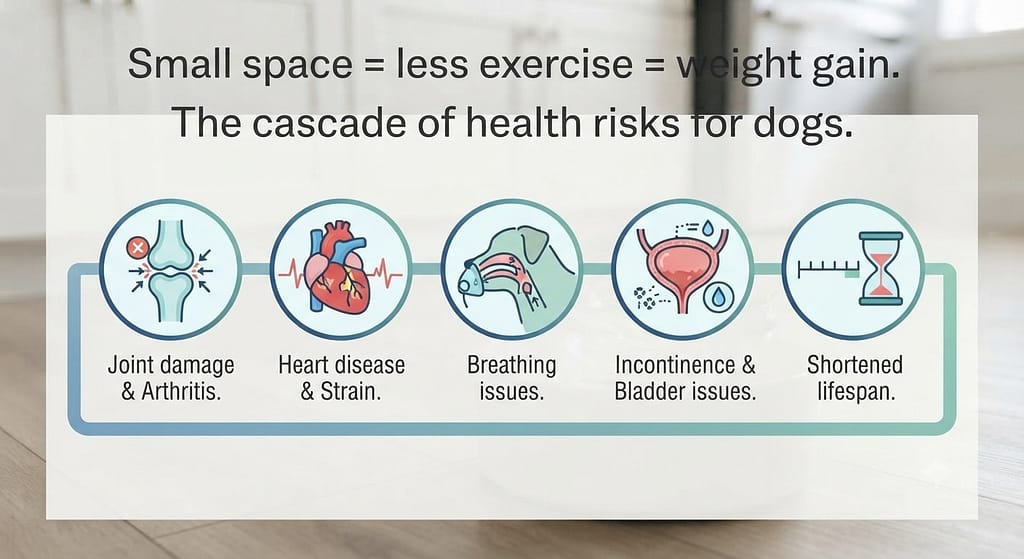
- Joint Damage: Small dogs with extra weight = painful arthritis (hard on hardwood floors).
- Heart Disease: Especially in Cavaliers with MVD (extra weight strains the heart).
- Breathing Issues: Frenchies with extra weight = severe airway collapse.
- Incontinence: Overweight dogs leak urine due to pressure on the bladder.
- Shortened Lifespan: By up to 2.5 years.
The “Small Dog Weight Chart” By Breed (Printable)
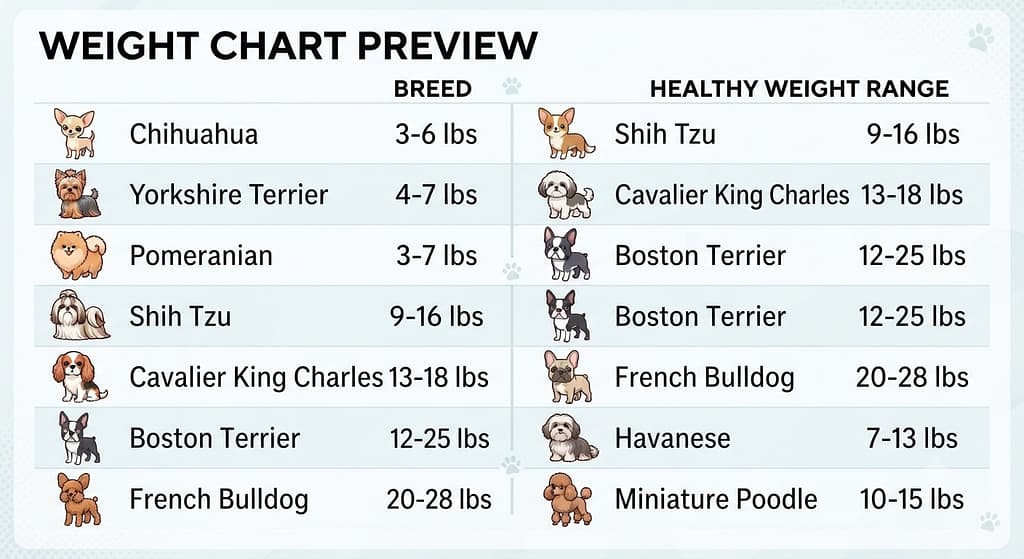
This is the definitive small dog weight chart by breed. (Download here)
| Breed | Healthy Weight Range |
|---|---|
| Chihuahua | 3-6 lbs |
| Yorkshire Terrier | 4-7 lbs |
| Pomeranian | 3-7 lbs |
| Shih Tzu | 9-16 lbs |
| Cavalier King Charles | 13-18 lbs |
| Boston Terrier | 12-25 lbs |
| French Bulldog | 20-28 lbs |
| Havanese | 7-13 lbs |
| Miniature Poodle | 10-15 lbs |
Portion Control Hack
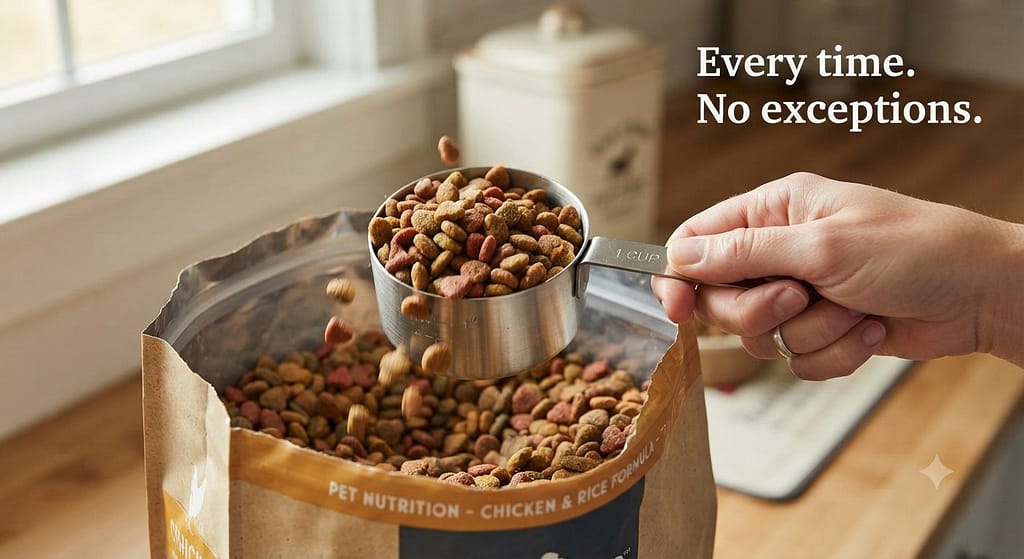
- The Reality: “Eyeballing” kibble leads to overfeeding.
- The Solution: Use a measuring cup. Every time. No exceptions.
- The Upgrade: Automatic feeders dispense exact portions and prevent “begging” behavior.
Dog Exercise in Apartments:
Combine portion control with dog exercise in apartments—use the activities from our Indoor Enrichment Bible to keep them active without a yard.
Section 4: Dental Health for Small Dogs – The 3-Step Routine
80% of dogs over 3 years old have dental disease. Small dogs are at higher risk because their teeth are crowded.
Dental health for small dogs is non-negotiable.
The “Dental Triad” Risk
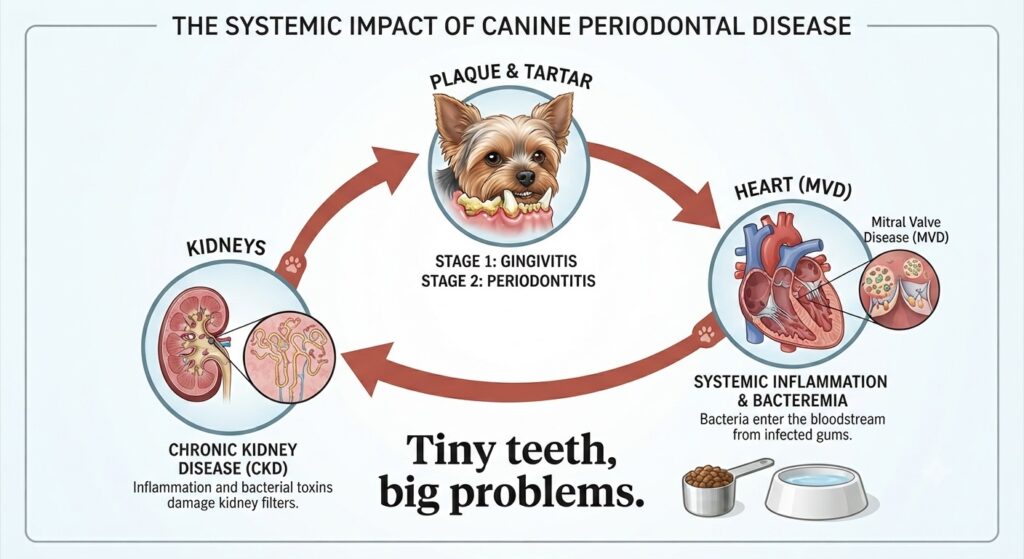
- Plaque + bacteria enter the bloodstream.
- Damages the heart (MVD in Cavaliers).
- Damages the kidneys.
The 3-Step Apartment Dental Routine (5 Minutes/Day)
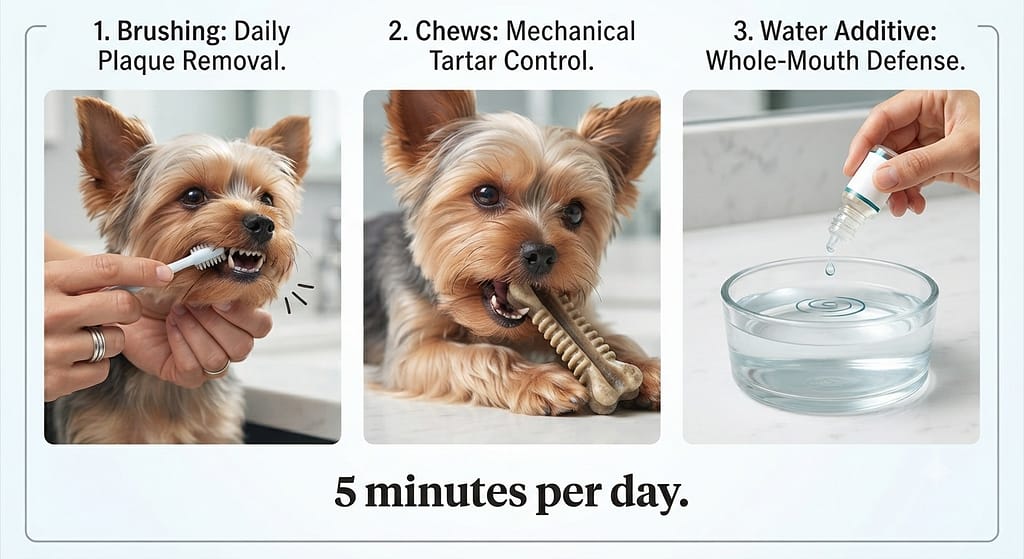
1. Brushing:
- Tool: Finger brush or small-headed dog toothbrush.
- Paste: Enzymatic toothpaste (never human toothpaste—toxic).
- Technique: Start with just letting them lick the paste. Gradually introduce brushing. Focus on the outer surfaces of the teeth.
2. Chews:
- Daily: Give a dental chew every day.
- Quiet Chews: CET chews, Greenies, or VeggieDent. Avoid hard bones that clatter on floors and annoy neighbors.
- The “Smell” Factor: Store chews in an airtight container. Using dental chews for dogs is a key part of daily care.
3. Water Additive:
- The Product: Dental rinse added to their water.
- The Benefit: Reduces plaque between brushings.
- The Caveat: Not a replacement for brushing.
The “No-Brush” Alternative
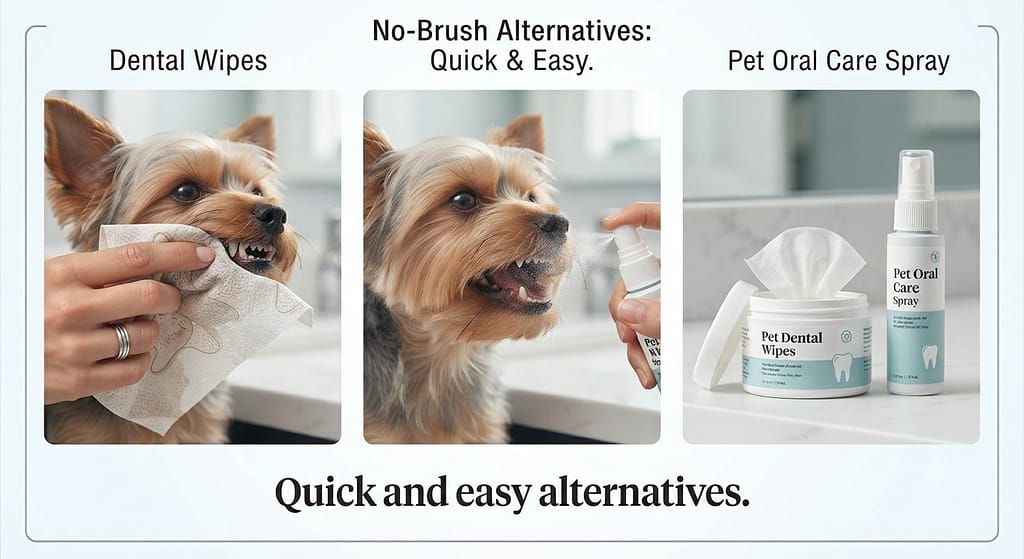
If your dog won’t tolerate brushing:
- Dental Wipes: Rub them on the teeth.
- Dental Sprays: Quick and easy.
- Professional Cleaning: Schedule a vet dental cleaning annually.
When to See a Vet
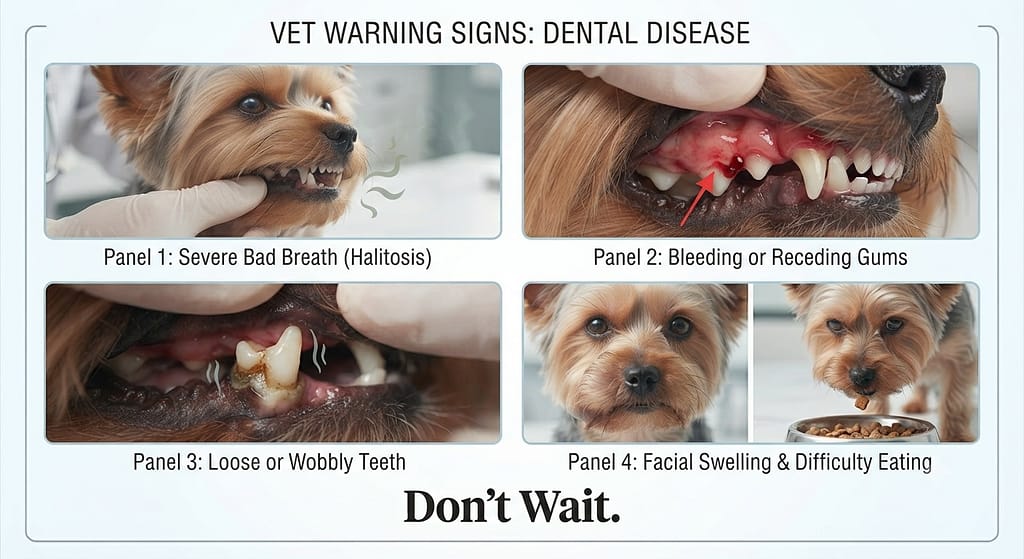
- Bad breath (halitosis).
- Bleeding gums.
- Loose teeth.
- Difficulty eating.
- Swelling around the face.
Section 5: Breed-Specific Health Concerns – French Bulldog & Cavalier Health Issues
This section addresses breed-specific health concerns with deep dives into the two most popular apartment breeds.
The French Bulldog Health Issues (French Bulldog Health Issues)
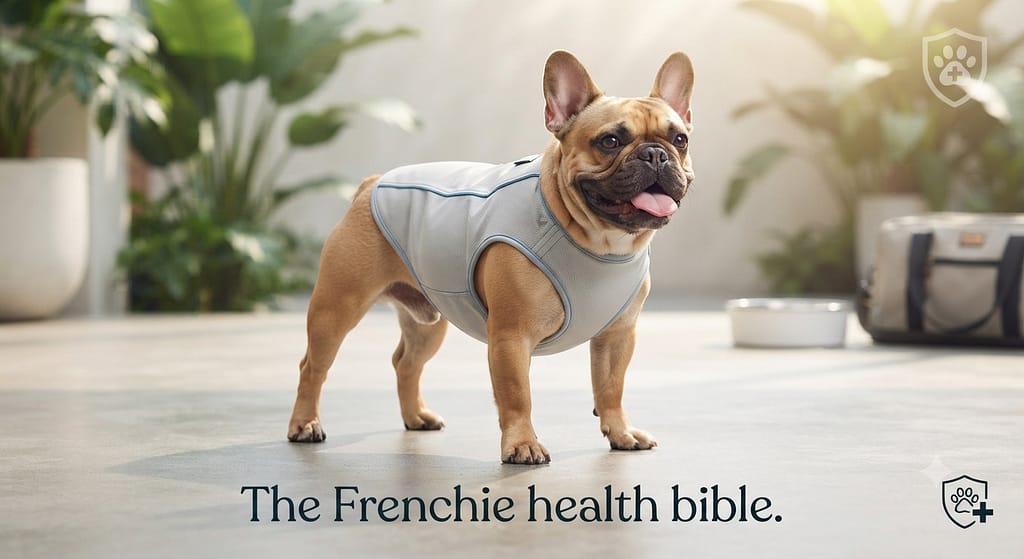
Issue 1: Brachycephalic Airway Syndrome (BOAS)
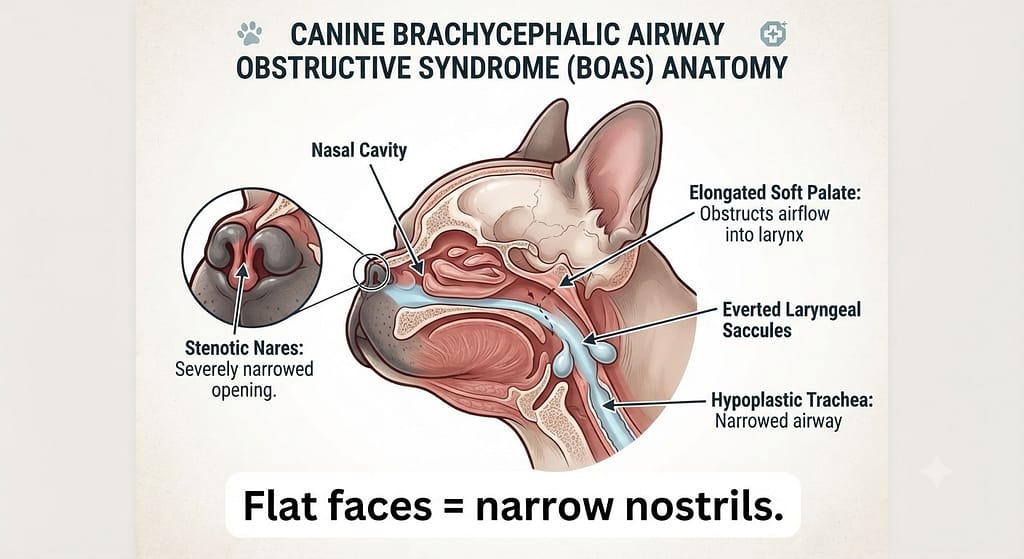
- The Problem: Flat faces = narrow nostrils, elongated soft palate.
- The Signs: Loud snoring, difficulty exercising, gagging, heat intolerance.
- The Solution: Surgery (stenotic nares correction, soft palate resection) if severe.
- The Warning: Never let a Frenchie overheat. (Link to Emergency Preparedness Guide.)
Issue 2: Skin Fold Dermatitis (French Bulldog Grooming Routine)
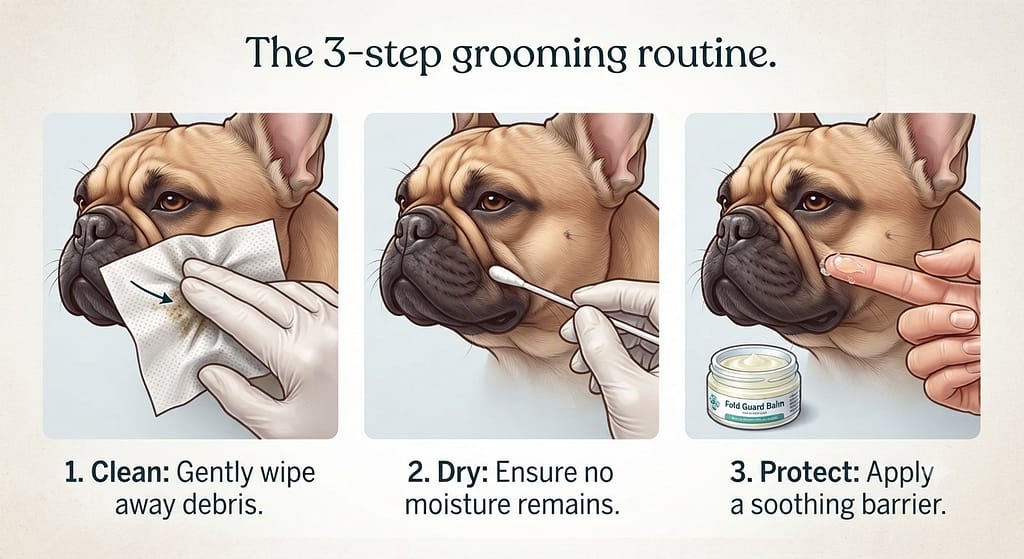
- The Problem: The “smile” wrinkles on their face and the tail pocket area trap moisture and yeast.
- The Signs: Redness, odor, discharge, itching.
- The 3-Step Grooming Routine (French Bulldog Grooming Routine):
- Clean: Use a fragrance-free baby wipe or medicated wipe (chlorhexidine).
- Dry: Pat completely dry with a soft cloth. Moisture = infection.
- Protect: Apply a barrier cream (Vaseline or specialized fold cream).
Issue 3: Allergies
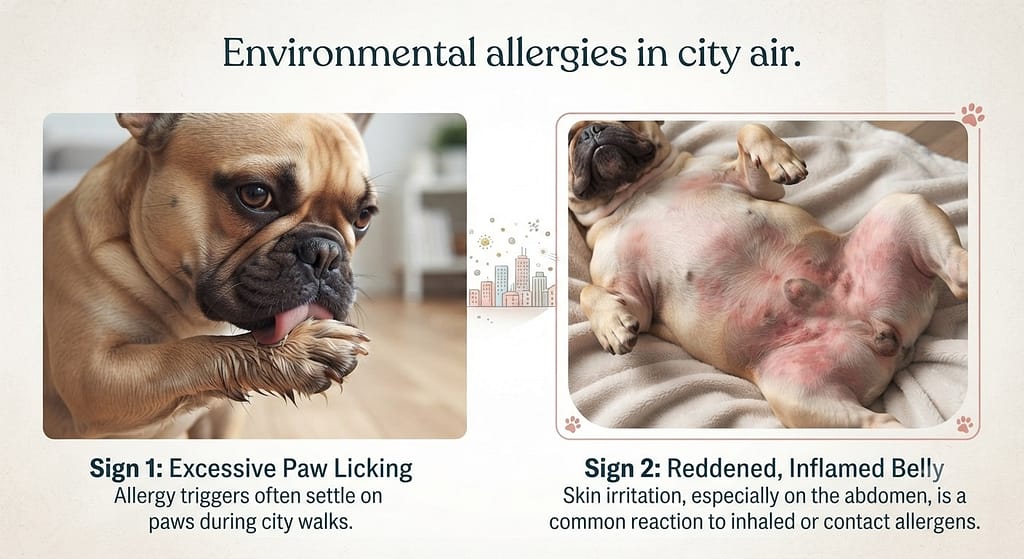
- The Problem: Frenchies are prone to environmental allergies (dust mites, pollen—worse in city air).
- The Signs: Licking paws, red belly, ear infections.
- The Solution: A limited-ingredient diet, regular bathing, and a veterinary dermatologist.
Issue 4: Spinal Issues (IVDD)
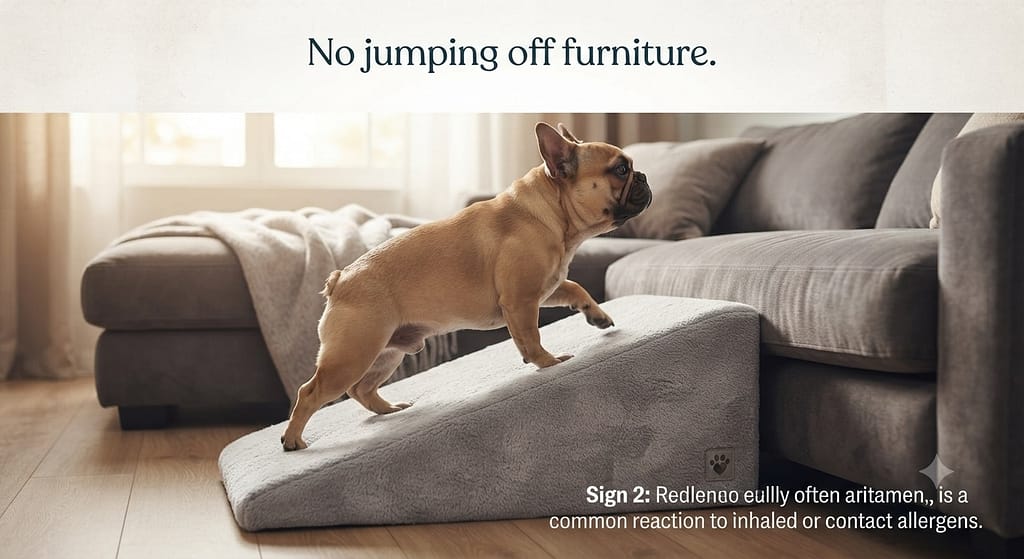
- The Problem: Intervertebral Disc Disease is common in dwarf breeds.
- The Prevention: No jumping off furniture. Use ramps.
- The Warning: Sudden back pain, paralysis, or inability to walk = emergency.
The Cavalier King Charles Health Problems (Cavalier King Charles Health Problems)
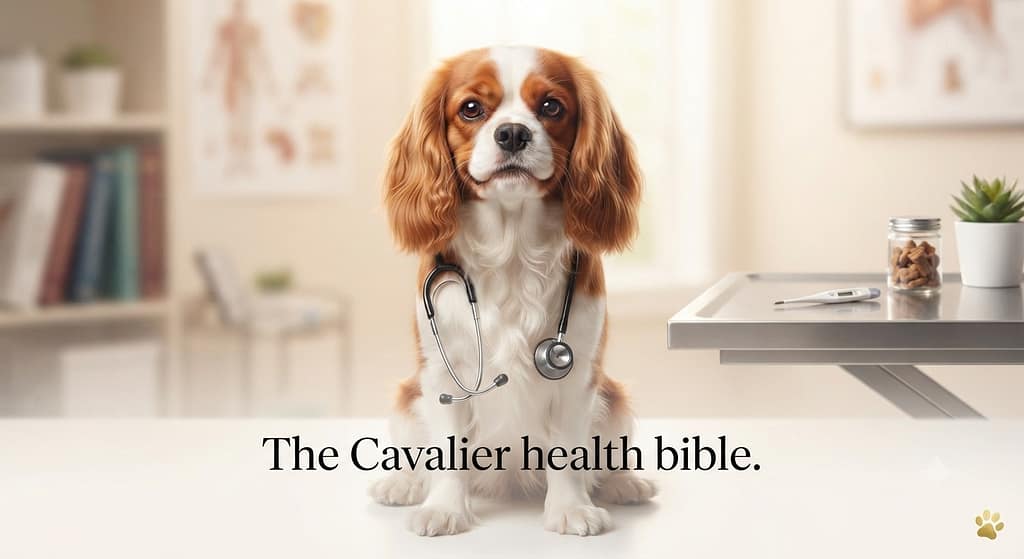
Issue 1: MVD (Mitral Valve Disease)

- The Problem: A genetic heart condition that causes the mitral valve to leak.
- The Reality: 50% of Cavaliers have it by age 5. 90% by age 10.
- The Progression: Heart murmur → enlarged heart → heart failure.
- The Prevention: Regular vet check-ups with heart auscultation (once a year for young dogs, twice a year for seniors).
- The Early Warning: A dry cough, especially at night, or exercise intolerance.
Issue 2: Exercise Needs in an Apartment

- The Reality: Cavaliers are moderate energy. They do NOT need hours of running.
- The Ideal: Two 20-minute sniffaris per day (morning + evening).
- The Warning: Over-exercising a Cavalier with early MVD can cause collapse. Always let them set the pace. Understanding Cavalier exercise needs is critical.
Issue 3: Syringomyelia (SM)
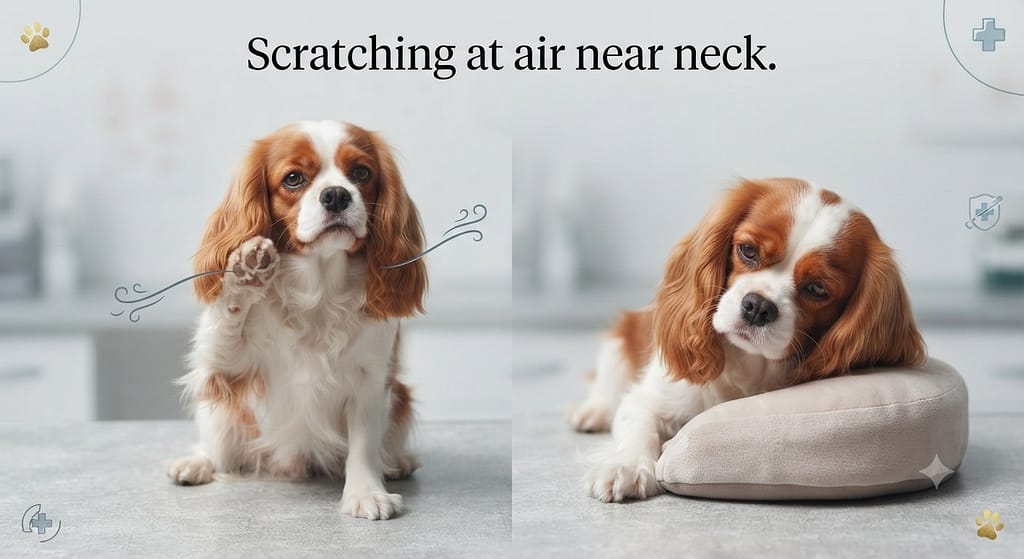
- The Problem: A neurological condition where the skull is too small for the brain.
- The Signs: Phantom scratching (scratching at the air near their neck), head rubbing, yelping when touched.
- The Reality: Not all Cavaliers have it, but it’s serious. MRI required for diagnosis.
Issue 4: Ear Infections
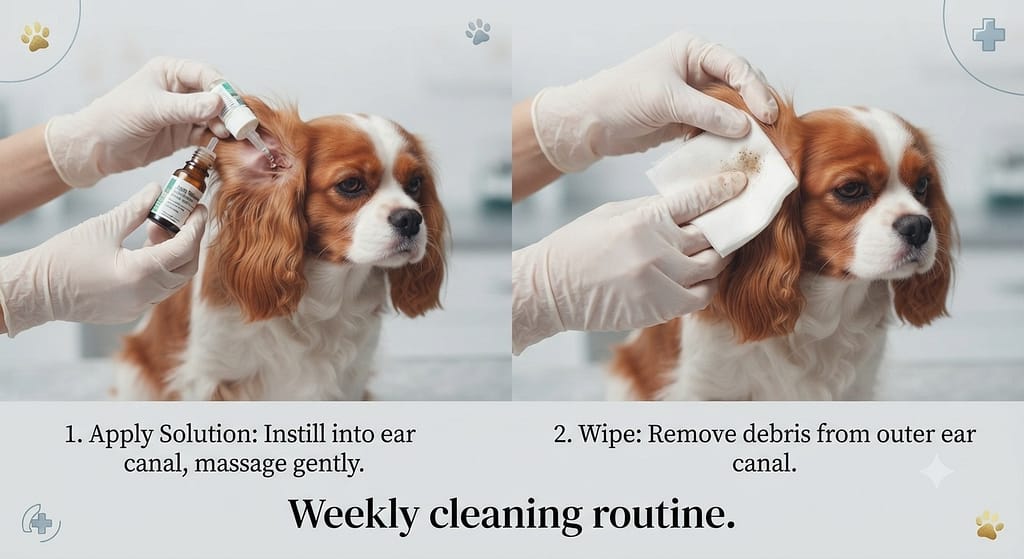
- The Problem: Their floppy, feathery ears trap moisture.
- The Routine: Weekly cleaning with a vet-approved ear solution.
- The Signs: Head shaking, scratching at ears, odor, redness.
Section 6: Apartment Dog Grooming Tips & Dog Odor Management
Beyond breed-specific care, every apartment dog needs a basic grooming routine.
These apartment dog grooming tips are essential for maintaining dog hygiene in apartments and effective dog odor management.
The “Elevator Shake” Prevention
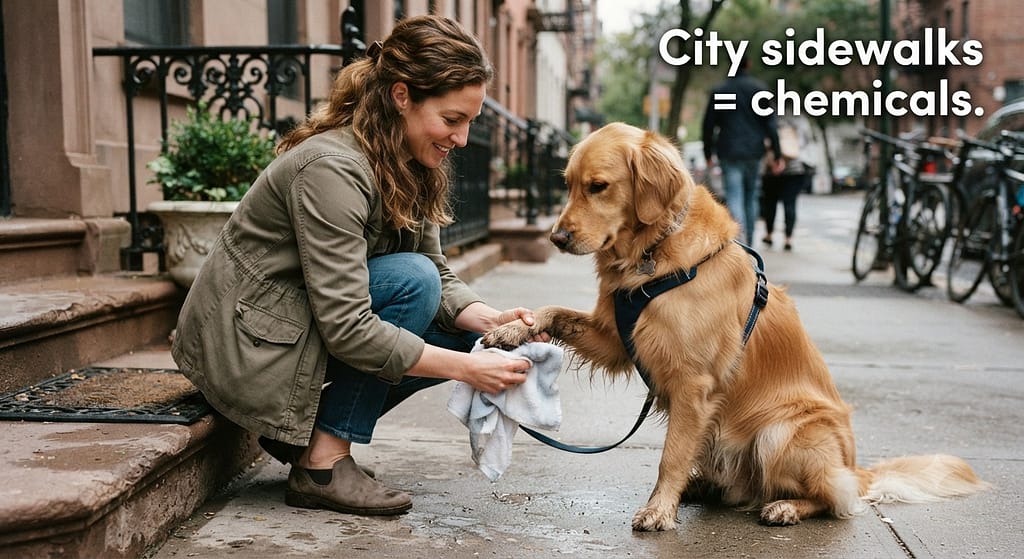
- The Danger: City sidewalks are covered in chemicals (de-icing salt in winter, cleaning products in summer).
- The Routine: After walks, always wipe paws with a damp cloth. Licking those chemicals off = toxicity risk.
Shedding Management
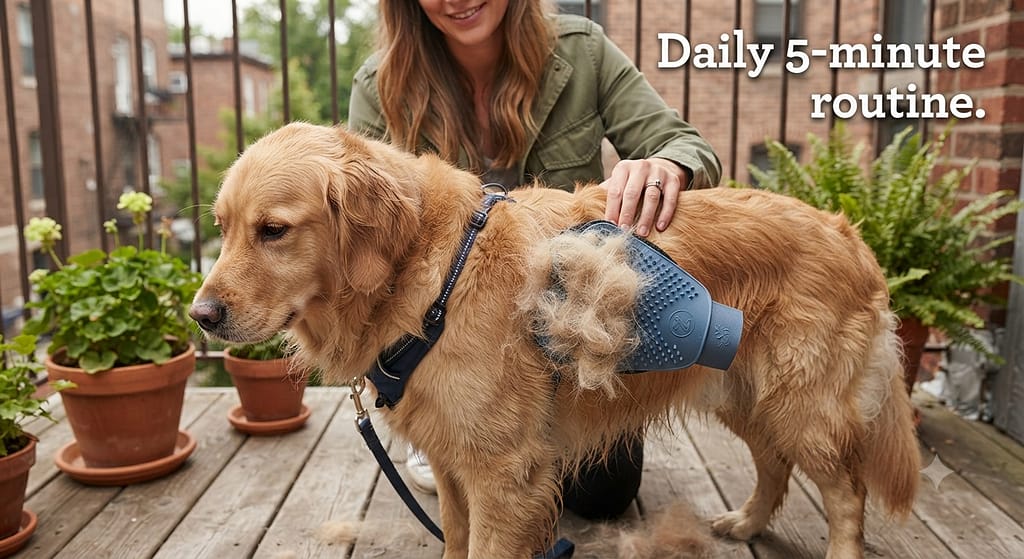
- The Problem: Apartment rugs trap fur. It floats through the air and into your neighbors’ vents.
- The Solution: A daily 5-minute “zoom groom” outside (or on the balcony). Use a rubber grooming mitt to collect loose hair.
Nail Trimming
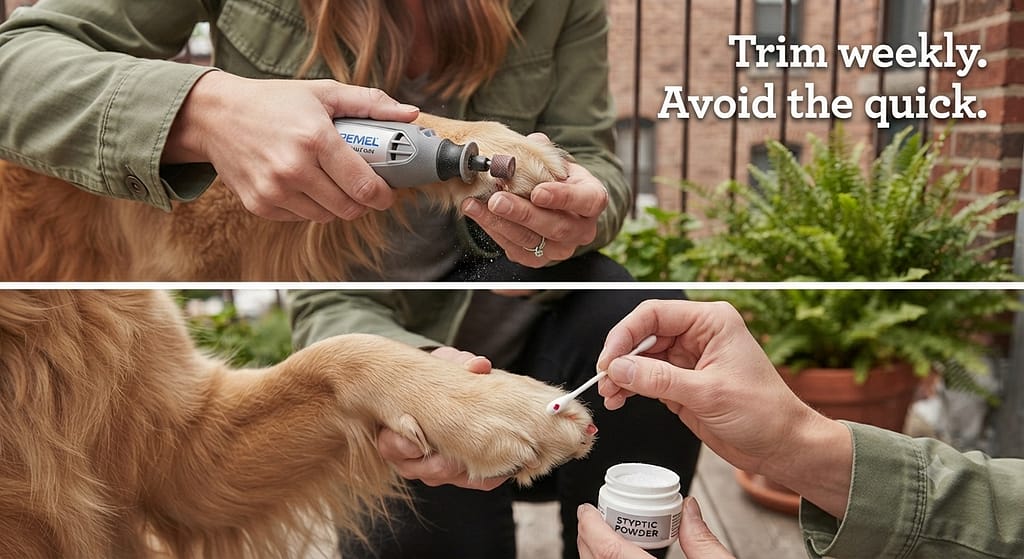
- The Problem: The echoing “click-clack” of untrimmed nails on hardwood is annoying to neighbors and dangerous for your dog’s joints.
- The Solution: Trim weekly. Use a Dremel grinder (quieter than clippers) for a smoother finish.
- The Warning: Avoid the “quick” (the blood vessel inside the nail). If you cut it, use styptic powder to stop bleeding.
Bathing
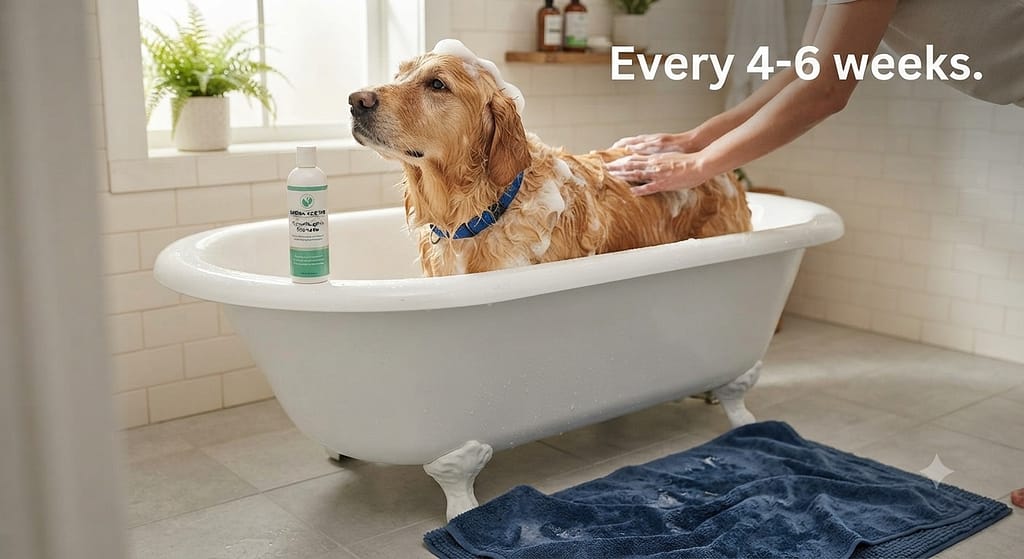
- The Reality: Over-bathing strips natural oils.
- The Routine: Bathe every 4-6 weeks, or as needed (if they roll in something gross).
- The Product: Use a hypoallergenic, oatmeal-based shampoo for city dogs with sensitive skin.
- The Pro-Tip: Put a towel on the bathroom floor to prevent slipping. This reduces anxiety.
Conclusion: The Daily Wellness Mindset
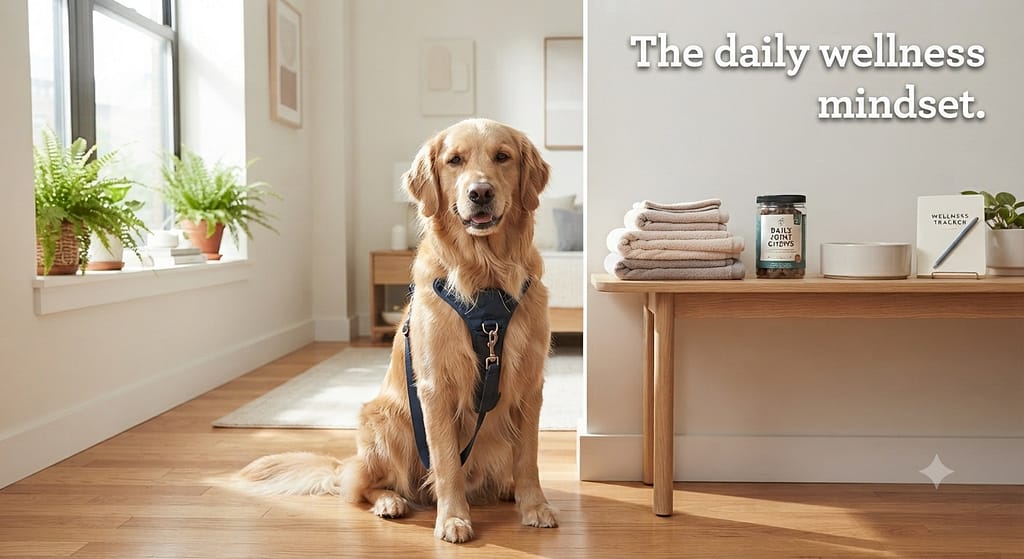
Daily wellness isn’t complicated. It’s about routine—weight checks, dental brushing, skin fold cleaning, and mindful feeding.
This is the essence of apartment dog health, wellness, and urban dog health challenges management.
The Golden Rule: Prevention is cheaper than treatment. A $20 bag of dental chews is cheaper than a $1,000 dental extraction.
This is the foundation of affordable dog health solutions that work.
Your Final Checklist:
- Nutrition: Choose low-odor food. Measure portions. Rotate toppers.
- Treats: Use frozen options. Store in airtight containers.
- Weight: Check ribs weekly. Use the weight chart.
- Dental: Brush daily. Use chews. Add water additive.
- Breed Care: Know Frenchie folds. Know Cavalier heart.
- Grooming: Wipe paws. Brush coat. Trim nails.
Your Next Steps:
- For emergencies, visit our Emergency Preparedness Guide [Link].
- For activities, visit our Indoor Enrichment Bible [Link].
- Download our “Weekly Apartment Dog Wellness Tracker” below to log weight, dental brushing, grooming, and treat intake.
🐾 — Apartment Dog Guide (ADG)
Living large in small spaces, one paw at a time. That’s the apartment dog life—see you in the next guide!.


