

The Great Frenchie Debate: Harness vs. Collar—Which Actually Keeps Your Bulldog Safe?
It was just an ordinary Tuesday walk.
My French Bulldog, Bruno, saw a squirrel.
What happened next unfolded in slow motion: He lunged.
The leash went taut. His collar tightened.
And then came the sound I’ll never forget—a horrible, choked “HONK!” that sounded like a goose being stepped on. Bruno collapsed, gasping for air, his eyes wide with panic.
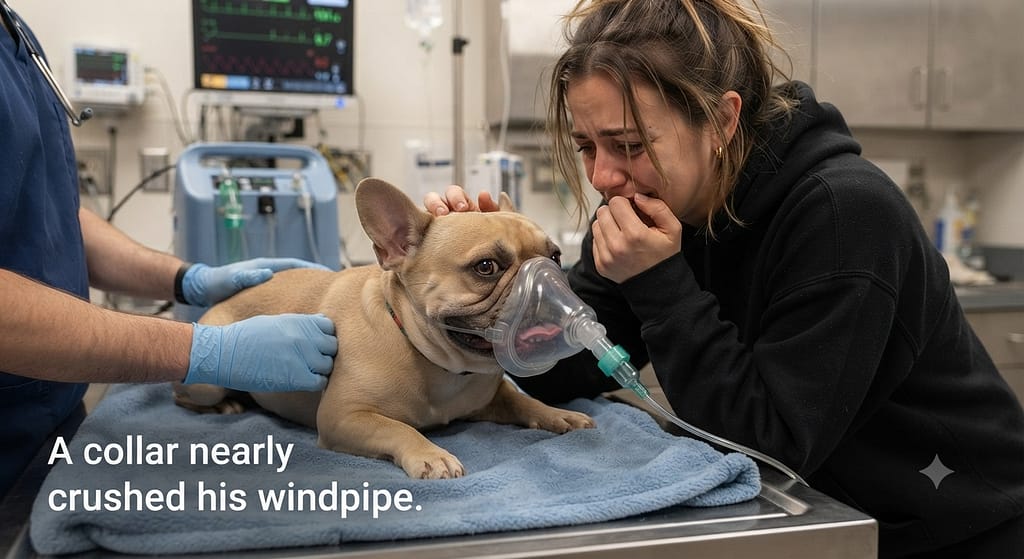
The emergency vet visit revealed the terrifying truth: He had bruised his trachea.
That “harmless” collar-and-leash setup had nearly crushed his windpipe.
The vet’s words haunt me to this day: “You’re lucky. French Bulldogs with collar injuries sometimes need tracheal stents or even emergency surgery.”
If you’re reading this with a collar on your Frenchie right now, please don’t feel guilty.
You’re following what we’ve all been taught: Dogs wear collars.
But here’s what most Frenchie owners discover too late: French Bulldogs aren’t “regular dogs” when it comes to neck anatomy.
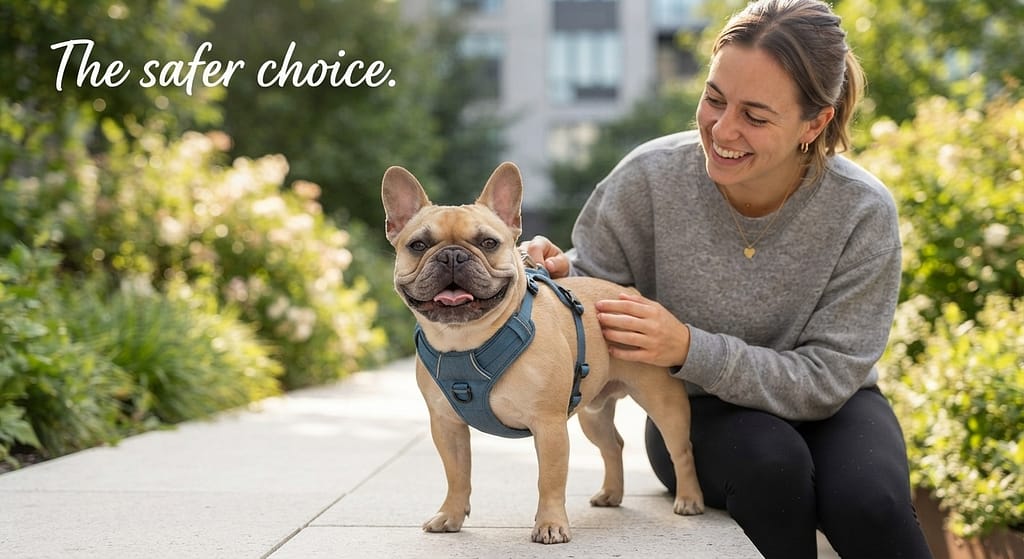
But before we dive into the debate, let’s understand why this matters so much for your wrinkly companion…
The Anatomy of Danger: Why French Bulldogs Are Different
The Delicate Architecture of a Frenchie Neck
Let’s play a game of “biological Russian roulette.” Your Frenchie has:
If you work from home, you have more time to monitor your Frenchie’s walks — see our work from home with a dog survival guide
1. The Compromised Airway:
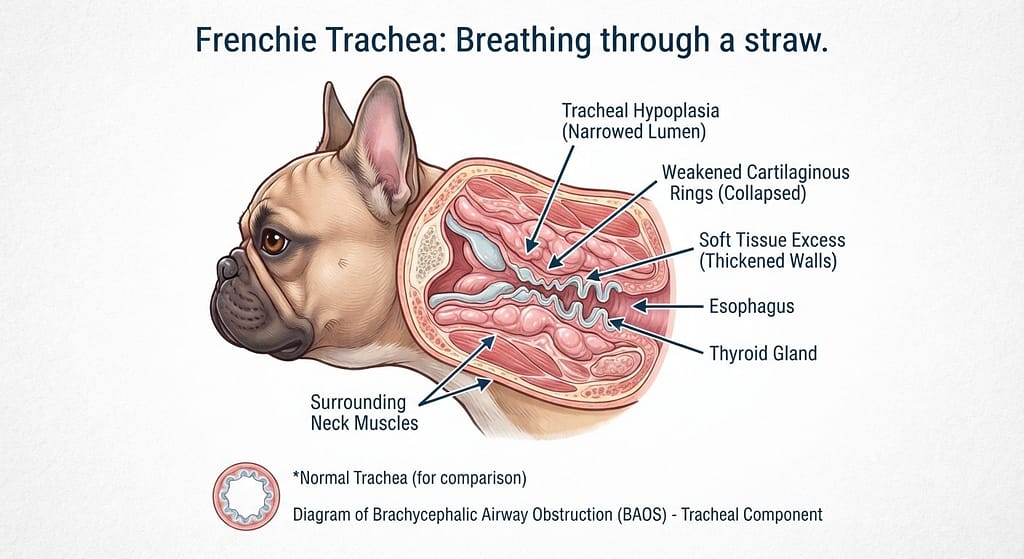
- Tracheal hypoplasia: An abnormally narrow windpipe (common in brachycephalic breeds)
- Soft tissue excess: That adorable squished face means extra tissue in the throat
- Weakened cartilage: The tracheal rings can collapse under pressure
2. The Spinal Vulnerability:
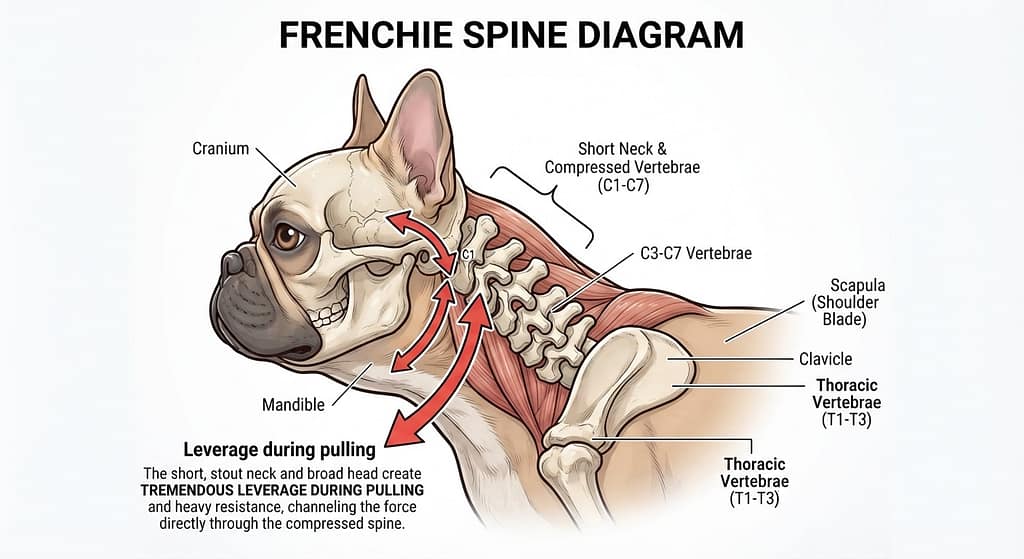
- Short neck: Less muscular support for the cervical spine
- Broad head: Creates tremendous leverage during pulling
- Compressed vertebrae: Common in the breed
3. The Eye Pressure Problem:
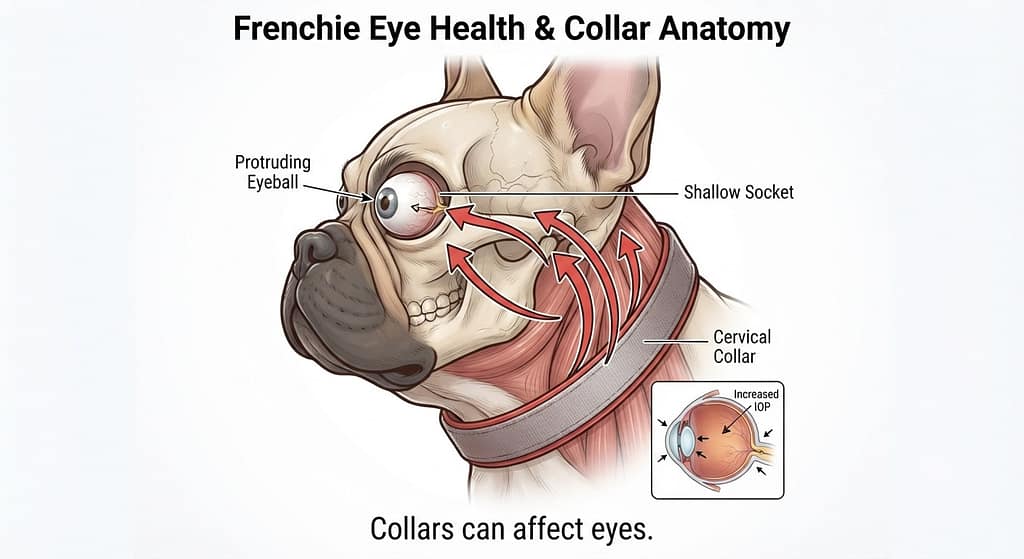
French Bulldogs already have protruding eyes with shallow eye sockets. Pressure on the neck can increase intraocular pressure, potentially exacerbating or causing eye issues.
The Physics of Force: A Simple Math Lesson
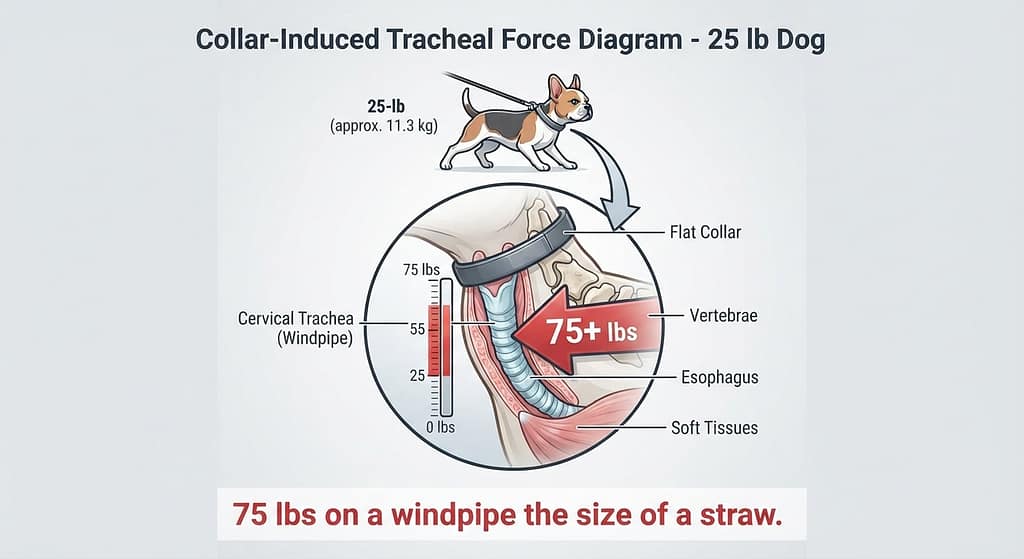
When your 25-pound Frenchie pulls against a collar:
- Moderate pull: 25 lbs of force directly on the trachea
- Strong lunge: Can generate 75+ lbs of force
- Sudden stop: Force multiplies exponentially
Now imagine: 75 pounds of pressure on a windpipe the diameter of a straw.
That’s the reality of using a collar with a determined Frenchie.
The Case For Collars: When They Might Be Acceptable
The Pro-Collar Argument (Yes, There Is One)
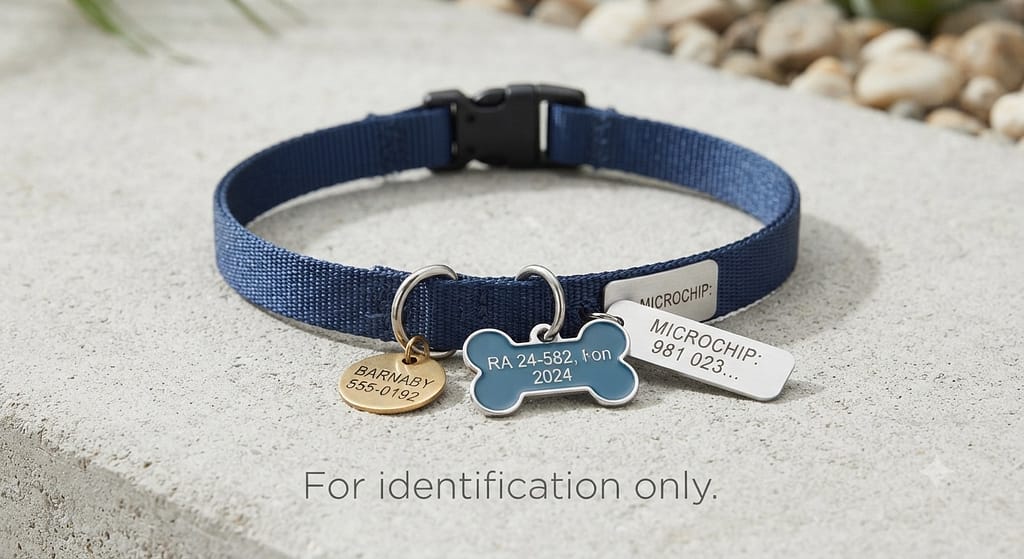
For identification purposes only: A lightweight collar with tags, removed during walks, is reasonable. It ensures your Frenchie has identification if they escape.
For highly trained, non-pulling adults: If your Frenchie walks perfectly on a loose leash 100% of the time and never lunges, a flat collar might be acceptable for short, controlled walks.
Choosing the right breed for your apartment starts with understanding why size isn’t everything
The “Maybe” Collar Types
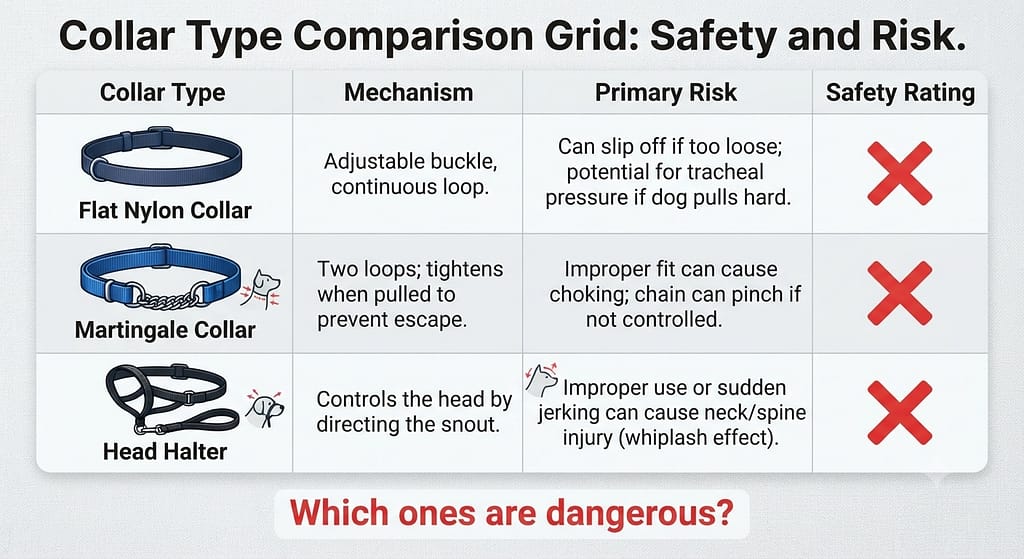
1. Flat Nylon Collars:
- Best for: ID only, not walking
- Risk level: Medium if used incorrectly
- Frenchie suitability: Poor for walking
2. Martingale Collars:
- How they work: Tighten to prevent slipping off
- The danger: Still puts pressure on the trachea
- Frenchie verdict: Absolutely not—their necks are as wide as their heads
3. Head Halters:
- Common misconception: “Like a harness for the face”
- Reality: Can twist neck, strain cervical spine
- Frenchie verdict: Dangerous for their anatomy
The One Acceptable Collar Scenario
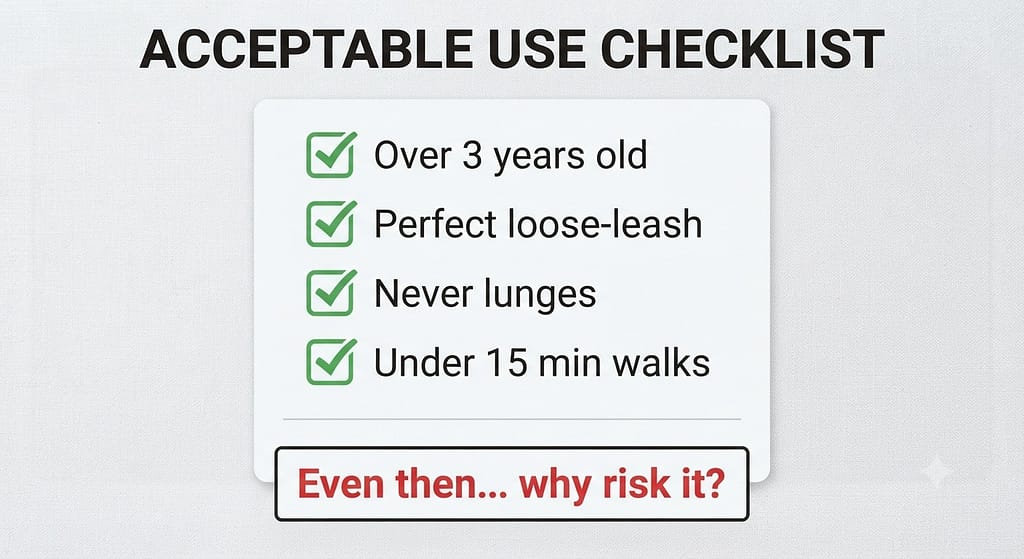
Only if:
- Your Frenchie is over 3 years old
- Has perfect loose-leash walking skills
- Never lunges or pulls
- Walks are under 15 minutes
- You use a wide, padded collar (distributes pressure)
- And even then, most experts say: “Why risk it?”
See why collars make experts nervous?
Now let’s explore the safer alternative…
The Harness Revolution: Why It’s Not Just Safer—It’s Smarter
The Physics of Protection
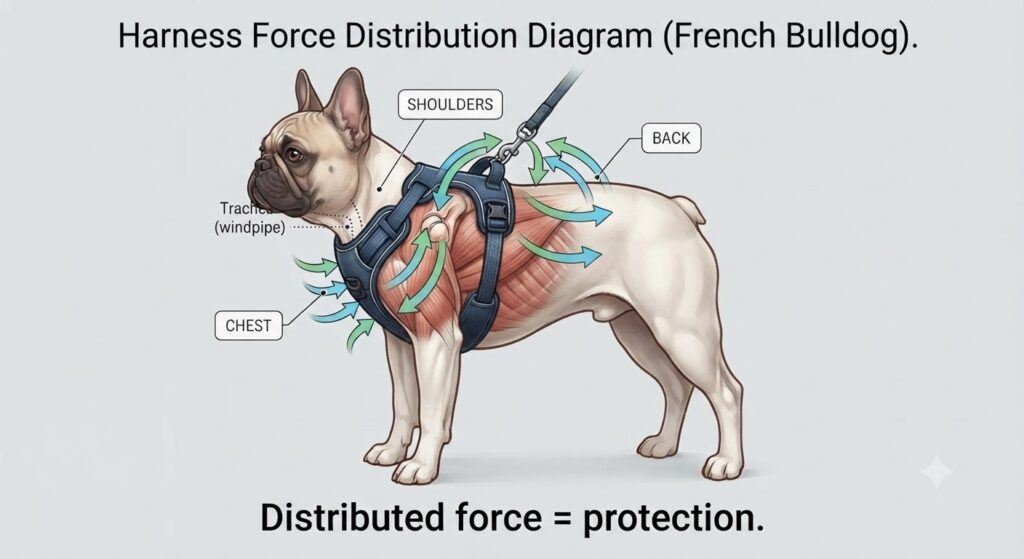
A well-fitted harness distributes force across:
- The chest (sternum)
- The shoulders (muscle groups)
- The back (in some designs)
- Nowhere near the trachea
The Three Harness Heroes for Frenchies
1. Front-Clip Harnesses (The Game-Changer)
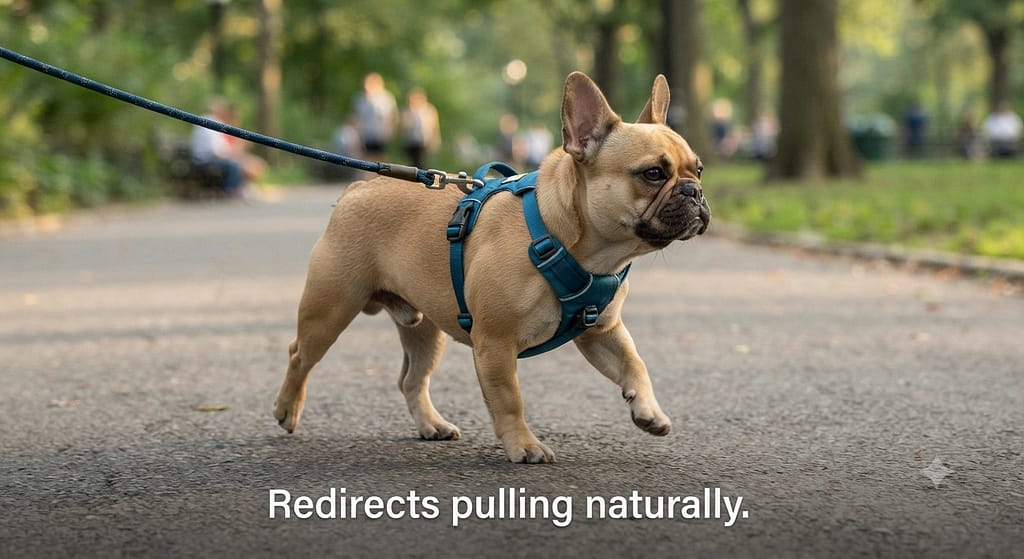
How they work: The leash attaches at the chest, redirecting the pulling force
Best for: Pullers, training, everyday walks
Magic moment: When your Frenchie pulls, they’re gently turned toward you
Top Pick: Ruffwear Front Range Harness
- Why Frenchies love it: Padded chest plate, doesn’t restrict shoulder movement
- Size trick: Frenchies often need a size up in chest, down in neck
- Safety feature: Two attachment points (front and back)
- Durability: Survives determined pullers
2. Back-Clip Harnesses (The Simple Solution)
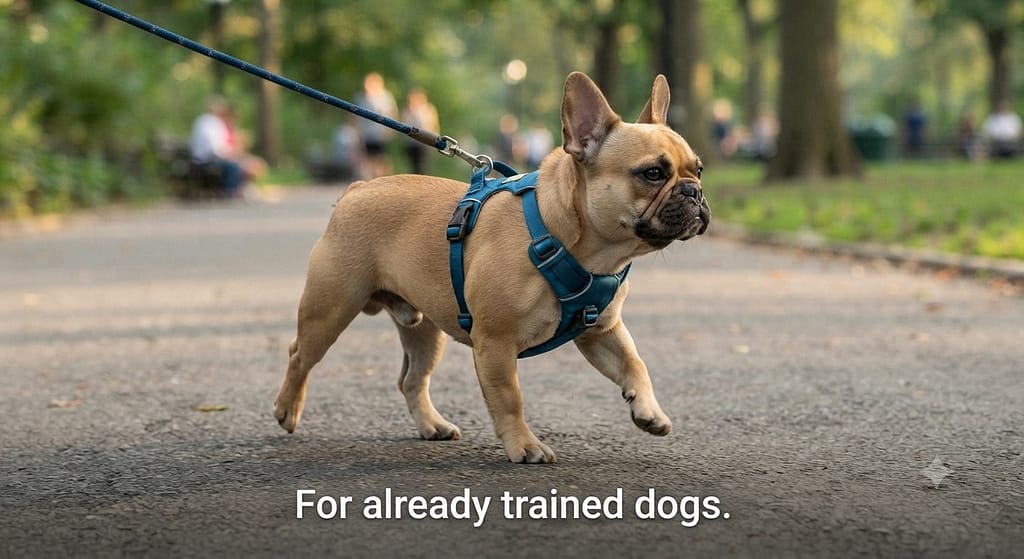
How they work: The leash attaches between the shoulder blades
Best for: Already trained dogs, casual walkers
Caution: Can encourage pulling if not properly trained
Top Pick: Kurgo Journey Air Harness
- Breathability: Mesh design for heat-prone Frenchies
- Car safety: Crash-tested (unexpected bonus)
- Fit: Adjustable in five points for barrel-shaped bodies
3. Dual-Clip Harnesses (The Best of Both Worlds)

How they work: The leash can be attached to the front or back
Best for: Versatility, training progression
Pro tip: Use front clip for training, back clip for trained walks
Top Pick: 2 Hounds Design Freedom No-Pull Harness
- Unique feature: Leash clips to both rings simultaneously
- Control: Maximum without tracheal pressure
- Comfort: Soft lining for sensitive Frenchie skin
Busy professionals need gear that works fast — see our best small dogs for 9-5 professionals.
The Harness Fit Test: Getting It Right
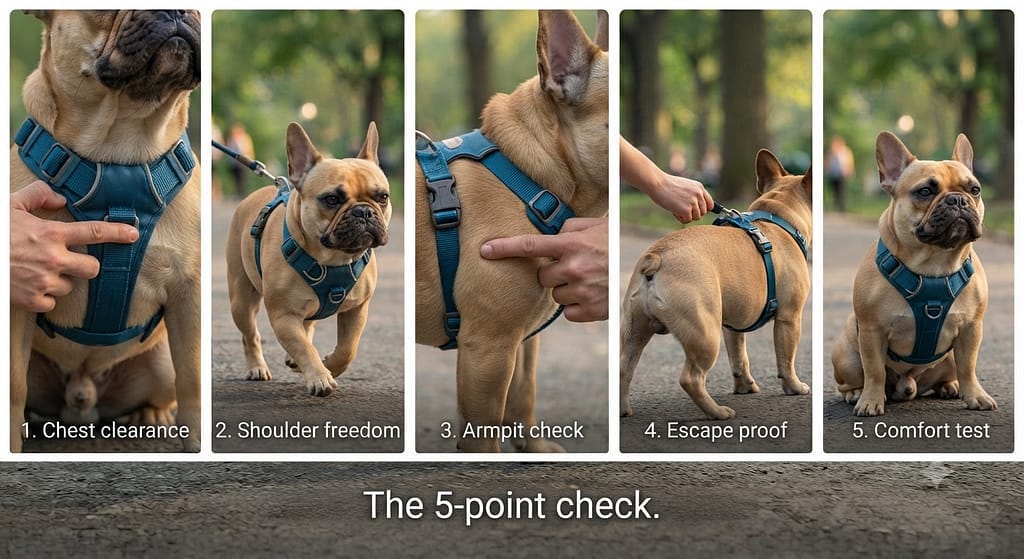
The 5-Point Frenchie Harness Check:
- Chest clearance: Two fingers fit between the harness and the chest
- Shoulder freedom: Full range of motion without rubbing
- Armpit chafe check: No material in armpits when moving
- Escape-proof: Can’t back out or slip forward
- Comfort test: No excessive rubbing after 10-minute wear
The Side-by-Side Comparison: Harness vs Collar for Frenchies
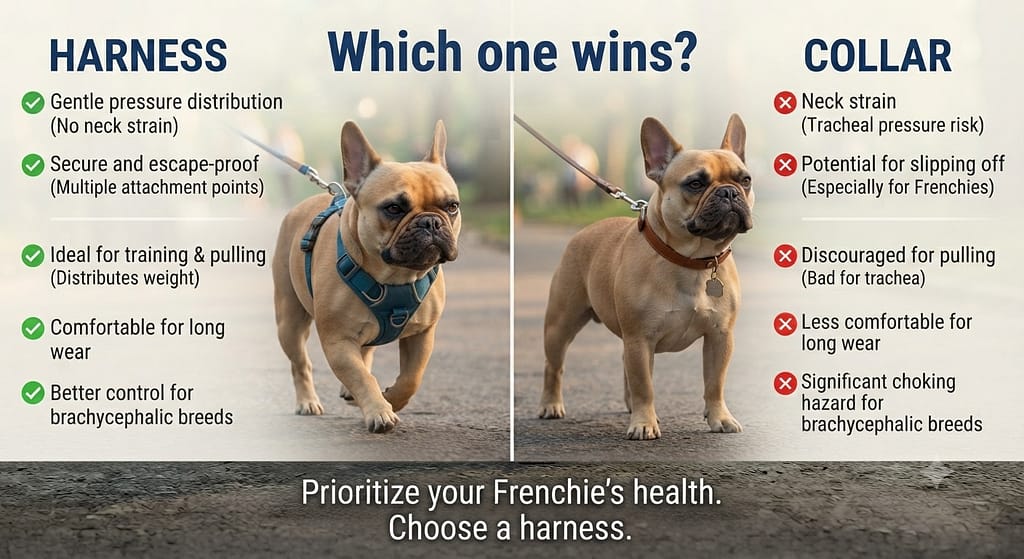
| Feature | Collar | Harness | Winner |
|---|---|---|---|
| Trachea safety | ❌ Direct pressure | ✅ No neck pressure | Harness |
| Spinal protection | ❌ Neck leverage | ✅ Distributed force | Harness |
| Pulling control | ⚠️ Only with discomfort | ✅ Redirects naturally | Harness |
| Escape prevention | ❌ Easy for Frenchies | ✅ Multiple points | Harness |
| Heat management | ✅ Less coverage | ⚠️ More material | Collar* |
| Ease of use | ✅ Quick on/off | ⚠️ More steps | Collar |
| Training aid | ❌ Teaches via discomfort | ✅ Teaches via redirection | Harness |
| Long-term health | ❌ Risk of injury | ✅ Protective | Harness |
*Note: Many harnesses now have breathable materials that minimize heat retention.
The 5-Minute Frenchie Gear Assessment
Take This Quiz Right Now:
1. My Frenchie’s walking style is best described as:
A) A determined puller who thinks they’re a sled dog
B) Occasionally lunges at squirrels/dogs/cars
C) Generally walks nicely but has moments
D) Perfect loose-leash walker
2. My Frenchie’s age and health:
A) Puppy (under 1 year)
B) Adult with no known issues
C) Senior or has breathing/spinal issues
D) Has diagnosed tracheal or neck problems
3. Our walking environment includes:
A) Lots of distractions (squirrels, dogs, people)
B) Some distractions
C) Quiet, controlled areas
D) Variable/unpredictable
4. My priority is:
A) Safety above all else
B) Training improvement
C) Convenience and ease
D) Comfort for my dog
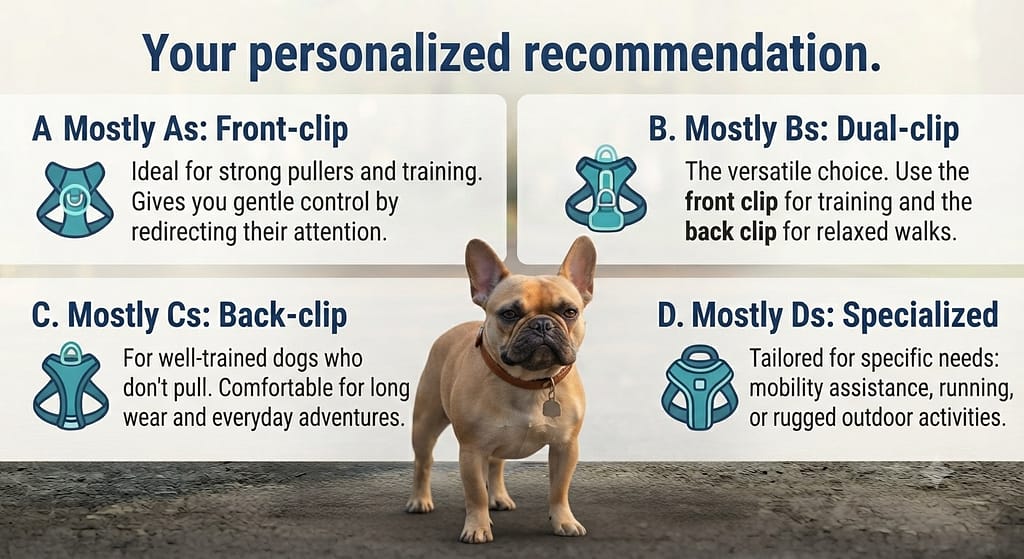
Scoring: Count how many times you chose each letter.
Results:
- Mostly As: Non-negotiable harness user (front-clip recommended)
- Mostly Bs: Harness essential (dual-clip ideal)
- Mostly Cs: Harness strongly recommended (back-clip okay if trained)
- Mostly Ds: Harness only (possibly specialized medical harness)
The Training Transformation: From Collar Dependence to Harness Happiness
The Transition Timeline (2-4 Weeks)
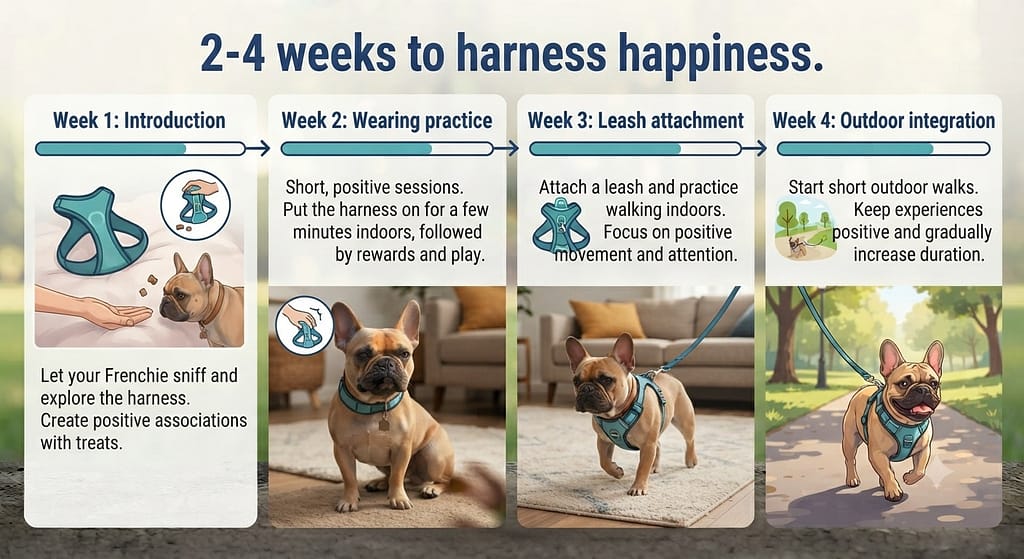
Week 1: Introduction
- Let Frenchie sniff and investigate the harness
- Lay the harness near the food bowl during meals
- Clip/unclip without putting it on
- Never force—make it positive
Week 2: Wearing Practice
- Put the harness on for 5 minutes during happy times
- High-value treats while wearing
- Remove before any signs of distress
- Gradually increase wearing time
Week 3: Leash Attachment
- Attach leash indoors, follow with treats
- Practice turns and gentle guidance
- Use a front clip for natural redirection
- Keep sessions under 10 minutes
Week 4: Outdoor Integration
- First outdoor walks with a harness
- Higher value rewards for walking nicely
- Be patient—new equipment means relearning
- Celebrate small victories
The “But My Frenchie Hates the Harness!” Solution
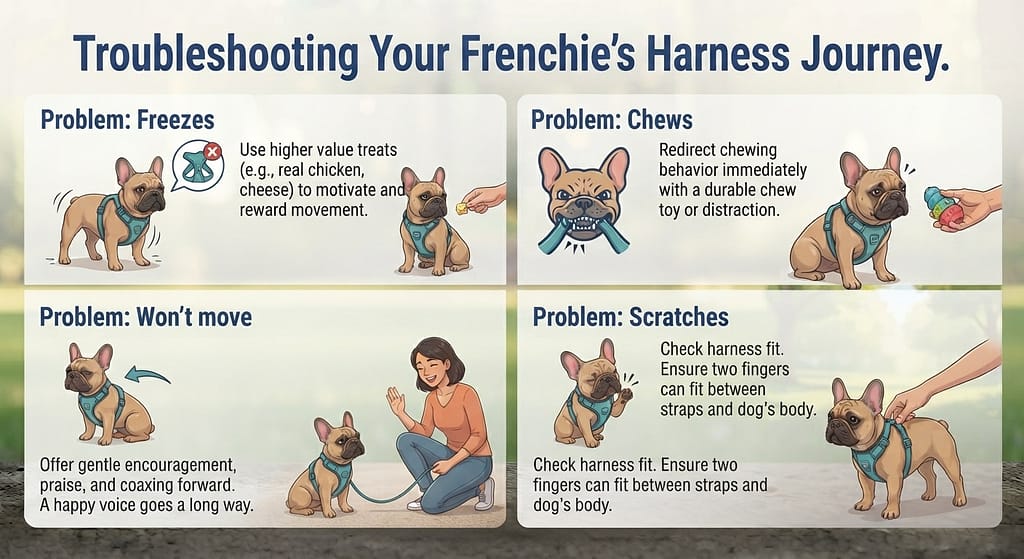
Common complaints and fixes:
- “Freezes when put on”: Higher-value treats, slower introduction
- “Tries to chew it off”: Distraction with a toy, ensure proper fit
- “Won’t move forward”: Gentle encouragement, never pull
- “Scratches at it”: Check for rubbing points, try different material
The Product Deep Dive: What Actually Works for Frenchies
Harness Features That Matter for French Bulldogs
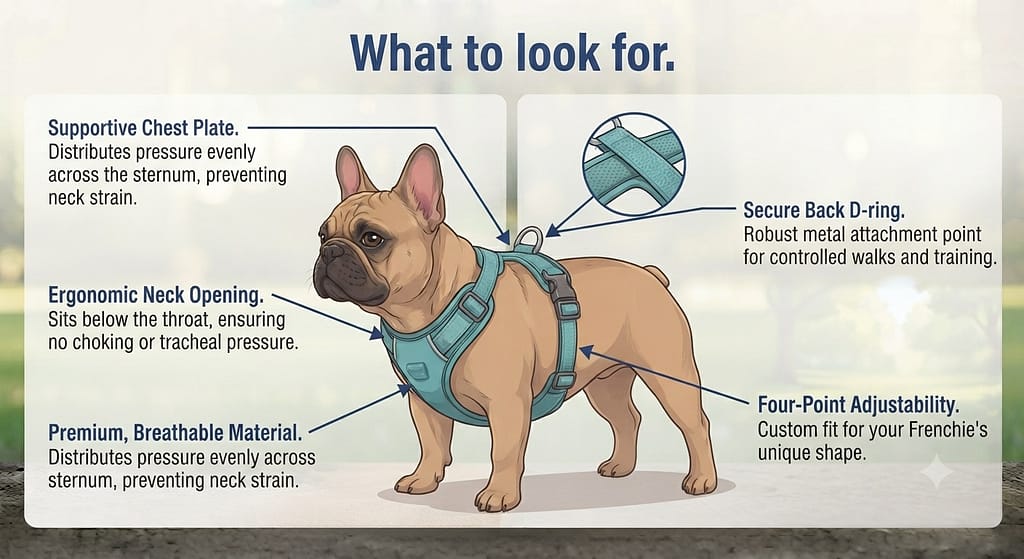
1. Chest Plate Design:
- Look for: Wide, padded chest spread
- Avoid: Narrow straps that dig in
2. Neck Opening:
- Ideal: Adjustable both top and bottom
- Why: Frenchies have thick necks relative to head size
3. Material:
- Breathable: Mesh for summer
- Padded: Neoprene or sheepskin for comfort
- Avoid: Rough nylon that causes chafing
4. Clip Placement:
- Front clip: At sternum level, not too high
- Back clip: Centered between the shoulder blades
- D-rings: Metal, not plastic
Top 3 Harness Picks for French Bulldogs
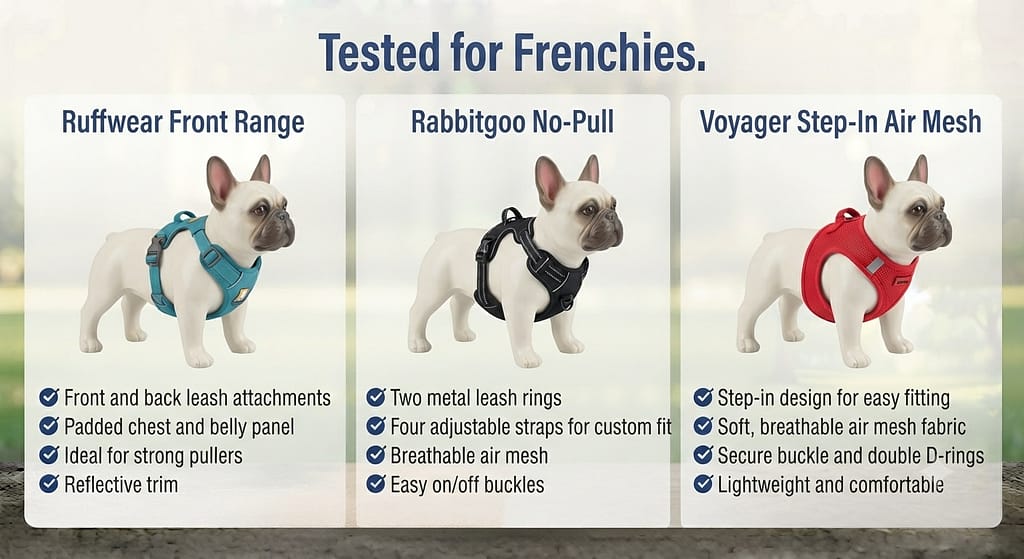
1. Best Overall: Ruffwear Front Range
- Price: $39.95
- Why it wins: Padded throughout, dual attachment, reflective
- Sizing tip: Measure carefully—Frenchies are between sizes
2. Best for Pullers: Rabbitgoo No-Pull Dog Harness
- Price: $25.99
- Why it wins: Four adjustment points, handles barrel chests
- Pro tip: Use the front clip for the training phase
3. Best for Heat Management: Voyager Step-In Air Mesh
- Price: $19.99
- Why it wins: 90% mesh, lightweight, step-in design
- Summer essential: For hot weather walks
For busy owners who need easy-care breeds, see our best compatibility dog breeds for busy owners
The Special Circumstances Guide
For French Bulldog Puppies (8 weeks – 6 months)
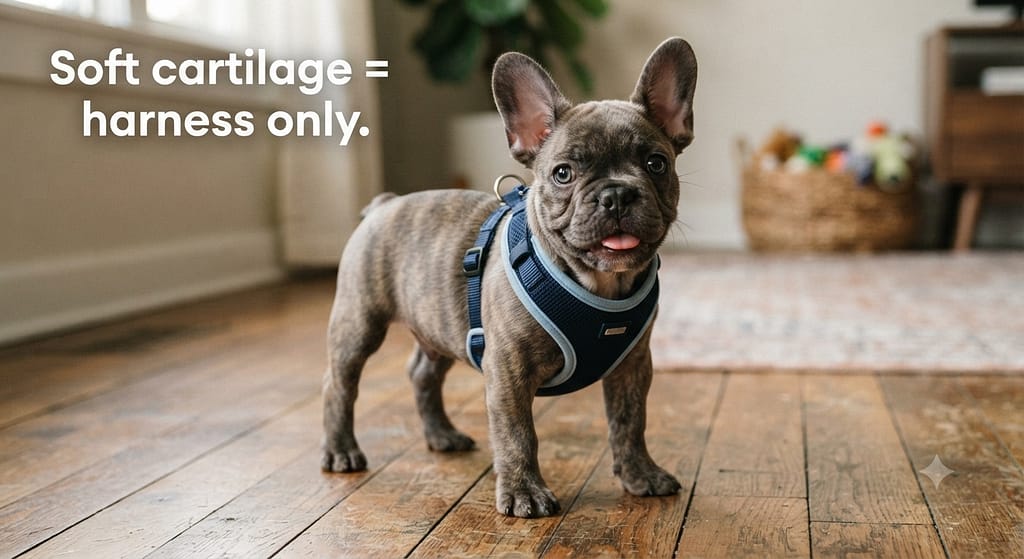
Rule: Harness only, always
Why: Tracheal cartilage is soft and developing
Special considerations:
- Growth spurts mean frequent sizing checks
- Positive association critical
- Step-in harnesses are easiest for wiggly puppies
- Never use a collar for walking
For Senior Frenchies (7+ years)
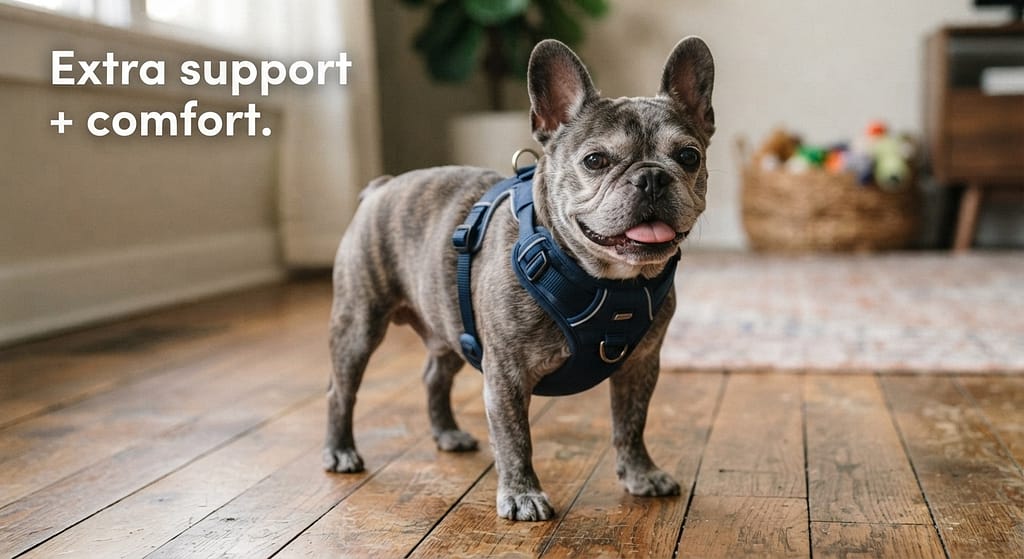
Increased risks:
- Arthritis in the cervical spine
- Weaker tracheal cartilage
- Possible existing damage from earlier collar use
- Reduced muscle mass for protection
Harness requirements:
- Extra padding
- Easy on/off (step-in or overhead)
- Lightweight material
- Possibly handle for assistance
For Frenchies with Existing Health Issues
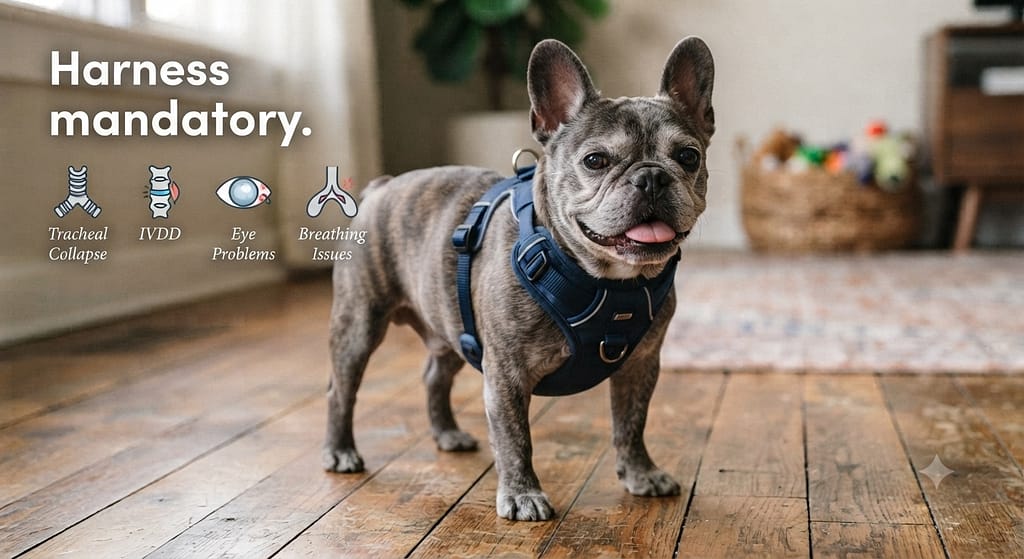
Tracheal collapse: Harness mandatory, possibly custom-fitted
IVDD/Spinal issues: Harness with handle for support
Eye problems: Harness only to prevent pressure spikes
Breathing issues: Lightweight harness that doesn’t restrict chest expansion
If you’re considering a hypoallergenic alternative, explore our hypoallergenic small dogs guide
The Cost Analysis: Investment vs. Emergency
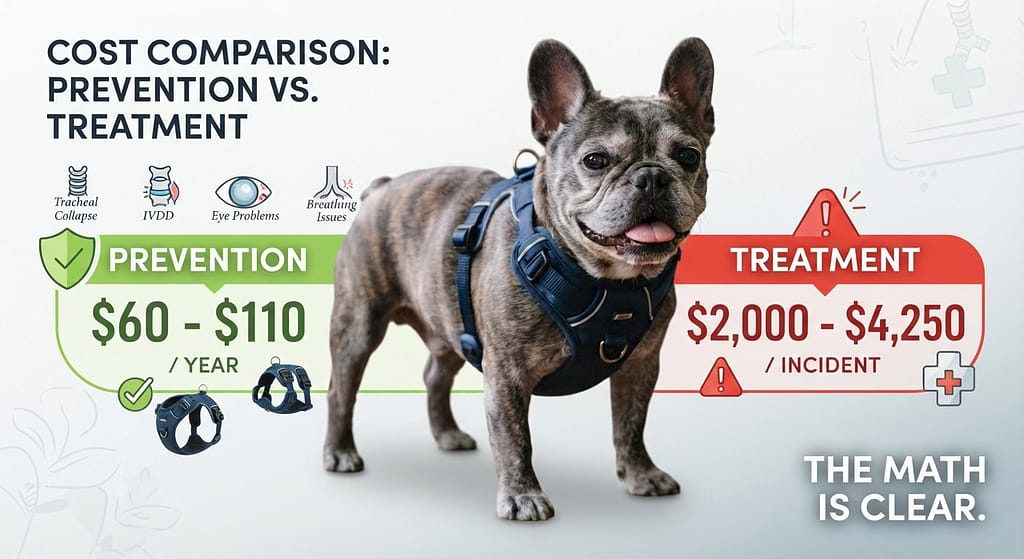
Prevention Costs:
- Quality harness: $25-$60
- Replacement every 2-3 years: $15-$30/year
- Training treats for transition: $20
- Total first year: $60-$110
Treatment Costs (If Collar Causes Injury):
- Emergency vet visit: $200-$500
- X-rays: $150-$300
- Tracheal stent surgery: $1,500-$3,000
- Medications: $50-$150/month
- Follow-up visits: $100-$300 each
- Total potential: $2,000-$4,250 per incident
The Math Is Clear:
One preventable emergency could buy 40+ years of quality harnesses.
The Hybrid Approach: When Both Have a Place
The “Collar for ID, Harness for Walks” System
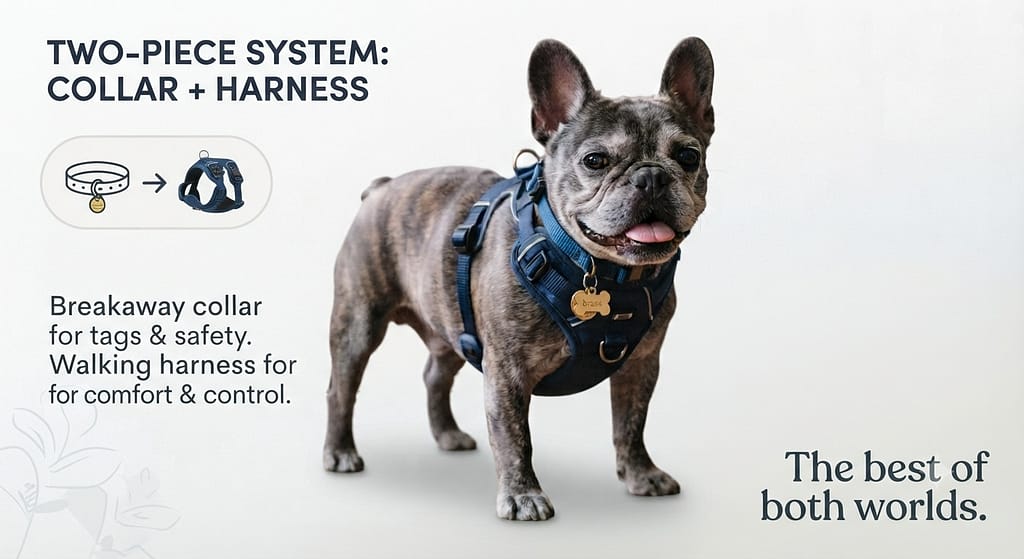
What this looks like:
- Lightweight breakaway collar with tags always on (except when crated)
- Harness only for walks, outings, and car travel
- Never attach a leash to a collar
- Never leave the harness on unsupervised
The Two-Piece Safety System
Component 1: Safety Collar
- Breakaway mechanism
- Engraved tags (not dangling)
- Slim profile
- Removed during crate time
Component 2: Walking Harness
- Properly fitted
- Appropriate for training level
- Checked weekly for wear
- Washed monthly
The Training Techniques That Actually Work
Loose-Leash Walking with a Harness
The “Be a Tree” Method:
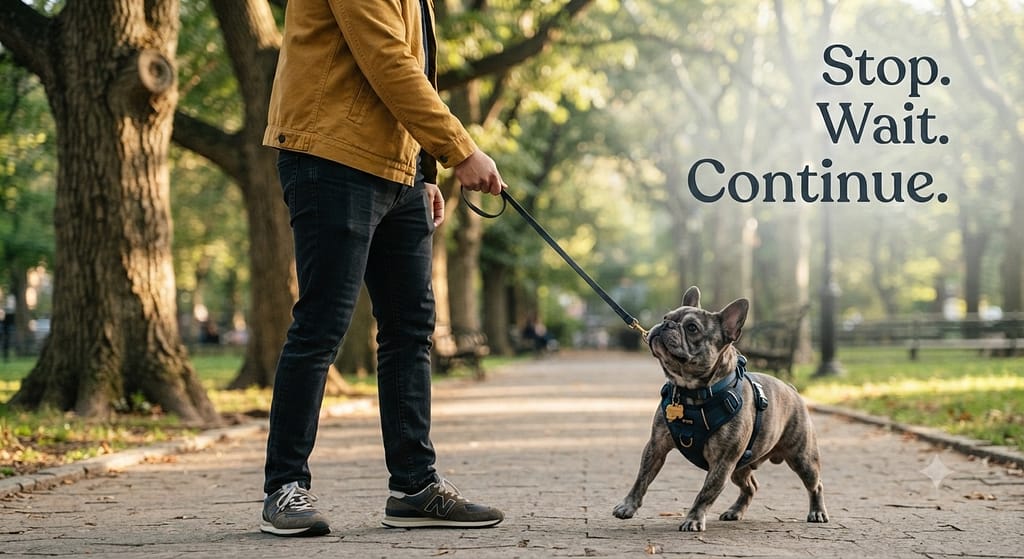
- When your Frenchie pulls, stop completely
- Wait until the leash is loose
- Continue walking
- Repeat consistently
The “Direction Change” Game:
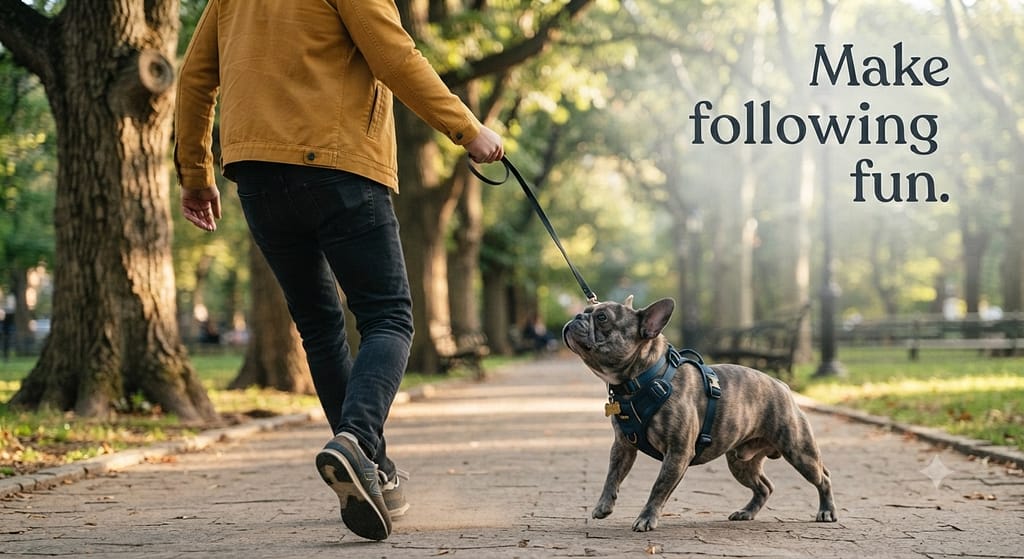
- Walk with your Frenchie
- Suddenly change direction
- Use a happy voice to encourage following
- Reward when they catch up
The “Treat Magnet” Technique:
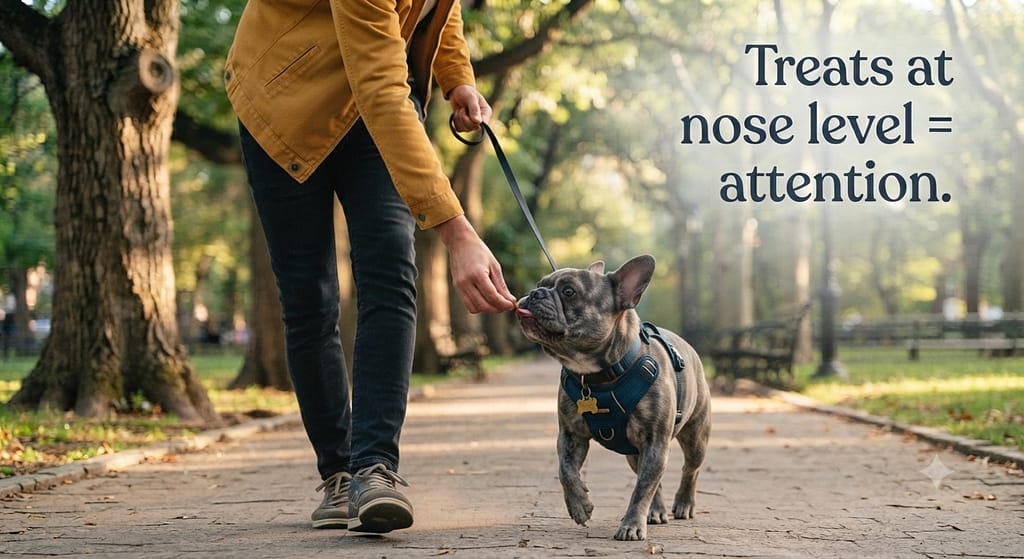
- Hold the treat at your side at nose level
- Walk, keeping the treat in position
- Reward every few steps initially
- Gradually increase the distance between rewards
What Never to Do (Common Mistakes)
- Never jerk the leash (with harness or collar)
- Never use retractable leashes with Frenchies (sudden stops are dangerous)
- Never allow constant tension on the leash
- Never punish pulling—redirect instead
Your 7-Day Transition Plan
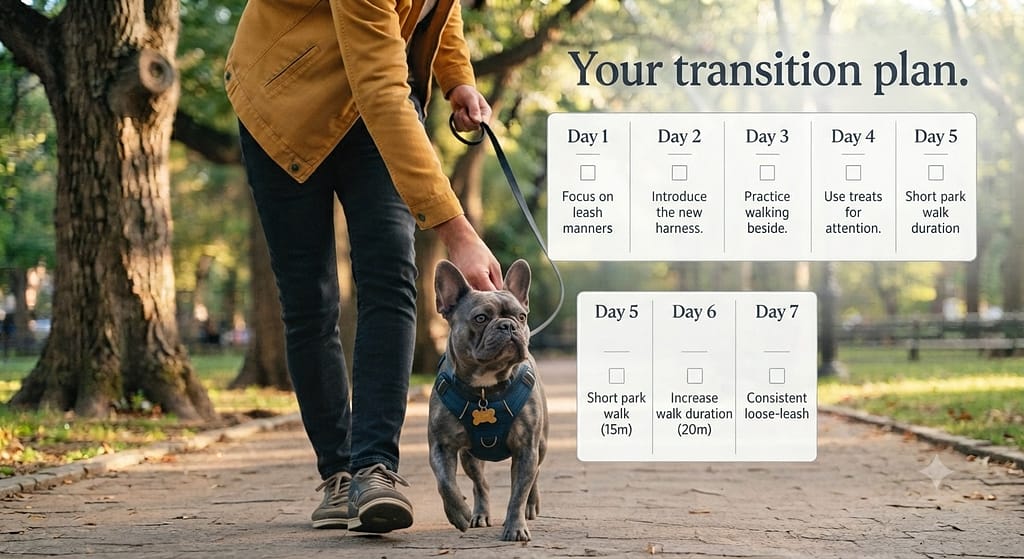
Day 1: Research & Purchase
- Measure your Frenchie (chest, neck, weight)
- Order an appropriate harness
- Remove collar (except for supervised ID)
- Research positive reinforcement techniques
Day 2: Harness Introduction
- Let Frenchie investigate the harness
- Feed meals near the harness
- Clip/unclip while giving treats
- No pressure to wear
Day 3: First Wearing
- Put the harness on for 2 minutes
- High-value treats the entire time
- Remove before any discomfort
- Repeat 2-3 times throughout the day
Day 4: Extended Wear
- Increase to 10-minute sessions
- Engage in fun activities while wearing
- Practice walking indoors with harness only (no leash)
- Continue treats and praise
Day 5: Leash Introduction
- Attach leash indoors
- Let them drag it (supervised)
- Pick up the leash, follow them with treats
- Practice gentle guidance
Day 6: First Controlled Walk
- Short walk in a low-distraction area
- Use a front clip if available
- High reward for staying near you
- Keep under 10 minutes
Day 7: Integration
- Regular walk schedule with harness
- Continue training reinforcement
- Monitor fit and comfort
- Celebrate the complete transition!
City dogs need proper gear for urban walks — learn about the most sociable dog breeds for city life
The Verdict: What Experts Actually Say
Veterinary Consensus:
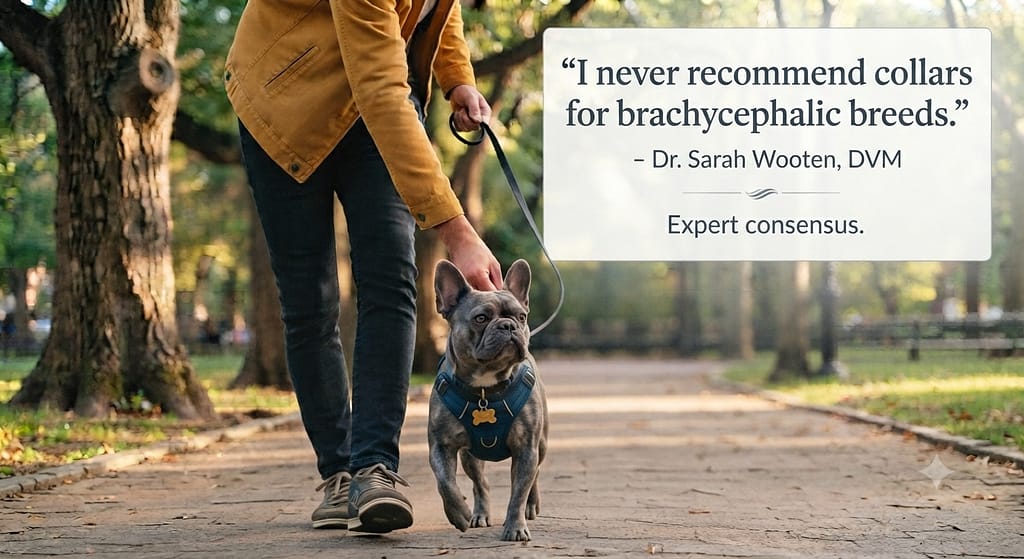
Dr. Sarah Wooten, DVM: “I never recommend collars for brachycephalic breeds. The risk of tracheal injury is too high, even with ‘well-behaved’ dogs.”
International Association of Animal Behavior Consultants: “Harnesses are superior for all dogs, but essential for breeds with respiratory or spinal vulnerabilities.”
Frenchie Breeder Perspective:
Ethical breeders increasingly provide puppies with harnesses, not collars. Many include harnesses in puppy packages and require adopters to use them.
The Data Doesn’t Lie:
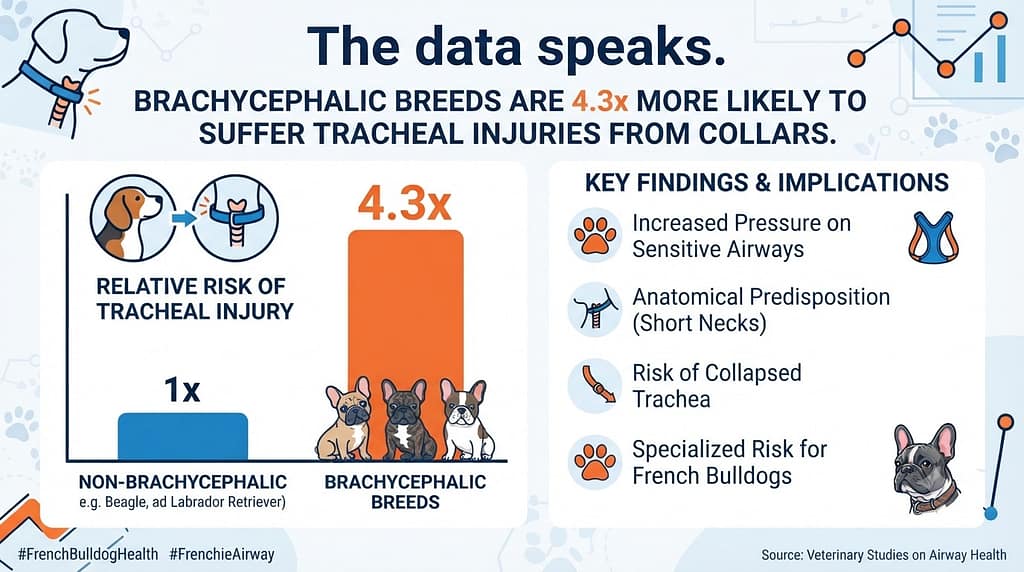
A 2018 study in the Journal of Veterinary Medicine found that brachycephalic breeds were 4.3 times more likely to suffer tracheal injuries from collar use compared to non-brachycephalic breeds.
Beyond Debate—The Only Responsible Choice
The collar might still hang by your door. The harness might feel unfamiliar. Your Frenchie might need time to adjust.
But now? Now you have more than an opinion. You have evidence. You have expert consensus. You have an anatomical understanding.
You’ve moved beyond “what’s easier” to “what’s safest.”
This isn’t about convenience. It’s about:
- Preventing tracheal collapse
- Protecting delicate cervical spines
- Ensuring comfortable breathing
- Preserving eye health
- Investing in your Frenchie’s long-term wellness
That harness isn’t just walking gear. It’s:
- A medical device protecting vulnerable anatomy
- A training tool that teaches rather than punishes
- A safety system that could prevent thousands in vet bills
- A love letter to your Frenchie that says “I understand your needs”
You don’t need to be perfect. You need to be consistent.
You don’t need the most expensive gear. You need properly fitted, appropriate gear. You don’t need to eliminate all risk. You need to eliminate this specific, preventable risk.
So this week, make the switch. Order that harness. Start the transition. Be patient with the process. Take photos of your happy, safely walked Frenchie. Even with your family.
Frenchies can be great with kids — see the best apartment dogs for families with kids.
That moment— when you feel the difference in their walk, when you see them breathing comfortably even when excited, when you realize you’ve eliminated a major health risk—that’s when you graduate from dog owner to breed advocate.
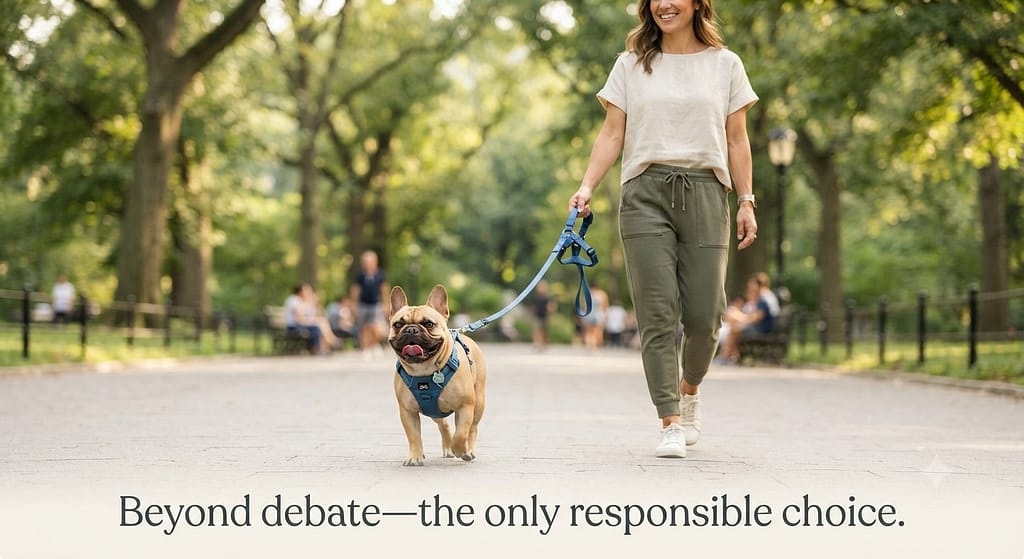
That’s when you join the ranks of informed Frenchie guardians who put safety before tradition.
The harness is waiting. The safer walks are ahead. Your Frenchie’s protected future begins with your next choice.
For the complete breed resource, see our apartment dog breeds compatibility guide.
🐾 — Apartment Dog Guide (ADG)
Living large in small spaces, one paw at a time. That’s the apartment dog life—see you in the next guide!.


