
The Perfect Apartment Dog Breeds Don’t Exist—But Your Perfect Match Does
You’ve seen the lists.
“10 Best Apartment Dogs!”
“Top Small Breeds for Condos!”
“The Only Dogs That Can Live in Studios!”
They all say the same thing: French Bulldog. Cavalier King Charles Spaniel. Greyhound. Done.
But here’s the problem:
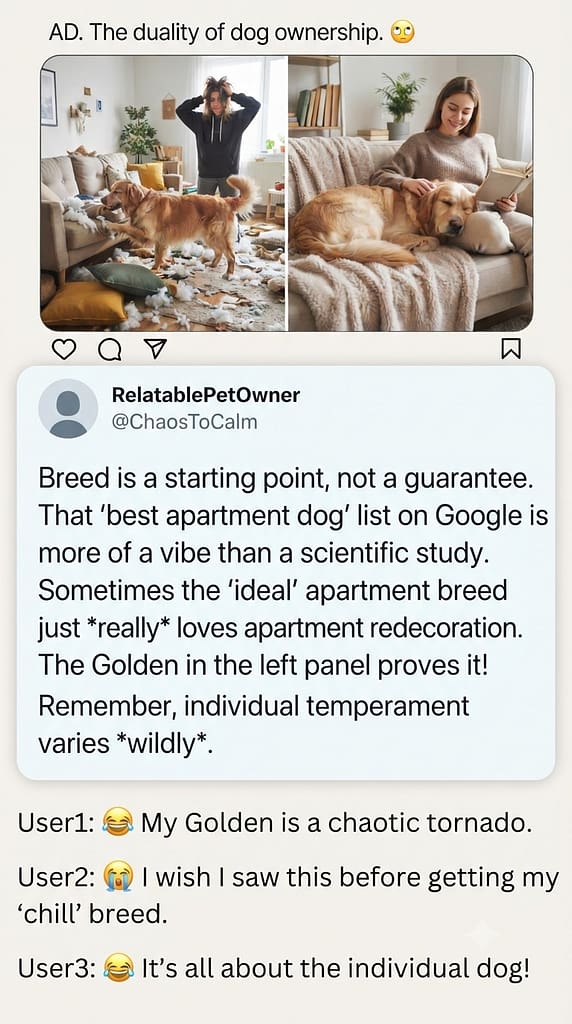
A French Bulldog might be perfect for one owner and a nightmare for another.
A Greyhound can be a couch potato—or a separation anxiety case.
A Chihuahua can be a quiet lapdog or a yappy alarm system.
Breed is a starting point, not a guarantee.
The question isn’t “What’s the best apartment dog?”
The question is: “What’s the best apartment dog for YOU?”
Your lifestyle. Your space. Your schedule. Your budget. Your building.
This guide is the most comprehensive, data‑driven resource on apartment breed compatibility you’ll ever read.
We’ll cover:
· ✅ The 5 compatibility factors that matter more than size
· ✅ 25 breeds that consistently thrive in apartments—small, medium, large
· ✅ 10 breeds to avoid (and why)
· ✅ Mixed breeds & rescues—how to assess an unknown adult dog
· ✅ The “Apartment Dog Breed Quiz” —5 questions, 30 seconds, personalized result
· ✅ How to negotiate breed restrictions even if your dream dog is on the “banned” list
Let’s find your perfect match. 🏢🐕
🔍The 5 Real Compatibility Factors
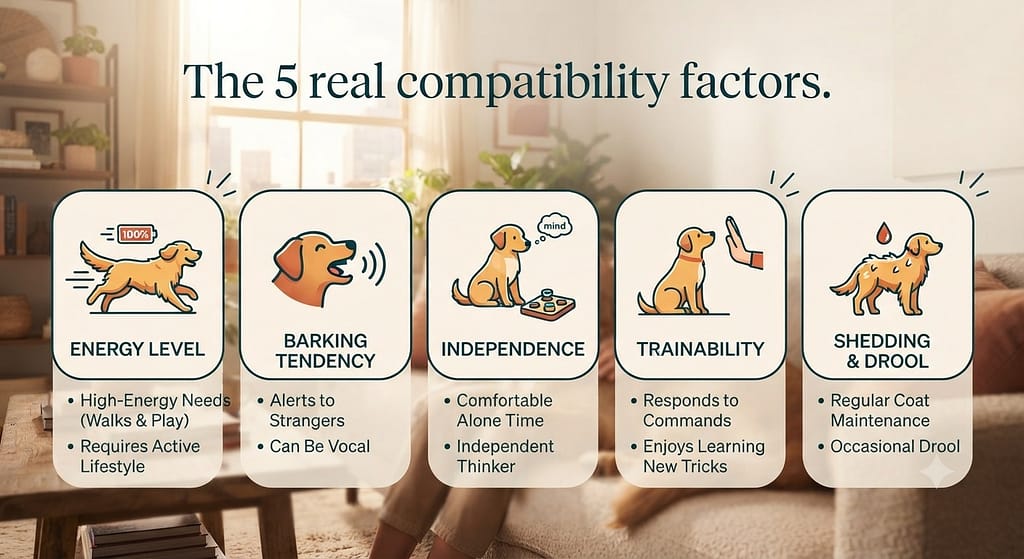
Forget square footage. These five factors determine whether a dog will be happy—and whether you will be happy—in an apartment.
Understanding the factors that matter starts when choosing your small apartment dog.breeds
Factor #1: Energy Level (Indoor vs. Outdoor)
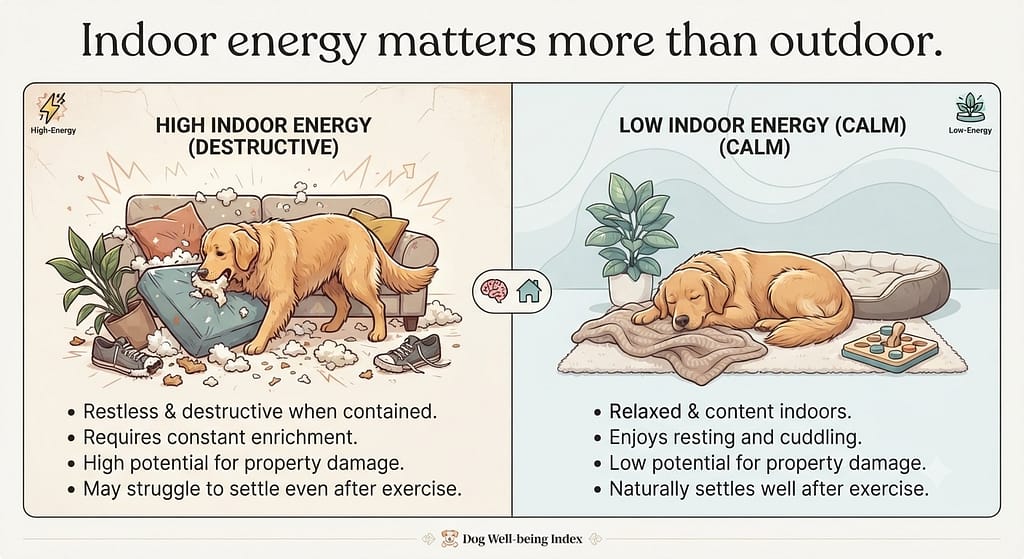
A dog with high indoor energy is destructive in small spaces.
A dog with high outdoor energy but low indoor energy (like a Greyhound) is fine.
Look for: Low indoor activity, moderate exercise needs.
Factor #2: Barking Tendency
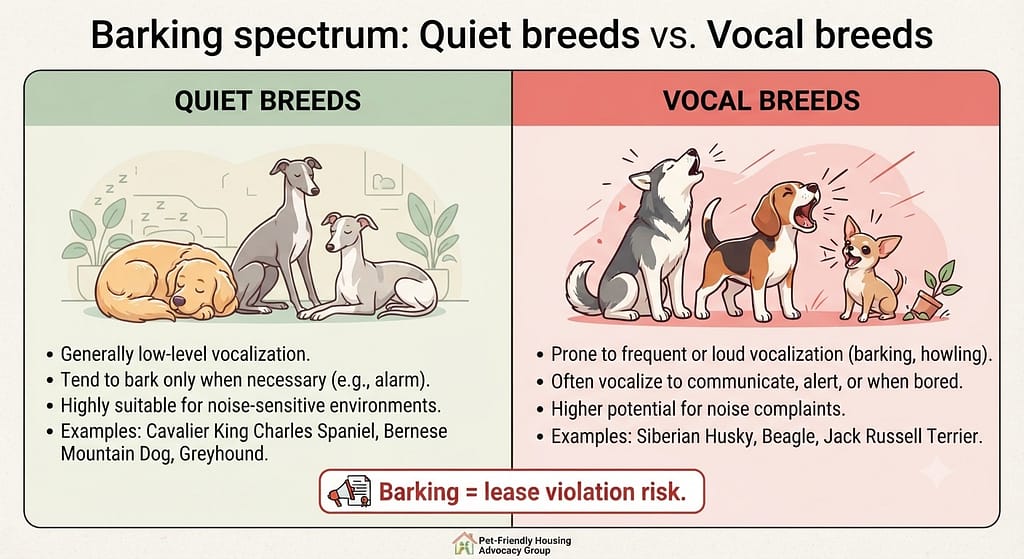
In a house, barking is background noise.
For quiet, low-barking breeds, see our quietest dog breeds for apartments.
In an apartment, barking is a lease violation.
Look for: Breeds bred to work quietly (herding dogs often bark; guarding dogs often don’t).
Factor # 3: Independence vs. Velcro
Some dogs cannot be left alone. Separation anxiety is the #1 reason apartment dogs are rehomed.
If you work from home, your dog’s routine changes — see our work-from-home dog schedule guide.
Look for: Moderate independence, ability to self‑settle.
Factor #4: Trainability
Apartment life requires manners: no pulling, no door‑dashing, no reactivity.
Look for: Biddable breeds that want to please.
Factor #5: Shedding / Drooling / Odor
Small space + heavy shedder = fur on everything.
Small space + drooler = walls need wiping.
Look for: Manageable grooming needs.
💬 Interactive Pause:
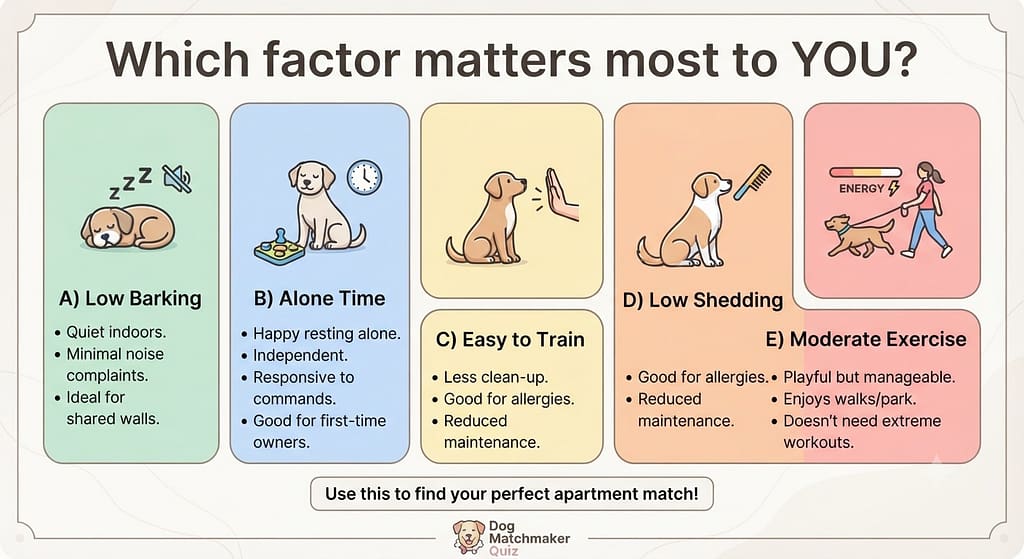
Which factor is MOST important to you?
(A) Low barking
(B) Can be left alone 6+ hours
(C) Easy to train
(D) Low shedding
(E) Moderate exercise needs
Your answer will shape your perfect breed list.
📊 The Apartment Dog Breed Quiz
Before we give you lists, let’s personalize.

👉 [Take the 30‑Second Quiz: “What’s Your Perfect Apartment Dog Breed?“]
The Quiz Questions:
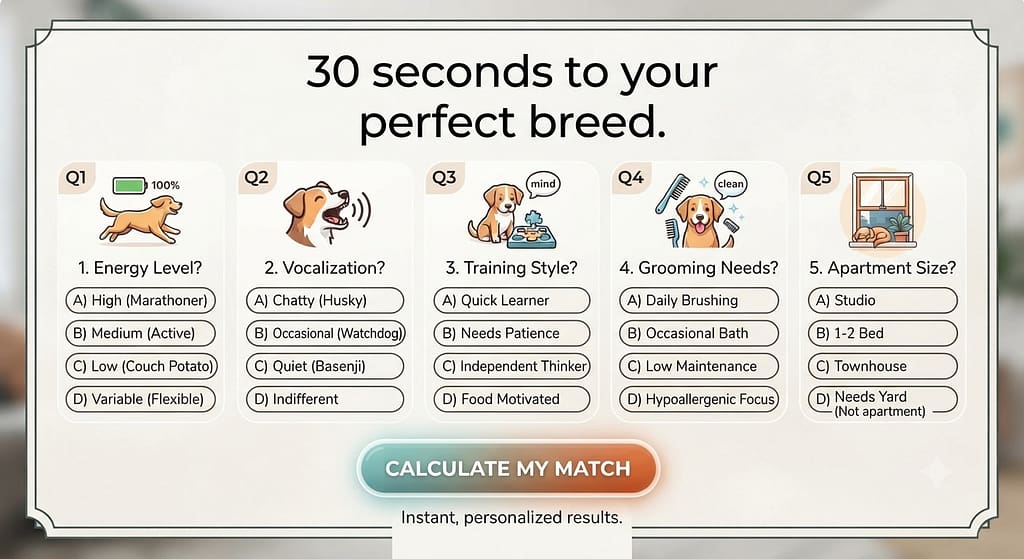
- How many hours will your dog be left alone on a typical workday?
- 0–4 hours
- 4–6 hours
- 6–8 hours
- 8+ hours (need independent breed)
- What’s your ideal daily exercise commitment?
- 15–30 minutes
- 30–60 minutes
- 60–90 minutes
- 90+ minutes
- How much barking can your building tolerate?
- Zero tolerance (thin walls)
- Some barking is okay
- I don’t mind, but neighbors might
- How important is shedding?
- Must be hypoallergenic / very low shed
- Moderate shedding is fine
- I own a good vacuum—bring it on
- What size dog are you considering?
- Small (under 25 lbs)
- Medium (25–50 lbs)
- Large (50–80 lbs)
- Giant (80+ lbs)
Your result: One of 12 archetypes, each with 3–5 recommended breeds.
✅ 25 Apartment Dog Breeds That Thrive
We’ve organized these by size and lifestyle match.
🐕 SMALL BREEDS (Under 25 lbs)
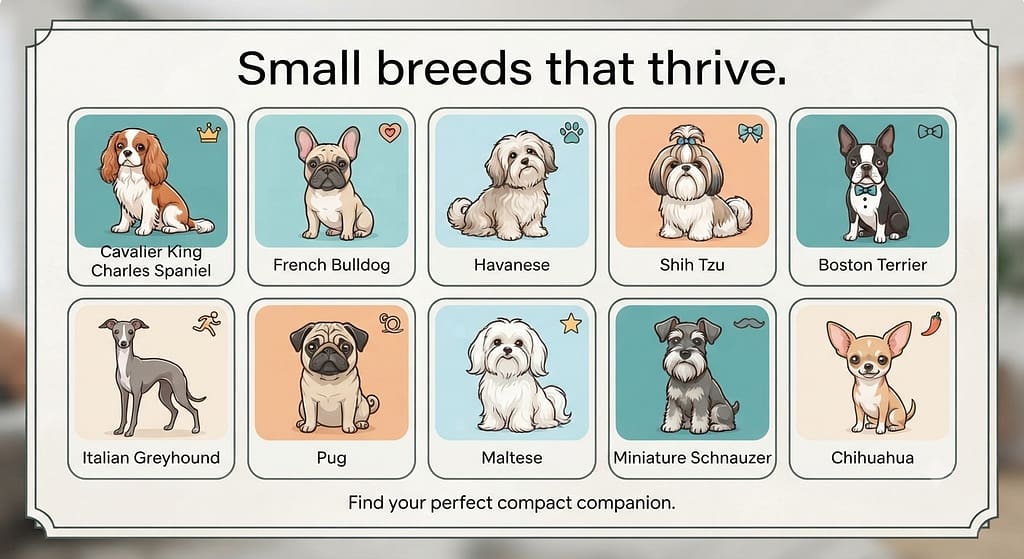
#1: Cavalier King Charles Spaniel
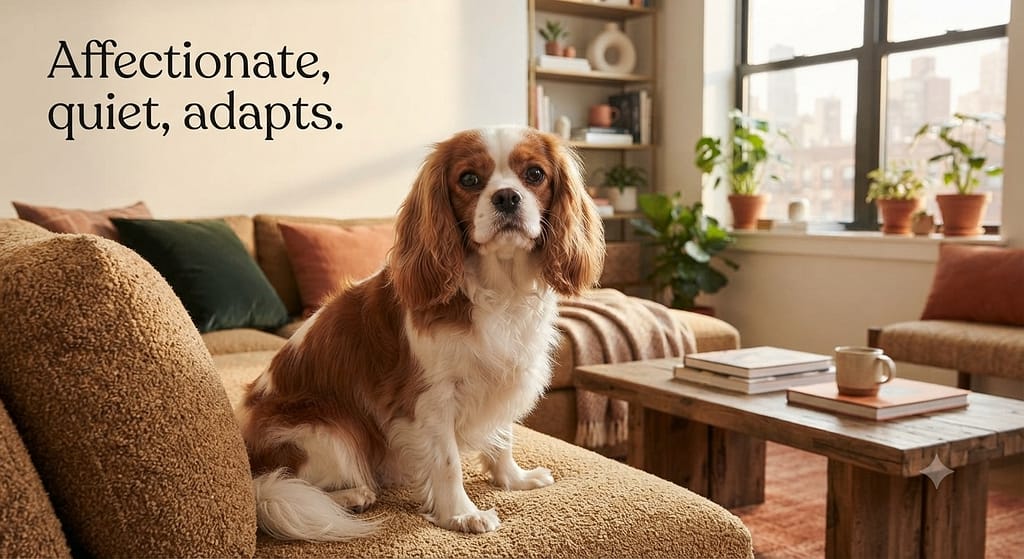
- Energy: Low‑moderate
- Barking: Low
- Alone time: 4–6 hours max
- Shedding: Moderate
- Why: Affectionate, quiet, adapts to any space. Separation anxiety prone—not for 9‑to‑5ers. City dwellers should consider the most sociable dog breeds for city life.
- 🛒 Affiliate Pick: Cavalier Rescue Organization Donation
#2: French Bulldog
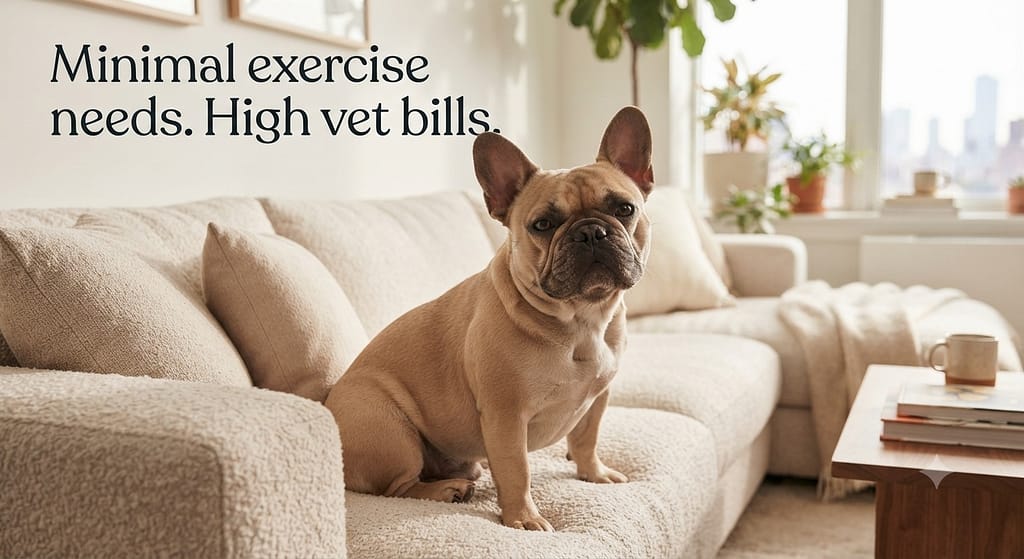
- Energy: Low
- Barking: Low‑moderate
- Alone time: 4–6 hours
- Shedding: Low
- Why: Minimal exercise needs, quiet indoors. Health issues—brachycephalic, spinal problems. High vet bills. For French Bulldogs and other flat-faced breeds, proper walking gear is essential — see our French Bulldog harness safety guide.
- 🛒 Affiliate Pick: Orthopedic Bed for Frenchies –
#3: Havanese
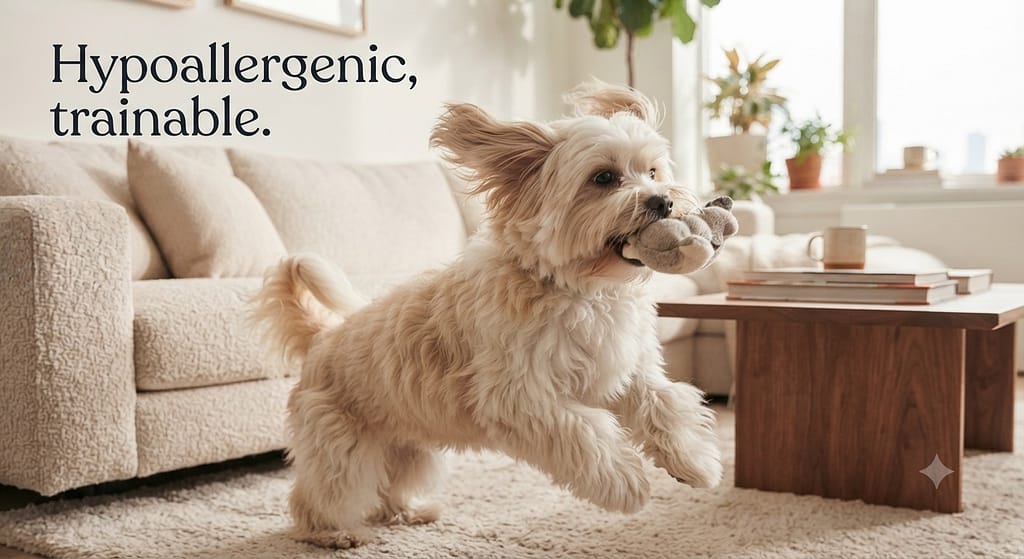
- Energy: Moderate
- Barking: Moderate (alert)
- Alone time: 4–6 hours
- Shedding: Very low (hypoallergenic)
- Why: Adaptable, trainable, loves everyone. Needs grooming. For allergy sufferers, explore our hypoallergenic small dog breeds.
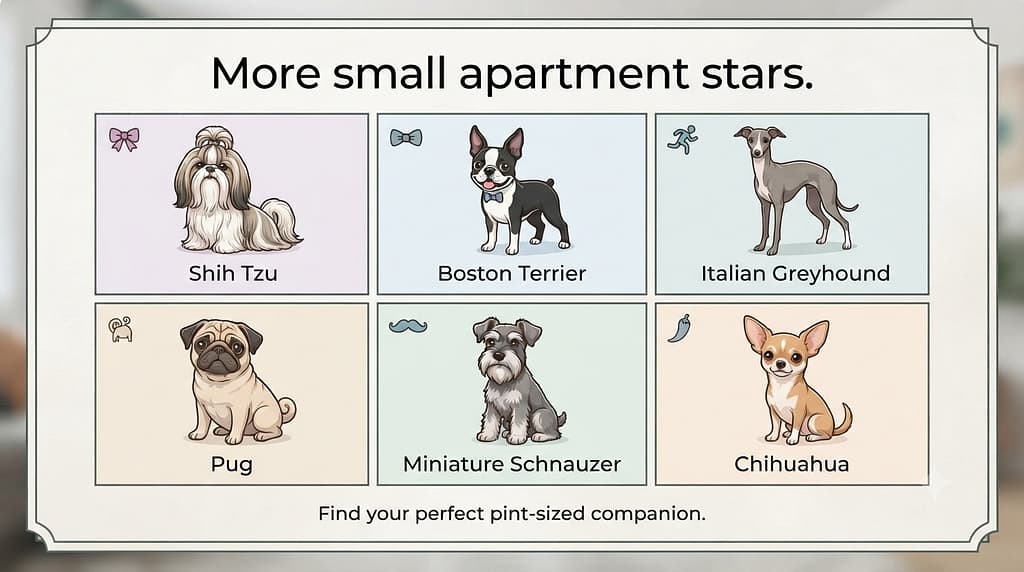
#4: Shih Tzu
- Energy: Low
- Barking: Low
- Alone time: 4–6 hours
- Shedding: Low
- Why: Bred to be a lapdog. Happy with short walks. Grooming required.
#5: Boston Terrier
- Energy: Moderate
- Barking: Low
- Alone time: 4–6 hours
- Shedding: Low
- Why: Friendly, intelligent, compact. Some breathing issues. For busy owners, see our best compatibility dog breeds for busy owners.
#6: Italian Greyhound
- Energy: Moderate (outdoor), Low (indoor)
- Barking: Low
- Alone time: 4–6 hours
- Shedding: Low
- Why: Literally a Greyhound in a small body. Loves to sprint, then sleeps 20 hours. Separation anxiety is common.
#7: Pug
- Energy: Low
- Barking: Low
- Alone time: 4–6 hours
- Shedding: High (surprising!)
- Why: Charming, goofy, low exercise. Breathing and eye issues.
#8: Maltese
- Energy: Moderate
- Barking: Moderate
- Alone time: 4–6 hours
- Shedding: Very low
- Why: Gentle, adaptable, good for seniors. Grooming needed. If you work 9-5, see our best small dogs for 9-5 professionals
#9: Miniature Schnauzer
- Energy: Moderate
- Barking: Moderate (alert)
- Alone time: 6–8 hours
- Shedding: Low
- Why: Smart, trainable, good watchdog. Needs mental stimulation.
#10: Chihuahua
- Energy: Moderate
- Barking: High (varies by line)
- Alone time: 4–6 hours
- Shedding: Low
- Why: Devoted, portable, long‑lived. Early socialization essential to prevent reactivity.
🐕 MEDIUM BREEDS (25–50 lbs)

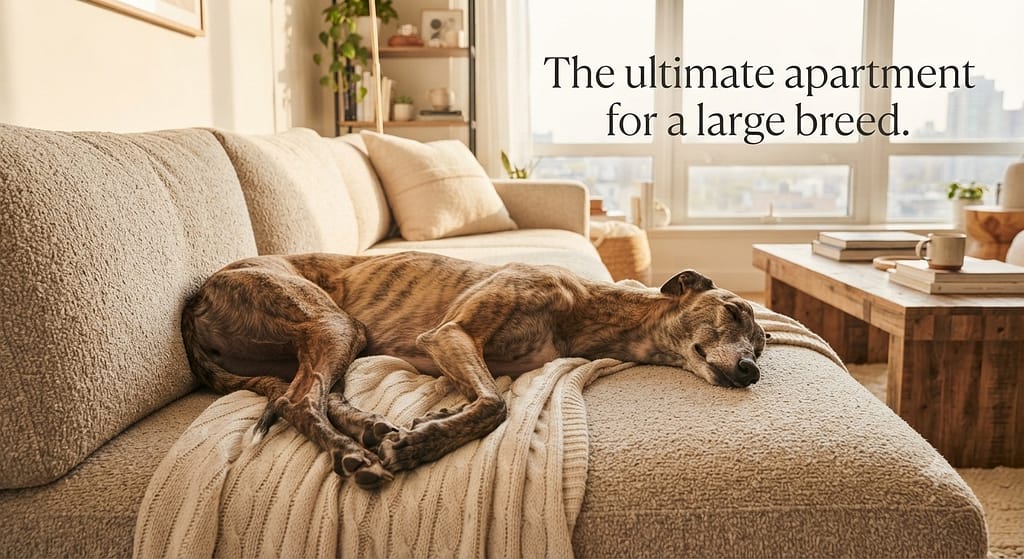
#11: Greyhound (retired racing)
- Energy: Low (indoor), High (sprints)
- Barking: Very low
- Alone time: 6–8 hours
- Shedding: Low
- Why: The ultimate apartment large breed. 45 mph outside, 45 naps per day inside. Quiet, clean, gentle.
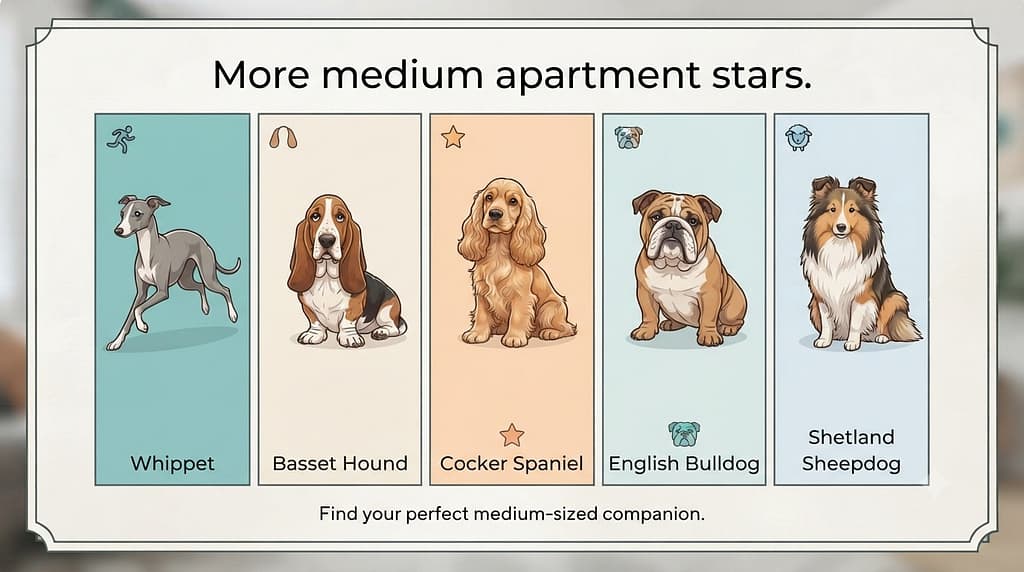
#12: Whippet
- Energy: Moderate
- Barking: Low
- Alone time: 6–8 hours
- Shedding: Low
- Why: Greyhound in a smaller package. Sweet, calm, sensitive.
#13: Basset Hound
- Energy: Low
- Barking: Low (but loud when they do)
- Alone time: 6–8 hours
- Shedding: Moderate
- Why: Slow, stoic, hilarious. Drool and howl potential.
#14: Cocker Spaniel
- Energy: Moderate
- Barking: Moderate
- Alone time: 4–6 hours
- Shedding: Moderate
- Why: Affectionate, trainable. Grooming needed. Some lines anxious.
#15: Bulldog (English)
- Energy: Very low
- Barking: Low
- Alone time: 4–6 hours
- Shedding: High
- Why: Ultimate couch potato. Health issues, drool, gas.
#16: Shetland Sheepdog
- Energy: Moderate
- Barking: High (alert)
- Alone time: 4–6 hours
- Shedding: High
- Why: Brilliant, loyal, vocal. Needs mental work.
🐕 LARGE BREEDS (50–80 lbs)

#17: Labrador Retriever
- Energy: High (needs exercise!)
- Barking: Low‑moderate
- Alone time: 4–6 hours
- Shedding: High
- Why: America’s favorite. Great apartment dog IF adequately exercised. Under‑exercised = destruction. Families with kids should explore the best apartment dogs for families with kids
#18: Golden Retriever
- Energy: High
- Barking: Low
- Alone time: 4–6 hours
- Shedding: High
- Why: Same as Labs. Requires commitment.
#19: Standard Poodle
- Energy: Moderate
- Barking: Moderate (alert)
- Alone time: 6–8 hours
- Shedding: Very low
- Why: Intelligent, trainable, hypoallergenic. Needs mental stimulation.
#20: Vizsla
- Energy: Very high
- Barking: Low
- Alone time: 2–4 hours (separation anxiety)
- Shedding: Low
- Why: Velcro dog. Needs owner who works from home or takes dog everywhere. Not for 9‑to‑5.
#21: Bernese Mountain Dog
- Energy: Low‑moderate
- Barking: Low
- Alone time: 4–6 hours
- Shedding: High
- Why: Calm, sweet, but short lifespan and health issues. Needs space to stretch.
🐕 GIANT BREEDS (80+ lbs)
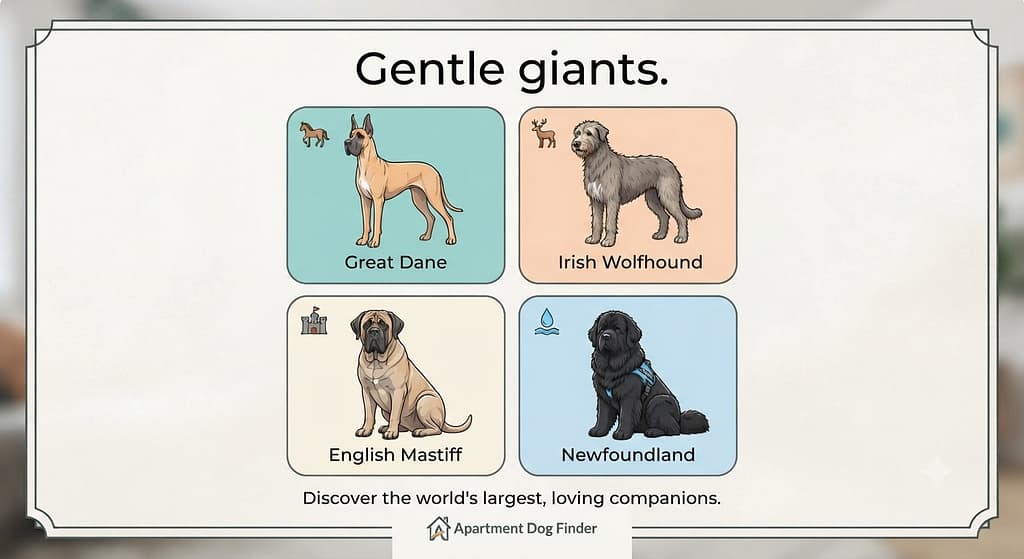
#22: Great Dane
- Energy: Low
- Barking: Low
- Alone time: 4–6 hours
- Shedding: Moderate
- Why: The “Apartment Great Dane” is a cliché for a reason. They’re calm, quiet, and often happy to take up your entire couch.
#23: Irish Wolfhound
- Energy: Low
- Barking: Low
- Shedding: Moderate
- Alone time: 4–6 hours
- Why: Gentle giants. Need space to stretch but have low indoor activity.
#24: Mastiff
- Energy: Very low
- Barking: Low
- Shedding: High
- Alone time: 4–6 hours
- Why: Couch potatoes. Drool, size, and cost of care are challenges.
#25: Newfoundland
- Energy: Low
- Barking: Low
- Shedding: High
- Alone time: 4–6 hours
- Why: Sweet, patient, but massive. Drool + fur + size = not for beginners.
❌ 10 Breeds to Avoid in Apartments
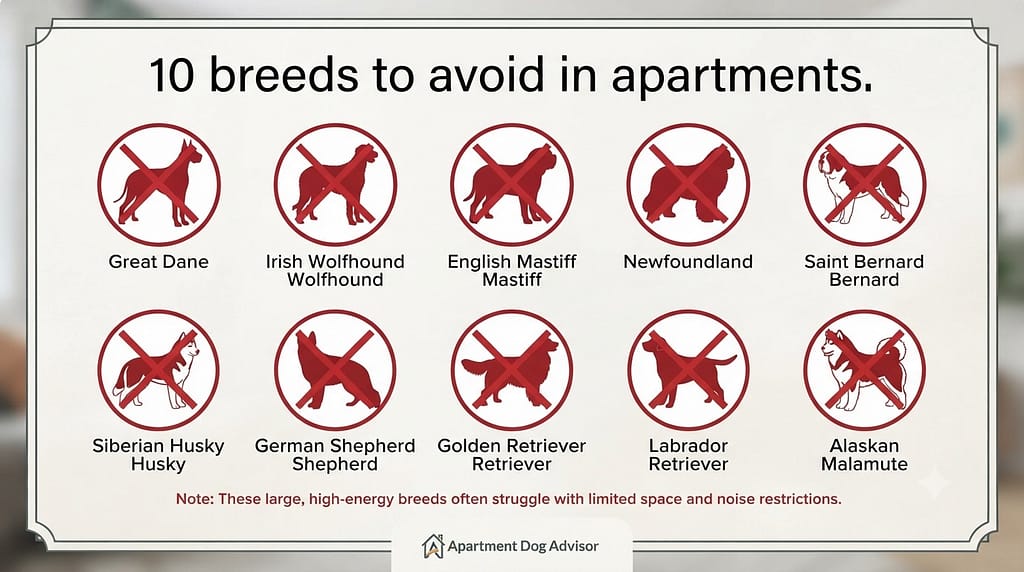
#1: Border Collie
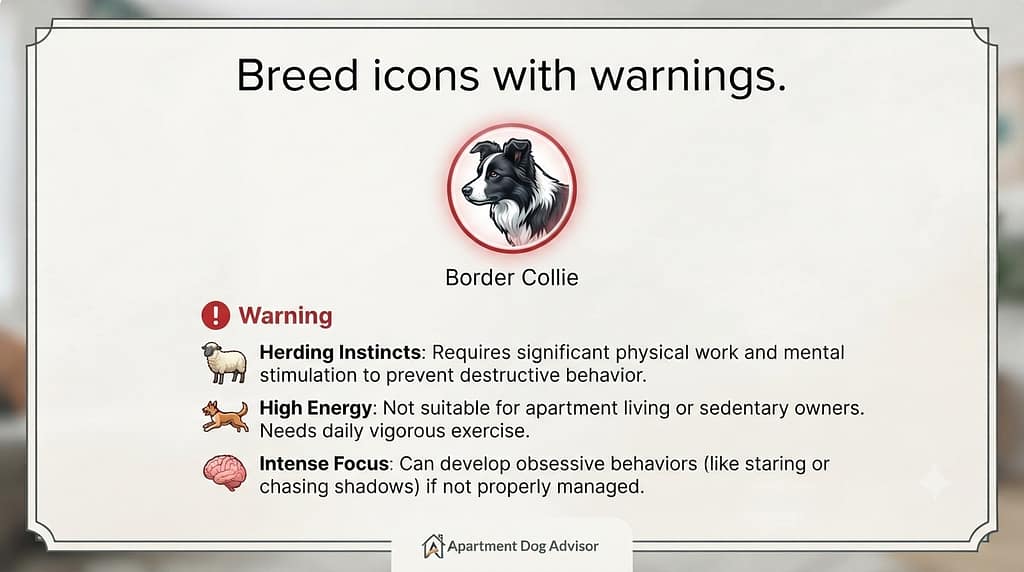
- Why: Needs a job. 24/7. Without sheep, they create their own work—often destructively. Barking, herding, neurosis.
#2: Australian Shepherd
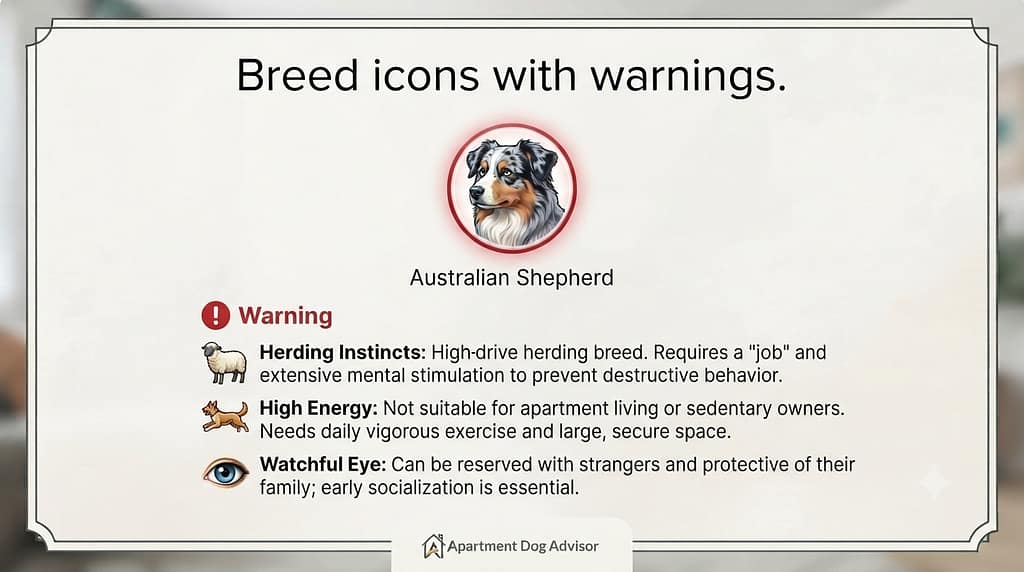
- Why: Same as Border Collie. High‑drive, high‑intensity.
#3: Siberian Husky
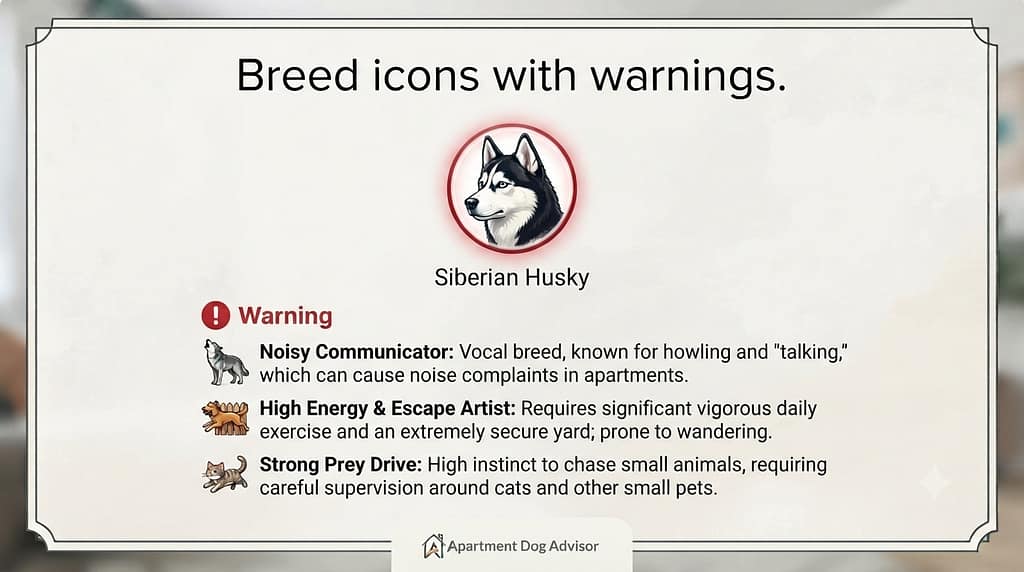
- Why: Escape artist, howler, high energy. Also: shedding apocalypse.
#4: Alaskan Malamute
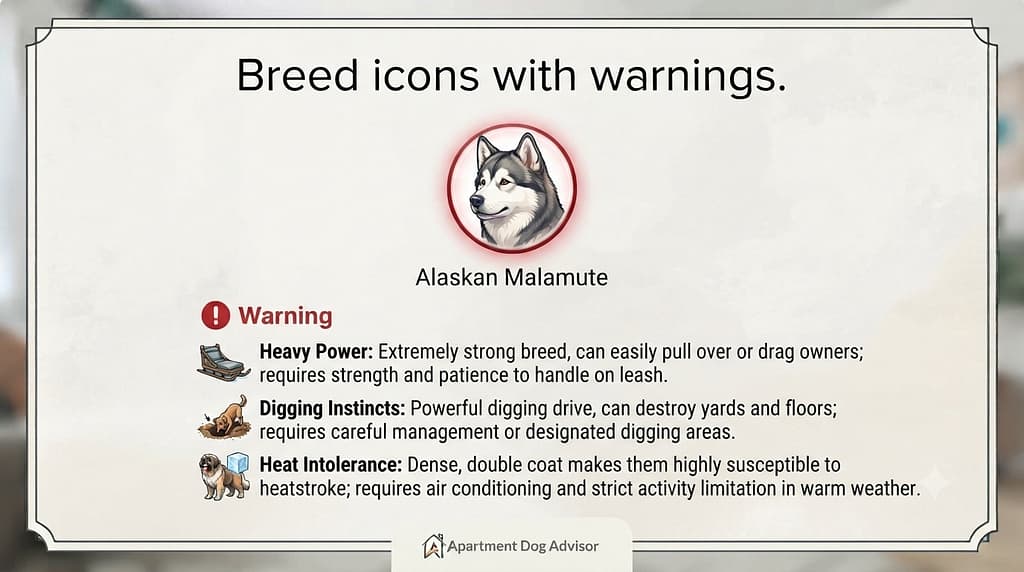
- Why: Same as Husky, plus bigger.
#5: Jack Russell Terrier
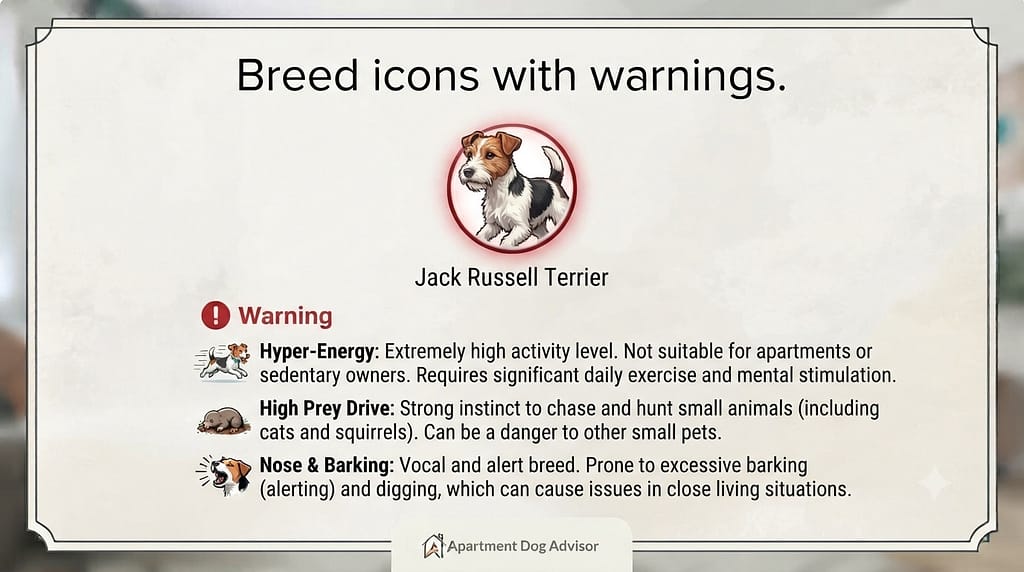
- Why: Intense, high prey drive, excessive barking, destructive when bored.
#6: Belgian Malinois
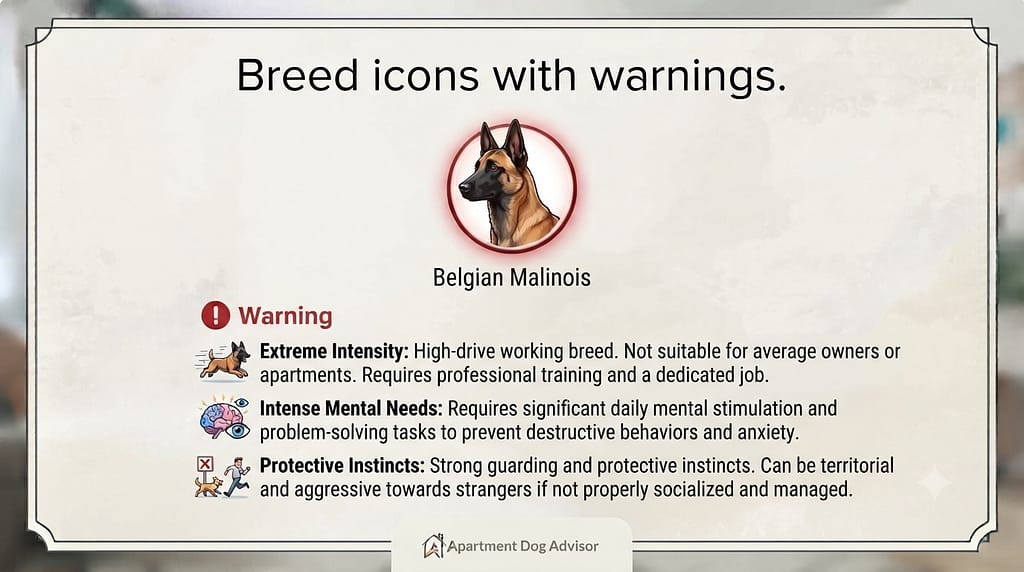
- Why: Working police/military dog. Do not subject this dog to apartment life.
#7: Dalmatian
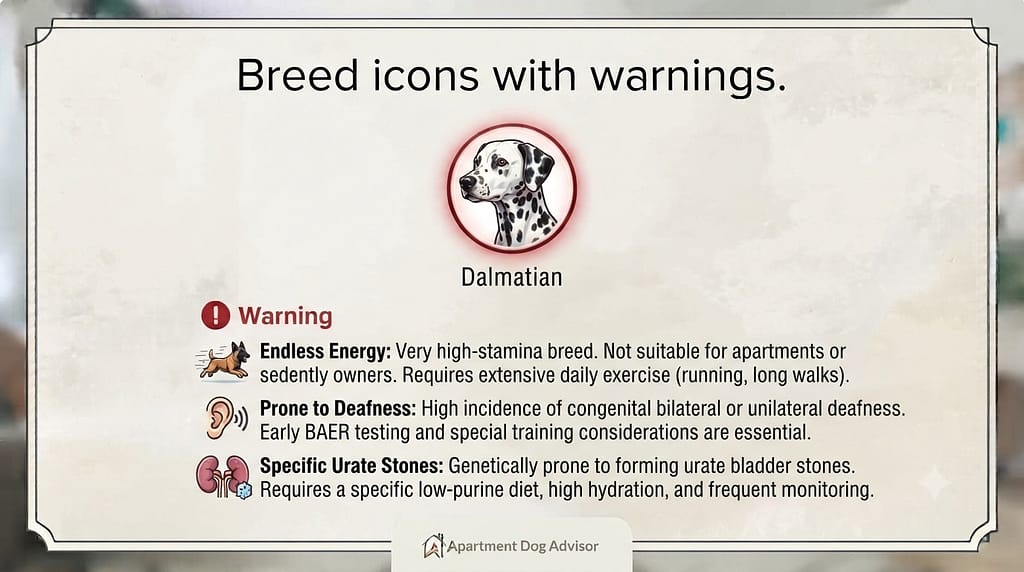
- Why: High energy, prone to barking, needs miles of running.
#8: Weimaraner
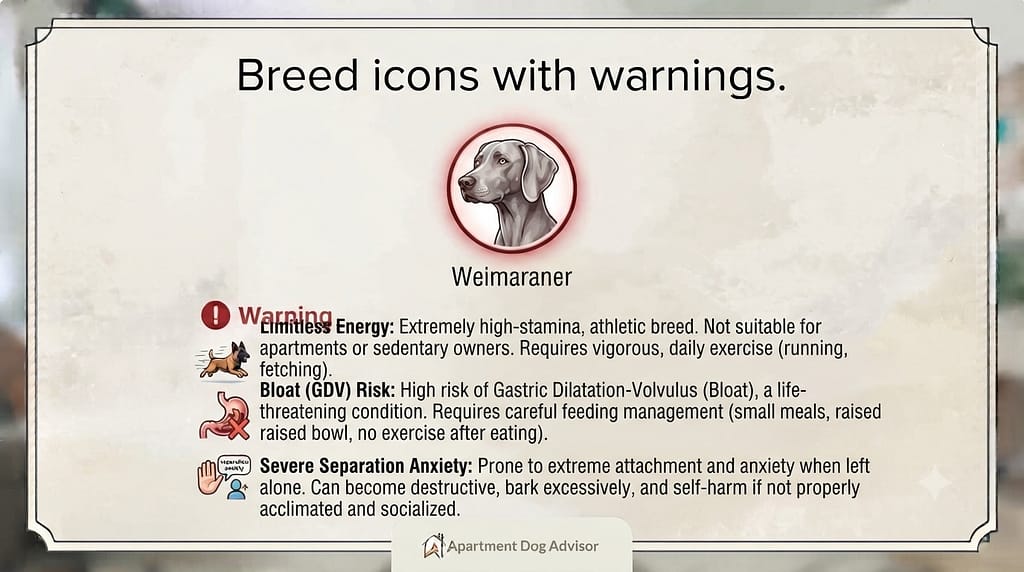
- Why: Severe separation anxiety, high exercise needs.
#9: Akita
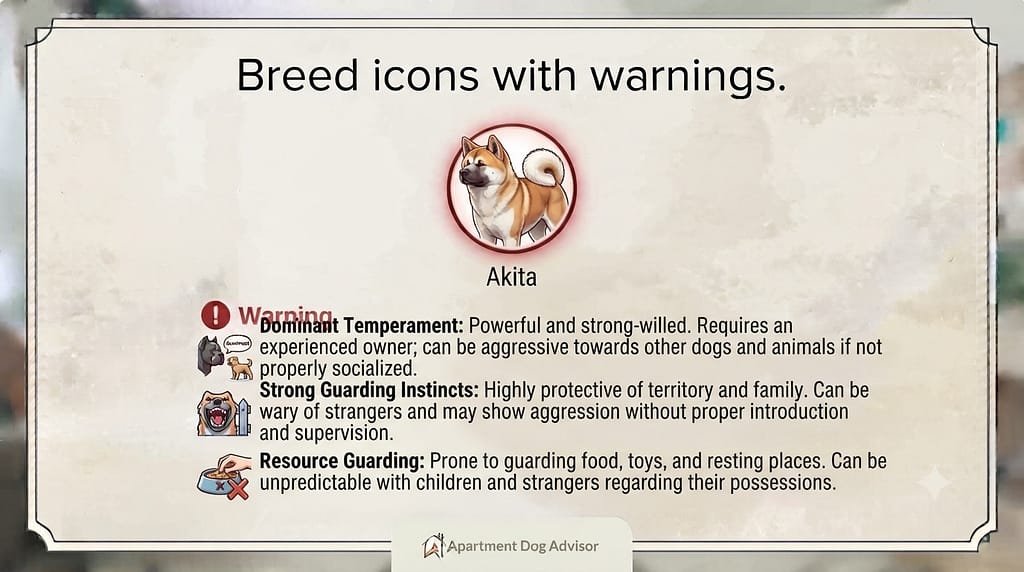
- Why: Guard breed, often dog‑selective, not friendly with strangers. Can be done, but not for a novice.
#10: Chow Chow
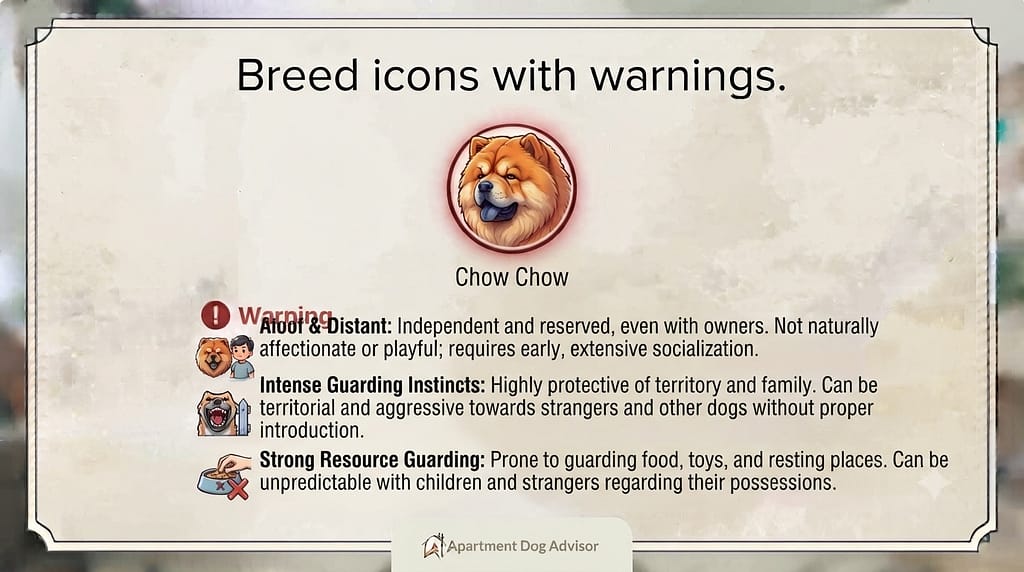
- Why: Aloof, territorial, challenging with strangers and other dogs.
🔎 What About Mixed Breeds & Rescues?
You don’t know what you’re getting.
The “Apartment Test” for Adult Shelter Dogs:

- Crate test: Does the dog settle in a crate at the shelter? Ask staff.
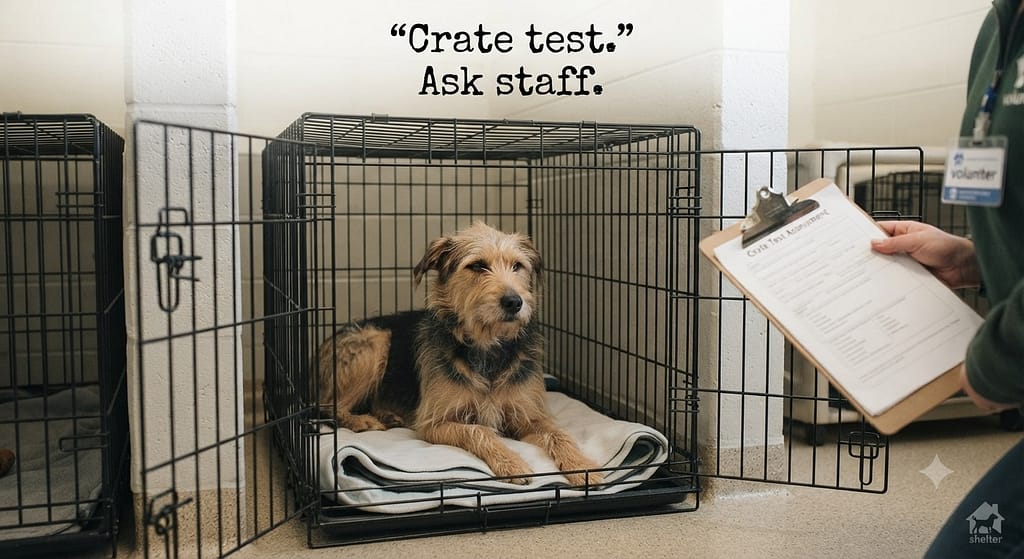
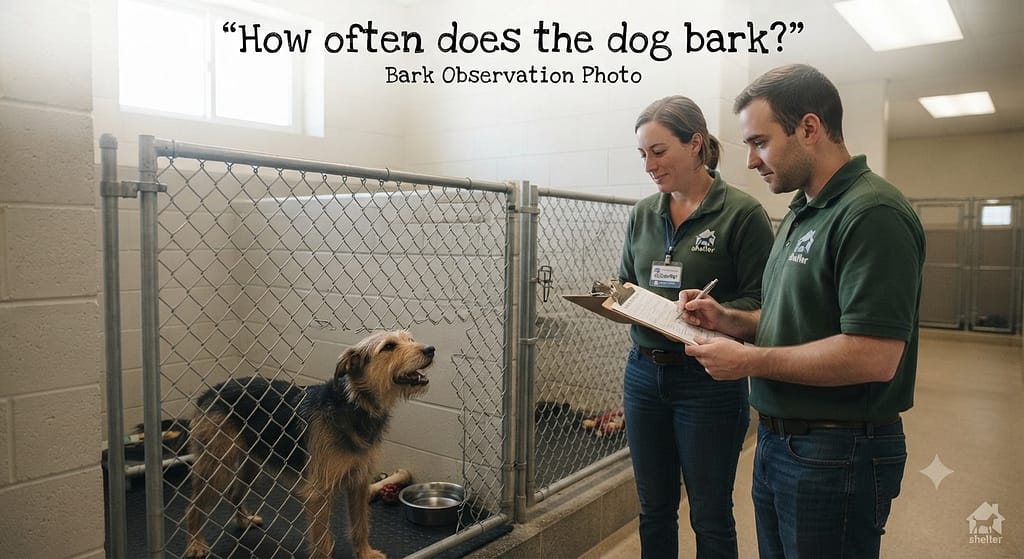
2. Bark test: How often does the dog bark in its kennel?
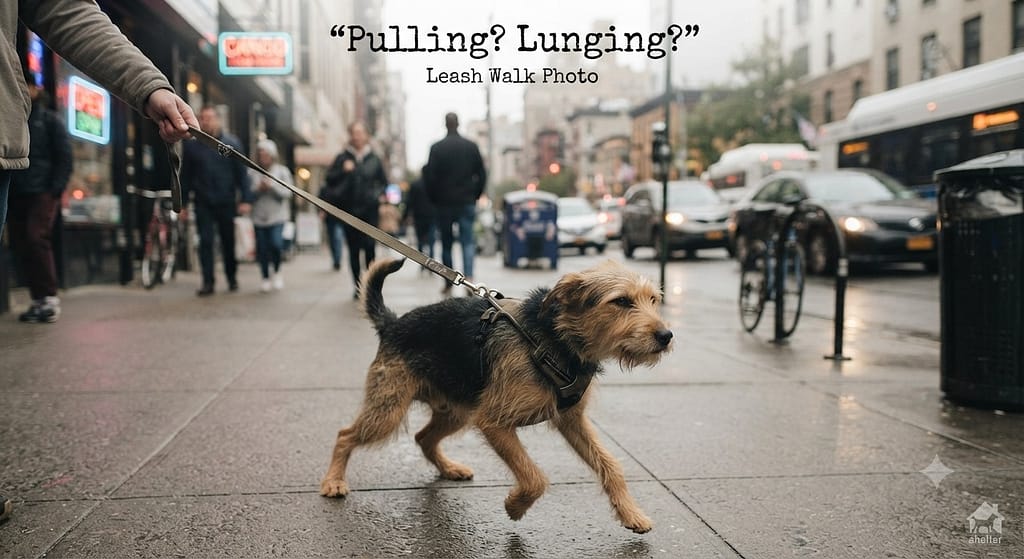
3. Leash test: Walk the dog in a busy environment. Pulling? Lunging?
4. Alone test: Can you step out of sight for 5 minutes without panic?
5. Energy test: After a walk, does the dog settle or pace?
🛒 Affiliate Pick:

Embark Dog DNA Test – Know your rescue’s breed makeup + health risks. $129
👉 Shop: Embark
📝 Breed Restrictions – How to Advocate
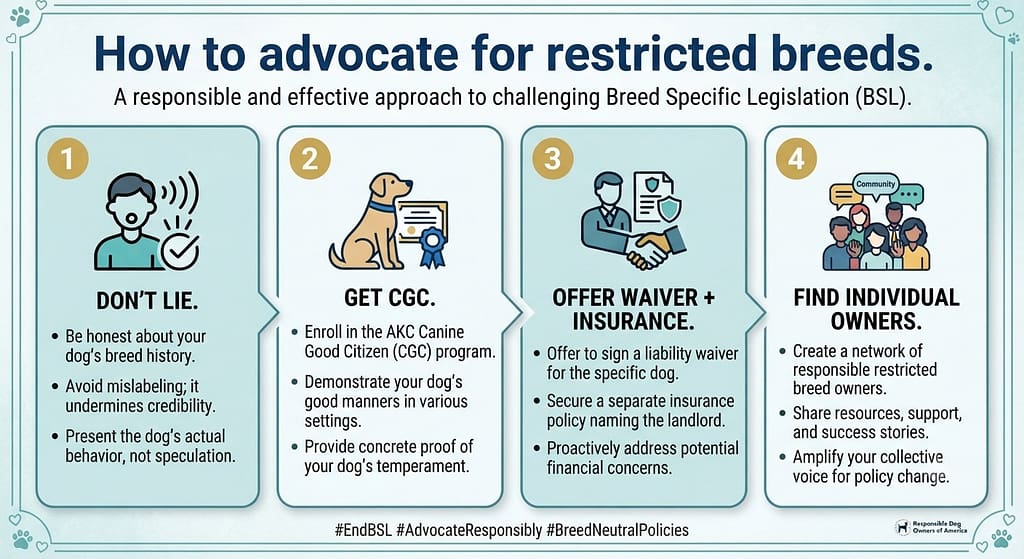
Your perfect breed is on the “banned” list. Now what?
Step 1: Don’t lie.
Misrepresentation can get you evicted and blacklisted.
Step 2: Get a CGC (Canine Good Citizen) title.
Insurance companies are less likely to ban dogs with this certification.
Step 3: Offer a liability waiver + renters insurance.
See our [Rental Applications for Restricted Breeds] guide.
Step 4: Look for individual owners.
Condos, co‑ops, and private landlords have more flexibility.
📊 Quick Comparison – Best Apartment Breeds by Priority

| Your Priority | Best Breed | Runner‑Up |
|---|---|---|
| Low barking | Greyhound | Cavalier |
| Can be left alone 6+ hrs | Greyhound | Miniature Schnauzer |
| Low exercise | French Bulldog | Shih Tzu |
| Hypoallergenic | Standard Poodle | Havanese |
| Kid‑friendly | Labrador | Golden Retriever |
| Senior owner | Cavalier | Maltese |
| First‑time owner | Cavalier | Greyhound |
| Budget‑conscious | Mixed breed | Adult rescue |
🧠Frequently Asked Questions
Q: Can two dogs be easier than one?
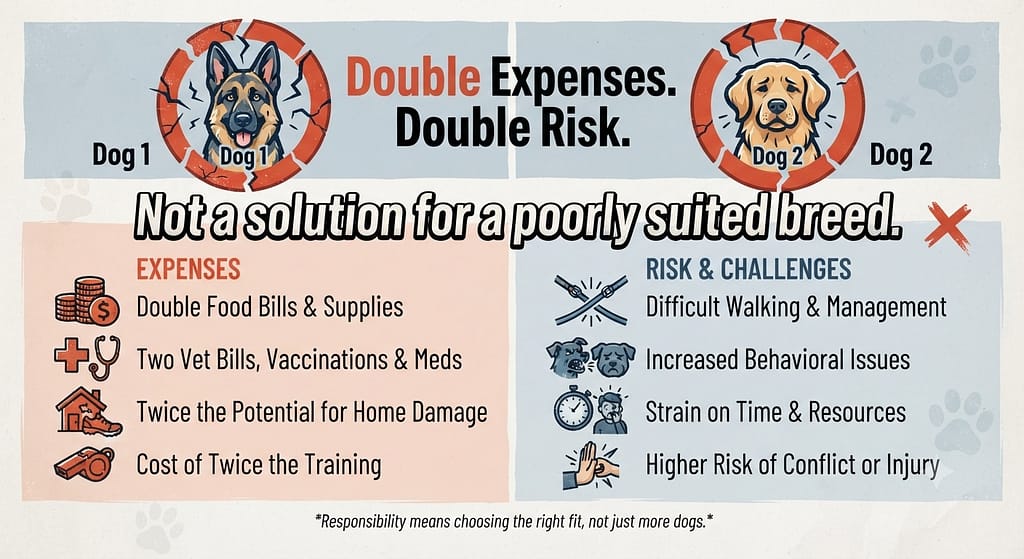
A: Sometimes. A second dog can provide companionship and reduce separation anxiety. But double the expenses, double the barking risk, double the space taken. Not a solution for a poorly suited breed.
Q: What’s the best apartment dog for a cat owner?

A: Breeds with low prey drive: Greyhound (surprisingly cat‑trainable), Cavalier, Golden Retriever, Basset Hound. Avoid terriers, sighthounds (untrained), and herding breeds.
Q: Are male or female dogs better for apartments?
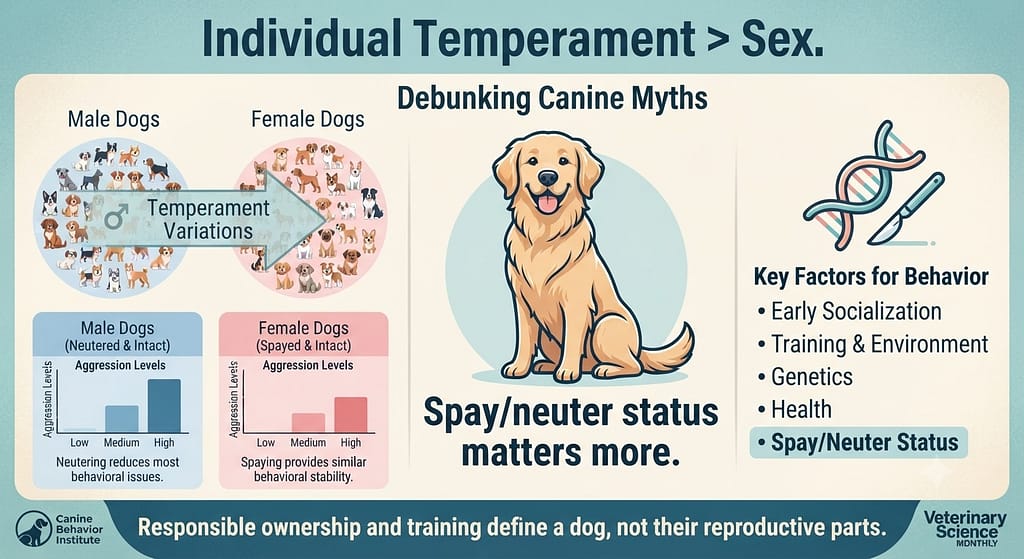
A: Individual temperament > sex. Spay/neuter status matters more.
Q: I live in a 400 sq ft studio. Can I have a Labrador?
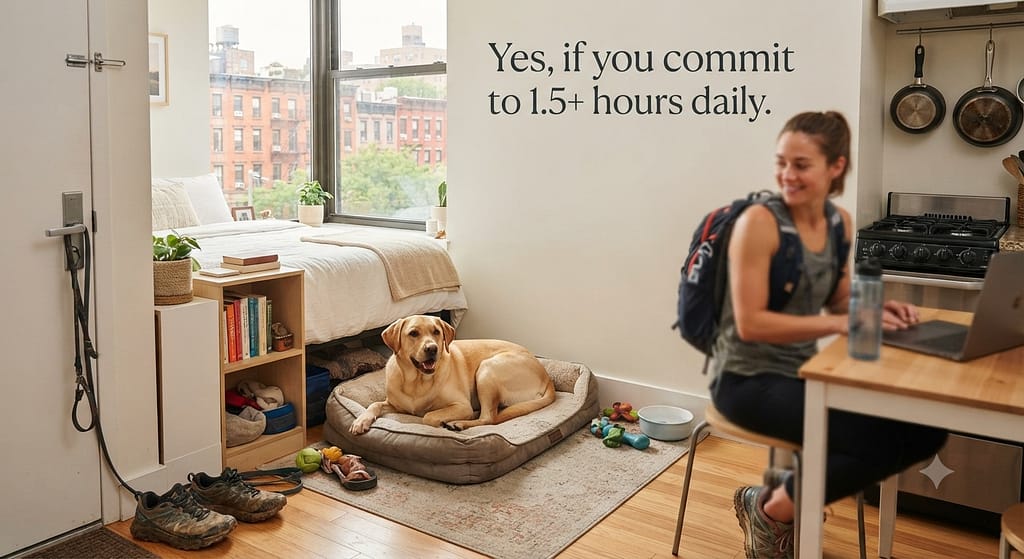
A: Yes, if you commit to 1.5+ hours of daily exercise and mental stimulation. Many Labs live happily in apartments. Many others are surrendered because owners didn’t meet their needs. Be honest with yourself.
🧘Breed Is a Map, Not a Destiny
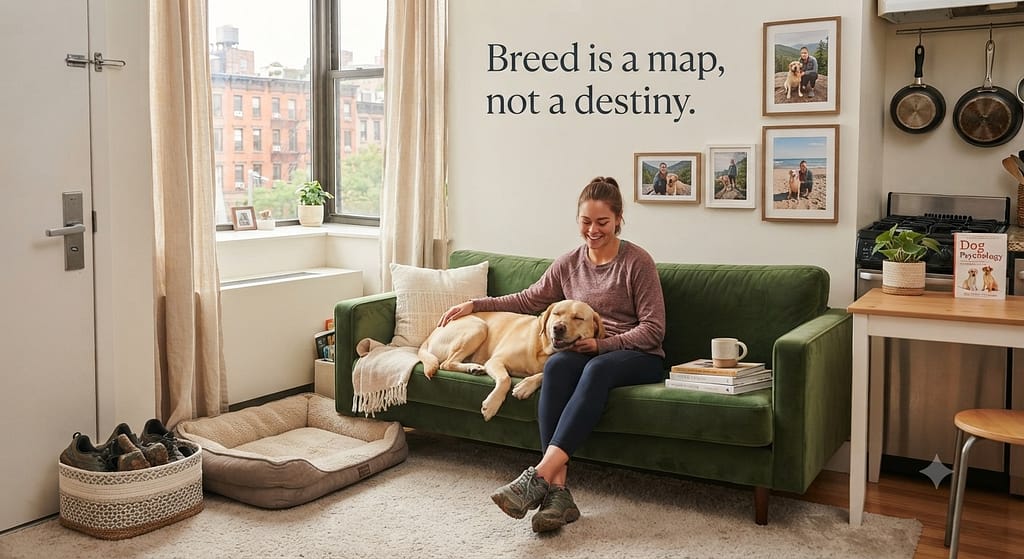
Your dog is an individual.
Breed gives you probabilities, not certainties.
A “bad apartment breed” with the right owner can thrive.
A “perfect apartment breed” with the wrong owner can be miserable.
You are the most important factor: your commitment to exercise.
Your patience with training.
Your willingness to adapt your space and schedule.
The right breed makes it easier.
But you make it possible.
Choose wisely. Prepare thoroughly. Love unconditionally.
That’s the formula. 🐾
🐾 — Apartment Dog Guide (ADG)
Living large in small spaces, one paw at a time. That’s the apartment dog life—see you in the next guide!.


