
The City of Temptation
Your apartment is a minefield of temptations. The delivery person at the door. The food on the counter.
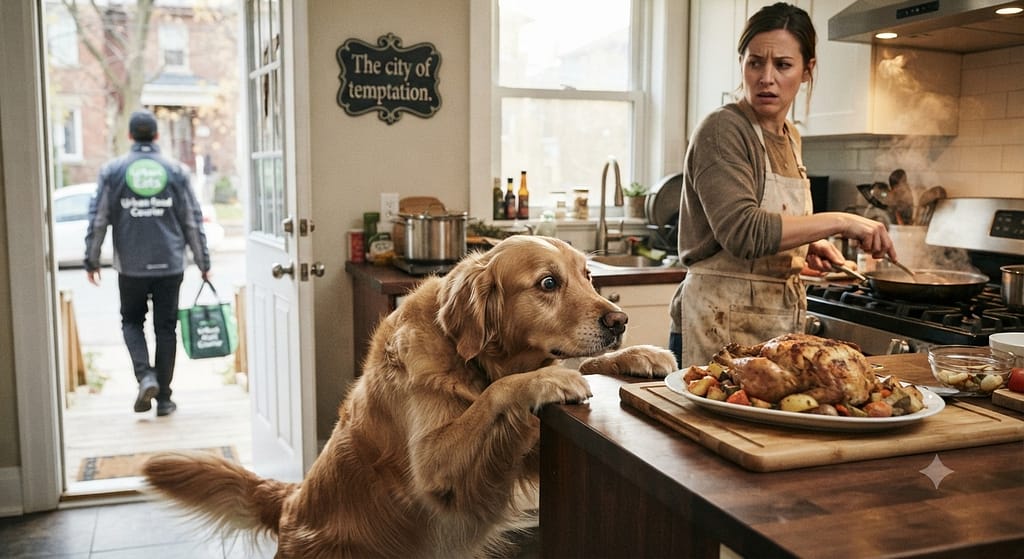
The squirrel outside the window. The neighbor’s dog in the hallway.
Every day, your dog faces a thousand tiny decisions.
And every time they choose to react impulsively—barking, lunging, grabbing, bolting—they reinforce a habit that makes apartment living harder for everyone.
Impulse control isn’t just a “nice to have.” It’s the foundation of urban civility.
A dog that can wait is a dog that can be calm.
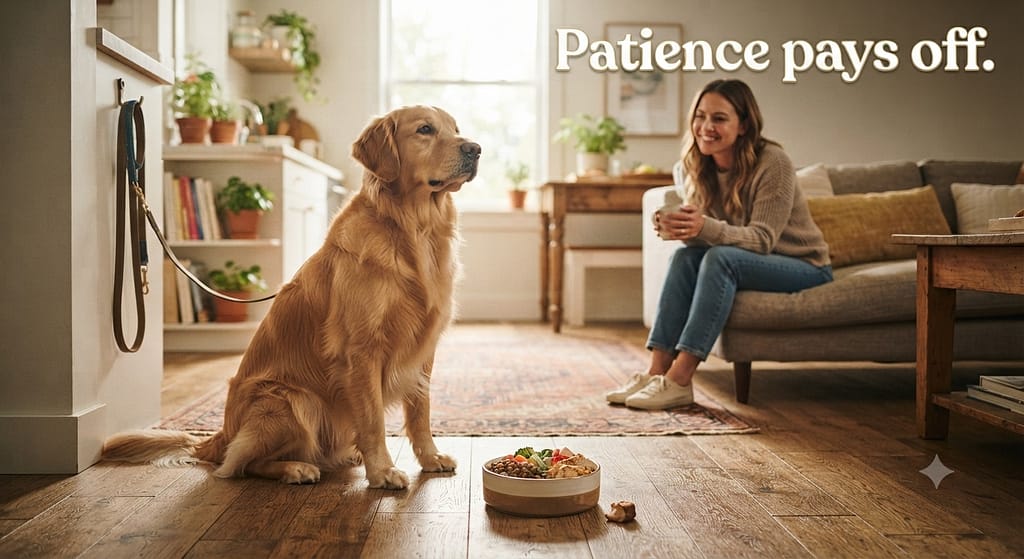
A dog that can resist temptation is a dog that can be trusted.
This guide breaks down impulse control into three core exercises.
Master these, and you’ll have a dog that thinks before they act.
What is Impulse Control?
Impulse control is your dog’s ability to pause, think, and choose a better behavior over an instinctive one.
The Science:
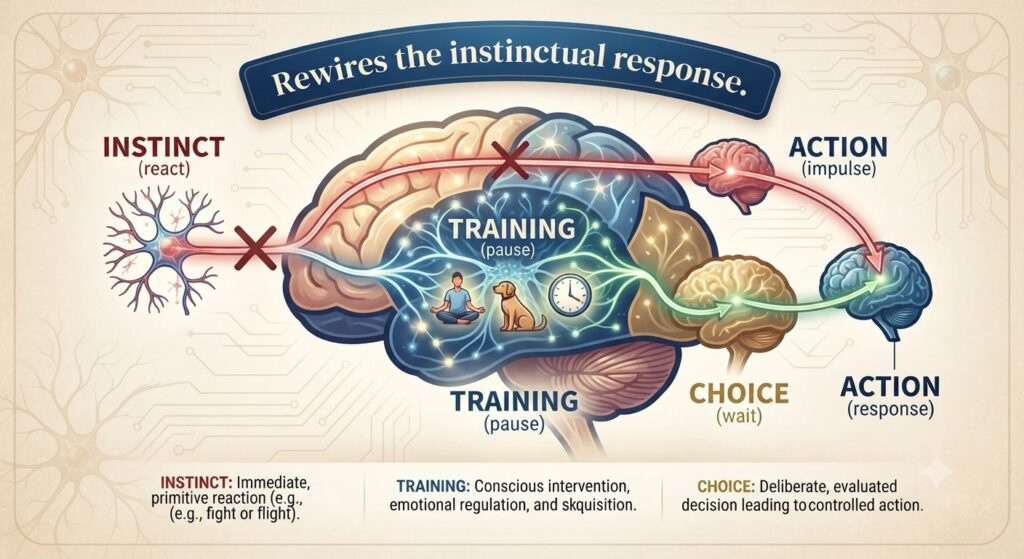
Dogs are wired to act on instinct. When they see food, they grab it. When they hear a doorbell, they bark. When they want attention, they jump.
Impulse control training rewires this instinctual response.
It teaches your dog that patience pays off. Waiting is more rewarding than reacting.
The Urban Reality:
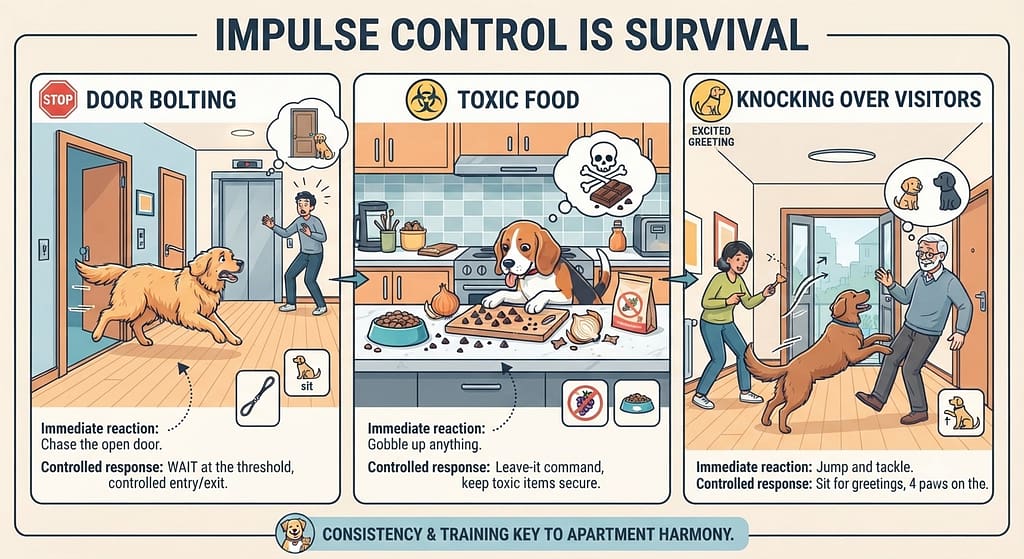
In an apartment, impulse control is survival. A dog that can’t wait at the door is a dog that can bolt into a busy hallway.
A dog that can’t leave food is a dog that could eat something toxic. A dog that can’t control their excitement is a dog that knocks over visitors.
Exercise 1: “It’s Yer Choice” (The Frustration Tolerance Game)
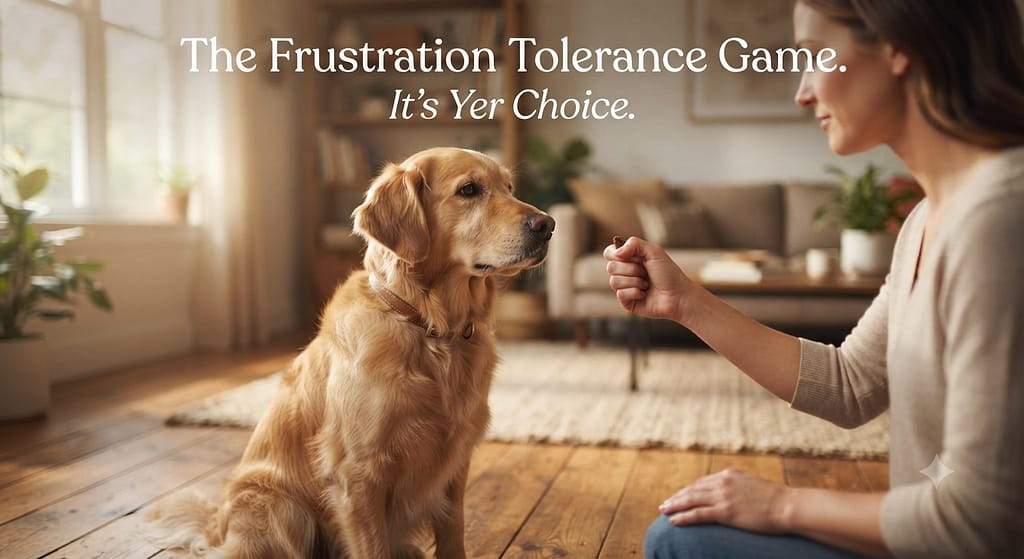
A dog that can resist temptation is a dog that can greet politely. Build on this foundation with our Polite Greetings for Apartment Dogs guide.
Why It Matters:
Your dog learns that fixation doesn’t work. Patience does.
What You’ll Need:
- High-value treats (cheese, chicken, freeze-dried liver)
- 5 minutes of your time
- A quiet space
Step-by-Step:
Round 1: The Closed Fist
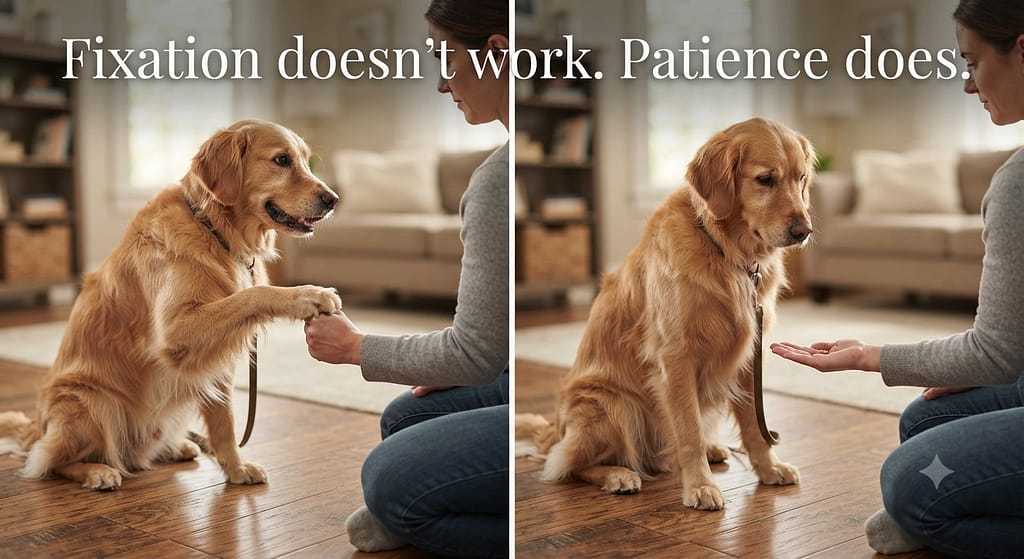
- Hold a treat in your closed fist.
- Present your fist to your dog.
- Watch what happens—they’ll paw, lick, and nibble.
- Wait. The moment they stop (even for a micro-second), open your fist and give the treat.
- Repeat 10 times.
Round 2: The Eye Contact Challenge
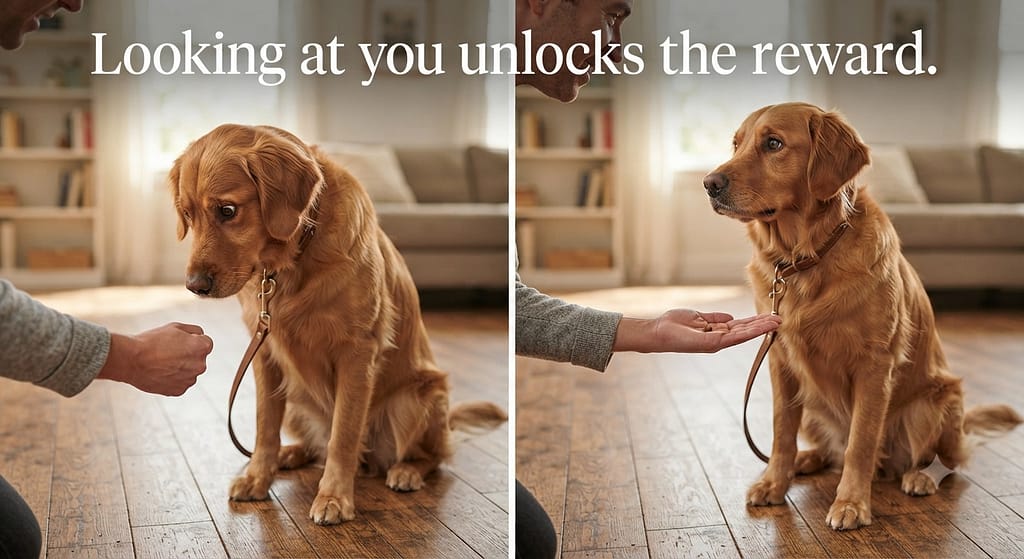
- Hold a treat in your closed fist.
- Present your fist.
- Wait for eye contact. The moment your dog looks at your face (not your hand), say “Yes!” and give the treat.
- Repeat 10 times.
Round 3: The Floor Challenge
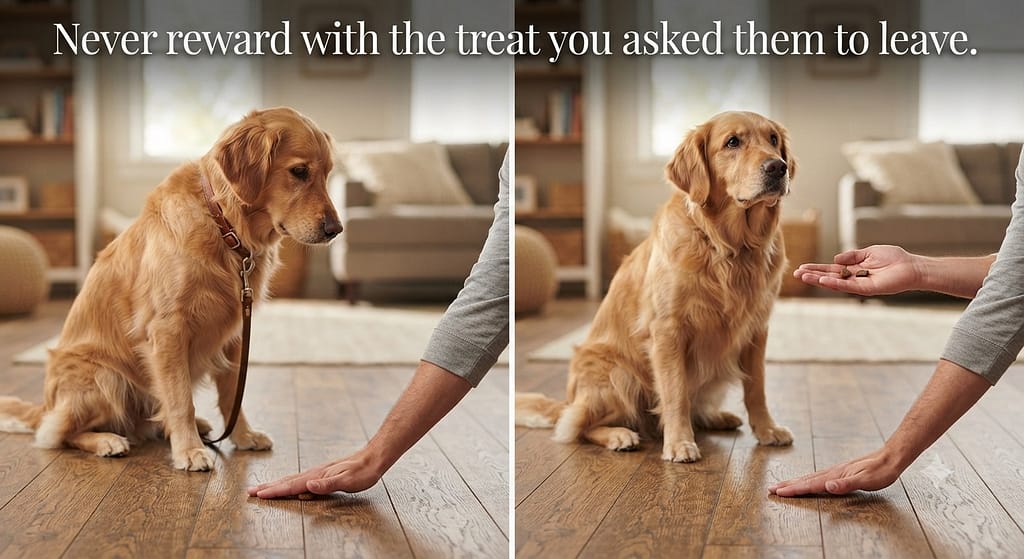
- Place a treat on the floor.
- Cover it with your hand.
- Your dog will try to get it. Wait.
- The moment they back away or look at you, say “Yes!” and give them a different treat from your other hand.
- Repeat 10 times.
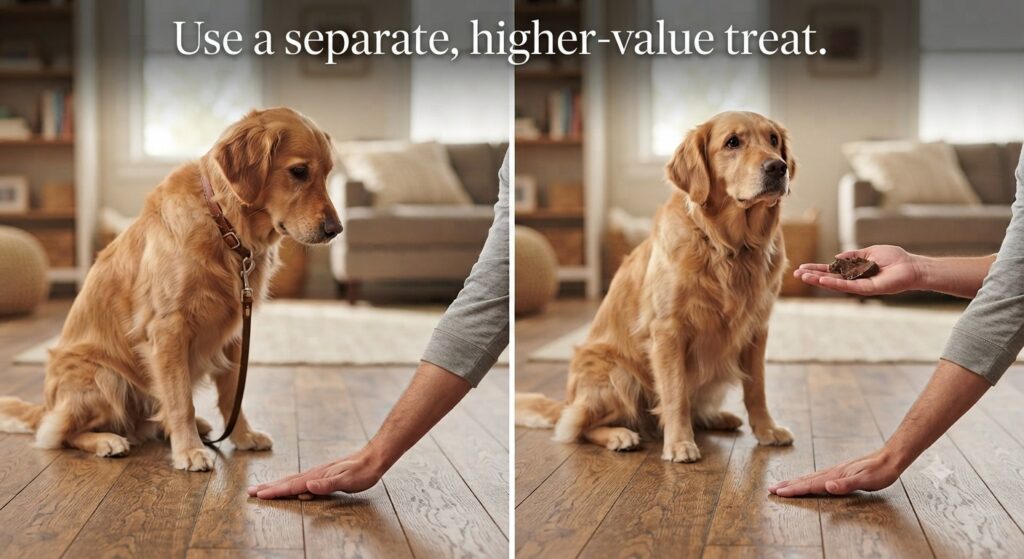
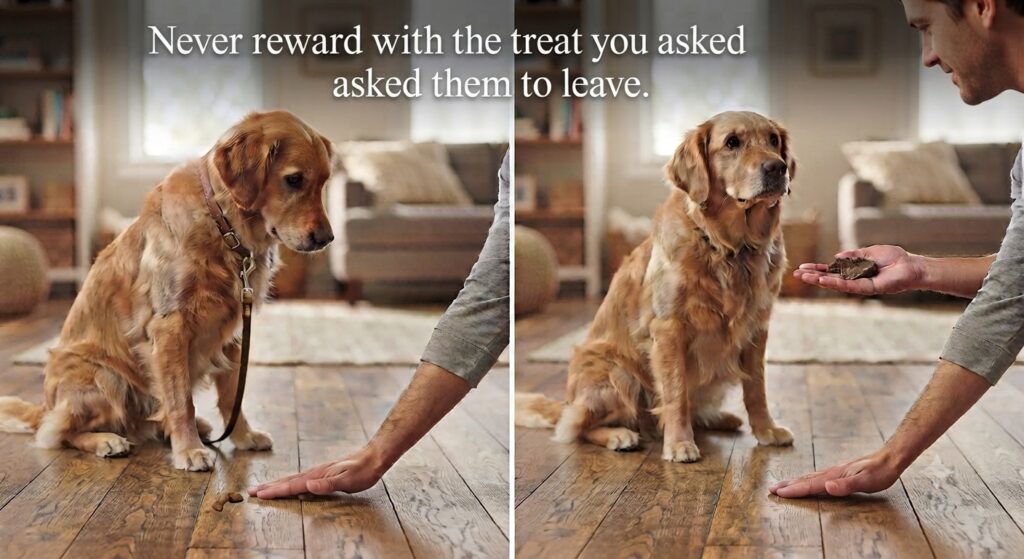
Pro-Tip: Never reward with the treat you asked them to leave. Use a separate, higher-value treat. This teaches them that leaving something is more rewarding than having it.
Progression:
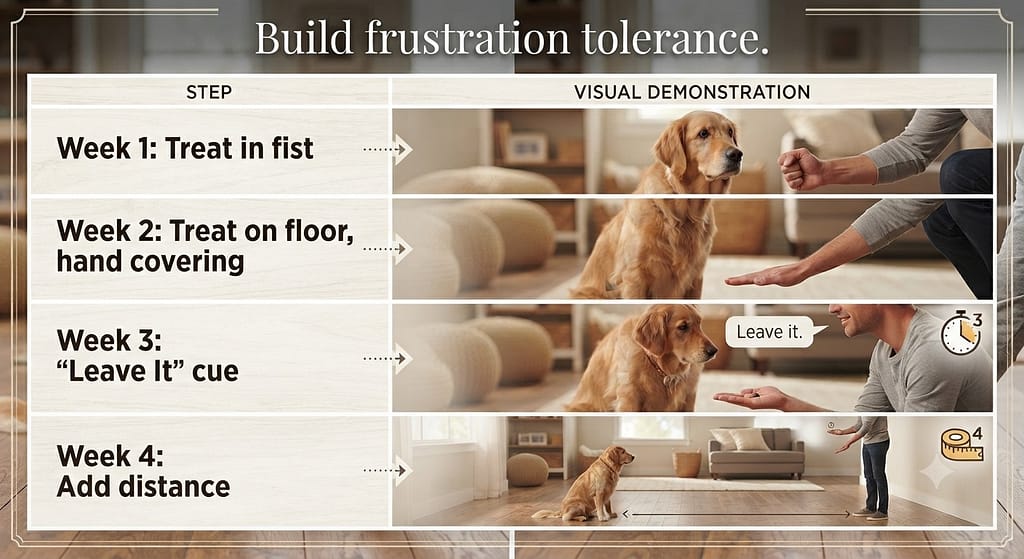
| Week | Activity | Goal |
|---|---|---|
| Week 1 | Treat in fist | Reward the pause |
| Week 2 | Treat on floor, hand covering | Reward when they stop trying |
| Week 3 | Treat on floor, “Leave It” cue | Reward when they back away |
| Week 4 | Treat on floor, add distance | They wait while you walk away |
Exercise 2: “The Doorway Wait” (Generalized Patience)
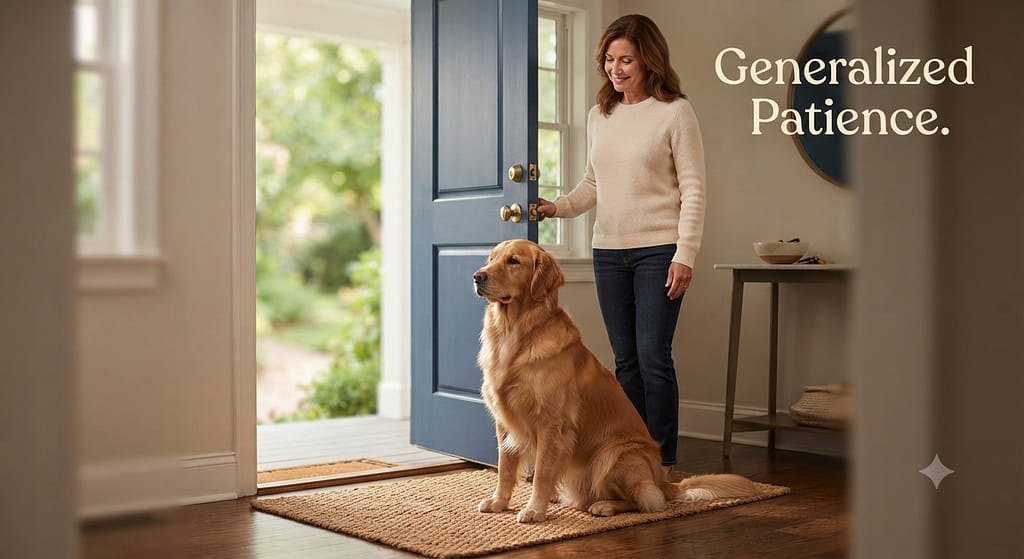
The patience you build at your front door directly translates to calmer walks. For more on walking techniques, check out our Leash Manners for Apartment Dogs guide
Why It Matters:
Your dog learns that doors don’t mean chaos. They mean wait until released.
What You’ll Need:
- Your dog on a leash
- Any door in your apartment
- 5 minutes of your time
Step-by-Step:
Round 1: The Bedroom Door
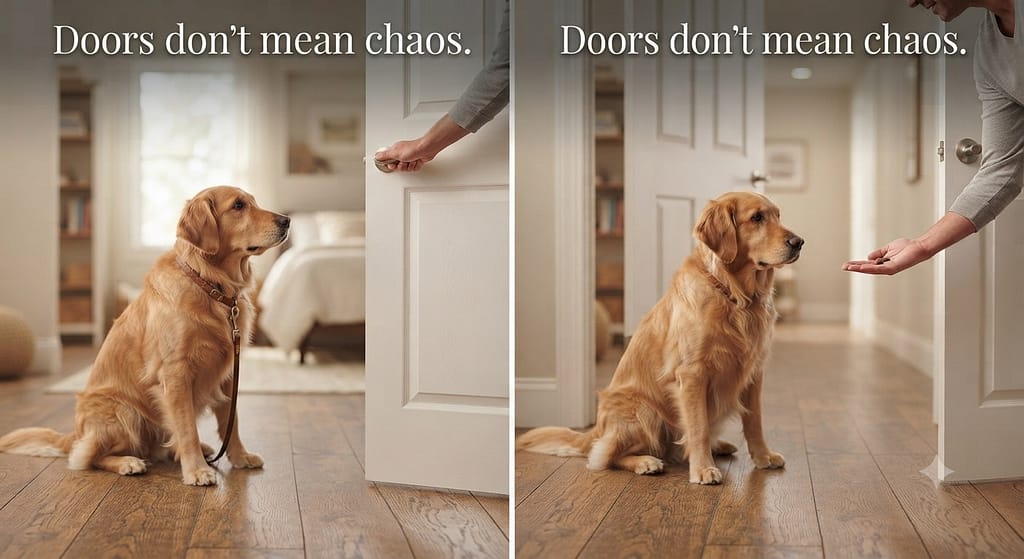
- Approach your bedroom door with your dog on a leash.
- Say “Wait.” Place your hand on the handle.
- If they move, remove your hand and reset.
- Only open the door when they are still.
- Release with “OK” and step through together.
Round 2: The Front Door (Crack)
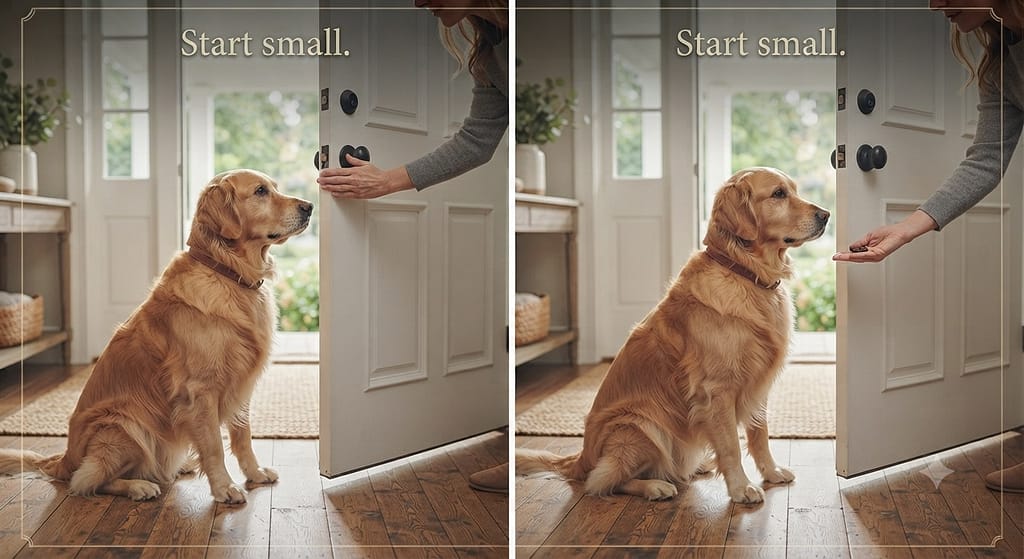
- Approach the front door.
- Say “Wait.” Open the door just a crack.
- If they move, close the door and reset.
- Reward stillness.
- Progression: Open the door wider.
Round 3: The Front Door (Fully Open)
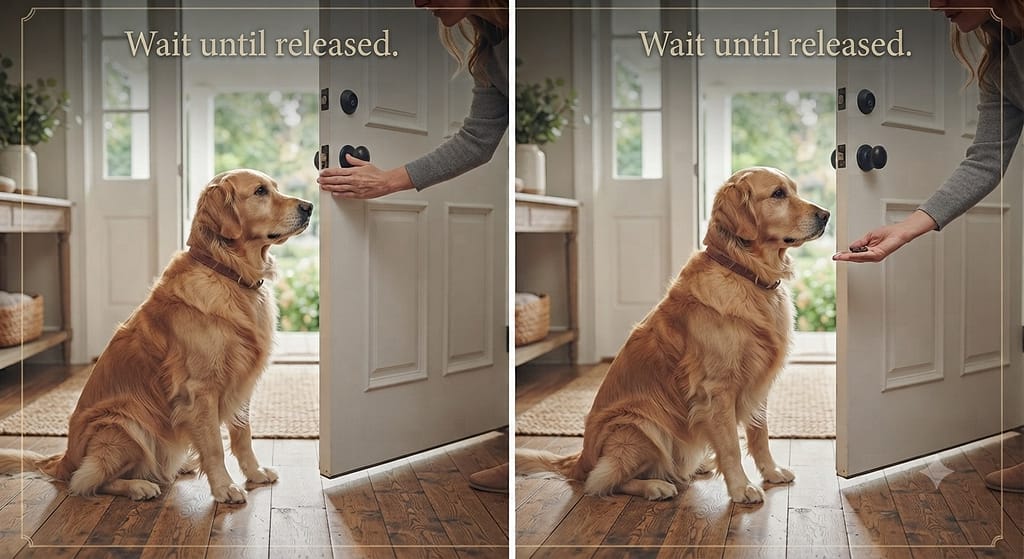
- Approach the front door.
- Say “Wait.” Open the door fully.
- Your dog stays. Reward.
- Release with “OK” and step through.
Progression:
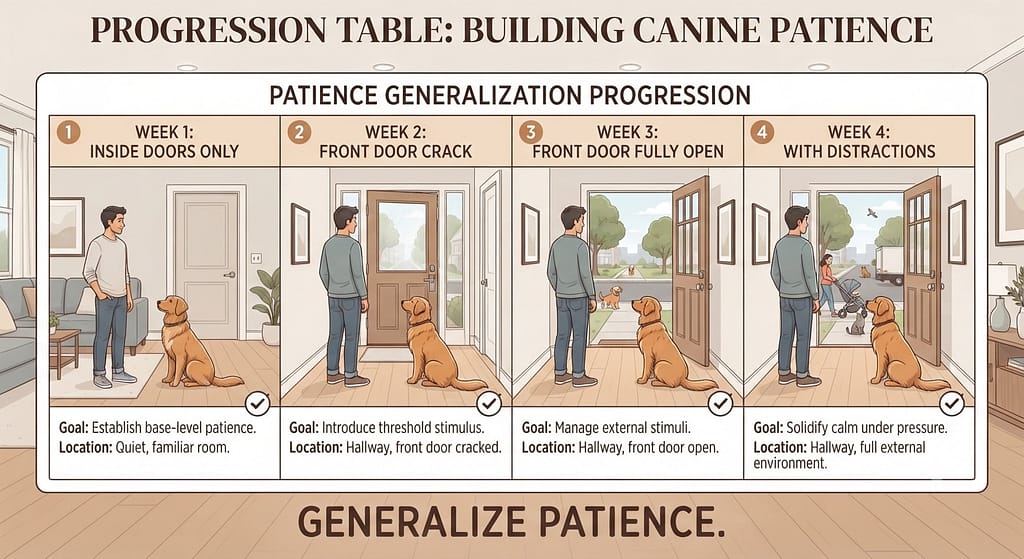
| Week | Activity | Goal |
|---|---|---|
| Week 1 | Inside doors only | Wait at bedroom/bathroom doors |
| Week 2 | Front door, crack open | Wait at threshold |
| Week 3 | Front door, fully open | Wait with door open |
| Week 4 | Front door, with distractions | Wait while someone rings the bell |
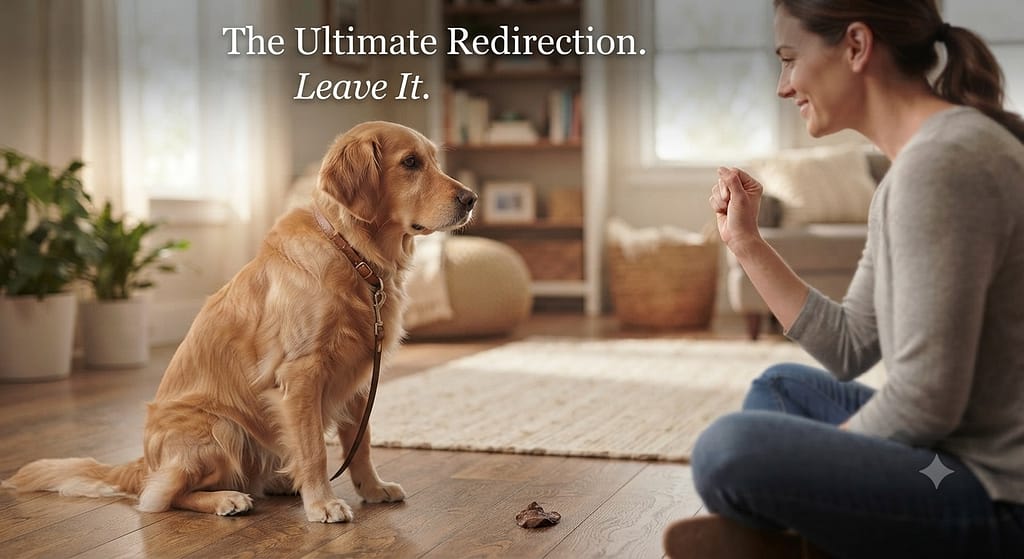
Exercise 3: “Leave It” (The Ultimate Redirection)
Why It Matters:
City sidewalks are littered with hazards—dropped food, broken glass, toxic substances. “Leave it” is a life-saving command.
What You’ll Need:
- Two types of treats (one low-value, one high-value)
- 5 minutes of your time
Step-by-Step:
Round 1: The Hand
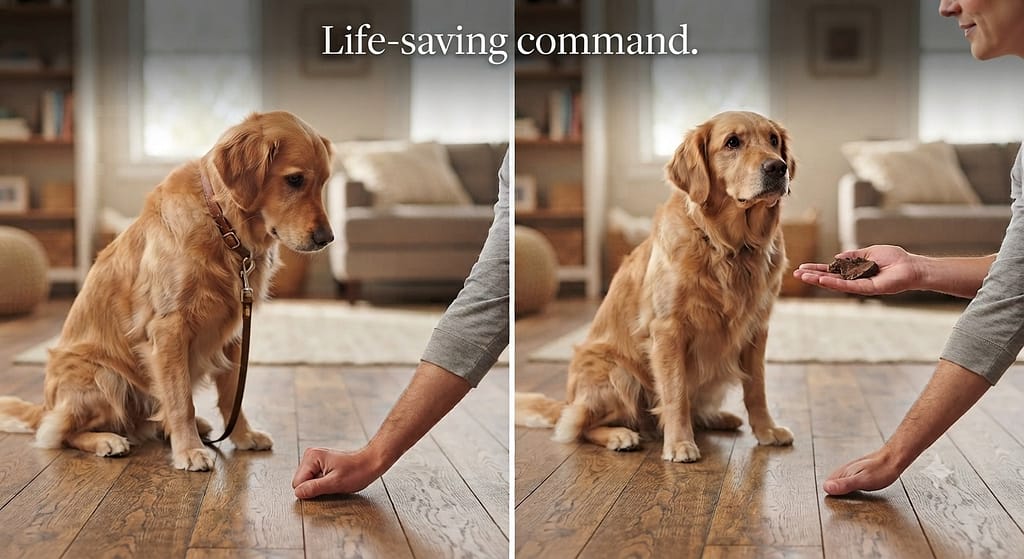
- Hold a low-value treat in your closed fist.
- Say “Leave It” in a calm tone.
- Wait. The moment they stop trying to get the treat, say “Yes!” and give them a high-value treat from your other hand.
- Repeat 10 times.
Round 2: The Floor (Hand Covering)
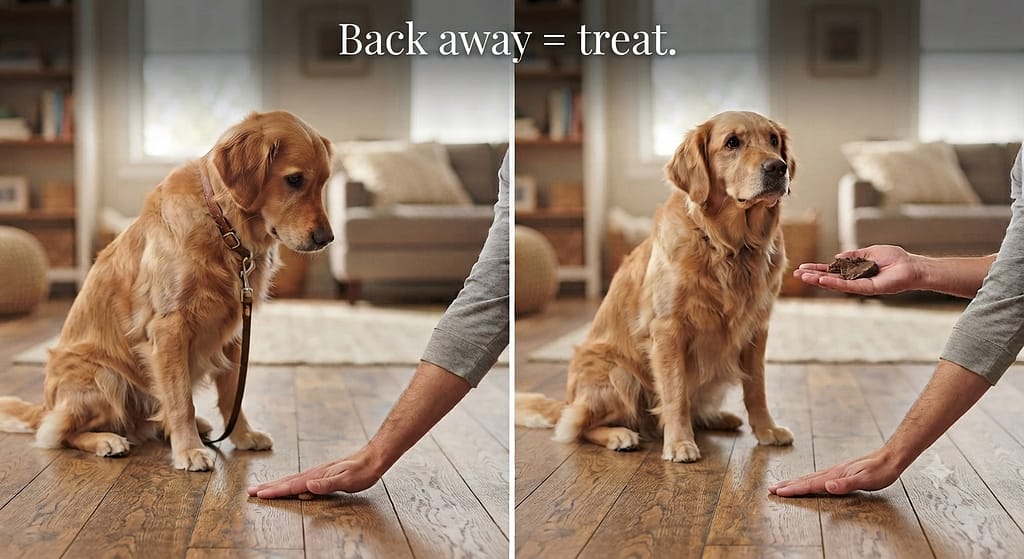
- Place a low-value treat on the floor.
- Cover it with your hand.
- Say “Leave It.”
- Wait. The moment they back away, reward with the high-value treat.
- Repeat 10 times.
Round 3: The Floor (Uncovered)
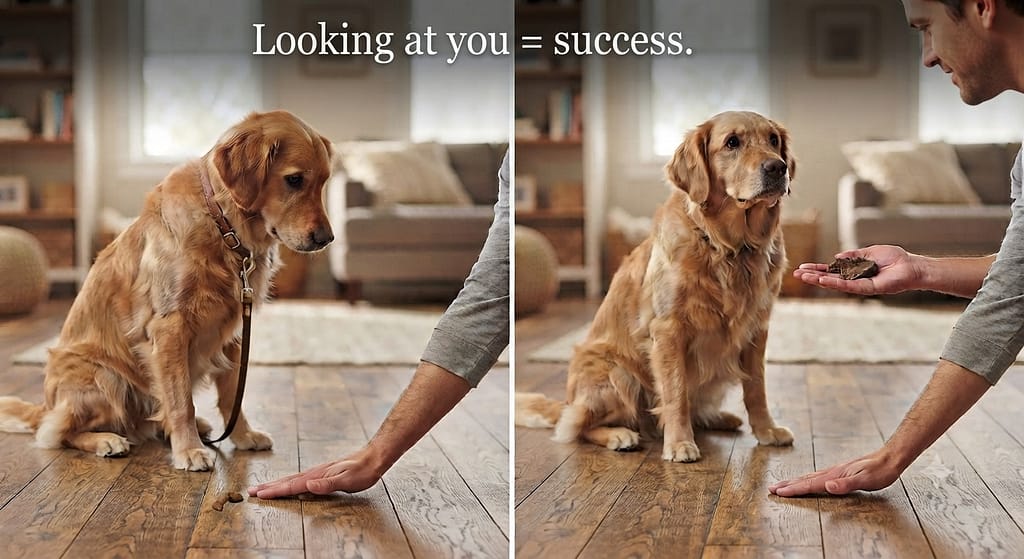
- Place a low-value treat on the floor.
- Say “Leave It.”
- Your dog should look at you instead of the treat.
- Reward with the high-value treat.
- Repeat 10 times.
Once your dog masters ‘Leave It,’ the next step is teaching them to stay calm. Explore our Stay & Settle for Apartment Dogs guide.
The Golden Rule: Never reward with the treat you asked them to leave. Use a separate, higher-value treat. This teaches them that leaving something is more rewarding than having it.
The “Impulse Control” Daily Schedule
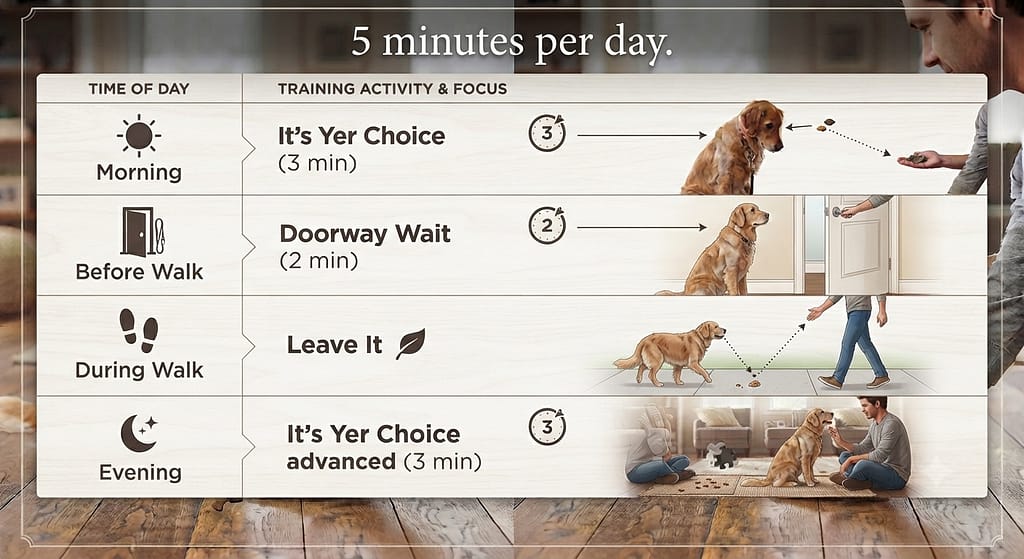
| Time | Activity | Duration | Goal |
|---|---|---|---|
| Morning | “It’s Yer Choice” | 3 minutes | Build frustration tolerance |
| Before Walk | “Doorway Wait” | 2 minutes | Calm exits |
| During Walk | “Leave It” (on sidewalk) | Every hazard | Life-saving redirection |
| Evening | “It’s Yer Choice” (advanced) | 3 minutes | Extend duration |
Common Mistakes & Solutions
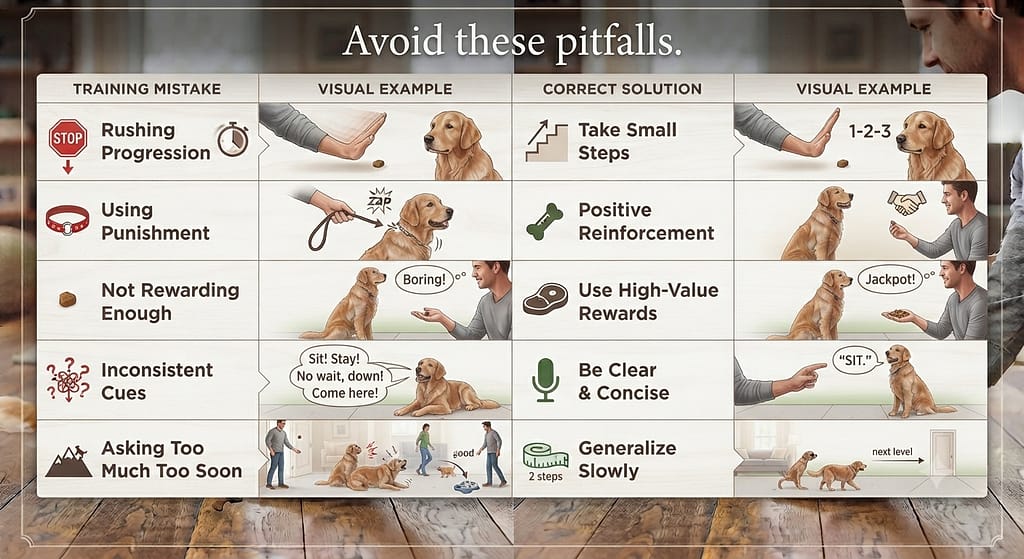
| Mistake | Solution |
|---|---|
| Rushing progression | Go back a step if your dog is struggling. |
| Using punishment | Impulse control is built on rewards, not corrections. |
| Not rewarding enough | Use high-value treats. Make patience pay off. |
| Inconsistent cues | Always use the same word (“Wait,” “Leave It”). |
| Asking for too much too soon | Start with 1 second, then 5, then 30. |
Breed-Specific Impulse Control Tips
French Bulldogs:
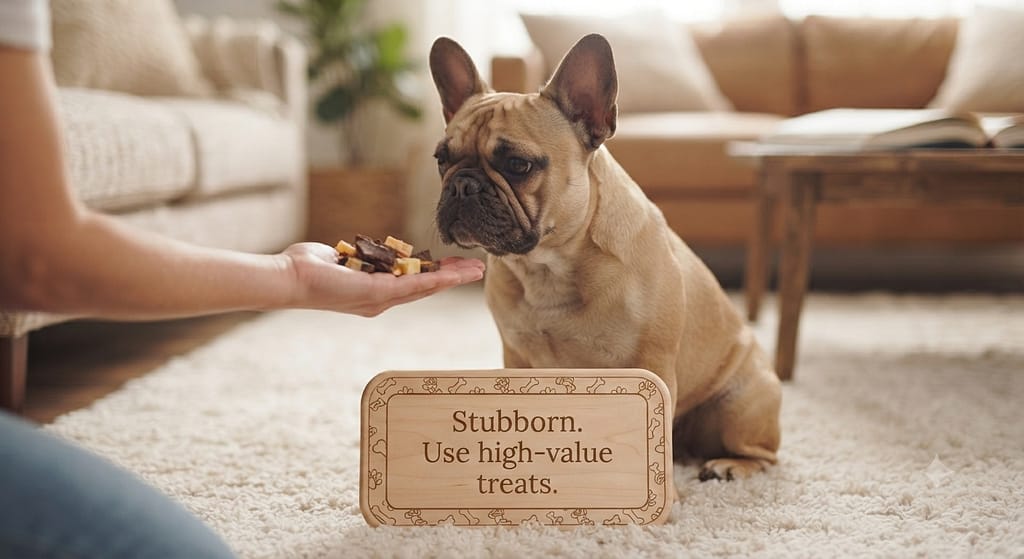
- They are stubborn. Use high-value treats (cheese, hot dogs).
- Keep sessions short (3-5 minutes).
- Be patient. They will test your resolve.
Cavalier King Charles Spaniels:
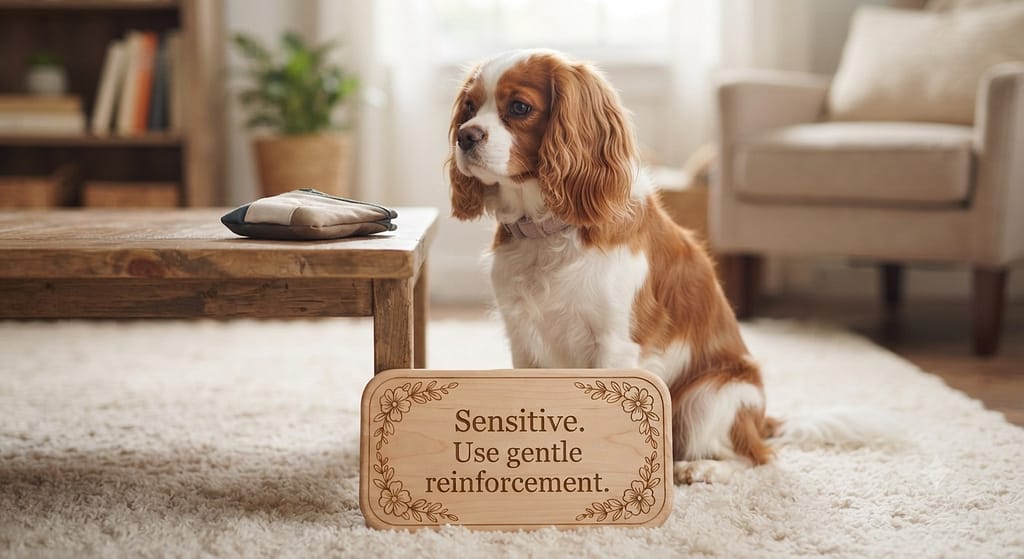
- They are sensitive. Use gentle, positive reinforcement.
- They love attention. Use praise as a reward.
- Avoid harsh corrections—they will shut down.
Boston Terriers:
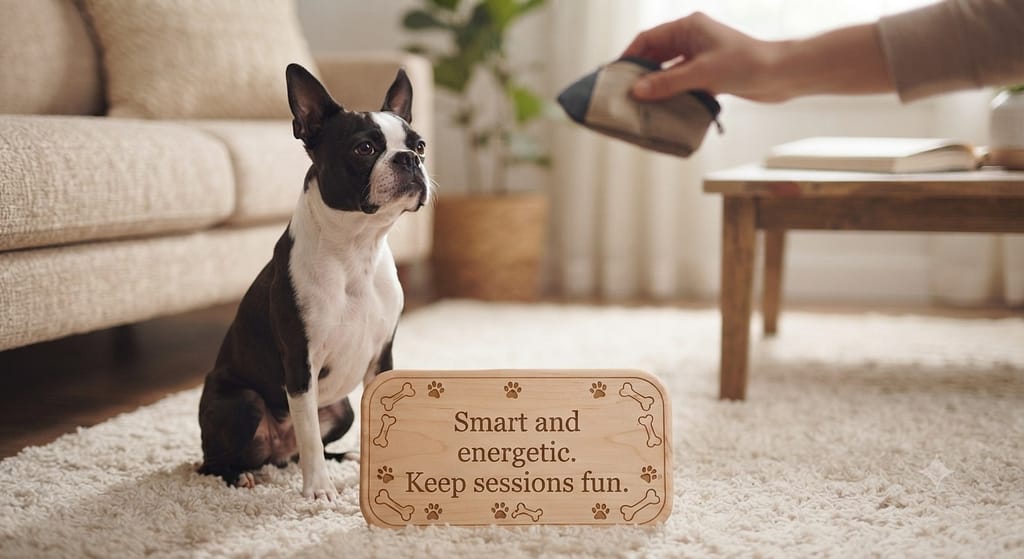
- They are smart and energetic. Keep sessions fun and fast-paced.
- They get bored easily. Rotate exercises.
- Use their high energy to your advantage—channel it into focus.
Conclusion: The Patient Dog
A dog with impulse control is a dog that can live anywhere.
They can wait at doors, resist food, and stay calm in chaos. They are welcome in elevators, lobbies, and living rooms.
Your Next Steps:
- Start with “It’s Yer Choice” today.
- Add “Doorway Wait” tomorrow.
- Practice “Leave It” on every walk.
- Return to the Behavioral Training Bible for the full picture [Link].
Downloadable Resource:
📋 Impulse Control Tracker – Track your dog’s progress with “It’s Yer Choice,” “Doorway Wait,” and “Leave It.” [Download]
🐾 — Apartment Dog Guide (ADG)
Living large in small spaces, one paw at a time. That’s the apartment dog life—see you in the next guide!.


