
Let’s talk about the secret reality of apartment puppyhood that nobody posts on Instagram.
It’s 3 AM. Your 10-week-old puppy is whining.
You’re on the 14th floor. The elevator feels like it’s moving through molasses.
You finally hit the sidewalk, shivering in your robe, while your puppy gets distracted by a leaf, a scent, the existential wonder of a fire hydrant…
Twenty minutes later: nothing. Back upstairs. As you drift off to sleep… the unmistakable sound of piddle on the floor.

There has to be a better way.
There is. It’s called the apartment puppy loo, and it’s about to revolutionize your life.

This isn’t about giving up on house training.
It’s about adapting it to the real-world constraints of urban living—where a yard is a dream and quick outdoor access is a luxury.
This guide will walk you through every single question: real grass vs. fake turf, how to train on it, how to keep it from smelling, and how to transition away from it when the time is right.
Consider this your stress-free blueprint.
Take a deep breath…The midnight elevator marches are about to end.
Let’s begin.
Why an Apartment Puppy Loo Isn’t Cheating—It’s Strategic
First, let’s abolish the guilt.
Using an indoor loo doesn’t mean your dog will never learn to go outside.
Think of it as Potty Training with Training Wheels.

Puppies have bladders the size of thimbles and the impulse control of a toddler on a sugar rush.
Biologically, they simply cannot hold it for the time it takes to get from a high-floor apartment down to the street.
Asking them to is setting you both up for failure and frustration.
The Strategic Benefits:
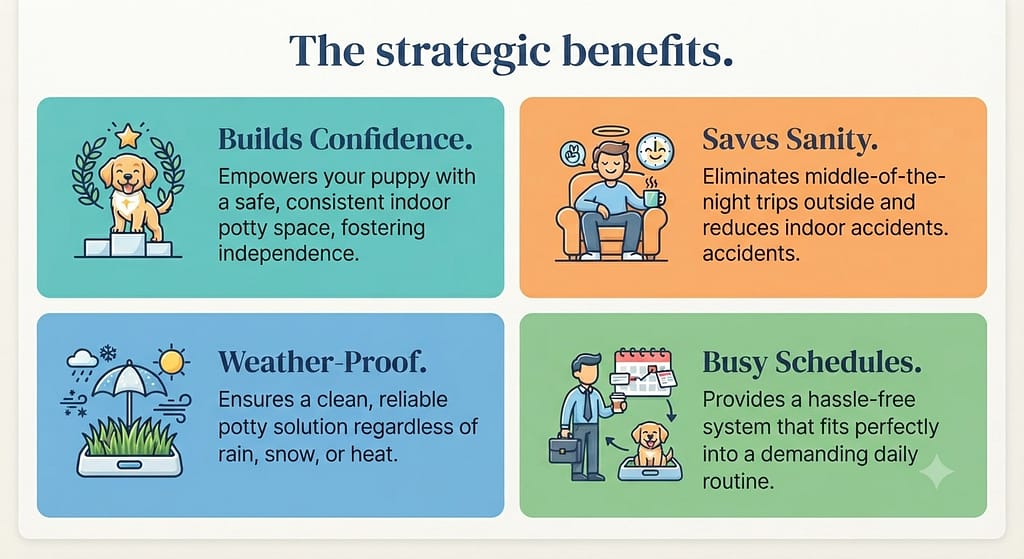
- Builds Confidence: Successfully using the loo gives your puppy a clear “right place” to go, reinforcing good habits from day one.
- Saves Your Sanity: No more frantic dashes or scrubbing carpets at midnight.
- Weather-Proof: Blizzards, torrential rain, or scorching heatwaves? Irrelevant. The loo is always available.
- Ideal for Busy Schedules: Provides a reliable option for when you’re stuck on a work call or running late.
Think about it this way…
Would you make a human toddler run 14 flights of stairs to use the bathroom?
You provide a potty within reach.
This is the same concept.
The Great Showdown: Choosing Your Puppy Loo Type
Not all loos are created equal.
Your choice depends on your puppy, your space, and your lifestyle.
Here’s the breakdown.
Option A: The Real Grass Patch (The Subscription Service)
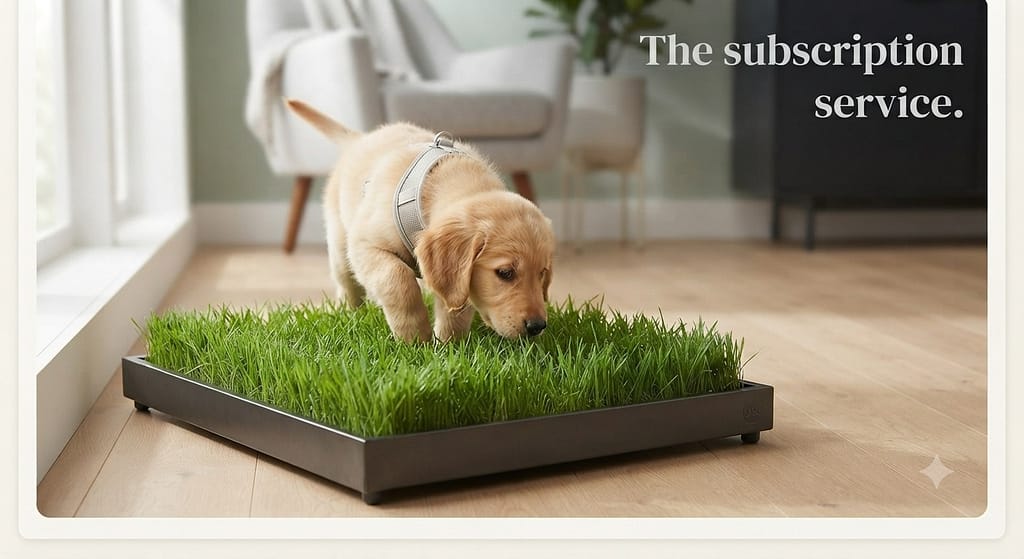
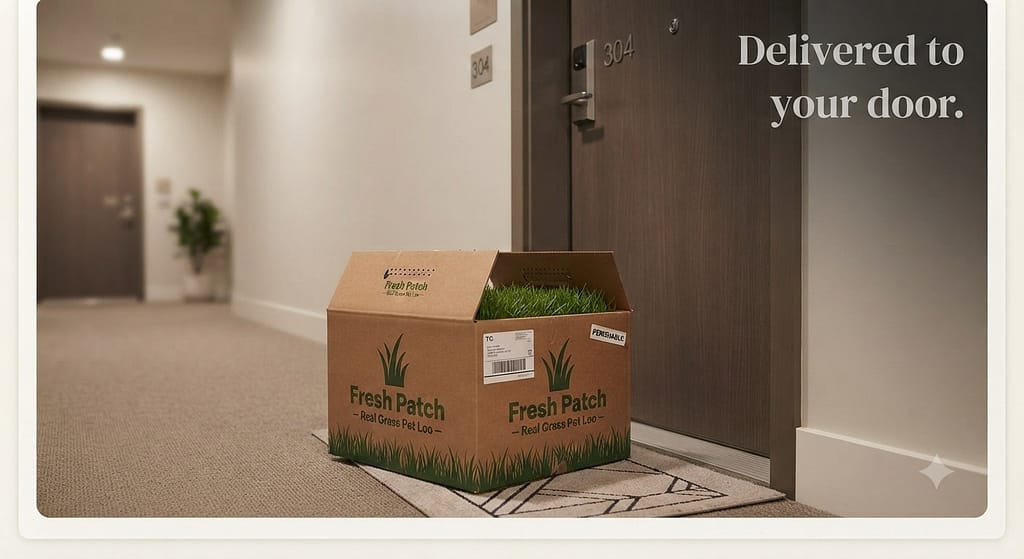
This is a tray filled with actual, growing sod delivered to your door weekly or bi-weekly.
- How it Works: Companies like Fresh Patch, Doggy Lawn, or Puppy Patch ship fresh grass trays. You place it on their provided tray (which has a leak-proof base and a grate to keep paws dry).
- The Pros:
- Natural Instinct: Puppies naturally gravitate to grass. It often requires the least training.
- Easier Transition: Going from indoor grass to outdoor grass is a seamless concept for them.
- Minimal Odor: Fresh grass has a naturally deodorizing effect.
- The Cons:
- Ongoing Cost & Logistics: A subscription is a recurring expense, and you must be home to receive/swap it.
- Limited Lifespan: Each patch lasts 1-3 weeks before it yellows and needs replacing.
- Potential for Mess: Dirt can get tracked, and very enthusiastic diggers might make a mess.
Best For: Puppy parents who want the most natural solution and value convenience over upfront cost.
Option B: Artificial Turf Systems (The Reusable Workhorse)
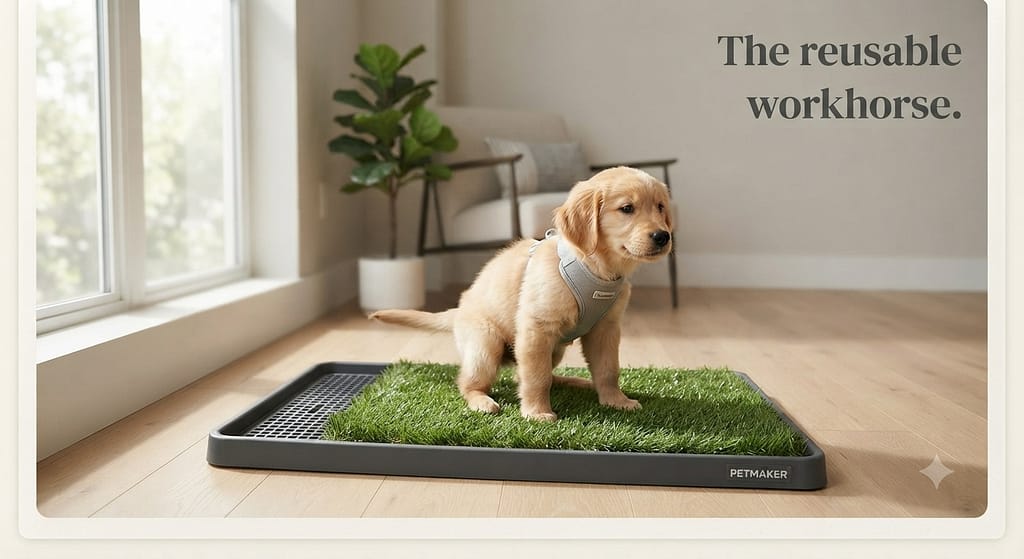
A plastic tray with a layer of fake grass on top, often with a washable pad or grate system underneath.
- How it Works: Brands like PETMAKER, Breezy, or Piddle Place offer systems where pee drains through the fake turf onto an absorbent, washable pad or into a reservoir that you empty and clean.
- The Pros:
- One-Time Purchase: More cost-effective in the long term.
- Durable & Washable: The turf itself can be hosed off in a bathtub or shower. Pads go in the laundry.
- Always Available: No waiting for deliveries.
- The Cons:
- Training Can Be Trickier: Some puppies are skeptical of the fake grass texture.
- Odor Management is Crucial: Requires diligent cleaning to prevent smells from embedding in the plastic turf.
- Drainage Issues: Cheaper models may not drain well, leaving paws in puddles.
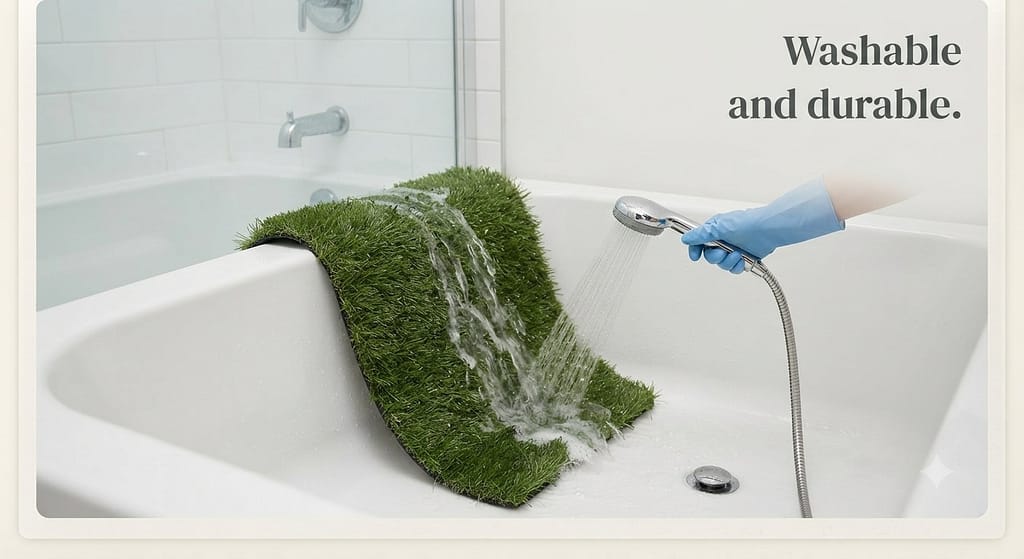
Best For: Budget-conscious owners who don’t mind a bit more hands-on cleaning and have space to wash the turf (bathtub or balcony hose).
Option C: Potty Pads (The Simple Starter)
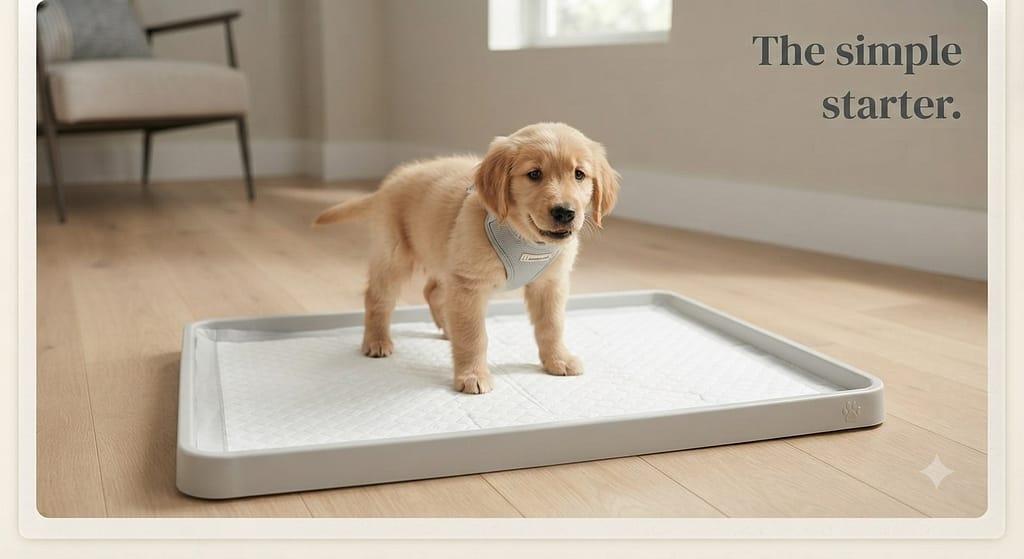
Absorbent pads, with or without an attractant scent, placed on the floor or in a holder frame.
- The Pros:
- Extremely Cheap & Accessible: Found everywhere.
- Disposable: Just roll it up and toss it.
- The Cons:
- Chewing Hazard: Many puppies love to shred the fluffy, crinkly pads.
- Accuracy Issues: Pups often miss the edge, or the pad slides on hardwood.
- Can Delay Outdoor Training: Teaches them to go on a soft, absorbent surface indoors, which is nothing like outside.
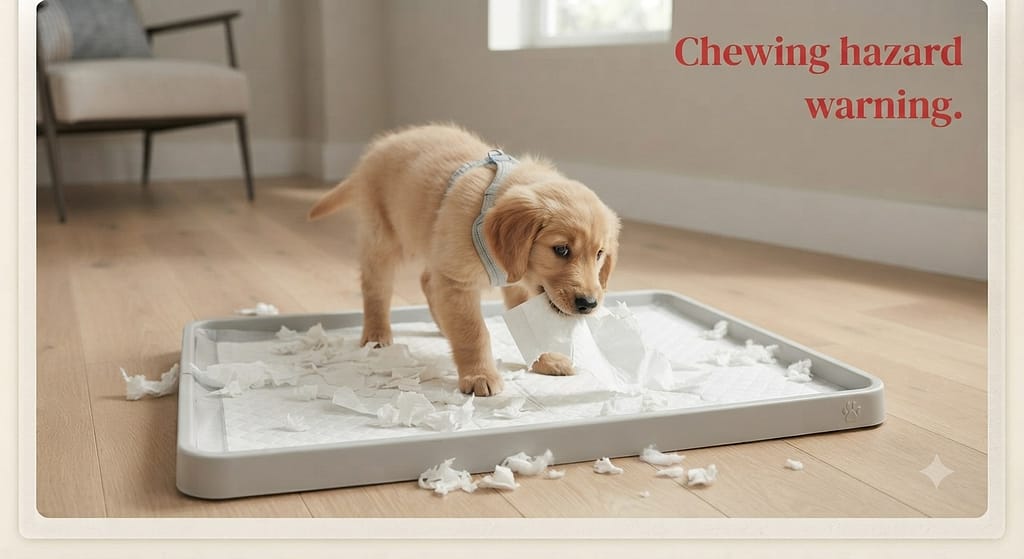
- Our Verdict: Use these as a last resort or temporary liner under another system. They’re not ideal as a primary long-term loo.
The 5-Step Foolproof Training Method
You’ve got your loo.
Now, let’s teach them to use it.
Consistency is your new religion.
Step 1: Strategic Placement & Introduction

Place the loo in a quiet, low-traffic, but accessible corner (a bathroom, laundry nook, or enclosed balcony). Let your puppy investigate it on their own. Praise calm interest. Never force them onto it.
Step 2: Master the Timing
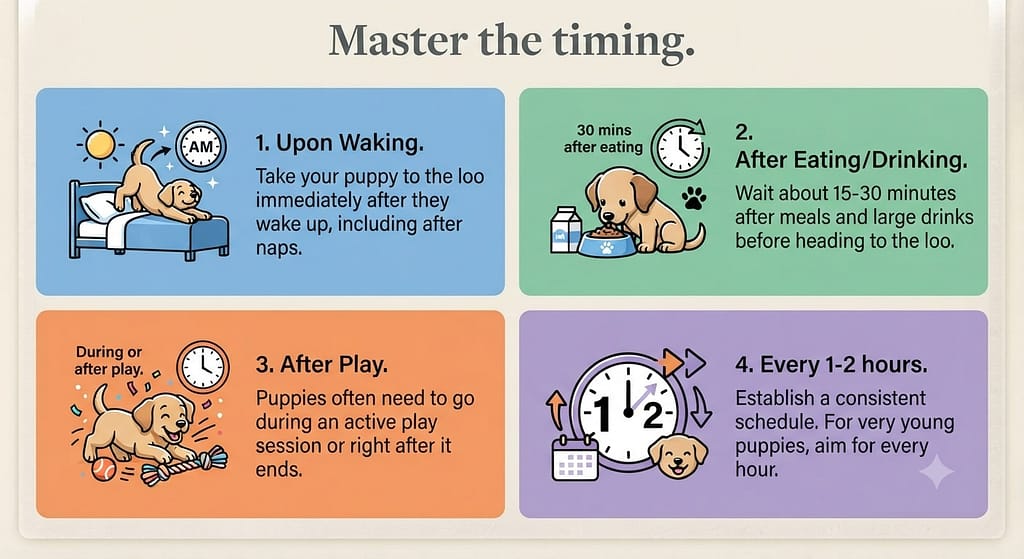
Puppies must go:
- Immediately upon waking up
- 5-20 minutes after eating or drinking
- After a vigorous play session
- Every 1-2 hours in general
At these exact moments, calmly lead or carry them to the loo. Use a cue word like “Go Potty.”
Step 3: The Patient Party
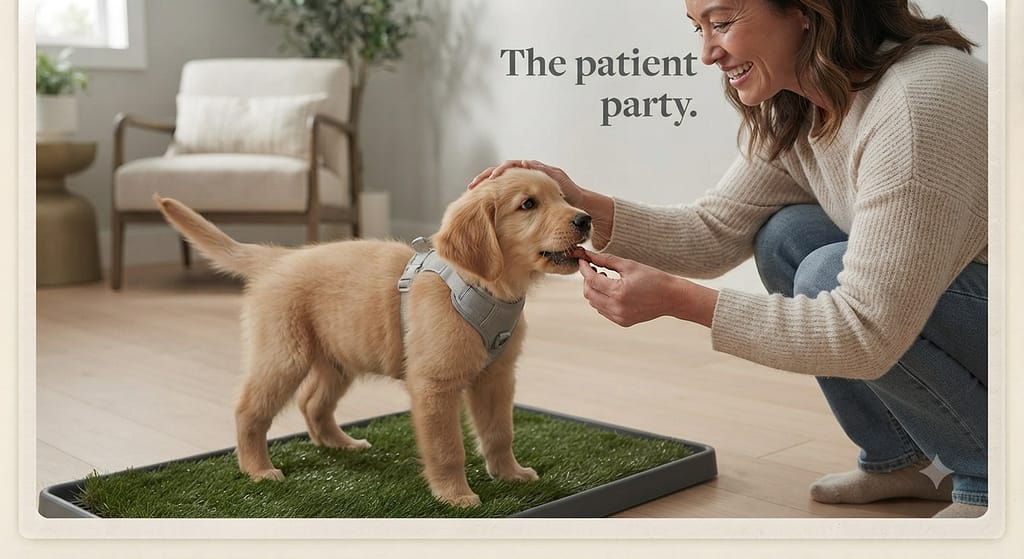
Stand quietly. Give them 3-5 minutes. No play, no talking. If they go, throw a calm, happy party the second they finish! Treats, praise, gentle pets. This is non-negotiable. If they don’t go, take them away (supervised) and try again in 15 minutes.
Step 4: Confine for Success
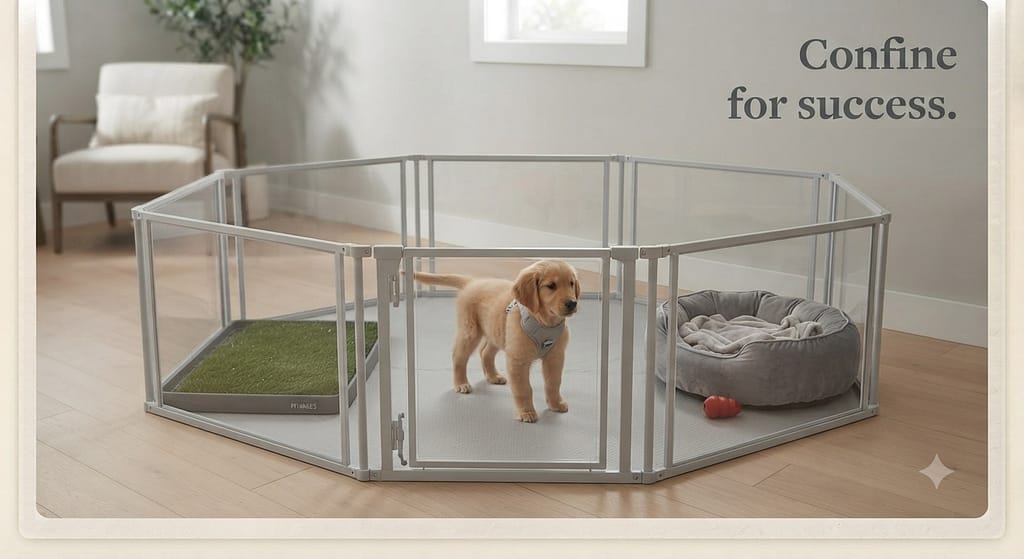
When you can’t watch them like a hawk (which is most of the time), they should be in a puppy-proofed playpen or crate with the loo at one end and their bed/water at the other. This encourages them to use the loo and prevents secret accidents around your apartment that set training back.
Step 5: Clean Accidents Like a CSI Agent
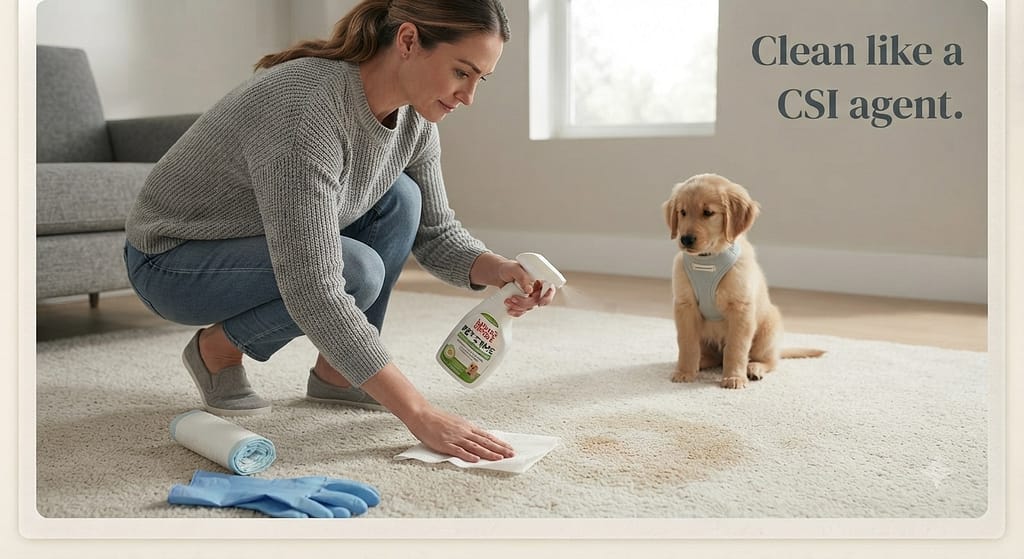
If they have an accident outside the loo, use an enzymatic cleaner (like Nature’s Miracle). This destroys the odor molecules that tell them “this is a bathroom spot.” Household cleaners don’t do this. No punishment. Just clean it up and recommit to your timing in Step 2.
Let’s pause for a key question… Are you using an enzymatic cleaner?
If not, you’re likely repeating the same accidents.
It’s that important.
The Hygiene Handbook – Keeping It Clean & Odor-Free
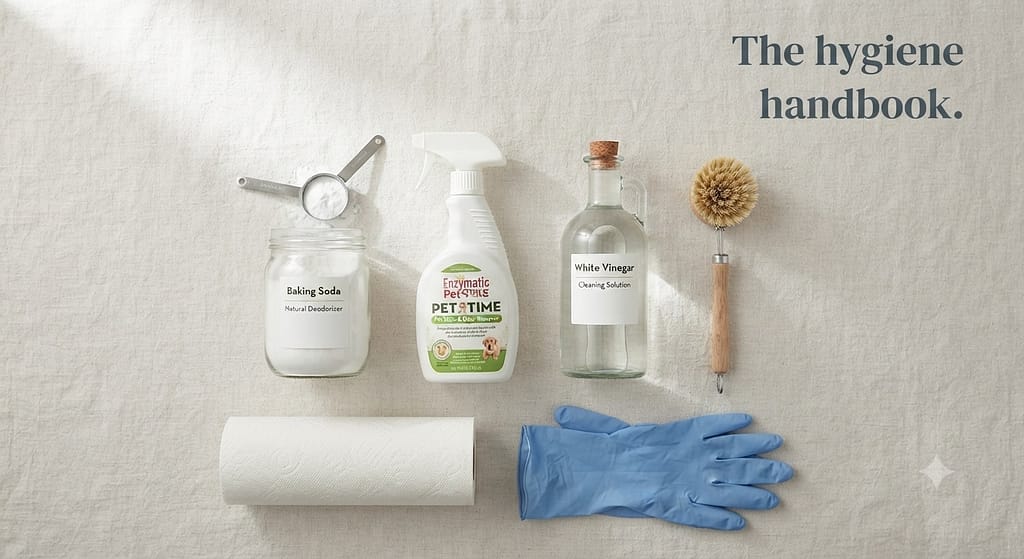
A smelly loo is a rejected loo.
Your maintenance routine is the key to long-term success.
For Real Grass Patches:
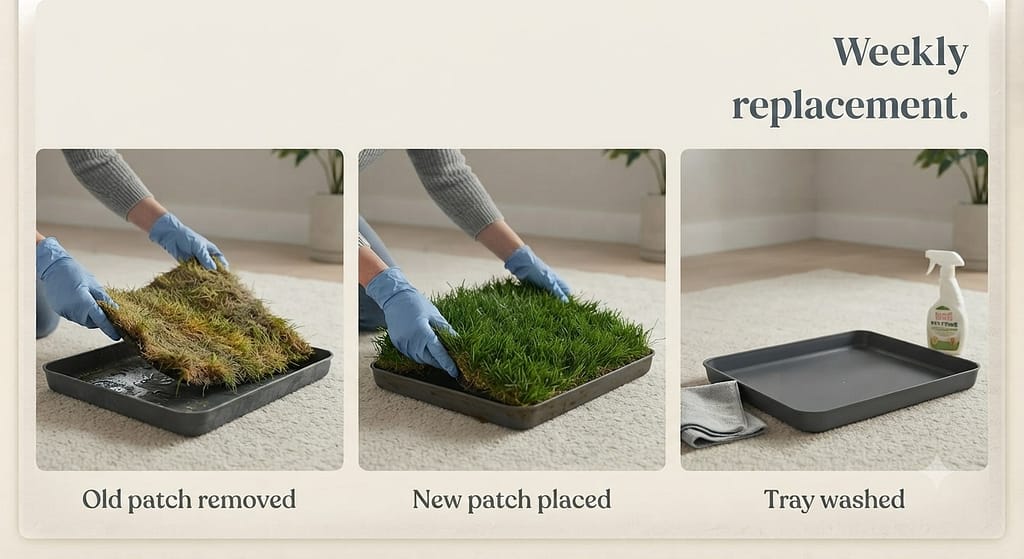
- Daily: Pick up solid waste immediately.
- Weekly: Replace the patch as soon as it starts to yellow or smell. Use the provided tray liner to contain mess.
- Tray Care: Wash the base tray with a vinegar/water solution between patches to disinfect and deodorize.
For Artificial Turf Systems:

- After Each Use: Remove solid waste.
- Daily/EOD: Rinse the turf with water. Empty and rinse the reservoir or replace the pad.
- The Weekly Deep Clean: Take the entire system to a bathtub, shower, or balcony. Scrub the turf with dog-safe soap or a baking soda/vinegar solution. Let it dry completely before reassembling. A baking soda sprinkle on dry turf absorbs lingering odors.
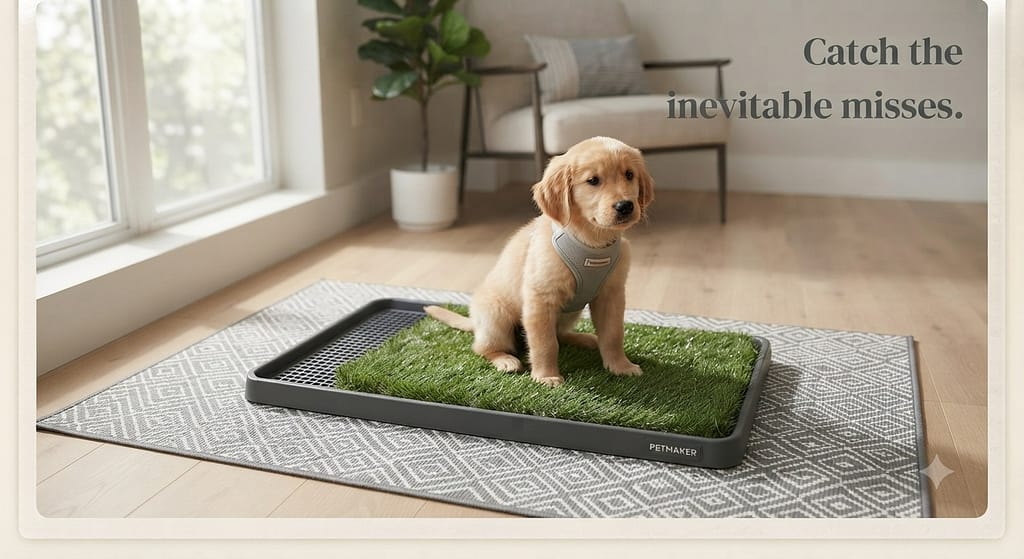
Pro-Tip for All Systems: Place a washable waterproof mat under the entire setup. It will catch the inevitable misses and spills.
The Future-Proof Plan – Transitioning to Outdoors Only
The puppy loo is a bridge, not a forever home.
Start planning the transition around the 4-6 month mark, as their bladder control improves.
1. The Two-Location Phase: Keep the indoor loo, but begin taking them outside to their future “real” potty spot first thing in the morning and last thing at night—when the urge is strongest.
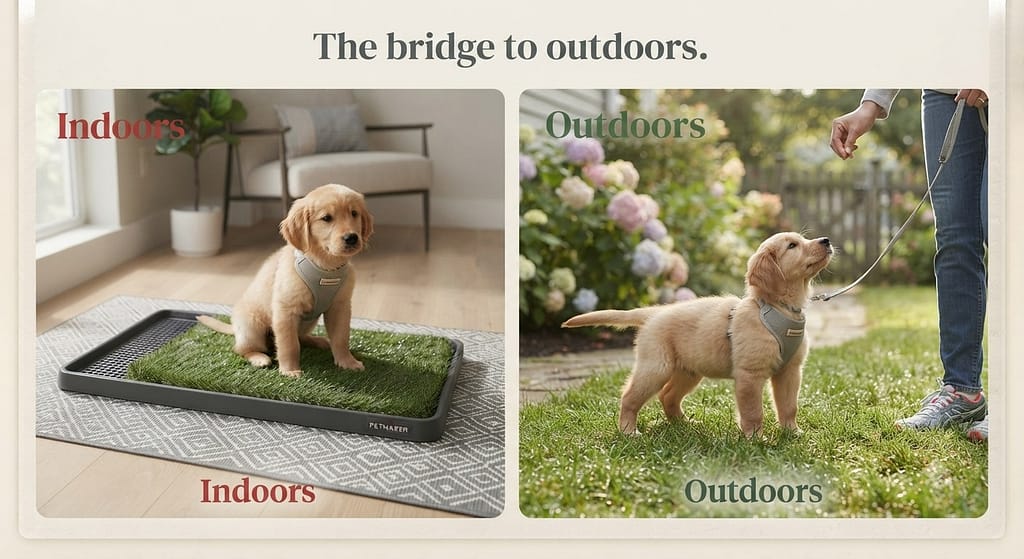
Celebrate outdoor successes with even bigger rewards.
2. The Slow Fade: As they reliably go outside during your scheduled walks, begin to gradually reduce the size of the indoor loo or only offer it when you absolutely cannot go out (e.g., during a work meeting).
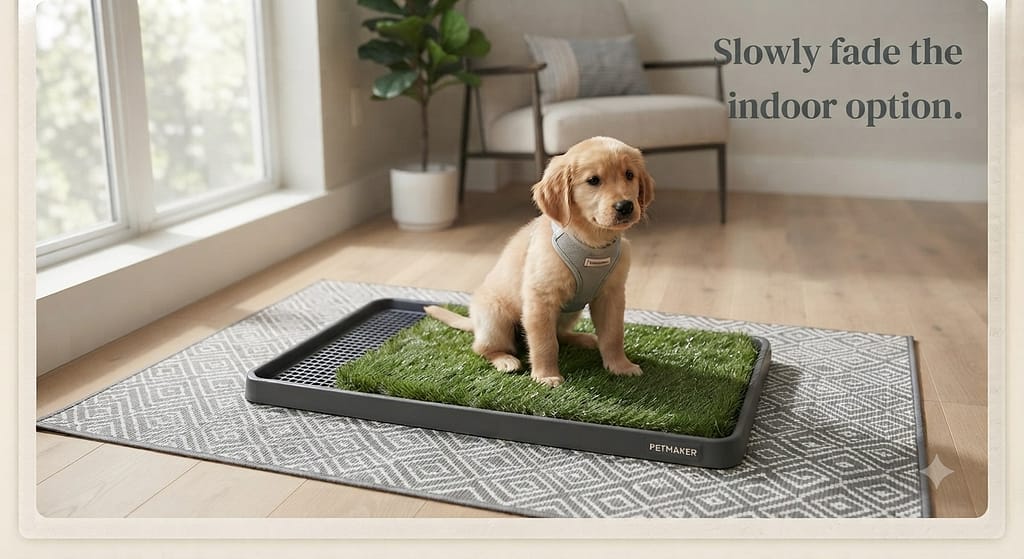
You can cover part of a grass patch or remove a section of turf.
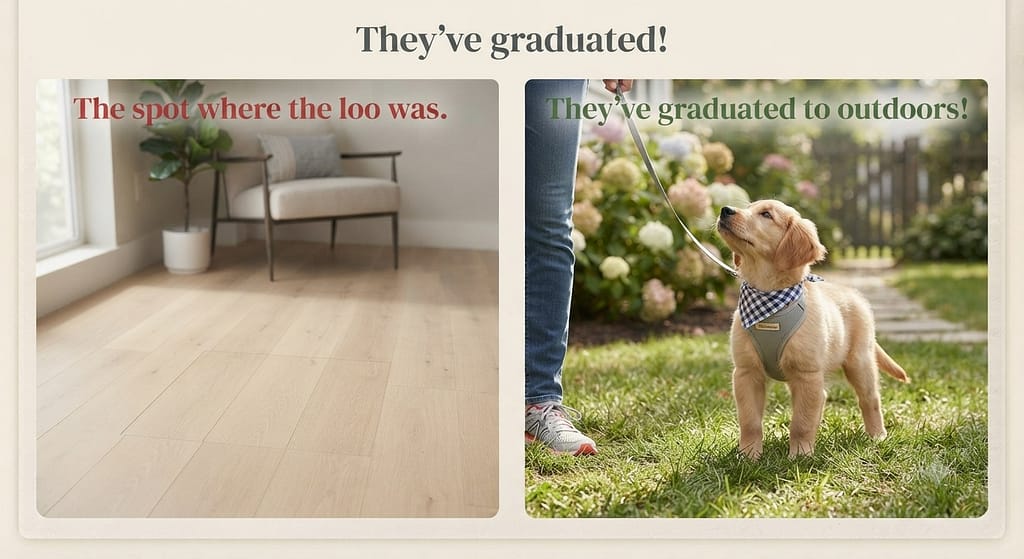
3. The Final Move: When they’ve gone 3-4 weeks without using the indoor loo (and only going outside), you can remove it. Celebrate! They’ve graduated.
Your Quick-Start Decision Flowchart:
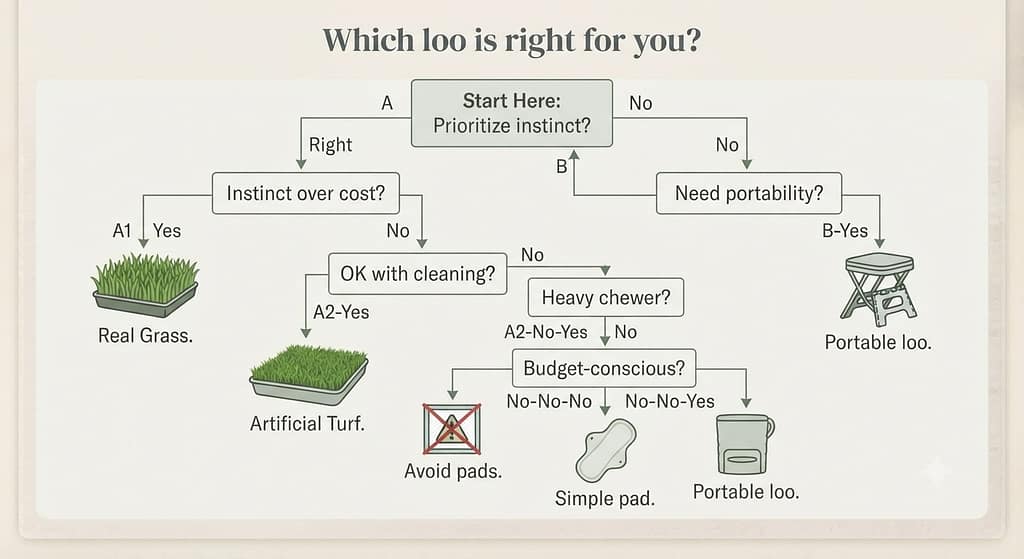
Still unsure? Answer this:
- Is your priority “instinct” over cost? → YES = Real Grass Patch. NO = Go to 2.
- Do you mind a weekly cleaning routine to save money? → YES = Artificial Turf System. NO = Reconsider Real Grass.
- Is your puppy a super heavy chewer? → YES = Avoid exposed potty pads. Choose a sturdy turf or grass system.
Final Word: Reclaim Your Space (And Sleep)
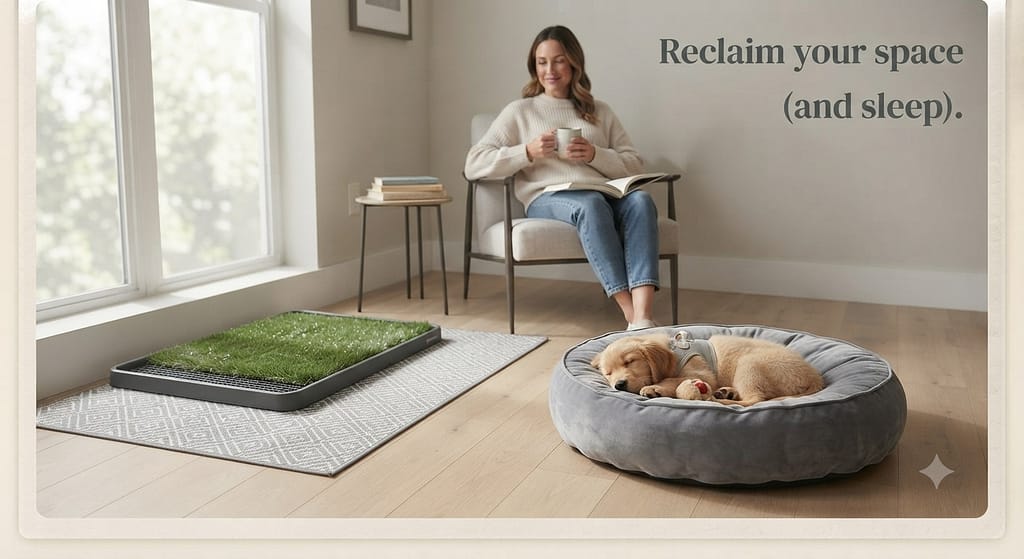
The apartment puppy loo is more than a product. It’s a philosophy of empathy.
It acknowledges your puppy’s limitations and your urban reality, creating a path to success that avoids frustration and builds a clean, happy home for you both.
You’re not taking the easy way out. You’re taking the smart, kind, and effective way.
🐾 — Apartment Dog Guide (ADG)
Living large in small spaces, one paw at a time. That’s the apartment dog life—see you in the next guide!.


