
The Carpet Nightmare
It is 6:15 AM.
You’re shuffling toward the kitchen, still half-asleep, when your bare foot lands in something cold, wet, and unmistakably foul.
The puppy, who was perfectly fine ten minutes ago, has left you a surprise in the middle of the hallway.
The sinking feeling hits immediately. That’s a security deposit gone.
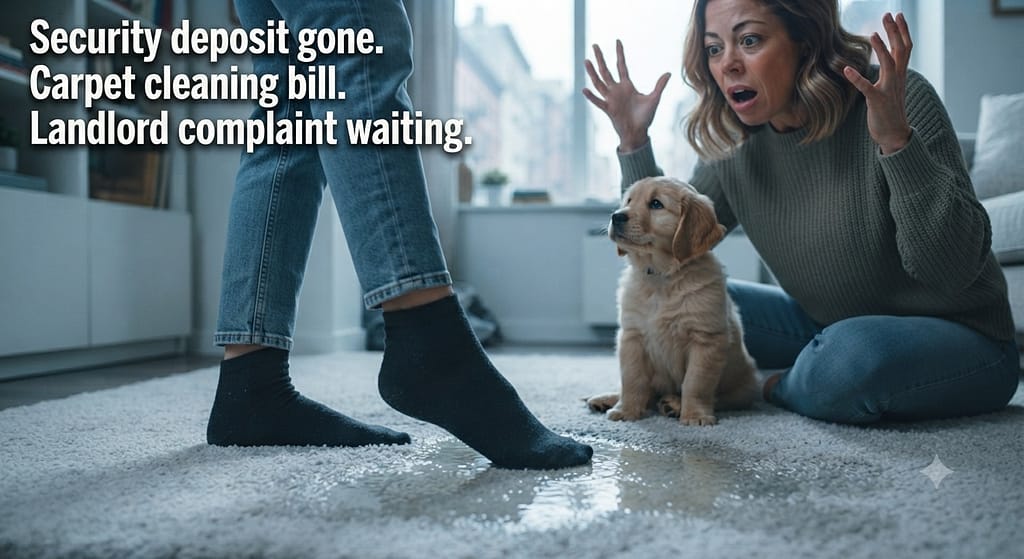
That’s a carpet cleaning bill. That’s a landlord complaint waiting to happen.
Potty training is the single most stressful hurdle for new apartment dog owners.
In a house with a backyard, you open the door.
This is the definitive ultimate guide apartment potty training requires to succeed.
In a high-rise, you have to navigate elevators, stairwells, and the unpredictable schedule of a tiny bladder.
The urban reality is unforgiving. Thin walls amplify your frustration.
Carpets trap odors. And the elevator ride to the ground floor can feel like an eternity when your puppy is doing the “potty dance.”
But here is the truth: Accidents are not failures. They are data points.
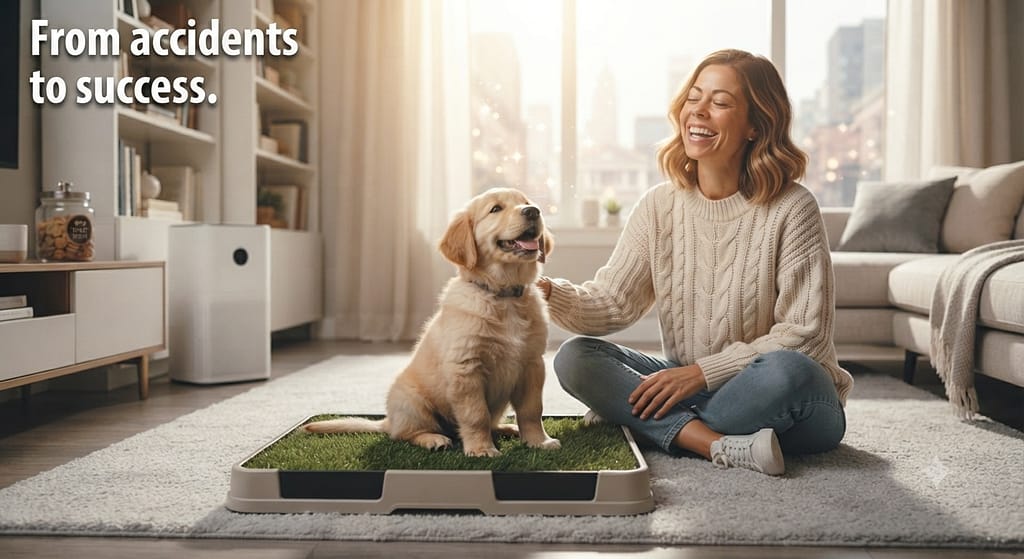
Every puddle tells you something about your timing, your setup, or your schedule.
By addressing these accidental potty issues head-on, you transform frustration into actionable insight.
This guide strips away the guesswork and delivers a step-by-step blueprint to apartment potty training success
We will tackle surface selection, schedule mastery, the “I work all day” dilemma, accident recovery, and the advanced litter box option for tiny breeds.
By the end, you will have a system.
And with a system, accidents become a distant memory.
Section 1: The Three Pillars of Apartment Potty Success
Forget everything you think you know about potty training.
In an apartment, you are playing a different game with different rules.
This foundational framework ensures successful puppy training by focusing on what actually matters.
We operate on three non-negotiable pillars:

1. The Surface
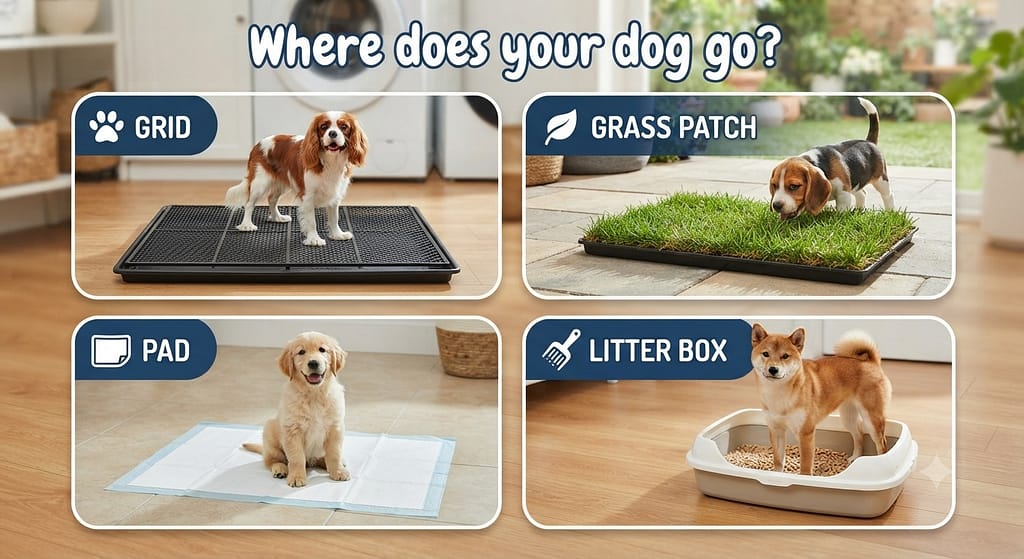
Where does your dog go? The choice of indoor potty solution determines how quickly they understand the “correct” spot.
2. The Schedule
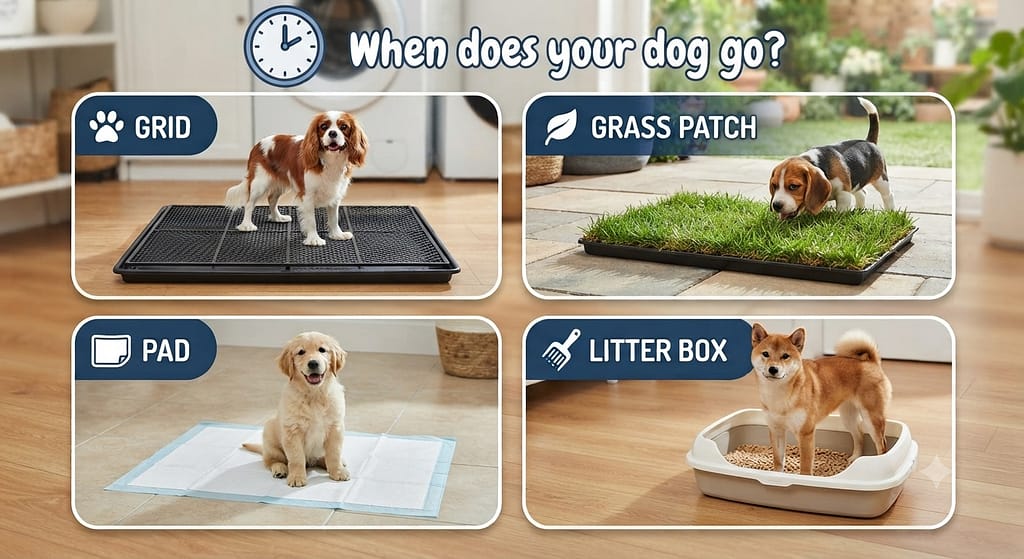
When does your dog go?
The choice of indoor potty solutions determines how quickly they understand the “correct” spot.
Whether you opt for pads, grass, or litter, the surface must be distinctly different from your rugs.
3. The Scent
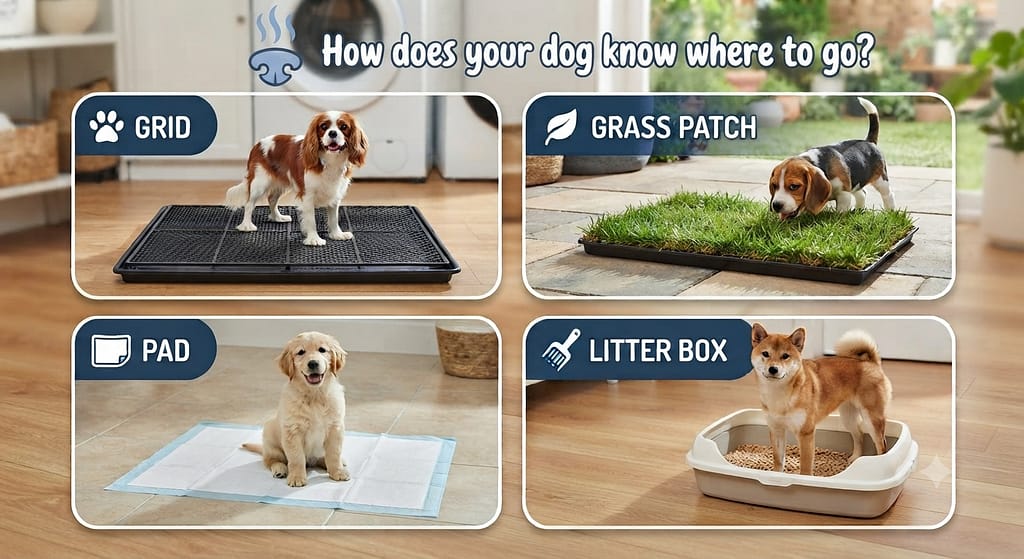
How does your dog know where to go?
Scent anchors guide them to the right spot and away from your carpets. Mastering scent is the secret to guiding your puppy to the potty location effectively.
Master these three pillars, and you master potty training.
Section 2: Choosing Your Apartment “Loo” – Indoor Potty Setup & Surface Matters
You cannot train a dog to go in a specific spot if the spot feels wrong.
The surface you choose must mimic the natural outdoor environment or be distinctly different from your rugs and carpets.
This section covers the full spectrum of indoor potty solutions and indoor potty setup options.
Option 1: Real/Fake Grass Patches ( The Balcony Solution)
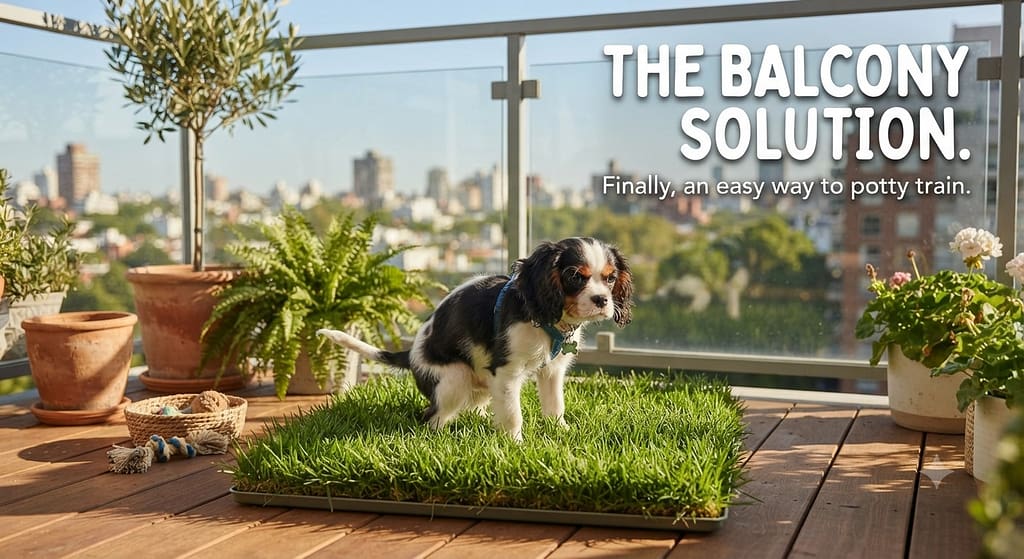
If you have a balcony, this is the gold standard. It mimics the outdoors, making the transition to outside walks seamless.
Grass potty patches are incredibly popular for their natural texture.
- Pros: Natural texture, easy transition, good for small spaces.
- Cons: Requires cleaning (hose it down weekly), can develop odor if neglected, attracts bugs in summer.
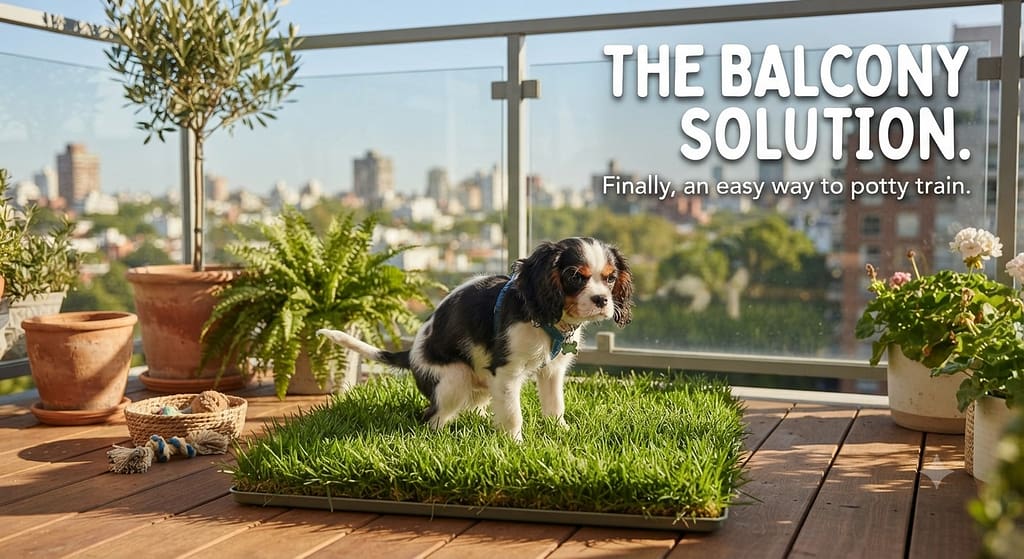
- Best For: Balcony owners, dogs who will eventually transition to full outdoor pottying.
- The “Porch Potty” Alternative: A drainage system with a tray that collects urine. Easy to rinse and odor-controlled.
Option 2: Potty Pads (The Studio Solution)
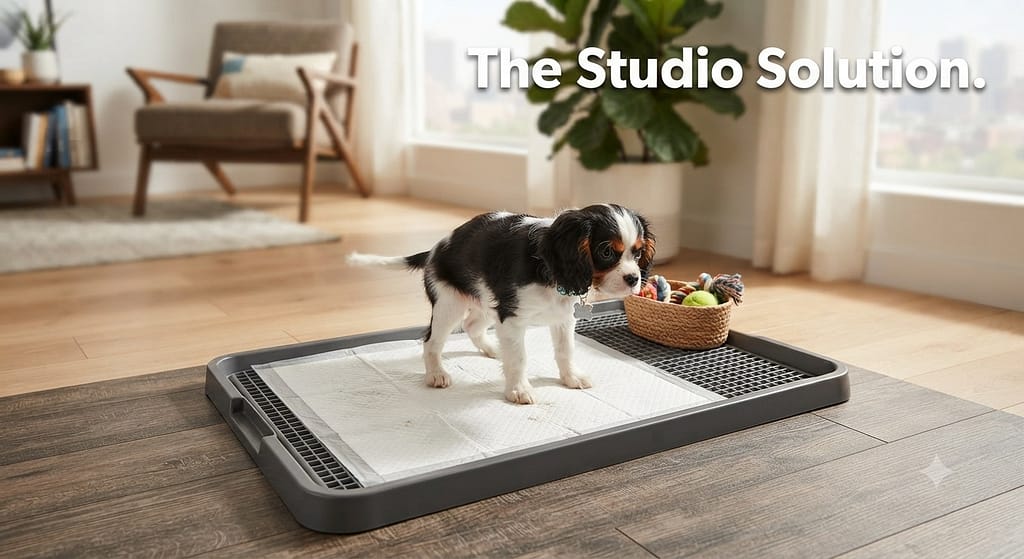
The classic choice for studio apartments. They are disposable, absorbent, and require zero setup.
Effective puppy pad training hinges on consistency and correct placement.
- Pros: Cheap, disposable, highly absorbent, widely available.
- Cons: Confuses dogs (they think all rugs are potties). They tear them up. They smell if not changed daily.
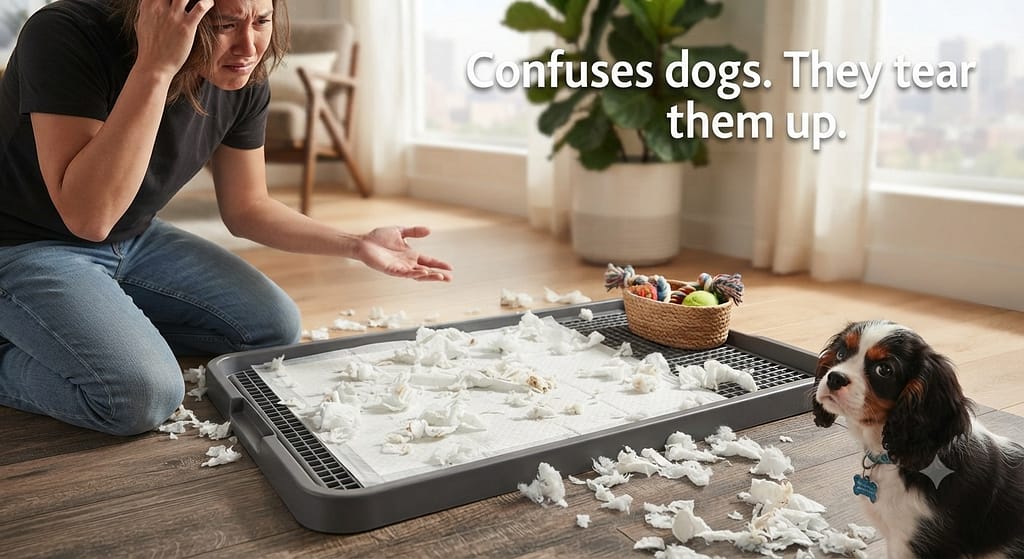
- Best For: Temporary use, tiny breeds, or as a “transition” tool before moving to an outdoor routine.
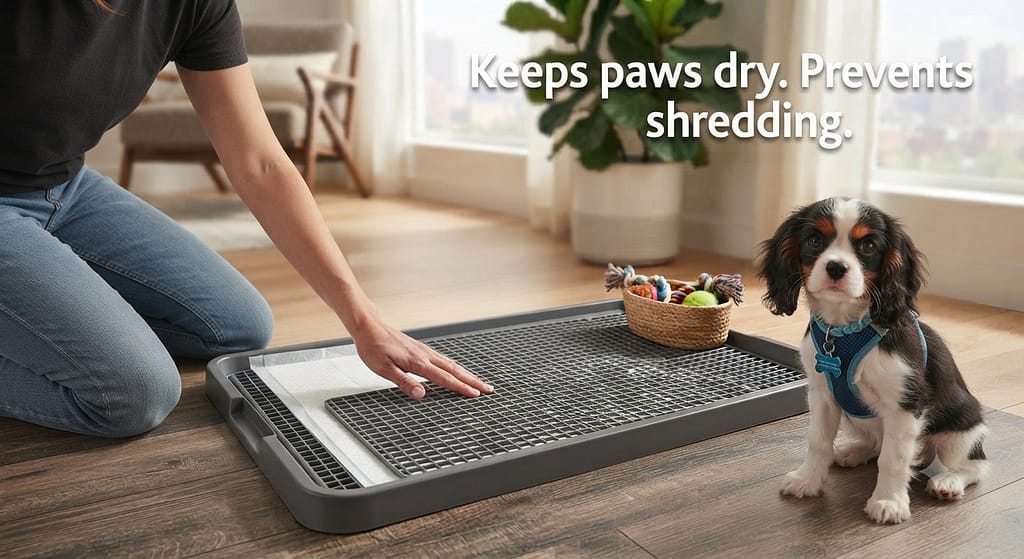
- Pro-Tip: Use a pad holder with a grid. It prevents tearing and keeps their paws dry.
Option 3: Litter Boxes (The “Cat-Dog” Solution)
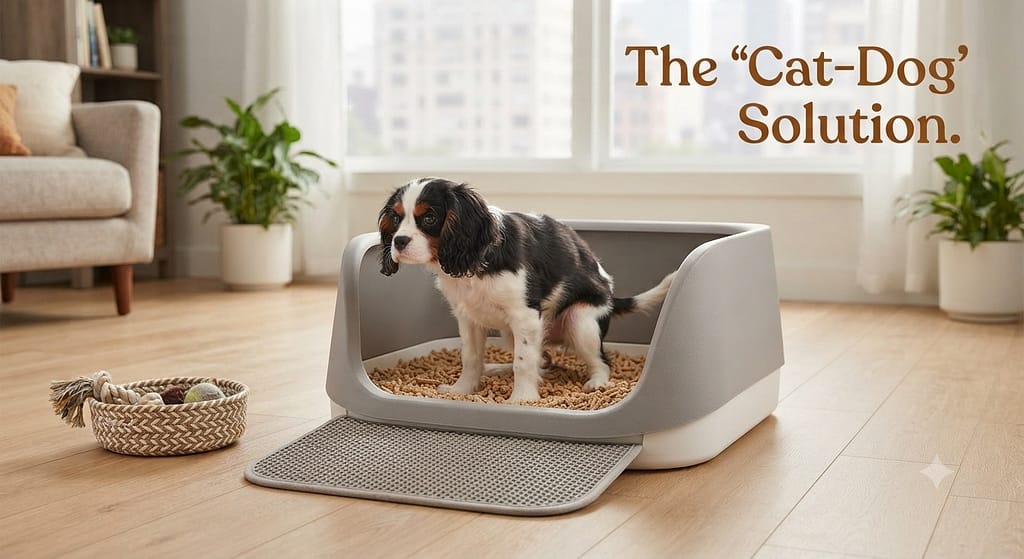
Yes, small dogs can use litter boxes. This is a game-changer for toy breeds who hate rain or extreme cold.
Litter box training is a specialized skill that pays off in convenience.
- Pros: Excellent odor control, easy scooping, no laundry, highly hygienic.
- Cons: Not suitable for dogs over 15lbs. Requires specific training. Litter tracking on floors.
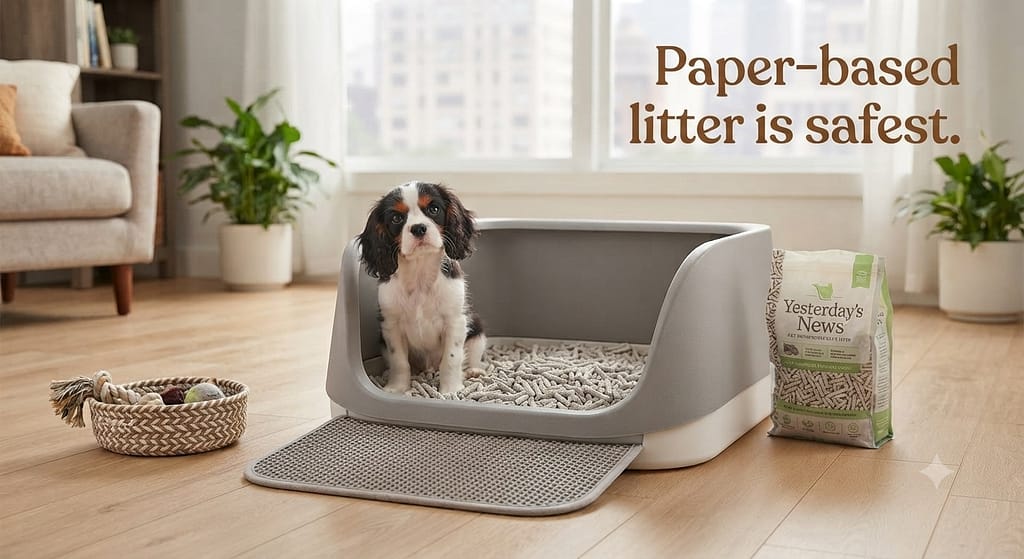
- Best For: Chihuahuas, Yorkies, Toy Poodles, and other tiny breeds.
- The Litter Choice: Paper-based litter (Yesterday’s News) is the safest. Avoid clay litter (dusty) and clumping litter (can cause blockages if ingested).
Option 4: DIY vs. Store-Bought Grass Patches
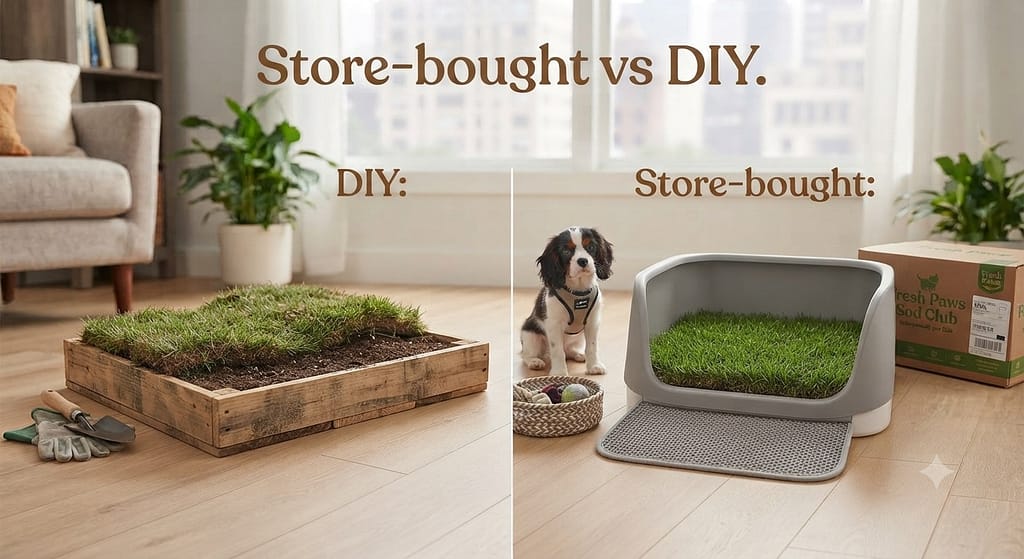
Store-bought grass patches (like Fresh Patch or DoggieLawn) are convenient but pricey.
DIY grass patches (a tray with real sod from a hardware store) are cheaper but require regular replacement.
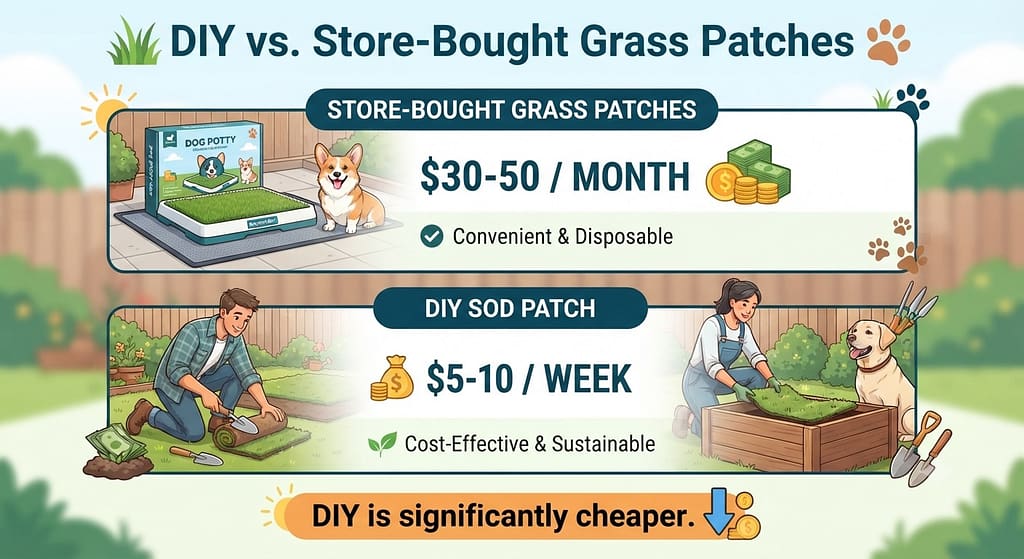
- The Cost Breakdown:
- Store-Bought: $30-$50 per month (subscription).
- DIY Sod: $5-$10 per week (replace every 1-2 weeks).
- Winner for Long-Term: DIY sod. It’s real grass, it smells fresh, and it’s significantly cheaper.
Section 3: The Puppy Potty Schedule & Elimination Cues ( Golden Rule)
This is the most critical section of the guide. Mastering the schedule prevents 90% of accidents.
Understanding puppy elimination cues is your superpower.
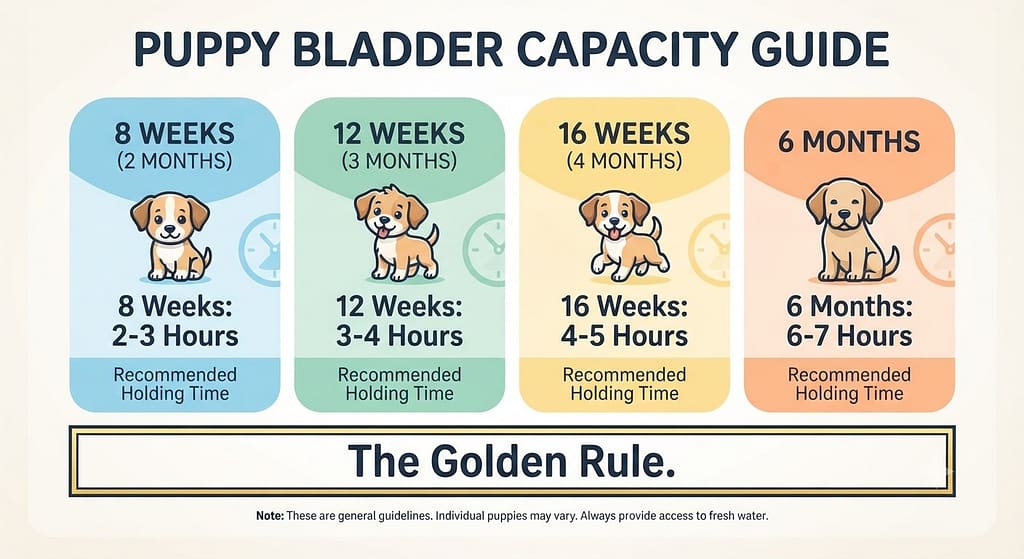
The Golden Rule: A puppy can hold their bladder for about one hour per month of age, plus one.
- 8 weeks (2 months): 2-3 hours maximum.
- 12 weeks (3 months): 3-4 hours maximum.
- 16 weeks (4 months): 4-5 hours maximum.
- 6 months: 6-7 hours maximum.
The Reality: Most apartment dwellers work 8-hour days.
This means you cannot rely on your puppy to hold it all day. You need a strategy.
The “Eat, Play, Potty” Loop
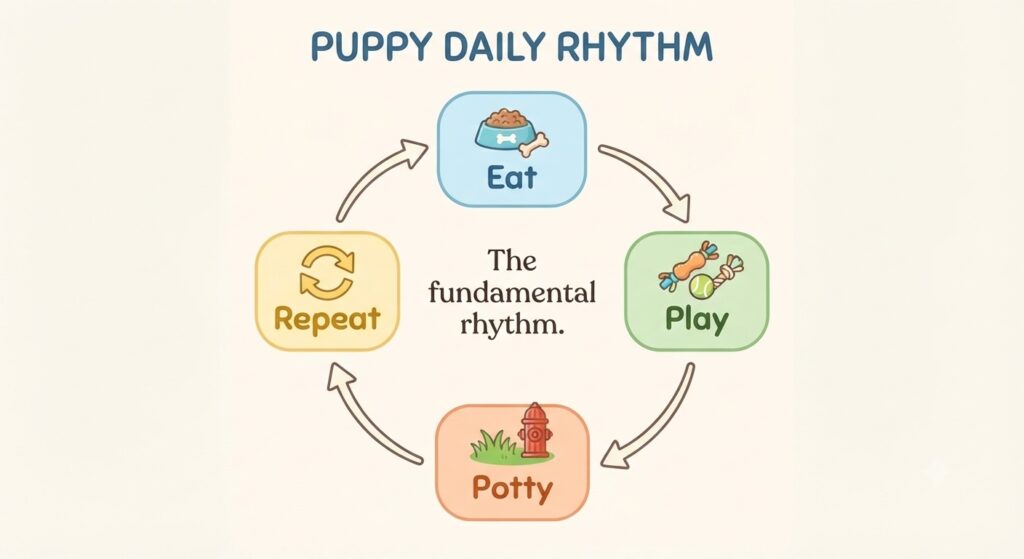
This is the fundamental rhythm of puppy life. It never changes, and it forms the backbone of your apartment dog potty routine.
- Eat: Puppy finishes their meal.
- Play: 10-15 minutes of active play (tug, fetch, chase).
- Potty: IMMEDIATELY take them to their designated potty spot.
The “Sniff” Cue (Guiding Puppy to Potty Location)
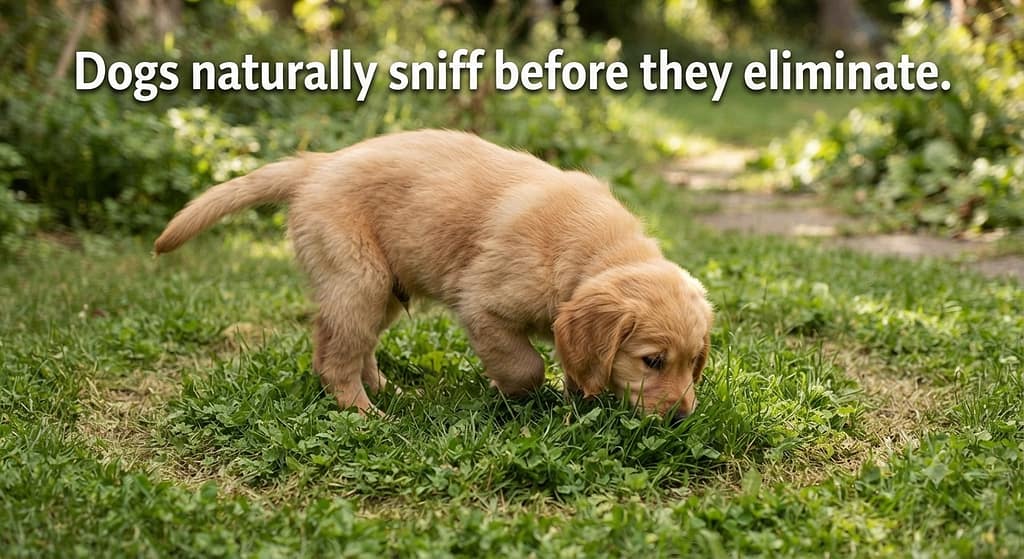
Dogs naturally sniff before they eliminate. Use this to your advantage.
- The Routine: When you take them to their potty spot, wait. The moment they start sniffing in a circle, say “Go potty!” or “Hurry up!” in a calm, encouraging tone. This is the essence of guiding puppy to potty location—using their instincts.
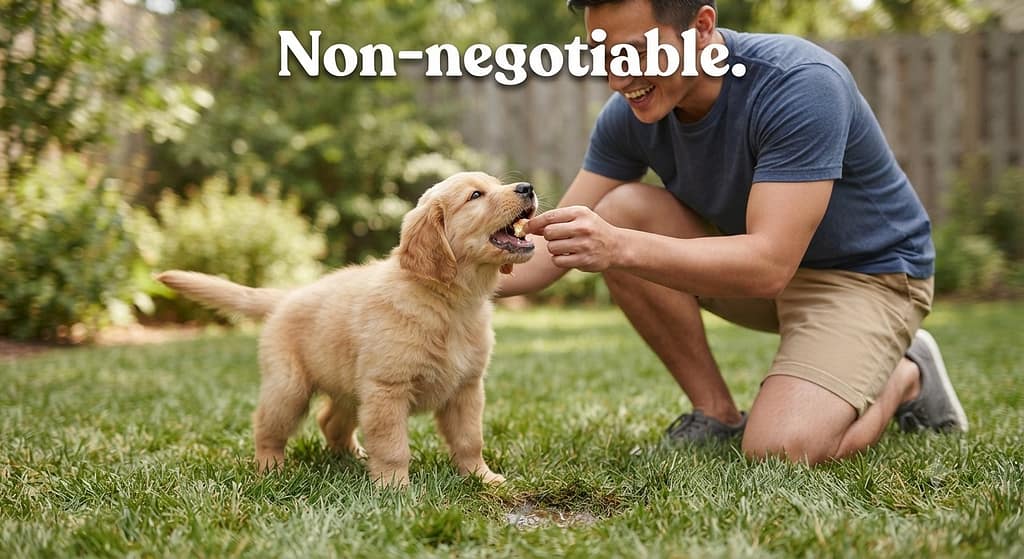
- The Reward: The SECOND they finish, say “Yes!” and give a high-value treat (cheese, chicken, or a special potty-only treat). This is non-negotiable. You must make pottying the most rewarding event of their day.
The 5-Minute Rule
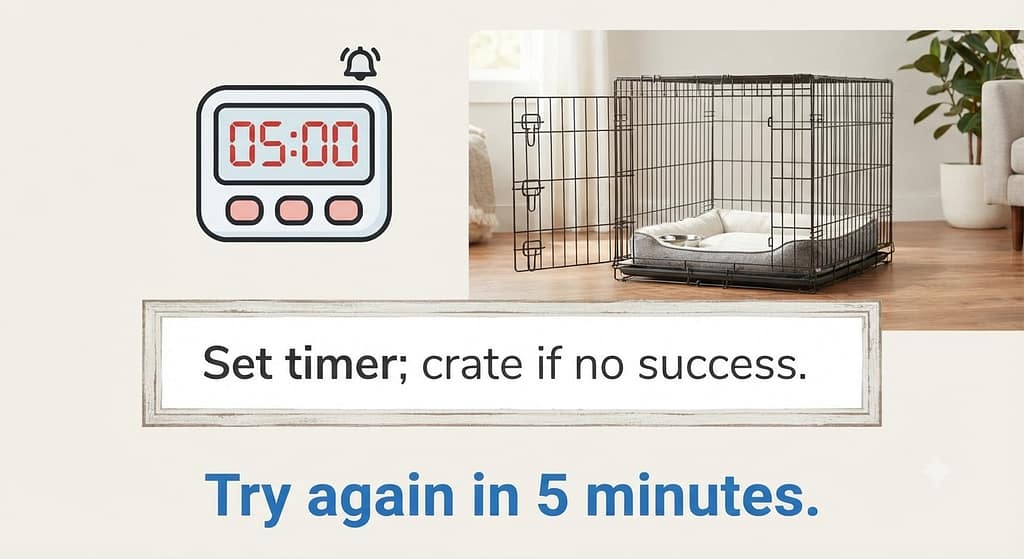
If you take them to their potty spot and they don’t go within 5 minutes, put them back in their crate or playpen for 5 minutes.
Then try again.
- Why: Free roaming reinforces the idea that they can go anywhere. Confinement reinforces the idea that the potty spot is the only option.
Section 4: Potty Train While Working Full-Time – The Home Office & Dog Walker Solutions
This is the section your readers are Googling frantically at midnight.
If you work a 9-to-5, you need a realistic plan to potty train while working full-time that doesn’t involve quitting your job.
This is puppy training for apartments at its most challenging.
The 3-Hour Maximum Rule
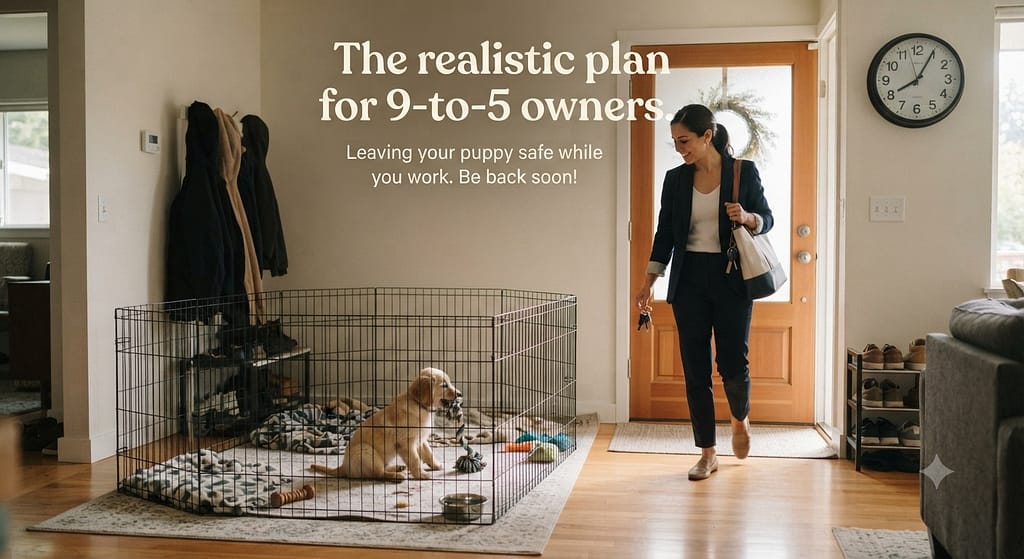
No puppy under 6 months old should go longer than 3-4 hours without a potty break. This is biological, not negotiable.
Solution A: The Dog Walker Solution (The Gold Standard)
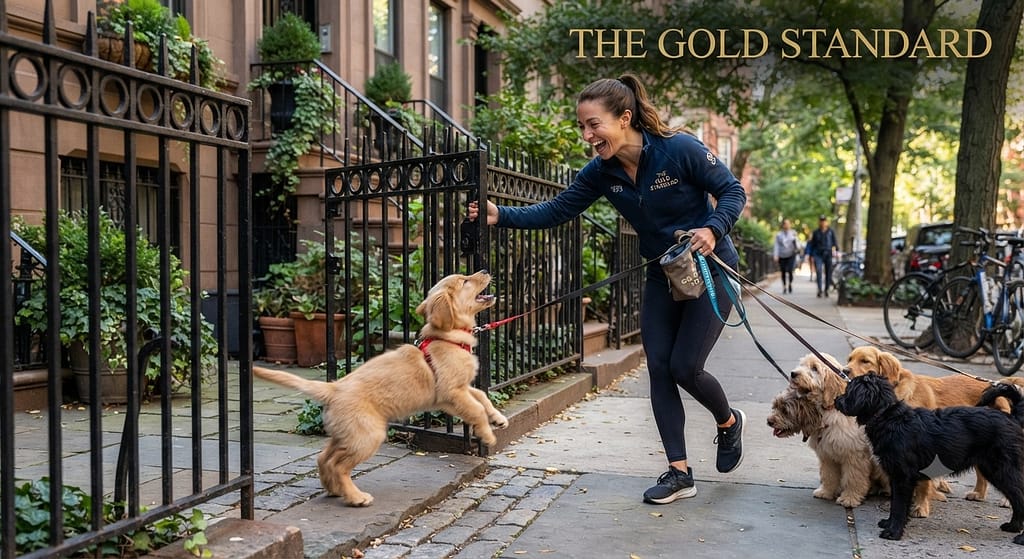
Hiring a professional dog walker to come mid-day is the safest, most reliable dog walker solution.
- What to Look For: Insured, bonded, experienced with puppies, and willing to follow your specific potty protocol.
- The “Potty Walk” vs. “Exercise Walk”: For a puppy, the midday visit should be a 15-minute potty-and-play session, not a 45-minute power walk. Overstimulation leads to accidents.
- Cost: $15-$25 per visit. Compare this to the cost of replacing carpet or losing your security deposit.
Solution B: The “Pen + Pad” Setup (Managing Puppy Accidents)
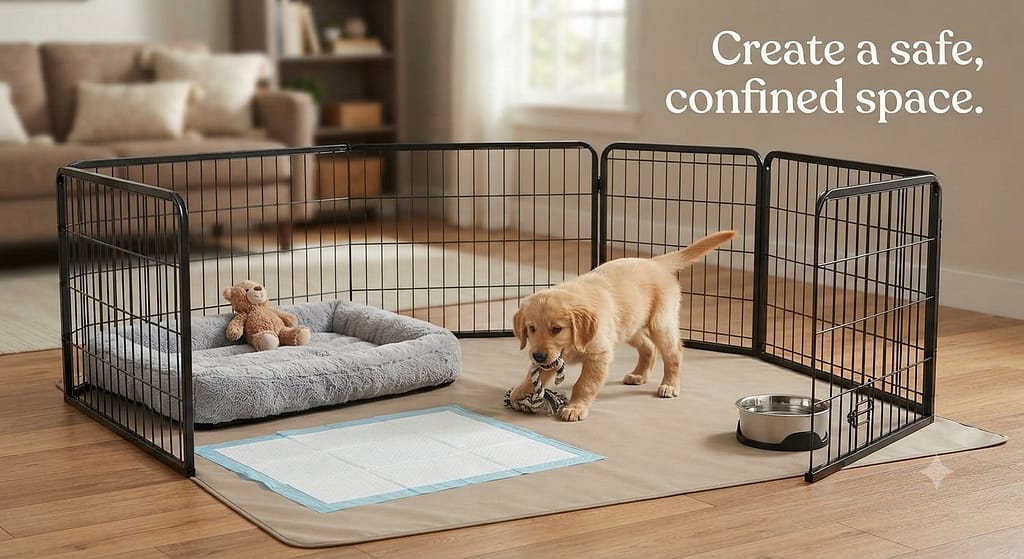
If you cannot afford a walker, you must create a safe, confined space where your puppy can eliminate without ruining your floors.
- The Setup: A puppy playpen with:
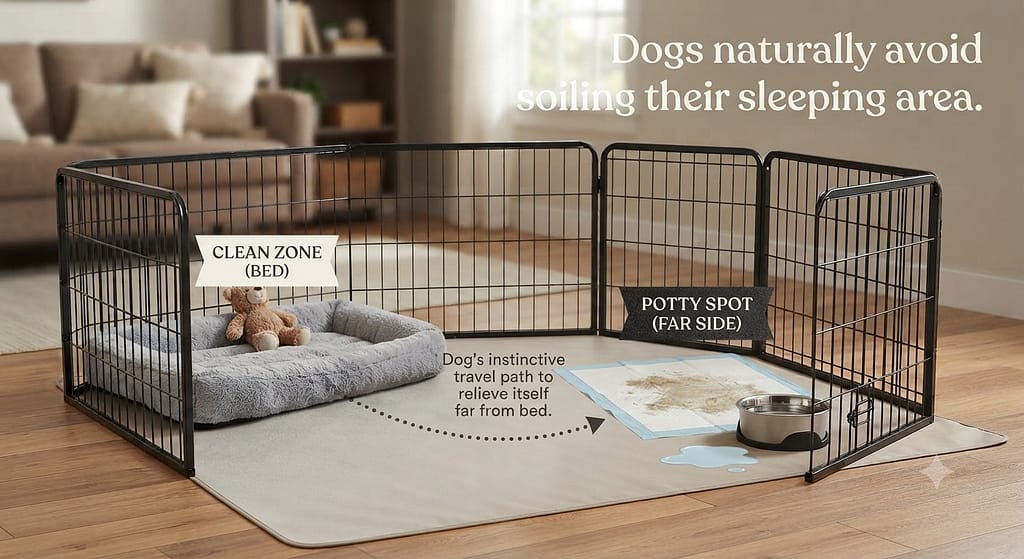
- A comfortable bed (or crate) on one side.
- A potty pad or grass patch on the far opposite side.
- A water bowl (placed near the bed, not the potty).
- The Science: Dogs naturally avoid soiling their sleeping area. By placing the potty spot far away, you reinforce the “clean vs. dirty” distinction, significantly aiding in managing puppy accidents.
Solution C: The Stay-at-Home Partner / WFH Shifts
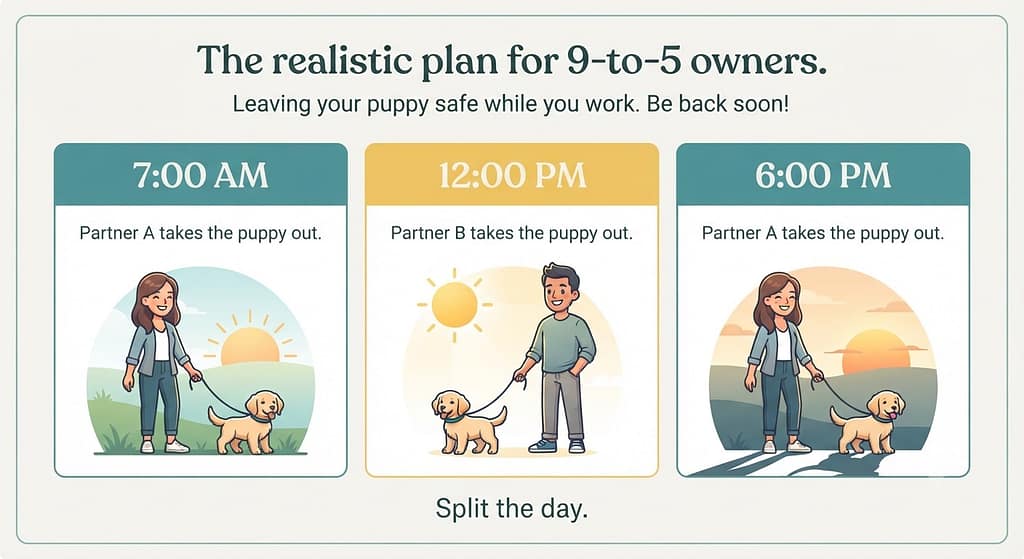
If you work from home or have a partner with a flexible schedule, split the day.
Home office puppy training has its own unique rhythm—you have the bandwidth for frequent potty breaks, but you must also teach your puppy to settle while you take calls.
- Example Schedule:
- 7:00 AM: Partner A takes the puppy out.
- 12:00 PM: Partner B takes the puppy out.
- 6:00 PM: Partner A takes the puppy out.
The “Weekend Boot Camp”
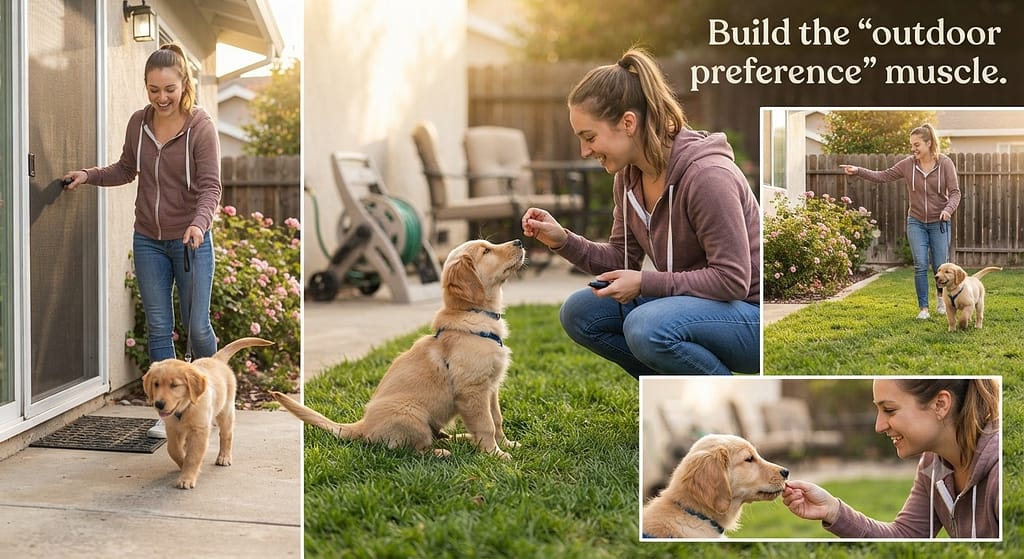
Use your days off to aggressively reinforce outdoor pottying.
- The Goal: Teach your puppy that outdoor elimination preference is the preferred option, and the indoor potty pad is just a backup. Every hour on the hour, take them outside. Reward heavily when they go. This builds the “outdoor” muscle.
- The Routine: Every hour on the hour, take them outside. Reward heavily when they go. This builds the “outdoor preference” muscle.
Managing the Guilt
You are not a bad owner for working.
A puppy in a well-set-up pen with a potty spot is exponentially happier than a puppy left in a crate for 8 hours holding it and developing a UTI.
Let go of the guilt and implement the system.
These are the real-world potty training tips that actually work.
Section 5: Step-by-Step Potty Training (The “Accident-Proof” Protocol)
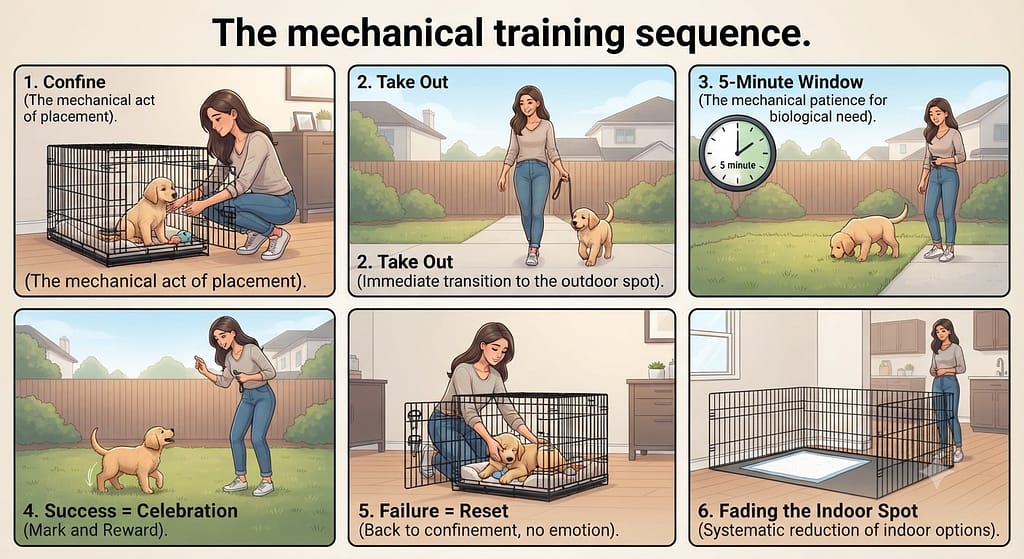
This is the mechanical training sequence. Follow these steps in order.
This is the definitive potty training method for urban dwellers.
Step 1: Confine
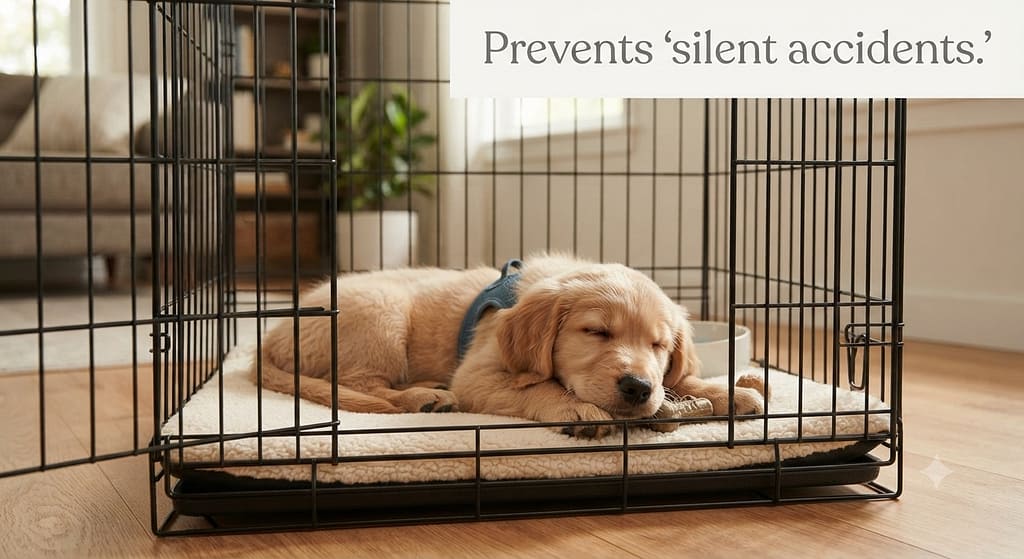
When you are not actively supervising your puppy, confine them to their crate or playpen.
This prevents “silent accidents” where they wander off and pee behind the couch without you noticing.
Step 2: Take Out
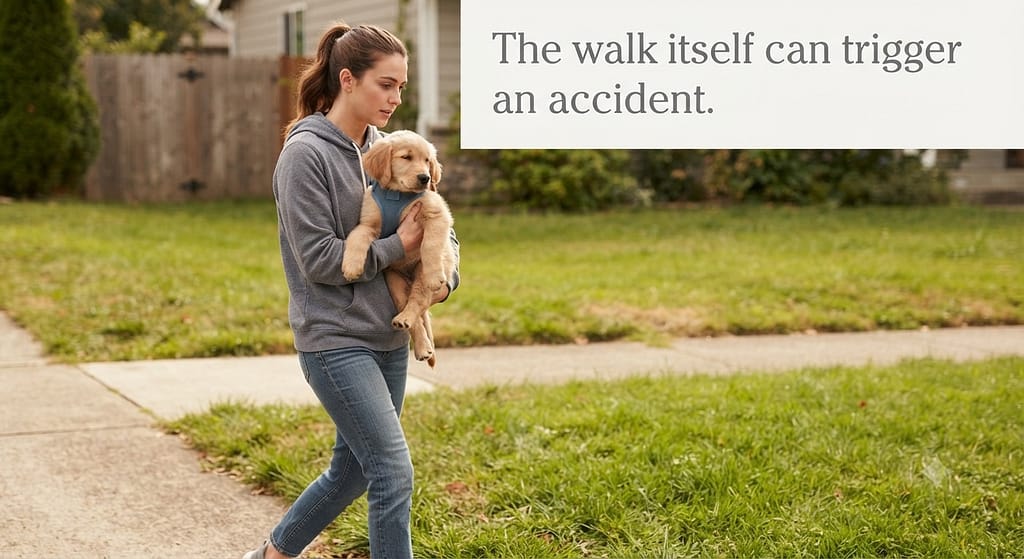
Every 30-60 minutes (for an 8-week-old), take your puppy to their designated potty spot.
Carry them if possible—the walk itself can trigger an accident.
Step 3: The 5-Minute Window
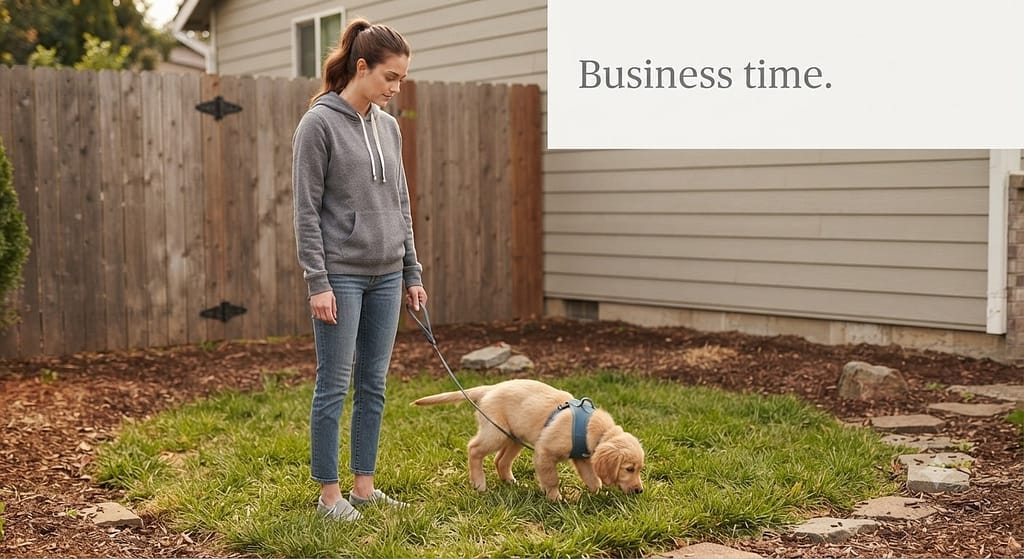
Stand at the potty spot. Do not interact. Do not play. This is business time. Wait up to 5 minutes.
Step 4: Success = Celebration
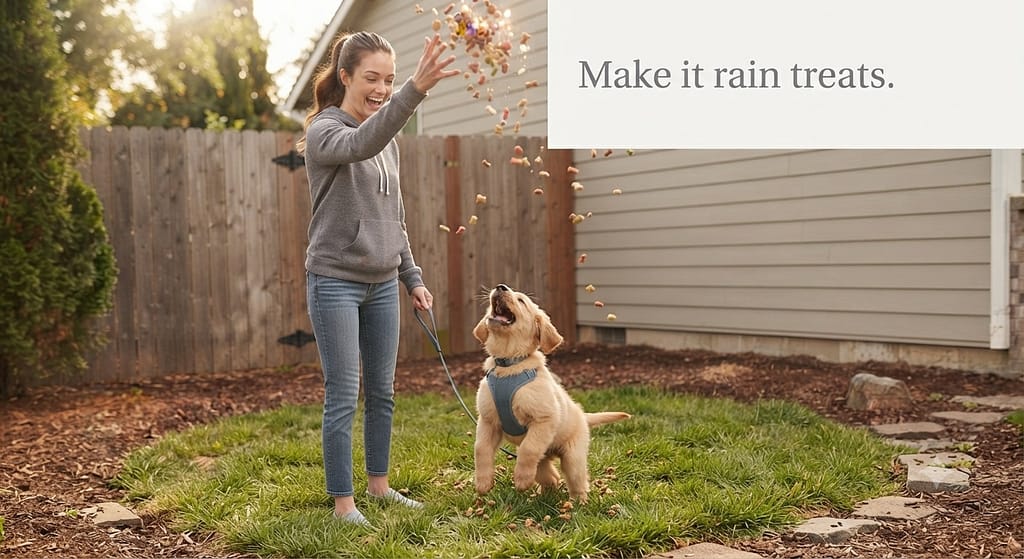
The moment they eliminate, say “Yes!” and reward with a high-value treat. Throw a miniature party. Make it rain treats.
Step 5: Failure = Reset

If they don’t go within 5 minutes, return them to their crate or pen. Try again in 5-10 minutes.
Step 6: Transitioning to Outdoor Potty (Fading the Indoor Spot)
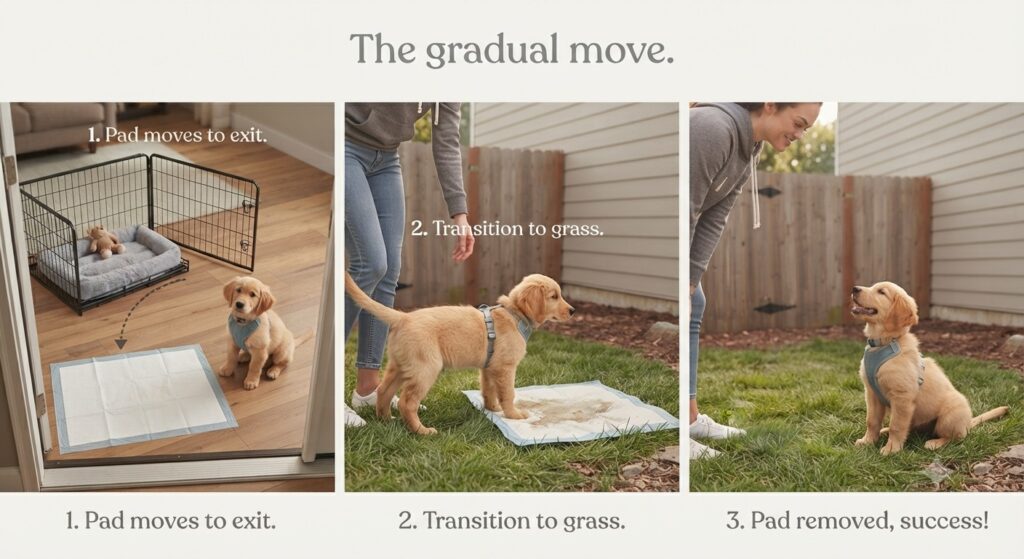
Once your puppy has reliable bladder control (around 6-8 months), you can begin transitioning to outdoor potty exclusively.
- The Gradual Move: Slowly move the indoor potty pad closer to the front door, then outside, then remove it entirely.
- The Outdoor Shift: Take them outside more frequently and reduce their access to the indoor spot. This reinforces their outdoor elimination preference.
Section 6: How to Stop Accidents For Good – The Cleanup Bible
Accidents will happen. How you clean determines if they happen again in the same spot.
This is where we focus on cleaning dog accidents and stopping dog potty accidents from recurring.
The Enzymatic Cleaner Rule (Enzymatic Cleaners for Dogs)
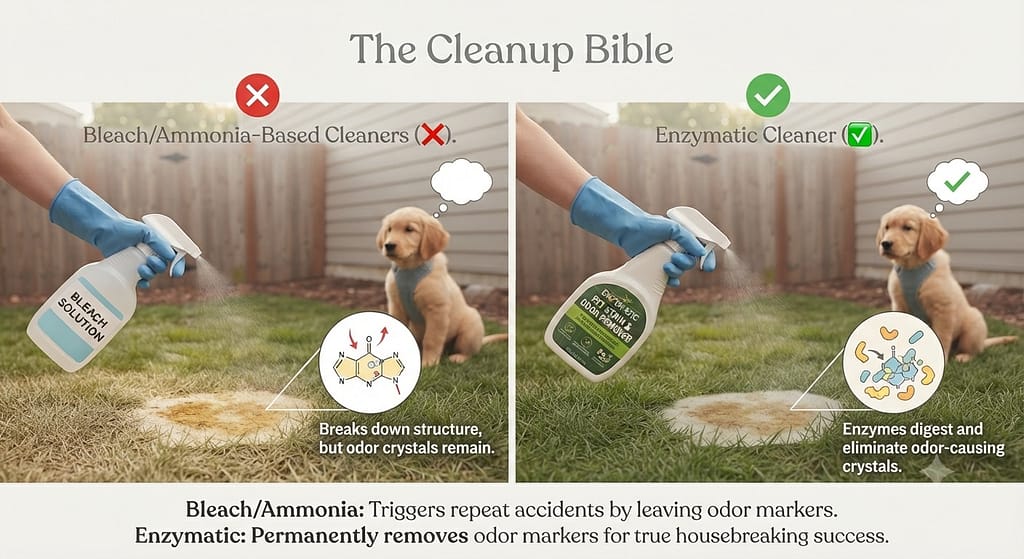
If you use bleach or ammonia-based cleaners, you are attracting your dog back to that spot. These chemicals mimic the scent of urine.
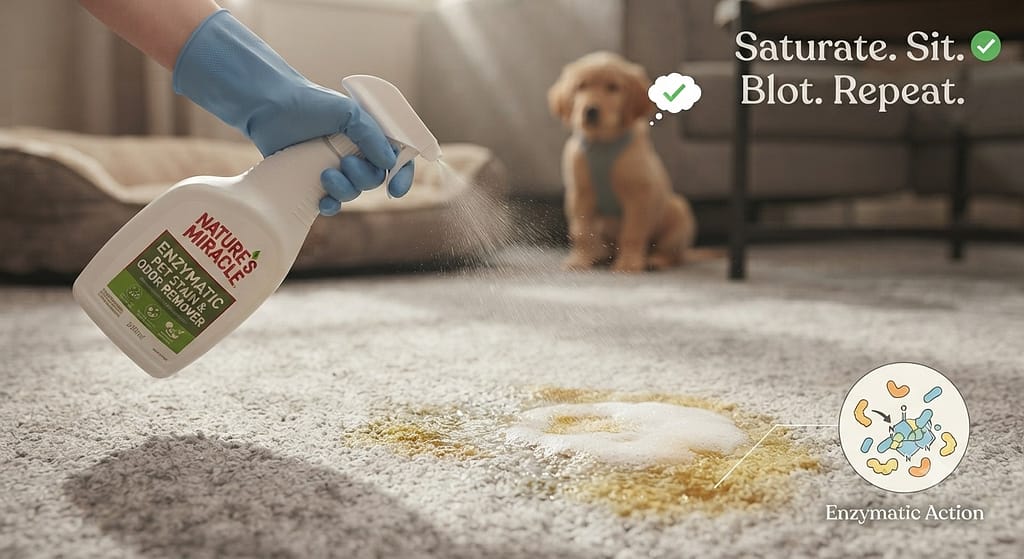
- The Solution: Use an enzymatic cleaner for dogs (like Nature’s Miracle or Rocco & Roxie). These contain enzymes that eat the proteins in urine and destroy the scent.
- How to Use: Enzymatic cleaner action photo
Saturate the area. Let it sit for 10-15 minutes. Blot, don’t rub. Repeat if necessary.
The Black Light Trick
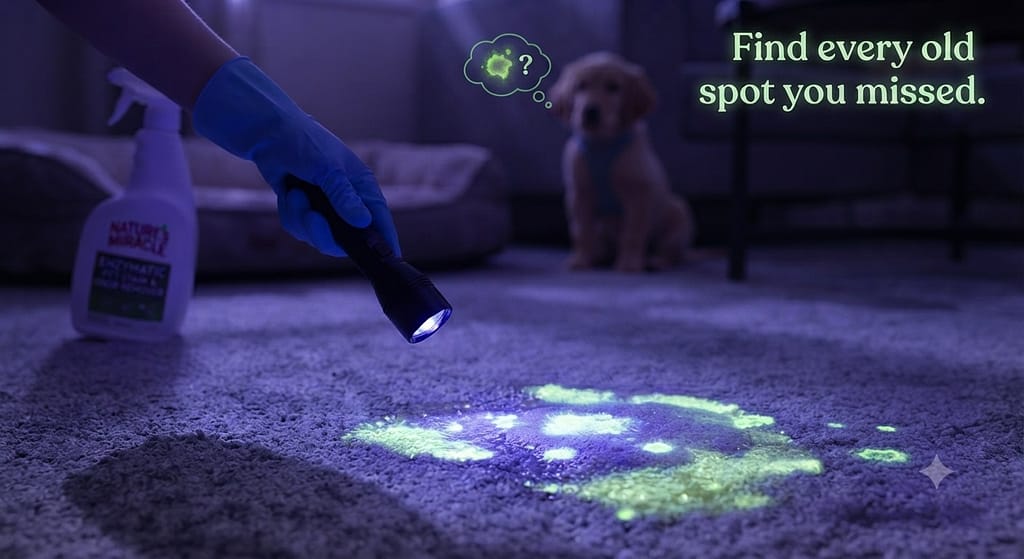
Buy a UV black light. Use it to find every old accident spot you missed. If your dog keeps peeing in the corner, there is old scent there that you can’t see with your naked eye.
The “No-Scrub” Method
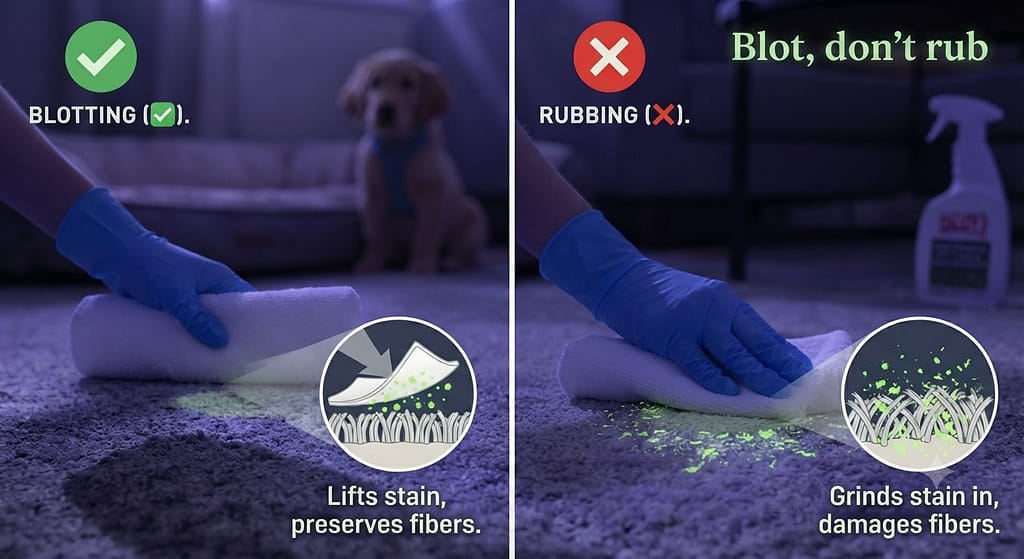
Blot, don’t rub. Rubbing pushes urine deeper into the carpet padding. Blotting removes it from the surface.
Carpet vs. Hardwood
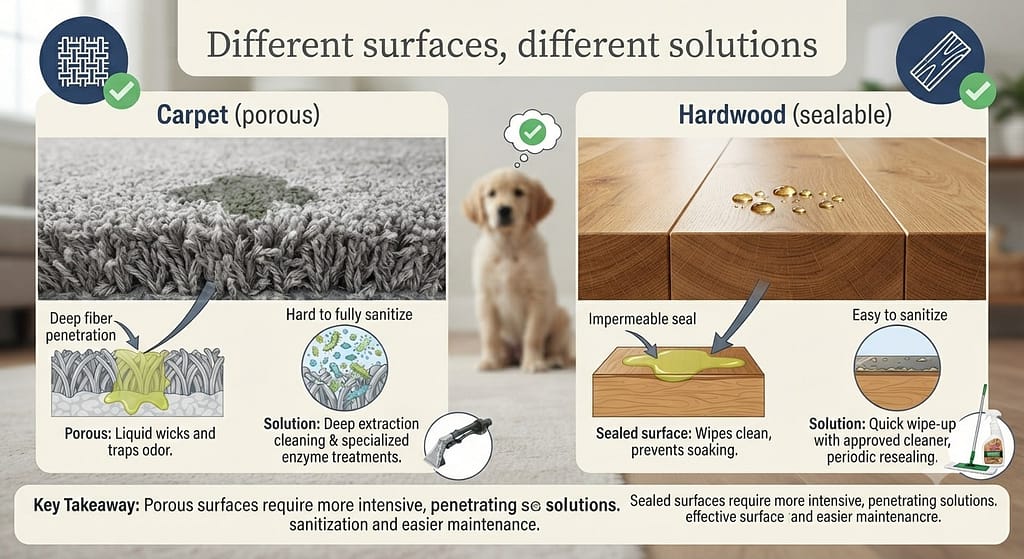
- Carpet: Requires enzymatic cleaner and potentially a professional steam clean. Urine soaks into the padding and can be impossible to fully remove.
- Hardwood: Easier to sanitize, but urine seeps into the cracks. Seal your wood floors to prevent staining. For accidents, wipe immediately, then use a wood-safe cleaner.
The “Restart” Protocol
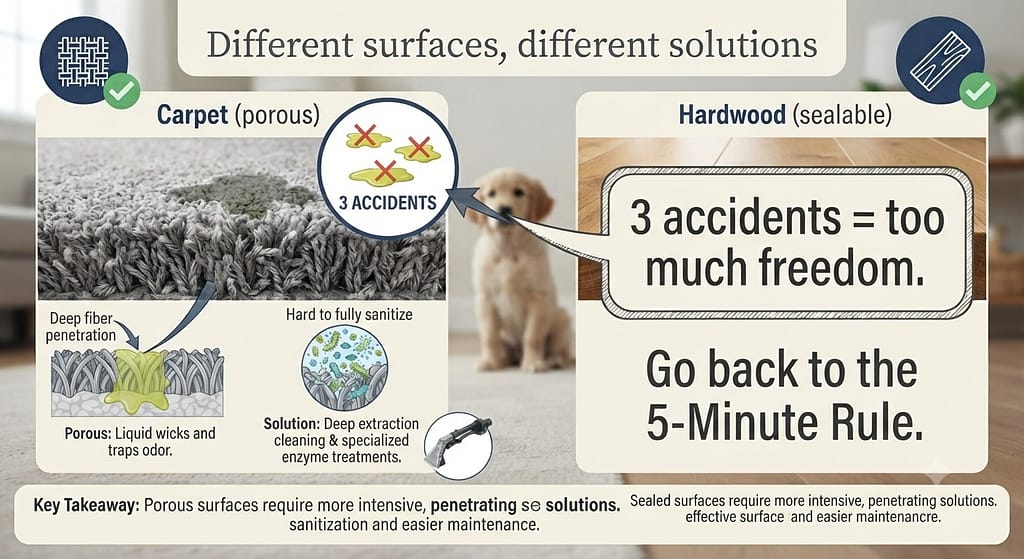
If your dog has 3 accidents in a row, you’ve let them have too much freedom.
Go back to the 5-Minute Rule and re-tether them to you.
Accidents are a symptom of too much space, not a failure of training.
Section 7: Advanced Solutions – Potty Training for Tiny Breeds & Small Dogs (The Litter Box Method)
For Chihuahuas, Yorkies, Maltese, and Toy Poodles, the litter box is a game-changer.
This section is dedicated to potty training for tiny breeds and potty training for small dogs who struggle with extreme weather or high-rise logistics.
Choosing the Right Litter
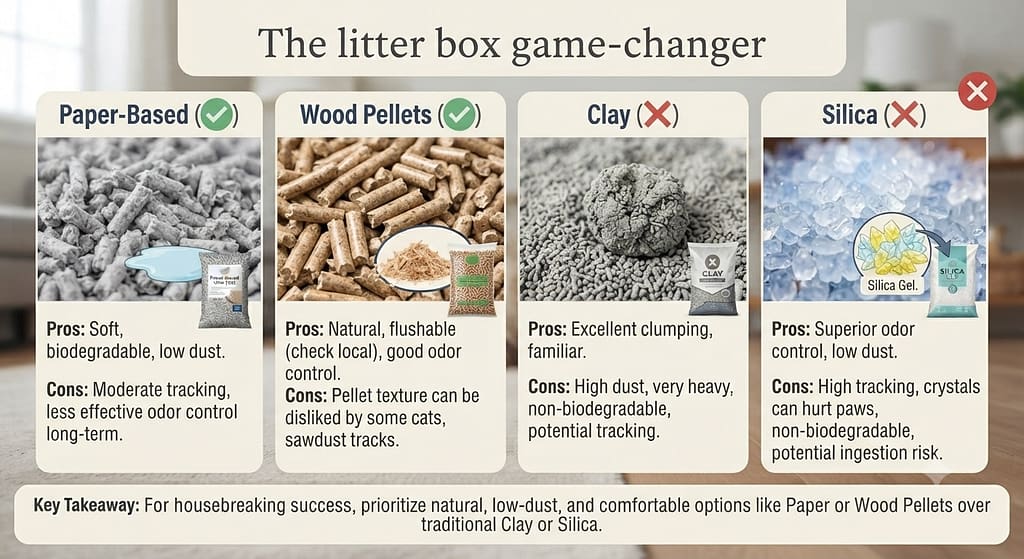
- Paper-Based Litter (Yesterday’s News): Safest option. Low dust, non-toxic, absorbent.
- Wood Pellets (Feline Pine): Natural, absorbs odor, breaks down when wet.
- Clay Litter: Avoid. Dusty, harmful if ingested, bad for respiratory systems.
- Silica Gems: Avoid. Expensive, dusty, not ideal for dogs.
The Transition Method
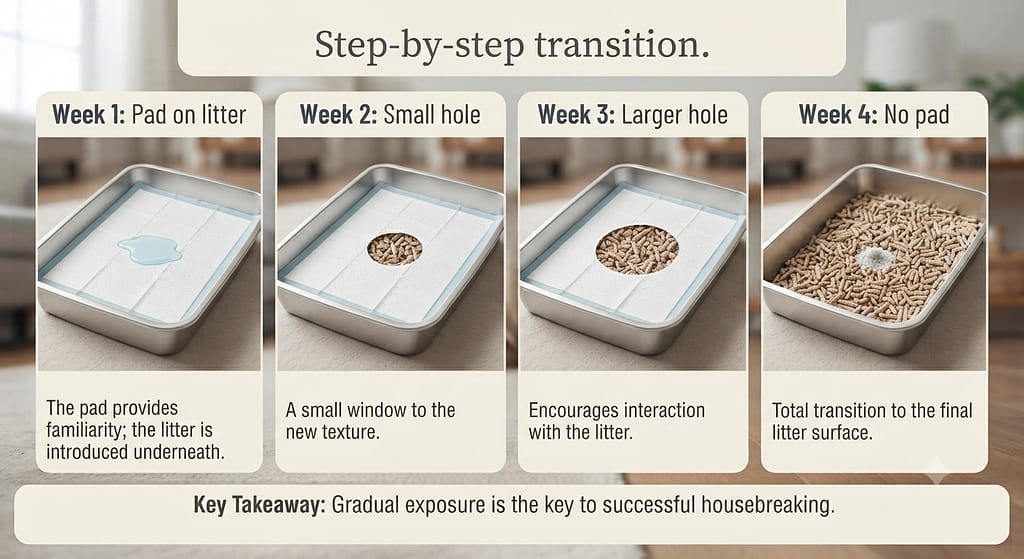
You cannot just put a litter box in the corner and expect your dog to use it.
- Week 1: Place a potty pad on top of the litter. Your dog is used to the pad.
- Week 2: Cut a small hole in the center of the pad. The litter is now partially exposed.
- Week 3: Cut a larger hole. Your dog is now peeing directly on the litter.
- Week 4: Remove the pad entirely.
Why Size Matters
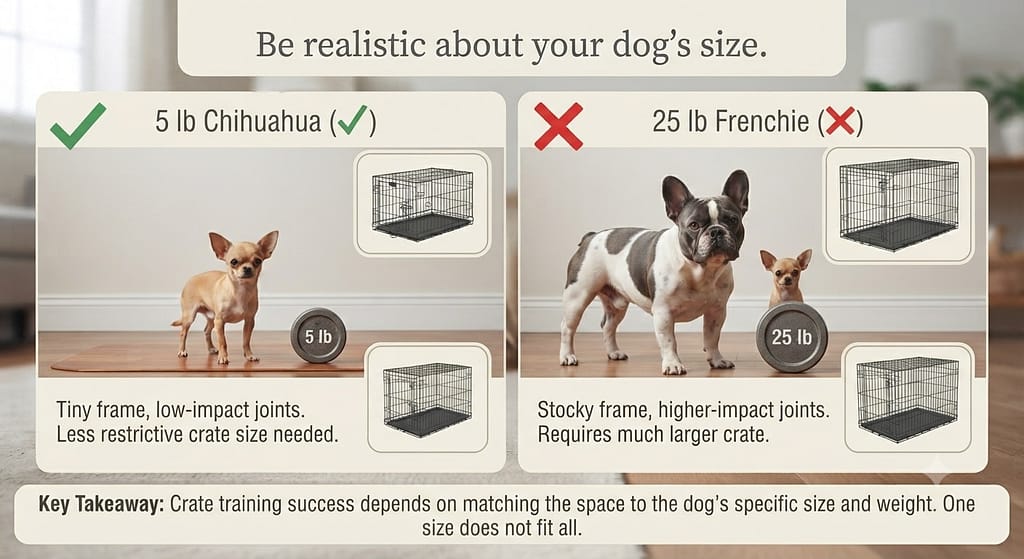
A 5lb Chihuahua can comfortably use a litter box. A 25lb French Bulldog cannot. Be realistic about your dog’s size and the box dimensions.
Conclusion: The Potty Progress Tracker – Overcoming Potty Training Hurdles
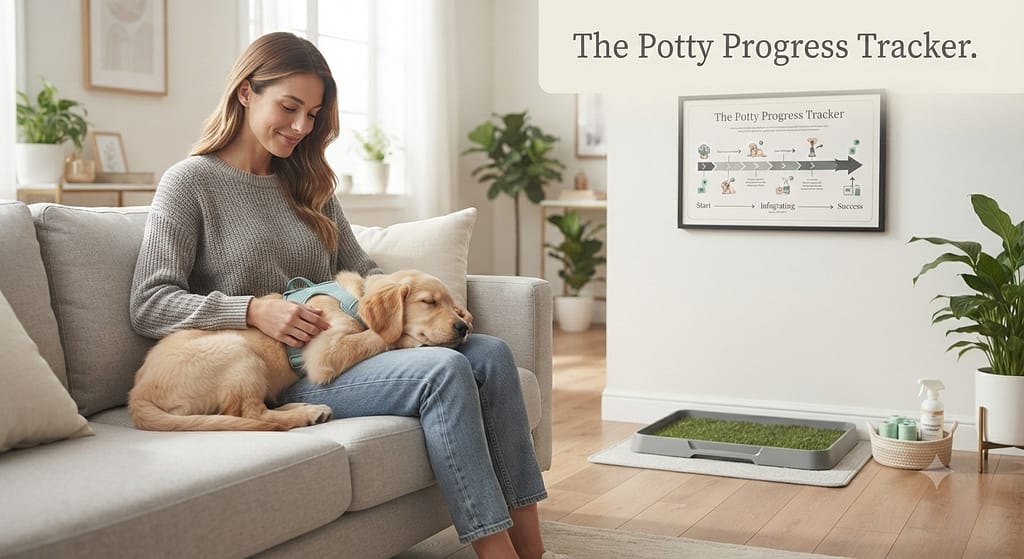
Consistency beats perfection. Every accident is a data point, not a failure.
By implementing these strategies, you are well on your way to overcoming potty training hurdles and achieving a clean, stress-free home.
The Golden Rule: Never punish an accident. If you find it, you missed the timing. Clean it up and adjust your schedule.
This mindset is the key to apartment living with dogs—grace and patience.
Your Final Checklist:
- Choose Your Surface: Grass, pad, or litter.
- Set Your Schedule: Know your puppy’s bladder limits.
- Plan for Work: Walker, pen setup, or shift split.
- Master the Cleanup: Enzymatic cleaner is your best friend.
Your Final Checklist:
- Choose Your Surface: Grass, pad, or litter.
- Set Your Schedule: Know your puppy’s bladder limits.
- Plan for Work: Walker, pen setup, or shift split.
- Master the Cleanup: Enzymatic cleaner is your best friend.
Your Next Steps:
- If your dog is struggling with anxiety during potty training, visit our Separation Anxiety Guide [Link].
- For an exhaustive list of breed-specific potty tendencies, return to the Selection Bible [Link].
- Download our “30-Day Potty Tracker” below to log your puppy’s pees, poops, and accidents to find their perfect rhythm.
🐾 — Apartment Dog Guide (ADG)
Living large in small spaces, one paw at a time. That’s the apartment dog life—see you in the next guide!.


