
Let’s be honest with each other for a second.
It’s 2 AM. A thunderstorm is rattling the windows.
You’re on the 15th floor, and your dog is giving you that look—the one that says, “I really have to go, and I’m about to make it your problem.”
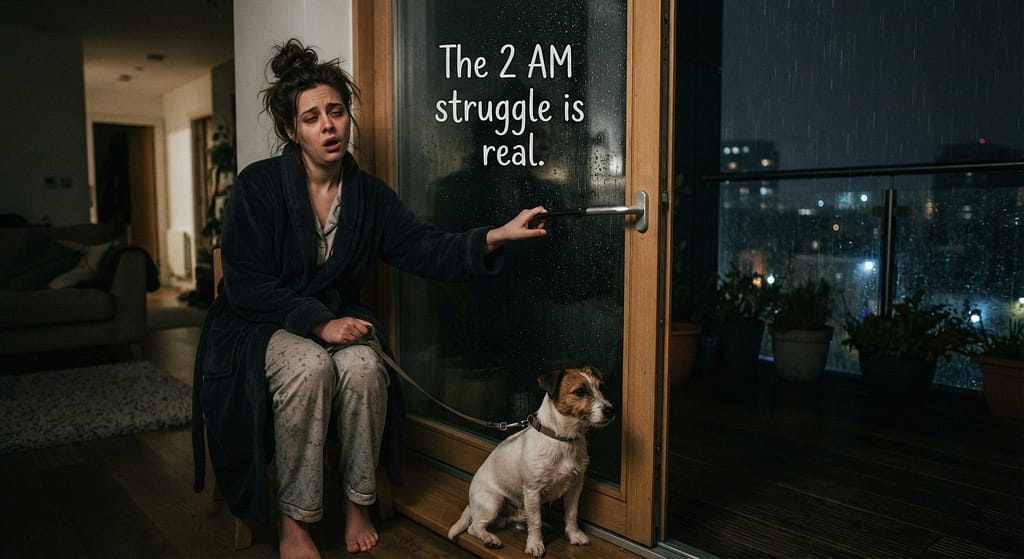
Most I’ve been there. We’ve shuffled into our shoes, grabbed the leash, and prayed the elevator would come quickly.
But what if we told you there’s a better way?
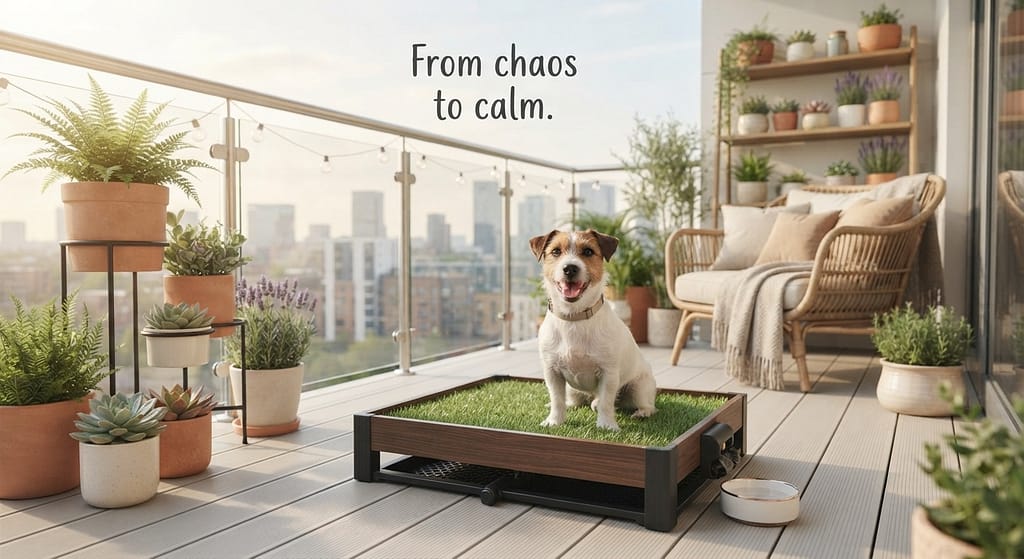
An indoor grass patch for your dog’s potty needs isn’t just a luxury anymore—it’s a survival hack for high-rise dwellers, senior dog owners, and anyone living in extreme weather climates.
But here’s the catch that nobody tells you:
Using a grass patch for a dog’s potty is a completely different beast than using it for a cat’s snack or your living room aesthetic.
We’ve seen the TikTok videos of lush, green indoor lawns.
We’ve read the blog posts about “bringing the outdoors in.” But when it comes to your furry friend actually doing their business on that patch, the rules change entirely.
If you plant the wrong type, you’re not just dealing with dead grass—you’re dealing with a smelly, muddy, biohazardous mess that will have you questioning every life choice that led you to this moment.
So, we’re going to cut through the fluff.
Since you specifically told us this is for a dog in a potty solution, we’re scrapping the general advice.
We’re giving you the hard truth about DIY vs. Store-Bought, specifically for urine, poop, and your sanity.
Let’s get our hands dirty (metaphorically, because if you do it right, your hands will stay perfectly clean).
The Myth Buster: Why “Natural” Isn’t Always Better for Dog Pee
We know what you’re thinking. “Grass is natural. Dogs pee on grass outside. Why can’t I just grow some grass in a box and let my dog use it?”
It’s a logical thought. It’s also a disastrous one.
When a dog pees on a patch of natural grass outside, that urine is diluted by rain, absorbed by the vast root systems of the earth, and broken down by millions of soil microorganisms.
When you confine that same process to a shallow tray in your living room, you are essentially creating a contained chemical reaction.
Dog urine is high in nitrogen and salts.

While nitrogen is a fertilizer, too much of it burns and kills grass (that’s why you get those yellow spots on your lawn).
On a DIY tray, there is nowhere for that concentrated nitrogen to go. It pools in the soil. It ferments.
The grass dies, turns yellow, and becomes a sludgy, foul-smelling soup.
The DIY route for a dog potty? We’re going to say it loud and clear: it is almost always a nightmare.
But hold on—don’t click away.
We’re going to break down why it fails, and then give you the glorious store-bought alternatives that actually work.
And hey, if you’re a die-hard DIYer, we’ll give you the one exception to the rule.
Round 1: The DIY Disaster (Why We Beg You Not To)
Let’s roleplay a scenario. You go to the hardware store.
You buy a plastic under-bed storage bin, a bag of organic potting soil, and a packet of ryegrass seeds.
You lovingly water it, watch it sprout, and feel like a god of agriculture.
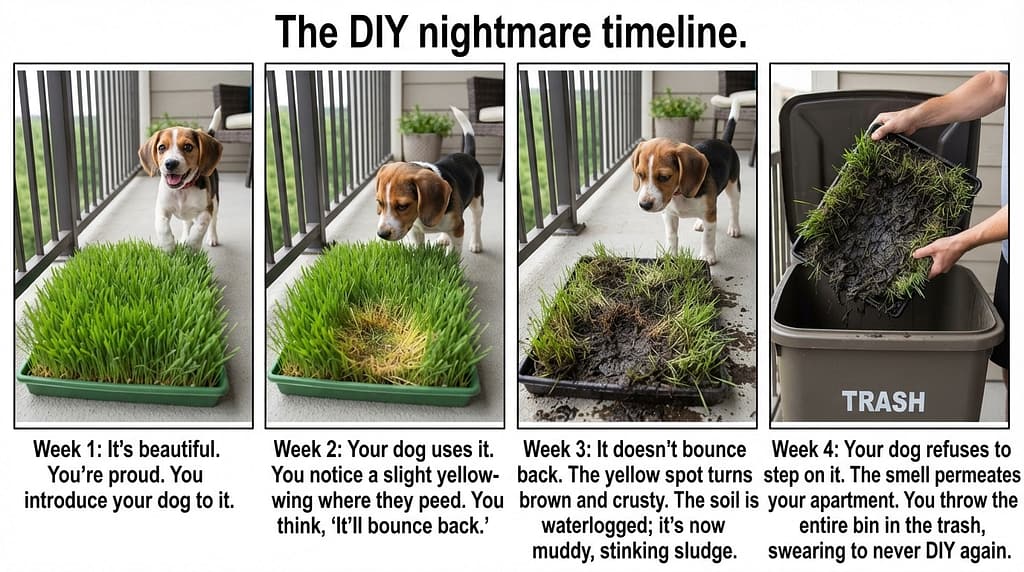
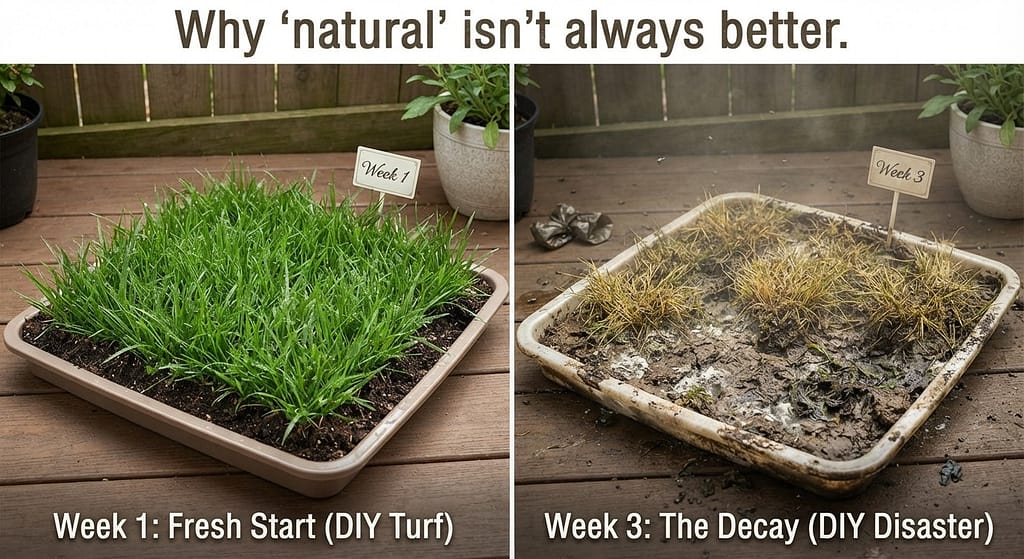
Week 1: It’s beautiful. You’re proud. You introduce your dog to it.
Week 2: Your dog uses it. You notice a slight yellowing where they peed. You think, “It’ll bounce back.”
Week 3: It doesn’t bounce back. The yellow spot turns brown and crusty. The soil underneath is waterlogged with urine. You try to water it to “flush” it out, but the bin has no drainage, or you drilled tiny holes that clog with mud. Now you have a tray of muddy, stinking sludge.
Week 4: Your dog refuses to step on it. The smell has permeated your entire apartment. You throw the entire bin in the trash, swearing to never DIY again.
Here is the grim reality of DIY Soil for Dog Potty:
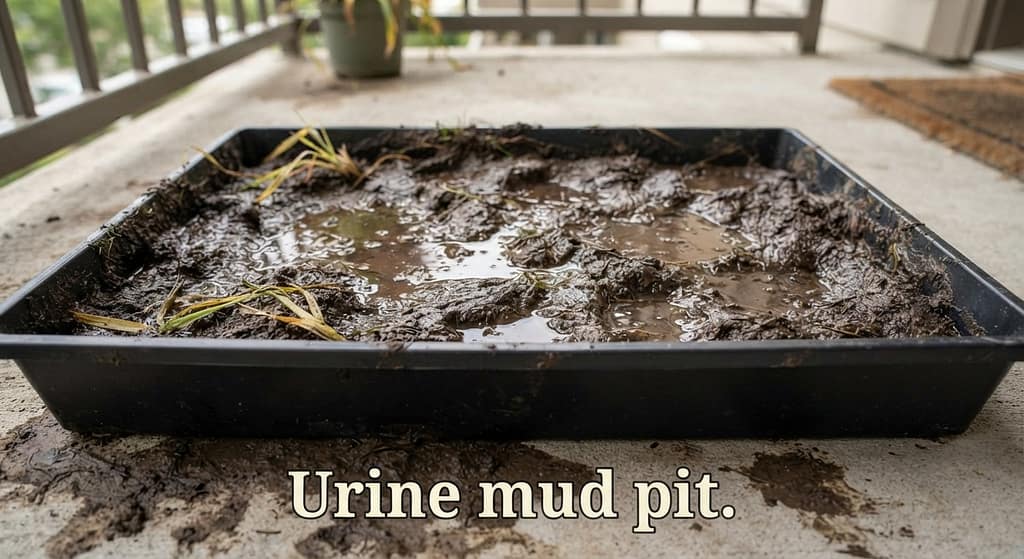
- Drainage Nightmares: Soil holds moisture like a sponge. Dog urine adds a lot of liquid. Without a complex drainage system (gravel layers, drainage mats, and a collection tray), you are just making a urine mud pit.
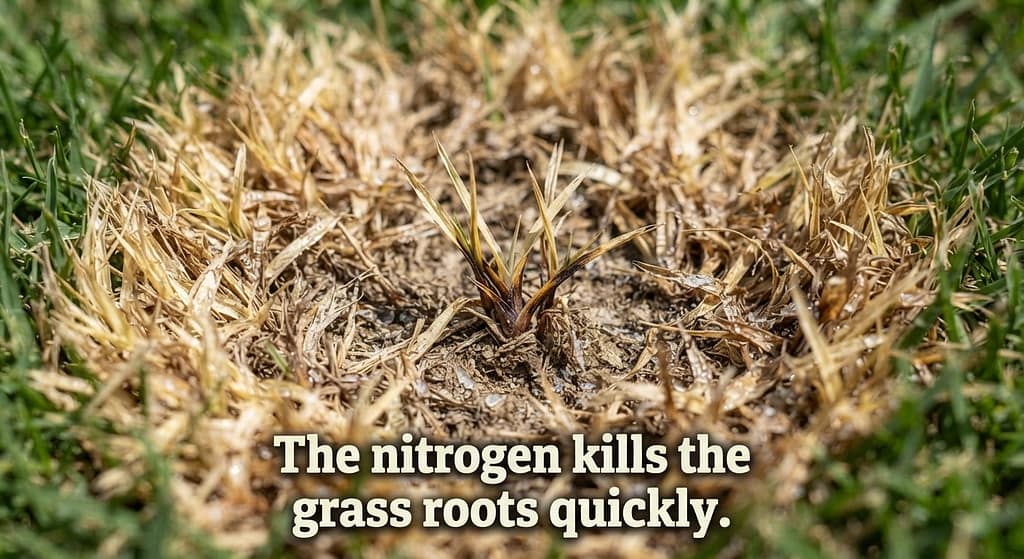
- The “Urine Burn” Effect: As we mentioned, the nitrogen kills the grass roots quickly. A DIY patch might survive a few pees, but by Day 5, you’re looking at a dead, yellow patch. Grass needs time to grow; your dog needs to pee every few hours. The math doesn’t math.
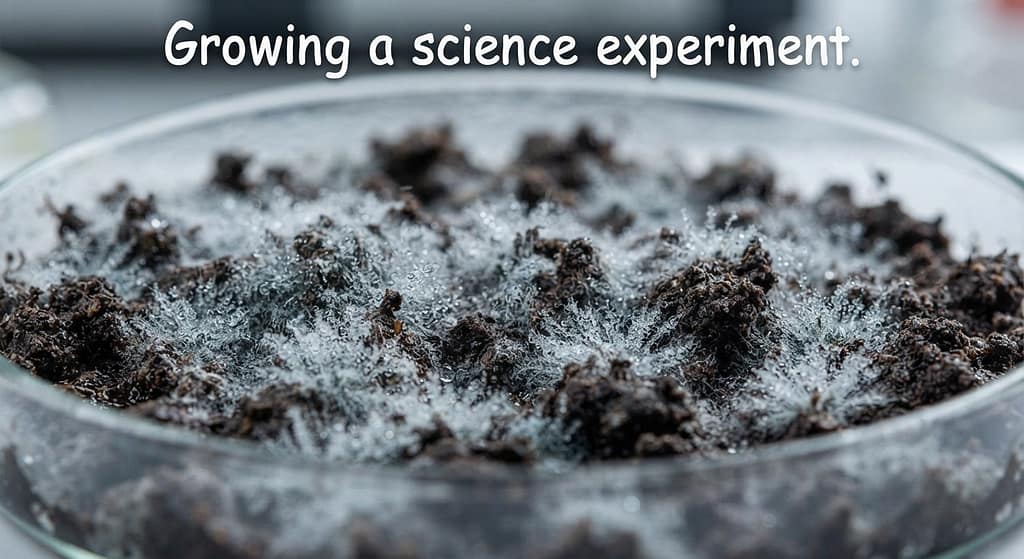
- Root Rot and Mold: The constant moisture from the pee (and your watering to try and keep it alive) creates the perfect environment for anaerobic bacteria and mold. You aren’t just growing grass; you’re growing a science experiment that smells like a barn.
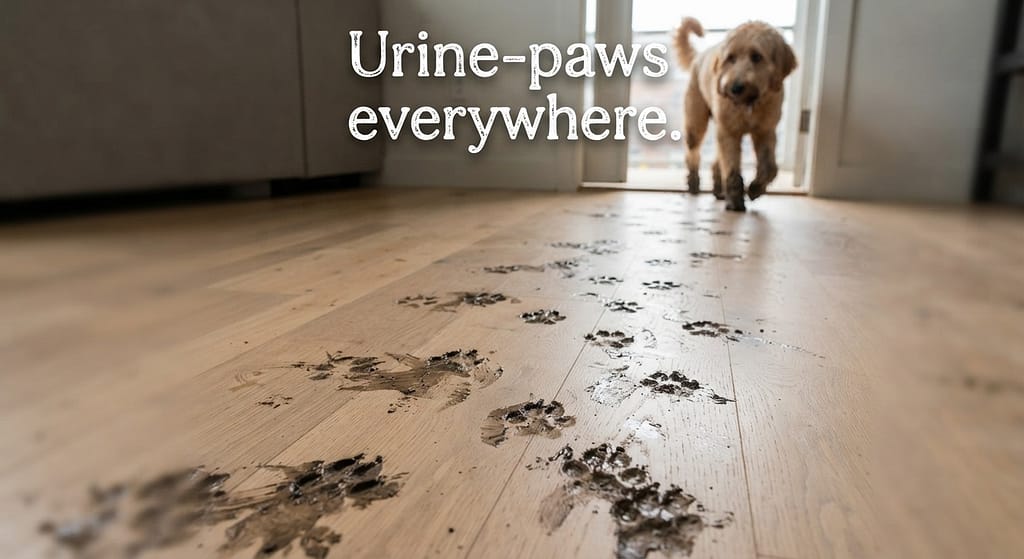
- Mess Factor: Ever tried to clean mud out of a plastic tray? We have. It gets everywhere. Your dog tracks muddy urine-paws across your floor. You are now cleaning your floor and the patch.
The Verdict on DIY for Dog Potty:
Unless you are a master gardener with a custom-built, multi-layered drainage system (and we’re talking gravel, sand, activated charcoal, and a sump pump), do not do this.
The DIY soil method is for nibbling cats or aesthetic Instagram shoots, not for the heavy-duty waste management needs of your beloved pooch.
Round 2: The Store-Bought Solutions (The Real Contenders)
Since DIY soil is out of the running for a potty solution, we are left with two heavy-hitters from the store-bought arena.
And we need to separate them clearly: Pre-Grown Real Grass Subscriptions vs. Synthetic Turf Systems.
Let’s break down which one will save your floors and your nose.
Option A: The Real Grass Subscription (Fresh Patch, DoggyLawn, etc.)
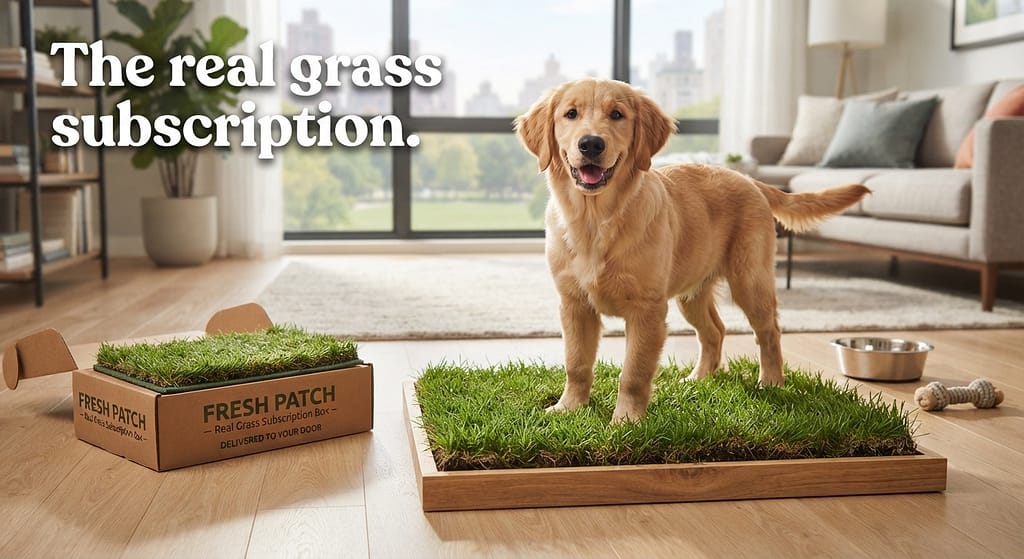
This is the “middle ground.” You don’t grow it yourself; you buy it pre-grown.
Companies ship you a tray of real, living grass (usually grown hydroponically, meaning in water and fibers, not dirt) in a cardboard or plastic tray.
The Price Tag: $30 – $50 per month (subscription).
The Effort Meter: Medium.
The Lifespan: 1 to 4 weeks (depending on your dog’s usage).
How it works for potty:
This is actually a great option because these real-grass patches are grown without soil (hydroponic).
The roots are clean, and the trays usually have a built-in drainage system that allows the urine to filter through to a collection tray or absorbent pad at the bottom.
The Pros for Dog Potty:
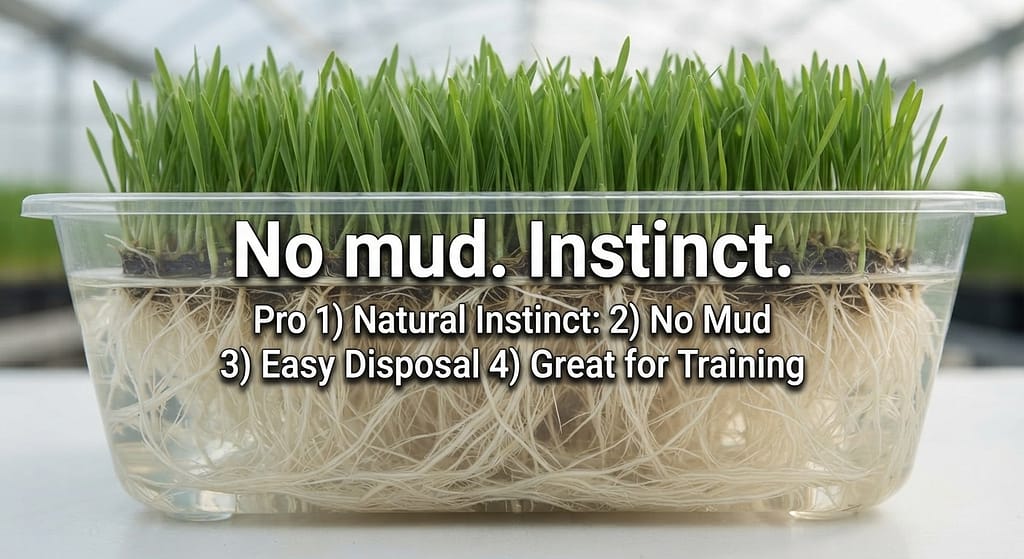
- Natural Instinct: Dogs love the smell and feel of real grass. If your dog is picky, this is their gold standard.
- No Mud: Without soil, you don’t get muddy paw prints.
- Easy Disposal: When it stinks (and it will), you just toss the whole tray in the compost or trash. A fresh one shows up on your doorstep.
- Great for Training: If you’re potty-training a puppy, the real grass smell triggers their natural “go outside” instinct perfectly.
The Cons for Dog Potty:
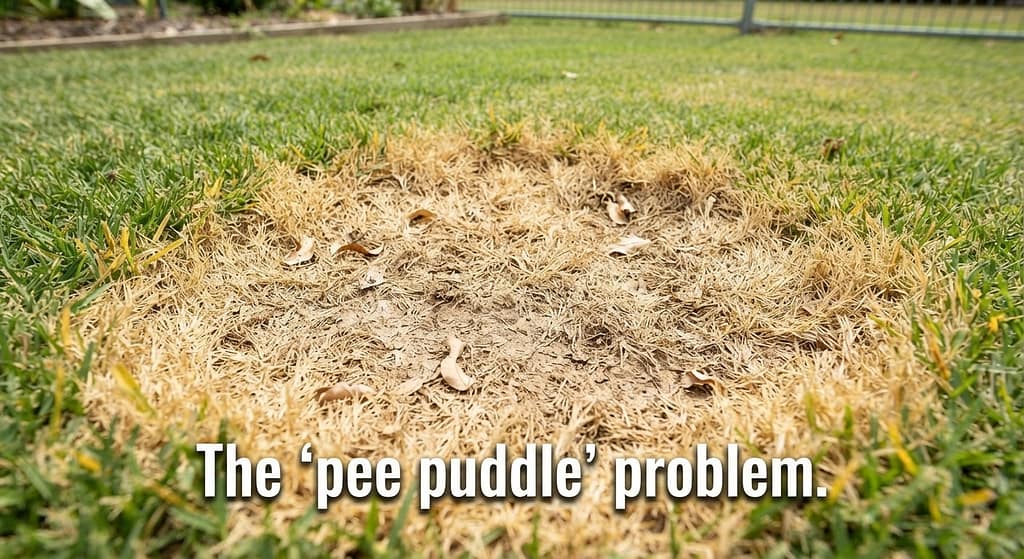
- The “Pee Puddle” Problem: Even with hydroponic systems, the grass roots will eventually get saturated with urine salts. The grass turns yellow and dies much faster. If your dog uses it 3-4 times a day, you might get 7 good days out of it. If you have a large dog, you might get 3 days.
- The Cost Adds Up: At $40 a pop, you’re spending nearly $500 a year on grass. For some, that’s a bargain for convenience; for others, it’s a line item they don’t want.
- Flies and Gnats: Real, decomposing plant matter attracts tiny flying insects. If you let it go too long without changing, you might find a fruit fly convention in your living room.
Our Take on Real-Grass Subscriptions:
This is the “Hassle-Free Natural” option. We love it for apartment dwellers with small-to-medium dogs who want that authentic grass feel without the dirty work.
It’s perfect for seniors or people with mobility issues who can’t make the trip downstairs. Just be prepared for the recurring cost and the weekly swap-out.
Option B: The Synthetic Turf System (PetTurf, Grass Pads, DIY Turf Kits)
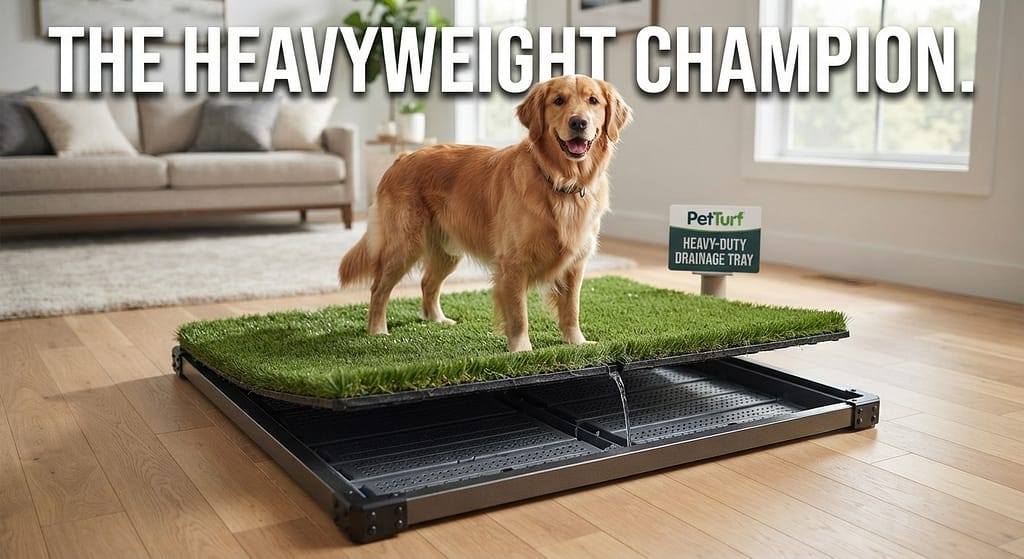
This is the heavyweight champion of the dog potty world.
We are talking about high-quality, permeable artificial turf placed over a drainage tray or absorbent pad.
The Price Tag: $50 – $200+ (one-time purchase for a quality system).
The Effort Meter: Very Low.
The Lifespan: 1 to 5+ years (if cleaned properly).
How it works for potty:
The synthetic grass blades stand upright, allowing liquids to drain through small holes in the backing.
Beneath it, there’s either a specialized absorbent pad (that traps the odor) or a sloped plastic tray that collects the urine and directs it to a collection basin that you empty.
The Pros for Dog Potty:
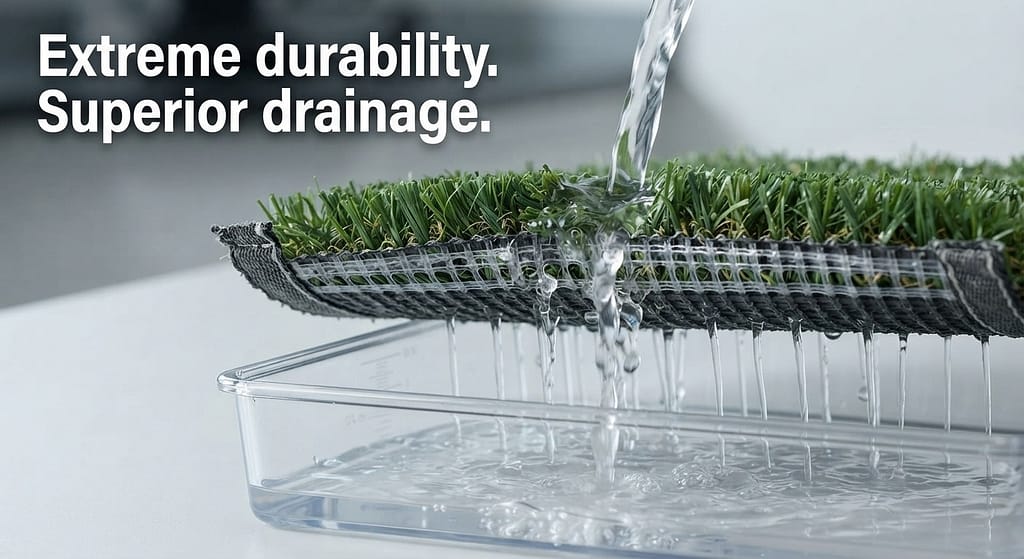
- Extreme Durability: No matter how much your dog digs, scratches, or spins before doing their business, this stuff holds up. It doesn’t get holes, doesn’t turn yellow, and doesn’t die.
- Odor Control (If you do it right): Quality systems use antimicrobial coatings and specific drainage layers to stop the smell before it starts. (We’ll share our cleaning hacks below to keep it smell-free).
- Cost-Effective: You pay a chunk upfront, and then your only ongoing cost is the cleaning solution. After 6 months, you’ve already broken even compared to the subscription service.
- No Mud, No Bugs: Synthetic turf doesn’t decompose, so no gnats. It dries quickly, so no muddy paws.
The Cons for Dog Potty:
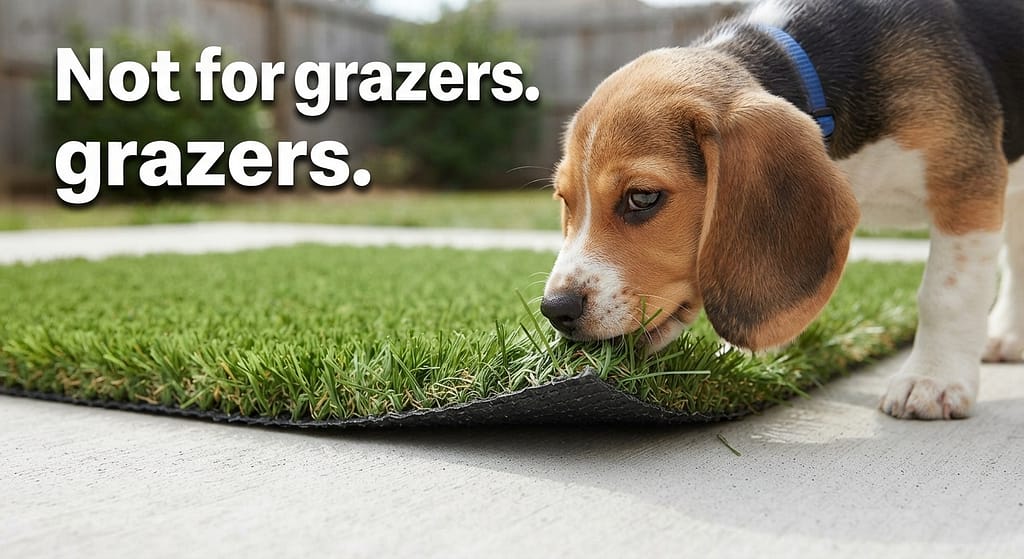
- The “Taste” Factor: If your dog is a nibbler or tries to eat their bedding, synthetic turf is not for them. It’s non-toxic (usually), but it’s definitely not a snack.
- The “Puddle” Factor (If cheap): If you buy the cheap, non-draining turf from the hardware store, it will just pool urine on top. You must buy turf specifically designed for pet drainage.
- Initial Investment: It hurts the wallet upfront compared to a bag of seeds, but we promise it pays off.
Our Take on Synthetic Turf:
This is the “Set It and Forget It” heavyweight. If you have a medium-to-large dog, a heavy pee-er, or you just hate the idea of throwing away grass every week, this is your winner.
It requires a specific cleaning routine (which we’ll give you), but once you have that routine down, it’s the closest thing to a “magic toilet” your dog will ever have.
Round 3: The “Ugly” Cleaning Routine (Real Talk)
We can’t write a blog about dog potties without talking about the cleanup. It’s the part everyone skips in their Pinterest-perfect posts.
Let’s get real about the “Pee” Factor.
For Real Grass Subscriptions:
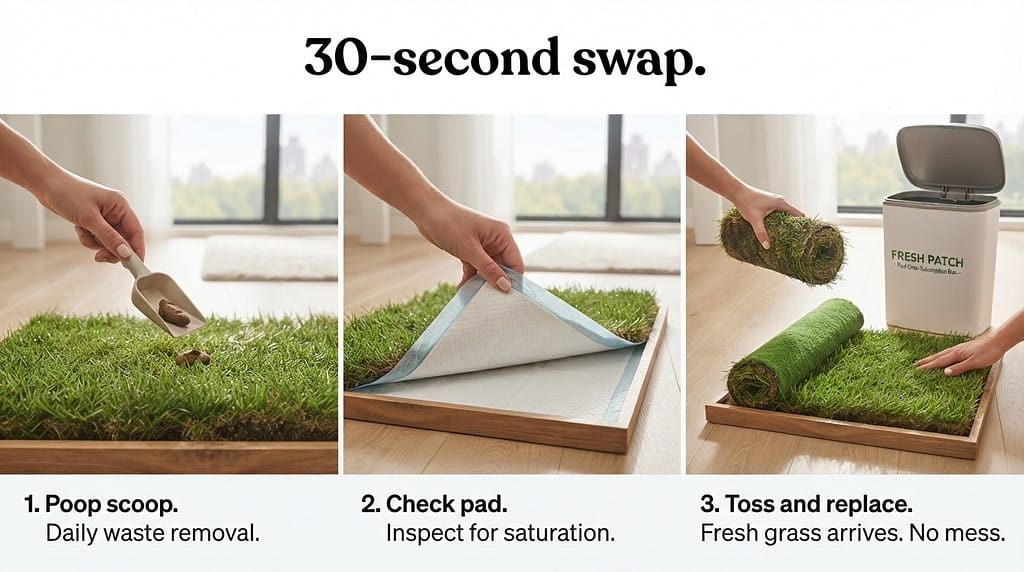
- Daily: Just pick up the poop with a bag (duh). You don’t really need to “rinse” the live grass because you want it to live. However, if the tray has an absorbent pad underneath, you need to check it and replace it as often as the brand recommends.
- Weekly: When the grass is dead or smelly, you throw the whole thing away. Slap the new one down. It’s a 30-second job.
- The Smell Warning: Do NOT let the urine sit in the collection tray for a week. It will reek of ammonia. If your subscription tray doesn’t have a pad, you’ll need to dump the urine reservoir daily.
For Synthetic Turf Systems:
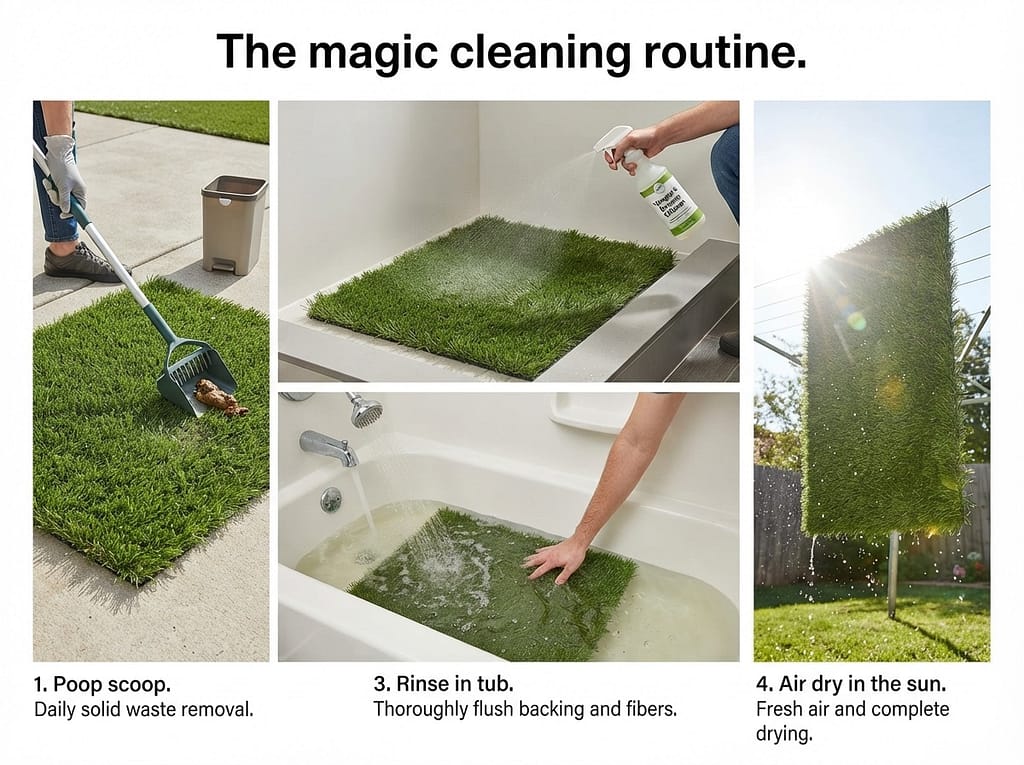
This requires a bit more elbow grease, but it’s worth it.
- Daily: Poop scooping is a must. Spray the area with a water/vinegar solution (1 part white vinegar, 3 parts water) or an enzymatic pet cleaner to neutralize the urine immediately. This stops the smell from developing.
- Weekly (The Deep Clean): This is the magic secret. Take the turf pad to your bathtub or balcony.
- Rinse the turf thoroughly with water.
- Apply a specialized turf cleaner or a dish soap/baking soda paste.
- Scrub gently with a soft brush.
- Rinse again until the water runs clear.
- Drain the collection tray and wipe it down.
- Let it dry completely in the sun (or near a fan) before placing it back. UV light is the absolute best odor-killer.
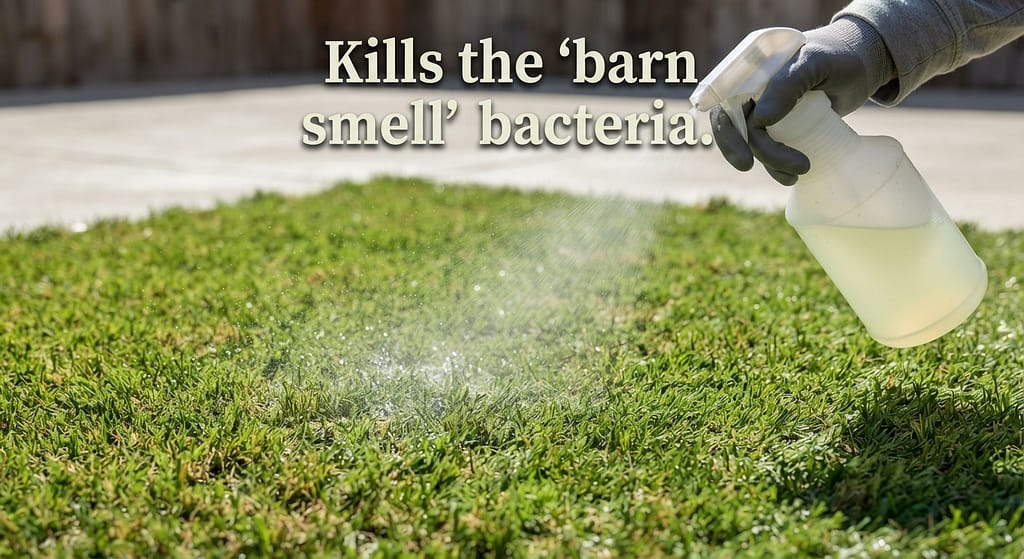
- The Maintenance Hack: We spray our synthetic turf with a 10% bleach solution (diluted heavily with water) once a month. Let it sit for 5 minutes, then rinse thoroughly. It kills the bacteria that cause the “barn smell.”
Round 4: The Deciding Factor – Your Dog’s Size and Habits
We can’t give you a definitive answer without knowing your dog.
So, let’s do a quick interactive diagnostic. Look at your dog and answer these questions:
Question 1: How big is your dog?
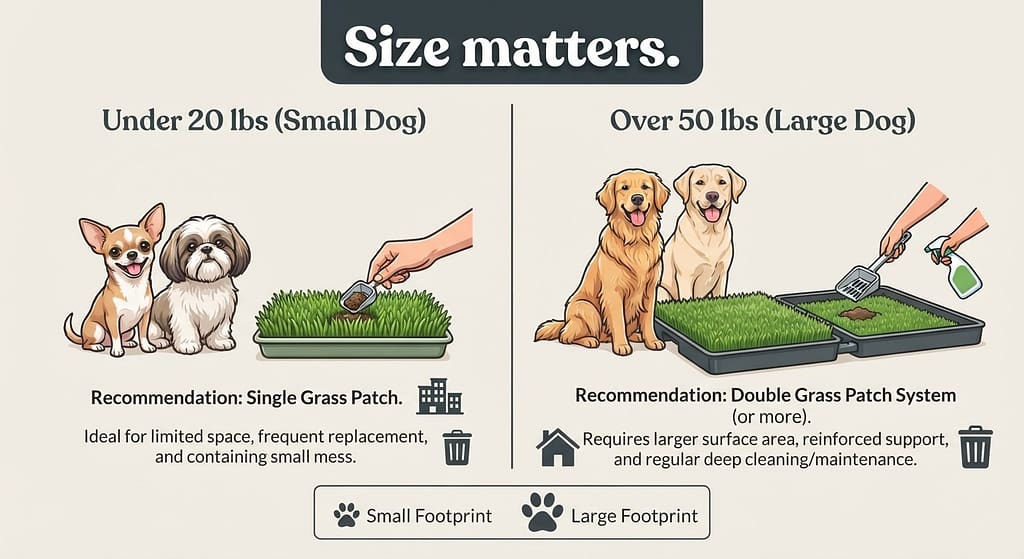
- Under 20 lbs (Small): Both options work beautifully. The subscription grass will last you 2-3 weeks. The synthetic turf will last forever.
- Over 50 lbs (Large): Synthetic Turf wins. A large dog produces a flood of urine that will kill a real-grass patch in 2-3 days. You’d be going broke buying subscriptions. The synthetic turf handles the volume and dries out much faster.
Question 2: Is your dog a “Grazing” nibbler?
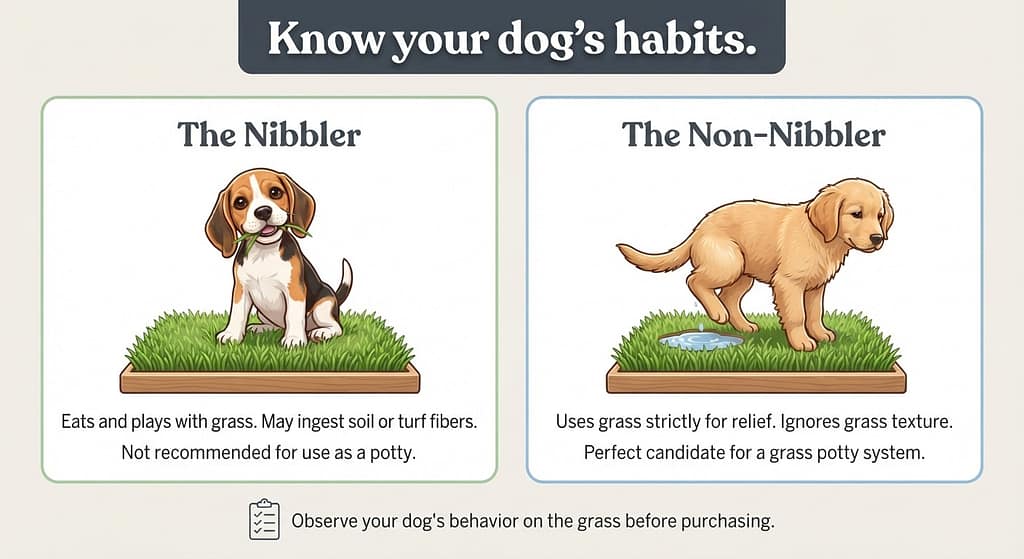
- Yes, they eat everything: Real Grass Subscription wins. You don’t want them swallowing plastic grass fibers. Let them munch on the real wheatgrass.
- No, they just want to pee: Synthetic Turf wins. Save the money and the hassle.
Question 3: What is your tolerance for logistics?
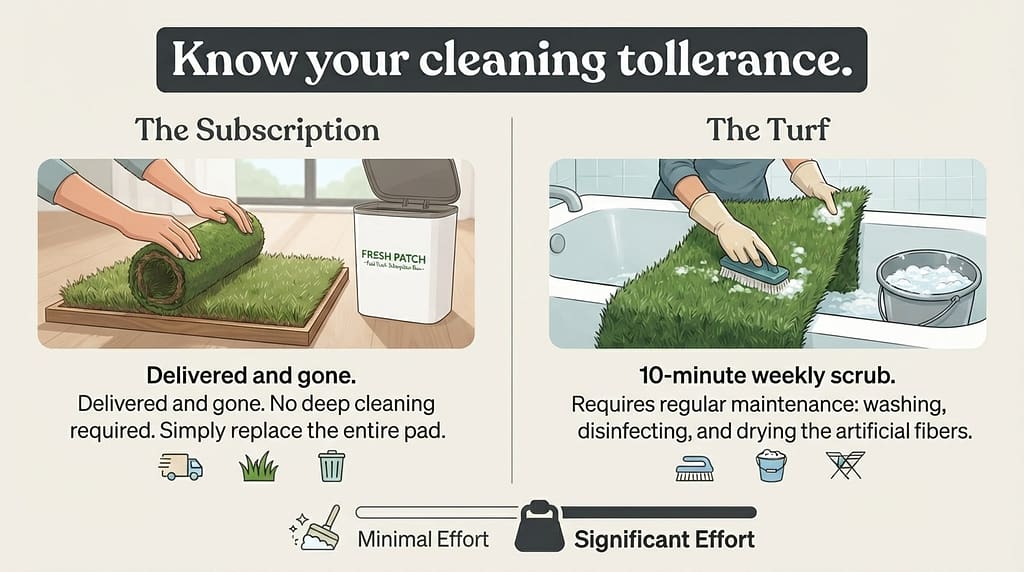
- I want it delivered and gone with zero scrubbing: Real Grass Subscription wins. Literally, throw it away and get a new one.
- I’m okay with a 10-minute weekly scrub to save money: Synthetic Turf wins.
Question 4: Where is it going?
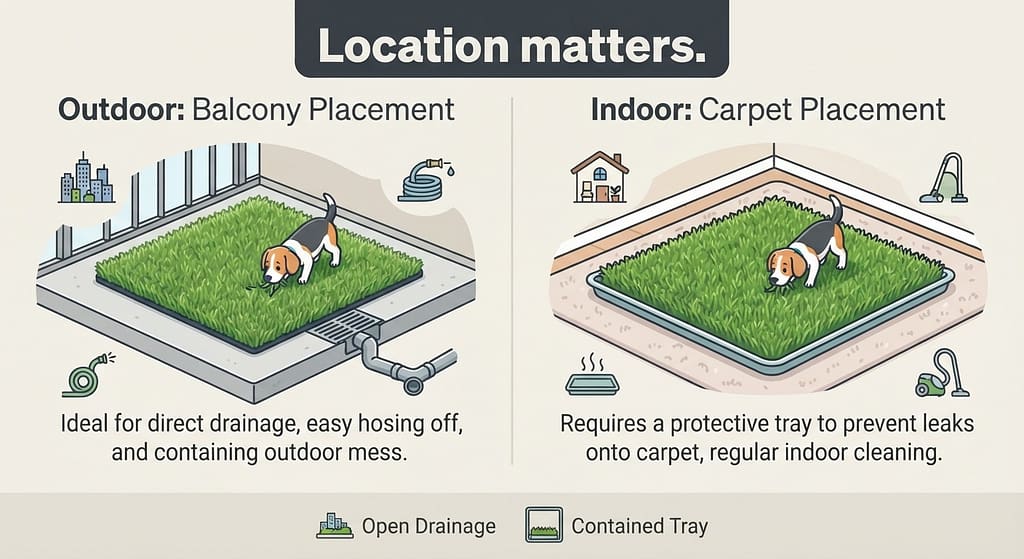
- On a balcony with a drain: Synthetic Turf wins. You can literally hose it down and let it drain outside.
- In a carpeted living room: Real Grass Subscription wins. The cardboard trays are less likely to leak catastrophically if your dog misses the target. (But get a waterproof tray underneath anyway!).
The Ultimate Verdict: The Winner for Your Dog Potty
Drumroll, please…
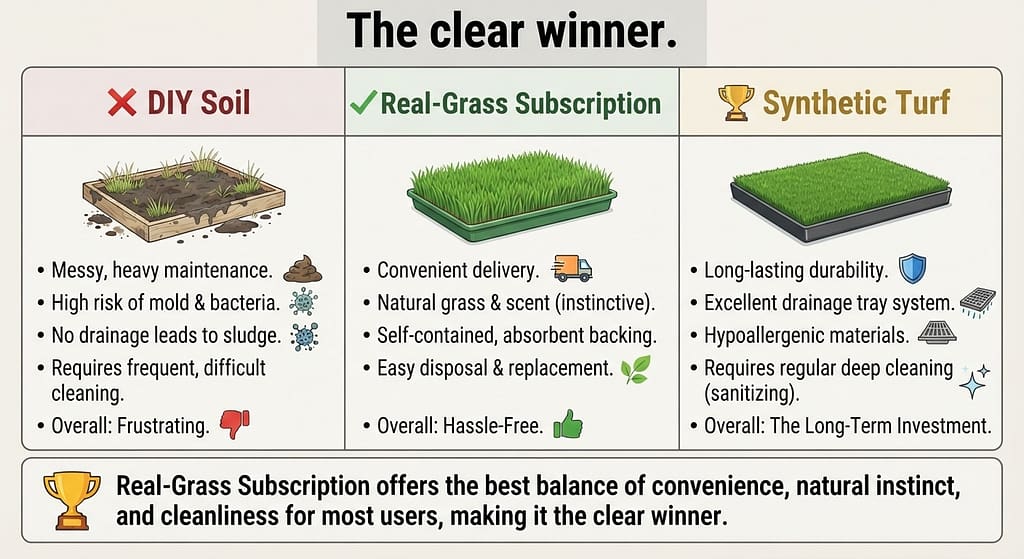
If you are using this specifically as a dog potty solution, we are crowning the winner as: Store-Bought Synthetic Turf with a drainage tray.
Here is why we feel so strongly about this: Function over Form.
The DIY route is dangerous for hygiene. The real-grass subscription route is great, but it’s an expensive recurring consumable.
For the primary purpose of waste elimination, the synthetic turf is the only option that provides:
- Durability (it won’t die under pressure).
- Superior Drainage (keeps those paws dry and clean).
- Long-Term Cost Savings (one payment vs. monthly payments).
- Predictable Hygiene (you control the cleaning chemicals and routine).
However, we aren’t leaving the other options in the dust. Here is our “Decision Matrix” for you:
- Choose DIY Soil if: You are a masochist who loves cleaning mud. (Kidding! Seriously, don’t do it for potty. Skip it.
- Choose Real-Grass Subscription if: You have a small dog, a picky dog who refuses to pee on fake grass, or you simply cannot stomach the idea of cleaning a turf mat. It’s the premium “white glove” service of the dog potty world.
- Choose Synthetic Turf if: You have a medium-to-large breed, you live on a tight long-term budget, or you have a balcony where you can rinse it off. It is the practical, engineering-minded solution.
Your “First Week” Action Plan
Okay, we’ve thrown a lot of information at you. We know you’re itching to get started. Here’s your no-nonsense action plan for the next 7 days.
If you went with Synthetic Turf:
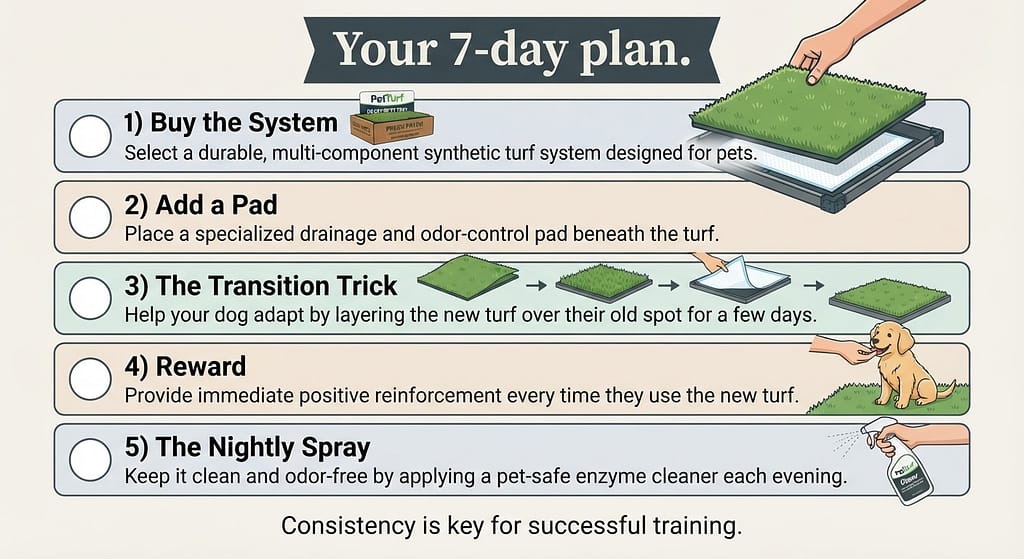
- Buy the System: Purchase a turf mat that specifically states “pet friendly” and has drainage holes. Don’t forget the tray underneath!
- Add a Pad: We recommend adding a “pee pad” or a reusable washable absorbent pad under the turf but on top of the tray. It catches the liquid and reduces splashing.
- The Transition Trick: Put a piece of your dog’s own pee-soaked paper towel on the turf for the first day. The scent tells them, “This is your bathroom!”
- Reward: The moment they use it, throw a party. Treats, praise, belly rubs.
- The Nightly Spray: Every night before bed, spray it with enzymatic cleaner to neutralize the overnight smells.
If you went with Real-Grass Subscription:
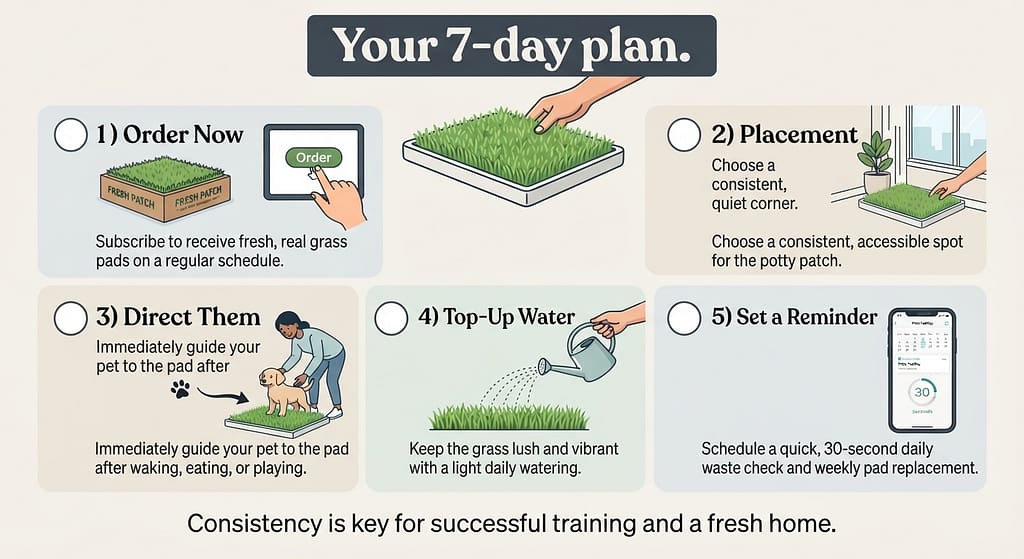
- Order Now: Time is of the essence. Get it delivered.
- Placement: Place it in a low-traffic area. Avoid direct, scorching sunlight (it will bake the urine into the grass).
- Direct Them: Leash your dog and walk them to the patch. Let them sniff it out.
- Top-Up Water: Lightly water the grass once a day to help rinse the urine salts down to the absorbent pad. (This is counterintuitive, but it keeps the blades alive longer!).
- Set a Reminder: Mark your calendar for Day 7. Check the smell. When it gets too funky, swap it out. Don’t wait until it’s a biohazard.
The Final Word (From Us to You)
We get it. Being a dog parent in a city is hard. You want to give them the best life possible, but you also don’t want to lose your security deposit due to a stained, smelly carpet.
The indoor grass patch is a godsend, but only if you treat it with the respect it deserves.
It’s not just a plant; it’s a bathroom. And bathrooms need to be cleaned, maintained, and built for function.
Don’t let the romance of the “DIY” fool you. Your dog doesn’t care if you grew the seeds with your own hands.
Your dog cares if it smells familiar, feels decent on their paws, and gives them a safe space to relieve themselves.
We’ve made the mistakes so you don’t have to. We’ve cleaned the mud, gagged at the rotting soil, and watched our beloved DIY patches turn into wastelands.
We’ve also seen the pure, unadulterated relief on a dog’s face when they realize they have a place to go during a thunderstorm.
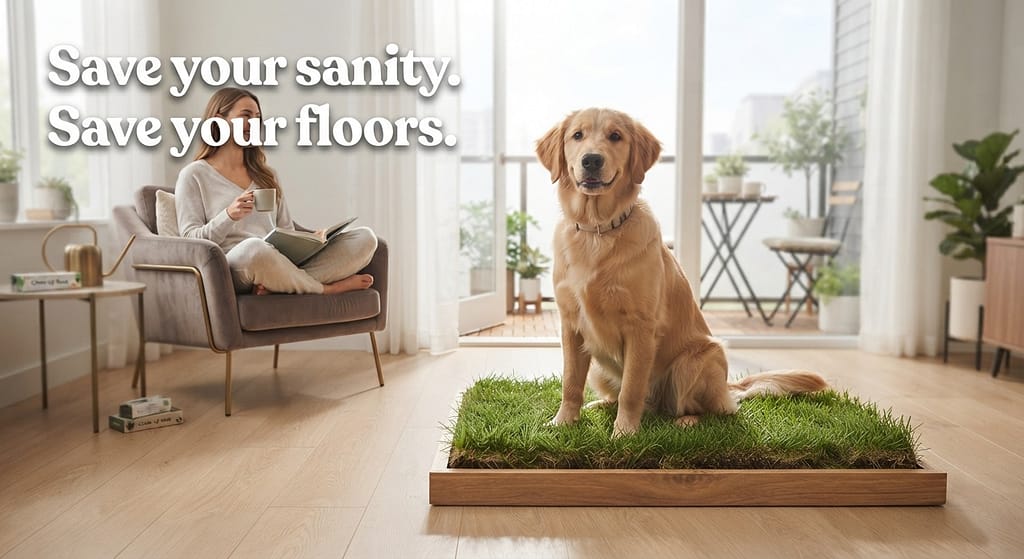
Save your sanity. Save your floors. Choose a store-bought solution—either the subscription or the synthetic—and never look back.
Now go give your pup a scratch behind the ears for us. They deserve it. And so do you.
🐾 — Apartment Dog Guide (ADG)
Living large in small spaces, one paw at a time. That’s the apartment dog life—see you in the next guide!.


