
The Art of Doing Nothing
Your dog is hyperactive. They’re pacing, whining, and demanding attention.
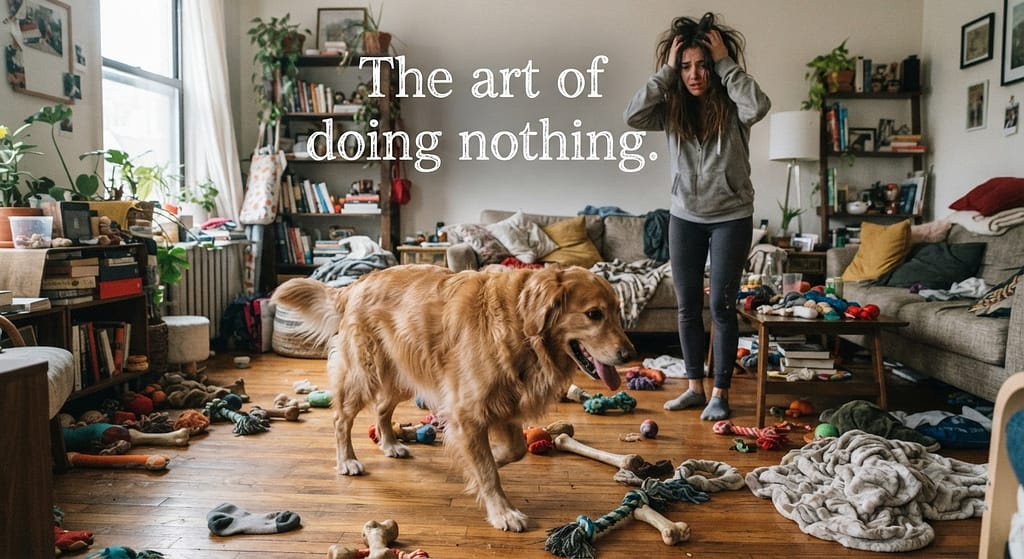
You can’t relax. The apartment feels chaotic. You’re exhausted.
In a house, a hyperactive dog has space to run. In an apartment, they’re right on top of you.
The ability to settle is the most underrated skill an apartment dog can have.
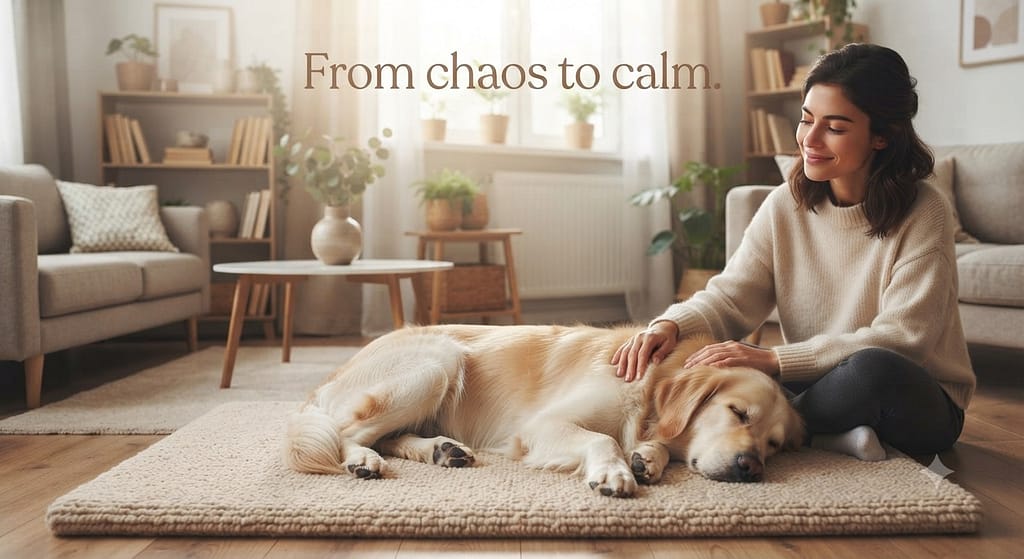
“Stay” and “Settle” are the off-switches for hyperactivity.
They teach your dog to do nothing—to relax, to rest, to be calm. A dog that can settle is a joy to live with.
This guide will teach your dog the art of doing nothing.
Why Stay & Settle Matter
In an apartment, calmness is a survival skill.
The Urban Reality:
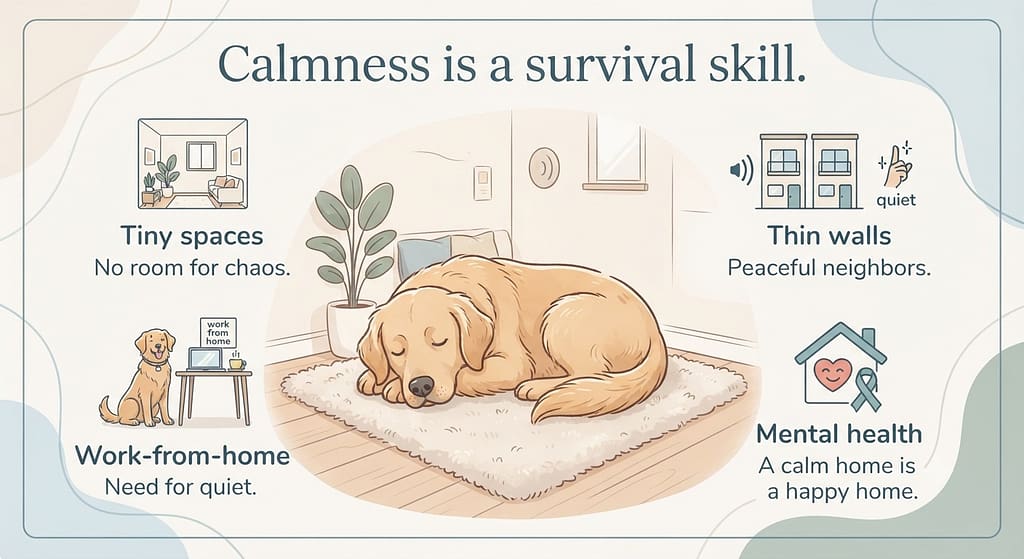
- Tiny spaces: No room for chaos.
- Thin walls: Peaceful neighbors.
- Work-from-home: Need for quiet.
- Mental health: A calm home is a happy home.
The Goal:
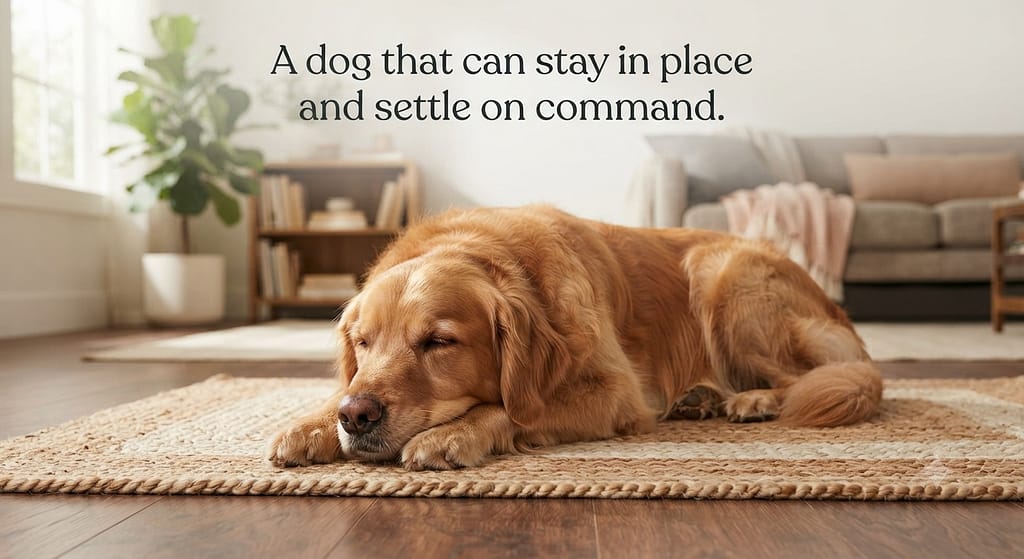
A dog that can stay in place for extended periods and settle on command.
Exercise 1: The “Stay” Command
Why It Matters:
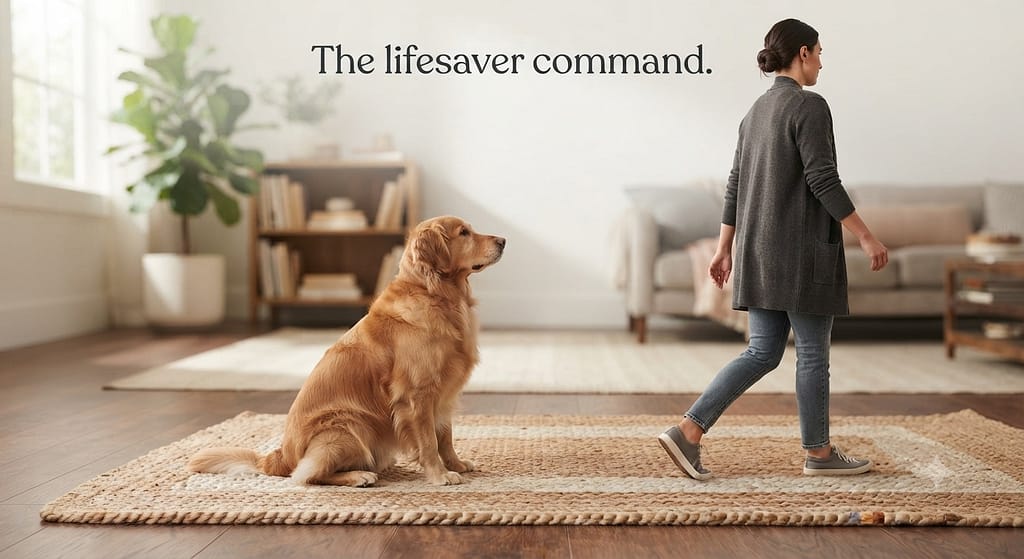
“Stay” is a lifesaver—it keeps your dog from bolting out the door, running into traffic, or bothering guests.
What You’ll Need:
- High-value treats
- 10 minutes of your time
- A quiet space
Teaching ‘Stay’ is an exercise in impulse control. Master this foundation with our Impulse Control for Apartment Dogs guide.
Step-by-Step:
Round 1: The 1-Second Stay

- Have your dog sit.
- Place your hand up (palm facing them) and say “Stay.”
- Take one step back. Return immediately and reward.
- Repeat 10 times.
Round 2: The 5-Second Stay

- Have your dog sit.
- Say “Stay” and take one step back.
- Wait 5 seconds. Return and reward.
- Repeat 10 times.
Round 3: The Distance Challenge

- Have your dog sit.
- Say “Stay” and take 3 steps back.
- Wait 3 seconds. Return and reward.
- Gradually increase distance and duration.
The Three D’s of Stay:
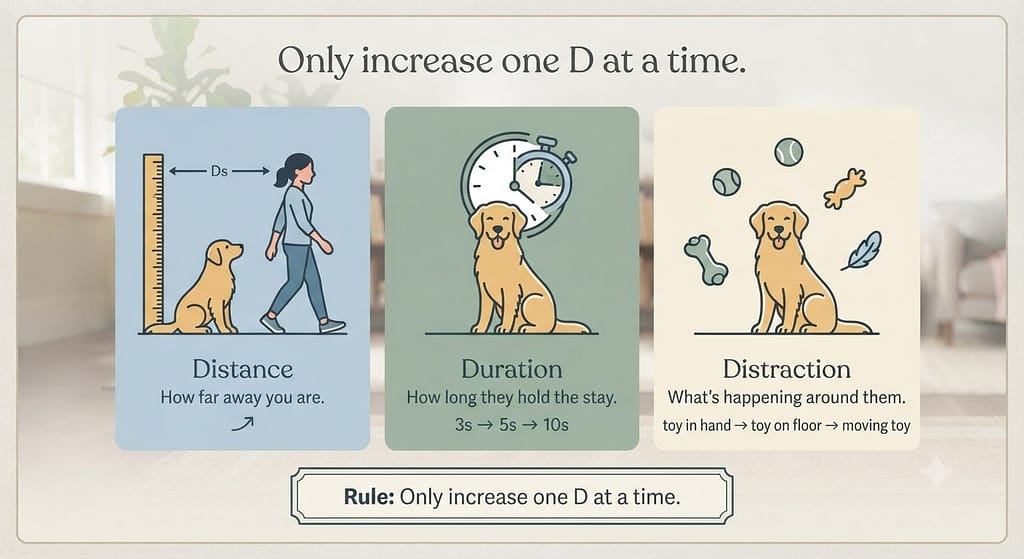
- Distance: How far away you are.
- Duration: How long they hold the stay.
- Distraction: What’s happening around them.
- Rule: Only increase one D at a time.
Progression:
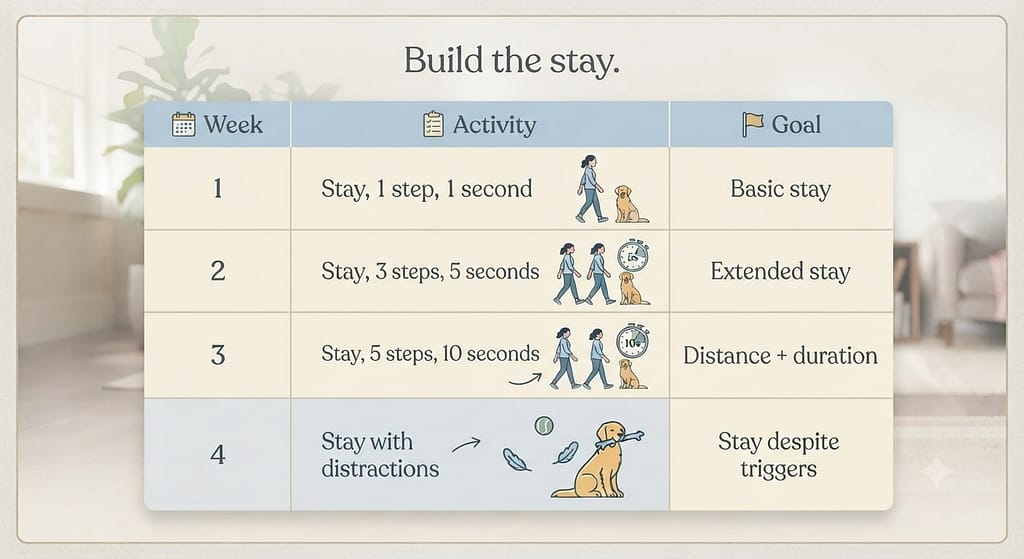
| Week | Activity | Goal |
|---|---|---|
| Week 1 | Stay, 1 step, 1 second | Basic stay |
| Week 2 | Stay, 3 steps, 5 seconds | Extended stay |
| Week 3 | Stay, 5 steps, 10 seconds | Distance + duration |
| Week 4 | Stay with distractions | Stay despite triggers |
Exercise 2: The “Settle” Command (Capturing Calmness)
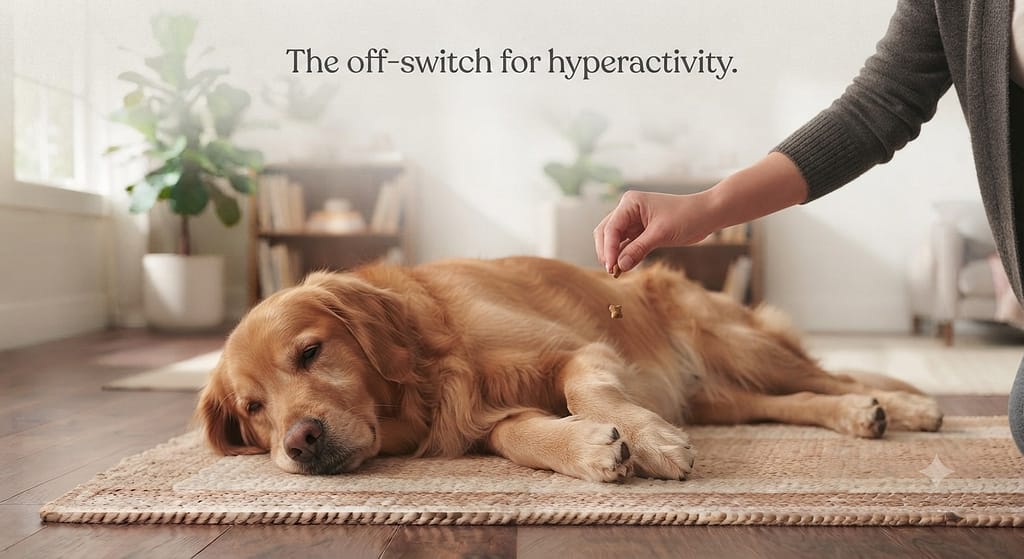
Why It Matters:
“Settle” tells your dog to relax. It’s the off-switch for hyperactivity.
Step-by-Step:
Round 1: Capturing Calmness
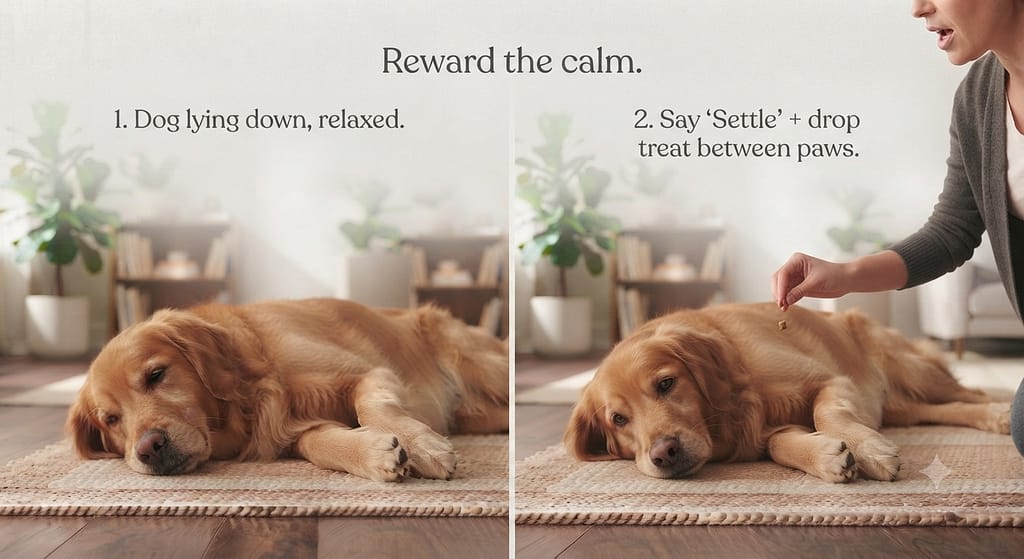
- Sit beside your dog while they’re lying down.
- Wait for a sigh, a head-drop, or a relaxed blink.
- Say “Settle” and gently drop a treat between their paws.
- Repeat 10 times.
Round 2: Extending the Duration
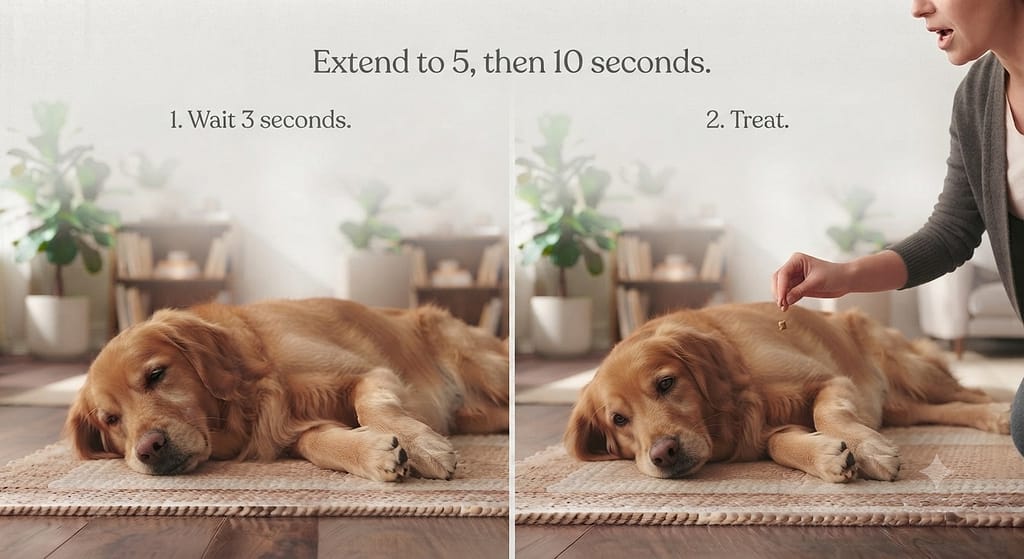
- Sit beside your dog.
- Wait for a relaxed state.
- Say “Settle” and wait 3 seconds before treating.
- Increase to 5 seconds, then 10.
Round 3: The “Settle” Cue
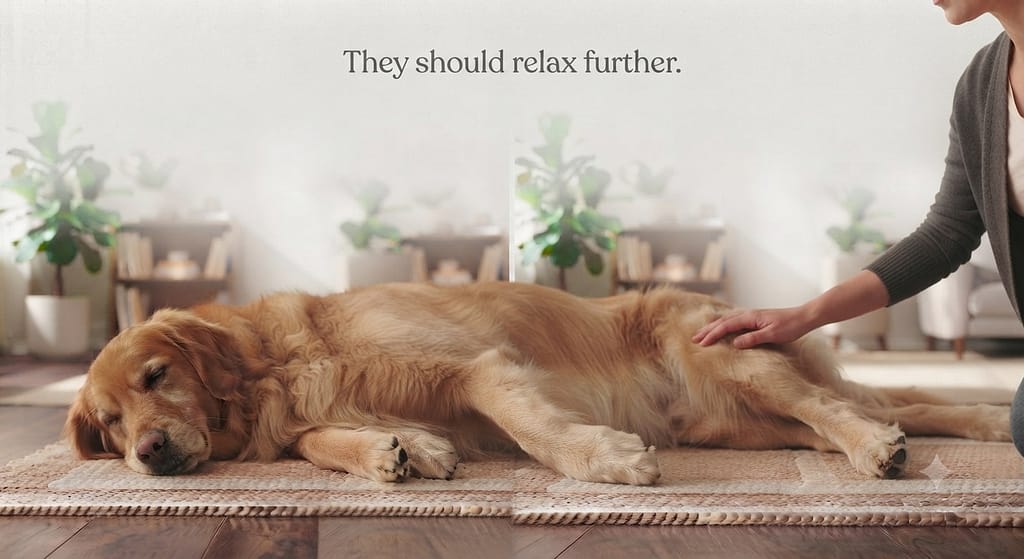
- When your dog is calm, say “Settle.”
- They should relax further.
- Reward.
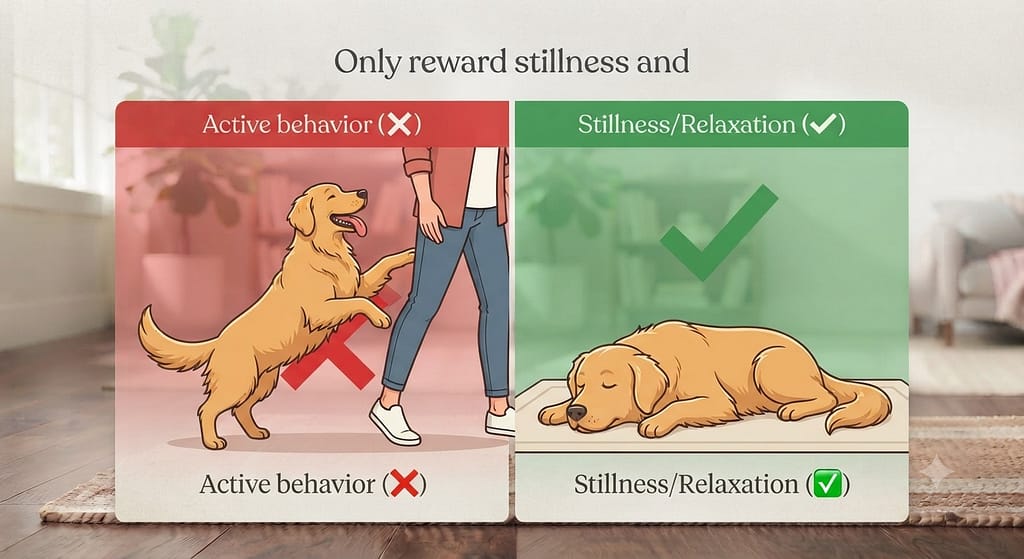
Pro-Tip: Never reward active behavior when you want a settle. Only reward stillness and relaxation.
Exercise 3: The “Place” Command (The Apartment Essential)
Why It Matters:
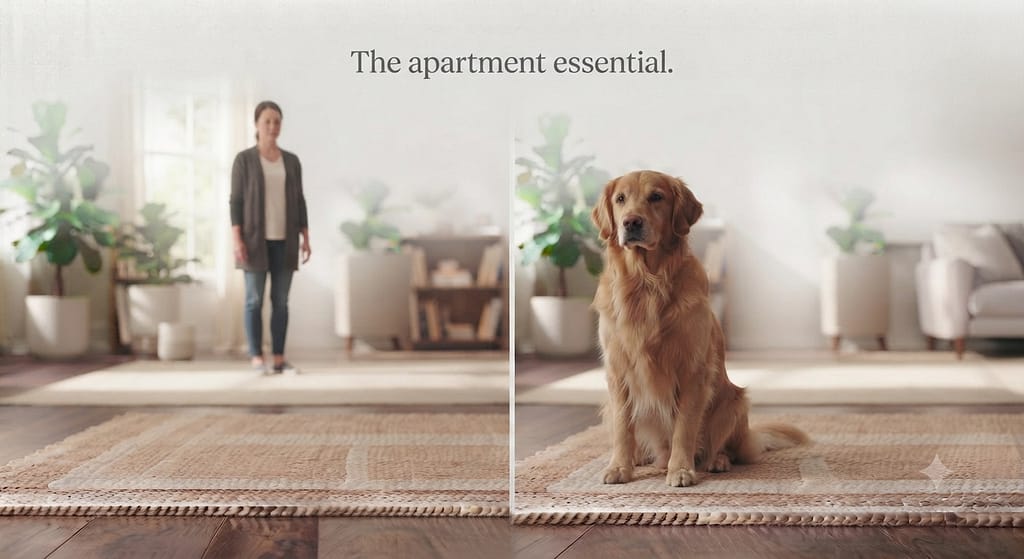
“Place” sends your dog to their bed or mat. It’s the foundation for a peaceful apartment.
What You’ll Need:
- A mat or bed (a bathmat works perfectly)
- High-value treats
- 10 minutes of your time
Step-by-Step:
Round 1: The Introduction
- Choose a mat or bed.
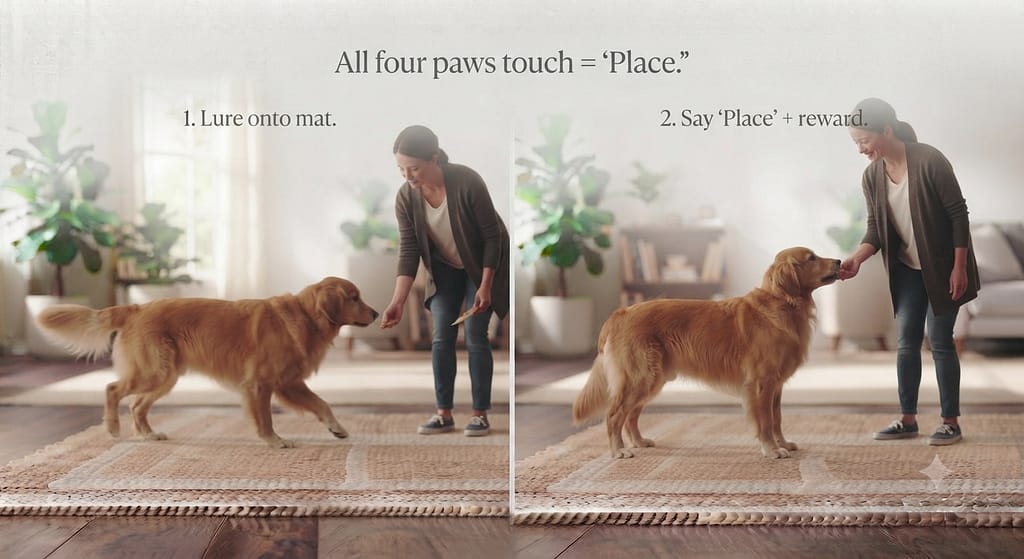
- Lure your dog onto the mat with a treat.
- The moment all four paws touch, say “Place!” and reward.
- Repeat 10 times.
A settled dog walks better on leash. Practice alongside our Leash Manners for Apartment Dogs guide.
Round 2: Adding Distance

- Have your dog on “Place.”
- Take one step back. Return and reward.
- Increase distance gradually.
Round 3: Adding Duration
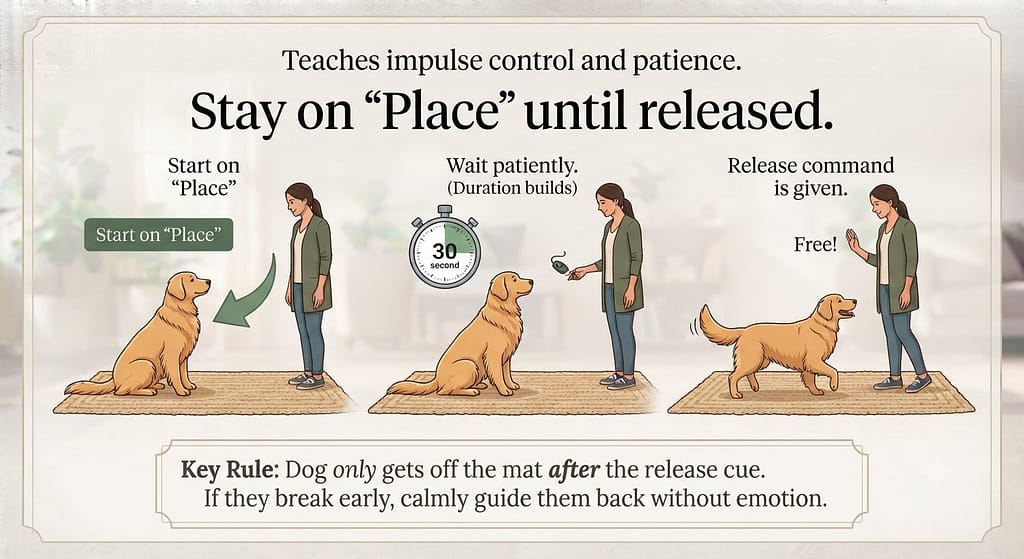
- Have your dog on “Place.”
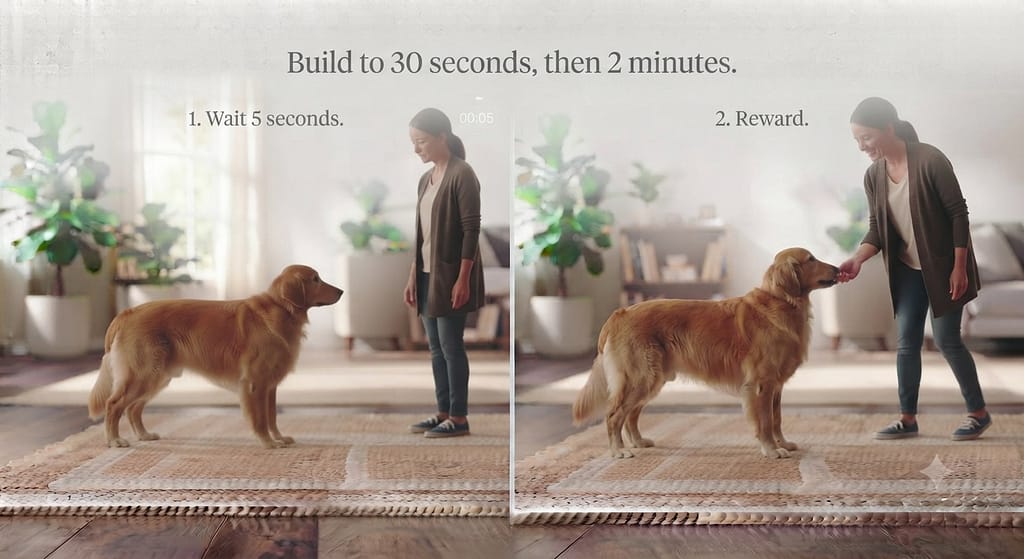
- Wait 5 seconds. Reward.
- Increase to 30 seconds, then 2 minutes.
Round 4: Adding Distractions
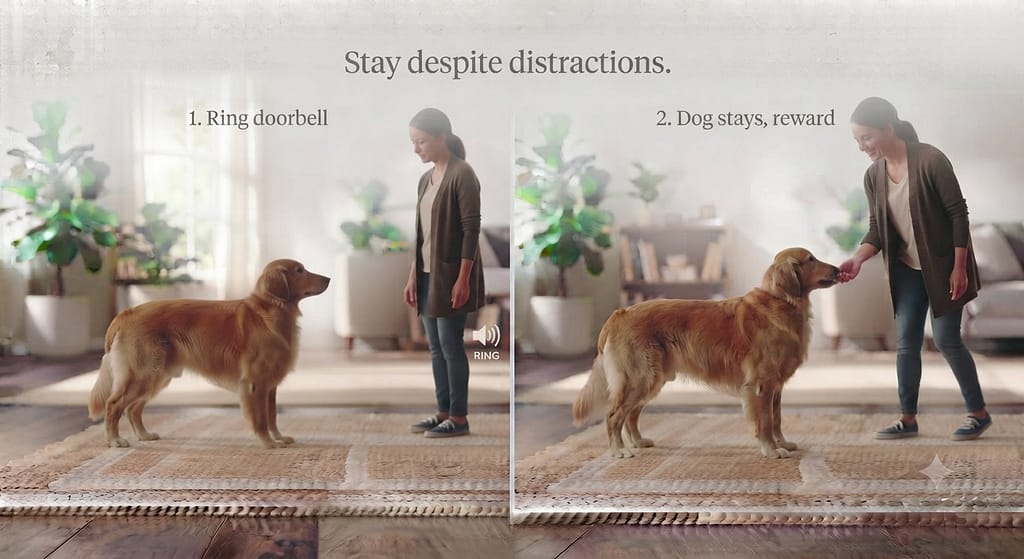
- Have your dog on “Place.”
- Ring the doorbell. Drop a toy. Walk past.
- Reward if they stay.
Using ‘Place’ for doorbell responses is a game-changer. Learn the full Doorway Etiquette for Apartment Dogs protocol.
The “Place” Rule: Your dog stays on “Place” until released. This teaches impulse control and patience.
The “Stay & Settle” Daily Schedule
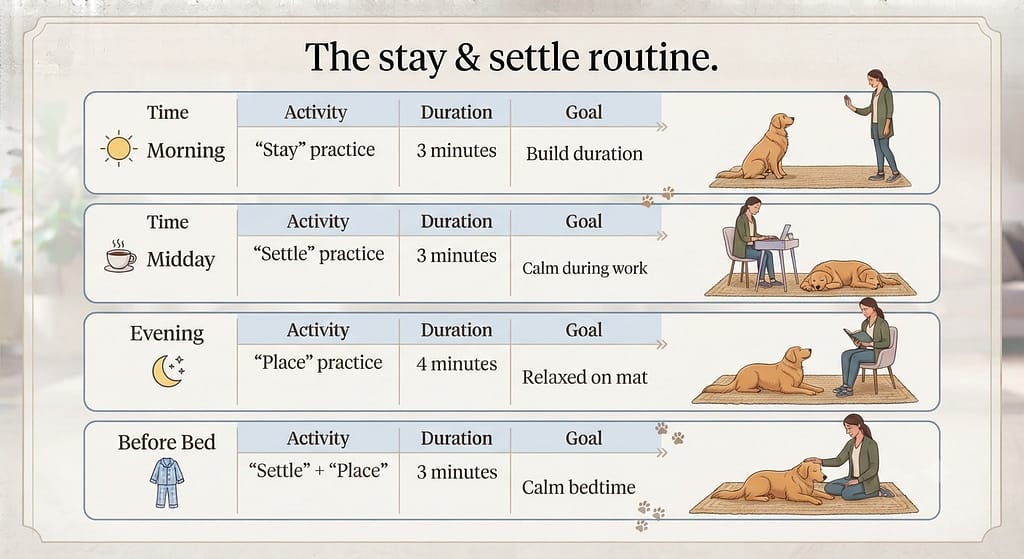
| Time | Activity | Duration | Goal |
|---|---|---|---|
| Morning | “Stay” practice | 3 minutes | Build duration |
| Midday | “Settle” practice | 3 minutes | Calm during work |
| Evening | “Place” practice | 4 minutes | Relaxed on mat |
| Before Bed | “Settle” + “Place” | 3 minutes | Calm bedtime |
Common Mistakes & Solutions
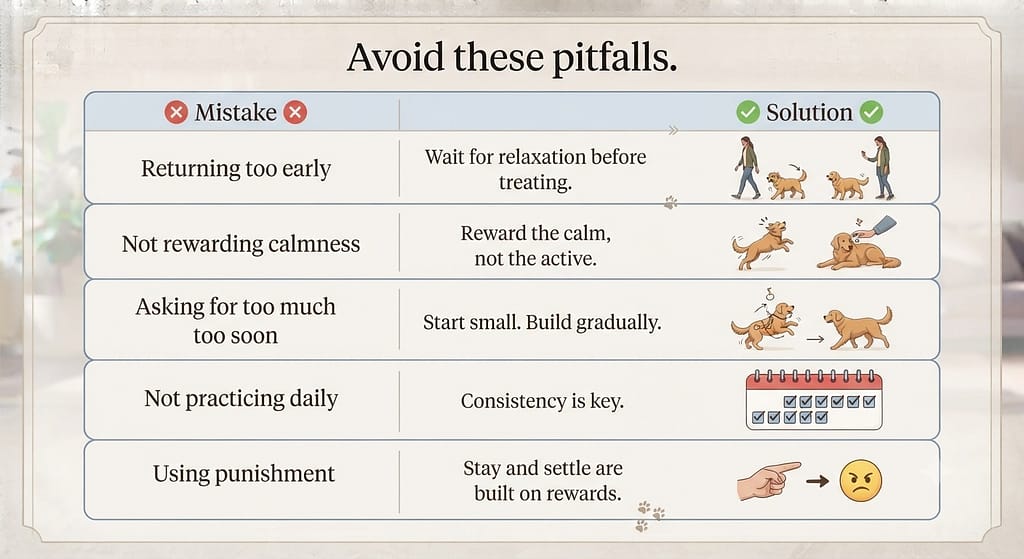
| Mistake | Solution |
|---|---|
| Returning too early | Wait for relaxation before treating. |
| Not rewarding calmness | Reward the calm, not the active. |
| Asking for too much too soon | Start small. Build gradually. |
| Not practicing daily | Consistency is key. |
| Using punishment | Stay and settle are built on rewards. |
Breed-Specific Stay & Settle Tips
French Bulldogs:
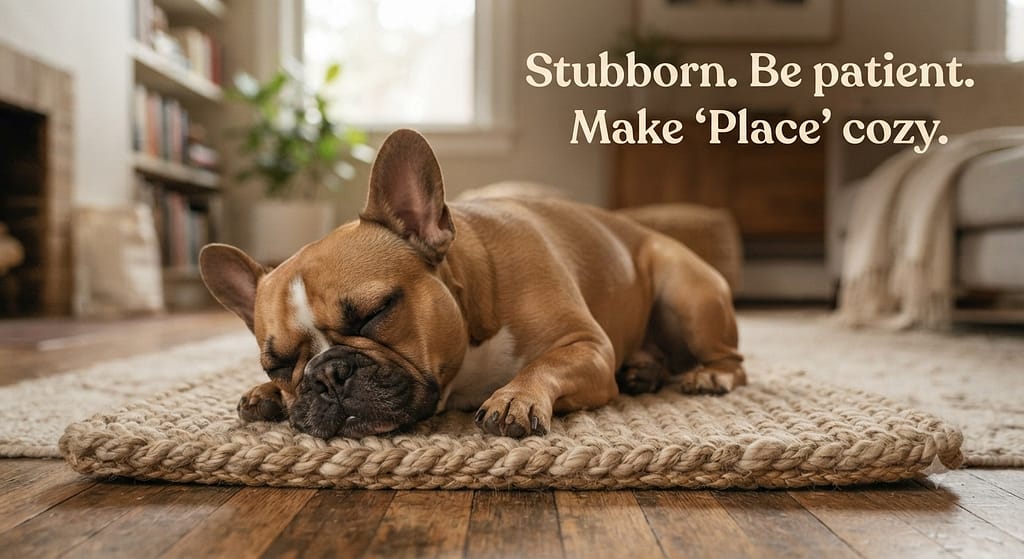
- They are stubborn. Be patient.
- They love to be comfortable. Make “Place” cozy.
- They are prone to overheating. Don’t practice in hot spaces.
Cavalier King Charles Spaniels:
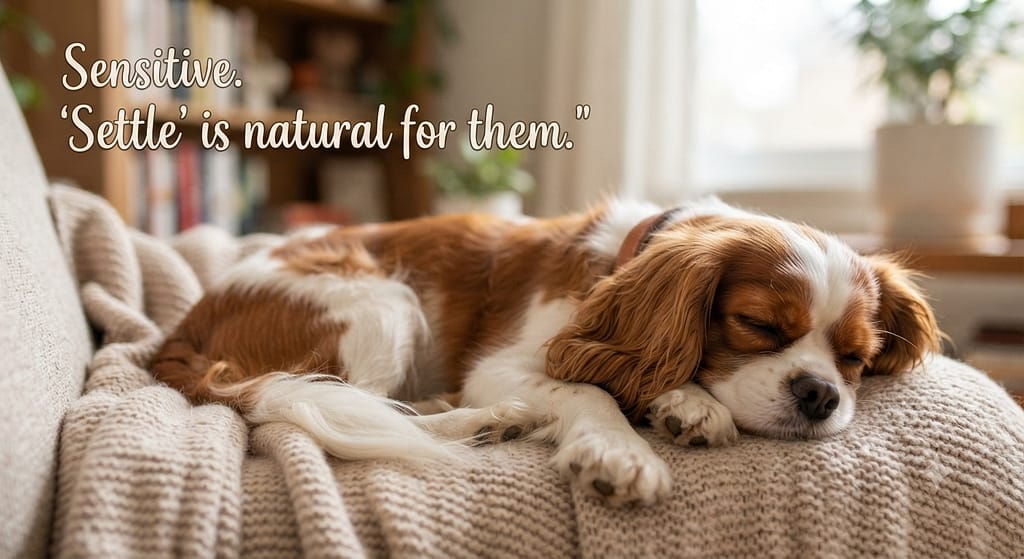
- They are sensitive. Use gentle encouragement.
- They love to cuddle. “Settle” is natural for them.
- They struggle with staying alone. Practice “Stay” while you’re still in the room.
Boston Terriers:
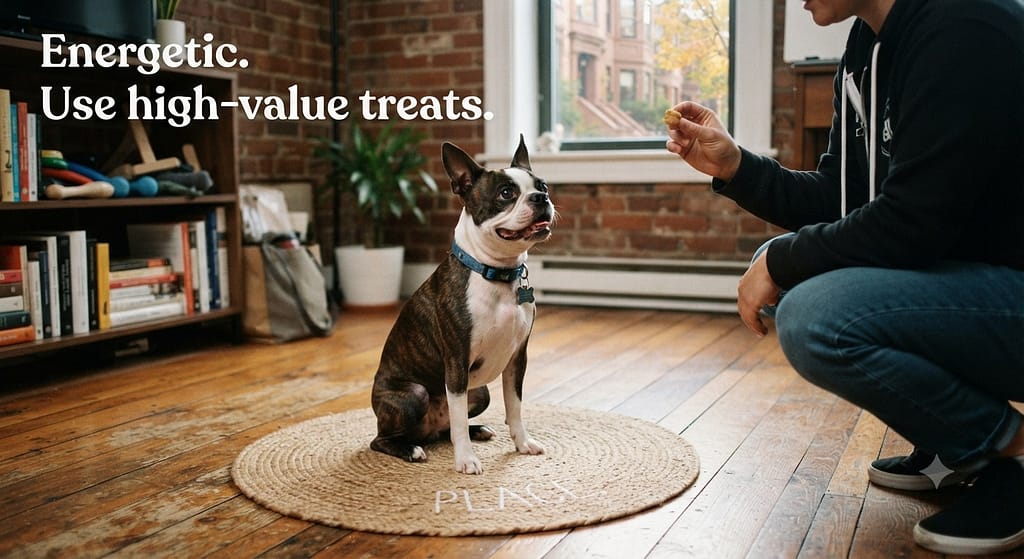
- They are energetic. They may struggle with “Settle.”
- Use high-value treats to keep them focused.
- They get bored easily. Keep “Place” sessions short.
A settled dog greets politely. Build on this with our Polite Greetings for Apartment Dogs guide.
Conclusion: The Calm Dog
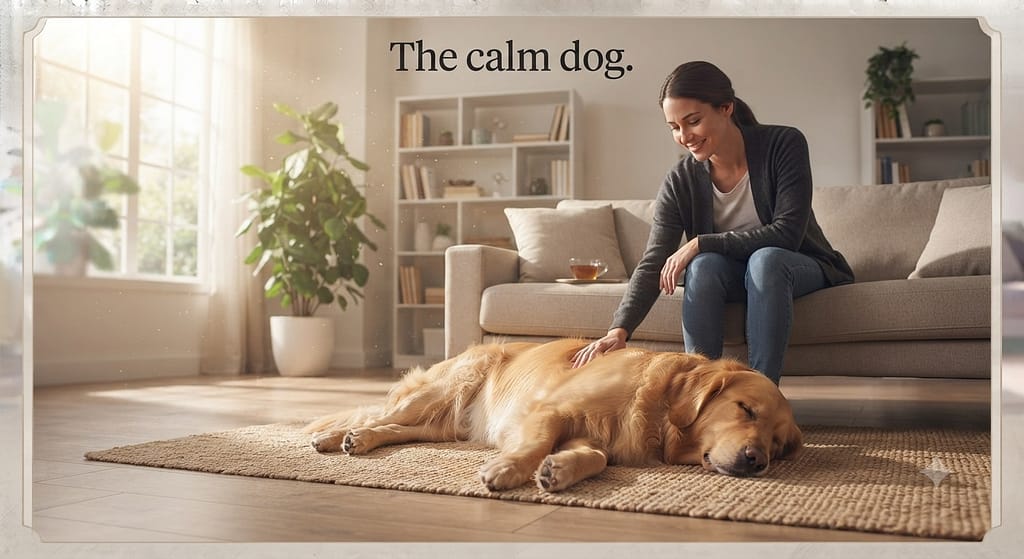
A dog that can stay and settle is a dog that can live anywhere. They can relax in tiny spaces, stay calm during work, and be a joy to live with.
Your Next Steps:
- Start with the 1-second Stay today.
- Practice Capturing Calmness with “Settle.”
- Introduce the “Place” command.
- Return to the Behavioral Training Bible for the full picture [Link].
Downloadable Resource:
📋 Stay & Settle Tracker – Track your dog’s progress with Stay, Settle, and Place. [Download]
🐾 — Apartment Dog Guide (ADG)
Living large in small spaces, one paw at a time. That’s the apartment dog life—see you in the next guide!.


