
The Embarrassing Encounter
You’re in the elevator with your neighbor.
Your dog is excited to see them.
Before you can react, your dog jumps up, muddy paws on your neighbor’s coat. The neighbor backs away, looking annoyed.

You apologize, but the damage is done.
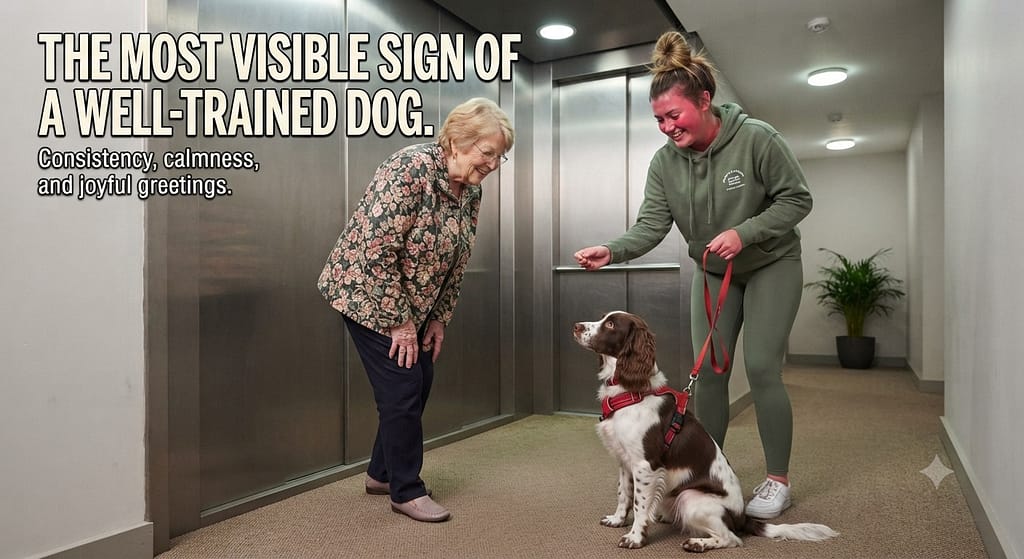
Polite greetings are the most visible sign of a well-trained dog. A dog that jumps, barks, or lunges makes enemies.
A dog that sits and waits makes friends.
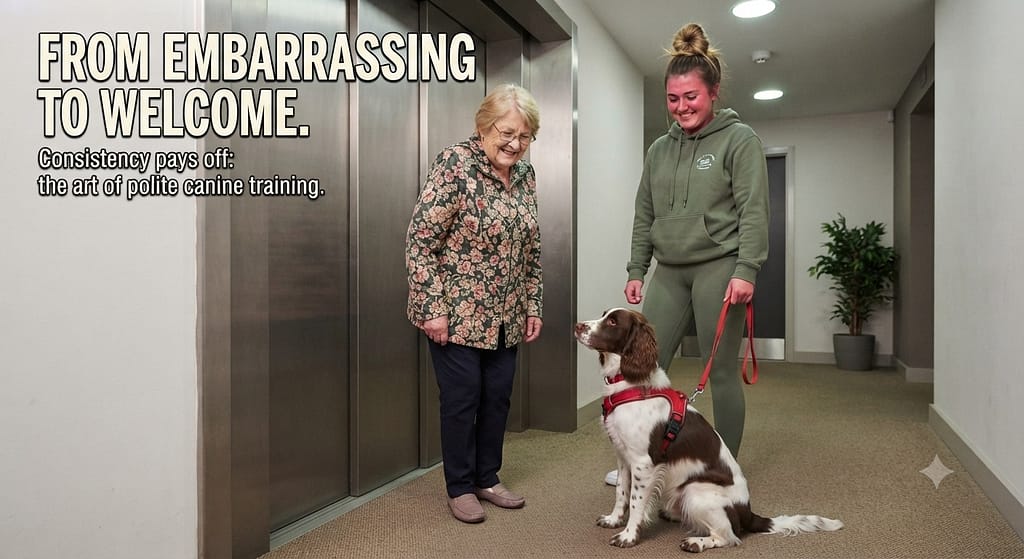
In an apartment building, your dog will meet people in the elevator, in the lobby, and on the street. Every greeting is a test of their manners. This guide will teach your dog to greet politely every time.
Why Polite Greetings Matter
In an apartment, greetings are frequent and often unavoidable.
The Urban Reality:
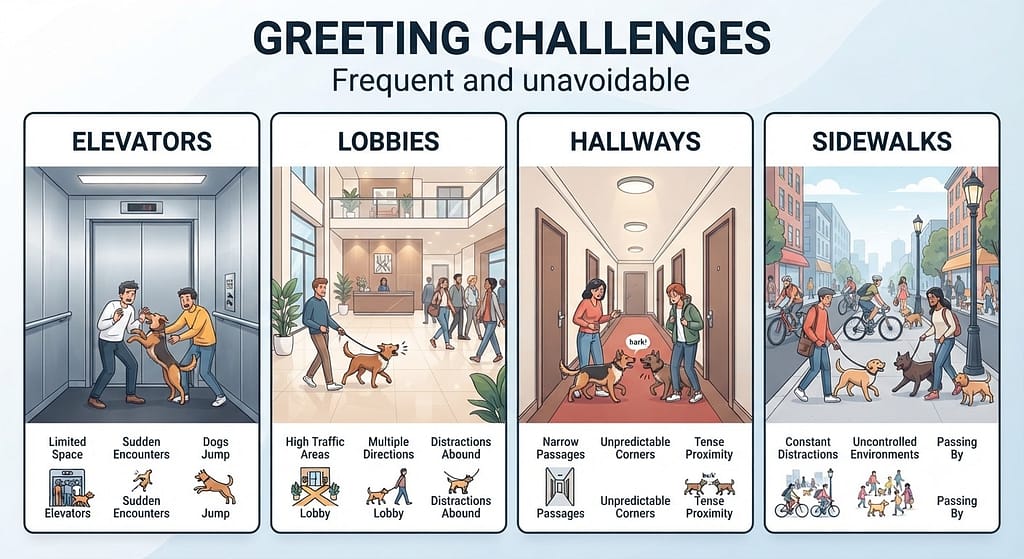
- Elevators: Tight quarters with strangers.
- Lobbies: High-traffic greeting zones.
- Hallways: Unexpected encounters.
- Sidewalks: Passing by other dogs and people.
The Goal:
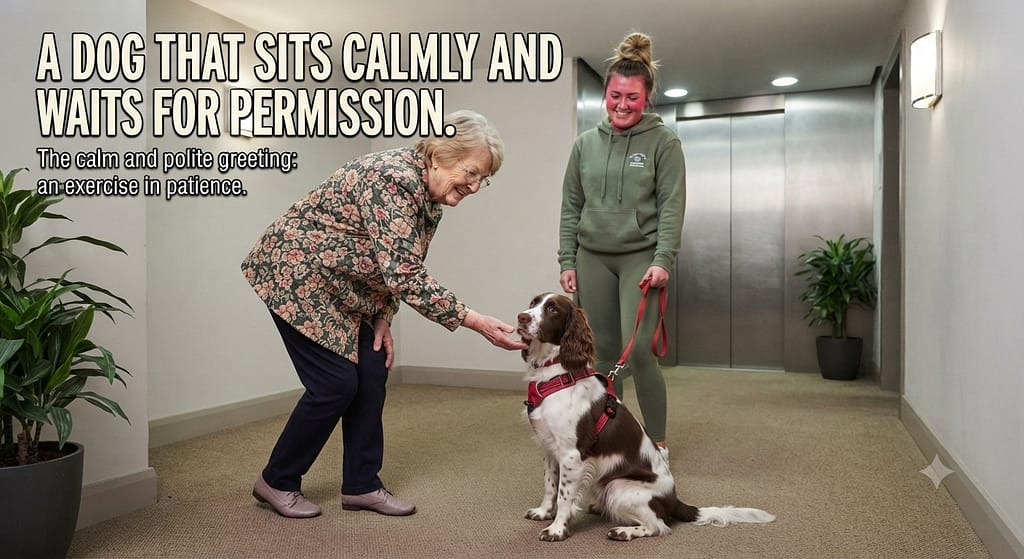
A dog that sits calmly when meeting someone and waits for permission before greeting.
Exercise 1: The “Sit for Greetings” Protocol
Why It Matters:
Jumping is the most common complaint from visitors. A dog that sits for greetings is welcome everywhere.
What You’ll Need:
- A friend to help
- High-value treats
- 10 minutes of your time
Step-by-Step:
Round 1: The Approach
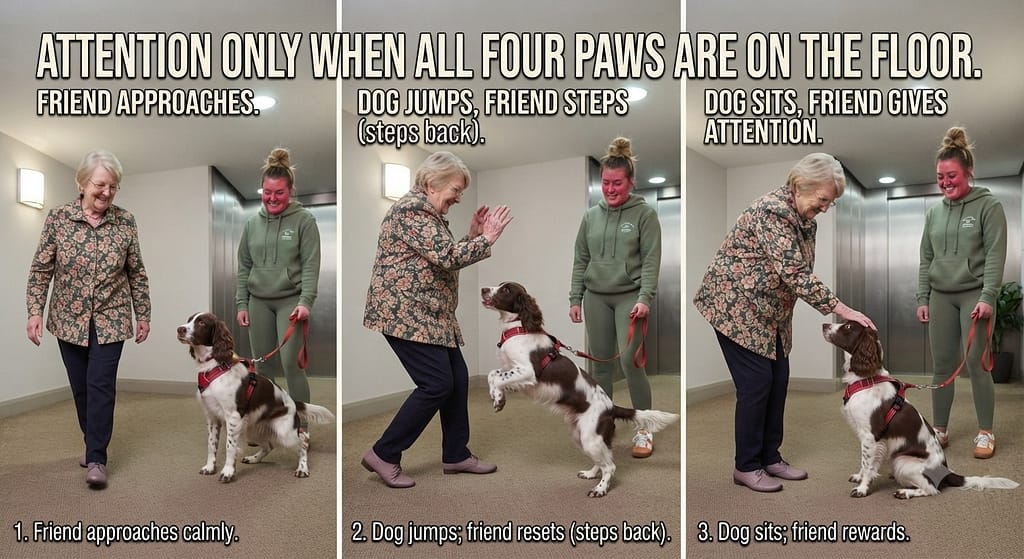
- Have a friend approach your dog.
- The moment your dog starts to jump, the friend steps back.
- The moment your dog sits (even briefly), the friend steps forward and gives attention.
- The Golden Rule: Attention only happens when all four paws are on the floor.
Polite greetings require impulse control. Build this foundation with our Impulse Control for Apartment Dogs guide
Round 2: The Greeting
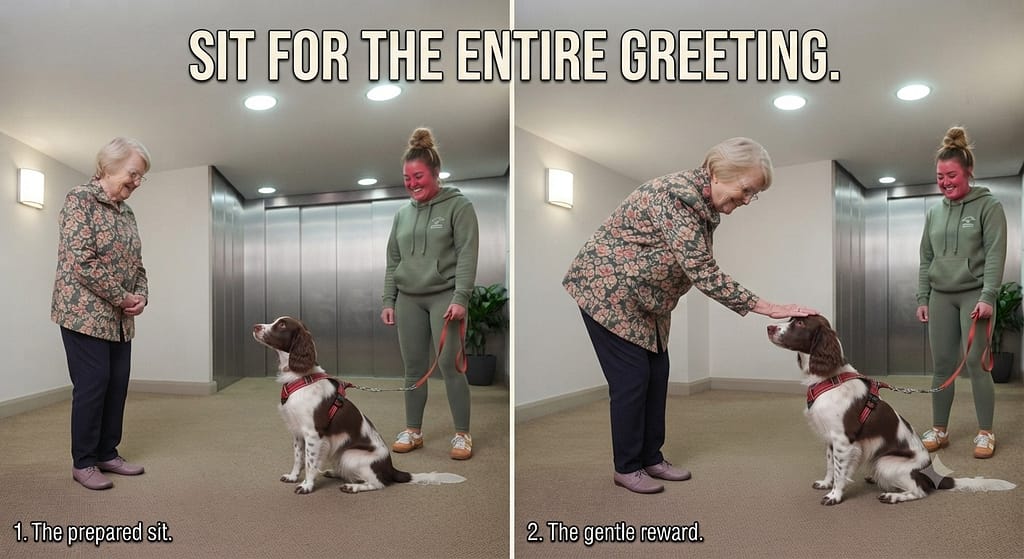
- Your friend approaches.
- Your dog sits. The friend pets them gently.
- If your dog gets up, the friend stops and steps back.
- Repeat until your dog stays sitting for the entire greeting.
Round 3: The Distraction
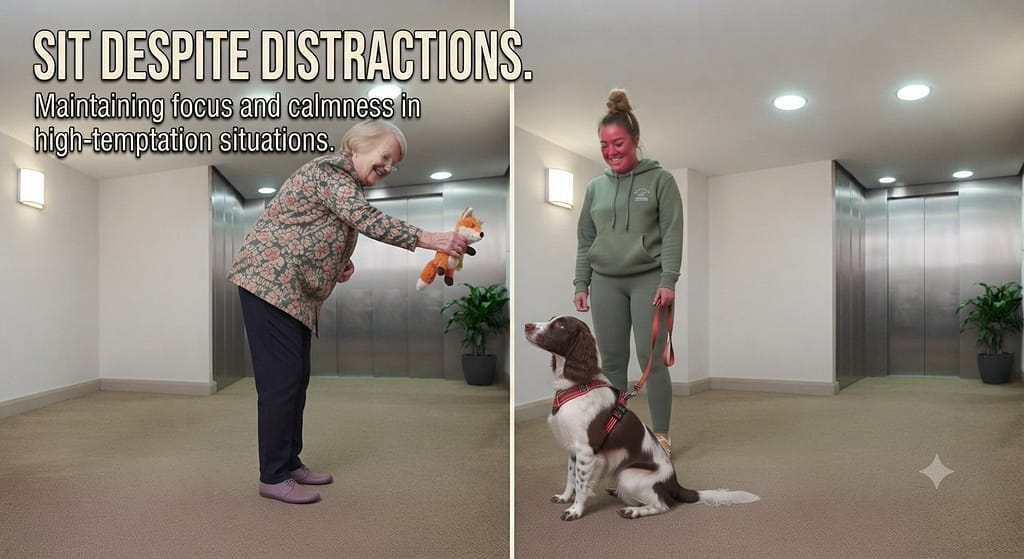
- Have your friend approach with a distraction (a toy, a bag).
- Your dog must still sit for the greeting.
- Reward heavily for focus.
Progression:
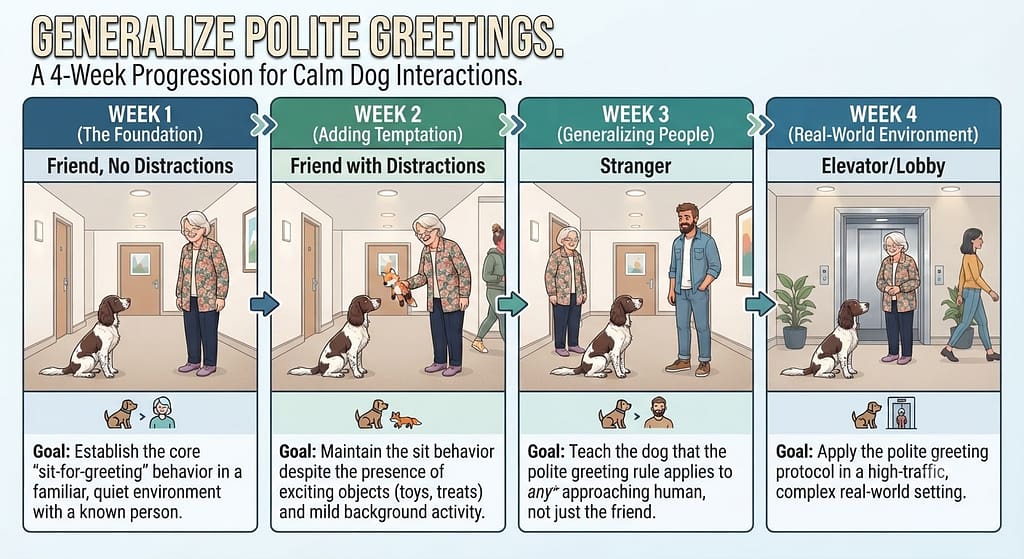
| Week | Activity | Goal |
|---|---|---|
| Week 1 | Friend approaches, no distractions | Sit for greeting |
| Week 2 | Friend approaches with distractions | Sit despite distractions |
| Week 3 | Stranger approaches | Sit for an unknown person |
| Week 4 | Elevator/lobby greeting | Sit in public spaces |
Exercise 2: The “Neutral Greeting” (For Reactive Dogs)
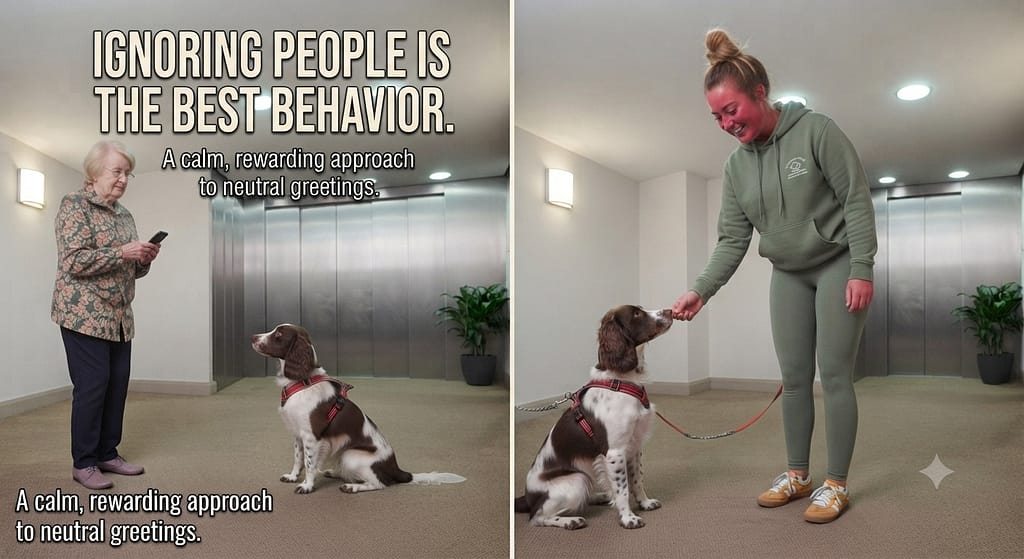
Why It Matters:
Some dogs get overexcited by greetings. They need to learn that ignoring people is the best behavior.
What You’ll Need:
- A friend to help
- High-value treats
- 10 minutes of your time
Many greetings happen at the front door. Master that space first with our Doorway Etiquette for Apartment Dogs guide.
Step-by-Step:
Round 1: The Ignoring
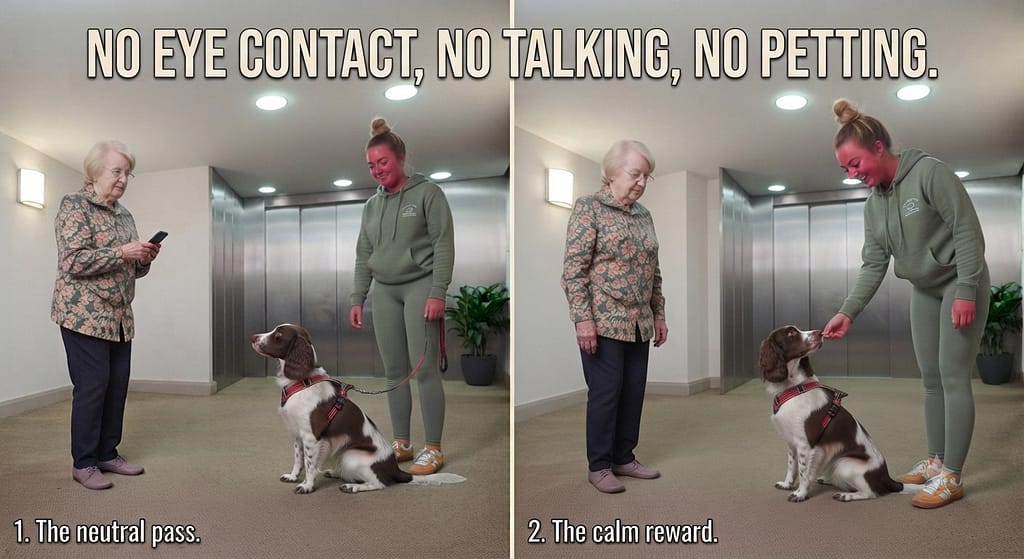
- Have a friend ignore your dog completely—no eye contact, no talking, no petting.
- Reward your dog for being neutral (sitting or lying down).
- The friend can then offer a treat without making eye contact.
Round 2: The Gradual Attention
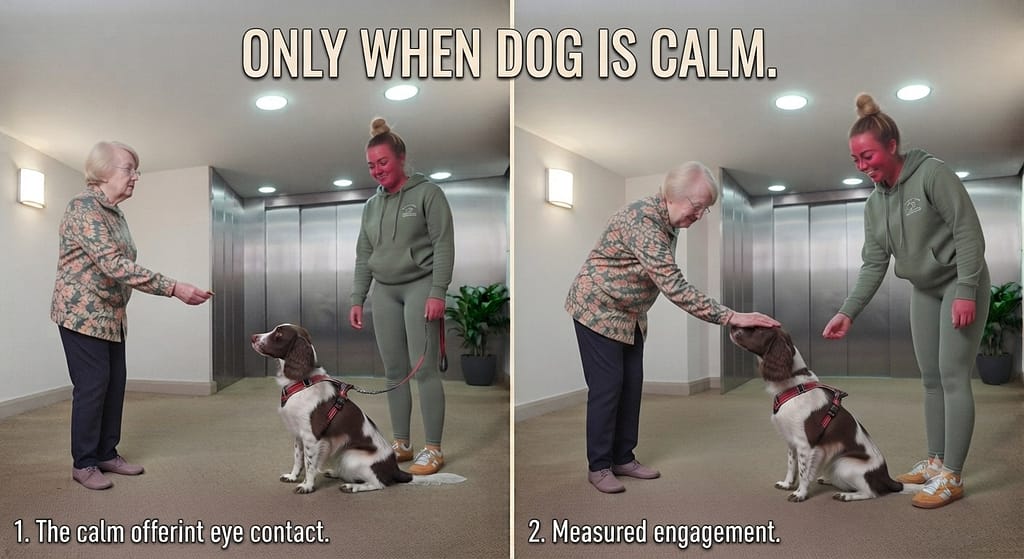
- Your friend slowly offers attention, but only when your dog is calm.
- The moment your dog gets excited, the friend pulls back.
- Reward calmness.
Round 3: The Full Greeting
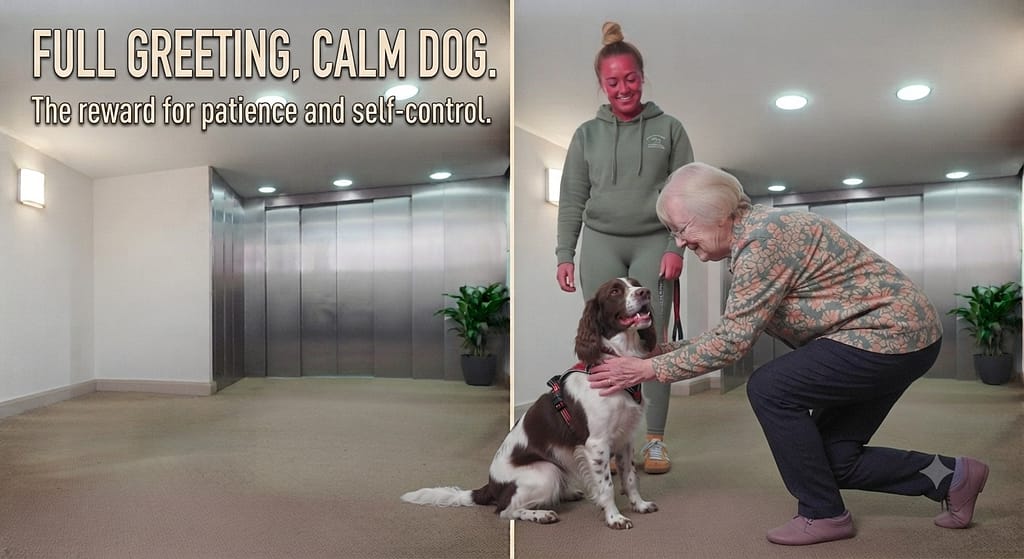
- Your friend approaches and greets your dog.
- Your dog remains calm.
- Reward.
A calm greeting starts with a settled dog. Explore our Stay & Settle for Apartment Dogs guide.
Exercise 3: The “Dog-to-Dog Greeting” Protocol
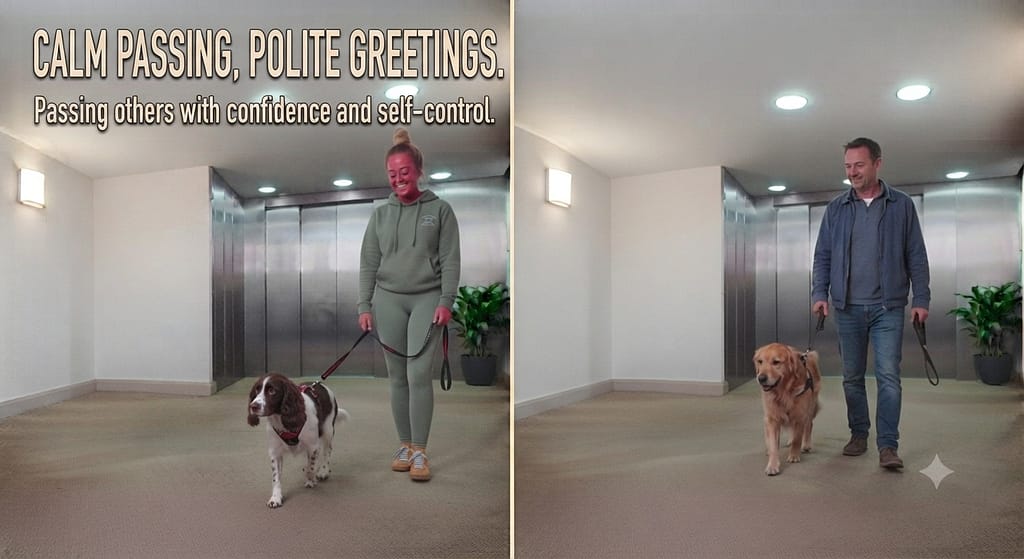
Why It Matters:
City sidewalks are full of other dogs. Your dog needs to learn to pass calmly and greet politely.
Step-by-Step:
Round 1: The 5-Foot Rule
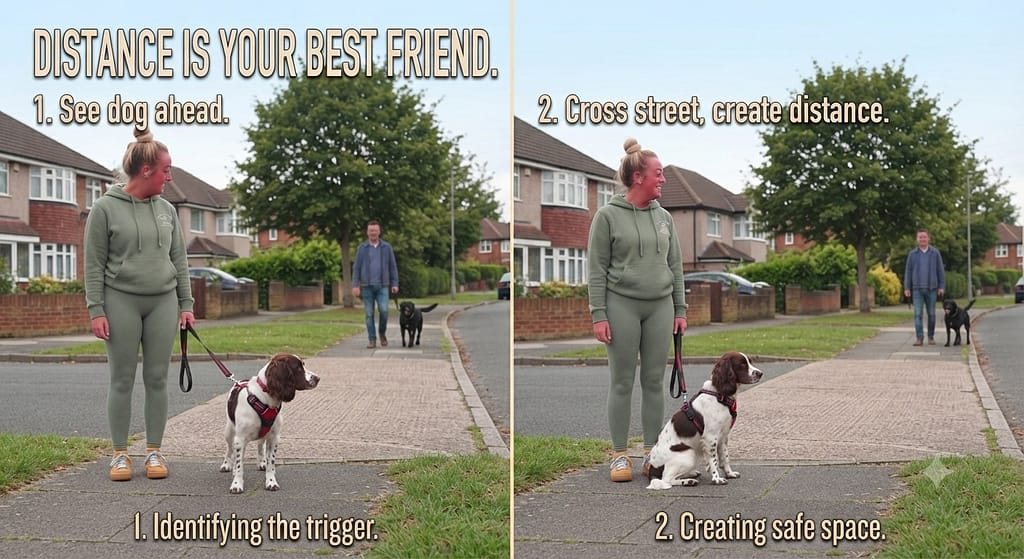
- When you see another dog approaching, cross the street or create distance.
- Ask your dog to look at you. Reward.
- Practice calm passing.
Round 2: The Sniff Greeting
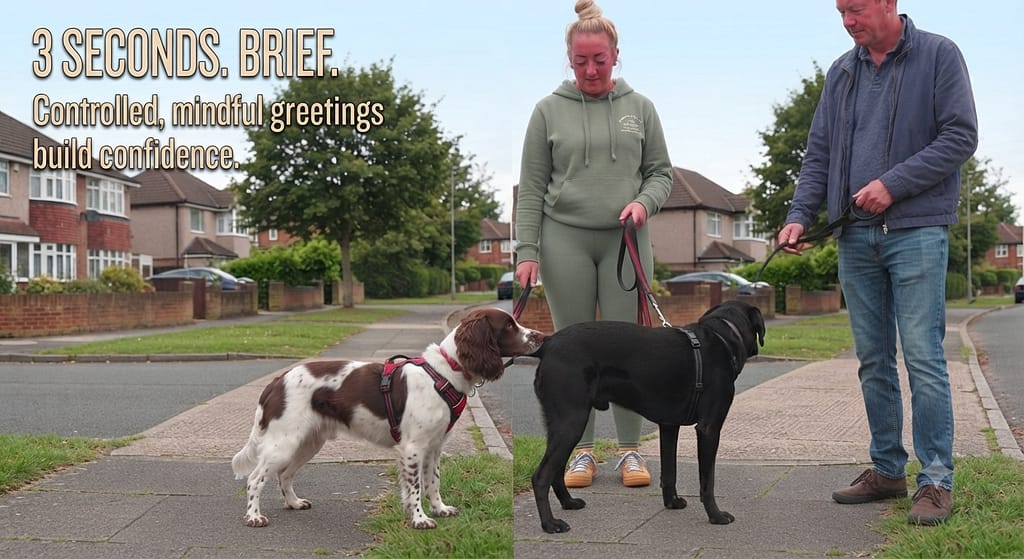
- If you choose to allow a greeting, keep it brief (3 seconds).
- Let the dogs sniff briefly.
- If either dog stiffens, move on immediately.
Dog greetings happen on walks. Practice alongside our Leash Manners for Apartment Dogs guide.
Round 3: The Walk-By
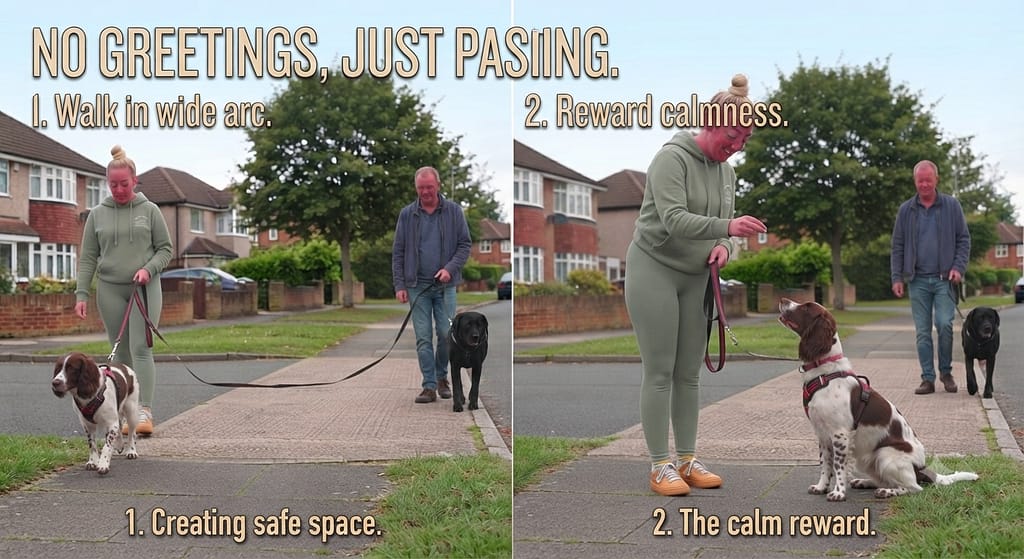
- Walk in a wide arc around the other dog.
- No greetings. Just passing.
- Reward your dog for calmness.
The “Polite Greetings” Daily Schedule
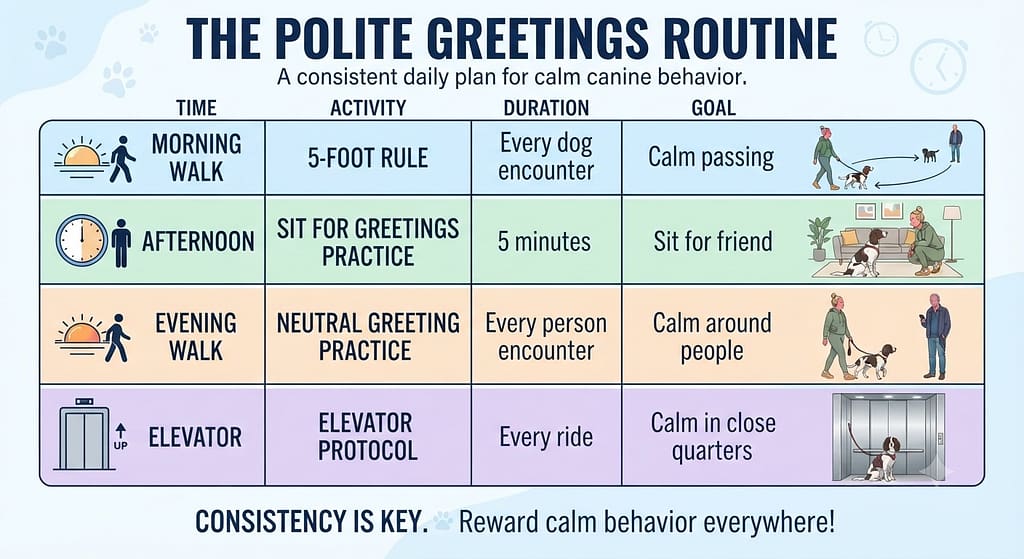
| Time | Activity | Duration | Goal |
|---|---|---|---|
| Morning Walk | 5-foot rule | Every dog encounter | Calm passing |
| Afternoon | Sit for greetings practice | 5 minutes | Sit for friend |
| Evening Walk | Neutral greeting practice | Every person encounter | Calm around people |
| Elevator | Elevator protocol | Every ride | Calm in close quarters |
Common Mistakes & Solutions
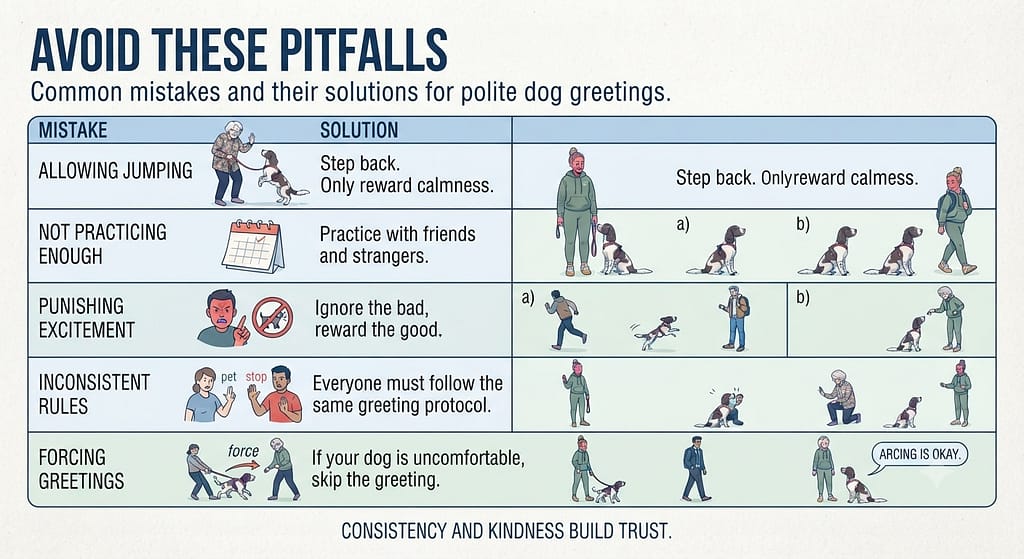
| Mistake | Solution |
|---|---|
| Allowing jumping | Step back. Only reward calmness. |
| Not practicing enough | Practice with friends and strangers. |
| Punishing the excitement | Ignore the bad, reward the good. |
| Inconsistent rules | Everyone must follow the same greeting protocol. |
| Forcing greetings | If your dog is uncomfortable, skip the greeting. |
Breed-Specific Polite Greetings Tips
French Bulldogs:
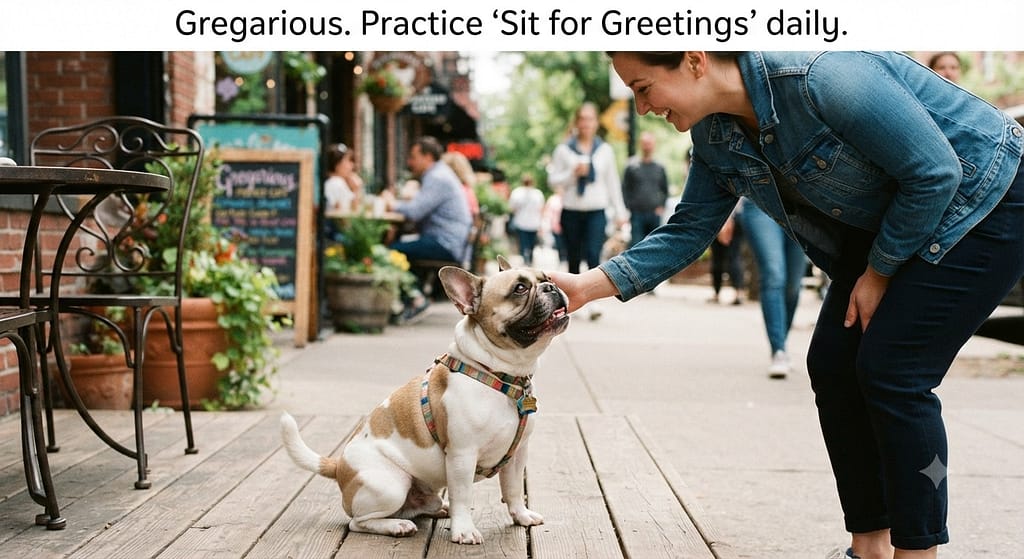
- They are gregarious. They want to meet everyone.
- Practice “Sit for Greetings” daily.
- They are strong. A jumping Frenchie can knock someone over.
Cavalier King Charles Spaniels:
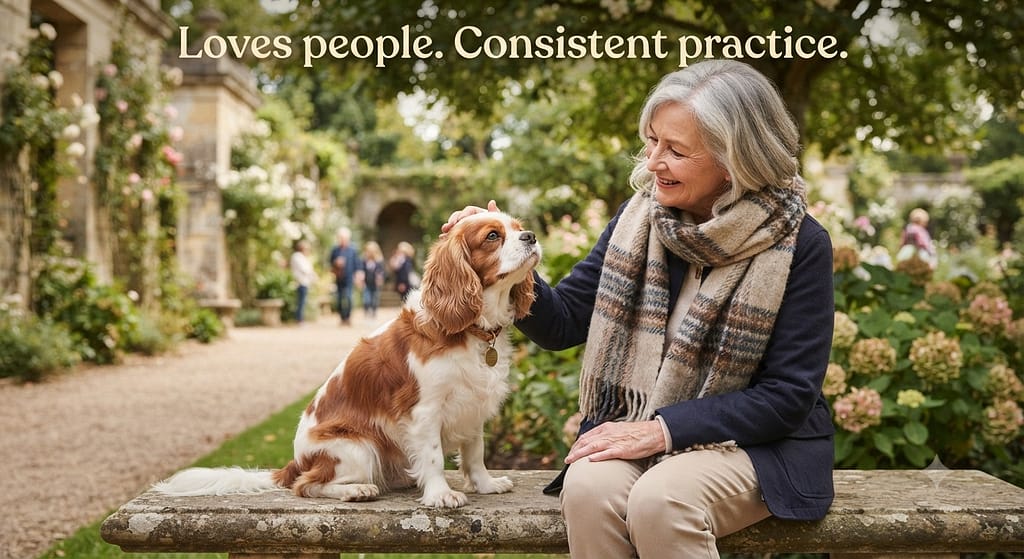
- They love people. They will jump for attention.
- Be consistent. They are eager to please.
- They are sensitive. Use gentle corrections.
Boston Terriers:
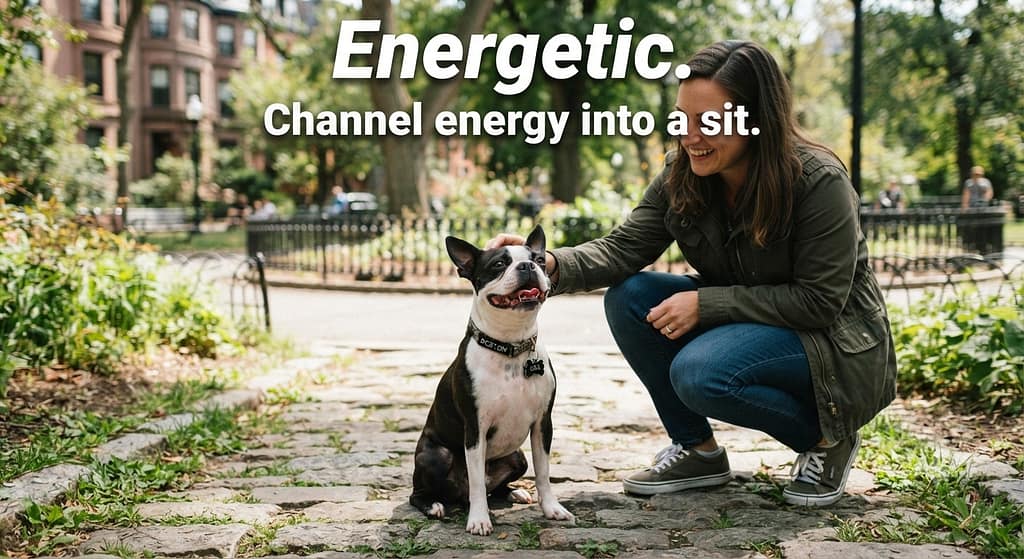
- They are energetic. They will jump with excitement.
- Channel their energy into a sit.
- They love attention. Make sitting the only way to get it.
Conclusion: The Polite Dog
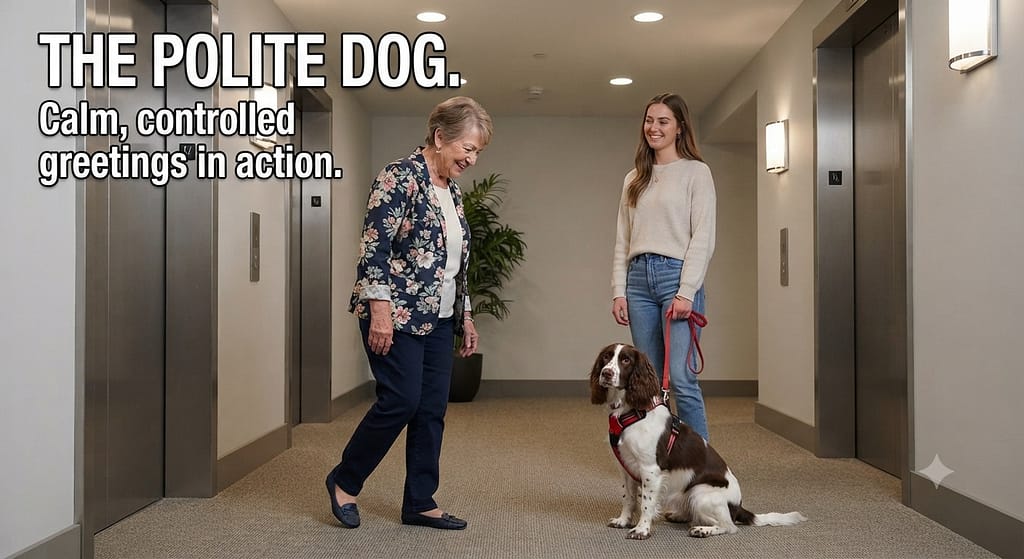
A dog that greets politely is a dog that is welcome everywhere. They can meet people in elevators, lobbies, and on the street without causing chaos.
Your Next Steps:
- Start with “Sit for Greetings” today.
- Practice the “Neutral Greeting” with friends.
- Use the “5-Foot Rule” for every dog encounter.
- Return to the Behavioral Training Bible for the full picture [Link].
Downloadable Resource:
📋 Polite Greetings Tracker – Track your dog’s progress with human greetings, neutral greetings, and dog-to-dog greetings. [Download]
🐾 — Apartment Dog Guide (ADG)
Living large in small spaces, one paw at a time. That’s the apartment dog life—see you in the next guide!.


