
Picture this:
You just returned from a 45-minute power walk.
Your legs are tired, but your dog is staring at you with those “what’s next?” eyes.
The leash is still by the door, and they’re ready for round two.

Sound familiar?
Here’s the truth bomb most dog owners miss:
Physical exercise alone will never truly exhaust your dog.
But what if we told you there’s a different kind of walk?
One that leaves even the most energetic pups blissfully tired in just 25 minutes?
Enter the Sniffari Walk – your new secret weapon for mental stimulation.
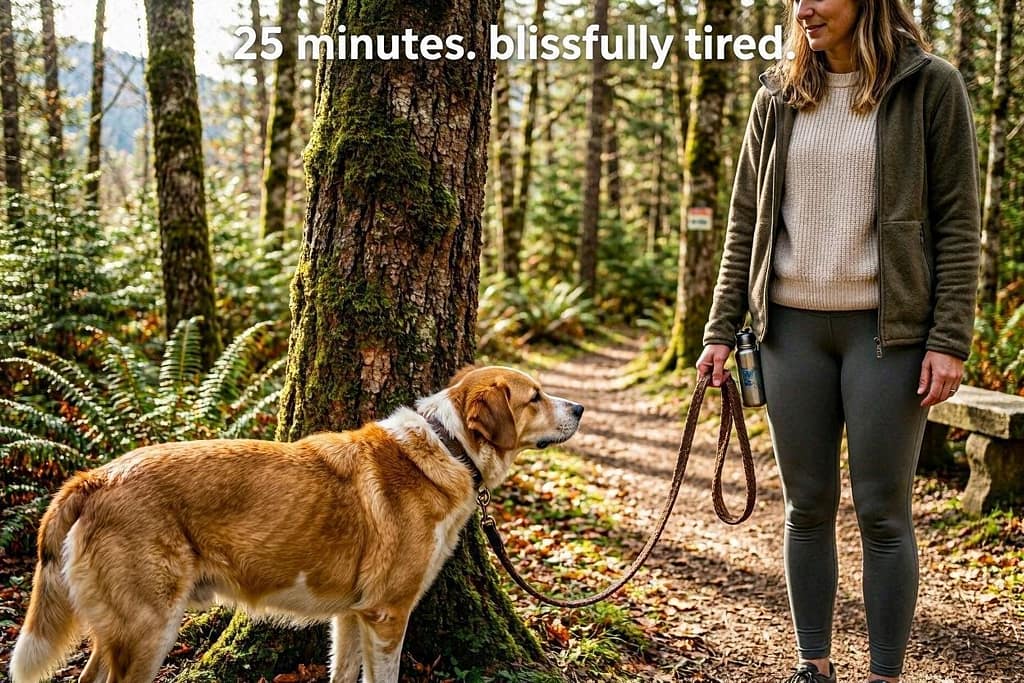
This isn’t just another walk around the block.
This is a strategic, scent-focused adventure that taps into your dog’s instincts.
By the end of this guide, you’ll have a complete blueprint to transform your daily walks from a physical chore to a mental marathon.
For the complete barking solution framework, see our urban silence protocol.
Ready to unleash your dog’s mind?
Let’s dive in.
Why Your Dog’s Brain Needs More Than Just Steps
The Science of Sniffing: More Than Just a Nose
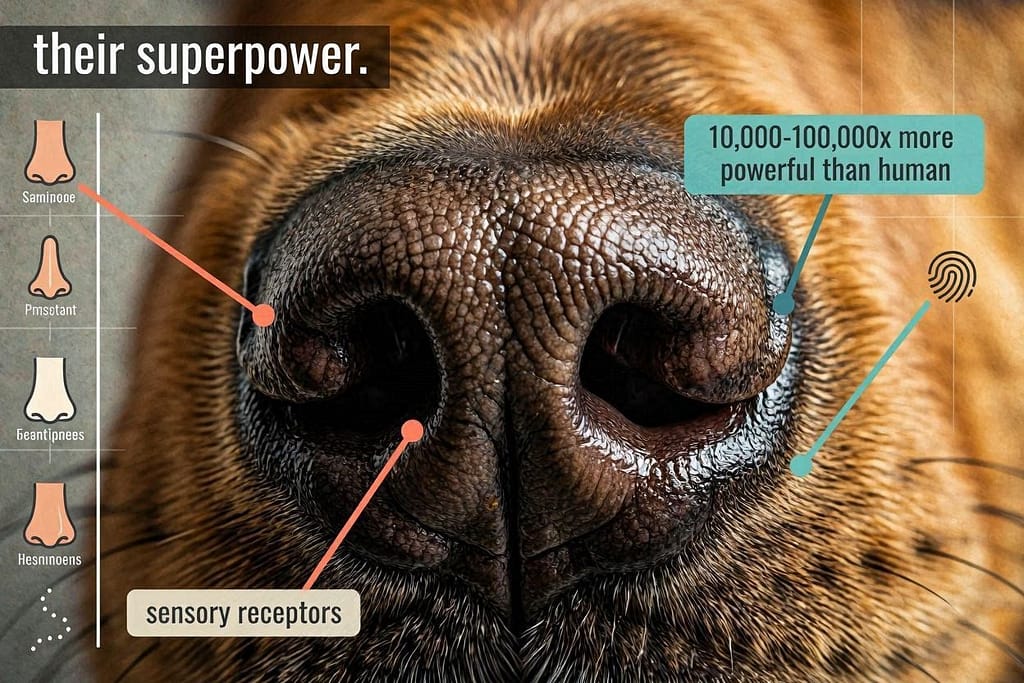
Did you know your dog’s sense of smell is between 10,000 and 100,000 times more powerful than yours?
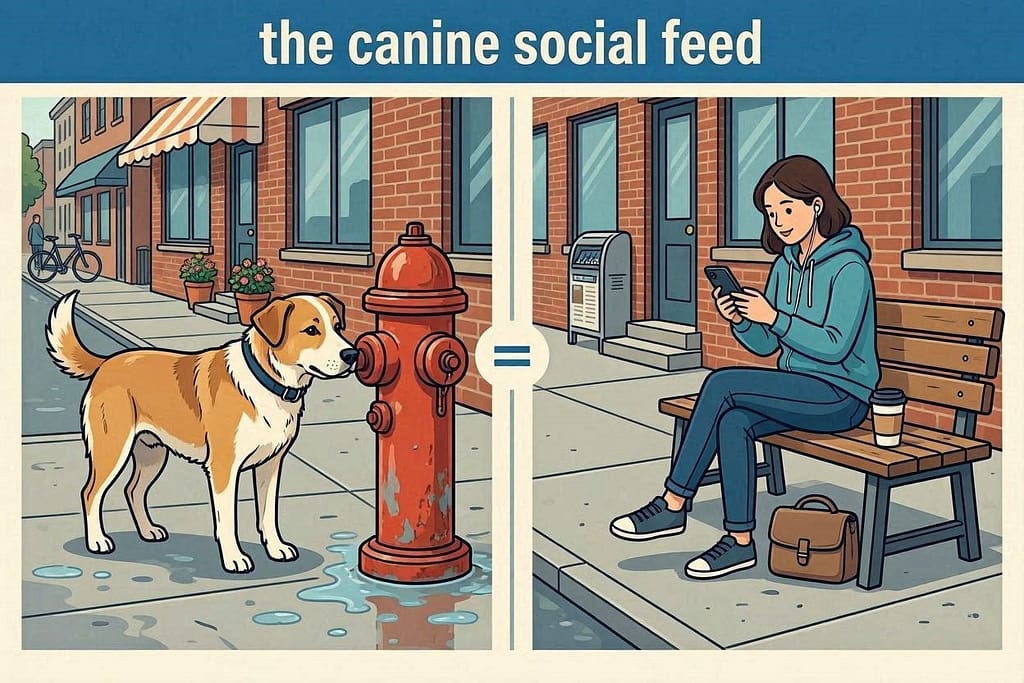
When your dog sniffs that fire hydrant, they’re not just smelling “dog.”
They’re reading a complex novel of information: who was there, what they ate, their emotional state, and even when they passed by.
Every sniff is like scrolling through a social media feed for dogs.
But here’s what most owners don’t realize: Sniffing is cognitive work.
It requires concentration, processing, and decision-making.
It’s the equivalent of you doing a challenging crossword puzzle.
The Urban Dog’s Dilemma
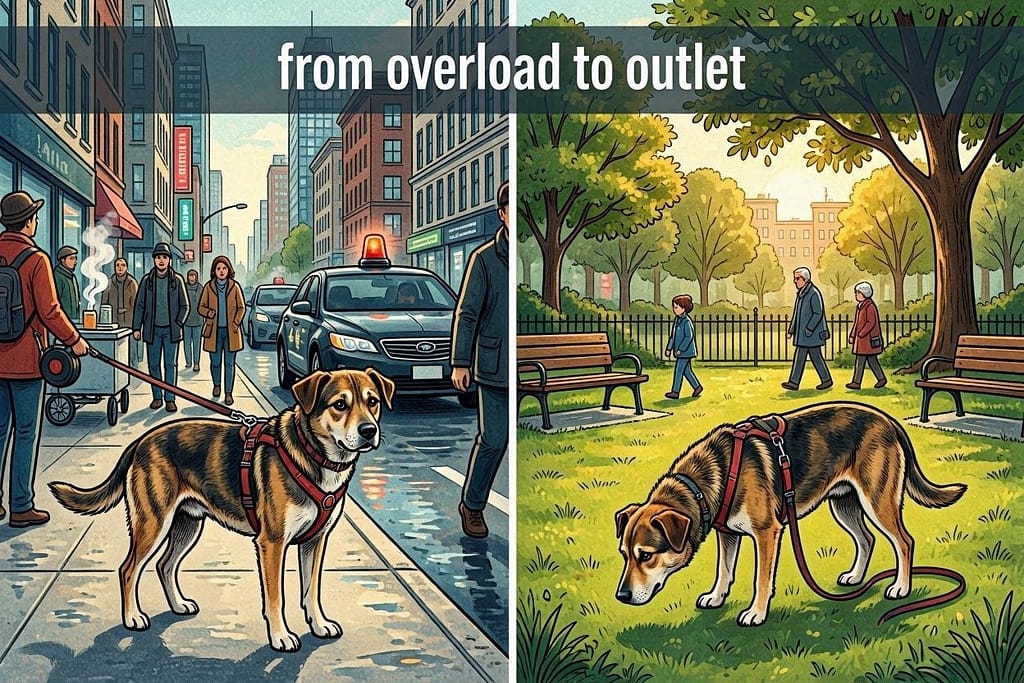
City dogs face a unique challenge: constant sensory overload without appropriate outlets.
Sirens, crowds, and traffic create stress, while limited green space restricts natural behaviors.
For managing barking during walks, see our guide to stopping dog barking on city streets.
The Sniffari Walk solves this by:
- Reducing anxiety through natural, calming behaviors
- Providing appropriate mental stimulation
- Building confidence through environmental exploration
- Strengthening your bond through shared discovery
But how exactly does sniffing create calm?
Let’s explain…
What Exactly IS a “Sniffari” Walk?
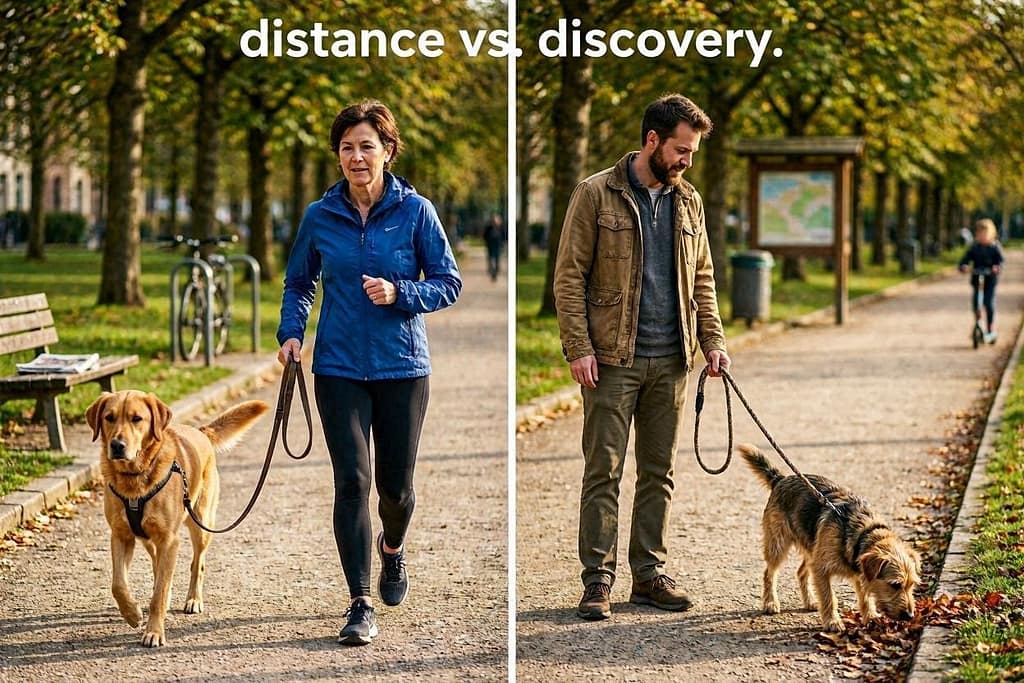
Let’s clear up the confusion right now.
A Sniffari Walk isn’t about distance. It’s not about pace.
It’s not even about exercise in the traditional sense.
A Sniffari is a scent-focused exploration where your dog leads the way.
You become the facilitator, not the director.
Your job isn’t to get from Point A to Point B, but to let your dog’s nose dictate the journey.
Think of it this way:
- Traditional Walk: “We need to cover two miles in 30 minutes.”
- Sniffari Walk: “We need to process as much scent information as possible in 25 minutes.”
The shift is subtle but revolutionary. And your dog will feel the difference immediately.
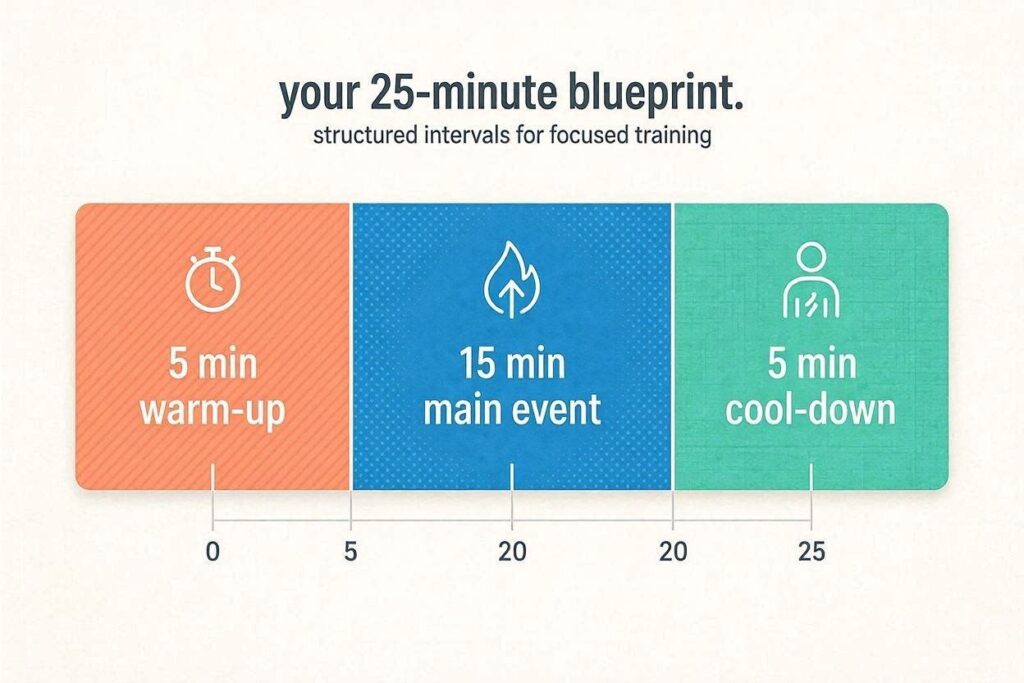
Your Complete 25-Minute Sniffari Walk Blueprint
Phase 1: The Preparation (5 Minutes Before)
Gear Up for Success
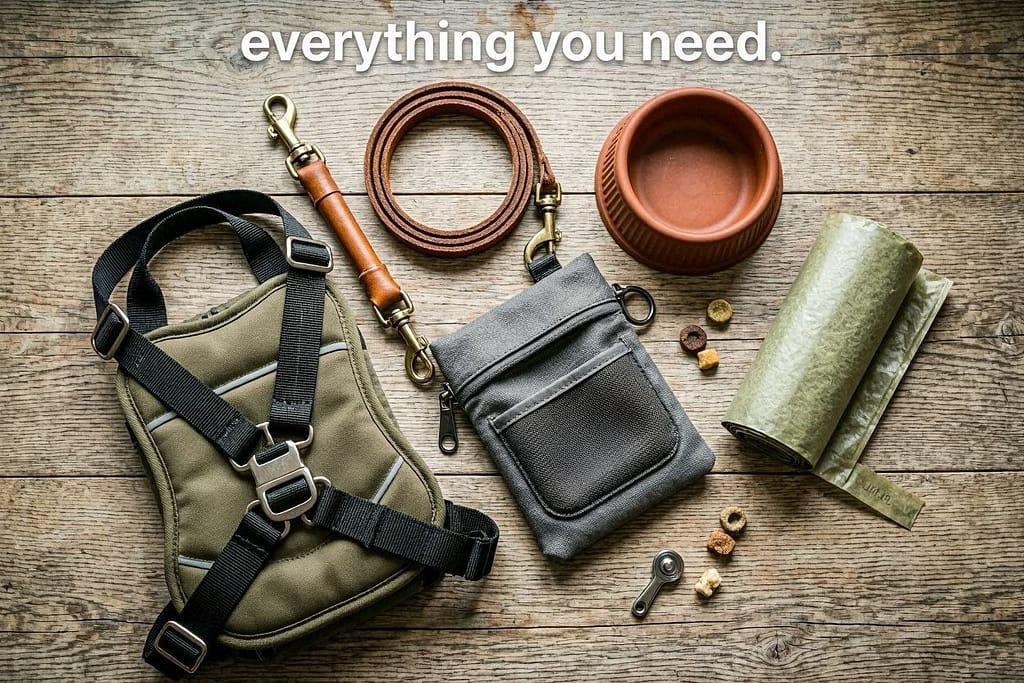
- Swap the collar for a harness: This reduces pressure on the trachea when your dog pulls toward interesting smells.
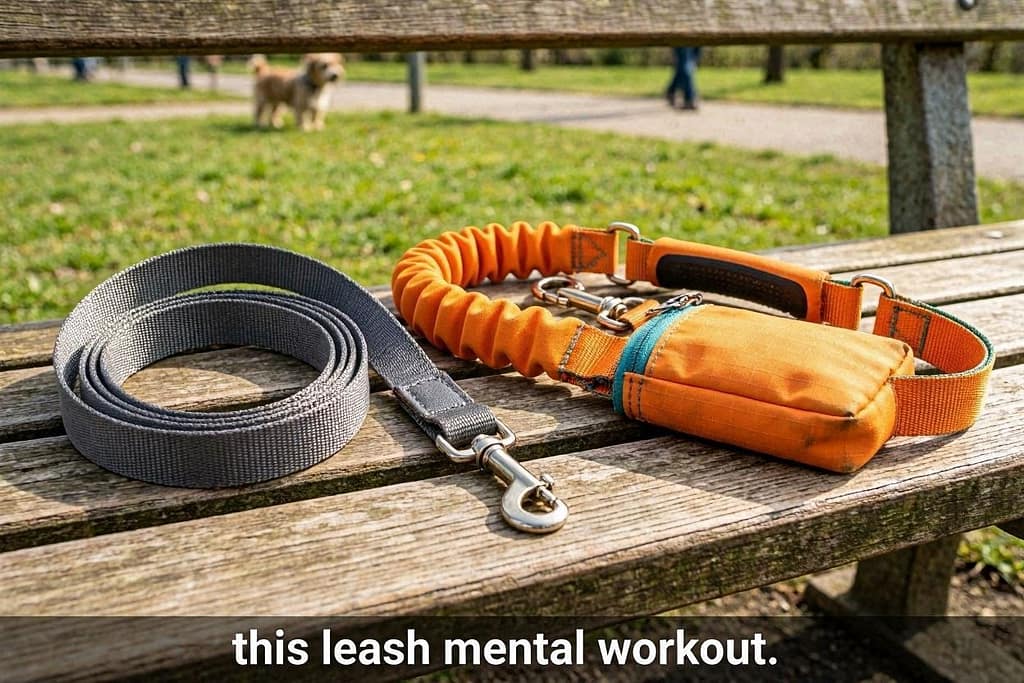
- Choose a 6-foot leash: Retractable leashes create constant tension. A fixed-length leash gives clear communication.
- Pack your “Sniffari Kit”:
- High-value treats (tiny pieces of chicken or cheese)
- A collapsible water bowl
- Poop bags (obviously)
- Your patience (the most important tool)
For complete loose leash walking exercises, see our apartment loose leash walking guide
Mindset Reset: Yours First
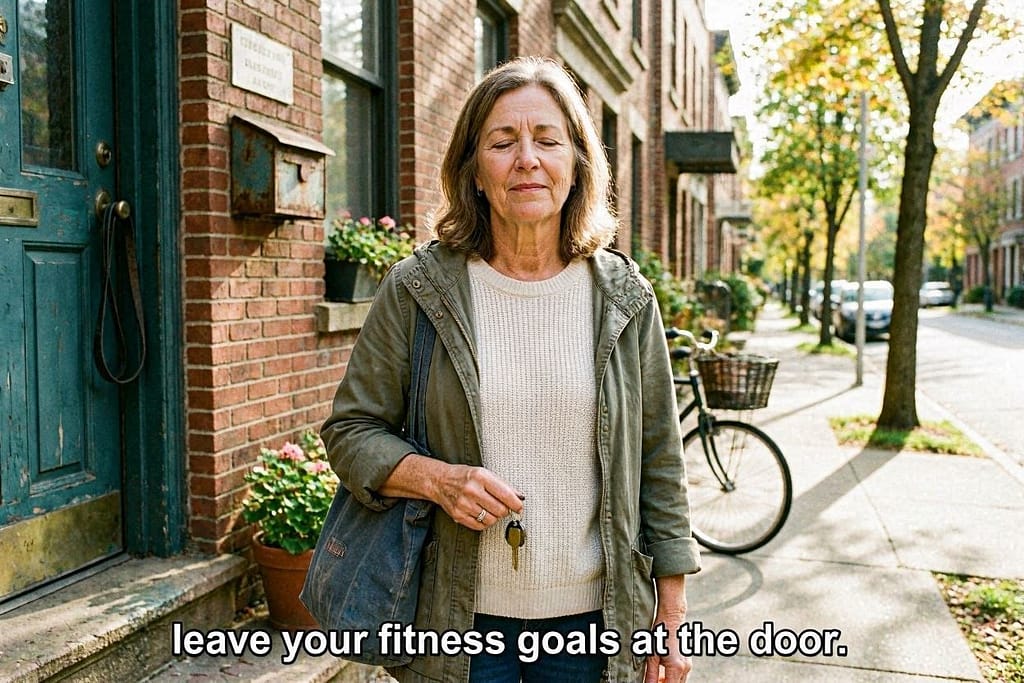
Take three deep breaths before you clip the leash.
Remember: This walk is for your dog, not for you.
Leave your fitness goals at the door. Your phone stays in your pocket (except for emergencies).
Pro Tip: Use a different leash or harness specifically for Sniffari walks. This creates a mental cue for your dog that “this is different.”
Phase 2: The Warm-Up (First 5 Minutes of Walk)
The Transition Zone
Start with a brief “business walk” to your chosen Sniffari location.
This could be a park, a quiet street with trees, or even a different block than usual.
During this warm-up:
- Walk at a normal pace
- Allow minimal sniffing (just enough to “prime the pump”)
- Use this time to observe your surroundings for safety
Found your perfect spot?
Excellent. Now the real magic begins…
Phase 3: The Main Event (15 Minutes of Pure Sniffing)
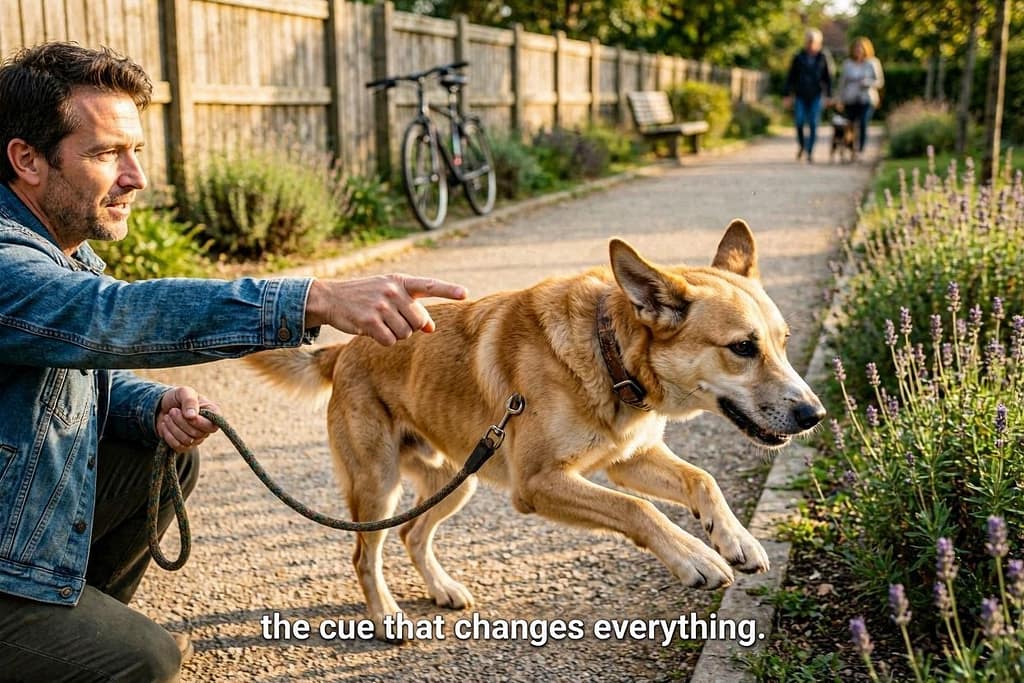
The “Go Sniff!” Cue
When you arrive at your chosen area, give a clear cue: “Go sniff!” or “Find it!” Use an excited, happy tone.
This signals that the rules have changed.
Become a Tree
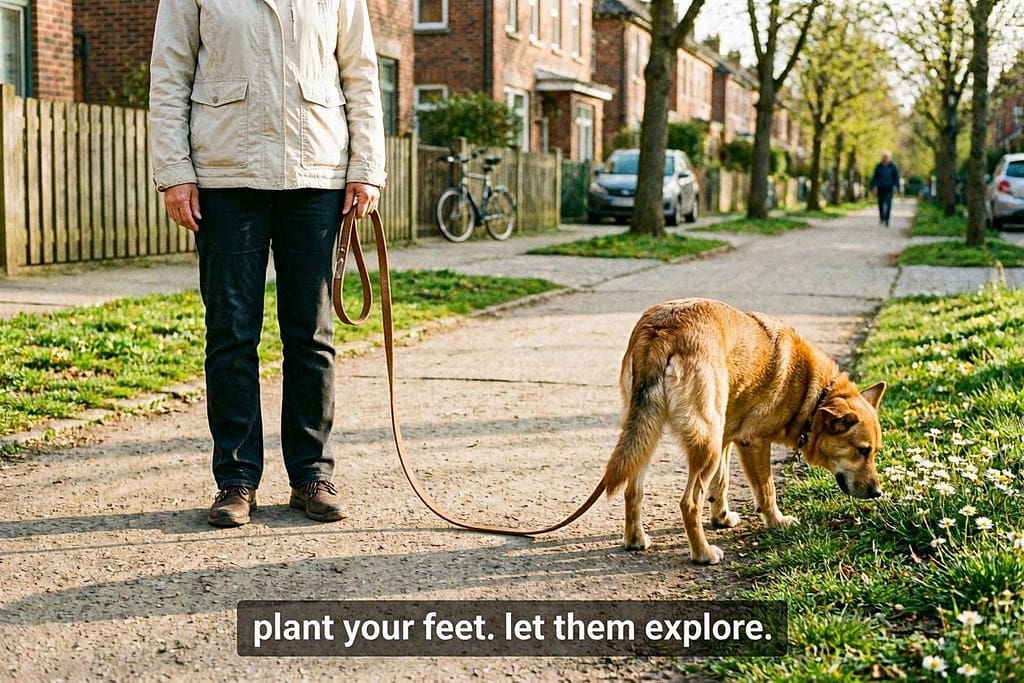
This is the hardest part for most owners: Stand still.
Plant your feet and let your dog explore within a 6-foot radius of the leash.
No pulling. No urging to “keep moving.” Just breathe and observe.
The Art of Leash Management
- Hold the leash loosely with plenty of slack
- If your dog hits the end, take a step toward them
- Never use the leash to pull them away from a scent (unless it’s dangerous)
- Practice the “follow” technique: When they move, you move
Reading Your Dog’s Body Language
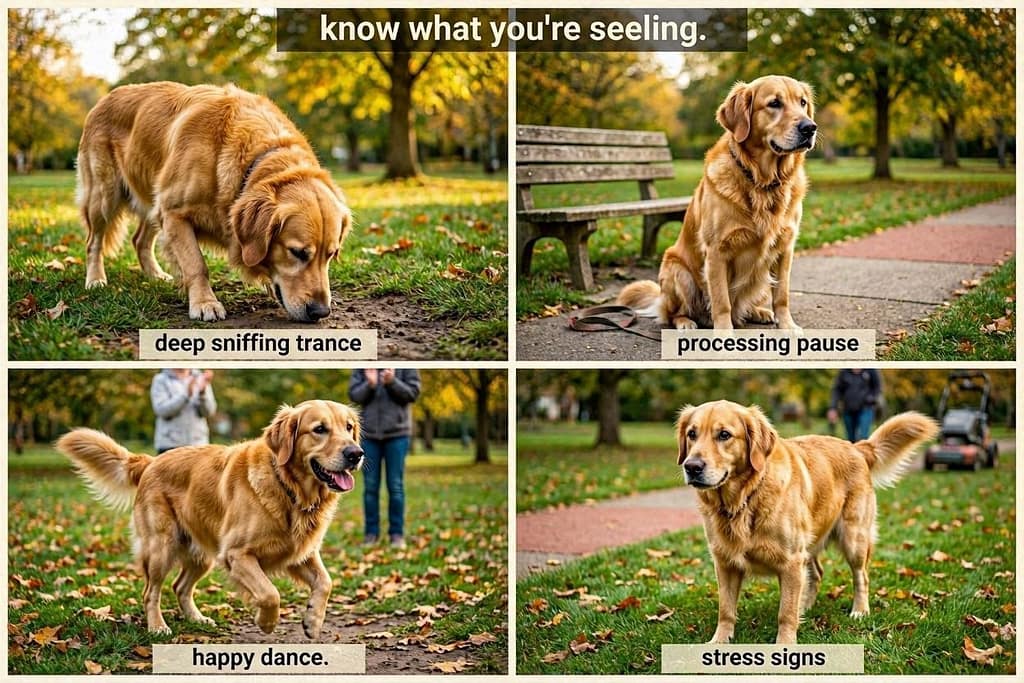
Learn to recognize these signs of deep engagement:
✅ The Sniffing Trance: Head down, tail relaxed or gently wagging, completely focused
✅ The Processing Pause: Sniffing stops, head lifts, ears alert – they’re analyzing the data
✅ The Happy Dance: Quick spins, playful pounces, bright eyes
🚫 Signs of Stress: Whale eye (showing whites), tucked tail, tense body, trying to move away quickly
Strategic Location Choices
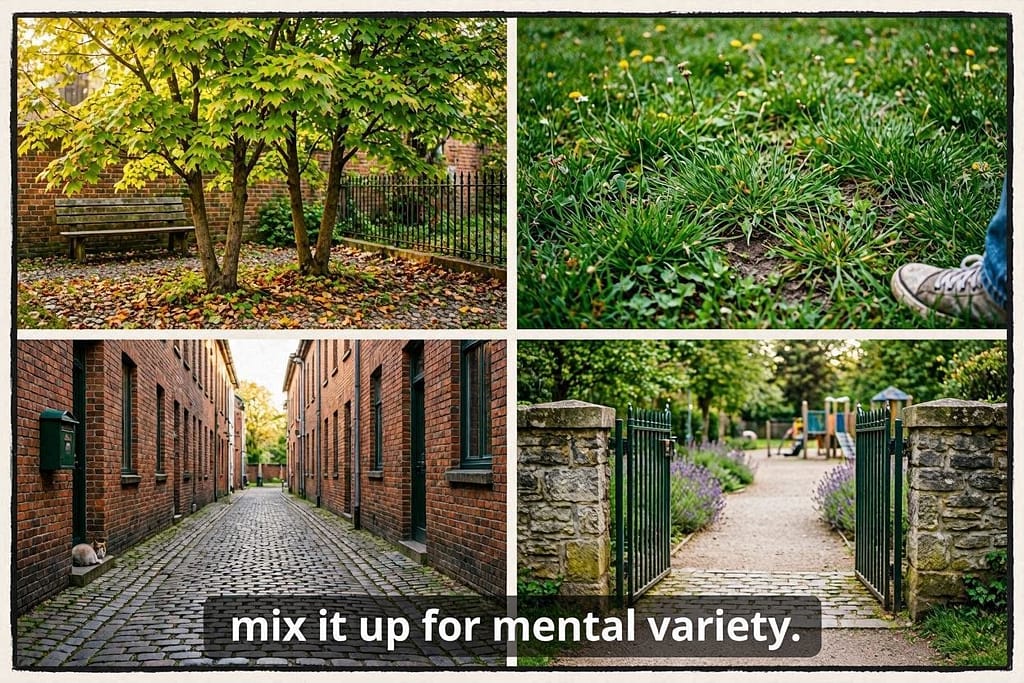
Mix up these Sniffari spots for maximum mental variety:
- The Tree Cluster: Different dogs = layered scent stories
- The Grassy Patch: Small animal trails = nature’s mystery novel
- The Quiet Alley: Less urine marking = older scent puzzles to solve
- The Park Perimeter: Changing wind directions = new scent combinations
Phase 4: The Cool-Down (Final 5 Minutes)
The “Last Sniffs” Warning
At the 20-minute mark, give a gentle warning: “Last sniffs!” This helps your dog mentally prepare for the transition.
Gradual Pace Increase
Begin walking at a slightly brisker pace back toward home. Allow some sniffing, but gently encourage forward movement with cheerful encouragement: “What a good sniffer! Let’s head home.”
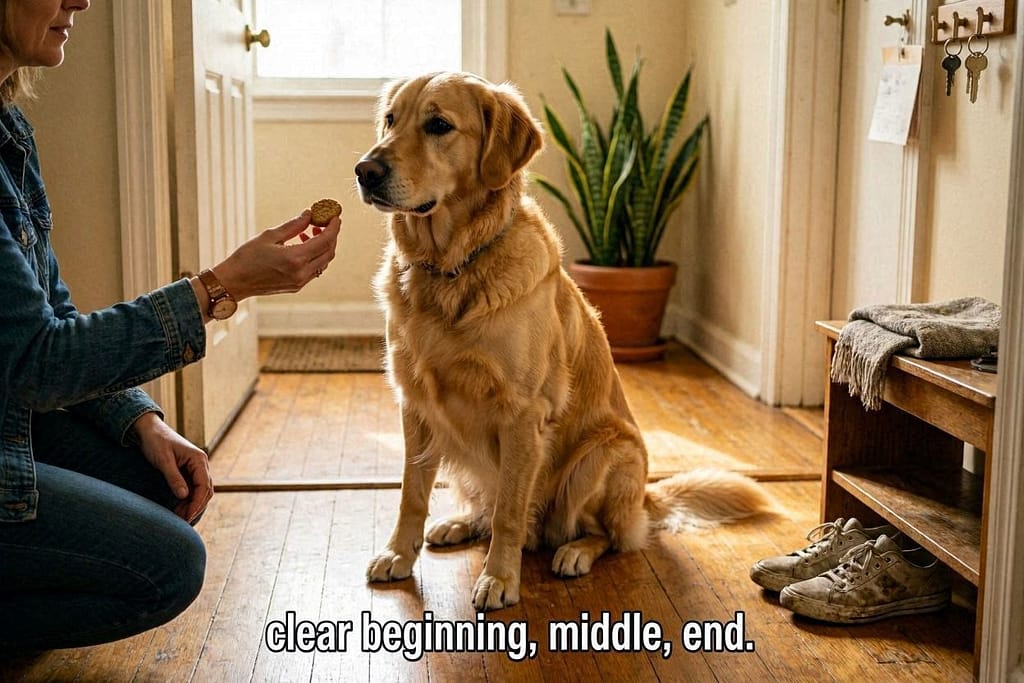
The Homecoming Ritual
Before entering your building:
- Ask for a simple “sit”
- Offer a high-value treat
- Say “All done sniffing!” in a calm, happy voice
This creates a clear beginning, middle, and end to the experience.
Advanced Sniffari Techniques for the Urban Explorer
The “Scent of the Day” Game
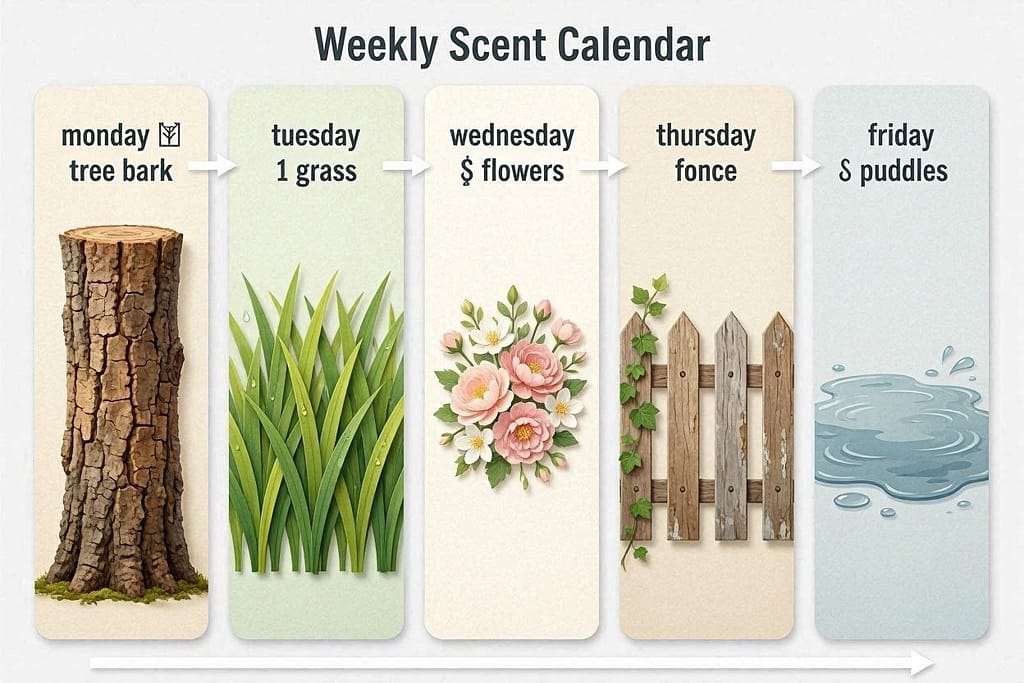
Choose one particular scent to focus on during your Sniffari:
- Monday: Tree bark
- Tuesday: Grass patches
- Wednesday: Flower beds
- Thursday: Fence lines
- Friday: Puddle edges (after rain)
This adds an extra layer of cognitive challenge.
The “Three Sniffs Rule”
For dogs who get stuck in one spot:
- Count three distinct sniffs
- Gently say, “Okay, what’s next?”
- Take one step in a new direction
- Praise immediately when they follow
Weather-Based Sniffaris

Different conditions create different scent experiences:
- After rain: Earthy smells are amplified
- Morning dew: Fresh overnight scent trails
- Light snow: Crisp, clean scent detection challenge
- Dusk: Nocturnal animal trails begin to appear
For leash reactivity management, see our leash reactivity guide.
Troubleshooting Common Sniffari Challenges
“My Dog Just Wants to Walk, Not Sniff!”
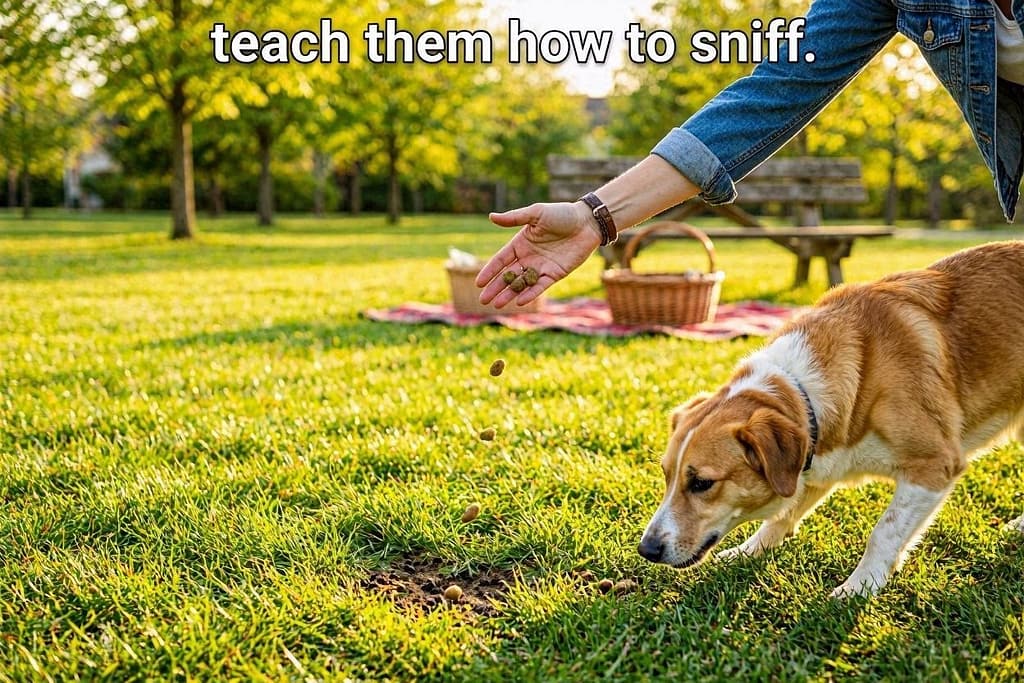
Some dogs need to learn how to sniff. Try these techniques:
- The Treat Scatter: Toss a few treats in the grass and say, “Find it!”
- The Point and Sniff: Point at interesting spots, saying, “Check this out!”
- The Modeling Method: Get down and sniff yourself (yes, really!). Your curiosity sparks theirs.
“We Live in a Concrete Jungle!”
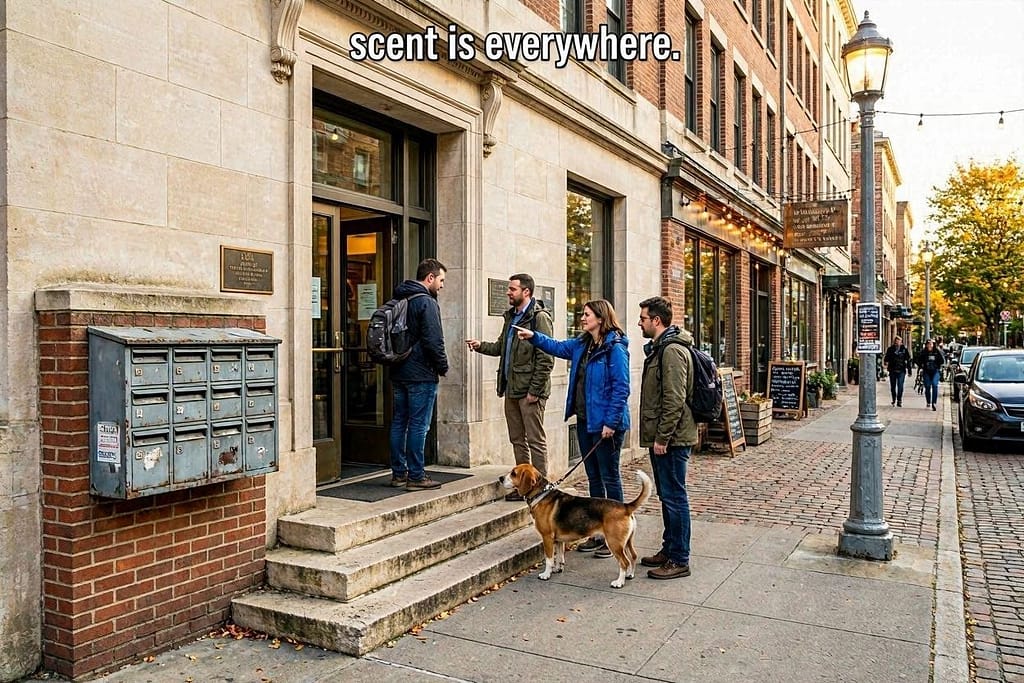
No grass? No problem. Urban Sniffari spots include:
- Building entrances (human scent variety)
- Mailbox clusters
- Light poles with flyers
- Restaurant alleyways (early morning before cleaning)
- Construction site perimeters (from a safe distance)
For elevator and stairwell navigation, see our elevator and stairwell etiquette guide.
“My Dog Eats Everything Off the Ground!”
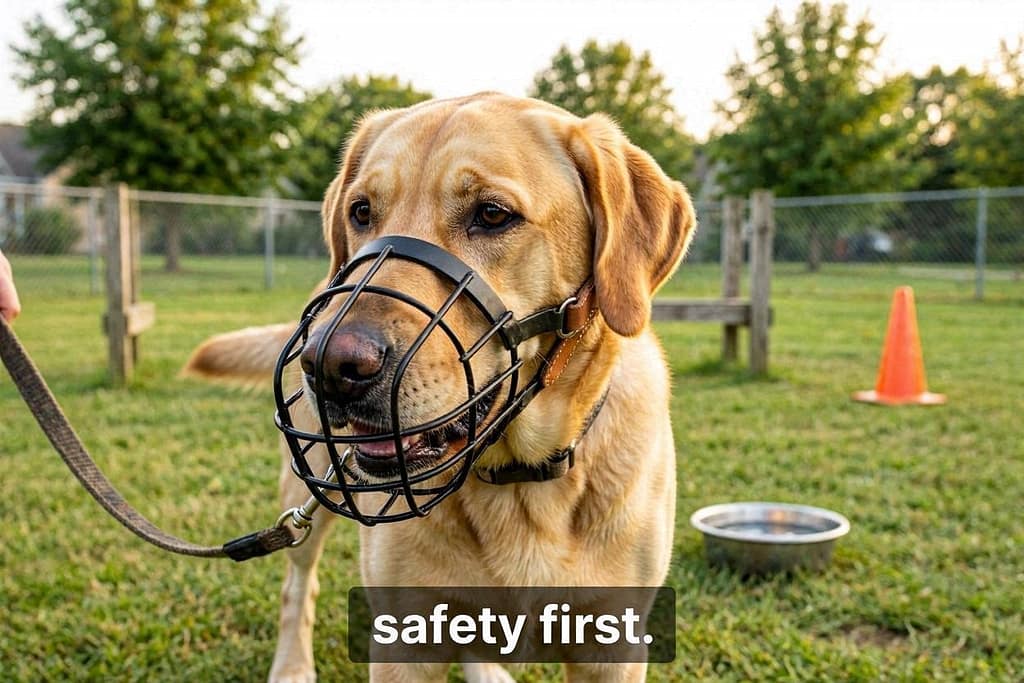
This is a safety concern. Practice “Leave It” intensely at home first. On walks:
- Carry higher-value treats than ground finds
- Use a basket muzzle during the training phase
- Choose cleaner locations initially
The Life-Changing Benefits You’ll Notice
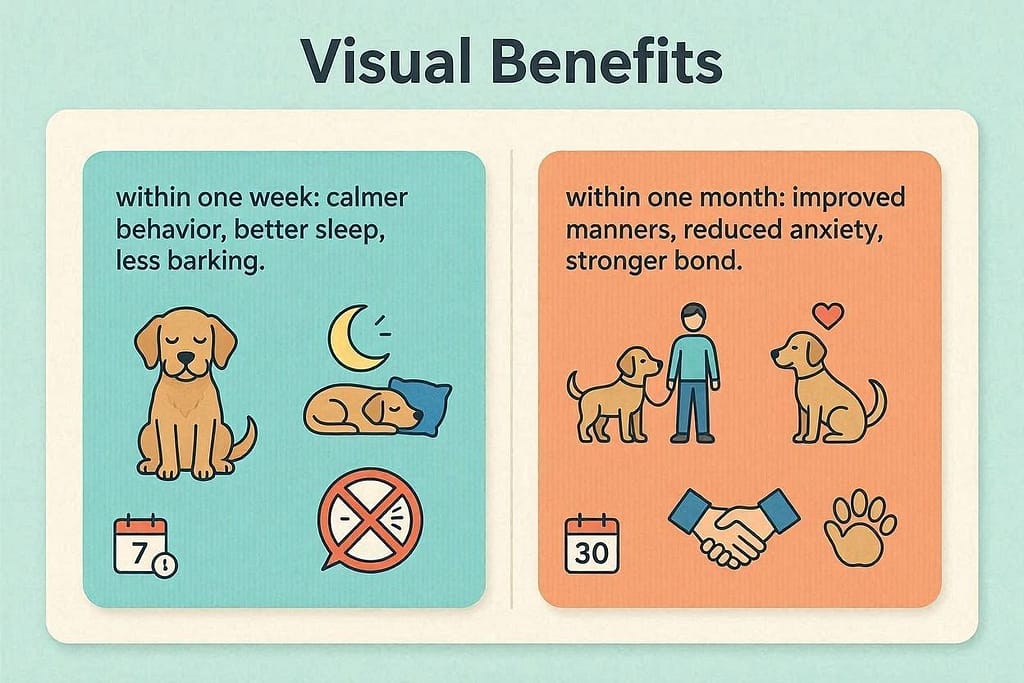
Within One Week:
- Calmer behavior at home
- Less demand for barking
- Deeper sleep patterns
- Increased appetite (mental work burns calories!)
To reduce hallway barking triggers, see our apartment barking triggers guide.
Within One Month:
- Improved leash manners
- Enhanced responsiveness to cues
- Reduced anxiety during city sounds
- Stronger bond with you
The Hidden Perks for You:
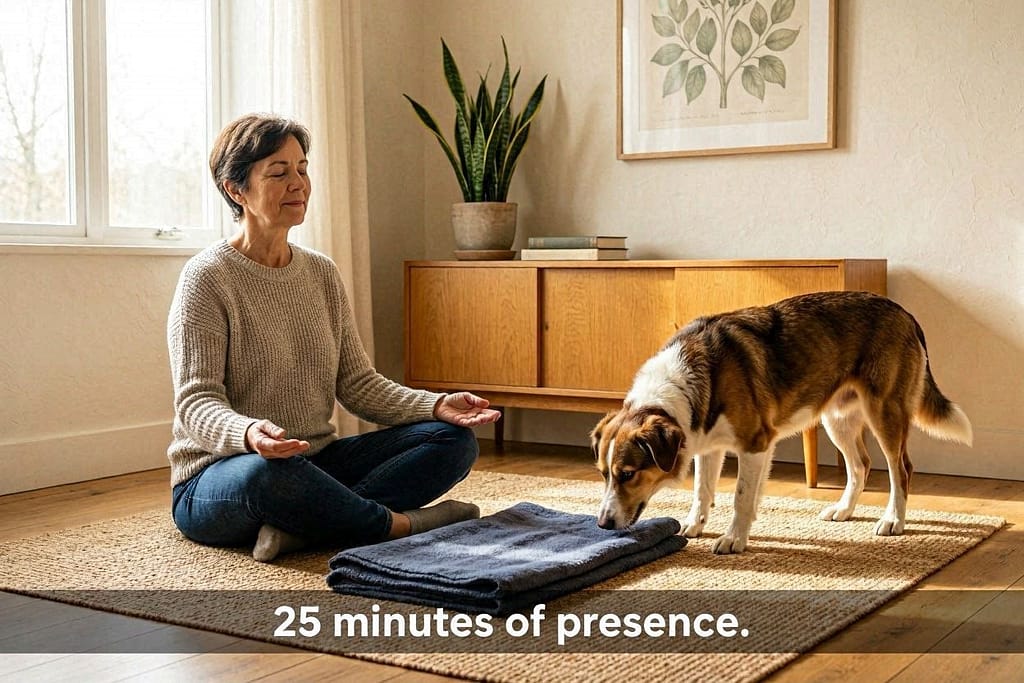
- Mindfulness Practice: 25 minutes of being present
- Neighborhood Discovery: You’ll notice details you’ve always missed
- Stress Reduction: Your breathing will sync with your dog’s sniffing rhythm
- Community Building: Other dog owners will ask what you’re doing differently
Your Quick-Start Sniffari Checklist
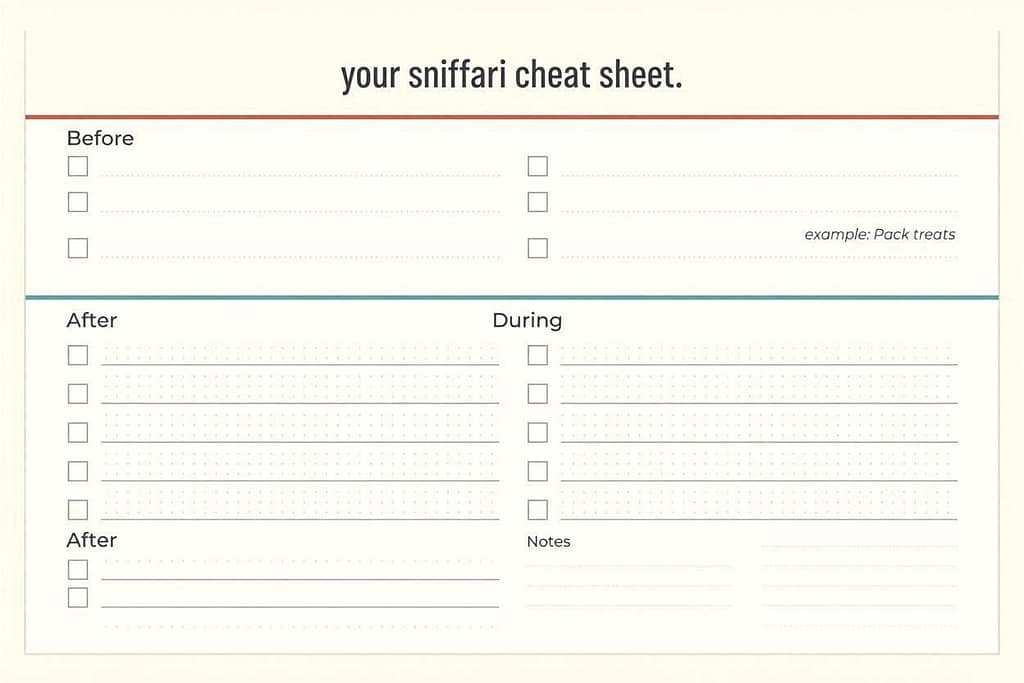
Before you head out:
- Harness and 6-foot leash
- High-value treats
- Water (for both of you)
- Mindset: “This is their time”
- Plan: Location chosen
During the walk:
- Warm-up: 5 minutes to the location
- Cue: “Go sniff!” with excitement
- Main event: 15 minutes of following their nose
- Cool-down: 5 minutes heading home
- Ritual: “All done!” before entering
After the walk:
- Note what engaged them most
- Observe their calmness level
- Plan tomorrow’s location variation
- Hydrate and rest together
The Truth About “Tired”
Here’s the revelation that changes everything: A mentally tired dog is a content dog.
Physical exercise creates a tired body that needs to recover.
Mental exercise creates a satisfied mind that needs to process.
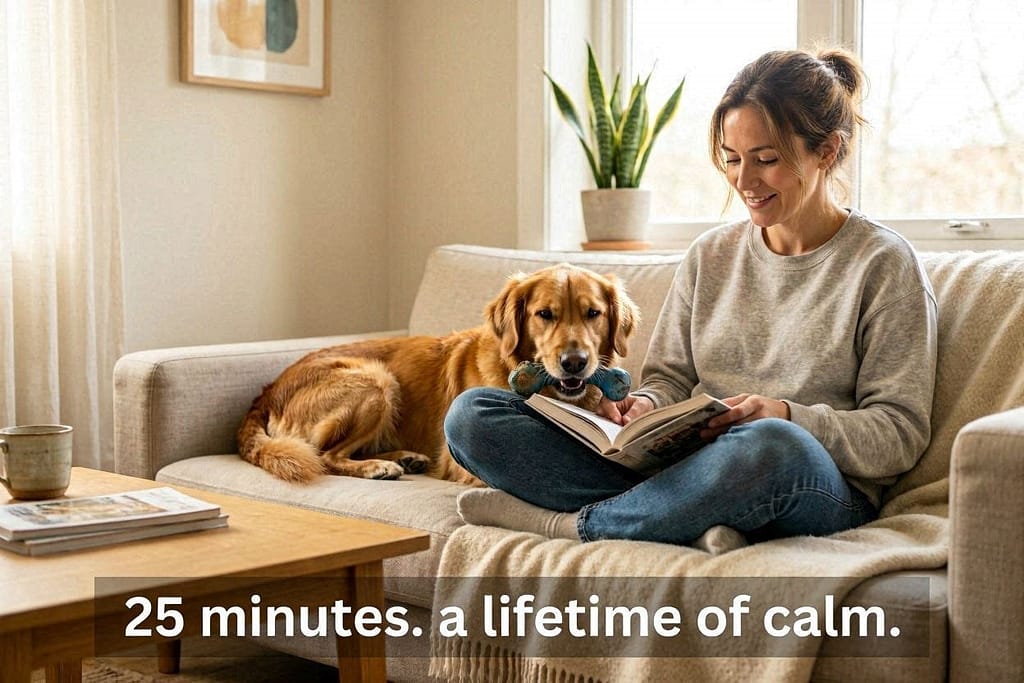
After a successful Sniffari, you won’t see your dog panting on the floor. You’ll see them:
- Chewing calmly on a toy
- Sleeping deeply (not just napping)
- Watching the world quietly instead of reacting to it
- Making better choices throughout the day
Frequently Asked Questions (The Real Ones Dog Owners Ask)
Q: How often should we do Sniffari walks?
A: Ideally, daily. Even 15 minutes has an impact. For high-energy dogs, replace one physical walk with a Sniffari. For anxious dogs, make it your primary walk.
For building positive neighbor relationships, see our apartment building introduction guide
Q: What if it rains?

A: Perfect! Rain amplifies smells. Use a dog raincoat if they tolerate it, or try a “porch Sniffari” if you have outdoor space.
Q: Can puppies do Sniffaris?
A: Absolutely! It’s actually ideal for puppies. It builds confidence, teaches environmental engagement, and is less physically stressful on developing joints.
Q: My senior dog has limited mobility.
A: Wonderful! Sniffaris are perfect. Find a bench in a park, sit, and let them sniff within their radius. Quality over quantity.
Your First Sniffari: A Personal Challenge
We challenge you to try just one 25-minute Sniffari this week.
Not as an experiment, but as a commitment.
Don’t watch the clock. Watch your dog.
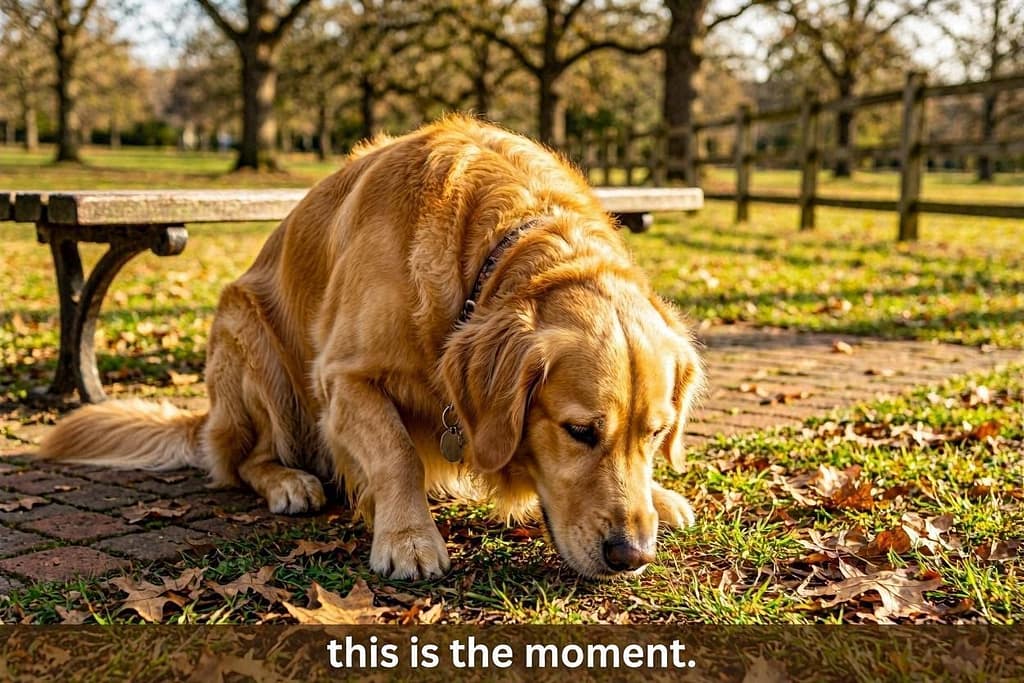
Notice the moment their body relaxes into the sniff.
See the tail wag in that particular way. Observe the deep sigh of satisfaction.
That moment?
That’s the moment you realize you’ve been speaking a different language to your dog this whole time.
And now, finally, you’re communicating in theirs.
Ready to transform your walk tomorrow?
Here’s your final takeaway…
One Simple Shift, Lifetime of Calm
The beauty of the Sniffari Walk isn’t in its complexity. It’s in its simplicity.
You’re not adding another task to your already busy day.
And you’re transforming an existing task into something profoundly more valuable.
Also, you’re trading miles for minutes.
You’re trading exercise for engagement.
You’re trading walking your dog for understanding your dog.
In our loud, fast, urban world, the Sniffari Walk becomes an act of rebellion.
It’s a declaration that your dog’s natural needs matter more than sidewalk pace. It’s 25 minutes of saying, “Your way of experiencing the world is valid and valuable.”
So tomorrow, when you clip that leash, remember: You’re not just going for a walk. You’re opening a library. You’re providing a classroom. You’re offering a meditation.
Your dog’s nose is the key to a calmer mind, a more content life, and a deeper bond with you. And all it takes is 25 minutes of following their lead.
The sidewalk is waiting. The scents are calling. Your dog’s mind is ready to be unleashed.
🐾 — Apartment Dog Guide (ADG)
Living large in small spaces, one paw at a time. That’s the apartment dog life—see you in the next guide!.


