
It starts small.
A key in the lock across the hall.
Footsteps on hardwood.
The elevator door is dinging.
Your dog’s head snaps up. Ears forward. Hackles? Maybe.
Then it comes: BARKBARKBARKBARKBARK.
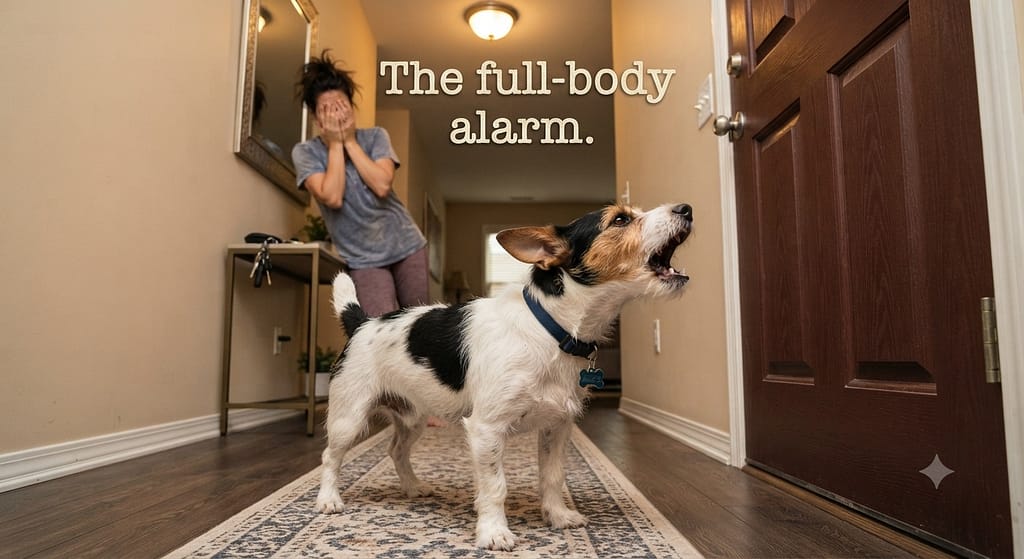
Not just a bark. A full‑body alarm. The kind that makes you drop your coffee and fumble for the door.
And because you live in an apartment, that bark doesn’t stay in your unit.
It travels through the HVAC vents.
It echoes in the hallway. It lands directly in your neighbor’s living room.
You know what happens next. The cold shoulder in the elevator.
The note was taped to your door. The call from management.
Here’s the truth most trainers won’t tell you:
Your dog isn’t barking because he’s “dominant” or “protective.”
He’s barking because the hallway is unpredictable.
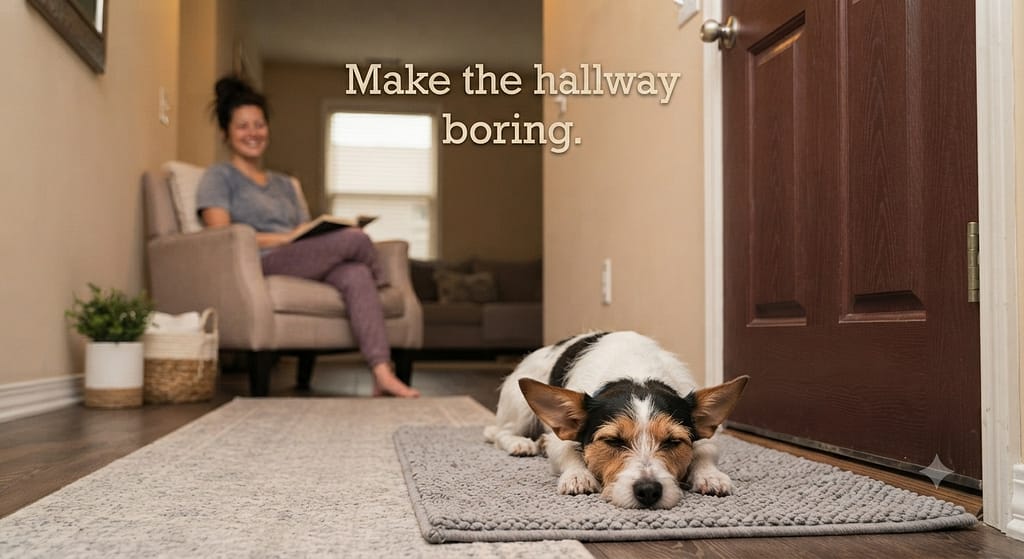
Doors open without warning. Strangers appear at eye level. Sounds echo with no visible source.
In a house, this is manageable.
In an apartment, it’s a constant state of low‑grade panic.
For the complete barking solution, see our urban silence protocol.
The good news?
You don’t need to move. You don’t need to muzzle your dog. You just need to make the predictable predictable.
This is the 7‑day desensitization plan for apartment dogs who bark at every damn thing in the hallway.
We’ll cover:
· ✅ Why your dog really barks at hallway noises (it’s not what you think)
· ✅ The 7‑day protocol: day‑by‑day, exact exercises
· ✅ Products that accelerate the process
· ✅ What to say to neighbors while you train
· ✅ The “Door Is Boring” game
· ✅ How to handle sudden triggers (delivery drivers, maintenance, kids running)
Let’s make your hallway the most boring place on earth. 🏢🐕
🔍 Why Apartment Hallway Barking Is Unique
🧠 Truth #1: The Invisible Trigger
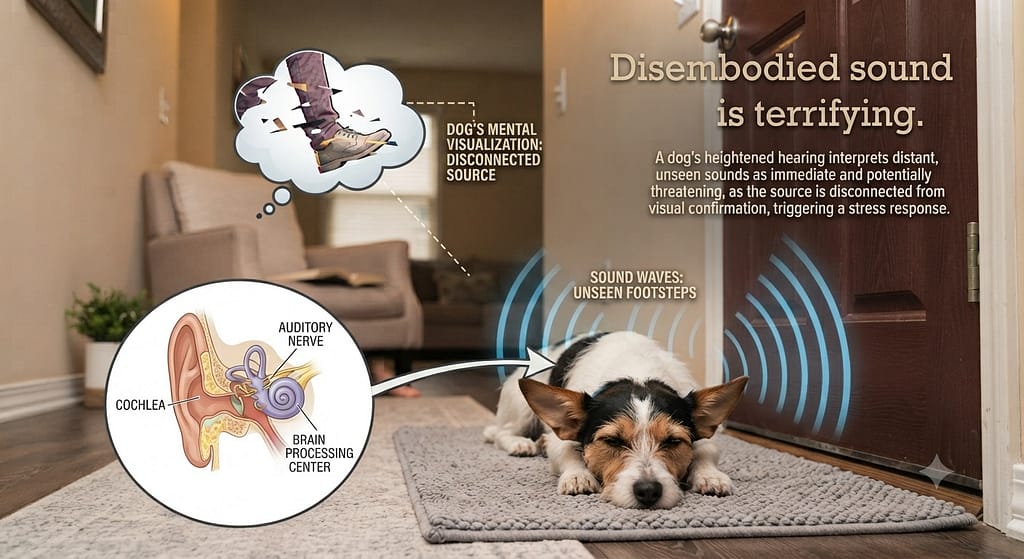
In a house, your dog sees the mailman approach. Visual = predictable.
In an apartment, your dog hears footsteps, but the person doesn’t appear for another 30 seconds. The sound is disembodied—and that’s terrifying.
Your dog barks to make the invisible threat go away.
🧠 Truth #2: Sound Travels, but Scent Doesn’t
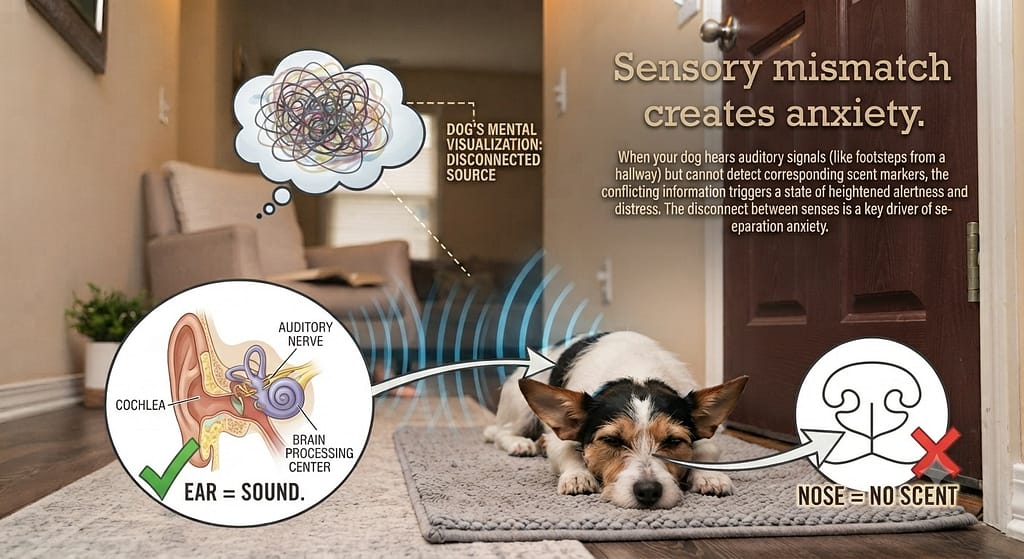
Your dog can hear someone in the hallway but can’t smell them through the door. That sensory mismatch creates anxiety. Barking is an attempt to resolve the confusion.
🧠 Truth #3: Every Bark Is Reinforced
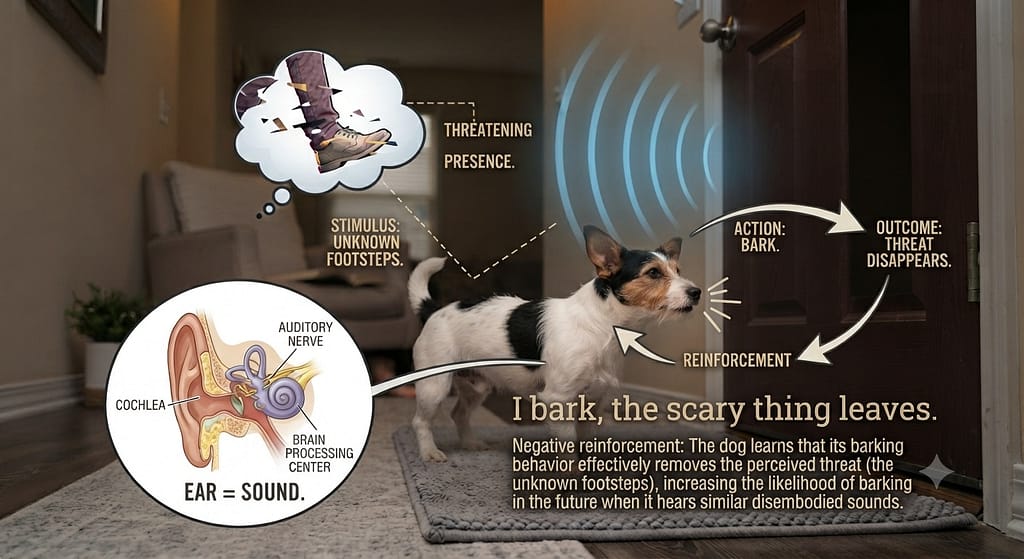
In an apartment, the mailman walks away. The neighbor closes their door. The footsteps fade.
Your dog learns: “I bark, the scary thing leaves.”
This is negative reinforcement, and it’s incredibly powerful.
🧠 Truth #4: You Can’t Manage What You Can’t See
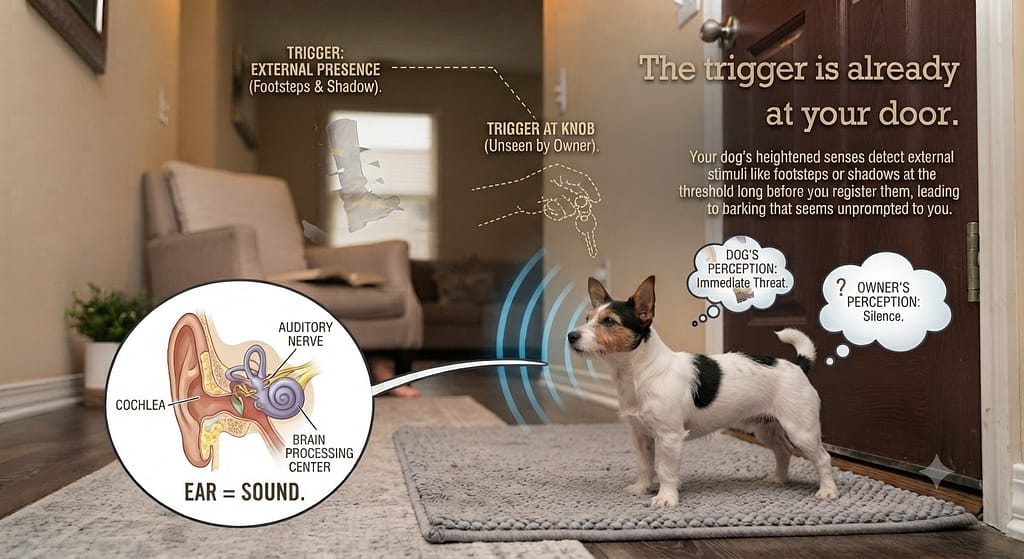
In a house, you see the trigger approaching. You can interrupt.
In an apartment, the trigger is already at your door before you know it.
Your training must prepare you for the invisible.
💬 Interactive Pause:

What’s your dog’s #1 hallway trigger?
(A) Footsteps in the hallway
(B) Neighbors’ doors opening/closing
(C) Elevator ding
(D) Knocks or doorbells
(E) Other dogs
Keep this in mind—each trigger gets a slightly different drill.
📆 Chapter 2: The 7‑Day Desensitization Protocol
This is a progressive plan. Do not skip days. Do not rush.
DAY 1: The Door Audit

What to do:
Sit near your front door with your dog on a leash. No sound machine. No distractions.
Listen.
Every time you hear a hallway noise, mark it in a notebook:
- Time
- Type of sound
- Your dog’s reaction (ear twitch, head lift, full bark)
Why this works:
You can’t fix what you don’t measure. This is your baseline.
Evening exercise:
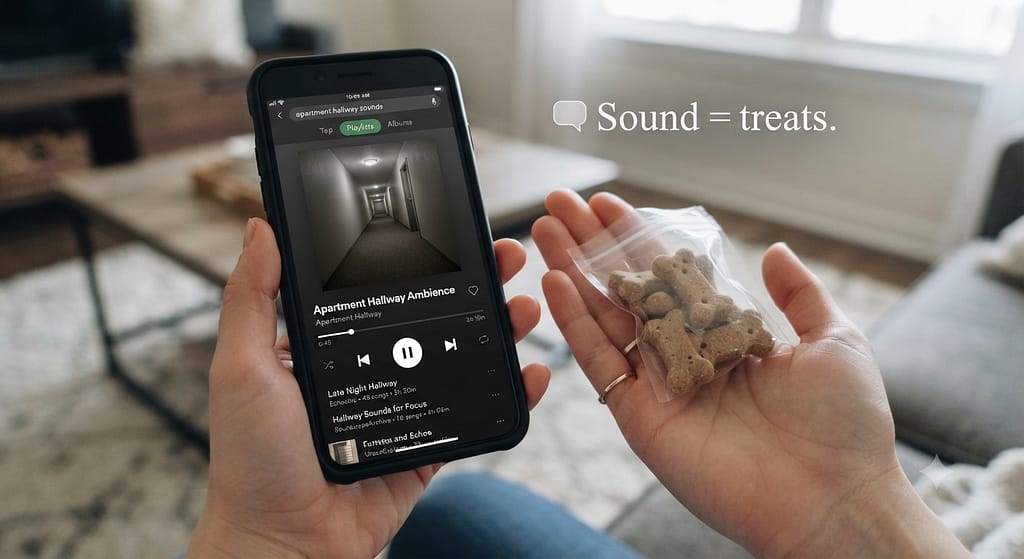
Play hallway sounds on your phone at very low volume. Feed treats continuously. Do not wait for barking—pre‑empt it. The sound = treats.
🛒 Affiliate Pick:
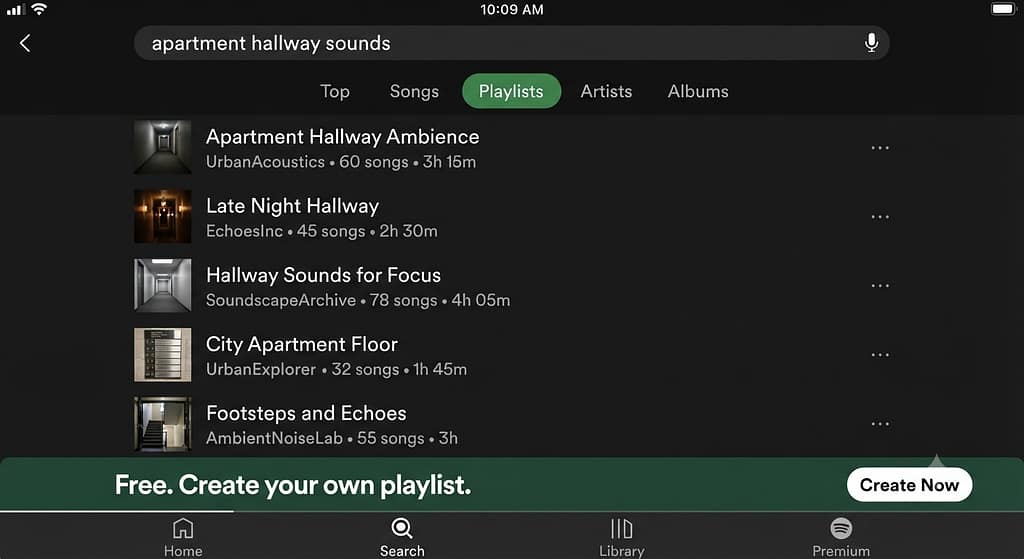
Spotify/YouTube “Apartment Hallway Sounds” Playlist – Free. Search “door closing sounds,” “footsteps,” “elevator ding.”
👉 Link: Create your own playlist
DAY 2: The Open Door Game
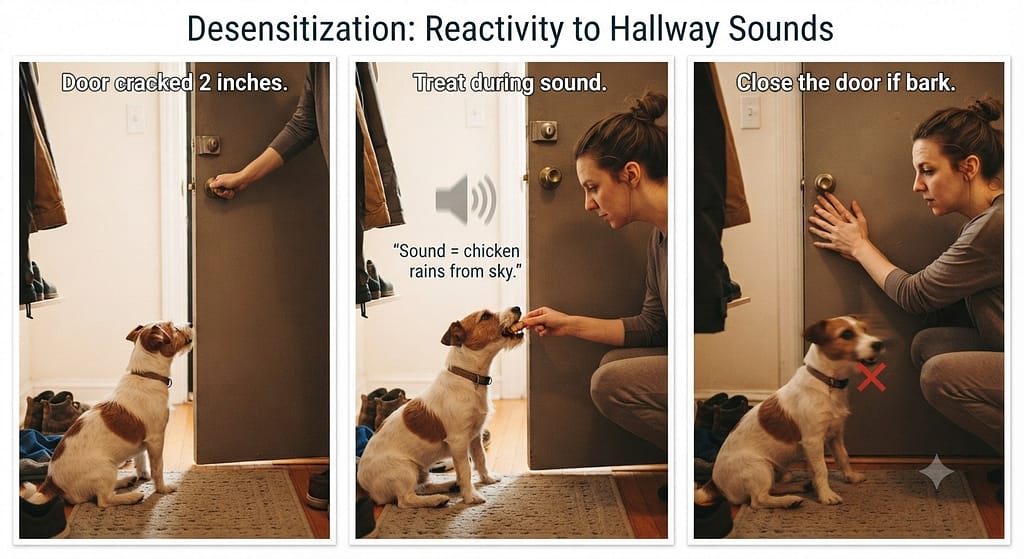
What to do:
Crack your front door 2 inches. The dog is on a leash, behind a baby gate, or held by a second person.
Every time a noise happens in the real hallway, treat. No waiting for quiet—treat during the sound.
Goal:
Sound = Chicken rains from the sky.
If your dog barks:
Close the door immediately. Wait 10 seconds. Try again with a smaller crack.
Why this works:
You’re pairing the real trigger with high‑value rewards. The door becomes a predictor of good things.
For loose leash walking in hallways, see our apartment loose leash walking guide.
🛒 Affiliate Pick:
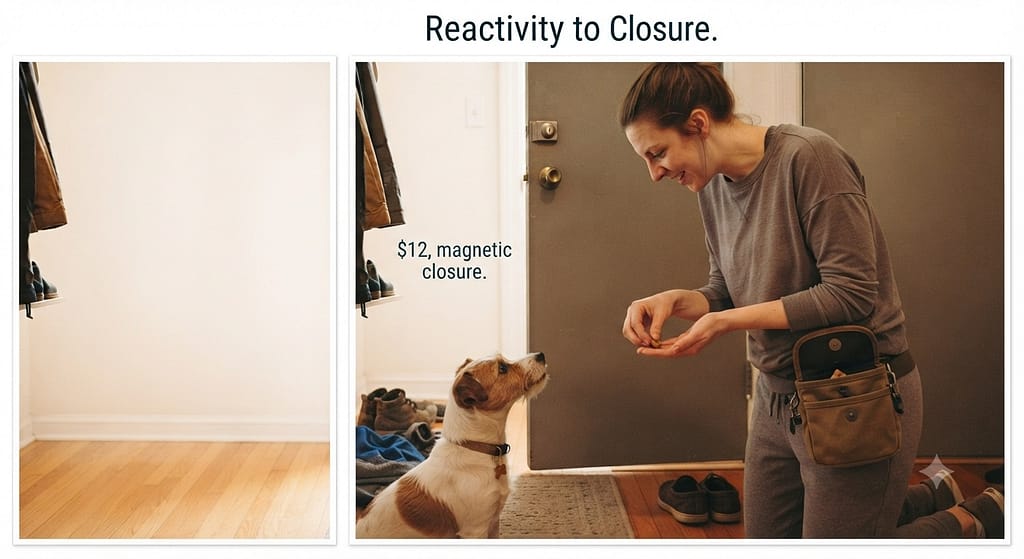
PetSafe Treat Pouch – Magnetic closure, folds flat. $12
👉 Shop: PetSafe Treat Pouch
DAY 3: The Door Is Boring
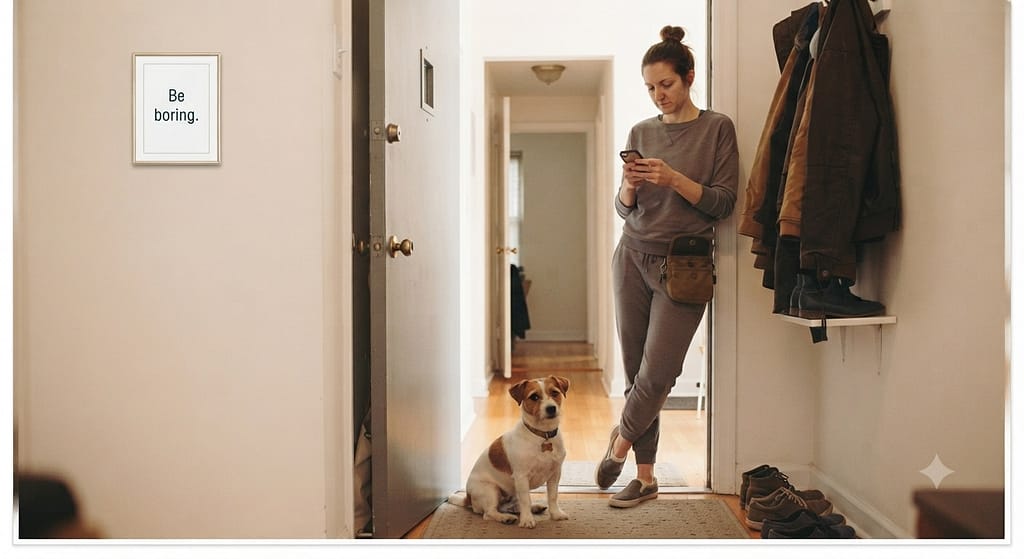
What to do:
Open your door fully. Stand in the threshold. Your dog is leashed, behind you, or in a down‑stay.
Your job:
Talk to a neighbor. Check your mail. Scroll your phone. Be boring.
Your dog’s job:
Nothing. If he stays calm, treat. If he barks, close the door, reset.
Pro tip:
Do this during low‑traffic times first. Build up to busier periods.
For complete elevator and stairwell training, see our elevator and stairwell etiquette guide
🛒 Affiliate Pick:
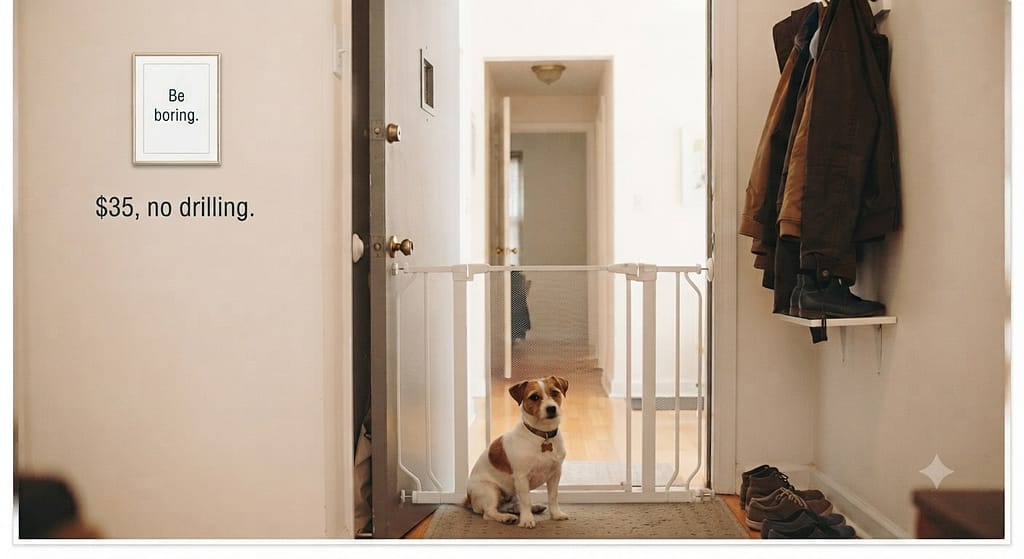
Regalo Easy Step Baby Gate – Pressure‑mounted, no drilling. Keeps the dog behind a boundary while the door is open. $35
👉 Shop: Regalo Baby Gate
DAY 4: The Friend‑in‑Hallway Drill
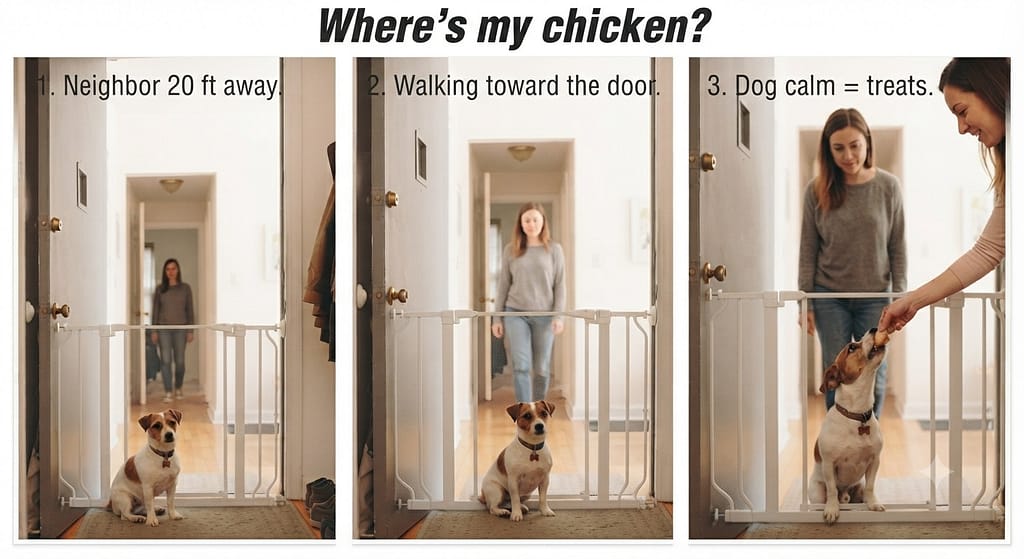
Recruit a neighbor.
Setup:
- Dog inside, door closed.
- Neighbor stands in hallway, 20 feet away.
- You open the door. A neighbor walks slowly toward you.
Protocol:
- Dog calm? The neighbor takes one step closer.
- Dog tense? Neighbor stops.
- Dog barks? Close the door, reset.
Reward:
Treats the ENTIRE time the door is open. No pauses.
Goal:
Door open, neighbor approaching, dog thinks “Where’s my chicken?”
🛒 Affiliate Pick:
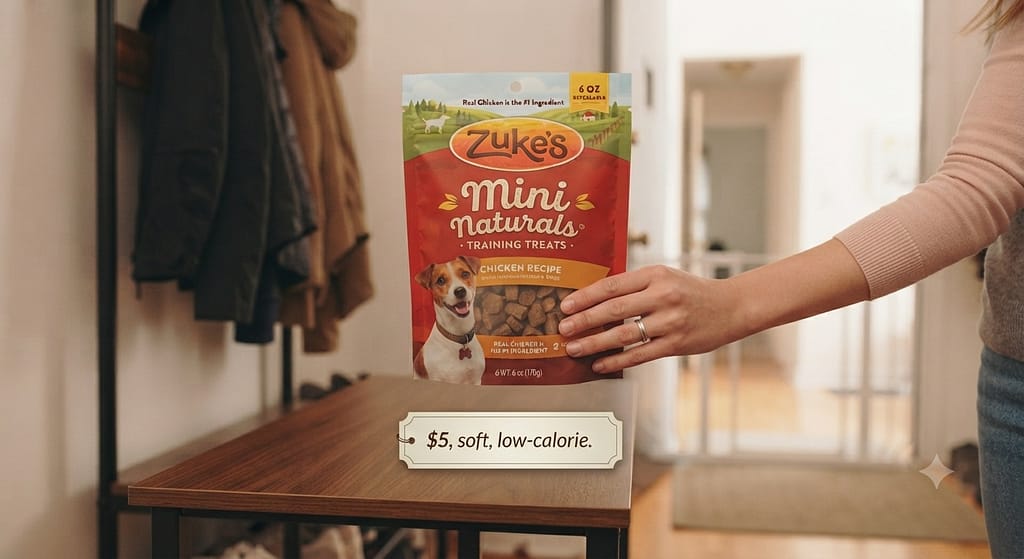
Zuke’s Mini Naturals – Soft, low‑calorie, high value. $5
👉 Shop: Zuke’s Mini Naturals
DAY 5: The Doorbell & Knock Game
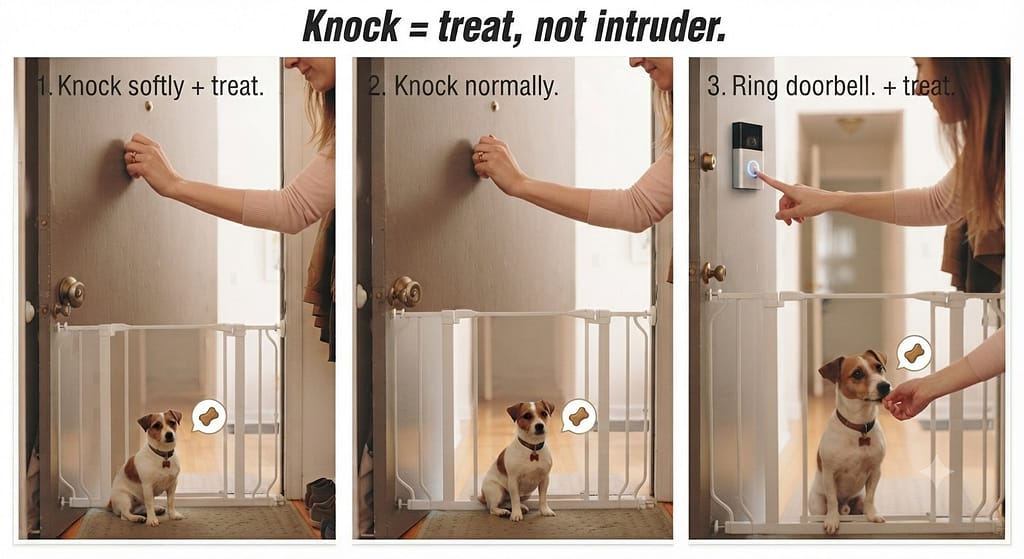
Setup:
Second person outside. You are inside with the dog.
Phase 1:
Knock softly. Immediately feed a treat. Repeat 10 times.
Phase 2:
Knock normally. Treat. Repeat.
Phase 3:
Ring doorbell. Treat. Repeat.
Rule:
If the dog barks, the person stops knocking, and you stop treating. Wait 10 seconds, restart at lower volume.
Why this works:
Doorbell/knock = treat. Not an intruder, not a threat. Just a sound that predicts chicken.
For quiet command training, see our quiet command training guide.
🛒 Affiliate Pick:
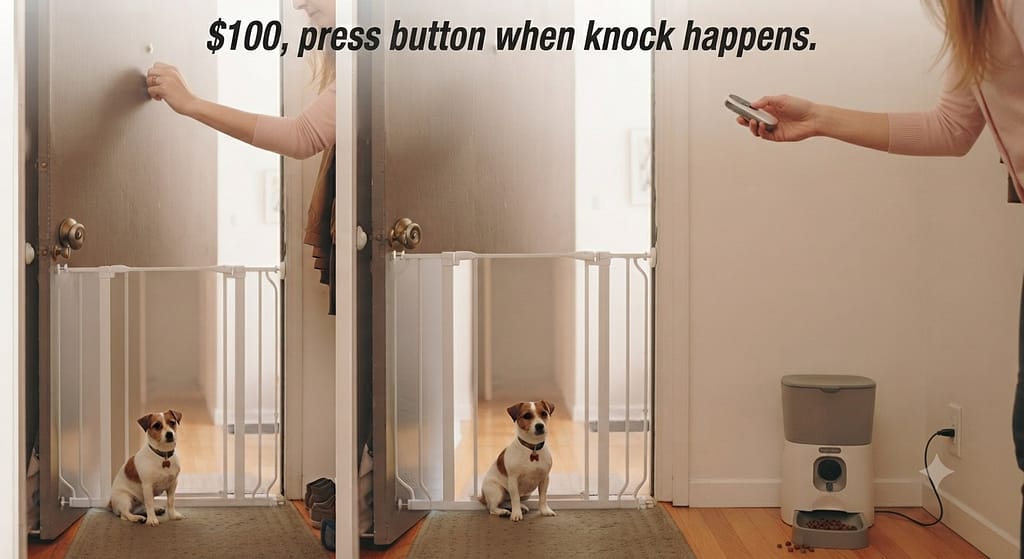
Treat & Train Remote Dispenser – Hide it near the door. Press the button when a knock happens. Dog learns: knock = treat appears. $100
👉 Shop: Treat & Train
DAY 6: The Delivery Drill
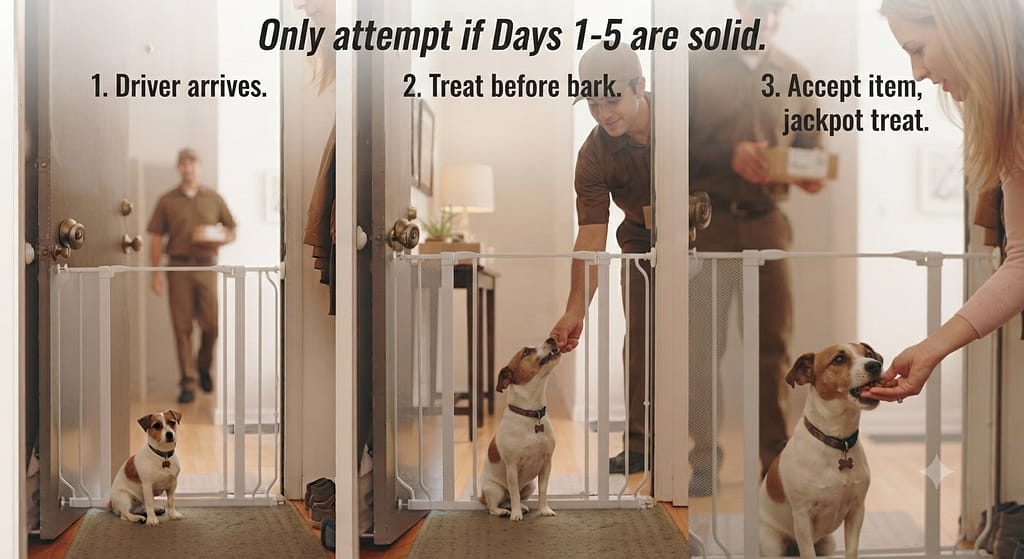
This is advanced. Only attempt if Days 1–5 are solid.
Setup:
Order food delivery or a package. Track arrival.
Protocol:
- Have treats ready at the door.
- Driver knocks/rings.
- You treat before the dog can bark.
- You open the door slightly, accept the item, and treat again.
- Close the door, jackpot treat.
If the dog barks:
You went too fast. Back to Day 5 for 2 more days.
For demand barking specifically, see our guide to stopping demand barking.
DAY 7: The Maintenance Test
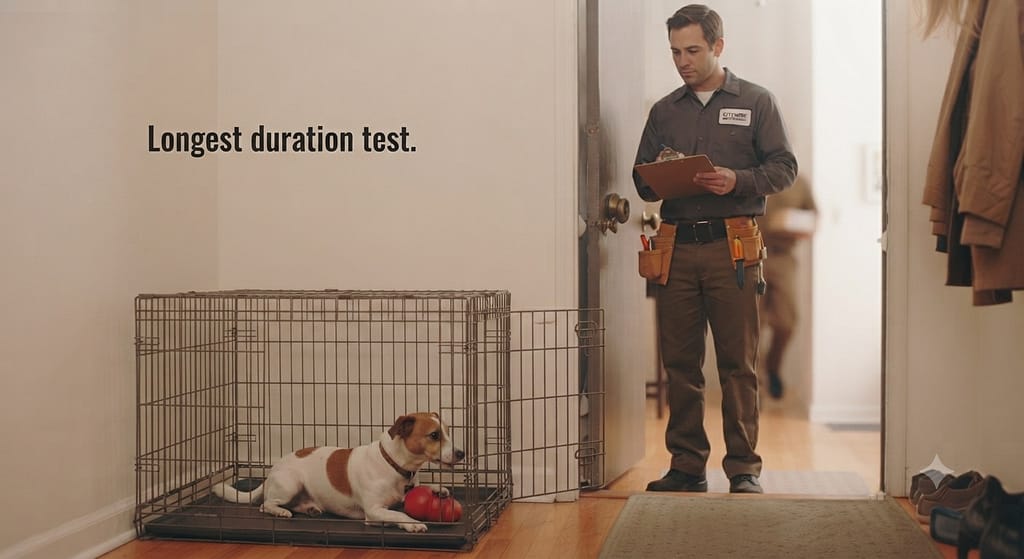
Maintenance workers are often the loudest, most intrusive triggers—keys, tools, unfamiliar voices.
What to do:
Request a non‑urgent maintenance visit (filter change, inspection).
Protocol:
Same as delivery drill, but longer duration. Your dog must remain calm while the worker moves around, opens closets, and talks.
Pro tip:
Crate your dog or put them behind a gate with a stuffed Kong. Do not force interaction. Let them observe from a safe distance.
🛒 Affiliate Pick:
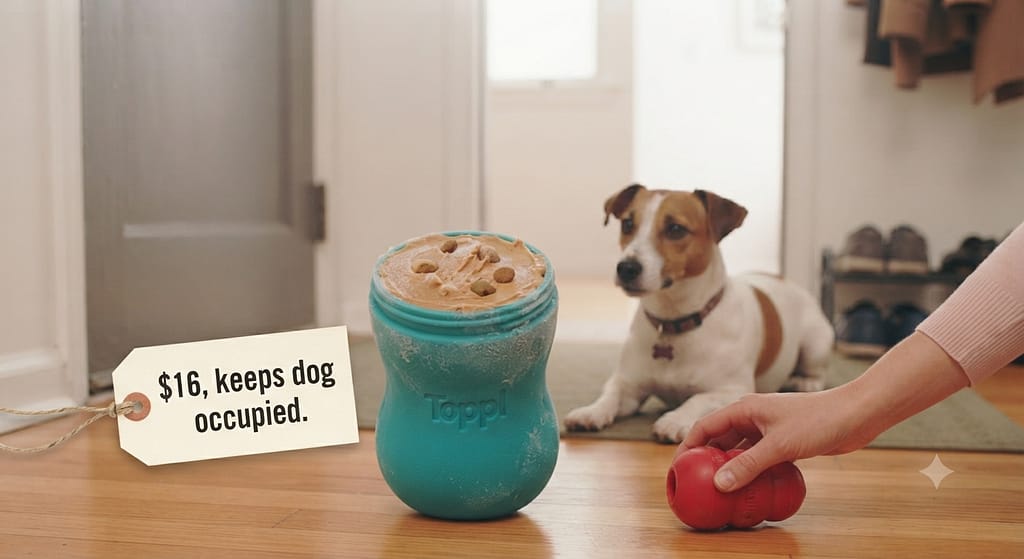
West Paw Toppl – Stuffing it with frozen peanut butter keeps the dog occupied during maintenance. $16
👉 Shop: West Paw Toppl
🧰 Chapter 3: Products That Help (Without Shock Collars)
We do not recommend aversive tools for hallway barking.
Punishment makes dogs more anxious, and anxious dogs bark more—they just learn not to warn you first.
#1: White Noise Machines
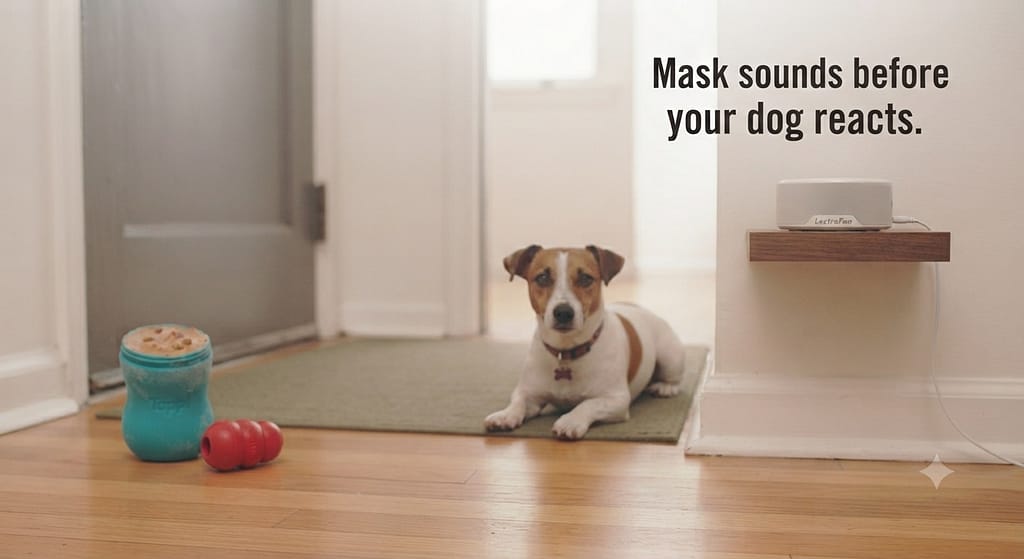
Mask hallway sounds before your dog can react.
🛒 Affiliate Pick:
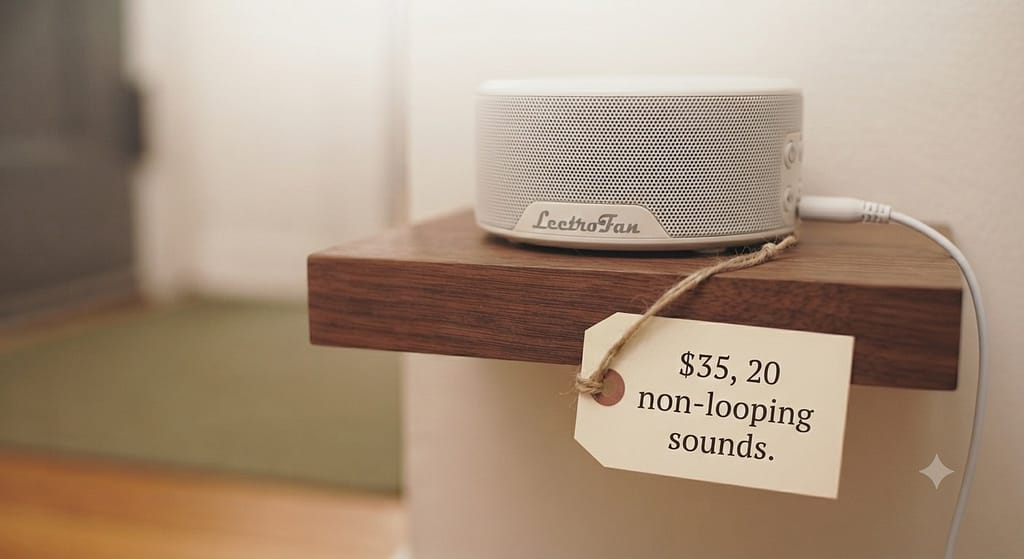
LectroFan High Fidelity – 20 non‑looping sounds, masks footsteps and doors. $35
👉 Shop: LectroFan
For sniffari walks that reduce overall anxiety, see our sniffari walk guide.
#2: Door Draft Stoppers
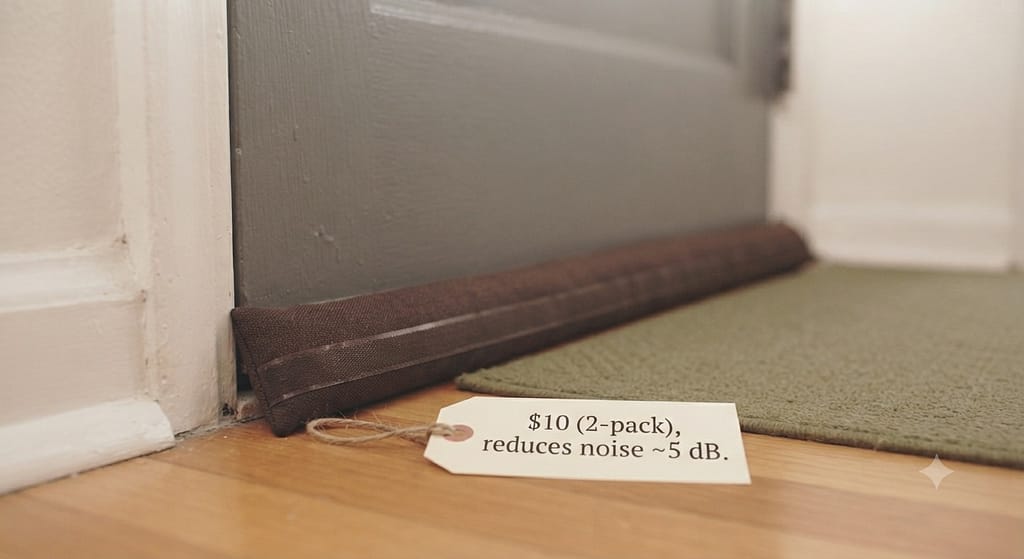
Block sound transmission AND prevent dogs from scratching at the gap.
🛒 Affiliate Pick:
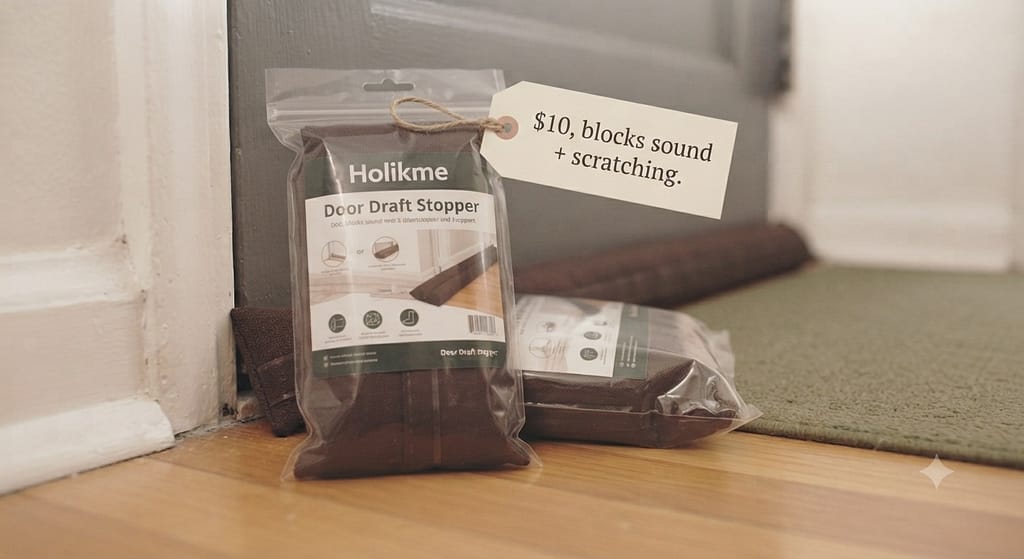
Holikme Door Draft Stopper – Adhesive, slides under door, reduces noise by ~5 dB. $10 (2‑pack)
👉 Shop: Holikme Draft Stopper
#3: Opaque Window Film
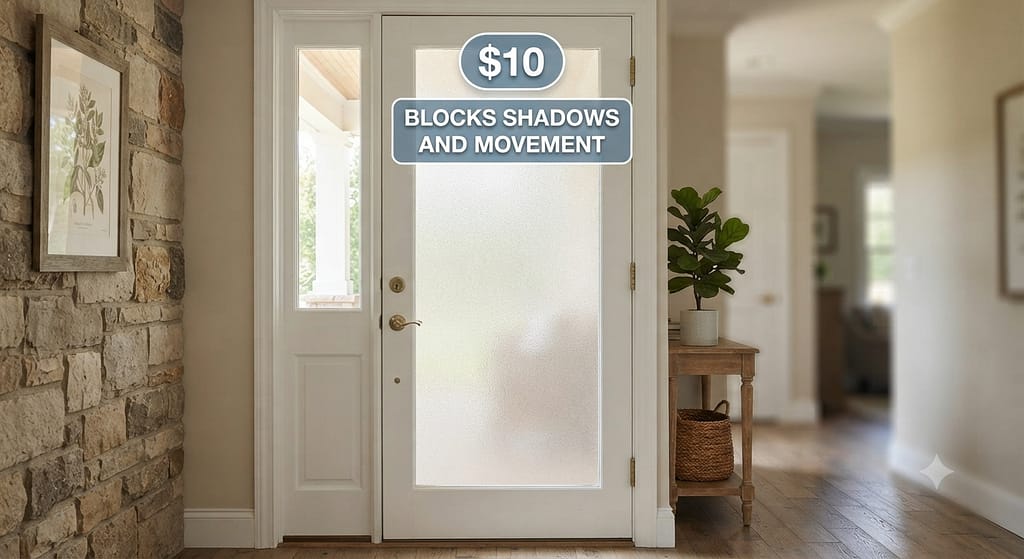
If your dog barks at shadows or movement under the door, block the visual.
🛒 Affiliate Pick:
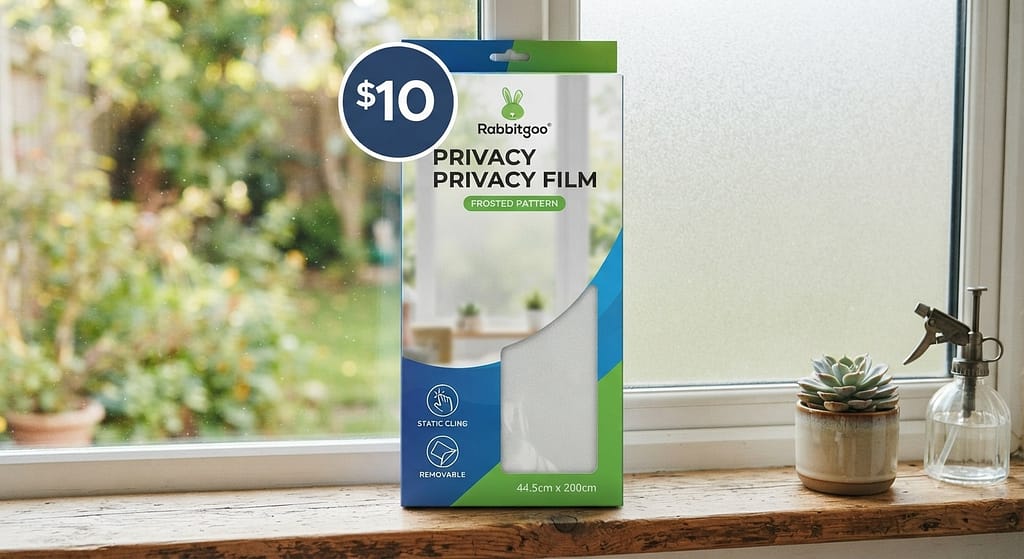
Rabbitgoo Opaque Privacy Film – Static cling, no adhesive, removable. $10
👉 Shop: Rabbitgoo Window Film
#4: Calming Aid (Situational)
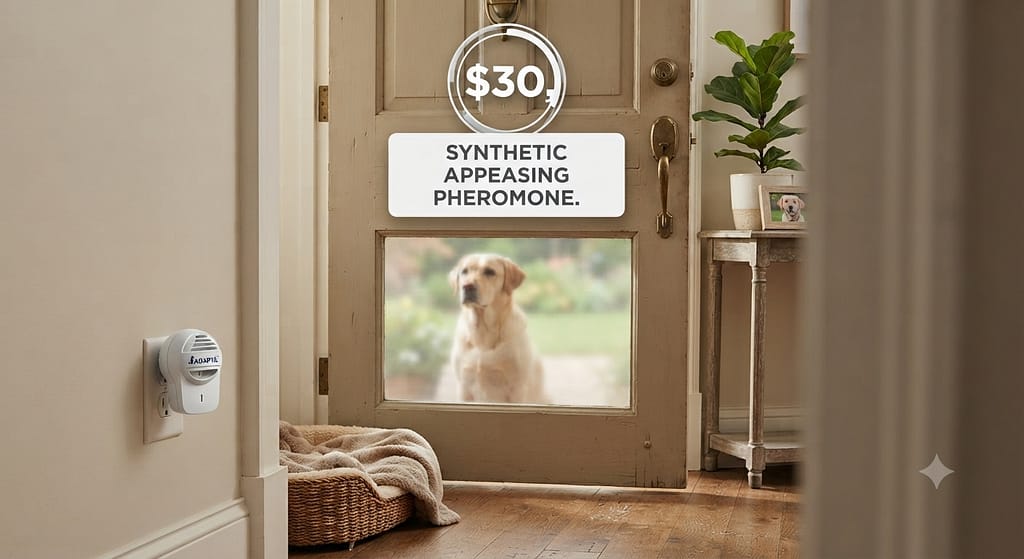
For days when you know hallway traffic will be high (holidays, events).
🛒 Affiliate Pick:
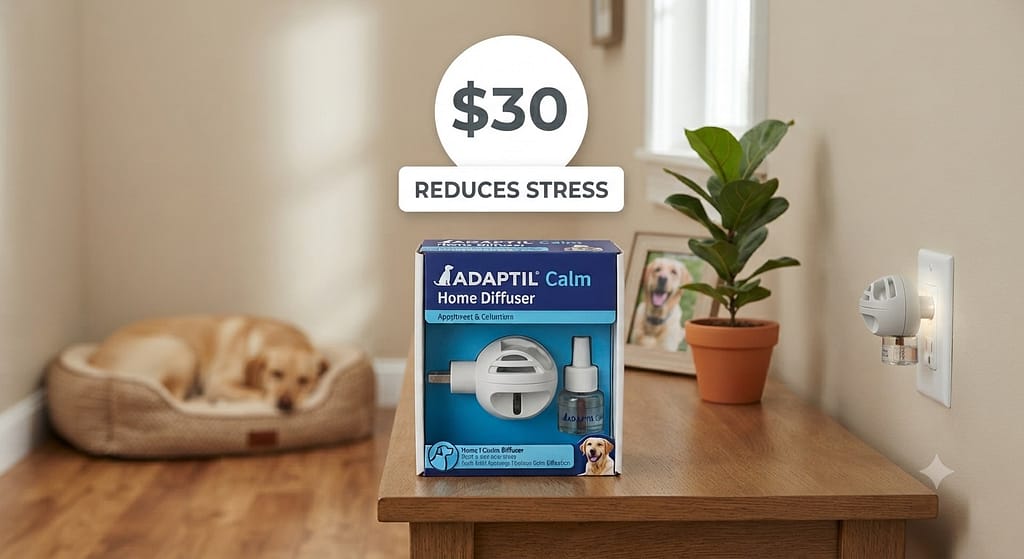
Adaptil Diffuser – Synthetic appeasing pheromone reduces stress. $30
👉 Shop: Adaptil
📋 Chapter 4: What to Say to Neighbors (Scripts)
Scenario 1: You’re actively training, and your dog barks at a neighbor.
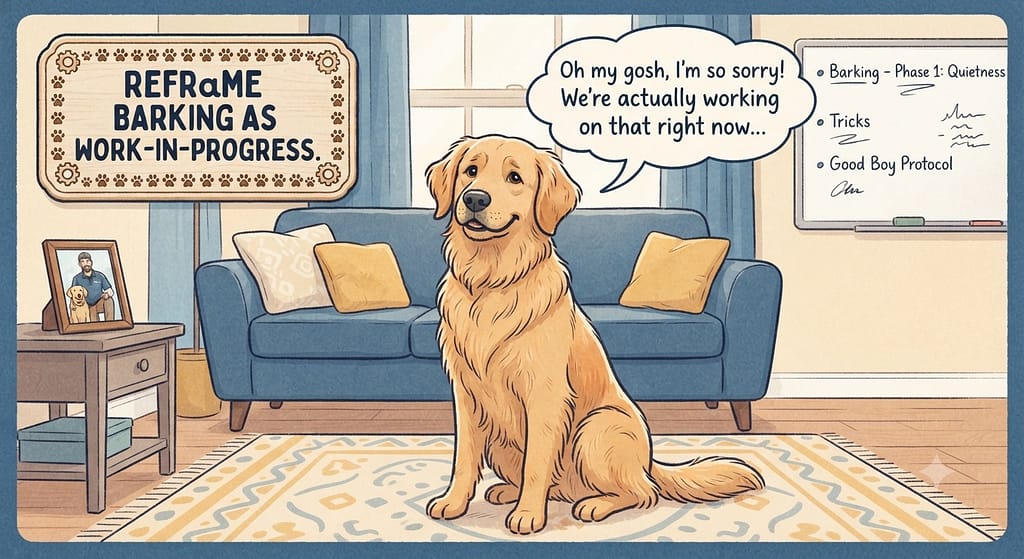
“Oh my gosh, I’m so sorry! We’re actually working on that right now—[Dog Name] is learning that hallway sounds mean treats, not threats. Thank you for your patience while we train!”
Why this works:
It reframes the bark as a work‑in‑progress, not a permanent behavior. Neighbors are far more tolerant of “training” than “bad dog.”
Scenario 2: Your dog barked while you were out, and a neighbor complains.
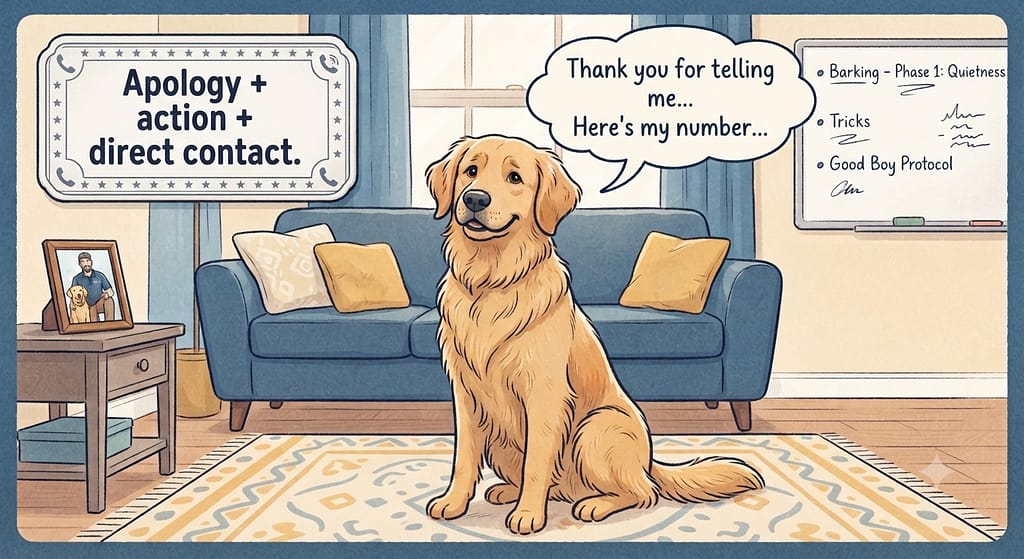
“Thank you for telling me. I truly appreciate it. We’re actively training, and I’m going to add a white noise machine near the door to help muffle sounds. Please always text me at [Number] if it happens again—I want to be a good neighbor.”
For building introductions and goodwill, see our apartment building introduction guide.
Why this works:
You thank them (disarms defensiveness), state your action plan, and give them direct contact (reduces management complaints).
Scenario 3: The neighbor who wants to “help” by petting your reactive dog.
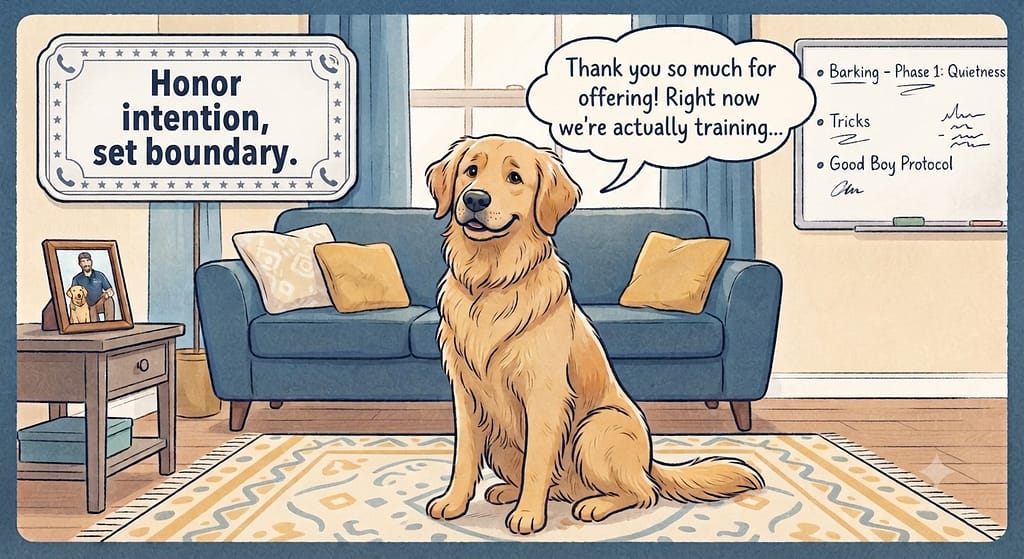
“Thank you so much for offering! Right now we’re actually training [Dog Name] to stay calm when people pass by. For now, the best help is just ignoring him—it teaches him that hallway neighbors are boring. Once he’s more relaxed, we’d love a proper introduction!”
Why this works:
You honor their intention while setting a boundary. Most people want to be helpful, not intrusive.
📊 Chapter 5: Quick Comparison – Best Tools for Hallway Barking
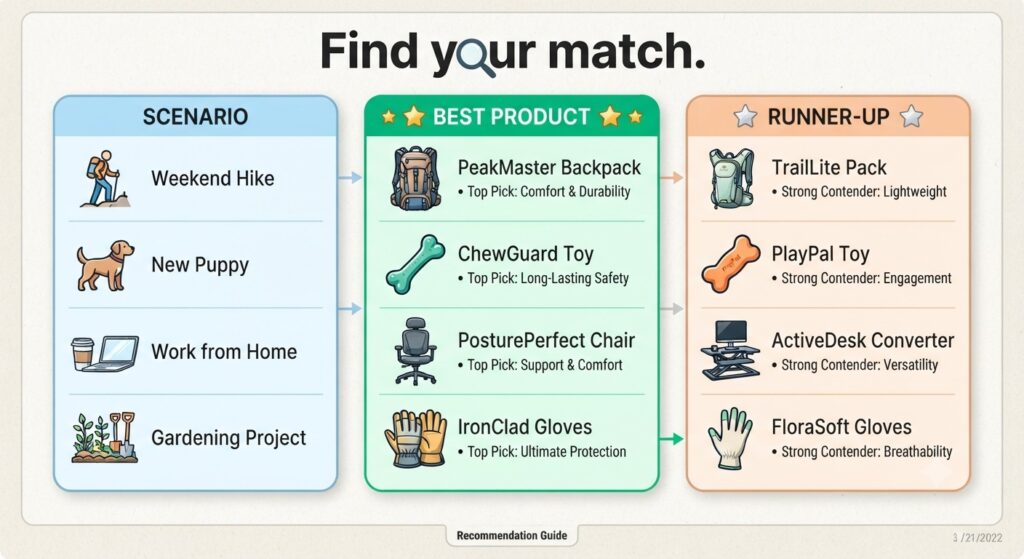
| Scenario | Best Product | Runner‑Up |
|---|---|---|
| Masking hallway sounds | LectroFan White Noise | Alexa/Google routine |
| Blocking door gap | Holikme Draft Stopper | Weatherstripping tape |
| Remote treat delivery | PetSafe Treat & Train | Furbo |
| Calming baseline | Adaptil Diffuser | Zesty Paws Calming Bites |
| Visual blocker | Rabbitgoo Window Film | Frosted glass spray |
| Door boundary | Regalo Baby Gate | Exercise pen |
🧠 When You Need Professional Help
Red flags that signal this is beyond DIY:
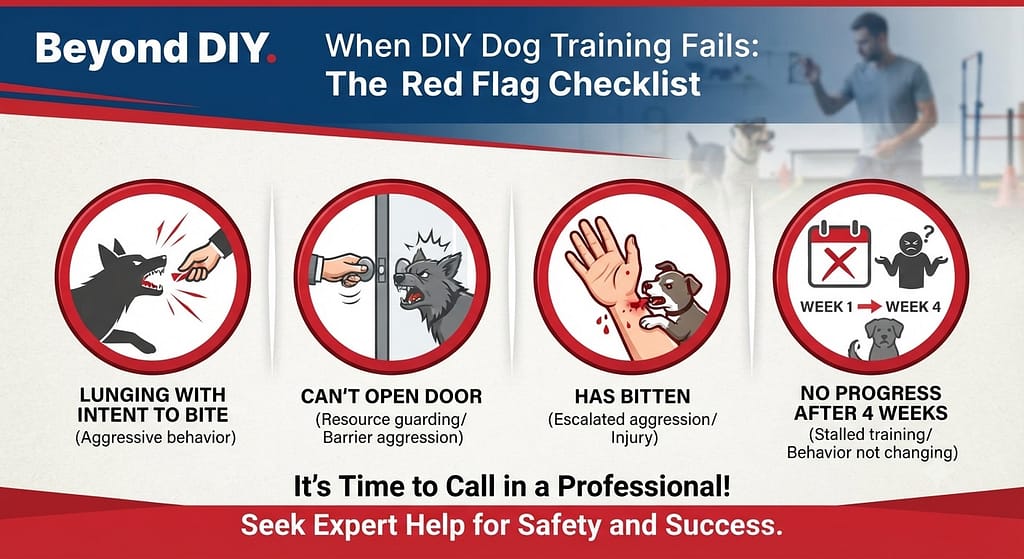
- The dog lunges at the door with the intent to bite
- You cannot open your door without barking
- A dog has bitten someone who entered
- You’ve done 4+ weeks of consistent training with zero progress
What to do:
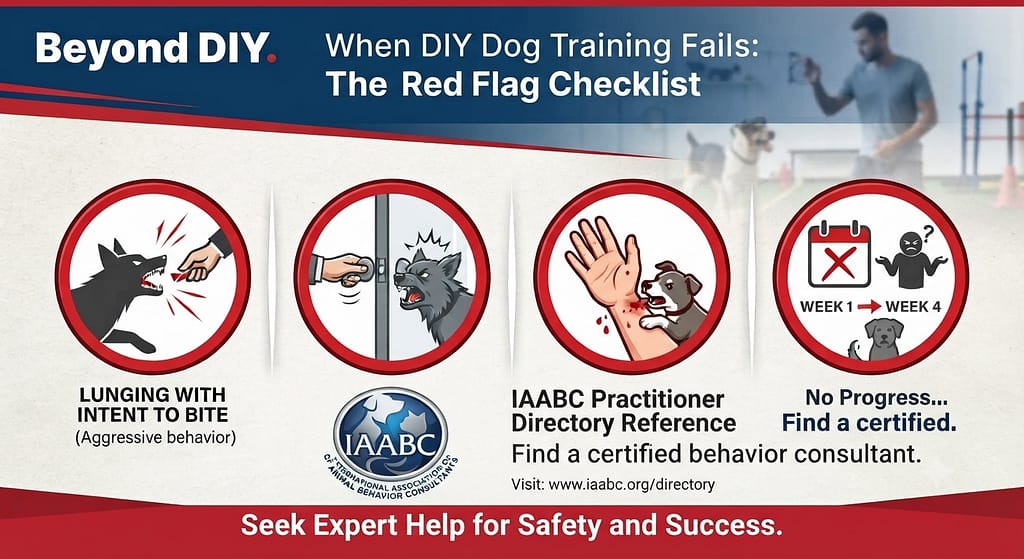
Seek a certified behavior consultant (IAABC or CCPDT) who specializes in aggression and reactivity. Many offer virtual sessions—ideal for apartment setups.
🛒 Affiliate Resource:
IAABC Practitioner Directory – Free search for certified behavior consultants.
👉 Link: IAABC.org
❓ Chapter 7: Frequently Asked Questions
Q: My dog only barks when I’m not home. What do I do?
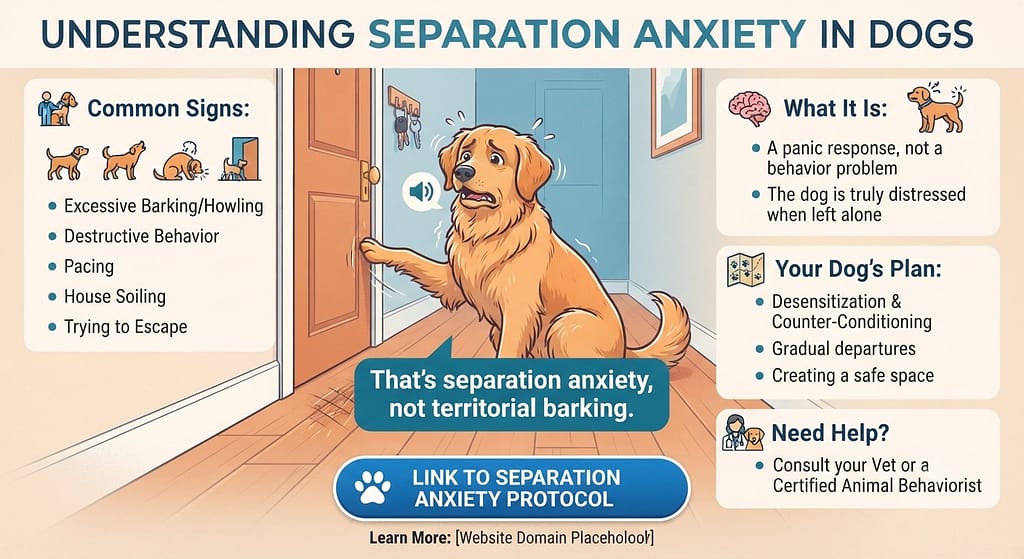
A: That’s separation anxiety, not territorial barking. See our Separation Anxiety Protocol. You need to address the panic of being alone, not the hallway sounds.
For leash reactivity on walks, see our leash reactivity guide
Q: Should I let my dog “bark it out”?
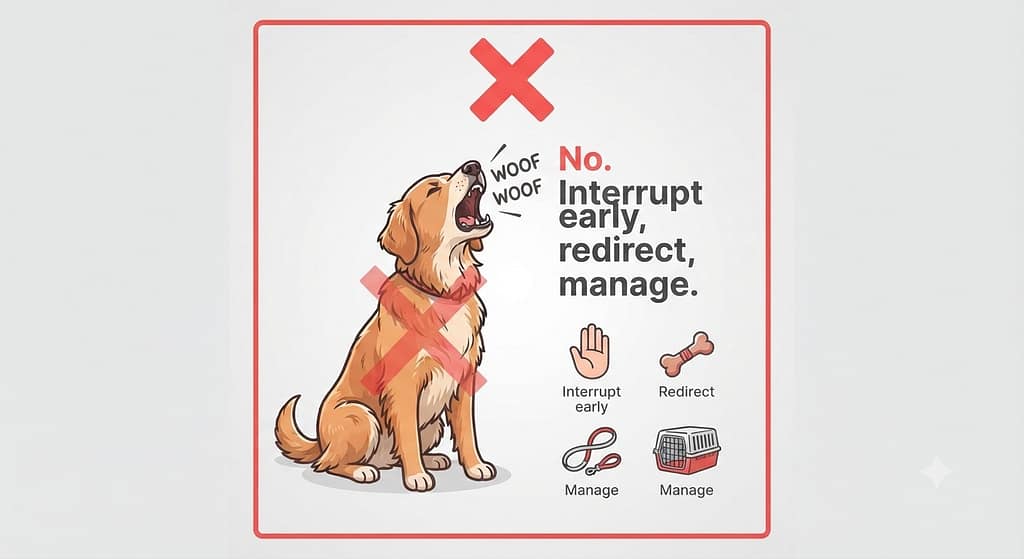
A: No. In an apartment, letting a dog bark reinforces the behavior and annoys neighbors. Interrupt early, redirect, and manage the environment.
Q: What if my neighbor’s dog starts barking at MY dog?
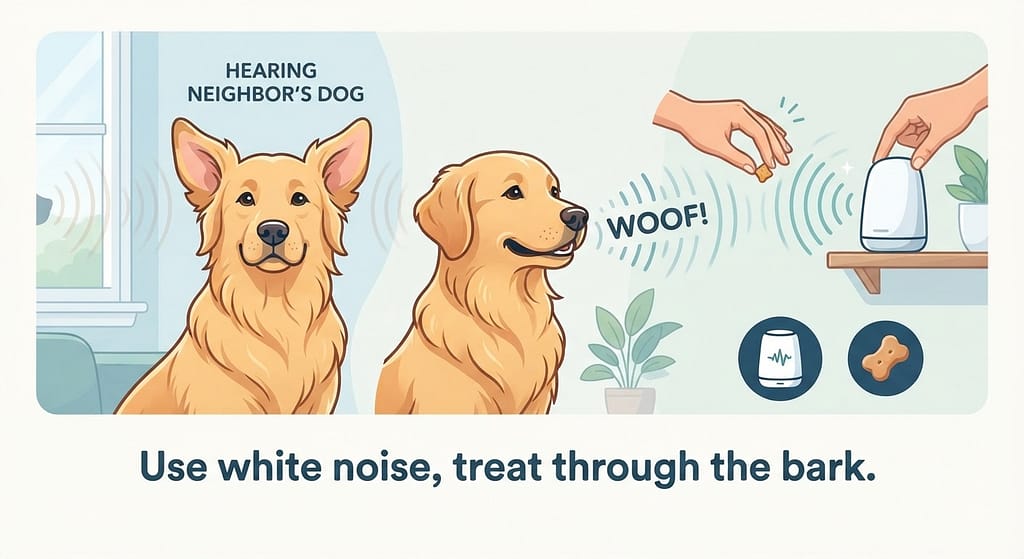
A: You can’t control your neighbor’s dog, but you can control yours. Use white noise, treat through the bark, and close interior doors to create distance. If it’s chronic, have a polite conversation with the neighbor—they’re likely struggling too.
Q: My dog barks at the elevator ding but not footsteps. Why?
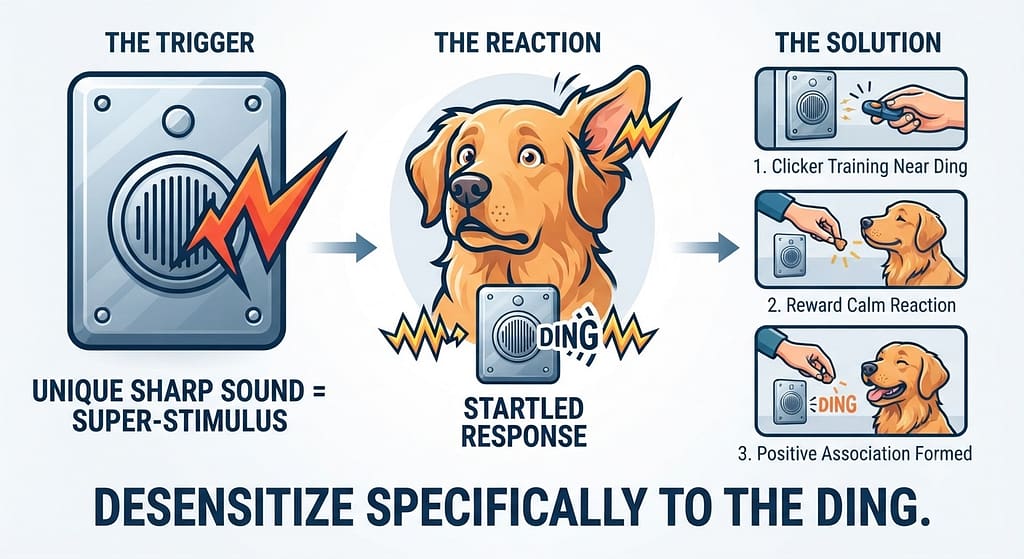
A: The ding is a unique, sharp sound that predicts door opening and people exiting. It’s a super‑stimulus. You need to desensitize specifically to the ding—play recordings at low volume, pair with treats, and gradually increase.
🧘 The Hallway Is Just the Hallway
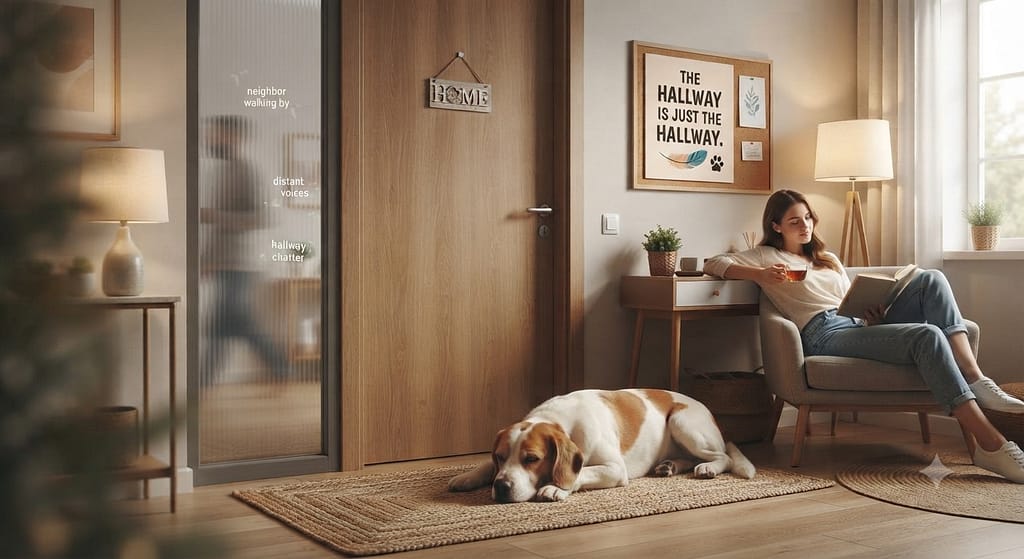
Your dog doesn’t need to love the hallway.
He just needs to find it boring.
That’s it. Not guard duty. Not alert. Not a protector.
Boring.
And boring is absolutely trainable.
Start today. Crack the door. Play the sounds. Recruit a neighbor. Use the scripts.
Your hallway will still echo.
The elevator will still ding.
But your dog?
He’ll be looking at you, waiting for his chicken.
And your neighbors? They’ll just be neighbors again—not targets, not threats, not complainants.
That’s the goal. That’s the win.
Now go get that win. 🐾
🐾 — Apartment Dog Guide (ADG)
Living large in small spaces, one paw at a time. That’s the apartment dog life—see you in the next guide!.


