
You know the sound.
Keys jingle.
You reach for the doorknob.
And before you’ve even stepped into the hallway, it starts.
A whine. Then a bark. Then the full‑throated howl echoes through the entire floor.
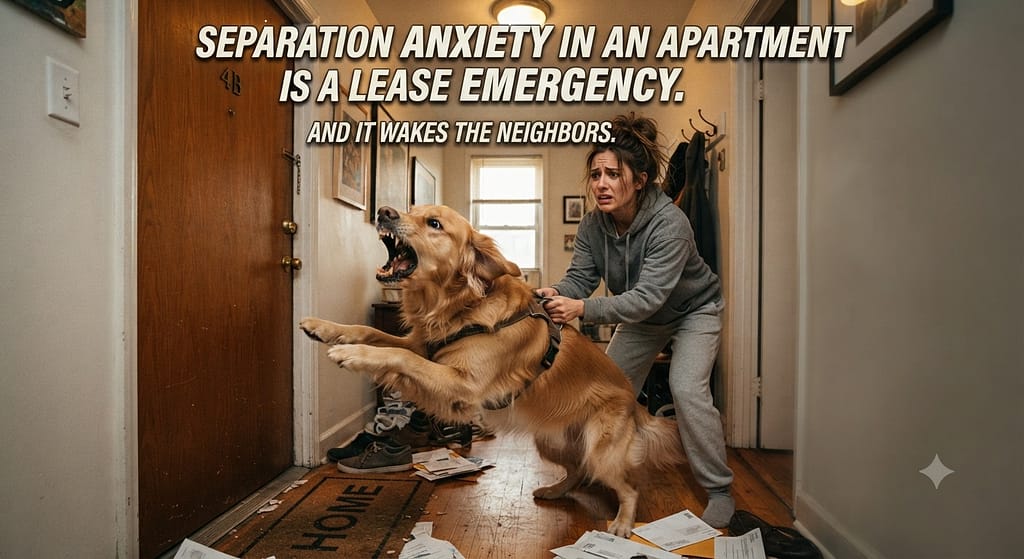
Your dog isn’t being “bad.”
Your dog is panicking.
And because you live in an apartment, that panic isn’t just your problem—it’s your neighbor’s problem.
The family next door. The shift worker downstairs. The property manager who “understands dogs” but has a waiting list of applicants.
Separation anxiety in a house is heartbreaking.
Separation anxiety in an apartment is a lease emergency.
But here’s the truth nobody tells you:
You don’t need to move. You don’t need to rehome your dog. You don’t need to quit your job.
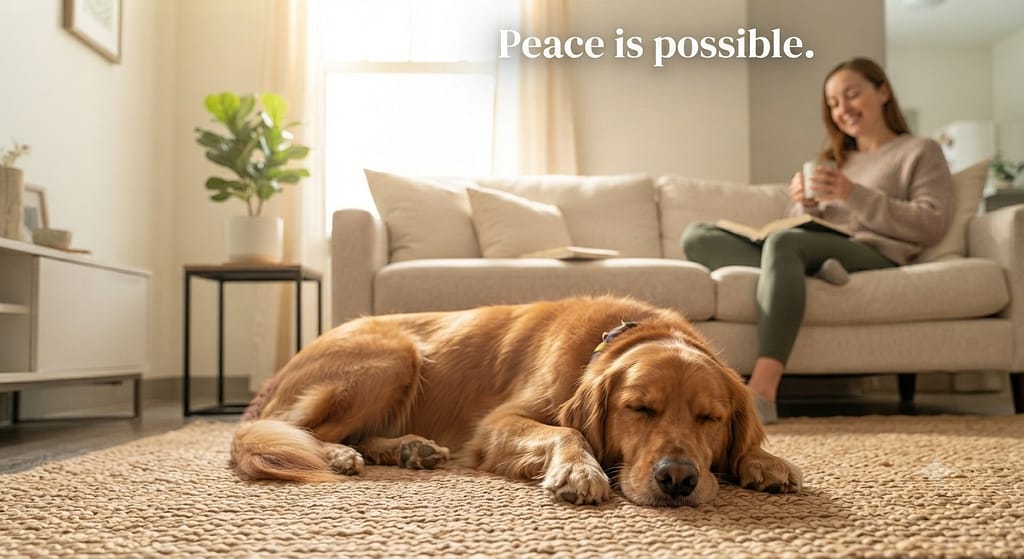
You need a protocol designed for apartments—one that respects thin walls, close quarters, and the very real limits of what you can ask your neighbors to tolerate.
This is the protocol.
We’ll cover:
· ✅ The difference between separation anxiety and boredom (most people guess wrong)
· ✅ The 10‑day desensitization reset
· ✅ Apartment‑specific management tools (soundproofing, neighbor notes, cameras)
· ✅ Products that actually help—and the ones that don’t
· ✅ What to say to neighbors when you’re in the middle of training
Let’s give your dog peace.
And your neighbor’s peace. 🏢🐕
🔍 Why Apartment Separation Anxiety Is Different
🧠 Truth #1: Your Neighbors Are Part of the Training Environment
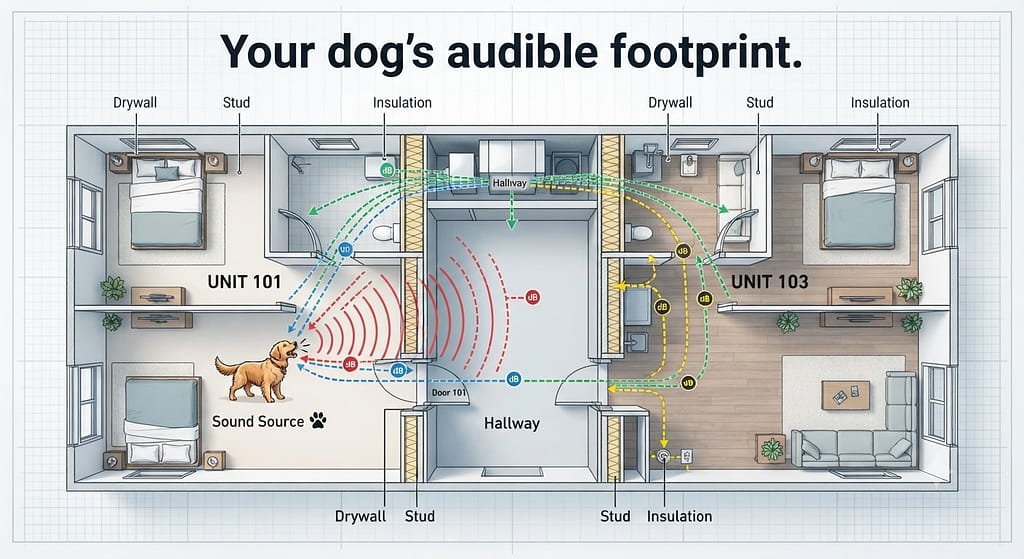
In a house, a howling dog is muffled by drywall and distance.
In an apartment, that same howl travels through HVAC vents, under doors, and across shared walls.
You’re not just training your dog.
You’re managing your dog’s audible footprint.
🧠 Truth #2: Space Constraints Amplify Stress
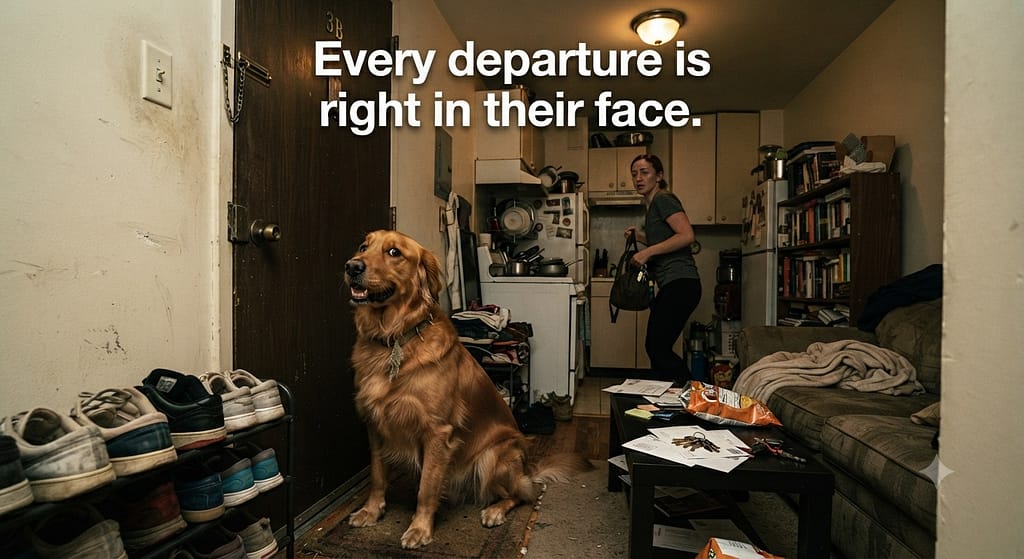
Apartments lack a “safe decompression zone.” No yard to sniff.
No back bedroom to retreat to. The front door is often inches from where your dog sleeps, eats, and waits.
Every departure is right in their face.
🧠 Truth #3: You Can’t “Wait It Out”
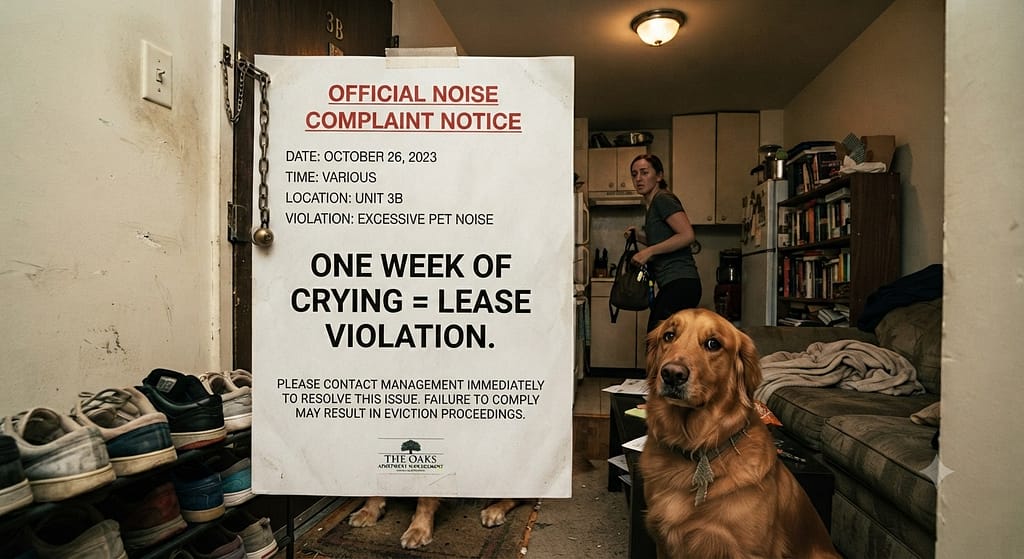
In a house, you can let a dog cry for a week while extinction kicks in.
In an apartment, one week of crying gets you a noise complaint, a lease violation, or worse.
Your timeline is compressed. Your margin for error is zero.
That’s why this protocol is designed for rapid, visible progress—not theoretical perfection.
💬 Interactive Pause:
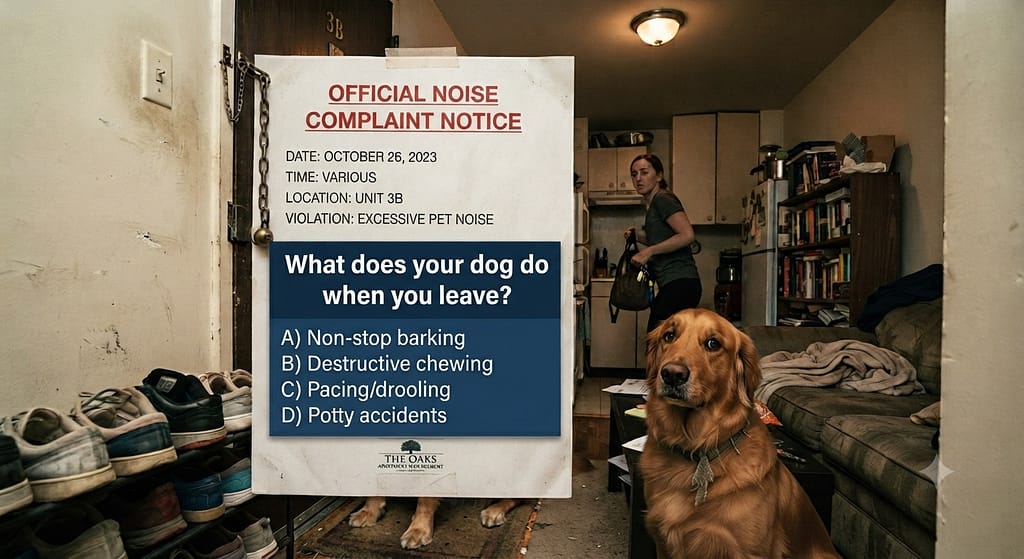
Which of these sounds most like your dog when you leave?
(A) Non-stop barking/howling
(B) Destructive chewing/scratching at doors
(C) Pacing/drooling/panicked breathing
(D) Potty accidents despite being housetrained
Keep this in mind—each profile needs a slightly different approach.
🧠 Is It Separation Anxiety or Just Boredom?
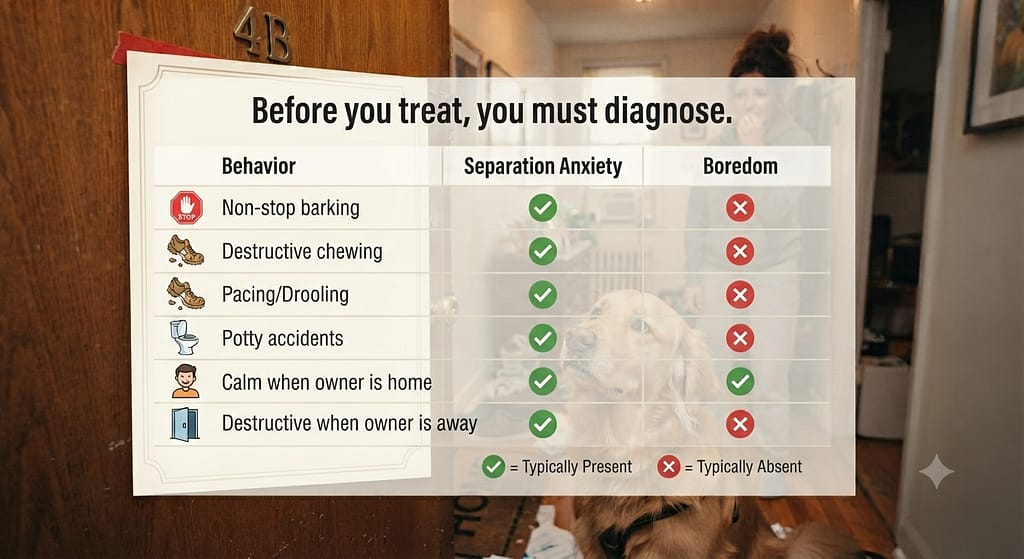
Before you treat, you must diagnose.
| Symptom | Separation Anxiety | Boredom / Lack of Exercise |
|---|---|---|
| Starts immediately after you leave | ✅ Almost always | ❌ Usually delayed |
| The dog follows you constantly at home | ✅ Common | ❌ Independent play possible |
| Destroys items near exits (door frames, windows) | ✅ Yes | ❌ Destroys toys, not barriers |
| Calms down after 20-30 minutes | ❌ Rarely | ✅ Yes |
| Responds to more exercise | ❌ Minimal effect | ✅ Significant effect |
The 80/20 Rule:
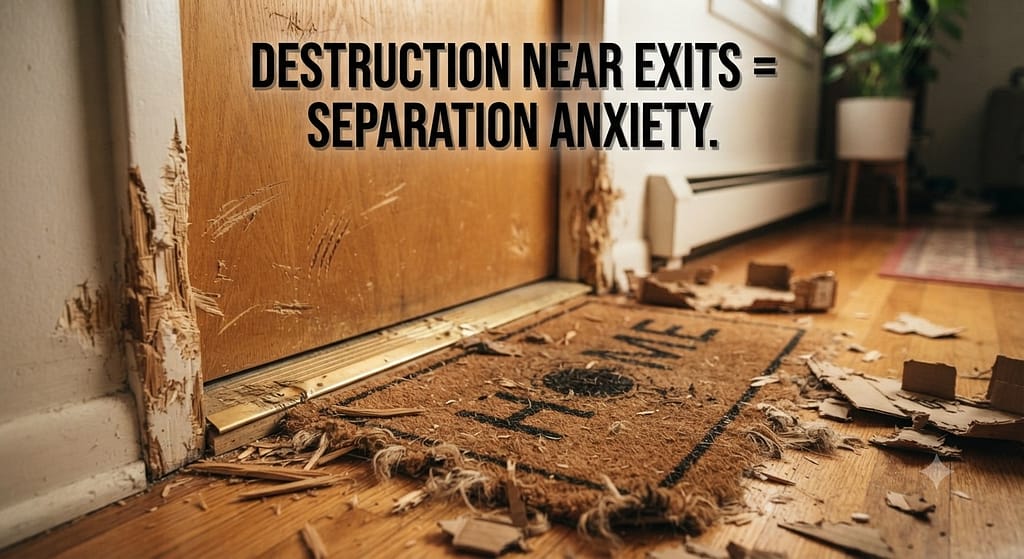
If your dog is destructive with your belongings near exit points and starts before your car leaves the parking lot, it’s almost certainly separation anxiety.
If your dog chews up the couch at hour three, you probably need a longer morning walk and a stuffed Kong.
🛒 Affiliate Pick:
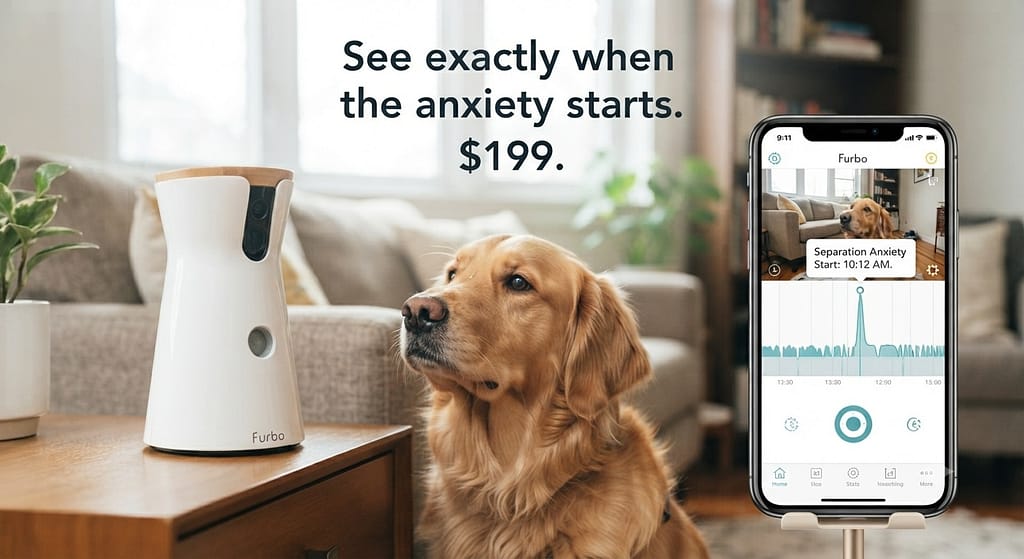
Furbo 360° Dog Camera – See exactly when the anxiety starts. Toss treats remotely. Alerts for barking. $199
👉 Shop: Furbo 360
📋 The 10-Step Apartment Separation Anxiety Protocol
This protocol is designed for 10 consecutive days. Do not skip days. Do not rush.
Step 1: The Departure Audit (Day 1)
What to do:
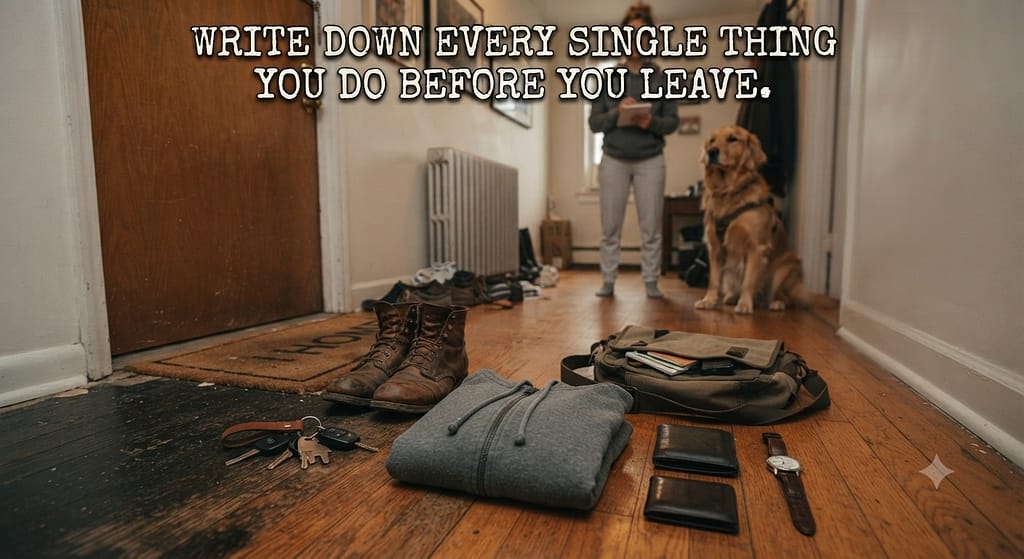
Write down every single thing you do before you leave.
Keys.
Shoes.
Jacket.
Bag.
Coffee mug.
Turning off lights.
One last kiss goodbye.
Why this works:
Your dog isn’t reacting to “you leaving.” Your dog is reacting to the 10‑minute pre‑departure ritual that predicts you leaving.
The fix:
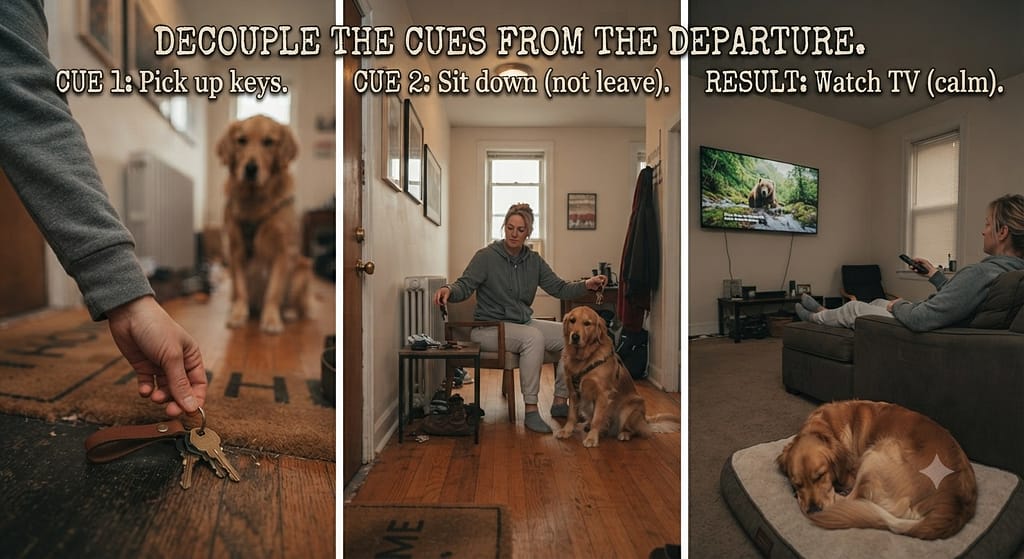
Perform these cues randomly, then stay home.
Pick up keys. Watch TV.
Put on shoes. Make dinner.
Open the door. Close it. Sit down.
Decouple the cues from the departure.
Step 2: The Open Door Party (Day 2)

What to do:
Open your apartment door while you’re still inside. The dog is leashed or behind a baby gate. Feed treats continuously—close door. Stop treats.
Repeat 10 times.
Why this works:
The open door becomes a predictor of treats, not abandonment.
Step 3: The Step-Out (Day 3)
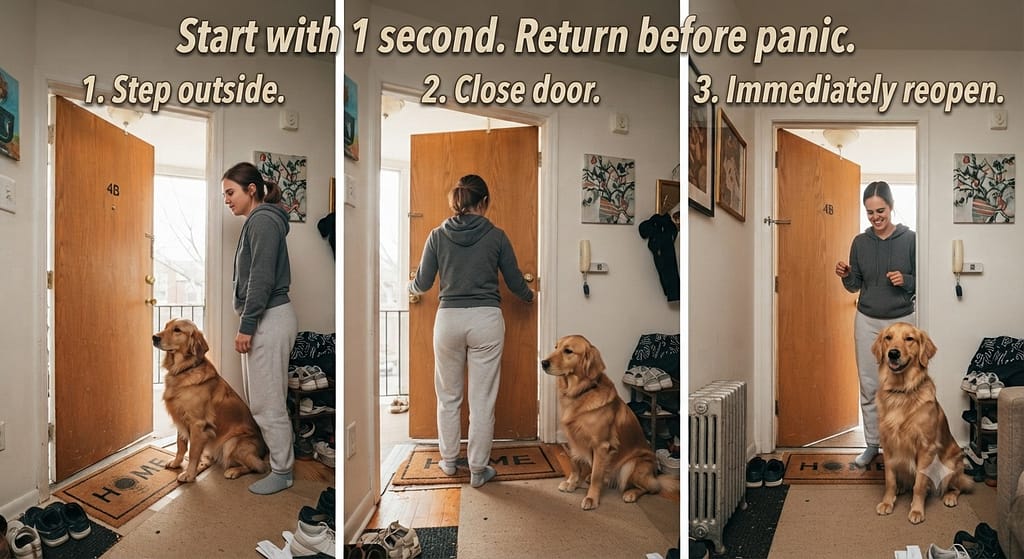
What to do:
Step outside. Close the door. Immediately reopen. Return before your dog makes a sound. Treat.
Start with 1 second. Then 2 seconds. Then 5 seconds.
The rule:
Never push to the point of barking. If your dog barks at 5 seconds, go back to 3 seconds. Success is always returning before the panic starts.
🛒 Affiliate Pick:
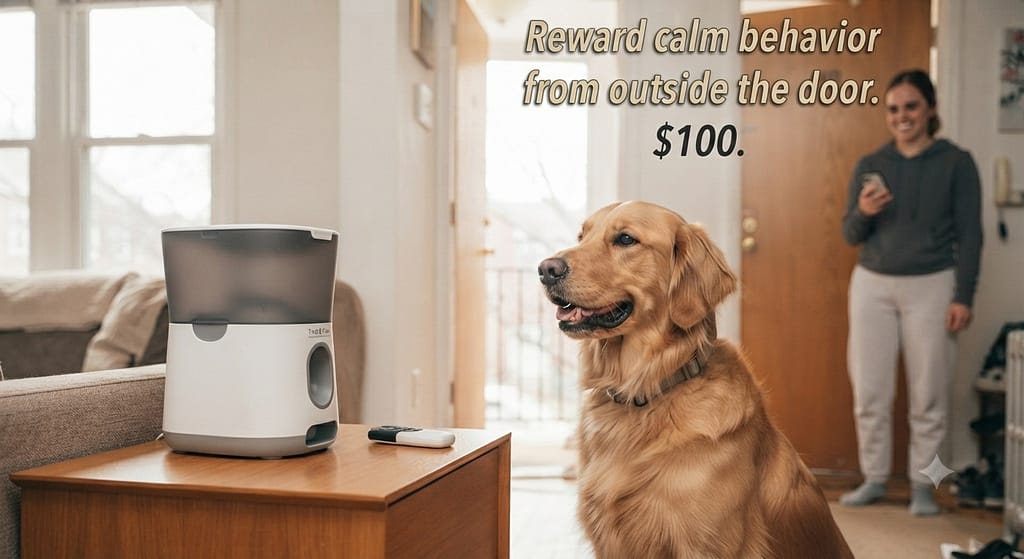
PetSafe Treat & Train – Remote dispensing trainer. Lets you reward calm behavior from outside the door. $100
👉 Shop: PetSafe Treat & Train
Step 4: The Elevator/Lobby Variable (Day 4)
What to do:
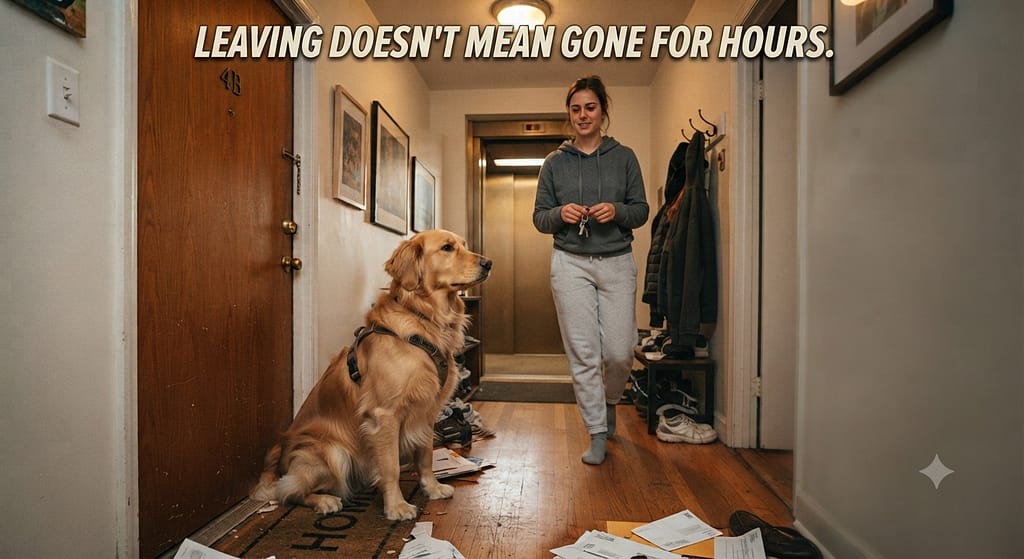
Now you leave—but not really.
Walk to the elevator. Come back.
Walk to the lobby. Come back.
Stand outside the building door. Come back.
Why this works:
Your dog learns: leaving doesn’t mean gone for hours. Duration is the variable, not the act itself.
Step 5: The “Boring Return” (Day 5)
What to do:
When you return, zero celebration.
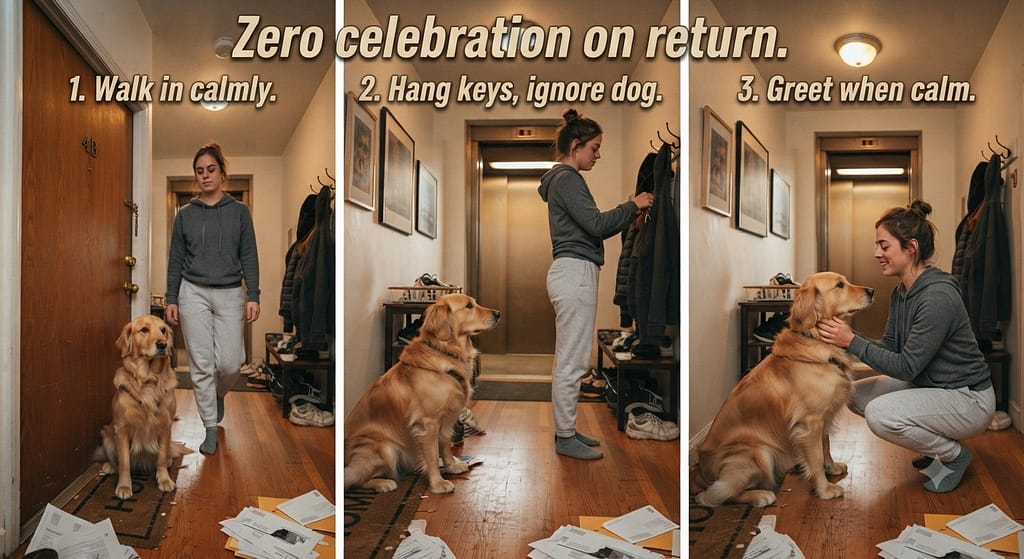
No “HI BABY!!” No high-pitched voices. No excited touching.
Walk in. Hang your keys. Put down your bag. Wait for calm. Then a quiet greeting.
Why this works:
If returns are explosive, departures become traumatic. Your dog learns: “When they leave, I panic. When they come back, I explode.” Break the cycle.
Step 6: Soundproofing & Masking (Day 6)
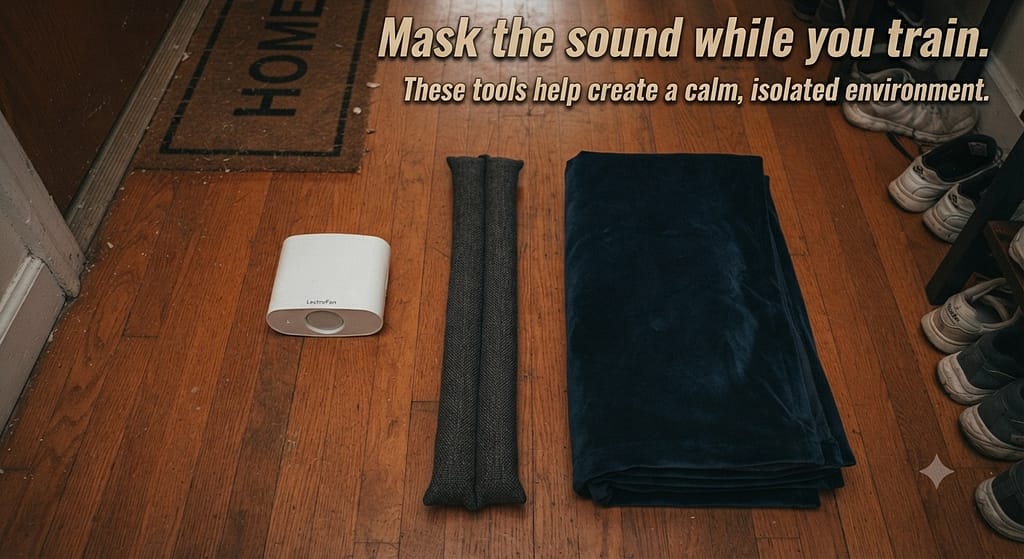
Apartment reality:
Even while you train, neighbors hear things.
Immediate fixes:
- White noise machine near shared walls
- Door draft stoppers (block sound + prevent door scratching)
- Heavy curtains over windows facing hallways
- “Do Not Disturb” note for delivery drivers (stop door-knock triggers)
🛒 Affiliate Pick:
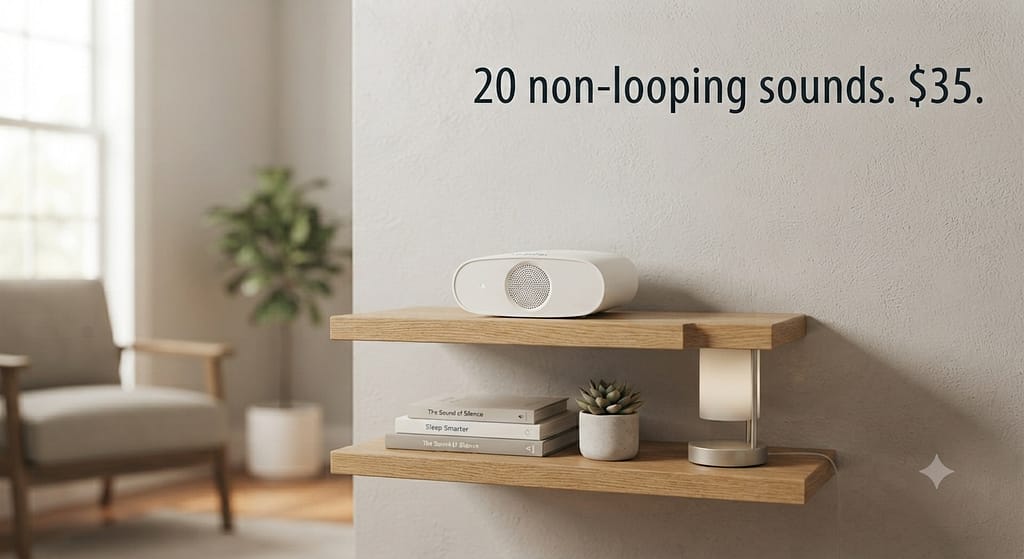
LectroFan High Fidelity White Noise Machine – 20 non-looping sounds, masks dog barks from neighbors AND outside noise from your dog. $35
👉 Shop: LectroFan
🛒 Affiliate Pick:
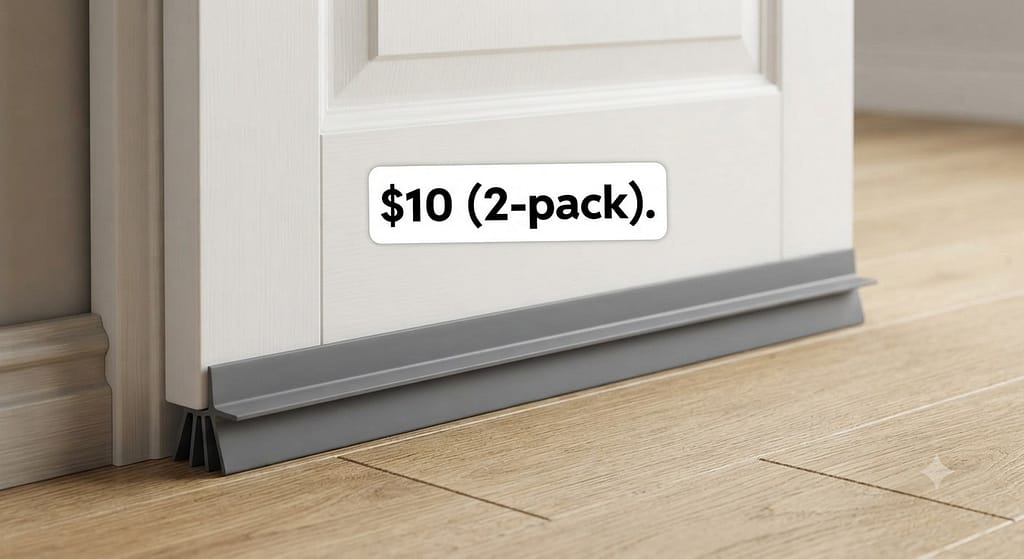
Holikme Door Draft Stopper – Adhesive, slides under the gap, and also deadens sound transmission. $10 (2-pack)
👉 Shop: Holikme Draft Stopper
Step 7: The Apartment Enrichment Layer (Day 7+)
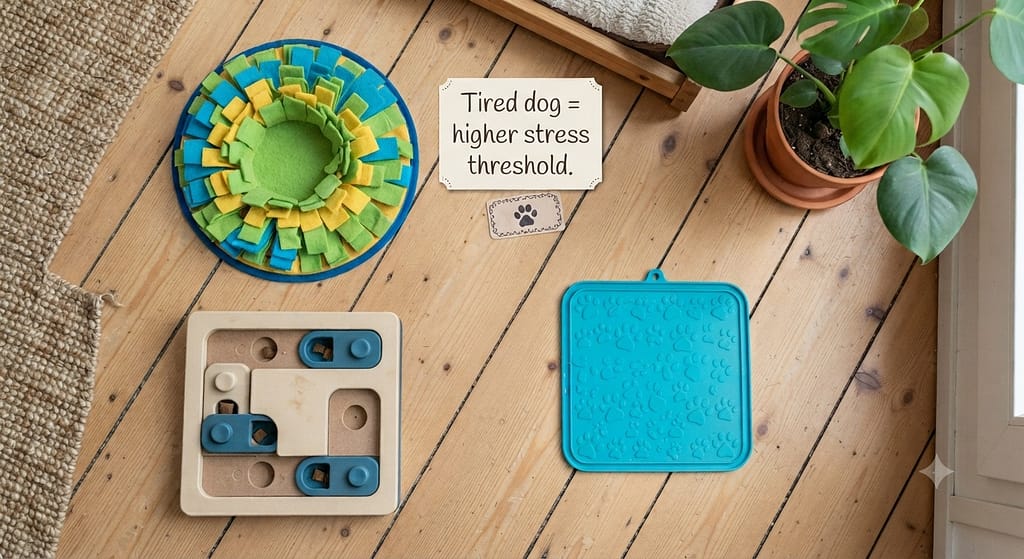
A tired dog isn’t cured, but a tired dog has a higher threshold for stress.
Apartment-friendly enrichment:
- Snuffle mats (fold flat)
- Frozen Kongs (contain mess on a towel)
- Lick mats (stick to wall or tile)
- Puzzle feeders (no batteries, no noise)
🛒 Affiliate Pick:

West Paw Toppl – Interactive treat toy, easier to fill than Kong, dishwasher-safe, bounces unpredictably. $16
👉 Shop: West Paw Toppl
🛒 Affiliate Pick:
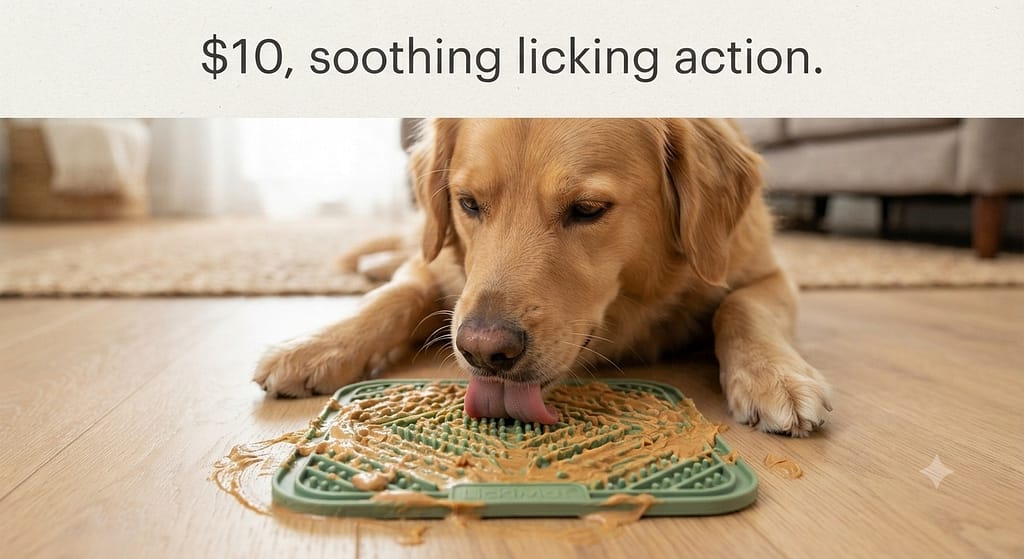
LickiMat Classic – Soothing licking action releases endorphins. Smear peanut butter or yogurt, freeze, and attach to the wall. $10
👉 Shop: LickiMat
Step 8: Calming Supplements & Pheromones (Day 8+)

These are aids, not cures. Use them to lower the baseline so your desensitization can succeed faster.
Evidence-based options:
- Adaptil diffuser (synthetic appeasing pheromone)
- Zylkene (hydrolyzed milk protein, mild calming)
- Vetriscience Composure chews (thiamine, L-theanine)
🛒 Affiliate Pick:
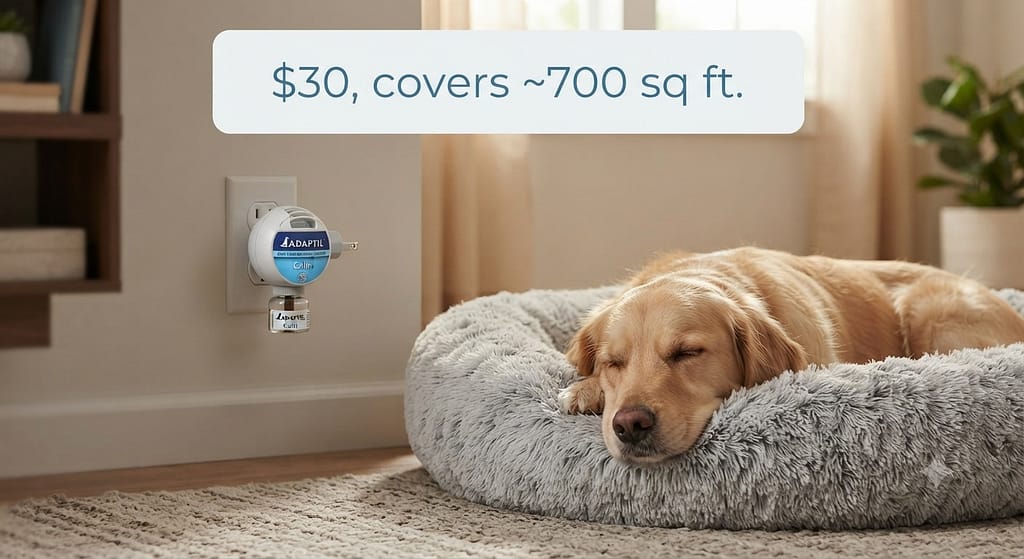
Adaptil Diffuser – Plugs into the wall near the dog’s resting area. Covers ~700 sq ft. 30-day refill. $30
👉 Shop: Adaptil
🛒 Affiliate Pick:

Zesty Paws Calming Bites – Suntheanine, chamomile, thiamine. Soft chews, chicken flavor. $25
👉 Shop: Zesty Paws
Step 9: The Neighbor Goodwill Campaign (Day 9)
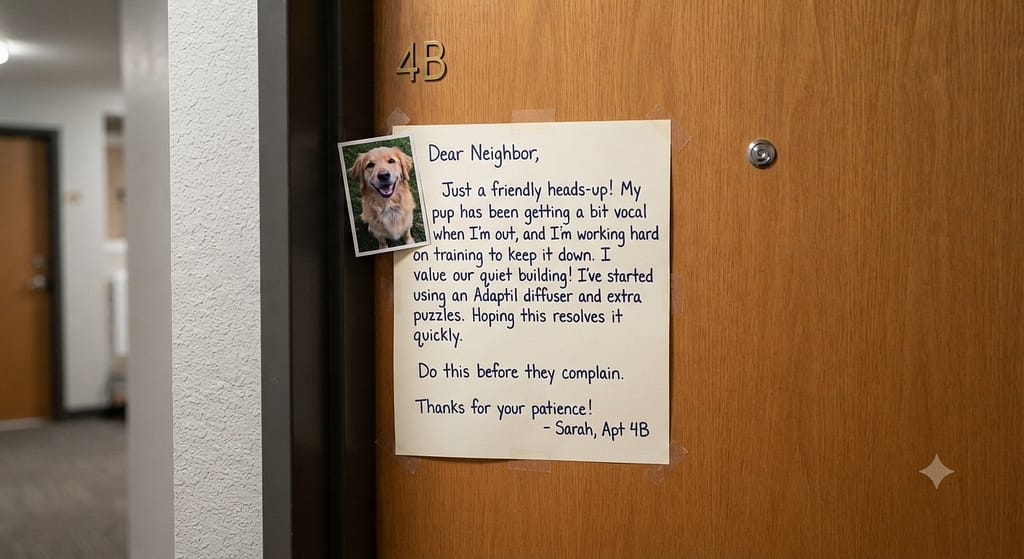
You’re training. It’s noisy. Neighbors are affected.
Do this before they complain:
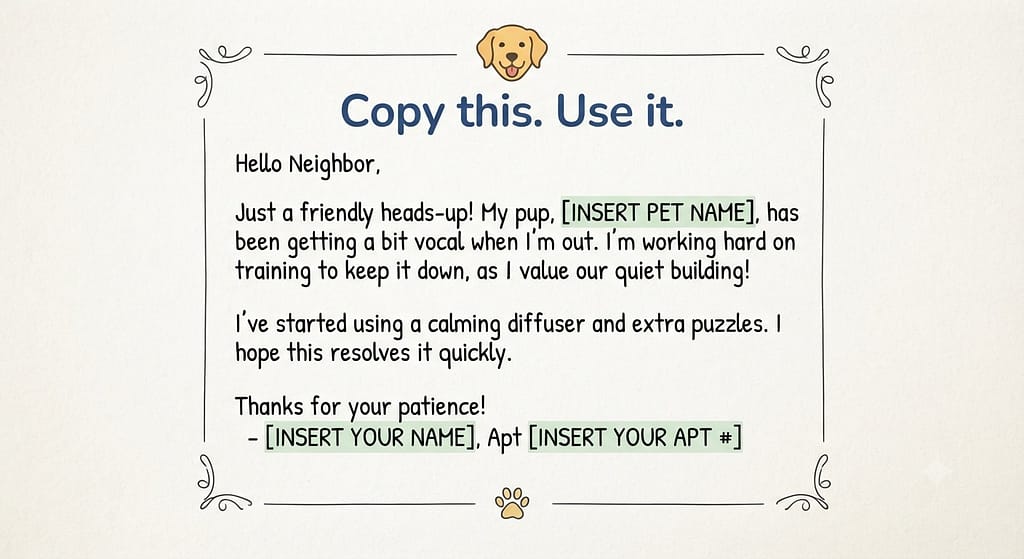
“Hi [Neighbor Name]! I’m in #[Apt]. You might have heard my dog [Dog Name] while I’m out—we’re right in the middle of a separation anxiety training program. There may be some noise this week, but we’re making fast progress. Please text me at [Number] if it ever gets excessive—I want to be a good neighbor. Thanks for your patience!”
Why this works:
- You control the narrative
- You acknowledge the impact
- You give them a direct line (reduces management complaints)
🛒 Affiliate Pick:
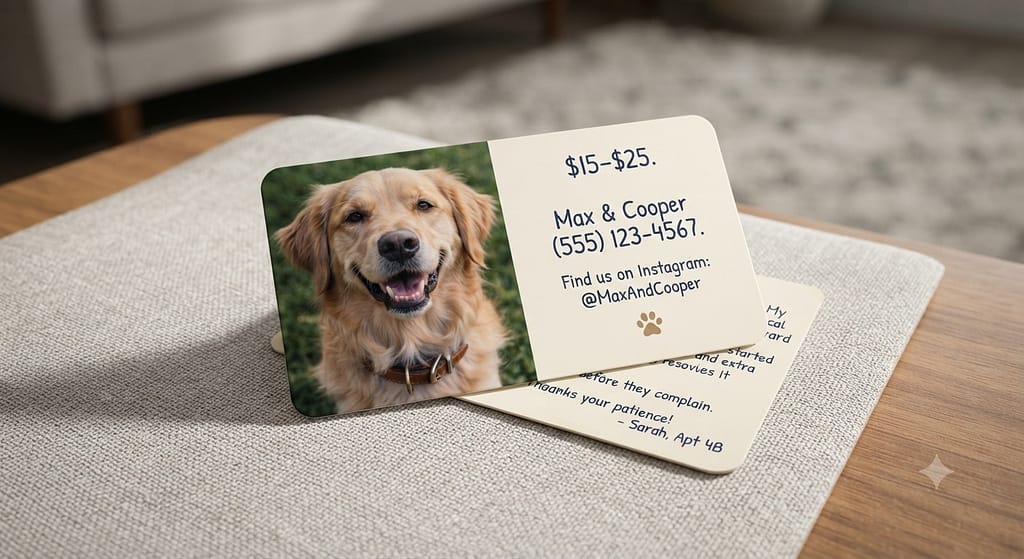
Moo Cards Custom Pet Cards – Leave one with the note. Includes your dog’s photo and your number. $15–$25
👉 Shop: Moo Pet Cards
Step 10: The “Real Departure” Test (Day 10)
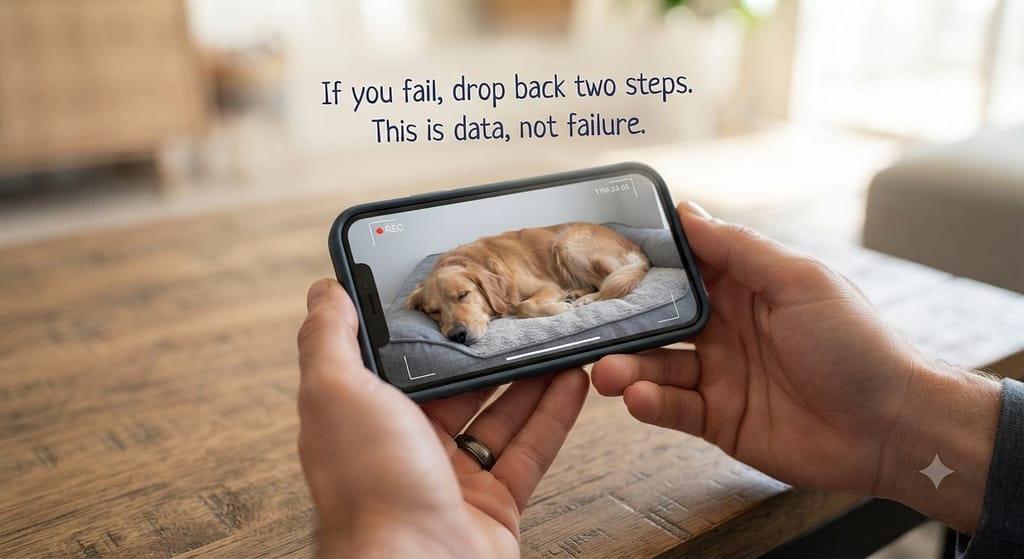
What to do:
Leave for 5 minutes. Then 15. Then 30.
Use your camera to monitor. Do not return early if your dog is calm. Do not return late if your dog is panicking—you’ll reinforce the panic.
Success is:
The dog settles within 10 minutes. No destruction. No sustained barking.
If you fail, drop back two steps. This is not a failure. This is data.
📊 Quick Comparison – Best Gear for Apartment Separation Anxiety
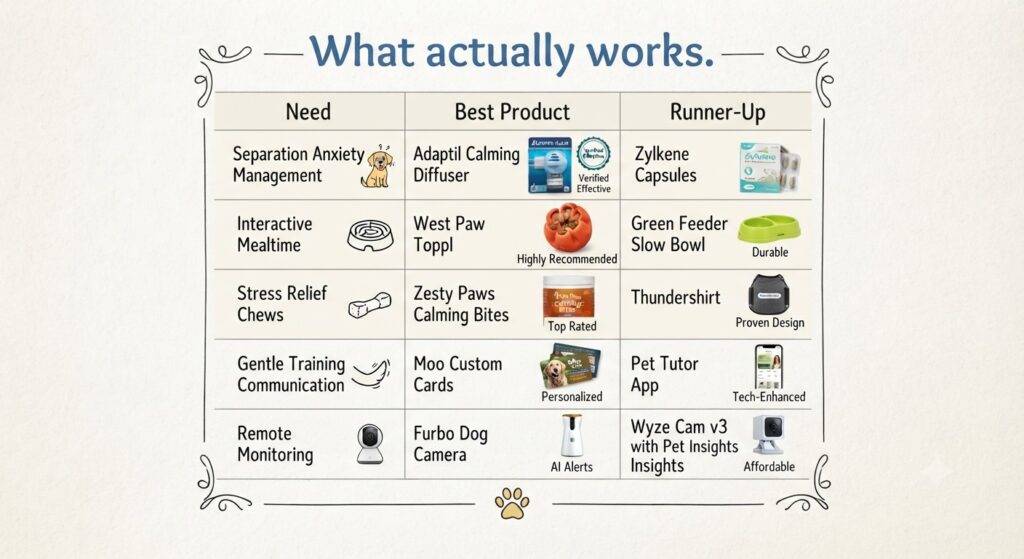
| Need | Best Product | Runner-Up |
|---|---|---|
| See what happens while you’re gone | Furbo 360 | Wyze Cam v3 |
| Remote treat delivery | PetSafe Treat & Train | Furbo |
| Calming pheromones | Adaptil Diffuser | ThunderEase |
| Anxiety wrap | ThunderShirt | BarkBay Calming Coat |
| Sound masking | LectroFan White Noise | Amazon Echo (Alexa) |
| Door scratching prevention | Holikme Draft Stopper | Slip-Proof Door Shield |
| Licking enrichment | LickiMat | West Paw Toppl |
| Calming supplement | Zesty Paws Calming Bites | Vetriscience Composure |
| Interactive puzzle | Outward Hound Hide-A-Squirrel | Nina Ottosson Dog Brick |
🧠 When You Need Professional Help
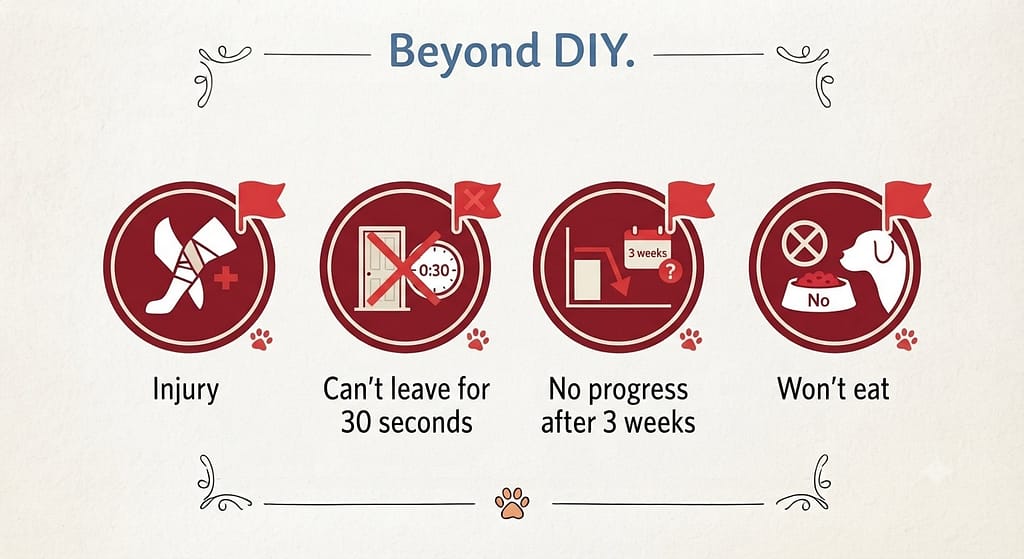
Red flags that signal this is beyond DIY:
- Dogs injure themselves (broken teeth, bloody paws)
- You cannot leave for 30 seconds without panicking
- You’ve done 3+ weeks of consistent training with zero progress
- The dog won’t eat any food, even high-value, when alone
What to do:
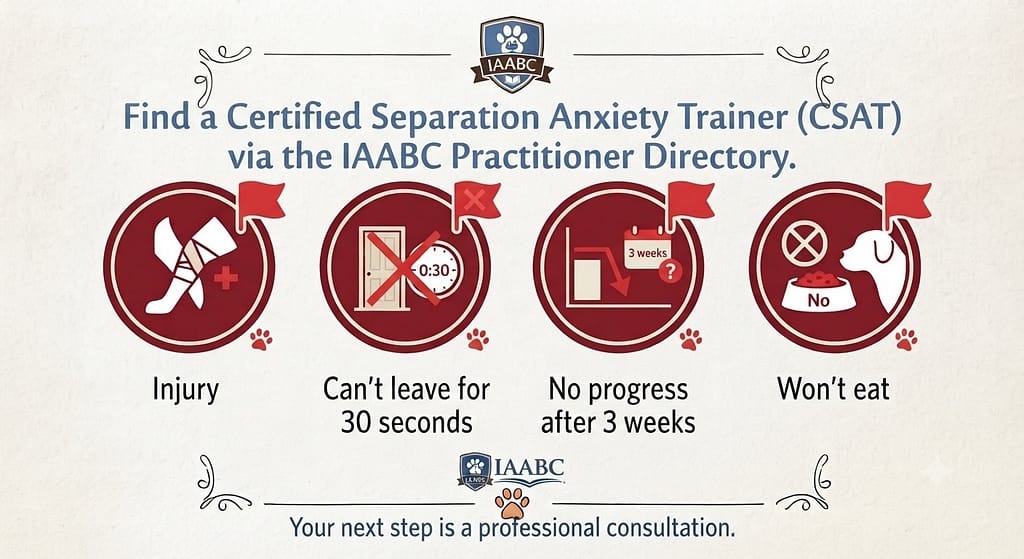
Seek a CSAT (Certified Separation Anxiety Trainer). These specialists do remote consultations and design protocols specific to your dog.
🛒 Affiliate Resource:
IAABC Practitioner Directory – Find a certified behavior consultant near you. Free search.
👉 Link: IAABC.org
❓ Frequently Asked Questions
Q: My dog only barks when I leave for work. Weekends are fine. Is that separation anxiety?
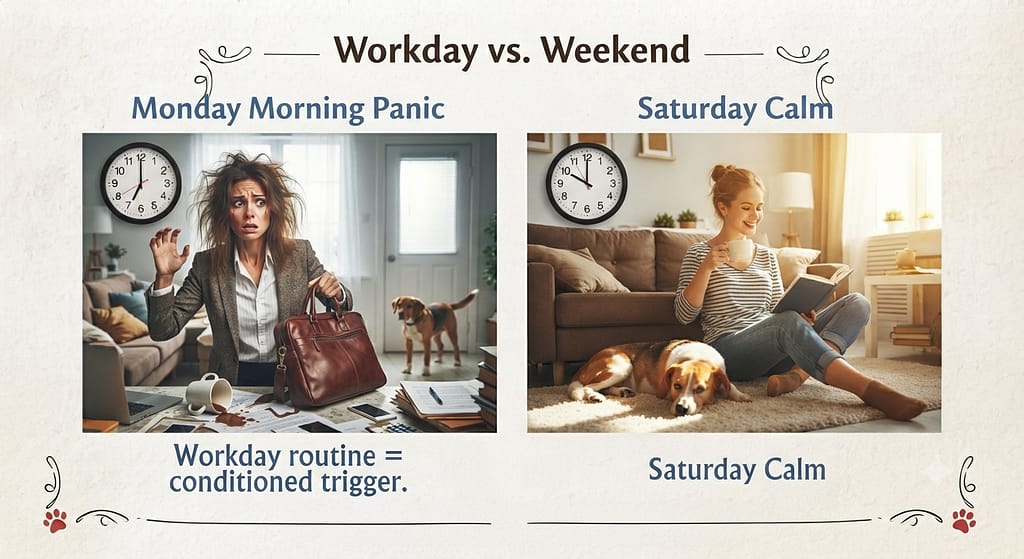
A: Yes. The predictability of the workday routine has become a conditioned trigger. Your dog isn’t anxious all the time—but the context of “Monday morning” cues panic. The protocol still works; you’ll just need to practice on weekends too.
Q: Should I get another dog to keep mine company?
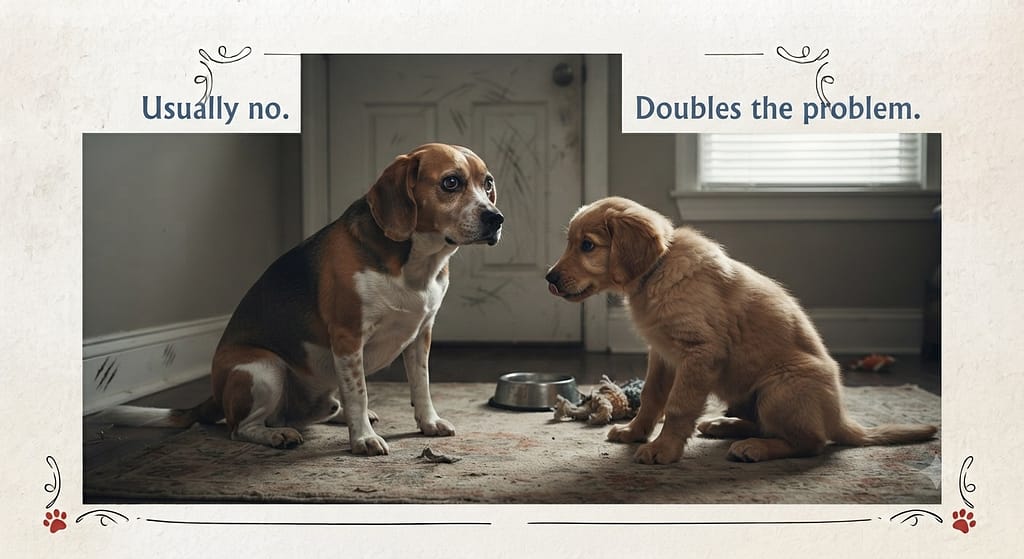
A: Usually no. Separation anxiety is about attachment to you, not loneliness for canine company. A second dog often learns the anxious behavior, doubling your problem. Exceptions exist, but this is not a first-line solution.
Q: Can I use a crate?
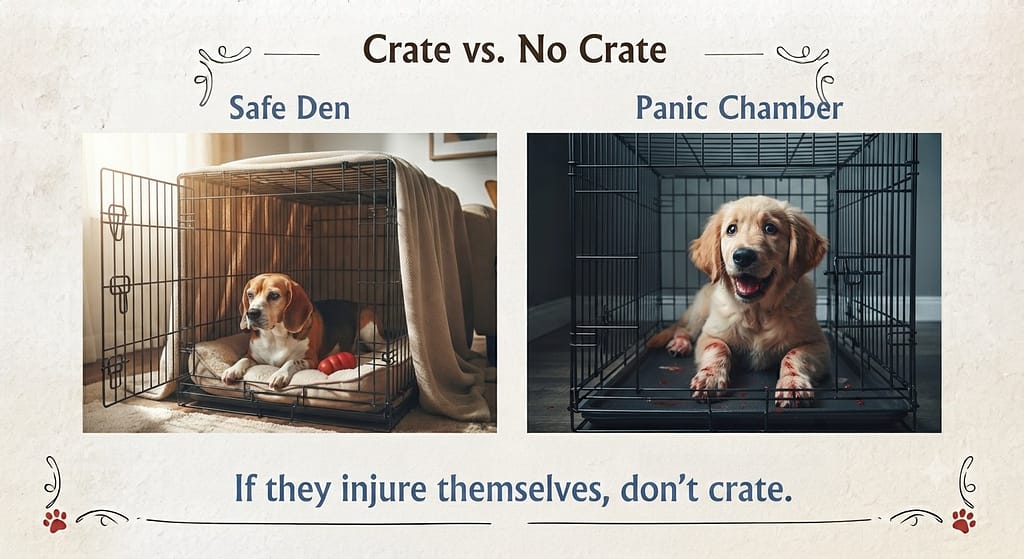
A: For some dogs, a crate is a safe den. For others with confinement anxiety, it’s a panic chamber. If your dog destroys crates or injures themselves trying to escape, do not crate. Use a puppy-proofed room or exercise pen.
Q: My neighbor complained. What do I say?
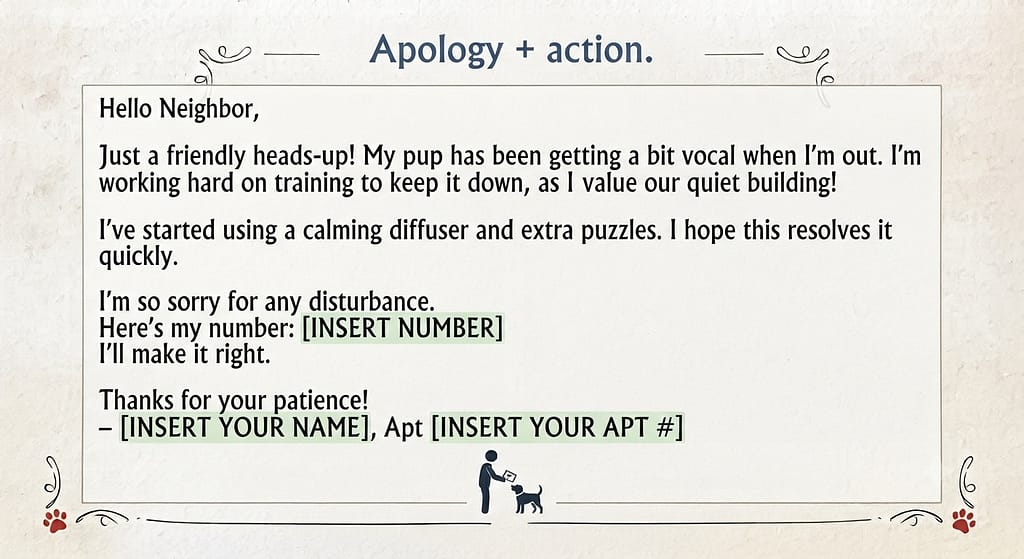
A: Use the apology + action script:
“I’m so sorry. You’re right—that was unacceptable. We’re working with a trainer and I’ve started a new protocol. Here’s my number. Please text me immediately if you hear it again. I’ll make it right.”
Then actually make it right. Gift card. Handwritten note. Visible effort.
🧘 Peace Is Possible

Separation anxiety in an apartment isn’t just a dog problem.
It’s a community problem.
And that means the solution has to respect both your dog’s emotional life and your neighbors’ right to quiet enjoyment of their home.
The good news?
The same walls that carry sound also contain safety.
Your apartment can become a secure base, not a pressure cooker.
Start with Step 1 today. Just the departure audit. Just observing.
Then tomorrow, the open-door party.
Small steps. Consistent effort. Visible progress.
Your dog wants to feel safe.
Your neighbors want peace.
You can give both.
And when you do, that sound you dread most will be replaced by something else:
Quiet.
🐾 — Apartment Dog Guide (ADG)
Living large in small spaces, one paw at a time. That’s the apartment dog life—see you in the next guide!.


