
Let’s ask you something…
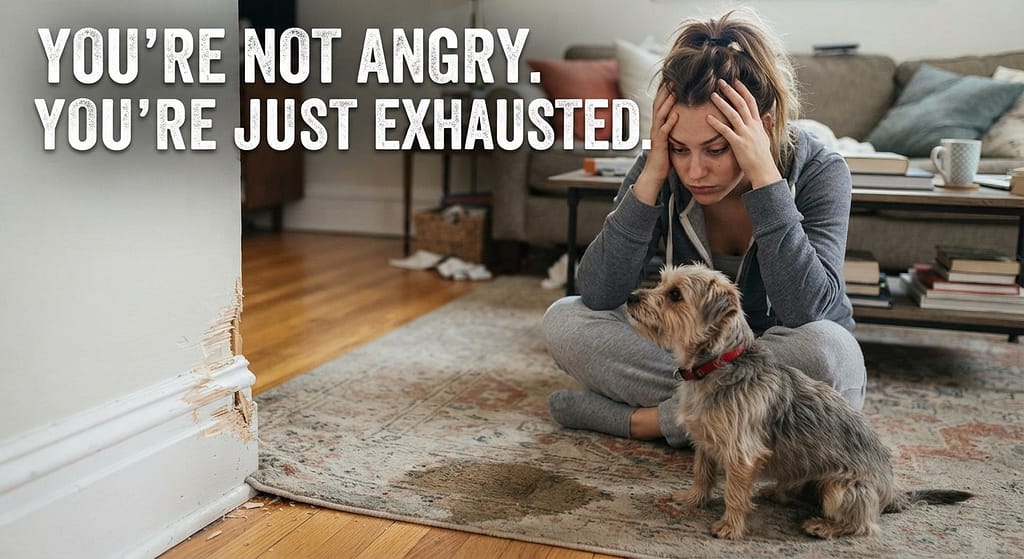
Have you ever come home to find your tiny dog has:
- Chewed the baseboard?
- Barked non‑stop (according to your neighbor)?
- Peed on the rug even though they had just walked?
And your heart sinks.
You’re not angry.
You’re just… exhausted.
Here’s the thing:
Your small dog isn’t being “bad.”
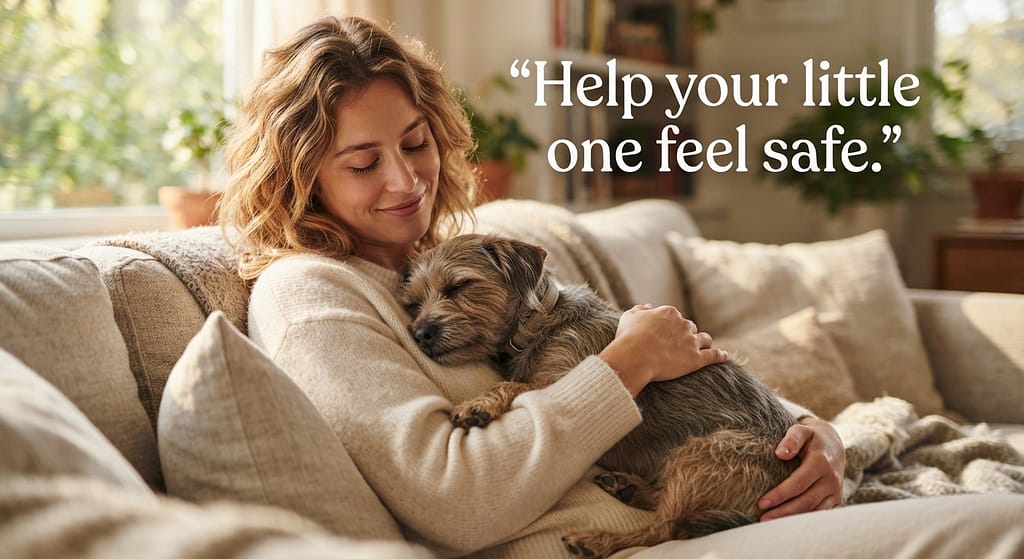
They’re not spiteful. They’re not trying to ruin your deposit.
They’re scared.
This is separation anxiety – and it’s incredibly common in small breeds.
But here’s the good news:
We’ve gathered 5 vet‑approved tips that actually work.
No dominance theory. No shock collars.
Just gentle, science‑based solutions.
And we’re going to walk you through every single one.
Ready to help your little one feel safe when you’re away?
Let’s dive in. 👇
First, A Quick Interactive Self‑Check
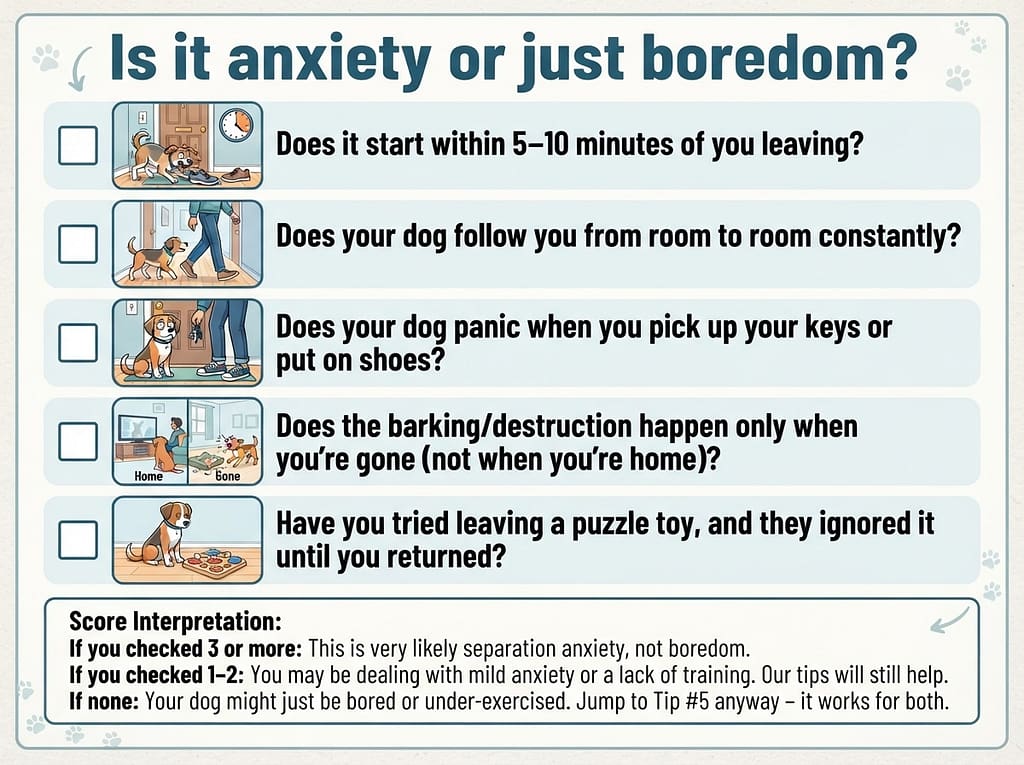
Before we give you the tips, let’s see if your dog has separation anxiety – or just normal boredom.
Answer these questions honestly:
- Does it start within 5–10 minutes of you leaving?
- Does your dog follow you from room to room constantly?
- Does your dog panic when you pick up your keys or put on shoes?
- Does the barking/destruction happen only when you’re gone (not when you’re home)?
- Have you tried leaving a puzzle toy, and they ignored it until you returned?
If you checked 3 or more: This is very likely separation anxiety, not boredom.
If you checked 1–2, you may be dealing with mild anxiety or a lack of training. Our tips will still help.
If none: Your dog might just be bored or under‑exercised. Jump to Tip #5 anyway – it works for both.
Now let’s get to those vet‑approved tips.
The 5 Vet-Approved Tips (At a Glance)
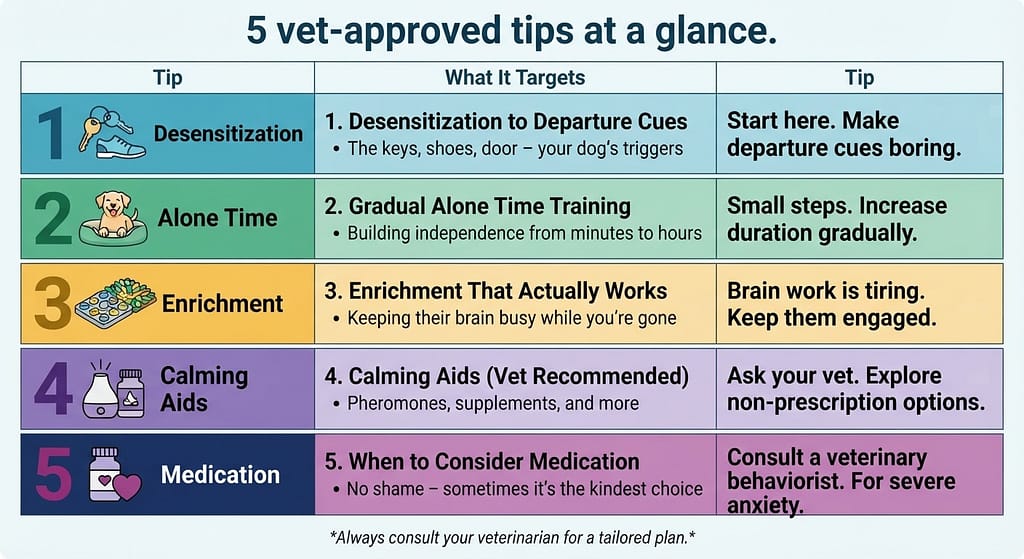
| Tip | What It Targets |
|---|---|
| 1. Desensitization to Departure Cues | The keys, shoes, door – your dog’s triggers |
| 2. Gradual Alone Time Training | Building independence from minutes to hours |
| 3. Enrichment That Actually Works | Keeping their brain busy while you’re gone |
| 4. Calming Aids (Vet Recommended) | Pheromones, supplements, and more |
| 5. When to Consider Medication | No shame – sometimes it’s the kindest choice |
We’ll explain each one in plain English.
Tip #1: Desensitization to Departure Cues (The “Key Trick”)
Here’s what happens:
You pick up your keys → your dog’s heart rate spikes.
You put on your shoes → they start panting.
You touch the doorknob → the panic begins.
Your dog has learned: these things mean you leave.
So we’re going to break that connection.
What You’ll Need:
- Your keys, shoes, coat, and bag
- High‑value treats (chicken, cheese, hot dog bits)
- 10 minutes of practice, 2–3 times a day
Step-by-Step:
Step 1: Pick up your keys. That’s it.
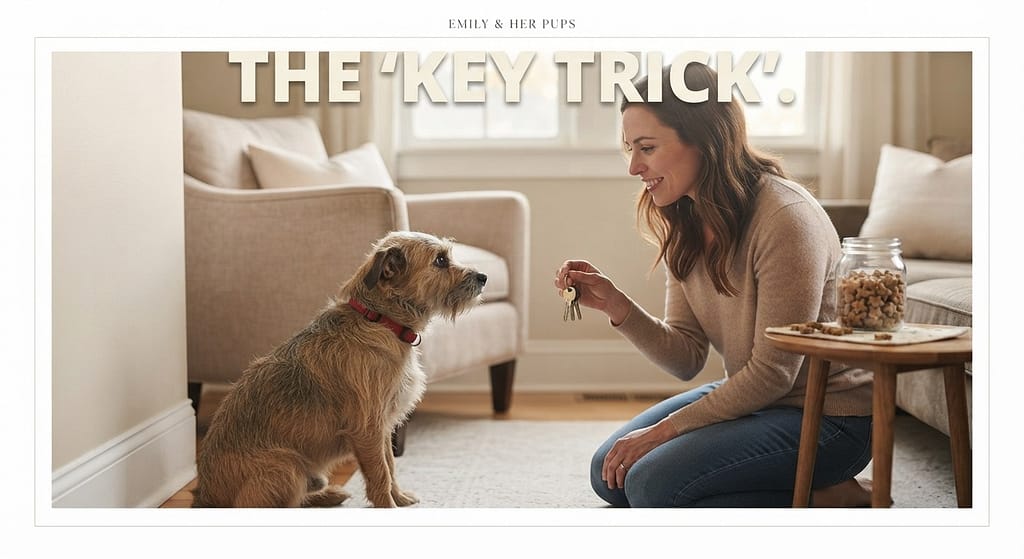
If your dog stays calm (no whining, no following), say “yes!” and give a treat.
Put the keys down. Repeat 20 times.
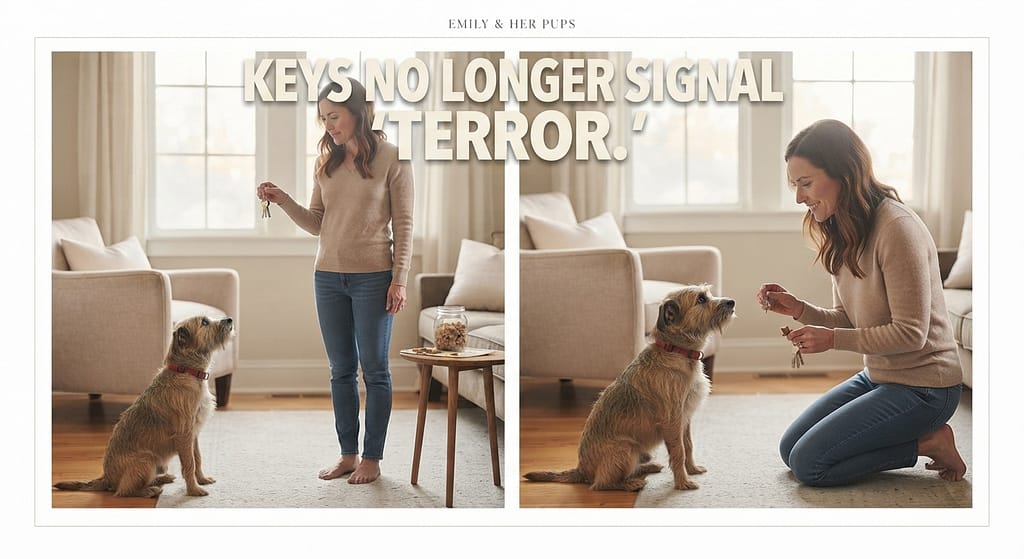
Step 2: Pick up your keys AND put on your shoes.
Calm? Treat. Remove shoes. Repeat.
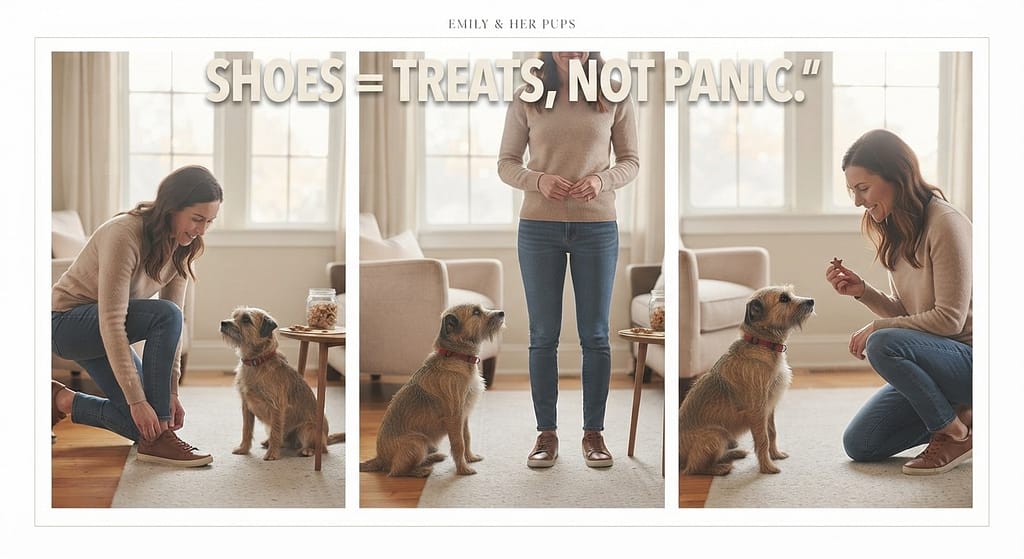
Step 3: Pick up keys, put on shoes, grab your coat.
Calm? Jackpot (3 treats in a row).
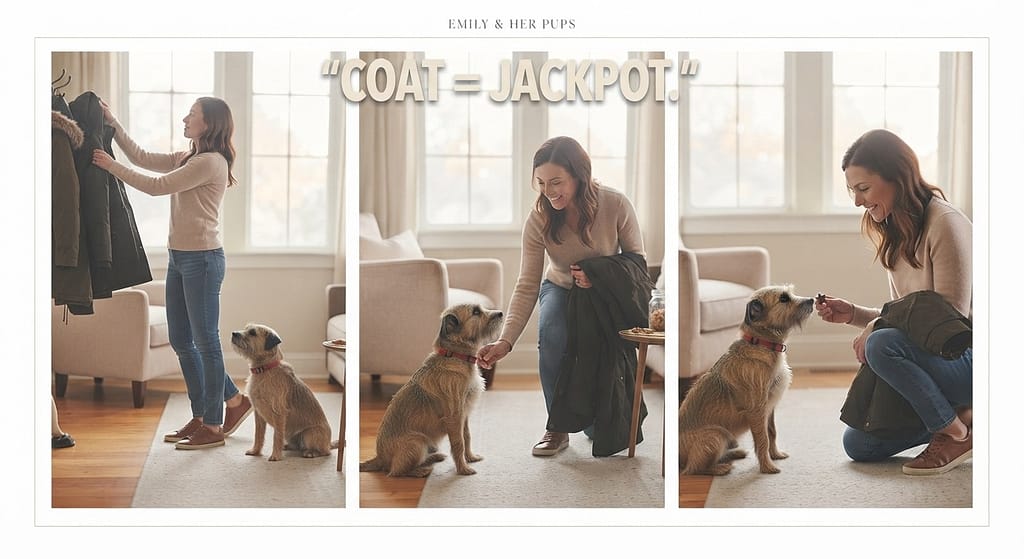
Step 4: Add the door. Touch the doorknob. Don’t open it. Calm? Treat.
Step 5: Open the door one inch. Close it. Calm? Treat.
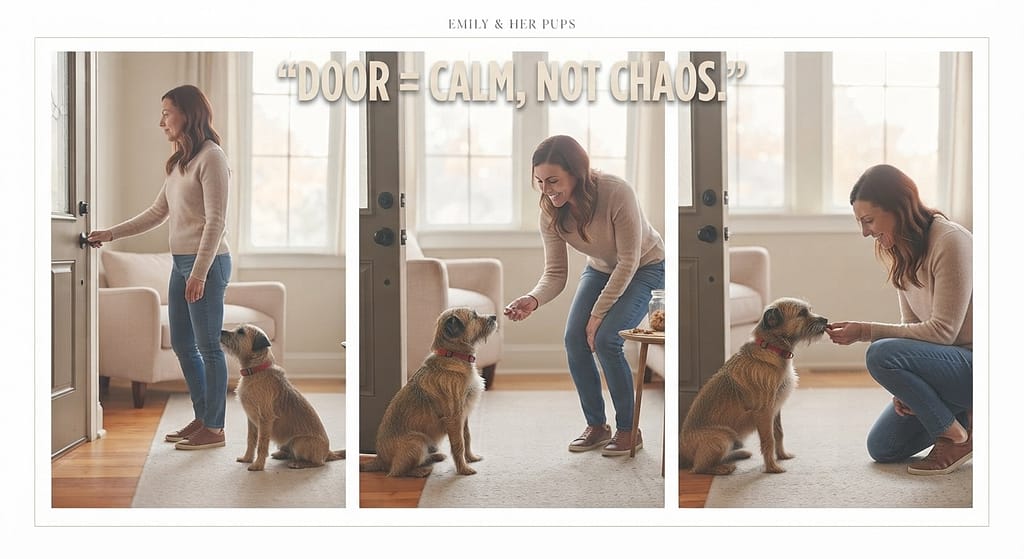
We know what you’re thinking: “This feels silly. My dog will know I’m not really leaving.”
Maybe. But here’s the magic:
After 50–100 repetitions, your dog’s brain rewires.
Keys no longer signal “terror” – they signal “treats.”
Your turn: Practice these “fake departures” for 5 minutes every evening for a week.
Tip #2: Gradual Alone Time Training (The “Couch to 5K” for Dogs)
You can’t fix separation anxiety by leaving your dog alone for 8 hours and hoping for the best.
That’s like throwing a non‑swimmer into the deep end.
Instead, we start with seconds.
What You’ll Need:
- A camera (your phone or a pet cam like Wyze/Furbo)
- Treats
- A safe room or crate (if your dog likes crates)
Step-by-Step:
Step 1: Ask your dog to stay on a mat or bed. Walk 3 feet away. Come back. Treat.
Repeat until boring.
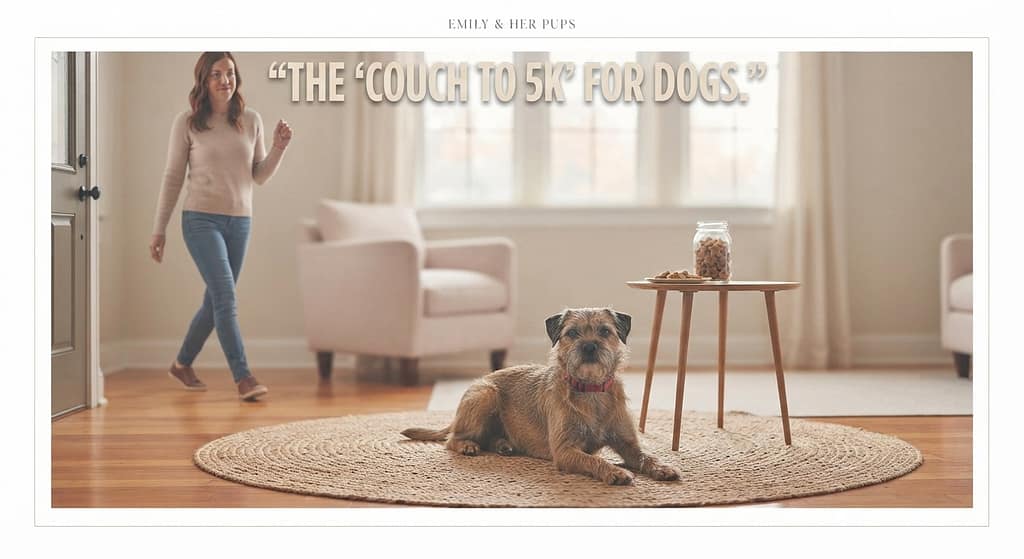
Step 2: Walk out of sight (behind a door) for 2 seconds. Return. Treat.
Step 3: Increase to 5 seconds, then 10, then 20.
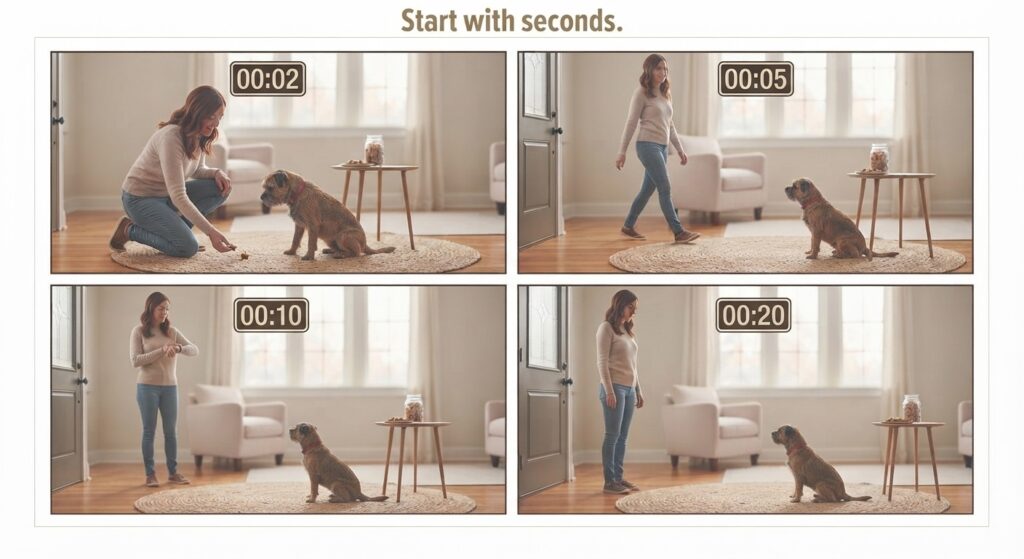
Step 4: Now step outside your apartment door.
Start with 5 seconds outside. Return. Treat.
Step 5: Gradually increase: 30 seconds, 1 minute, 2 minutes, 5 minutes.

But what if they cry when you’re outside for 5 seconds?
Go back to 2 seconds. Move slower. We never push past their comfort zone.
Pro tip from us: Use a pet camera to watch their body language.

The moment they look stressed (ears back, lip licking, pacing), return immediately.
That’s your “threshold.”
Your turn: Practice alone time training 3 times per day. Don’t increase time by more than 10–20% each session.
Tip #3: Enrichment That Actually Works (Not Just a Kong)
You’ve tried leaving a Kong.
Your dog ignored it until you came home.
Why?
Anxious dogs can’t eat.
When their stress hormones spike, appetite disappears. So a frozen Kong means nothing.
Here’s what works:

Low‑Stress Enrichment (for anxious dogs):
| Instead of… | Try this… |
|---|---|
| A frozen Kong | A “sniffari” – scatter kibble on a towel, roll it up loosely |
| A puzzle toy | A cardboard box with treats inside (destruction is calming) |
| A chew stick | Lick mats (smearing yogurt or peanut butter) – licking lowers cortisol |
| Leaving the TV on | Leaving calming music (search “Through a Dog’s Ear” on YouTube) |
Step-by-Step for a Sniffari Towel:
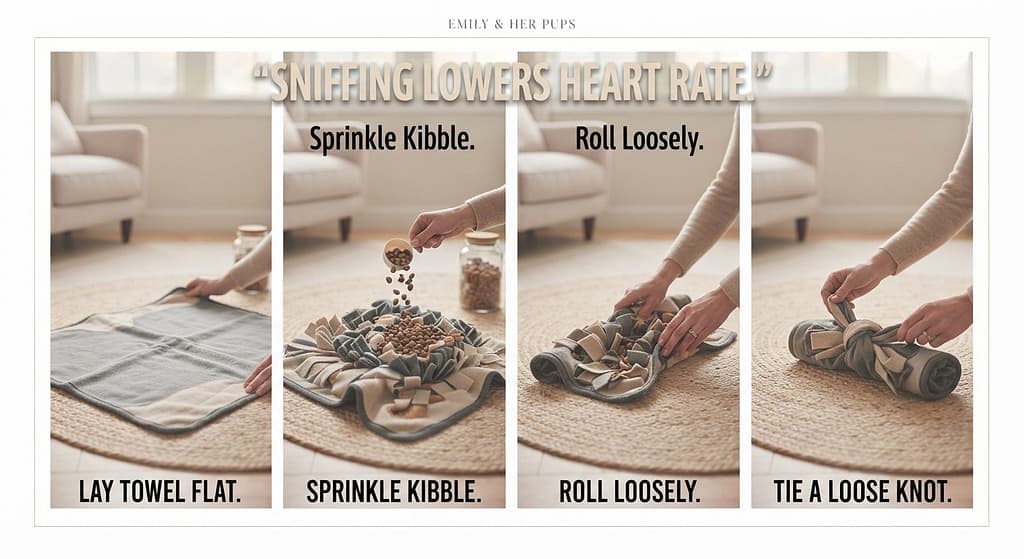
- Lay a kitchen towel flat.
- Sprinkle your dog’s breakfast kibble all over.
- Roll the towel loosely like a jelly roll.
- Tie it in a loose knot.
- Leave it when you go.
Why this works: Sniffing is a natural calming behavior. It lowers heart rate. And it’s easy – your dog doesn’t need to “figure out” a puzzle.
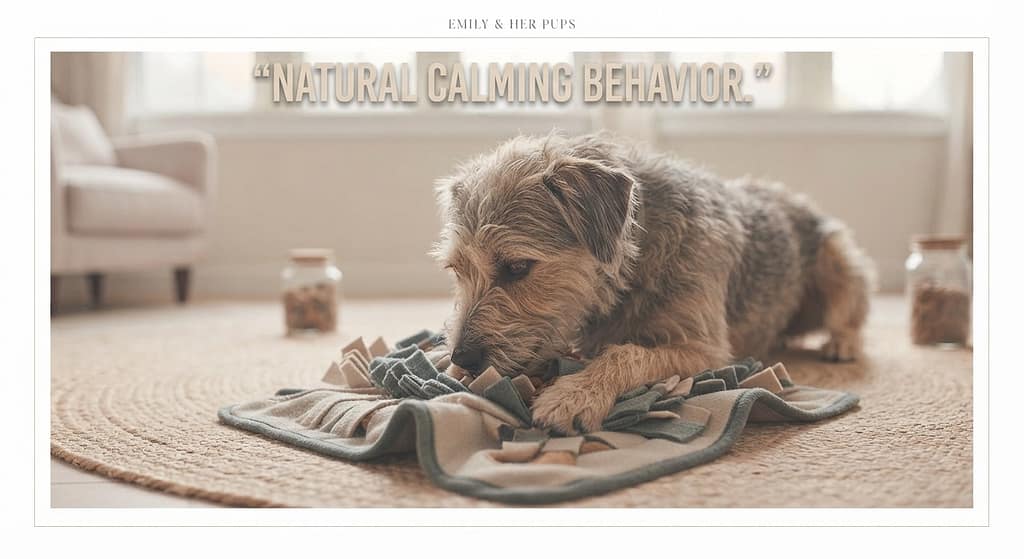
Your turn: Try the Sniffari towel tomorrow morning. Practice with you in the room first, then gradually step out.
Tip #4: Calming Aids (Vet‑Approved & Safe)

Sometimes training isn’t enough.
That’s where calming aids help – think of them as “training wheels.”
Option 1: Adaptil Pheromones (Strongest Evidence)
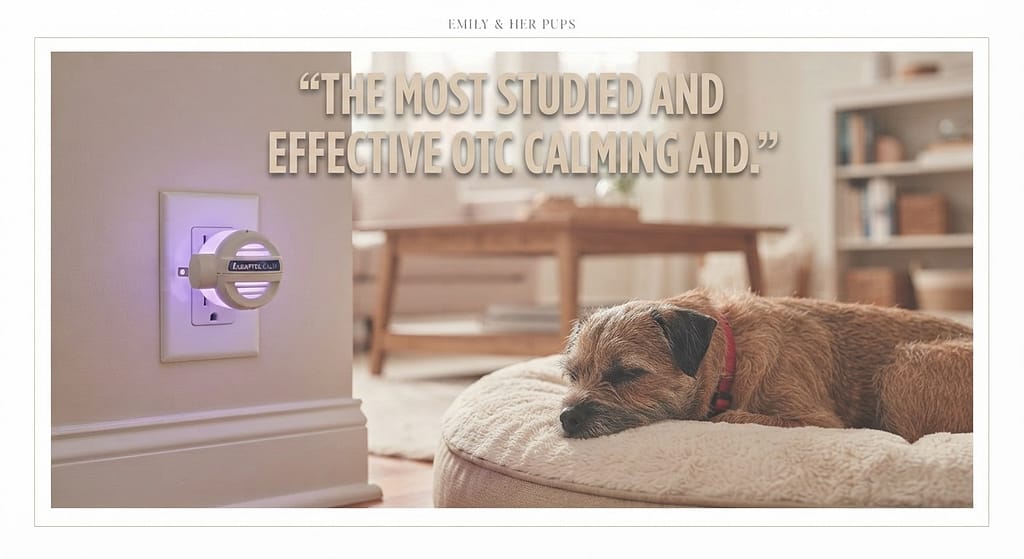
Adaptil mimics the calming pheromone a mother dog releases for her puppies.
It comes as a diffuser (plugs into an outlet) or a collar.
What vets say: “Adaptil is the most studied and effective over‑the‑counter calming aid.”
For apartments: Use the diffuser in the room where your dog spends the most time while you’re gone.
Option 2: Calming Supplements

Vet‑recommended ingredients:
- L‑theanine (found in Zylkene, Solliquin)
- Colostrum calming complex (in Purina Calming Care)
Note: These aren’t sedatives. They take 2–4 weeks to build up in your dog’s system.
Option 3: ThunderShirt
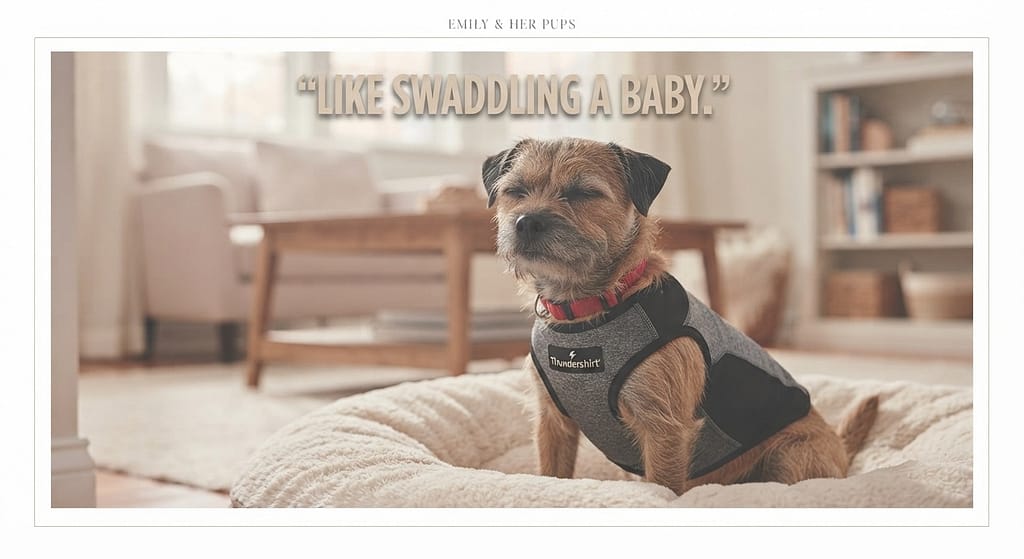
A snug wrap that applies gentle, constant pressure – like swaddling a baby.
We’ve seen this work miracles for some small dogs.
But test it while you’re home first. Some dogs hate it.
Option 4: Calming Music

Not your favorite playlist.
Try “Through a Dog’s Ear” (classical piano slowed down to match canine heart rhythms).
YouTube has hours of it for free.
Your turn: Pick one calming aid. Try it consistently for 2 weeks alongside the training.
Tip #5: When to Consider Medication (No Shame, Seriously)

Let us be direct:
Some dogs cannot learn when they’re panicking.
Their cortisol levels are so high that their brain literally can’t form new memories.
In those cases, medication isn’t a failure – it’s a bridge.
Signs Your Dog May Need Vet‑Prescribed Medication:
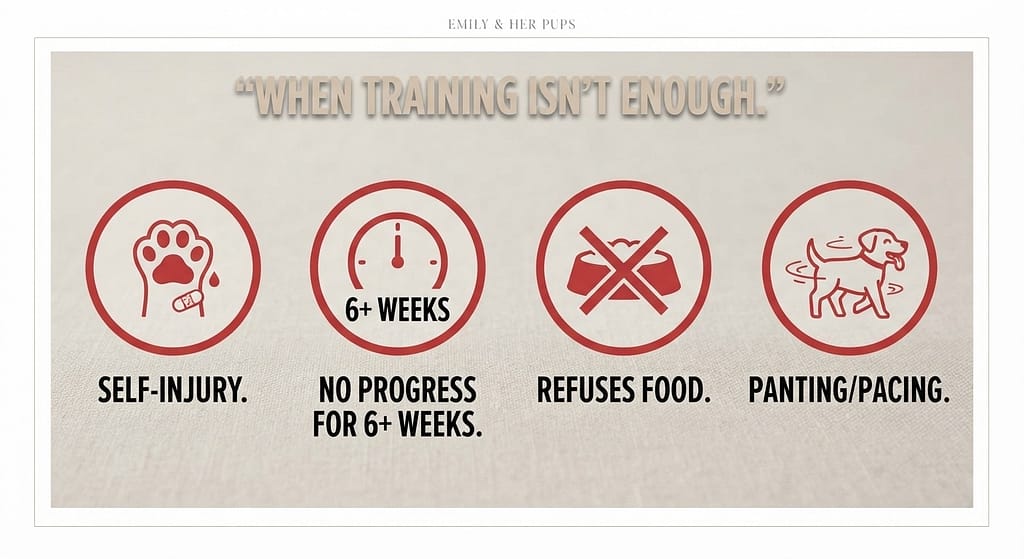
- They injure themselves trying to escape (broken nails, bloody paws)
- They’ve been in training for 6+ weeks with zero progress
- They refuse food entirely when you’re gone
- They pant, pace, or drool excessively within minutes of you leaving
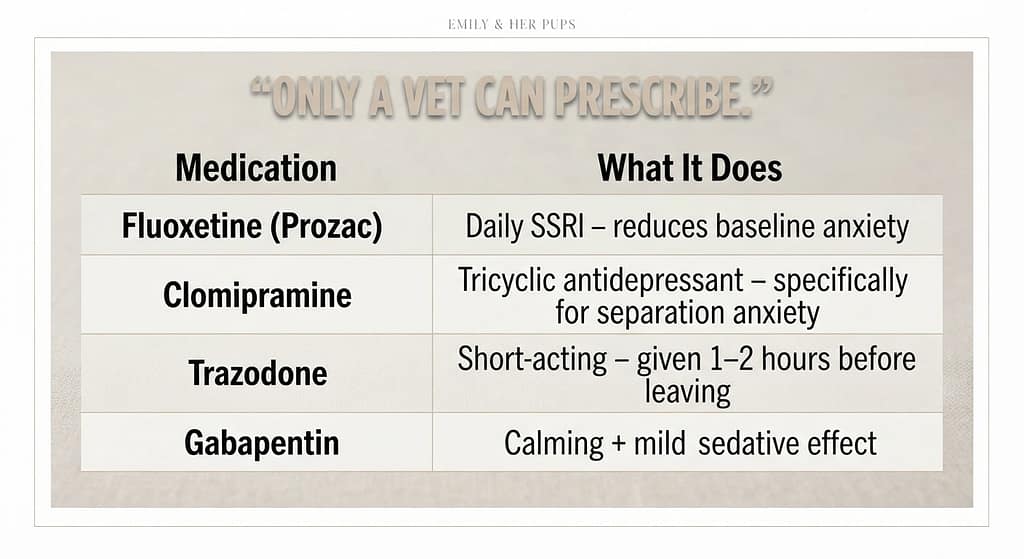
What Vets Prescribe for Separation Anxiety:
| Medication | What It Does |
|---|---|
| Fluoxetine (Prozac) | Daily SSRI – reduces baseline anxiety |
| Clomipramine | Tricyclic antidepressant – specifically for separation anxiety |
| Trazodone | Short‑acting – given 1–2 hours before leaving |
| Gabapentin | Calming + mild sedative effect |
Important: Only a veterinarian can prescribe these. Never use human medication or “calming chews” from unknown brands.
We understand the hesitation.
You might worry: “Will my dog be a zombie?”
No. At the right dose, your dog will still be themselves – just less terrified.
Your turn: If the signs above sound familiar, book a vet appointment. Bring this blog post. Ask: “Is medication right for my dog?”
Your 4‑Week Separation Anxiety Action Plan
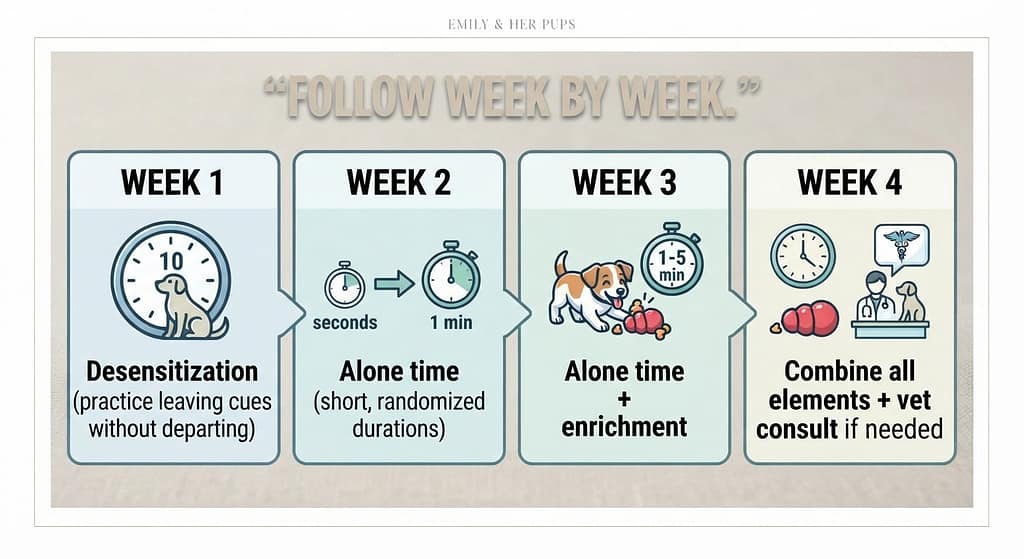
We’ve made this simple. Follow week by week.
| Week | Focus | Daily Time |
|---|---|---|
| 1 | Desensitization to cues (keys, shoes, door) | 10 min |
| 1 | Start calming aid (Adaptil + music) | Passive |
| 2 | Alone time training (seconds to 1 minute) | 3 sessions of 5 min |
| 3 | Alone time training (1–5 minutes) | 3 sessions of 10 min |
| 3 | Introduce Sniffari towel | 5 min prep |
| 4 | Combine: cues + alone time + enrichment | 15 min total |
| 4 (if needed) | Vet consult for medication | 1 appointment |
Reminder: Go at your dog’s pace. If they regress, go back a week. No shame in slow progress.
Real‑Life Success Story (From Our Community)

We’ll never forget Bella – a 6‑pound Yorkie who destroyed three apartment doors.
Her owner, Sarah, tried everything.
Then she followed exactly what you just read.
Week 1: Desensitization to keys.
Week 2: Alone time – 10 seconds, then 20, then 30.
Week 3: Added Adaptil diffuser and Sniffari towel.
Week 4: Bella stayed calm for 30 minutes alone.
Within 3 months, Bella could handle 4 hours alone.
No destruction. No barking. Just a sleepy Yorkie on the couch.
That could be your dog.
Common Questions (We Hear These All the Time)
“Will my dog grow out of separation anxiety?”
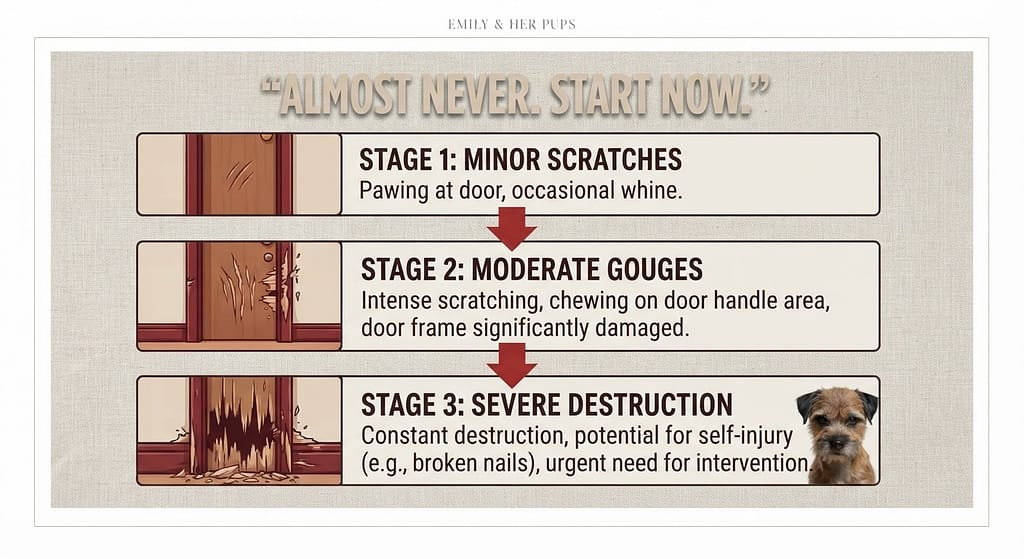
Rarely. It gets worse without intervention. Start now.
“Should I get another dog to keep them company?”

Rarely works. The anxious dog usually teaches the new dog to be anxious.
“What if I can’t afford a vet or trainer?”

Start with free resources (this post, YouTube, library books). Then save for a single vet visit – most anxiety meds cost $10–30/month.
“Is daycare a solution?”
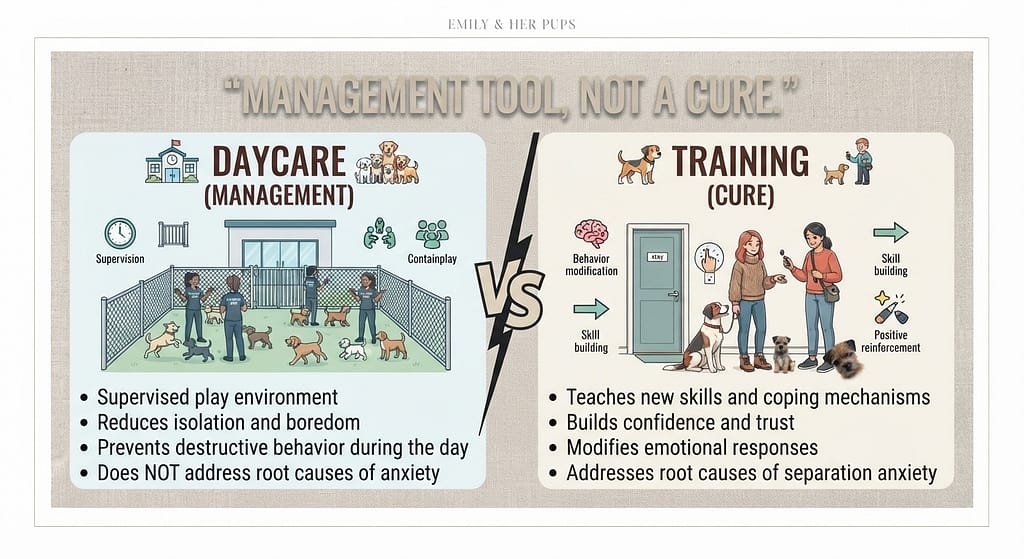
It’s a management tool, not a cure. Daycare is great for exercise, but your dog still needs to learn to be alone.
Final Truth Bomb (Read This Twice)

Your small dog isn’t trying to punish you for leaving.
They’re terrified that you won’t come back.
Every chewed baseboard, every puddle on the rug, every neighbor complaint – that’s panic. Not spite.
And here’s the most important thing we can tell you:
You can fix this.

Not overnight. Not with a magic pill.
But with patience, consistency, and these 5 vet‑approved tips – yes, absolutely.
So start today.
Pick one tip. Just one.
Do the first step.
And remember: every small win is a giant leap for your little dog.
We believe in you.
Now go give your tiny companion the peace they deserve. 🐾
🐾 — Apartment Dog Guide (ADG)
Living large in small spaces, one paw at a time. That’s the apartment dog life—see you in the next guide!.


