
The Guilt of Leaving
You stand at the front door, keys in hand, heart pounding.
Your dog is staring at you with wide, trembling eyes. They know what’s coming.
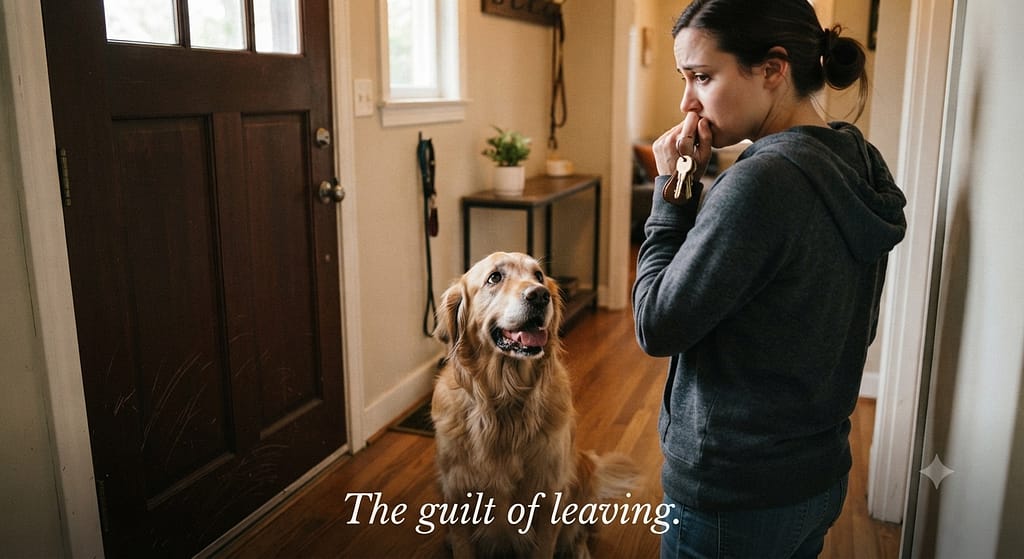
The moment you reach for the handle, the panting starts. The pacing begins. The desperate whine escapes their throat.
You step outside and close the door. Immediately, you hear it—the frantic scratching, the mournful howling, the sound of destruction.
Your neighbor will complain. Your security deposit is evaporating. And the guilt gnaws at you all day.
Separation anxiety is the single most heartbreaking issue in urban dog ownership.
In a suburban home, a barking dog annoys your family. In an apartment, a barking dog gets you evicted.
The stakes are higher. The stress is amplified. This is the definitive guide to separation anxiety in apartment dogs.
But here is the truth that changes everything: Separation anxiety is not disobedience. It is not spite. It is a full-blown panic attack.
Your dog is not trying to punish you. They are terrified.
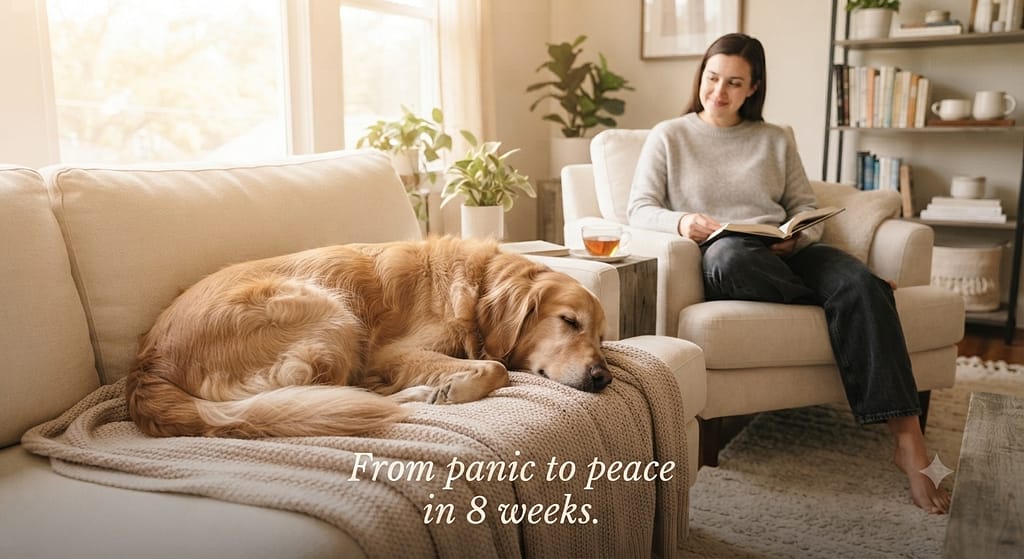
When you leave, their brain sends a signal: “I am alone. I am in danger. I must escape or sound the alarm.”
You cannot punish a panic attack. You must reprogram it.
This guide delivers an 8-week, science-backed protocol to fix separation anxiety in dogs effectively and compassionately—helping you stop dog crying when left alone for good.
Section 1: Diagnosing Dog Anxiety – Signs of Dog Anxiety & Symptoms
You cannot fix what you misdiagnose. Let’s separate true anxiety from simple boredom.
This is the critical first step in diagnosing dog anxiety.
The 5 Telltale Signs of Dog Anxiety (True Separation Anxiety)
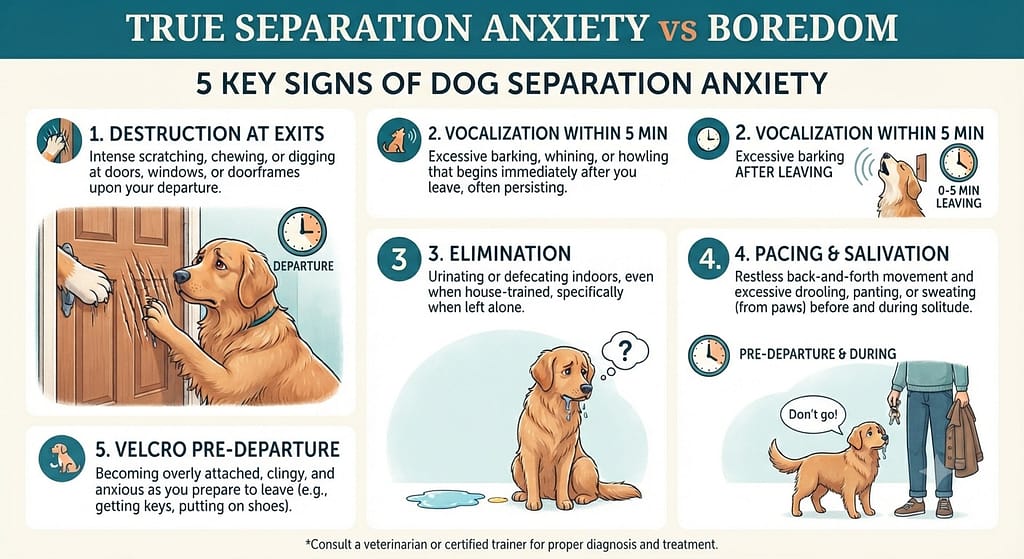
- Destruction at Exit Points: Chewing doors, windowsills, or door frames—not toys. They are trying to escape, not play. If your dog destroys the apartment when left alone, this is a massive red flag.
- Vocalization Within 5 Minutes: Howling, whining, or barking begins almost immediately after you leave, not hours later.
- Elimination: Potty accidents even though they were just walked. Stress-induced diarrhea is common.
- Pacing and Salivation: Repetitive pacing in circles and excessive drool (hypersalivation) are stress responses.
- The “Velcro” Pre-Departure: Following you obsessively, trembling, or panting when you pick up your keys or put on your shoes. They panic when I leave the room, even momentarily.
The Boredom Difference
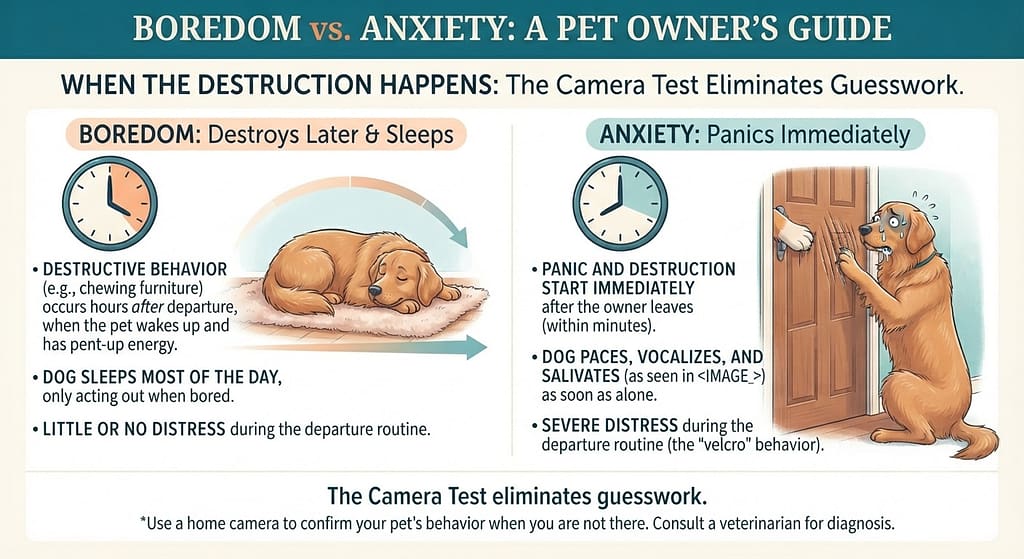
- Bored dogs destroy things hours after you leave.
- Bored dogs sleep most of the day.
- Bored dogs don’t care about your keys; they just need exercise.
The “Camera Test” (Using Cameras for Dog Monitoring)
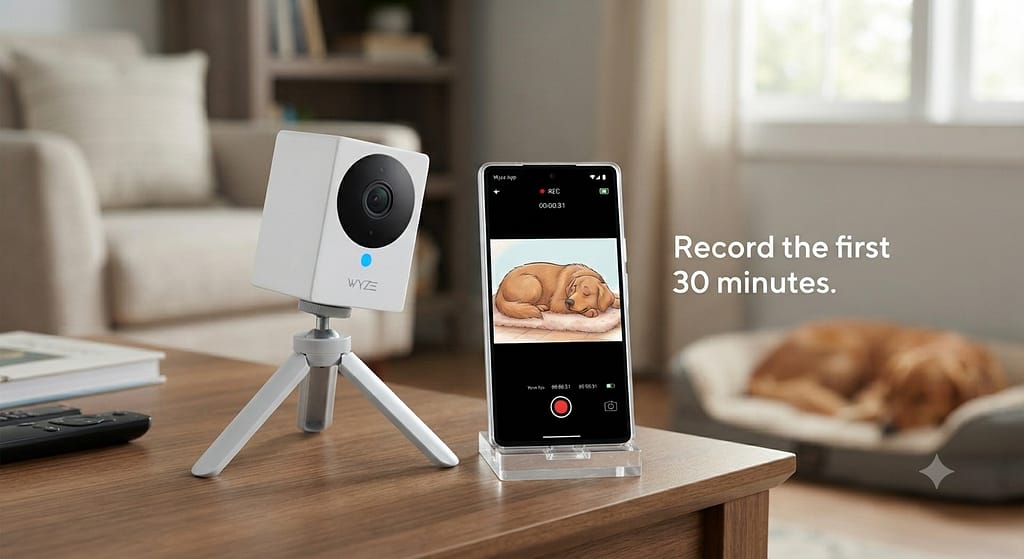
Set up a cheap Wyze or Blink camera to record the first 30 minutes after you leave.
This eliminates guesswork. You will see exactly what happens when you’re gone.
Using cameras for dog monitoring is the gold standard for accurate diagnosis. You will see exactly what happens when you’re gone.
Section 2: Urban Dog Ownership Issues – Why Apartment Dogs Develop It More
City living creates the perfect storm for separation anxiety.
Proximity Overload:

In a studio apartment, your dog is always in your lap, always hearing your breath, always soaking in your presence.
They never learn independence. When you disappear, the sudden void is devastating.
Echo Hallways:
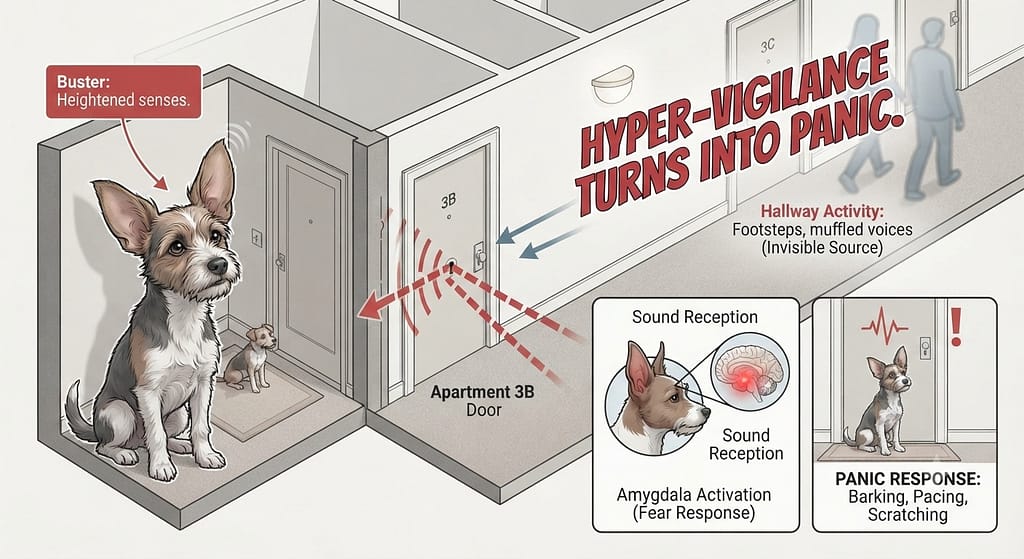
They hear neighbors walking by but can’t see them. This creates hyper-vigilance—a constant state of alert that turns into panic when you disappear.
Lack of “Safe” Outdoor Space:
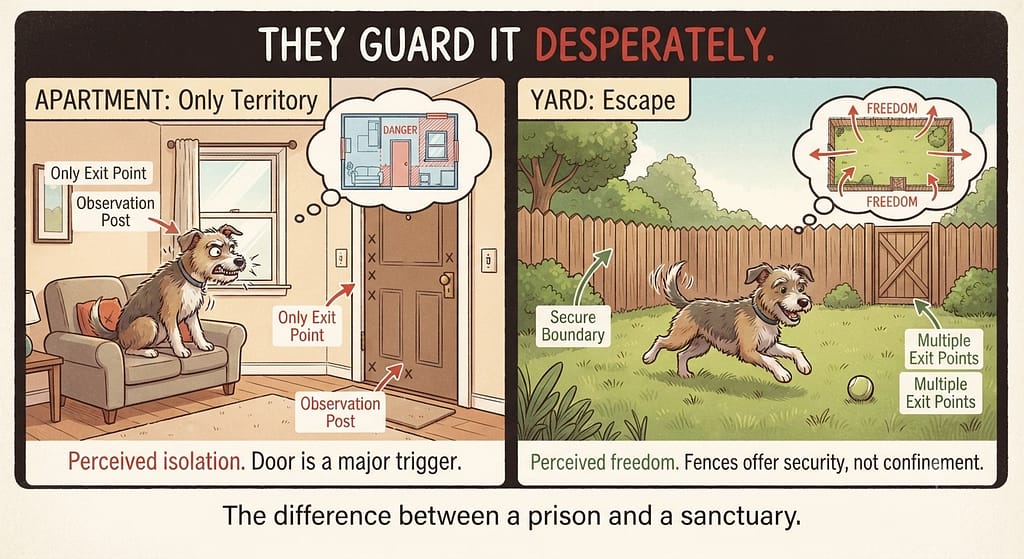
Without a yard, the apartment becomes their only territory. They guard it desperately. When you leave, they feel the territory is under threat.
Irregular Schedules:
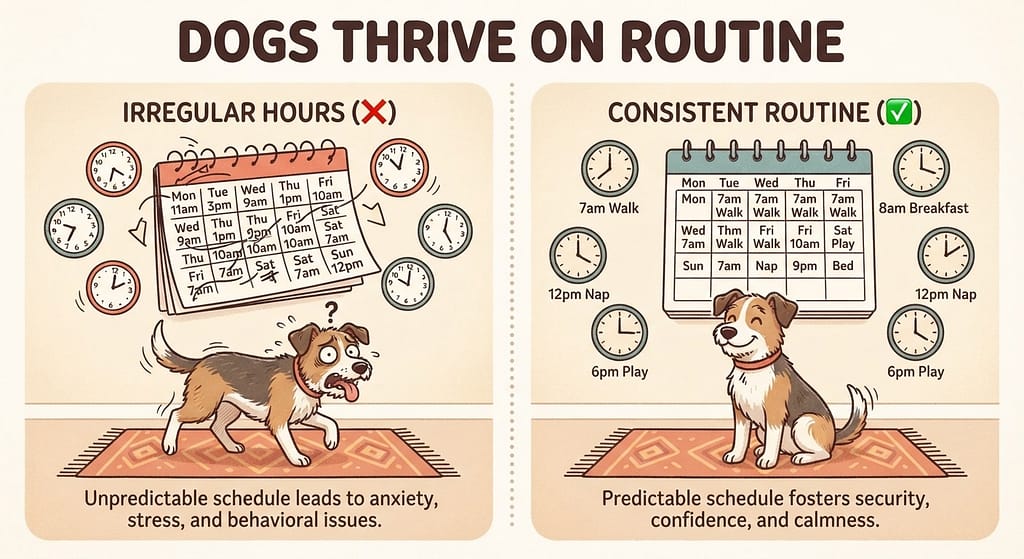
City work hours are unpredictable. Dogs thrive on routine. Unpredictability fuels anxiety.
Section 3: The “Crate” Debate – Safe Space or Prison?
Crate training is controversial but highly effective for anxiety. The key is how you introduce it.
The Case FOR Crate
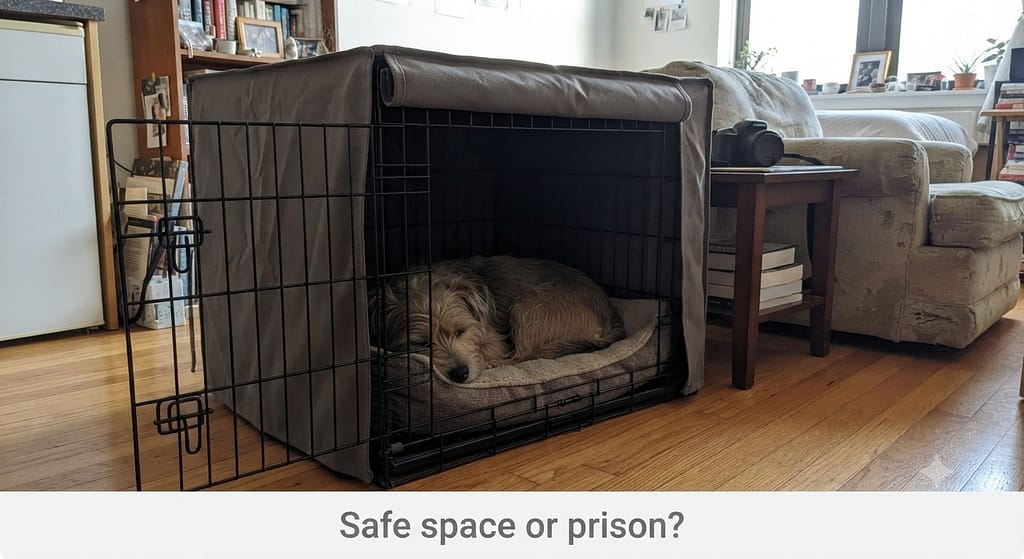
For severe anxiety, a covered crate mimics a den. It reduces visual stimulation (hallway lights, shadows) and prevents destructive chewing (saves your security deposit).
The Case AGAINST Crate
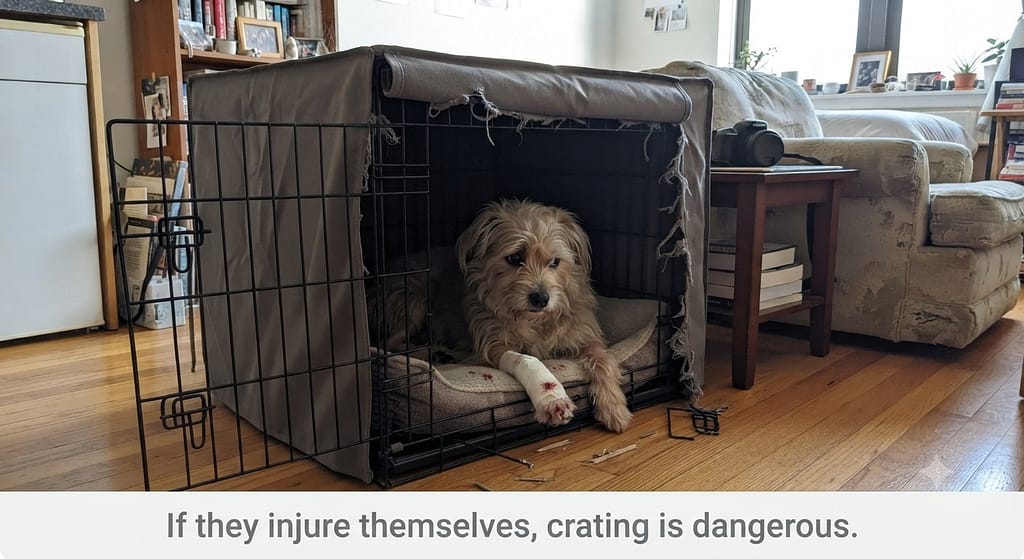
If the dog wasn’t properly introduced, a crate becomes a “panic box” where they injure themselves trying to escape.
The “Crate Buffet” Method (Independence Training)
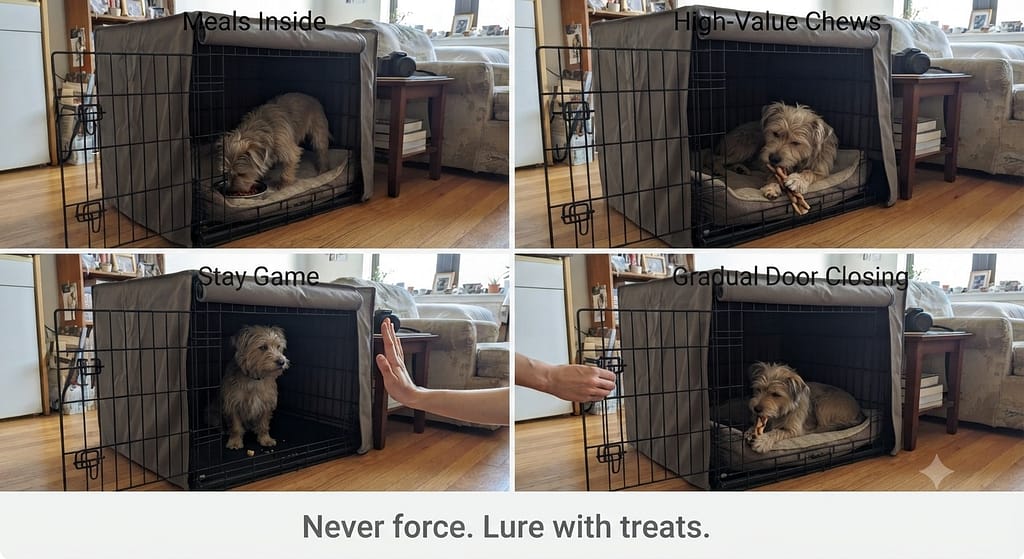
- Meals Inside: Feed all meals inside the crate. Door open.
- High-Value Chews: Give them a Kong or bully stick only inside the crate.
- Never Force: Never push them in. Lure them with treats.
- The “Stay” Game: Have them stay in the crate for 1 second, then 5 seconds, then 30 seconds, while you are still in the room.
- Gradual Door Closing: Close the door for 1 second, then open. Extend to 5 seconds, then 30 seconds. Always return before they panic.
When to Ditch the Crate
If your dog injures themselves trying to escape, crating is dangerous. Move to a “dog-proofed” room or playpen instead.
Section 4: Pre-Departure Dog Training – Stress Relief for Dogs & Enrichment
You cannot desensitize a dog with pent-up energy. Physical and mental exhaustion is non-negotiable.
This is the essence of pre-departure dog training and provides immediate stress relief for dogs.
The 30-Minute Pre-Departure “Sniffari”
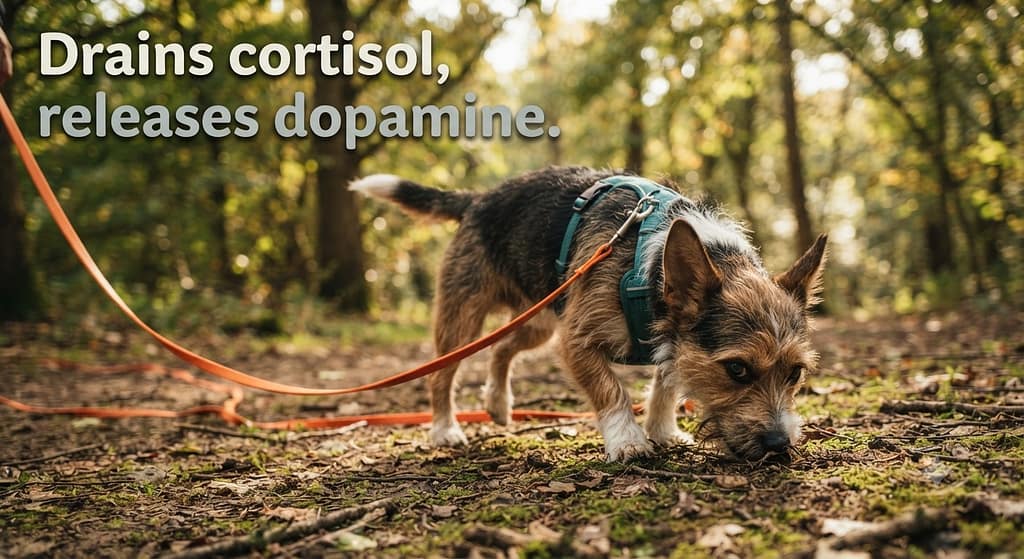
A high-intensity sniffing walk right before you leave drains cortisol and releases dopamine. Let them lead, let them sniff, let them process the world.
This is not a power walk; it’s a mental workout that serves as prime structured dog exercise.
The “Brain Game” Breakfast (Dog Enrichment Activities)
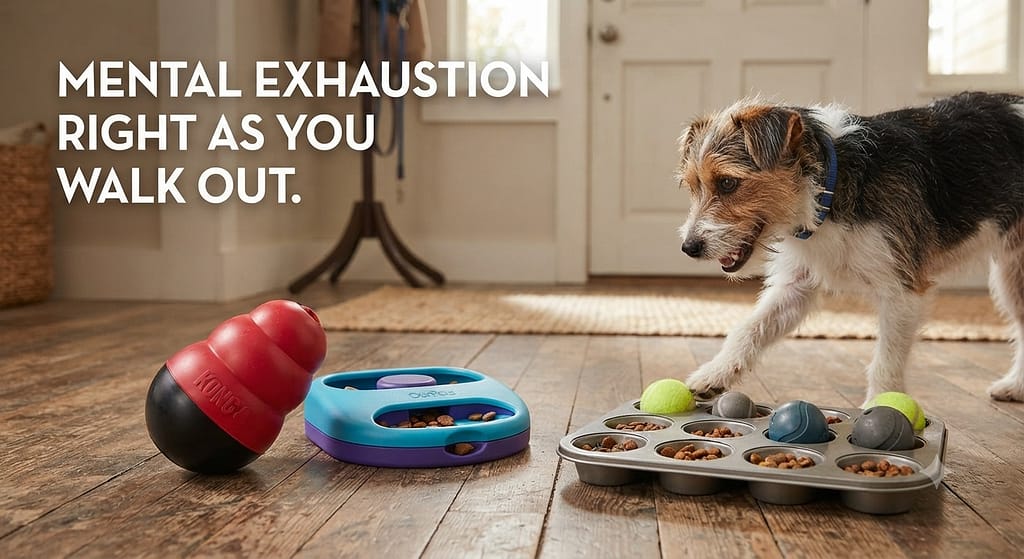
Feeding breakfast in a puzzle toy ensures they are mentally exhausted right as you walk out.
These dog enrichment activities are vital.
- Kong Wobbler: Dispenses kibble as they roll it.
- Snoop: A fabric puzzle that requires snuffling.
- DIY Muffin Tin: Hide kibble under tennis balls.
Best Toys for Dogs with Separation Anxiety
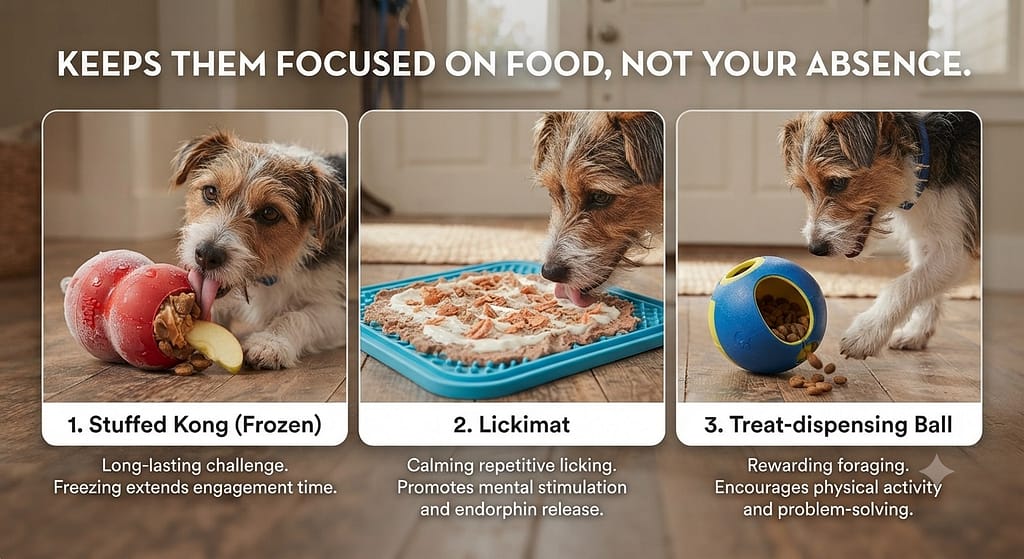
- Stuffed Kong (Frozen): Mix peanut butter, yogurt, and kibble. Freeze overnight. Lasts 30+ minutes. This is one of the best toys for dogs with separation anxiety.
- Lickimat (Suction-Cupped): Licking releases calming endorphins. Suction it to the floor so they can’t move it.
- Treat-Dispensing Ball: Requires rolling to release kibble. Keeps them focused on food, not your absence.
Mental Stimulation for Dogs
Engaging their brain with these puzzles provides crucial mental stimulation for dogs, tiring them out more effectively than a long run.
Section 5: Cue Desensitization – Minimizing Dog Panic Attacks
Dogs are geniuses at reading our “departure cues.” They know exactly what your keys, shoes, and bag mean.
This is where we focus on minimizing dog panic attacks through systematic dog behavior modification.
The Problem
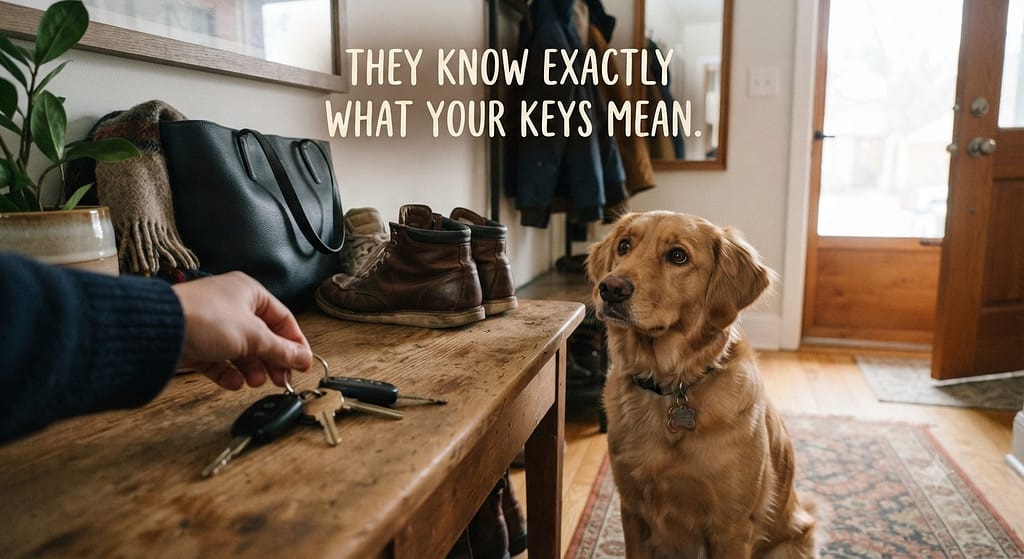
You pick up your keys, put on your jacket, and grab your work bag. Your dog starts panting because they know exactly what happens next.
They panic when I leave the room because of these cues.
The Solution: “Cue Jumbling” (Dog Behavior Modification)
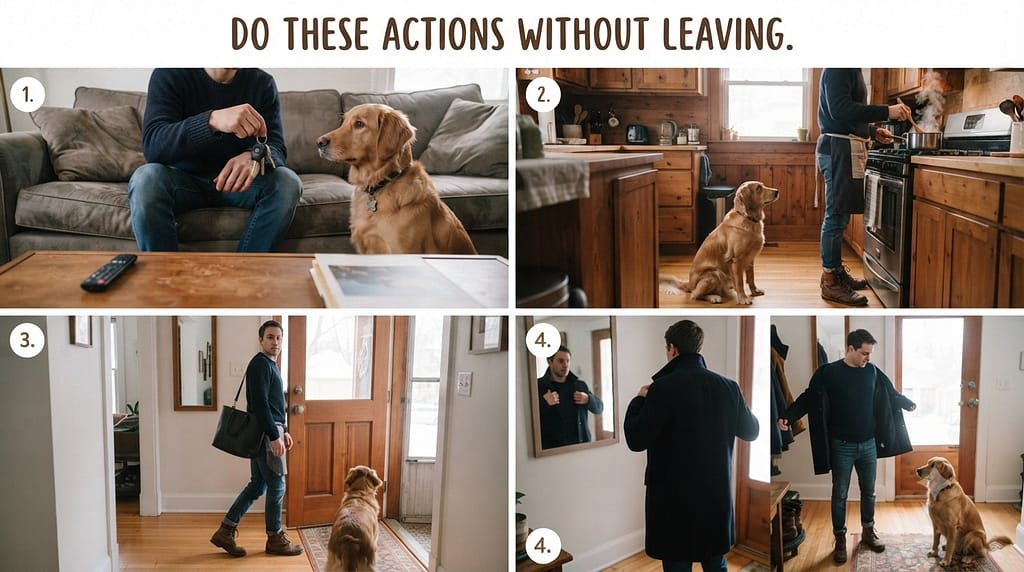
Do these actions without leaving:
- Pick up your keys, sit on the couch, watch TV.
- Put on your shoes, cook dinner.
- Grab your bag, walk to the door, turn around, and go sit at your desk.
- Put on your coat, take it off, put it on again.
The “False Starts” Protocol
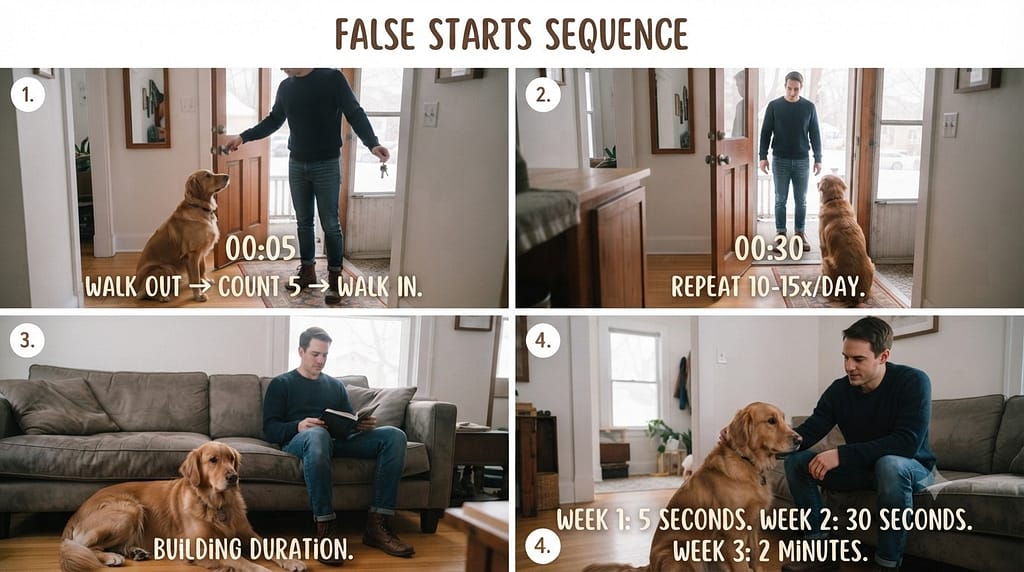
Walk out the door, close it, count to 5, walk back in. Do this 10-15 times a day over a weekend.
- Gradual Increase: Day 1: 5 seconds. Day 2: 30 seconds. Day 3: 2 minutes.
- The Goal: “Keys” no longer = “gone for 8 hours.” The prediction model is broken. Panic decreases.
Section 6: The Separation Anxiety Training Schedule (Desensitization Training for Dogs)
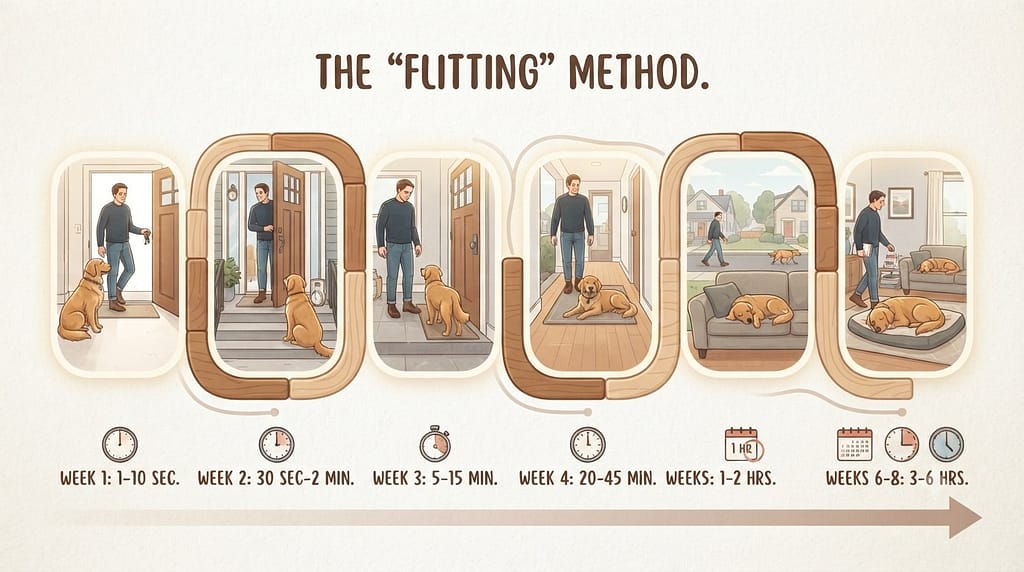
This is the core of the protocol. You must teach the dog that “alone time” is safe by leaving for micro-durations that never trigger their panic threshold.
This is your definitive separation anxiety training schedule and the key to desensitization training for dogs.
The Golden Rule

Never return while they are barking or panicking. Wait for a 1-second pause in noise, then return. If you return during panic, you reinforce the panic.
This is how you stop dog crying when left alone—by teaching them that silence brings you back.
The 8-Week Schedule (Desensitization Training for Dogs)
| Week | Duration | Activity | Success Metric |
|---|---|---|---|
| Week 1 | 1 sec – 10 sec | Walk to door, touch handle, return. | No reaction to door handle. |
| Week 2 | 30 sec – 2 min | Step outside, close door, return. | No whining before 1 minute. |
| Week 3 | 5 min – 15 min | Walk to mailbox, return. | Calm settling within 3 minutes. |
| Week 4 | 20 min – 45 min | Short grocery run. | No destruction; chewing toy. |
| Week 5 | 1 hour – 2 hours | Lunch break at work. | Sleeping on camera. |
| Week 6-8 | 3 hours – 6 hours | Full workday with mid-day walker. | Relaxed, loose body language. |
The “Subtle Panic” Signs
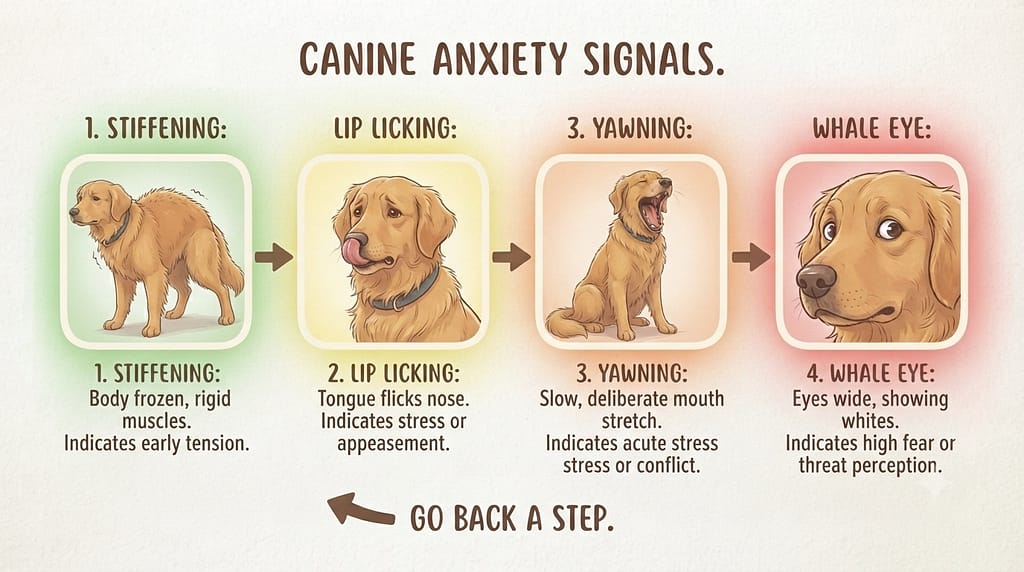
Watch for stiffening, lip licking, yawning (stress signs), or whale eye (showing the whites of their eyes). If you see these, go back a step.
The Camera Advantage
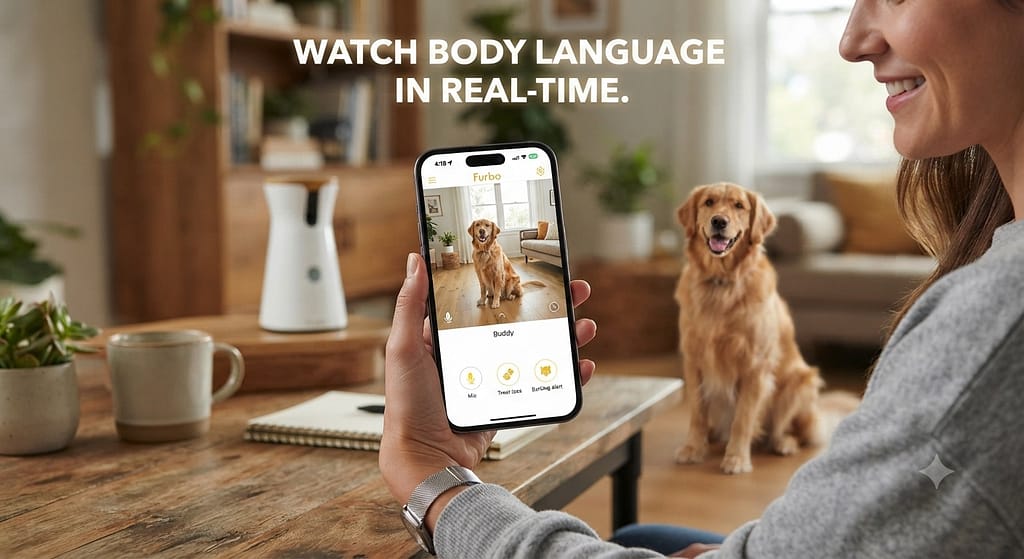
Use a remote camera (Furbo, Wyze) to watch their body language in real-time. If they stiffen up, you went too fast. Go back a step.
Section 7: Calming Aids For Dogs– Anxiety Relief for Pets & Treatments
Evidence-based review of the most popular calming aids for dogs and dog anxiety treatments.
These are excellent calming techniques for anxious dogs and provide overall anxiety relief for pets.
Adaptil Pheromone Diffusers (D.A.P.)
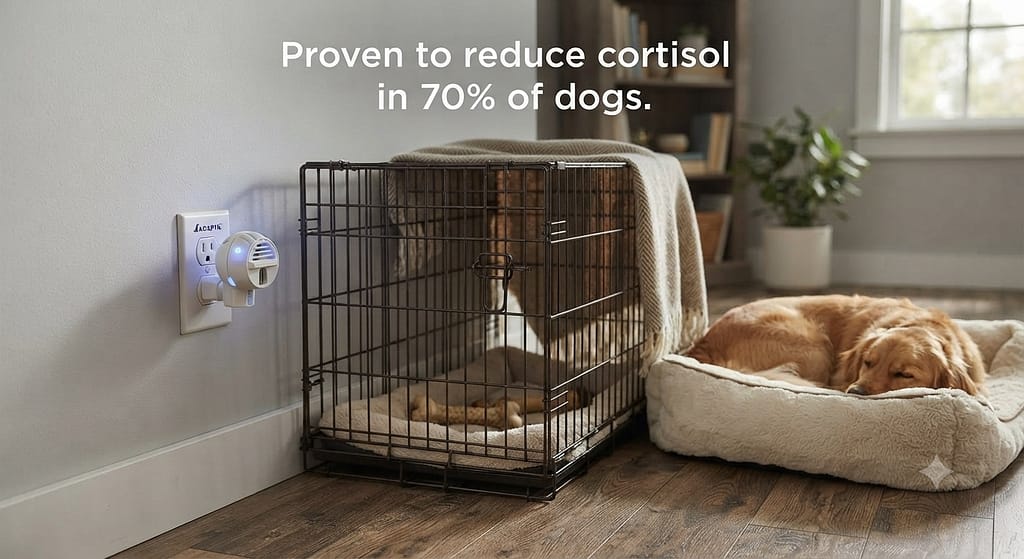
- How it Works: Releases synthetic dog appeasing pheromones (the same ones nursing mothers release).
- Evidence: Proven to reduce cortisol in 70% of dogs.
- Use: Plug it in near their crate or bed. 24/7. Not a magic bullet, but a helpful support.
Calming Music / White Noise

- The Science: “Through a Dog’s Ear” is clinically composed for canine heart rates. It reduces stress.
- The Strategy: Leave it on while you’re gone. It masks hallway sounds and creates a “safe” auditory environment.
- Free Option: YouTube has hours of dog-calming music and city sound loops.
CBD & Supplements (Dog Anxiety Medications / Treatments)
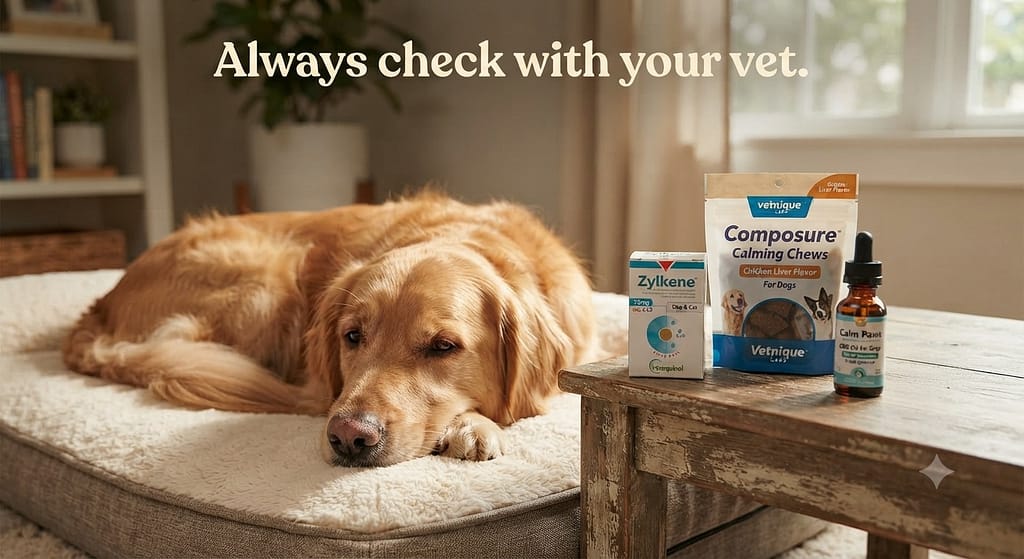
- CBD (Cannabidiol): Emerging research shows it may reduce anxiety, but quality varies wildly. Consult your vet.
- L-Theanine, Melatonin, Tryptophan: Common calming supplements (like Zylkene or Composure). Safe, but mild.
- The Caveat: Always check with your vet. Quality matters over cheap gas-station brands. These are valid dog anxiety treatments when used correctly.
ThunderShirts / Anxiety Wraps
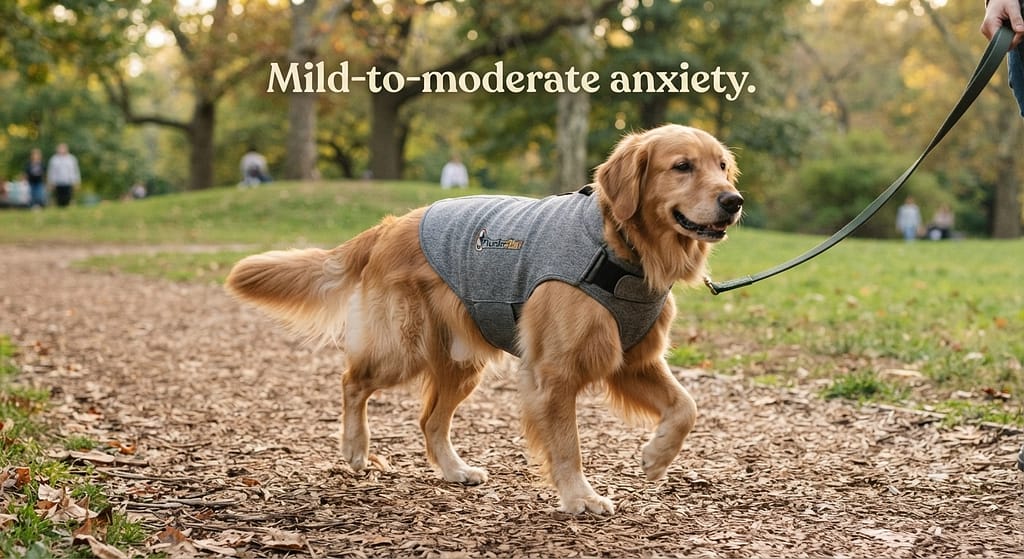
- How it Works: The “swaddling” effect applies constant pressure to reduce panic.
- Evidence: Works best for mild-to-moderate anxiety. Not effective for severe cases.
- Pro-Tip: Put it on 15 minutes before you leave, not right at the door.
Section 8: Pet Care During Workday – Pet Sitter vs Daycare & Managing Anxiety
What do you do while you are actively training? You can’t take 8 weeks off work.
This section tackles pet care during the workday and compares the options for managing dog anxiety while you are away.
Option A: Doggy Daycare
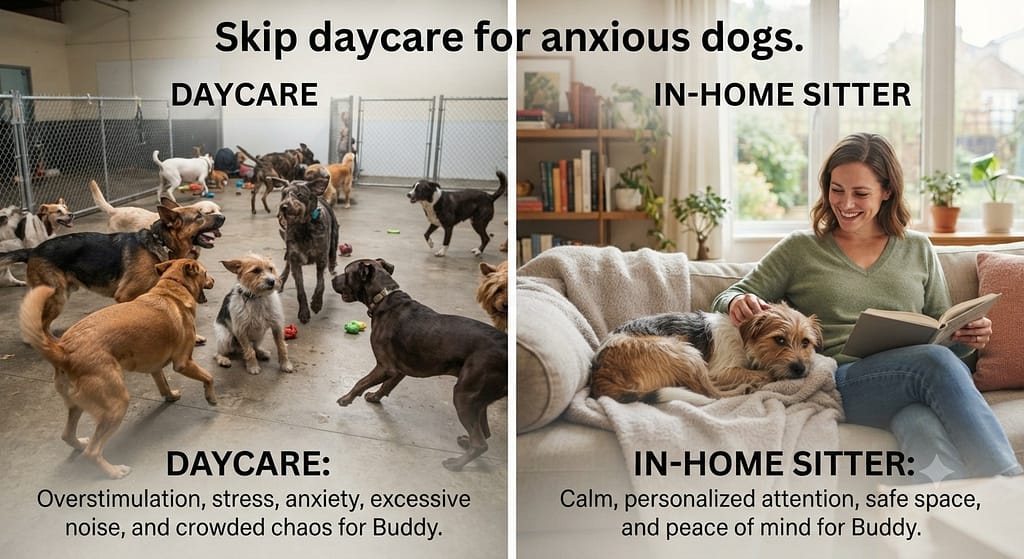
- Pros: Socialization, supervision, exercise.
- Cons: Terrible for anxious dogs. Overstimulation makes panic worse. They return more stressed.
- Verdict: Skip for anxious dogs.
Option B: In-Home Pet Sitter (The Best Option)
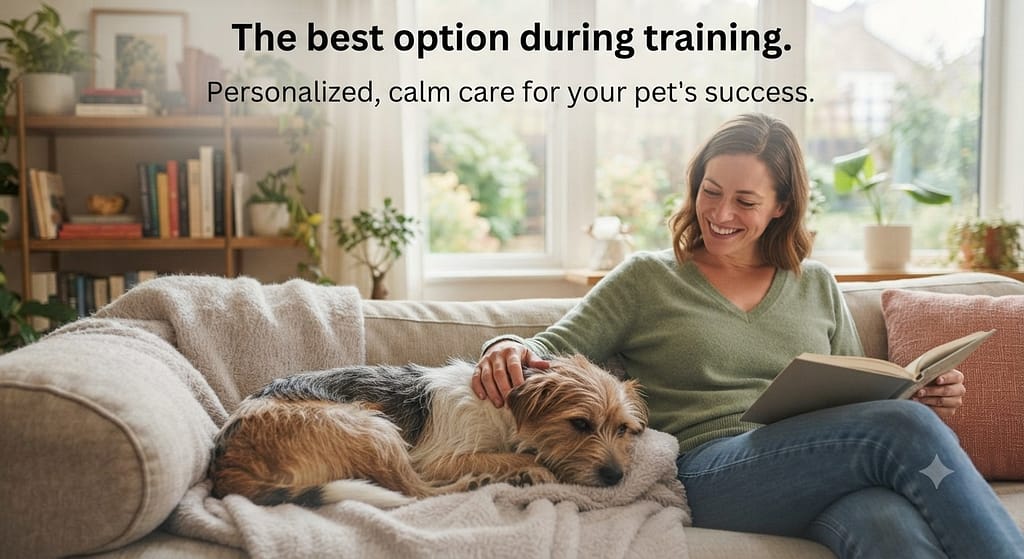
- The Strategy: Someone stays in your apartment while you are at work. Your dog is never truly “alone.” Hiring an in-home pet sitter for dogs is the gold standard during training.
- Use This During: Weeks 3-6 of the protocol.
- Cost: $25-$35/hour. High, but prevents regression and property damage.
Option C: Mid-Day Dog Walker
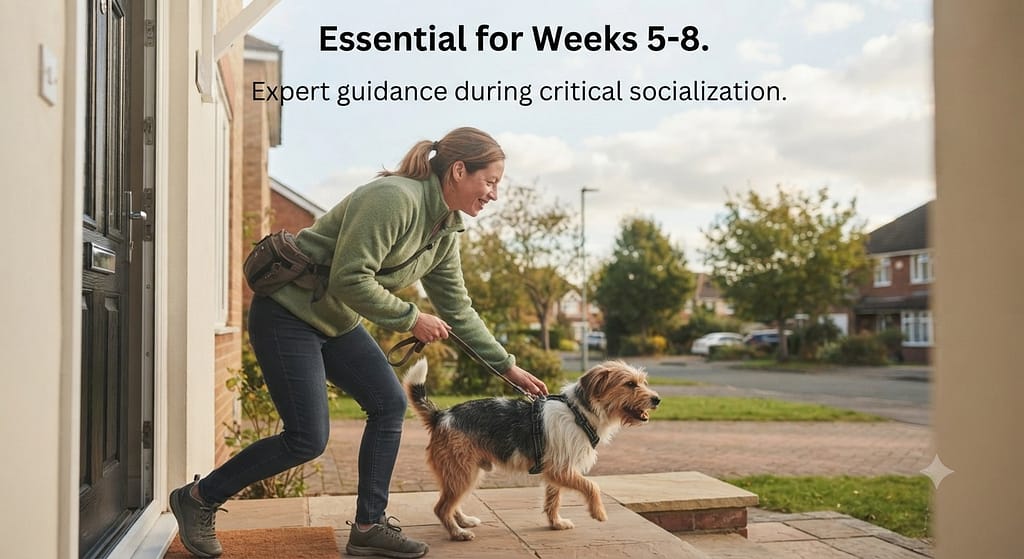
- The Strategy: A brief 20-minute break to break the “6-hour alone” stretch.
- Essential for: Weeks 5-8 when you are extending durations.
- Cost: $15-$25 per visit.
Pet Sitter vs Daycare: The Verdict
For anxious dogs, pet sitter vs daycare is an easy choice—the sitter wins every time. Daycare overstimulates; a sitter provides calm presence.
The “Worst Case” Reality (Dog Anxiety Medications)

If your dog is injuring themselves (broken teeth, bloody paws), consulting a veterinary behaviorist is non-negotiable.
Prescription dog anxiety medications (like Fluoxetine/Prozac or trazodone) may be necessary alongside training. Medication is not a failure; it is a bridge to success.
Section 9: Tracking Dog Anxiety Progress – The “Panic Log”

Monitoring improvement is essential. Tracking dog anxiety progress keeps you objective and motivated.
What to Track
- Departure Time: When you left.
- Return Time: When you returned.
- Duration: How long you were gone.
- Dog’s Reaction (Camera): Vocalization (0-10), destruction (0-10), settling time.
- Trigger Seen: Did they see your keys? Coat? Bag?
The “Success” Pattern
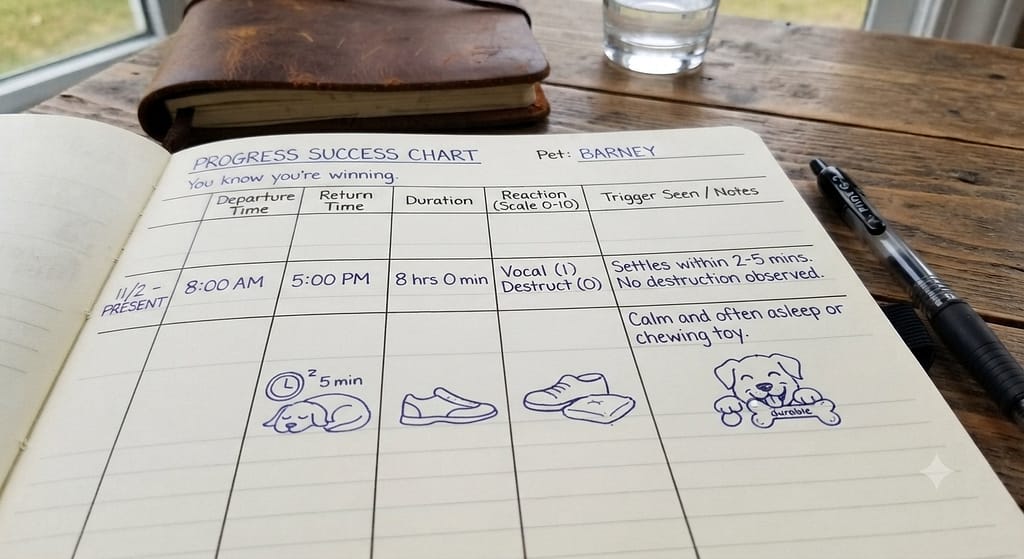
You know you’re winning when:
- The dog settles within 5 minutes of you leaving.
- No destruction occurs.
- They are sleeping or chewing when you return.
The “Setback” Recovery
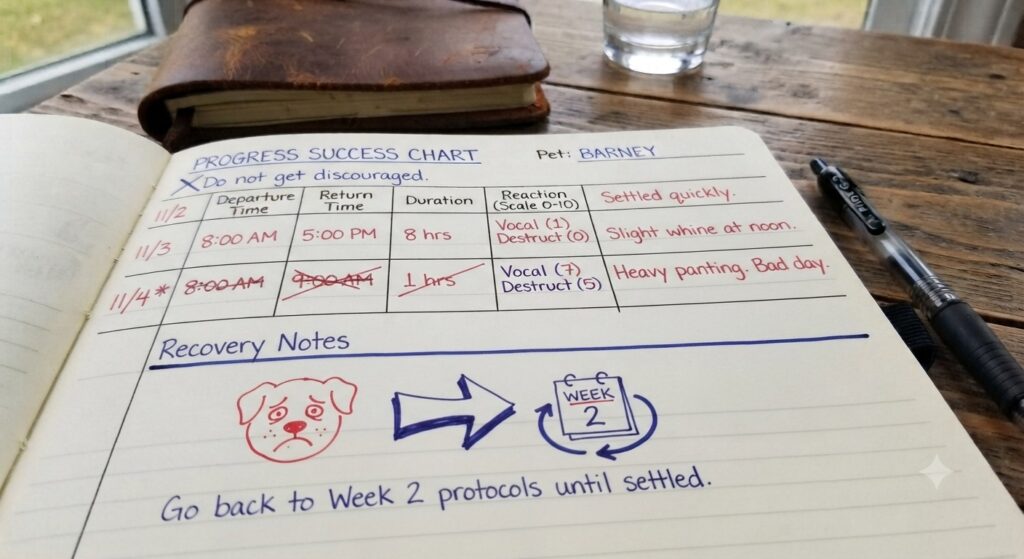
Setbacks happen. If they have a bad day (e.g., a loud noise startles them while you’re gone), go back to Week 2 duration. Start over. Do not get discouraged.
Conclusion: The Sound of Silence
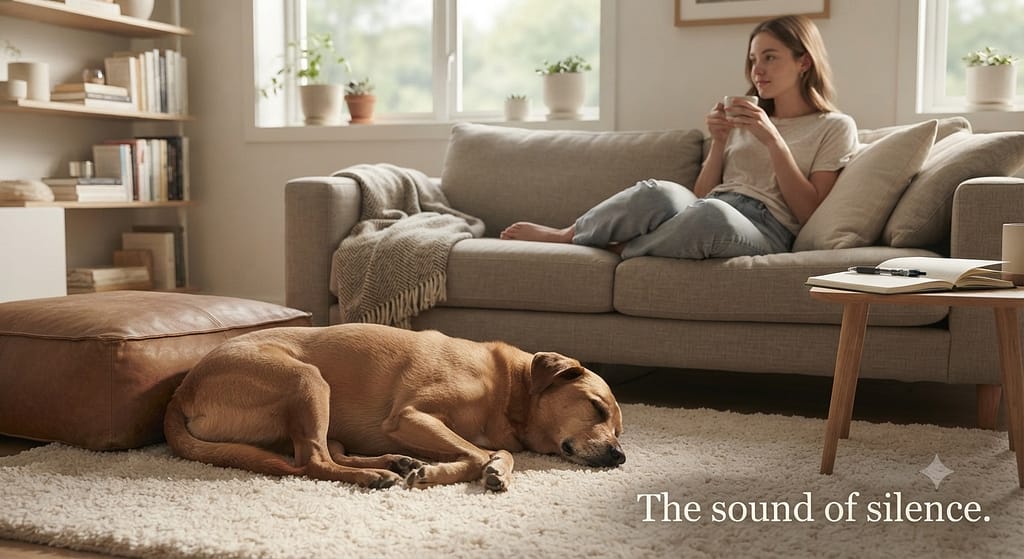
Separation anxiety is a marathon, not a sprint. Progress is measured in seconds of silence, not days.
With this structured separation anxiety training schedule and consistent desensitization training for dogs, you will see remarkable improvements.
The Golden Rule: Never punish the anxiety. Comforting them does not reinforce panic (this is an old, debunked myth). If they are scared, comfort them. You cannot reinforce fear.
These urban dog training methods are built on compassion and science.
Your Final Checklist:
- Diagnose: Camera test. Is it anxiety or boredom?
- Prep: Pre-departure sniffari + puzzle toy.
- Start Flitting: Week 1 micro-durations.
- Manage Work: Sitter, walker, or pen setup.
- Support: Adaptil, music, ThunderShirt as needed.
- Track: Log every departure.
Your Next Steps:
- If your dog struggles with barking during departures, refine your approach with the Urban Silence Protocol [Link].
- For an exhaustive list of anxiety-prone breeds, return to the Selection Bible [Link].
- Download our “8-Week Separation Anxiety Log” below to track your departures, durations, and your dog’s reactions.
🐾 — Apartment Dog Guide (ADG)
Living large in small spaces, one paw at a time. That’s the apartment dog life—see you in the next guide!.


