
The Rainy Day Nightmare
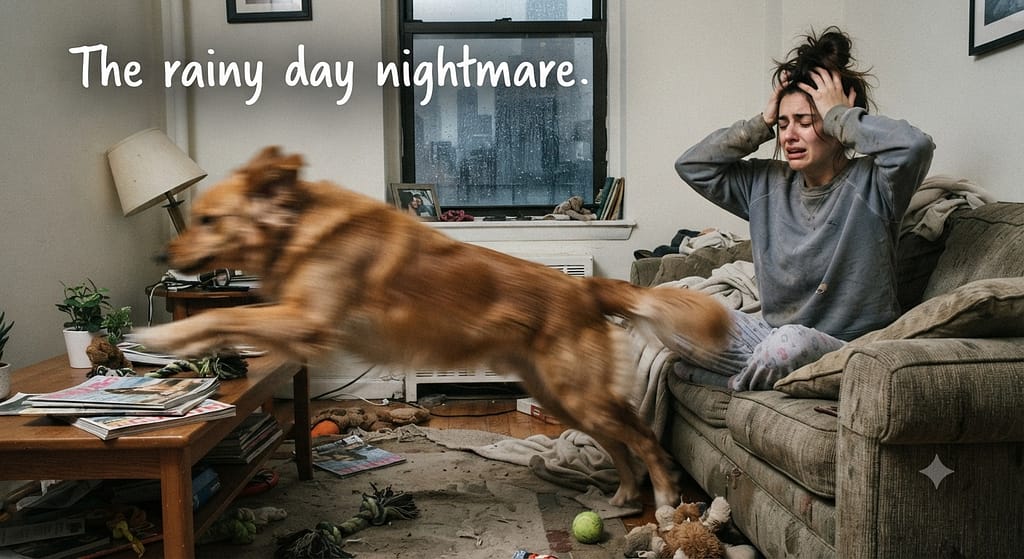
The rain is hammering against the windows.
It’s day three of non-stop downpour.
Your high-energy dog is bouncing off the walls, doing zoomies across the hardwood, and staring at you with that manic gleam in their eye that says: “I need to run, and I need to run NOW.”
You don’t have a backyard. You can’t just open the door and let them burn it off.
The leash walk is out of the question. You are trapped in a 600-square-foot box with a furry tornado.
This is the moment every dog owner apartment tip guide warns you about.
This is the urban dog owner’s greatest challenge.
But here is the truth that changes everything:
Physical exercise builds an athlete; mental exercise builds a philosopher.
This is the essence of enhancing dog mental well-being through targeted activities.
A tired brain is a quiet brain. You don’t need to exhaust their body; you need to exhaust their mind.
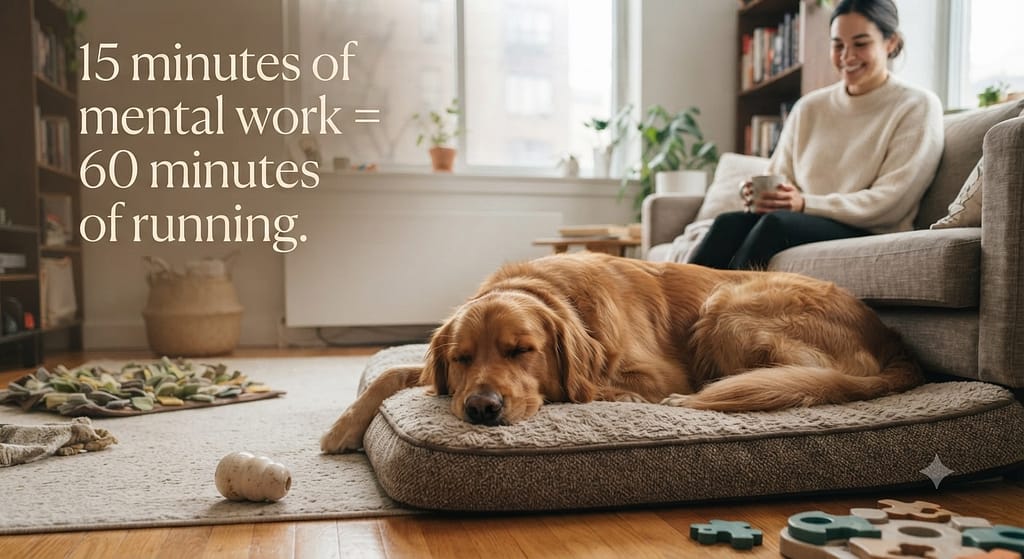
Fifteen minutes of focused mental stimulation for dogs is neurologically equivalent to a 60-minute run.
This guide introduces the 4-Pillar Enrichment System—a complete framework for turning your apartment into a canine adventure playground.
We will cover calming and settling for dogs, impulse control games for dogs, physical exertion for high-energy breeds, DIY dog training activities, and the crown jewel: apartment nose work for dogs.
Welcome to the definitive indoor dog enrichment guide.
Section 1: Pillar 1 – Calming & Settling For Dogs (The “Off-Switch”)
Most owners think “more exercise” is the answer to hyperactivity.
It’s not. You’re building an athlete. You need to teach the art of doing nothing.
This pillar focuses on calming techniques for hyper dogs and proven dog relaxation protocols.
The “Settle” Command (Teaching Dogs to Settle)
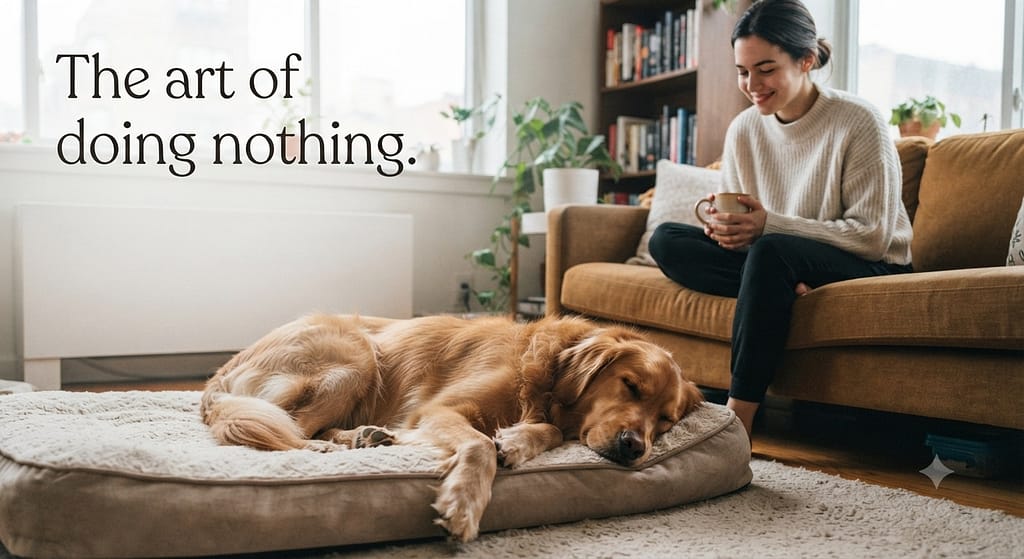
This is the foundation of all indoor peace and a cornerstone of teaching dogs to settle.
Step-by-Step Guide:
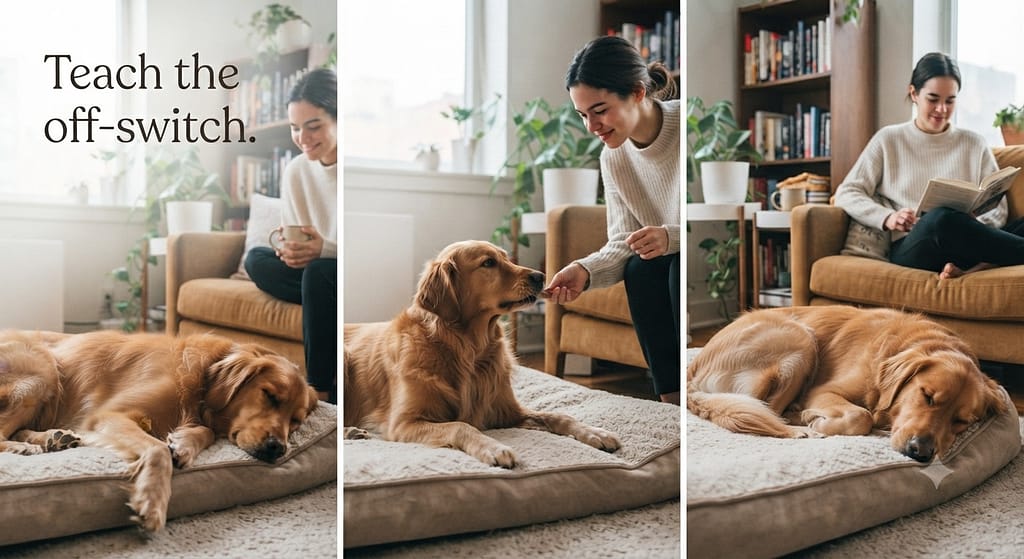
- Capture Calmness: Sit beside your dog while they’re lying down. Wait for a sigh, a head-drop, or a relaxed blink.
- Mark It: Say “Yes!” or click the moment you see relaxation.
- Reward Gently: Drop a treat between their paws. They don’t need to stand up. The goal is to keep them in that relaxed state.
- Extend Duration: Over time, wait longer before marking. 5 seconds, then 10, then 30.
Karen Overall’s Relaxation Protocol (Adapted)
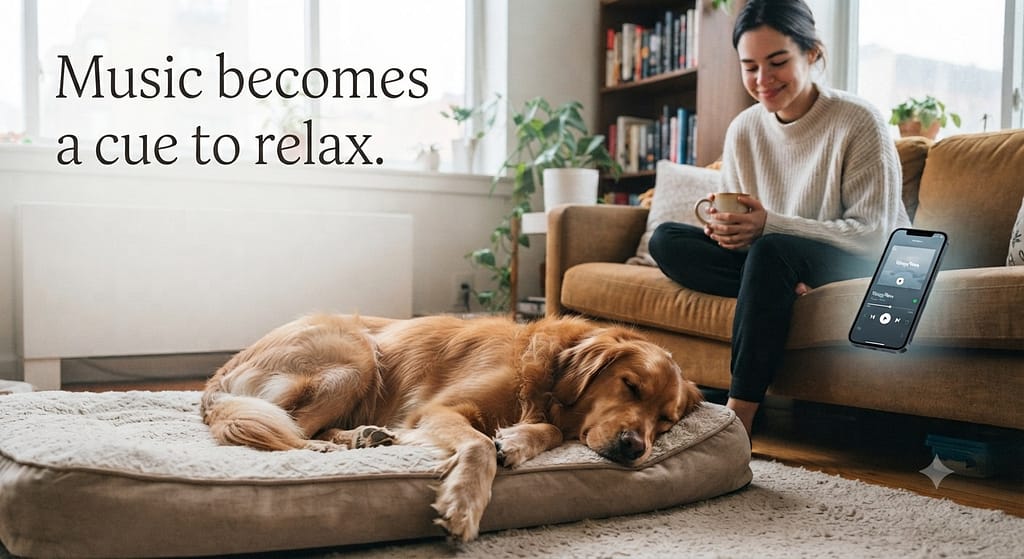
- The Concept: Play a specific “relaxation” playlist or podcast at a low volume.
- The Routine: While the music plays, reward calmness over 15-minute sessions. The music becomes a “cue” to relax.
- The Goal: When you leave and play this music, your dog associates it with deep rest.
Quiet Chew Time
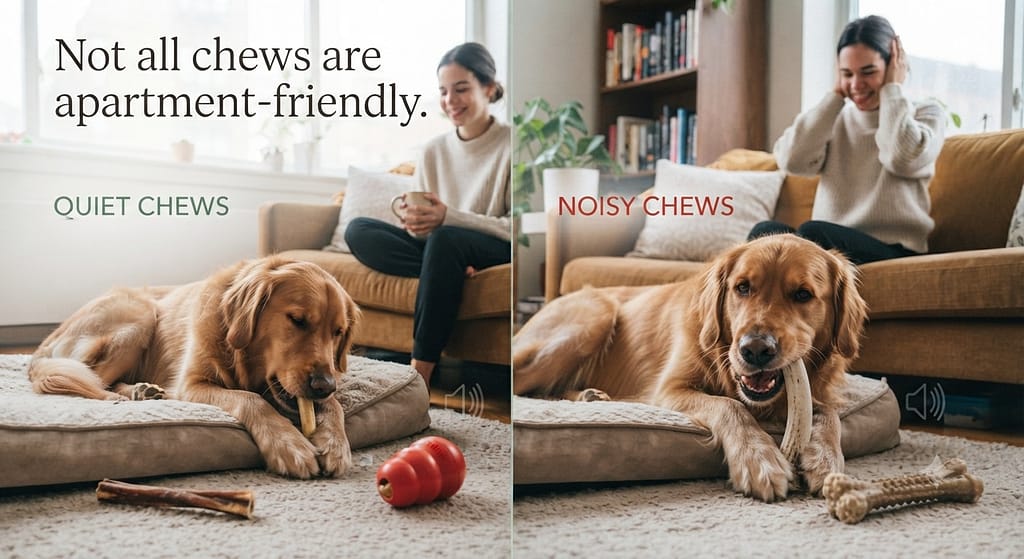
Not all chews are apartment-friendly.
Hard bones clatter on hardwood and annoy neighbors.
- Quiet Chews: Yak cheese, frozen Kongs, bully sticks (soften slightly), and beef cheek rolls.
- Noisy Chews: Nylabones (clatter), hard antlers (tap on floors), and crunchy biscuits.
- The Routine: Give a quiet chew right before you need them to settle (e.g., during a work call or after a walk).
Section 2: Pillar 2 – Impulse Control (Games for the Reactive Dog)
Apartment dogs hear everything.
They need to learn not to react. Impulse control games for dogs are the foundation of urban sanity.
This is essential impulse control training for reactive apartment dogs.
Game 1: “It’s Yer Choice” (Impulse Control Games for Dogs)
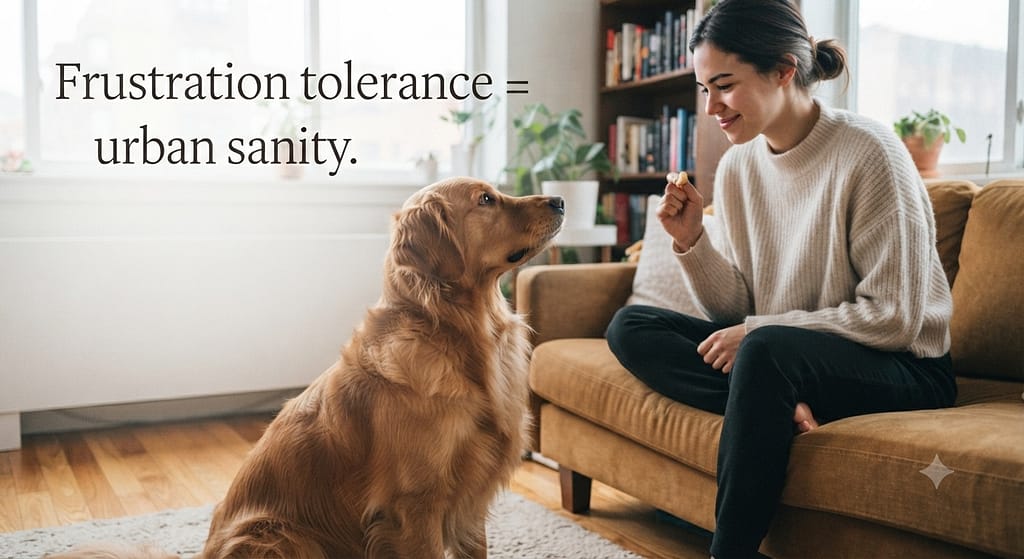
This game teaches frustration tolerance—the ability to wait for what they want.
Step-by-Step:
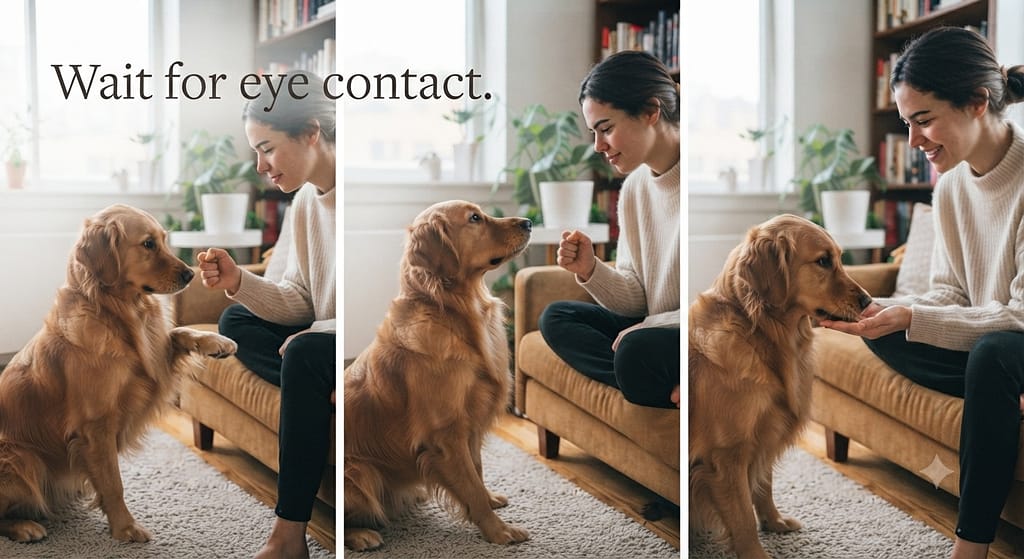
- Hold a treat in a closed fist.
- Your dog will paw, lick, and nibble at your hand. Wait.
- The moment they stop (even for a micro-second), open your fist and give the treat.
- Advanced Version: Wait for eye contact. They learn that looking at you, not the treat, is the way to get the reward.
Game 2: The “Doorway” Wait
Every time you walk through an apartment door (bedroom, bathroom, front door), your dog must sit and wait until you release them with “OK.”
Step-by-Step:
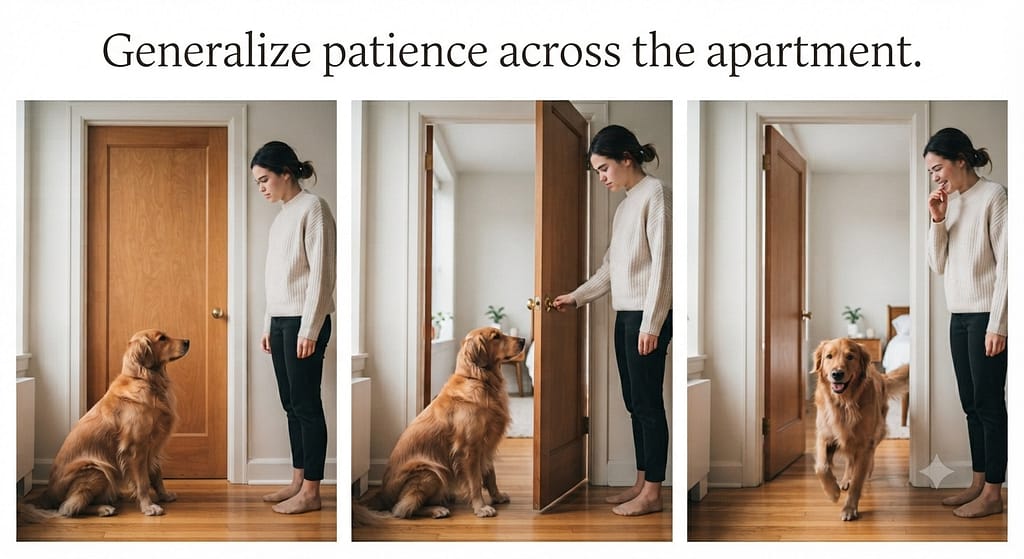
- Approach the door. Your dog is on a leash.
- Say “Wait.” Place your hand on the handle.
- If they move, remove your hand and reset.
- Only open the door when they are still.
- Release with “OK” and step through together.
The Goal: This generalizes patience across the entire apartment.
A dog that can wait at doors is a dog that can ignore hallway noises.
Game 3: “Place” Command (The Studio Solution)
Teaching “Place” in a tiny apartment is not only possible; it’s essential for preventing boredom in dogs.
Step-by-Step:
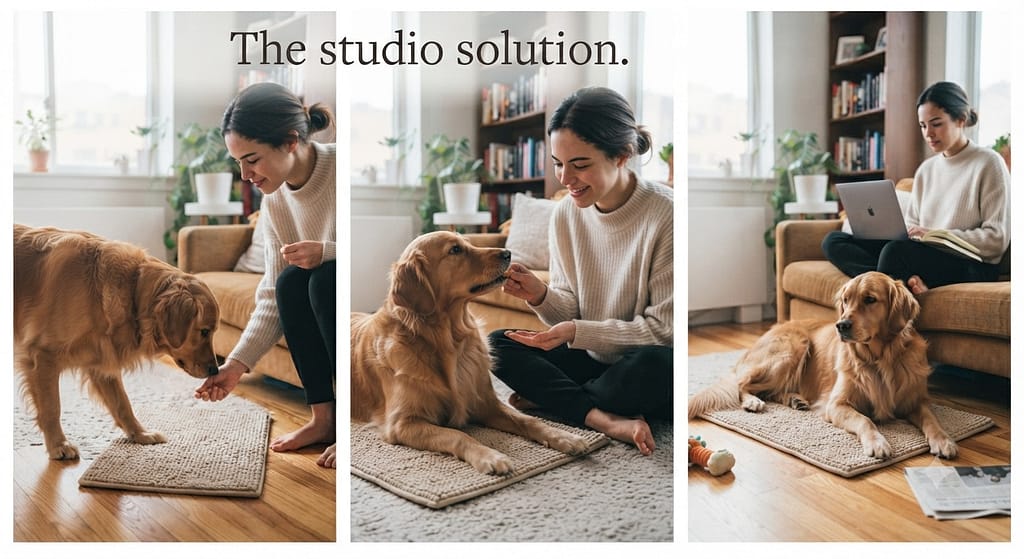
- Choose a mat or bed. (A bathmat works perfectly.)
- Lure your dog onto the mat with a treat.
- The moment all four paws touch, say “Place!” and reward.
- Extend the duration: 1 second, then 5, then 30.
- Add distractions: Walk away, drop a toy, ring the doorbell.
- The Release: Say “Free!” or “OK!” to release them.
The Goal: When the doorbell rings, your dog goes to “Place” instead of rushing the door.
Pillar 3 – Canine Physical Exertion Activities (High-Energy Breeds in Small Spaces)
For herding breeds, huskies, and high-octane dogs, physical exertion is non-negotiable. Here is how to safely drain their battery.
This section provides canine physical exertion activities and high-energy dog activities designed specifically for tight quarters.
These are the answers to how to tire out a high-energy dog in an apartment.
The “Flirt Pole” (Indoor Edition)
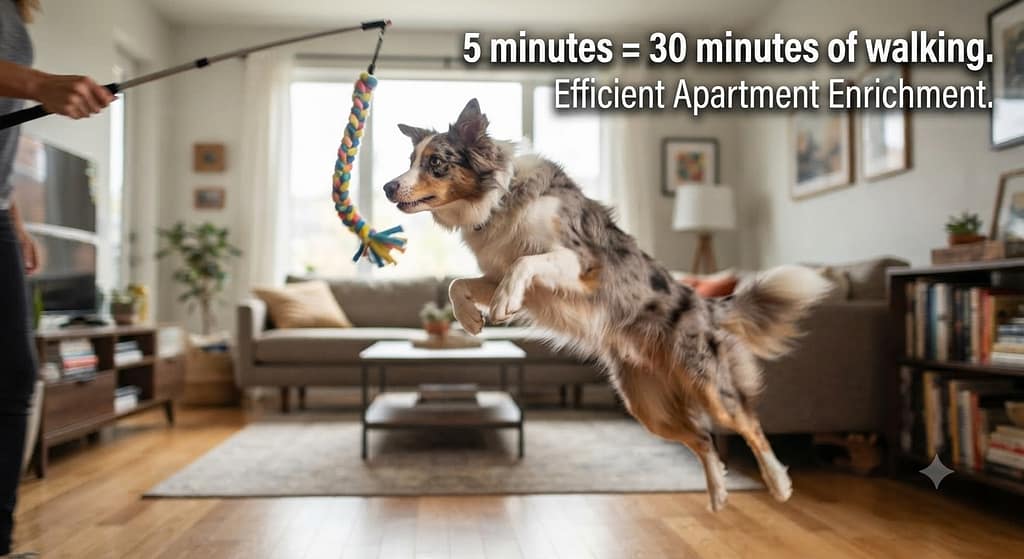
A horse-lunge whip with a toy at the end. In a 10×10 space, 5 minutes of flirt-pole chasing drains more energy than a 30-minute walk.
The flirt pole for dogs is a must-have.
Step-by-Step:
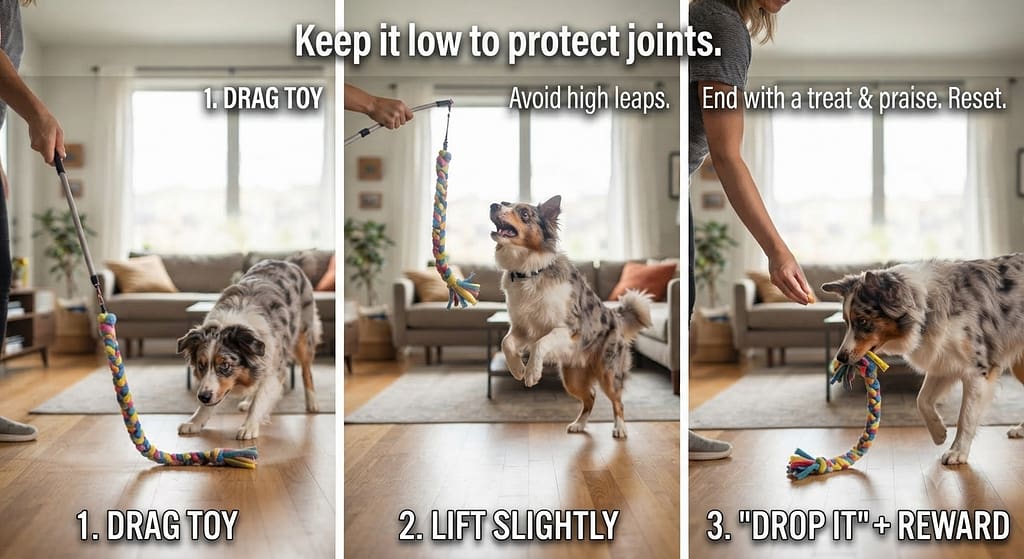
- Setup: Use a soft toy (no squeakers—they annoy neighbors).
- Drag: Drag the toy along the floor. Let them chase.
- Lift: Lift the toy slightly. Let them jump (keep it low to protect joints).
- The “Drop It” Rule: Every 10 seconds, say “Drop It” and reward. This prevents obsession and over-arousal.
- Cool Down: End the game with a calm “Settle” and a quiet chew.
The “Tug-and-Trade” Circuit (Structured Dog Play Sessions)
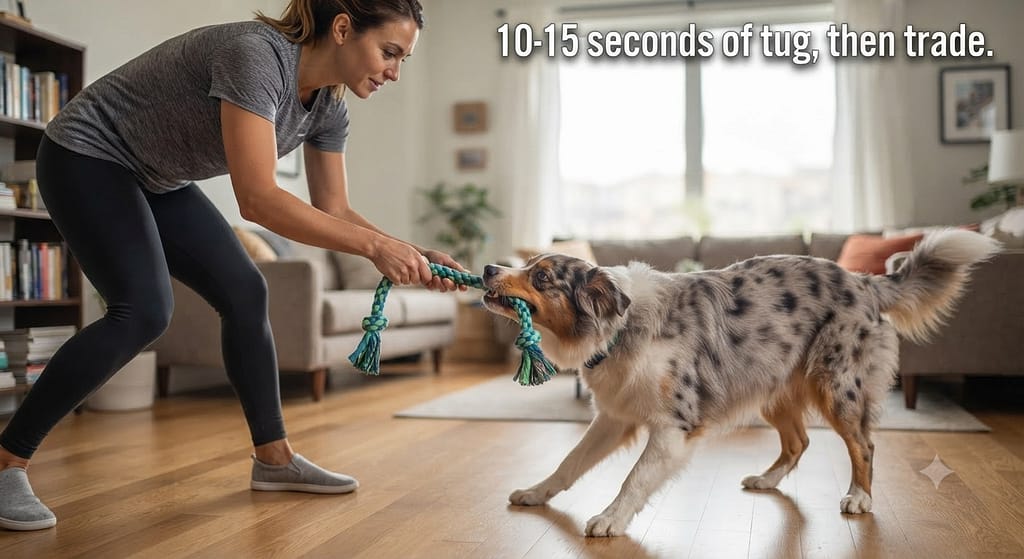
Structured tug-of-war is a fantastic muscle-builder and one of the best structured dog play sessions.
Step-by-Step:
- Engage: Offer a rope toy. Let them grab it.
- Tug: Tug gently for 10-15 seconds.
- Trade: Say “Drop It” and offer a treat. They release the toy.
- Repeat: Re-engage. 5-10 reps.
Staircase Sprinting (If You Have Stairs)
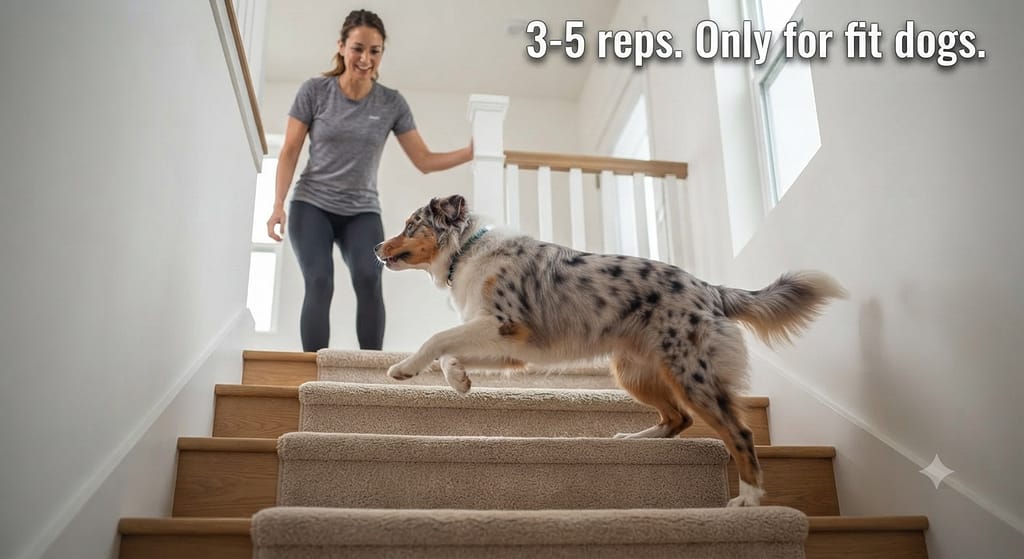
Supervised, controlled up-and-down reps.
Step-by-Step:
- Throw a toy to the top of the stairs. Send them up.
- They return the toy (or you call them down).
- Warning: Only for fit dogs. Bad for puppies’ joints (under 12 months). Limit to 3-5 reps.
The “Sit-to-Stand” Reps
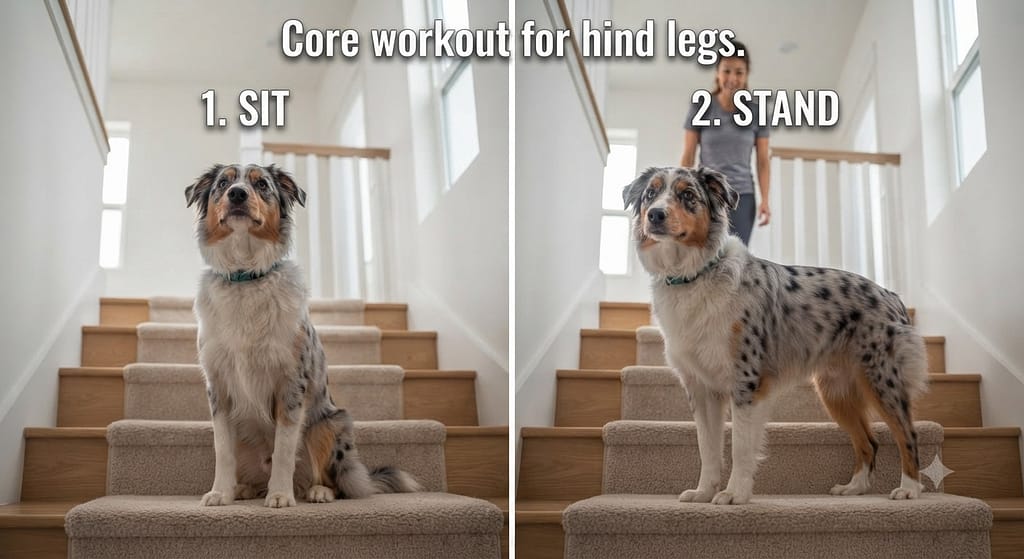
A core workout that tires out their hind legs in 60 seconds.
Step-by-Step:
- Have them sit.
- Lure them up with a treat (stand).
- Lure them back down (sit).
- Repeat 10-15 times.
Section 4: The “No-Walk Day” Dog Activities – DIY Obstacle Course for Small Spaces
You don’t need agility equipment. You need couch cushions, broomsticks, and chairs.
Obstacle #1: The “Tunnel”
Obstacle #2: The “Weave Poles”
This section provides DIY dog training activities and a complete DIY dog obstacle course for small spaces—perfect for indoor games for dogs on rainy days.
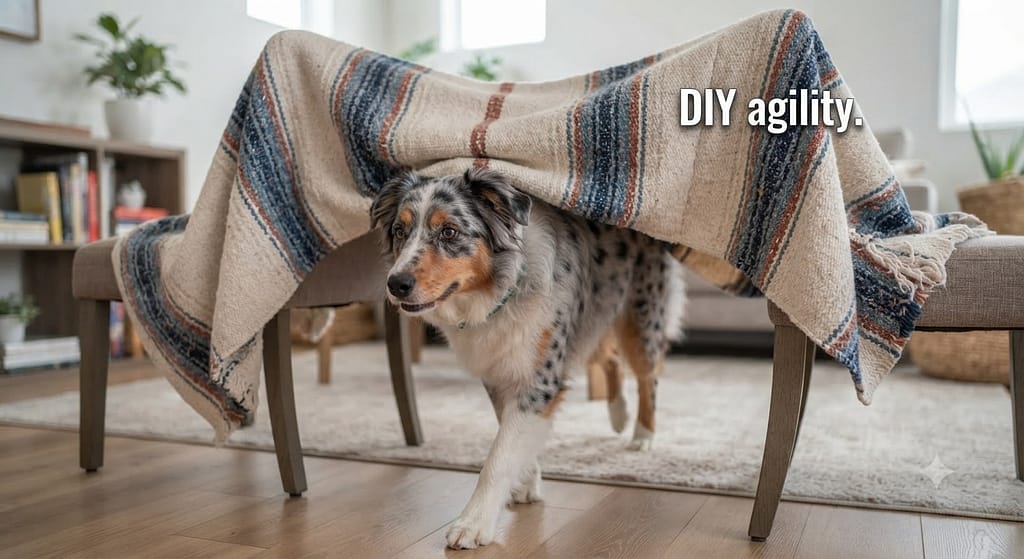
Obstacle #1: The “Tunnel”
- Materials: Two chairs + a blanket.
- Setup: Drape the blanket over the chairs to create a dark tunnel.
- Goal: Teach confidence in enclosed spaces (great for elevator anxiety).
- Training: Lure your dog through with a treat. Reward heavily.
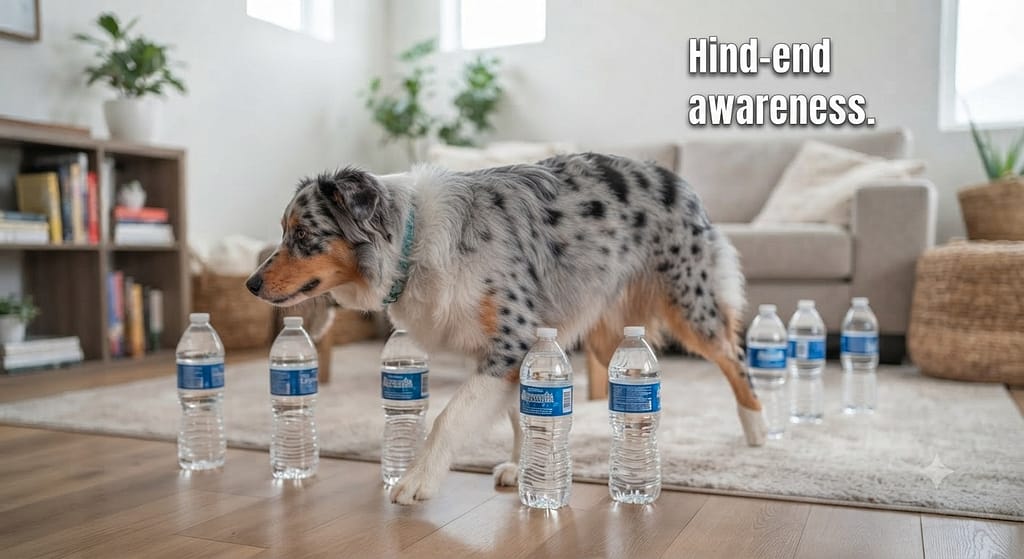
Obstacle #2: The “Weave Poles”
- Materials: 4-5 water bottles or toilet paper rolls.
- Setup: Place them in a straight line, 12 inches apart.
- Goal: Hind-end awareness and focus.
- Training: Lure your dog through the poles with a treat in your hand.
Obstacle #3: The “Pause Table”
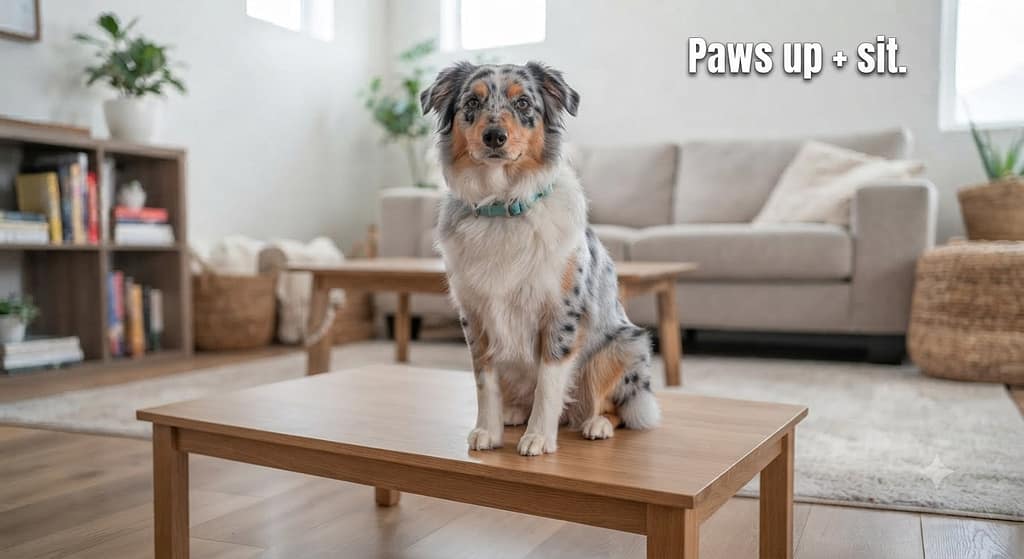
- Materials: A sturdy coffee table or ottoman.
- Goal: Teach them to put all 4 paws on it and “sit.”
- Training: Lure them up. The moment all paws are on, say “Paws Up!” and reward. Then ask for a “Sit.”
Obstacle #4: The “Jump” (Low)
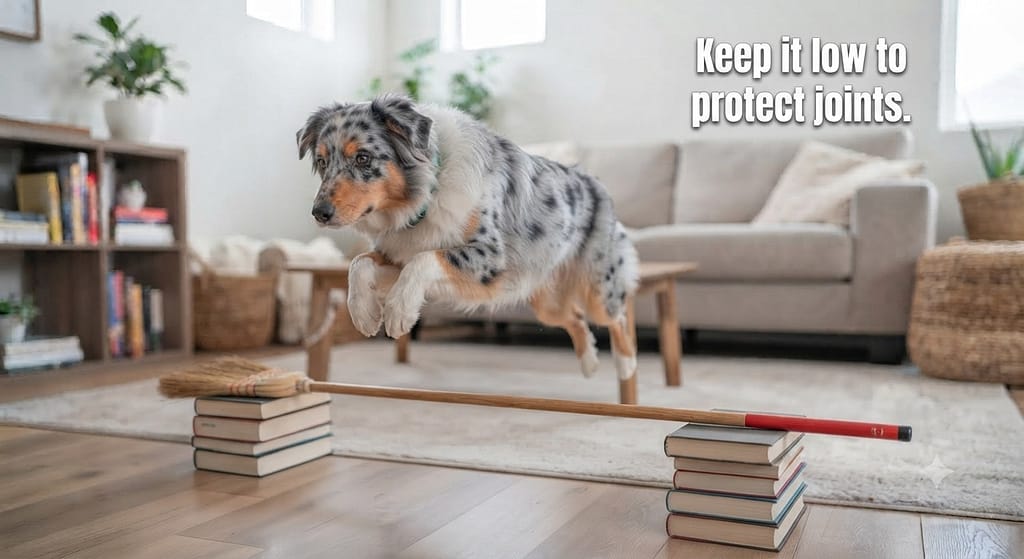
- Materials: A broomstick resting on two low stacks of books.
- Goal: Confidence and agility.
- Training: Lure them over. Keep it low (just a few inches) to protect joints.
Tying It Together (The Indoor Obstacle Course for Pets)
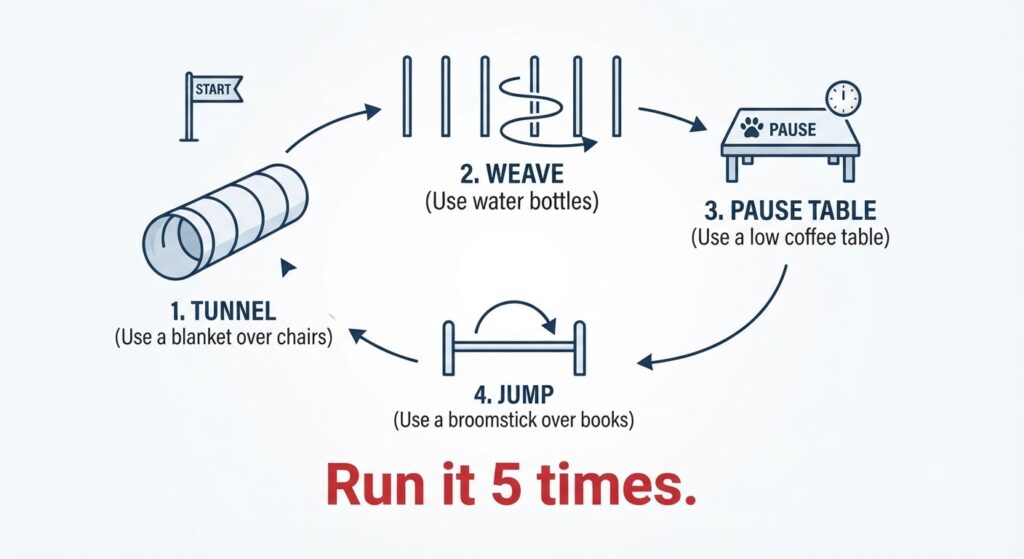
- Tunnel → 2. Weave Poles → 3. Pause Table (sit) → 4. Jump.
- Time Them: Run it 5 times. Your dog will be exhausted.
Safety First:
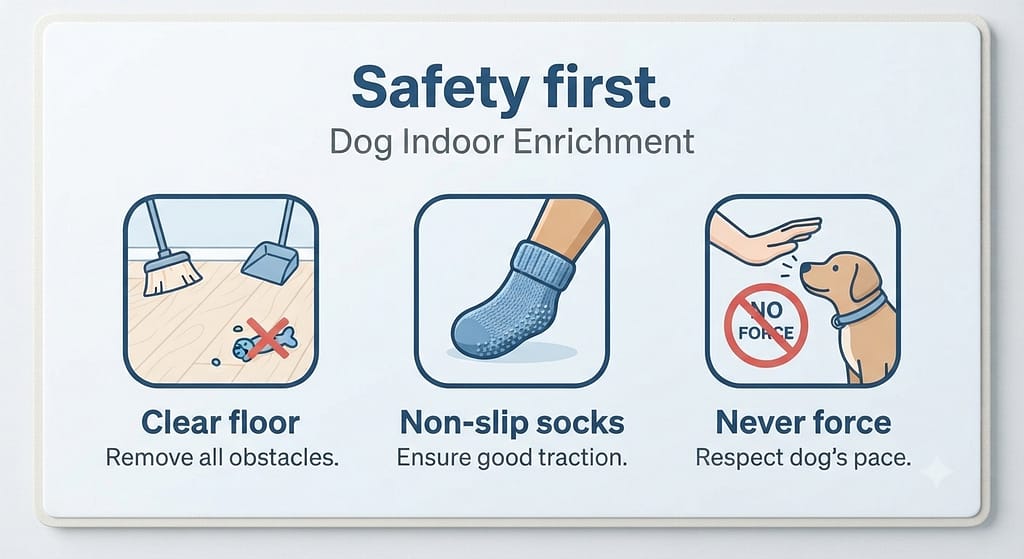
- Clear the floor of slippery rugs.
- Use non-slip socks or paw wax.
- Never force a reluctant dog.
Section 5: Pillar 4 – Dog Cognitive Enrichment (The Crown Jewel: Apartment Nose Work)
This is the highest-converting section. Sniffing lowers a dog’s heart rate.
It makes them use 30% more brain energy than physical exercise.
This is the essence of dog cognitive enrichment and apartment nose work for dogs.
Why Scent Work is the Ultimate Apartment Hack
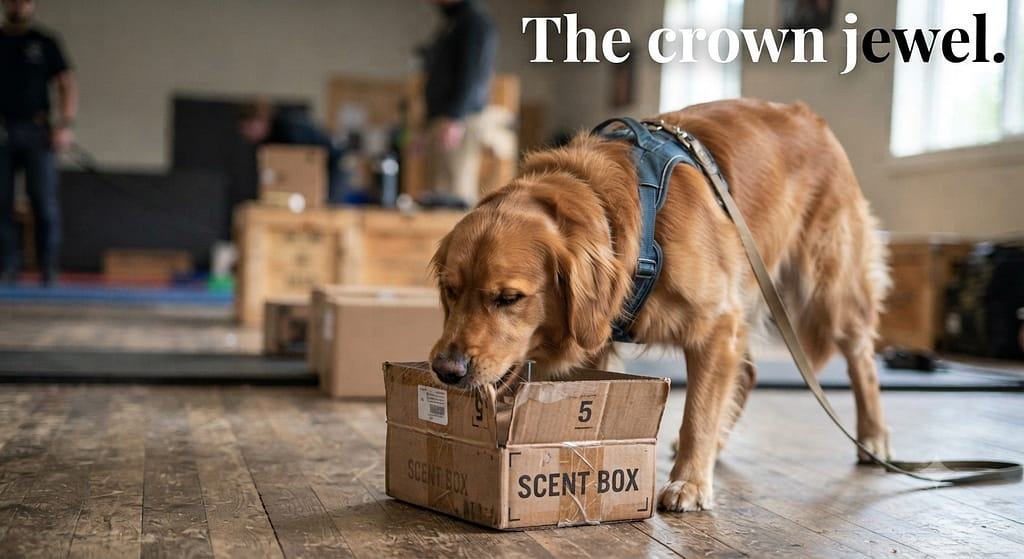
- The Science: When a dog sniffs, their heart rate drops. They process scent information, which requires immense cognitive energy.
- The 15-Minute Rule: 15 minutes of nose work = 60 minutes of walking in terms of cortisol reduction.
- Indoor dog enrichment guide: This is your masterclass in dog brain games at home.
The “Box Game” (Beginner)
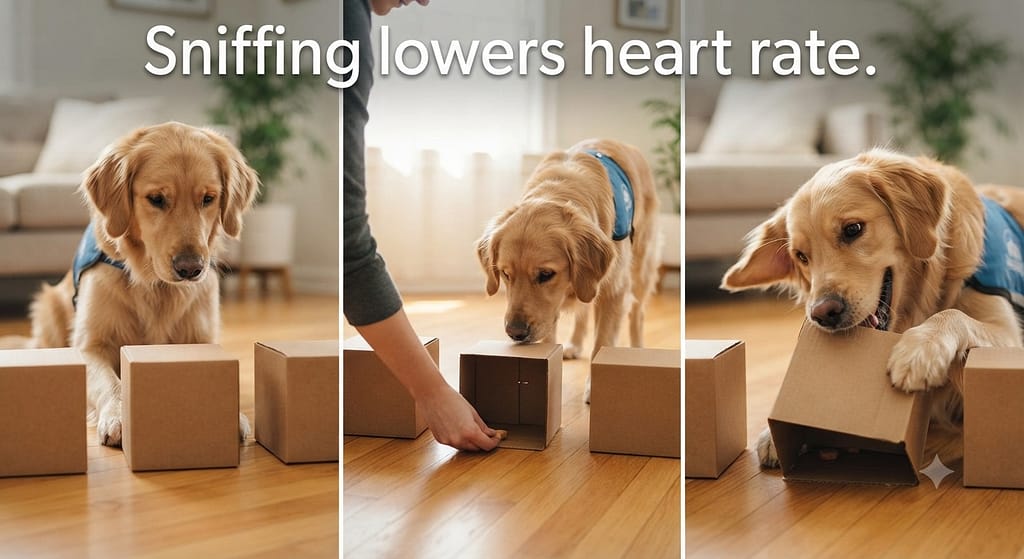
- Materials: 3 cardboard boxes (upside down).
- Setup: Place a treat under one box.
- Training: Let your dog sniff and find it. Reward heavily.
- Progression: Add more boxes. Make them search longer.
The “Muffin Tin” Game (Indoor Activities for Dogs)
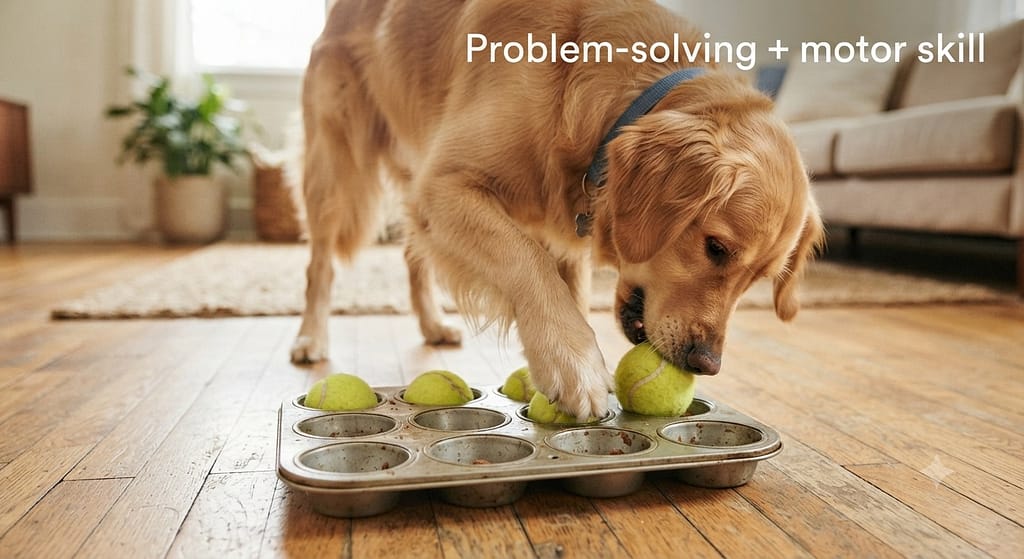
- Materials: A muffin tin + tennis balls.
- Setup: Place treats in random slots. Cover all slots with tennis balls.
- Goal: Your dog uses their nose and paw to remove the balls to get the food.
- Cognitive Benefit: Problem-solving + motor skills. One of the best indoor activities for dogs.
The “Find It” Hunt (Advanced)
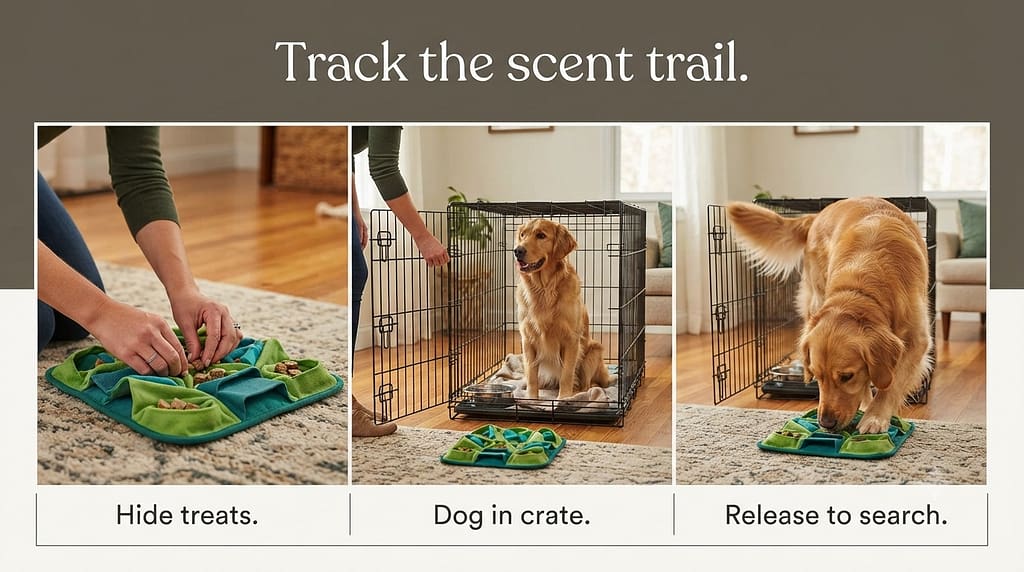
- Materials: High-value treats (cut-up hot dogs work best).
- Setup: Hide treats around the apartment while your dog is in their crate.
- Release: Say “Find It!” and watch them track the scent trail.
- Progression: Hide treats in harder places—under pillows, behind doors, inside toys.
Household Item Hacks (Engaging Indoor Dog Games)
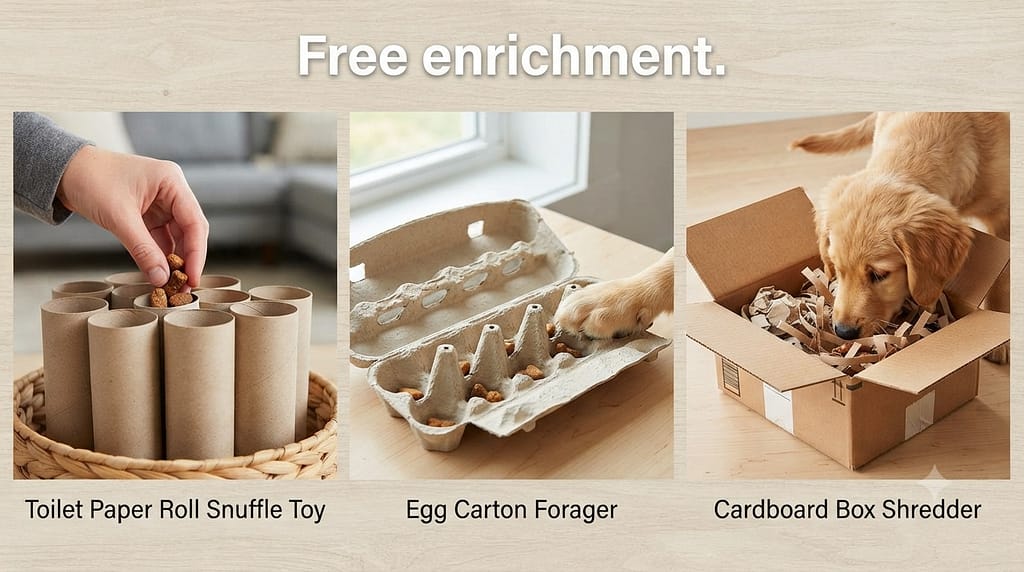
- Toilet Paper Rolls: Fold the ends, stuff with kibble.
- Egg Cartons: Hide treats inside the compartments.
- Cardboard Boxes: Layer boxes inside boxes with treats between layers.
The “Scent Jar” Progression (Puppy Mental Stimulation Techniques)
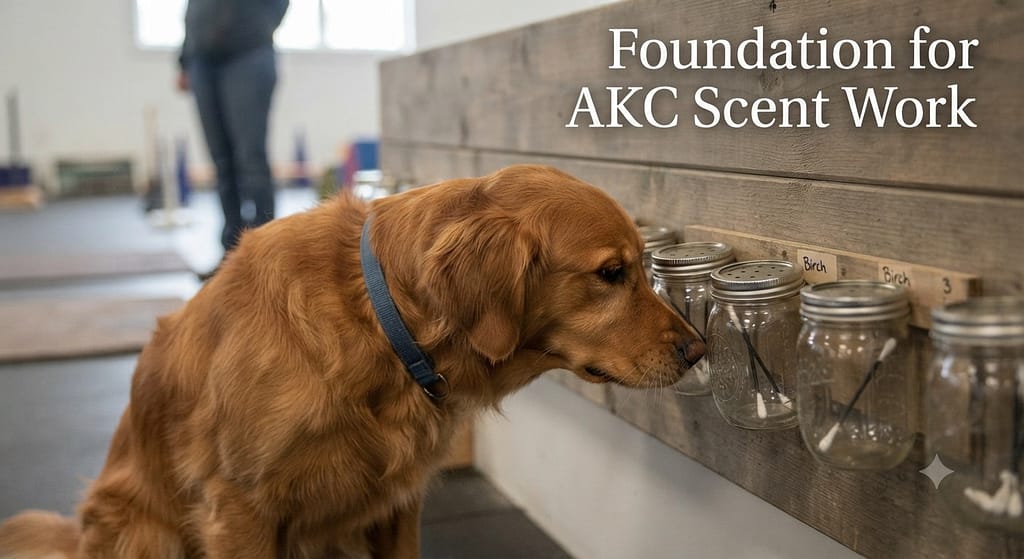
This is the foundation for AKC Scent Work titles and advanced puppy mental stimulation techniques.
- Materials: Small jars with holes in the lid.
- Setup: Place a specific scent (like birch or clove essential oil) on a cotton ball in one jar. Other jars have empty cotton balls.
- Training: Let your dog find the scent jar. Reward. This is advanced work that can become a lifelong hobby.
Section 6: The “30-Minute Indoor Dog Activity Schedule”
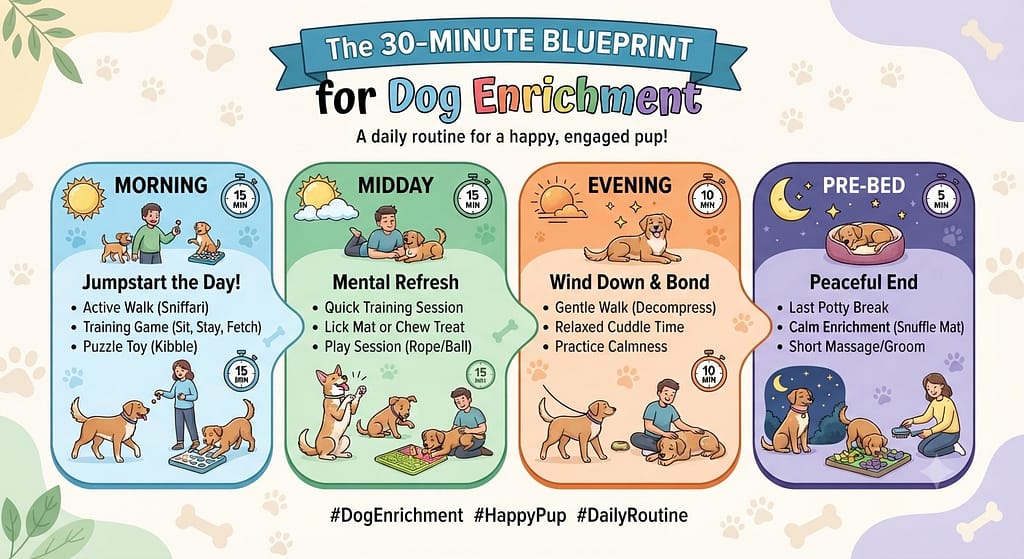
Tie every section together into a realistic daily routine for a high-energy breed.
This is your indoor dog activity schedule and canine enrichment scheduling template.
Morning (7:00 AM – 15 Minutes)
- Activity: Impulse control game (“It’s Yer Choice”) + Flirt pole session (5 minutes).
- Goal: Burn morning energy and start the day with focus.
Midday (12:00 PM – 15 Minutes)
- Activity: 5-minute obstacle course run + 10-minute “Find It” nose work game.
- Goal: Break up the workday and prevent boredom barking.
Evening (6:00 PM – 10 Minutes)
- Activity: Settle/Relaxation Protocol while you cook dinner.
- Goal: Transition from active to calm.
Pre-Bedtime (10:00 PM – 5 Minutes)
- Activity: “Place” practice with a quiet chew.
- Goal: Wind down for the night.
The “No-Walk Day Dog Activities” Protocol
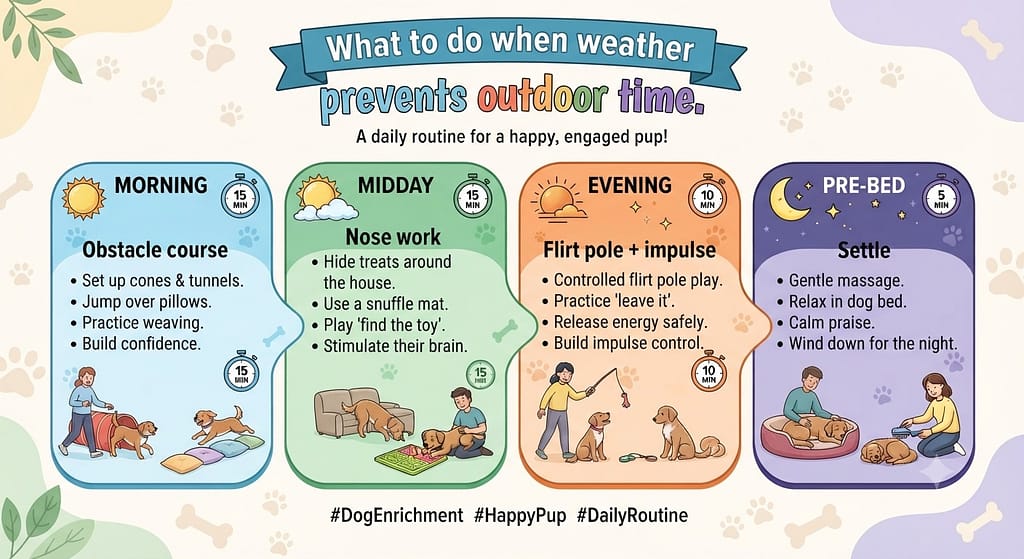
What to do when weather prevents any outdoor time:
- Morning: Obstacle course (15 minutes).
- Midday: Nose work (20 minutes).
- Evening: Flirt pole + impulse control (15 minutes).
- Pre-Bed: Settle protocol (10 minutes).
Section 7: Boredom Busters for Dogs – Creative Dog Exercise Methods
Reframe their thinking. This is the “aha” moment that converts skeptics.
These boredom busters for dogs and creative dog exercise methods are designed to keep novelty high.
The Science Revisited:
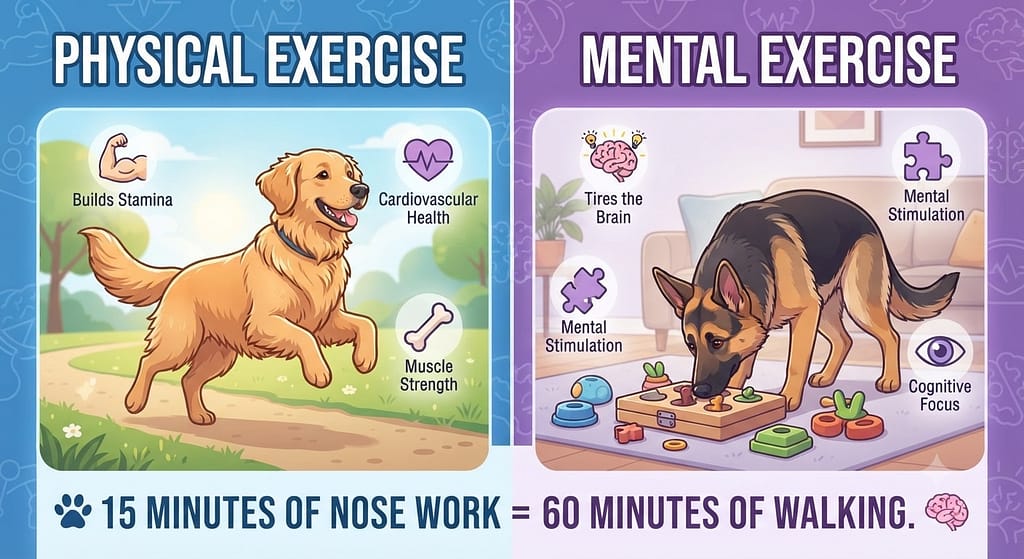
A 60-minute walk is mostly pavement-pounding. It builds stamina but doesn’t tire the brain. The dog returns home physically tired but mentally bored.
The 15-Minute Rule:
15 minutes of nose work = 60 minutes of walking in terms of cortisol reduction.
The Apartment Advantage:
You are training your dog to be a calm indoor companion, not just a dog who tolerates being inside. You’re changing their emotional state. This is the core of the apartment dog training guide philosophy
The Shift in Perspective:
Stop thinking: “I need to exercise my dog.”
Start thinking: “I need to engage my dog.”
The Rotation Principle:
Never do the same activity two days in a row. Rotation keeps novelty high and anxiety low.
Conclusion: The Enrichment Mindset – Enhancing Dog Mental Well-Being
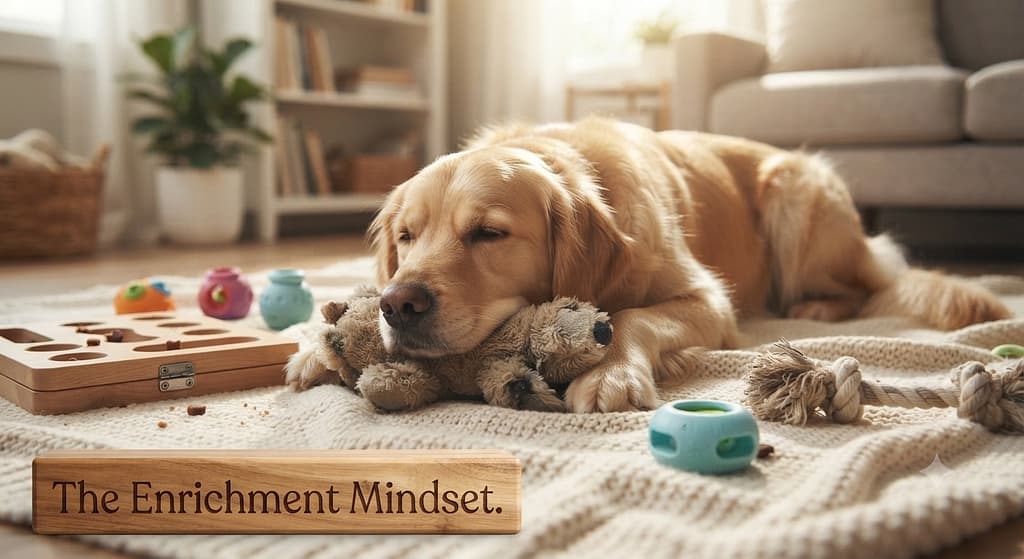
Enrichment isn’t about “keeping them busy.” It’s about meeting their genetic needs—sniffing, chewing, searching, problem-solving—in a tiny footprint.
This is the ultimate path to enhancing dog mental well-being through consistent, thoughtful engagement.
The Golden Rule: Never do the same activity two days in a row.
Rotation keeps novelty high and anxiety low.
Your Final Checklist:
- Calm: Teach the “Settle” command.
- Control: Practice “It’s Yer Choice” and “Place.”
- Exert: Use the flirt pole and obstacle course.
- Cognize: Nose work, “Find It,” and scent jars.
- Schedule: 30 minutes of daily enrichment.
Your Next Steps:
- If your dog struggles with barking during activities, refine your approach with the Urban Silence Protocol [Link].
- If your dog shows signs of anxiety, visit our Separation Anxiety Guide [Link].
- Download our “Indoor Enrichment Bingo” card below to challenge yourself with 24 new activities.
🐾 — Apartment Dog Guide (ADG)
Living large in small spaces, one paw at a time. That’s the apartment dog life—see you in the next guide!.


