
The weather app shows three straight days of rain.
The wind howls like it’s auditioning for a horror movie.
Outside looks more like a waterpark than a walkable neighborhood.
And your dog?
They’re doing their fifteenth lap around the coffee table, eyes saying what you’re both thinking: “I’m going to lose my mind in here.”
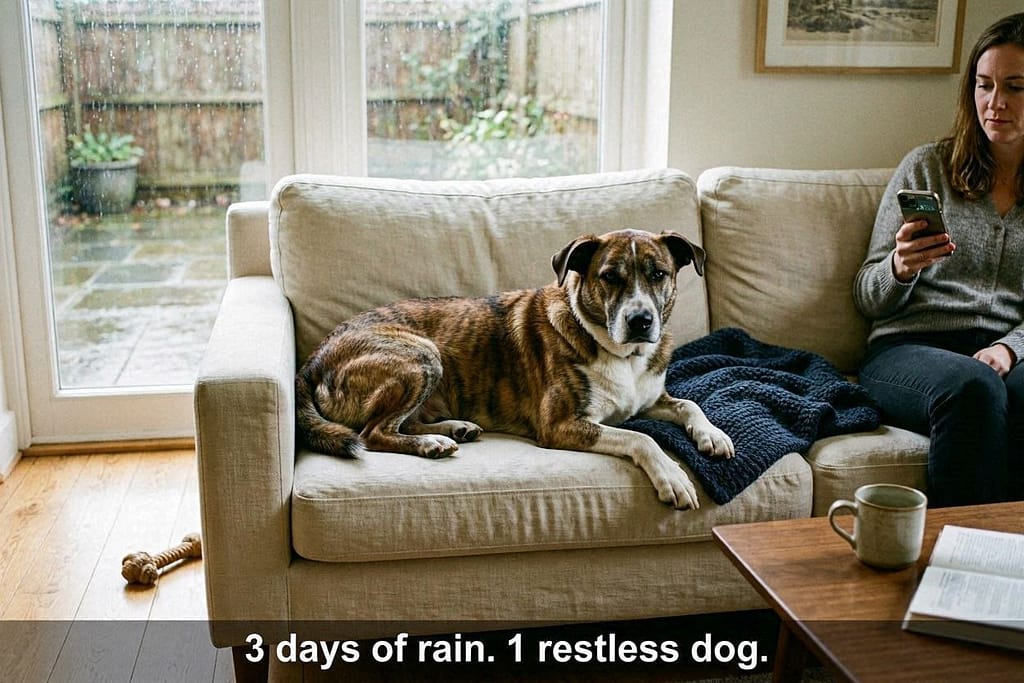
Sound familiar, city dog parent?
Here’s a truth we urban dog owners know too well:
Bad weather doesn’t cancel your dog’s energy.
It just redirects it—usually toward your favorite shoes, the couch cushions, or that intense “I’m going to stare at you until you spontaneously combust” look.
But what if we told you that your living room could transform into a canine adventure park in less time than it takes to watch a Netflix episode?
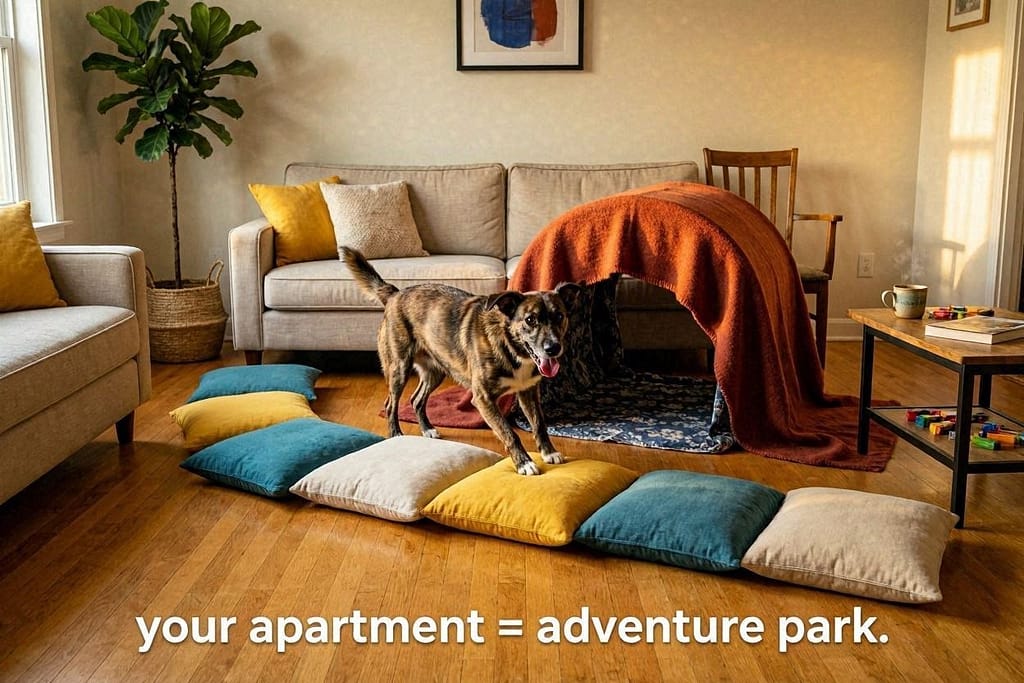
What if, instead of dreading stormy days, you and your dog could actually look forward to them?
Hold that thought—because we’re about to turn your apartment into the most exciting indoor dog gym on the block…
Why “Just a Walk” Isn’t Enough (And Why Obstacle Courses Are)
The Urban Dog’s Bad Weather Dilemma
Let’s be real: Sometimes “bad weather” means more than rain. It means:
- Hurricane-force winds that turn umbrellas inside out
- Sub-zero temperatures that freeze paws in minutes
- Air quality alerts that make going outside dangerous
- Pandemics or other situations that keep you indoors
But here’s what most dog owners miss:
Physical energy is only half the equation.
Your dog doesn’t just need to burn calories. They need to:
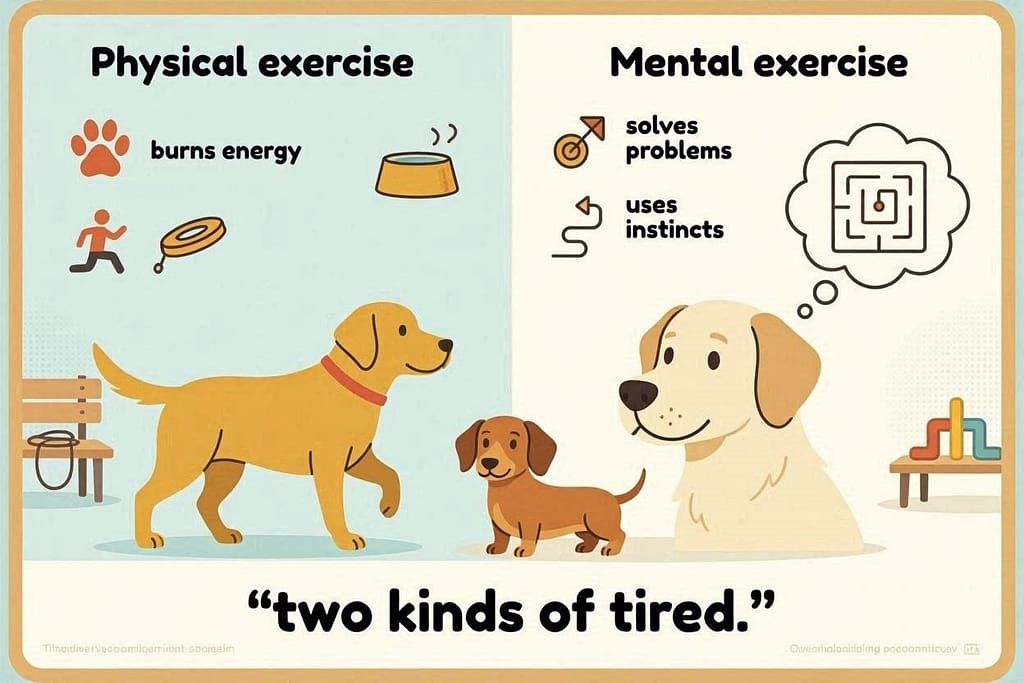
- Solve problems (mental stimulation)
- Use their instincts (sniffing, crawling, jumping)
- Feel accomplished (yes, dogs need this too!)
- Connect with you in meaningful ways
The Magic of Obstacle Courses: More Than Just Exercise
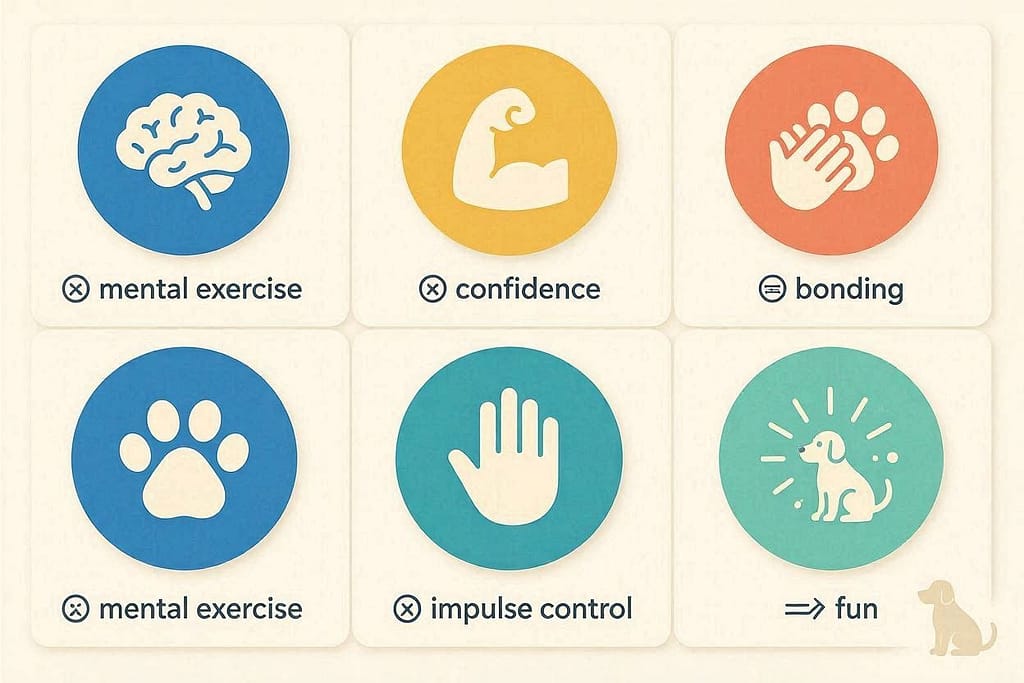
An indoor obstacle course isn’t about creating a miniature Westminster Dog Show. It’s about providing:
- Mental Exercise: Problem-solving burns more energy than running
- Confidence Building: Each completed obstacle = a win
- Bonding Time: You’re the coach, cheerleader, and teammate
- Impulse Control Practice: Waiting for cues before obstacles
- Fun: Remember that? Pure, unadulterated play?
The best part?
You don’t need fancy equipment. You don’t need a huge space.
You just need what you already have.
The Golden Rules: Safety First in Small Spaces
Before You Build: The Apartment Safety Checklist
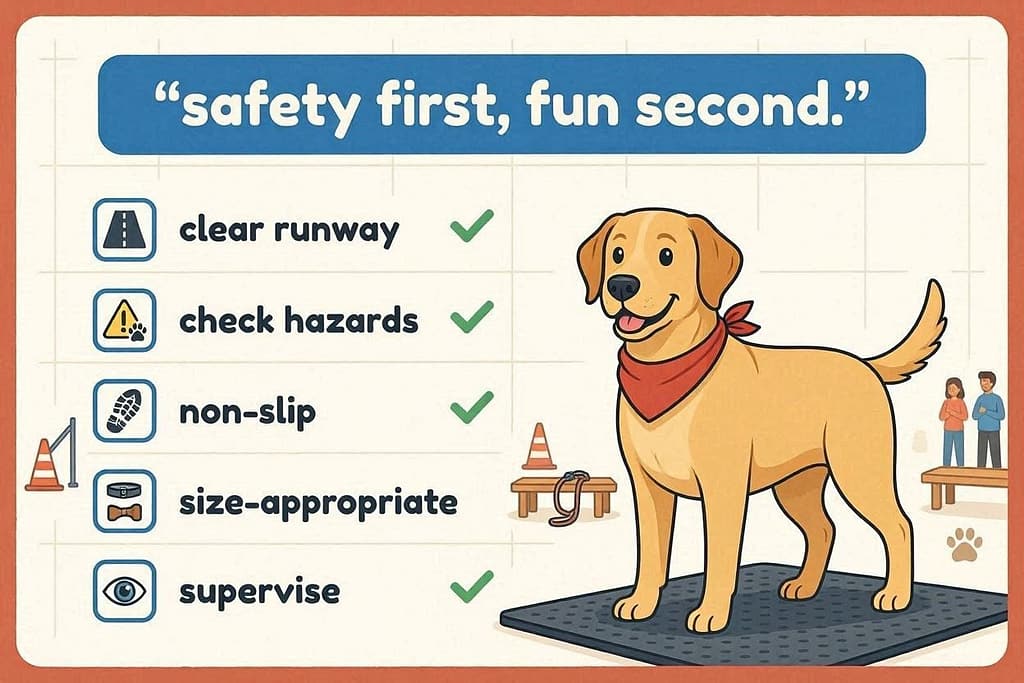
- Clear the runway: Move coffee tables, push chairs in, and secure loose rugs
- Check for hazards: Electrical cords, fragile items, sharp corners
- Surface check: Ensure non-slip surfaces (no socks on hardwood!)
- Size-appropriate: Adjust obstacles for your dog’s size and ability
- Supervision required: Never leave your dog unattended with the course
The “Know Your Dog” Assessment
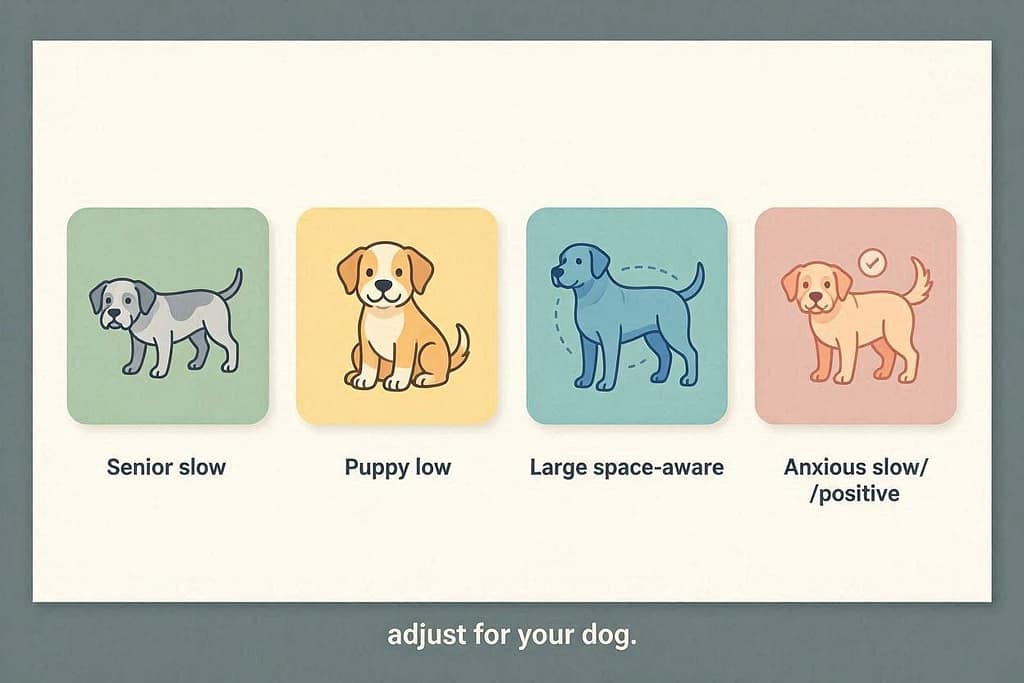
For seniors or injured dogs: Focus on low-impact mental obstacles
For puppies: Keep everything low to the ground
For large dogs in small spaces: Use narrow paths and careful turns
For anxious dogs: Go slow, use treats, and keep it positive. Ready to raid your apartment for supplies? Let’s go shopping… in your own home!
Your Indoor Obstacle Course Toolkit: The Household Edition
The “No Shopping Required” Supply List
Gather these from around your apartment:
From the Living Room:
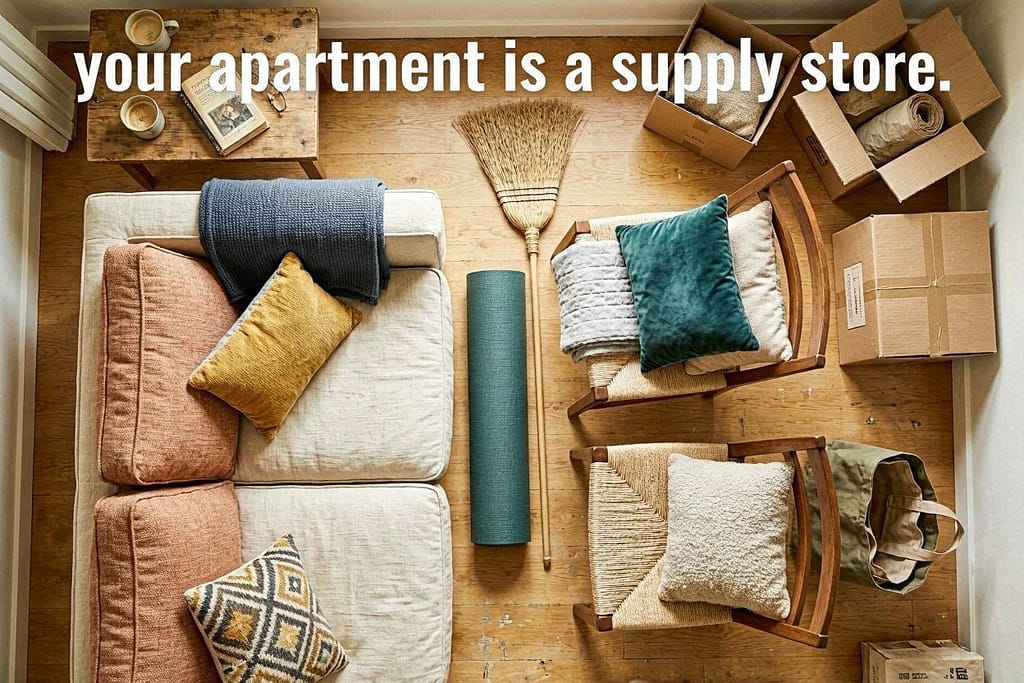
- Couch cushions and pillows
- Blankets and throws
- Dining chairs
- Yoga mats or area rugs
- Brooms or mops (unused!)
- Cardboard boxes (various sizes)
From the Bedroom:
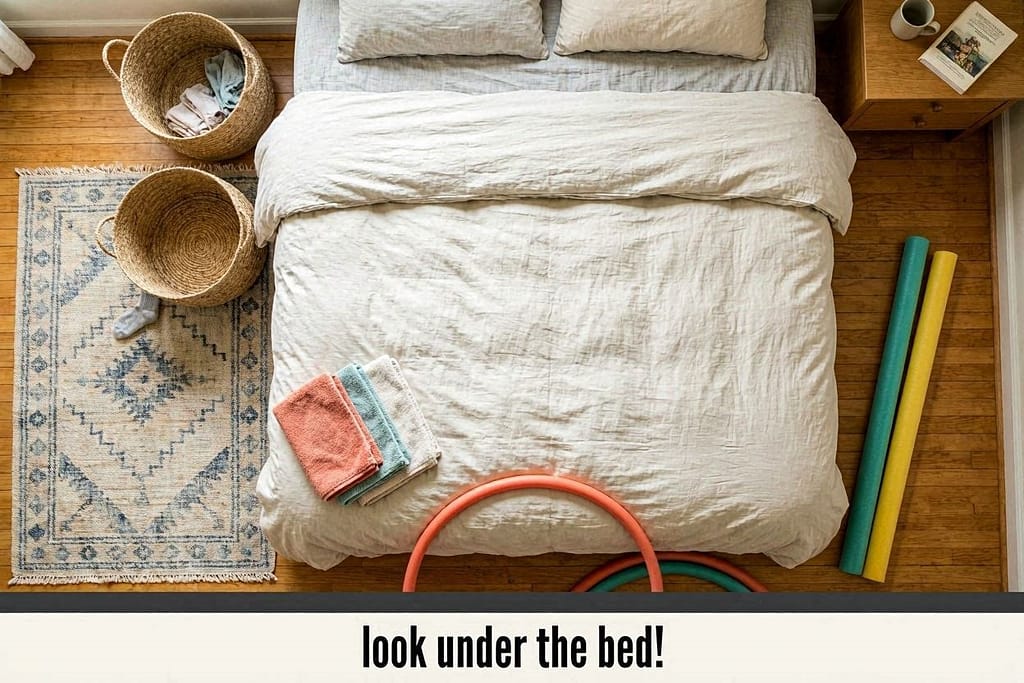
- Hula hoop (if you have one hiding)
- Laundry baskets
- Pool noodles (off-season storage?)
- Towels
From the Kitchen:
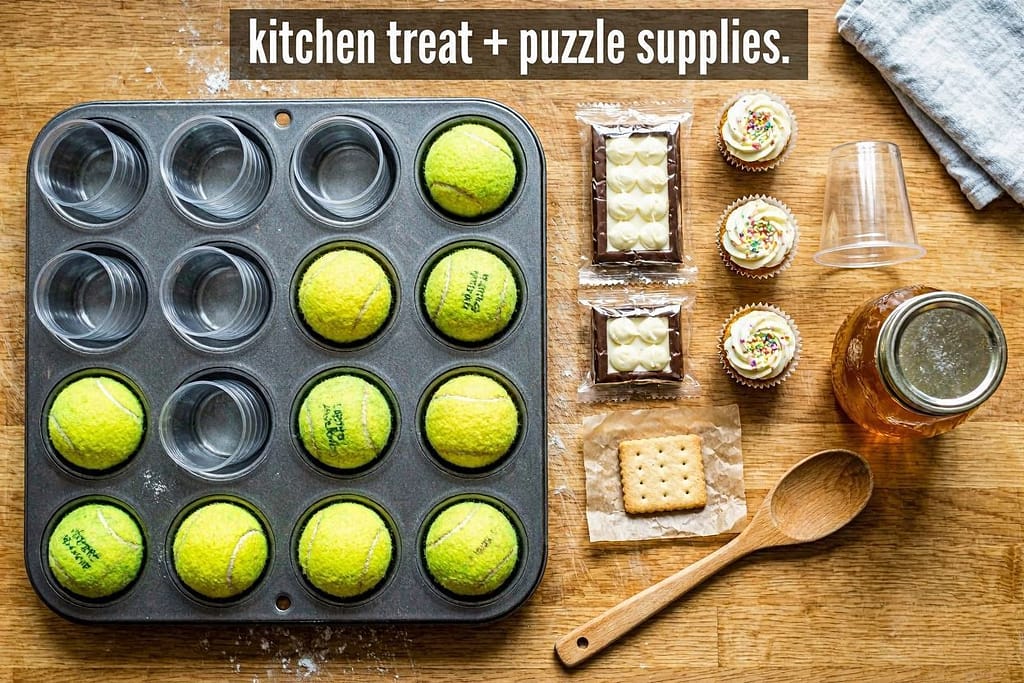
- Muffin tins and tennis balls
- Plastic cups
- Baking sheets (for “touch” targets)
- Treats (the most important supply!)
The Three Difficulty Levels System
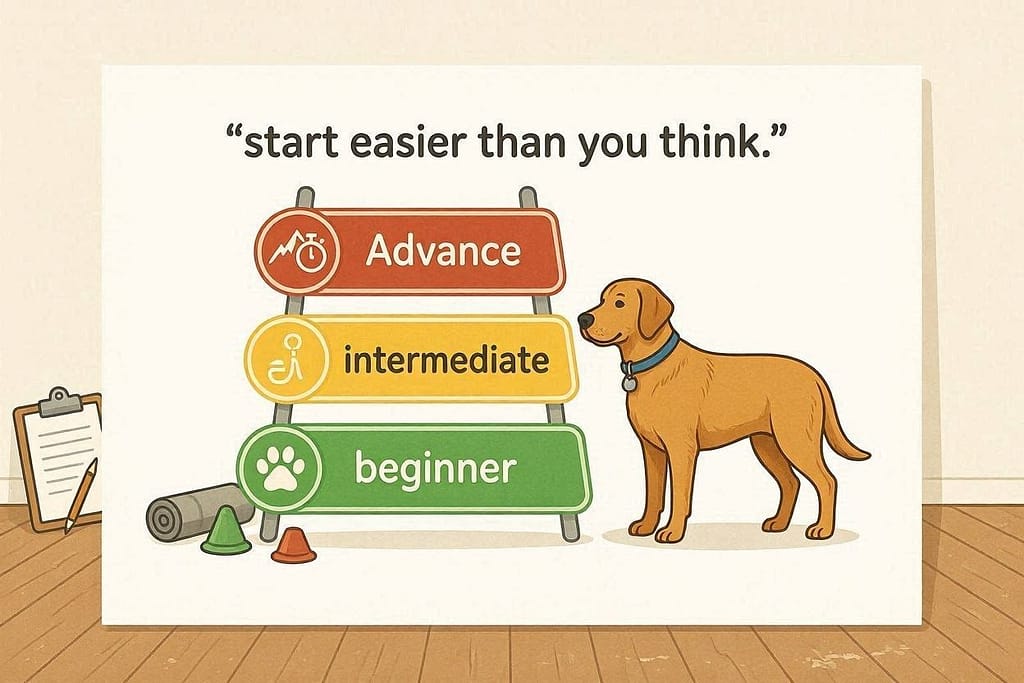
We’ll design courses for:
- Beginner: First-timers, seniors, or nervous dogs
- Intermediate: Dogs with some training experience
- Advanced: High-energy, needs-a-challenge pups
Pro-Tip: Always start easier than you think you should. Success builds enthusiasm!
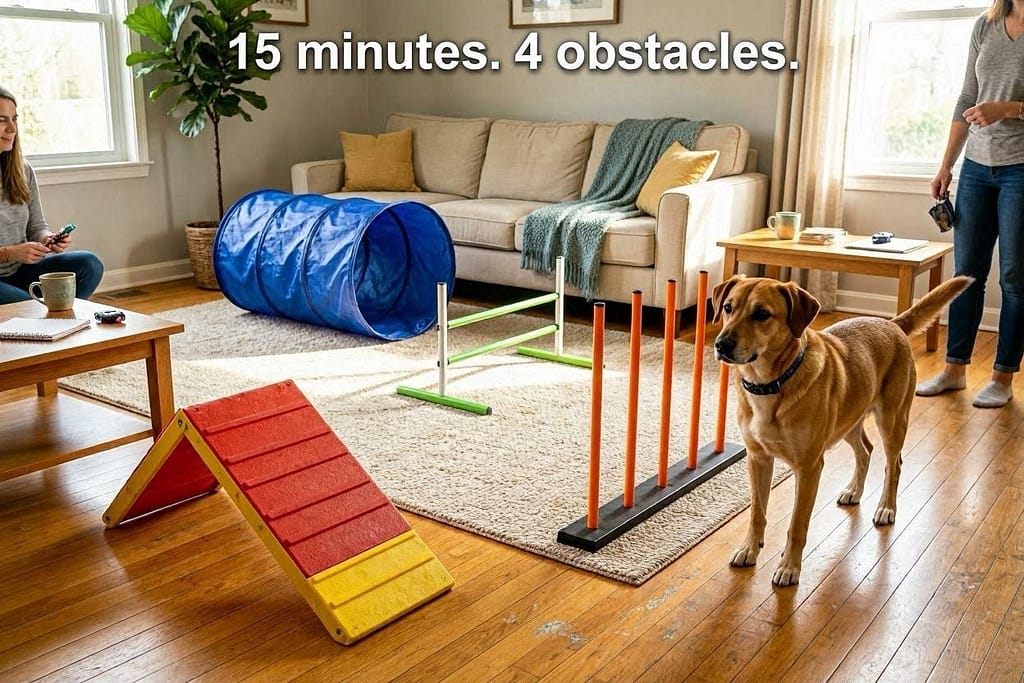
Section 1: The 15-Minute “Quick Fix” Beginner Course
Perfect for: Rainy lunch breaks, before work, or when you’re just not feeling creative
Course Layout: Straight line through your living room
Obstacle 1: The Pillow Path
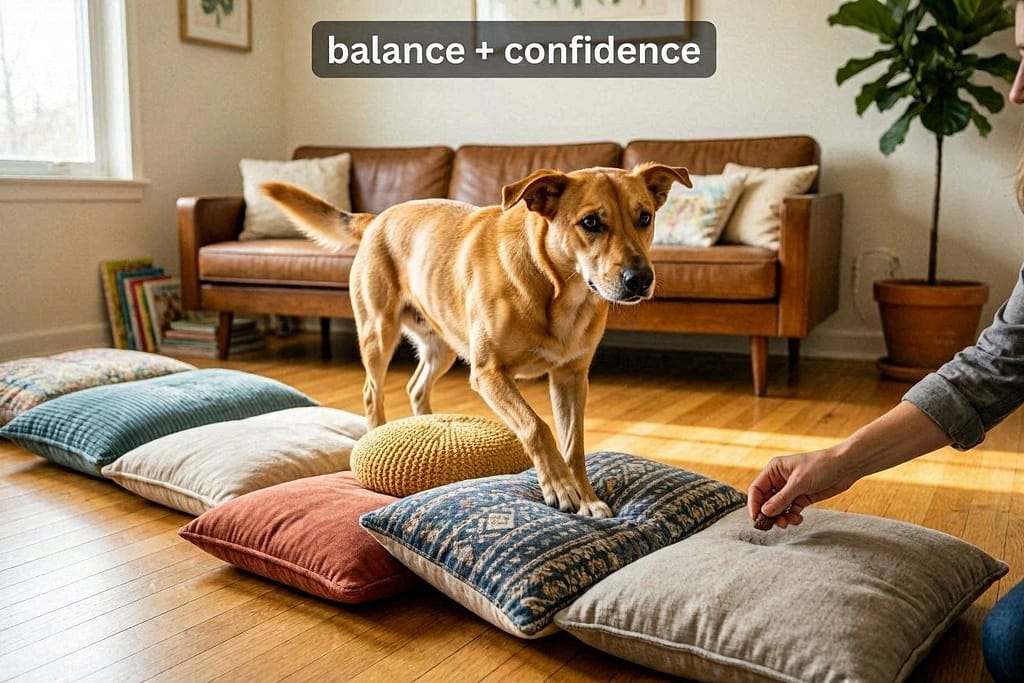
Setup: Place 4-6 couch pillows in a straight line with small gaps
Goal: Dog walks across pillows without stepping on the floor
Skill: Balance, paw placement
Teaching Tip: Place treats on each pillow initially
Obstacle 2: The Tunnel of Love
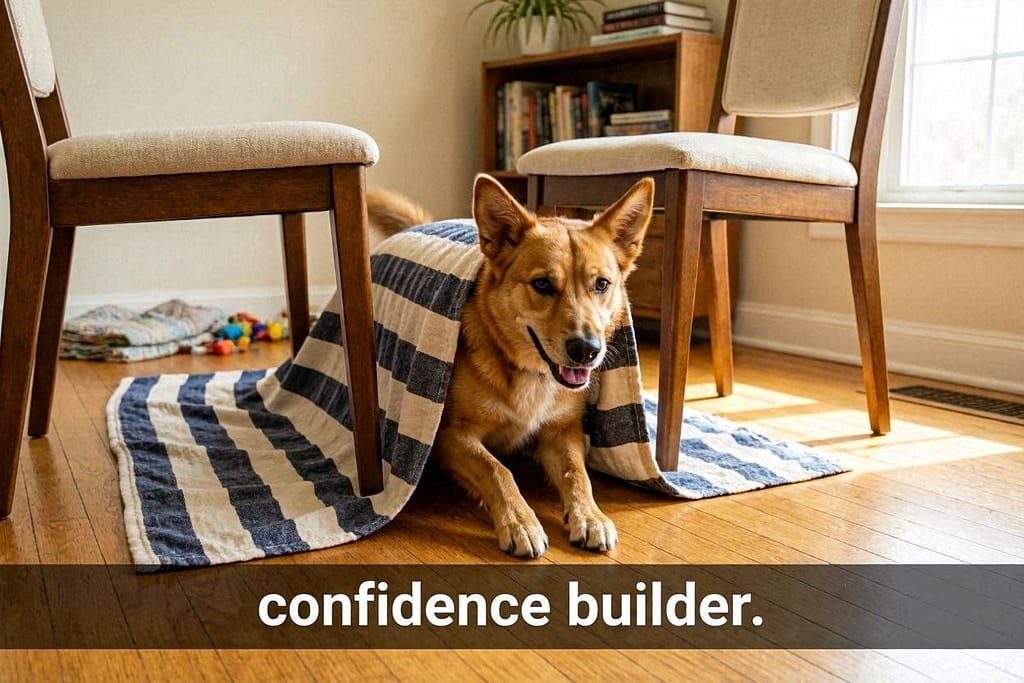
Setup: Two dining chairs with a blanket draped over
Goal: Dog goes under the blanket between chairs
Skill: Confidence, following cues
Teaching Tip: Start with blanket high, gradually lower
Obstacle 3: The Pole Weave
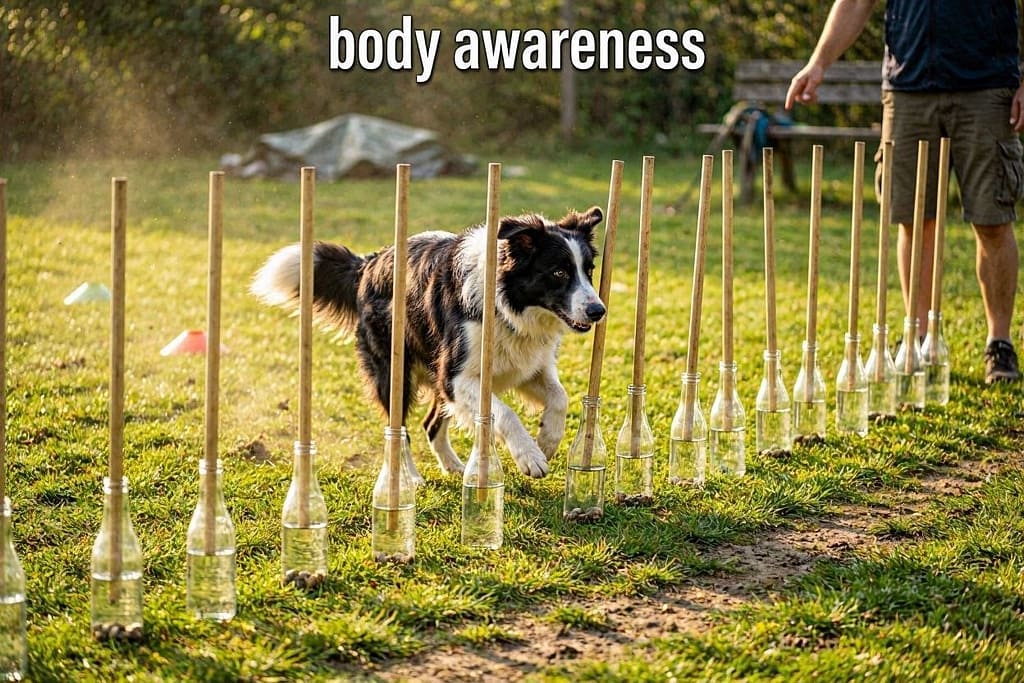
Setup: 3-4 broom handles or pool noodles in bottles as bases
Goal: Dog weaves between poles
Skill: Body awareness, following direction
Teaching Tip: Space poles wide initially, use a treat lure
Obstacle 4: The Target Touch
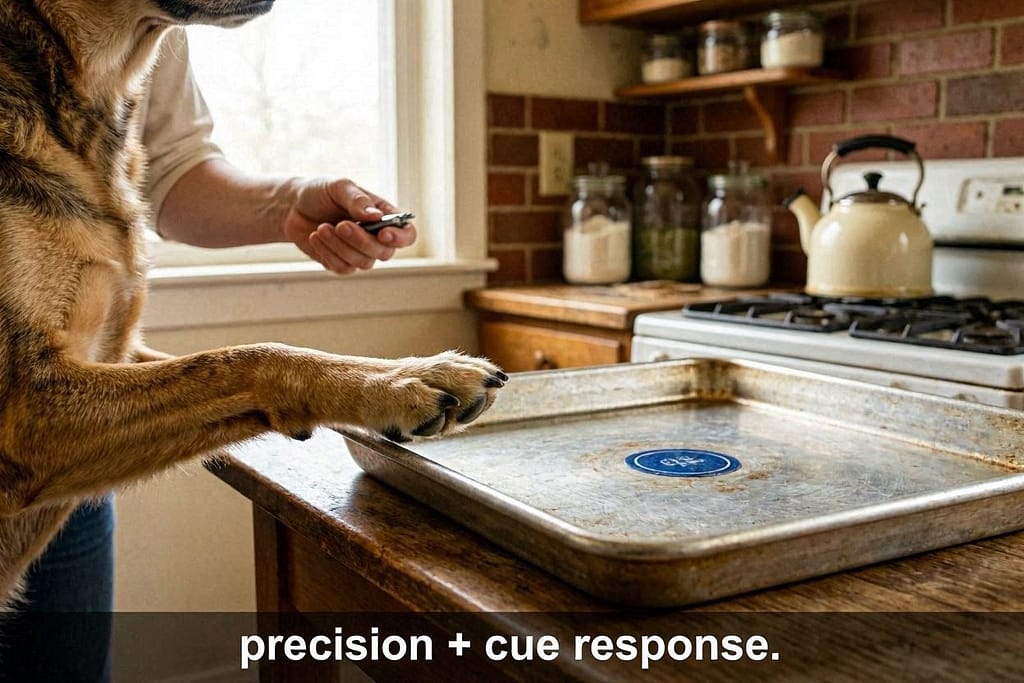
Setup: Baking sheet or piece of paper on the floor
Goal: Dog steps on the target with at least one paw
Skill: Precision, cue response
Teaching Tip: Mark and treat for any interaction initially
The Beginner’s Training Sequence:
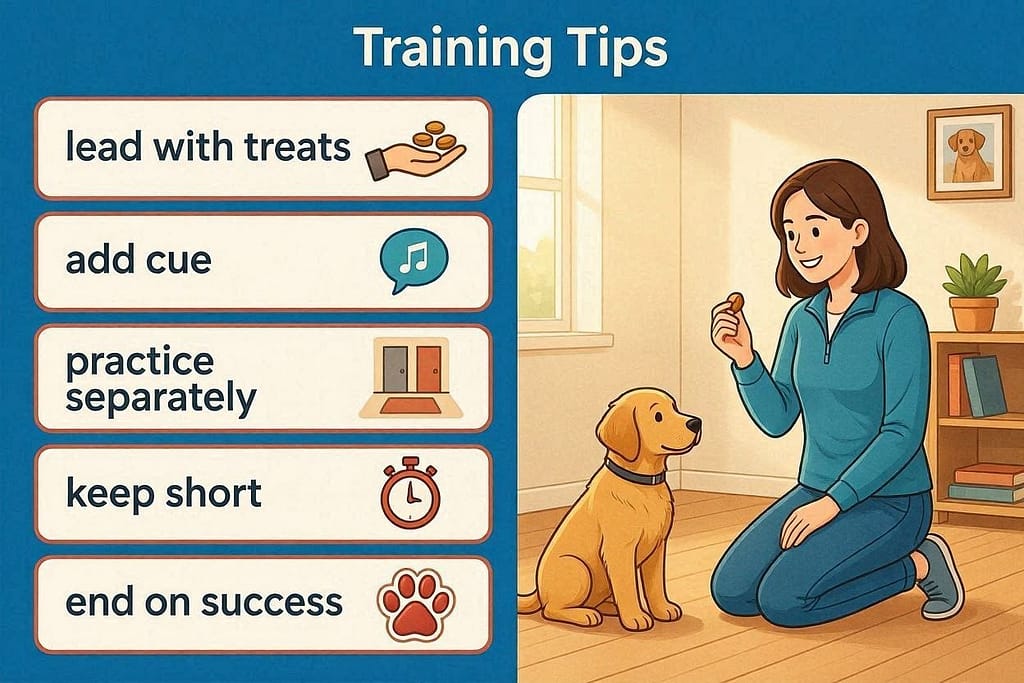
- Lead with treats: Lure through each obstacle
- Add verbal cue: “Pillows!” “Tunnel!” “Weave!” “Touch!”
- Practice separately before linking
- Keep sessions short (5-10 minutes max)
- End on success (even if you have to make it easier)
Mastered the basics?
Let’s level up…
Section 2: The “Full Living Room” Intermediate Course
Perfect for: Saturday storms, working from home days, or dogs needing more challenge
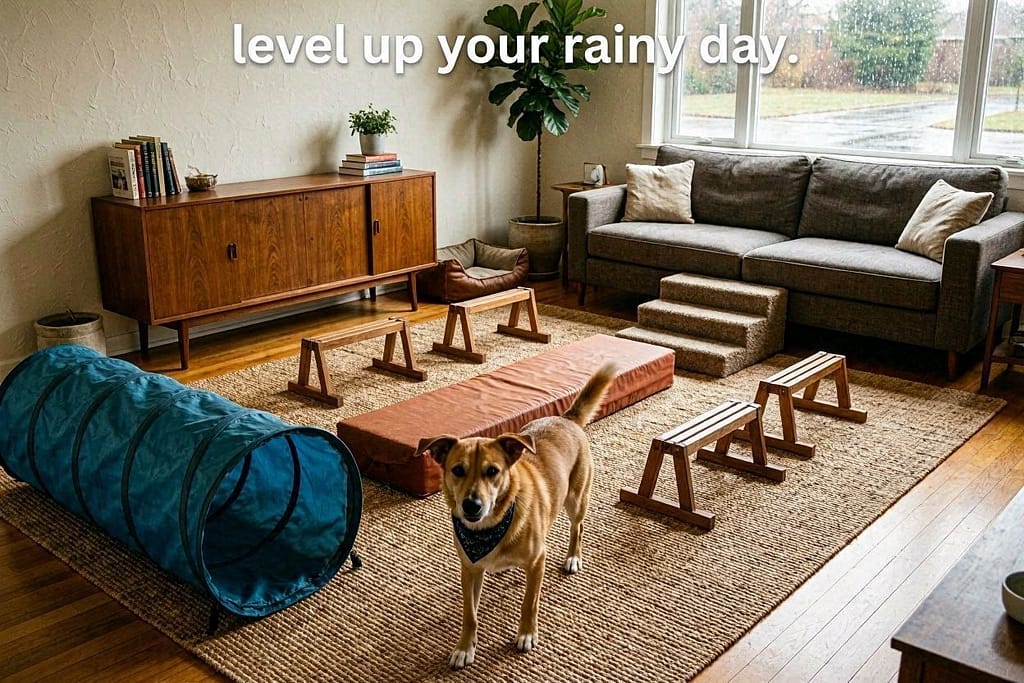
Course Layout: Circuit around your main living space
Obstacle 5: The Box Maze
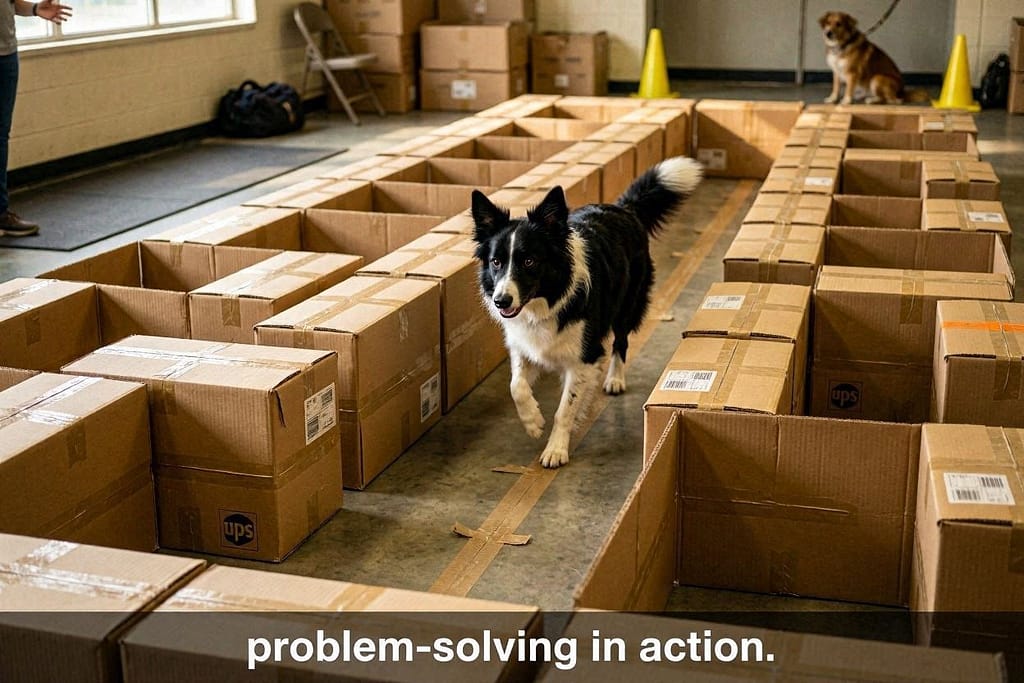
Setup: Various-sized boxes creating a path with one entrance/exit
Goal: Dog navigates through without knocking boxes over
Skill: Problem-solving, spatial awareness
Teaching Tip: Make the path obvious at first, then create dead ends
Obstacle 6: The Couch Cushion Mountain
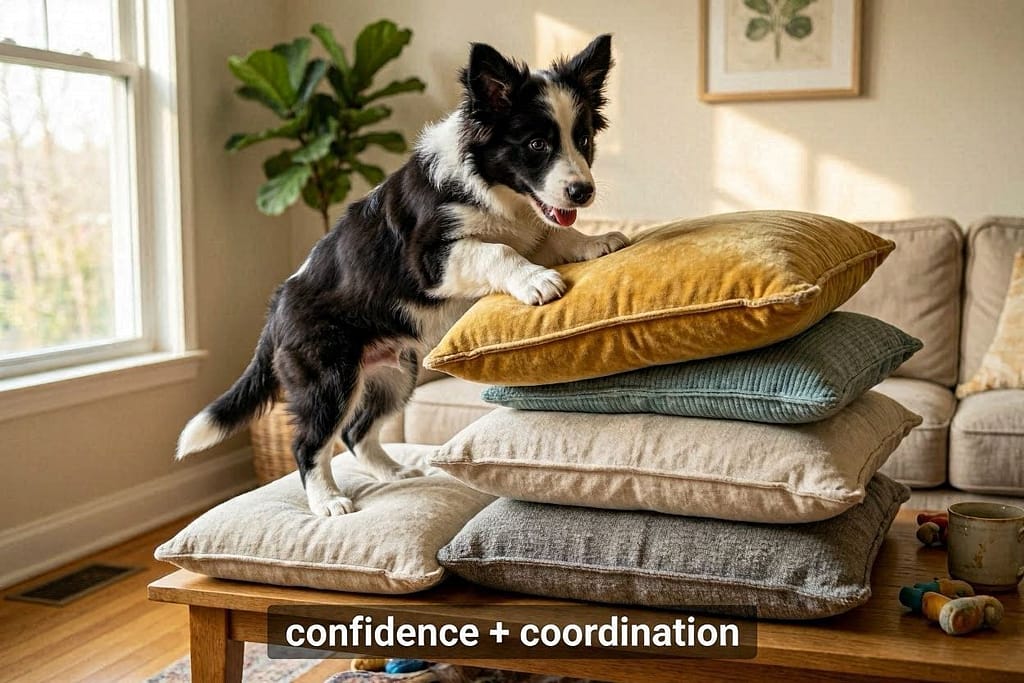
Setup: Stack 2-3 cushions (stable!) for small dogs; use the sofa itself for large dogs
Goal: Dog climbs up and over
Skill: Confidence, coordination
Safety: Ensure stable stacking, spot your dog
Obstacle 7: The Precision Jumps
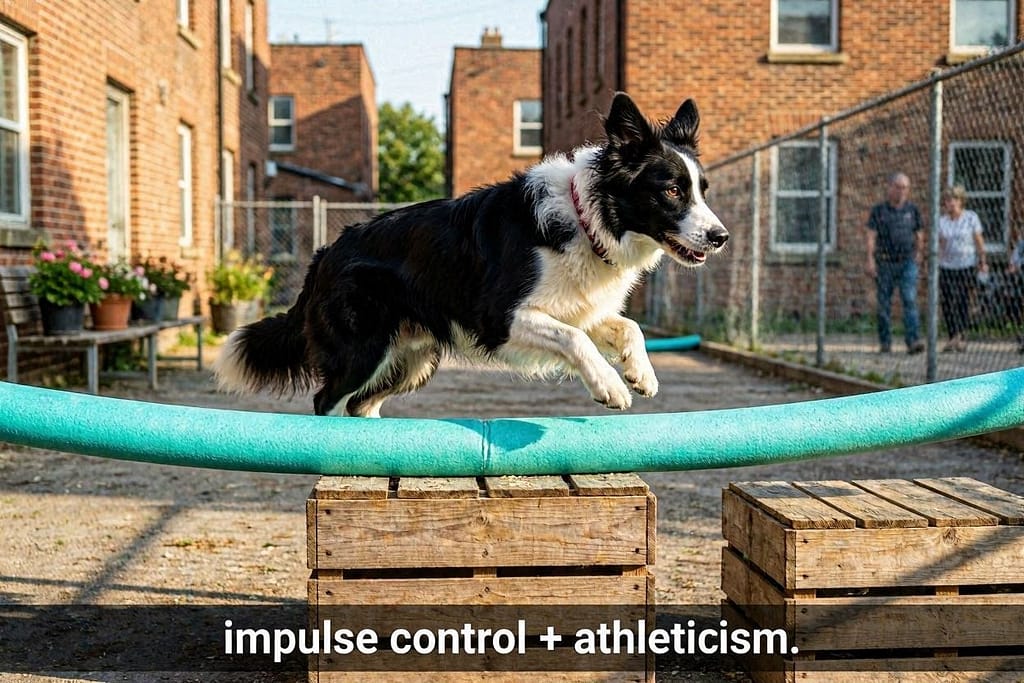
Setup: Two pool noodles on boxes (adjustable height)
Goal: Dog jumps over without touching
Skill: Impulse control, athleticism
Teaching Tip: Start with noodles on the floor, barely visible
Obstacle 8: The Laundry Basket Hoop
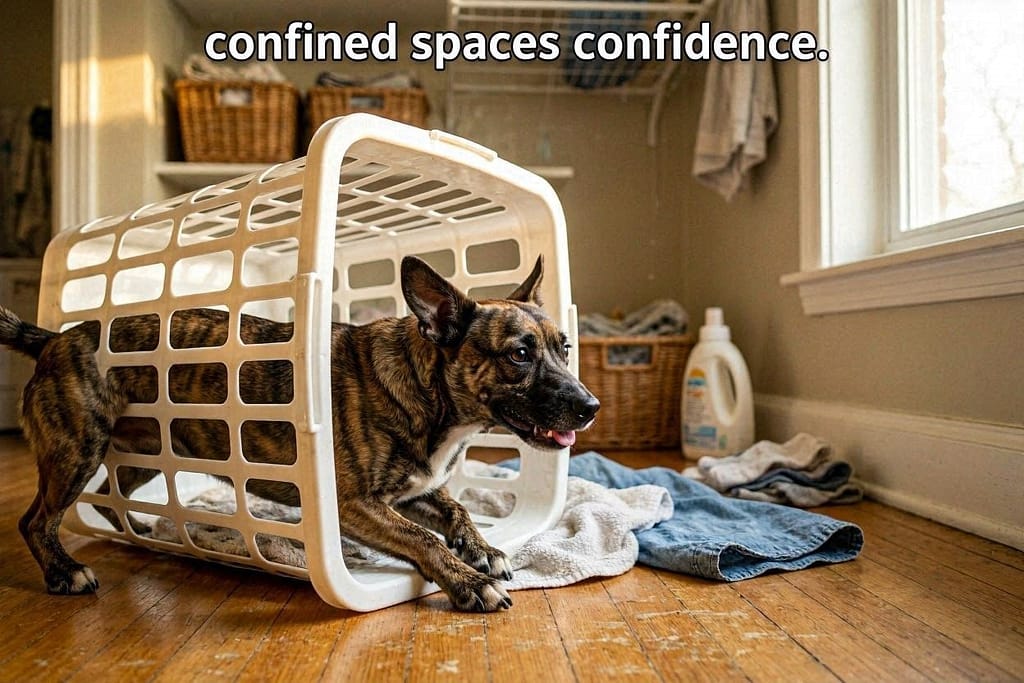
Set up: Turn the basket on its side, use it as a “gate” to crawl through
Goal: Dog enters the basket and exits the other side
Skill: Following cues in confined spaces
Teaching Tip: Remove the top if the basket is deep
Obstacle 9: The “Go Find It” Station
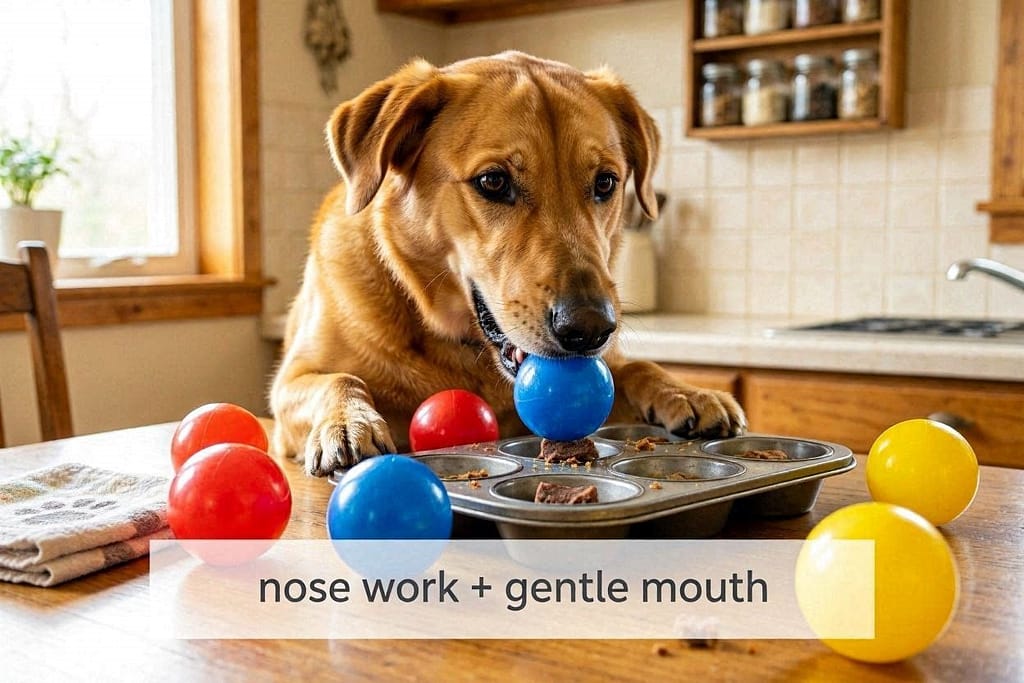
Setup: Muffin tin with treats under some tennis balls
Goal: Dog removes balls to find treats
Skill: Nose work, gentle mouth use
Variation: Use cups instead of tennis balls
Intermediate Training Progression:
- Teach each obstacle separately over several days
- Link 2-3 obstacles once mastered individually
- Add distractions (mild music, you moving around)
- Increase difficulty (higher jumps, narrower paths)
- Work on speed only after perfect form
Section 3: The “Advanced Apartment Agility” Challenge
Perfect for: High-energy breeds, sport dog training, or multiple-dog households
Course Layout: Uses the entire apartment creatively
Obstacle 10: The Staircase Sendaway
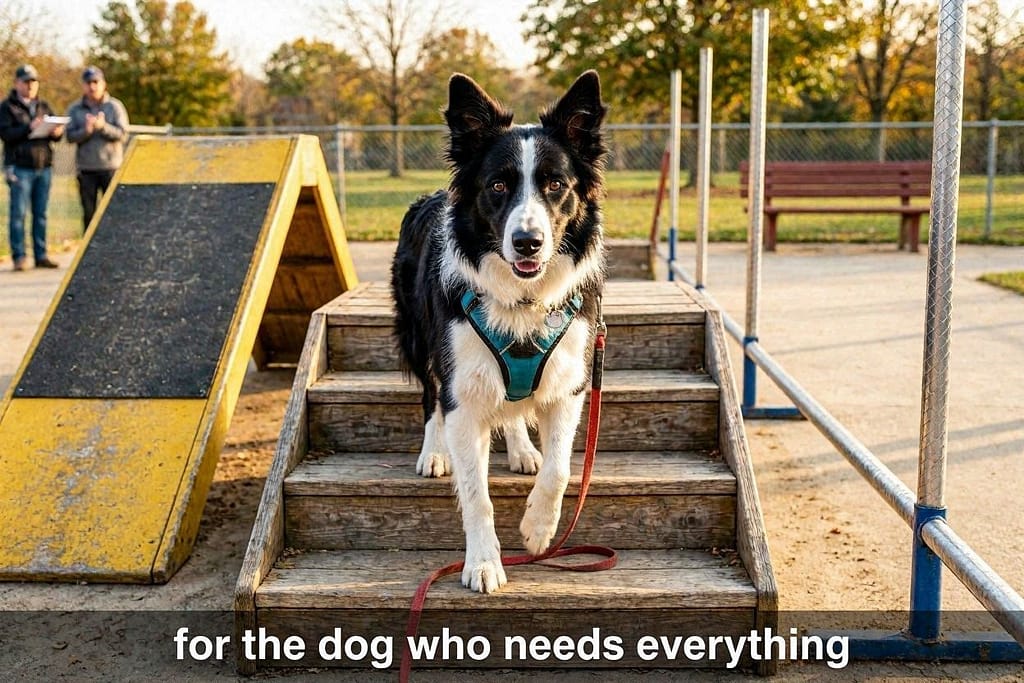
Setup: Bottom of apartment stairs or outdoor (if you have them)
Goal: Dog goes up, touches a specific step, returns
Skill: Distance work, memory
Safety: Non-slip surfaces only!
Obstacle 11: The Doorway High Jump
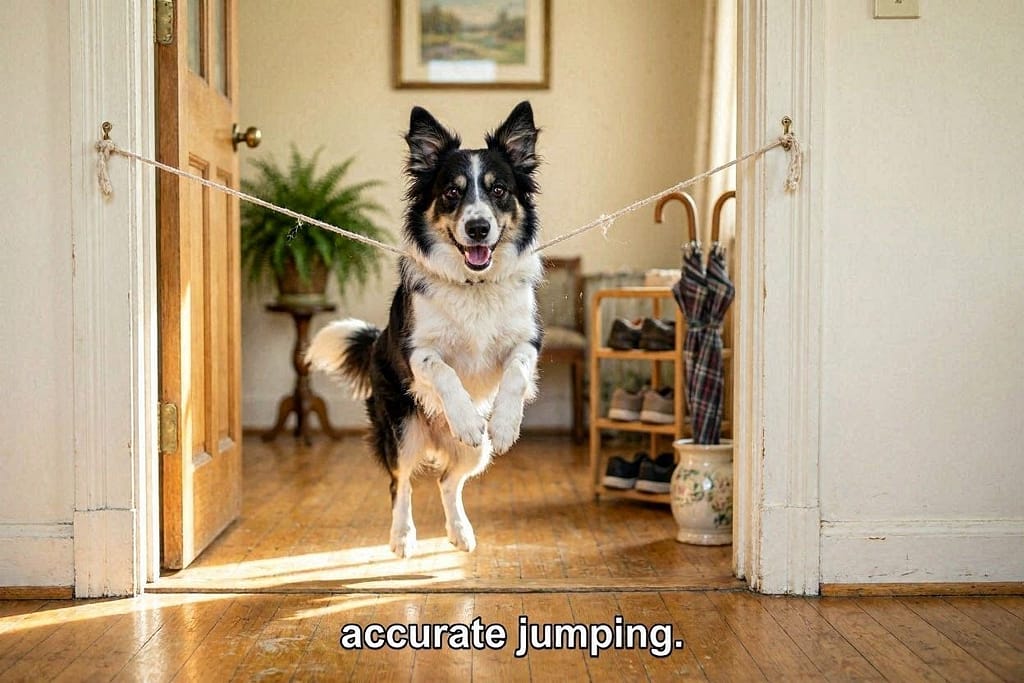
Setup: A string or elastic across the doorway at an appropriate height
Goal: Dog jumps through the doorway without touching the string
Skill: Accurate jumping
Teaching Tip: Use crepe paper that breaks easily if hit
Obstacle 12: The Table Limbo
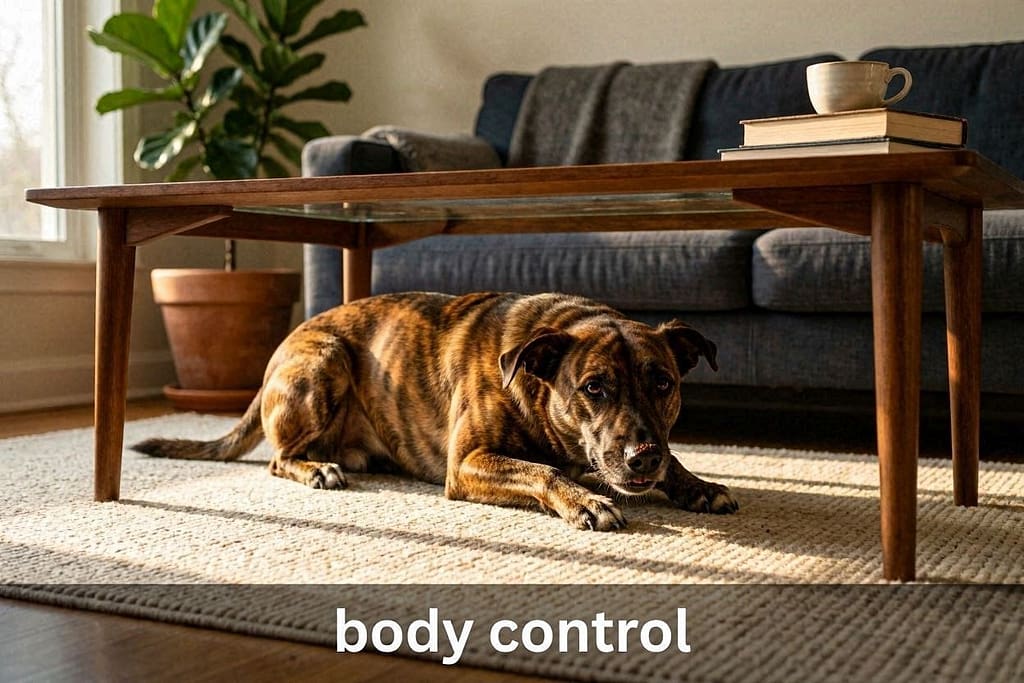
Setup: Coffee table or desk (sturdy!)
Goal: Dog crawls under without touching back
Skill: Body control, clearance awareness
Variation: Lower the table by removing legs if possible
Obstacle 13: The Blanket Burrow
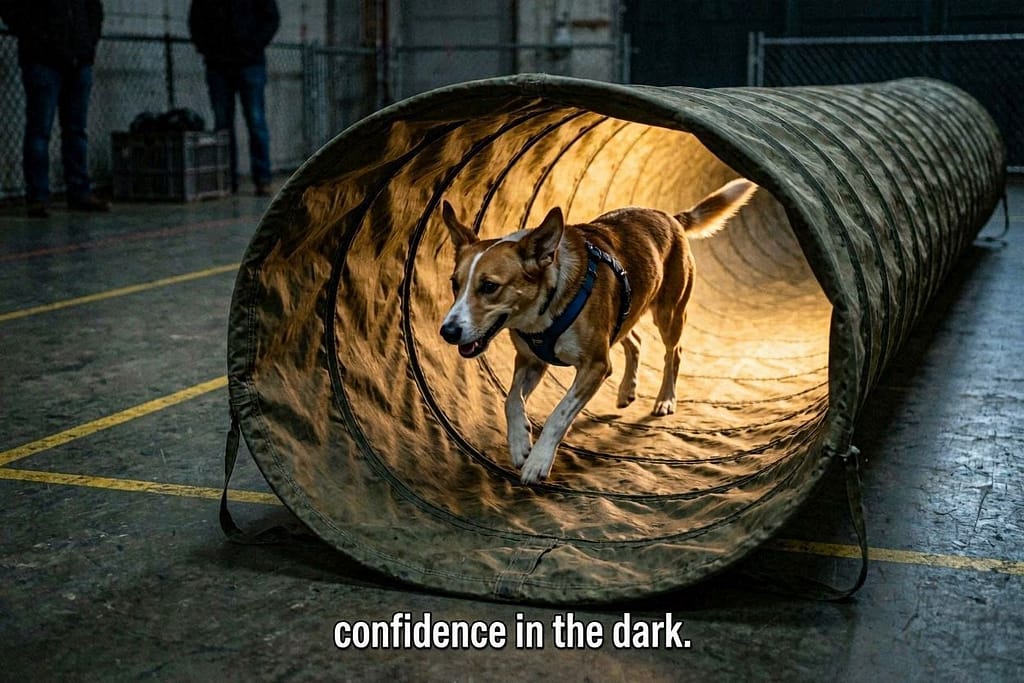
Setup: Blanket draped over chairs, creating a longer tunnel
Goal: The dog goes through the entire length
Skill: Confidence in dark/confined spaces
Pro-Tip: Place treats along the path initially
Obstacle 14: The Balance Beam
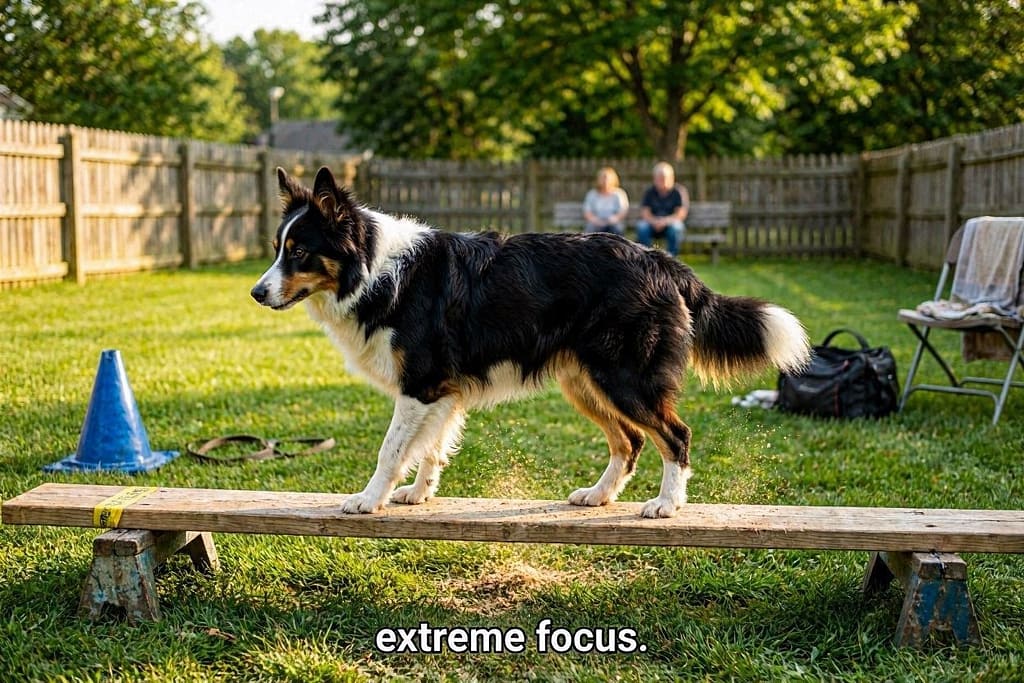
Setup: 2×4 board on textbooks for elevation (secured!)
Goal: Dog walks the entire length without stepping off
Skill: Extreme balance, focus
Safety: Spot your dog, keep it low initially
Obstacle 15: The “Go To Bed” Distance Challenge
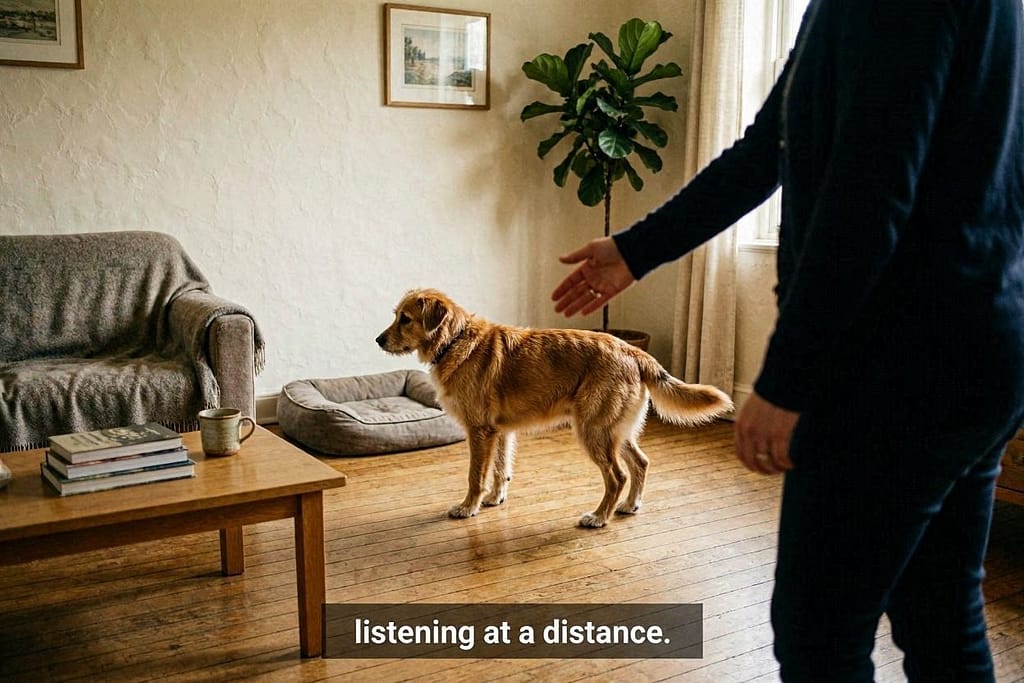
Setup: Dog bed or mat across the room
Goal: On cue, the dog goes to bed from increasing distances
Skill: Listening at a distance, impulse control
Advanced: Add turns or obstacles between you and the bed
Advanced Training Philosophy:
- Quality over quantity: Perfect one new skill per week
- Proof behaviors: Practice with various distractions
- Build duration: Increase how long they’ll work
- Add sequencing: Complex obstacle combinations
- Self-control focus: “Wait” and “go” on cue
But what if things go wrong?
Let’s troubleshoot…
The Urban Dog Owner’s Q&A: Solving Common Problems
“My dog is scared of the obstacles!”
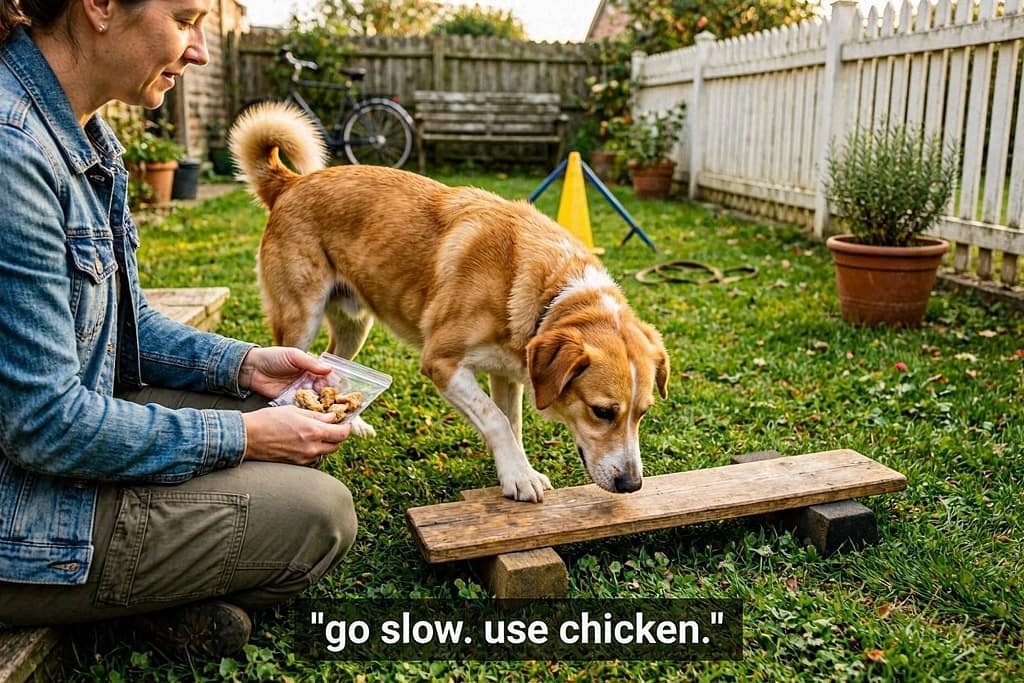
Solution: Go slower than you think necessary.
Use extreme-value treats (chicken, cheese).
Make everything easier—lower heights, wider spaces.
Let them investigate without pressure. Some dogs need days just to get comfortable.
“My apartment is tiny!”
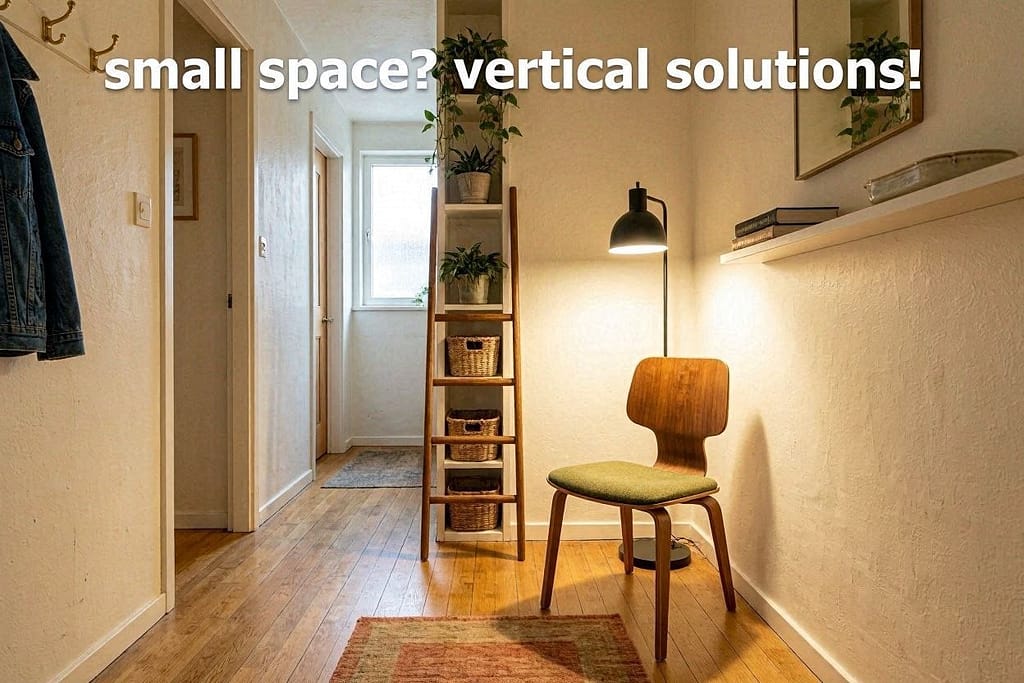
Solution: Think vertical and multi-use.
A single chair can be: something to go under, something to put paws on, something to circle.
Use your bed as an obstacle. Create “micro-courses” in the hallway only.
“My dog just runs around/through everything!”
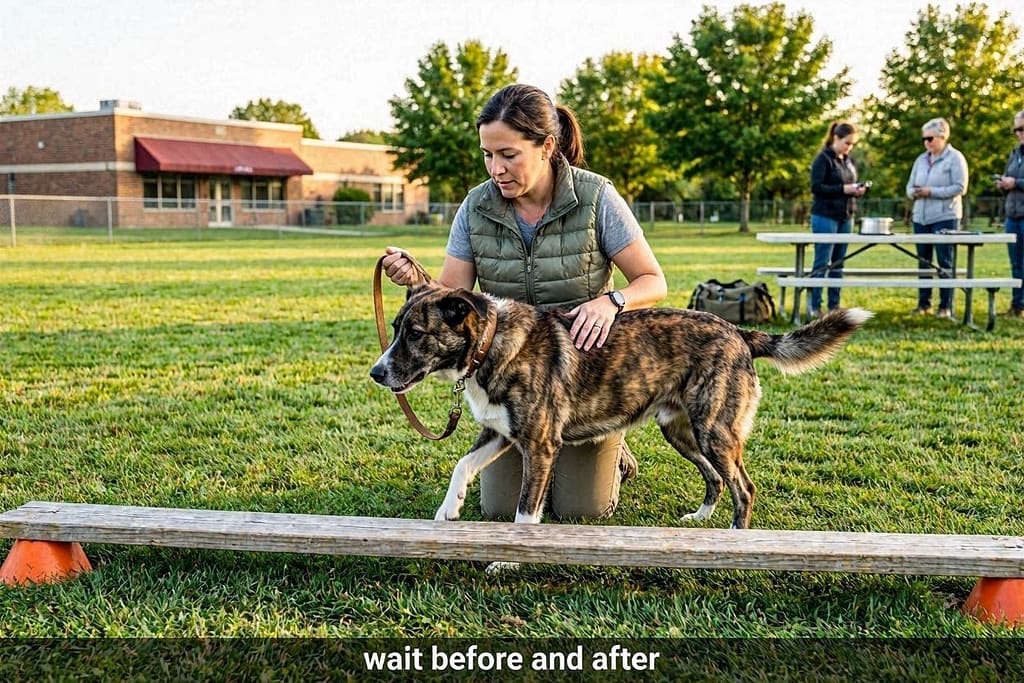
Solution: Use a leash initially for control.
Practice each obstacle separately with a “wait” before and after.
Teach impulse control games separately. Some dogs need to burn energy first—try 5 minutes of fetch before training.
“My dog isn’t food motivated today.”
Solution: Try different rewards: toys, praise, life rewards (access to the couch, going to sniff by the window).
Make the food more valuable (warm it up, use real meat).
Check if they’re actually hungry (train before meals).
“I have multiple dogs!”
Solution: Train separately initially.
Use baby gates to separate. Teach a solid “wait on your bed” cue for the dog not working.
Consider cooperative obstacles they can do together (parallel pillow paths).
The Mental Game: Beyond Physical Obstacles
The “Thinking Dog’s” Course Additions
Incorporate these brain games between physical obstacles:
The Shell Game:
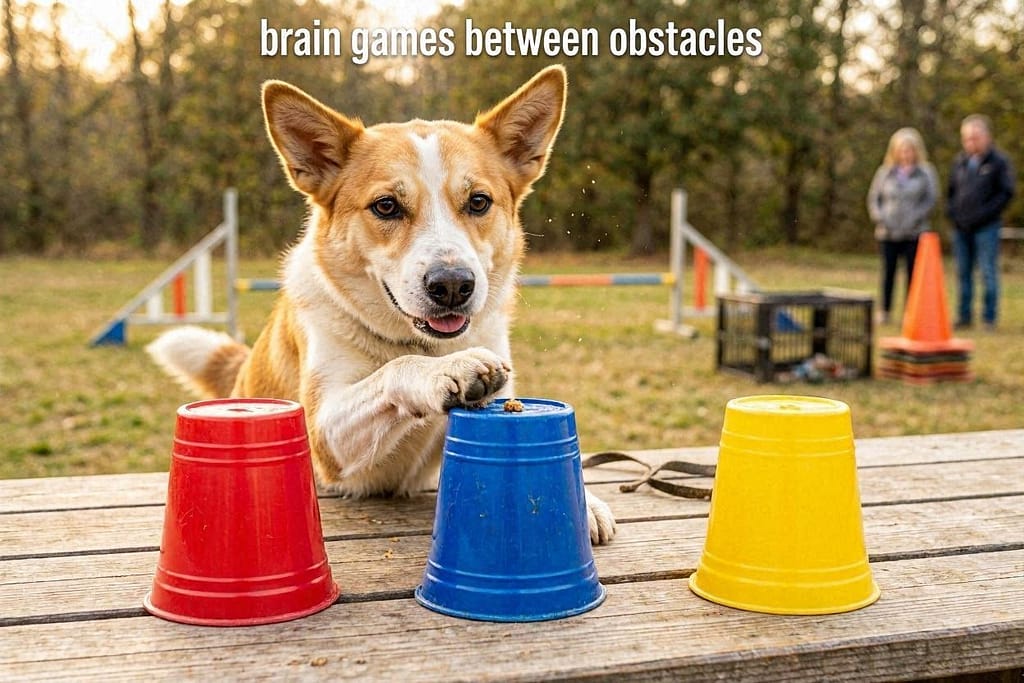
Three cups, one treat. The dog indicates which cup has a treat.
The Muffin Tin Puzzle:
Treats in some cups, balls in all. The dog must figure out which to investigate.
The Scent Trail:
Drag the treat along the floor between obstacles for them to follow.
The Name Game:

Multiple toys, ask for a specific one by name.
The “Bad Weather Day” Schedule
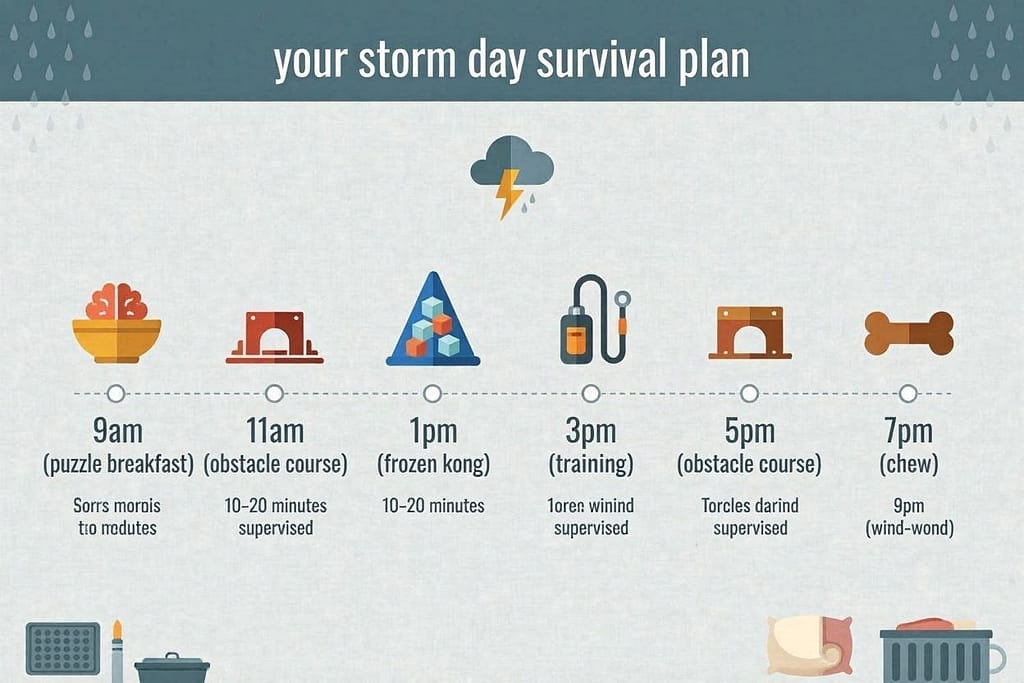
9 AM: Breakfast with a puzzle toy
11 AM: 15-minute obstacle course session
1 PM: Frozen Kong or lick mat
3 PM: Training session (new trick or refine old)
5 PM: Second obstacle course (different layout)
7 PM: Calming chew or chew toy
9 PM: Wind down with a gentle massage
Making It Fun: Themes and Games
Course Themes to Keep It Fresh
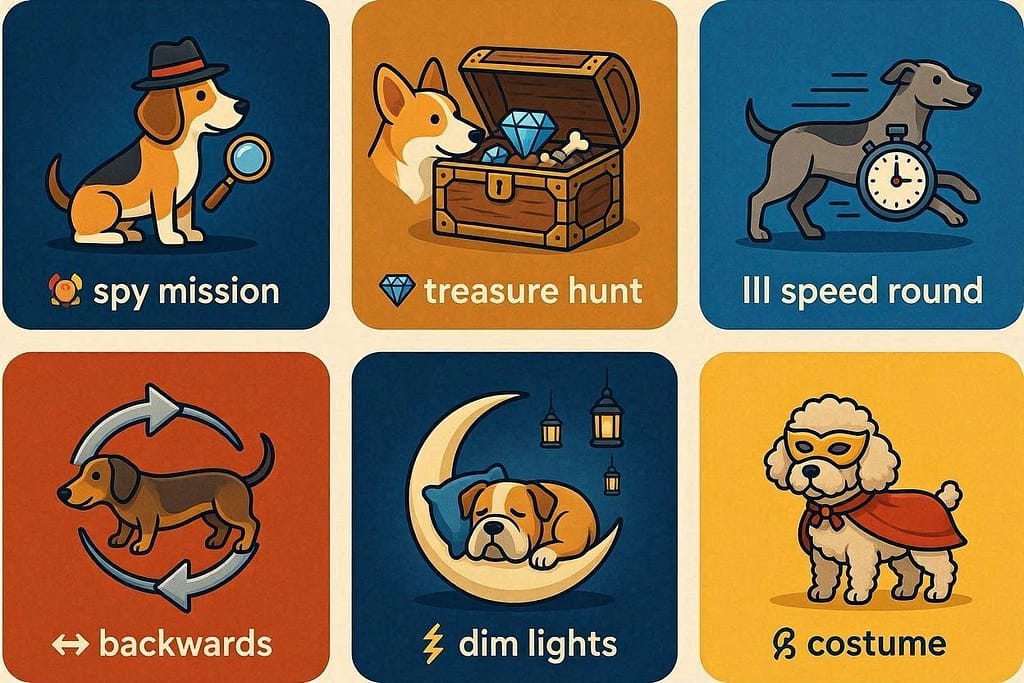
- Spy Mission: “Secret agent dog” must complete the course quietly
- Treasure Hunt: Treats hidden on/around obstacles
- Speed Round: Timed course (only if dog enjoys this!)
- Backwards Day: Course in reverse order
- Dim Lights: Course with night lights or flashlights
- Costume Course: Silly bandana or harness for “competition”
Games to Play on Your Course
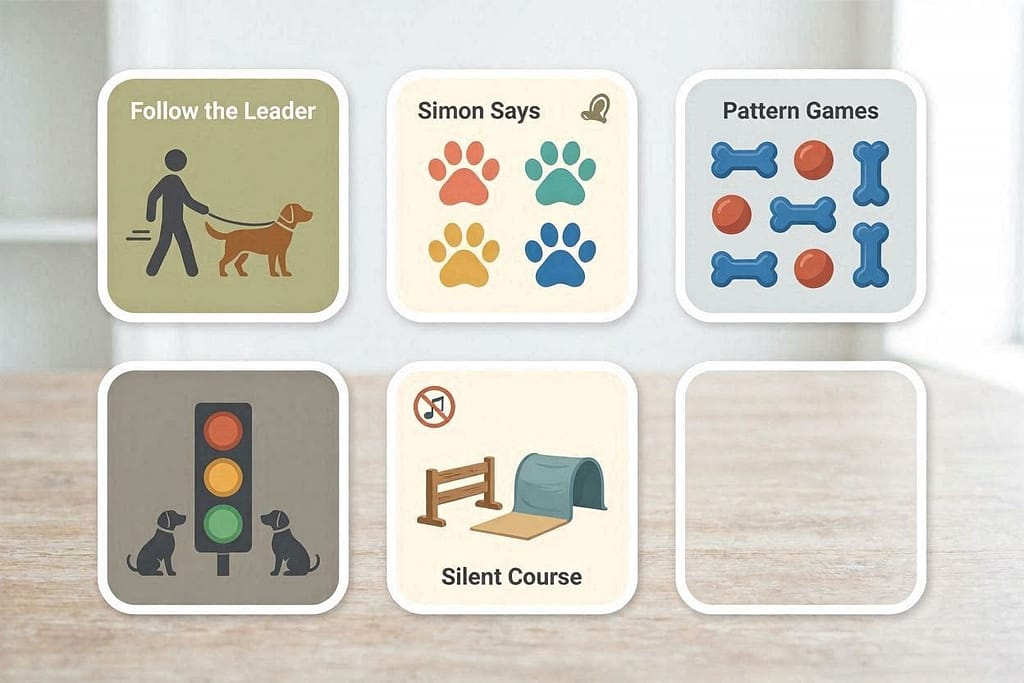
- Follow the Leader: You navigate the course, and the dog mimics
- Simon Says: Only do obstacles when you say “Simon says…”
- Pattern Games: Specific sequence they must remember
- Red Light/Green Light: Freeze and go on cue
- The Silent Course: Hand signals only
The Unexpected Benefits (Beyond Burning Energy)
Training Transfer You’ll Notice
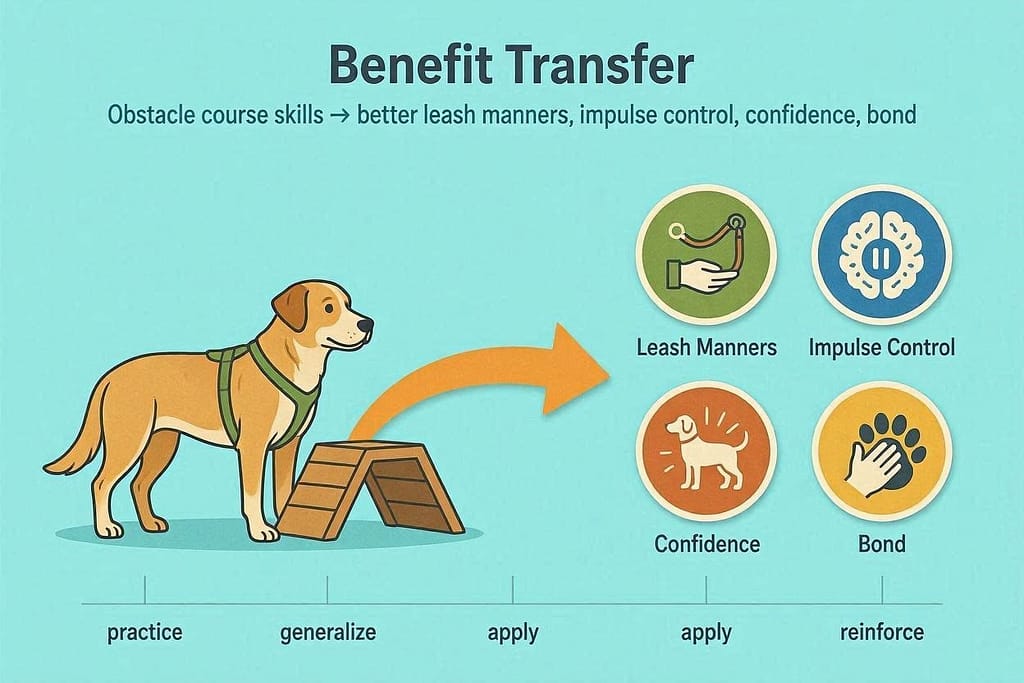
Dogs who do obstacle courses often show:
- Better leash manners (more body awareness)
- Improved impulse control (practice waiting for cues)
- Increased confidence (especially with new objects)
- Stronger bond with you (you’re the fun director!)
- Better problem-solving skills (applies to real-life situations)
Therapeutic Applications
For specific issues:
- Anxious dogs: Builds confidence through accomplishment
- Reactive dogs: Channel energy into positive outlets
- Senior dogs: Gentle mental stimulation without joint stress
- Puppies: Early confidence and coordination building
- Rescue dogs: Building trust through positive experiences
Storage & Setup: The Apartment-Friendly System
The “10-Minute Setup” Method
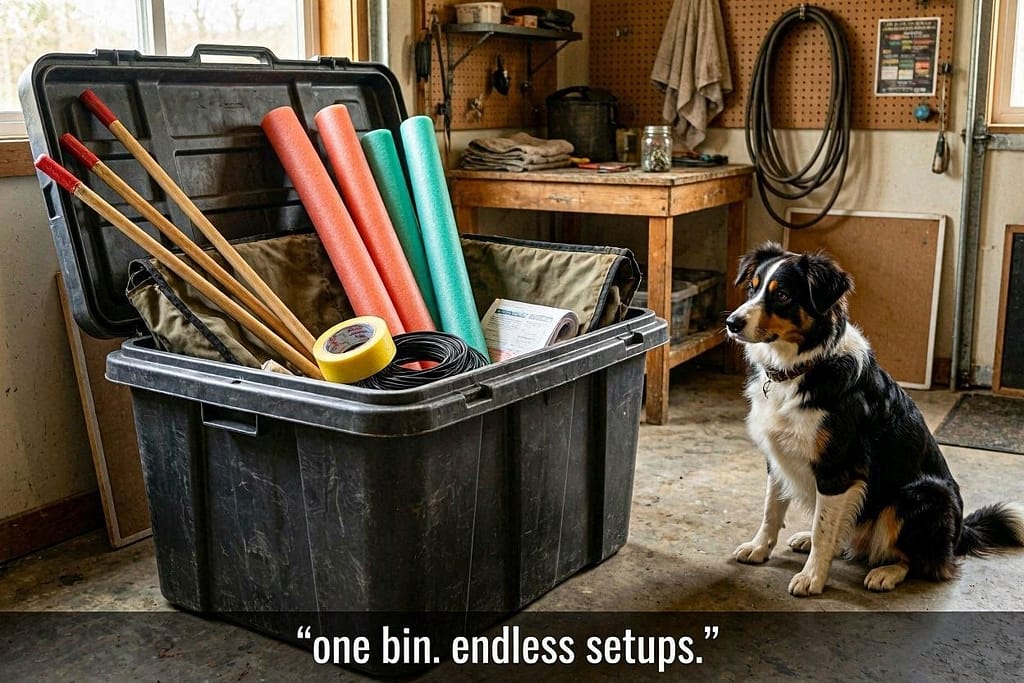
- Designated storage: One bin for all obstacle materials
- Pre-planned layouts: Have 3-4 course maps drawn
- Obstacle stations: Keep the broom in the same corner, cushions stacked
- Quick-change system: Color-coded for difficulty (blue tape = easy, red = hard)
The “Shared Space” Solution
Living with roommates or family?
- Communicate schedule: “Obstacle course hour from 6-7 PM”
- Shared materials: Use items everyone is comfortable with
- Clean-up routine: Everything back in place afterwards
- Include them! Roommates might enjoy training too
Your 7-Day Obstacle Course Challenge
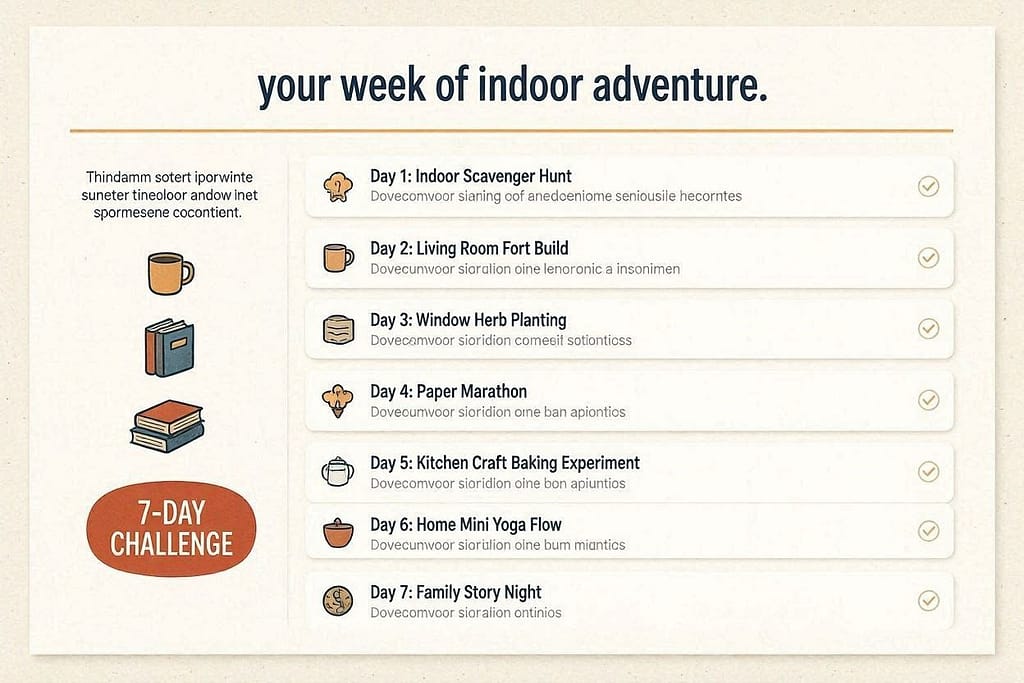
Day 1: Beginner course, teach just 2 obstacles
Day 2: Same course, add 3rd obstacle
Day 3: Redesign the layout with the same obstacles
Day 4: Add one mental challenge (like the shell game)
Day 5: Intermediate course attempt
Day 6: Theme day (spy mission or treasure hunt)
Day 7: “Graduation” course with all favorite obstacles
Bucket Brigade Finale: Ready for your ultimate reference guide?
The Master Obstacle Matrix: Mix & Match
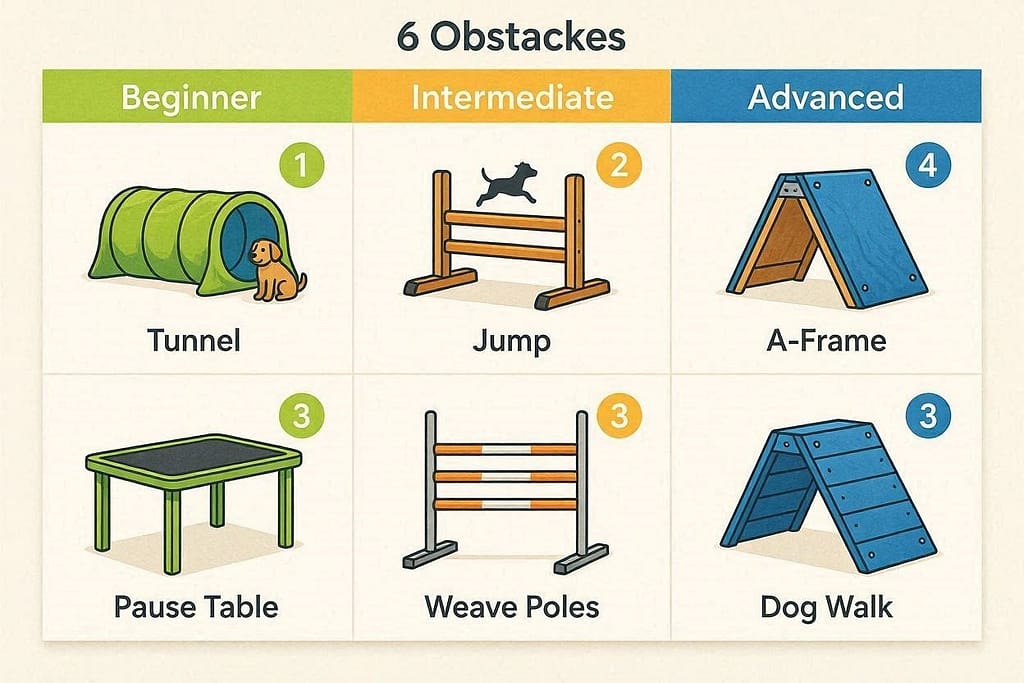
| Obstacle | Beginner Version | Intermediate Version | Advanced Version |
|---|---|---|---|
| Jump | Pole on the floor | Pole on books | Adjustable height string |
| Tunnel | Blanket over chair | Longer blanket tunnel | Multiple turns in a tunnel |
| Weave | 3 wide poles | 5 closer poles | 8 competition-width |
| Balance | Line of tape on the floor | Board on floor | Board elevated 6″ |
| Climb | One cushion | Cushion stack | Stable furniture |
| Crawl | Under coffee table | Longer crawl space | Lower clearance |
Your Living Room, Their Adventure Park
The rain might still be hitting the windows.
The wind might still be howling.
The weather alert might still be flashing on your phone.
But inside your apartment?
Inside your creatively arranged living room? There’s adventure happening.
There’s bonding happening. There’s a happy, tired dog developing skills they’ll use for life.
These obstacle courses aren’t just bad weather distractions. They’re:
- Relationship builders disguised as games
- Confidence creators using couch cushions
- Problem-solving schools in your hallway
- Joy generators when the world outside is gray
You don’t need a backyard. You don’t need expensive equipment. You don’t need perfect weather.
You just need a little creativity, some household items, and the willingness to see your living space through your dog’s eyes.
So next time the forecast turns foul, don’t dread the cooped-up energy. Don’t resign yourself to destroyed shoes or frantic pacing.
Instead, push that coffee table aside. Drape that blanket over chairs. Line up those pillows.
Call your dog over with excitement in your voice. Watch their ears perk up. See their tail start to wag with curiosity.
That moment?
That’s you turning limitations into opportunities. That’s you saying, “Bad weather can’t stop our fun.”
That’s you creating memories your dog will associate with storms forever.
The radar shows rain for the next three days.
But you’re ready. Your obstacle course ideas are waiting. Your dog is ready to play.
🐾 — Apartment Dog Guide (ADG)
Living large in small spaces, one paw at a time. That’s the apartment dog life—see you in the next guide!.


