
The Urban Canine Conundrum
Picture this:
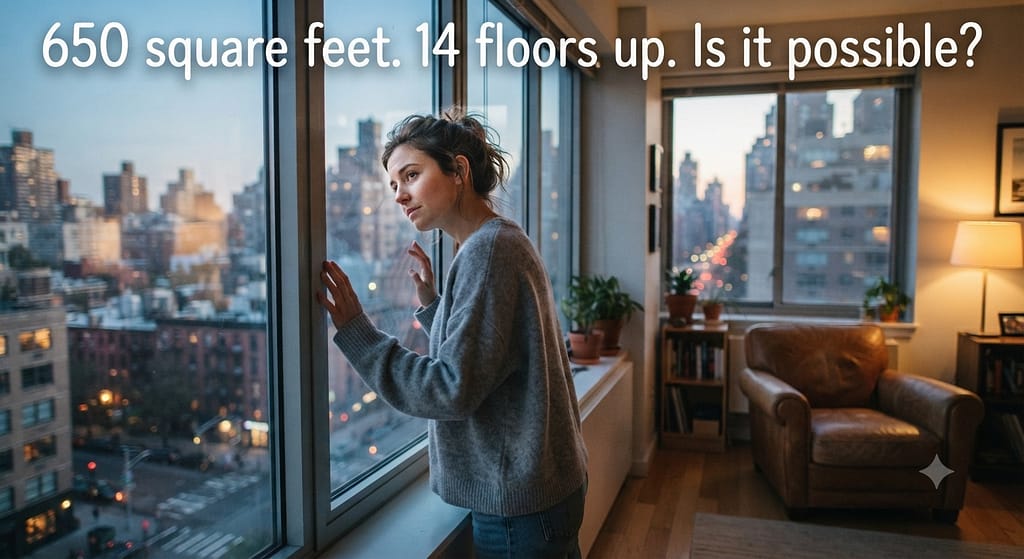
You’re standing in your 650-square-foot studio, the city hums quietly 14 floors below, and you are overwhelmed by the unshakable feeling that something is missing.
The space is perfect—except for the absence of a four-legged heartbeat.
But as you scroll through endless reels of adorable puppies, a cold knot tightens in your stomach.
Can I actually do this? Will the neighbors complain? Does my lease even allow it?
Buying a dog based purely on aesthetics is a rookie mistake that leads to surrender, constant disputes with neighbors, and a very unhappy animal.
In a compact urban home, the stakes are higher.
Your new companion won’t have a sprawling backyard to retreat to; they will share your every waking moment within a few hundred square feet.
The difference between a harmonious household and a stressful situation boils down to one metric: Compatibility.
This guide strips away the superficial fluff and presents a hard-hitting, data-backed blueprint for finding your ultimate city sidekick.
We aren’t just looking at “small” dogs.
We are looking at the right dog. We’ll dissect the five critical filters of urban living, rank the top contenders, and debunk the myths that trap unsuspecting renters.
By the end, you won’t just have a list of breeds; you’ll have a clear, confident direction.
Section 1: The 5 Pillars of Urban Compatibility: Your Apartment Dog Guide

Before we meet the breeds, we must calibrate your expectations.
Every decision you make hinges on these five non-negotiable metrics. Treat them as your guiding compass.
1. The Decibel Dilemma (Barking Threshold)
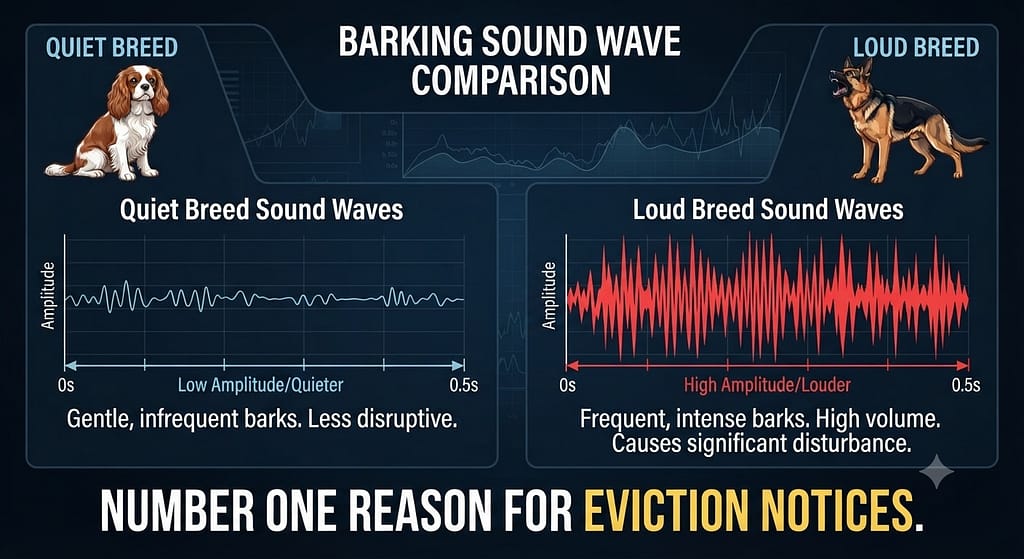
In a concrete jungle, sound travels like wildfire.
A barking dog is the number one reason tenants receive eviction notices.
Does your potential companion have a “booming” bark or a “toy” yap?
Are they prone to alerting at the slightest elevator ding?
You need a breed with a high threshold for “non-threatening” noise and a natural tendency toward quiet observation.
You are looking for low-barking dog breeds specifically.
2. The Energy Paradox (Expenditure vs. Endurance)
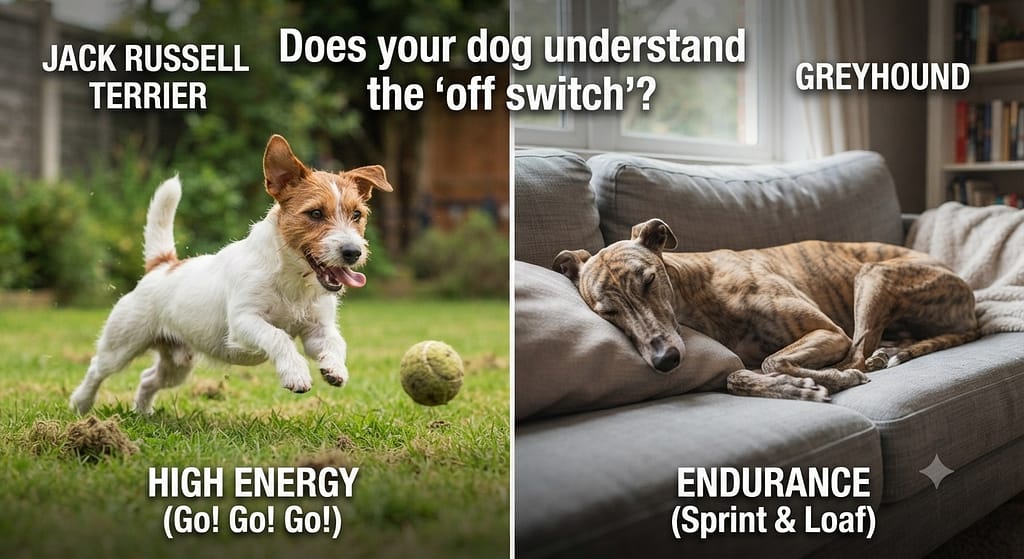
There is a massive difference between a dog with high energy and one with high endurance.
A Jack Russell has high energy that must be released immediately. A Greyhound has high endurance for a sprint but spends 18 hours a day as a couch ornament.
You need a canine that understands the “off switch.” Look for breeds that tire quickly with mental games, not just those that need a 10-mile run.
Understanding the energy levels in dogs is critical for apartment success.
3. The Spatial Illusion (Footprint vs. Stature)
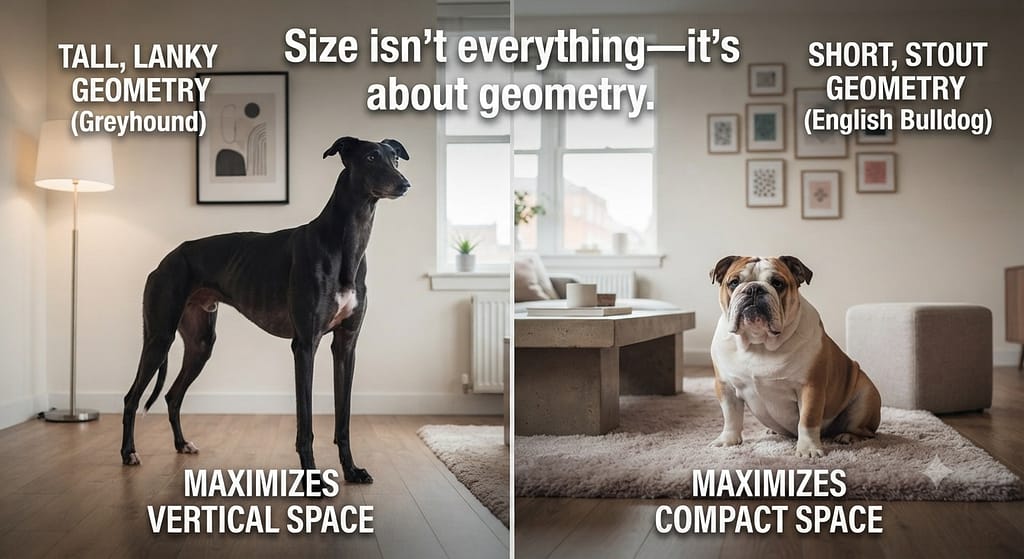
Size isn’t everything; it is about geometry. A tall, lanky dog requires clearance to navigate a coffee table.
A short, stout dog fits under it.
However, a 70-pound Greyhound often fits better in a studio than a 50-pound Husky because of their “loafing” habits.
Analyze their stride and resting posture. Do they sprawl, or do they curl tightly?
4. The Shedding Gamble (Dander & Carpets)
If your lease includes carpet or you have allergies, this metric is king.
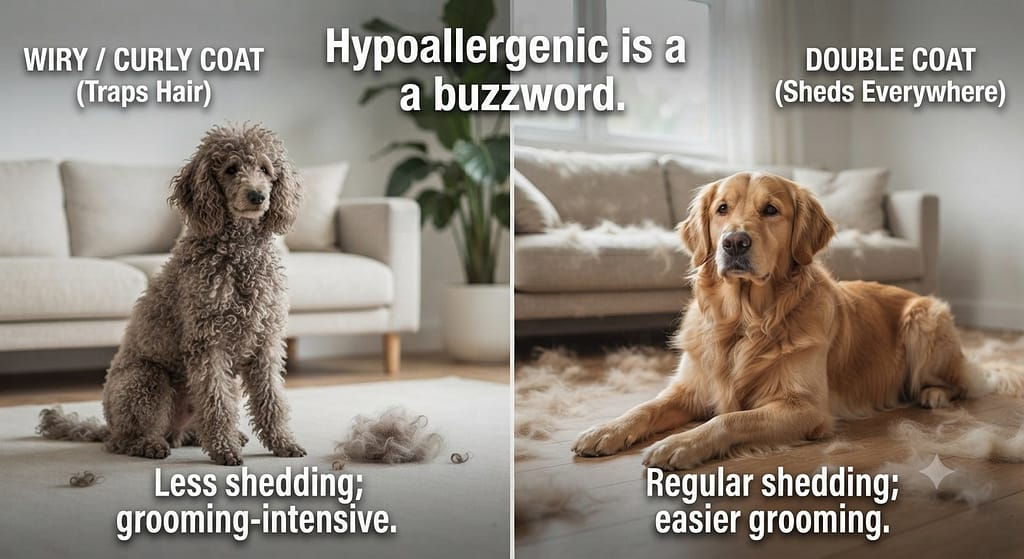
Heavy shedders trap dander in the fibers, leading to lingering odors and constant vacuuming. “Hypoallergenic” is a buzzword; the reality is about hair type.
Wiry, curly coats trap shed hair, while double-coated breeds distribute it across every surface.
When selecting low-shedding dog breeds or hypoallergenic dog breeds, look for these coat types.
5. The Social Spark (Sociability & Stranger Danger)
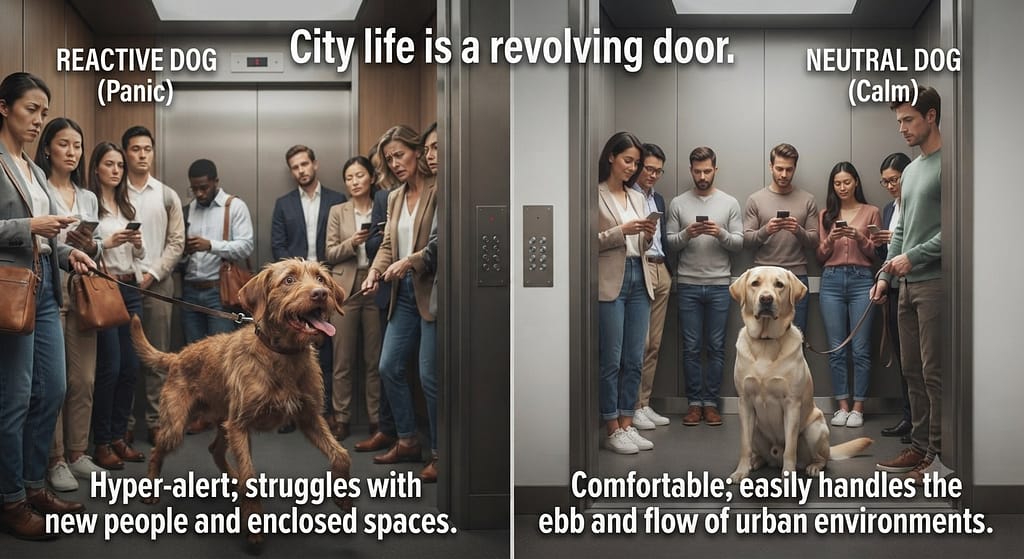
City life is a revolving door of visitors, delivery drivers, and crowded sidewalks.
A dog that is highly reactive to strangers or aggressive toward other dogs will make your daily elevator ride a nightmare.
You need a breed with a neutral or friendly default setting toward the chaos of urban existence.
This involves looking at sociable dog breeds and considering urban canine compatibility as a whole.
Section 2: The 2026 Breed Matrix (The Contenders)
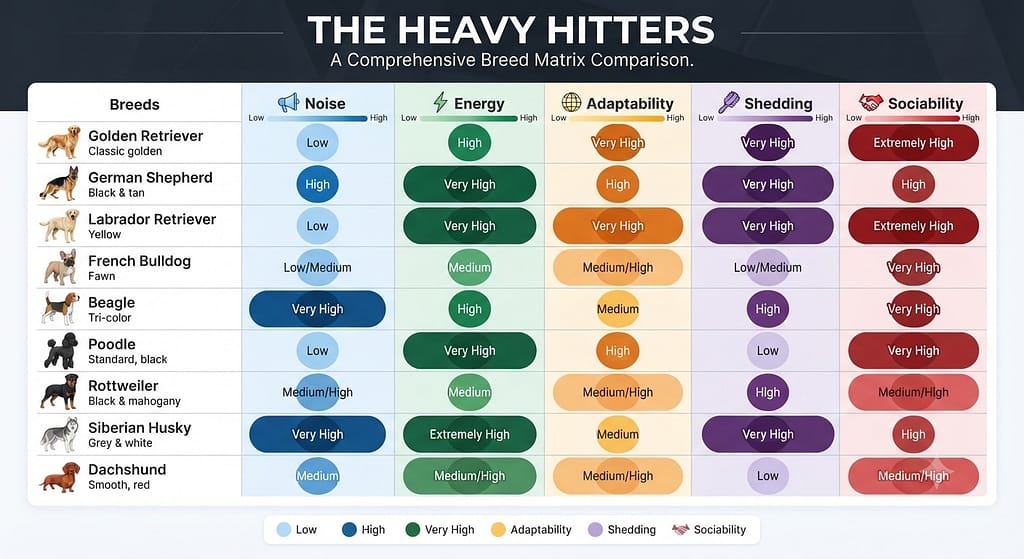
With our blueprint laid out, let’s visualize how the heavy hitters stack up against our five pillars.
This grid cuts through the noise and gives you a snapshot of the highest-scoring city dwellers.
This serves as your quick dog breed compatibility guide.
| Breed | Noise Level | Energy Output | Adaptability | Shedding | Sociability |
|---|---|---|---|---|---|
| French Bulldog | Low (Grumbles) | Low-Moderate | ★★★★★ | Low (But sheds) | High (Clownish) |
| Cavalier King Charles | Low (Rare Barks) | Moderate | ★★★★★ | Moderate (Feathering) | Very High (Velcro) |
| Boston Terrier | Low-Moderate | High (But fast burn) | ★★★★☆ | Low | High (Friendly) |
| Greyhound / Whippet | Very Low | Low (Sprint & Loaf) | ★★★★☆ | Low | Moderate (Aloof) |
| Shih Tzu | Low | Low | ★★★★☆ | Very Low | High (Affectionate) |
| Havanese | Low | Moderate | ★★★★★ | Very Low | Very High |
| Bichon Frise | Moderate | Moderate | ★★★★☆ | Very Low | High |
| Chihuahua | High (Warning) | Moderate | ★★★☆☆ | Low | Low (Territorial) |
| Dachshund | High (Warning) | High (Stubborn) | ★★☆☆☆ | Low | Moderate (Stubborn) |
| Miniature Poodle | Low-Moderate | High | ★★★★★ | Very Low | High (Smart) |
Section 3: Debunking the “Small Dog” Myth
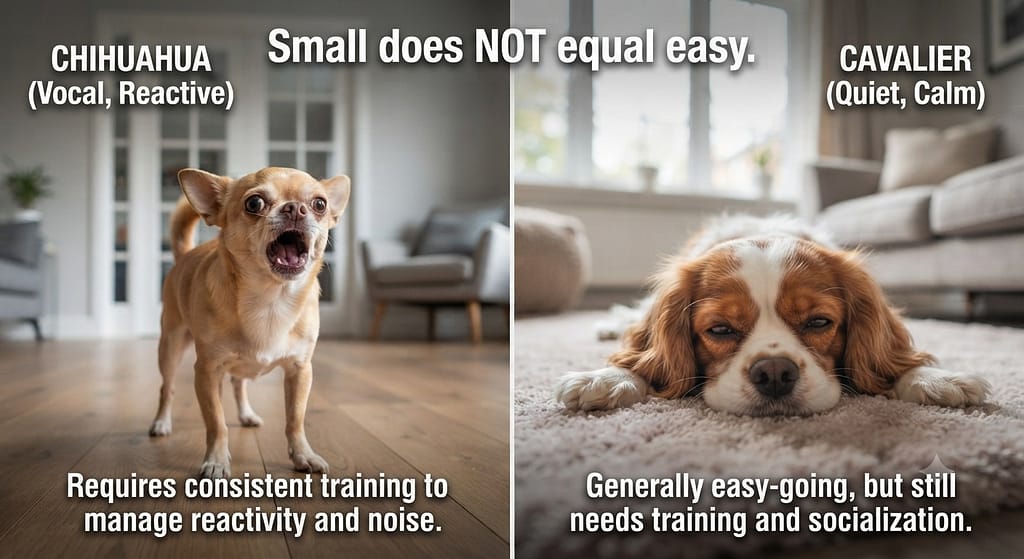
Let’s tackle the most dangerous assumption in the apartment-dog world: Small equals easy.
Nothing could be further from the truth.
Many tiny terriers and toy breeds were bred to hunt and alert, resulting in high-strung, vocal, and reactive temperaments.
Take the Chihuahua or the Dachshund. Their diminutive stature is misleading.
They possess the heart of a lion and the volume of a foghorn.
They are notorious for “small dog syndrome”—a term referring to their tendency to overcompensate for their size with excessive barking and territorial aggression.
In an apartment, this translates to barking at every footstep in the hallway and nipping at visitors.
Instead, look at spatial efficiency rather than just size.
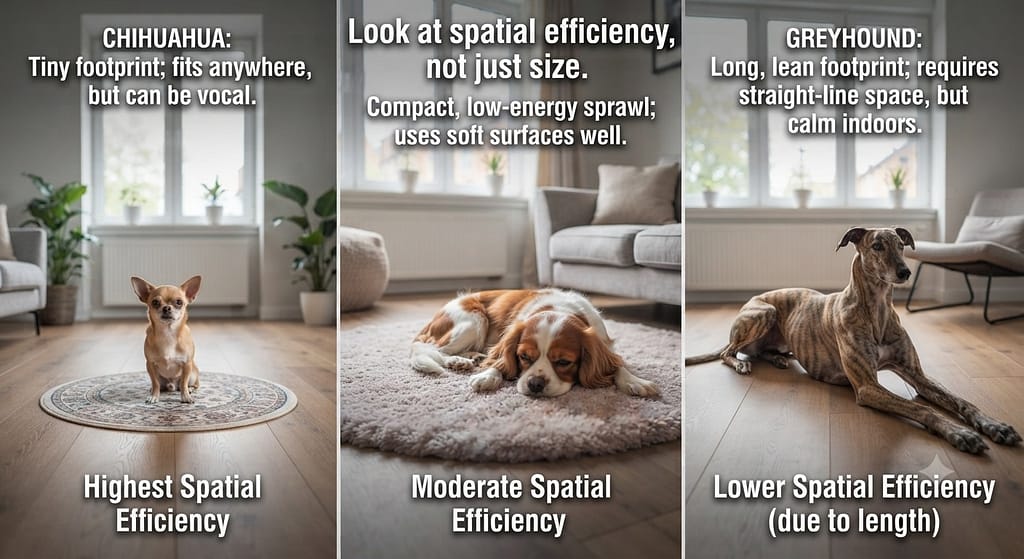
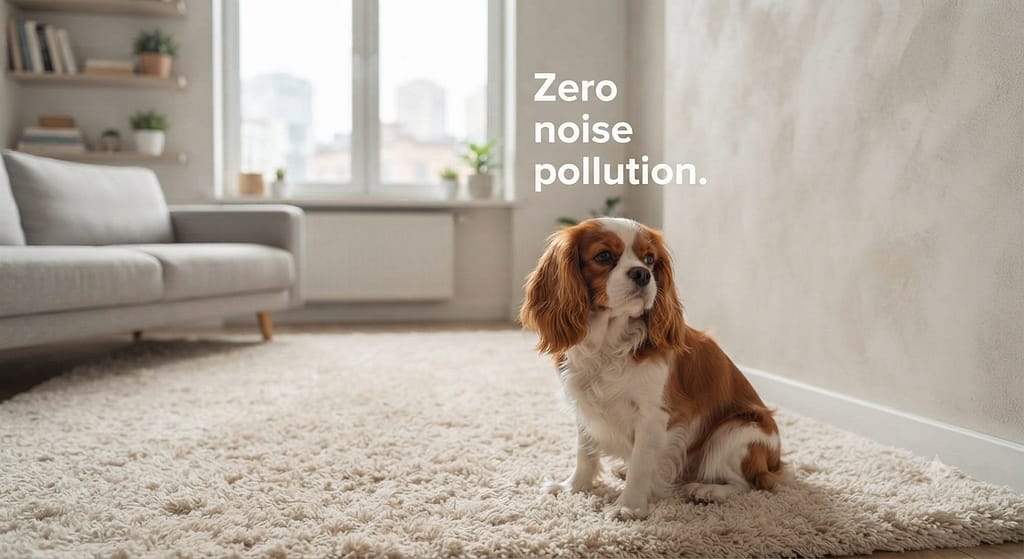
A Cavalier King Charles Spaniel has traits of docility and silence that make them infinitely easier than a yappy terrier.
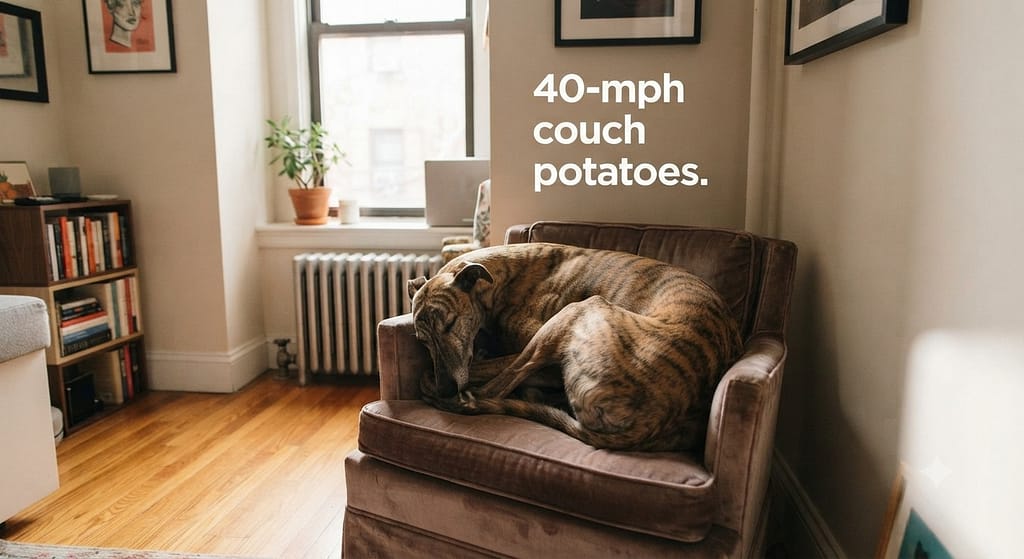
Similarly, a Greyhound is huge but fits perfectly because they are famously referred to as “40-mph couch potatoes.”
When evaluating a candidate, ask yourself: Was this dog bred to work independently (terriers) or to be a lap ornament (companion breeds)?
Always choose the latter for thin walls.
Section 4: The Silent Guardians: Quiet Dogs for Flats (Controlling the Decibel Dilemma)
If you value your security deposit and the peace of your neighbors, silence is golden.
These canines are the introverts of the dog world, rarely feeling the urge to bark unless necessary.
They are the best quiet dogs for flats.
1. The Greyhound & Whippet
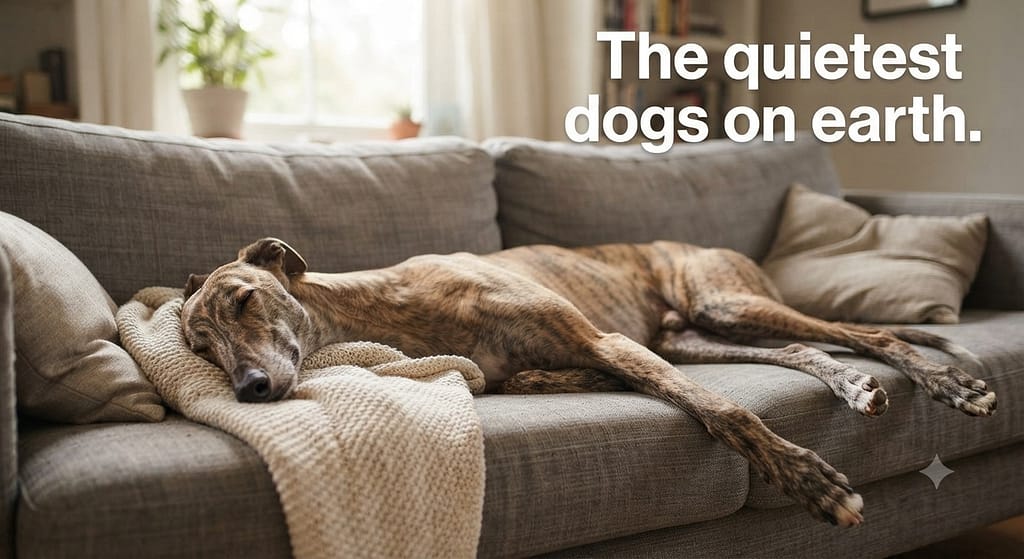
Often called the “quietest dogs on earth,” these sight hounds were bred to chase by sight, not sound.
They don’t have the vocal gene required for guarding. Their Greyhound suitability for apartments is exceptional;
Expect them to sleep 18 hours a day and only “roo” (a quiet whine) when genuinely excited. They are the ultimate secret weapon for high-rise living.
2. The Basenji (The Barkless Dog)
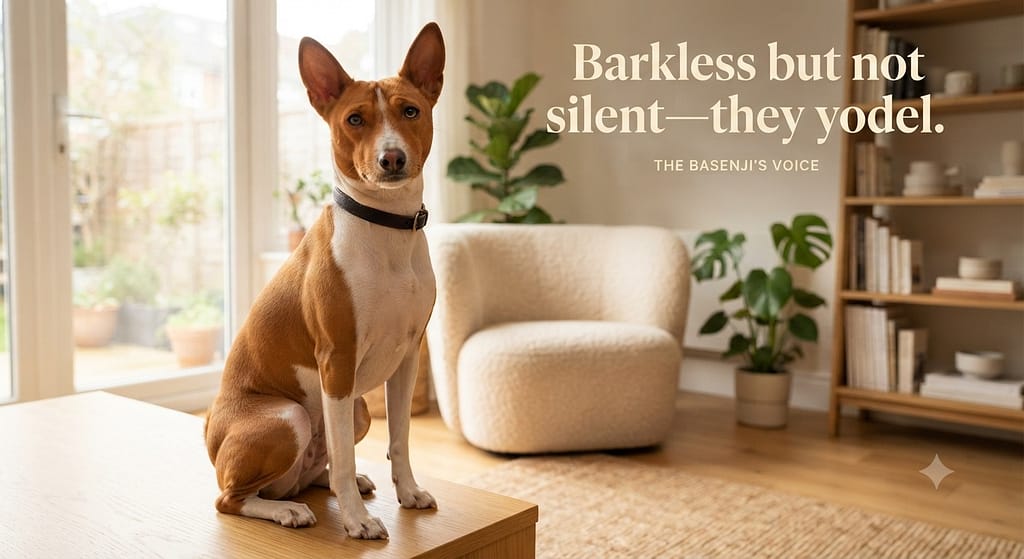
Natively referred to as the “barkless dog” from Central Africa, this breed produces a unique yodel-like sound called a “barroo.”
While they are prone to being a bit cat-like and stubborn, they simply do not yap.
They are perfect if you want a low-decibel companion.
3. The Cavalier King Charles Spaniel

These gentle souls are rarely vocal. They are far more interested in being in your lap than alerting you to the mailman.
Their nature is to welcome strangers, not repel them. If you need a small breed that adds zero noise pollution, the Cavalier King Spaniel is an obvious choice for its silent trait.
Section 5: The Hypoallergenic Heroes (Tackling the Shedding Gamble)
For those with allergies or strict carpet policies, shedding is a deal-breaker.
While no dog is 100% allergen-free, hypoallergenic dog breeds produce significantly less dander because their curly or wiry coats trap the dead hair and skin flakes rather than releasing them into the air.
1. The Miniature Poodle

Highly intelligent and alert, the Poodle is the brainiac of the apartment world.
Their tight, curly coat requires regular grooming but virtually eliminates shedding, making them a top choice for low-shedding dog breeds.
They are eager to please, making training a breeze. However, they are high-energy; be prepared to meet their mental needs with puzzle toys.

2. The Shih Tzu
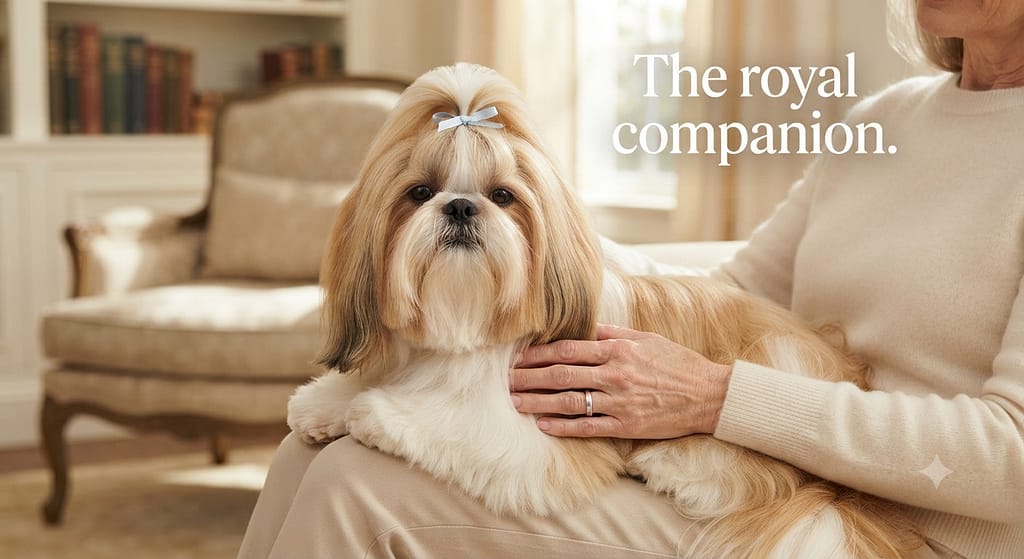
If a lap dog with a regal attitude appeals to you, look no further.
They were literally bred to be palace companions.
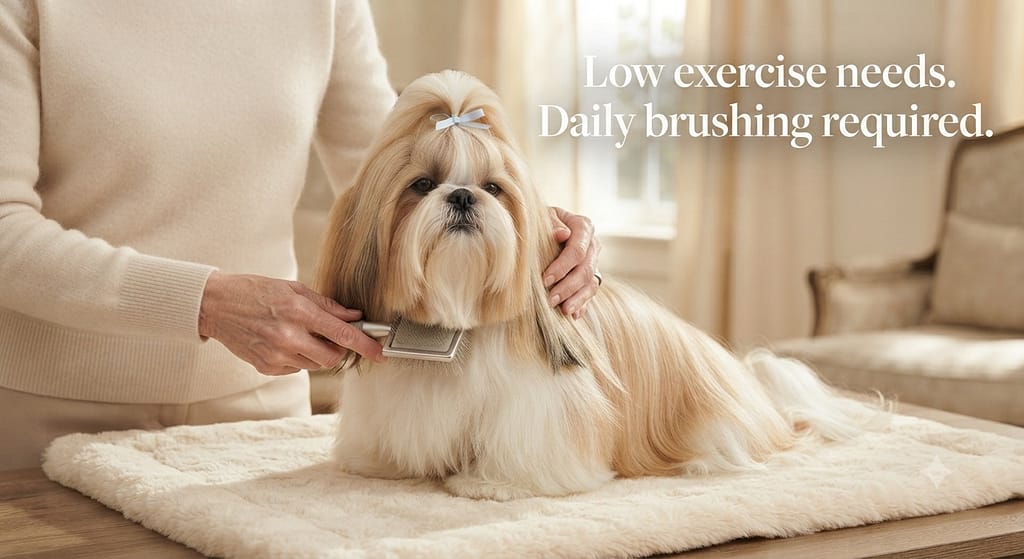
They shed minimally, have low exercise needs, and their relaxed demeanor adapts to any schedule. The trade-off? Daily brushing to prevent matting.
3. The Havanese

The national dog of Cuba, this breed is the epitome of adaptability.
They are incredibly smart, love to perform tricks, and produce low shedding levels.
Their silky coat, much like the Shih Tzu, requires upkeep, but their cheerful, bouncy personality makes the effort worthwhile.

Section 6: Lifestyle Alignment – Matching Dogs for Busy Professionals, Families, and Singles
Your lifestyle is the ultimate dictator of the decision.
We have segmented the best matches based on your primary daily routine.
The 9-to-5 Professional (Busy Owners)

If you are out of the house for 6 to 8 hours a day, you need a breed with low separation anxiety and a low energy burn.
We are looking at suitable dogs for busy professionals.
- Ideal Match: Greyhound or Adult French Bulldog.
- Why? French Bulldog apartment living is famous because they are notorious for sleeping through the day. They require minimal exercise and won’t destroy your couch if you are gone for a few hours. The Greyhound is equally lazy indoors.
- Avoid: Cavaliers. While they are the ultimate lap dog, they suffer from intense separation anxiety. They need constant human contact. Watch for dog breeds with separation anxiety before you commit.
The Work-from-Home Creative (WFH)
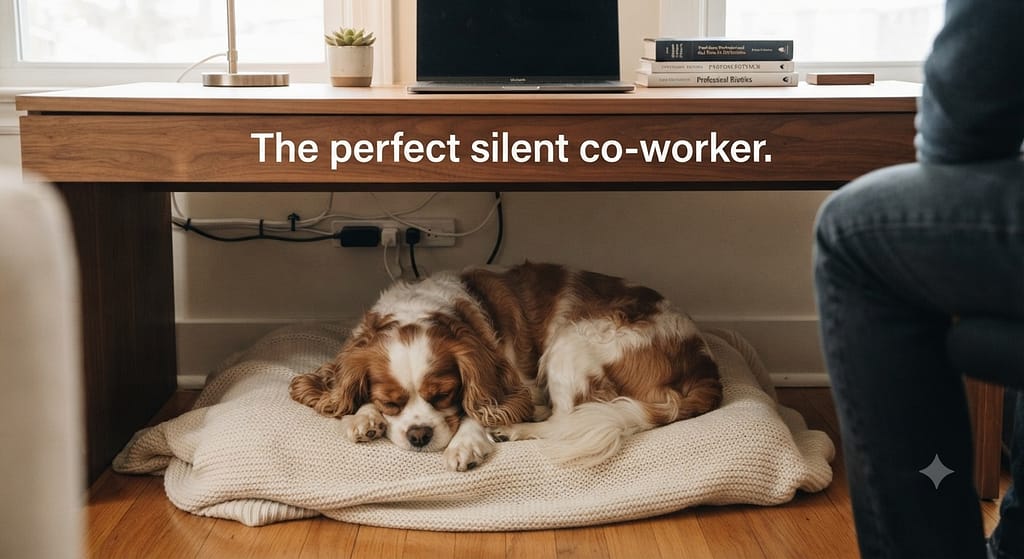
If you are lucky enough to be home all day, you have the bandwidth for a breed that craves interaction and mental stimulation.
- Ideal Match: Cavalier King Charles Spaniel or Havanese.
- Why? These breeds for working from home thrive on being involved in your routine. They aren’t just happy to be near you; they need it. They will lie under your desk and be the perfect silent co-worker.
- Pro-Tip: Rotate between window watching and short training sessions to keep their minds sharp without overstimulating them.
The Urban Family (With Kids)

Not all small dogs tolerate the unpredictable movements of children.
- Ideal Match: Boston Terrier or Cavalier King Charles Spaniel.
- Why? Bostons are sturdy, playful, and have a high pain tolerance—making them resilient playmates. Cavaliers are famously gentle and patient, never showing aggression even when poked and prodded. These are the best dog breeds for families in a city context.
- Warning: Avoid breeds with a “short fuse” like the Dachshund. They are prone to nipping when startled.

Section 7: The Face-Off – Frenchie vs. Boston vs. Cavalier
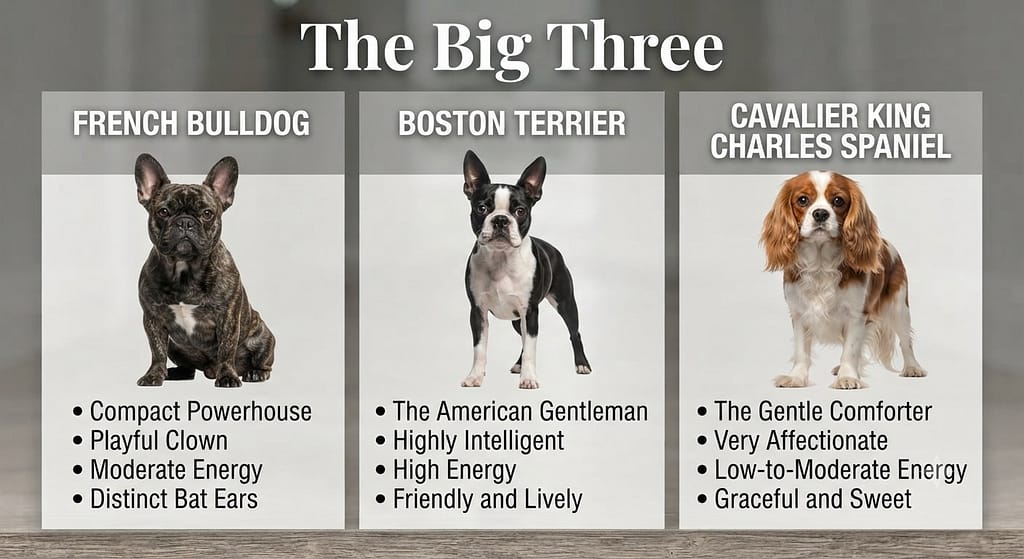
We have narrowed it down to the “Big Three” of apartment living. Here is the final tie-breaker for anyone debating apartment dogs.
Round 1: The Health & Breathing Battle
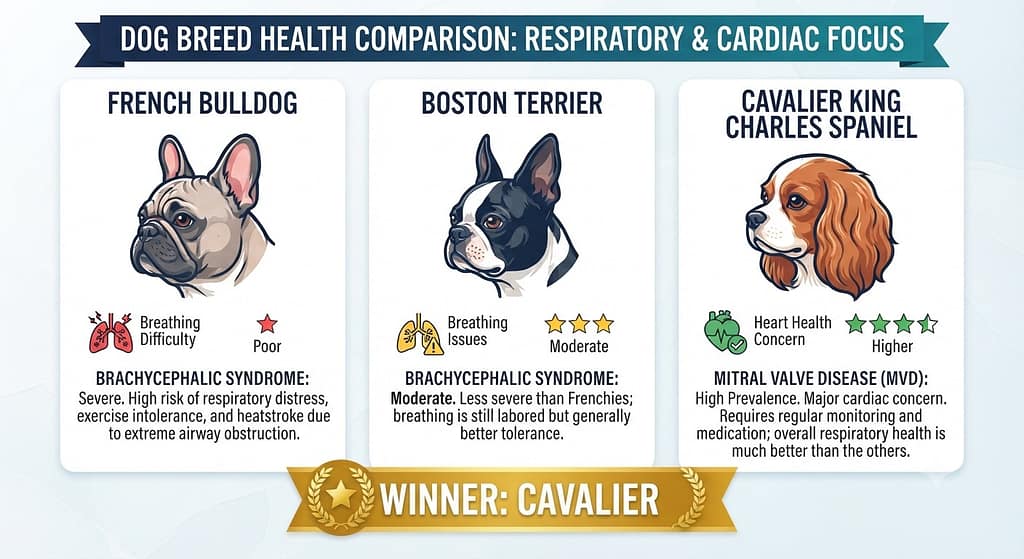
- French Bulldog: Brachycephalic (flat-faced). They cannot cool themselves efficiently. They overheat on summer walks and snore like a chainsaw. Requires a harness to prevent tracheal collapse.
- Boston Terrier: Also flat-faced, but slightly less severe. They have less bulk, allowing them to regulate heat better than the Frenchie.
- Cavalier: Prone to Mitral Valve Disease (MVD). They have heart issues, but this affects them in older age. Breathing is never a problem.
- Winner: Cavalier (for health longevity in the early years).
Round 2: The Cuddle Factor
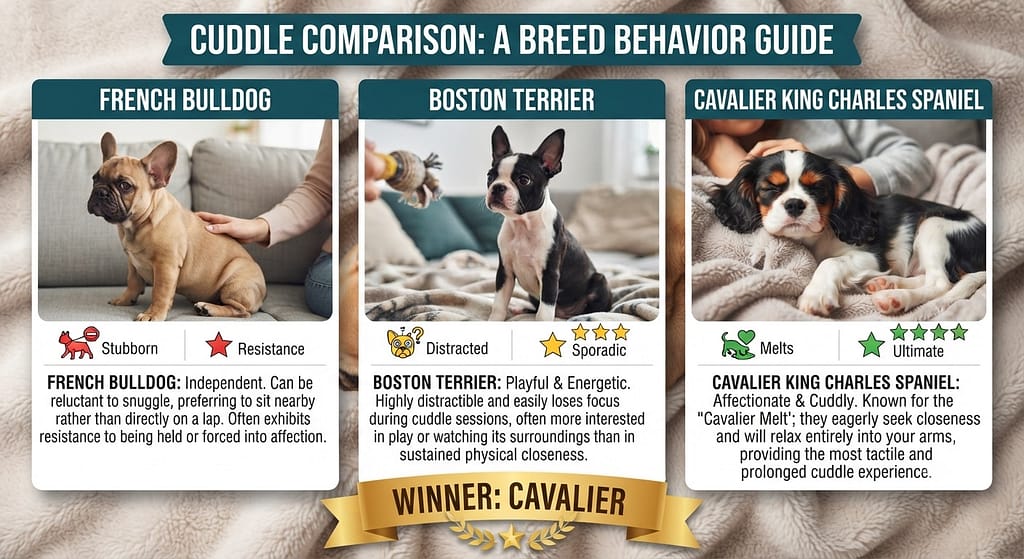
- French Bulldog: Velcro but in a stubborn way. They want you to fetch them.
- Boston Terrier: Affectionate but quickly distracted.
- Cavalier: The ultimate lap dog. They melt into you. They exist to be held.
- Winner: Cavalier.
Round 3: Maintenance & Grooming
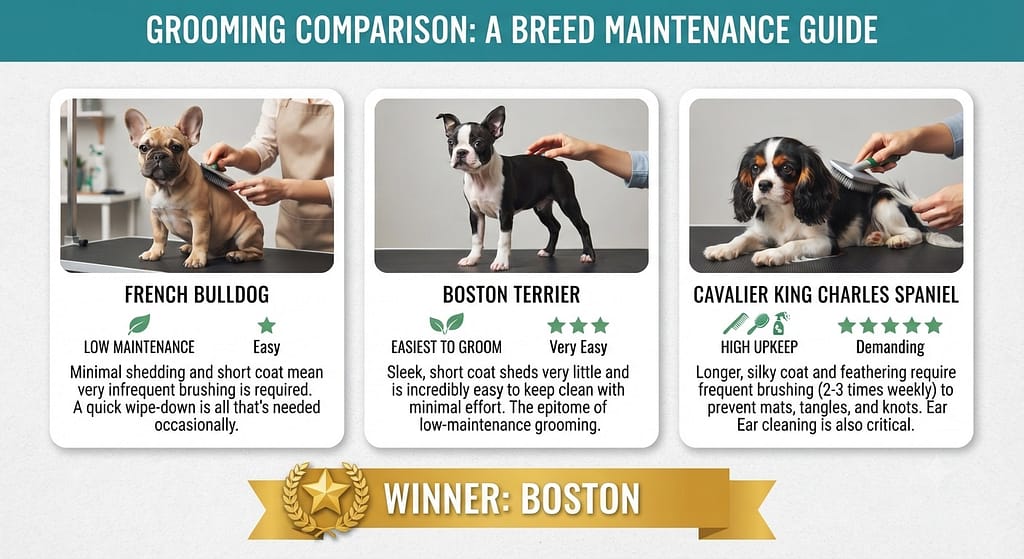
- French Bulldog: Low maintenance. A wipe of their face folds and a weekly brush. Minimal shedding.
- Boston Terrier: Easiest of the three. Short hair, zero odor.
- Cavalier: The most upkeep. Their feathering (ears, tail, legs) mats if unbrushed.
- Winner: Boston Terrier.
Conclusion: Your Match Awaits

There is no “best” dog—only the best for you.
To select the best apartment breeds for dogs and the ones to avoid, read our guide, Apartment Dog Breeds: The Complete Compatibility Guide (2026) – 25 Best & 10 to Avoid
If you want a lazy, grumpy comedian who is low-maintenance, the Frenchie is your guy.
If you want a bouncy, energetic playmate who loves kids and hates grooming, choose the Boston.
If you want a soulmate—a dog that stares at you with adoration and has the quiet demeanor of a meditation teacher—the Cavalier is calling your name.
Ultimately, this is a process of lifestyle dog matching.
Now, armed with this blueprint, you are ready to speak confidently to breeders and shelters.
You know the questions to ask about energy, noise, and coat care. More importantly, you know your own limits.
Your Next Steps:
- Check out our deep-dive on the Frenchie vs. Boston vs. Cavalier showdown [Link to Pillar 2].
- Read our Emergency Preparedness Guide to make sure your new companion is safe [Link].
- Still not sure? Download our “Compatibility Scorecard” below to weigh your top three breeds.
This guide is part of our comprehensive Apartment Dog Owner series. For more help, check out our guides on Barking Solutions, Potty Training, and Separation Anxiety.
🐾 — Apartment Dog Guide (ADG)
Living large in small spaces, one paw at a time. That’s the apartment dog life—see you in the next guide!.


