
The 3 AM Alarm
The fire alarm shrieks through your high-rise.
Your heart slams against your ribs. You’re on the 14th floor. Your dog is trembling, confused, and refusing to move.

The hallway is filling with smoke.
You grab your keys, your phone, and your dog’s leash—but in the chaos, you forget the medication they need daily.
This is the nightmare scenario every apartment dweller fears but few prepare for.
Welcome to The Apartment Dog Emergency Preparedness Guide—your definitive resource for urban emergency preparedness.
Emergencies are amplified in urban environments.
High-rises complicate evacuation. Concrete traps heat.
Toxic trash lines the sidewalks. Emergency responders also face delays navigating crowded buildings.
This is the reality of urban apartment dog care in crises.
But here is the truth that changes everything:
Preparedness is not paranoia. It is love.
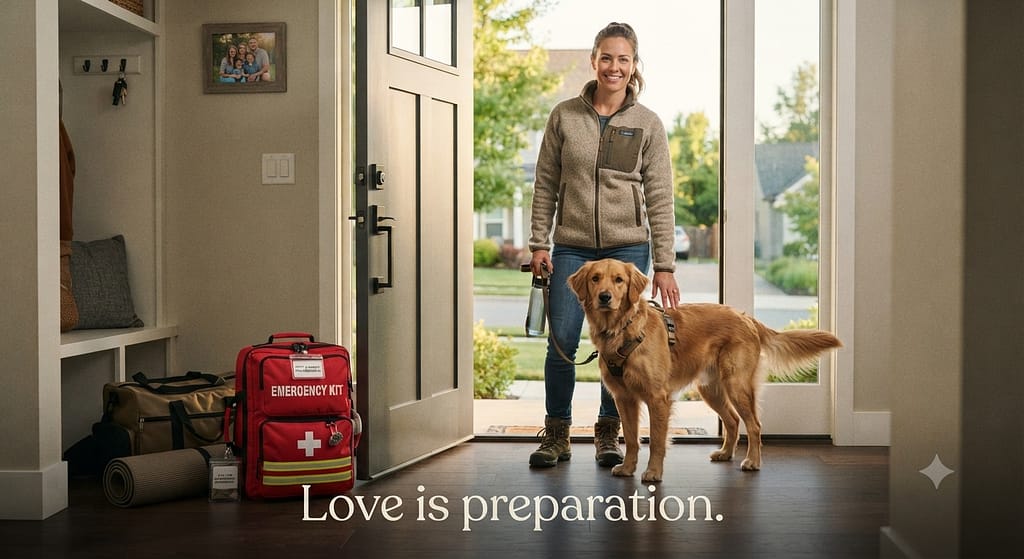
You cannot prevent every emergency, but you can control your reaction.
This guide covers the 4 Pillars of Urban Emergency Preparedness:
- Prevention (Heat safety and toxic awareness).
- Supply (First aid kits and emergency bags).
- Evacuation (The 5-minute plan).
- Breed-Specific Vulnerabilities (Frenchies and Cavaliers).
By the end, you will have a complete system to protect your dog when every second counts.
Section 1: The Ultimate Apartment Dog First Aid Kit
In an emergency, you don’t have time to dig through drawers. You need one grab-and-go bag.
This is your apartment dog first aid kit—and we’ll cover exactly what to put in a dog first aid kit for apartments.
The “Grab-and-Go” Philosophy
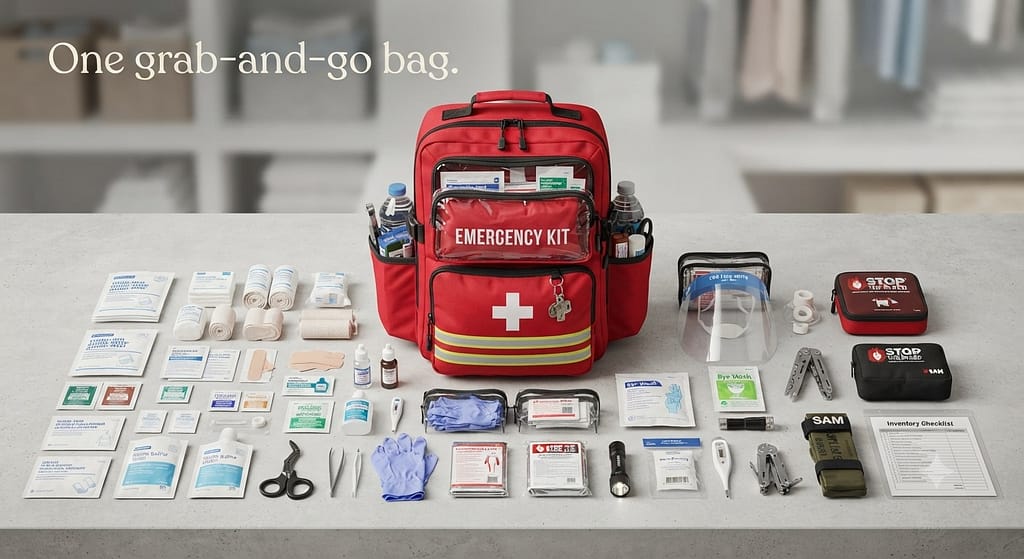
- Location: Hang it on the back of your front door or inside a hall closet. Not buried under the bed. Not in the car.
- Visibility: Use a bright red or orange bag. Firefighters and neighbors can spot it easily.
- Dog-Proof: Use a zippered bag that your dog cannot accidentally open.
The Essential Checklist (First Aid Supplies for Dogs)
Wound Care:
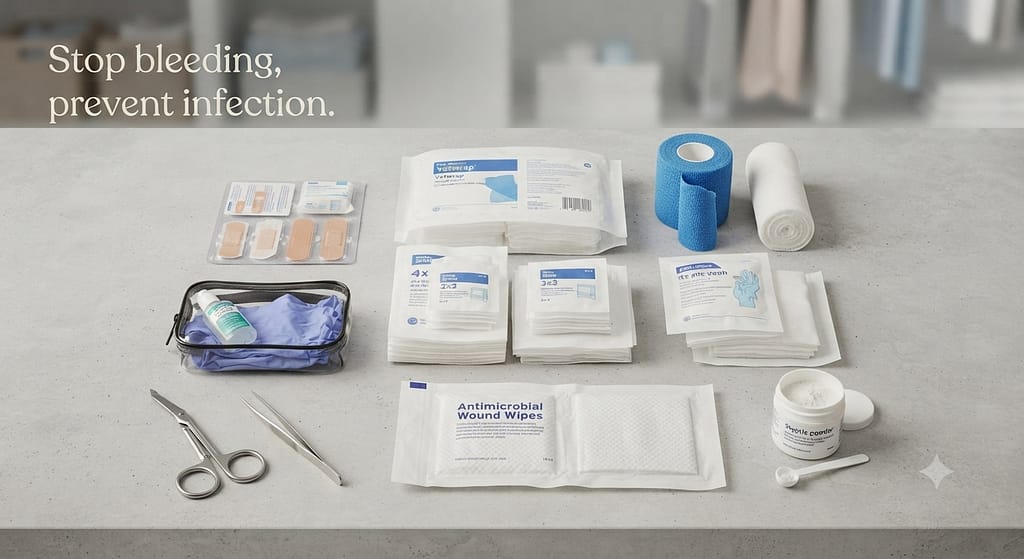
- Sterile Gauze Pads: For applying pressure to bleeding wounds.
- Self-Adhesive Bandage (Vetwrap): Sticks to itself, not fur. Perfect for wrapping paws.
- Antimicrobial Wipes (Chlorhexidine): For cleaning wounds before bandaging.
- Styptic Powder: Stops bleeding from torn nails (a common emergency in apartments with hard floors).
- Saline Eye Wash: For flushing debris from eyes.
Immobilization:

- Foldable Splint: For broken limbs. If you don’t have one, a rolled-up magazine works.
- Tape: For securing the splint.
Medications: (Pet Medication List & Daily Dog Medications)
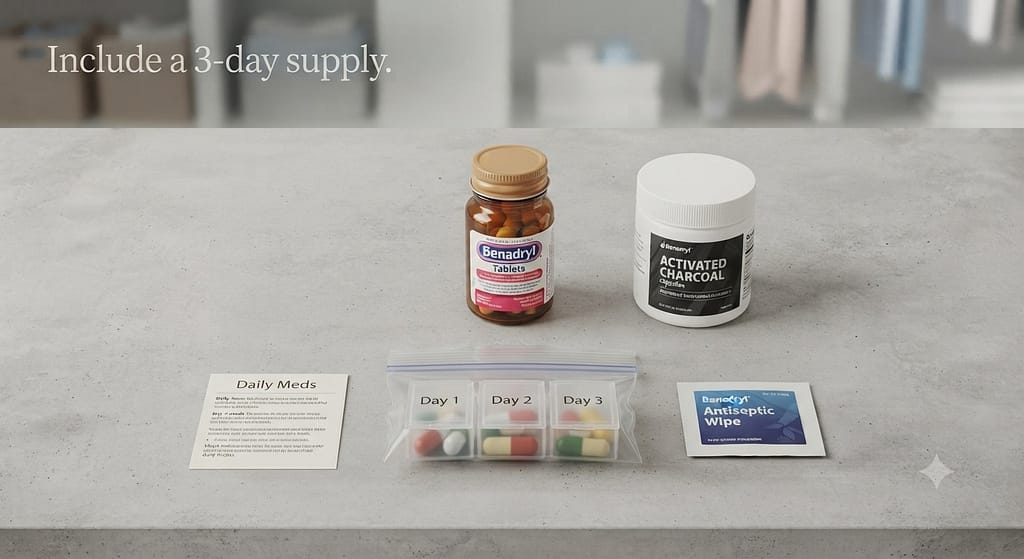
- Benadryl (Diphenhydramine): For allergic reactions (bee stings, vaccine reactions). Dosage: 1mg per pound of body weight. (Example: 25lb dog = 25mg tablet).
- Activated Charcoal: For toxin ingestion. Important: Only use if a vet instructs you. Do NOT induce vomiting without professional guidance.
- Saline Eye Wash: For flushing debris.
- Your Dog’s Daily Medications: Include a 3-day supply in a labeled baggie. This is critical for dogs on daily dog medications like heart meds.
Tools:
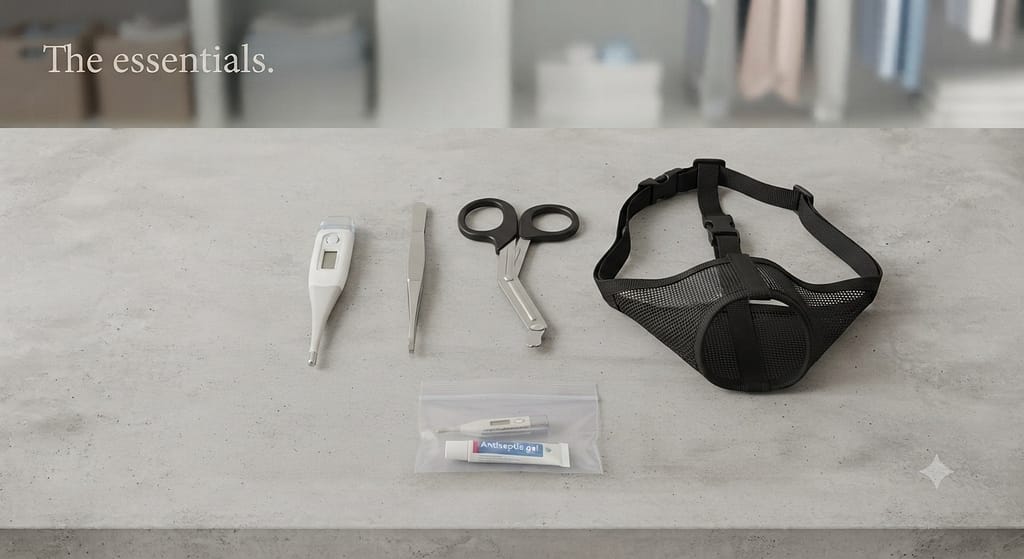
- Digital Thermometer (Rectal): Normal temperature is 100-102.5°F. Anything above 104°F is a medical emergency.
- Tweezers: For removing ticks, glass, or splinters.
- Blunt-Tipped Scissors: For cutting bandages or fur away from wounds.
- Muzzle (Mitten Kit for Dogs): Even friendly dogs bite when in pain. Use a basket muzzle that allows panting—this is your mitten kit for dogs.
Documents: (Vaccination Records for Pets & Pet Emergency Documents)

- Vaccination Records: In a waterproof sleeve.
- Vet Contact Info: Phone number, address, and emergency vet number.
- Photo of Your Dog: In case they run during an emergency.
The “Red Folder” System (Pet Emergency Documents)

Keep a bright red folder with ALL your dog’s records (vaccination records for pets, microchip number, vet contacts, and evacuation plan) right next to your first aid kit.
Grab both in an emergency. These pet emergency documents are non-negotiable.
Section 2: The 5-Minute Evacuation Plan ( Dog Evacuation Strategies )
In a high-rise, every second counts. Elevators shut down during fires. You must be physically able to carry your dog down stairs.
This section covers dog evacuation strategies and a complete evacuation plan for dogs.
The “Elevator Shutdown” Reality
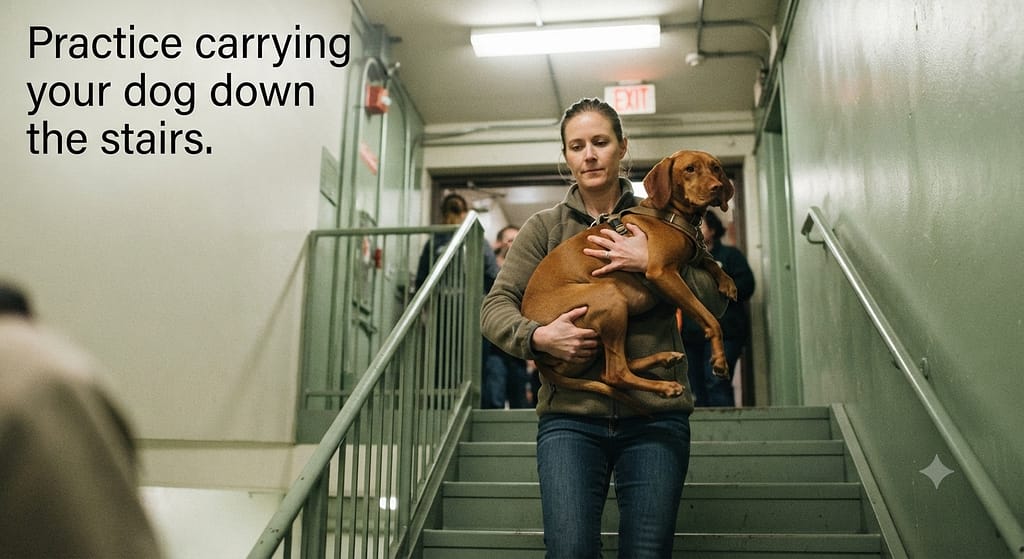
- The Danger: During fires, elevators are disabled. If your dog is too heavy to carry, you are trapped.
- The Solution: Practice carrying your dog down the stairs. Do it once a month. Time yourself. Aim for under 5 minutes for 10 floors.
The “Evacuation Drill” (Evacuation Drill for Apartments)
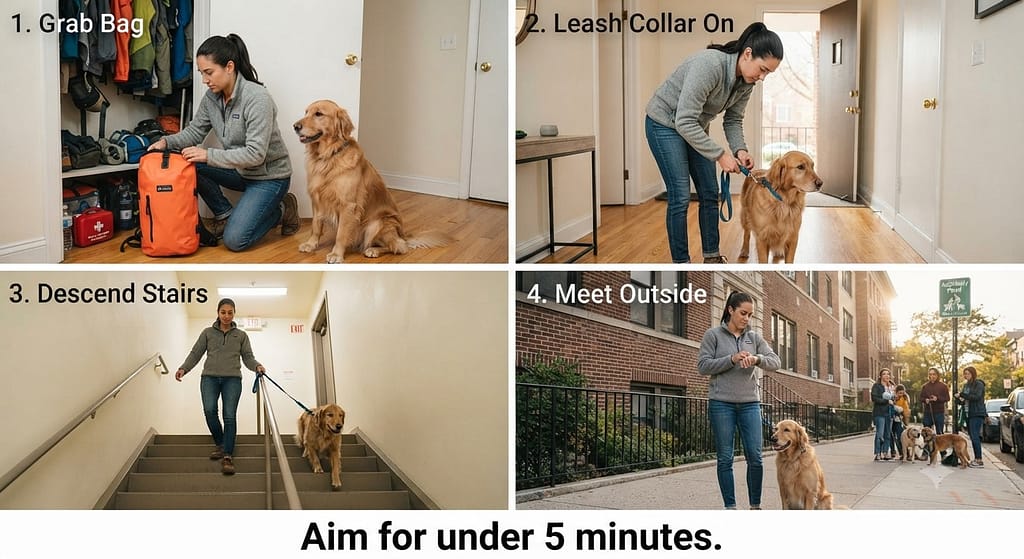
- Grab the Bag: Red folder + first aid kit.
- Leash and Collar: Put them on immediately.
- Carry or Guide: Small dog = carry. Large dog = guide with a tight leash.
- Descend: Use the stairwell. Never the elevator.
- Meet: Designate a meeting spot outside the building (e.g., the coffee shop across the street). Practice an evacuation drill for apartments monthly.
The “Emergency Contact” Card
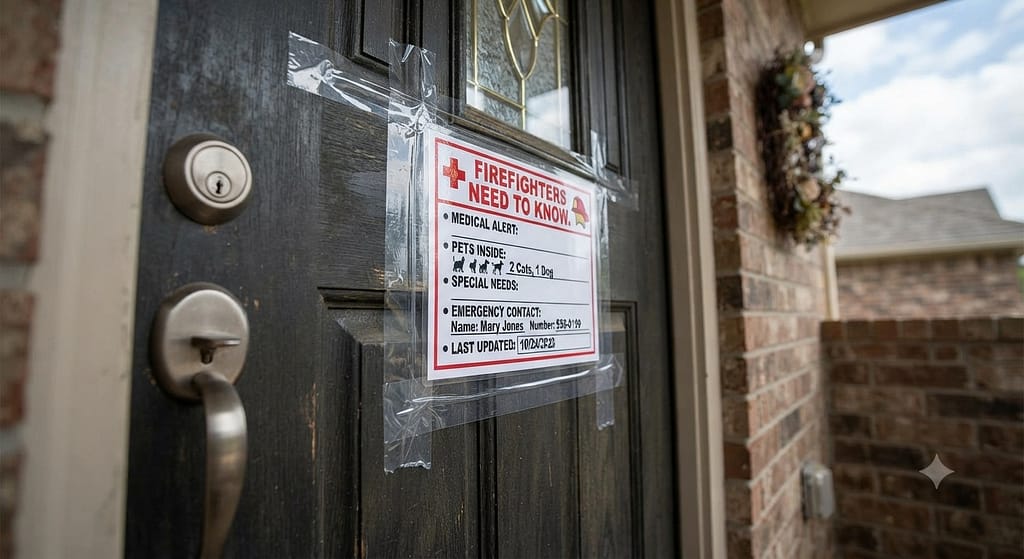
- Location: Tape a laminated card to your front door.
- Content: “DOGS INSIDE” + your dog’s breed, name, and your vet’s phone number.
- Why: Firefighters need to know what they’re looking for. This emergency contact card can save precious time.
The Neighbor Network For Pet Care
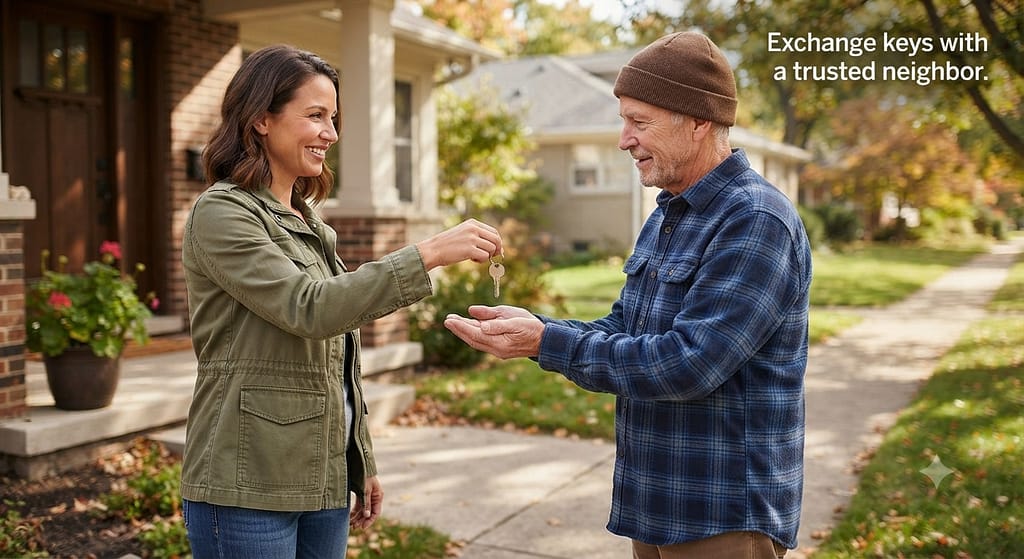
- The Strategy: Exchange keys with a trusted neighbor who works from home. This creates a neighbor network for pet care.
- The Scenario: If you’re trapped at work during an emergency, they can evacuate your dog.
- The Agreement: In writing. Include emergency contact info for both parties.
Downloadable Template
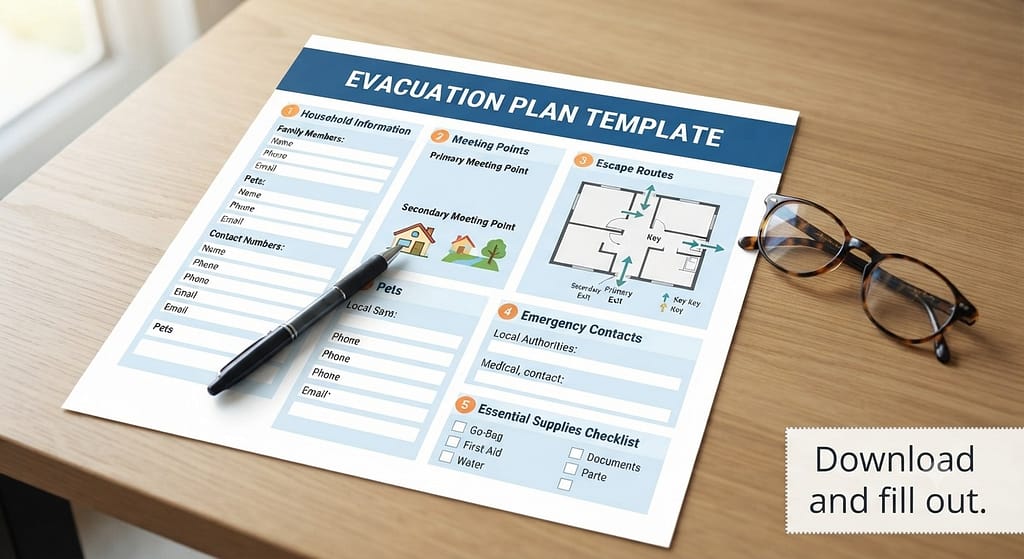
Offer a printable “Evacuation Plan Template” that includes:
- Emergency contacts.
- Vet info.
- Evacuation route (stairwell, not elevator).
- Designated meeting spot outside the building.
- A checklist for the “grab bag.”
Section 3: Heat Safety – The #1 Urban Killer
Concrete and asphalt absorb heat and radiate it back up. It’s 5-10°F hotter on a city sidewalk than in a suburb.
This is the urban heat island effect in action, and it’s deadly for dogs.
The Urban Heat Island Effect
- The Science: Buildings trap heat. Pavement absorbs sunlight. The result is “urban heat islands” that are significantly warmer than surrounding areas.
- The Danger: Dogs cannot sweat. They cool themselves through panting. When the air is hot and humid, panting is ineffective.
Summer Safety for City Dogs (Heat Safety for Dogs)
The 7-Second Pavement Test
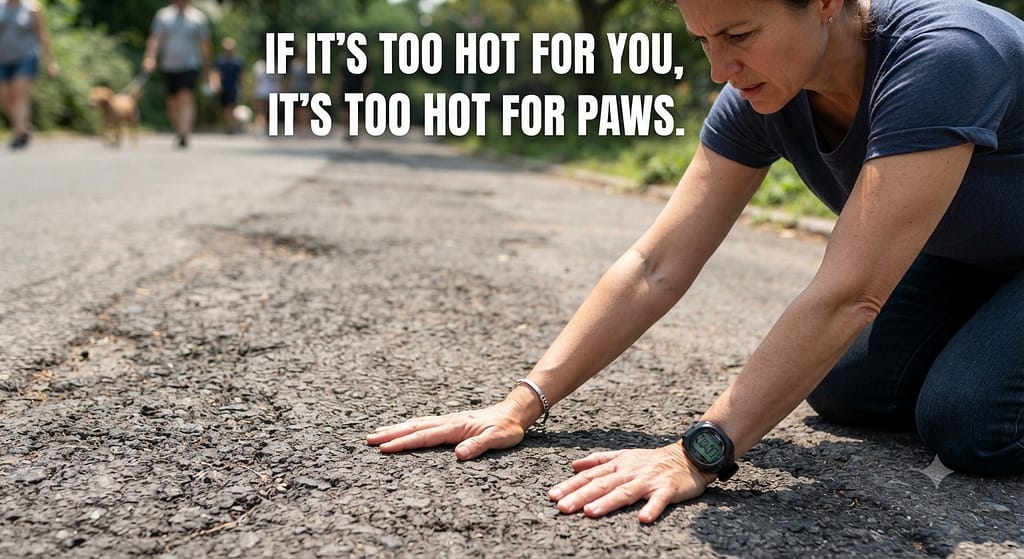
Place your hand on the asphalt for 7 seconds. If it’s too hot for you, it’s too hot for paws.
- The Solution: Walk at dawn or dusk. Stick to grass or shaded sidewalks.
How to Keep Dog Cool in Apartment Without AC (Pet Cooling Techniques)
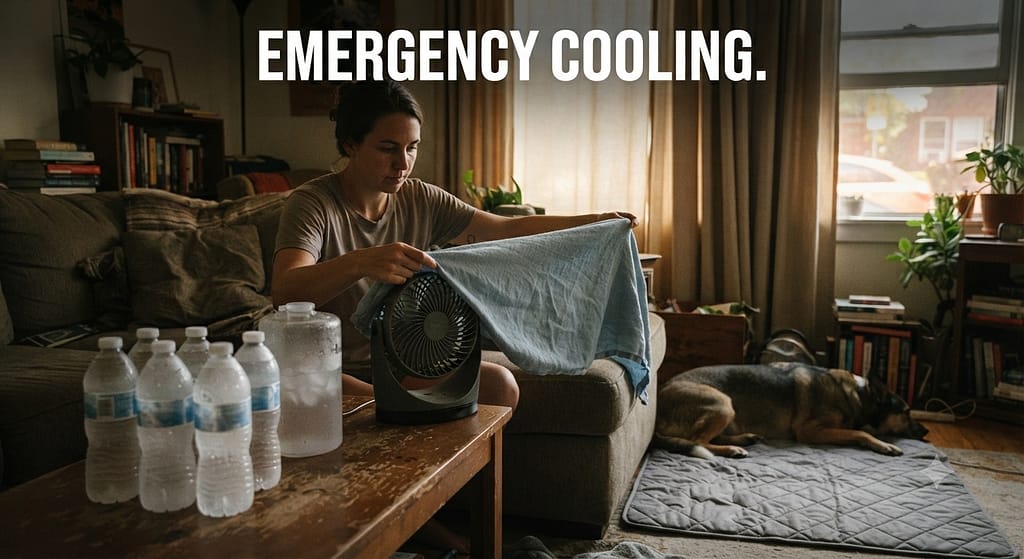
If your air conditioning fails during a heatwave, use these pet cooling techniques to keep your dog safe. Here’s how to keep a dog cool in an apartment without AC.
- Wet Towels: Place damp towels on the floor. Evaporative cooling helps.
- Frozen Water Bottles: Wrap them in towels and place them near your dog’s bed.
- Cooling Mats: Gel-filled mats that stay cool without electricity.
- Battery-Operated Fan: For circulation.
Signs of Heat Stroke in Dogs (Heat Stroke Signs in Dogs & Temperature Monitoring for Pets)
Knowing the signs of heatstroke in dogs can save a life. Combine this with temperature monitoring for pets.
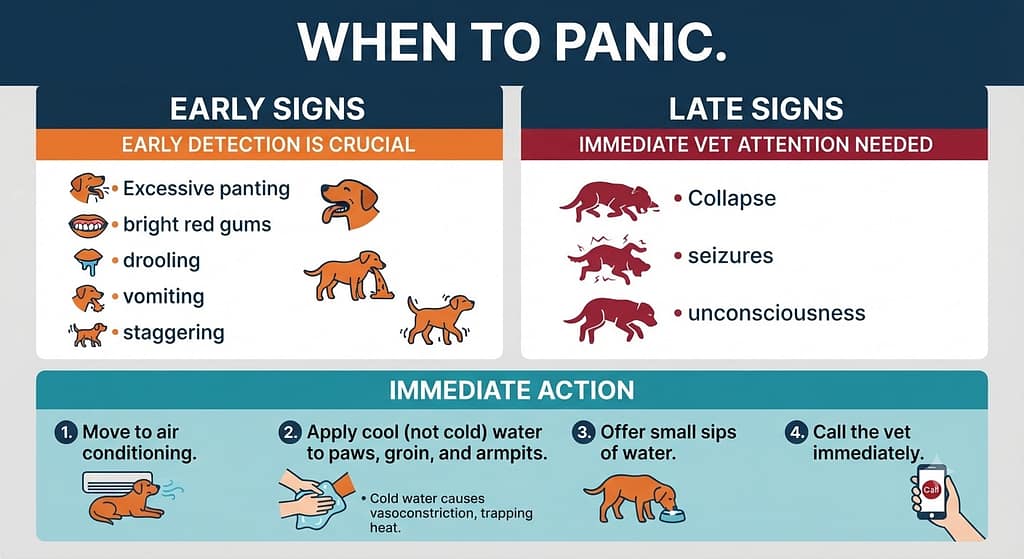
- Early Signs: Excessive panting, bright red gums, drooling, vomiting, staggering.
- Late Signs: Collapse, seizures, unconsciousness.
- Immediate Action:
- Move to air conditioning.
- Apply cool (not cold) water to paws, groin, and armpits. (Cold water causes vasoconstriction, trapping heat.)
- Offer small sips of water.
- Call the vet immediately.
Brachycephalic Dog Care (Brachycephalic Dog Care & French Bulldog Heat Safety)

French Bulldogs, Pugs, and Boston Terriers are extremely susceptible to heat stroke.
Their flat faces make panting inefficient.
This is where brachycephalic dog care becomes critical.
- The 5-Minute Rule: In summer, never walk a Frenchie for more than 5 consecutive minutes. This is non-negotiable French bulldog heat safety.
- Humidity Danger: High humidity + heat = DEATH. On humid days, use indoor potty pads only.
Section 4: Breed-Specific Emergencies – Frenchies & Cavaliers
Certain breeds have unique emergency vulnerabilities.
Understanding breed-specific dog emergencies is essential.
The Frenchie Heat Crisis (Brachycephalic Dog Care)
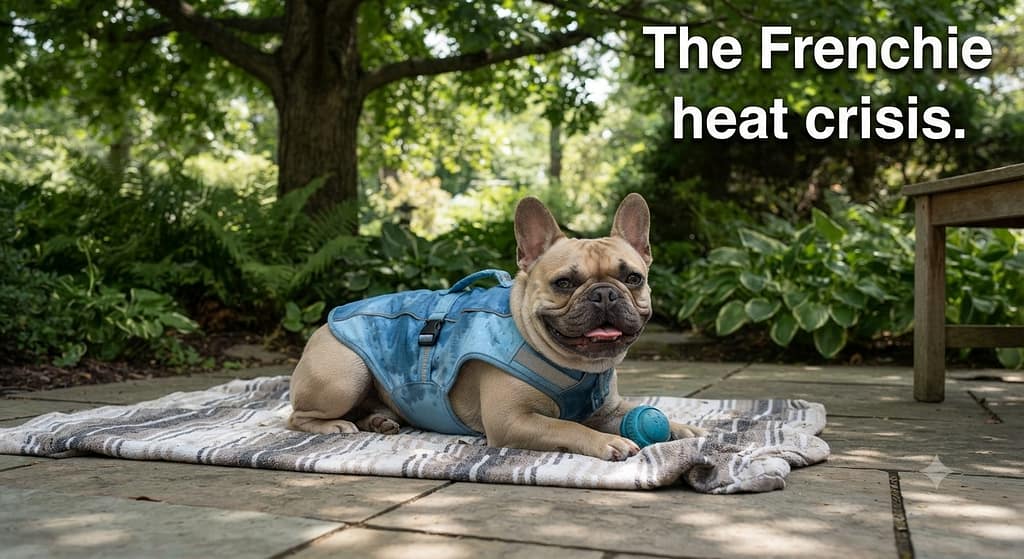
Brachycephalic Airway Syndrome (BOAS) means they cannot pant effectively.
The “5-Minute Rule” (Reinforced):
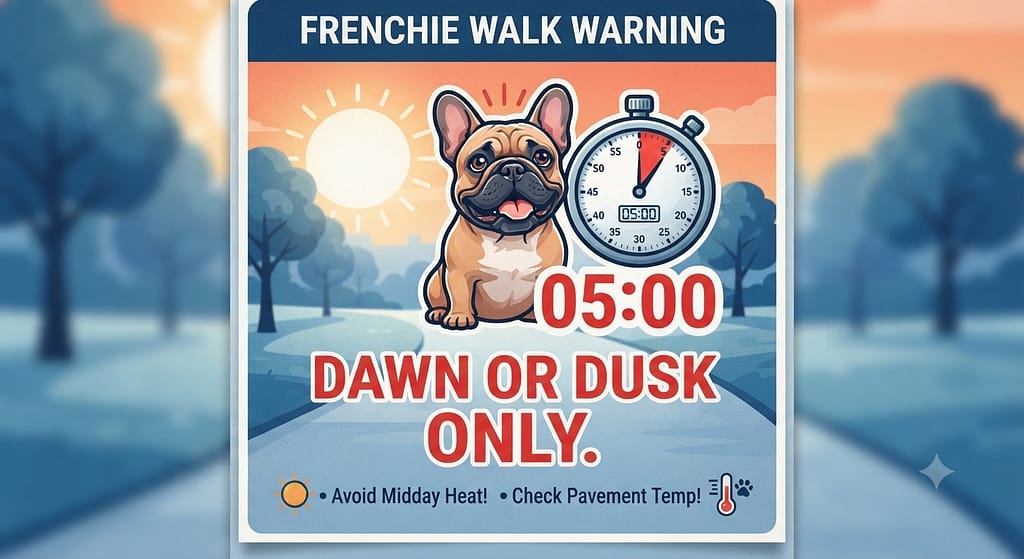
- Never walk a Frenchie for more than 5 minutes in summer.
- Walk at dawn or dusk only.
- On humid days, stay indoors.
Cooling Vest vs. Cooling Mat:
- Vests: Best for walks. They use evaporative cooling.
- Mats: Best for indoor recovery. Gel-filled and pressure-activated.
The “Tail Pocket” Danger:
Frenchies often have a “tail pocket” (a fold under the tail) that traps moisture and can lead to infection.
Check it daily. An infected tail pocket can become a systemic emergency.
The Cavalier “MVD” Emergency (Cavalier King Charles Spaniel Health)

Mitral Valve Disease (MVD) affects 50% of Cavaliers by age 5 and 90% by age 10.
This is a critical aspect of Cavalier King Charles Spaniel health.
The “Cough” Warning Sign:
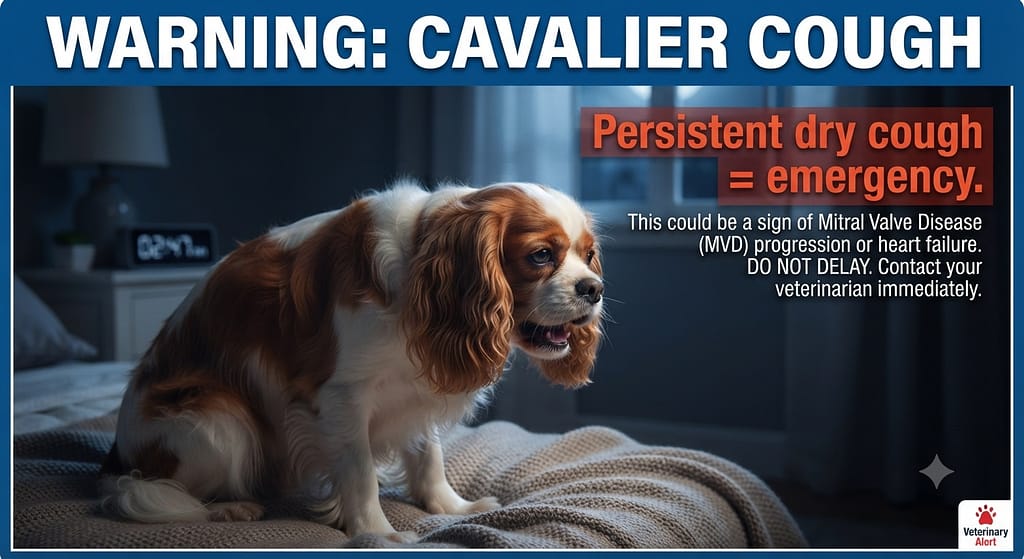
A persistent dry cough, especially at night, can indicate fluid around the heart. This is an emergency, not “just a cold.”
Exercise Intolerance:
If your Cavalier suddenly can’t handle their usual apartment walk, it could be the onset of heart failure. Vet immediately.
Medication Adherence:
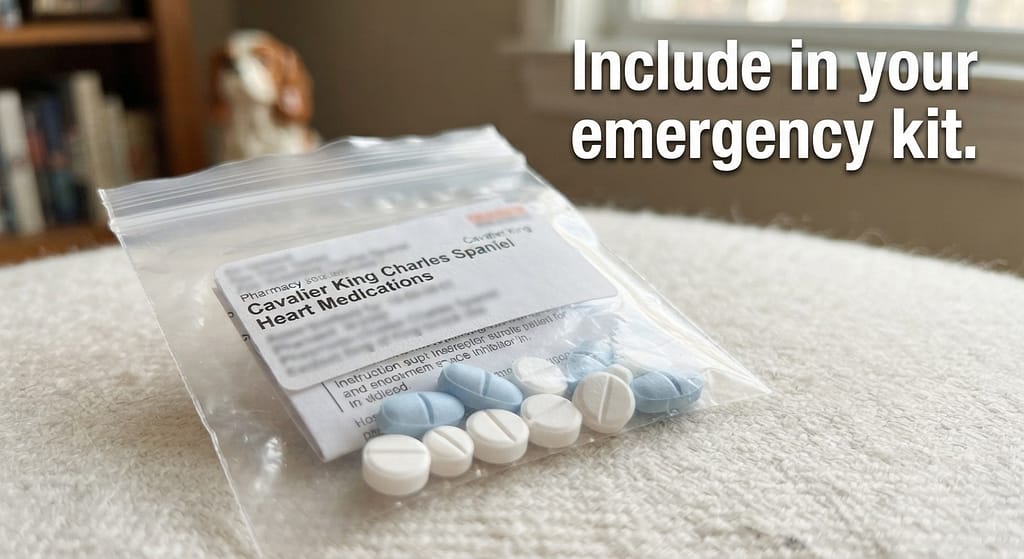
If your Cavalier is on heart meds (like pimobendan or furosemide), include them in your emergency kit. Evacuation without meds is a crisis.
This is why your pet medication list is so important.
The “Breed Emergency” Card
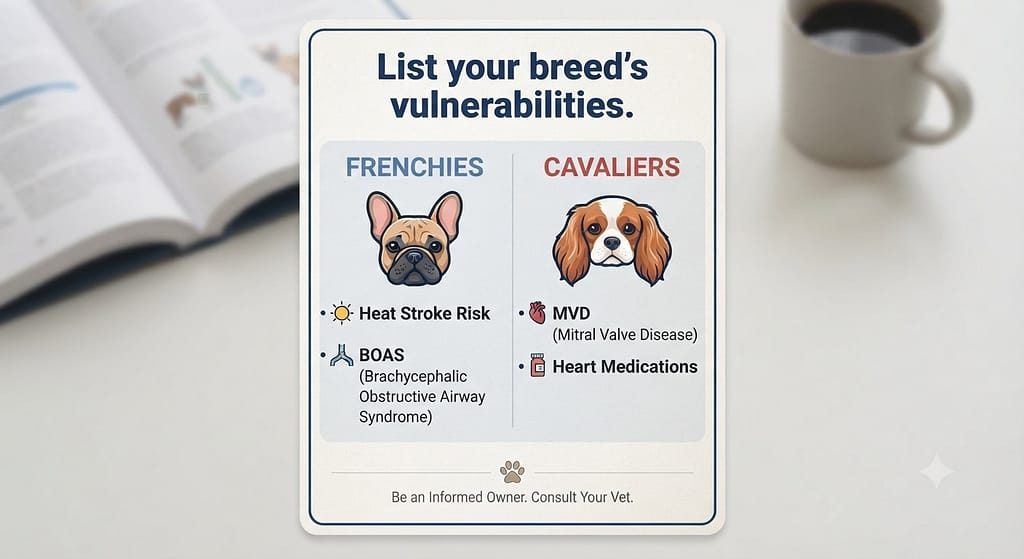
Create a small card for your first aid kit that lists your breed’s specific vulnerabilities:
- Frenchies: Heat stroke, BOAS, tail pocket infections.
- Cavaliers: MVD, exercise intolerance, medication needs.
Section 5: The Toxic Apartment – Toxic Foods for Dogs & Household Hazards
City apartments have tiny kitchens, so owners often store food in easily accessible low cabinets. This creates a toxic danger zone.
This section covers toxic foods for dogs and toxic household hazards.
The “Red List” Fridge Magnet (Toxic Foods for Dogs)
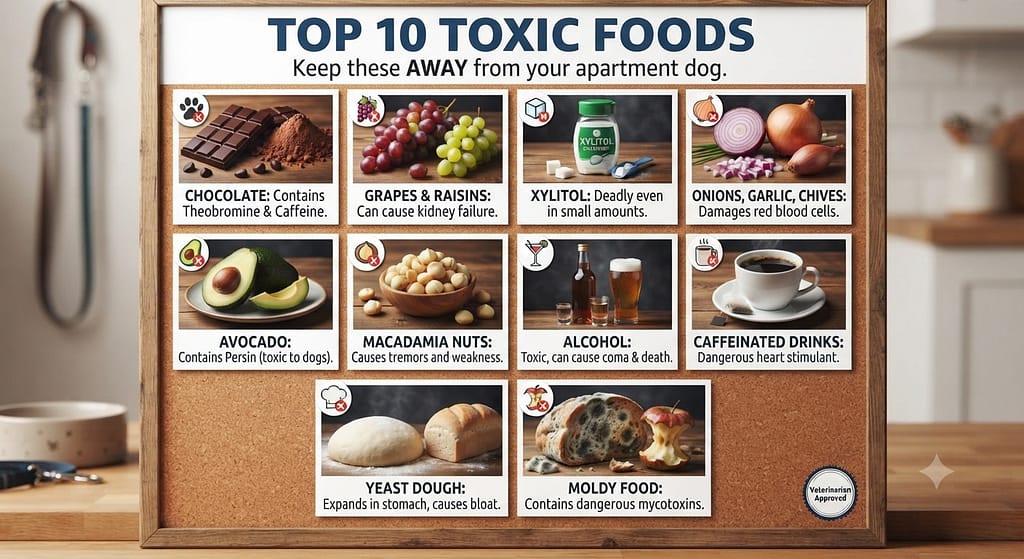
Create a printable guide with the top 10 toxic foods for dogs
- Chocolate (Theobromine) – Darker = more toxic. Baking chocolate is the deadliest.
- Grapes & Raisins – Cause kidney failure. Even one raisin can kill a small dog.
- Xylitol (Artificial Sweetener) – Found in gum, peanut butter, and sugar-free baked goods. Causes a deadly blood sugar crash and liver failure.
- Onions & Garlic – Destroy red blood cells. Any form (powder, raw, cooked) is toxic.
- Avocado (Persin) – Causes vomiting and diarrhea. The pit is a choking hazard.
- Macadamia Nuts – Cause weakness, vomiting, and paralysis.
- Alcohol – Even small amounts are toxic—rapid heart rate and seizures.
- Caffeine – Found in coffee, tea, and energy drinks. Rapid heart rate and seizures.
- Yeast Dough – Expands in the stomach, causing bloat (a life-threatening emergency).
- Moldy Food – Tremors and seizures.
The “Emergency Poison Protocol” (Emergency Poison Protocol)
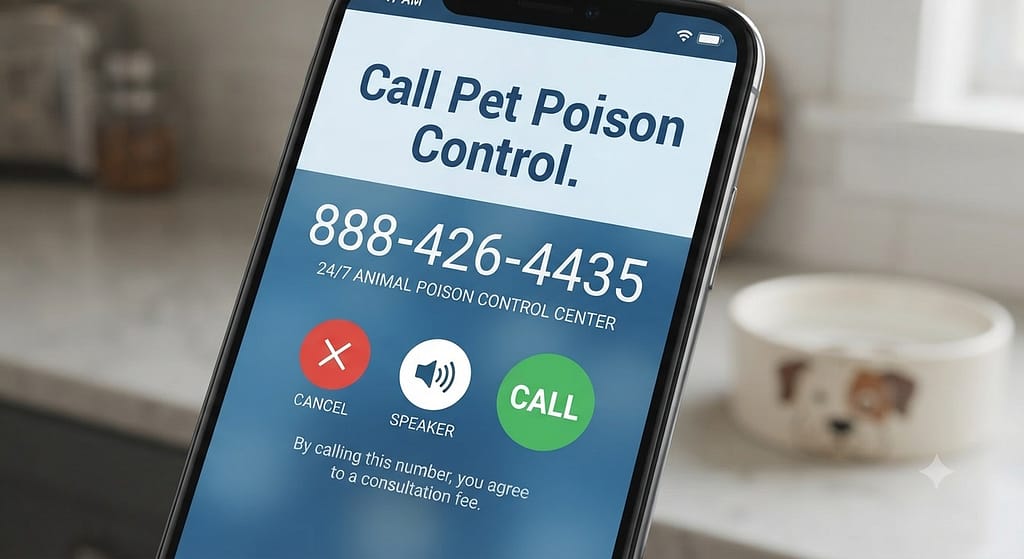
This is your dog poison control emergency checklist in action.
- Call Pet Poison Control: 888-426-4435 (24/7). A consultation fee applies, but it saves lives.
- Do NOT Induce Vomiting: Unless specifically instructed by a vet or poison control. Some toxins (like Xylitol) cause more damage coming back up.
- Bring the Packaging: If your dog ate something, bring the container to the vet.
Toxic Household Hazards (Toxic Household Hazards)
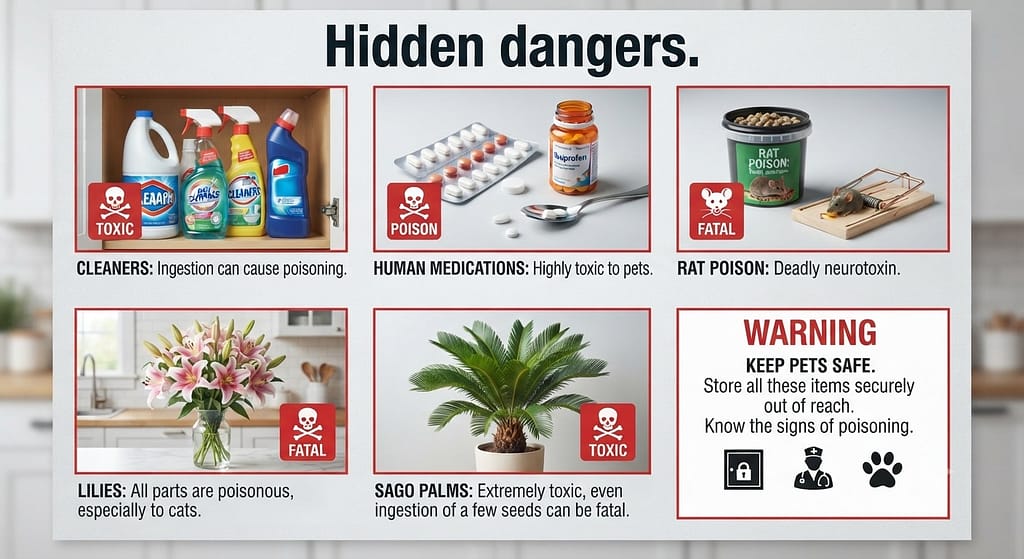
- Household Cleaners: Bleach, ammonia, and disinfectants are toxic. Store them in high cabinets.
- Human Medications: NSAIDs (ibuprofen, naproxen) are deadly to dogs. One pill can cause kidney failure.
- Rat Poison: Common in city buildings. If you use it, place it in areas your dog cannot access.
- Lilies and Sago Palms: Common houseplants that are highly toxic.
Dog-Proof Emergency Kit (Dog-Proof Emergency Kit)
Store all toxic substances in a dog-proof emergency kit—a locked cabinet or high shelf that your dog cannot access.
Section 6: The “Red Folder” System – Pet Emergency Documents & Essential Dog Supplies
Your emergency preparedness is only as good as your documentation.
This section covers essential dog supplies and pet emergency documents.
What Goes in the Red Folder (Pet Emergency Documents)

- Vaccination Records: Rabies, DHPP, Bordetella, etc.
- Microchip Number: And the company’s contact info.
- Vet Contact Info: Regular vet + emergency vet + poison control.
- Evacuation Plan: The printable template you downloaded.
- Medication List: All current medications, dosages, and schedules.
- Breed-Specific Emergency Card: For Frenchies or Cavaliers.
Essential Dog Supplies (Essential Dog Supplies)
Your grab-and-go bag should include these essential dog supplies:
- 3 days of food and water.
- Collapsible bowls.
- A leash and harness.
- A blanket or towel.
- Waste bags.
Where to Keep It
- Location: Right next to the first aid kit.
- Redundant: Take a photo of every page and store it in your phone’s “Favorites” folder.
Grab-and-Go Emergency Bag (Grab-and-Go Emergency Bag)
Your complete grab-and-go emergency bag should be ready at all times.
This includes all first aid supplies for dogs, pet emergency documents, and essential dog supplies.
Conclusion: Love is Preparation
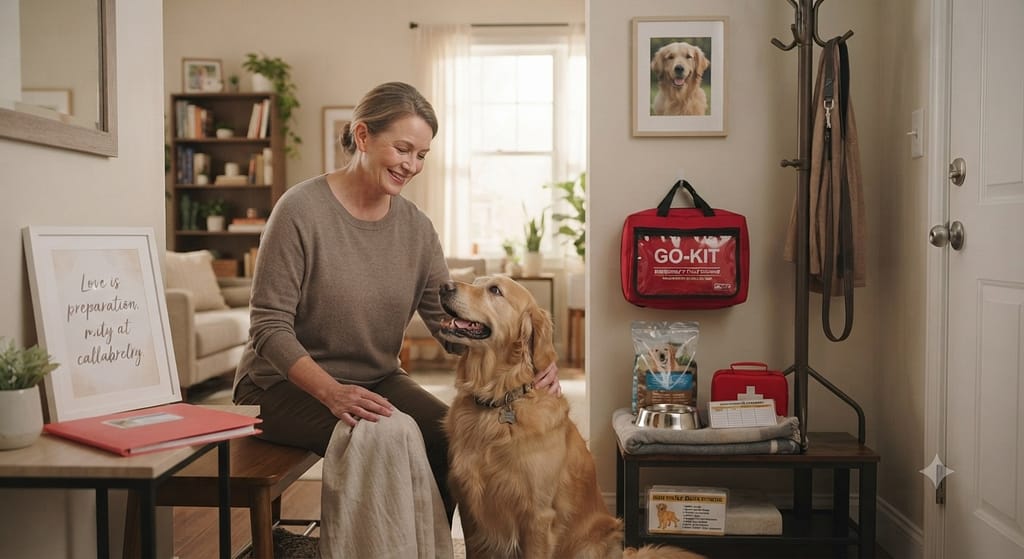
You cannot prevent every emergency. But you can control your reaction. Preparedness is not paranoia. It is love.
This is the heart of urban emergency preparedness and apartment dog first aid readiness.
Your Final Checklist:
- Build the Kit: First aid supplies, medications, and documents.
- Create the Plan: Evacuation drill, neighbor network, meeting spot.
- Prevent Heatstroke: Walk early, test pavement, know the signs.
- Know the Toxins: Red List on the fridge. Poison control number saved.
- Breed-Specific Prep: Know your Frenchie’s or Cavalier’s vulnerabilities.
Your Next Steps:
- If your dog is a Frenchie, read our French Bulldog Heat Stroke Prevention Guide [Link].
- For daily wellness tips, visit our Health & Nutrition Manual [Link].
- Download our complete “Apartment Dog Emergency Kit Checklist” below.
🐾 — Apartment Dog Guide (ADG)
Living large in small spaces, one paw at a time. That’s the apartment dog life—see you in the next guide!.


