
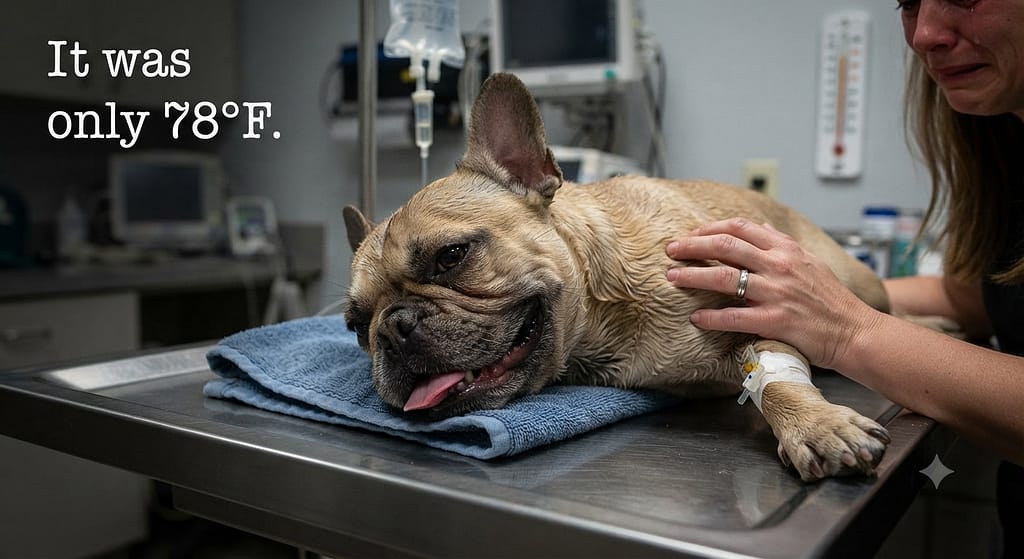
It was only 78°F—just a quick 15-minute walk around the block.
My French Bulldog, Gus, was trotting happily beside me, his signature bat ears flopping with each step. Ten minutes in, I noticed his panting seemed… different.
Heavier. Shallower. His tongue, normally pink, had taken on a purple hue at the edges.
What happened next changed everything: He collapsed.
One moment he was walking, the next he was on his side, breathing in ragged, desperate gasps.
The next 48 hours were a blur of emergency vet visits, IV fluids, and the haunting words from the veterinarian: “Another five minutes and we would have been talking about organ failure.” As narrated by Tony, the Frenchie owner.
Here’s the terrifying truth most Frenchie owners learn too late:
French Bulldogs aren’t just “bad at heat”—they’re physiologically incapable of handling it.
Their adorable flat faces are actually breathing apparatuses that fail under thermal stress.
That “cute” panting? It’s their respiratory system working at maximum capacity to exist.
But here’s what gives us hope:
Every single case of heat stroke is preventable. Not “mostly preventable.” Not “usually preventable.” 100% preventable with the right knowledge and tools.
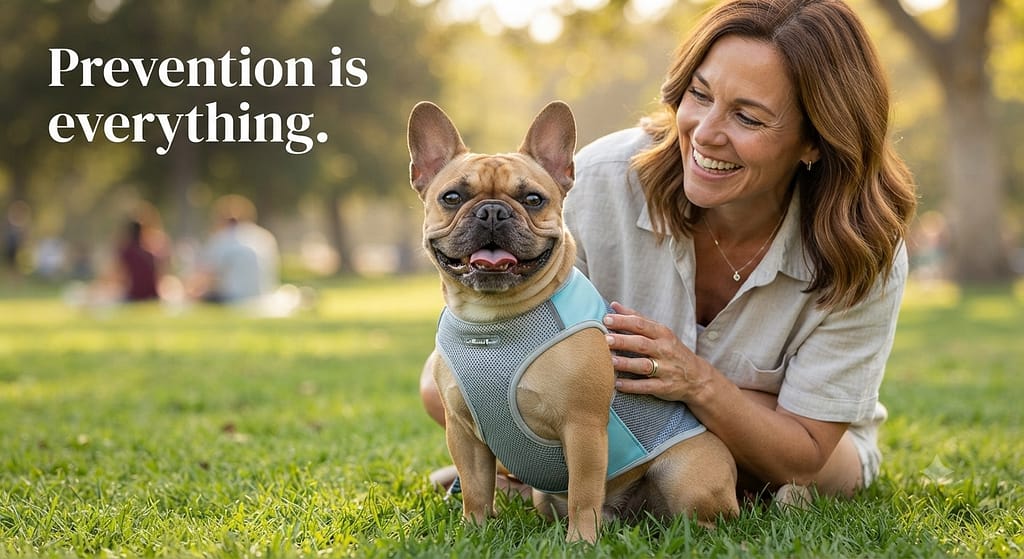
Take a look at your Frenchie right now. Are they breathing normally?
Good. Now let’s make sure they always will be…
Why French Bulldogs Are Walking Thermal Emergencies
The Anatomy of a Breathing Crisis
Let’s play a game of “biological disadvantages.” Your Frenchie has:
1. The Brachycephalic Skull: That adorable squished face means:
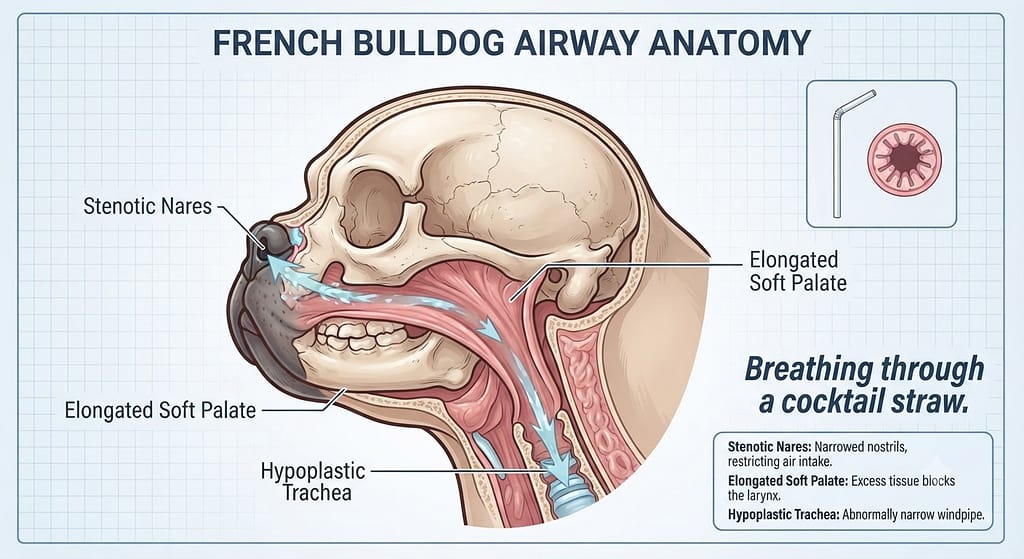
- Nostrils too narrow for adequate air intake (stenotic nares)
- The soft palate is too long for their shortened airway (elongated soft palate)
- Trachea potentially too narrow (hypoplastic trachea)
- Result: They’re breathing through a cocktail straw on a good day
2. The Thermoregulation Disaster:
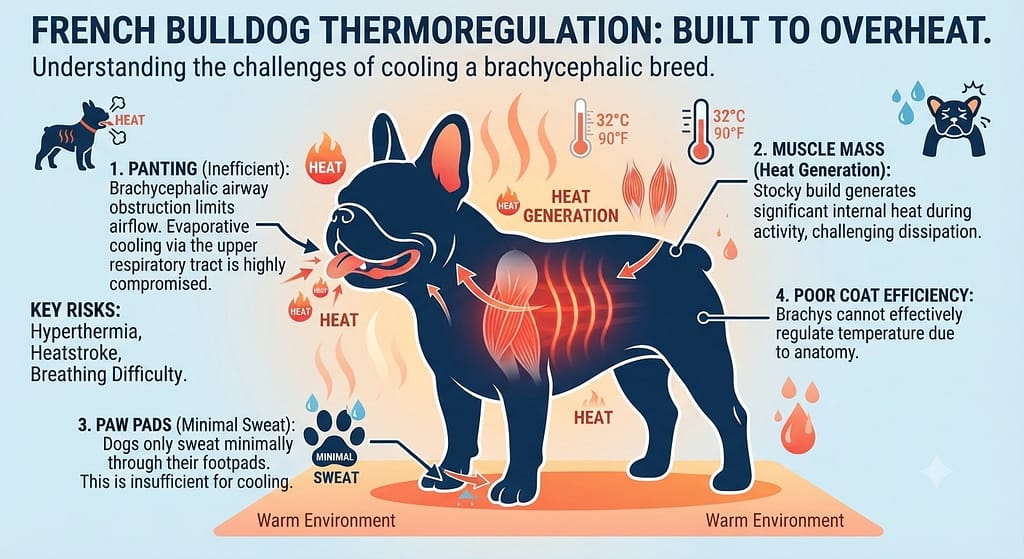
- Minimal sweat glands (only in paw pads)
- Reliance on panting, which is already inefficient for them
- Dense muscle mass generates more internal heat
- Short nasal passages that can’t cool incoming air properly
3. The Double Jeopardy:
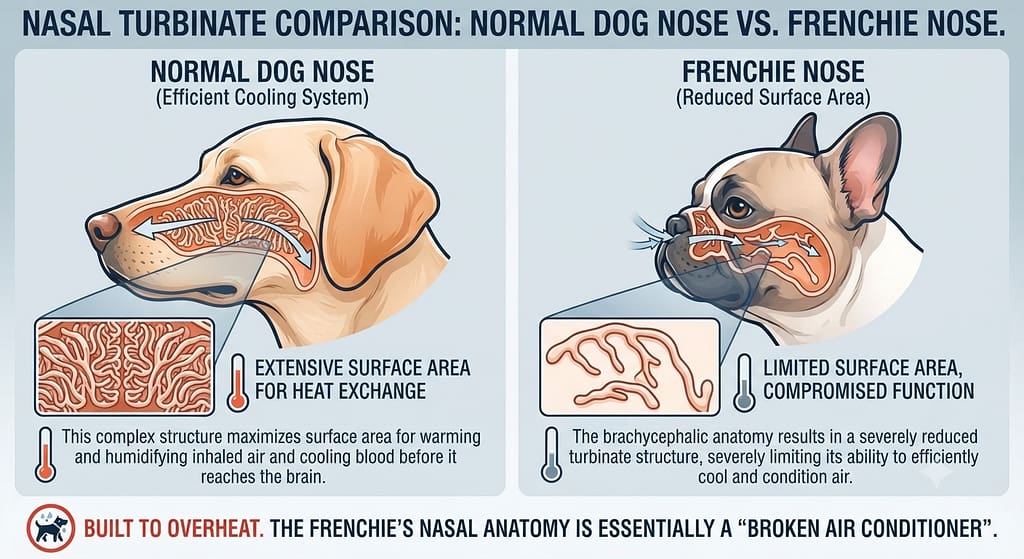
Even if they manage to move enough air, brachycephalic dogs have reduced surface area in their nasal turbinates—the structures that cool blood before it reaches the brain.
It’s like having a broken air conditioner in a car with the windows sealed shut.
The Temperature Reality Check
For most dogs: 85°F = warm day
For your Frenchie: 85°F = Danger Zone
The Math of Mortality:
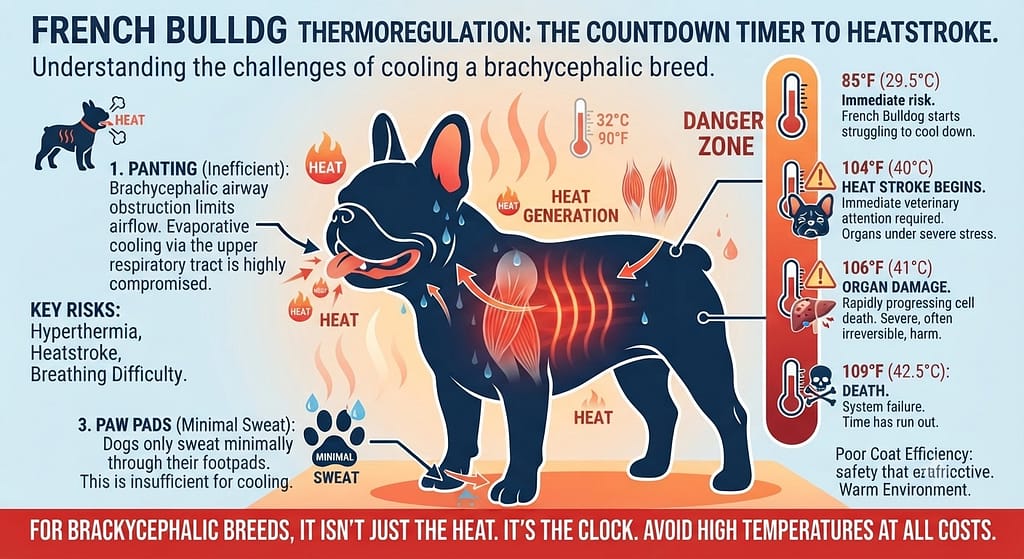
At 85°F ambient temperature:
- Your Frenchie’s core temperature rises 1°F every 5 minutes of moderate activity
- At 104°F, heat stroke begins
- At 106°F, organ damage starts
- At 109°F, death is likely
Translation: What feels “warm” to you is a countdown timer for your dog.
The 10-Second “Is My Frenchie Overheating?” Check
The Visual Triage System
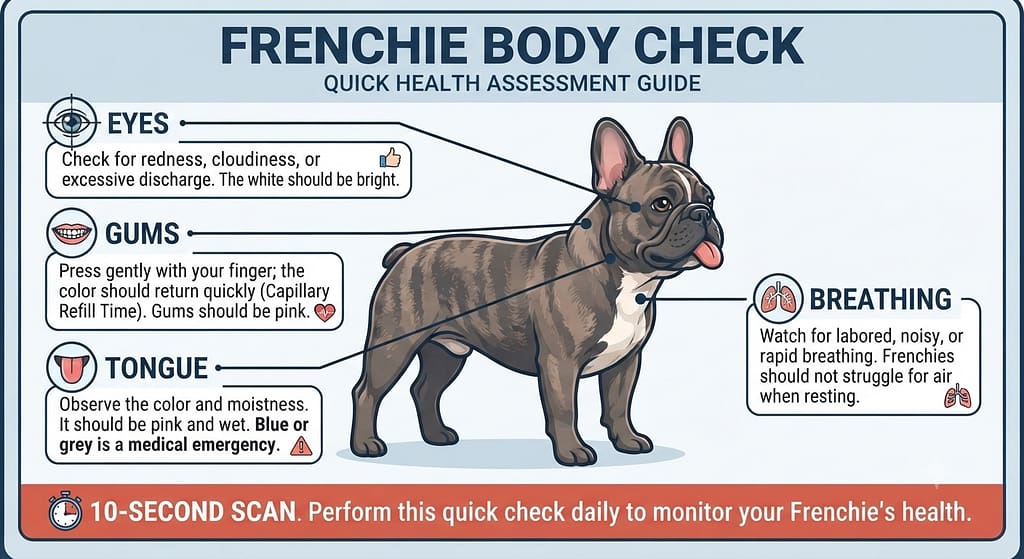
Every time you’re outside together, perform this scan:
Eyes: Glassy, unfocused, or darting anxiously? ⚠️
Gums: Bright red or purple instead of bubblegum pink? 🚨
Tongue: Wider than normal, purplish edges, excessive saliva? 🆘
Breathing: Panting with abdomen muscles engaged (not just chest)? 🚨
The “Normal Pant” vs. “Emergency Pant” Guide:
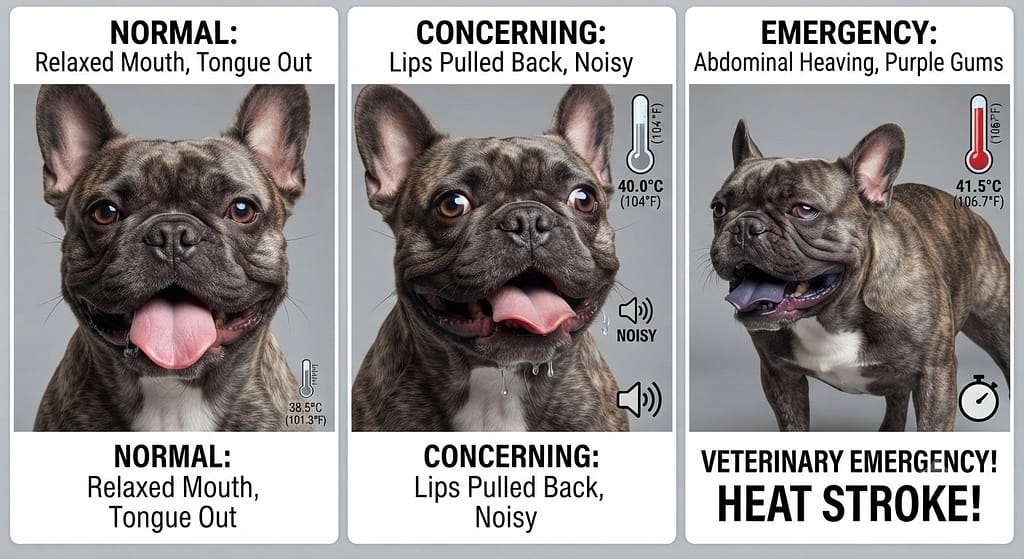
- Normal: Mouth open, tongue out, regular rhythm, stops when resting
- Concerning: Lips pulled far back, tongue cupped, noisy breathing
- Emergency: Abdominal heaving, pale or purple gums, stumbling, collapse
The Touch Test
The Gum Refill Check:
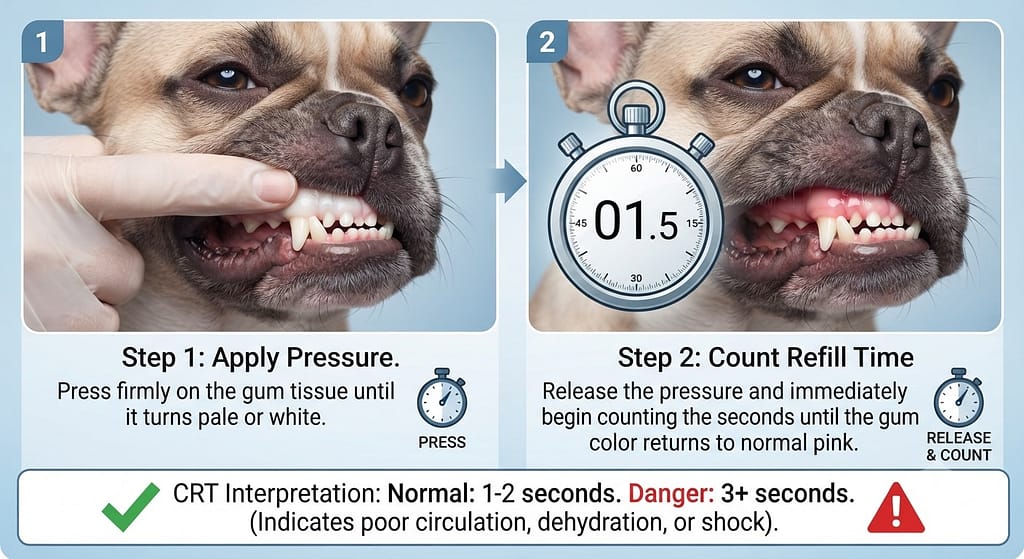
- Press gently on the gums until they turn white
- Release and count seconds until the color returns
- Normal: 1-2 seconds
- Danger: 3+ seconds (dehydration/overheating)
The Ear Temperature Gauge:
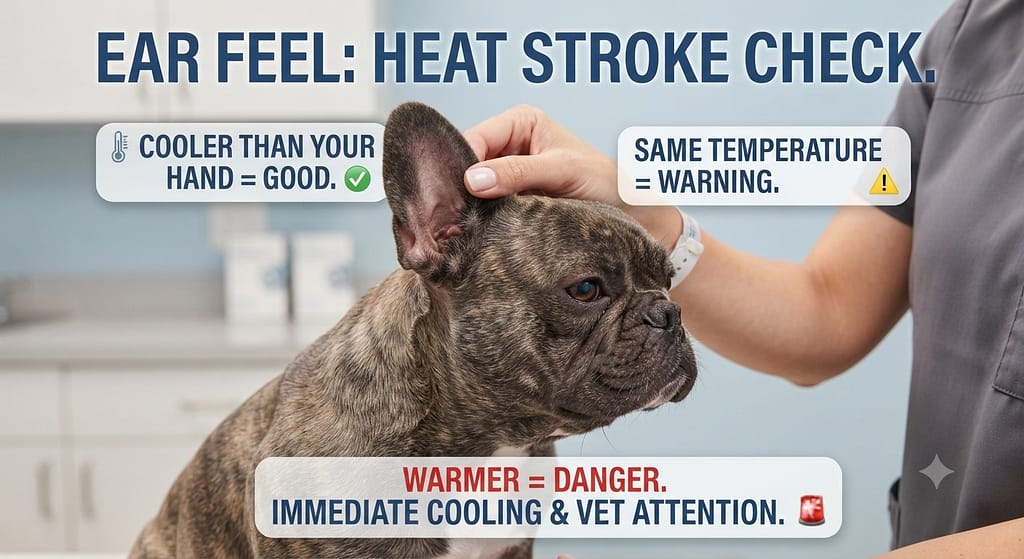
Feel the base of their ears (where hair is thinnest):
- Comfortable: Slightly cooler than your hand
- Warming: Same temperature as your hand
- Danger: Noticeably warmer than your hand
Caught something concerning?
Don’t panic—let’s move to prevention mode…
Your Complete French Bulldog Heat Prevention Toolkit

Section 1: The Walk Strategy (Where Most Emergencies Happen)
The “No Walk” Temperature Chart
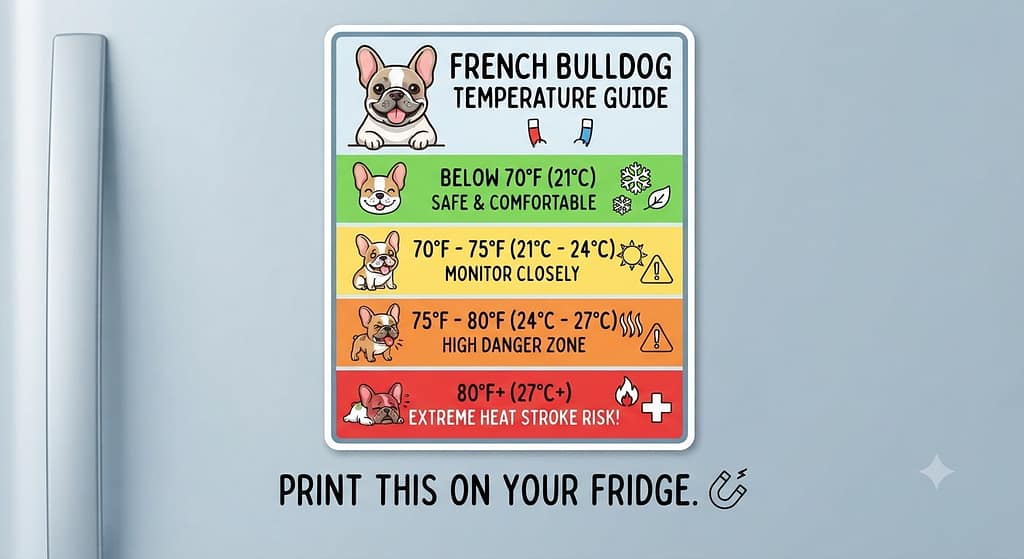
Print this and put it on your fridge:
Below 70°F: Walk freely (still monitor)
70°F-75°F: 15-minute maximum, shade only
75°F-80°F: 10-minute maximum, early morning/late evening
80°F+: NO WALKS. Indoor exercise only.
85°F+: Emergency precautions active
The Pavement Test You MUST Do:
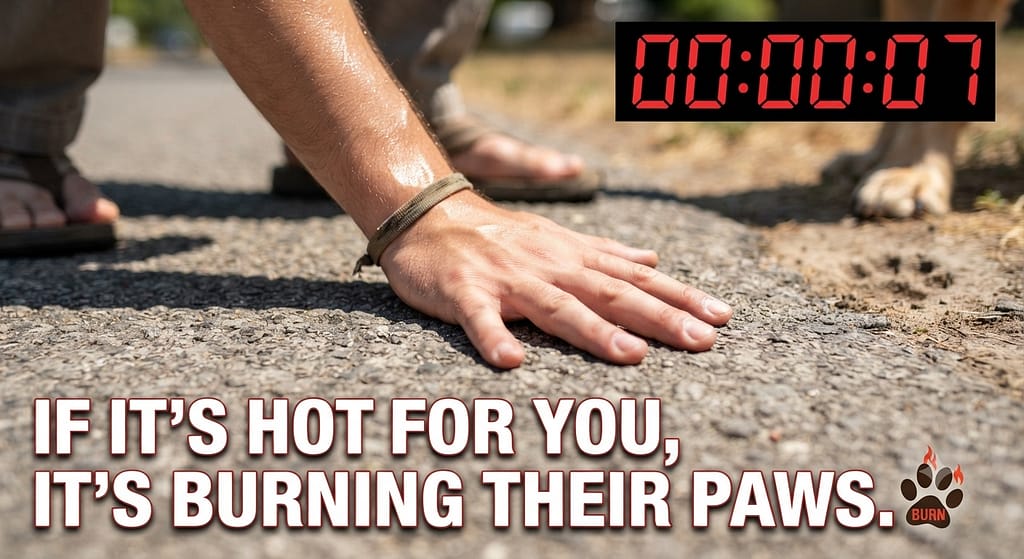
- Place the back of your hand on the pavement
- Hold for 7 seconds
- If it’s uncomfortable for you, it’s burning your Frenchie’s paws
- Remember: Asphalt can be 40-60°F hotter than the air temperature
The Safe Walk Protocol
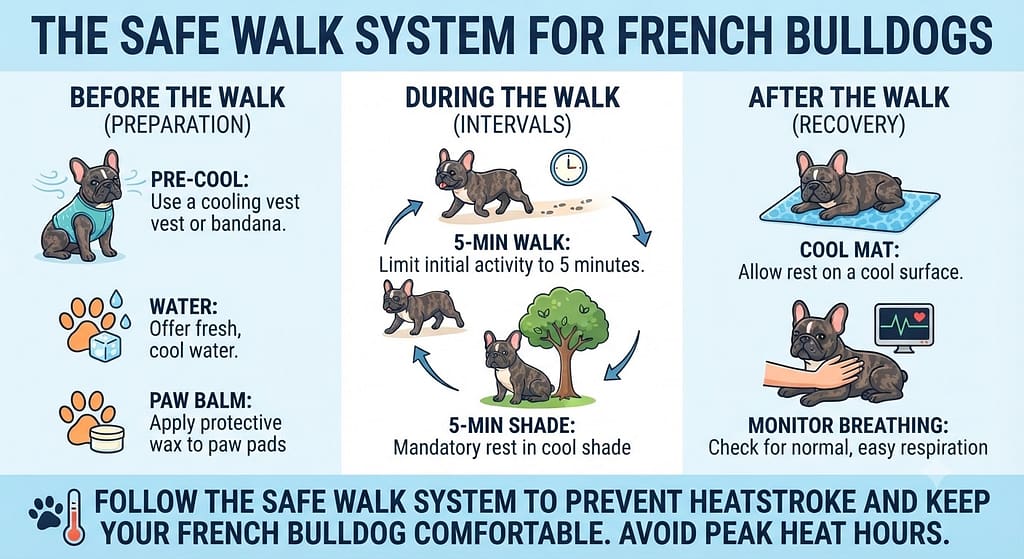
Before leaving:
- Pre-cool with a damp towel on the back/chest
- Offer cool (not cold) water
- Apply paw balm if walking on pavement
During the walk:
- 5-minute rule: Walk 5, rest in shade 5
- Carry a collapsible water bowl
- Use a cooling vest if above 75°F
- Always have an escape plan (car with AC, nearby building)
After the walk:
- Cool mat waiting at home
- Offer electrolyte-enhanced water (vet-approved)
- Monitor breathing for 30 minutes
Section 2: The Home Cooling System
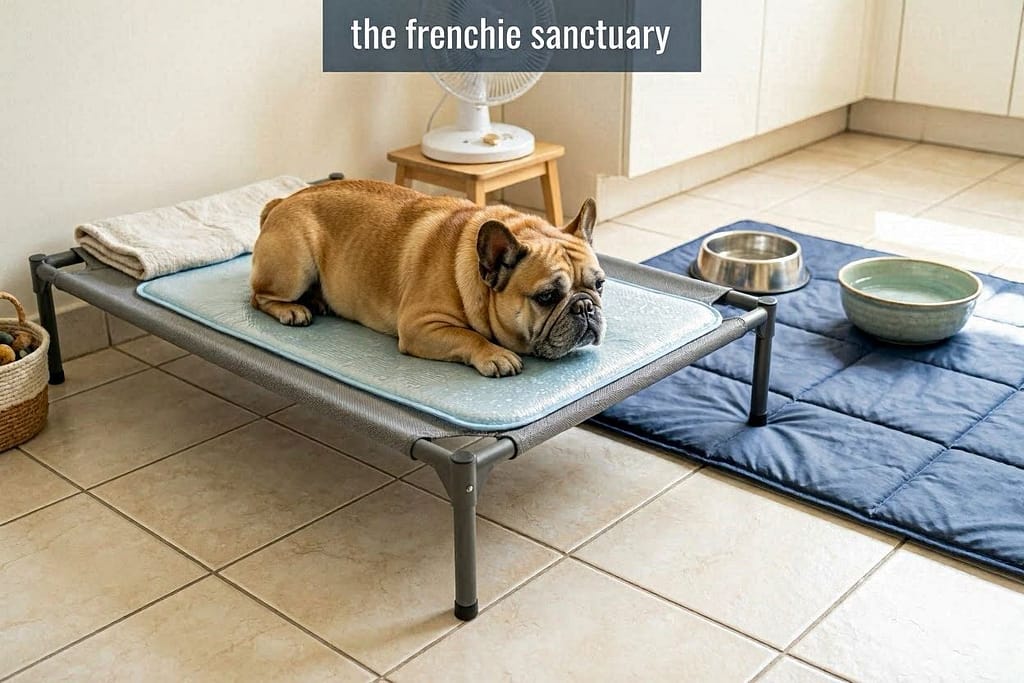
Creating the French Bulldog Sanctuary
The Temperature Zone System:
- Zone 1 (Cooling Base): Always available, multiple cool mats
- Zone 2 (Monitoring Area): Where you spend most of your time
- Zone 3 (Recovery Room): Dark, quiet, with fan/cooling options
Essential Cooling Products That Actually Work:
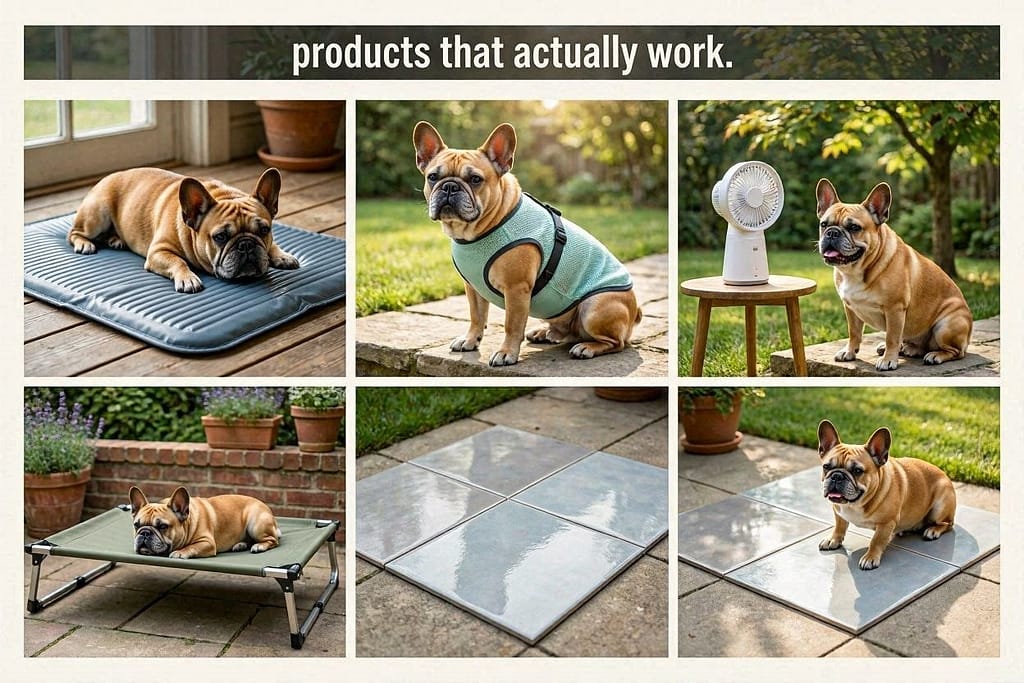
- Gel cooling mats (avoid ones they can chew)
- Cooling vest (soak in cool water, wring, apply)
- Elevated cot bed (allows air circulation underneath)
- Portable fan with misting option
- Ceramic or marble tiles in their favorite spots
The Air Flow Formula
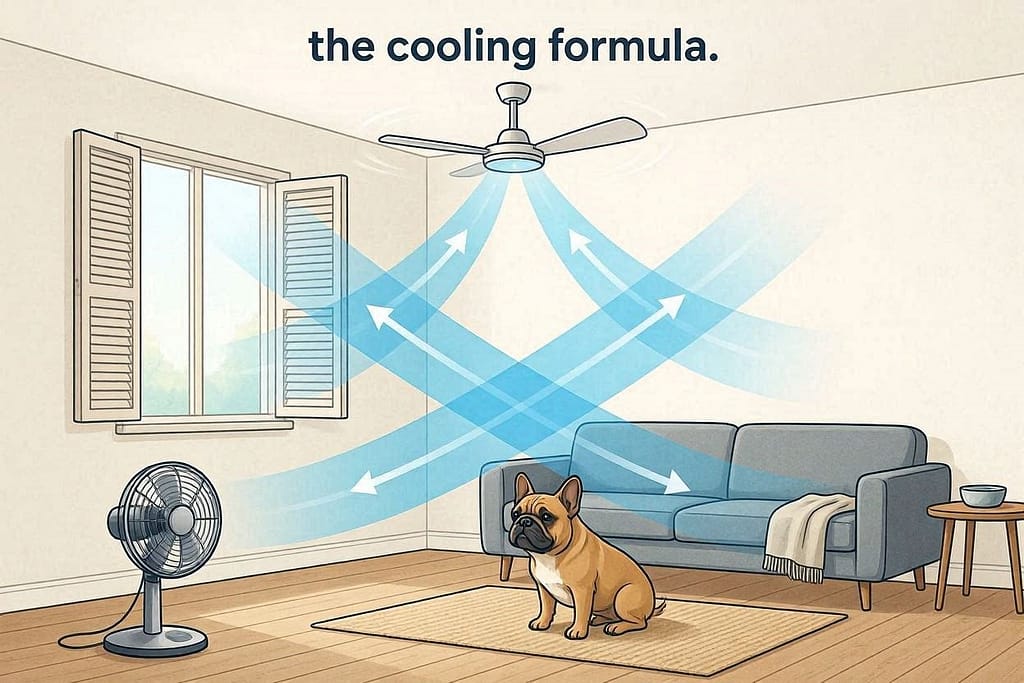
Ceiling fan + floor fan = cross-ventilation
Windows: Open at night, closed with curtains during the day
AC setting: 68°F-72°F ideal for Frenchies
Humidity monitor: Keep below 50% (high humidity = less effective panting)
Section 3: The Hydration Revolution

Beyond the Water Bowl
The Hydration Station Setup:
- Bowl 1: Fresh water (changed 3x daily)
- Bowl 2: Ice water (for post-exercise)
- Bowl 3: Electrolyte solution (vet-recommended brands only)
- Location: Multiple rooms, never just one
DIY Cooling Treats for Frenchies

Frozen Yogurt Paws:
- 1 cup plain Greek yogurt
- ½ cup mashed banana
- 1 tbsp honey
- Pour into paw-shaped molds, freeze
Chicken Broth Cubes:
- Low-sodium chicken broth
- Pour into an ice cube tray
- Add a blueberry to each cube
- Freeze, offer as treats
Pro tip: Frozen treats should be supervised to prevent choking.
Hydration handled?
Excellent. Now let’s talk about the silent killer—sleep…
The Nighttime Danger Zone: When You’re Not Watching
Why Night Isn’t Always Safe
The misconception: “It cooled down at night, we’re safe.”
The reality: Residual heat + high humidity = dangerous sleeping conditions
The Overnight Safety Protocol
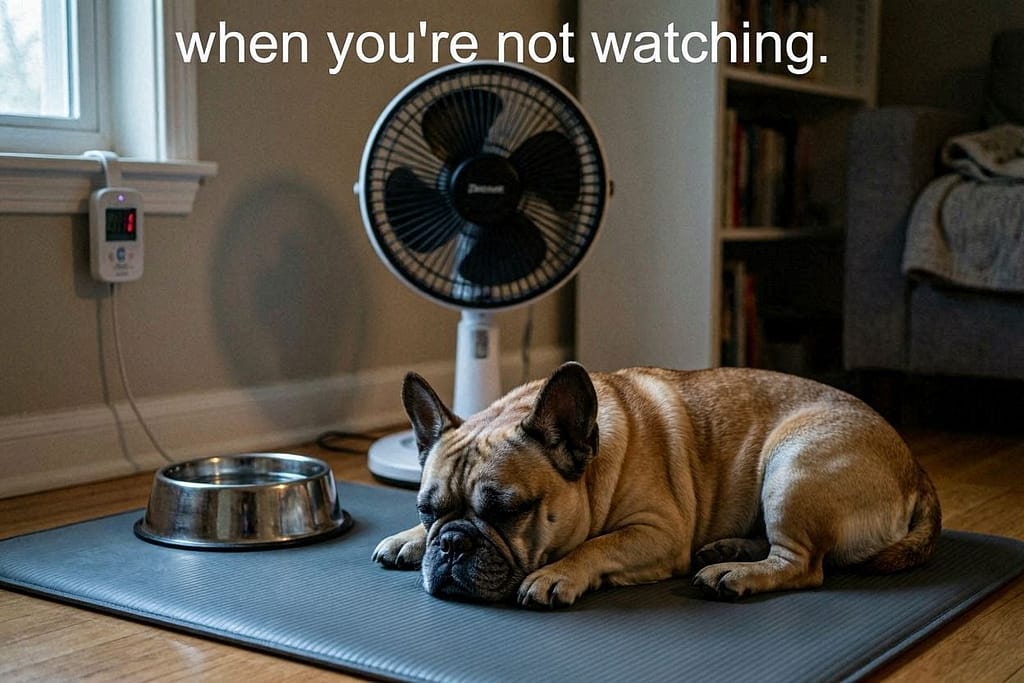
Pre-bed checklist:
- Room temperature below 74°F
- Fresh water in reach
- Cooling mat on the bed
- Fan circulating air
- Humidity below 60%
- Emergency ice packs in the freezer
The “Midnight Check” (If you wake up):
- Listen to breathing (should be quiet/regular)
- Feel their ears (should be cool)
- Offer water
- Adjust fan/AC if needed
The Car Transportation Code
The “Never-Ever” Rules
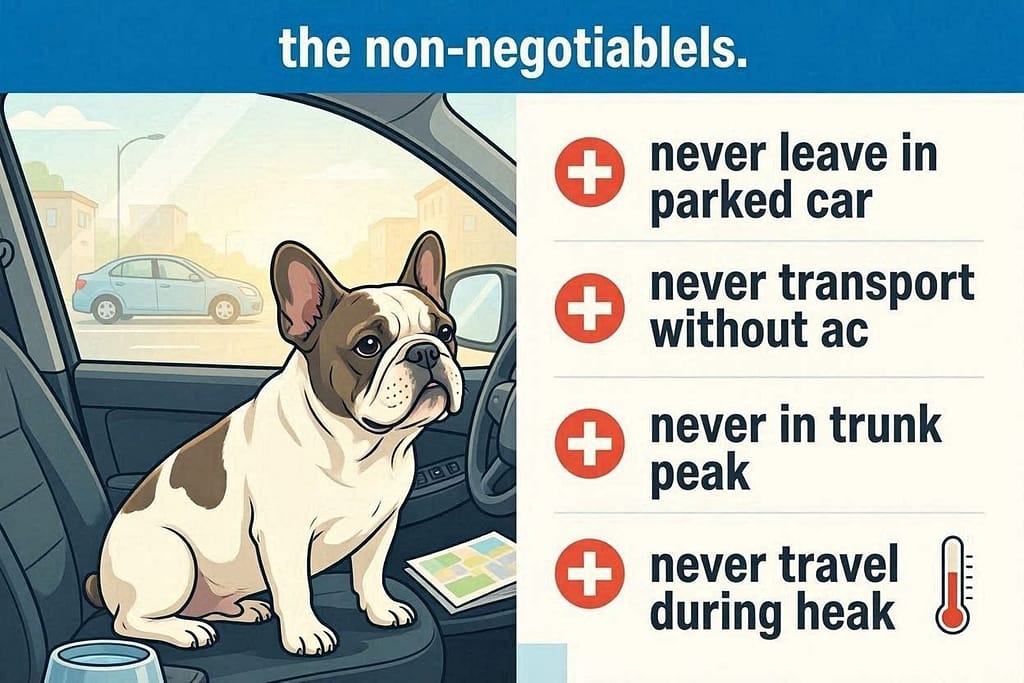
- Never leave them in a parked car (not even “for a minute”)
- Never transport without the AC running first
- Never put in trunk/hatchback area
- Never travel during peak heat hours (10 AM – 6 PM)
The Safe Travel Kit
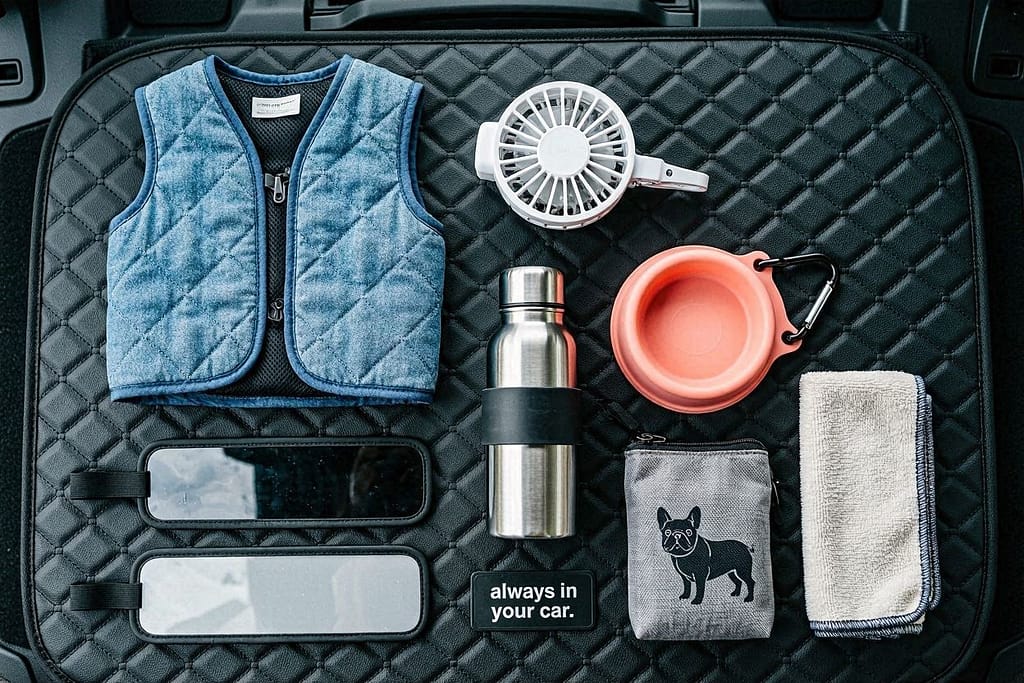
Always in your car:
- Cooling vest
- Portable battery-operated fan
- Insulated water bottle with collapsible bowl
- Reflective sun shades for windows
- Towel to wet and drape over the crate
The Pre-Travel Cooling Ritual
- Cool car for 10 minutes before entering
- Apply a cooling vest (pre-cooled)
- Offer water
- Use sun shades on their side
- Position the crate away from direct sunlight
Recognizing Heat Stroke: The Minute-by-Minute Guide
Stage 1: Early Warning (0-5 minutes)
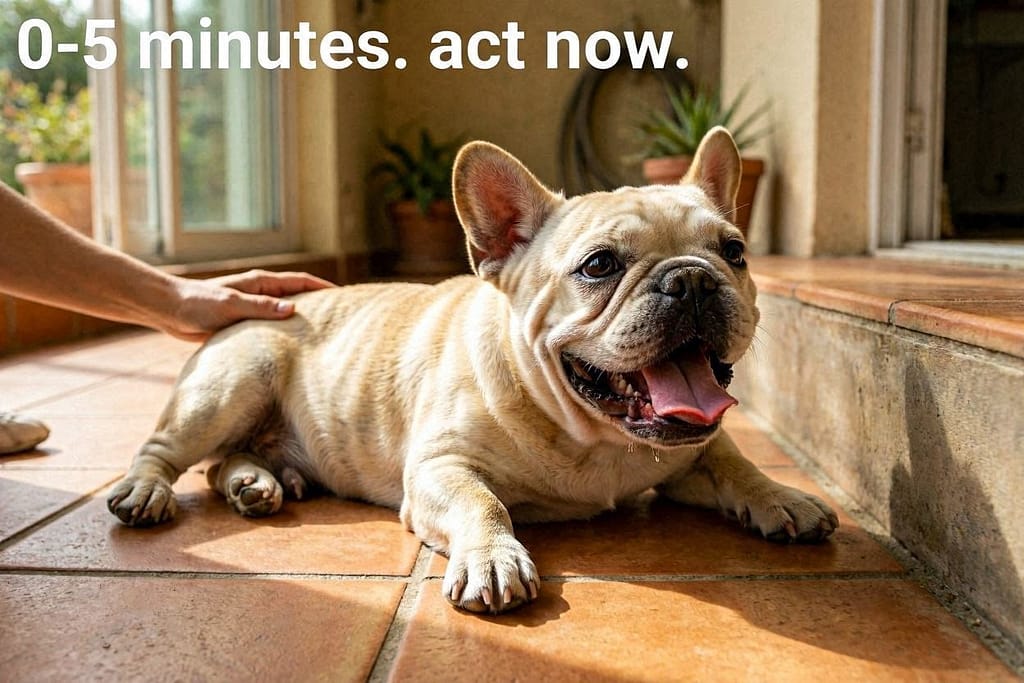
Symptoms:
- Excessive panting that doesn’t slow with rest
- Seeking cool surfaces constantly
- Restlessness or anxiety
- Slightly red gums
Action: IMMEDIATE COOLING. Get to shade, offer water, wet paws and chest.
Stage 2: Moderate Distress (5-15 minutes)
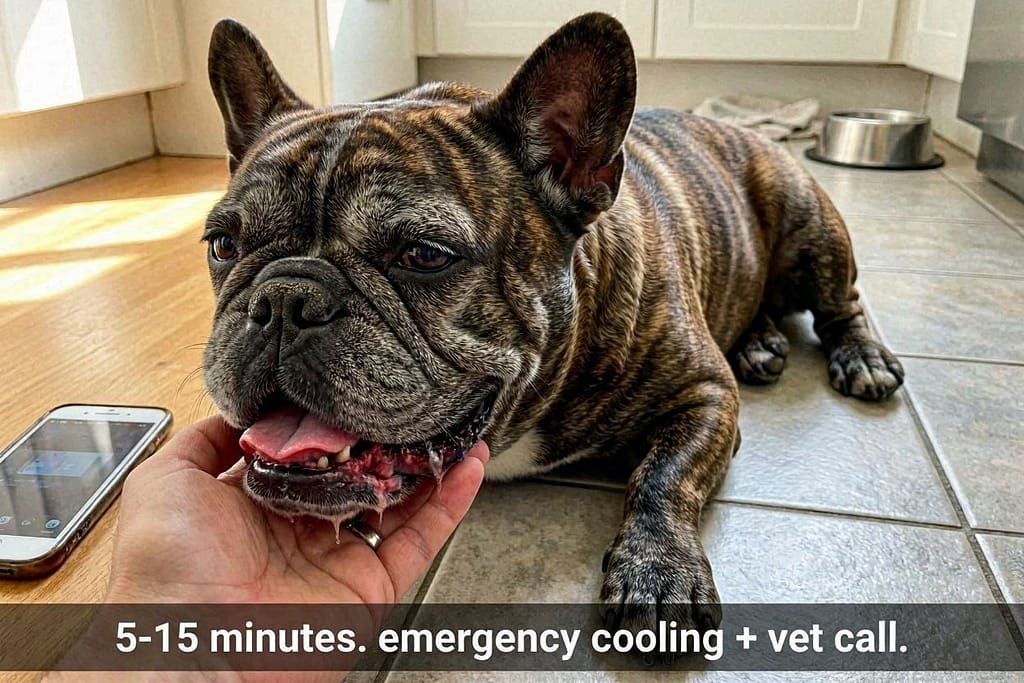
Symptoms:
- Bright red or purple gums
- Thick, sticky saliva
- Weakness or stumbling
- Vomiting or diarrhea
Action: EMERGENCY COOLING + VET CALL. Cool with room-temperature water (not ice), call vet en route.
Stage 3: Critical Emergency (15+ minutes)
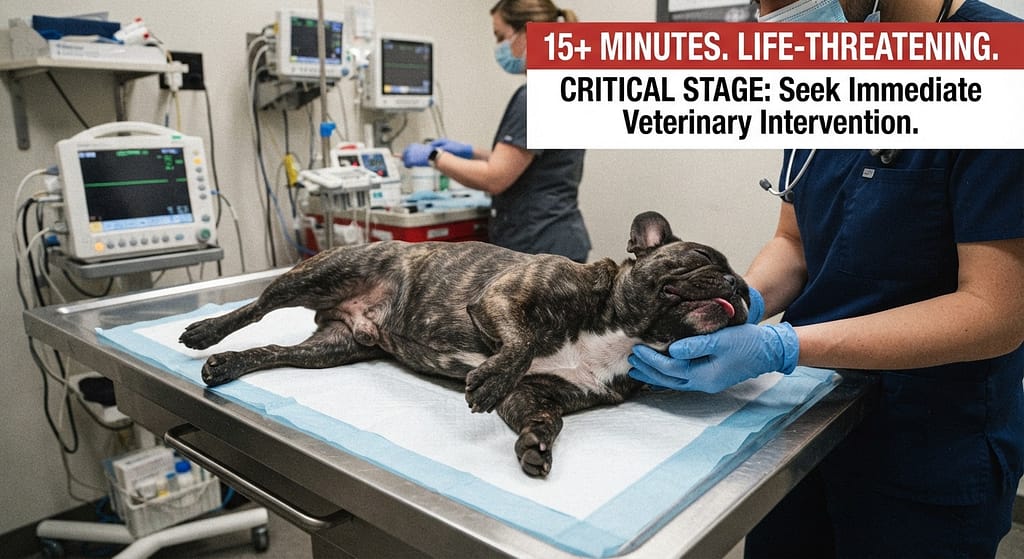
Symptoms:
- Collapse or inability to stand
- Seizures
- Unconsciousness
- Body temperature over 106°F
Action: LIFE-THREATENING. Cool while transporting to the emergency vet. Do NOT delay.
The Cooling Controversy: What Actually Works
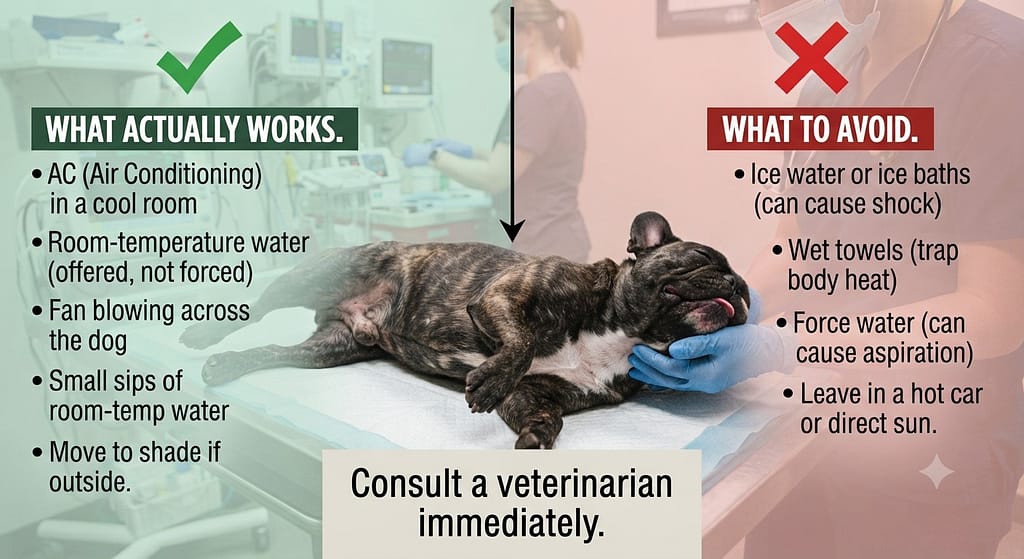
Do:
- Move to air conditioning immediately
- Apply room-temperature water to paws, chest, and groin
- Use a fan to promote evaporation
- Offer small amounts of cool water to drink
Don’t:
- Use ice or ice water (causes blood vessel constriction)
- Cover with wet towels (traps heat)
- Force water if unconscious
- Assume cooling = cured (internal damage may continue)
Your French Bulldog Summer Survival Kit
The “Go Bag” for Hot Days
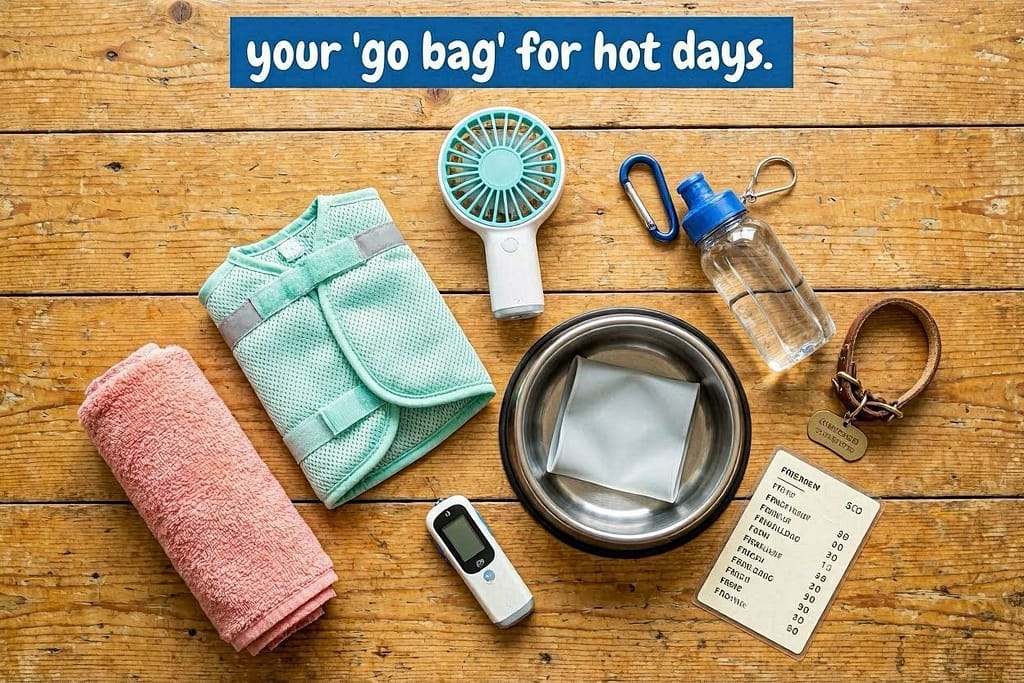
[Visual checklist for readers to print]
Cooling Items:
- Cooling vest (dampened)
- Portable water bowl
- Insulated water bottle
- Battery-operated fan
- Cooling towel
- Paw protection wax
Monitoring Tools:
- Digital thermometer (pet-safe)
- Watch with timer (for walk limits)
- Humidity monitor (portable)
- Camera (to check breathing patterns)
Emergency Supplies:
- Vet’s emergency number (saved in phone)
- Nearest emergency clinic address
- Pet first aid guide
- Electrolyte packets (vet-approved)
The Home Cooling Station Setup
Location: ______ (choose coolest room)
Equipment:
- Primary cooling mat: ________
- Backup cooling option: ________
- Water station locations: ________
- Emergency ice pack location: ________
Family Instructions Posted:
- If Frenchie is panting heavily → move to the cooling station
- If gums are red → begin cooling protocol
- If stumbling or collapsing → call vet immediately
The Breed-Specific Considerations
French Bulldog Subtypes at Higher Risk

Extra care needed for:
- Blue/Grey Frenchies: Prone to skin issues + heat sensitivity
- Older Frenchies (7+): Reduced cardiovascular efficiency
- Overweight Frenchies: Extra insulation + respiratory strain
- Puppies: Underdeveloped thermoregulation
- Frenchies with BOAS: Already compromised breathing
The Surgical Considerations
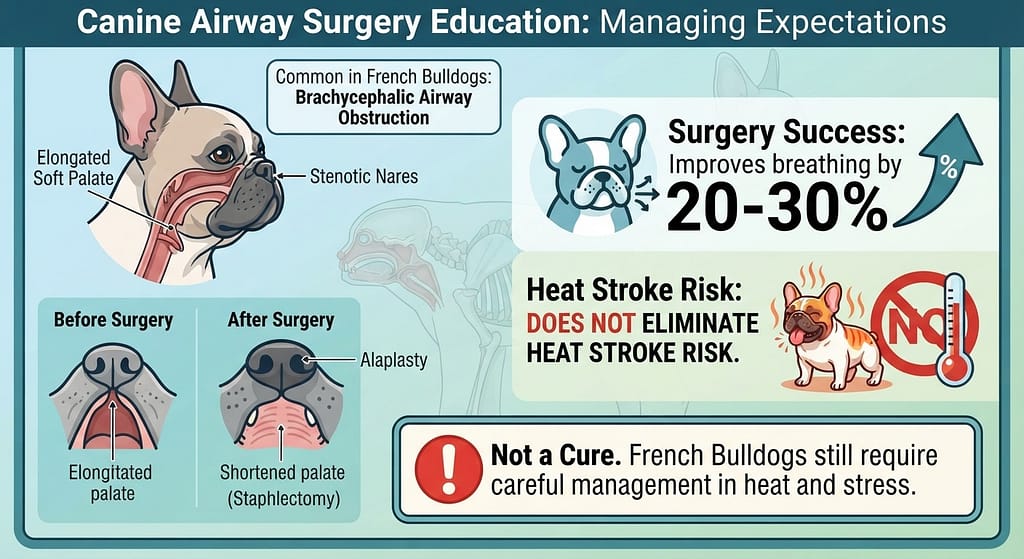
Palate Resection/Nostril Widening:
- Not a cure: Still brachycephalic, still heat-sensitive
- May improve breathing efficiency by 20-30%
- Does NOT eliminate heat stroke risk
- Post-surgery: Still require all precautions
Your 7-Day Heat Prevention Practice
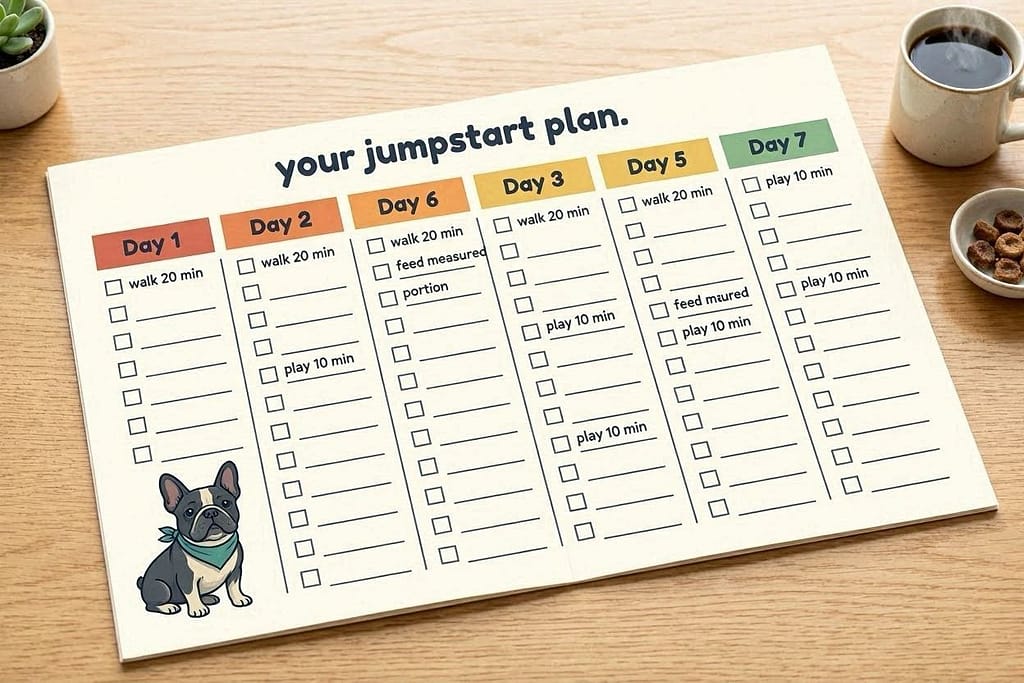
Day 1: Assessment & Planning
- Take “normal” gum/tongue photos
- Identify the home’s coolest zones
- Create walk route with shade options
- Program emergency numbers in the phone
Day 2: Equipment Test
- Test cooling vest effectiveness
- Practice with a thermometer
- Try different water bowl locations
- Establish a “cool down” ritual
Day 3: Family Training
- Teach household members warning signs
- Practice the cooling protocol together
- Assign monitoring responsibilities
- Create a communication plan
Day 4: Walk Rehearsal
- Early morning practice walk
- Time 5-minute intervals
- Test pavement with the hand method
- Practice emergency turnaround
Day 5: Car Safety Drill
- Practice pre-cooling routine
- Test travel kit items
- Time to emergency vet
- Identify shady parking spots
Day 6: Night Check Establishment
- Set up an overnight monitoring system
- Establish a midnight check routine
- Test different sleeping arrangements
- Record overnight temperatures
Day 7: Full System Review
- Run through all protocols
- Update emergency contacts
- Restock cooling supplies
- Celebrate preparedness!
The Cost of Prevention vs. Treatment
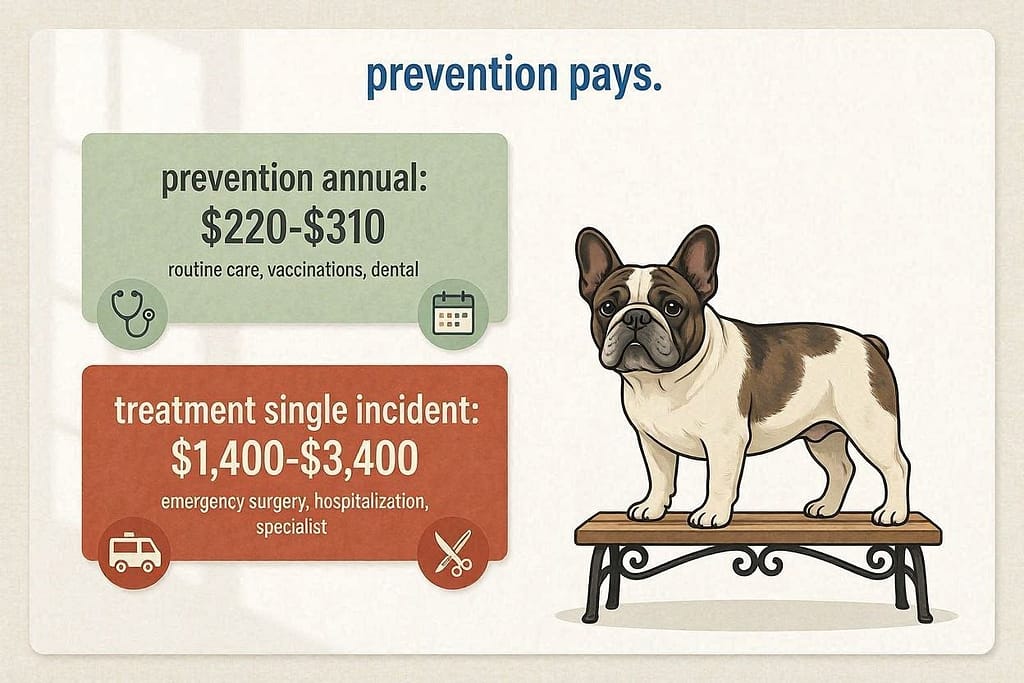
Prevention Investment (Annual):
- Cooling vest: $40-$60
- Cooling mats: $30-$50
- Additional AC costs: $100-$200
- Specialized bowls/tools: $50
- Total: $220-$310/year
Treatment Costs (Single Incident):
- Emergency vet visit: $200-$500
- Hospitalization (overnight): $800-$2,000
- IV fluids/medications: $300-$600
- Follow-up care: $100-$300
- Total: $1,400-$3,400 per incident
The Hidden Costs:
- Emotional trauma (yours and your dog’s)
- Potential long-term organ damage
- Increased future health risks
- Possible reduced lifespan
Success Stories: Prevention in Action
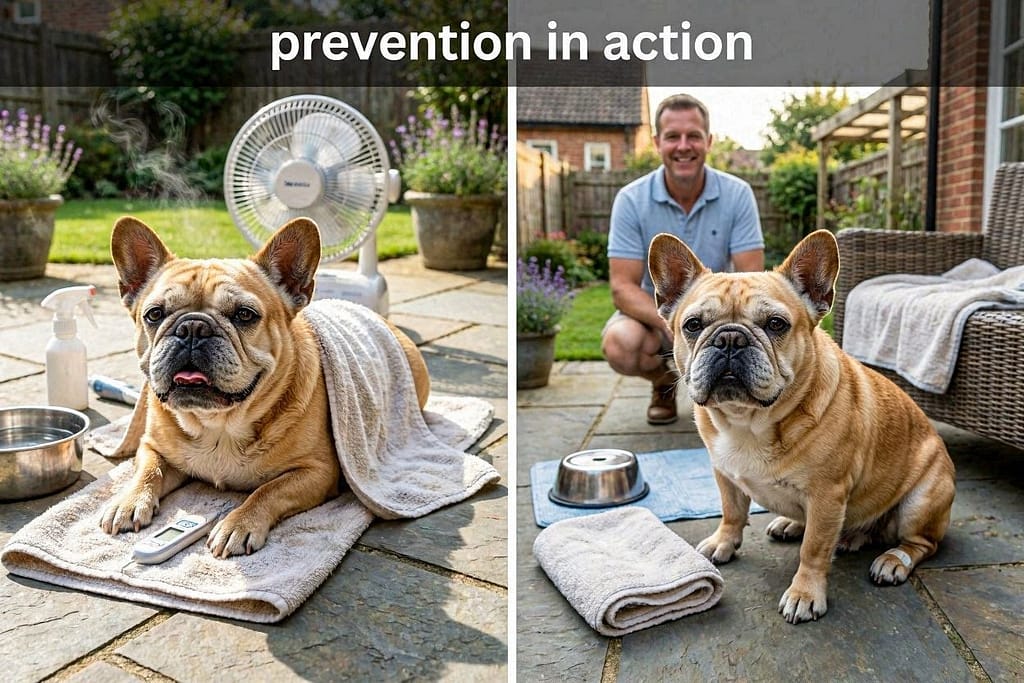
The Case of Buster’s Close Call
Situation: 82°F day, 10-minute walk to mailbox
Warning caught: Purple-tinged tongue at minute 8
Action taken: Immediate turnaround, cooling protocol initiated
Outcome: Normal breathing within 15 minutes, vet confirmation of avoided crisis
Owner’s insight: “I used to think ‘just to the mailbox’ was safe. Now I know no distance is safe in heat.”
Luna’s Summer Transformation
Before: Multiple vet visits for overheating, constant worry
After: Full prevention system implemented
Results: 2 summers without incident, happier, more active dog
Key change: “We stopped thinking about temperature and started thinking about systems.”
When Prevention Fails: Your Emergency Action Plan
The Step-by-Step Crisis Response
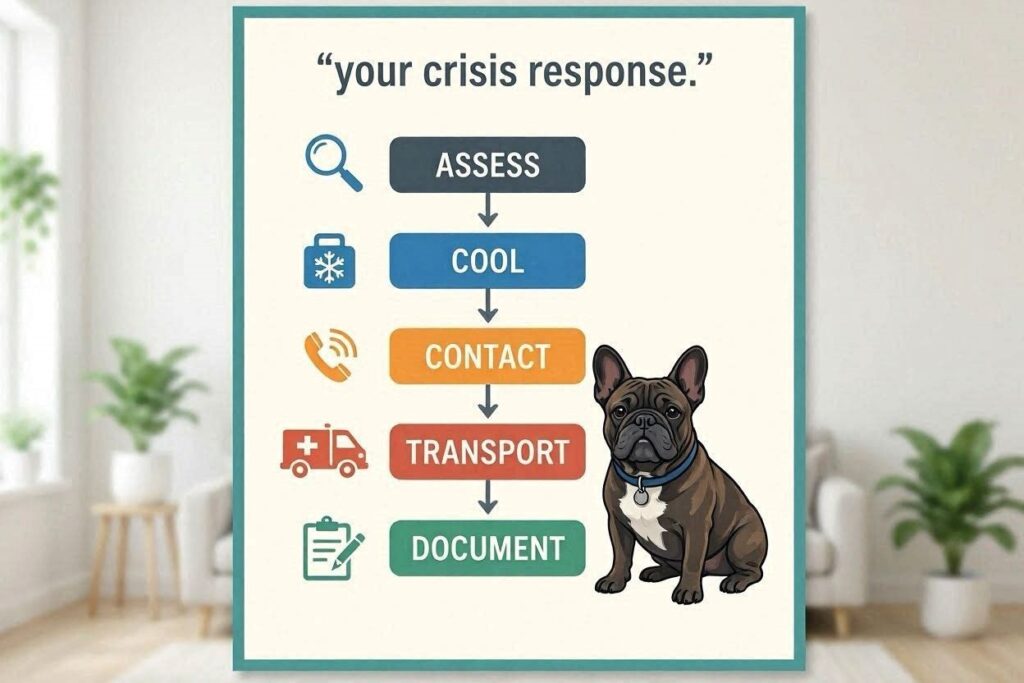
- Assess: Check consciousness, breathing, and gum color
- Cool: Move to AC, apply room-temp water to groin/armpits
- Contact: Call the vet/emergency clinic while cooling
- Transport: Continue cooling in the car on the way to the vet
- Document: Note times, symptoms, actions taken
What to Tell Your Vet:
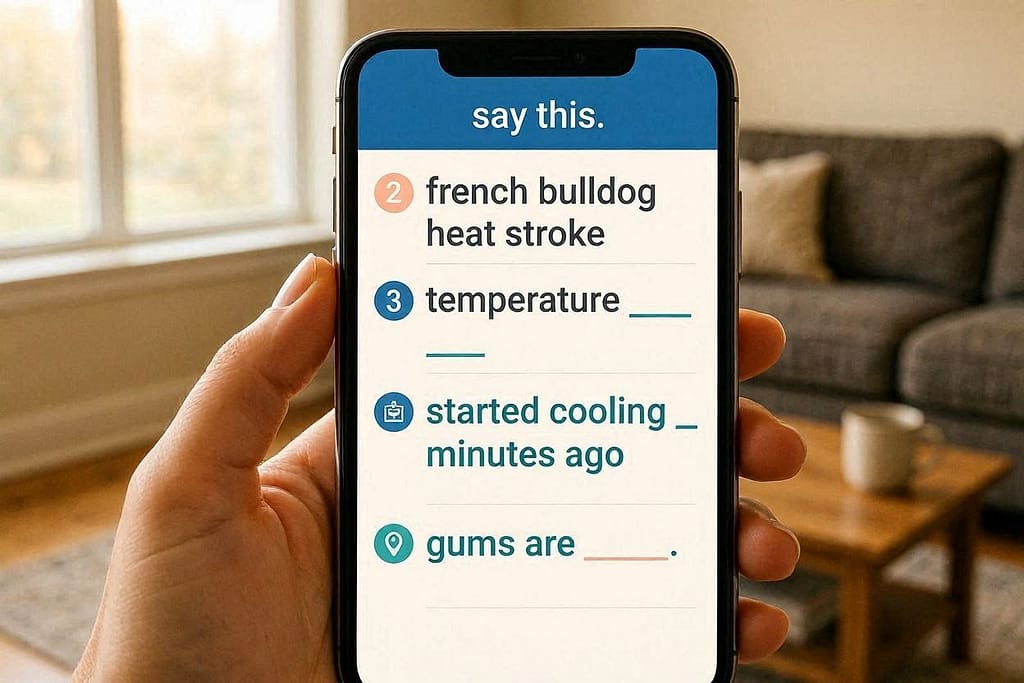
- “My French Bulldog is showing heat stroke symptoms”
- “Their temperature is ______” (if you took it)
- “We started cooling ______ minutes ago”
- “Their gums are ______ color”
- “They are/is ______” (conscious, vomiting, etc.)
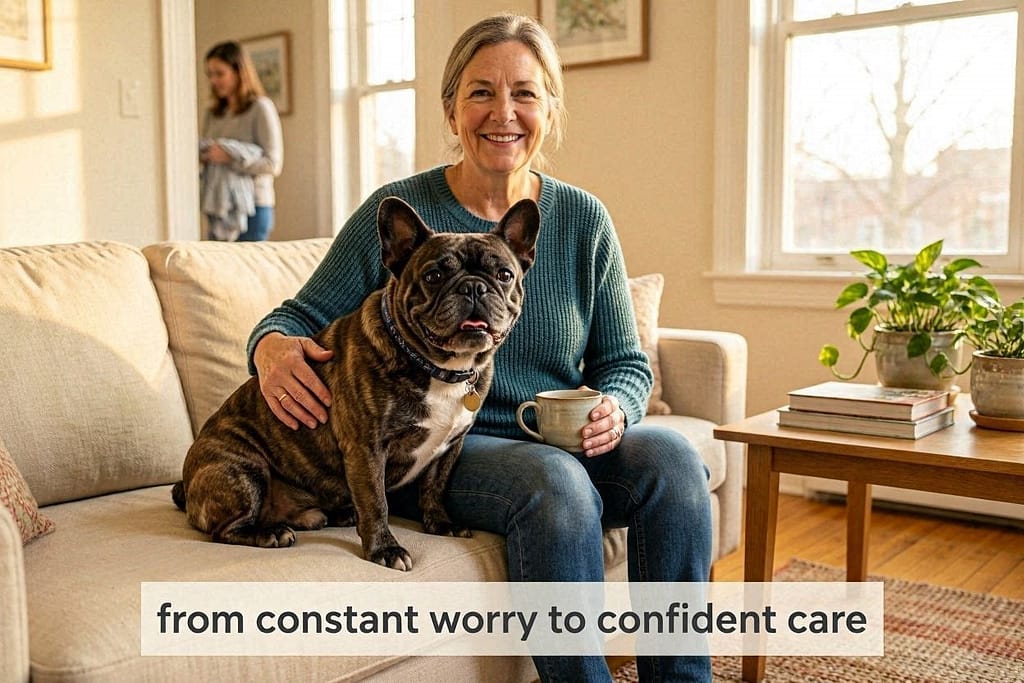
From Constant Worry to Confident Care
The temperature might still rise. The sun might still shine.
Your Frenchie might still give you those “but I want to go outside!” eyes.
But now?
Now you have more than worry. You have systems.
You have protocols. You have knowledge. You have transformed from a nervous owner watching the thermometer to a confident caregiver with a prevention plan for every scenario.
Heat stroke prevention isn’t about wrapping your Frenchie in bubble wrap. It’s about:
- Understanding their unique physiology
- Respecting their biological limitations
- Creating environments where they can thrive
- Watching with educated eyes
- Acting with calm precision
That cooling vest isn’t just fabric. It’s a life preserver. That temperature chart on your fridge isn’t just paper.
It’s a boundary map. That 5-minute walk timer isn’t just an alarm. It’s a safety net.
You don’t need to live in fear of summer. You need to prepare for it. You don’t need to eliminate all risk. You need to manage it intelligently.
You don’t need to keep your dog in a climate-controlled bubble. You need to create safe adventures within their capabilities.
So this week, implement one system. Maybe it’s the walk protocol. Maybe it’s the home cooling zone.
Maybe it’s just taking those “normal” gum photos so you have a baseline.
That action— that deliberate, informed step toward prevention—isn’t just about avoiding emergencies.
It’s about gifting your Frenchie more comfortable days, more joyful moments, more years of bat-eared bliss.
It’s about replacing “what if” with “we’re prepared.”
The heat will come. The sun will shine. But your Frenchie? They’ll be breathing easy, thanks to you.
🐾 — Apartment Dog Guide (ADG)
Living large in small spaces, one paw at a time. That’s the apartment dog life—see you in the next guide!.


