
You lean in for a kiss from your small furry friend.
That familiar wave of doggy breath hits you—the one you’ve learned to tolerate, maybe even affectionately call “puppy breath,” even though your puppy hasn’t been a puppy for years.
You notice the yellowish tint on their teeth but think, “That’s normal for dogs, right?”
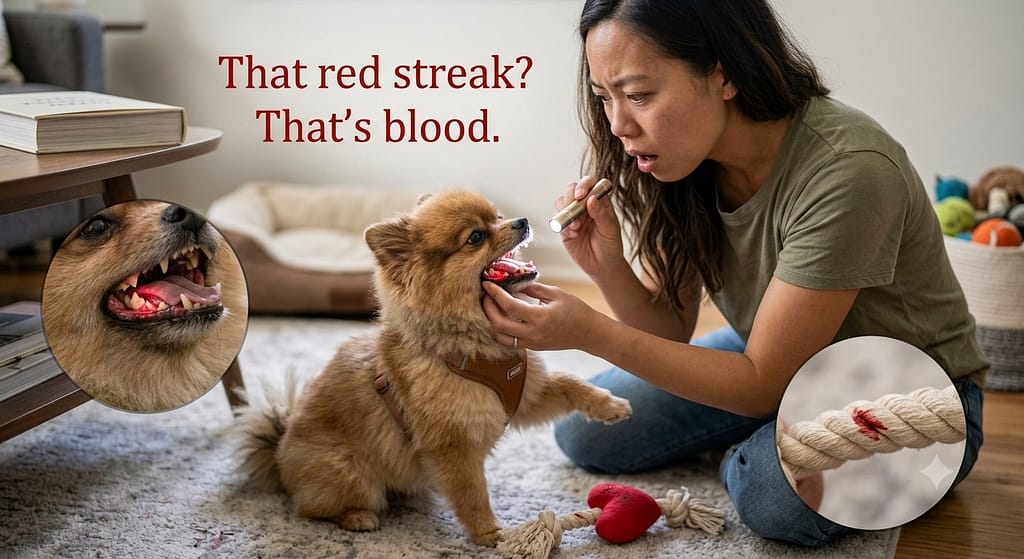
They chew their favorite toy, and you see a tiny red streak on it. “Probably just a little gum irritation,” you tell yourself.
Here’s the uncomfortable truth that will make you look at your dog’s mouth differently:
By age three, 80% of small-breed dogs have developed periodontal disease.
If you work from home, you have more time for dental routines — see our work from home with a dog guide
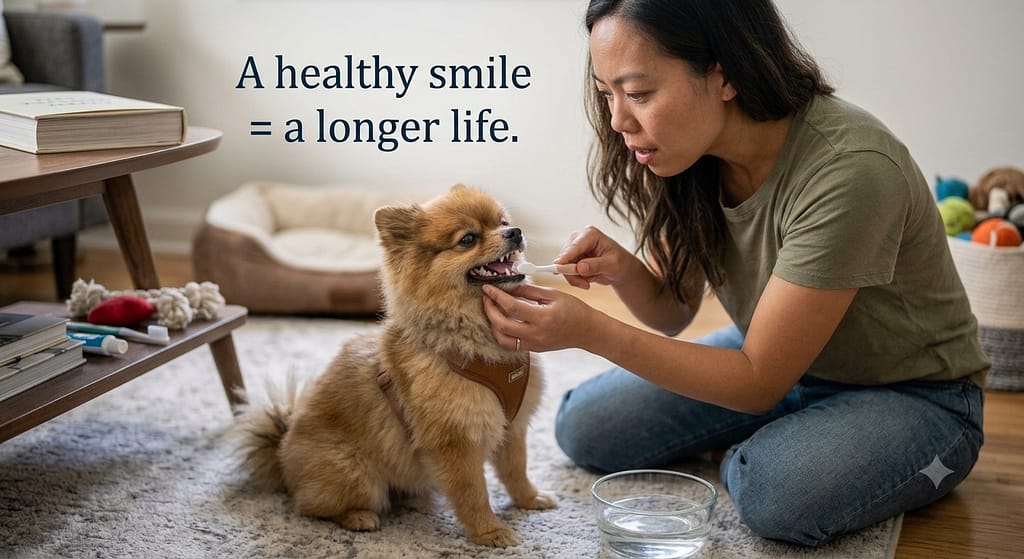
That “normal” doggy breath? It’s actually bacterial waste.
Those slightly yellow teeth?
They’re actively decaying. And that toy with the red streak?
That’s blood from inflamed gums.
But here’s what’s even more alarming:
Dental disease isn’t just about bad breath or ugly teeth.
It’s a silent, systemic infection that’s pumping bacteria directly into your dog’s bloodstream, damaging their heart, kidneys, and liver every single day.
Take a closer look at your dog’s smile—because we’re about to transform it from a hidden health hazard to a clean, healthy foundation for a longer life…
Why Small Dogs Are Dental Disaster Zones
The Anatomy of a Dental Crisis
Small dogs aren’t just tiny versions of big dogs. Their mouths are uniquely problematic:
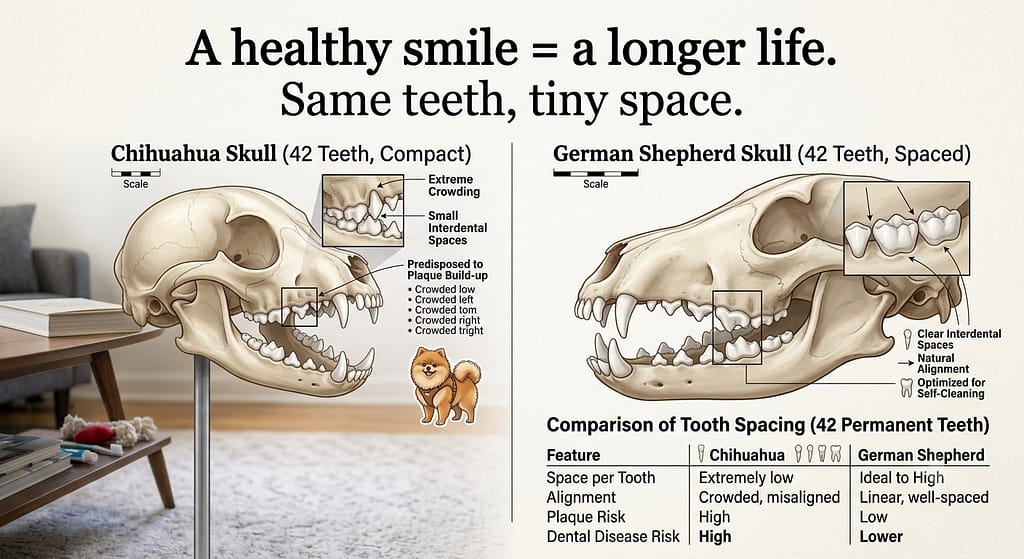
The Crowding Catastrophe: A Chihuahua has the same number of teeth (42) as a German Shepherd. Imagine fitting 42 teeth into a space the size of a walnut versus a lemon.
Choosing the right breed for your apartment starts with our guide: the best small dog breeds for apartments
The result?
Teeth pressed together like subway riders at rush hour, creating perfect plaque pockets.
The Root of the Problem: Small dog teeth have disproportionately long roots relative to crown size.
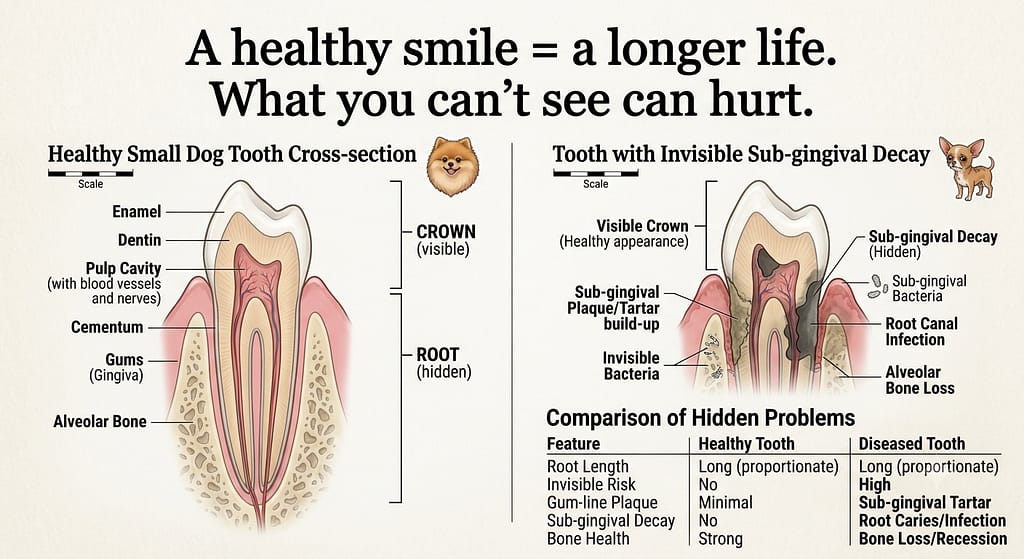
A tooth that looks fine above the gumline can have advanced disease destroying the root below—invisible until it’s too late.
The Soft Food Syndrome: Many small dogs eat kibble small enough to swallow without chewing.
No natural scraping action means plaque builds up faster than a teenager’s dirty dishes.
The Financial Reality Check
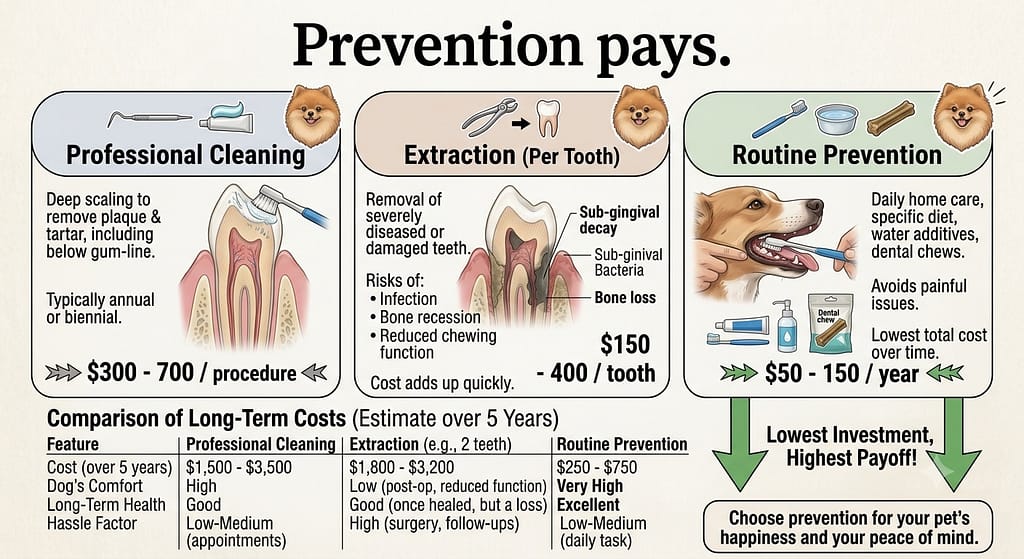
Let’s talk numbers because nothing motivates like money:
- Professional dental cleaning: $300-$700 (anesthesia required)
- Tooth extraction: $150-$400 per tooth
- Full mouth extractions: $2,000-$5,000+
- Preventive care annual cost: $50-$150
For French Bulldogs and other flat-faced breeds, proper walking gear is essential — see our French Bulldog neck safety guide.
The painful math: One preventable dental cleaning could cost more than a year of premium dental care products.
Those “too expensive” dental chews?
They’re literally thousands of dollars cheaper than extractions.
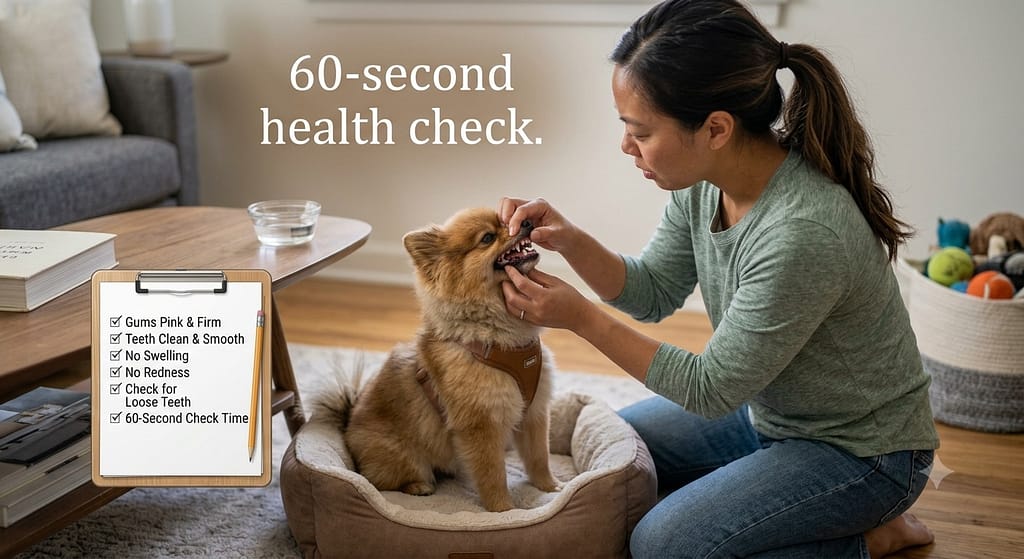
Your Small Dog’s Dental Assessment: The 60-Second Checkup
The “Should You Panic?” Home Examination
Step 1: The Breath Test
- Normal: Mild, not unpleasant
- Concerning: Strong, foul, “rotten” smell
- Emergency: Sweet/fruity (could indicate diabetes) or fecal smell (possible intestinal blockage)
Step 2: The Visual Inspection
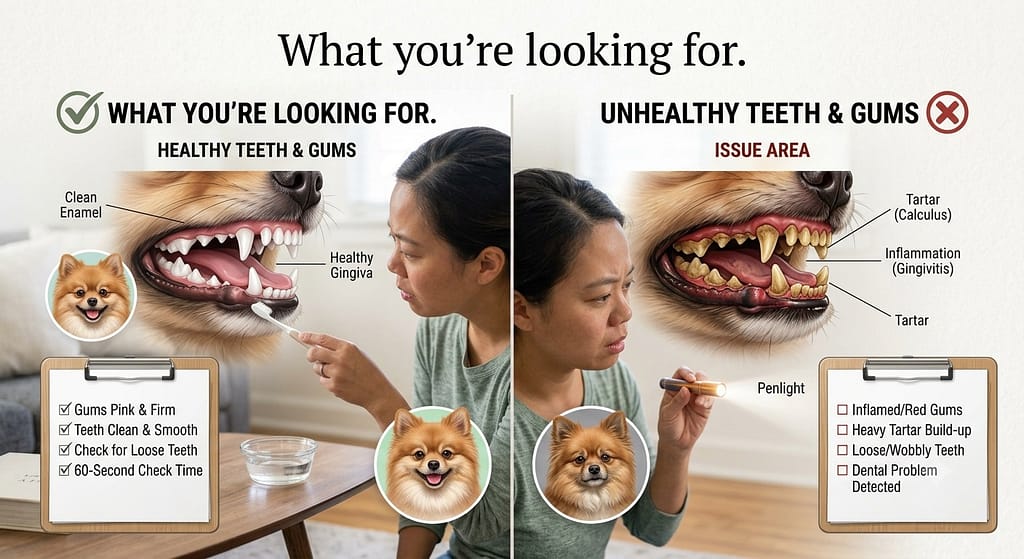
Lift those lips! Look for:
- Gums: Should be pink, not red, white, or blue
- Teeth: White, not yellow/brown/green
- Tartar: Hard brown buildup at the gumline
- Bumps/swellings: Anywhere on the face or under the eyes
Step 3: The Behavioral Clues
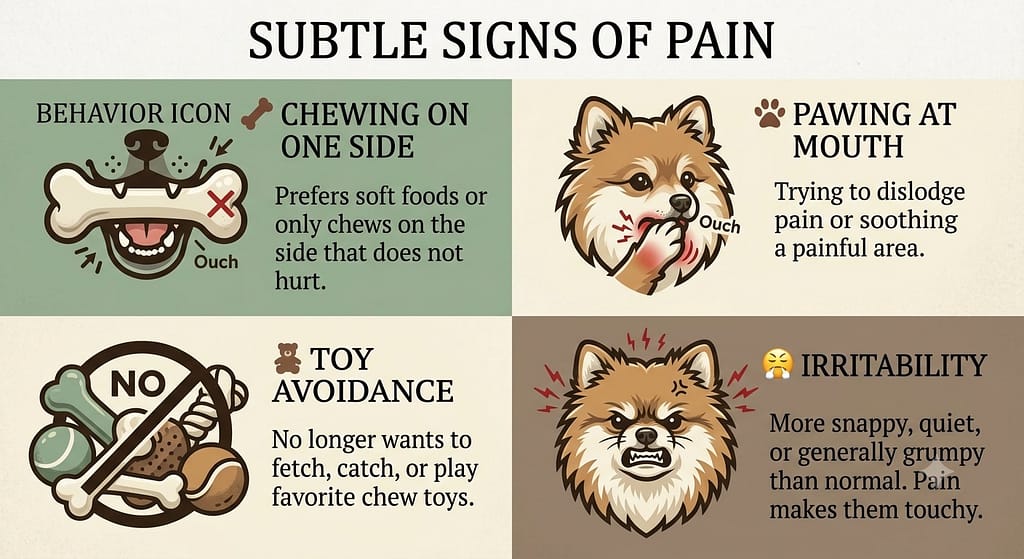
- Eating changes: Chewing on one side, dropping food
- Pawing at mouth: More than occasional
- Toy avoidance: Especially hard toys
- Personality shifts: More irritable, less playful
The “Dental Danger Scale” Interactive Quiz
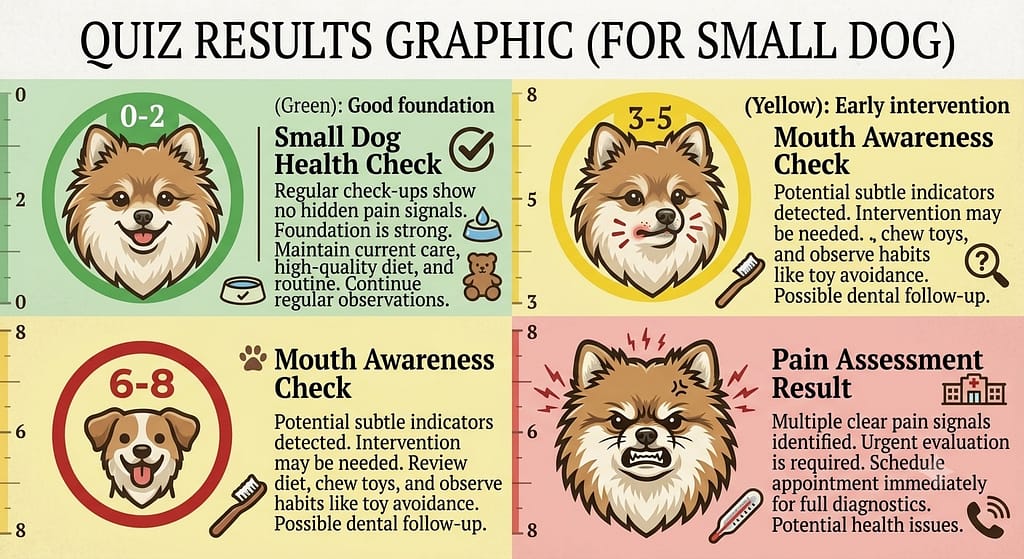
[Imagine readers checking boxes as they read]
Score 1 point for each:
- Breathing makes you turn your head
- Visible yellow/brown on teeth
- Gums bleed during chewing/brushing
- Reluctant to have the mouth touched
- Prefers soft food over kibble
- Has never had professional cleaning
- Over 3 years old
- Gets mostly soft treats/food
Results:
- 0-2: Good foundation, maintain!
- 3-5: Early intervention needed
- 6-8: Veterinary consultation ASAP
Worried about your score? Don’t panic—let’s build your rescue routine…
The Complete Small Dog Dental Care System
Level 1: The Daily Non-Negotiable – Brushing
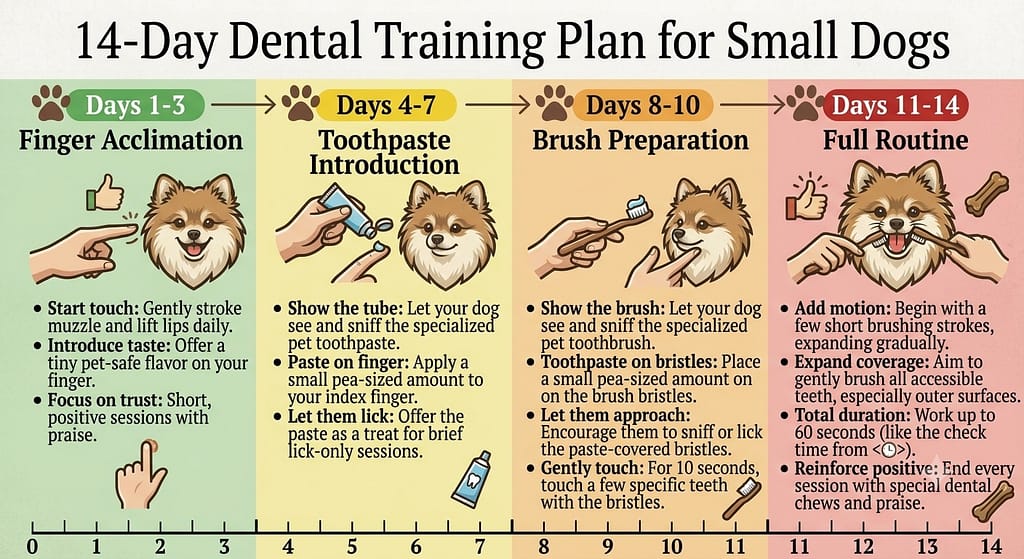
The Small Dog Brushing Breakthrough
Myth: “My dog would never tolerate brushing.”
Truth: Every dog can learn with the right approach.
The 14-Day Brushing Training Plan:
Days 1-3: Finger Familiarization
- Dip your finger in low-sodium chicken broth
- Gently rub along the gumline
- Reward after 5 seconds
- Repeat twice daily
Days 4-7: Toothpaste Introduction
- Use dog-specific toothpaste (never human—toxic!)
- Let them lick it off your finger
- Progress to rubbing with toothpaste
- Celebrate like they won the lottery
Days 8-10: Brush Introduction
- Use a small, soft-bristled brush (finger brushes work great)
- Add toothpaste to the brush, and let them lick
- Gently brush front teeth only
- Keep sessions under 30 seconds
Days 11-14: Full Routine Establishment
- Gradually add more teeth each day
- Focus on outer surfaces (tongue side stays cleaner)
- Work up to 45 seconds total
- Create a happy brushing ritual
The Small Dog Brushing Toolkit
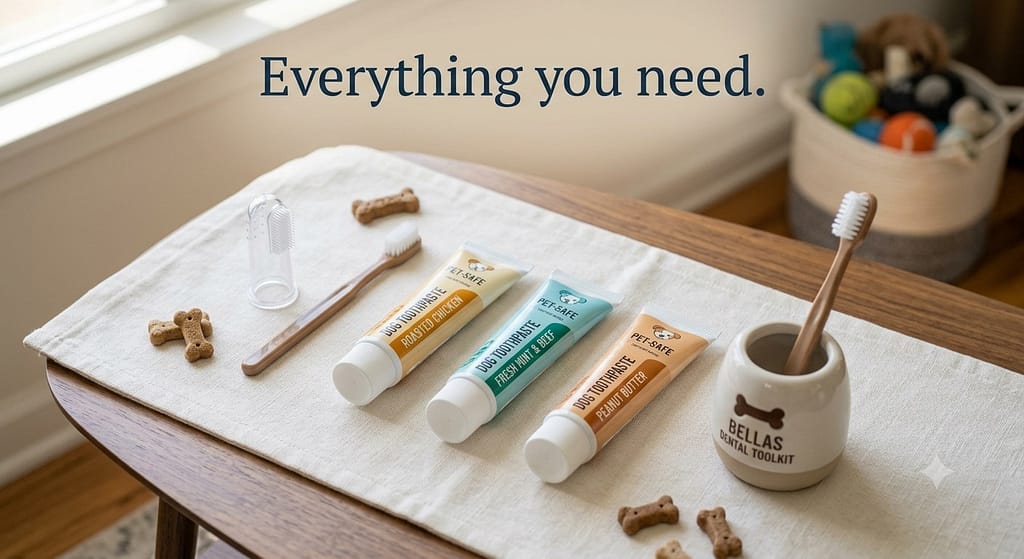
Toothbrush Options:
- Finger brush: Best for tiny mouths, most control
- Small-headed brush: For slightly larger small dogs
- Electric toothbrush: Only if your dog tolerates vibration
Toothpaste Must-Haves:
- Dog-specific only: Human toothpaste contains xylitol
- Flavor they love: Poultry, peanut butter, beef
- Enzymatic formula: Keeps working after brushing
Positioning Hacks for Wiggly Dogs:
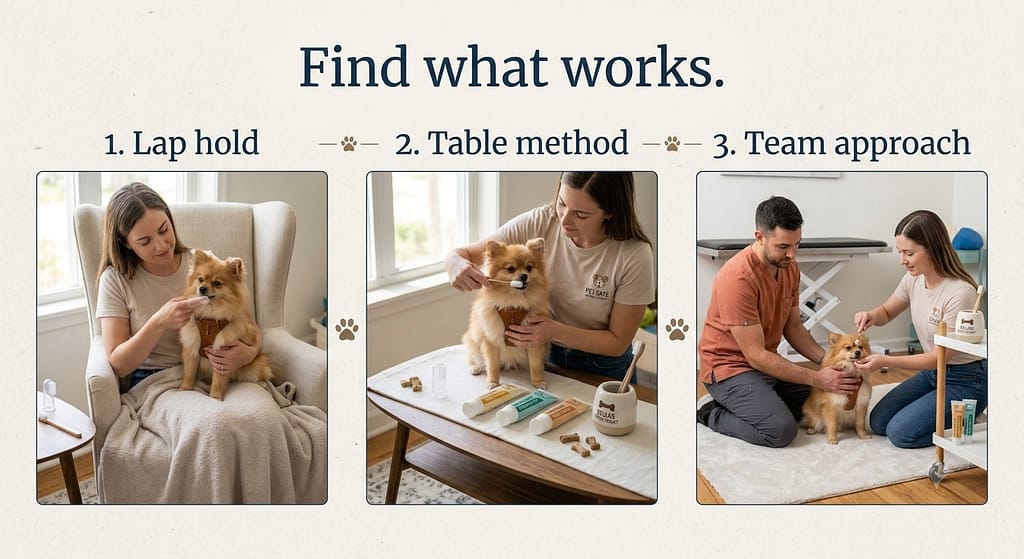
- Lap hold: Sit on the floor, dog between legs, facing away
- Table method: Non-slip mat on table, gentle restraint
- Team approach: One person holds/treats, one brushes
Level 2: The Weekly Support – Dental Treats & Chews
The Dental Treat Decoder
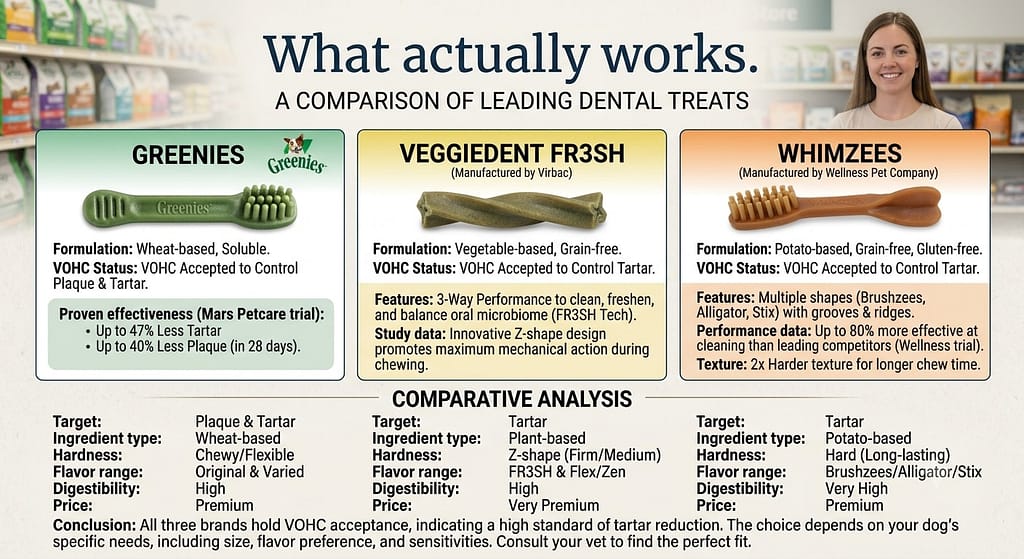
What Actually Works:
- VOHC Seal: Veterinary Oral Health Council approval
- Appropriate size: Too big = ignored, too small = swallowed whole
- Texture matters: Needs abrasiveness to scrape plaque
Small Dog Specific Recommendations:
- Greenies Dental Treats (Petite): Effective but calorie-dense
- Virbac CET VeggieDent Chews: Vegetarian, highly effective
- Whimzees Brushzees: Unique shape gets hard-to-reach spots
The Treat Timing Trick: Give dental treats after meals when saliva production is highest for maximum effectiveness.
For allergy-friendly breeds, see our hypoallergenic small dog breeds.
The Chew Safety Guide
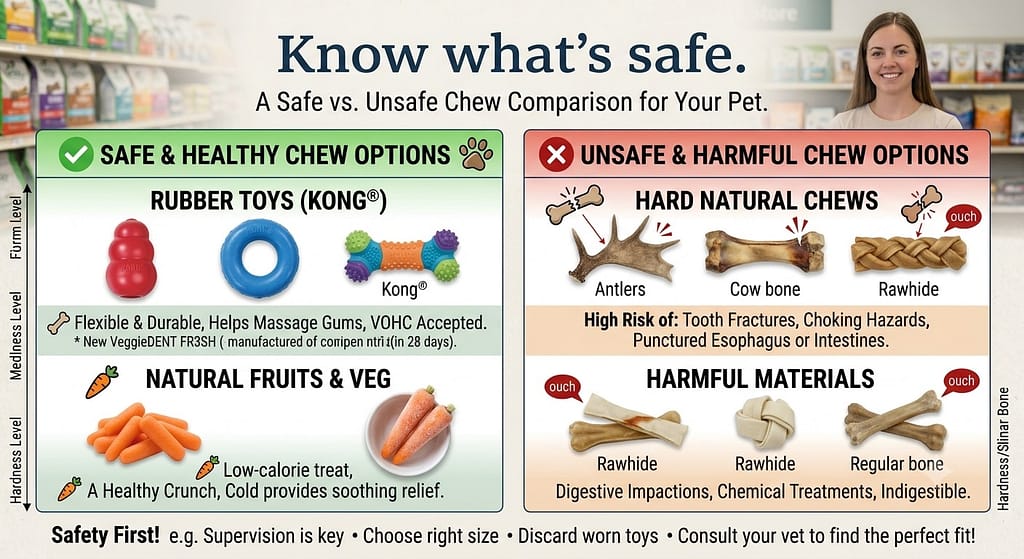
AVOID for Small Dogs:
- Antlers/hoofs: Too hard, fracture risk
- Rawhide: Choking/swallowing hazard
- Bones: Splintering risk
- Anything they can fit entirely in the mouth
SAFE Options:
- Rubber chew toys with grooves: Can add toothpaste
- Softer dental chews: Monitor for appropriate chewing
- Frozen carrots: Cold reduces inflammation, mild abrasion
Level 3: The Monthly Maintenance – Water Additives & Wipes
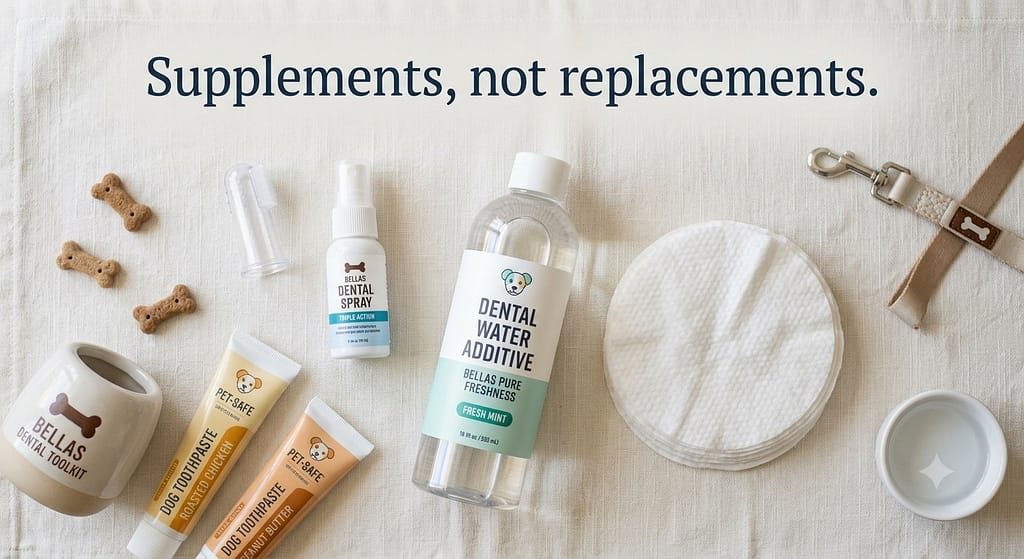
When Brushing Isn’t Enough (Or Possible)
For the “Absolutely No Brush” Dog:
- Dental wipes: Rub along teeth/gums daily
- Water additives: Enzymatic action reduces plaque
- Dental sprays: Quick squirt on teeth
The Reality Check: These are supplements, not replacements for brushing. Think of them as mouthwash when you can’t brush.
If you work long hours, see our best small dogs for 9-5 professionals
Level 4: The Professional Layer – Veterinary Care
The Professional Cleaning Timeline
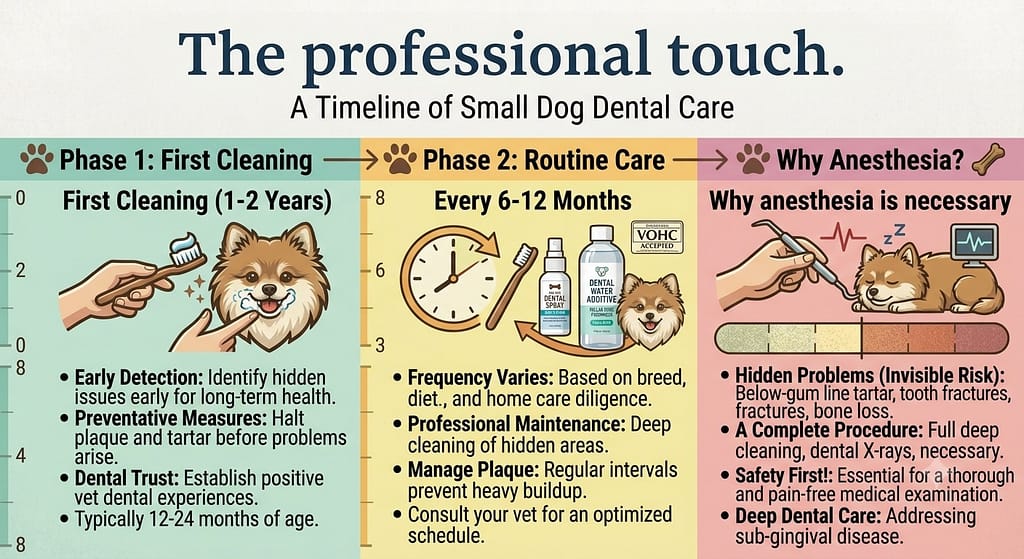
First cleaning: 1-2 years old (small breeds)
Frequency: Every 6-12 months, depending on severity
Why anesthesia is non-negotiable:
- Allows thorough cleaning below the gumline
- Enables X-rays (60% of disease is below the gums)
- Prevents stress/trauma
- Ensures airway protection
Finding the Right Professional
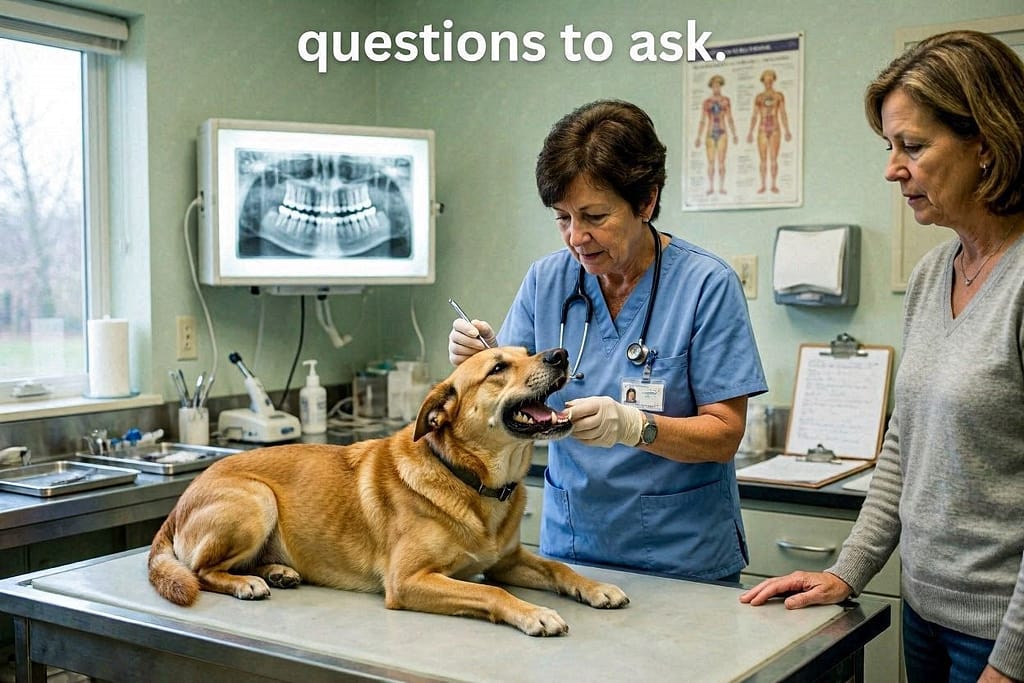
Questions to ask your vet:
- “Do you do dental X-rays with every cleaning?”
- “What’s your pain management protocol?”
- “Do you have a veterinary dental specialist on staff/for referrals?”
- “Can I see before/after photos of small dog cases?”
For busy owners, see our best compatibility dog breeds for busy owners
The Small Dog Dental Product Guide: What’s Worth Your Money
The Budget-Friendly Starter Kit ($30)
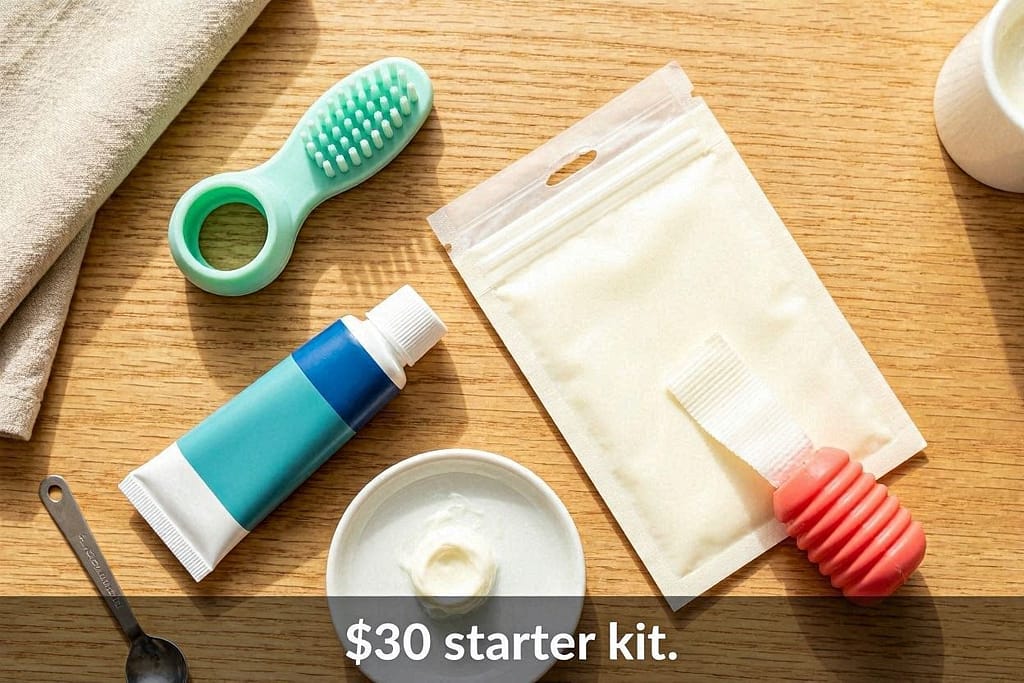
- Finger toothbrush set: $5
- Dog toothpaste: $8
- Dental wipes (for training days): $10
- Small rubber chew toy: $7
The Investment Preventive Kit ($100)
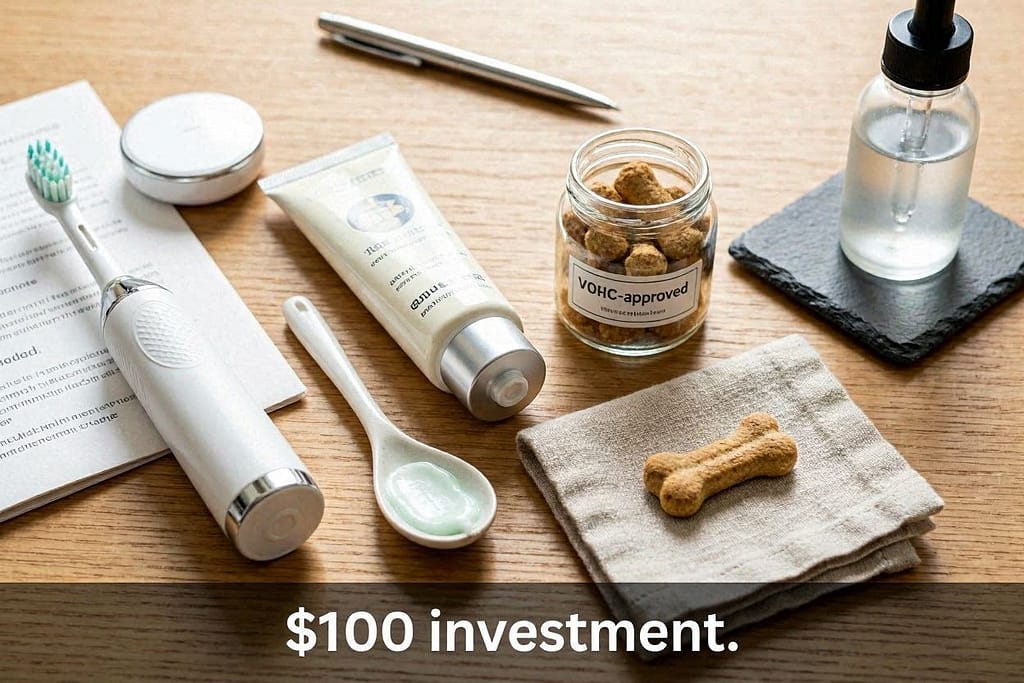
- Electric toothbrush for pets: $35
- Premium enzymatic toothpaste: $12
- VOHC-approved dental treats monthly supply: $25
- Water additive (3-month supply): $15
- Professional-grade dental chew toy: $13
The “Rescue Mission” Kit (If Dental Disease Exists)
- Veterinary consultation: Exam fee
- Professional cleaning: $300-$700
- Prescription dental diet: $50/month
- Chlorhexidine rinse: $15
Your Printable Dental Care Tracker
What Your Free Tracker Includes:
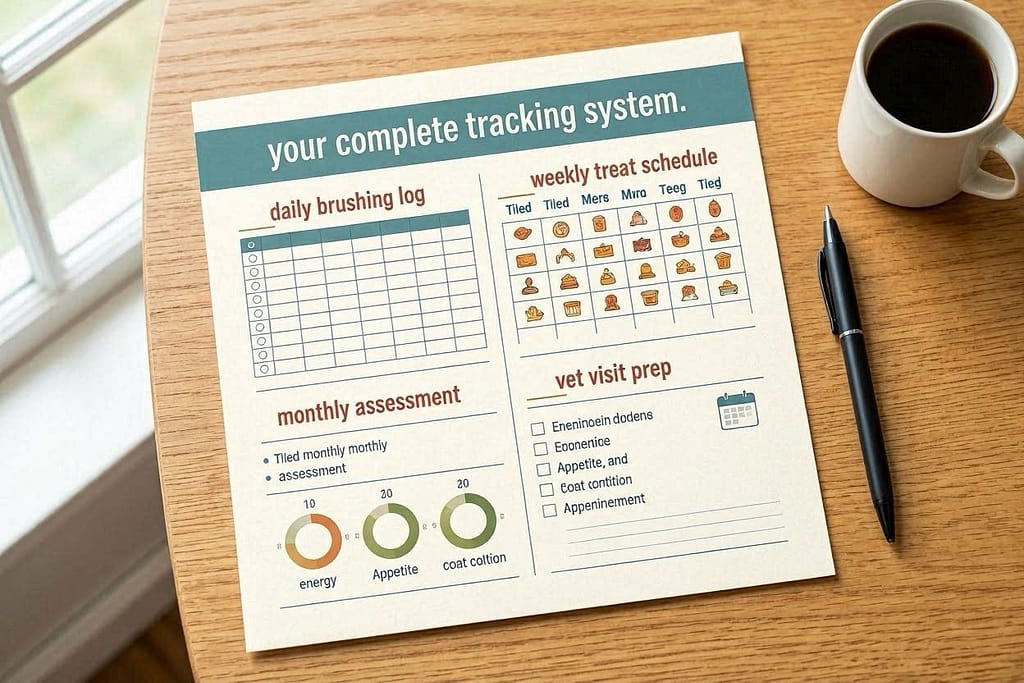
[Visual of the tracker with checkboxes]
Section 1: Daily Brushing Log
- Morning/evening checkboxes
- Notes on cooperation level
- Areas needing attention
Section 2: Weekly Treat Schedule
- Dental treat days
- Chew toy rotation
- Product effectiveness notes
Section 3: Monthly Assessment
- Breath score (1-5)
- Gum color tracking
- Behavior notes
- Weight check (dental pain affects eating)
Section 4: Veterinary Visit Prep
- Questions to ask
- Photos to take (before cleaning)
- Cost tracking
- Follow-up schedule
Download Link: [Insert here]. Available in color or printer-friendly.
Fridge Placement Strategy:
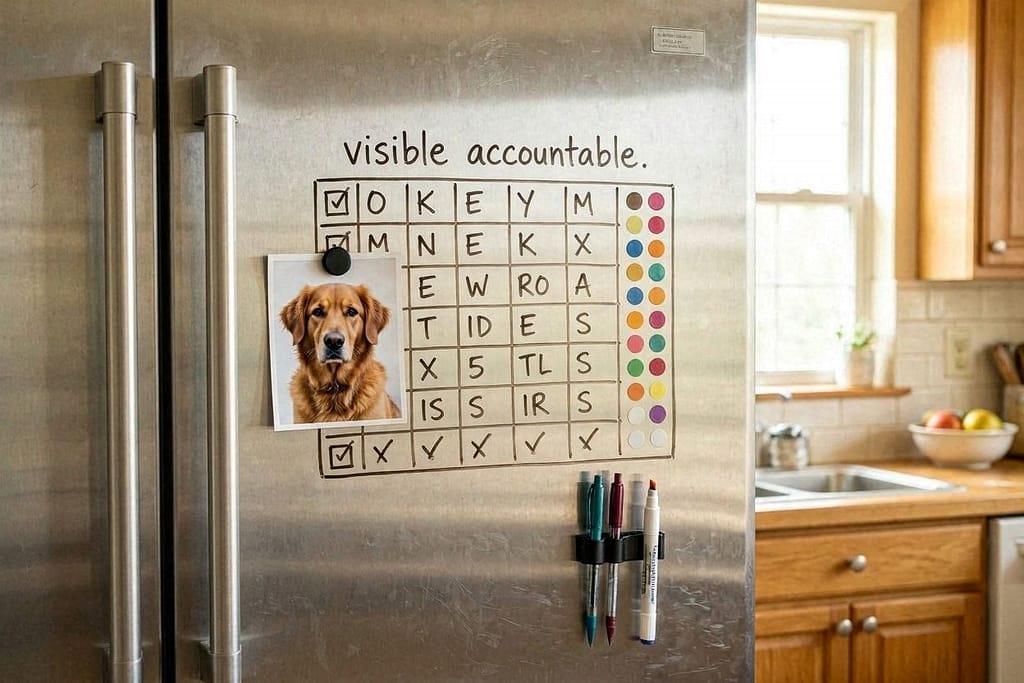
- Next to the family calendar
- With a photo of your dog smiling
- Dry-erase sleeve for reusability
- Pens attached magnetically
Troubleshooting Common Small Dog Dental Problems
Problem: “My Dog Absolutely Hates Brushing”
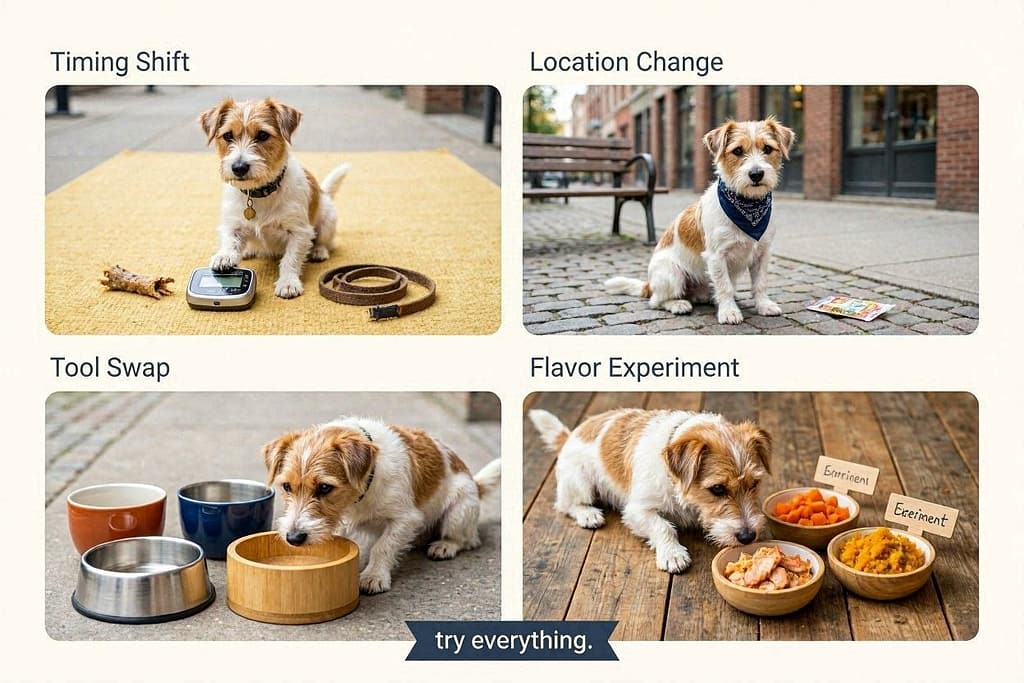
Solutions:
- Timing shift: Try when they’re sleepy (after walk/play)
- Location change: Different room, different associations
- Tool swap: Finger brush → gauze pad → different brush
- Flavor experiment: Try 3-4 toothpaste flavors
- Professional help: Veterinary behaviorist if severe anxiety
Problem: “They Have No Interest in Dental Chews”
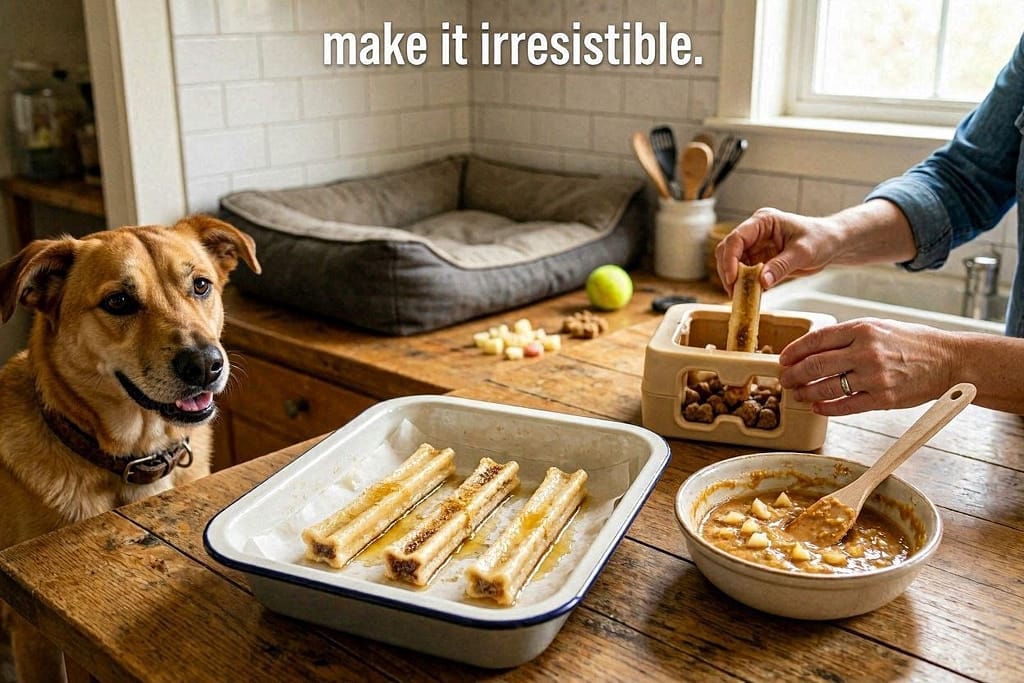
Strategies:
- Warm it up: 5 seconds in the microwave increases the aroma
- Add flavor: Dab with low-sodium broth
- Make it a game: Hide it, make them find it
- Try different textures: Some prefer crunchy, some semi-soft
Problem: “Their Teeth Look Worse After Cleaning”
The Reality: Teeth often look “worse” (gaps, discoloration) after plaque removal reveals actual damage. Cleaning doesn’t cause this—tartar hid it.
Problem: “I See a Broken Tooth But No Pain Signs”
Emergency Alert: Dogs hide pain. A broken tooth exposes the pulp cavity to bacteria. This requires veterinary attention, likely extraction.
The Breed-Specific Dental Challenges
Extra-Risky Breeds:
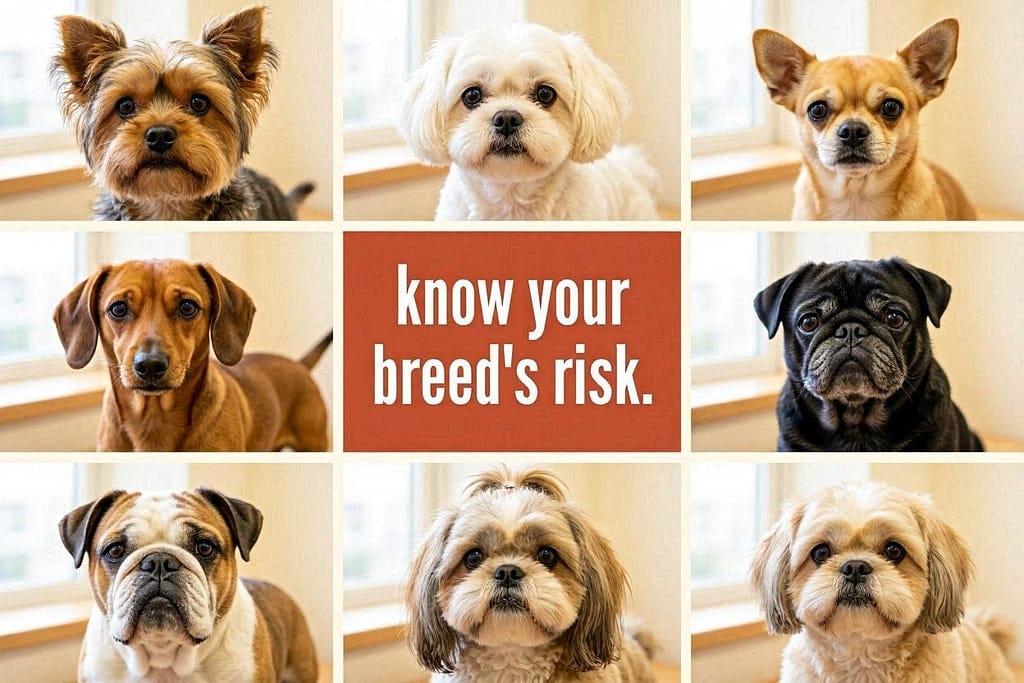
Yorkies, Maltese, Chihuahuas: Prone to retained baby teeth
Dachshunds, Pugs, Bulldogs: Crowding plus brachycephalic issues
Shih Tzus, Lhasa Apsos: Hair around the mouth traps bacteria
City dwellers should explore the most sociable dog breeds for city life.
Breed-Specific Solutions:
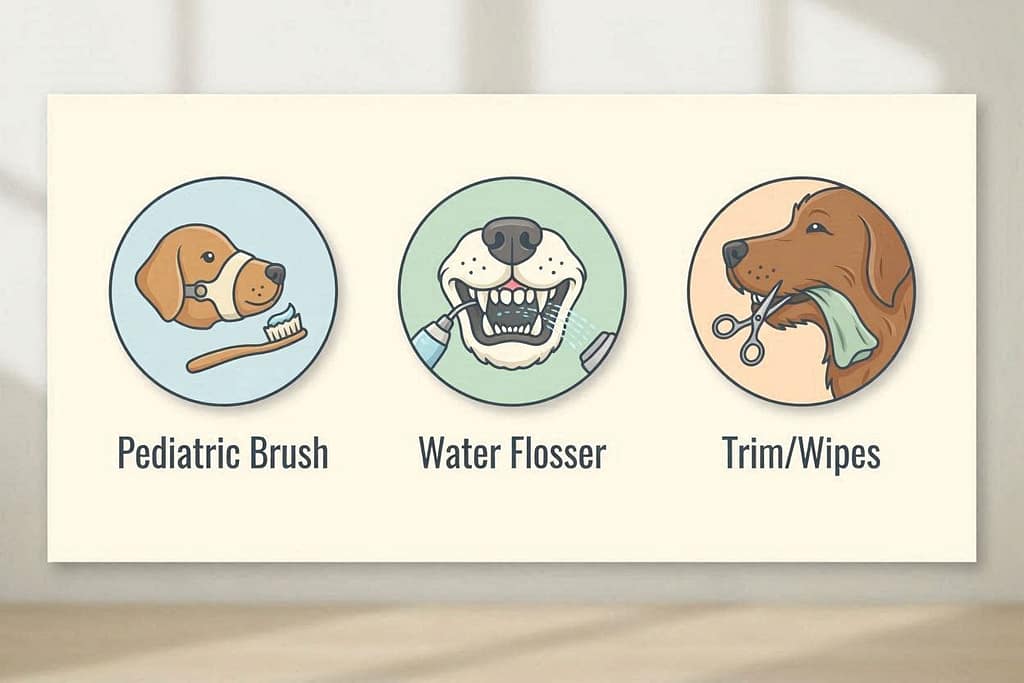
For tiny mouths: Use pediatric toothbrushes or gauze-wrapped fingers
For crowded teeth: Water flosser on lowest setting (with vet approval)
For hair-mouth breeds: Keep facial hair trimmed, wipe after eating
The Age-Appropriate Dental Timeline
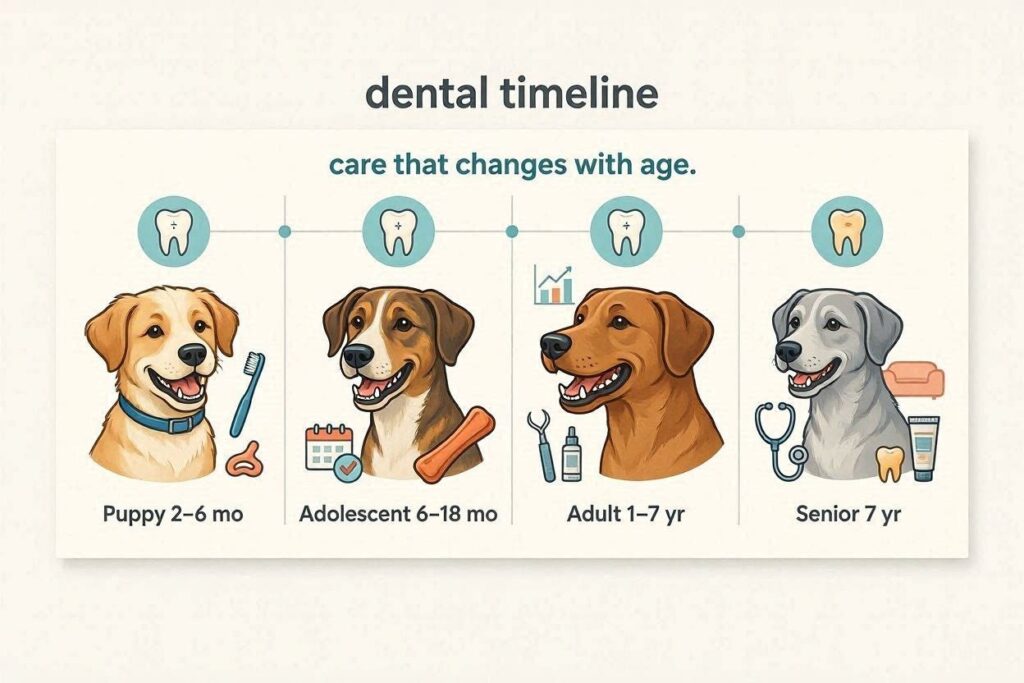
Puppy Dental Care (2-6 months)
Focus: Acclimation, baby tooth monitoring
Action: Gentle mouth handling, chew toy introduction, check for retained baby teeth
Families with kids should see the best apartment dogs for families.
Adolescent Dental Care (6-18 months)
Focus: Habit formation, first professional assessment
Action: Establish brushing routine, first veterinary dental exam
Adult Dental Care (1-7 years)
Focus: Prevention, regular professional care
Action: Daily brushing, annual cleanings, monitor for early signs
Senior Dental Care (7+ years)
Focus: Maintenance, comfort, disease management
Action: More frequent vet checks, softer options if needed, pain management
The Connection Between Dental Health and Overall Health
The Mouth-Body Link
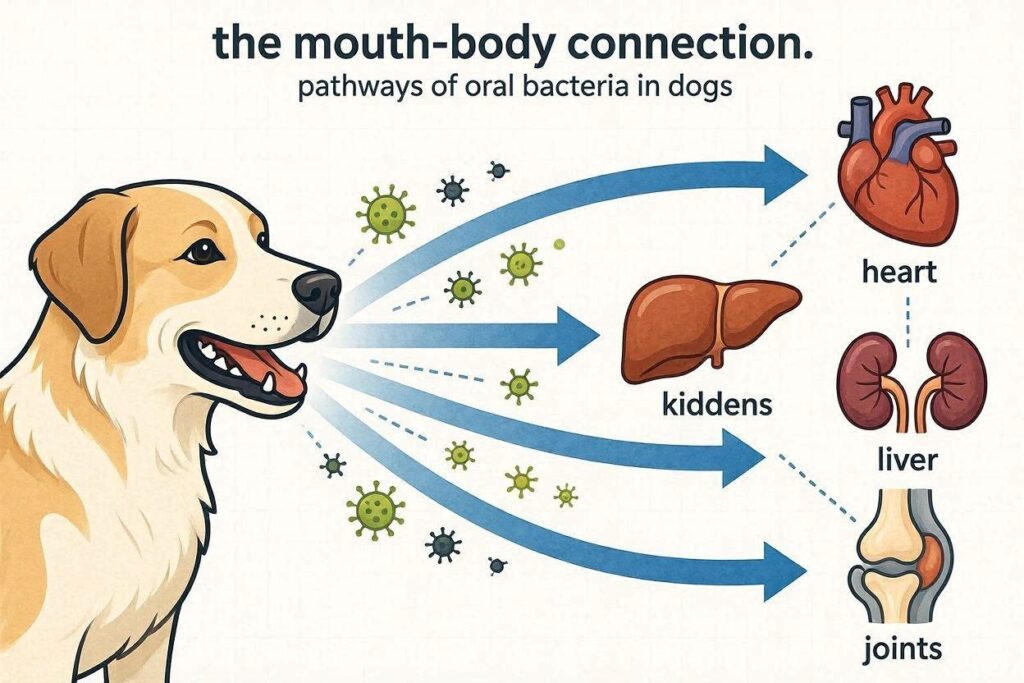
Heart Disease: Dental bacteria enter the bloodstream → heart valve damage
Kidney/Liver Issues: Constant infection filtration → organ stress
Diabetes: Gum disease increases insulin resistance
Joint Problems: Chronic inflammation from the mouth affects joints
The Symptom Crossroads
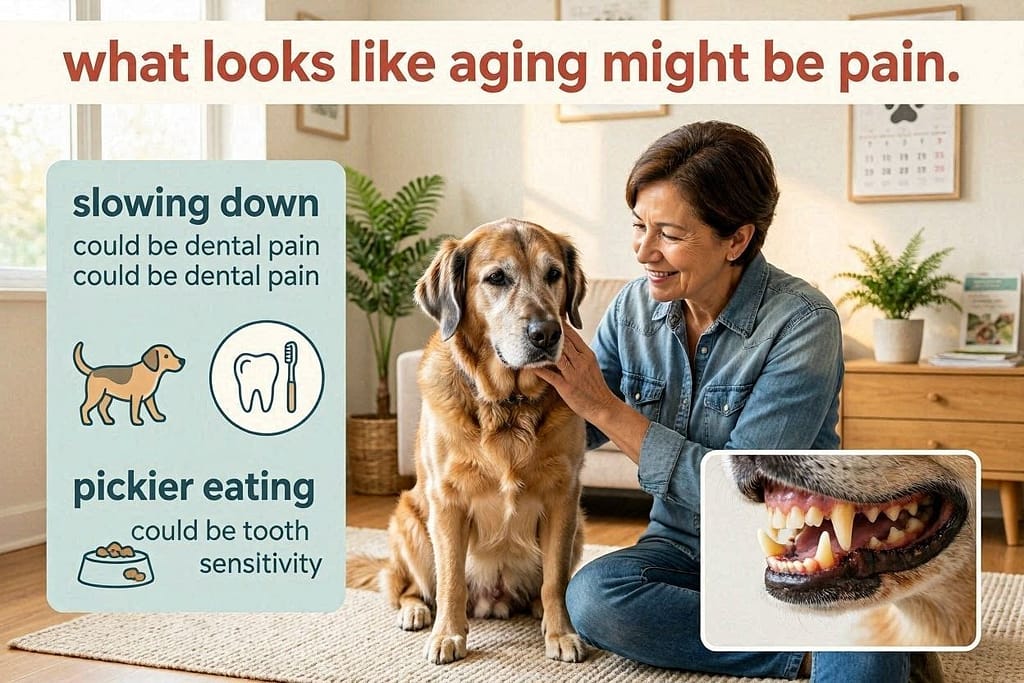
What looks like:
- “Just slowing down with age” → Could be dental pain
- “Pickier eating” → Could be tooth sensitivity
- “Behavior changes” → Could be chronic discomfort
For complete Frenchie health, see our French Bulldog health guide.
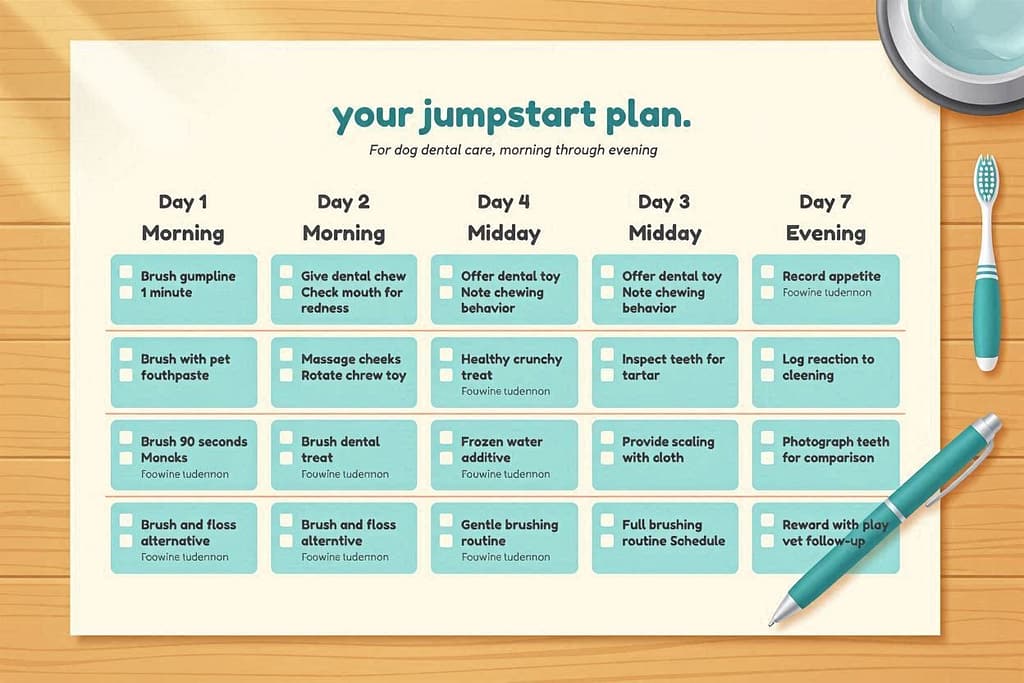
Your 7-Day Dental Care Jumpstart

Day 1: Assessment & Education
- Perform a 60-second mouth check
- Take “before” photos
- Read this guide fully
- Order necessary supplies
Day 2: Tool Gathering
- Purchase toothpaste, a brush, and treats
- Set up the brushing station
- Prepare high-value rewards
- Download printable tracker
Day 3: First Contact
- Broth-on-finger introduction
- Positive association only
- 5-second sessions, 3x today
- No forcing, all fun
Day 4: Toothpaste Party
- Let them taste toothpaste on their finger
- Try multiple flavors if needed
- Celebrate any interest
- Note preferences
Day 5: Brush Introduction
- Add paste to the brush; let them lick it
- One gentle stroke on the front teeth
- Immediate reward
- Keep under 15 seconds
Day 6: Routine Building
- Brush front teeth and canines
- 30-second total session
- Establish a consistent time/place
- Log in tracker
Day 7: Celebration & Commitment
- Full outer surface brushing
- 45-second session
- Take a “one-week” photo
- Commit to daily practice
The Cost-Benefit Analysis: Prevention vs. Treatment
Let’s Do the Math:
5 Years of Prevention:
- Daily brushing: $50/year for supplies
- Dental treats: $150/year
- Annual vet check: $50/year
- Professional cleaning every 2 years: $350/each
**Total (5 years):** ~$1,500
5 Years of Neglect (Typical Scenario):
- Multiple extractions: $1,500-$3,000
- Advanced cleanings: $700 each (more frequent)
- Medications for infection: $200/year
- Potential systemic disease treatment: $2,000+
**Total (5 years):** $4,000-$10,000+
The Emotional Cost: Pain-free years vs. chronic discomfort
For weight management, see our small dog weight chart guide.
Success Stories: Real Small Dog Transformations
Bella the Yorkie’s Rescue
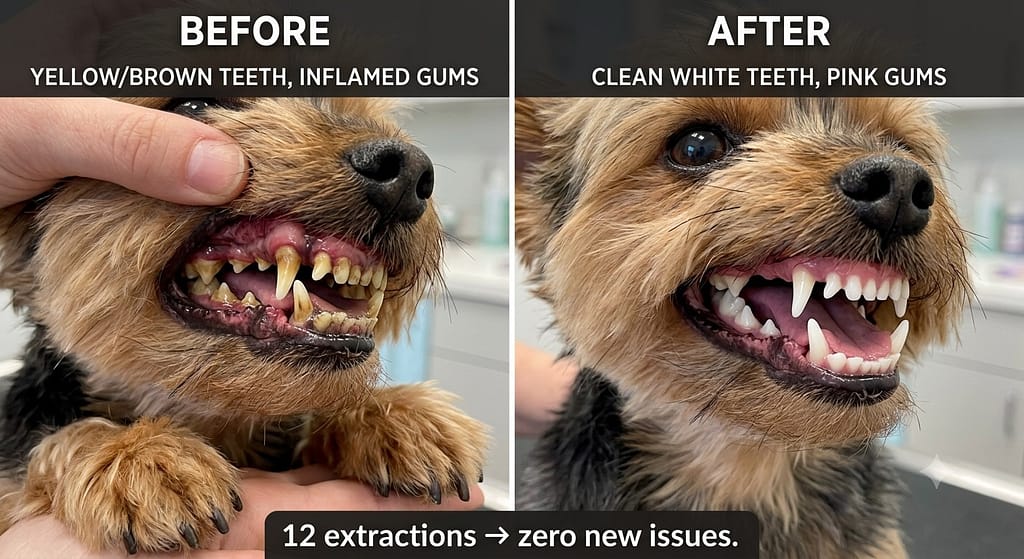
Starting point: 4 years old, needed 12 extractions, breath could clear a room
Owner’s confession: “I thought small dog bad breath was normal”
6-month routine: Daily brushing, prescription dental diet, water additive
1-year result: Zero new extractions, clean bill of health, kissable breath
Owner’s insight: “I spent more on emergency extraction than I would have on 10 years of prevention”
Charlie the Chihuahua’s Journey
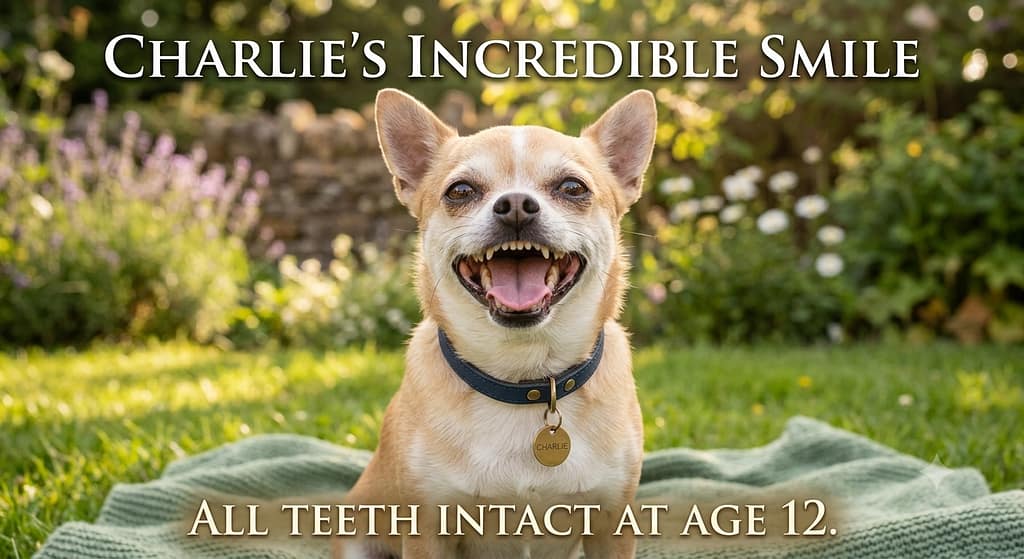
Challenge: Severe anxiety about mouth touching
Solution: Desensitization over 3 months, alternative options
Current routine: Dental wipes daily, specific dental chews, quarterly vet checks
Outcome: Maintained all teeth to age 12, with manageable minor tartar
The Long-Term Maintenance Mindset
Creating Dental Care Rituals
Pair brushing with: After evening walk, before bedtime cuddles
Make it positive: Special “brush time” treats only
Involve family: Kids can hold treats, partner can brush
Track progress: Monthly photos, celebrate milestones
When to Seek Professional Help
Red flags:
- Bleeding that doesn’t stop
- Swelling on the face
- Refusal to eat/drink
- Loose teeth in adult dogs
- Visible pus
Green flags (good signs):
- Willingness to have the mouth examined
- Minimal tartar at annual cleaning
- Pink, healthy gums
- Fresh breath
The Gift of a Pain-Free Smile

The toothpaste might still be messy. The treats might sometimes be refused. The brushing sessions might occasionally feel like wrestling a furry alligator.
But now?
Now you have knowledge. You have tools. You have a system. You have a printable tracker that turns overwhelming worry into manageable daily actions.
This isn’t about achieving perfect human-level dental hygiene. It’s about preventing preventable pain.
It’s about catching problems when they’re small and inexpensive to fix.
It’s about ensuring your small dog’s golden years aren’t marred by chronic mouth pain.
That daily brushing ritual isn’t just about cleaning teeth. It’s:
- A health check you perform every single day
- A bonding moment of trust and care
- A prevention strategy against systemic disease
- A love language that says “I care about your comfort”
You don’t need perfection. You need consistency. You don’t need hour-long sessions. You need 60 seconds of attention.
You don’t need to eliminate all risk. You need to reduce it dramatically.
So tonight, after dinner, instead of ignoring that familiar doggy breath or wincing at plaque buildup, take action.
Gather your supplies. Follow the steps. Start small. Be patient with yourself and your dog.
That moment— when your dog willingly opens their mouth, when you see clean teeth emerging from beneath plaque, when you realize their breath no longer makes you turn away—that’s the moment you become more than an owner.
For the complete breed resource, see our apartment dog breeds complete compatibility guide
You become a healthcare advocate. A pain preventer. A life extender.
The toothpaste is waiting. The brush is ready. Your dog’s healthier future is literally at your fingertips.
For complete health and wellness, see our complete apartment dog health and nutrition manual
🐾 — Apartment Dog Guide (ADG)
Living large in small spaces, one paw at a time. That’s the apartment dog life—see you in the next guide!.


