

Quick question:
If there was a fire alarm right now, could you grab everything your dog needs in under 60 seconds?

Or what if your dog started choking on a toy while you’re waiting for an elevator?
Here’s the uncomfortable truth most apartment dog owners face:
We’re not prepared. We think “I’ll order that first aid kit soon” or “Nothing bad will happen in my 700 square feet.”
But here’s what apartment living actually means for emergencies:
- Longer wait times for elevators during evacuations
- Shared walls mean you can’t just “run outside”
- Limited storage space (so every item must count)
- Higher floors = different emergency protocols
One of our readers lamented, “I learned this the hard way when my dog, Luna, sliced her paw on a broken tile in our apartment lobby.
It was 11 PM. The elevator was out of service.
And I was scrambling through bathroom cabinets trying to find something—anything—to stop the bleeding.
That night changed everything.” Narrated by Tony

And today, We’re going to make sure you’re never in that situation.
Find Your Section Below.
📦 Your Apartment-Specific First Aid Kit: Why It’s Different
Before we dive into the checklist, understand this:
A suburban first aid kit ≠ An apartment first aid kit.
Why?
Because in an apartment:
- Space is limited – Every item must be multi-purpose
- Evacuation is vertical – You’re carrying everything down stairs
- Resources are shared – Your neighbors might need help too
- Response times vary – Elevators, traffic, building access
Your kit needs to be small, smart, and apartment-optimized.

Let’s guess your first thought:
“But I don’t have room for a giant first aid kit!”
Perfect. Because we’re not giving you a giant list.
We’re giving you the 17 essential items that fit in a shoebox-sized container. Nothing more, nothing less.
Ready to build the kit that could save your dog’s life?
Let’s start.
🎯 THE COMPLETE CHECKLIST (Category by Category)
Category 1: The Non-Negotiables (Store by the Door)
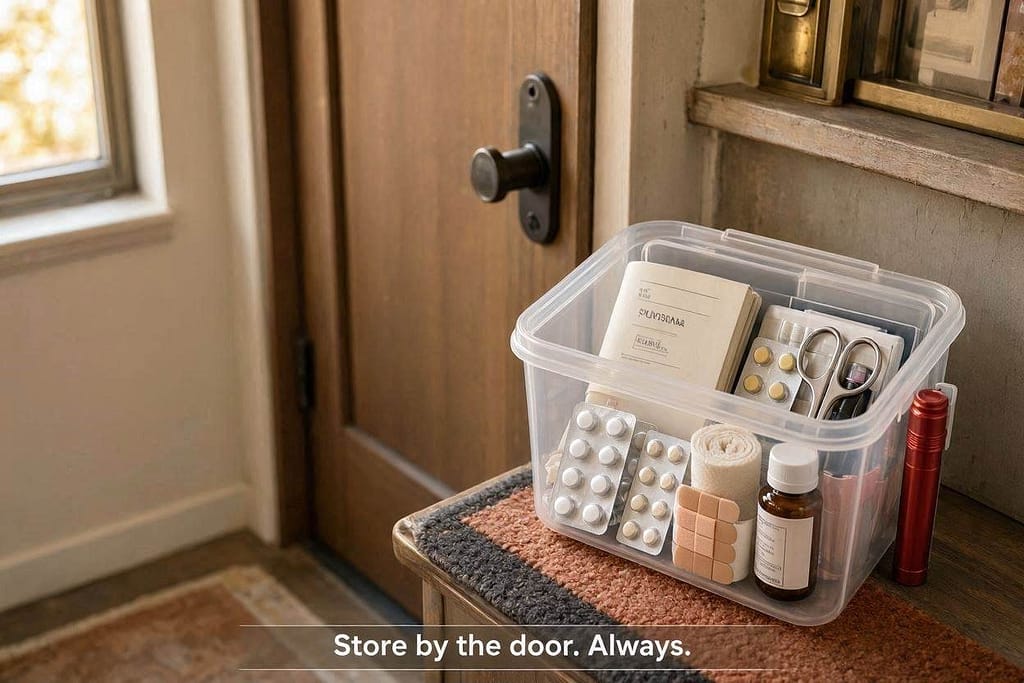
These 4 items stay together, always by your exit:
1. Emergency Slip Lead (Not your regular leash)

- Why: If your dog panics, they might back out of their collar or harness
- Apartment specific: Can be used as a makeshift muzzle for injured/scared dogs
- Pro tip: Keep it with your keys so you never forget it
2. Foldable Water Bowl + Water Pouches (3 minimum)
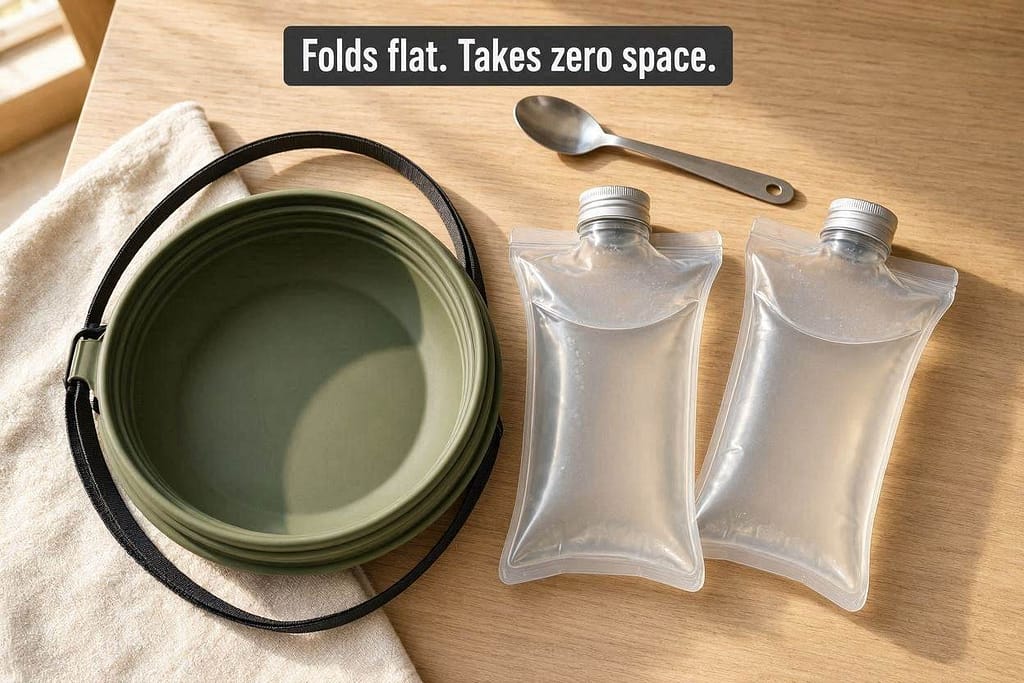
- Why: Elevators/stairs dehydrate dogs quickly during evacuations
- Apartment specific: Folds flat, takes zero space
- Quantity: 3 pouches = 1 day’s water minimum
3. Recent Photo of Your Dog + Your ID (In waterproof bag)
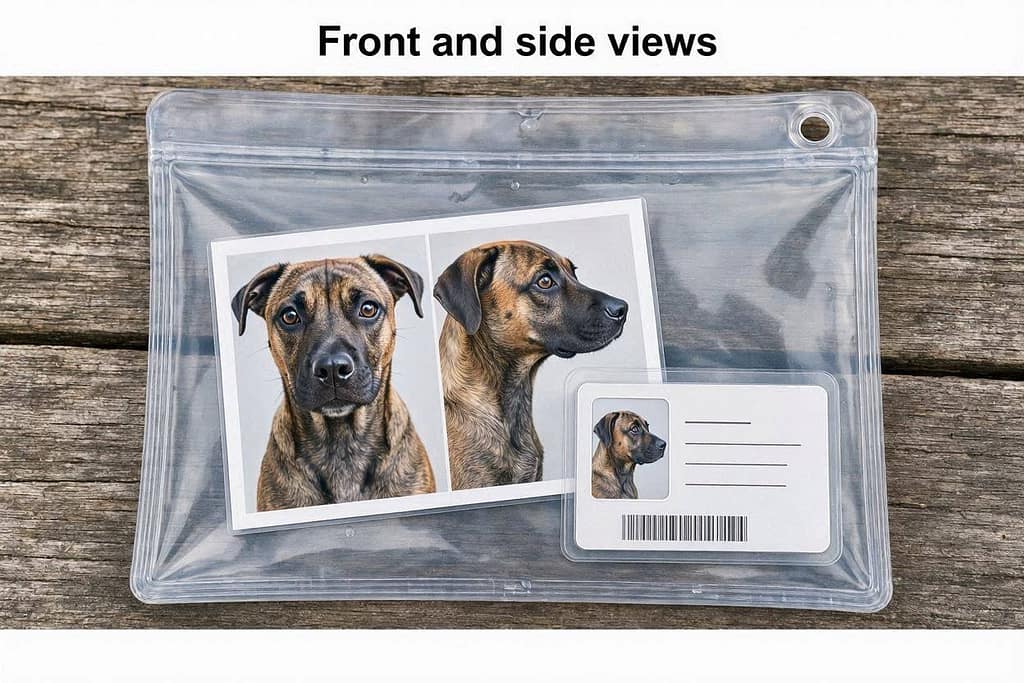
- Why: If you get separated during building evacuation
- Must include: Front and side views, any unique markings
- Bonus: Include your vet’s contact info on the back
4. Emergency Contact Card (Laminated)
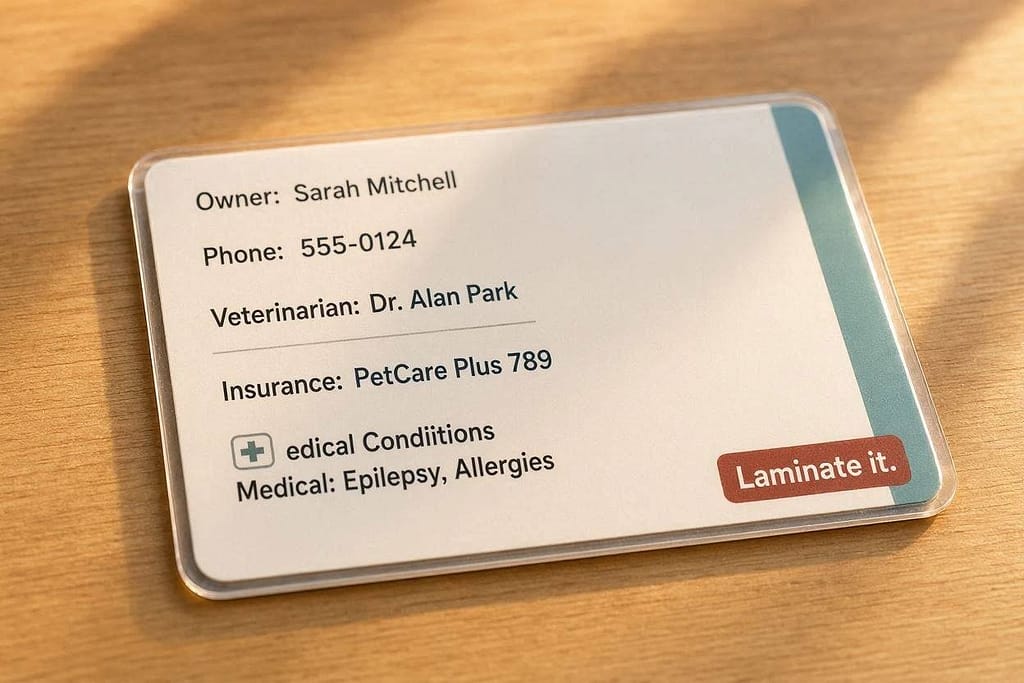
Include:
• Your name, phone, apartment number
• Emergency contact (family/friend)
• Vet name and 24-hour clinic address
• Pet insurance policy number
• Medical conditions/allergies
Speaking of emergencies… quick reality check:
How many of these could happen in YOUR apartment today?
- □ Chocolate ingestion (left on counter)
- □ Broken glass from dropped dish
- □ Balcony fall risk
- □ Toxic plant ingestion
- □ All of the above
If you checked any, keep reading. Because the next category is about immediate response.
Category 2: Wound & Injury Care (The “Oh Crap” Kit)
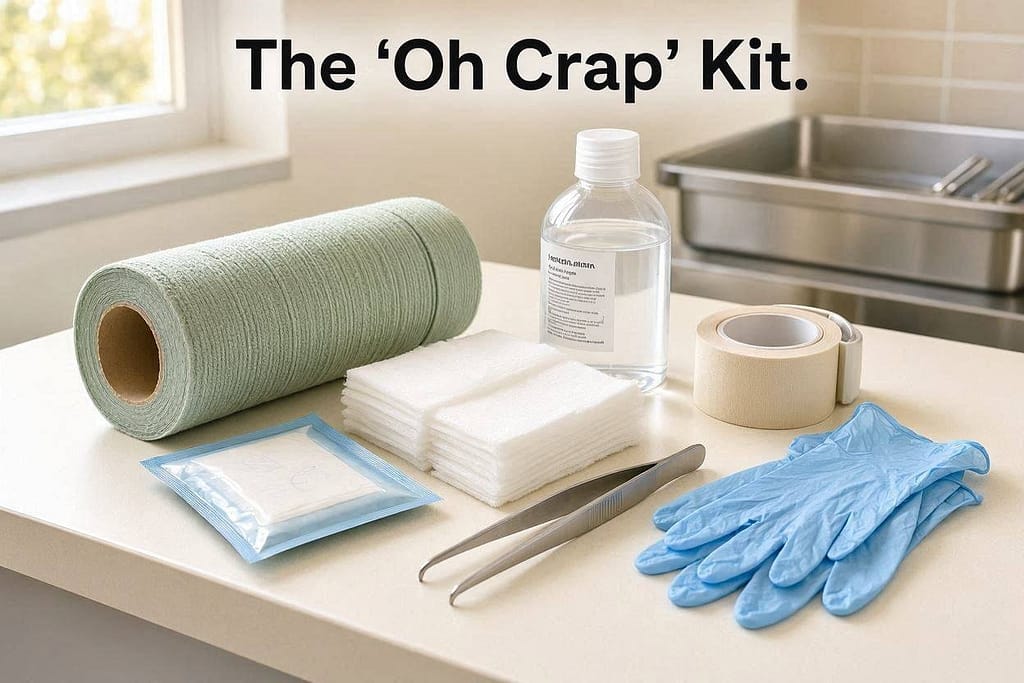
5. Self-Adhering Bandage (Vet Wrap) – 2 rolls minimum

- Why: Sticks to itself, not fur (no painful removal)
- Apartment hack: Can also secure injured limbs during stair evacuation
- Color tip: Get bright color – easier to see if it unravels
6. Non-Stick Pads (Telfa pads) – 5-10 pads
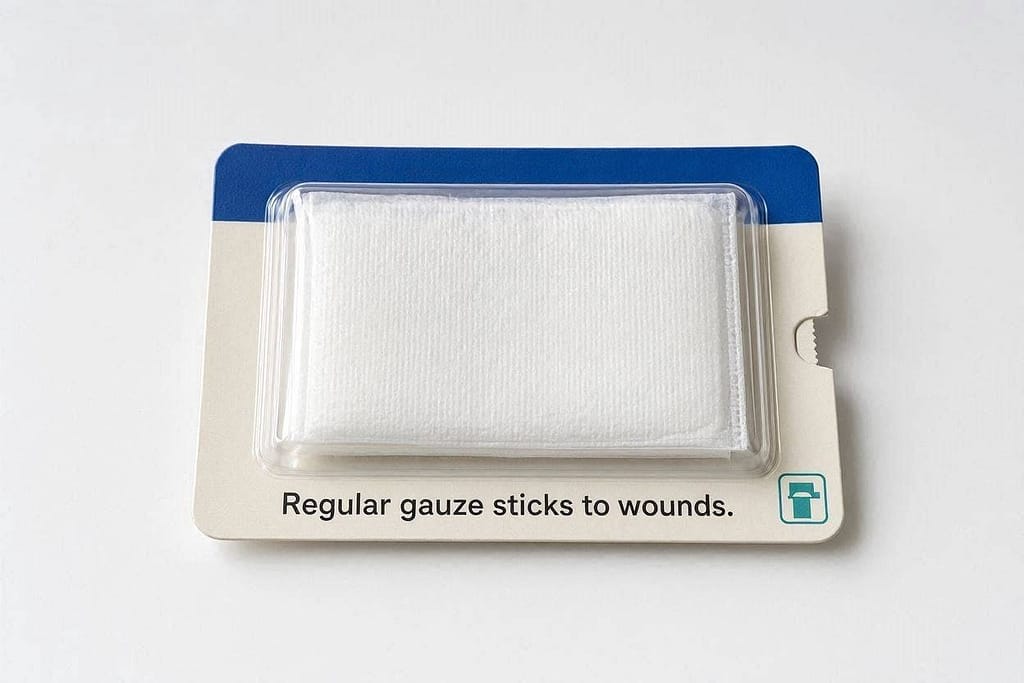
- Why: Regular gauze sticks to wounds
- Size: 3×4 inches is versatile for most apartment dog injuries
7. Sterile Saline Solution – 250ml bottle
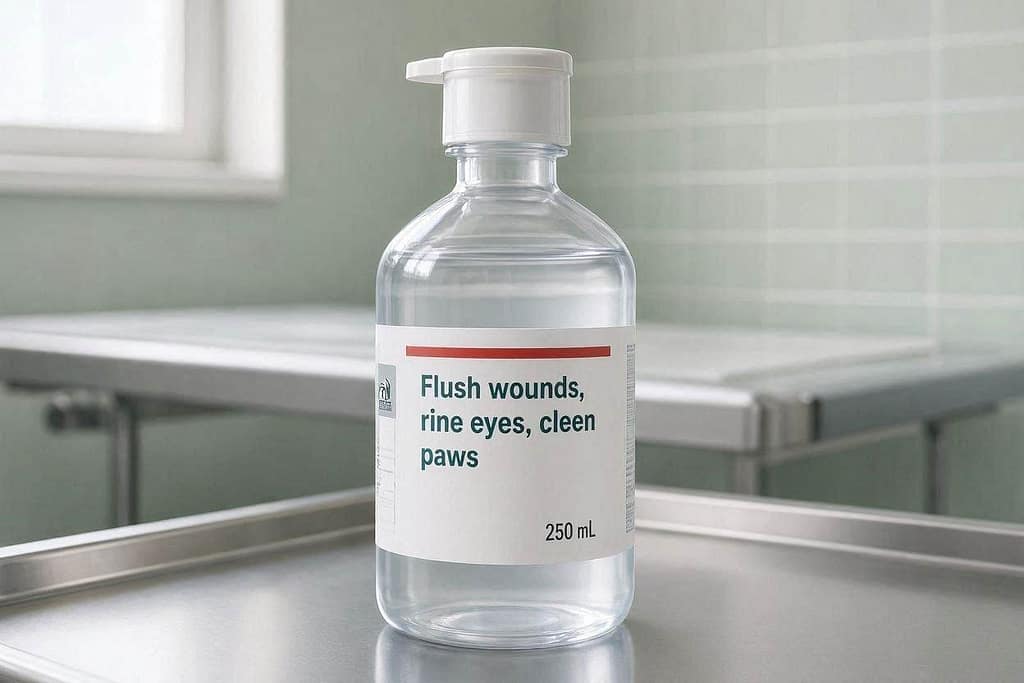
- Multi-use: Flush wounds, rinse eyes, clean paws
- Apartment bonus: Also works for rinsing after chemical exposure (cleaning products)
8. Antiseptic Wipes (Chlorhexidine) – 10 packets
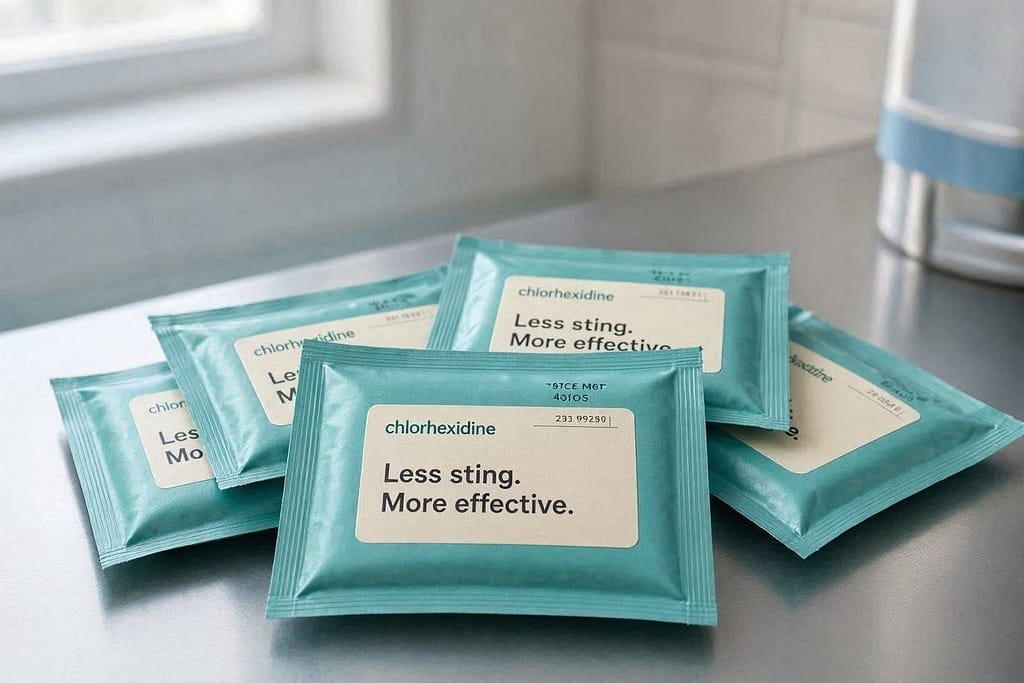
- Why: Better than alcohol wipes (less sting, more effective)
- Use: Clean around wounds before bandaging
**9. Tweezers (Splinter type) + Magnifying Glass

- Why: Apartment carpets hide splinters, glass shards
- Pro tip: Get tweezers with fine points and a built-in light
10. Disposable Gloves – 5 pairs
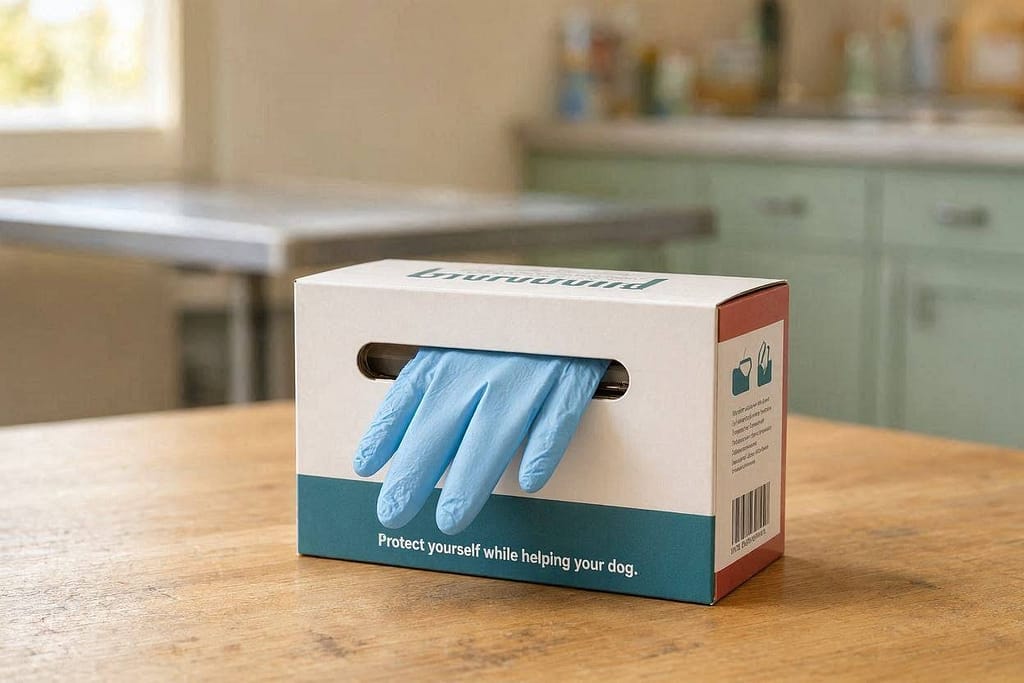
- Why: Protect yourself while helping your dog
- Apartment reality: You might need to help a neighbor’s dog too
Category 3: Medications & Treatments (The “Before the Vet” Items)
Important disclaimer: Always consult your vet before administering any medication. This kit is for emergency stabilization until professional help arrives.
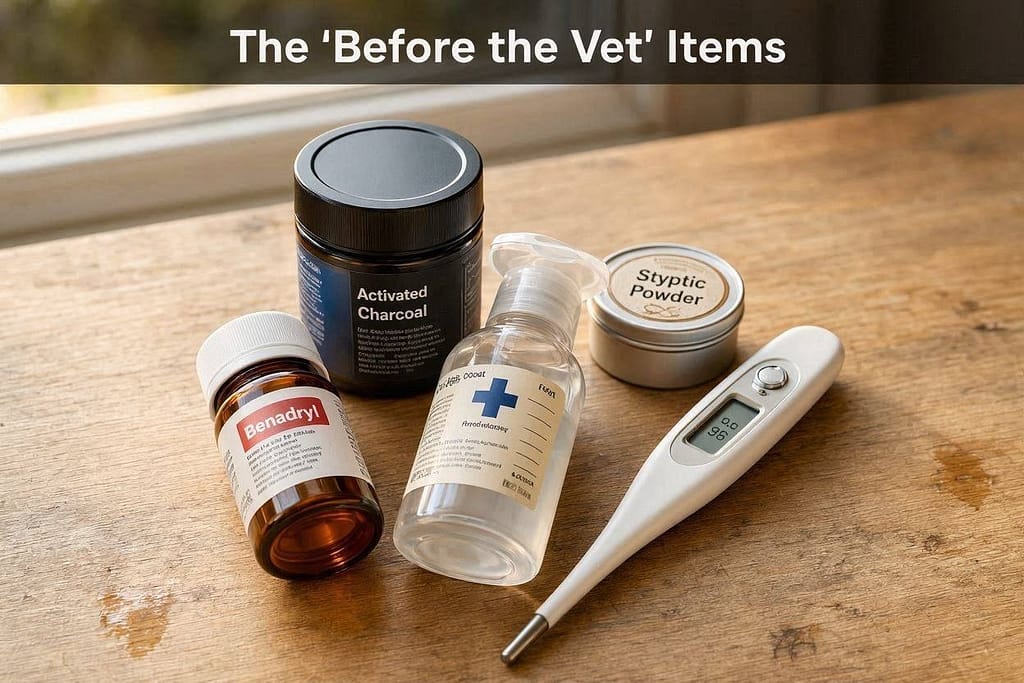
**11. Benadryl (Diphenhydramine) – VETERINARY DOSAGE ONLY
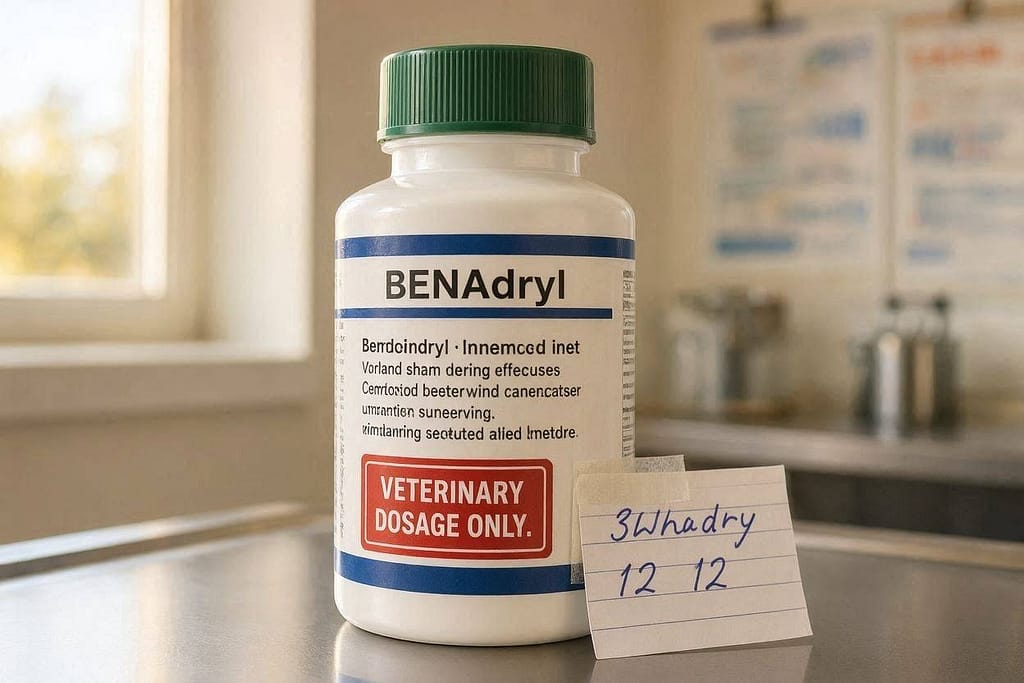
- Why: Allergic reactions (bee stings, insect bites on balcony)
- Dosage: 1mg per pound of body weight (EXAMPLE: 25mg for 25lb dog)
- Critical: Confirm exact dosage with YOUR vet before emergency
12. Hydrogen Peroxide 3% – Small bottle
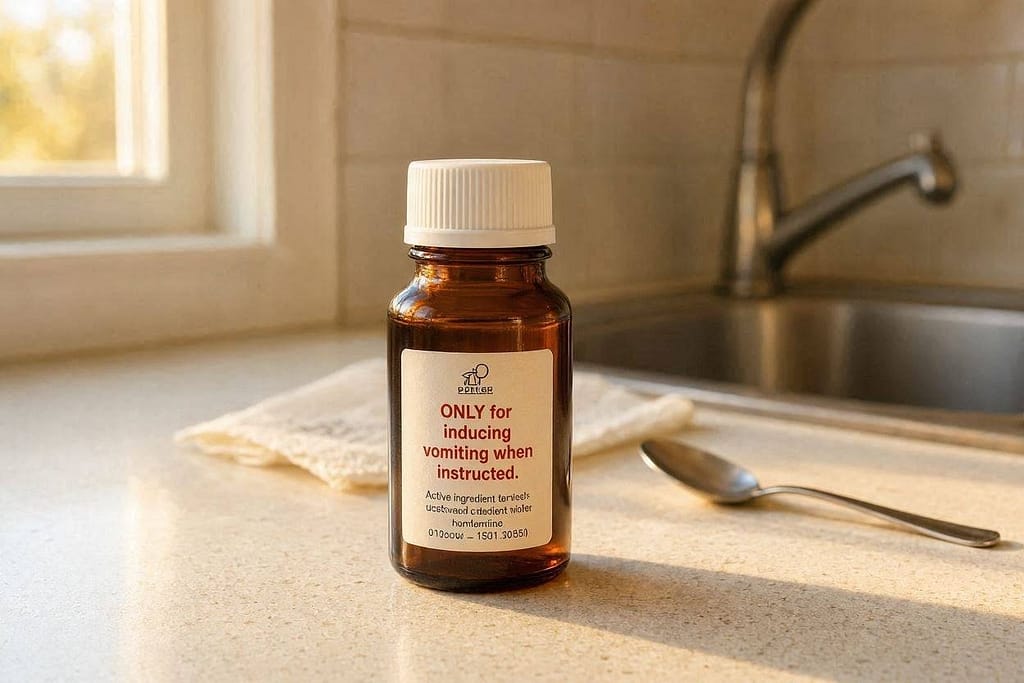
- Use: ONLY for inducing vomiting when instructed by vet/poison control
- Never use for: Cleaning wounds (damages tissue)
- Storage: In dark bottle, replace every 6 months
13. Activated Charcoal Capsules – 10 capsules

- Why: Binds to toxins if ingestion occurs
- When: After vomiting induced or if vet advises
- Dosage: Follow vet instructions – varies by toxin
**14. Styptic Powder or Pencil
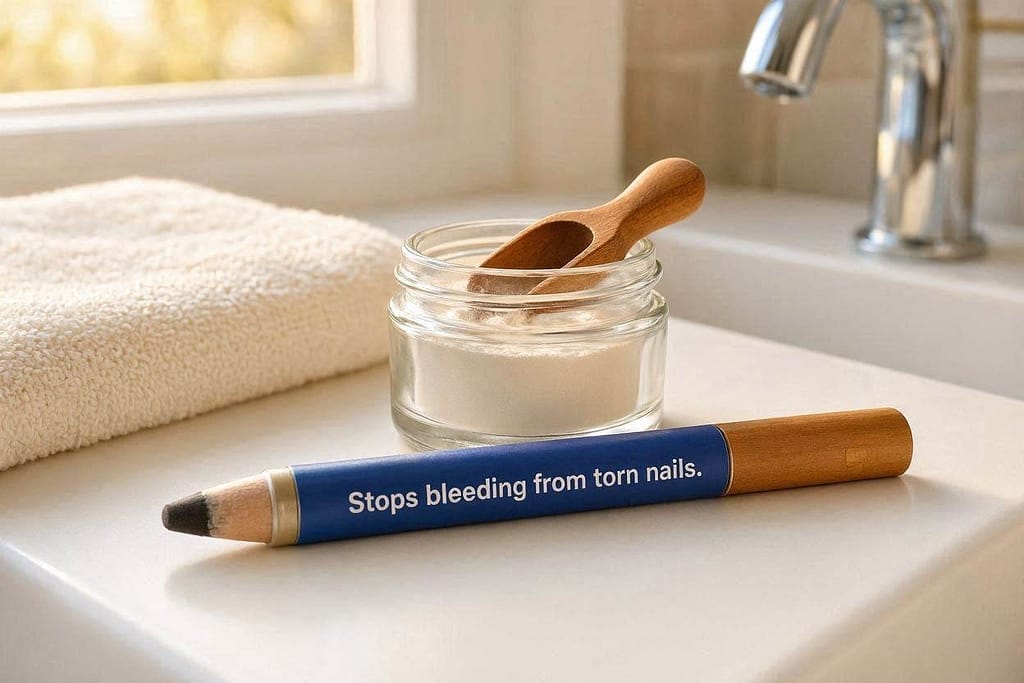
- Why: Stops bleeding from torn nails (common in apartments with slippery floors)
- Apartment hack: Also works for minor cuts from broken glass
**15. Digital Thermometer (Pet specific) + Lubricant
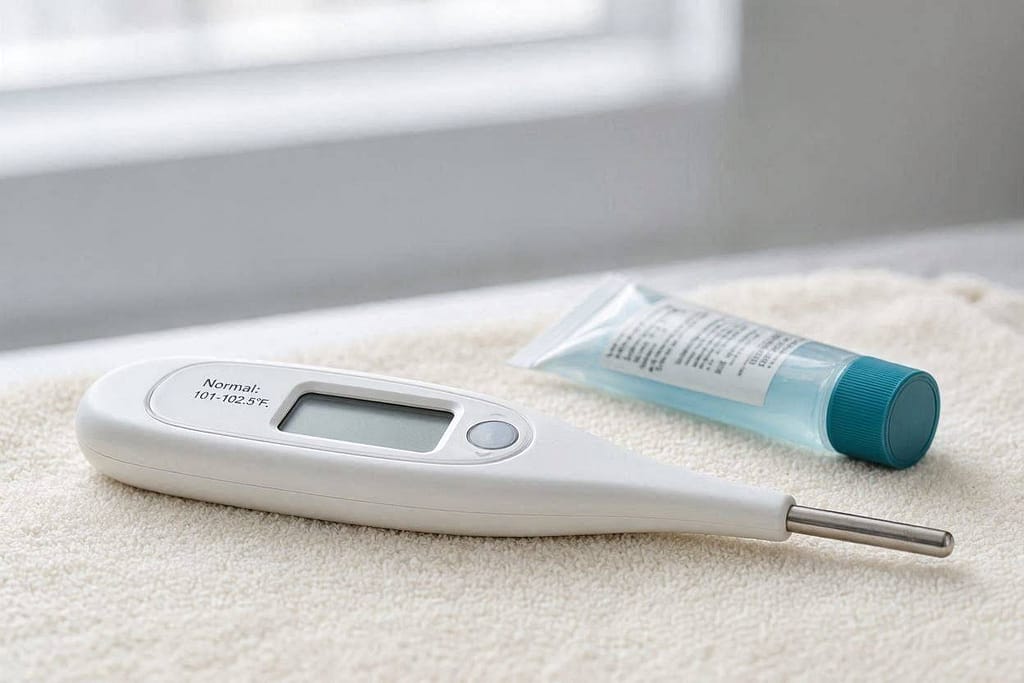
- Normal range: 101-102.5°F (38.3-39.2°C)
- Why: Fever indicates infection; hypothermia risk in winter balcony time
Category 4: Tools & Documentation (The “Smart Apartment” Additions)

**16. Multi-Tool (Pet specific if possible)
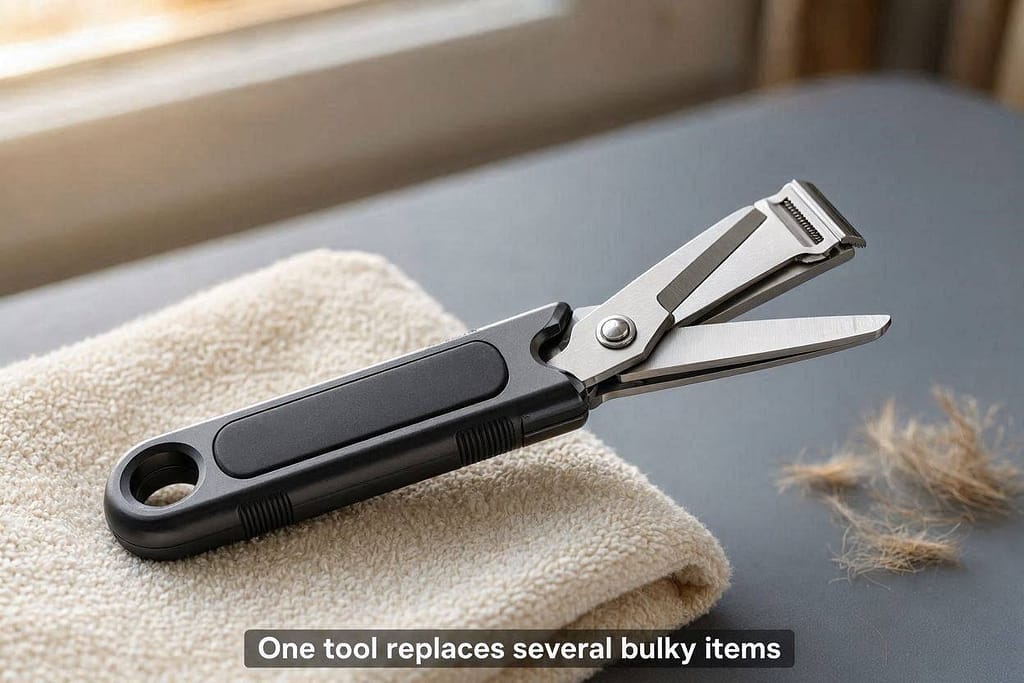
- Must have: Scissors (blunt tip), nail clippers, bottle opener (for meds)
- Why: One tool replaces several bulky items
**17. Digital Copies of Medical Records (On USB + Cloud)

- Include: Vaccine records, medical history, microchip number
- Apartment advantage: Quick sharing with emergency vet via phone
- Storage: USB in kit, cloud accessible from phone
📱 THE APARTMENT EMERGENCY ACTION PLAN
Having the kit is 50%. Knowing how to use it is the other 50%.
The 4-Step Apartment Emergency Protocol:
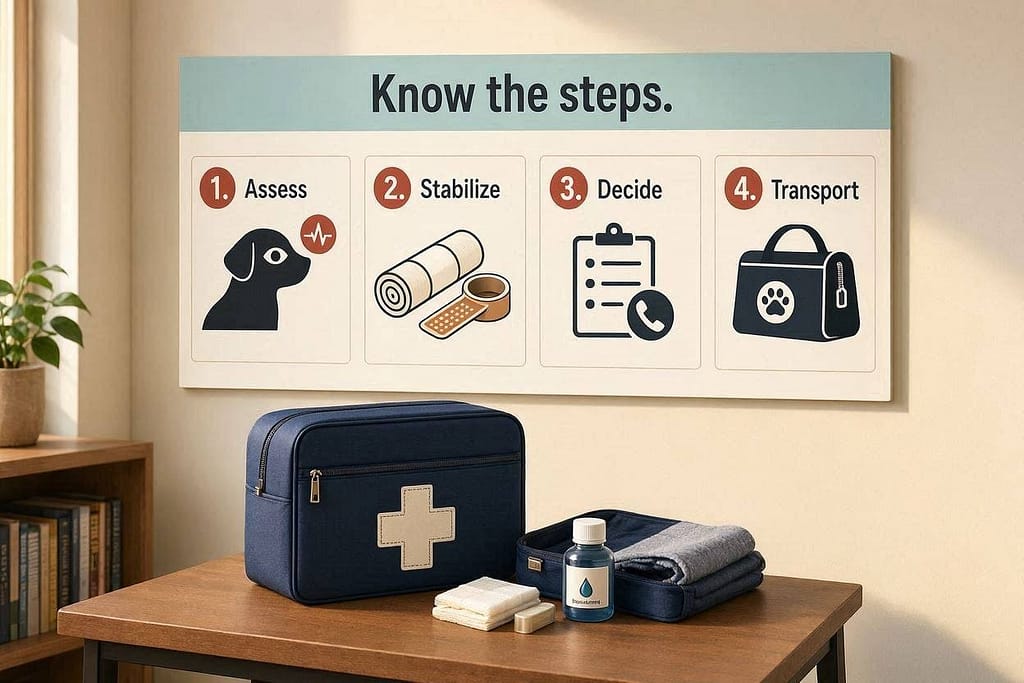
Step 1: ASSESS (10 seconds)
- Is there immediate danger (fire, smoke, falling debris)?
- Can you safely help your dog here or do you need to evacuate?
- Apartment rule: If evacuating, grab kit BY THE DOOR first
Step 2: STABILIZE (60 seconds maximum)
- Stop bleeding (pressure + bandage)
- Prevent further injury (move to safe area)
- Key: You’re not fixing the problem, you’re making them safe to transport
Step 3: DECIDE: Stay or Go?
STAY & CALL VET IF:
• Minor cuts/scrapes
• Small splinters
• Non-emergency issues

EVACUATE & GO TO EMERGENCY VET IF:
• Difficulty breathing
• Unconsciousness
• Severe bleeding
• Suspected poisoning
• Major trauma (fall, impact)
Step 4: TRANSPORT (Apartment-Specific)
- Use a blanket as a stretcher (through narrow hallways)
- Take STAIRS if possible (elevators may fail or be slow)
- Tell building security where you’re going (they can direct EMS)
🏢 APARTMENT-SPECIFIC EMERGENCIES & SOLUTIONS
Emergency 1: High-Rise Fire Alarm
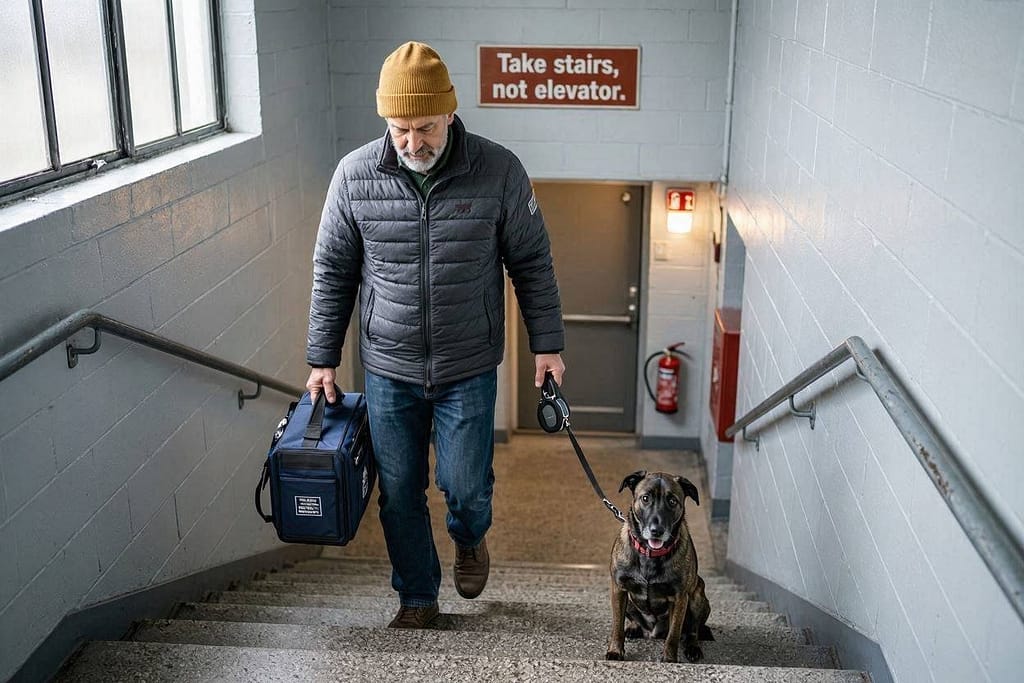
What to do:
- Grab kit by door (already packed, remember?)
- Use slip lead (faster than harness in panic)
- Take stairs, not elevator
- Have someone call down to security that you’re coming
Pro tip: Practice this drill monthly. Time yourself. Aim for under 90 seconds from alarm to exiting stairwell.
Emergency 2: Toxic Ingestion (Common in Apartments)

Most common apartment toxins:
- Houseplants (lilies, pothos, sago palms)
- Human medications (left on nightstands)
- Cleaning products (under sinks without child locks)
- Chocolate/raisins (on countertops)
Immediate action:
- Identify what was ingested (take container/plant sample)
- Call ASPCA Poison Control: (888) 426-4435 (have $65 fee ready)
- Follow their instructions BEFORE heading to vet
Emergency 3: Balcony or Window Fall
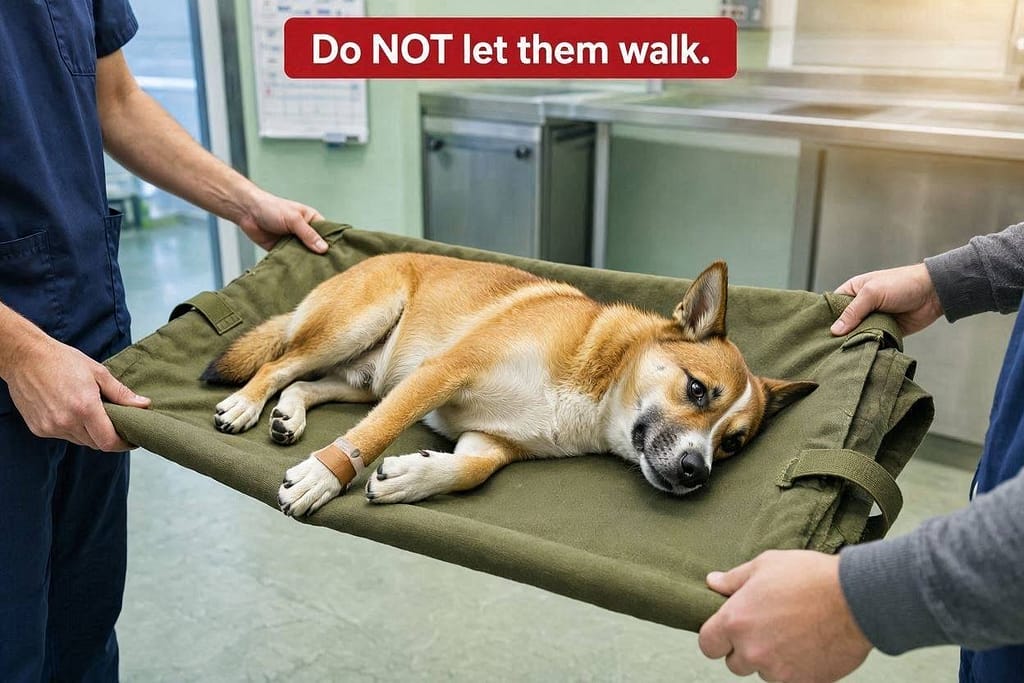
Even with nets, accidents happen:
- Do NOT let them walk – Internal injuries may not be visible
- Use a blanket as a stretcher to move them
- Check for shock (pale gums, rapid breathing)
- Straight to emergency vet – Even if they seem fine
Let us ask you something honestly:
Right now, without looking—do you know where your nearest 24-hour emergency vet is?
If not, pause. Open Google Maps. Search “24-hour emergency vet.” Save it. Add to contacts. Do it now.
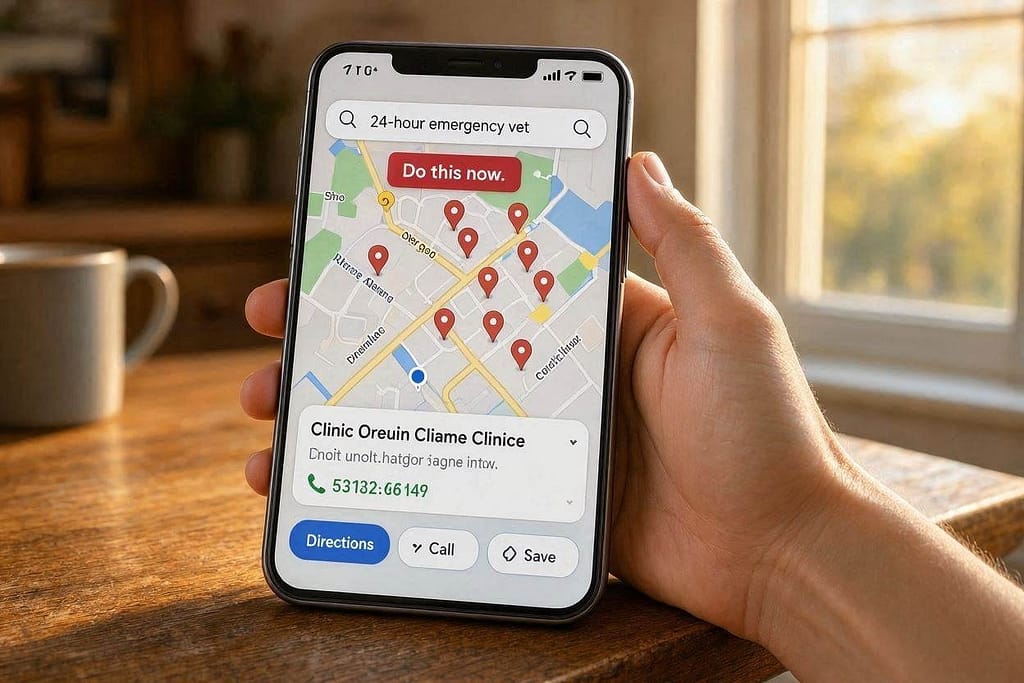
We’ll wait.
🗓️ YOUR MONTHLY KIT MAINTENANCE CHECKLIST
A first aid kit that expires is worse than no kit at all. Set calendar reminders for:
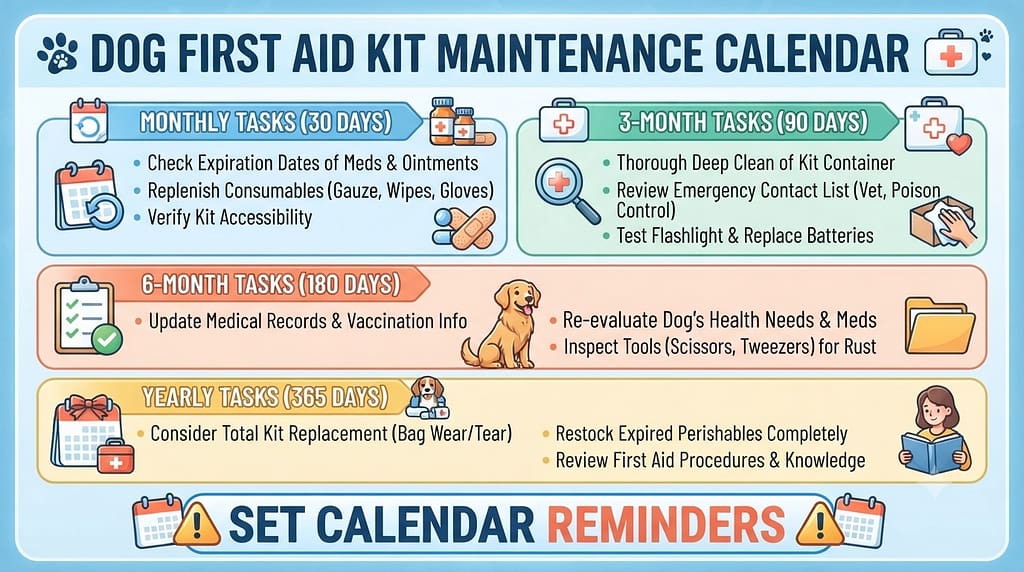
Every Month:
- Check that kit is by door (not buried)
- Test flashlight batteries
- Ensure slip lead is accessible
Every 3 Months:
- Check expiration dates
- Replace saline solution (opens degrade)
- Restock used items immediately
Every 6 Months:
- Replace hydrogen peroxide
- Update photo if dog’s appearance changed
- Review emergency contacts (numbers change!)
Every Year:
- Take a pet first aid/CPR course (Red Cross offers online)
- Practice evacuation drill with building management
- Update all digital records
📦 WHERE TO STORE YOUR KIT (Apartment Edition)
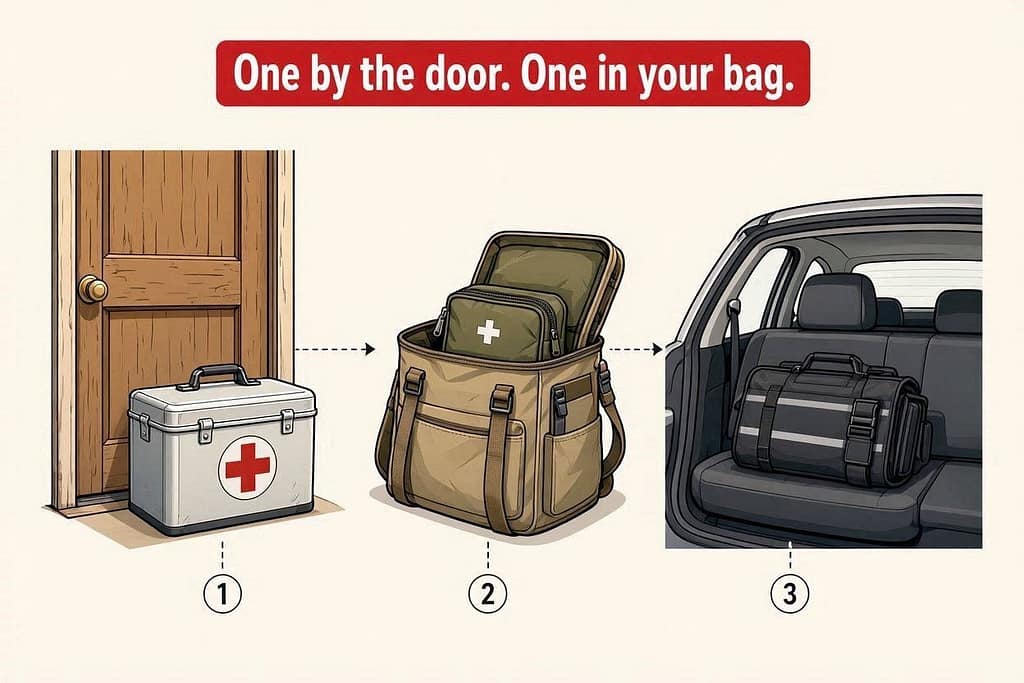
The Rule: One by the door, one mini-kit in your go-bag.
Location 1: Main Kit
- Place: By your main exit door
- Container: Clear plastic bin with lid (so you can see contents)
- Size: Shoebox or slightly larger
- Label: “DOG FIRST AID – [Your Apartment Number]”
Location 2: Mini-Kit (Go-Bag Version)
- Container: Large ziplock bag or small pouch
- Contents: Slip lead, water pouch, photo, bandage, antiseptic wipe
- Place: In your evacuation go-bag (you have one, right?)
Location 3: Car Kit (If you have one)
- Same as main kit, smaller version
- Apartment bonus: Keep in trunk for dog park visits
🚨 THE “OH CRAP, IT HAPPENED” SCENARIOS
Scenario A: Saturday night, glass breaks, paw bleeding
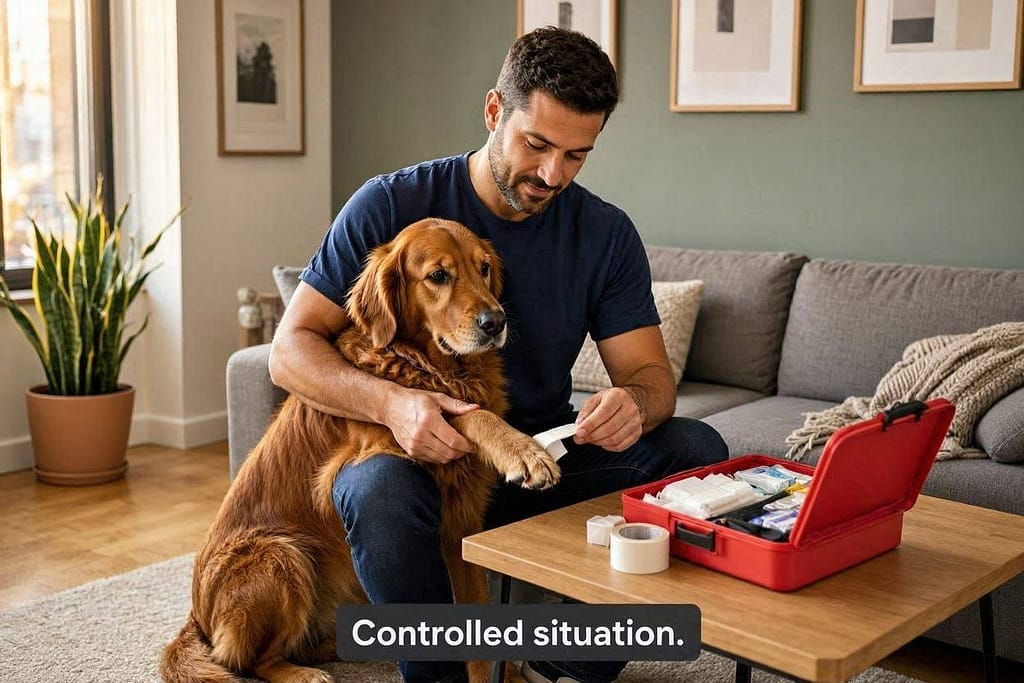
Your actions:
- Apply pressure with a clean cloth (from kit)
- Flush with saline
- Apply antiseptic, bandage with vet wrap
- Call emergency vet for guidance
- Result: Controlled situation, no panic
Scenario B: Without kit (what usually happens)

- Panic, running around apartment
- Use random towel (not sterile)
- Try to find vet number (phone dead?)
- Blood everywhere, stress through the roof
- Result: Worse injury, longer recovery
Which scenario do you want?
🎁 BONUS: The “Neighborhood Network” Strategy
Here’s an apartment-specific pro tip:
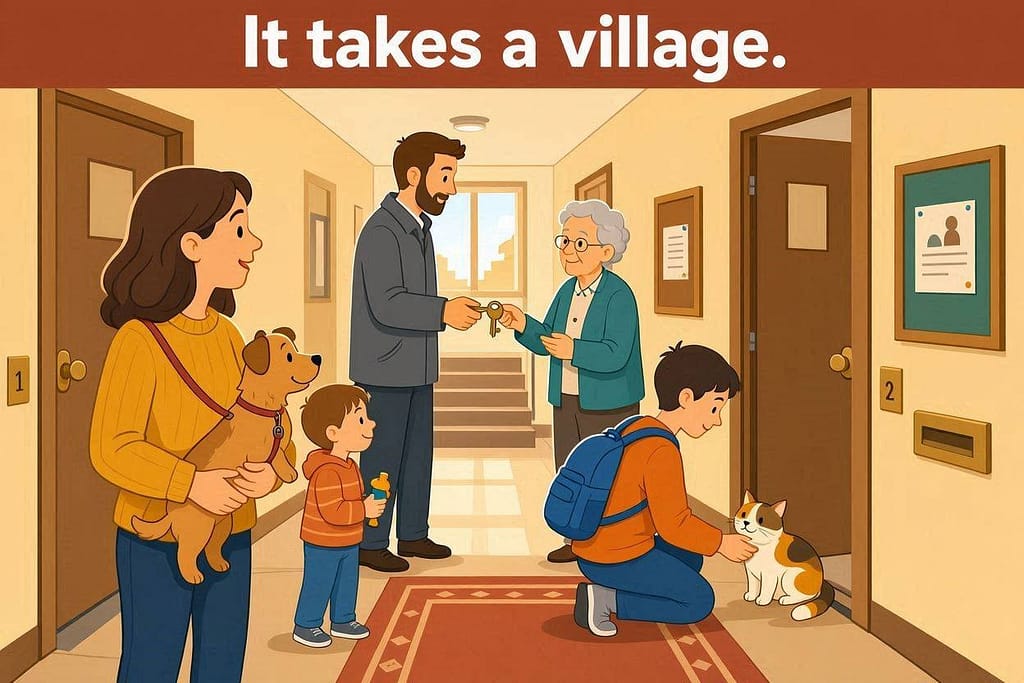
Create a building pet emergency network:
- Identify 2-3 responsible pet owners in your building
- Exchange keys with them (or give to building manager)
- Share basic first aid kit locations
- Have a group text for emergencies
Why this works: If you’re trapped and your dog is alone, someone can help. It’s the apartment version of “it takes a village.”
📥 YOUR READY-TO-USE CHECKLIST (Printable)
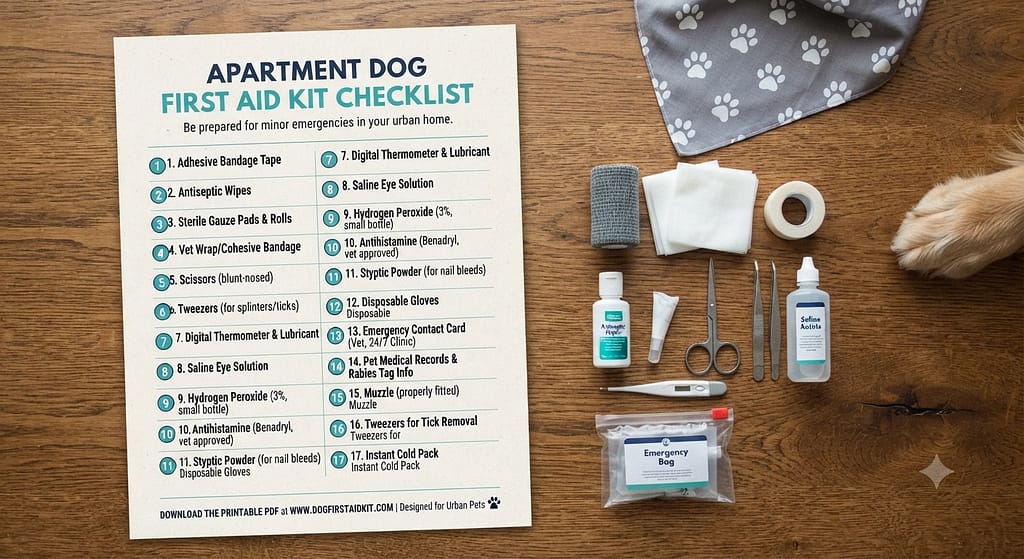
Click here to download [Apartment Dog First Aid Kit Checklist PDF]
Or copy this text version:
text
[ ] 1. Emergency slip lead
[ ] 2. Foldable bowl + 3 water pouches
[ ] 3. Recent dog photos + your ID
[ ] 4. Laminated emergency contact card
[ ] 5. Vet wrap (2 rolls)
[ ] 6. Non-stick pads (5-10)
[ ] 7. Sterile saline (250ml)
[ ] 8. Antiseptic wipes (10)
[ ] 9. Tweezers + magnifier
[ ] 10. Disposable gloves (5 pairs)
[ ] 11. Benadryl (vet-dosed)
[ ] 12. Hydrogen peroxide 3%
[ ] 13. Activated charcoal (10 capsules)
[ ] 14. Styptic powder/pencil
[ ] 15. Pet thermometer + lube
[ ] 16. Multi-tool
[ ] 17. Digital medical records (USB)
🎯 YOUR NEXT STEPS (Don’t Close This Tab Yet)
You’ve read 2,000 words about apartment dog first aid. Now, choose ONE of these to do in the next 10 minutes:
Option 1 (Easy):
Take a photo of your dog right now. Save it as “Emergency Dog Photo” in your phone favorites.
Option 2 (Medium):
Order the 3 most critical items you’re missing: Vet wrap, saline solution, slip lead.
Option 3 (Advanced):
Set a calendar reminder for this Sunday at 2 PM: “Build Dog First Aid Kit.”
🤔 STILL OVERWHELMED? START HERE:
If this feels like too much, just do THE FIVE ESSENTIALS today:
- Slip lead by the door ($8)
- Photo + contact card in waterproof bag (free)
- Vet wrap (1 roll, $6)
- Saline solution (from pharmacy, $3)
- Emergency vet number in your phone (free)
That’s under $20 and 15 minutes. It covers 80% of common emergencies.
📞 FINAL REALITY CHECK
When seconds count…
The average response time for EMS in urban areas: 7-10 minutes.
The time it takes for a dog to bleed out from a severed artery: 2-3 minutes.
The time it takes to grab your pre-packed kit by the door: 3 seconds.
Which timeline do you want to be on?
Your apartment doesn’t have to be a liability. With this kit, it becomes a prepared, safe space where you and your dog can thrive—knowing you’re ready for anything.
Because here’s the truth: Emergencies don’t wait for you to be ready. But you can be ready for them.

Start today. Build the kit. Practice the drills. Sleep better tonight knowing you’ve taken the most important step in apartment dog ownership: preparing for the unexpected.
🐾 — Apartment Dog Guide (ADG)
Living large in small spaces, one paw at a time. That’s the apartment dog life—see you in the next guide!.


