
You lock the door, double-checking you have your keys.
It’s a sweltering 95-degree day, but your apartment feels… okay.
The blinds are drawn, and a fan is on. You’ll only be gone a few hours.
Your dog has water. It’s fine, right?
Here’s the gut-check truth:
Your apartment can transform into a dangerous heat trap faster than you think. And your dog, your furry best friend who trusts you completely, is utterly vulnerable to it.
Why?
Because while you can sweat everywhere, dogs only cool down primarily by panting and through the limited sweat glands in their paw pads.
In a sealed, stagnant apartment, that system fails. Catastrophically.
But this isn’t a post to scare you.
It’s your ultimate, action-packed survival manual.
We’re going to move beyond “make sure they have water” and dive into the science, the silent symptoms, and the lifesaving hacks to turn your apartment into a cool sanctuary.
Consider us your heat-safety co-pilot.
Ready to become your dog’s heatwave hero?
Let’s go.
Why Your Apartment is a Unique Danger Zone
First, let’s understand the enemy.
A house might have cross-ventilation, a cooler basement, or easy yard access.
An apartment? It’s often a sealed box with heat coming at it from all sides.
The Greenhouse Effect Isn’t Just for Planets.
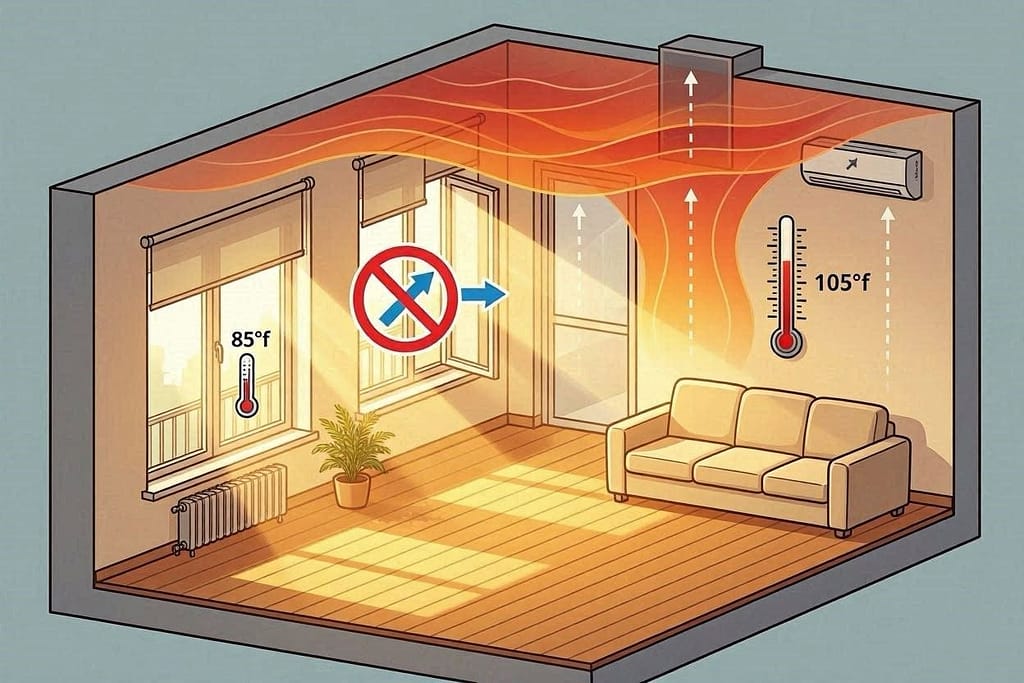
Think about it: sunlight pours through your windows, heating the floors and furniture.
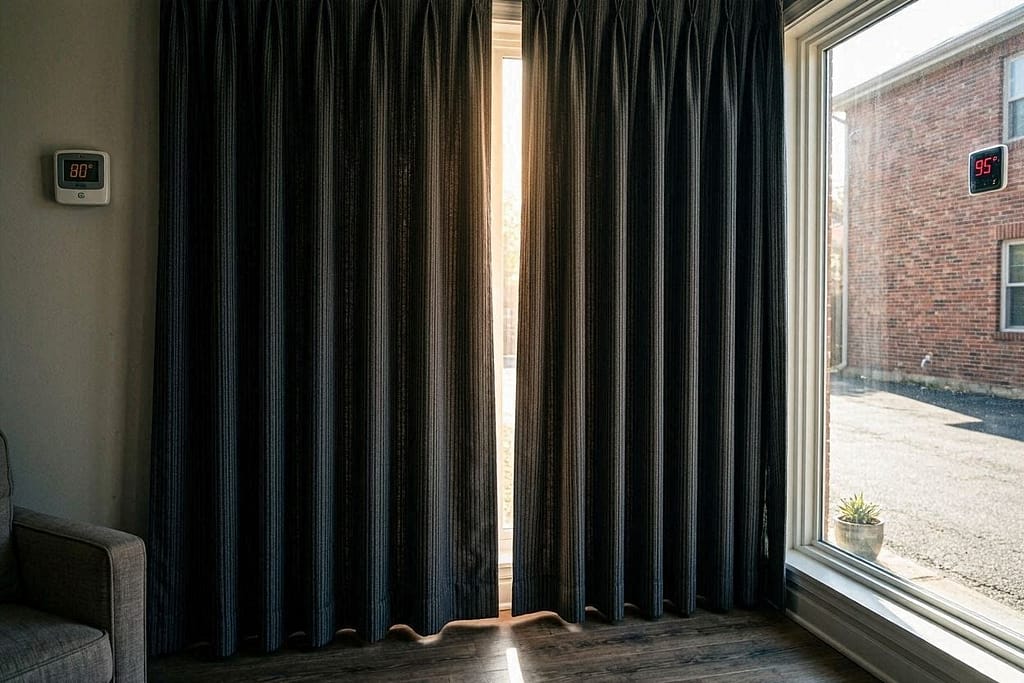
That heat gets trapped inside. Even with the AC off for a workday, temperatures can soar 10, 15, or even 20 degrees above the outside temp by late afternoon.
Your north-facing apartment? Not safe either. Ambient heat from the building itself and lack of airflow are the culprits.
The Brutal Math of a Dog’s Body.
A dog’s normal body temperature is between 101°F and 102.5°F.
Heatstroke begins at about 106°F. At 109°F, organ failure starts, and it’s often fatal. The climb from “panting” to “crisis” can happen in mere minutes.
This isn’t hype. It’s physiology. And it means our number one job is prevention.
The 5-Second Paw Test & Other Must-Know Rules
Let’s get interactive.
Here’s your first actionable tool.
The 5-Second Asphalt & Floor Test:
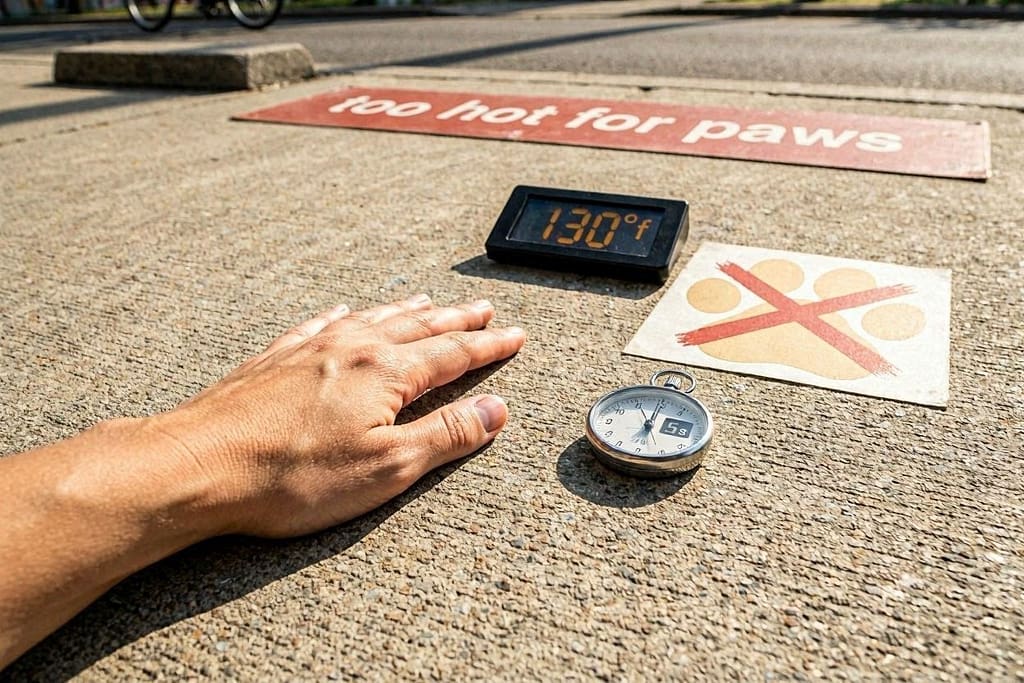
- Place the back of your hand firmly on the surface (balcony tile, near a sunlit window, the pavement outside).
- Hold it for five full seconds.
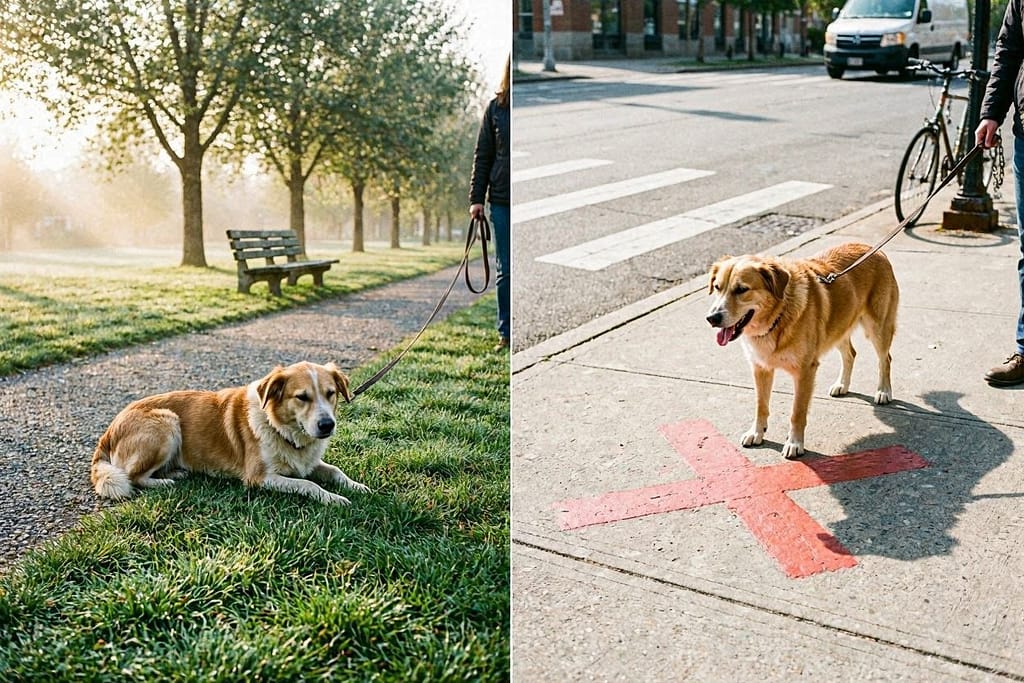
- If it’s too hot for your hand, it’s TOO HOT for your dog’s paws. This can cause severe burns in seconds.
The Golden Rule of “Errands”:
If you can’t take your dog inside with you, leave them at home. A car is a deathtrap. A tethered stop outside a store is dangerous and stressful. A quick 10-minute errand can easily turn into 30. Don’t risk it.
The Myth of “They’ll Be Fine”:
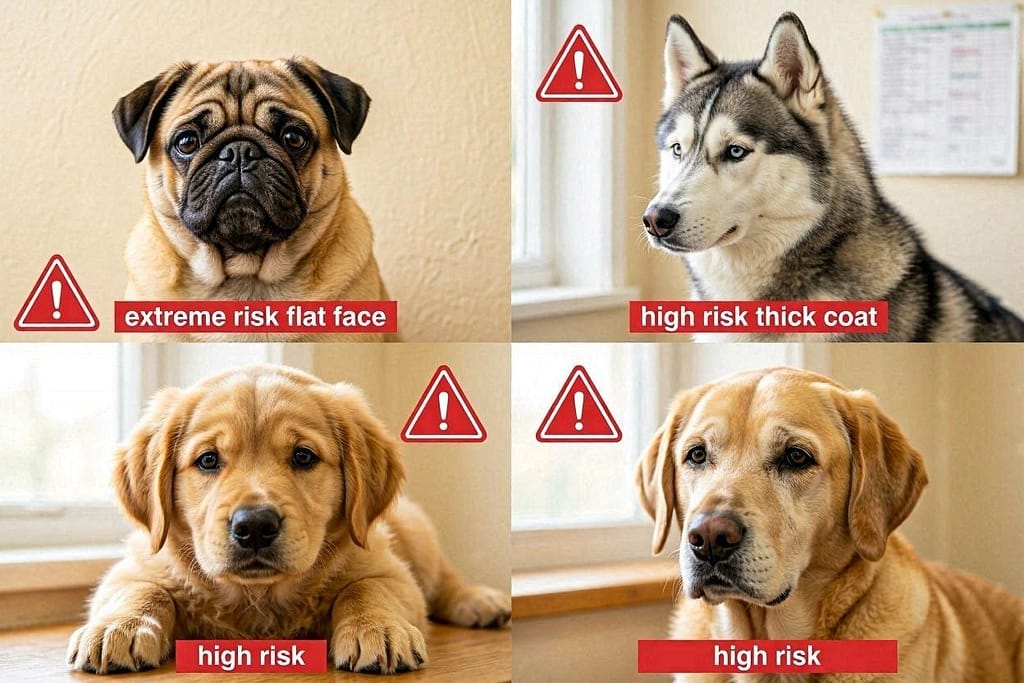
Breed matters, but not how you think. Yes, brachycephalic (flat-faced) breeds like Pugs, French Bulldogs, and Boston Terriers are EXTREMELY high-risk due to their compromised airways.
But don’t get a false sense of security with a long-nosed breed.
A thick-coated Husky or Malamute is also at massive risk in an apartment heatwave. Older dogs, puppies, and overweight dogs are all in the high-risk category.
Feeling informed?
Good. But knowledge is useless without the ability to spot trouble. Let’s decode your dog’s distress signals.
Red Alert! Recognizing Heatstroke Before It’s Too Late
Heatstroke doesn’t always look like a dramatic collapse.
It starts with subtle signs that escalate rapidly. Bookmark this list.
Early Warning Signs (ACT NOW):
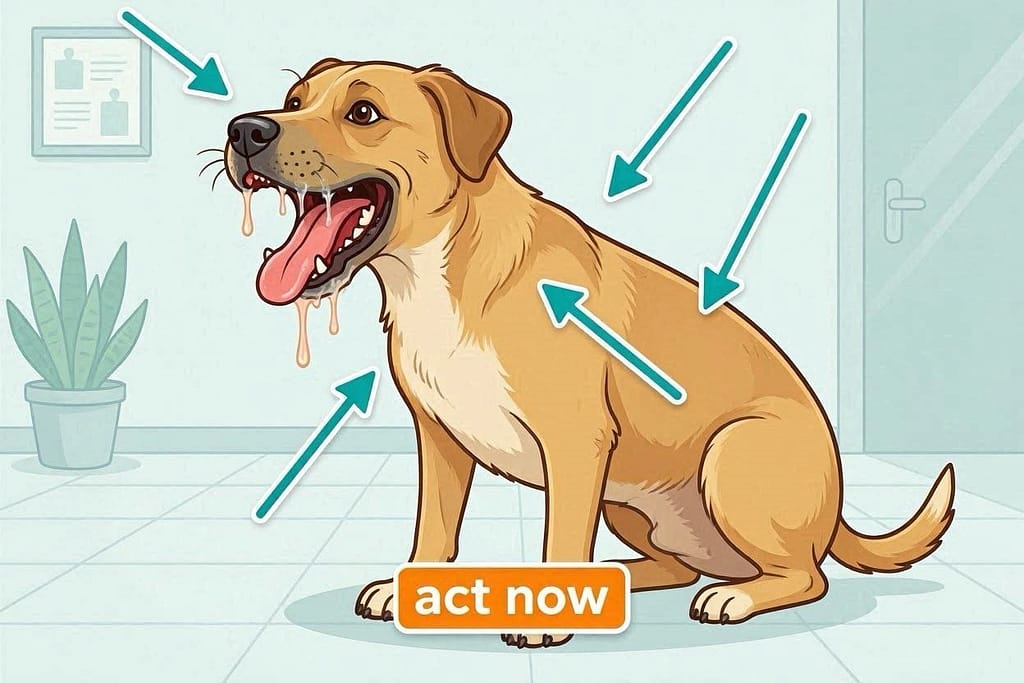
- Excessive, Frantic Panting: Beyond the normal “after a walk” pant. It may seem loud and desperate.
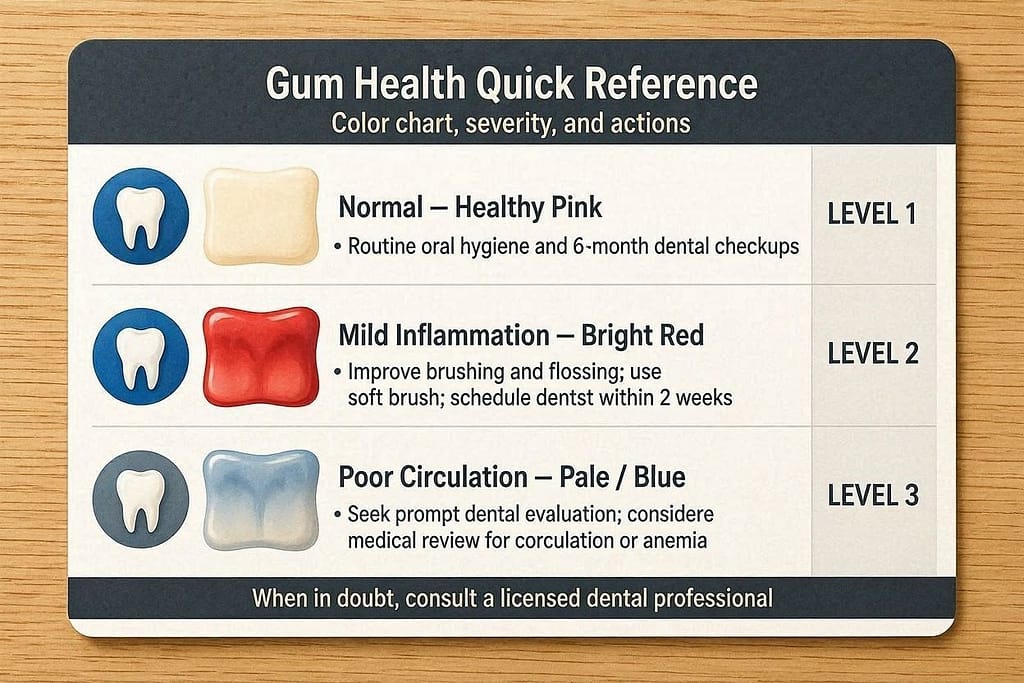
- Bright Red or Purple Gums/Tongue
- Thick, Ropy Saliva
- Mild Lethargy or Restlessness: Can’t seem to get comfortable.
- Seeking Cool Surfaces: Pressing against bathroom tiles or the bathtub.
Critical Emergency Signs (THIS IS A VET NOW SITUATION):
- Panting Stops Suddenly: This is a terrifying sign of total system shutdown.
- Gums Turn Pale, Blue, or Gray
- Confusion, Staggering, or Collapse
- Vomiting or Diarrhea (possibly with blood)
- Seizures
Your Emergency Action Plan:
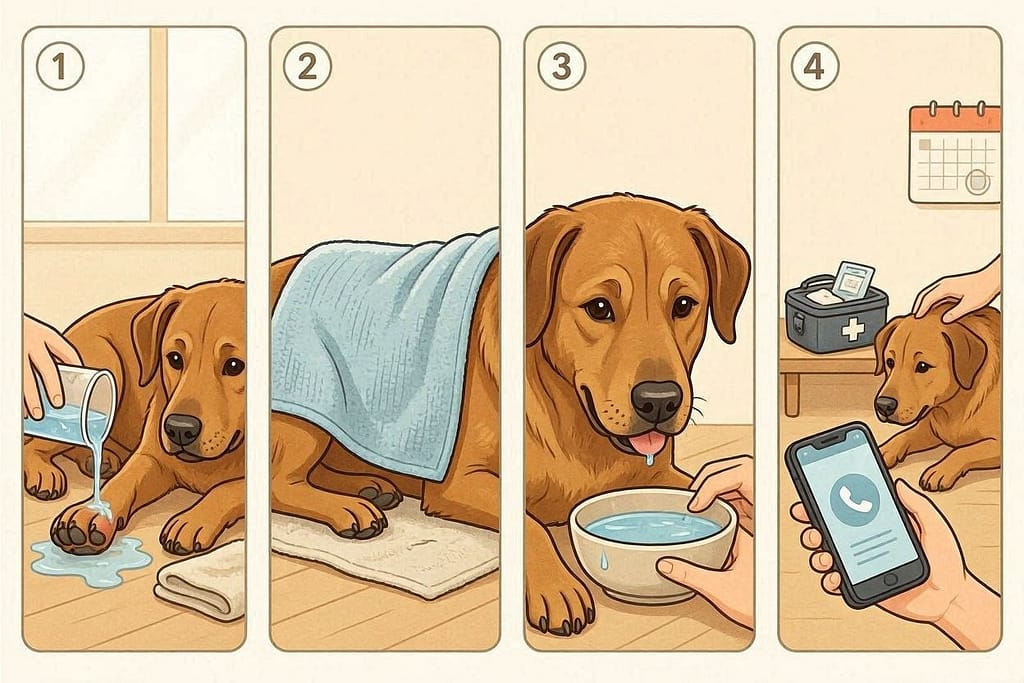
- Move them to a cool area IMMEDIATELY.
- Start gradual cooling: Use cool (not ice-cold) water on their paw pads, belly, and groin. Soak towels in cool water and drape them over the body. Do not submerge or use ice! This can cause shock.
- Offer small amounts of cool (not cold) water to drink.
- CALL YOUR VET OR EMERGENCY CLINIC ON THE WAY. Tell them you suspect heatstroke and are en route. They will prepare for your arrival.
This is serious stuff.
But the goal is to never, ever get to this point. So, how do we engineer a cool haven?
Your Apartment Heat-Safety Audit: A Room-by-Room Guide
Grab a notepad. We’re doing a safety walk-through of your space right now.
The Living Room/Bedroom (The Sun Traps):
- Blackout is Your Best Friend: Invest in thermal blackout curtains. Keep them closed during the peak sun hours (10 am – 4 pm). It makes a dramatic difference.
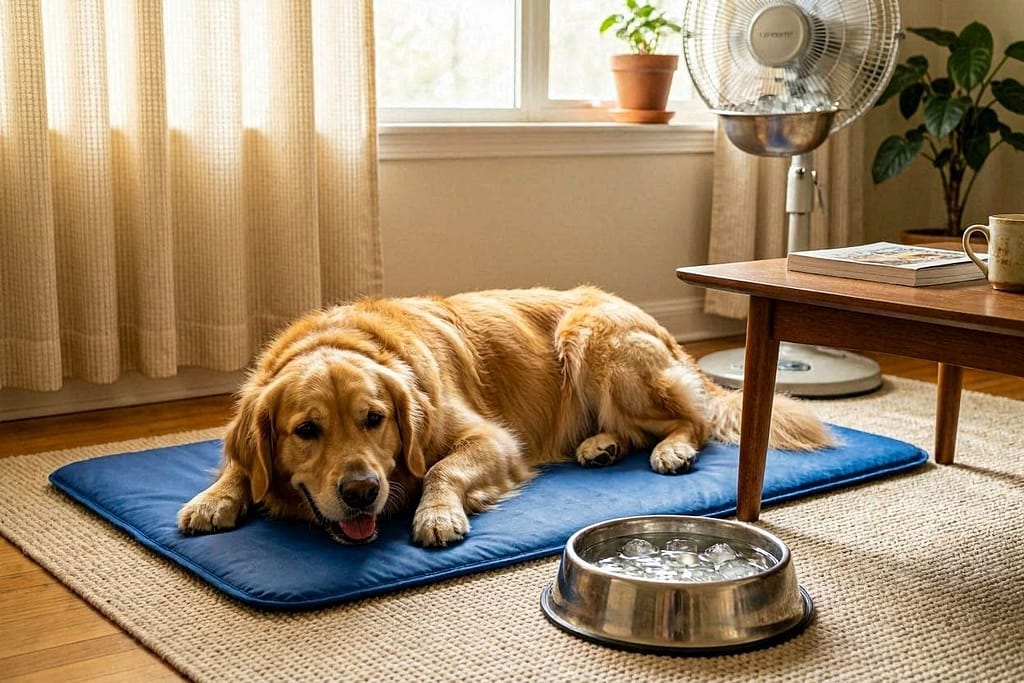
- Create a Cool Zone: Designate the coolest, most shaded room (often a bathroom or interior hallway) as the “heat retreat.” Put their bed, water, and some toys there.
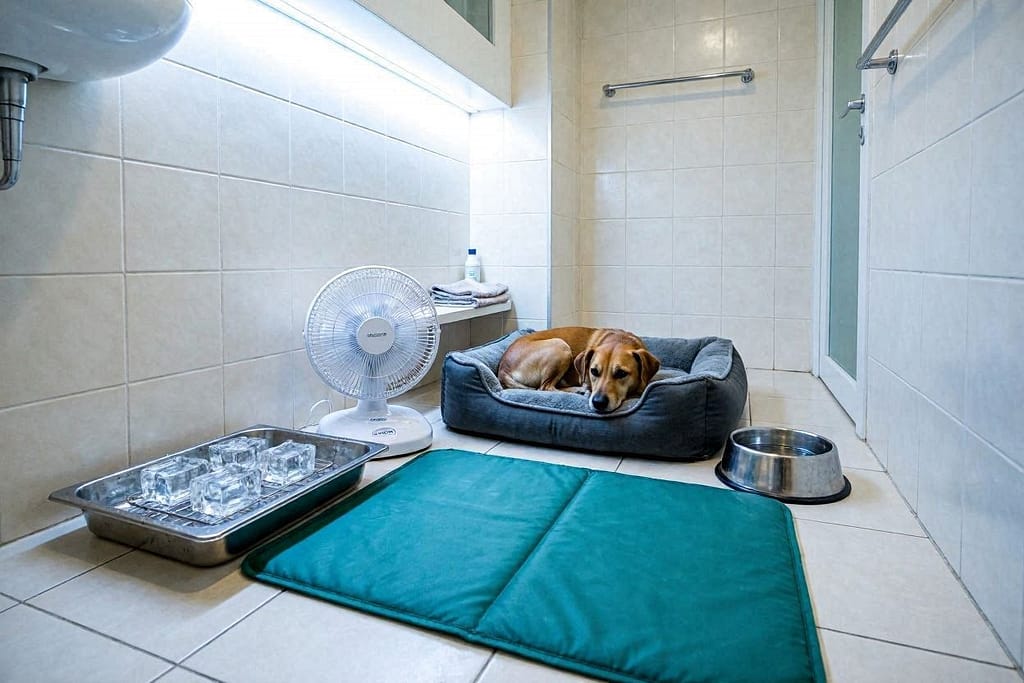
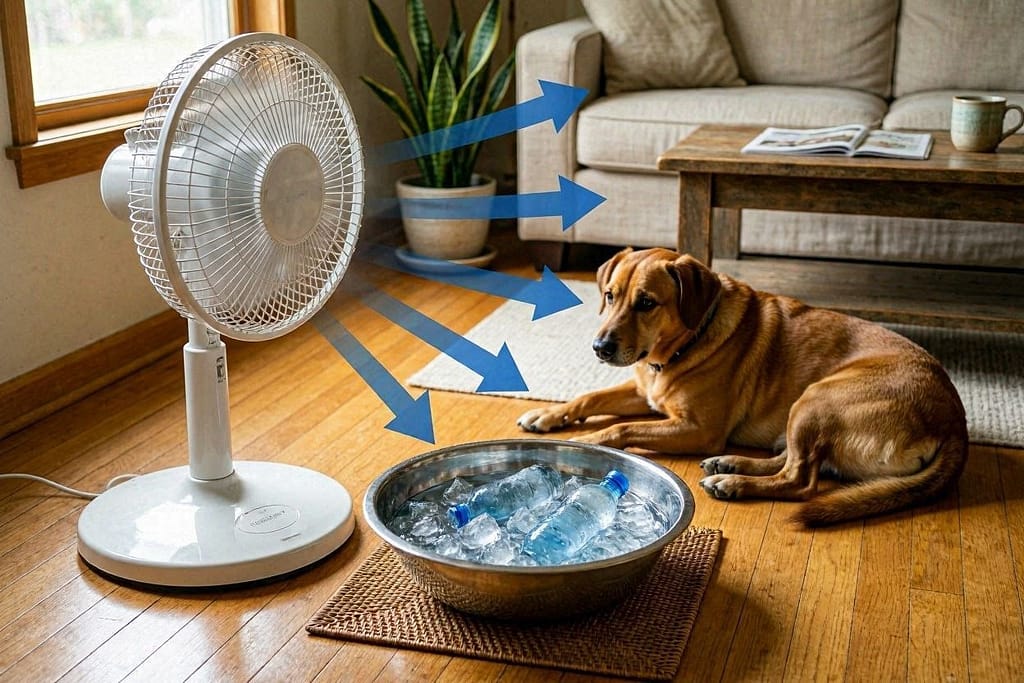
- Fans are for Airflow, Not Cooling: A fan alone doesn’t cool a dog; it just moves hot air. BUT, place a bowl of ice or a frozen water bottle in front of a fan to create a DIY air conditioner! Game-changer.
The Kitchen/Hard Floors (The Relief Stations):
- The Magic of Tile: Encourage your dog to lie on uncarpeted kitchen or bathroom floors. You can even dampen a towel and lay it there for them.
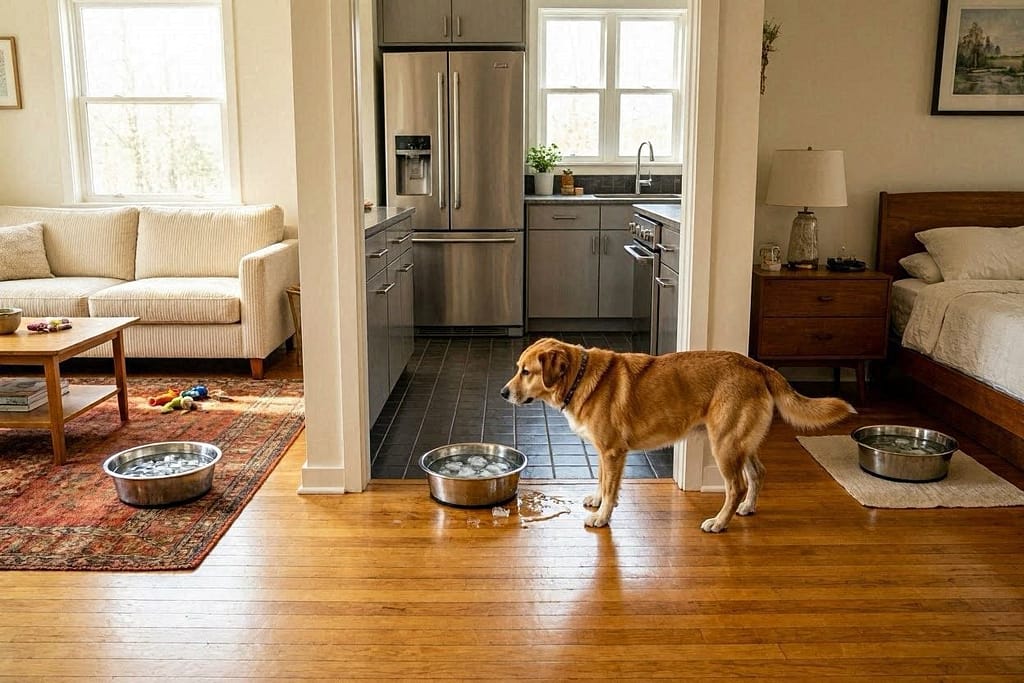
- Water, Water Everywhere: Have multiple water bowls in different rooms. Add ice cubes! Consider a pet water fountain—the moving water encourages drinking and helps it stay cooler longer.
The Balcony/Windows (The Danger Zones):
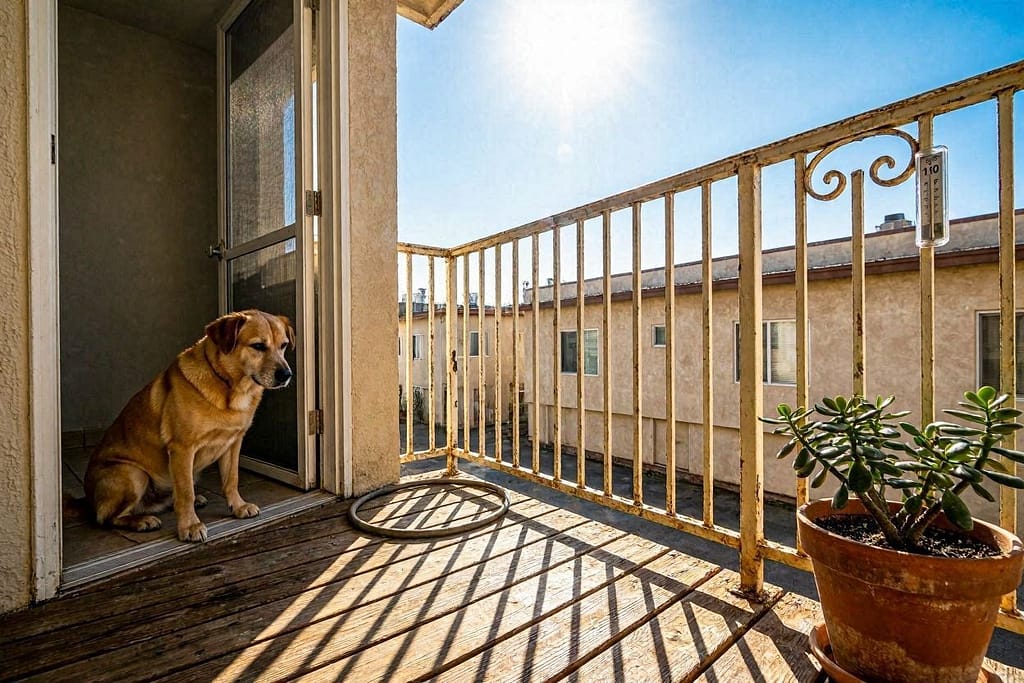
- Balconies are Off-Limits on hot days unless they are fully and deeply shaded all day. Surfaces radiate heat.
- Window Screens are Not Safety Devices: A dog desperate for a breeze can and will push through a standard screen. Ensure windows are secured, especially on high floors.
Now, let’s talk about the superstar products and genius hacks that can save the day.
Cooling Hacks & Products That Actually Work
You don’t need to break the bank. Here’s a mix of DIY and store-bought solutions.
The DIY Toolkit:
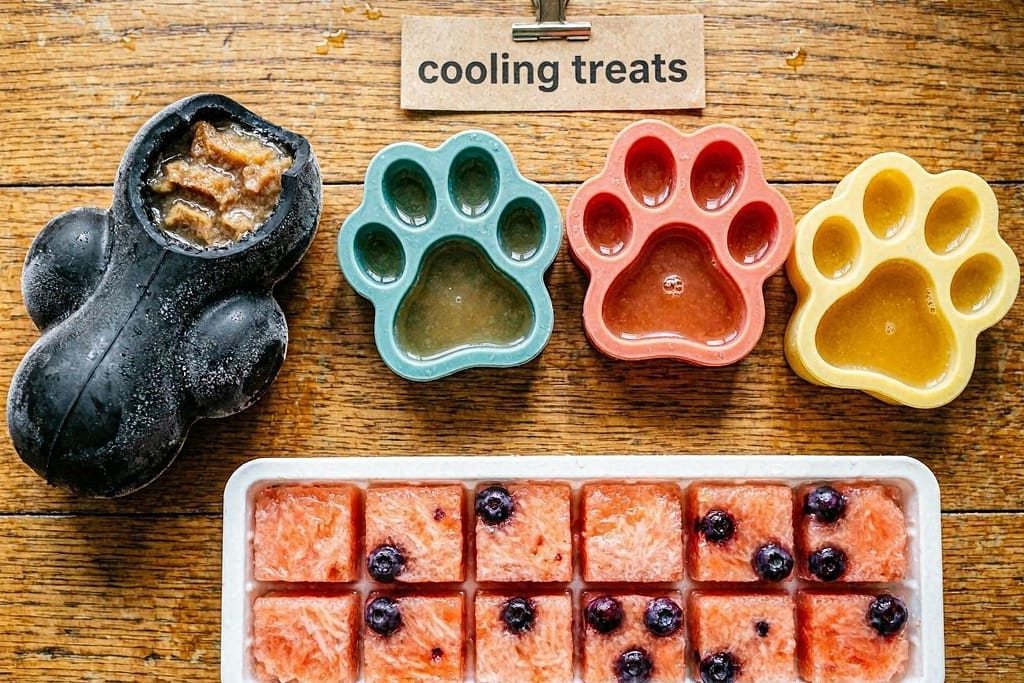
- Frozen Kongs & Toppls: The ultimate mental and physical cooler. Stuff them with wet kibble, pumpkin, or yogurt and freeze. Licking is calming and consumes energy without raising body temp.
- Chilly Towel Burrito: Soak a hand towel, wring it out, fold it, and freeze it in a Ziploc bag. Drape it over your dog’s neck or back.
- Pupsicles: Make broth ice cubes (use low-sodium broth) or blend dog-safe fruit like watermelon (seedless!) and blueberries with water and freeze in molds.
The Product Shortlist:
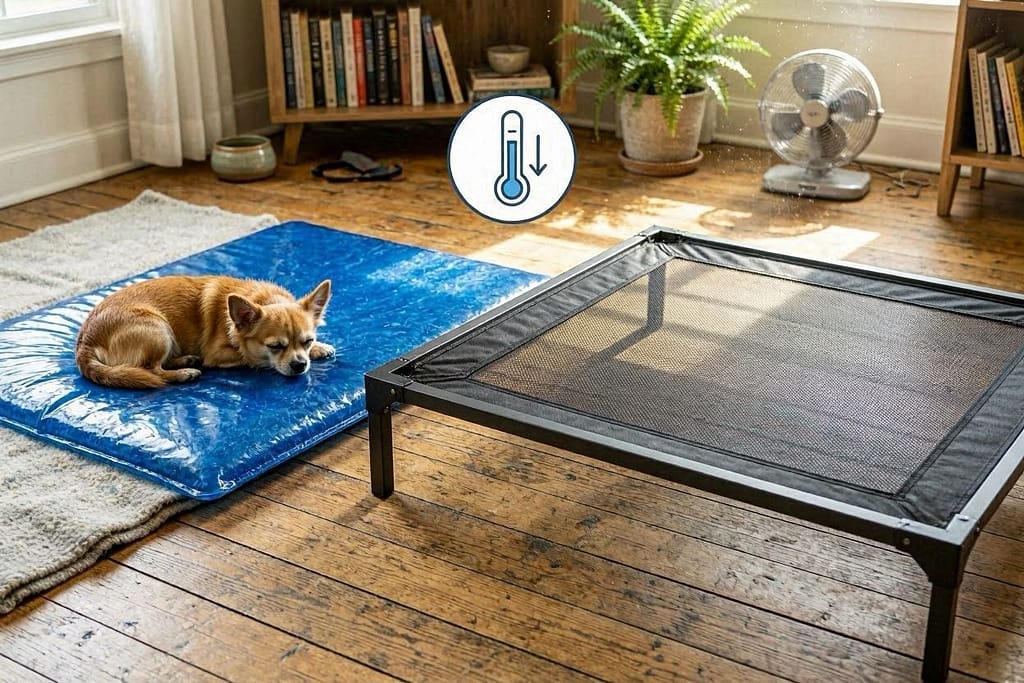
- Cooling Mats: Gel-filled or pressure-activated mats can offer great relief. Always supervise use to ensure they don’t chew it.
- Elevated Cooling Beds: Allow air to circulate underneath them.
- Portable AC or Evaporative Cooler: If your building’s AC is unreliable, a small unit for the “cool zone” room can be a lifesaver.
Adjusting Routines: Walks, Food, and Play
Your schedule needs a summer overhaul.
- Walk at Dawn, Stroll at Dusk: Asphalt and concrete store heat. If you can’t do the 5-second test, it’s too hot. Protect those paws with breathable dog shoes if necessary.
- Hydrate Before & After: Offer water before your walk and immediately after.
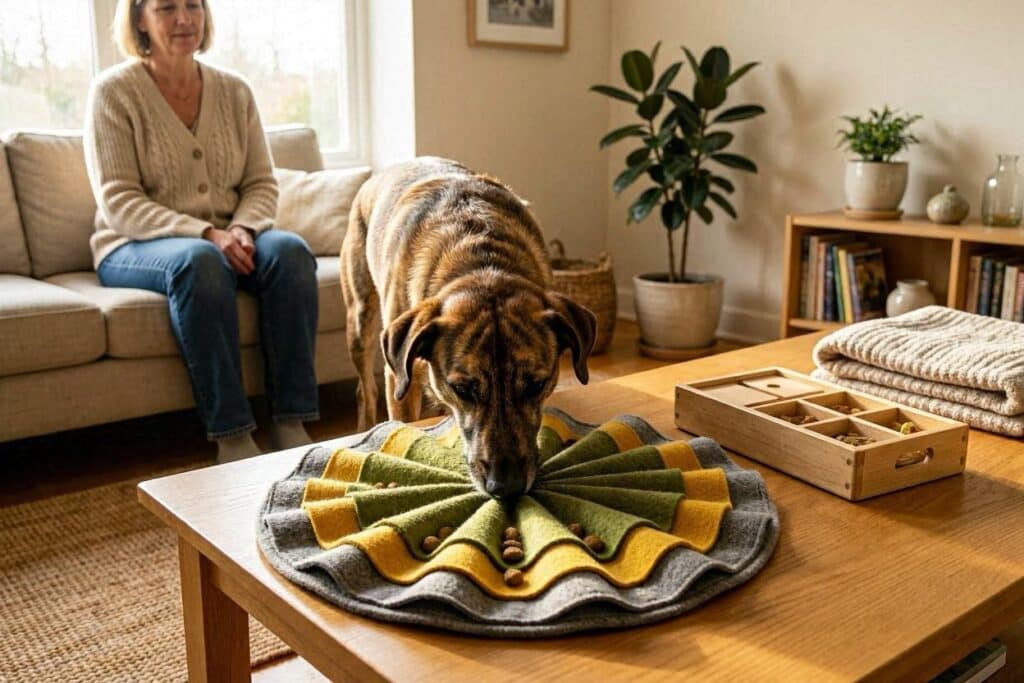
- Swap High-Energy Play for Mental Games: A 15-minute training session or a snuffle mat feeding tires them out without the heat risk. Puzzle toys are your new best friend.
- Consider a Later, Lighter Dinner: Digestion creates metabolic heat. A smaller, cooler meal (maybe some wet food) can help.
The Biggest Question: To Crate or Not to Crate in the Heat?
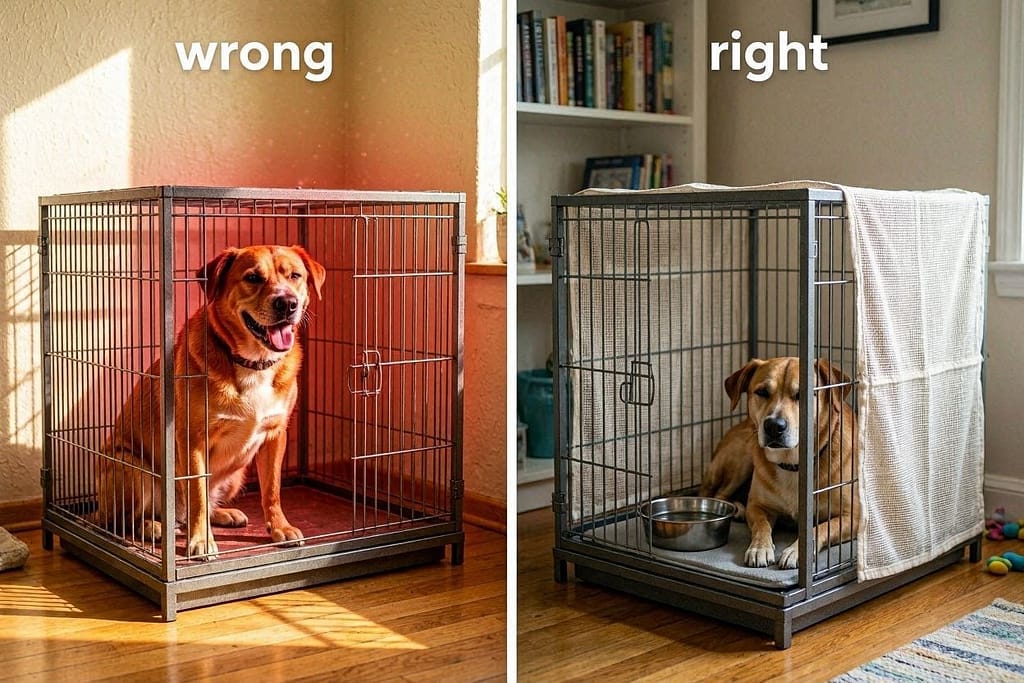
This is crucial. A crate can amplify heat. It restricts movement to find a cooler spot and can block airflow.
If you must crate, ensure it is in the absolute coolest part of the apartment, never in direct sunlight, and consider covering only the top/sides with a lightweight, breathable fabric to create shade without blocking air.
Better yet, on extreme days, use a puppy-proofed room or pen instead.
Your Action Plan: Be the Hero Your Dog Deserves
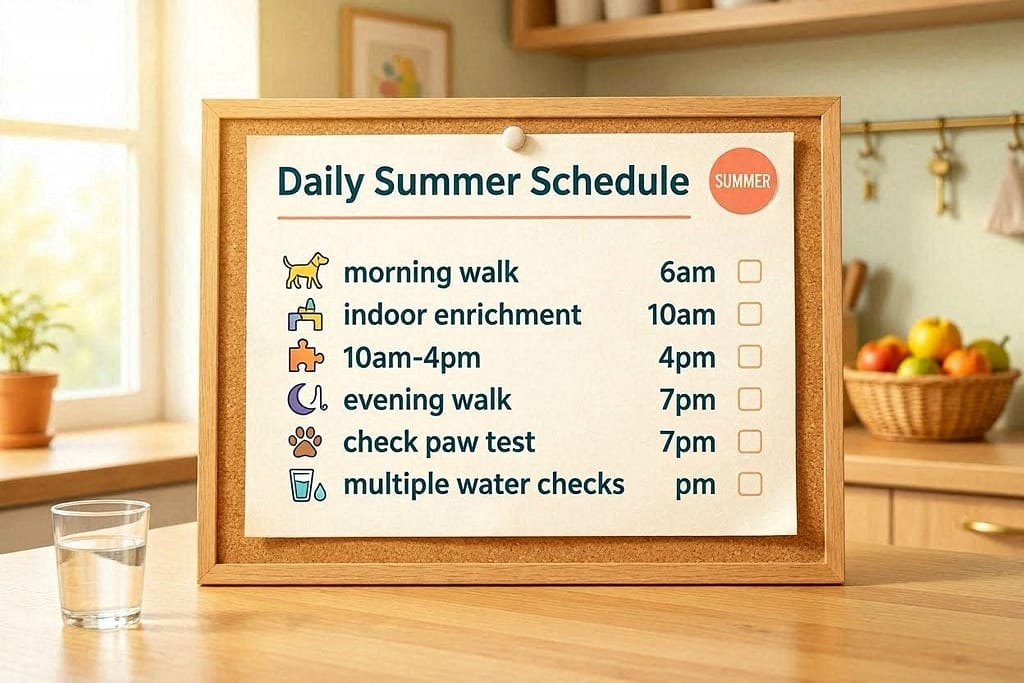
Let’s wrap this up with your Summer Safety Pledge:
- I will do the 5-second test before every walk.
- I will create a designated “cool zone” in my apartment this weekend.
- I will never assume my apartment is “fine”—I’ll monitor the actual temperature with a thermometer.
- I have my vet’s emergency number saved in my phone.
- I will share this knowledge with my fellow apartment-dog friends.
The bond you have with your dog is built on trust. They trust you to feed them, love them, and keep them safe. In the heat of summer, that safety depends on your awareness and preparation. You’ve got this. Be cool, stay vigilant, and enjoy a safe, happy summer with your best friend.
🐾 — Apartment Dog Guide (ADG)
Living large in small spaces, one paw at a time. That’s the apartment dog life—see you in the next guide!.


