
You’re chopping onions for dinner.
A piece slips to the floor. Before you can react, your dog’s vacuum-like mouth has sucked it up.
You pause, thinking: “Wait… can dogs eat onions?”
Your mind races. You reach for your phone.
Your heart pounds as you frantically search while your dog looks up, tail wagging, completely unaware they might have just ingested something dangerous.
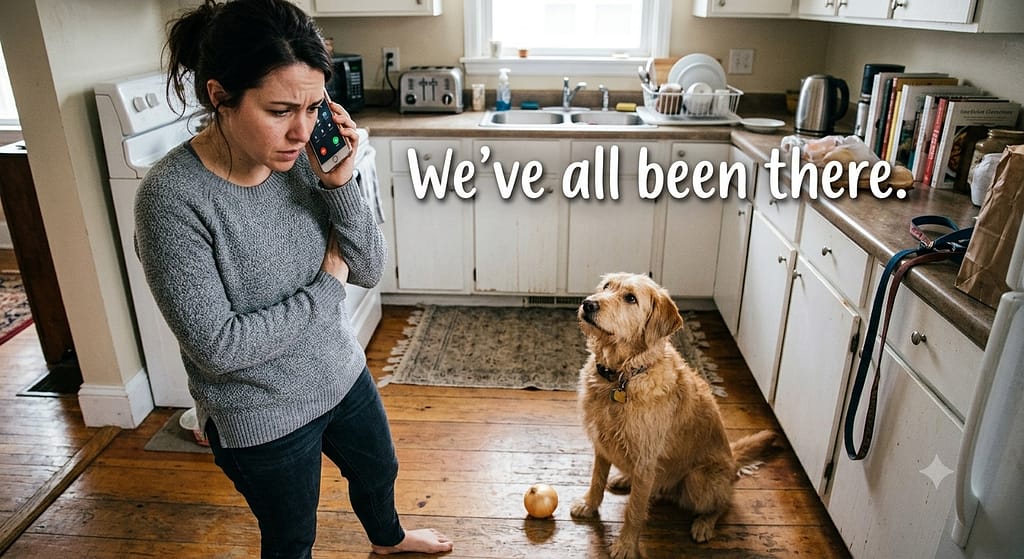
Sound familiar?
It happens to even the most careful dog owners.
Here’s the terrifying truth:
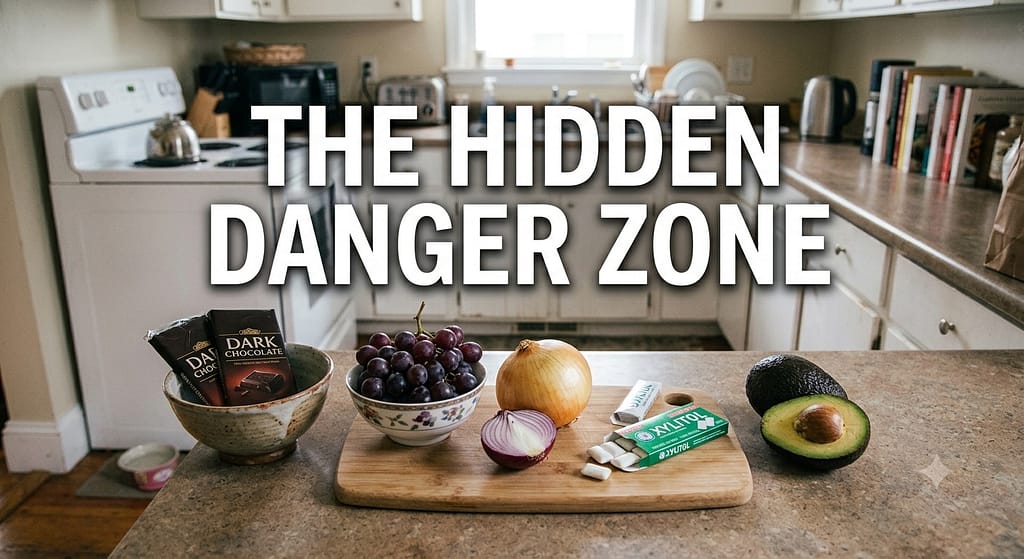
Your kitchen contains more potential dog toxins than your cleaning cabinet.
The difference?
You keep chemicals locked away but leave food on counters, in purses, on coffee tables—within easy reach of those pleading eyes.
But here’s what’s even scarier:
Many “toxic” food lists are so overwhelming, you can’t possibly remember them all in a panic.
And when seconds count, you shouldn’t be scrolling through endless web pages.
Hold that thought—because we’re about to create your ultimate kitchen safety system, complete with a printable guide that could literally save your dog’s life.
Why “Just a Little” Is More Dangerous Than You Think
The Size Disparity That Changes Everything
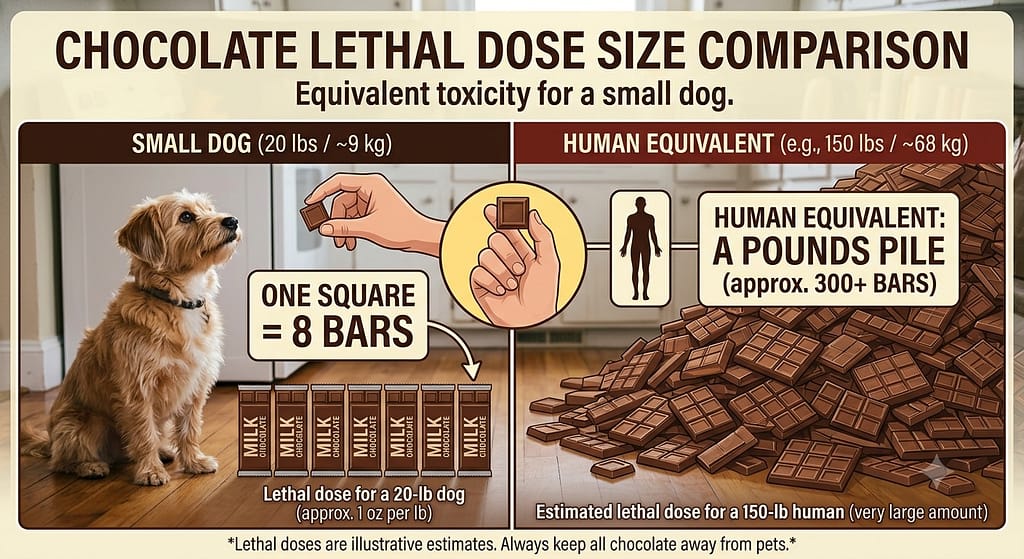
Let’s play a numbers game.
That 1-ounce square of dark chocolate that’s “just a treat” for you? For a 20-pound dog, that’s the equivalent of YOU eating 8 full-sized chocolate bars at once based on weight proportion.
The grape your toddler dropped?
For your Chihuahua, that’s like YOU swallowing a whole bowlful in terms of kidney impact.
This isn’t about being dramatic.
This is about understanding canine metabolism:
The 3 Critical Factors:
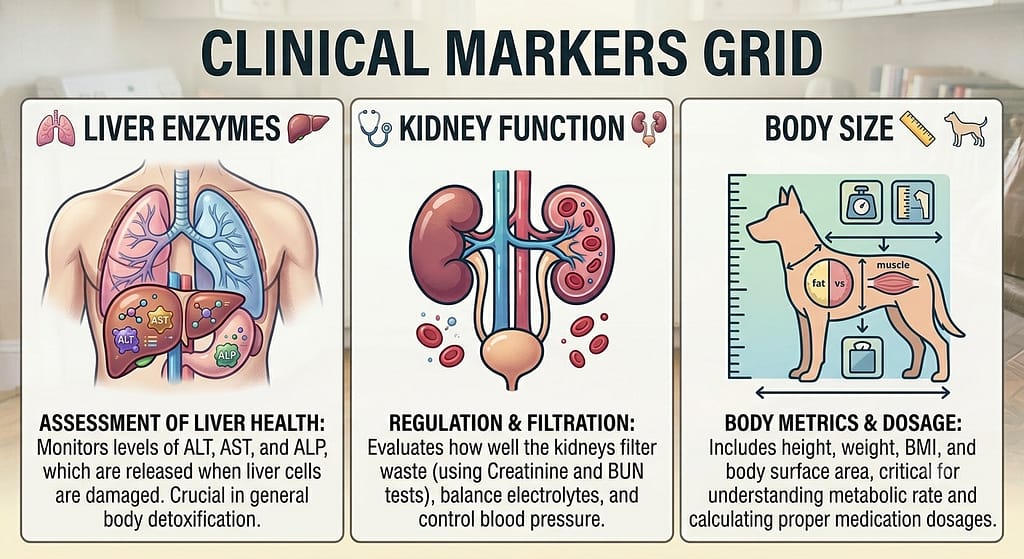
- Liver Enzymes: Dogs lack certain enzymes to process compounds we handle easily
- Kidney Function: Their kidneys filter differently, making some foods nephrotoxic
- Body Size: Small dogs face exponentially higher risks from tiny amounts
The “But My Last Dog Ate It” Myth
I’ve heard it a hundred times: “My childhood dog ate chocolate all the time and lived to be 15!”
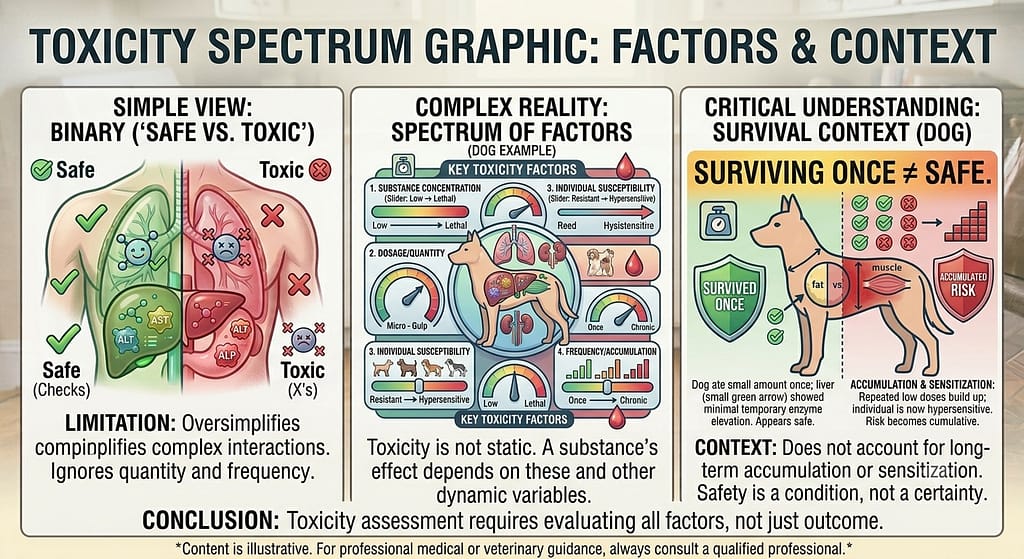
Here’s the reality: Toxicity isn’t binary. It’s a spectrum influenced by:
- The specific type of chocolate (dark vs. milk)
- Your dog’s individual sensitivity (like human allergies)
- Cumulative effects (small amounts over years)
- Pure luck
Surviving once doesn’t make it safe.
It makes you lucky. And luck isn’t a safety plan.
The Red Alert Category: Immediate Emergency Foods
1. Chocolate & Caffeine: The Double Threat
Why it’s dangerous: Contains theobromine and caffeine—methylxanthines that dogs can’t metabolize.
Toxicity starts at:
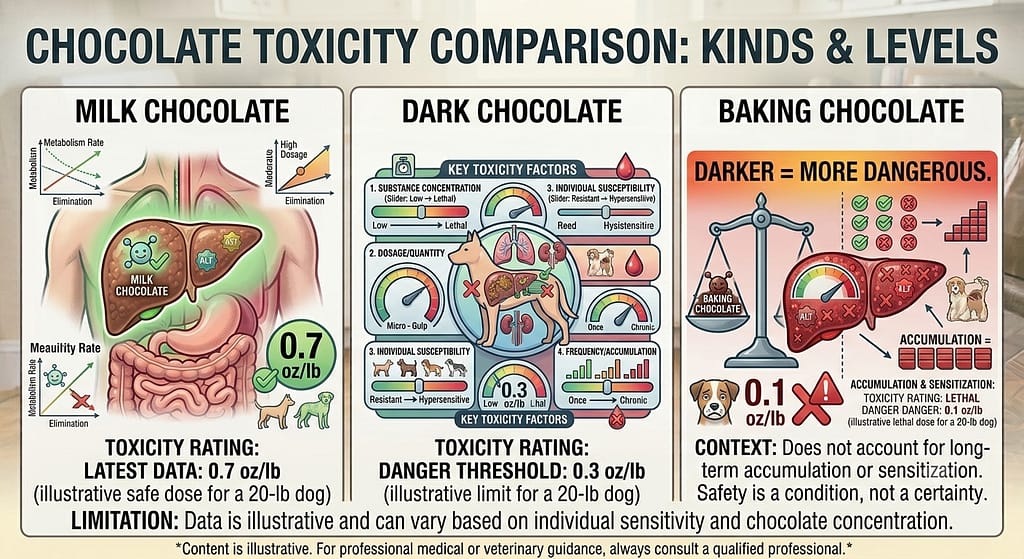
- Milk chocolate: 0.7 ounces per pound of body weight
- Dark chocolate: 0.3 ounces per pound of body weight
- Baking chocolate: 0.1 ounces per pound (EXTREMELY DANGEROUS)
Symptoms timeline:
- 1-4 hours: Restlessness, panting, excessive thirst
- 4-12 hours: Vomiting, diarrhea, racing heart
- 12-24 hours: Seizures, heart failure, death
Hidden sources: Coffee grounds, energy drinks, some medications, chocolate-covered espresso beans
2. Xylitol: The Silent Killer in Plain Sight
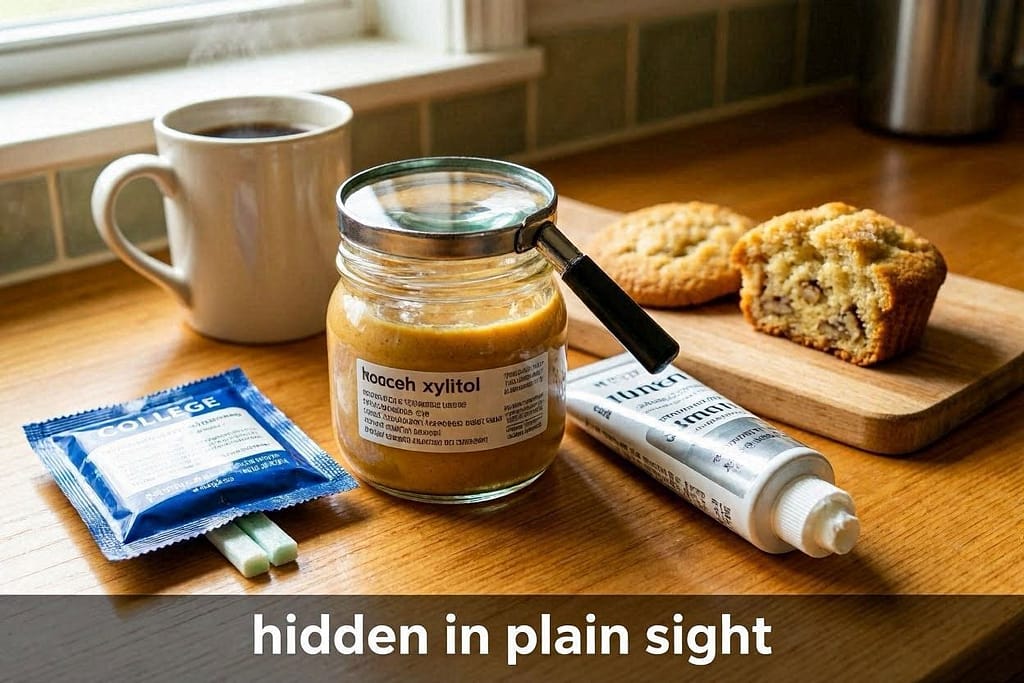
Why it’s more dangerous than chocolate: Causes massive insulin release leading to hypoglycemia (low blood sugar) and liver failure.
Found in:
- Sugar-free gum (the most common poisoning source)
- Peanut butter (ALWAYS check labels)
- Baked “sugar-free” goods
- Some toothpaste and mouthwash
- “Low-sugar” or “diabetic-friendly” foods
The terrifying math: As little as 0.1 grams per kilogram of body weight can cause hypoglycemia. That’s ONE piece of gum for a small dog.
Speaking of peanut butter… let’s talk about the most misunderstood category.
The “Healthy for You, Deadly for Them” Foods
3. Grapes & Raisins: The Kidney Destroyers
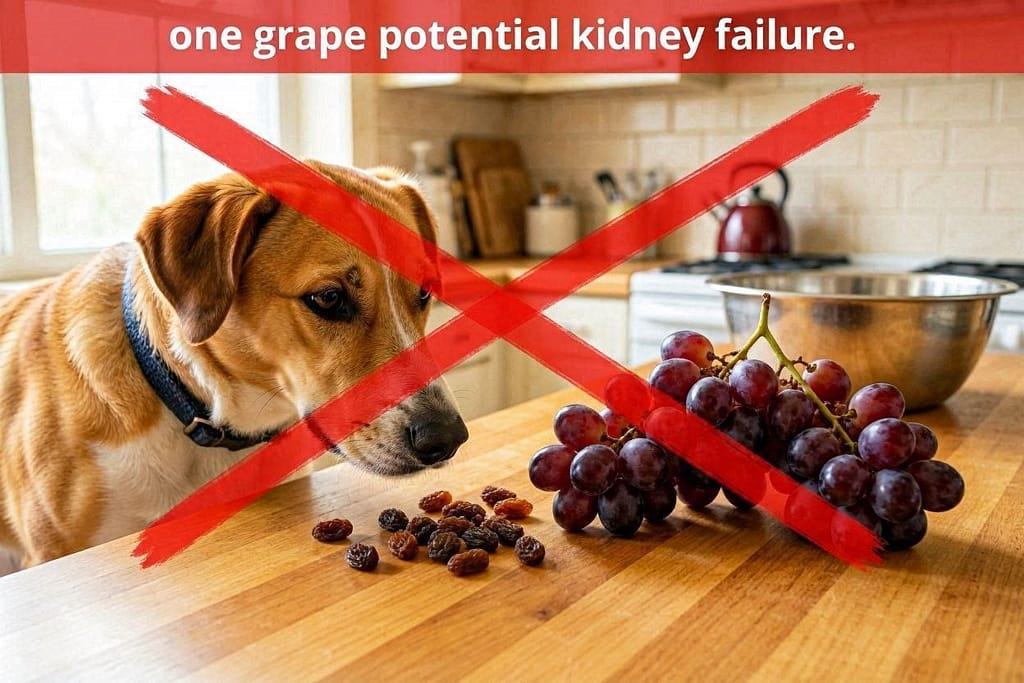
The mystery: Scientists still don’t know exactly what compound causes toxicity. This makes it unpredictable.
The scary part: There’s no established toxic dose. Some dogs eat pounds and survive; others eat one grape and suffer kidney failure.
What we know:
- All varieties are dangerous (red, green, seedless, organic)
- Cooking/concentrating INCREASES toxicity (raisins > grapes)
- Symptoms may be delayed 24-72 hours
Action plan: ANY ingestion = immediate vet call. Don’t wait for symptoms.
4. Onions, Garlic & Alliums: The Cumulative Threat
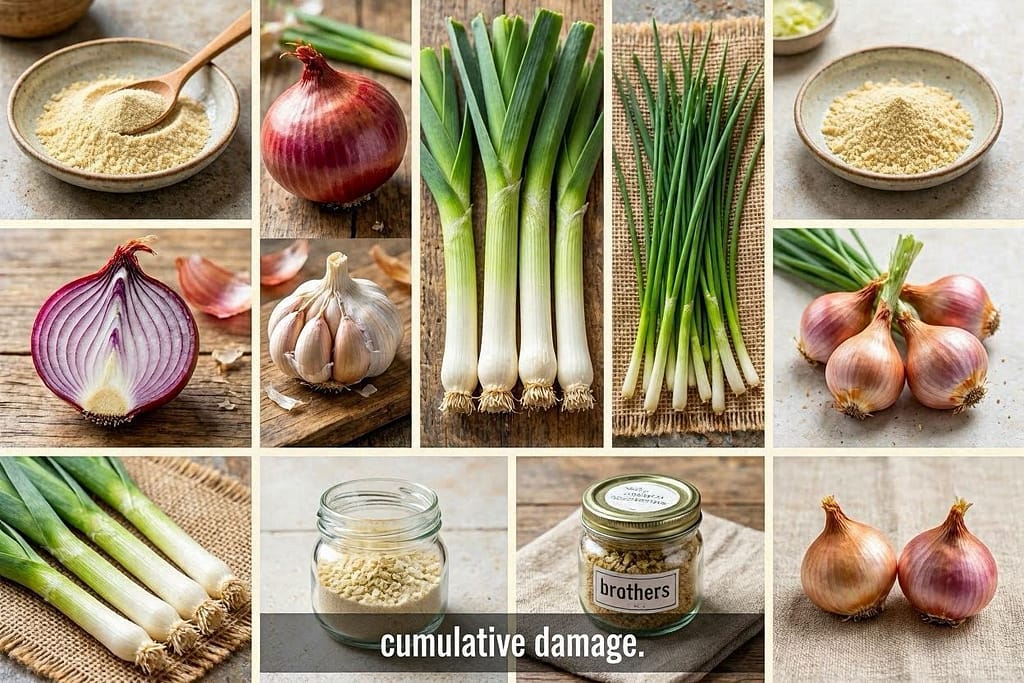
Why they’re insidious: Damage builds over time. Small amounts regularly = big problems.
Toxic compounds: N-propyl disulfide and thiosulfates that damage red blood cells.
Contains alliums:
- Obvious: Onions, garlic, leeks, chives, shallots
- Hidden: Onion powder (in chips, seasonings), garlic powder, some baby foods, broths, soups
- Surprisingly, some pet foods use garlic (controversial—avoid to be safe)
The math: Approximately 0.5% of body weight in onions can cause toxicity. That’s just 1/4 cup for a 50-pound dog.
5. Macadamia Nuts: The Mystery Toxin
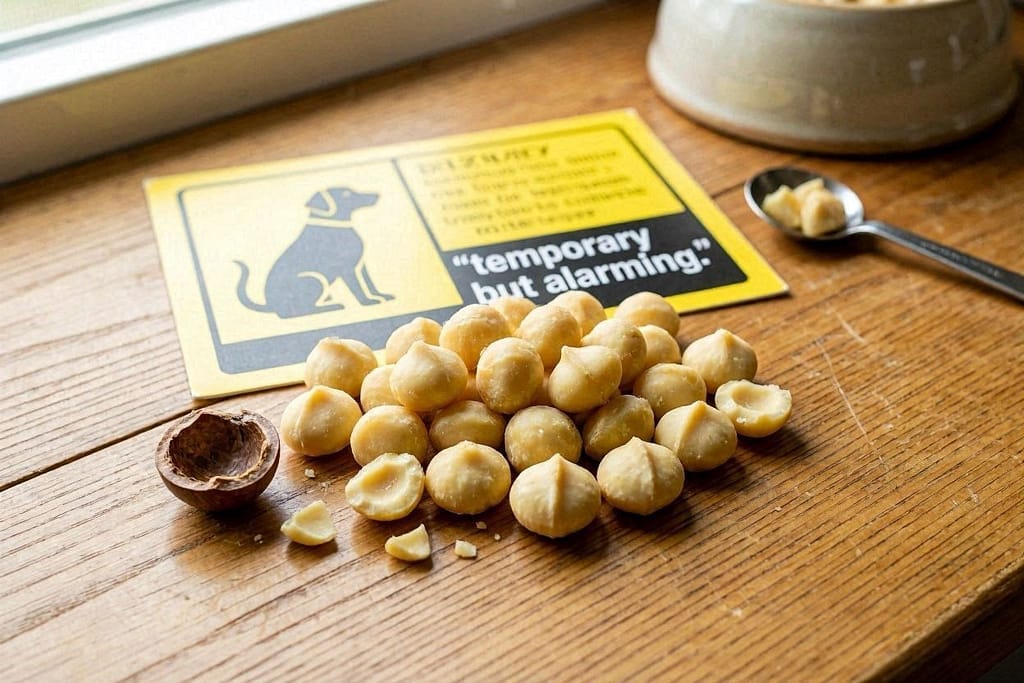
Why they’re puzzling: Unknown toxin causes temporary but alarming symptoms.
Symptoms (within 12 hours):
- Weakness, especially in the hind legs
- Vomiting
- Tremors
- Hyperthermia (elevated temperature)
Good news: Rarely fatal, but veterinary care is essential.
Don’t panic, but do call your vet.
The “Wait, Really?” Surprising Dangers
6. Avocado: The Fatty Foe
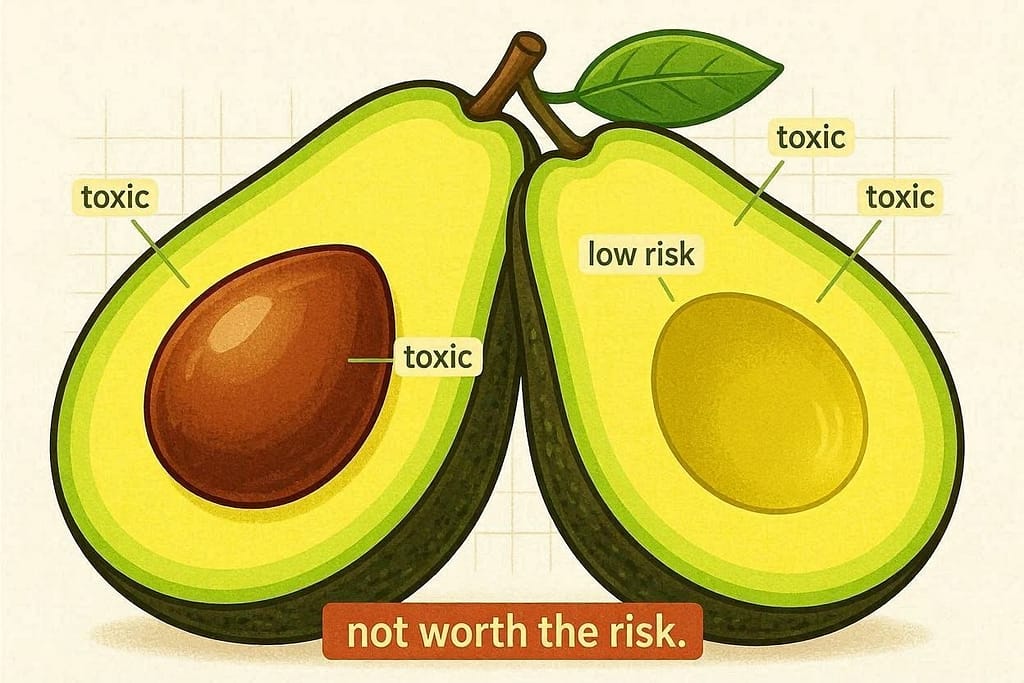
The truth: The flesh itself has low toxicity, but:
- Persin (the toxin) is concentrated in the pit, skin, and leaves
- High fat content can cause pancreatitis
- The pit is a choking/intestinal blockage hazard
Verdict: Not worth the risk. Skip the avocado sharing.
7. Raw Yeast Dough: The Expanding Threat
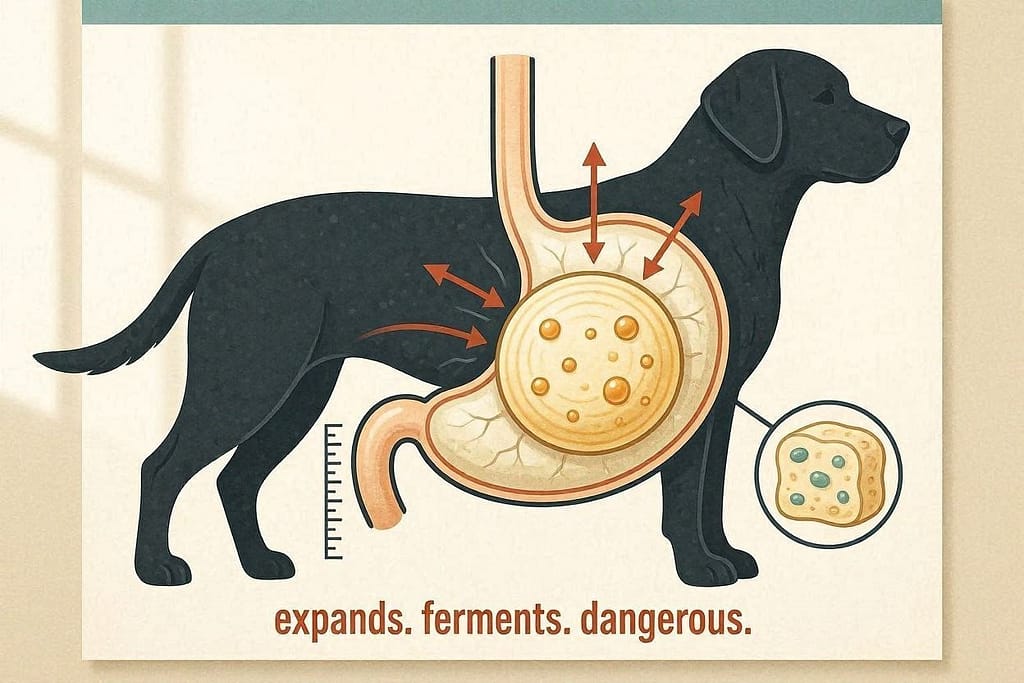
Double danger:
- Expansion: Dough continues rising in warm stomach → bloat risk
- Alcohol production: Yeast fermentation creates ethanol → alcohol poisoning
Emergency scenario: Your dog steals bread dough off the counter.
Within hours, their stomachs expand like a balloon while they get “drunk” from the inside.
8. Alcohol: Not Funny, Not Safe
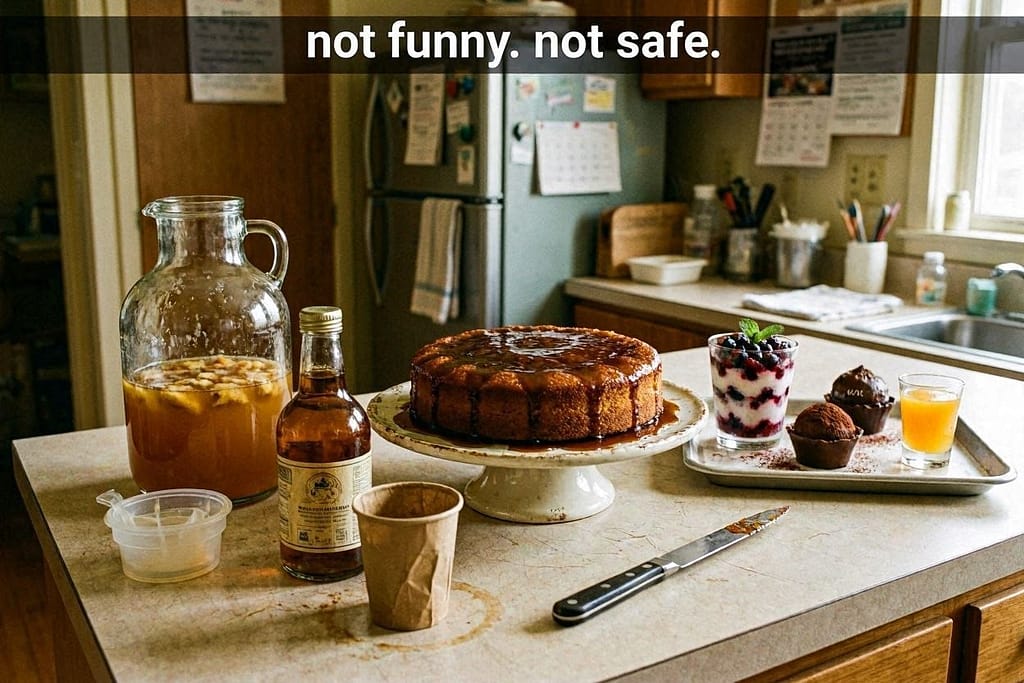
Why it’s worse for dogs:
- Smaller bodies get intoxicated faster
- Can cause dangerous drops in blood sugar
- May lead to respiratory failure
Hidden sources: Uncooked rum cake, alcohol-infused desserts, fermenting fruit in compost
The “Dose Makes the Poison” Category
9. Salt: The Dehydration Danger
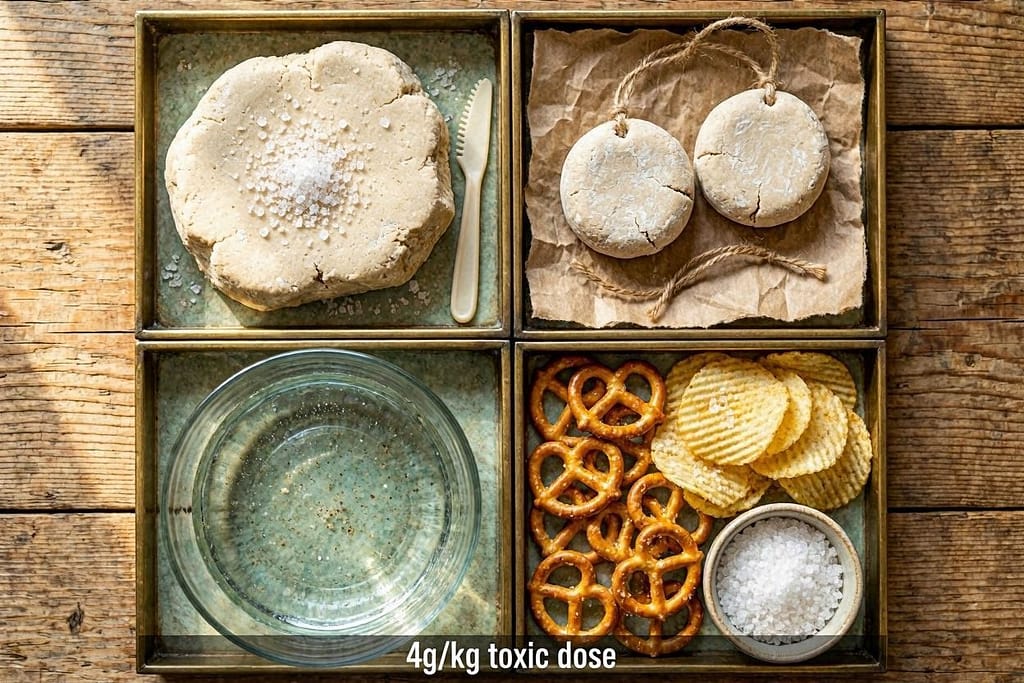
Toxic dose: 4 grams per kilogram of body weight
Common sources:
- Playdough (homemade or commercial)
- Salt dough ornaments
- Ocean water ingestion
- Extremely salty snacks
Symptoms: Vomiting, diarrhea, tremors, seizures, death
10. Nutmeg: The Holiday Hazard
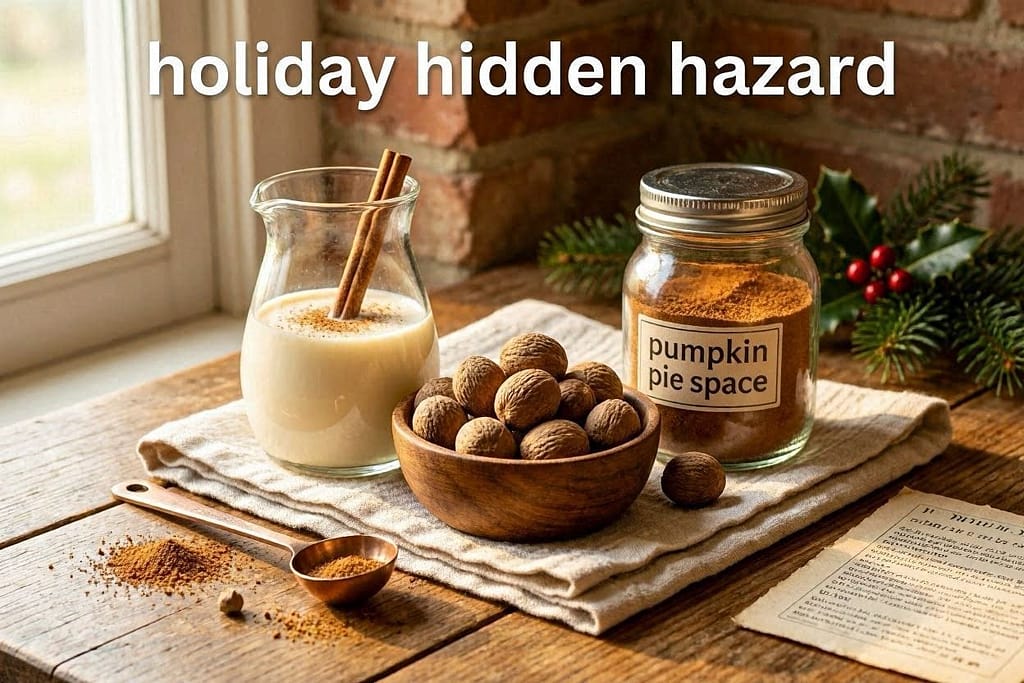
Toxic compound: Myristicin
Found in:
- Pumpkin pie spice
- Eggnog
- Holiday baked goods
Symptoms: Hallucinations, disorientation, increased heart rate, seizures
Your Emergency Protocol: What to Do RIGHT NOW
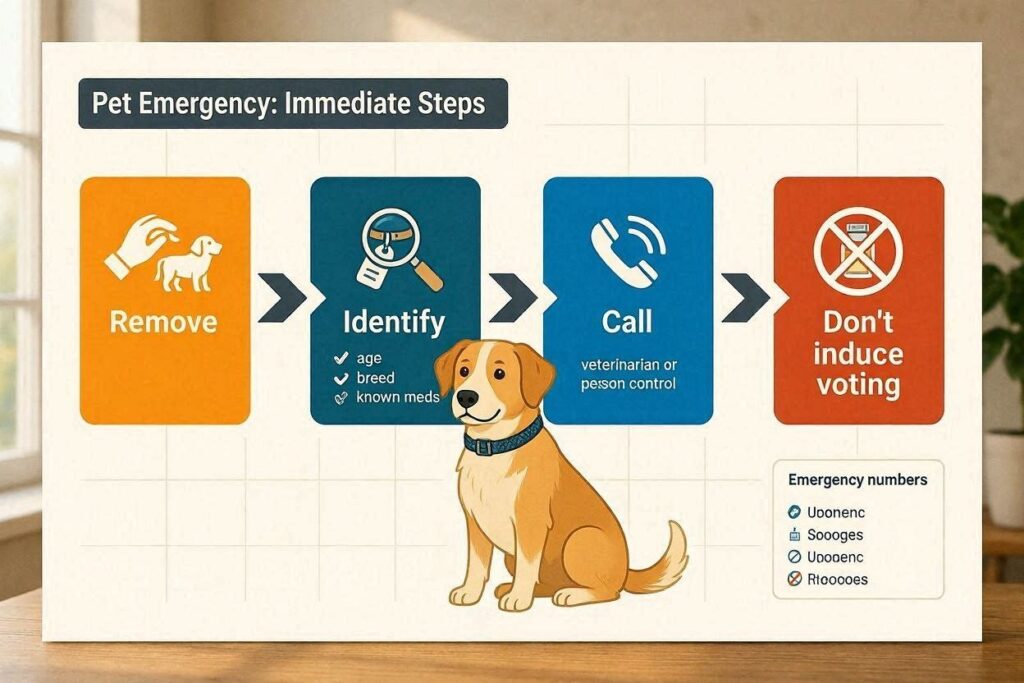
Step 1: DON’T PANIC (But Do Act Quickly)
- Remove any remaining toxin from reach
- Identify what and how much was ingested
- Gather packaging/labels if available
- Note the time of ingestion
Step 2: Make the Call
Call your vet or:
- Pet Poison Helpline: 855-764-7661 ($85 fee)
- ASPCA Animal Poison Control: 888-426-4435 ($75 fee)
Why pay for a hotline? They:
- Have veterinary toxicologists on staff
- Can calculate exact toxicity based on your dog’s weight
- Will coordinate with your vet
- Provide the case number for follow-up
Step 3: Know What NOT to Do
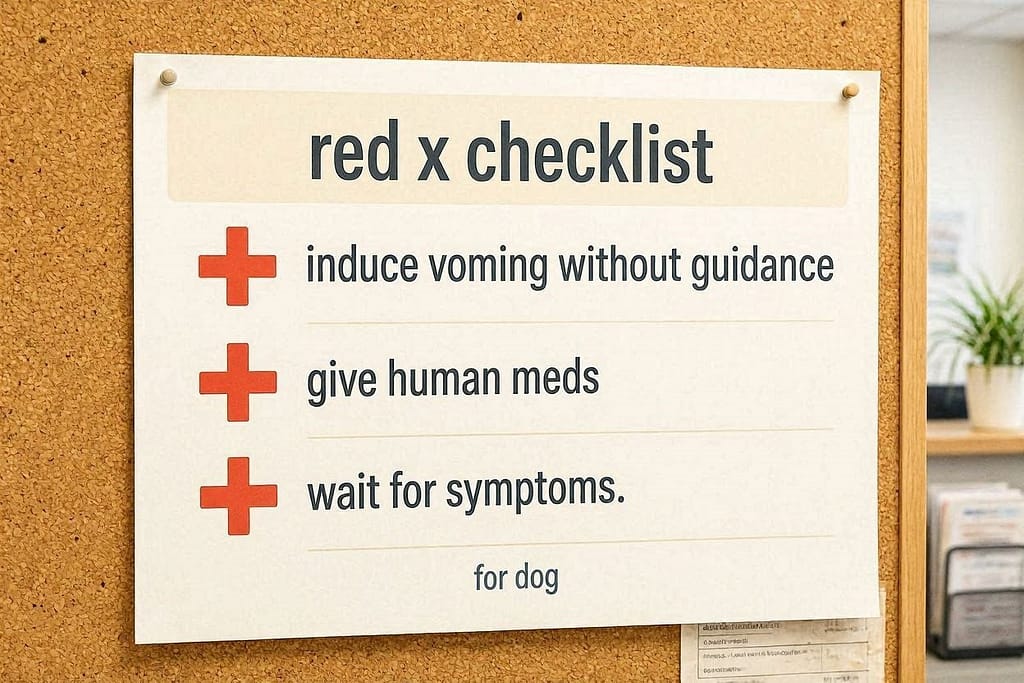
Never:
- Induce vomiting without professional guidance (some toxins cause more damage when coming up)
- Give human medications unless specifically instructed
- Wait to see if symptoms develop
- Assume “natural” or “organic” means safe
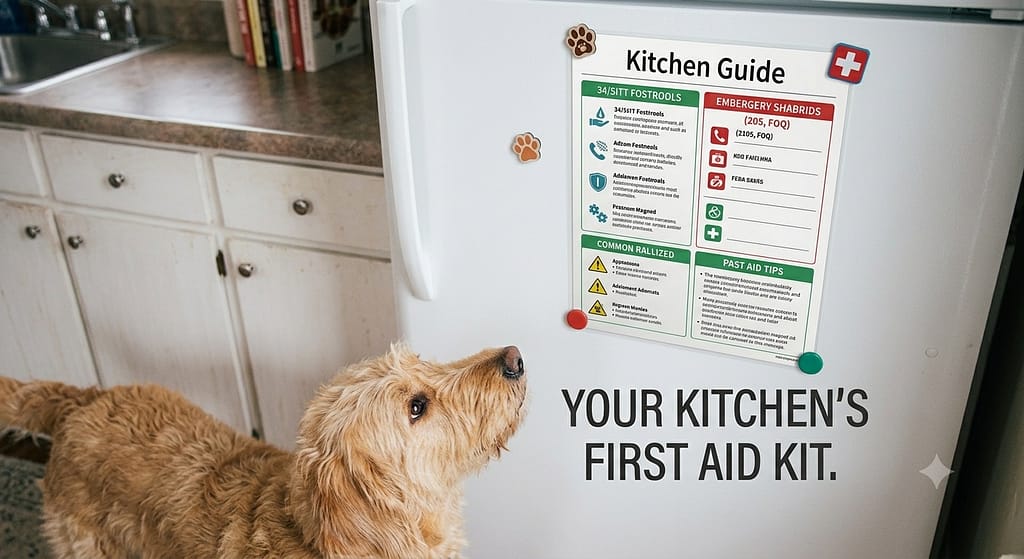
The Printable Fridge Guide: Your Kitchen’s First Aid Kit
Why a Physical Guide Matters:
- No internet required during emergencies
- Visible reminder for family/guests/babysitters
- Quick reference when seconds count
- Educational tool for everyone in your home
What’s On Your Printable Guide:
Section 1: EMERGENCY – Call Vet Immediately
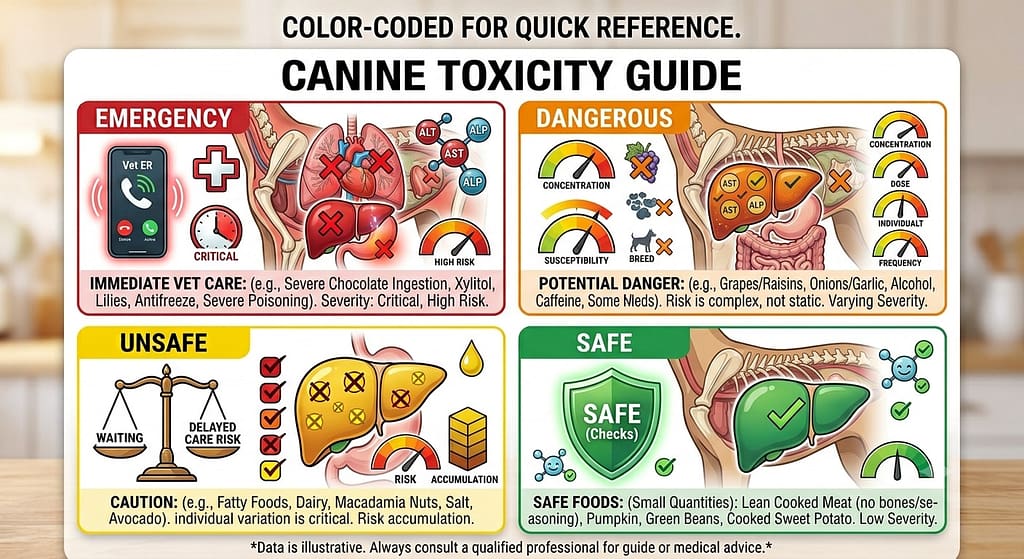
- Chocolate (especially dark/baking)
- Xylitol (sugar-free gum/candies)
- Grapes/raisins (any amount)
- Medications (human or improperly dosed pet meds)
Section 2: DANGEROUS – Don’t Risk It
- Onions/garlic/leeks/chives
- Alcohol (all types)
- Raw yeast dough
- Macadamia nuts
- Moldy foods
Section 3: UNSAFE – Better to Avoid
- Avocado
- Persimmons/peach/plum pits
- Raw eggs (Salmonella risk)
- Raw fish (parasites)
Section 4: QUESTIONABLE – Ask First
- Dairy products
- High-fat foods
- Salt-heavy foods
- Caffeine sources
Bonus Section: SAFE ALTERNATIVES
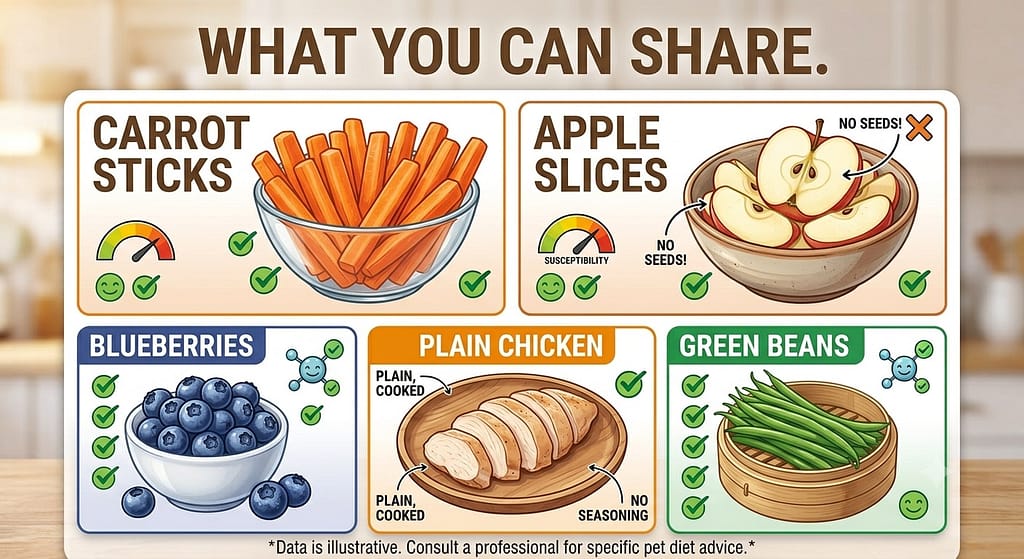
- Carrot sticks
- Apple slices (no seeds)
- Blueberries
- Plain cooked chicken
- Green beans
Ready to create your safety system?
Let’s talk placement and family training…
Implementing Your Kitchen Safety System
The Fridge Placement Strategy:
- Right at eye level (not hidden on the side)
- Use a protective sleeve (laminate or page protector)
- Add emergency numbers with a marker
- Include your vet’s info and route to the emergency clinic
The Family Training Session:
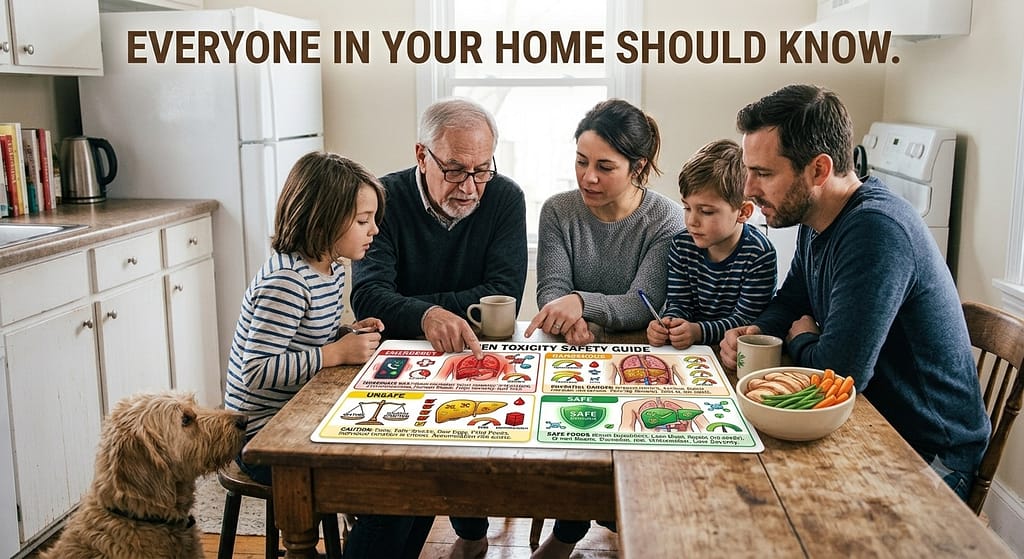
This weekend, gather everyone and:
- Review the guide together
- Practice “what if” scenarios
- Establish new house rules:
- No unattended plates on low tables
- Purses/bags hung up, not on the floor
- Count grapes when toddlers eat them
- Designate “dog-safe” snack zones
The Guest Protocol:
![Party sign mockup Friendly sign: "Please help keep [Dog] safe! Ask for dog-approved treats." Text: "Make it easy for guests."](https://mlfdz6jbet92.i.optimole.com/w:1024/h:559/q:mauto/f:best/https://apartmentdogguide.com/wp-content/uploads/2026/06/Friendly-sign-Please-help-keep-Dogsafe-Ask-for-dog-approved-treats.jpg)
Create a friendly sign for parties:
“Please help keep [Dog’s Name] safe! We’re happy to give you dog-approved treats to share instead of human food. Thank you!”
The Lesser-Known Toxins: What Most Lists Miss
11. Sugar-Free Foods Beyond Xylitol
Other dangerous sweeteners:
- Erythritol: Increasingly common, similar risks to xylitol
- Other sugar alcohols: Check labels carefully
12. Moldy Foods: The Hidden Fungus Threat
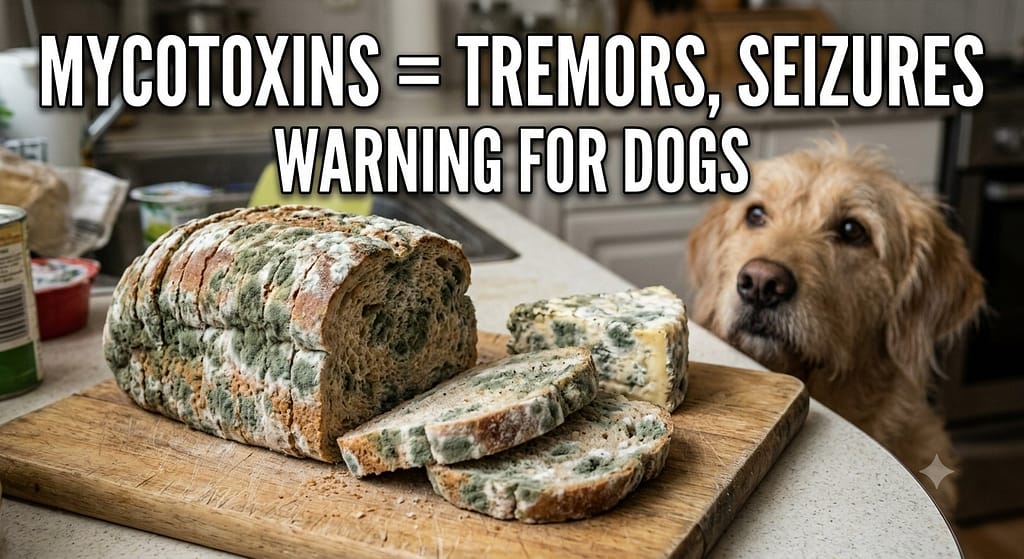
Mycotoxins in moldy foods can cause:
- Tremors (called “tremorgenic mycotoxins”)
- Seizures
- Liver damage
Common sources: Compost piles, garbage cans, old pantry items
13. Hops (for Homebrewers)
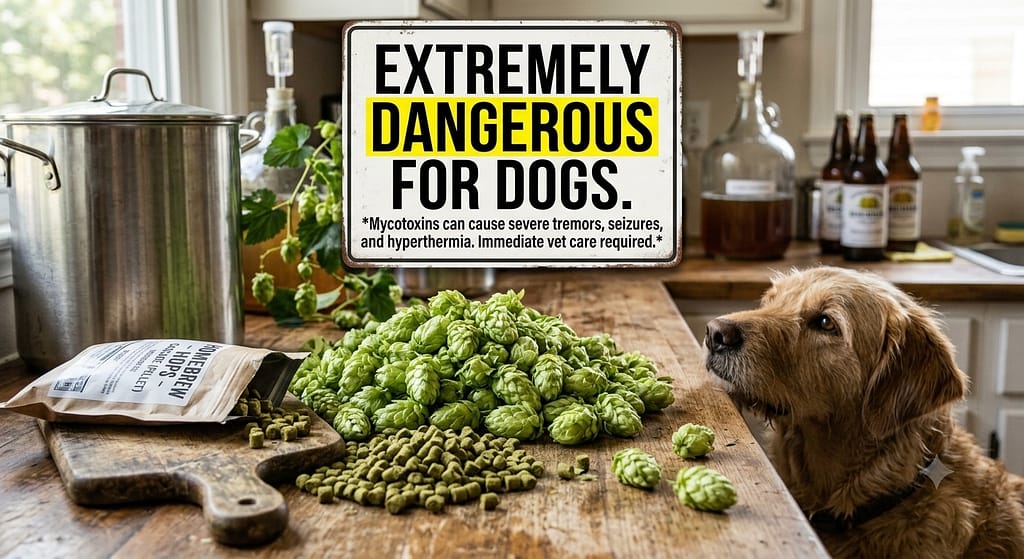
Extremely dangerous for dogs, especially certain breeds
Symptoms: Malignant hyperthermia (dangerously high temperature)
14. Raw Salmon/Potentially Raw Trout
Salmon poisoning disease: Parasite (Nanophyetus salmincola) carries rickettsial organisms
Pacific Northwest warning: Particularly prevalent in this region
The “Okay in Moderation” Misconceptions
The Truth About:
Bones: Cooked bones splinter → stick with veterinary-approved chews
Fat trimmings: Can cause pancreatitis → trim fat before sharing meat
Milk: Many dogs are lactose intolerant → small amounts only if tolerated
The “Toxic vs. Unsafe” Distinction:
Toxic: Contains compounds that poison at the cellular level (chocolate, grapes)
Unsafe: Physical danger or likely to cause illness (bones, high fat)
Both belong on your “no” list, but understanding the difference helps with emergency response.
Your Frequently Asked Questions (Answered)
“My dog ate [food] an hour ago and seems fine.”
Answer: Some toxins have a delayed onset. Grapes/raisins can take 72 hours to show kidney damage. Always call for guidance.
“How do I get my dog to stop begging?”
Solution: Train an alternative behavior like “go to your bed” during human meals. Provide approved chew toys. Consistency is key.
“Are there breed-specific sensitivities?”
Yes: Some breeds are more sensitive to ivermectin (Collies, Shetland Sheepdogs). Greyhounds are sensitive to anesthesia. When in doubt, assume your dog is sensitive.
“What about ‘dog-safe’ recipes using human food?”
Guidelines: Always cross-check each ingredient. Avoid ALL toxic foods. When substituting, research each alternative. When in doubt, leave it out.
“My vet said a little garlic is okay for fleas…”
Controversy: Some holistic vets recommend tiny amounts. Conventional vets say to avoid it completely.
My advice: The risk outweighs potential benefits. Use vet-approved preventatives instead.
Creating a Dog-Safe Kitchen Routine
The Shopping List Check:
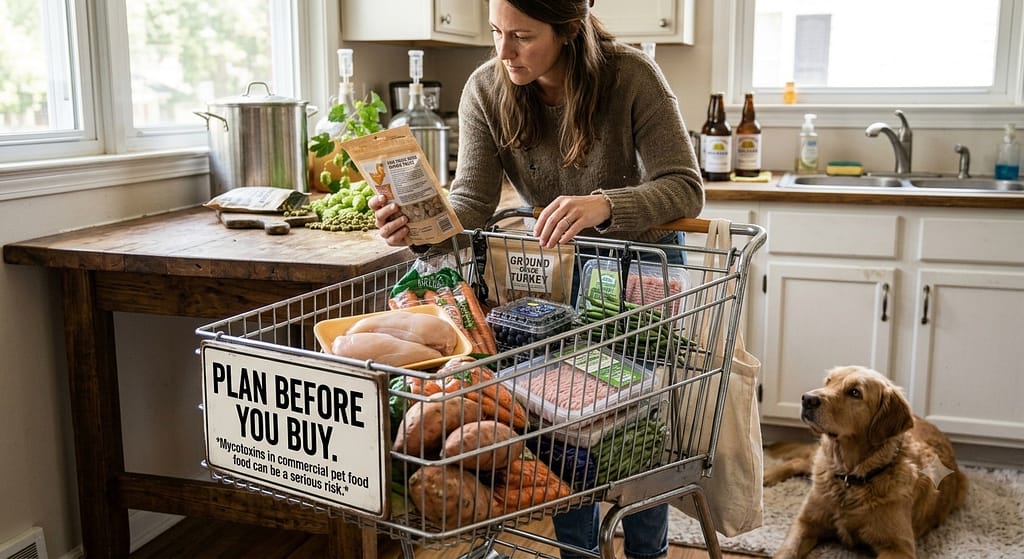
Before grocery shopping:
- Review your fridge guide
- Plan dog-safe alternatives
- Choose xylitol-free products
- Secure dangerous foods in the cart
The Meal Prep Protocol:
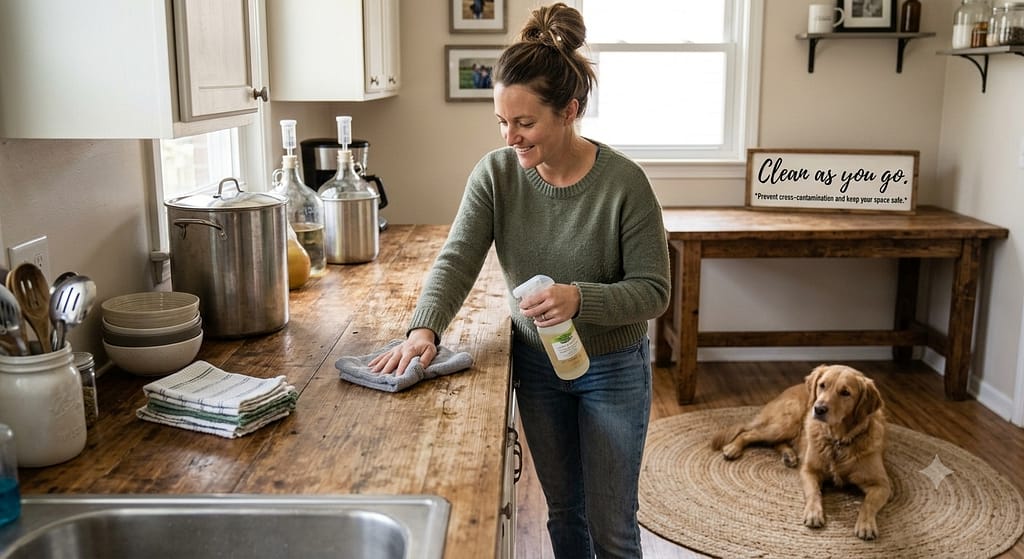
While cooking:
- Immediately clean up spills
- Use a garbage can with a secure lid
- Keep dogs out of the kitchen if possible
- Have dog treats handy for “you get yours” moments
The Leftover Strategy:
After meals:
- Clear plates immediately
- Store leftovers in sealed containers
- Take out trash if containing toxic foods
- Wipe counters thoroughly
The Printable Guide: Download Instructions
Your Free Gift:
[Insert download button/link here]
What you’ll get:
- Full-color fridge guide (8.5×11″)
- Emergency contact template
- Wallet-sized quick reference card
- Kitchen safety checklist
Three Format Options:
- Vibrant color for clear visibility
- Printer-friendly black and white
- Mobile wallpaper version for your phone
Pro-Tip: Print two—one for home, one for pet sitter/relative.
Beyond the Fridge: Whole-Home Safety
Other Dangerous Zones:
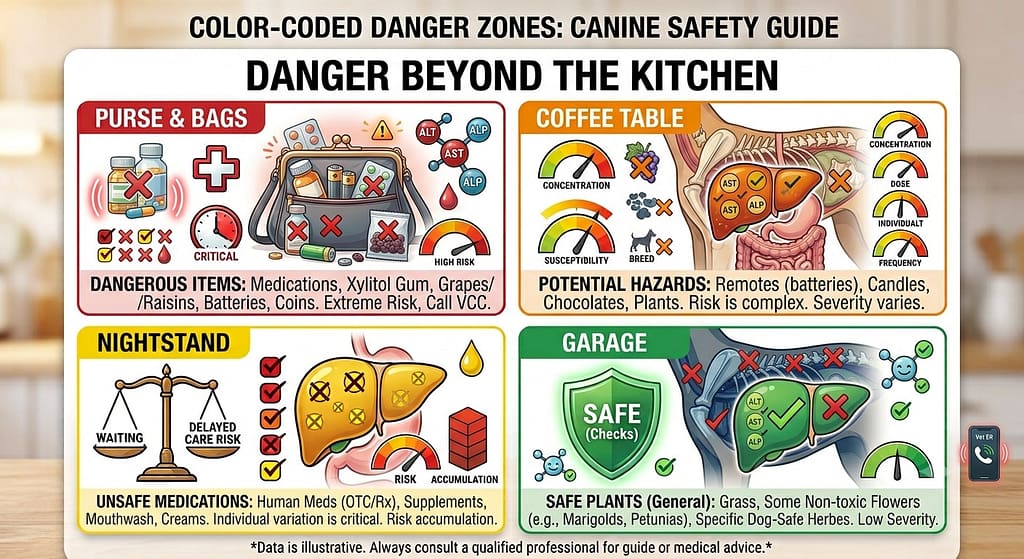
Purses/backpacks: Gum, medications, dark chocolate
Coffee tables: Alcohol, grapes, nuts
Nightstands: Medications, chocolate
Garages: Antifreeze (sweet taste attracts dogs), fertilizers
Gardens: Certain plants, mushrooms, and cocoa mulch
The Multi-Pet Household:
Additional considerations:
- Cats are sensitive to different foods (like lilies)
- Small pets may have unique toxicities
- Store all pet foods separately
When Prevention Fails: Financial Preparation
The Cost Reality:
- Emergency vet visit: $150-$500+
- Hospitalization: $1,000-$5,000+
- Pet poison hotline: $75-$85 per case
Preparation Strategies:
- Pet insurance with poison coverage
- Emergency fund specifically for pets
- CareCredit or other payment plans
- Know your options before a crisis hits
The Positive Side: What You CAN Share
Celebrate Safe Snacks:
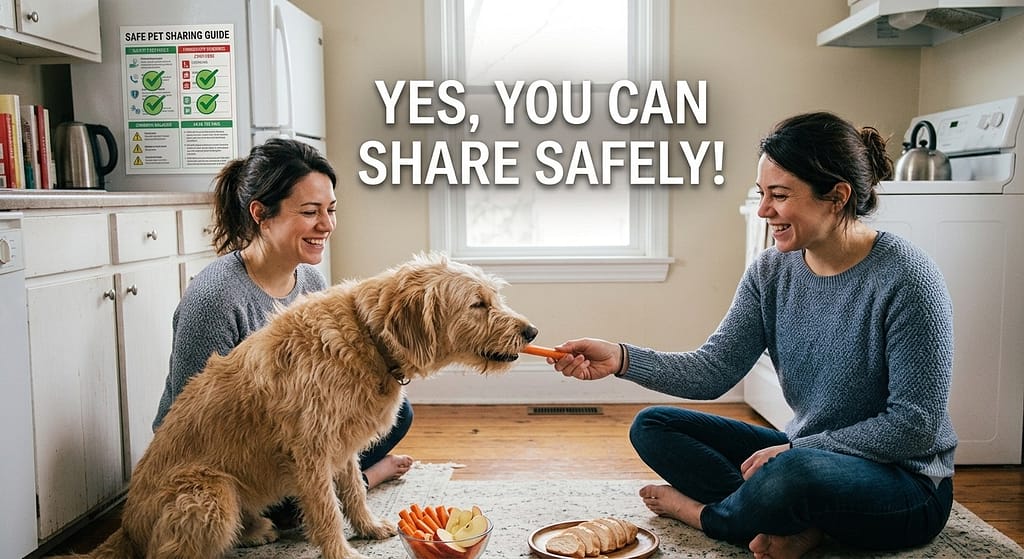
Fruit options: Blueberries, watermelon (seedless), banana slices
Veggie treats: Carrot sticks, green beans, cucumber slices
Protein picks: Plain cooked chicken, turkey, lean beef
Special treats: Plain popcorn, oatmeal, rice cakes
The 10% Rule:
Treats (even healthy ones) should be ≤10% of daily calories. Obesity has its own health risks!
Your New Kitchen Reality
The onions might still make you cry. The chocolate might still call your name. The grapes might still adorn your cheese plate.
But now?
Now you have a system. You have knowledge. You have a plan. You have a brightly colored guide on your fridge that turns panic into purposeful action.
This isn’t about living in fear. It’s about living in preparedness.
It’s about transforming your kitchen from a potential danger zone into a safe shared space.
That printable guide isn’t just paper on your fridge. It’s:
- A guardian watching when you’re distracted
- A teacher educating everyone who enters your home
- A decision-maker when willpower wavers
- A lifesaver when seconds count
You don’t need to memorize every toxin. You don’t need to ban all human food. You don’t need to hover anxiously.
You just need to print the guide. Place it visibly. Train your household. And breathe easier knowing you’ve created a safer world for your dog.
So tonight, after dinner, instead of that anxious Google search about whether the garlic powder in your sauce was dangerous, you’ll glance at your fridge.
See the clear “NO” section. Note your dog’s happy, healthy demeanor. And feel the relief of knowing.
That moment— when preparedness replaces panic, when knowledge conquers fear, when a simple printout gives you back peace of mind—that’s the moment you become not just a dog owner, but a dog protector.
The printer is waiting. The guide is ready. Your dog’s safety is in your hands.
🐾 — Apartment Dog Guide (ADG)
Living large in small spaces, one paw at a time. That’s the apartment dog life—see you in the next guide!.


