
Here’s a familiar scene for apartment-dwelling dog owners:
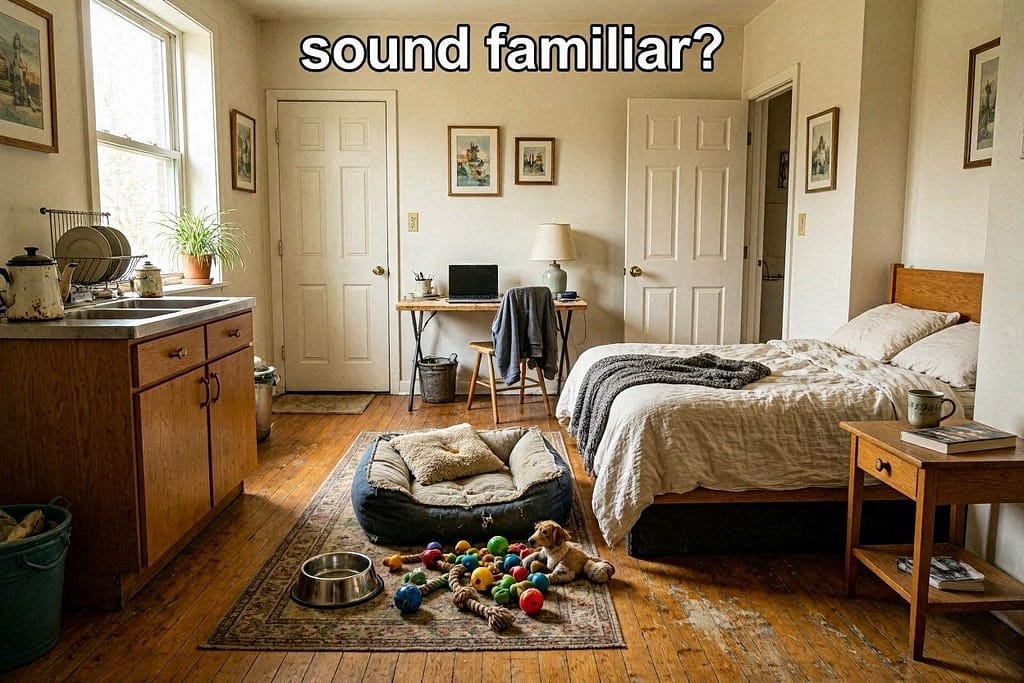
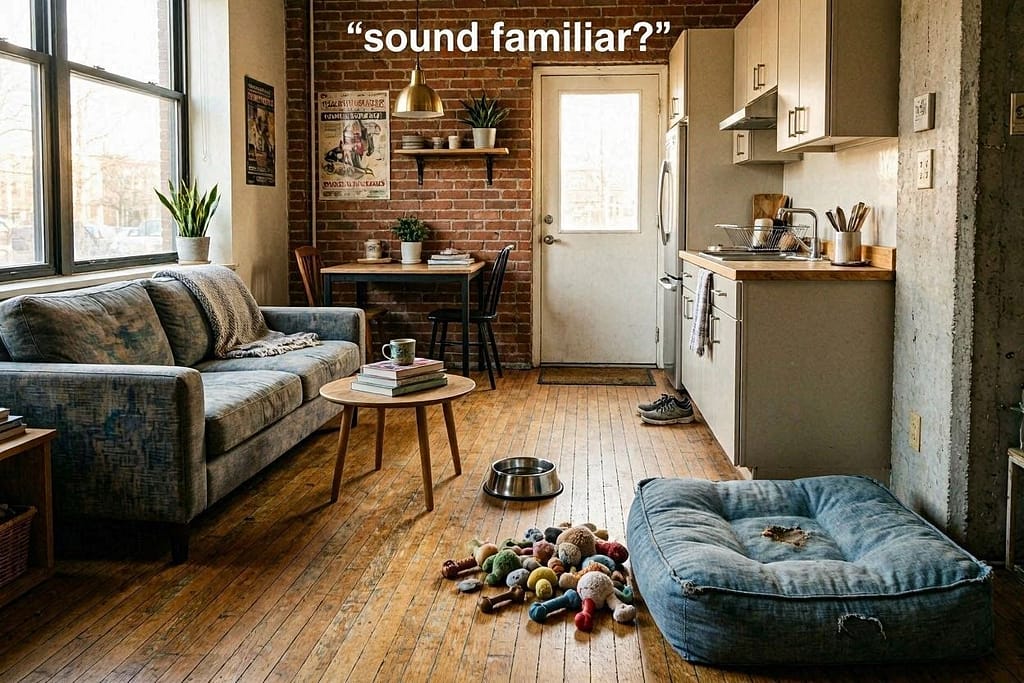
You’re trying to navigate your 600-square-foot studio, carefully stepping over a dog bed that claims a quarter of your floor space.
To your left, a towering pile of toys threatens to avalanche.
To your right, a water bowl is strategically placed to trip you every time you head to the kitchen.
You love your dog, but you’re starting to feel like you’re living in their apartment.
If this sounds like your daily reality, take a deep breath.
You’re not alone in this spatial struggle.
The average apartment is shrinking while our dogs’ needs—and their stuff—aren’t.
But here’s the liberating truth:
Living with a dog in a small space doesn’t require sacrifice. It requires strategy.
You don’t need a bigger apartment; you need smarter solutions that serve both human and canine needs without consuming every square inch.
One of our readers has lived in four different apartments with my 40-pound adventure buddy over the past decade, from a 400-square-foot studio to a 700-square-foot one-bedroom.
Through trial, error, and plenty of creative problem-solving, he discovered that the key isn’t about finding smaller dog stuff—it’s about finding dual-purpose, vertical, and hidden solutions that make your space work harder.
Ready to reclaim your square footage?
Let’s transform your apartment from crowded to curated.
The Mindset Shift: From Clutter to Clever Design
Before we dive into specific hacks, let’s reset your perspective.
The goal isn’t to minimize your dog’s presence—it’s to integrate their needs seamlessly into your living space.
Think like a designer, not just a dog owner.
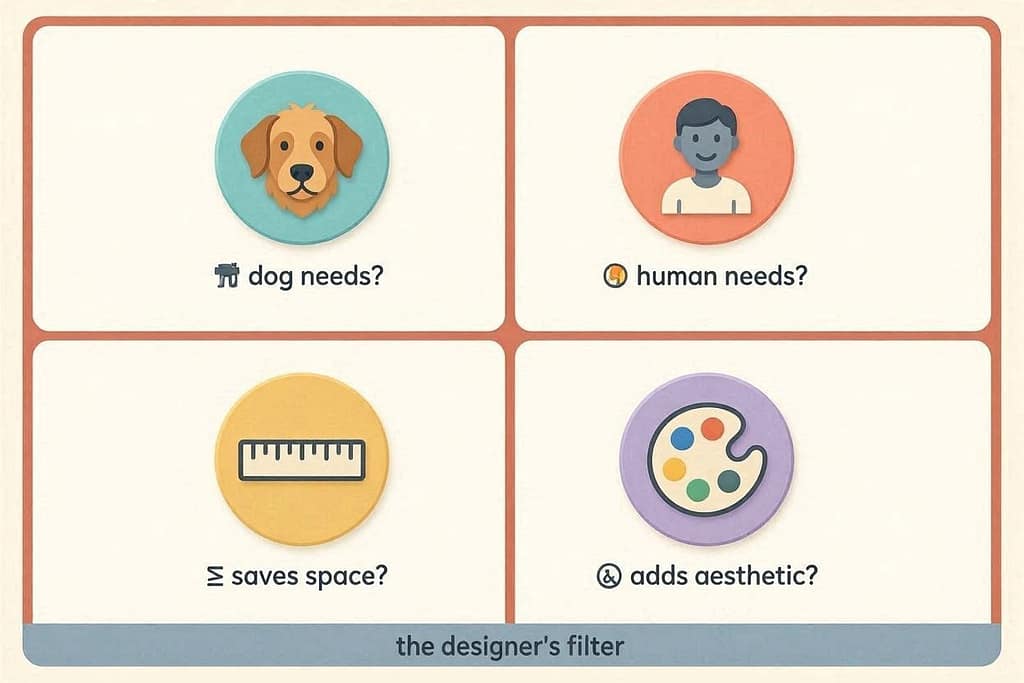
Every item should answer at least two of these questions:
- Does it serve my dog’s needs?
- Does it serve my human needs?
- Does it save or optimize space?
- Does it add to the aesthetic?
When you start applying this filter, you’ll see your apartment—and your dog’s belongings—in a completely new light.
Ready for the first game-changing strategy?
Look up.
Hack Category 1: Vertical Victory—Using Your Walls
Floor space is prime real estate.
Wall space is your secret weapon.
1. The Floating Dog Bed Shelf
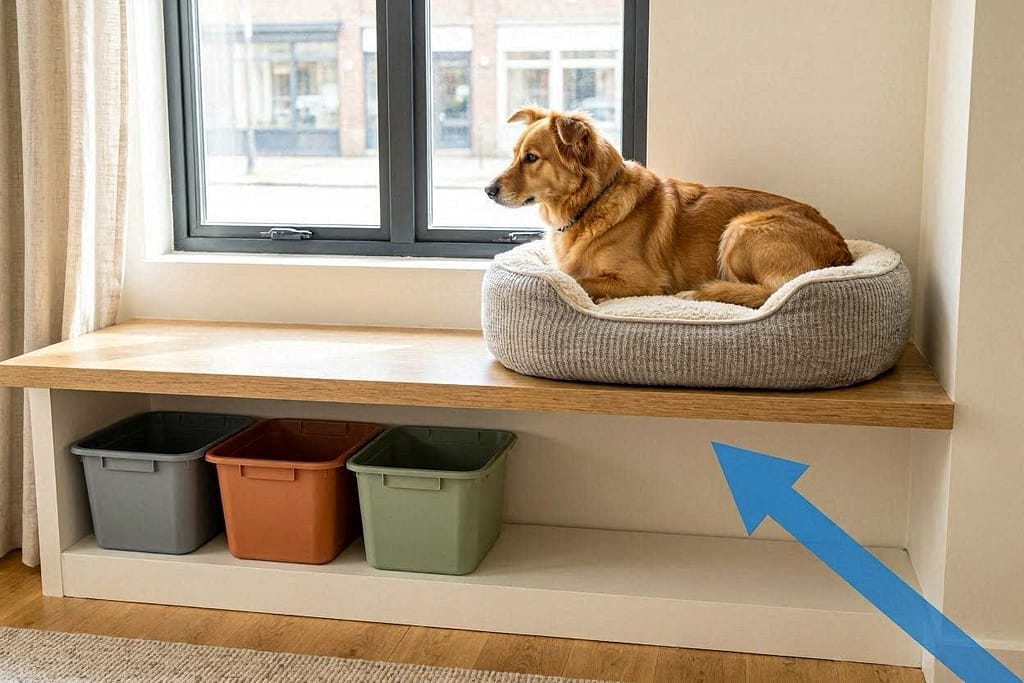
The Concept: A wall-mounted shelf that doubles as a cozy nook and storage.
The How-To:
- Install a sturdy, wall-anchored floating shelf (minimum 12″ deep) at your dog’s comfort height.
- Add a removable dog bed or cushion secured with Velcro.
- Bonus Hack: Use the space underneath for shallow storage bins for toys, treats, or leashes.
Best For: Dogs who love to perch and observe. Small to medium breeds.
Cost: $50-$150 (shelf + cushion)
2. Vertical Feeding Station
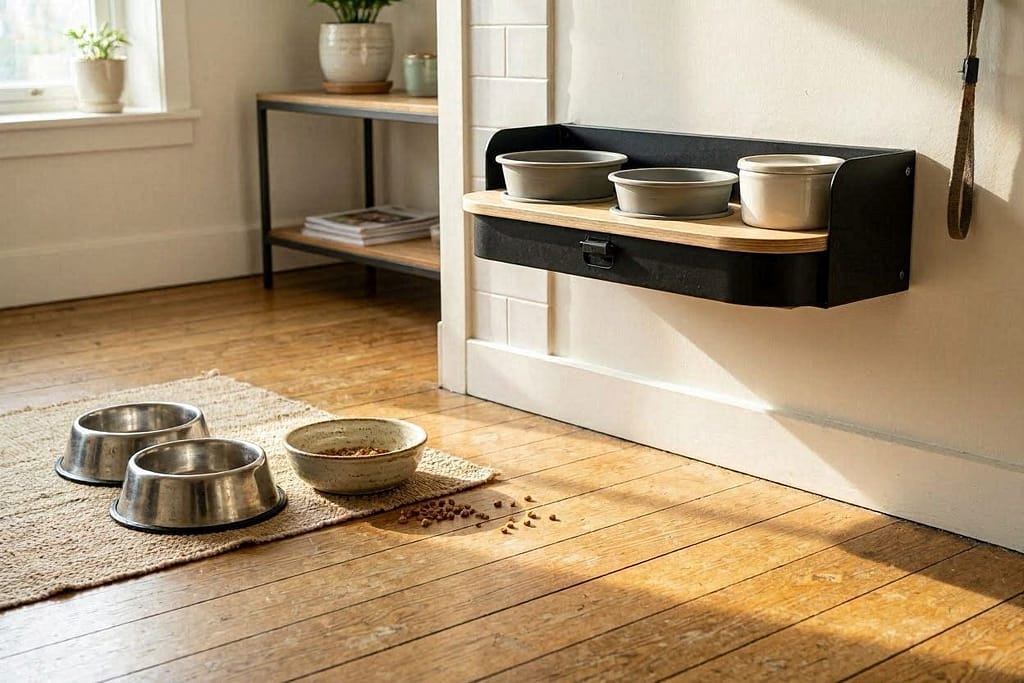
The Concept: Get bowls off the floor and into a space-saving vertical unit.
The How-To:
- DIY: Mount a narrow wooden crate or shelf unit to the wall. Cut holes for bowls at the appropriate height.
- Store-Bought: Options like the Neater Feeder Express or wall-mounted silicone bowls.
- Pro Tip: Place in a low-traffic corner near the kitchen but out of the main walkway.
Best For: Neat eaters, dogs who need raised bowls for medical reasons.
Cost: $30-$100
3. Wall-Mounted Toy Storage
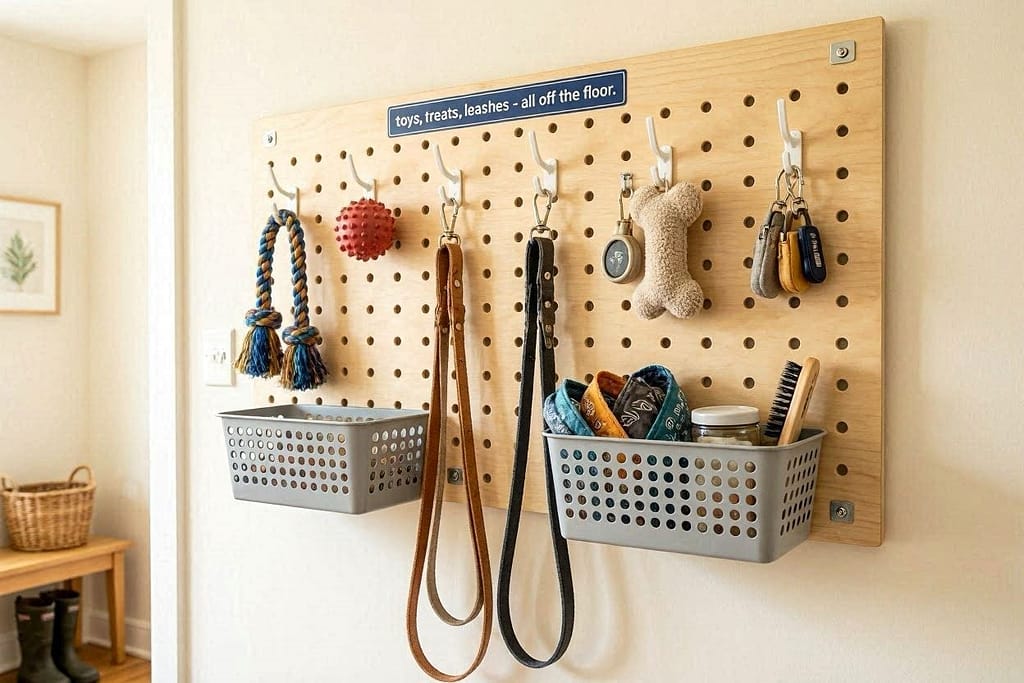
The Concept: Say goodbye to the toy basket consuming corner space.
The How-To:
- Install a pegboard panel (IKEA’s SKÅDIS is perfect) on a wall or inside a closet door.
- Use hooks, baskets, and bins to organize toys by type.
- Visual Bonus: Creates an Instagram-worthy display that’s actually functional.
Best For: Toy collectors, visually organized owners.
Cost: $25-$75
Walls covered?
Let’s look at your existing furniture with new eyes.
Hack Category 2: Double-Duty Furniture Magic
The most powerful space-savers serve multiple purposes seamlessly.
4. The Coffee Table Dog Crate
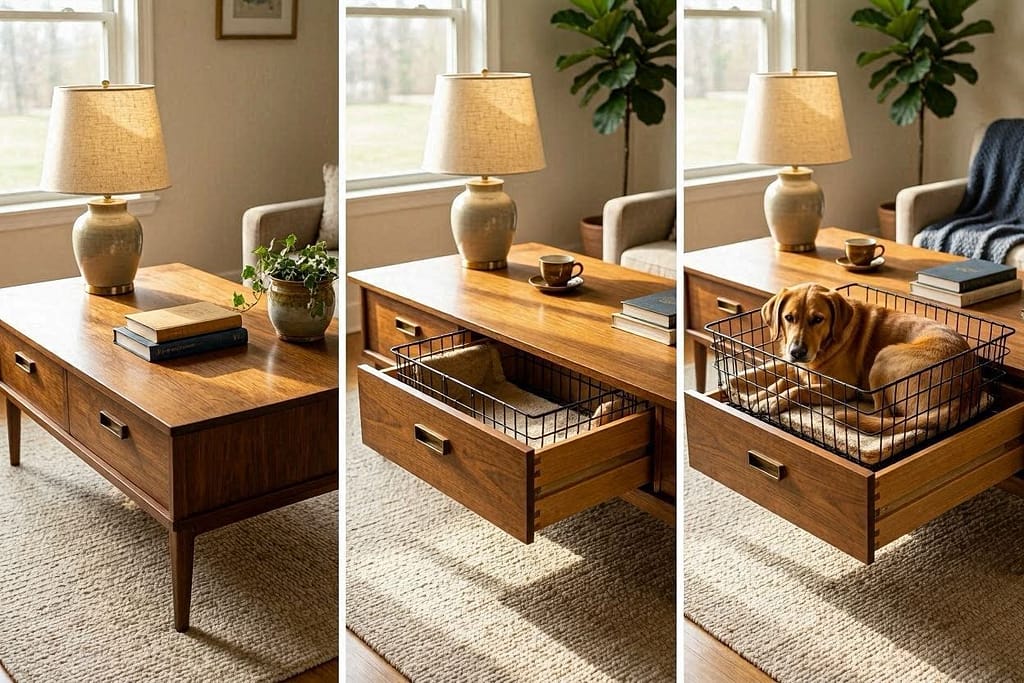
The Concept: A stylish table that secretly houses your dog’s crate.
The How-To:
- DIY: Build a simple wooden frame around a standard wire crate, adding a tabletop.
- Store-Bought: Companies like Diggs, Frisco, and MidWest Homes make beautiful crate-end tables.
- Style Tip: Add a lamp, books, or a tray on top. No one will guess the secret compartment below.
Best For: Dogs who use crates regularly, living rooms needing both surfaces and containment.
Cost: $100-$300 (DIY) / $200-$500 (store-bought)
5. Under-Stair or Under-Bed Sanctuary
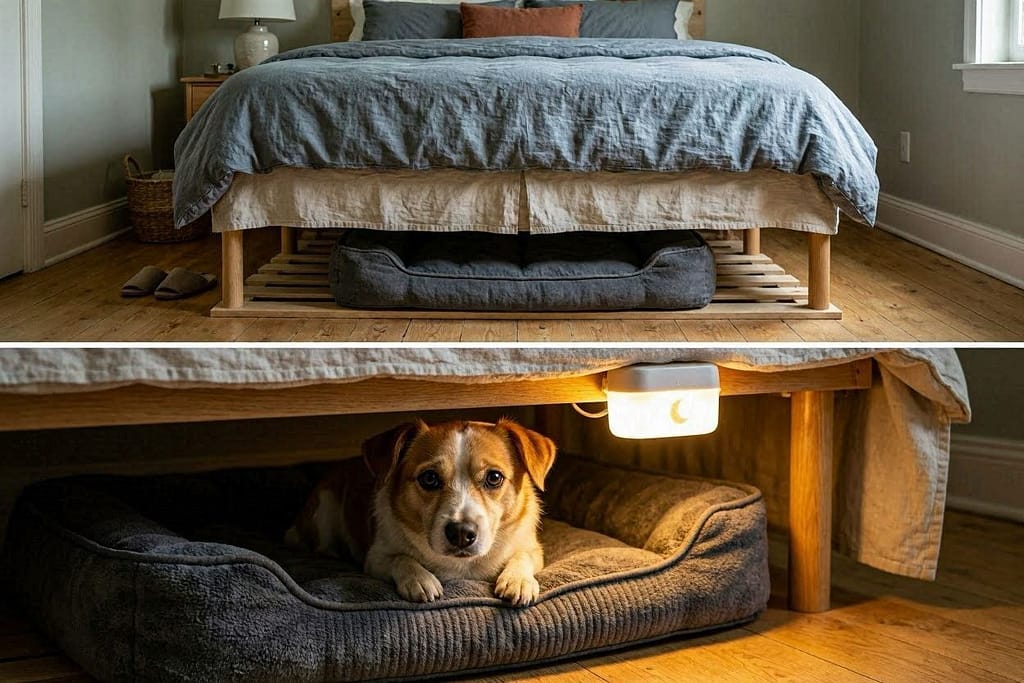
The Concept: Utilize “dead space” for a cozy dog den.
The How-To:
- Under-Stairs: If you have stairs, create a custom nook with a curtain for privacy.
- Under-Bed: Use bed risers to elevate your bed 8-12 inches, then slide a dog bed underneath.
- Pro Tip: Add a motion-activated night light inside for easy nighttime access.
Best For: Dogs who love cave-like spaces, studio apartments.
Cost: $20-$150
6. Ottoman Dog Bed Storage
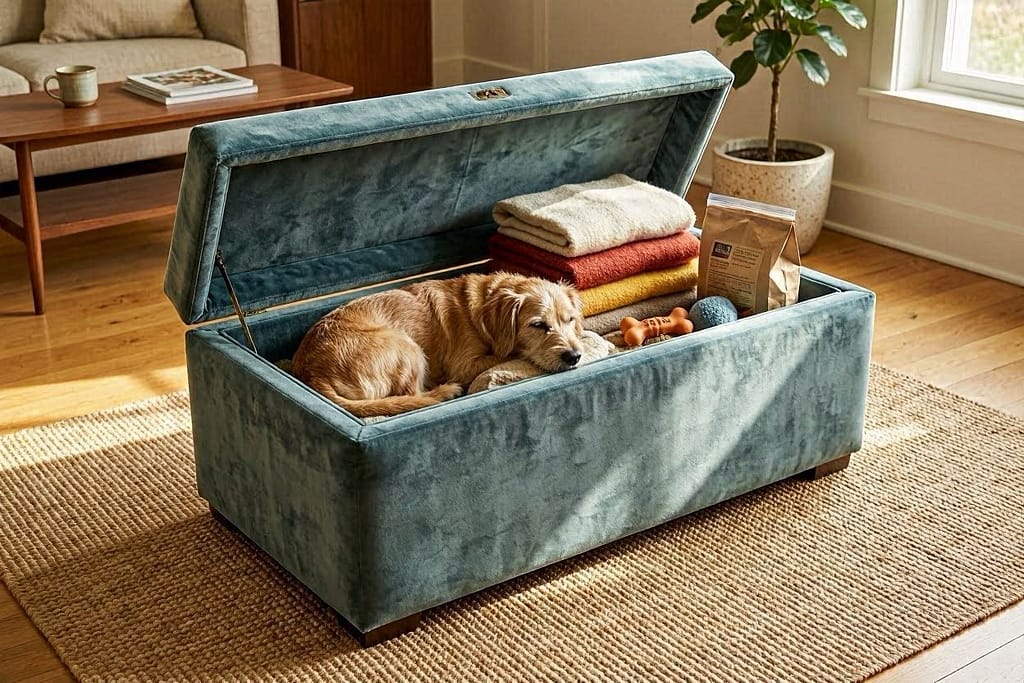
The Concept: A comfortable human seat that opens to reveal dog supply storage.
The How-To:
- Purchase a storage ottoman large enough for your dog to curl up on.
- Use the interior for folded blankets, extra toys, grooming supplies, or food.
- Comfort Boost: Add a removable, washable cushion or blanket on top.
Best For: Living rooms, apartments with frequent guests.
Cost: $80-$200
Hack Category 3: The Transformers—Furniture That Adapts
7. Fold-away Feeding Station
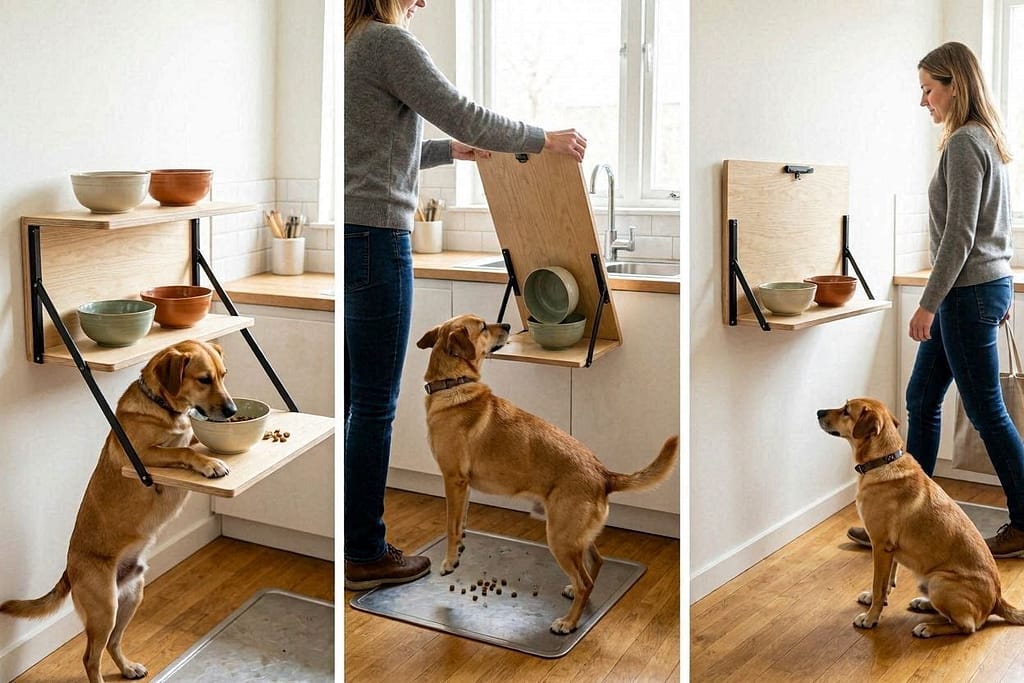
The Concept: A feeding area that disappears when not in use.
The How-To:
- Mount a small, shallow shelf on hinges to your wall or inside a cabinet.
- Attach silicone bowls that can be removed for washing.
- Fold flat against the wall after meals.
Best For: Tiny kitchens, efficiency studios.
Cost: $40-$80
8. Convertible Room Divider/Play Zone
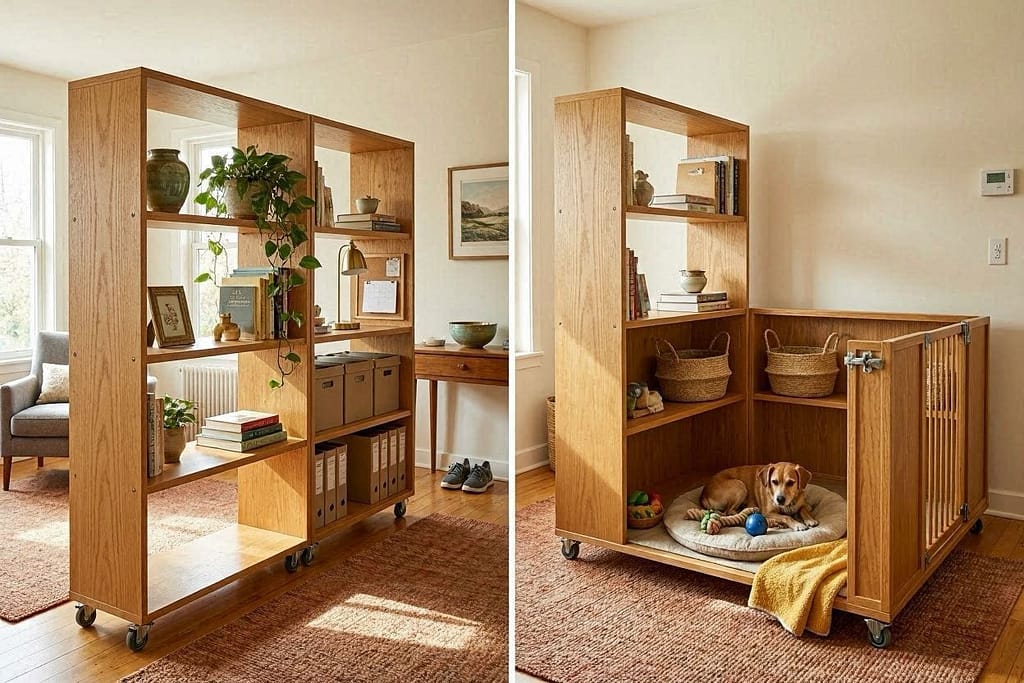
The Concept: A stylish divider that creates a temporary dog zone.
The How-To:
- Use a bookshelf or cube storage unit on casters as a room divider.
- One side holds your books/decor; the other side has dog toys, treats, and supplies.
- Roll it to create an instant playpen or quiet corner when needed.
Best For: Studio apartments, creating separation in open-concept spaces.
Cost: $100-$250
Now let’s solve the most common small-apartment dog dilemma: the bathroom situation.
Hack Category 4: Discreet Potty Solutions
9. Balcony Grass Patch Integration
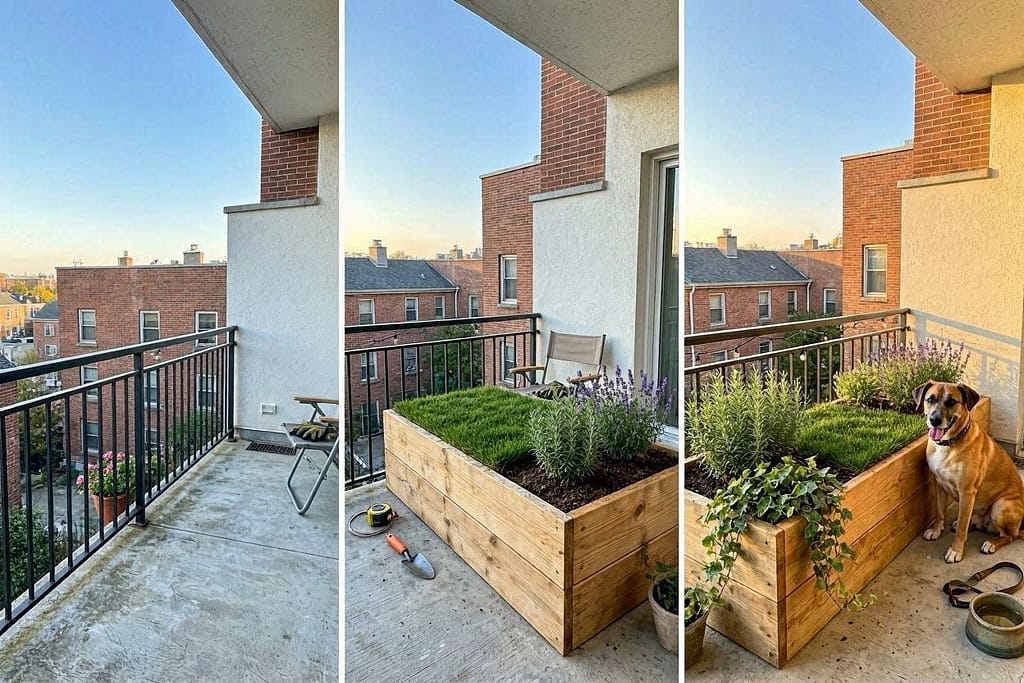
The Concept: Make the potty area part of your outdoor decor.
The How-To:
- Build or buy a raised planter box with artificial grass on top.
- Use a waterproof liner and drainage system underneath.
- Surround with real plants in pots to blend seamlessly with balcony decor.
Best For: Apartments with balcony access, small dogs.
Cost: $75-$200
10. Hidden Litter Box Cabinet
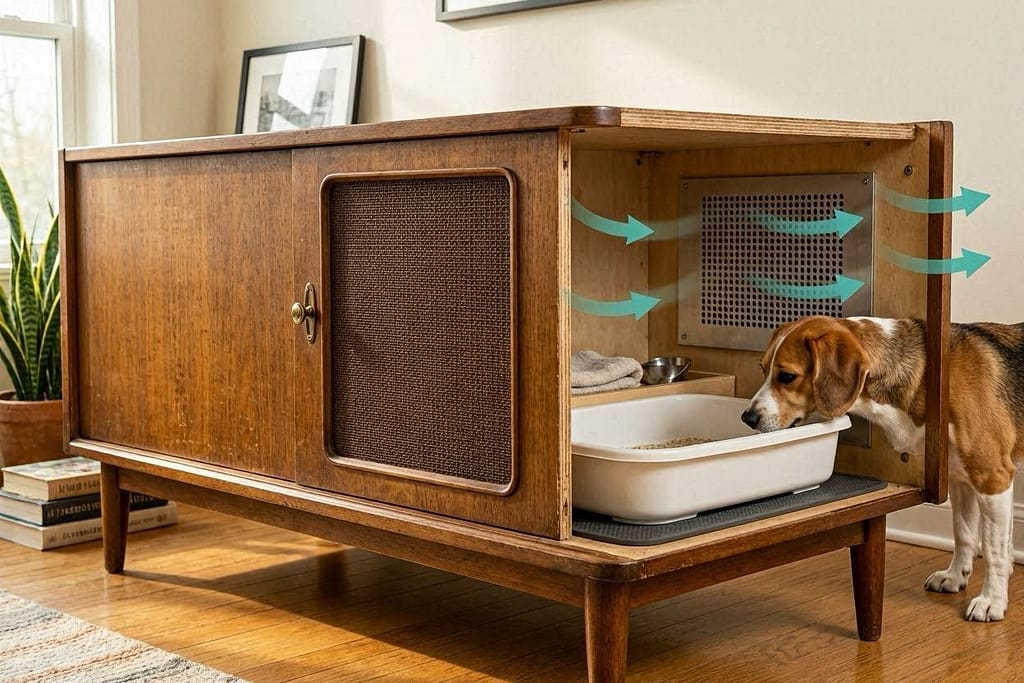
The Concept: For small dogs trained on litter boxes, hide it in plain sight.
The How-To:
- Repurpose a small cabinet or TV console with a dog-sized entrance cut into the side.
- Line with waterproof material, add your litter system inside.
- Ventilation is Key: Add discreet vents or charcoal filters to control odor.
Best For: High-rise living, inclement weather climates.
Cost: $50-$150 (DIY from thrifted furniture)
The Small-Apartment Dog Owner’s Essential Toolkit
These products earn their square footage:
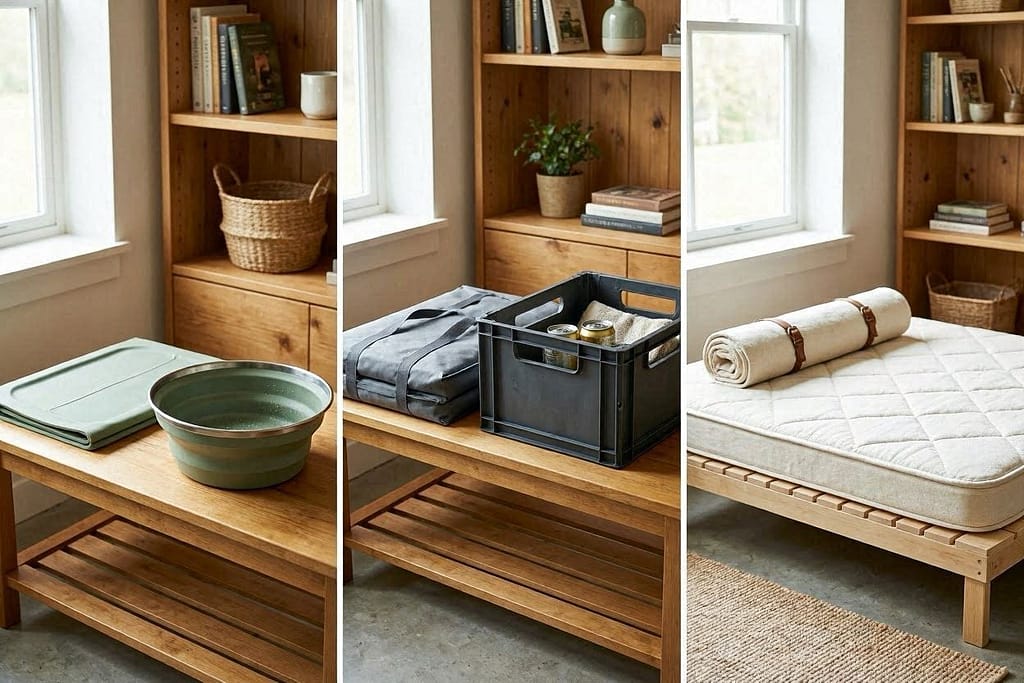
- Foldable/Flexible Everything:
- Collapsible silicone bowls ($10-$20)
- Foldable nylon crates ($60-$150)
- Roll-up travel beds ($30-$60)
- Space-Efficient Essentials:
- Wall-mounted leash organizer ($15-$40)
- Over-the-door storage for grooming supplies ($20-$50)
- Vacuum-sealed storage bags for off-season dog clothes ($15-$30)
- Multi-Functional Winners:
- Stair-style pet bed that doubles as a side table ($80-$150)
- Bench with built-in dog bed and storage ($200-$400)
- End table with charging station and dog bowl holder ($100-$250)
Budget Breakdown:
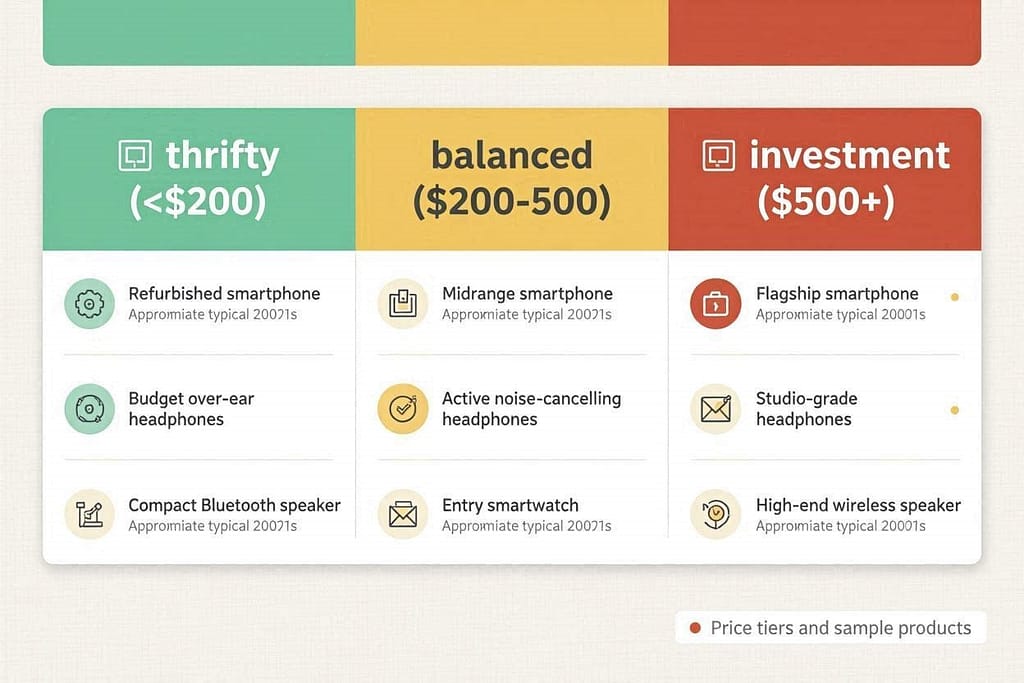
- Thrifty Tier (Under $200): Focus on DIY and multi-purpose human furniture
- Balanced Tier ($200-$500): Mix of DIY and strategic store-bought pieces
- Investment Tier ($500+): Custom-built solutions and high-end dual-purpose furniture
You’ve got the ideas.
Now let’s make them work in your specific space.
Your Apartment Layout Action Plan
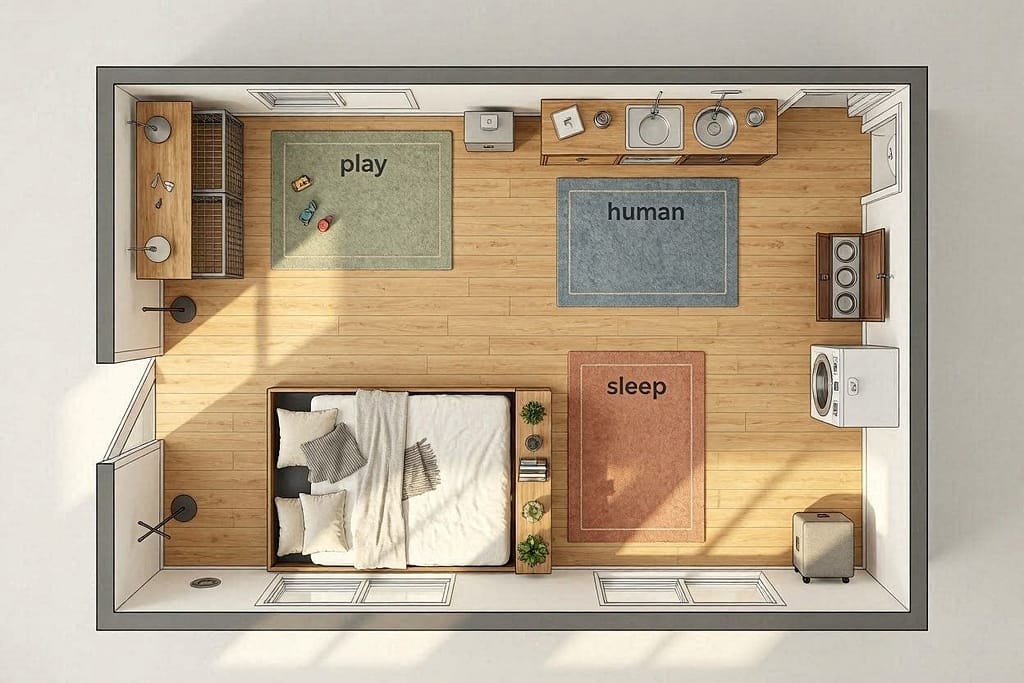
For Studio Apartments (300-500 sq ft):
- Priority: Dual-purpose everything
- Must-Have: Convertible crate/table, under-bed storage, fold-away feeding
- Avoid: Large standalone dog beds, bulky toy boxes
- Pro Tip: Use rugs to define “zones”—play zone, sleep zone, human zone
For One-Bedrooms (500-800 sq ft):
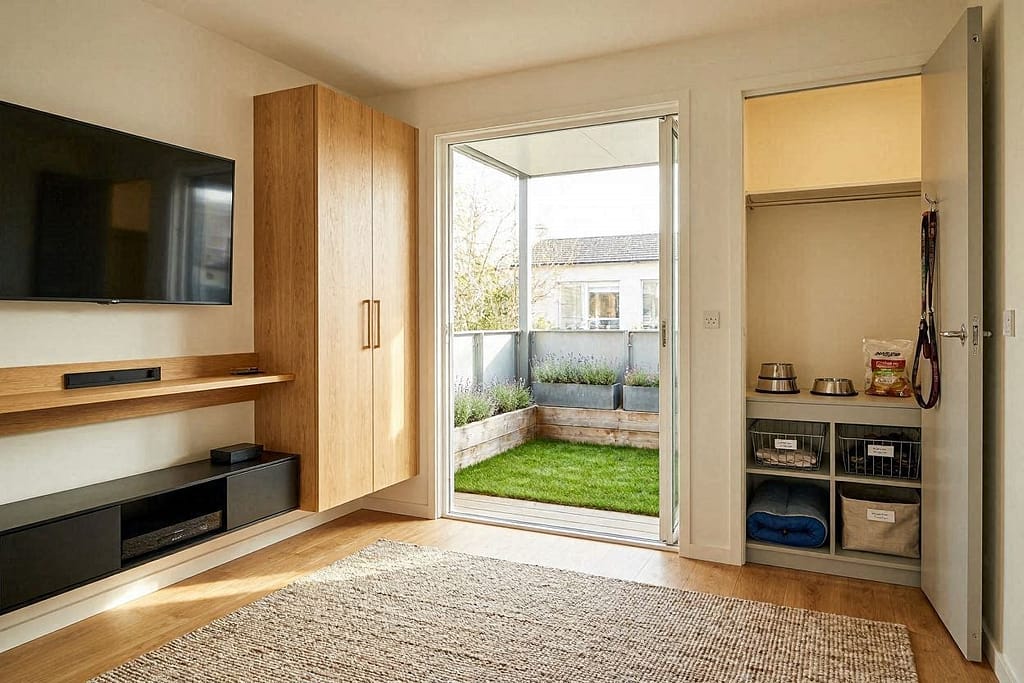
- Priority: Vertical solutions and discreet storage
- Must-Have: Wall-mounted systems, room divider play zone, balcony integration
- Avoid: Letting dog stuff spread into every room
- Pro Tip: Designate one closet or cabinet exclusively for dog supplies
For Apartments with Multiple Dogs:
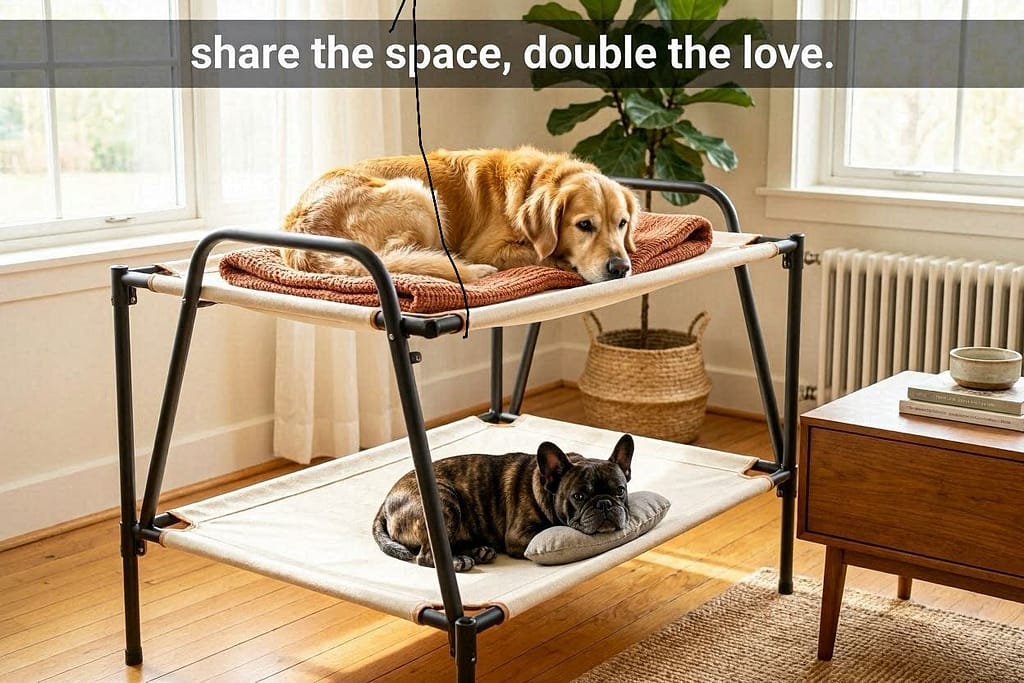
- Priority: Stacking and shared solutions
- Must-Have: Bunk-style sleeping arrangements, communal toy storage, staggered feeding schedule to share one station
- Avoid: Duplicating everything—dogs can share more than you think
- Pro Tip: Color-code items for each dog to maintain order
The Psychology of Small-Space Success
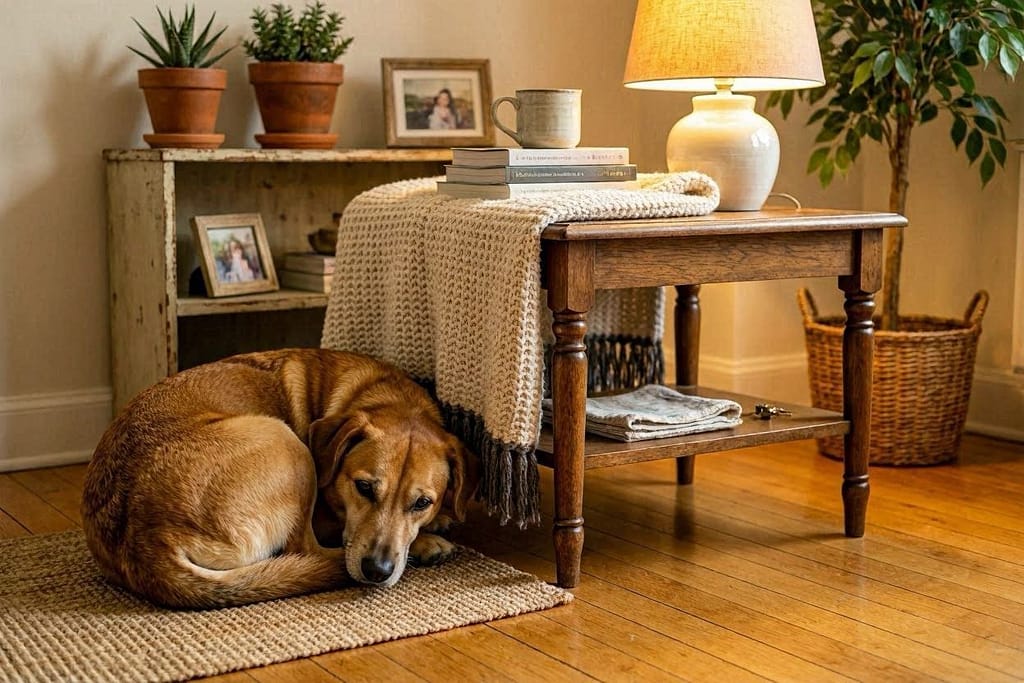
Your Dog’s Perspective:
Small spaces can actually benefit dogs by creating secure, den-like environments. The key is consistency—their bed should always be in the same spot, their food station predictable. Dogs thrive on routine, especially in limited spaces.
Your Mental Health:
Clutter increases anxiety for both humans and dogs. By creating organized, designated spaces for your dog’s belongings, you’re reducing visual stress and creating harmonious energy in your home.
The Visitor Test:
A well-executed small-apartment dog setup should make guests say, “I didn’t even realize you had so much dog stuff!” not “Wow, your dog really lives here.”
Common Pitfalls & How to Avoid Them
Mistake #1: Buying everything “dog-sized.”
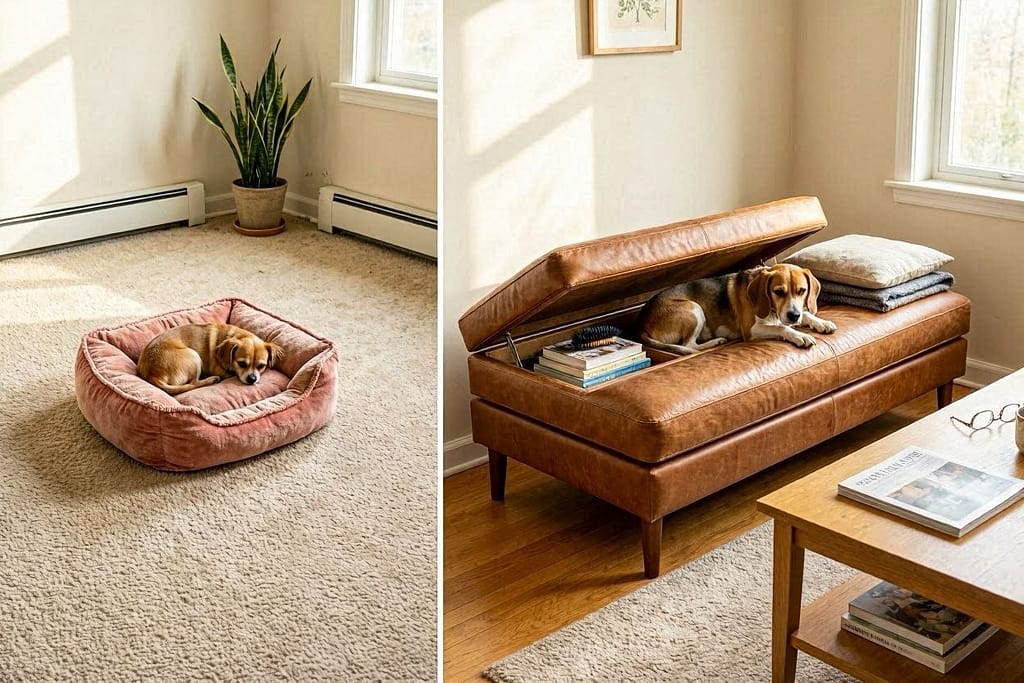
Reality: Tiny dog furniture often means single-purpose waste of space. A regular piece with dual function is often better.
Mistake #2: Ignoring your personal style
Fix: Your dog’s items should complement your decor, not clash with it. Choose neutral colors, natural materials, and cohesive designs.
Mistake #3: Forgetting about cleaning
Solution: Every hack must be easy to clean. Removable covers, washable materials, and accessible surfaces are non-negotiable.
Mistake #4: Underestimating vertical space
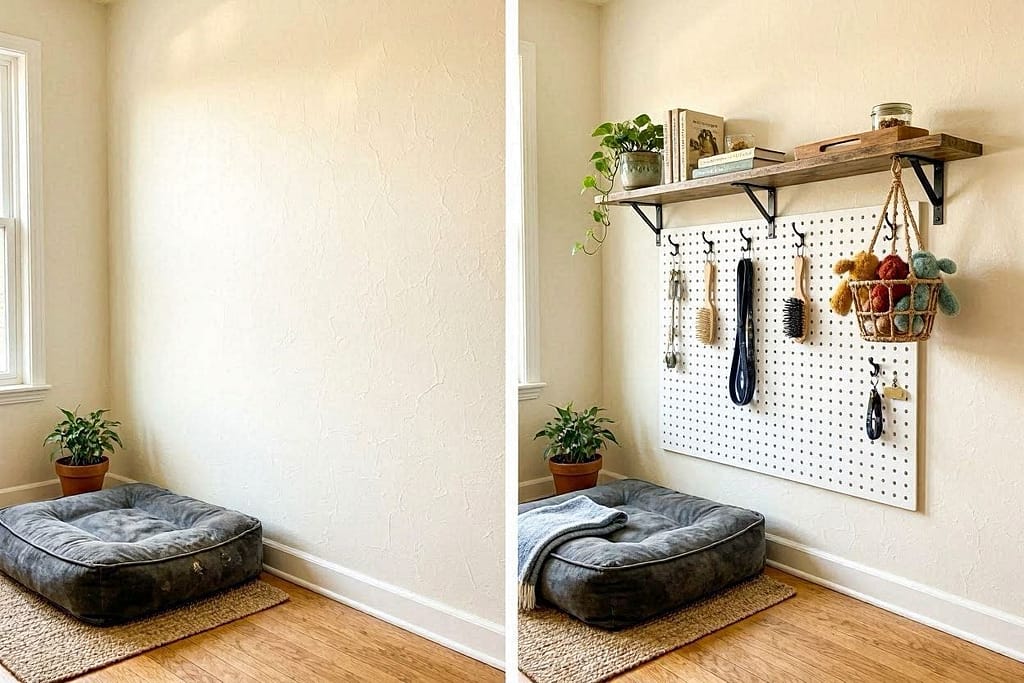
Remedy: Look at every wall as potential storage. Even 6 inches of depth can transform your storage options.
DIY vs. Store-Bought: Making the Right Choice
When to DIY:
- You have specific size constraints
- You want to match existing furniture perfectly
- You’re on a tight budget
- You enjoy projects and have basic tools
When to Buy:
- You need something immediately
- The store version is reasonably priced and fits well
- You lack tools, time, or confidence
- You want professional-grade durability
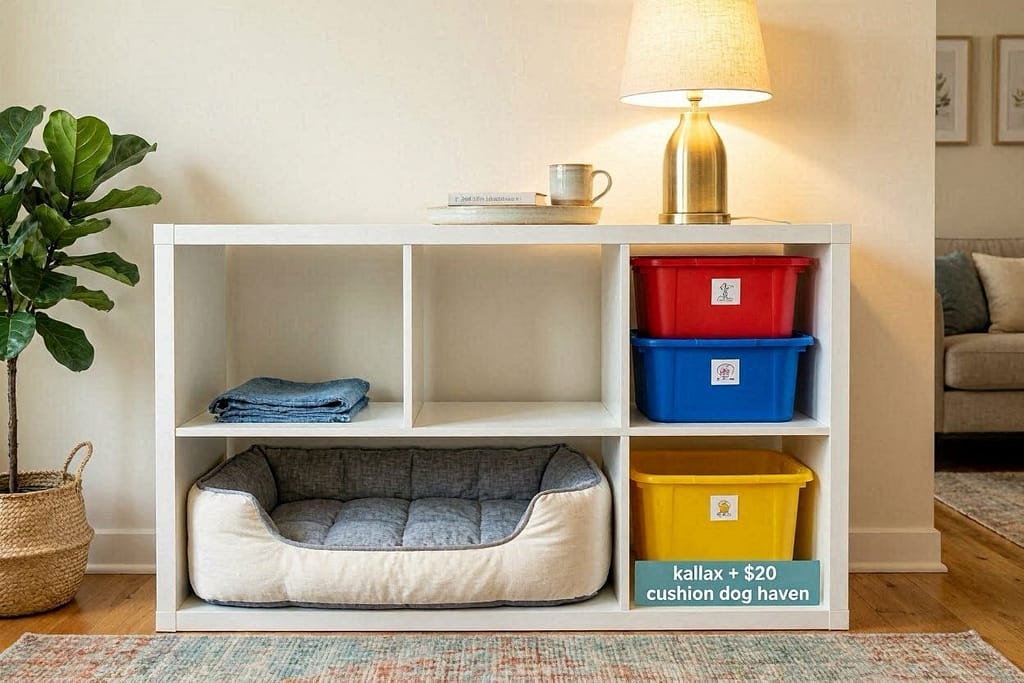
Best of Both Worlds: Hack ready-made furniture.
Add a custom cushion to a storage bench.
Modify an IKEA Kallax unit with a dog bed insert.
The possibilities are endless.
Maintaining Your Space-Saving Sanctuary
Weekly Reset:
- Fold and put away all collapsible items not in daily use
- Wipe down vertical surfaces and wall-mounted units
- Rotate toys (store 2/3, display 1/3 to reduce clutter)
- Launder all dog bedding and covers
Seasonal Audit:
Every 3 months, evaluate:
- What’s working/what’s not?
- Have your dog’s needs changed?
- Can anything be further optimized or eliminated?
The One-In, One-Out Rule:
For every new dog item that enters your apartment, one must leave. This prevents gradual clutter creep.
More Space, More Harmony
Living with a dog in a small apartment isn’t about limitation—it’s about creative liberation.
It’s the opportunity to design a life where every square foot serves a purpose, where your dog’s needs are met without overwhelming your space, and where your home feels like a sanctuary for both of you.
The hacks we’ve explored aren’t just space-savers; they’re relationship enhancers.
Less clutter means less stress.
Defined spaces mean clearer routines.
A harmonious home means more joy in your shared moments.
Start with just one hack this weekend.
Maybe it’s mounting that leash organizer that’s been a tripping hazard.
Maybe it’s finally creating that under-bed dog nook.
Each small change compounds into a dramatically better living experience.
Remember: The goal isn’t a magazine-perfect apartment.
It’s a functional, happy home where tails can wag freely without knocking things over, where you can move through your space with ease, and where your dog feels equally considered and comfortable.
🐾 — Apartment Dog Guide (ADG)
Living large in small spaces, one paw at a time. That’s the apartment dog life—see you in the next guide!.


