
You love your furry roommate.
The cuddles, the loyalty, the welcome-home dances—it’s the best part of coming back to your humble abode.
But let’s be honest for a second. That thirty-pound bag of kibble you bought on sale?
It’s currently serving as an uninvited coffee table centerpiece.
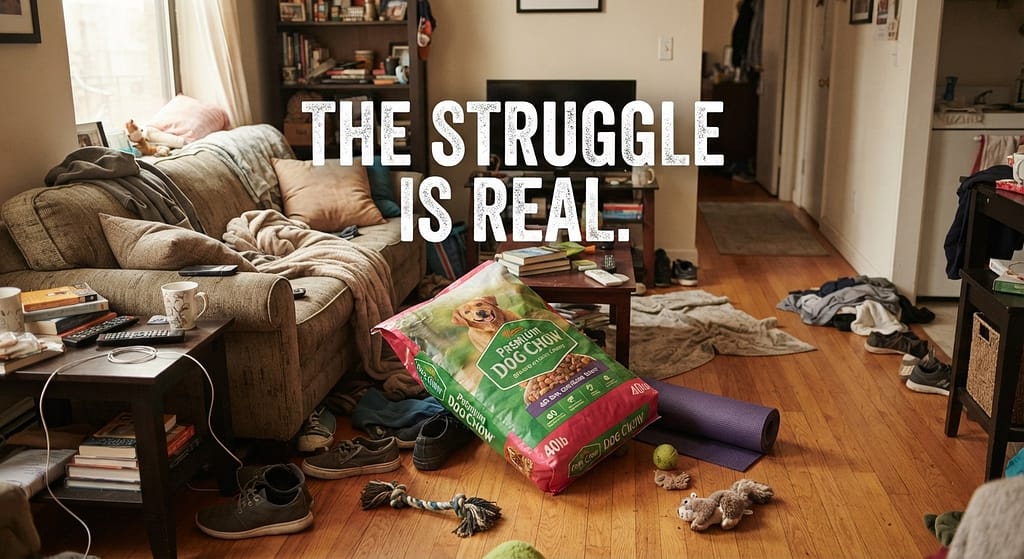
Or worse, it’s leaning against the hallway wall, creating a tripping hazard that makes your small apartment look more like a warehouse than a cozy home.
Some of our ardent readers have been there. They know the struggle of opening a cabinet only to have a mountain of dog food bags avalanche onto the floor.
You have the willpower to train your pup. You have the love to give them the best nutrition.
And you just don’t have the square footage to store it all.
Does that mean you have to sacrifice buying in bulk to save money?
Absolutely not.
Does it mean you have to look at an ugly, bright-yellow plastic bin for the rest of your lease?
Never.
Welcome to the ultimate guide on space-saving dog food storage for small apartments.
We are going to transform that bulky, smelly eyesore into a seamless, stylish part of your home.
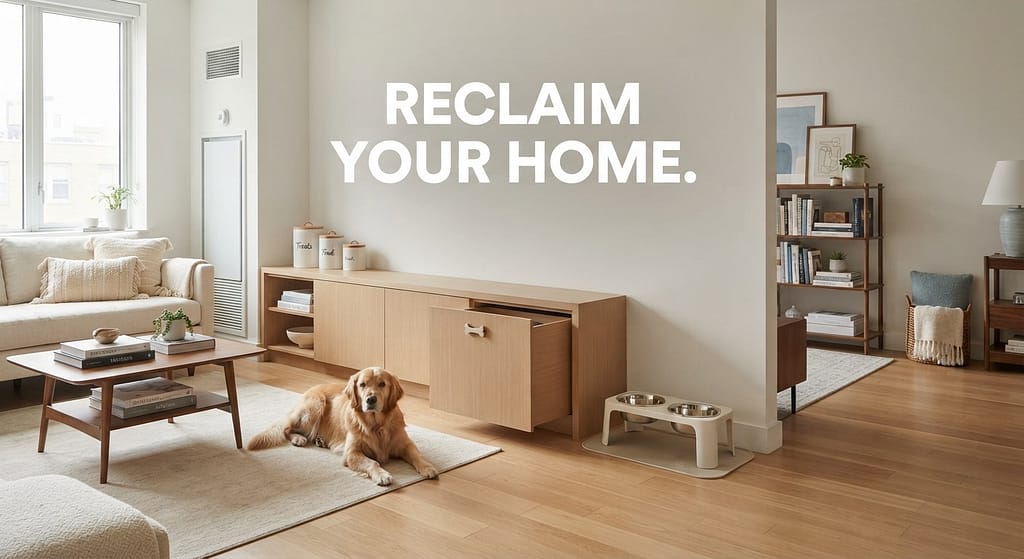
We’ll show you how to think vertically, hide in plain sight, and maximize every inch of your precious floor space—all while keeping that kibble fresh and safe.
Ready to reclaim your home?
Let’s dig in.
The Ugly Truth About the “Bag on the Floor”
Before we dive into the genius solutions, let’s talk about why the “bag on the floor” method is your apartment’s worst enemy.
First, it’s a magnet for pests. Bugs, mice, and ants are opportunists.
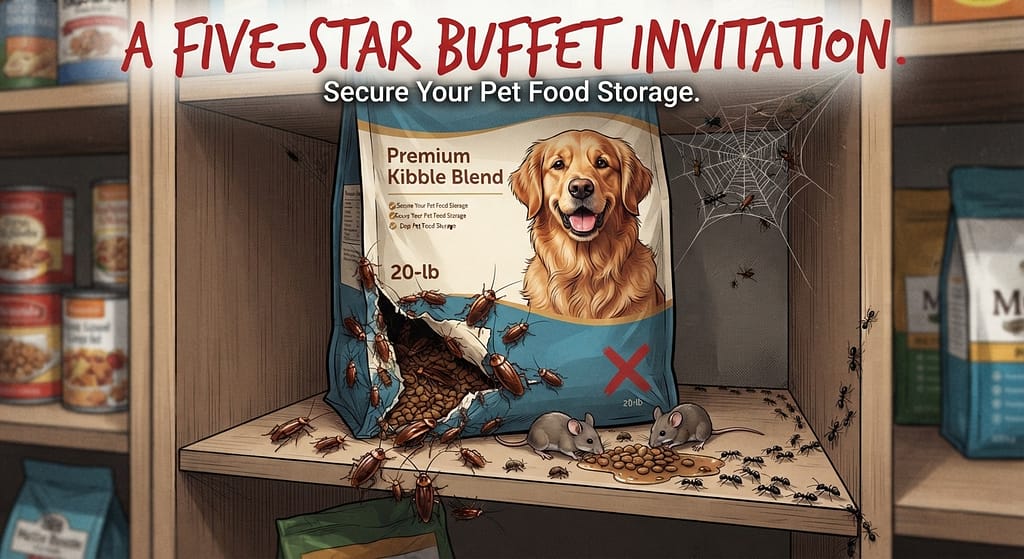
A rolled-down bag that isn’t completely airtight is a five-star buffet invitation.
If you live in an older building, you are essentially rolling out the red carpet.
Second, it’s an odor trap. Even the highest-quality low-odor kibble releases oils and smells.
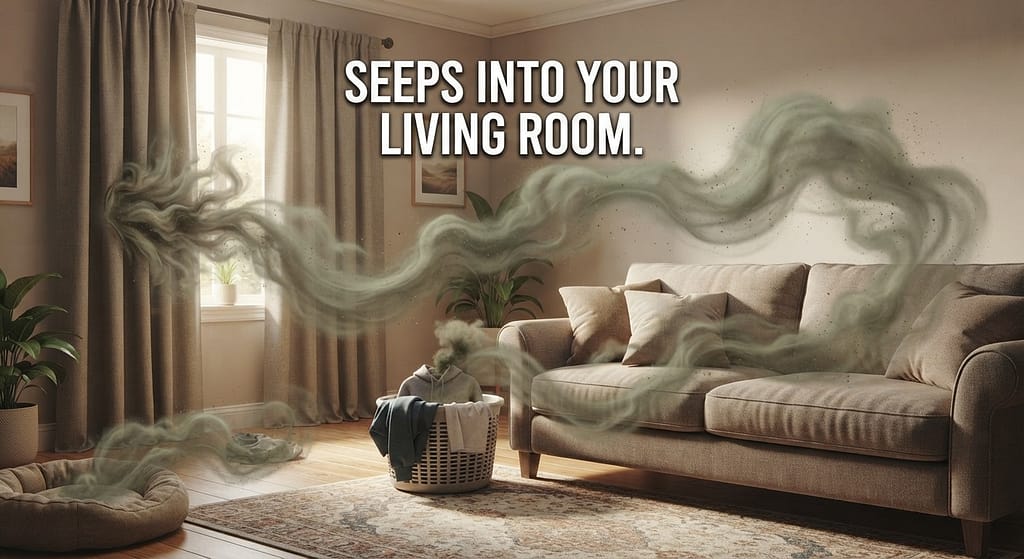
Left in its porous bag, that smell seeps into your living room curtains, your couch cushions, and eventually your clothes.
Third, it goes stale. Exposure to air oxidizes the fats in dog food. Not only does this reduce the nutritional value, but it also makes the food taste rancid.
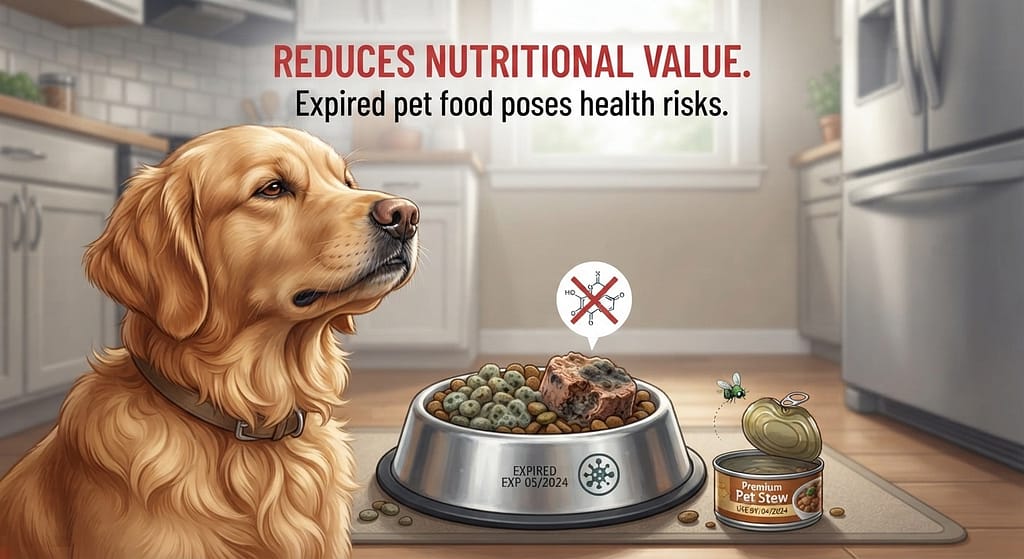
Your dog might start turning their nose up at dinner time, and you’ll be left wondering why.
We don’t want that. We want fresh food, a fresh-smelling home, and fresh-looking decor.
So, let’s toss the bag aside (literally—recycle it!) and look at the solutions that make sense for tight spaces.
The Golden Rule of Small-Space Storage
Before you buy anything, we need to lay down the law. There is one cardinal rule we insist you follow:
Rule #1: Measure Twice, Buy Once.
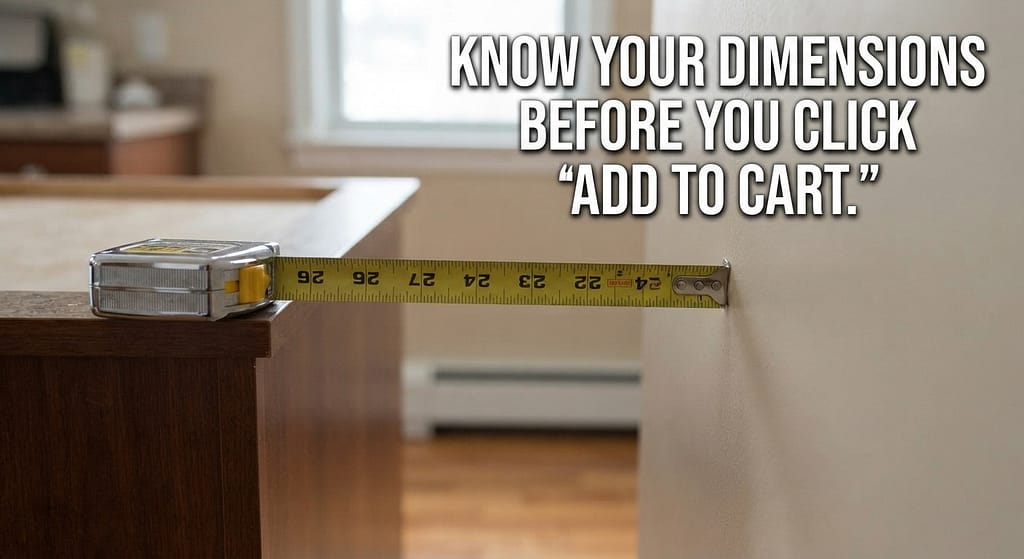
We cannot stress this enough. Don’t buy a storage container based on how cute it looks online.
Get your tape measure. Measure the height of your under-sink cabinet.
Measure the width of that awkward gap between your fridge and the wall.
Also measure the depth of your coat closet. Know your dimensions like the back of your hand before you click “add to cart.”
Rule #2: Airtight is Non-Negotiable.
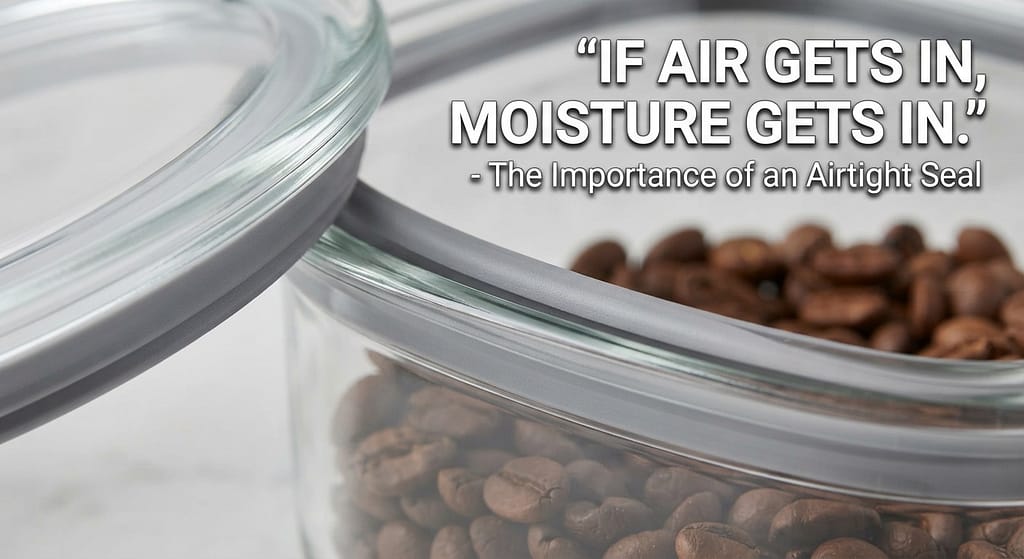
Whether you are using a $10 plastic container or a $200 designer piece, it must have an airtight seal.
Look for silicone gaskets or locking clamp lids. If air gets in, moisture gets in, and mold becomes a risk.
Rule #3: Portion Control is Your Friend.
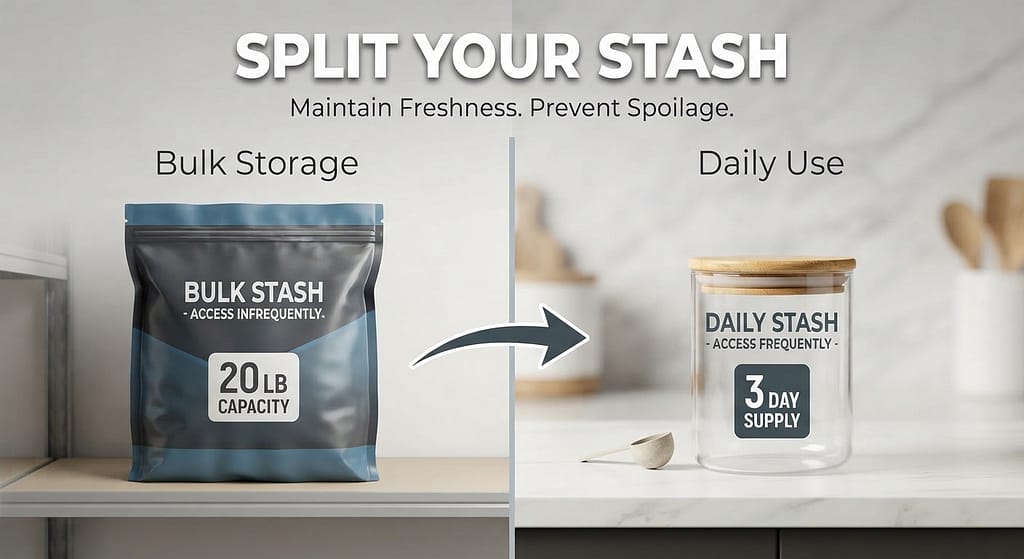
This is the secret sauce for small apartments. You don’t have to store all 30 pounds in one giant bucket.
In fact, we recommend against it. We’ll show you why splitting your stash is the ultimate space-saver.
7 Genius Space-Saving Solutions for Your Kibble
Let’s get to the good stuff. Here are seven creative, actionable ways to store your dog’s food without sacrificing your living space.
1. The Furniture Hack: The Storage Ottoman
Two birds, one stone.
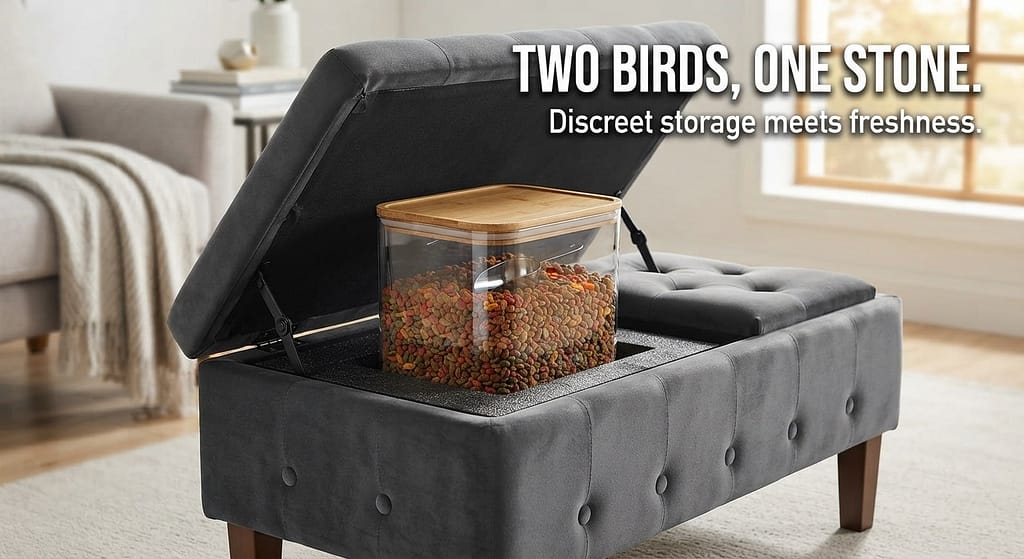
This is our absolute favorite trick. Instead of buying a separate, ugly bin that takes up floor space, you replace an existing piece of furniture with a storage ottoman or bench.
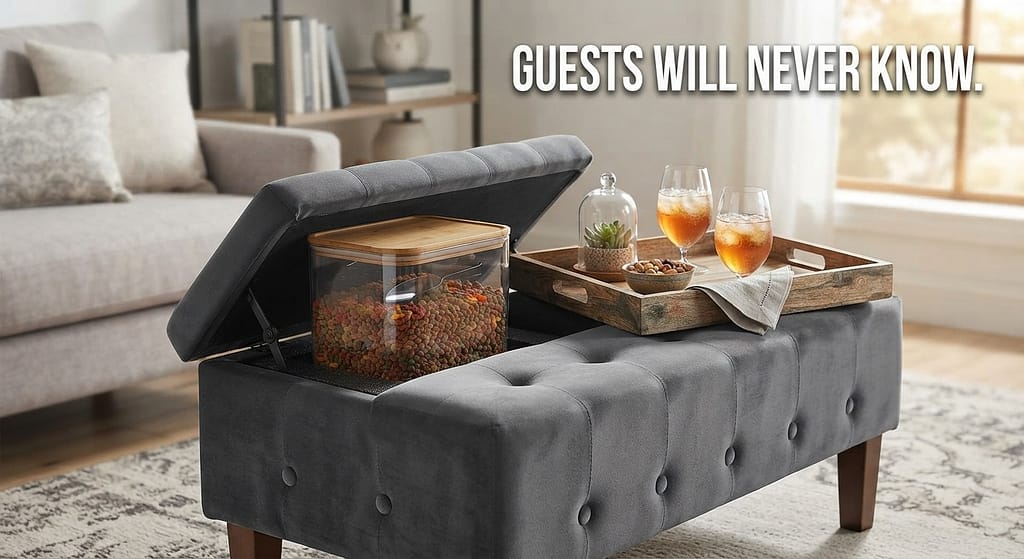
- How it works: You buy a large, upholstered storage ottoman with a lid. You place a smaller, airtight container inside the ottoman. The ottoman serves as a coffee table, a footrest, or extra seating. Guests will never know it’s a dog food pantry.
- Why we love it: It integrates seamlessly into your living room. You aren’t adding new furniture; you are upgrading old furniture. It hides the smell perfectly and keeps the food in a cool, dark place away from sunlight.
- Pro Tip: Look for ottomans with a wooden or sturdy insert on top so drinks don’t spill if you use it as a coffee table.
2. Go Vertical: The Over-the-Door Pantry
Utilizing the forgotten real estate.

How often do you look at the back of your closet door or your pantry door and see wasted air? Those doors are prime real estate.
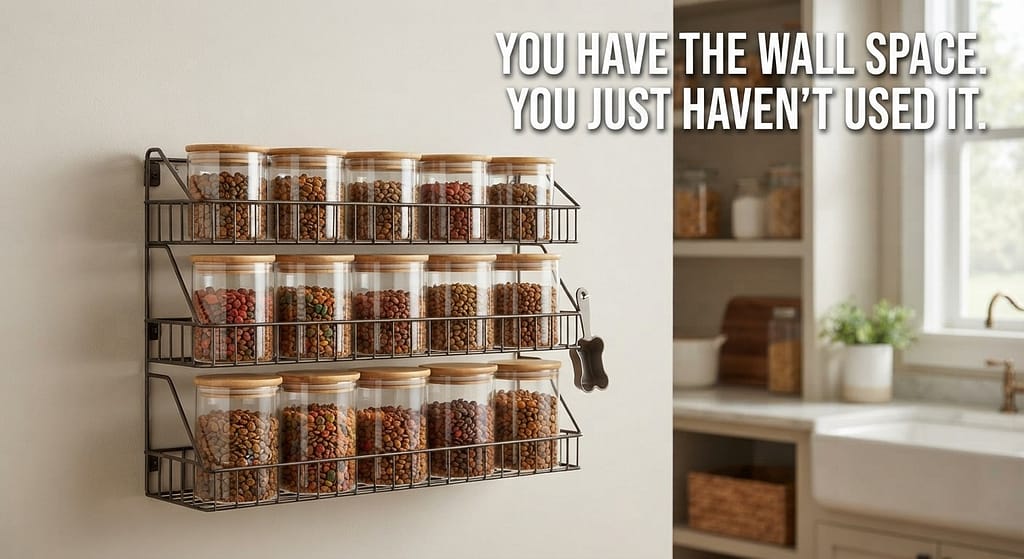
- How it works: Purchase a clear, over-the-door shoe organizer or a small wire rack. Store single-serving, vacuum-sealed bags of kibble in the pockets. Alternatively, install a slim, wall-mounted canister rack and decant your food into small, aesthetically pleasing glass jars.
- Why we love it: It takes up zero floor space. Zero counter space. It’s eye-level, so it’s easy to grab, and if you use clear containers, you can see exactly when you are running low.
- Reminder: You have the wall space. You have the door. You just haven’t used it yet. Don’t let it go to waste.
3. The Under-utilized Zones: Under the Bed & Under the Sink
The “out of sight, out of mind” approach.
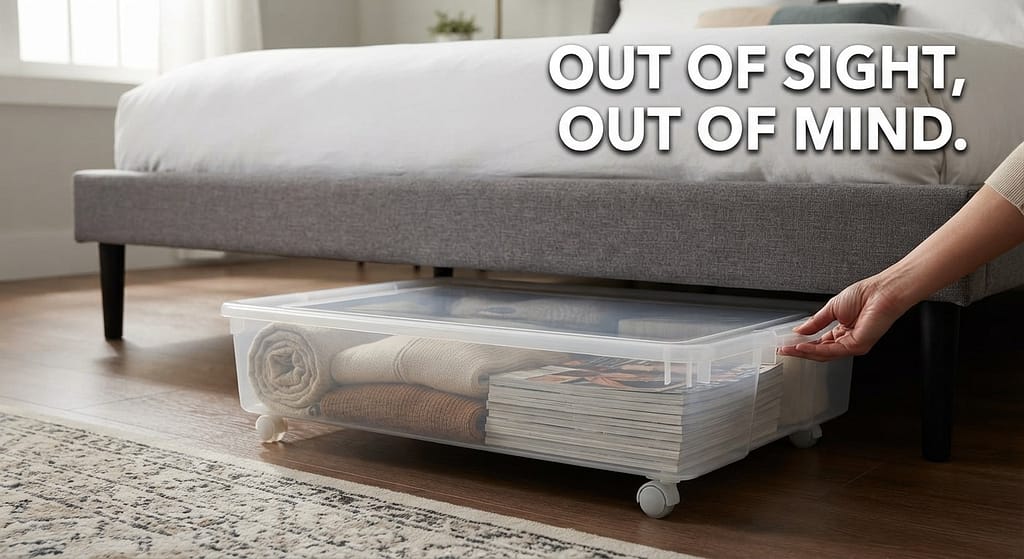
We are willing to bet that the space under your bed is currently a graveyard for old shoeboxes and dust bunnies. It’s time to reclaim it.
- How it works: Buy a low-profile, airtight rolling bin that slides easily under your bed frame. If you have a high-rise bed, you can even fit a standard 30-pound Vittles Vault under there.
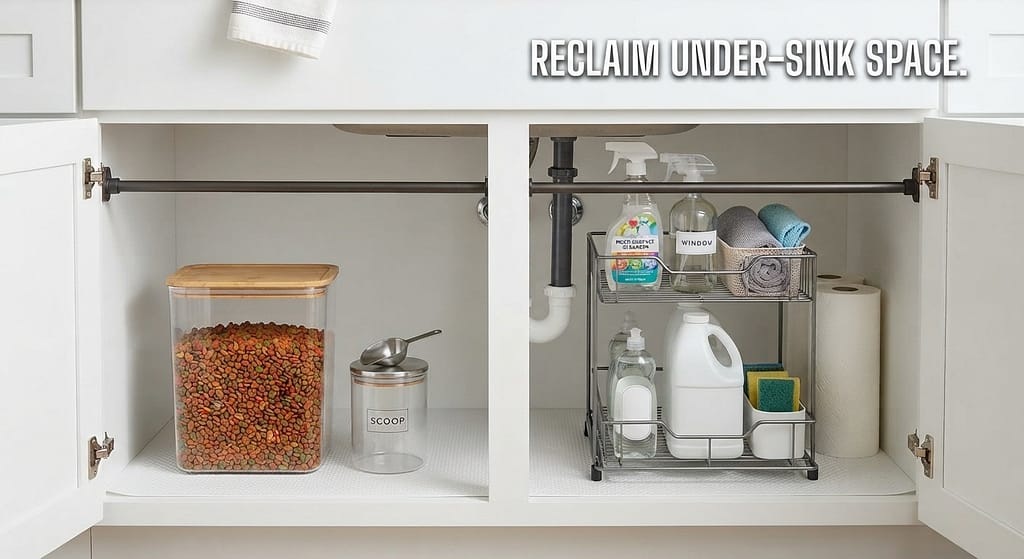
- Kitchen Sink Hack: If you have a cabinet under your sink that is half-empty, use a tension rod to divide the space. Put your dog food on one side, the cleaning supplies on the other. Just make sure the food is in a completely sealed container so it doesn’t absorb the smell of your dish soap.
4. The Mobile Unit: The Rolling Cart
For the ultimate flexibility.
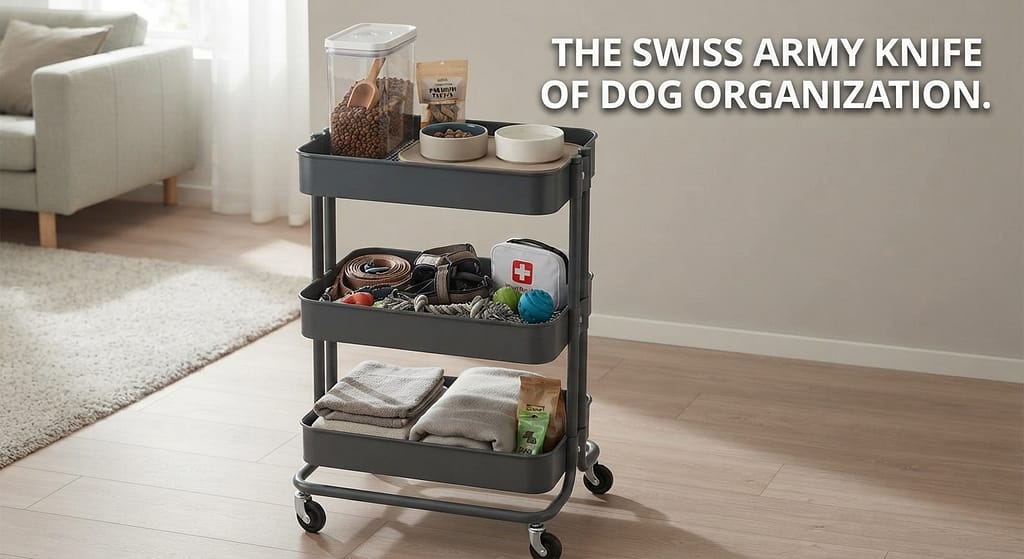
If you rent and can’t mount things to the walls, a rolling cart (like the classic IKEA RÅSKOG) is a lifesaver.
- How it works: Dedicate one tier of the cart to an airtight dog food jar. Use the other tiers for bowls, leashes, and treats. Because it rolls, you can park it in a narrow gap (like between the fridge and the wall) during the day and roll it out to the feeding area at mealtime.
- Why we love it: It consolidates the entire “feeding station” into a 15-inch by 15-inch footprint. It’s a space-saving nomad. We call this the “Swiss Army Knife” of dog organization.
5. The Decoy: Decorative Apothecary Jars
Turning food into decor.
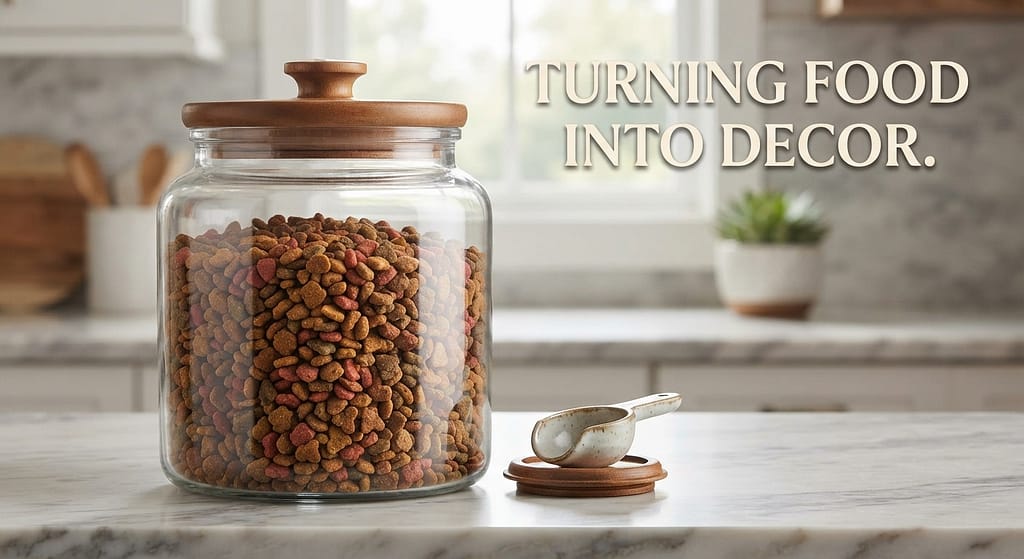
If you only buy small bags of food or you want to display your top-off supply, clear glass apothecary jars with clamp lids are gorgeous.
- How it works: You put the dog food in a beautiful, large jar with a polished wooden lid. Place it on your kitchen counter or a floating shelf. To a guest, it looks like a rustic baking ingredient—maybe oatmeal or granola. To you, it’s dinner for Fido.
- Seamless Integration: Match the jar to your kitchen aesthetic. If you have a farmhouse vibe, go with aged glass. If you have a modern vibe, go with sleek, geometric shapes. It ceases to be “pet storage” and becomes part of the architecture.
6. The Repurposed Storage: Tool Chests & Tackle Boxes
For the ultra-organized.
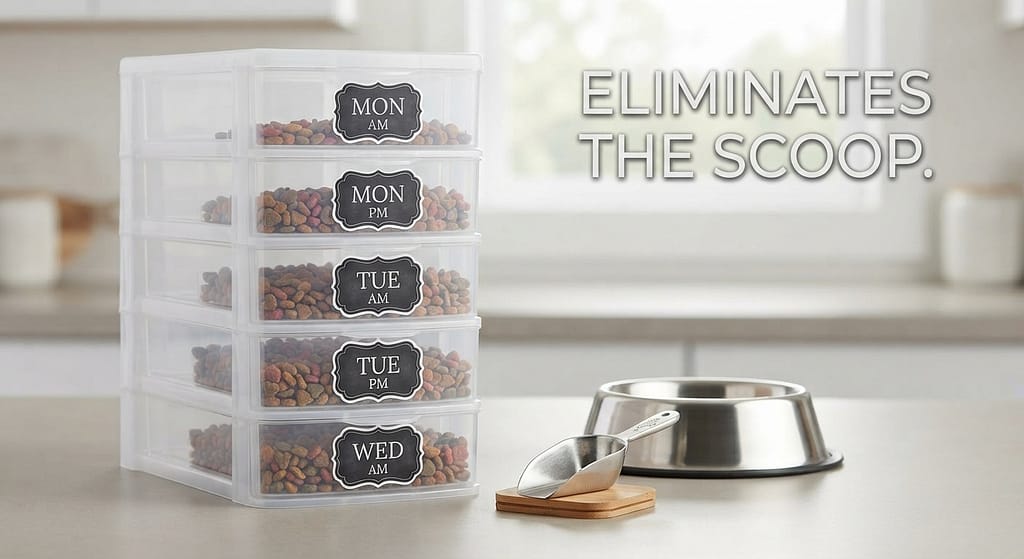
This is a bit off-the-wall, but stay with us. Small plastic drawer units, often used for nails or screws, are perfect for portioning.
- How it works: Buy a small, stackable plastic drawer tower. Label each drawer with a day of the week. Fill each drawer with the exact portion for that day.
- Why we love it: It eliminates the scoop. You just open the drawer, pour it into the bowl, and close it. No digging around in a giant bag. It saves time and keeps your portions controlled.
7. The Hidden Cabinet: Microwave Carts with Enclosed Storage
The multi-tasker.
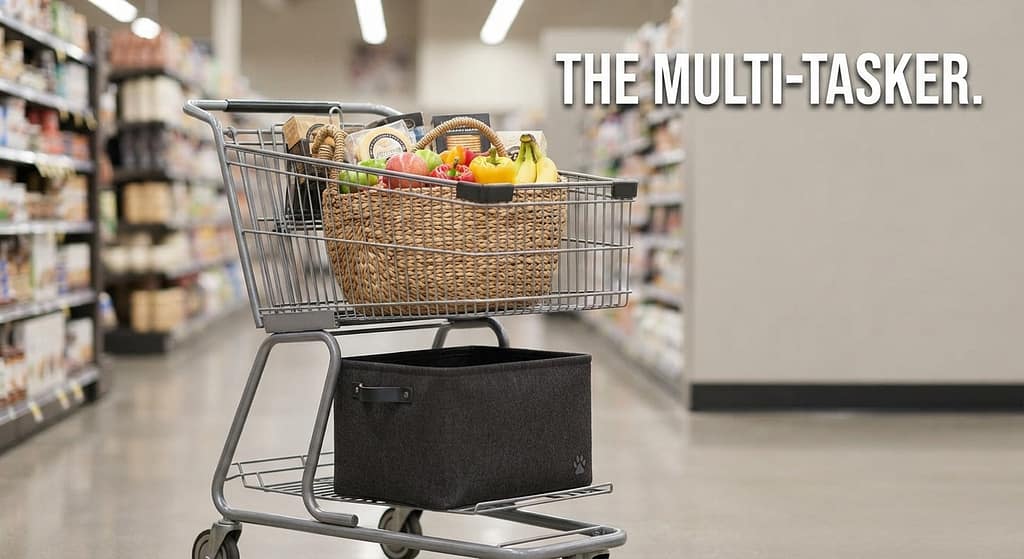
If you have a microwave cart or a sideboard in your dining area, look underneath. Is it open space? Perfect.
- How it works: Get a storage basket or a fabric bin that fits perfectly on the lower shelf of your cart. Put the airtight bag inside that basket. The basket hides the branding and colors, while the cabinet keeps it off the floor.
- Pro Tip: We suggest putting a bamboo mat under the bin to catch any stray kibble dust.
(Your Action List)
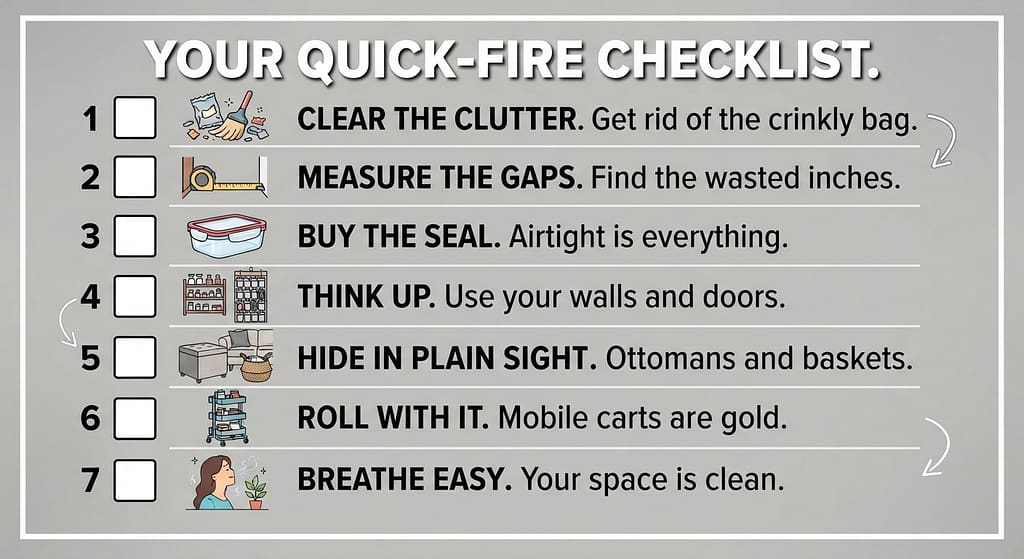
Let’s stop the dreaming and start the doing.
Here is your quick-fire checklist to get this done today:
- Clear the clutter. Get rid of the crinkly bag.
- Measure the gaps. Find the wasted inches.
- Buy the seal. Airtight is everything.
- Think up. Use your walls and doors.
- Hide in plain sight. Ottomans and baskets.
- Roll with it. Mobile carts are gold.
- Breathe easy. Your space is clean.
Seamless Integration: The “Feeding Zone” Strategy

Now that you have the storage sorted, let’s talk about integration.
A big mistake people make is storing the food in the kitchen but feeding the dog in the living room. That creates two points of mess.
We recommend building a single “Feeding Zone.”
- The Location: Choose a corner near the door or a nook between the kitchen and living room.
- The Setup: Place your rolling cart or storage ottoman here.
- The Mat: Put a waterproof, washable mat underneath.
- The Bowls: Keep elevated bowls on the mat.
- The Routine: The food comes out of the ottoman/cart, goes directly into the bowl, and the lid goes back on.
By centralizing the process, you contain any spills to one small area.
This integration makes your small apartment feel organized rather than chaotic. We call it “A place for everything, and everything in its place.”
How to Store the “Bulk” Without the Bulk
We know you love a good deal. We all do. Buying the giant 30-pound bag saves money, but it takes up space. Here is the life hack for bulk storage in small spaces:
The “Split-Stash” Method:
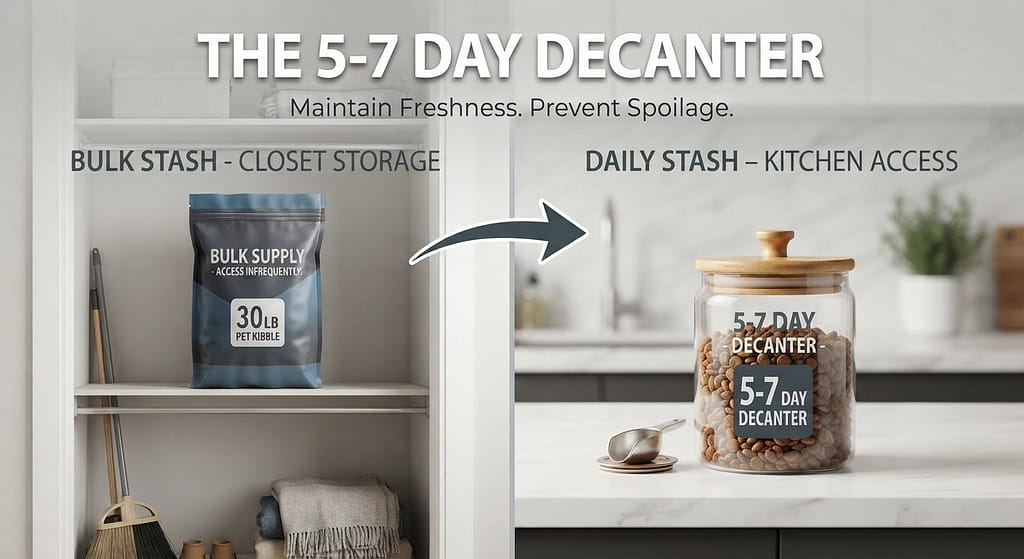
- Main Storage (The Deep Freeze/Closet): Put the actual giant bag inside a heavy-duty, sealed plastic tote. Store this tote at the very back of your bedroom closet or in the corner of your storage unit. You won’t open this daily.
- Active Storage (The Decanter): Fill a beautiful, space-efficient container (like the apothecary jar or a small 5-pound bin) with just 5-7 days’ worth of food. Keep this active jar in your designated Feeding Zone.
This method means the bulky bag is hidden away deep in the abyss of your closet, while your “front-facing” storage is tiny, elegant, and easy to handle.
You only restock the small jar once a week. We promise, this single trick will make your kitchen feel twice as big.
The Enemy: Air, Pests, and Moisture
Let’s have a serious heart-to-heart. Small apartments, especially in older buildings, are prone to humidity and pests. Here is how to battle them with your new storage system:
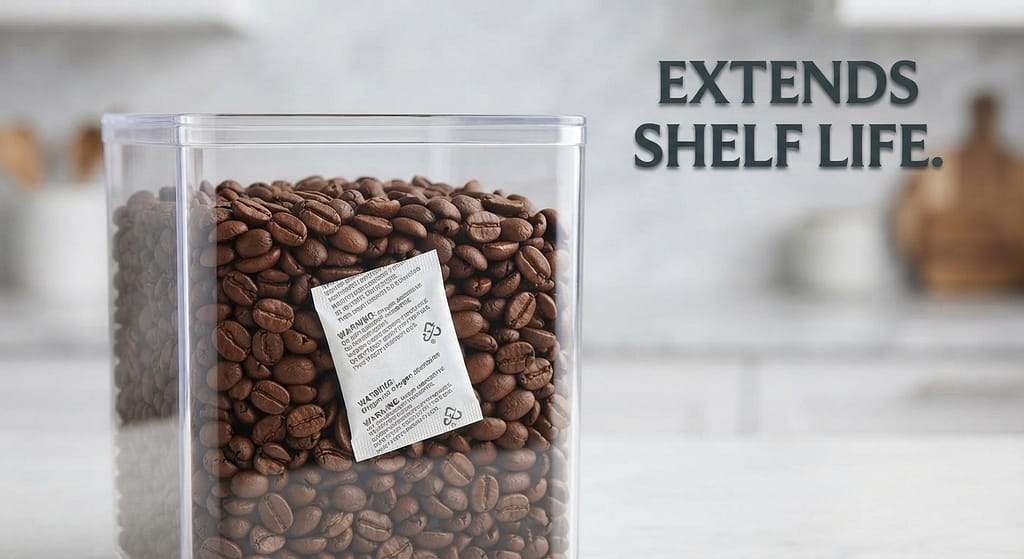
- Oxygen Absorbers: We highly recommend tossing a food-grade oxygen absorber packet into your large, sealed bulk bag. It removes the oxygen, stopping the fats from going rancid and significantly extending shelf life.
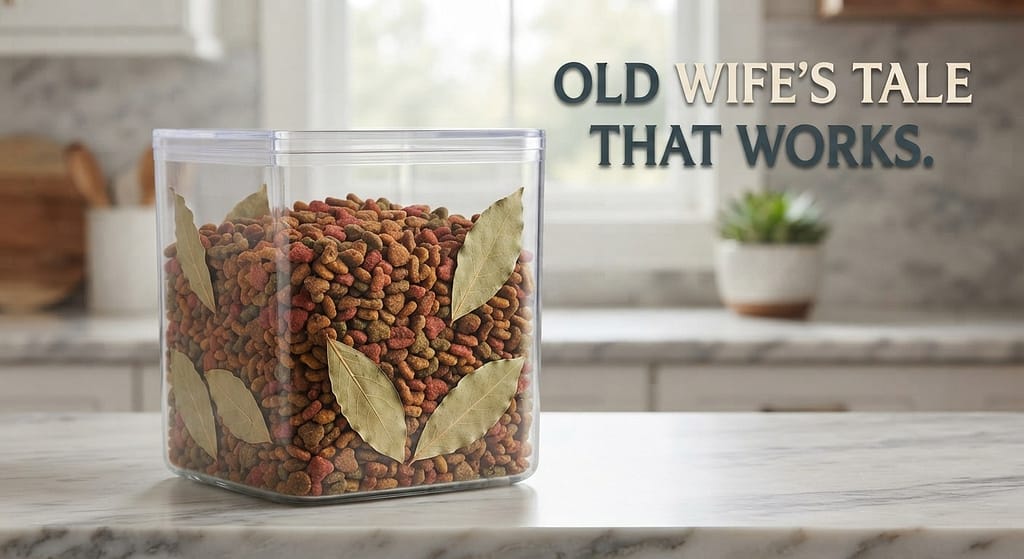
- Bay Leaves: This is an old wife’s tale that works. Tuck a couple of dry bay leaves inside your dog food container. It deters weevils and bugs without harming your dog (they won’t eat the leaves). It’s a cheap, chemical-free pest deterrent.
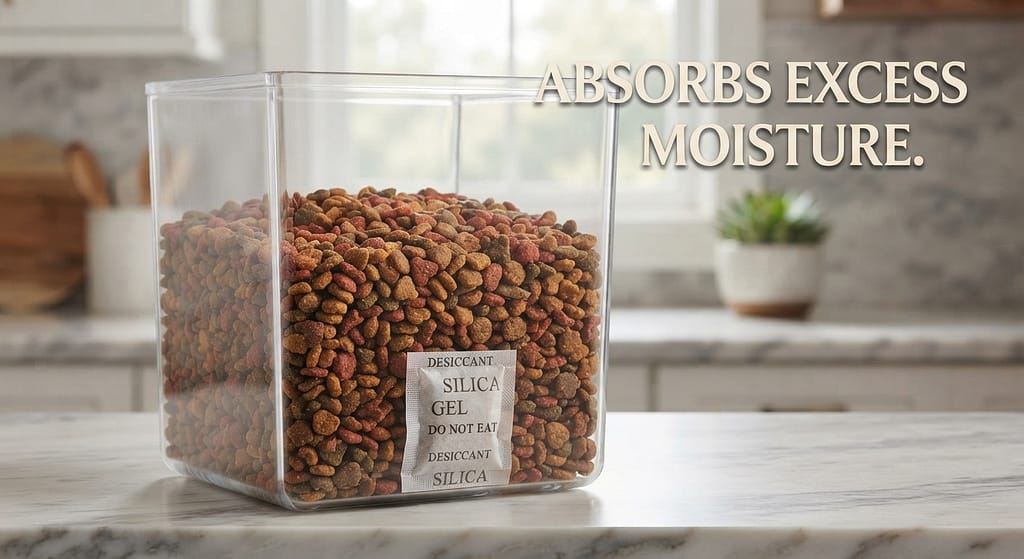
- Silica Gel Packets: Throw one in the bottom of your bin to absorb excess moisture, especially if you live in a humid climate.
Aesthetic Tips: Making It Look Good
We can’t stress this enough: just because it’s “dog food” doesn’t mean it has to look industrial.
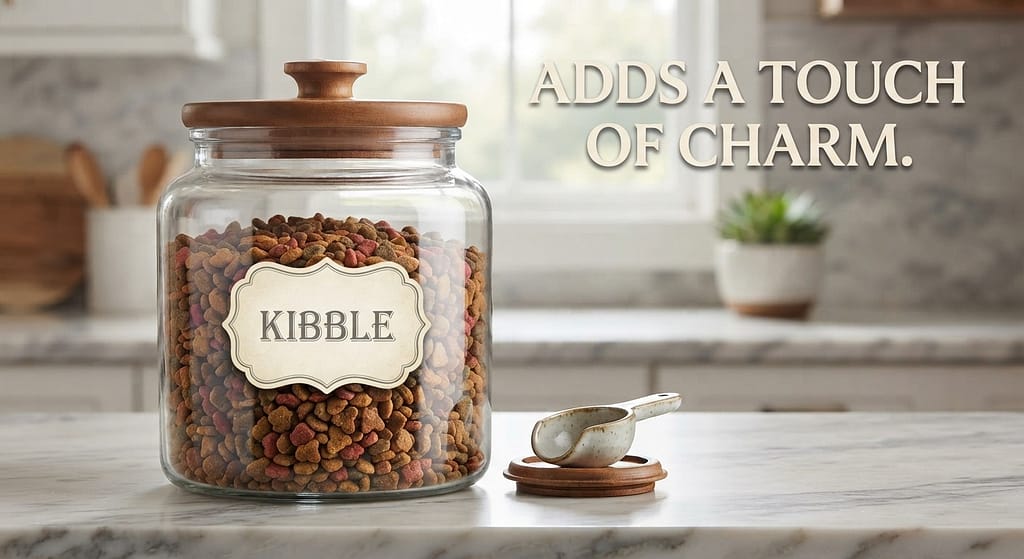
- Label Makers: Use a label maker to mark your jars. Instead of “Dog Food,” label them “Kibble” or even “Pupperoni.” It adds a touch of charm.
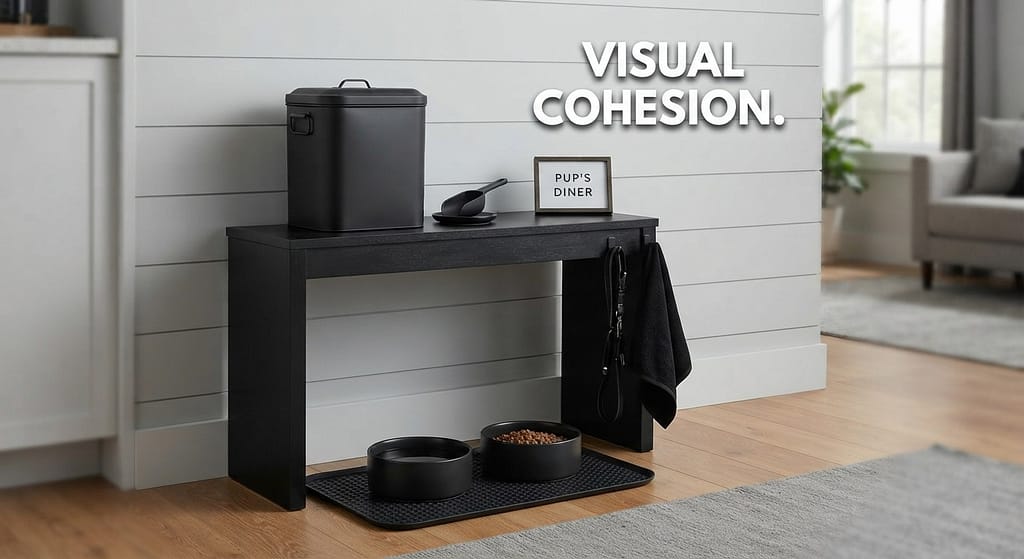
- Matching Bowls: If your storage bin is black, get black ceramic bowls. If you have a wood-tone ottoman, get bamboo bowls. The visual cohesion makes a tiny apartment look curated rather than cluttered.
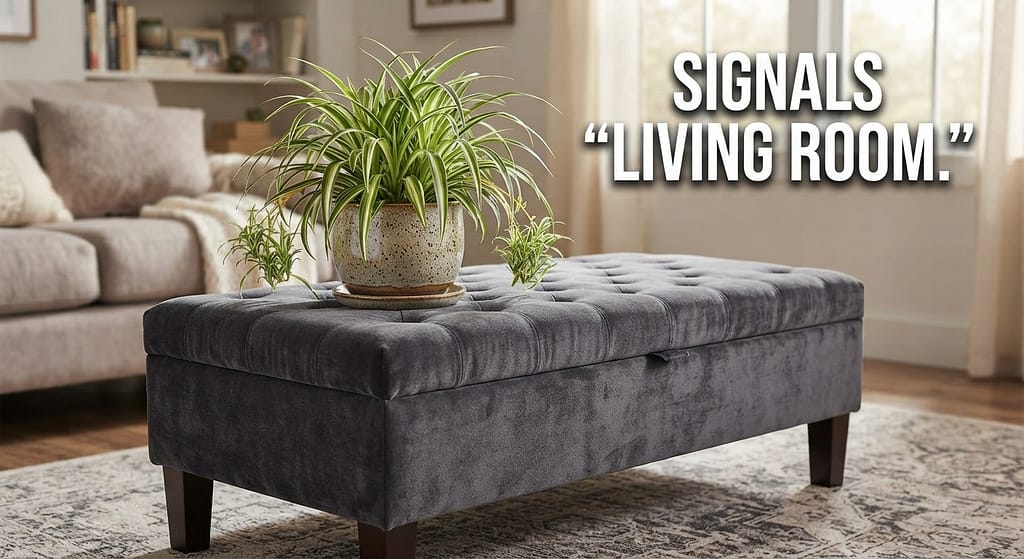
- Plants: Place a small, pet-safe plant (like a Spider Plant) on top of your storage ottoman. It softens the space and signals “living room” rather than “pet supply depot.”
Budget vs. Premium: Where to Spend
We know not everyone can buy a $200 designer storage chest. That’s okay. Here is how we recommend dividing your budget:
- Spend the most on the seal. You can buy a $15 galvanized steel trash can and use it as a dog food container (new, obviously!). The metal is durable and pest-proof.

- Spend moderately on the design. If you care about aesthetics, spend a little extra on a fabric basket that fits your decor.
- Save on the “bulk” storage. The giant tote in the back of the closet can be a cheap, clear plastic Sterilite bin. It doesn’t have to be pretty; it just has to be functional.

What About the Scoop?
You have the perfect bin. You have the perfect cart. But where do you put the scoop?
- Magnet Hook: Glue a magnet to the back of a metal scoop and stick it to the side of your refrigerator or the metal cart. Off the counter, out of the way.

- Scoop Clip: Many containers come with clips that hold the scoop right under the lid.
- Inside the Lid: If you have a deep bin, just leave the scoop in the food. It saves a step.

Interactive Challenge: The 30-Day Fresh Start
Alright, we’ve thrown a lot of information at you. Let’s make it interactive. We challenge you to take action this week.
- Take a “Before” Photo: Snap a picture of your current storage situation. We dare you.
- Select one hack from this list that fits your budget and space.
- Execute the plan. Clear the area, buy the container, and set it up.
- Take an “After” Photo.
We guarantee the sense of relief you’ll feel when you walk into your apartment and don’t see a giant dog food bag will be immeasurable.
Your dog won’t care much about the interior design (they just care about eating), but you will. And that matters.
Common Mistakes to Avoid
To ensure your journey to a clutter-free apartment is seamless, let’s look at the pitfalls we’ve all fallen into before.
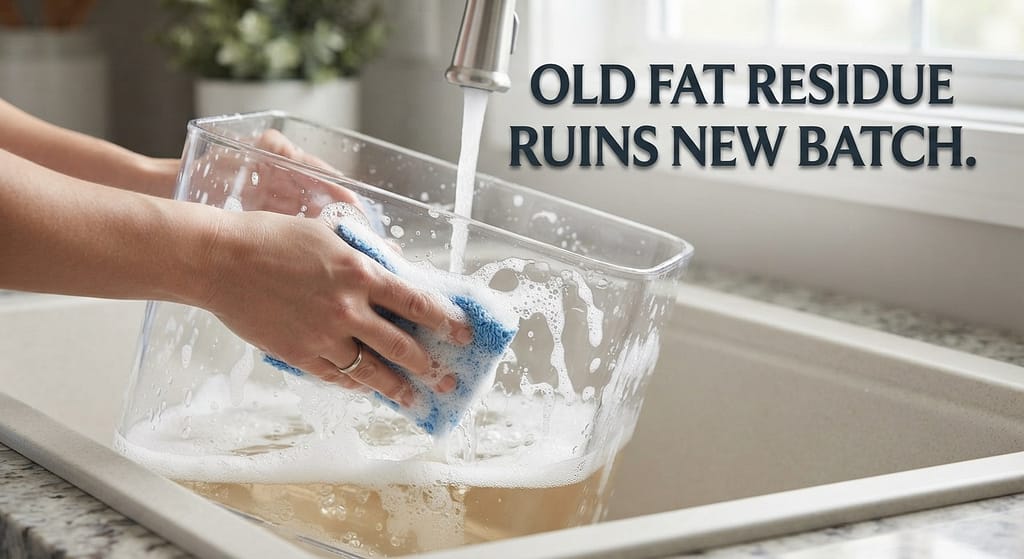
- Mistake 1: Not washing the container. You need to wash your airtight bin with soap and water between bags. Old fat residue builds up, goes rancid, and ruins the new batch.
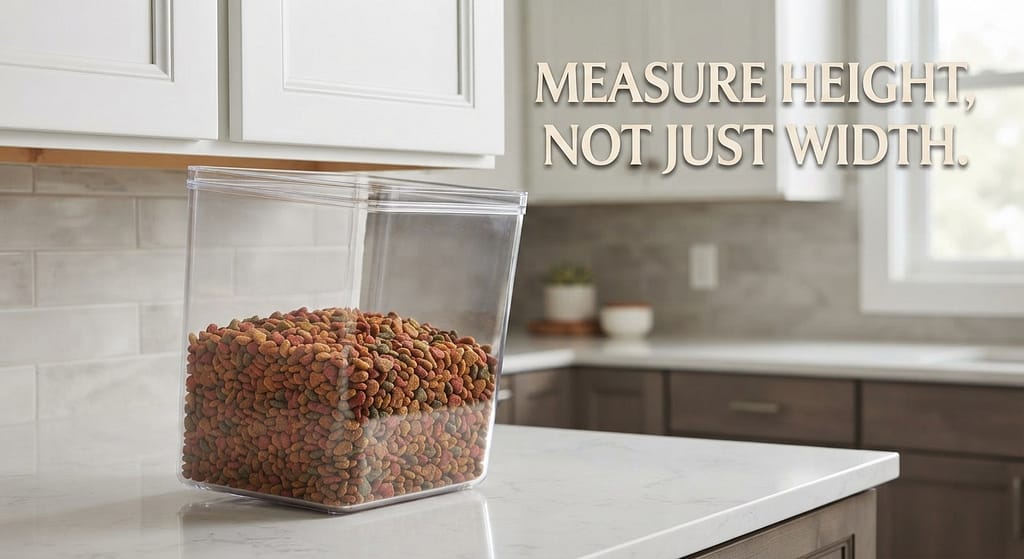
- Mistake 2: Buying a container that is too tall. It doesn’t fit under the counter. Measure the height to the underside of your cabinet, not just the width.
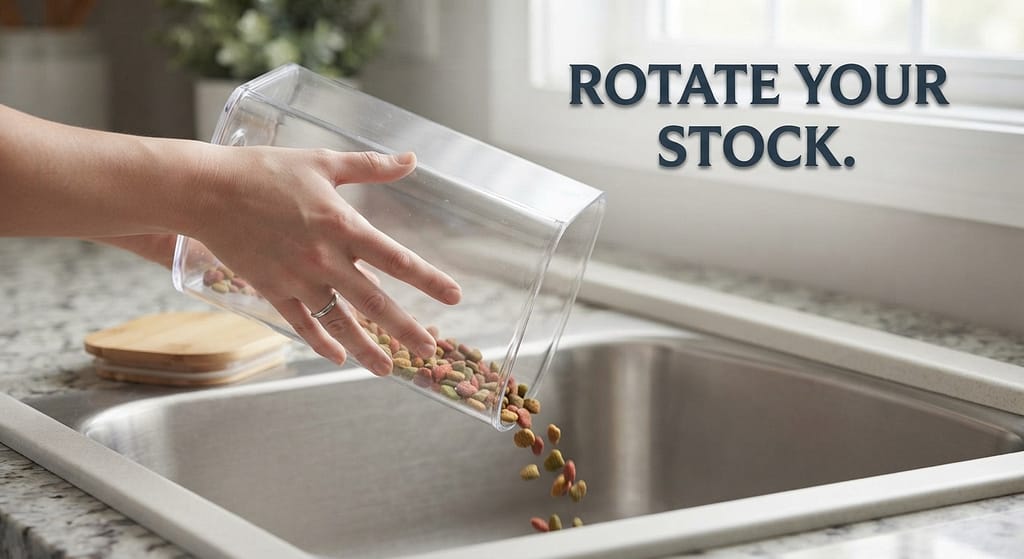
- Mistake 3: Mixing old and new food. Don’t pour new food on top of old food dust. Empty it, wash it, dry it, then refill. Rotate your stock.
The Final Word: Your Apartment, Your Rules
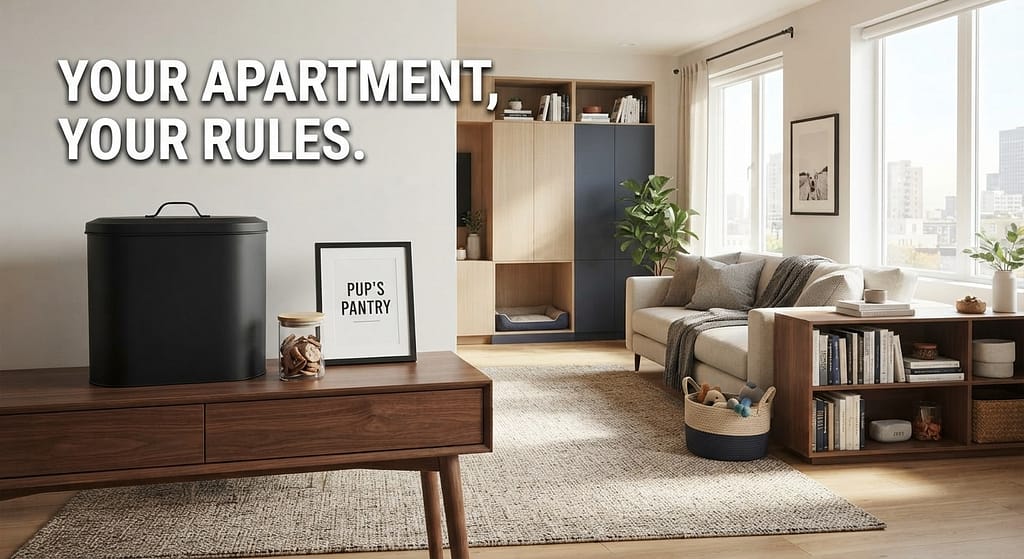
Living in a small apartment with a dog doesn’t mean you have to live in a cluttered mess. It requires creativity, yes, and a willingness to look at furniture differently. But the payoff is a home that feels open, smells fresh, and looks put-together.
You deserve a space that relaxes you after a long day. Your dog deserves fresh, healthy food. We believe you can have both without compromise.
Whether you choose the rolling cart, the hidden ottoman, or the vertical door rack, you are making a choice to take control of your environment. That is a powerful thing.
🐾 — Apartment Dog Guide (ADG)
Living large in small spaces, one paw at a time. That’s the apartment dog life—see you in the next guide!.


