
Why Your Apartment Dog Needs Confidence Building
Living in an apartment with a dog comes with unique challenges.
The elevator rides, the bustling hallways, the unexpected city sounds—these everyday occurrences can be overwhelming for our four-legged friends.
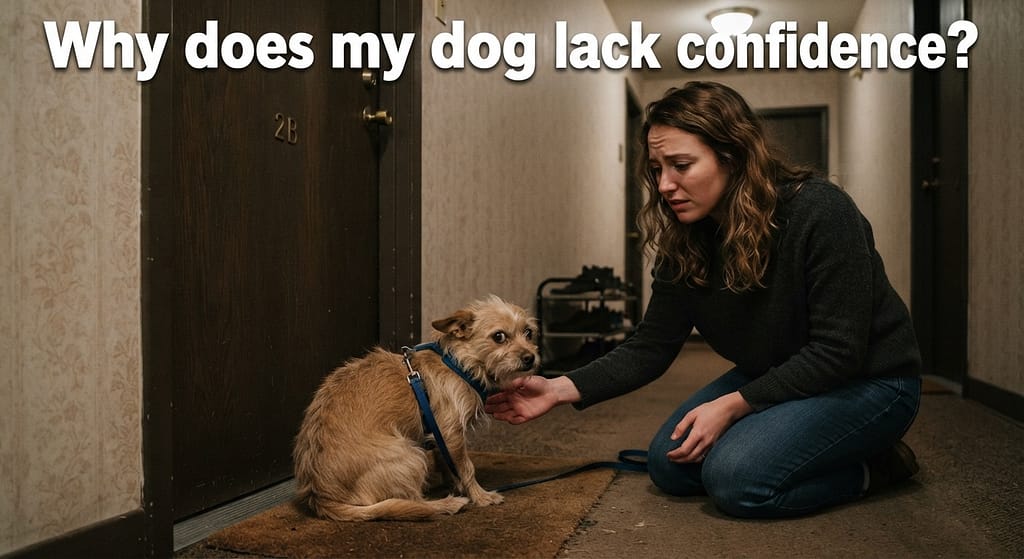
If you’ve ever wondered “why does my dog lack confidence?” or searched for “how do I make my fearful dog confident,” you’re not alone.
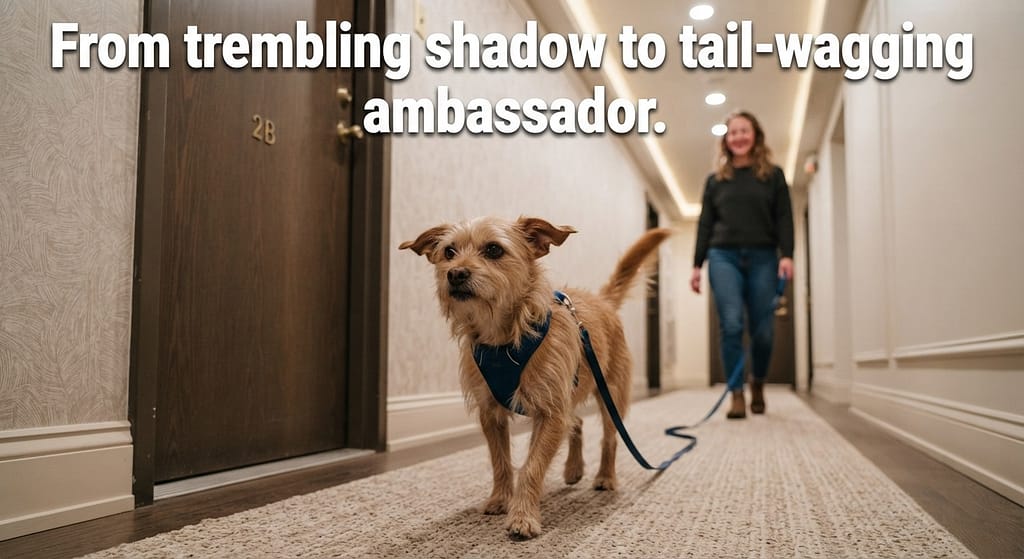
Here at Pawsitive Living, we’ve helped countless apartment-dwelling pups transform from trembling shadows into tail-wagging ambassadors of joy.
Building confidence in a dog isn’t just about making them braver—it’s about giving them the tools to navigate their world with ease and enthusiasm.
In this comprehensive guide, we’ll explore everything from dog confidence-building exercises to confidence-building dog training techniques specifically designed for apartment life.
Whether you’re building confidence in a timid dog or wondering how to help your dog build confidence in a high-rise environment, we’ve got you covered.
Understanding Dog Confidence: The Foundation
What Does Confidence in Dogs Look Like?
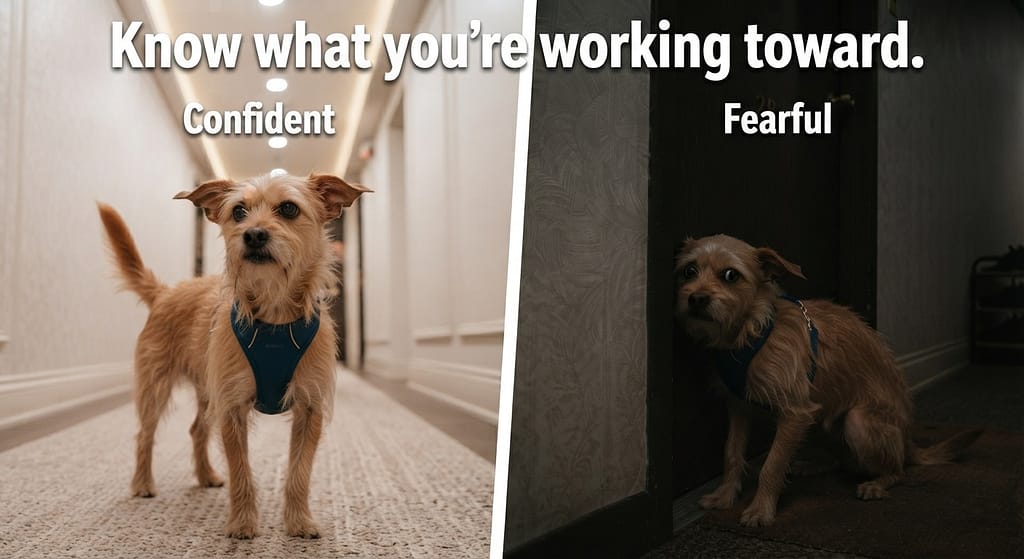
Before diving into building your dog’s confidence, let’s identify what we’re working toward. A confident dog:
- Approaches new situations with curiosity rather than fear
- Recovers quickly from startling experiences
- Engages positively with their environment
- Shows resilience in unfamiliar settings
- Communicates clearly and calmly
On the flip side, building confidence in a fearful dog means addressing signs like:
- Excessive barking at hallway noises
- Cowering during elevator rides
- Refusing to walk past certain spots
- Trembling during thunderstorms or city sounds
- Reactive behavior toward other dogs or people
The Apartment Dog’s Confidence Challenge
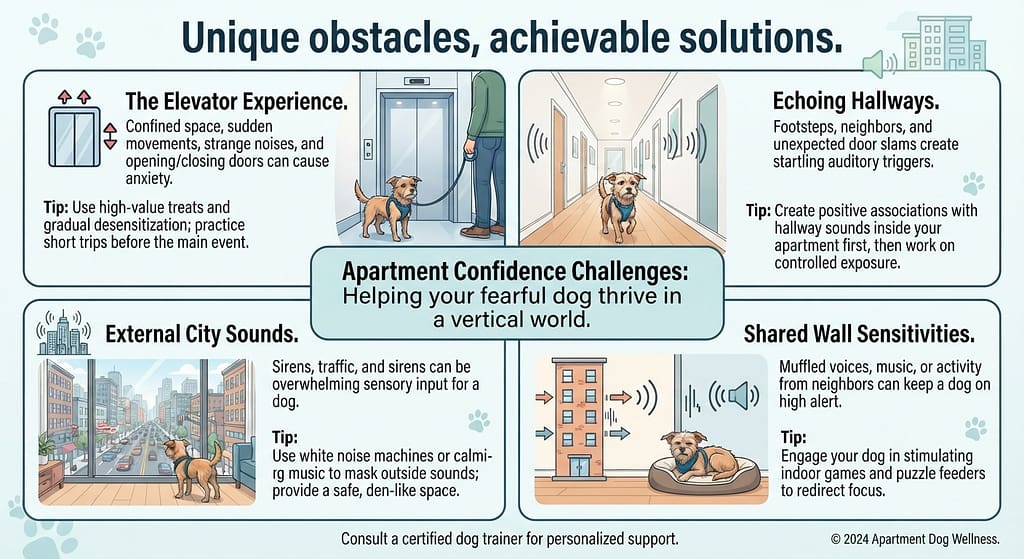
Building confidence in dogs living in apartments presents unique obstacles.
The confined space, shared walls, and limited outdoor access can amplify anxiety.
But here’s the good news: building dogs’ confidence in small spaces is entirely achievable with the right approach.
The Science of Building Canine Confidence
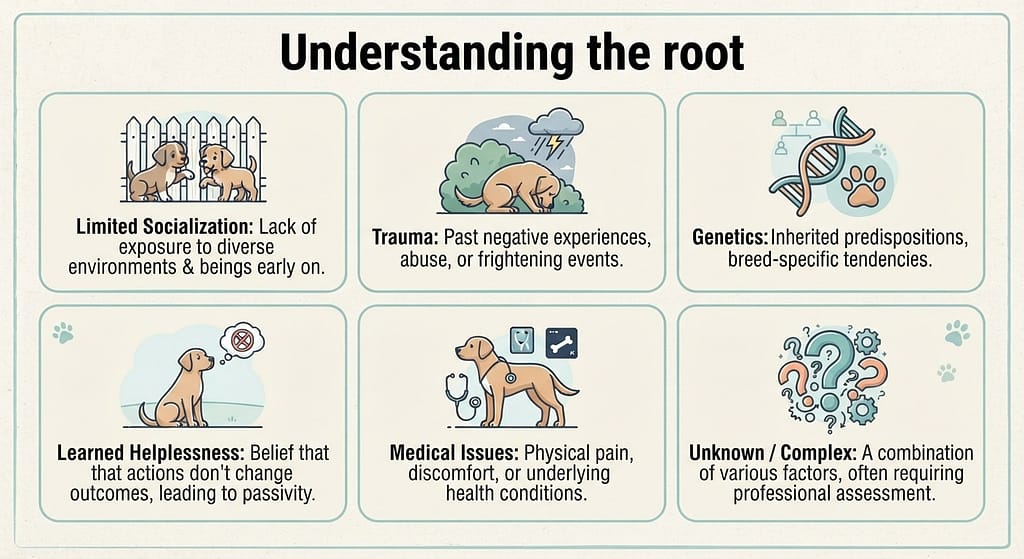
Why Some Dogs Lack Confidence
Understanding “why does my dog lack confidence” is the first step toward improvement. Several factors contribute:
- Limited Early Socialization: Puppies who miss critical socialization windows often develop fear-based behaviors
- Traumatic Experiences: Past negative events create lasting associations
- Genetic Predisposition: Some breeds are naturally more cautious
- Learned Helplessness: When escape is impossible, dogs may simply give up
- Medical Issues: Pain or discomfort can manifest as fearfulness
The Confidence-Fear Continuum
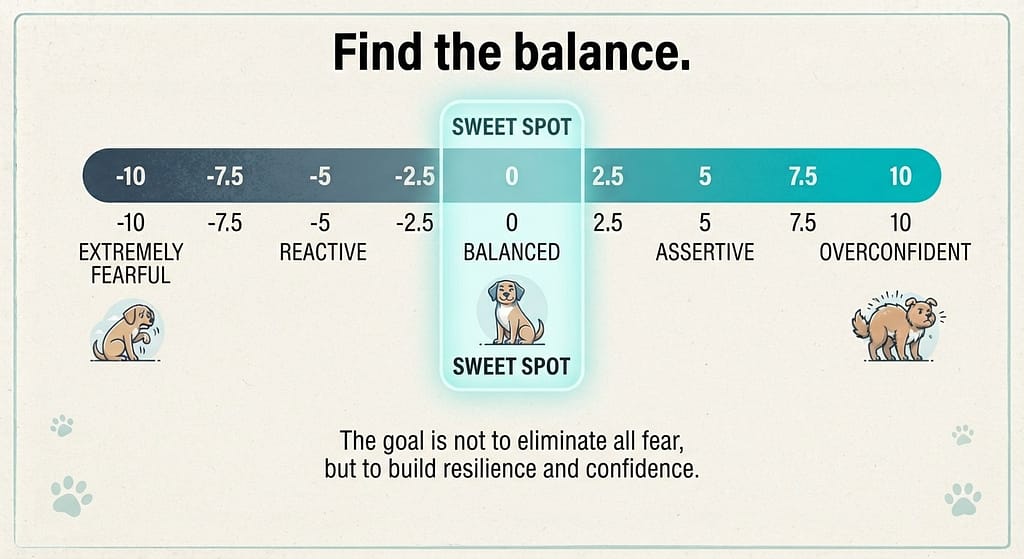
Think of dog confidence as a scale from -10 (extremely fearful) to +10 (overconfident).
Our goal in building confidence in your puppy or adult dog is to find that sweet spot where curiosity and caution balance perfectly.
Essential Confidence-Building Dog Training Principles
The Three Pillars of Confidence
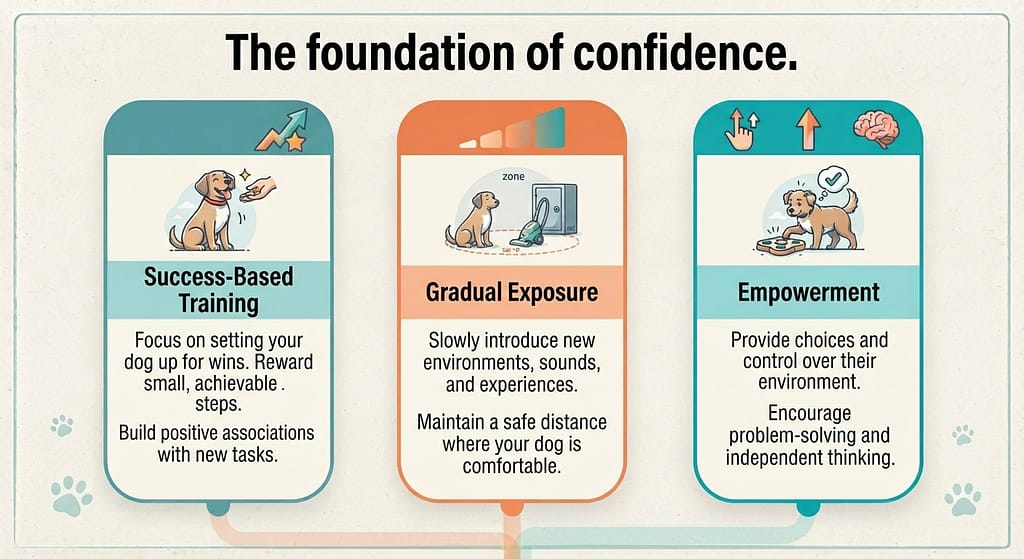
When we’re building a dog’s confidence, we focus on:
1. Success-Based Training
Every exercise should end with your dog feeling victorious.
This is crucial when building confidence in an adult dog who may have established fearful patterns.
2. Gradual Exposure
We never flood our dogs with overwhelming stimuli.
Instead, we break challenges into manageable steps—perfect for building confidence in a nervous dog living in an apartment building.
3. Empowerment
Giving your dog choices and control over their environment builds intrinsic confidence.
This is especially important when building confidence in a rescue dog who may have had limited autonomy.
The Confidence-Building Mindset
Remember: how to raise a dog’s confidence isn’t about forcing bravery—it’s about creating safety.
When we focus on building confidence in your dog, we’re actually building trust.
Trust that you’ll protect them, trust that new things aren’t threatening, and trust in their own abilities.
Indoor Confidence Building Exercises for Apartment Dogs
1. The “Find It” Game
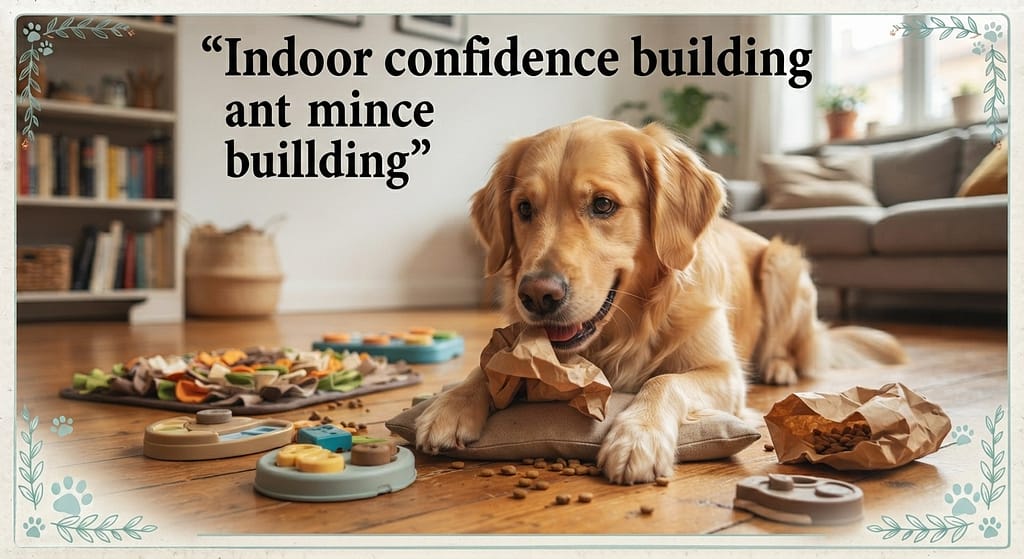
This simple game is perfect for building dog confidence in small spaces:
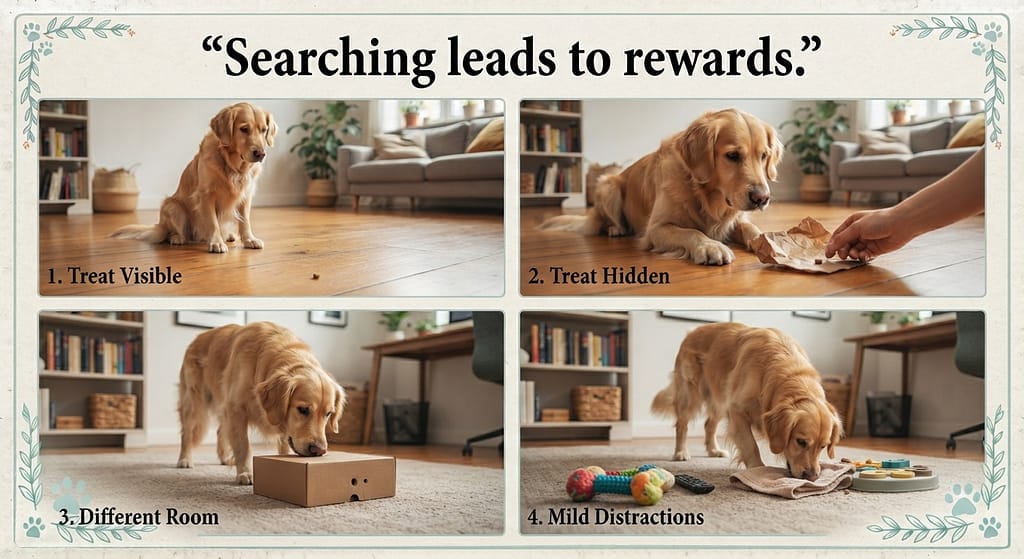
- Start with treats visible
- Progress to hidden treats
- Expand to different rooms
- Add mild distractions
This game teaches your dog that searching leads to rewards, building problem-solving confidence.
2. Obstacle Course Creation
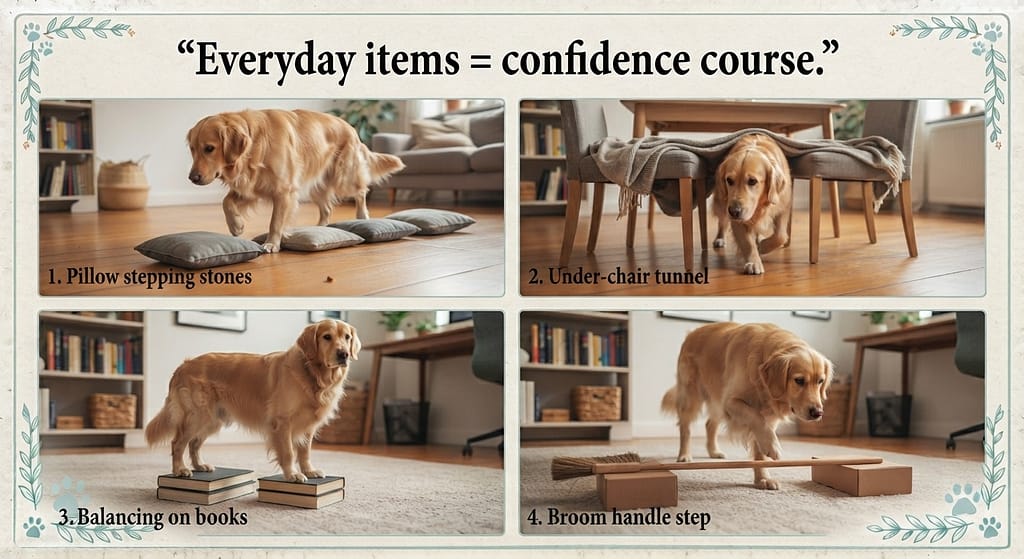
Transform your apartment into a confidence course using everyday items:
- Pillow stepping stones: Builds body awareness
- Under-the-chair tunnels: Develops spatial confidence
- Balancing on books: Improves proprioception
- Stepping over broom handles: Creates success experiences
These dog confidence-building activities require no special equipment and work wonders for building confidence in dogs.
3. The “Touch” Command
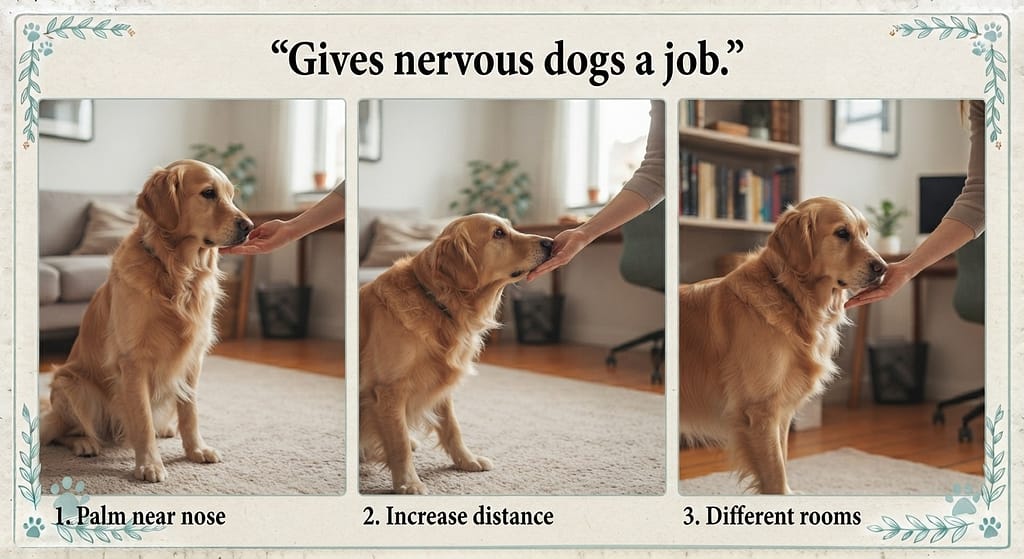
This confidence-building dog game teaches your dog to target your hand:
- Start with your palm near their nose
- Gradually increase distance
- Add movement
- Practice in different rooms
The “touch” command builds reliability and gives nervous dogs a job to focus on.
4. Nose Work Games
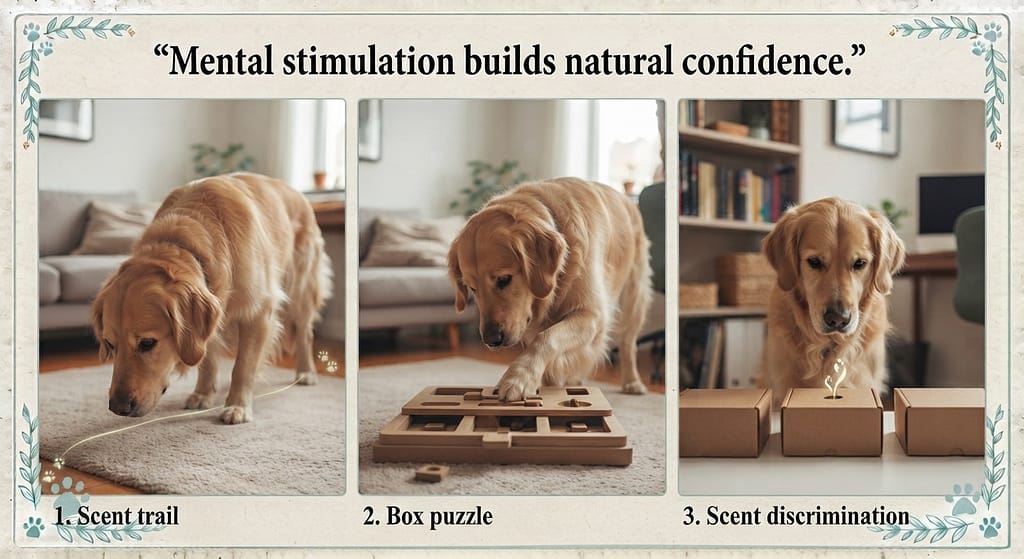
Building confidence in your puppy or adult dog through scent work is incredibly effective:
- Scent trails: Drag a treat across your floor
- Box puzzles: Hide treats in cardboard boxes
- Scent discrimination: Teach your dog to identify specific odors
Nose work provides mental stimulation and builds natural confidence since dogs naturally use their noses.
Practical Dog Confidence Building Equipment
While you don’t need fancy gear, certain dog confidence-building equipment can accelerate progress:
Essential Items:

- Balance disc or pillow: For wobble exercises
- Scent work kit: For nose games
- Tunnel (collapsible): For spatial confidence
- Interactive puzzle toys: For problem-solving
- Long line leash: For controlled exploration
Budget-Friendly Alternatives:

- Cardboard boxes: For hide-and-seek games
- Laundry baskets: For obstacle courses
- Blankets: For sensory play
- Pillows: For balance work
Social Confidence Building: People and Other Dogs
Building Confidence with Strangers
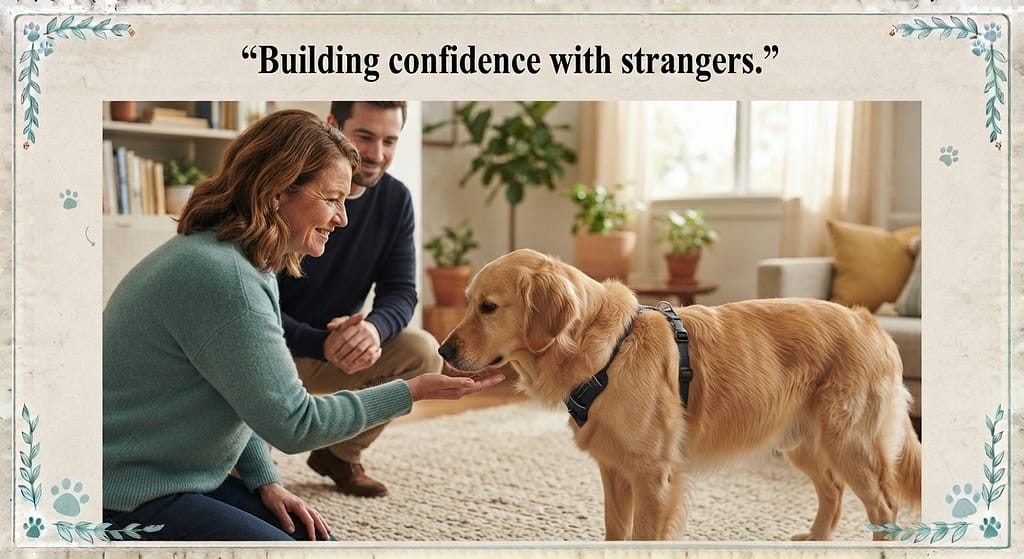
How to build dogs’ confidence with strangers in an apartment setting:
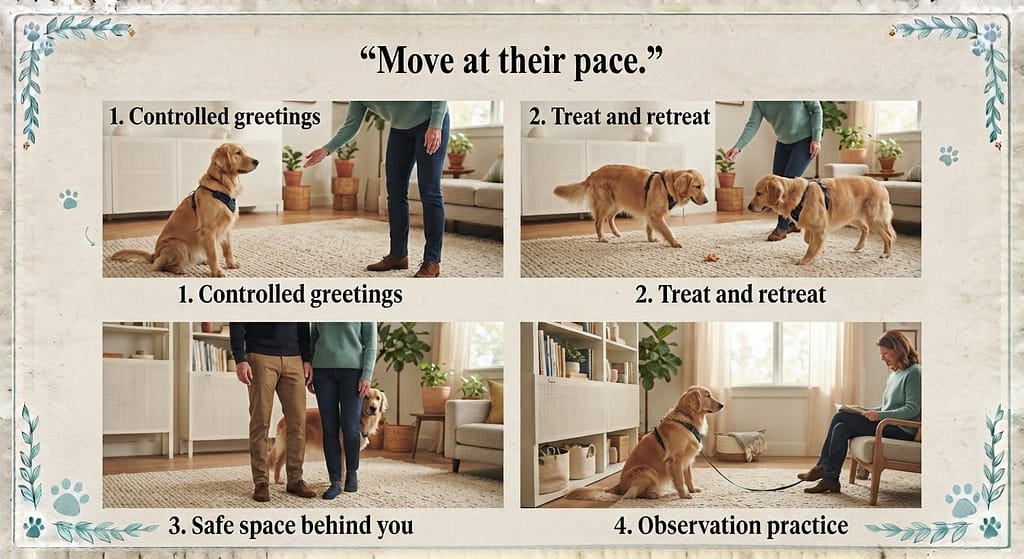
- Controlled greetings: Ask neighbors to ignore your dog initially
- Treat and retreat: Strangers toss treats without approaching
- Safe space: Teach your dog to go behind you when uncomfortable
- Observation practice: Watch people from a distance first
Building Confidence with Other Dogs
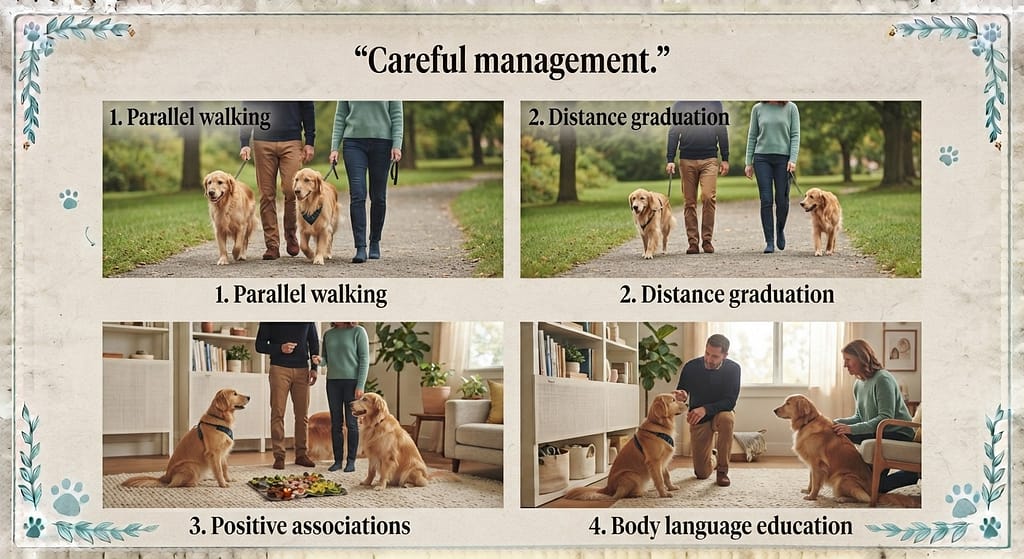
Confidence building for reactive dogs requires careful management:
- Parallel walking: Walk alongside calm dogs without interacting
- Distance graduation: Gradually decrease space
- Positive associations: Pair other dogs with treats
- Body language education: Learn when your dog is comfortable
Apartment-Specific Challenges
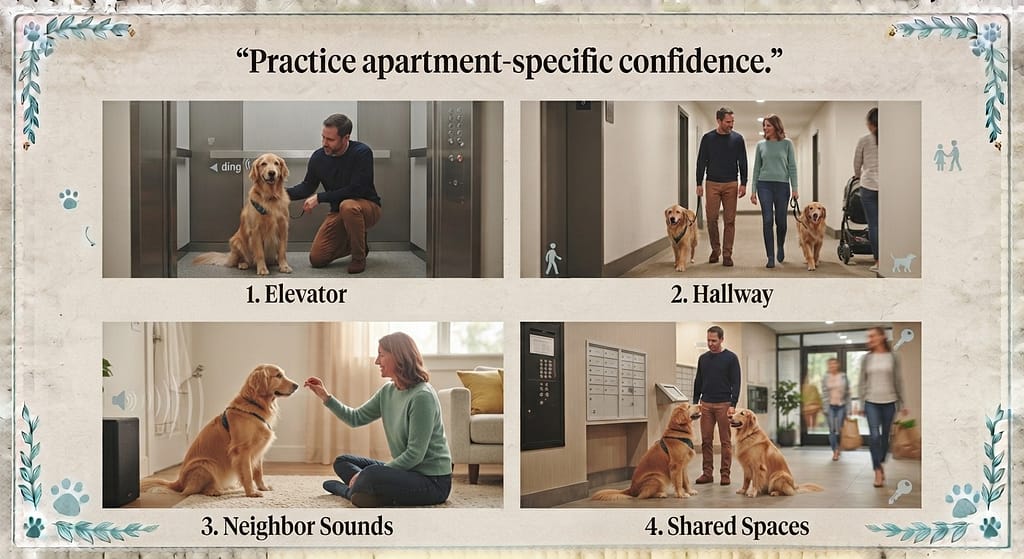
When building confidence in a nervous dog in an apartment building:
- Practice elevator desensitization
- Create positive hallway experiences
- Build associations with neighbor sounds
- Develop coping strategies for shared spaces
The Exercise Factor: Building Confidence Through Movement
Physical Activity and Confidence
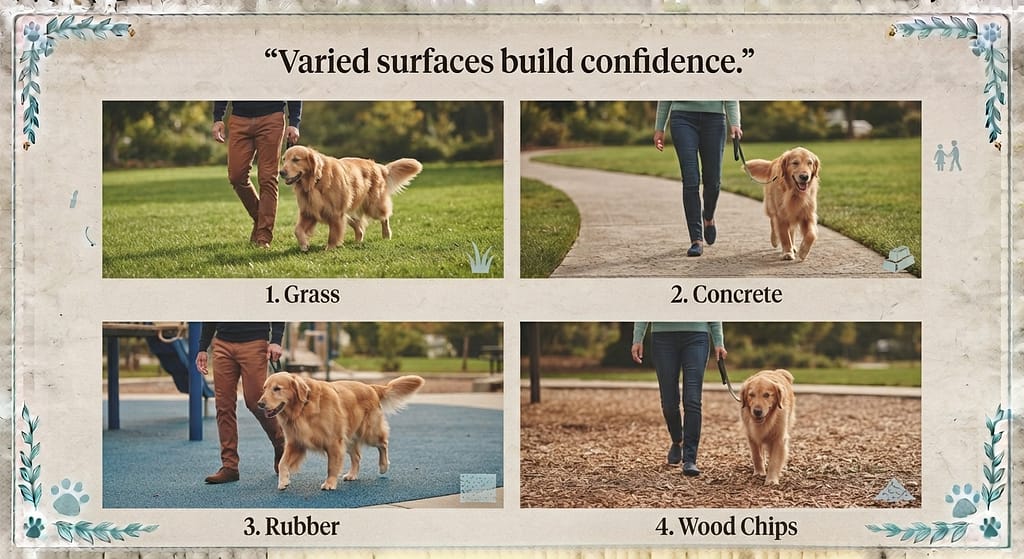
How to build dogs’ confidence on walks involves more than just getting from point A to B:
- Varied surfaces: Grass, concrete, rubber, wood chips
- Structured exploration: Allow sniffing time
- New routes: Different walking paths
- Challenge walking: Up stairs, over curbs, around obstacles
Apartment-Friendly Exercise Ideas
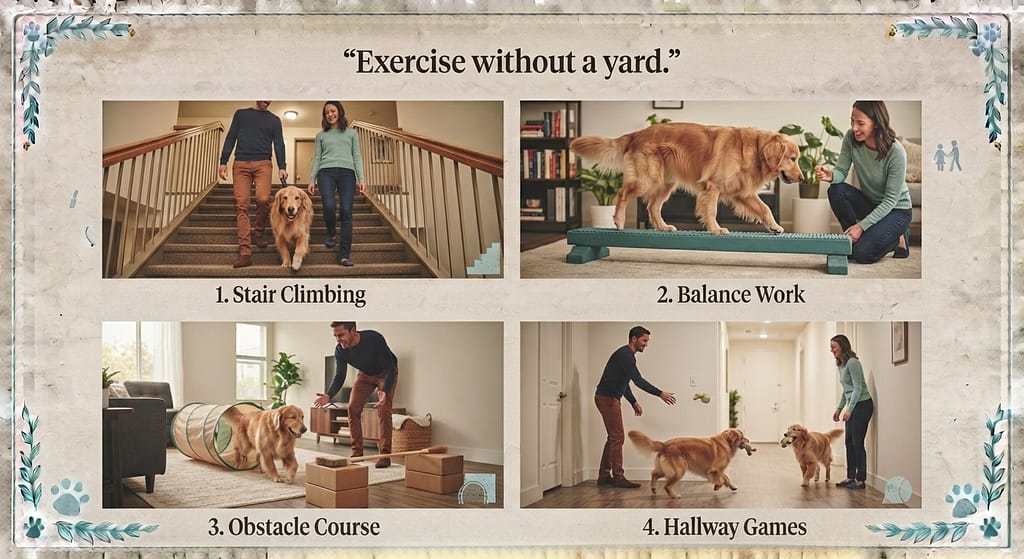
Building confidence in an adult dog through exercise:
- Stair climbing: Build physical and mental confidence
- Balance work: Use pillows or balance discs
- Obstacle courses: Use furniture safely
- Hallway games: Sprints and impulse control
Specific Strategies for Building Confidence in Rescue Dogs
Understanding Rescue Dog Challenges
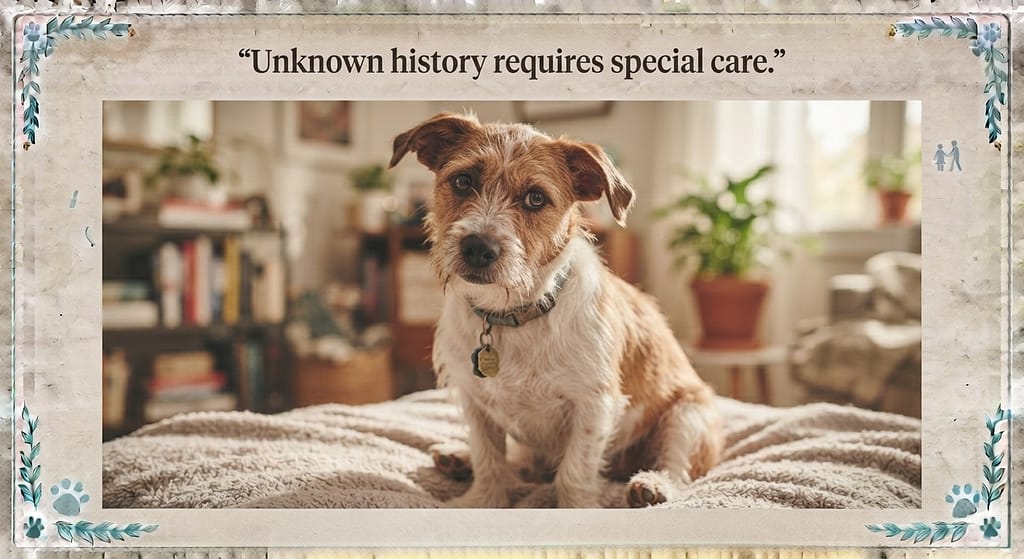
Building a rescue dog’s confidence often requires special consideration:
- Unknown history
- Potential trauma triggers
- Limited socialization
- Trust issues
- Adjustment period
The 3-3-3 Rule for Rescue Dogs
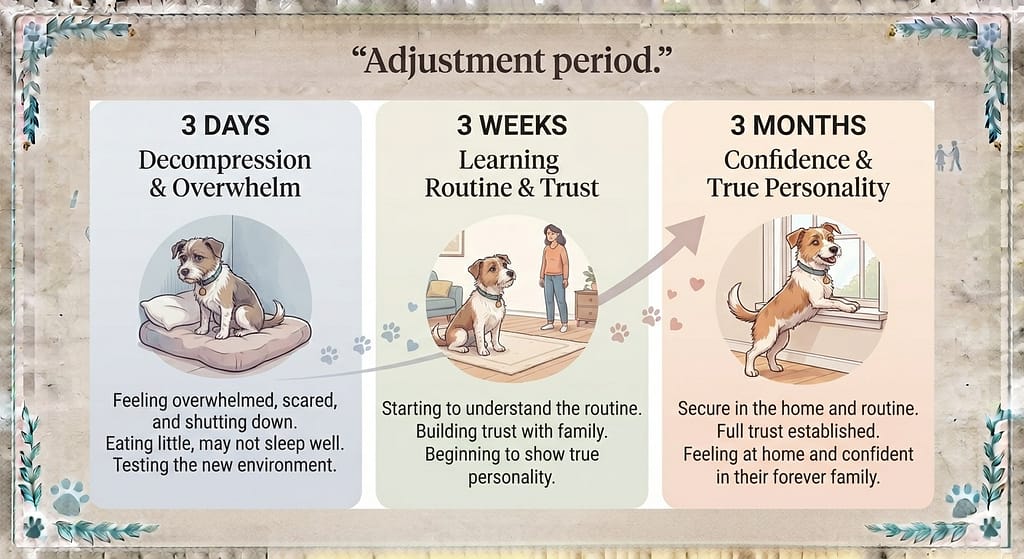
When building confidence in a rescue dog, remember:
- 3 days: Everything is new and overwhelming
- 3 weeks: Starting to understand routine
- 3 months: Beginning to feel like home
Building Trust First
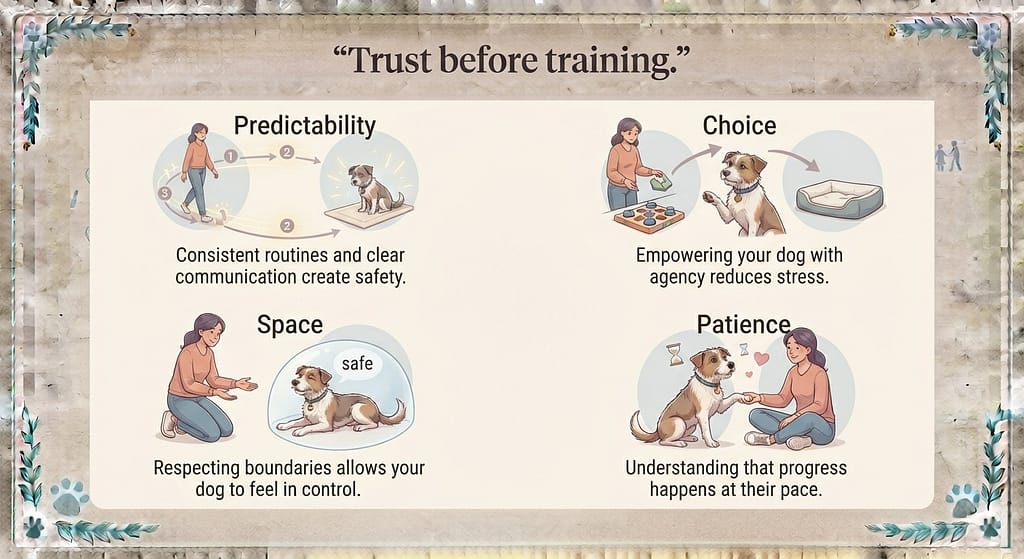
Before any confidence-building exercises, focus on:
- Predictability: Consistent routines
- Choice: Giving your dog agency
- Space: Letting them observe before engaging
- Patience: Moving at their pace
Addressing Specific Fears and Phobias
Overcoming Noise Sensitivity
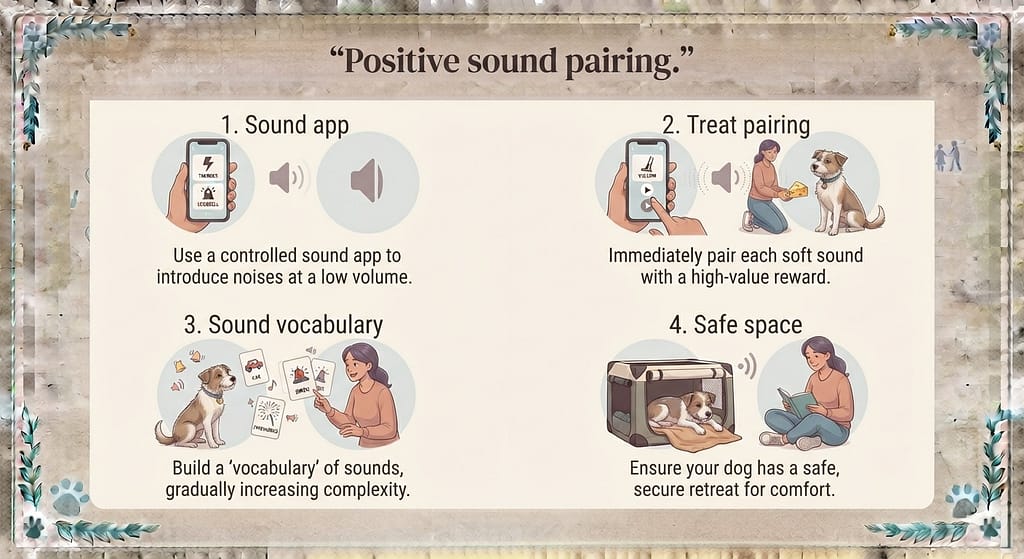
For building confidence in a fearful dog who fears apartment sounds:
- Sound desensitization using apps
- Positive sound pairing with treats
- Sound vocabulary building (naming sounds)
- Safe space creation for loud events
Conquering Elevator Anxiety
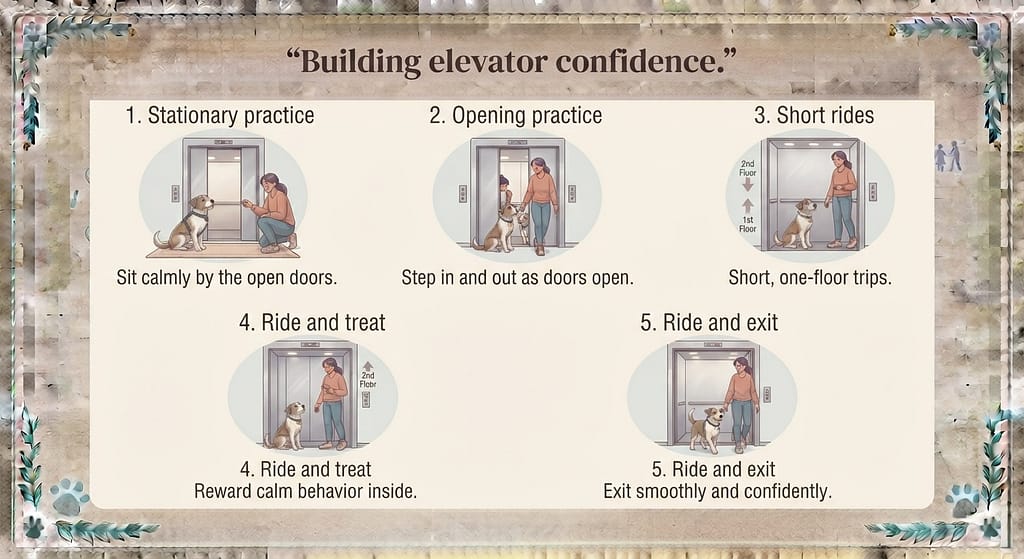
Building confidence in your dog around elevators:
- Stationary practice: Just being near the closed doors
- Opening practice: Looking inside without entering
- Short rides: One floor at a time
- Ride and treat: Multiple positive associations
- Ride and exit: Building control and choice
Managing Car and Transportation Fears
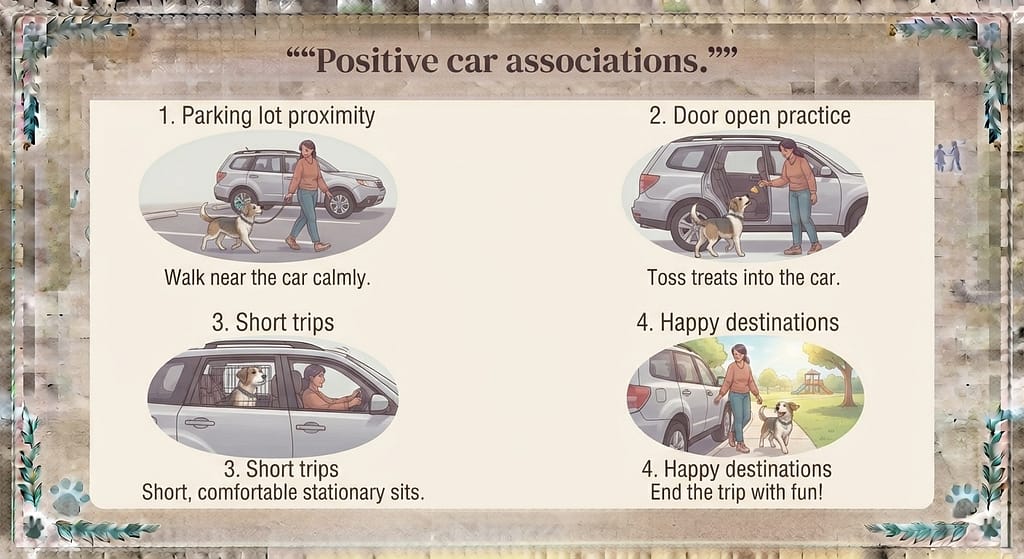
For apartment dogs who need rides:
- Parking lot proximity: Just being near the car
- Door open practice: Sitting inside without motion
- Short trips: Around the block
- Happy destinations: Building positive associations
Behavioral Foundations for Confidence
The Importance of Impulse Control
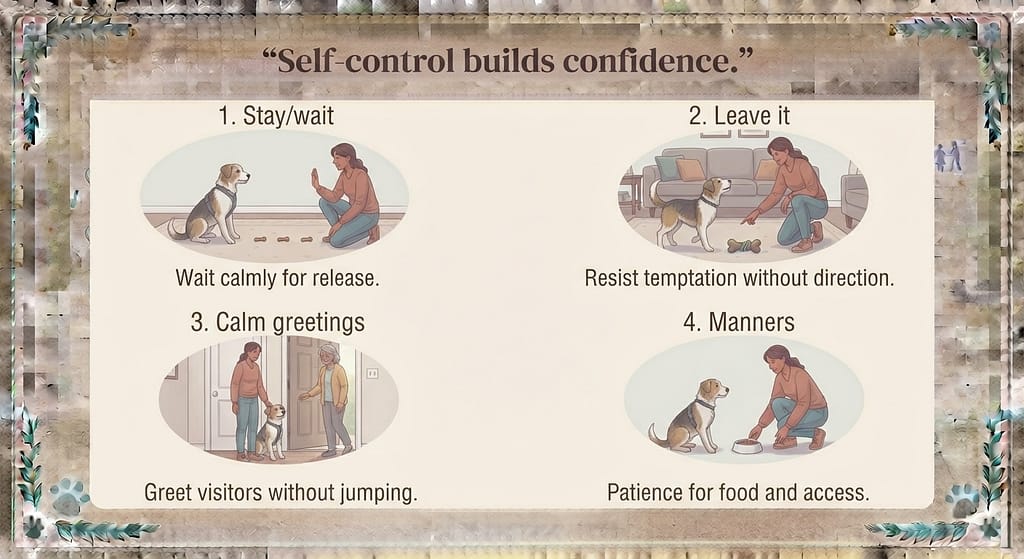
Building confidence in dogs requires self-control:
- Stay/wait exercises: Building patience
- Leave it training: Developing focus
- Calm greetings: Managing excitement
- Manners practice: Appropriate behavior
Building Independence
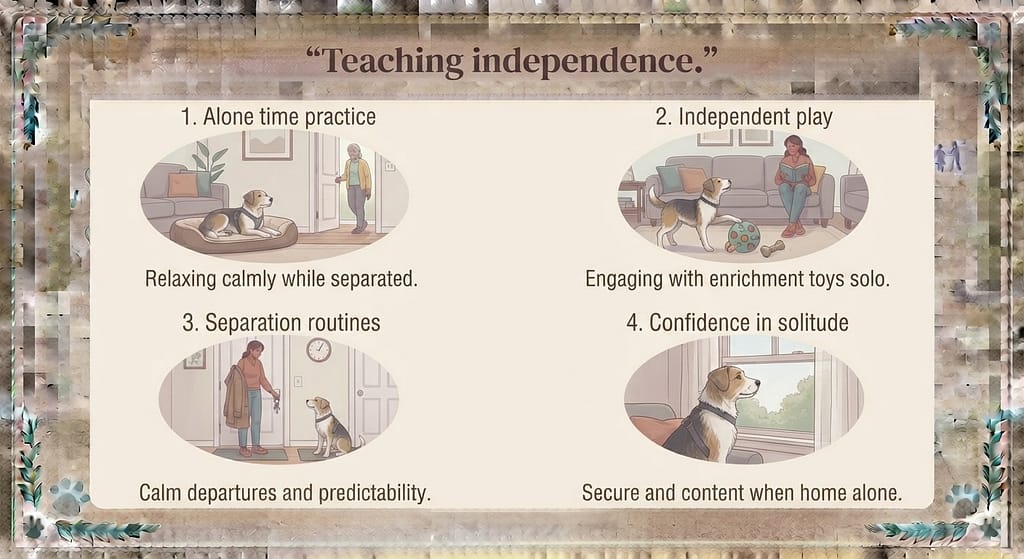
How to build dogs’ confidence includes teaching independence:
- Alone time practice: Starting with short periods
- Independent play: Enjoying toys alone
- Separation routines: Predictable departures
- Confidence in solitude: Self-soothing ability
The Trust Connection
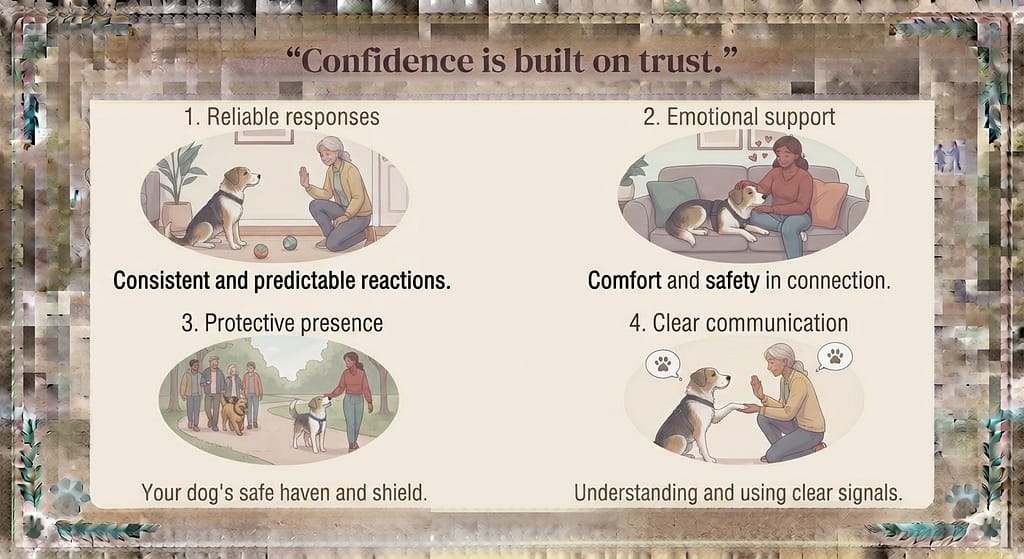
Building confidence in my dog is really about building trust:
- Reliable responses: Predictable reactions
- Emotional support: Matching your energy
- Protective presence: They know you have their back
- Clear communication: Consistent cues
Advanced Confidence Building Training
Confidence Building Classes
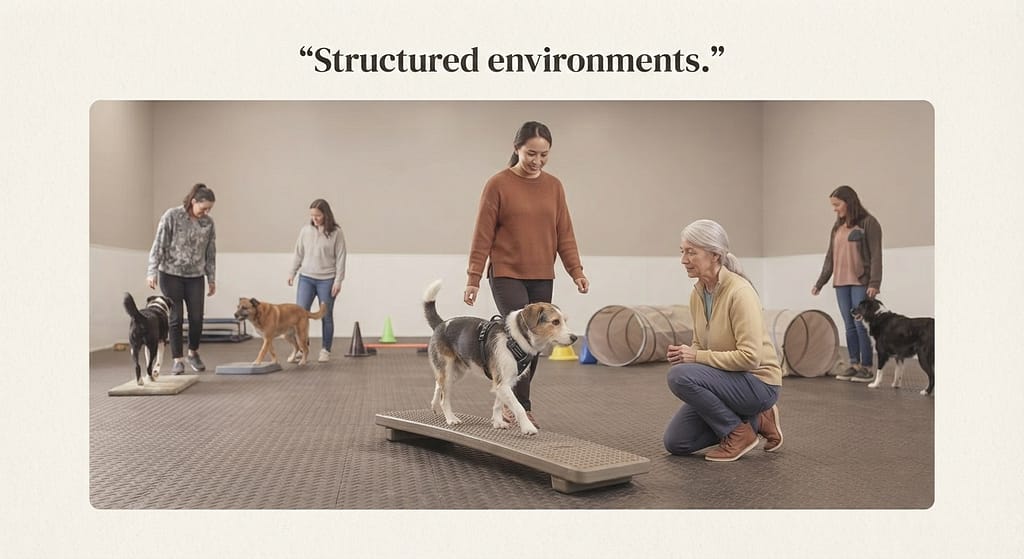
Dog confidence-building classes offer structured environments for growth:
- Professional guidance
- Controlled interactions
- Objective progress tracking
- Support network
Confidence Building Courses
When searching for a dog confidence-building course, look for:
- Positive reinforcement methods
- Individual pacing
- Clear success metrics
- Home practice components
DIY Confidence Building Programs
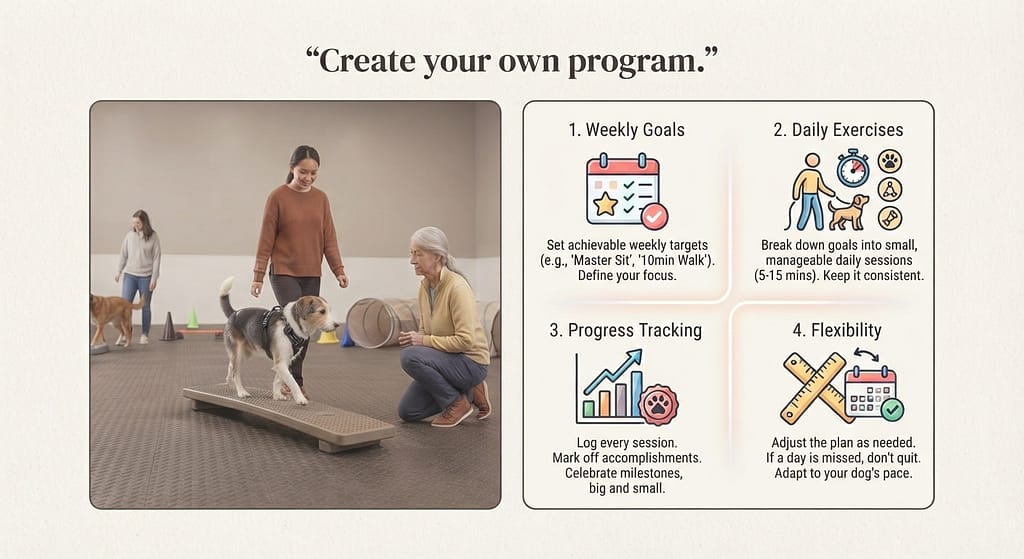
Create your own confidence-building dog training program:
- Weekly goals: Small, achievable targets
- Daily exercises: Consistent practice
- Progress tracking: Visual achievements
- Flexibility: Adjusting to your dog’s pace
Real-World Practice: Building Confidence in Various Settings
Building Confidence in Apartments
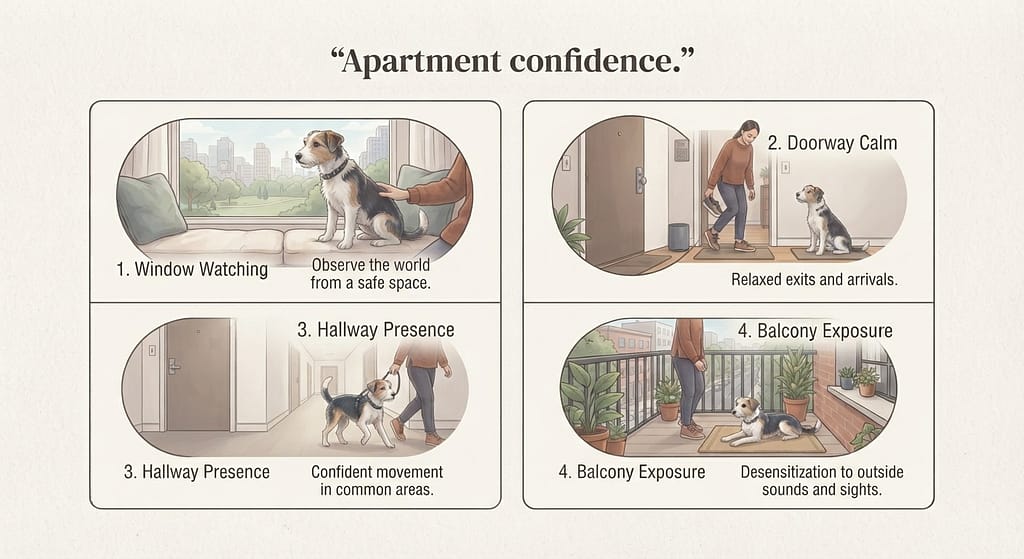
Dog confidence-building activities for apartments:
- Window watching: Observing the world with treats
- Doorway practice: Threshold confidence
- Hallway training: Gradual hall exposure
- Balcony desensitization: For dogs with outdoor spaces
Building Confidence on City Walks
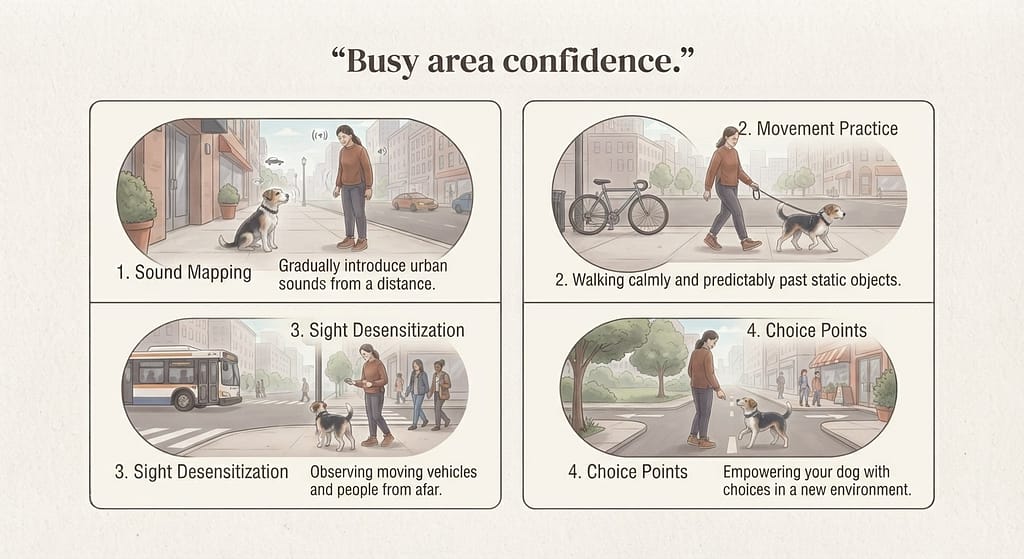
How to build dogs’ confidence on walks in busy areas:
- Sound mapping: Identifying and naming sounds
- Movement practice: Practice stopping and starting
- Sight desensitization: Visual exposure to city sights
- Choice points: Letting your dog decide routes
Building Confidence in New Environments
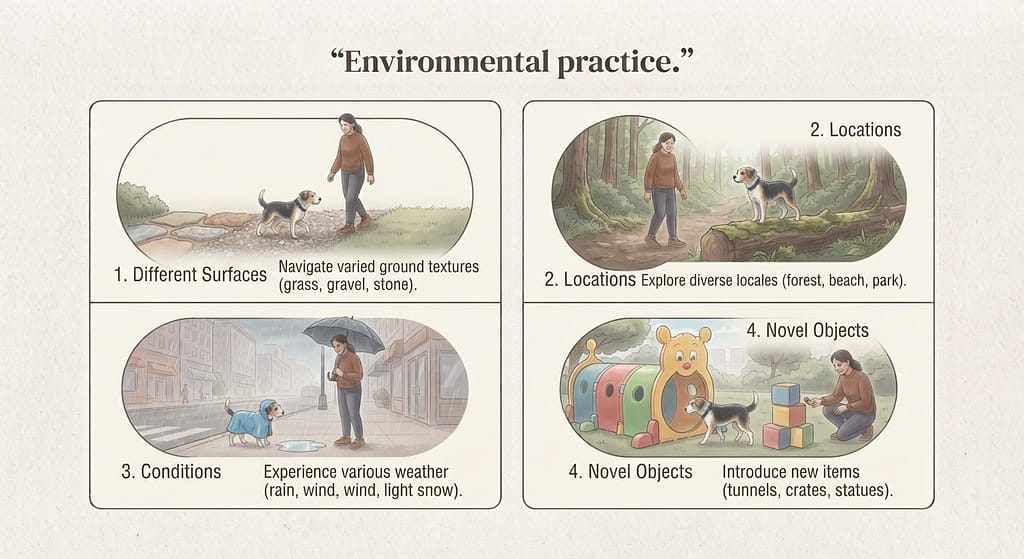
Building confidence in a dog through environmental practice:
- Different surfaces: Grass, concrete, wood, sand
- Various locations: Parks, streets, pet stores
- Changing conditions: Different times of day
- Novel objects: Mailboxes, statues, bikes
The Role of Communication in Confidence Building
Reading Your Dog’s Body Language
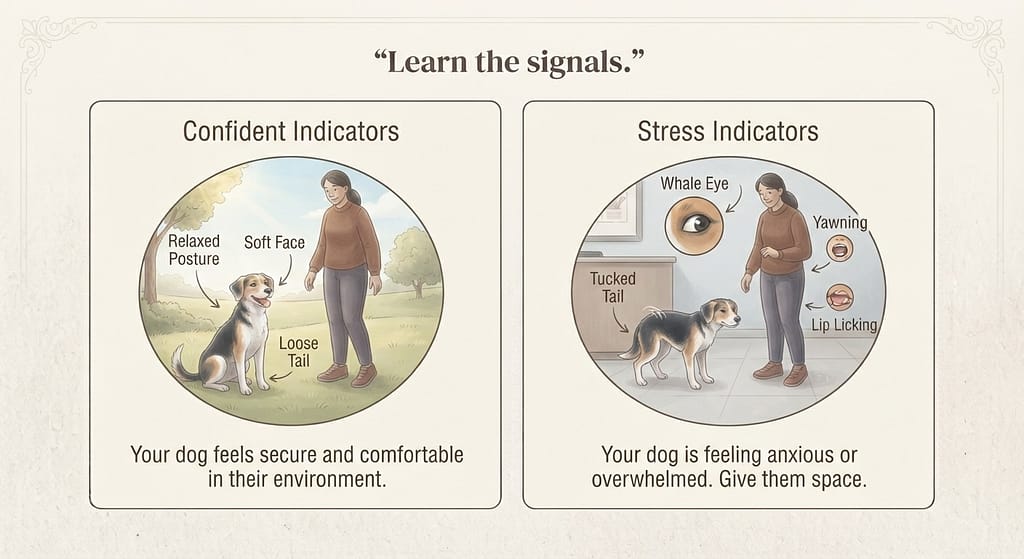
Understanding your dog’s communication is essential when building confidence in your puppy or adult dog:
Confidence Indicators:
- Relaxed body posture
- Soft facial expression
- Wagging tail (loose, sweeping)
- Play bows
- Curious ears forward
Stress Indicators:
- Tail tucked
- Whale eye (showing whites)
- Yawning (outside of being tired)
- Lip licking
- Trembling
- Hiding or backing away
Your Role in Confidence Building
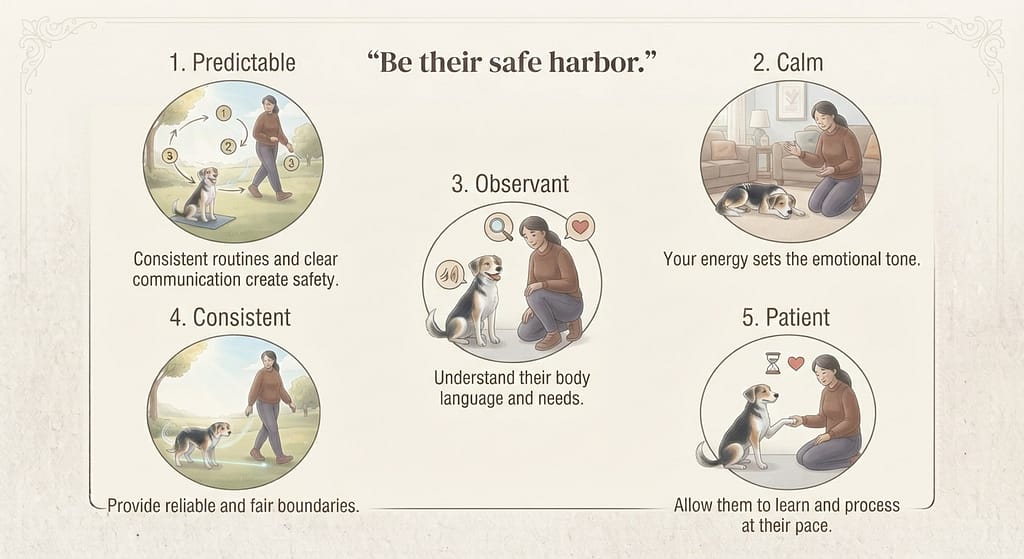
Building confidence in a dog requires you to be:
- Predictable: Dogs thrive on routine
- Calm: Your energy influences theirs
- Observant: Reading stress signals early
- Consistent: Clear, reliable communication
- Patient: Moving at their pace
Common Mistakes in Confidence Building
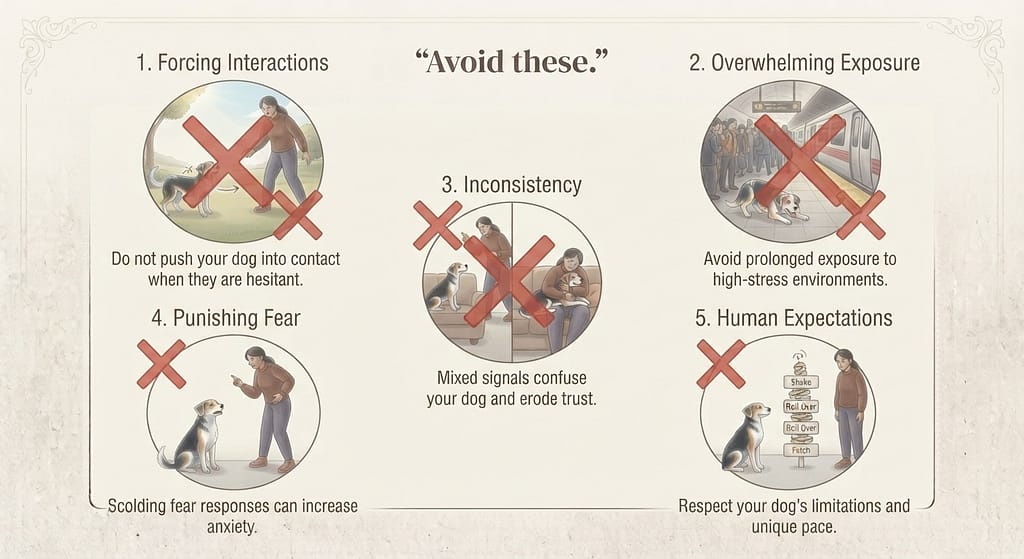
What Not to Do
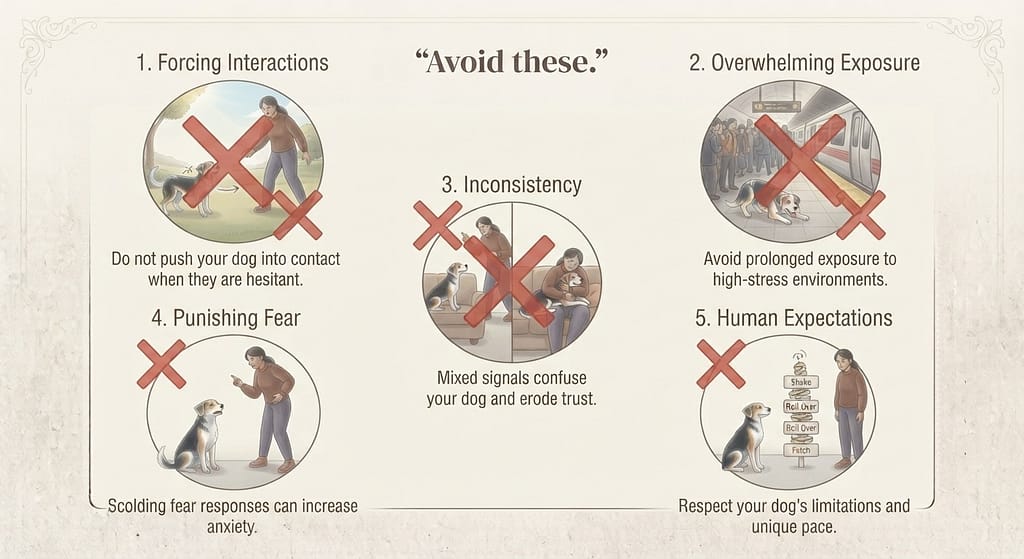
When building confidence in a timid dog, avoid:
- Forcing interactions: Never push beyond comfort
- Overwhelming exposure: Flooding causes regression
- Inconsistency: Mixed messages confuse
- Punishing fear: Makes associations worse
- Human expectations: Projecting our feelings
Signs You’re Pushing Too Hard
- Your dog shuts down (freezes)
- Avoidance increases
- Stress signals appear
- Progress plateaus or reverses
- Your dog begins avoiding you
Creating a Confidence-Building Lifestyle
Daily Confidence-Building Opportunities
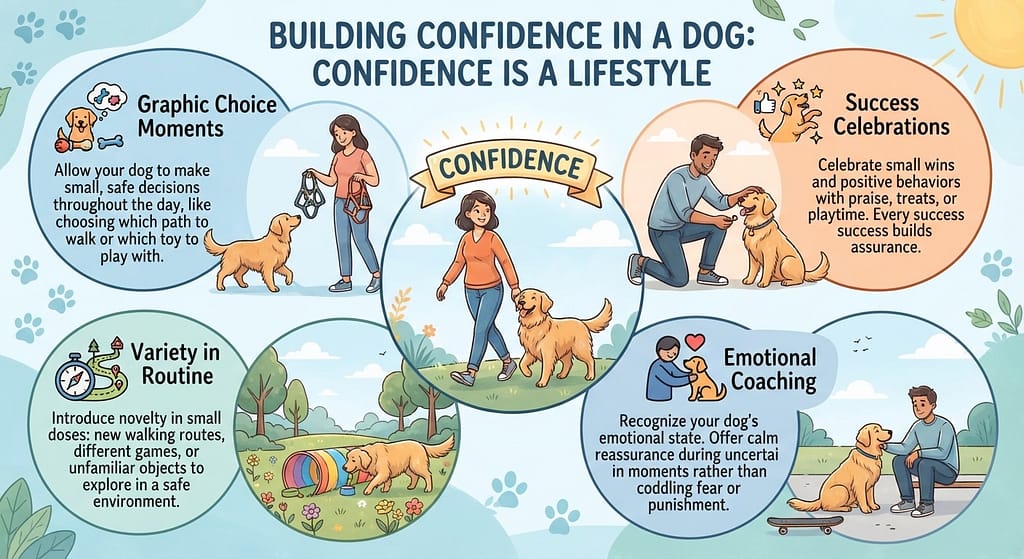
Building confidence in dogs isn’t just about exercises:
- Choice moments: Let your dog choose directions
- Success celebrations: Acknowledge small wins
- Variety in routine: Appropriate novelty
- Emotional coaching: Supporting through challenges
The Confidence-First Philosophy
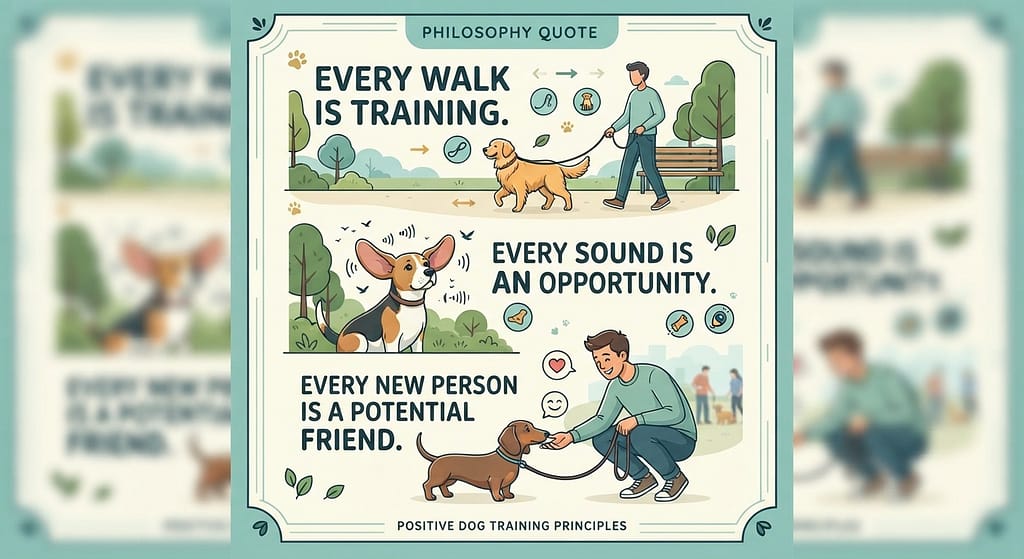
How to help my dog build confidence becomes a lifestyle:
- Every walk is training
- Every sound is an opportunity
- Every new person is a potential friend
- Every challenge is manageable with the right approach
Tracking Progress
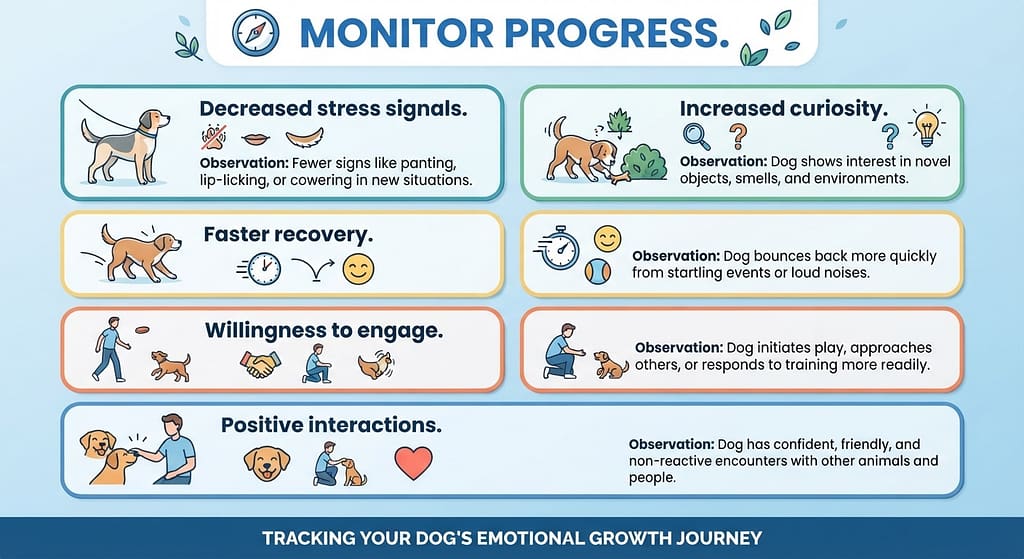
Monitor building confidence in an anxious dog by noting:
- Decreased stress signals
- Increased curiosity
- Faster recovery from upsets
- Willingness to engage with new things
- Positive interactions with environment
Success Stories: Real Transformations
From Fearful to Fearless
We’ve witnessed amazing transformations through dog confidence-building exercises:
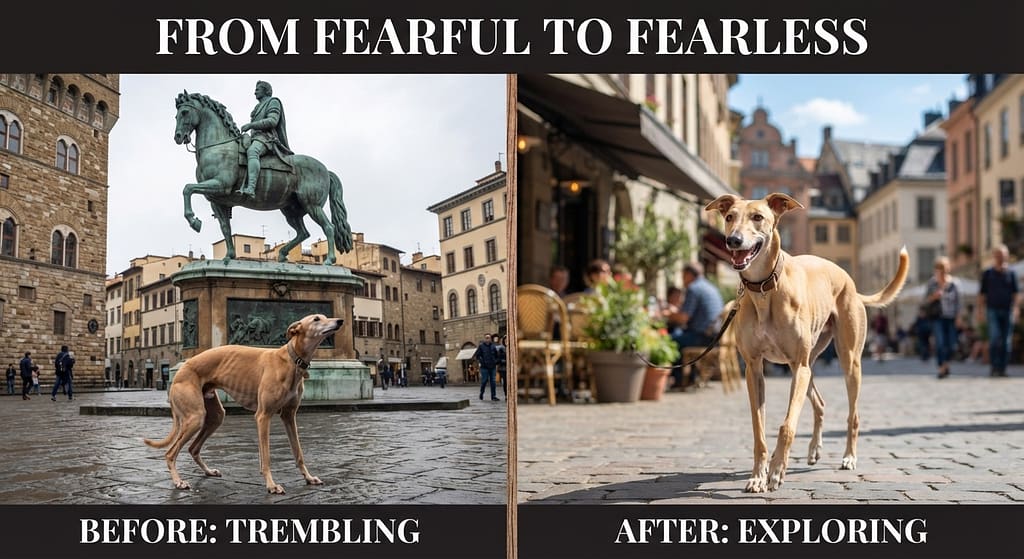
Bella’s Story: This rescue greyhound couldn’t pass a statue without trembling. Through careful desensitization and confidence-building dog games, she now happily explores city streets.
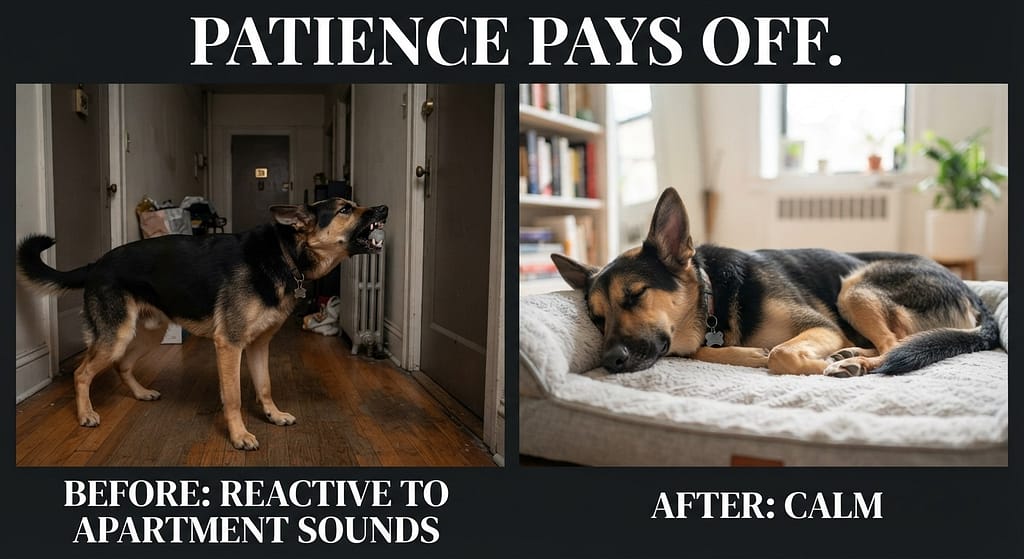
Max’s Journey: A German Shepherd mix who was reactive to apartment sounds learned to associate them with treats. Building confidence in your dog like Max is possible with patience.
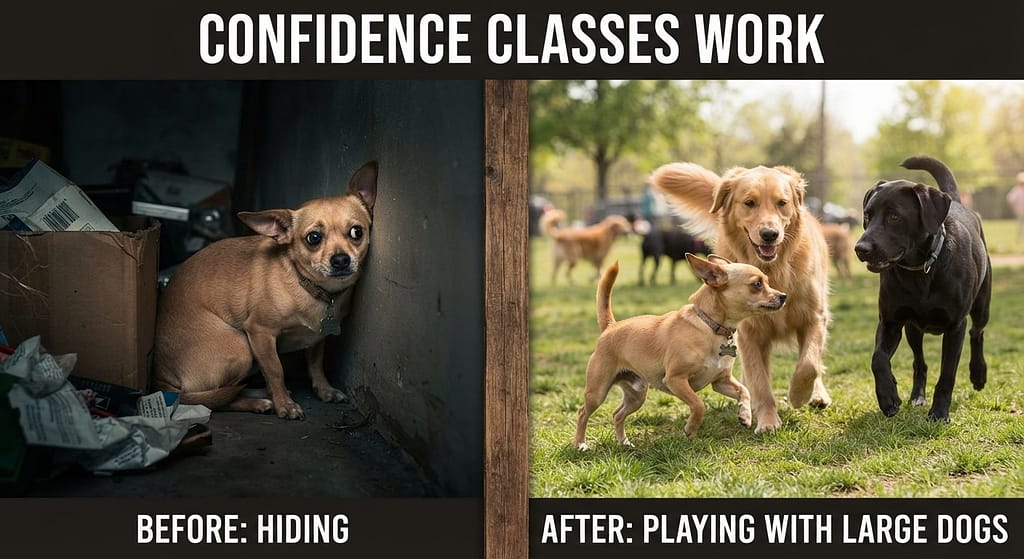
Luna’s Progress: A Chihuahua mix who hid from everything now participates in confidence-building classes and initiates play with large dogs.
What Success Looks Like
When building up a dog’s confidence, success might look like:
- Willingness to investigate new objects
- Calm elevator rides
- Playful interactions with strangers
- Resilience to unexpected sounds
- Joyful exploration of their environment
Maintaining Long-Term Confidence
Preventing Confidence Relapses
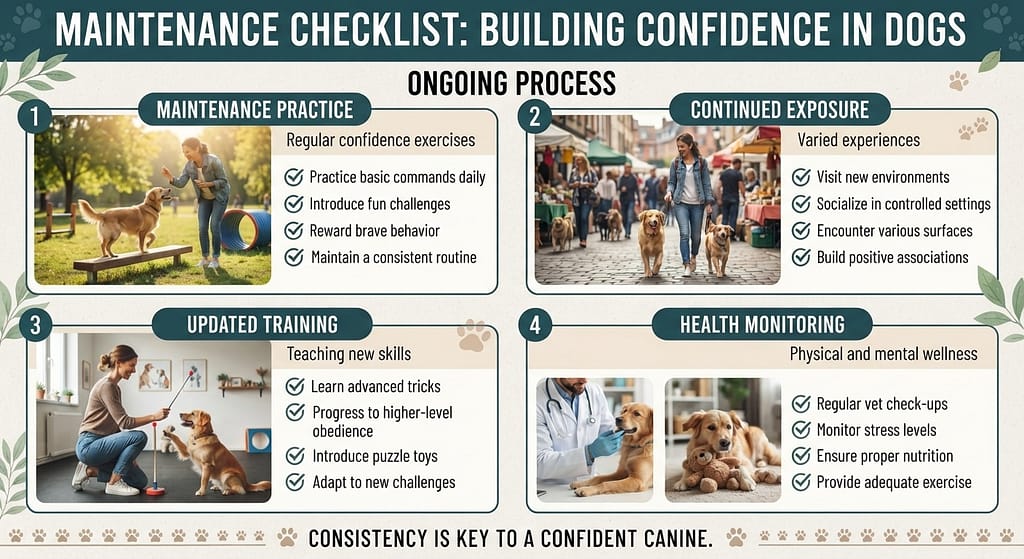
Building confidence in dogs is an ongoing process:
- Maintenance practice: Regular confidence exercises
- Continued exposure: Varied experiences
- Updated training: Teaching new skills
- Health monitoring: Physical and mental wellness
Confidence Across the Lifespan
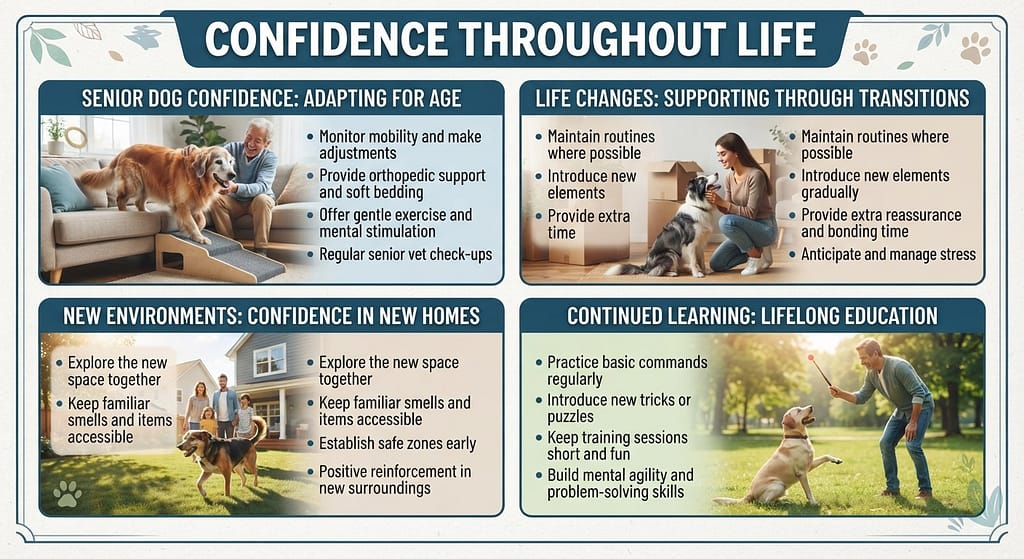
Building confidence in an adult dog continues throughout life:
- Senior dog confidence: Adapting for age
- Life changes: Supporting through transitions
- New environments: Confidence in new homes
- Continued learning: Lifelong education
Conclusion: Your Journey to Confident Canine Living

Building confidence in a dog—whether a puppy, adult, or senior—is one of the most rewarding journeys you’ll take with your canine companion.
For apartment dwellers, these dog confidence-building exercises transform not just your dog’s life, but yours as well.
Remember: how to boost your dog’s confidence isn’t about creating a fearless superdog.
It’s about helping them navigate their world with comfort, curiosity, and joy.
Whether you’re building confidence in a rescue dog or building confidence in your puppy, the principles remain the same: patience, consistency, and celebration of small victories.
Your Next Steps
- Assess your dog’s current confidence level
- Choose 2-3 exercises to start
- Create a consistent practice schedule
- Monitor and celebrate progress
- Adjust strategies as needed
The journey of building your dog’s confidence is ongoing, but with the right approach and tools, you’ll both enjoy the process.
Your apartment can become a launching pad for confidence, not a limitation.
Ready to begin your dog confidence-building journey?
Start small, stay consistent, and watch your dog transform.
Whether through confidence-building dog training, interactive games, or simple daily practices, every step counts.
Download Your Free Confidence-Building Checklist
[Get your free PDF: “Daily Confidence-Building Exercises for Apartment Dogs“]
Remember: Every dog has the potential for confidence. With your guidance, even the most fearful pup can learn to embrace their world with enthusiasm.
You’ve got this, and more importantly, your dog has got you.
🐾 — Apartment Dog Guide (ADG)
Living large in small spaces, one paw at a time. That’s the apartment dog life—see you in the next guide!.


