
You’re at the end of the hallway.
The elevator dings.
Your dog’s ears snap forward.
A neighbor steps out.
Your dog lunges.
You brace, feet sliding on the polished concrete, leash digging into your palm.
“He’s friendly!” you gasp, while your dog pirouettes like a fuzzy tornado.
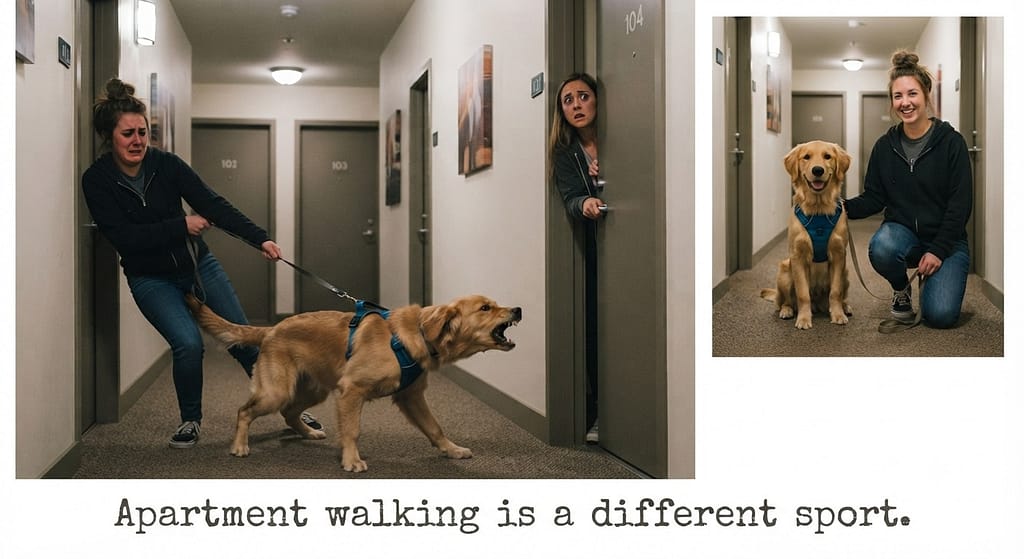
The neighbor smiles nervously and edges past.
You know this script.
You’ve lived it a hundred times.
Here’s the truth no one tells you:
Your dog isn’t “bad on leash.”
He’s never been taught how to walk in an apartment.
Apartment walking is a completely different sport from suburban sidewalk walking.
For the complete barking solution, see our urban silence protocol.
- Narrow hallways = no passing room
- Elevators = confined space with strangers
- Blind corners = sudden triggers
- Lobbies = chaos of dogs, kids, deliveries
In a house, you can practice on an empty street.
In an apartment, every walk is game day.
But here’s the good news:
Loose leash walking in apartments is trainable.
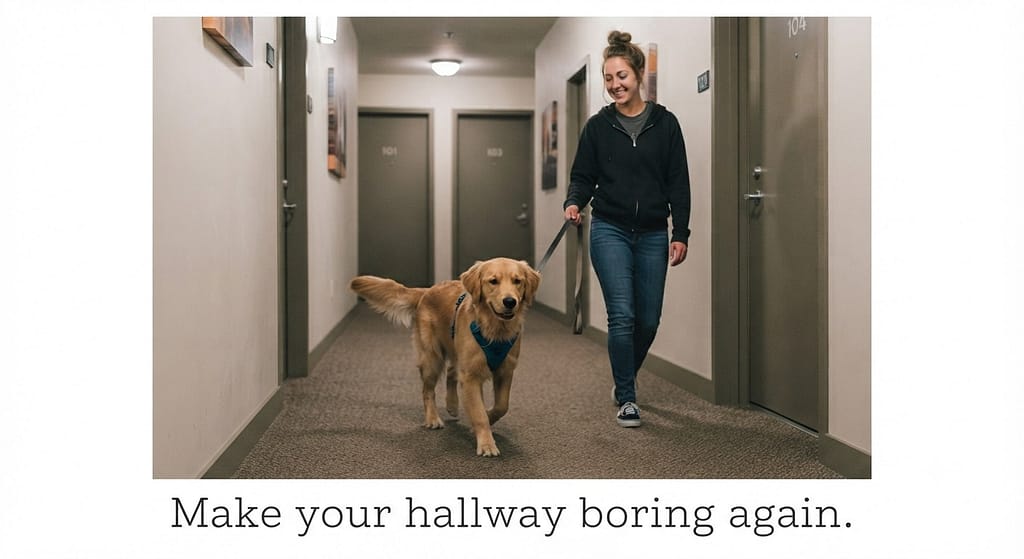
You don’t need a yard. You don’t need a trainer. You need drills designed for your environment.
This guide is your complete apartment-loose-leash walking protocol.
We’ll cover:
· ✅ The apartment leash setup—gear that helps, not hinders
· ✅ 9 specific exercises for hallways, elevators, stairs & lobbies
· ✅ How to handle sudden triggers (doors opening, kids running, other dogs)
· ✅ The 3‑Second Rule for neighbor greetings
· ✅ What to do when your dog lunges or barks
· ✅ How to repair leash reactivity in 7 days
Let’s make your hallway boring again. 🏢🐕
🔍 Why Apartment Walking Is Different
🧠 Truth #1: No Buffer Zone
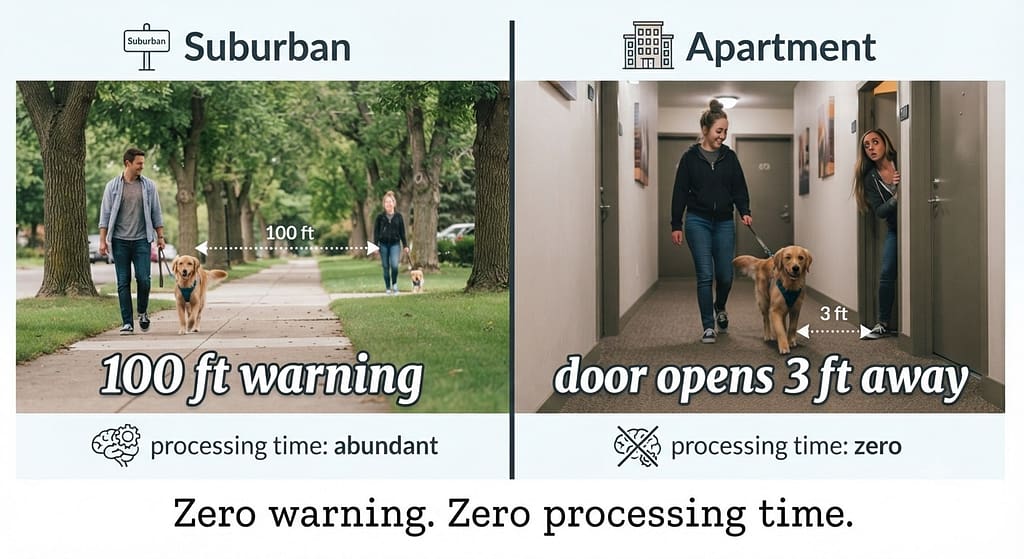
On a suburban sidewalk, you see a trigger 100 feet away.
In an apartment hallway, a door opens 3 feet in front of you.
Your dog has no time to process.
Your training must account for zero warning.
🧠 Truth #2: Elevators Are Pressure Cookers
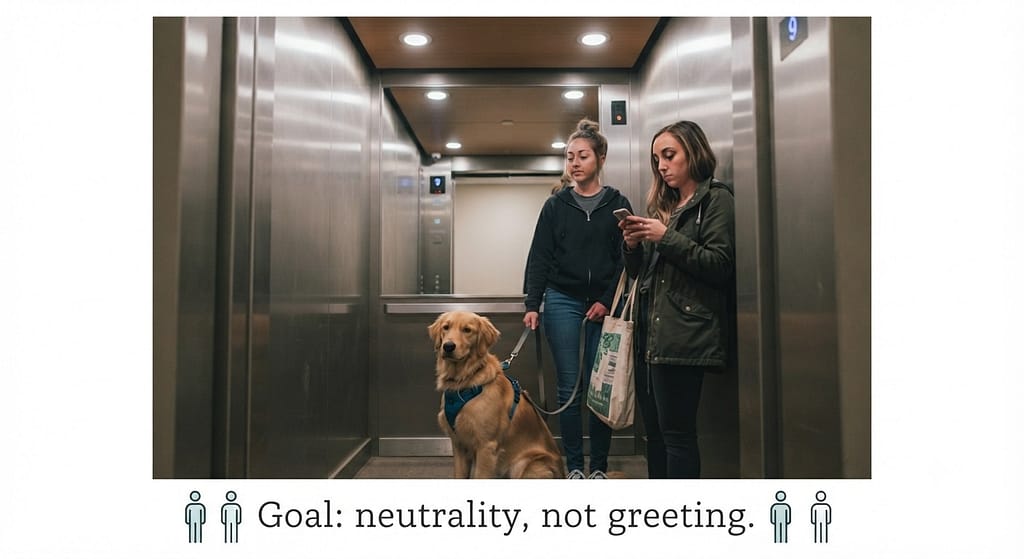
A 5×5-foot box. Strangers at eye level—confined movement.
Even calm dogs can find this stressful.
Your goal is not “greeting.” Your goal is neutrality.
🧠 Truth #3: Pulling Is Reinforced Every Day
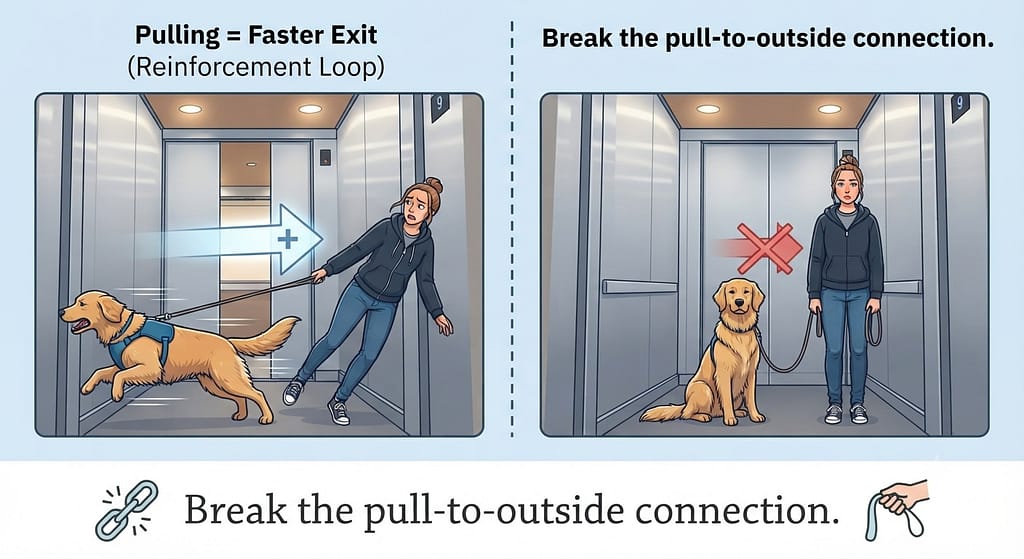
Every time your dog pulls you toward the exit, he gets what he wants: outside.
Pulling = faster arrival.
That’s powerful reinforcement.
You must break the pull‑to‑outside connection.
🧠 Truth #4: You Can’t Just “Go Somewhere Else”
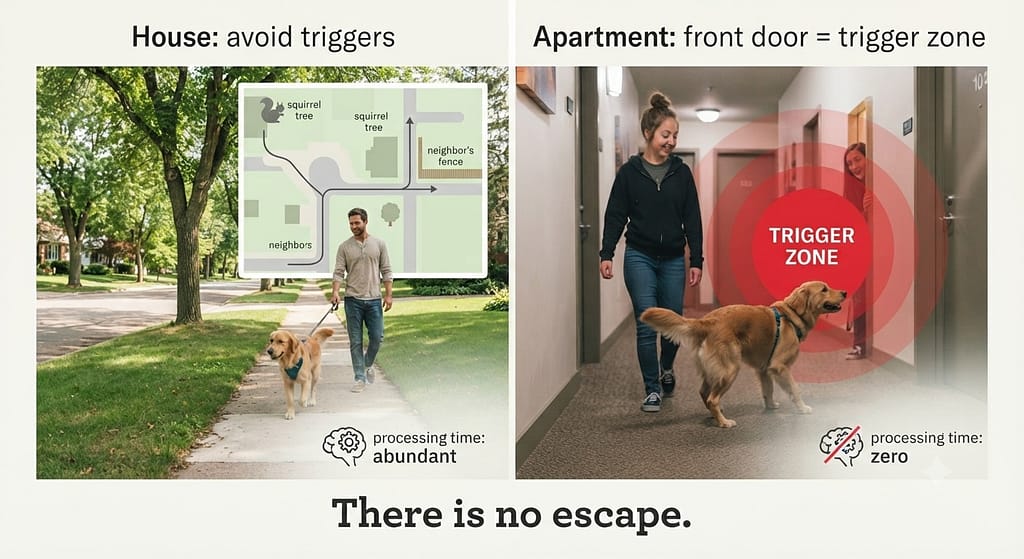
In a house, you can avoid triggers.
In an apartment, your front door is the trigger zone.
You must train at the door, in the hallway, in the elevator.
There is no escape.
💬 Interactive Pause:
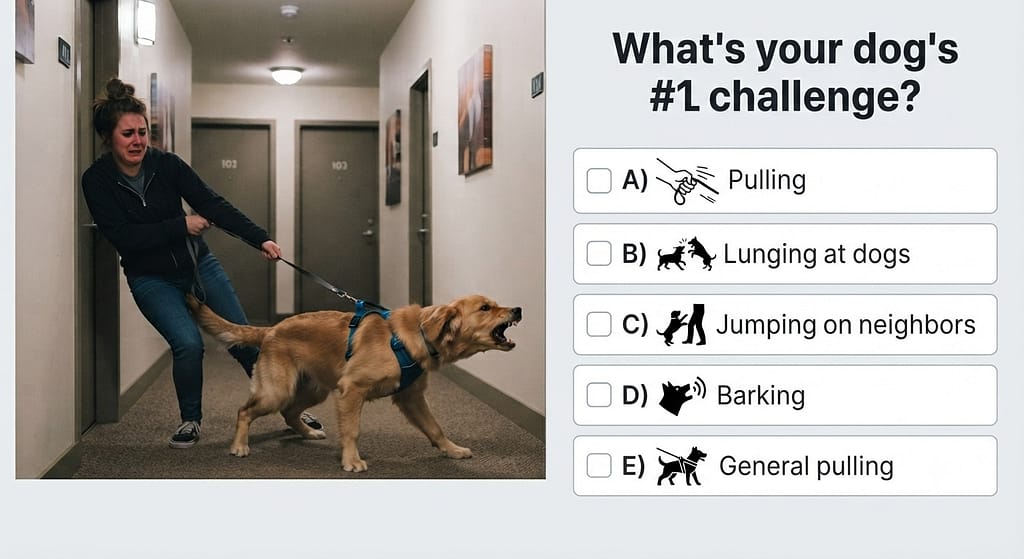
What’s your dog’s #1 leash challenge?
(A) Pulling toward the exit door
(B) Lunging at other dogs in the hallway
(C) Jumping on neighbors in the elevator
(D) Barking at every sound
(E) General pulling—he just wants to GO
Keep reading—each challenge has a specific fix.
🦴 Chapter 2: The Apartment Leash Setup
Before you train, check your equipment.
#1: Harness vs. Collar
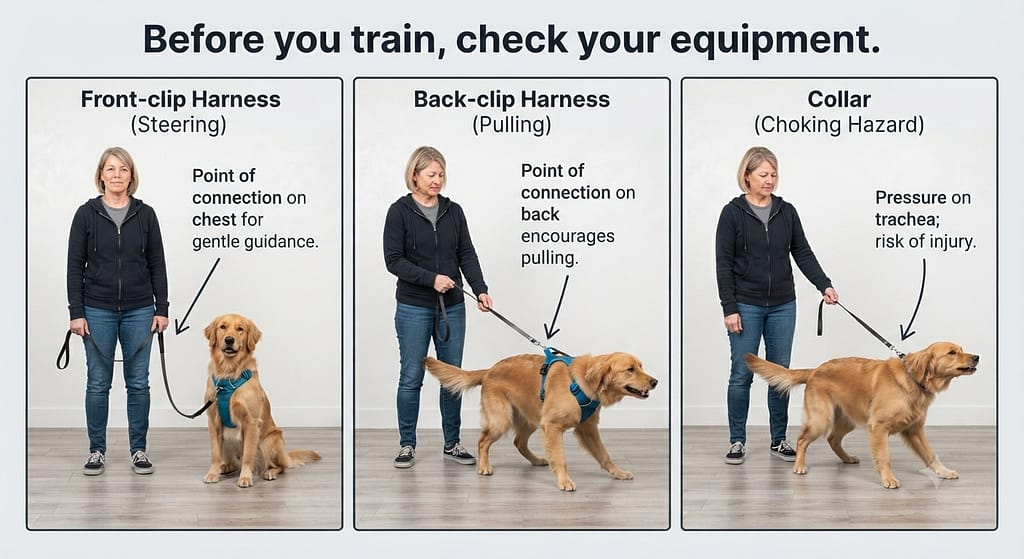
For pulling dogs:
Use a harness with a front clip (attachment at chest).
When the dog pulls, he’s turned around—no pressure on the trachea, better mechanical advantage.
🛒 Affiliate Pick:
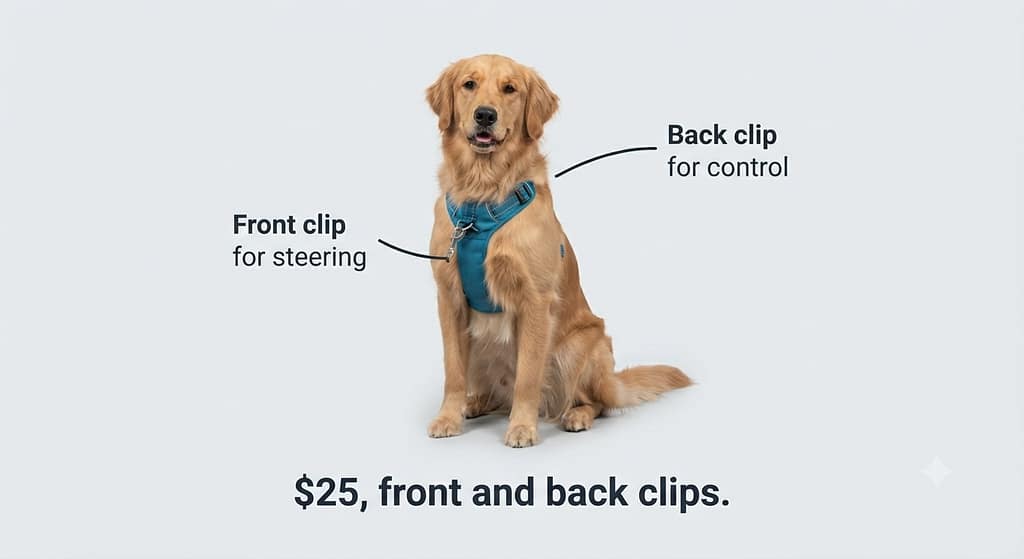
Petsafe 3‑in‑1 Harness – Front and back clips, padded, no‑pull design. $25
👉 Shop: Petsafe 3‑in‑1 Harness
For reactive dogs:
Use a harness with a rear handle so you can steady or move your dog manually.
For elevator and stairwell training, see our elevator and stairwell etiquette guide
🛒 Affiliate Pick:
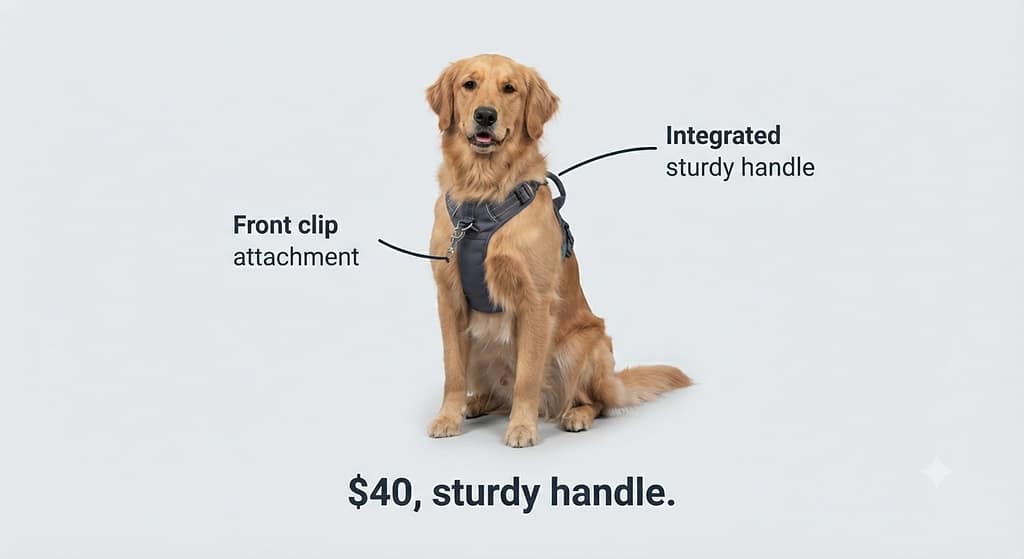
Ruffwear Front Range Harness – Sturdy handle, five adjustment points. $40
👉 Shop: Ruffwear Front Range
#2: Leash Length
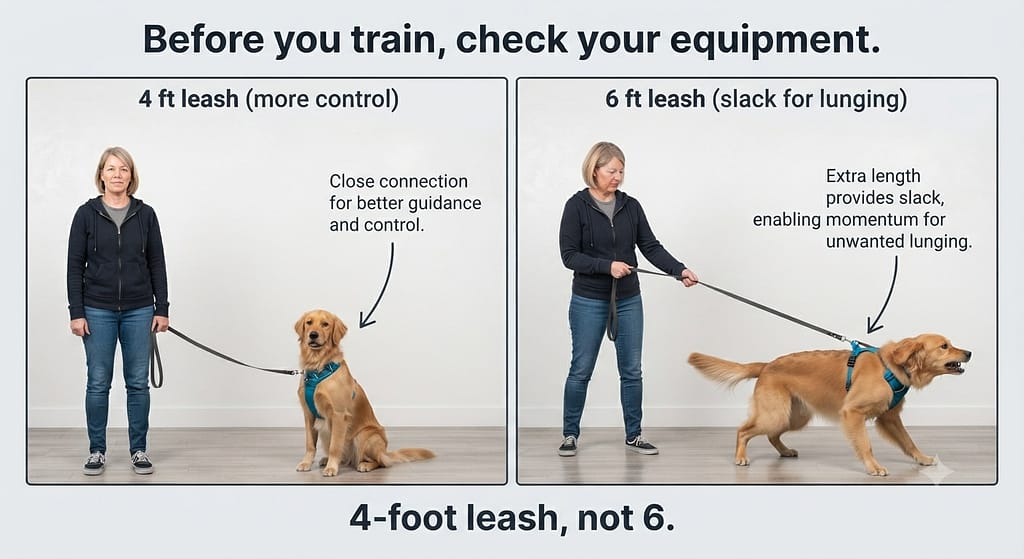
4‑foot leash, not 6.
A shorter leash gives you more control in tight spaces. No slack for lunging.
🛒 Affiliate Pick:
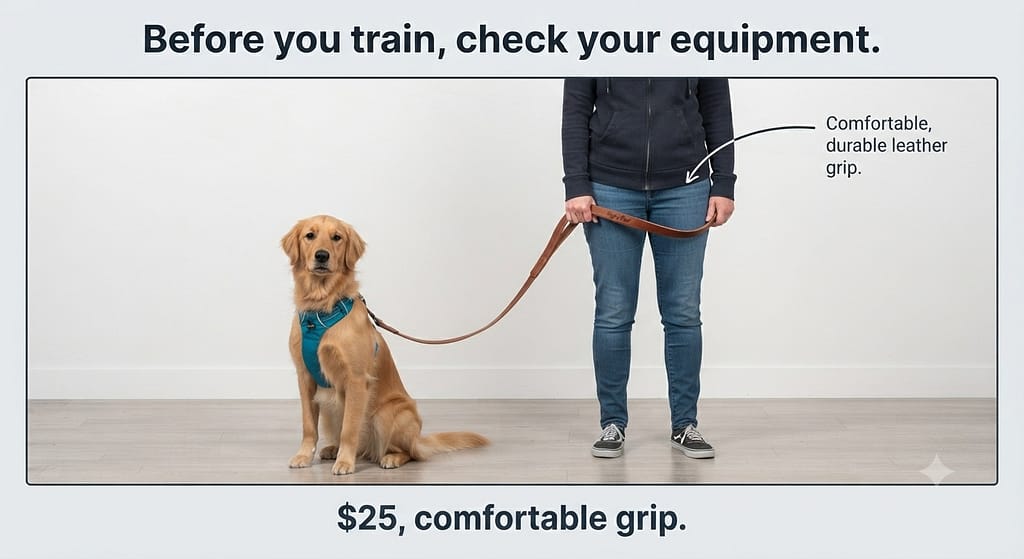
Mighty Paw Leather Leash – 4ft, comfortable grip, heavy‑duty hardware. $25
👉 Shop: Mighty Paw Leash
#3: Treat Pouch (Essential)
You cannot reward quickly enough with treats in your pocket.
And you need a hands‑free, magnetic‑close pouch that attaches to your waist.
🛒 Affiliate Pick:
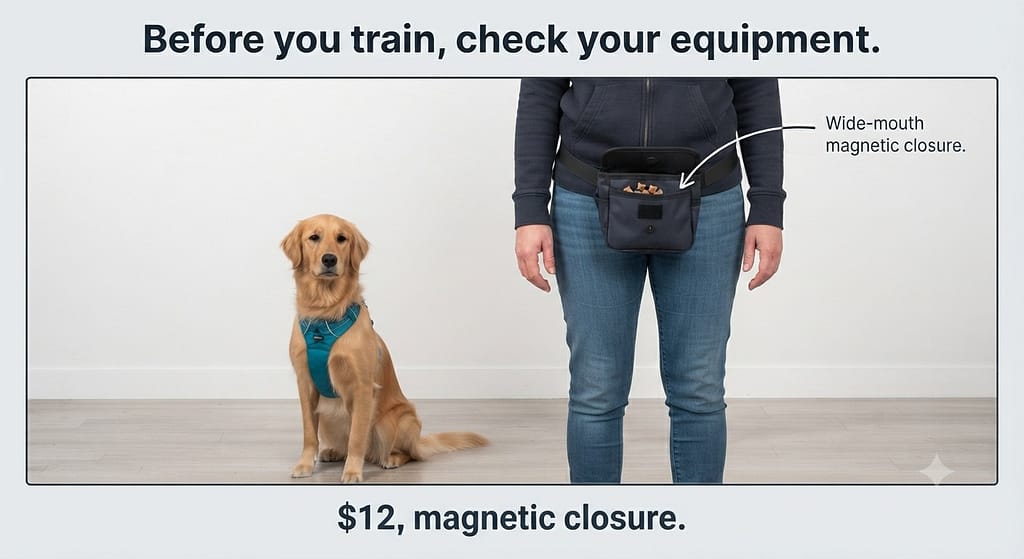
PetSafe Treat Pouch – Magnetic closure, folds flat, two pockets. $12
👉 Shop: PetSafe Treat Pouch
#4: High‑Value Treats
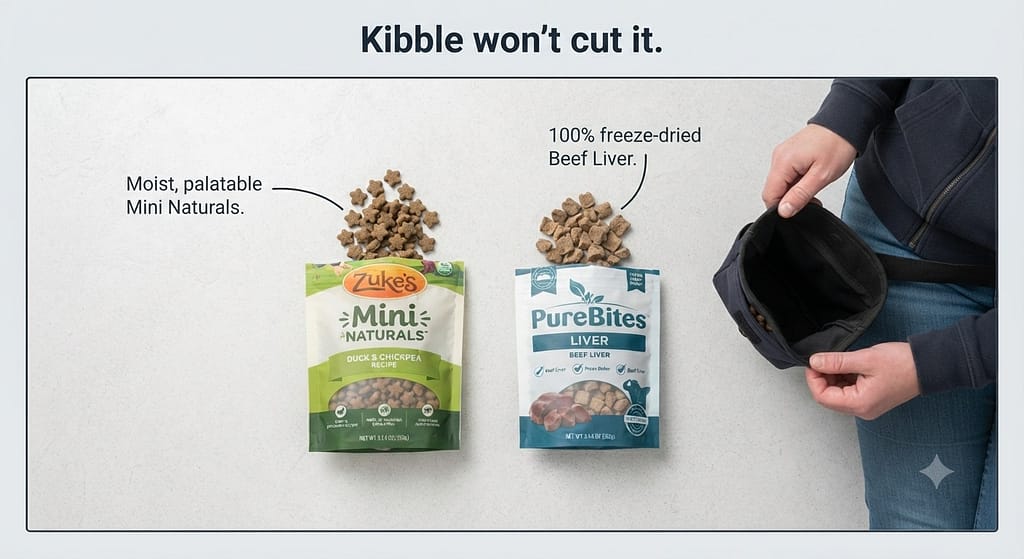
For hallway training, kibble won’t cut it.
You need stinky, soft, irresistible rewards.
🛒 Affiliate Pick:
Zuke’s Mini Naturals – Moist, chicken flavor, 2 calories each. $5
👉 Shop: Zuke’s Mini Naturals
🛒 Affiliate Pick:
PureBites Freeze‑Dried Liver – Single ingredient, high value. $15
👉 Shop: PureBites Liver
📋 9 Apartment Loose Leash Exercises
#1: The Door Is Boring (Threshold Training)
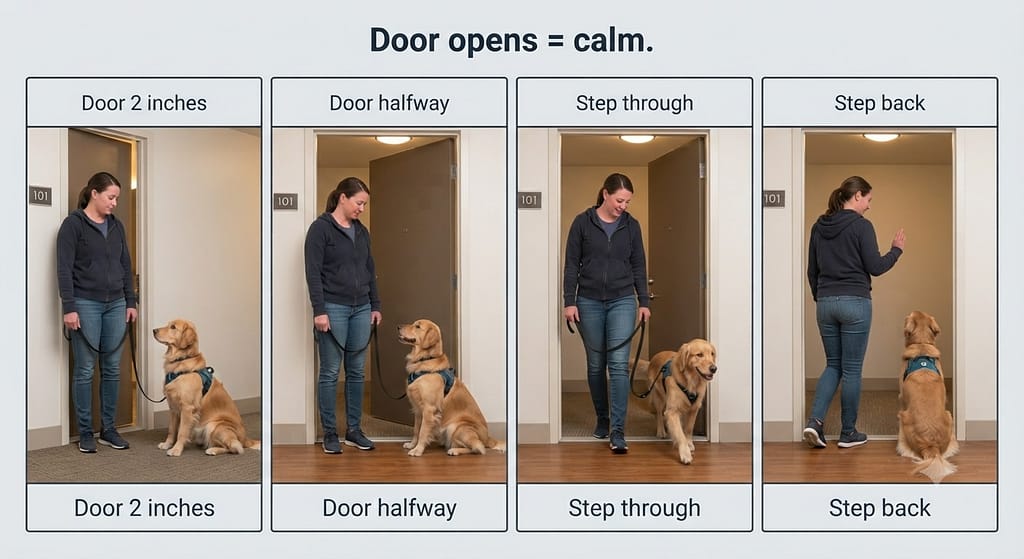
Goal: Door opens, dog does not explode.
Protocol:
- Leash on, dog in sit or stand.
- Open door 2 inches.
- If dog stays calm, treat.
- Open door halfway. Calm? Treat.
- Step through threshold. Calm? Treat.
- Step back inside. Treat.
Repeat 10x daily for 3 days.
#2: The Elevator Zen Game

Goal: Dog remains calm in confined space with strangers.
Protocol:
- Wait for an empty elevator.
- Step in, have dog sit, treat continuously.
- Ride one floor, treat, exit.
- Gradually increase duration.
Then add a helper:
- Friend enters elevator.
- Your job: feed treats non‑stop.
- Friend ignores dog completely.
- Friend exits. Dog gets jackpot.
No greetings. No eye contact. No petting.
For leash reactivity on sidewalks, see our leash reactivity guide
#3: The Hallway U‑Turn
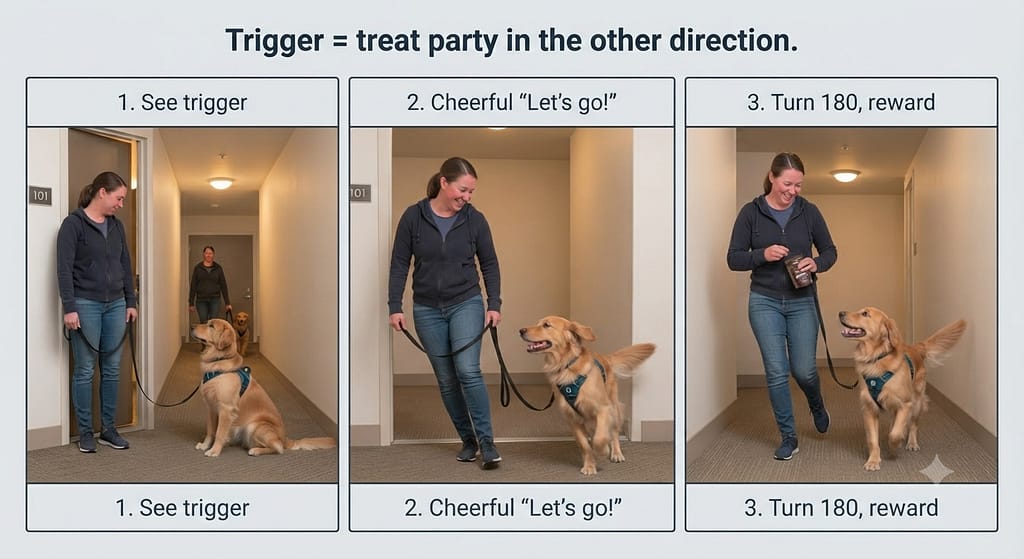
Goal: Avoid forced greetings; teach dog that turning away is rewarding.
When you see a trigger (person, dog, sound):
- Say “Let’s go!” cheerfully.
- Immediately turn 180 degrees and walk the other way.
- Reward when the dog follows.
Why this works:
You’re not avoiding—you’re managing. Dog learns: trigger = treat party in the other direction.
#4: The 3‑Second Rule (For Neighbor Greetings)
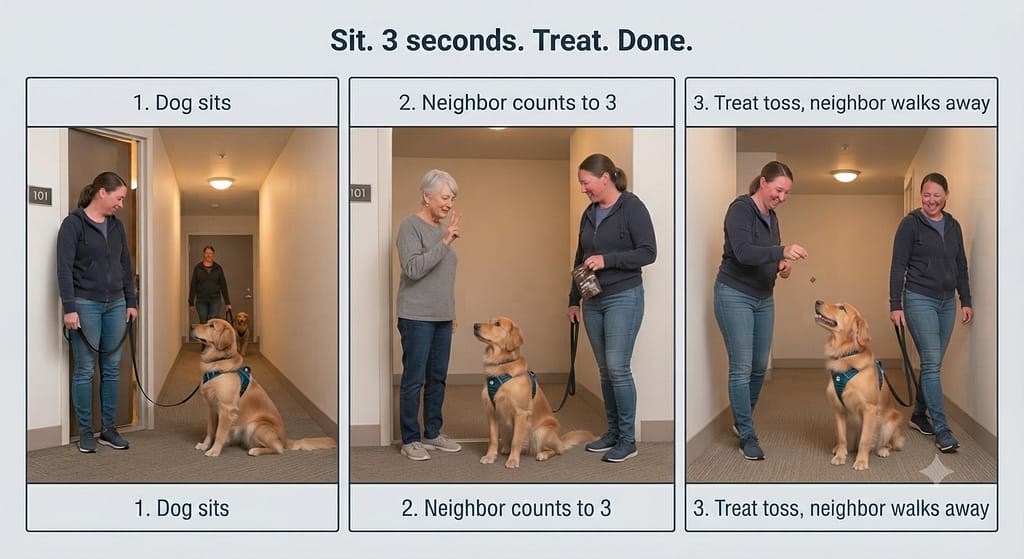
Goal: Brief, calm, polite greetings—no jumping, no barking.
Protocol:
- Neighbor stops 6 feet away.
- Dog must sit.
- Neighbor counts to 3.
- If dog remains seated, neighbor tosses treat on ground.
- Neighbor walks away.
Why this works:
Dog learns: greeting = sit + 3 seconds + treat. No jumping = neighbor stays. Jumping = neighbor leaves.
For building introductions with neighbors, see our apartment building introduction guide.
#5: The Stairwell Desensitization
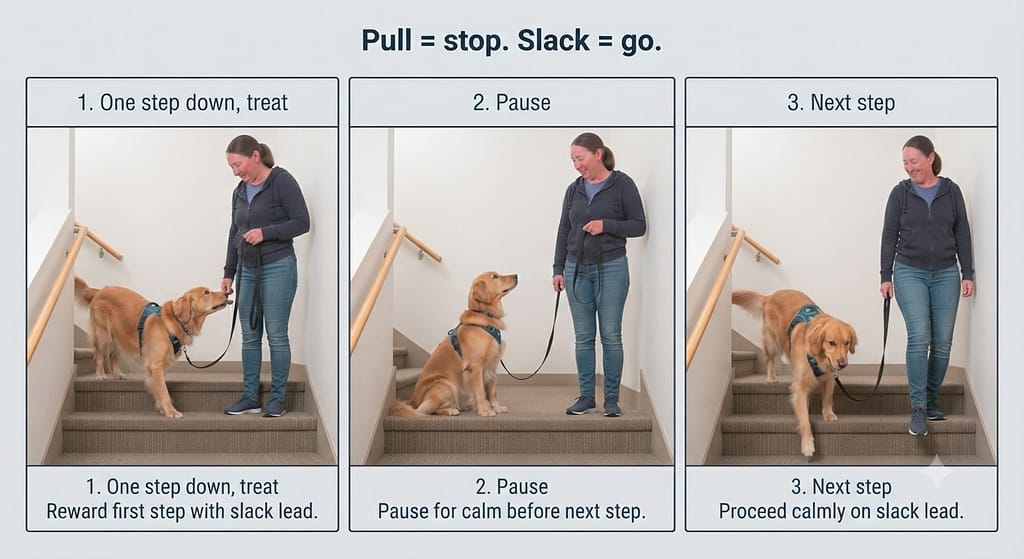
Goal: Dog navigates stairs calmly, not dragging you down.
Protocol:
- Start at top of stairs.
- One step down, treat.
- Pause. Treat again.
- Next step, treat.
- If dog pulls forward, stop moving. Wait for slack.
Do not let pulling be rewarded with faster descent.
#6: The Lobby Sit‑Stay
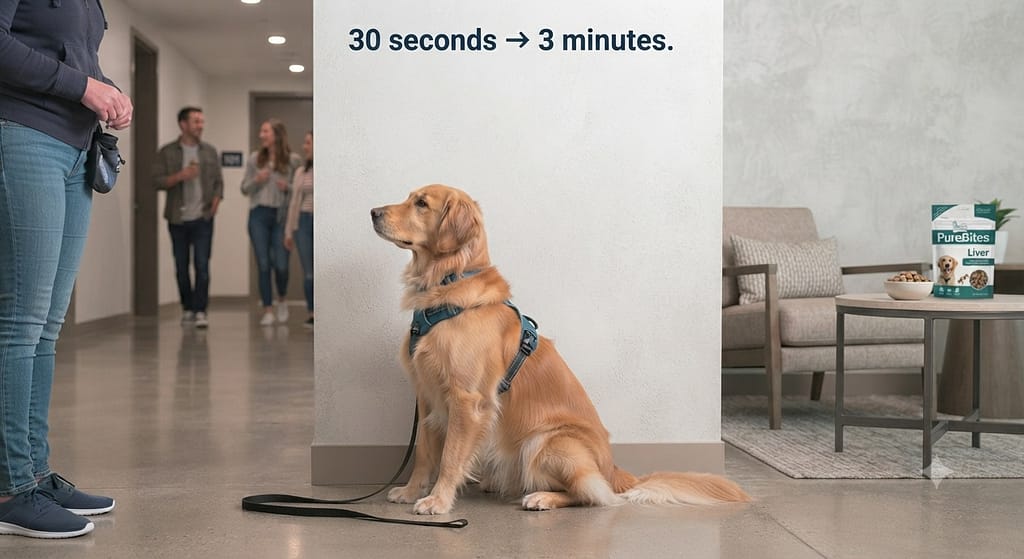
Goal: Dog can wait calmly in high‑distraction lobby.
Protocol:
- Enter lobby, find a wall.
- Ask for sit.
- Treat every 2 seconds.
- Watch people, dogs, doors.
- Reward for watching without reacting.
Start with 30 seconds. Build to 3 minutes.
#7: The “Find It” Scatter
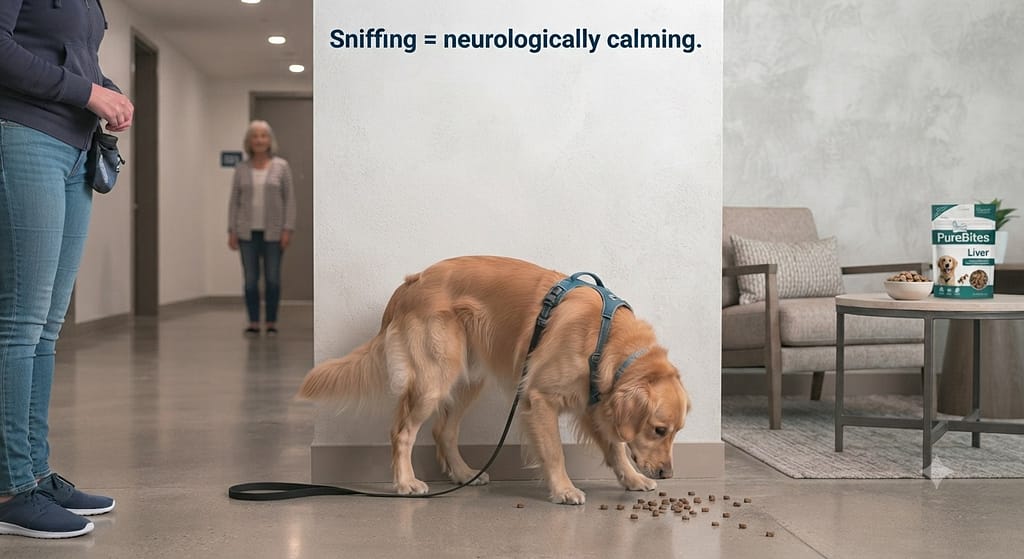
Goal: Redirect focus from trigger to ground.
When a trigger appears:
- Toss a handful of kibble/treats on the ground.
- Say “Find it!”
- Dog sniffs and eats—disengages from trigger.
Why this works:
Sniffing is neurologically calming. It shifts your dog from “threat” mode to “forage” mode.
For hallway barking triggers, see our apartment barking triggers guide.
#8: The One‑Step Game
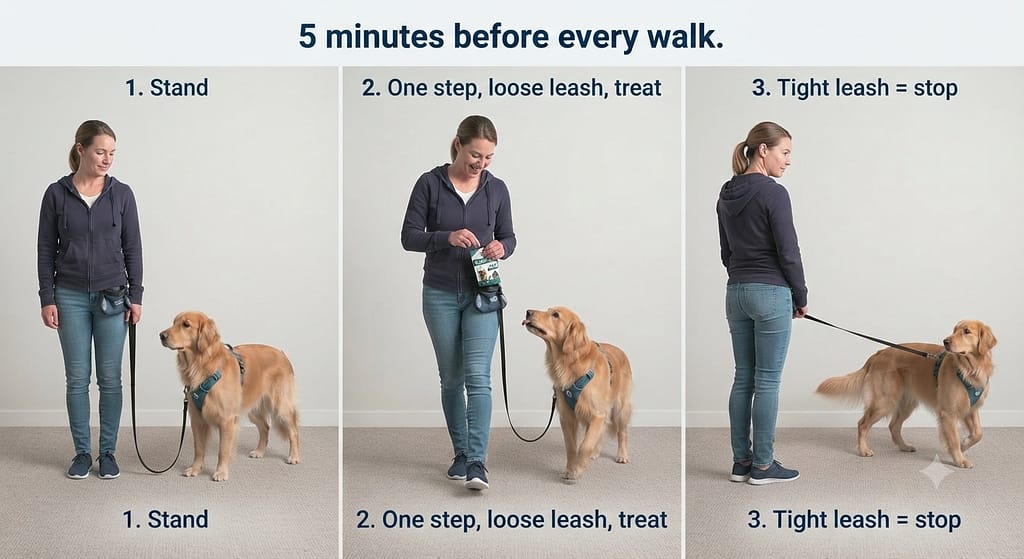
Goal: Teach loose leash walking in the hallway.
Protocol:
- Leash on, stand next to dog.
- Take one step.
- If leash is loose, treat.
- If leash tightens, stop. Wait for slack.
- Repeat.
Gradually increase steps.
Do this for 5 minutes before every walk.
#9: The Emergency Brake (Cued Settle)
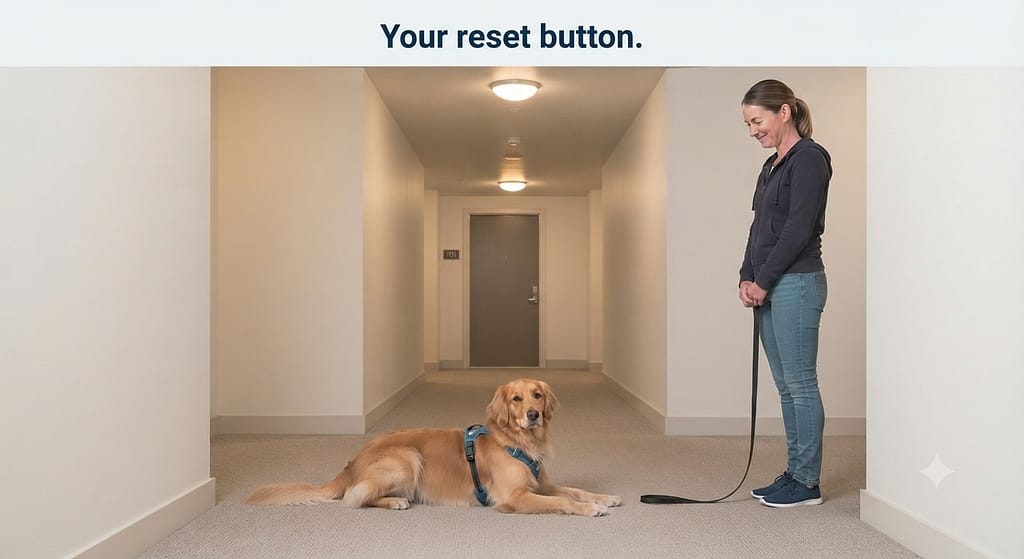
Goal: Dog can down‑stay on cue, even mid‑hallway.
Train this at home first:
- Cue “down.”
- Reward.
- Add duration.
- Add distance.
Then take it to the hallway:
- Dog is standing.
- Cue “down.”
- Treat.
- Release.
This is your reset button.
🚨 How to Handle Sudden Triggers
Scenario 1: A door opens 3 feet in front of you.
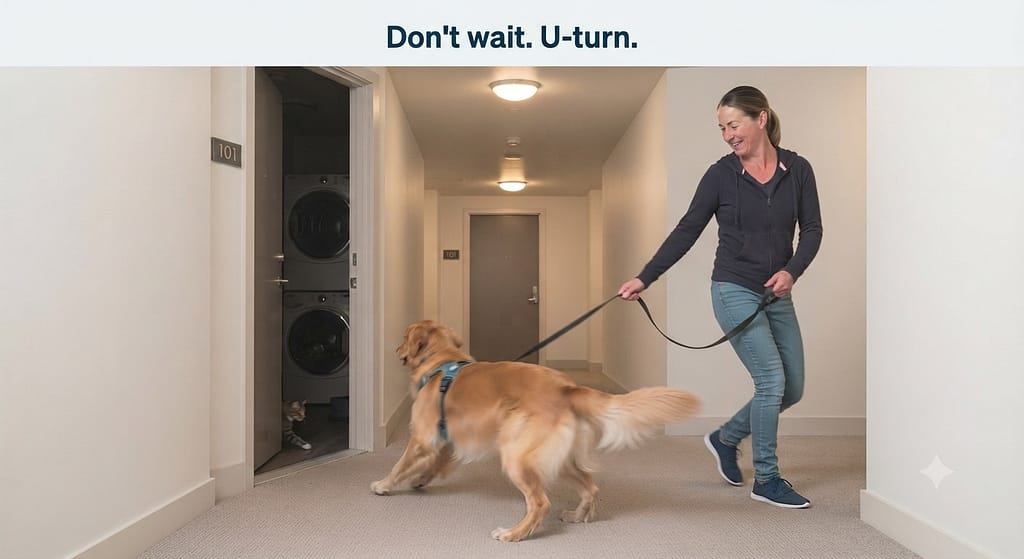
Do:
- Immediately U‑turn.
- Don’t wait to see who it is.
- Reward the turn.
Scenario 2: An off‑leash dog rounds the corner.
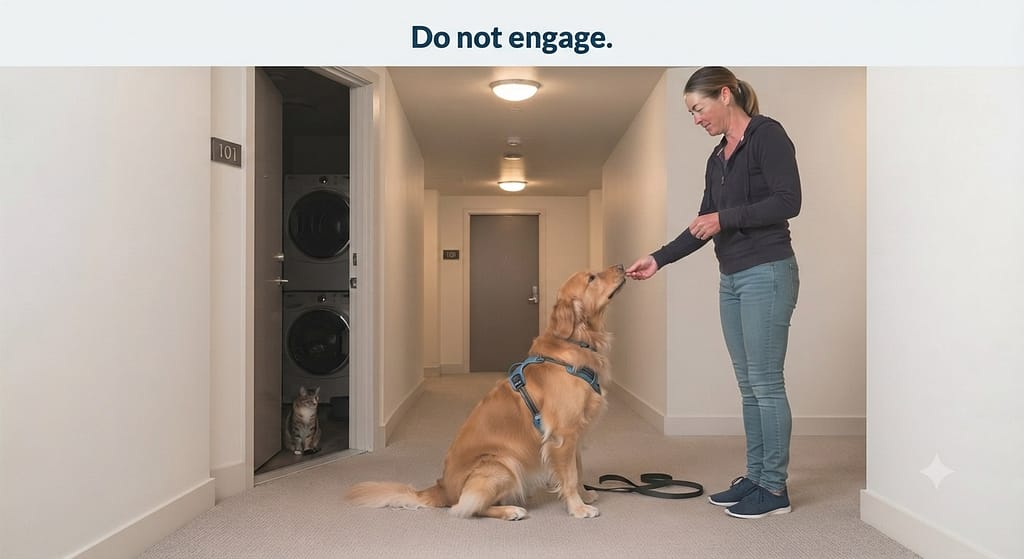
Do:
- Stand still.
- Feed treats continuously.
- Do not engage.
- If the owner appears, calmly say: “Can you please leash your dog? Mine is nervous.”
Scenario 3: Your dog lunges and barks at a neighbor.
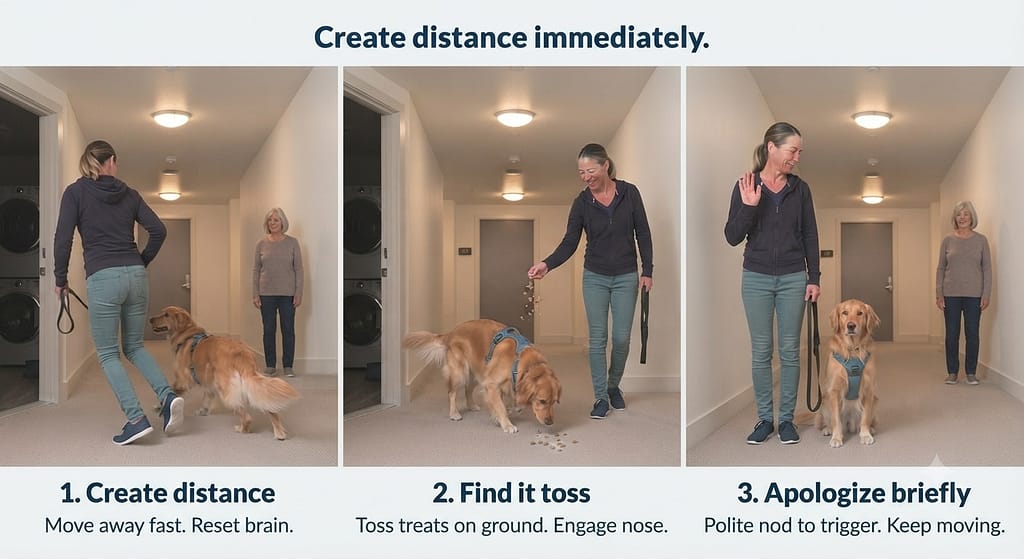
Do:
- Do not yank the leash.
- Do not yell.
- Create distance immediately.
- Once distance is achieved, do a few “find it” tosses.
- Apologize briefly to neighbor, then move on.
Script:
“I’m so sorry—we’re still training. Thanks for your patience!”
Scenario 4: Your dog is reactive to other dogs in the building.
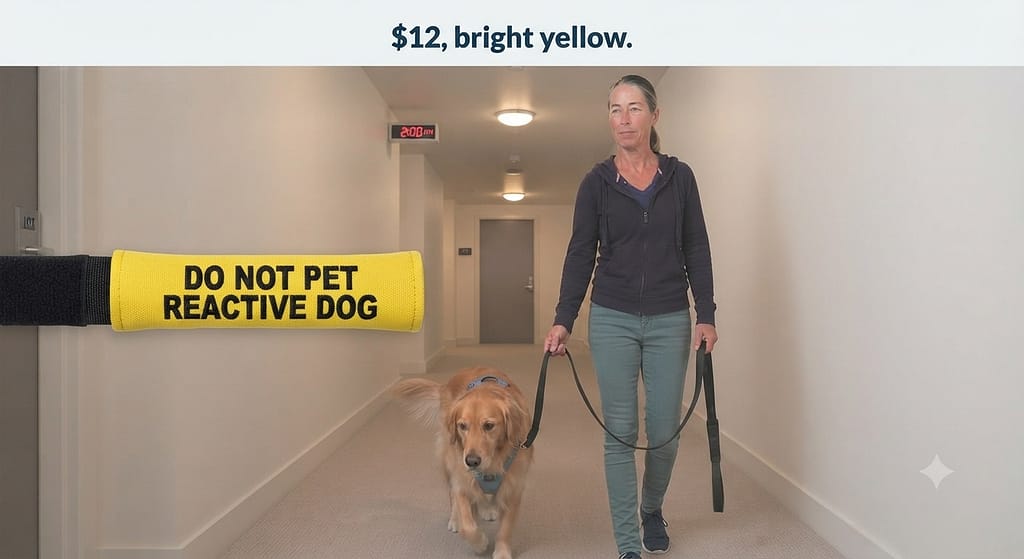
Do:
- Walk at off‑peak hours.
- Use a “Do Not Pet” leash sleeve.
- Practice parallel walking: walk alongside another calm dog at a distance, rewarding neutrality.
For stopping barking during walks, see our guide to stopping dog barking on city streets.
🛒 Affiliate Pick:
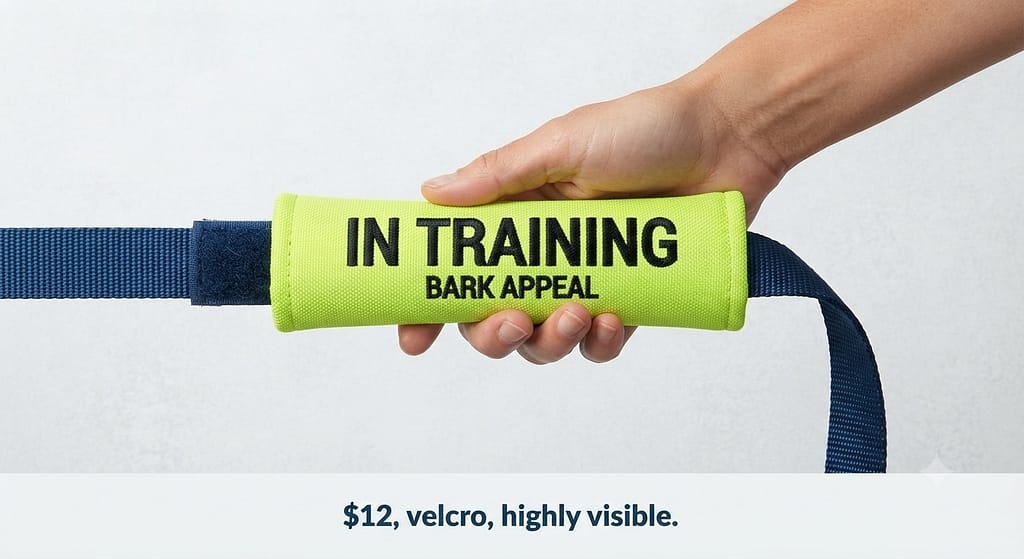
Bark Appeal “In Training” Leash Sleeve – Bright yellow, Velcro. $12
👉 Shop: Bark Appeal Leash Sleeve
📊 Quick Comparison – Best Tools for Apartment Leash Walking
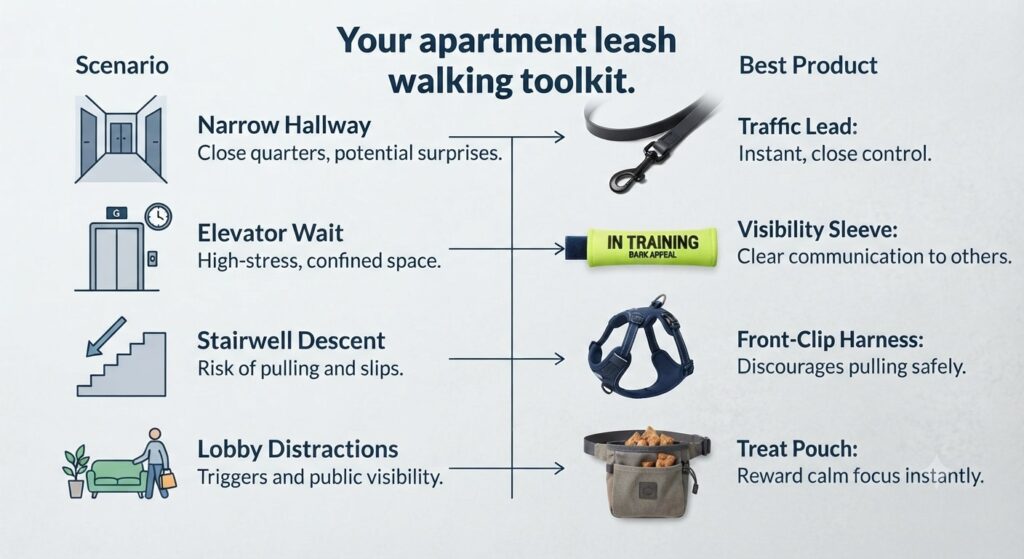
| Scenario | Best Product | Runner‑Up |
|---|---|---|
| Pulling toward exits | Petsafe 3‑in‑1 Harness (front clip) | Freedom No‑Pull Harness |
| Need better control in tight spaces | Ruffwear Front Range (handle) | Kurgo Tru‑Fit |
| Treat delivery | PetSafe Treat Pouch | Tuff Mutt Hands‑Free Pouch |
| High‑value rewards | Zuke’s Mini Naturals | PureBites Freeze‑Dried Liver |
| “Do Not Pet” signaling | Bark Appeal Leash Sleeve | Yellow ribbon on leash |
| Emergency calm | Adaptil Spray | LickiMat (pre‑walk) |
🧠 Frequently Asked Questions
Q: How long does it take to stop pulling in the hallway?
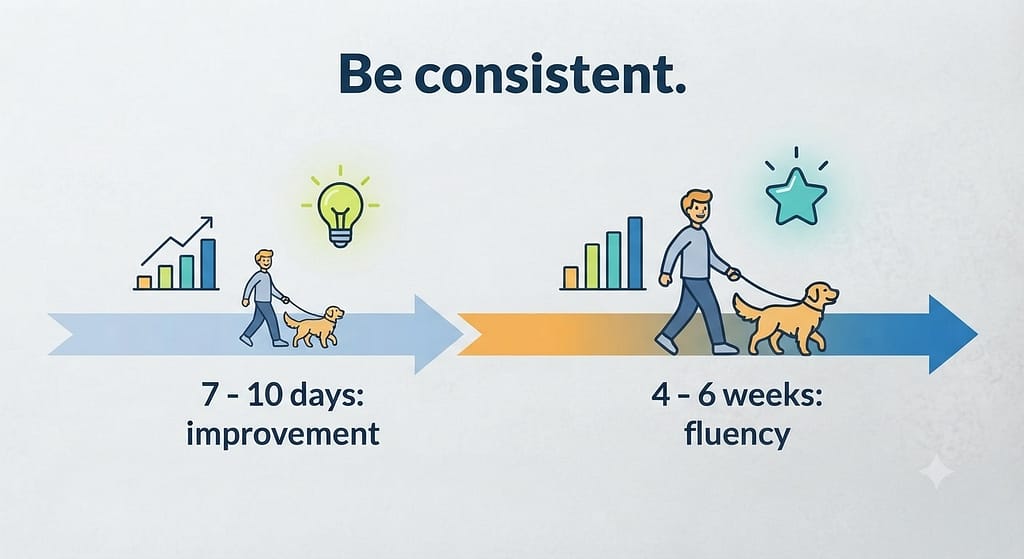
A: With daily practice, you’ll see improvement in 7–10 days. Full fluency takes 4–6 weeks. Be consistent.
Q: My dog is fine outside but crazy in the hallway. Why?
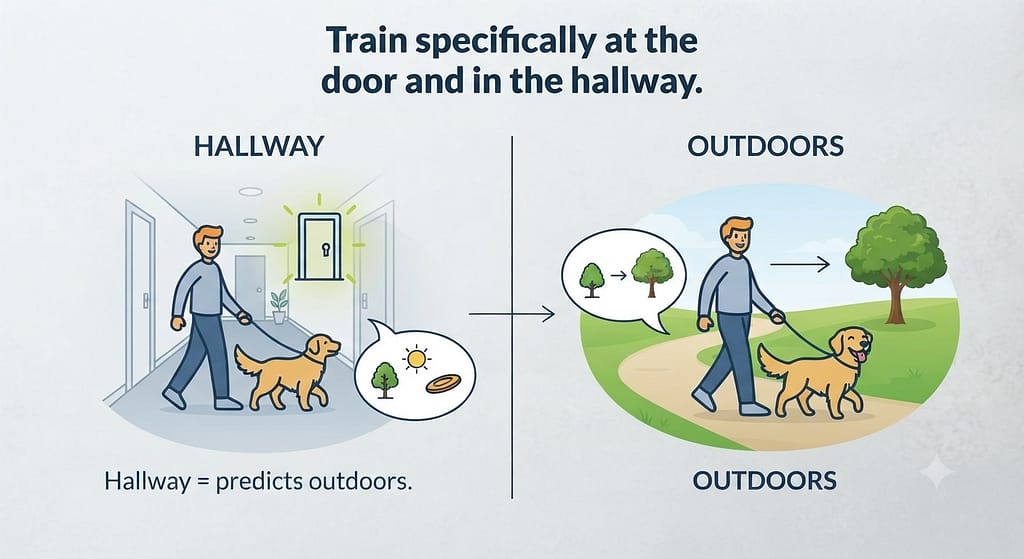
A: The hallway is anticipation central. It predicts the outdoors. Train specifically at the door and in the hallway—not just outside.
Q: What if my dog won’t take treats in the hallway?
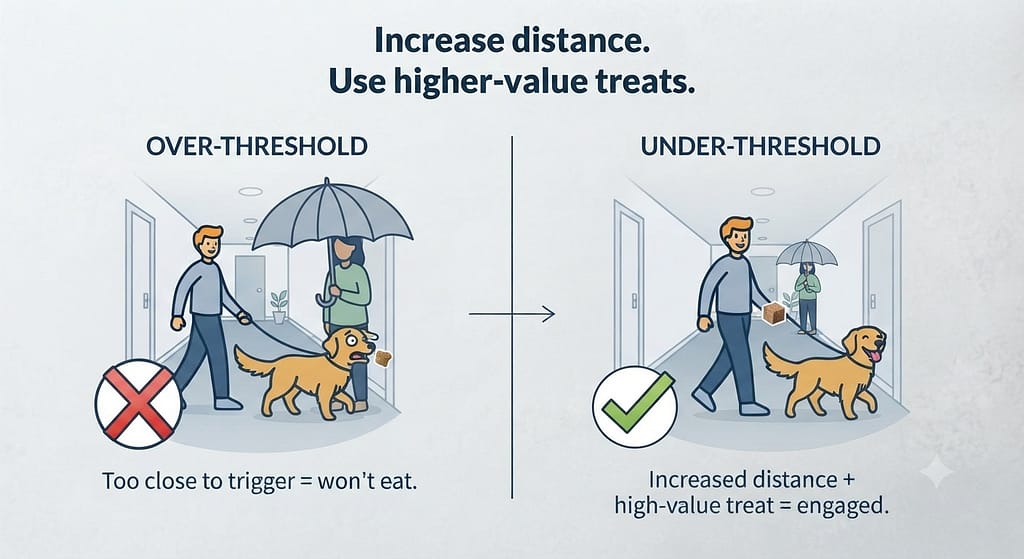
A: Your dog is over threshold. You’re too close to the trigger. Increase distance. Use higher value treats. If he still won’t eat, you need to manage (U‑turn, leave) and consult a trainer.
Q: Should I let my dog greet every neighbor?
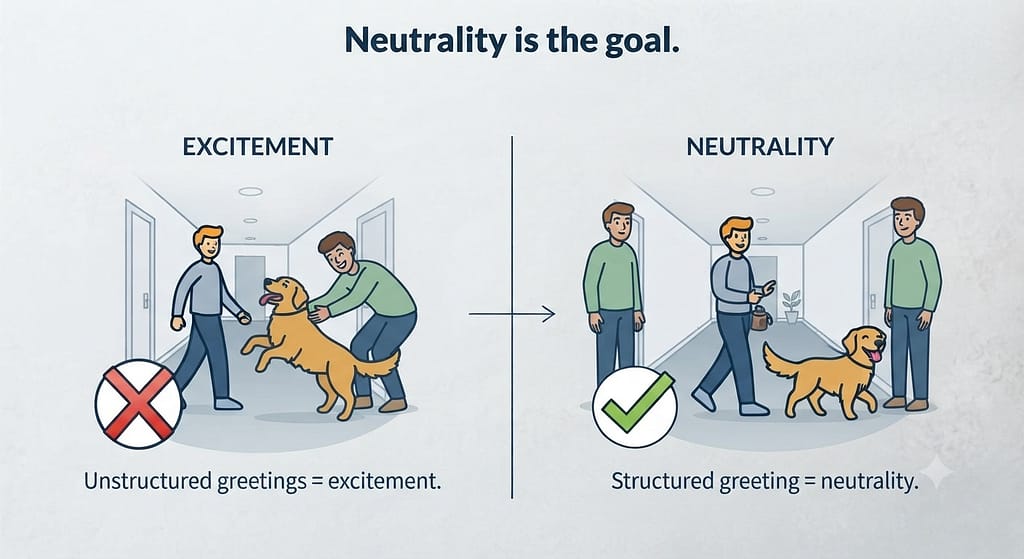
A: No. Unstructured greetings reinforce excitement. Use the 3‑Second Rule or skip greetings entirely. Neutrality is the goal.
For demand barking management, see our guide to stopping demand barking.
🧘 The Hallway Is Just the Hallway
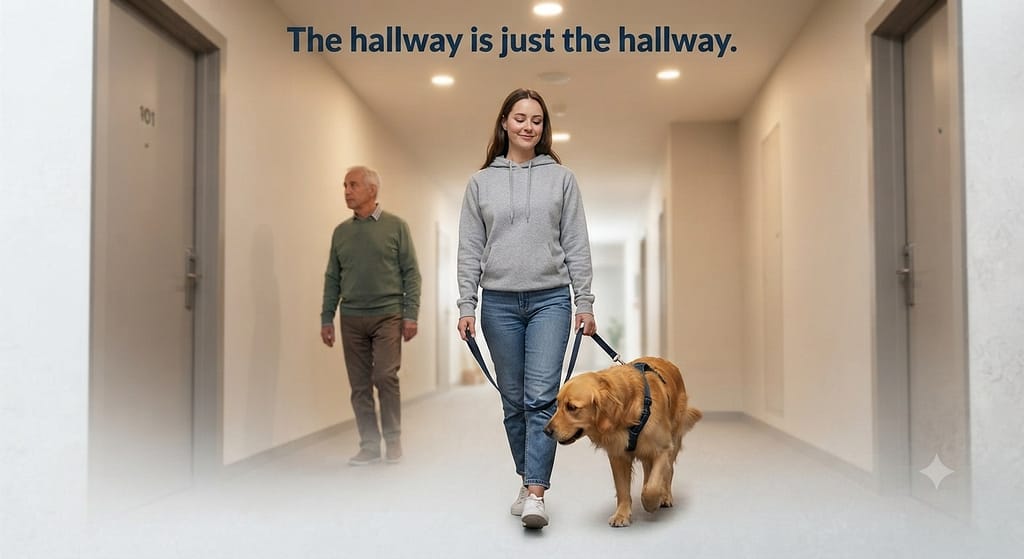
Right now, your hallway is an obstacle course.
Doors, people, dogs, echoes.
But it doesn’t have to be.
With repetition, those same doors become boring.
For mental stimulation that reduces pulling, see our sniffari walk guide
The elevator ding becomes background noise.
Neighbors become neutral.
Your dog will learn:
- Pulling = we stop.
- Lunging = we turn away.
- Calm = we move forward.
It takes time.
It takes treats.
It takes a thousand tiny repetitions.
But you live in an apartment.
You have a thousand opportunities every week.
Start today.
One step. One treat. One U‑turn.
Your hallway will never look the same. 🐾
🐾 — Apartment Dog Guide (ADG)
Living large in small spaces, one paw at a time. That’s the apartment dog life—see you in the next guide!.


