
We’ve all been there.
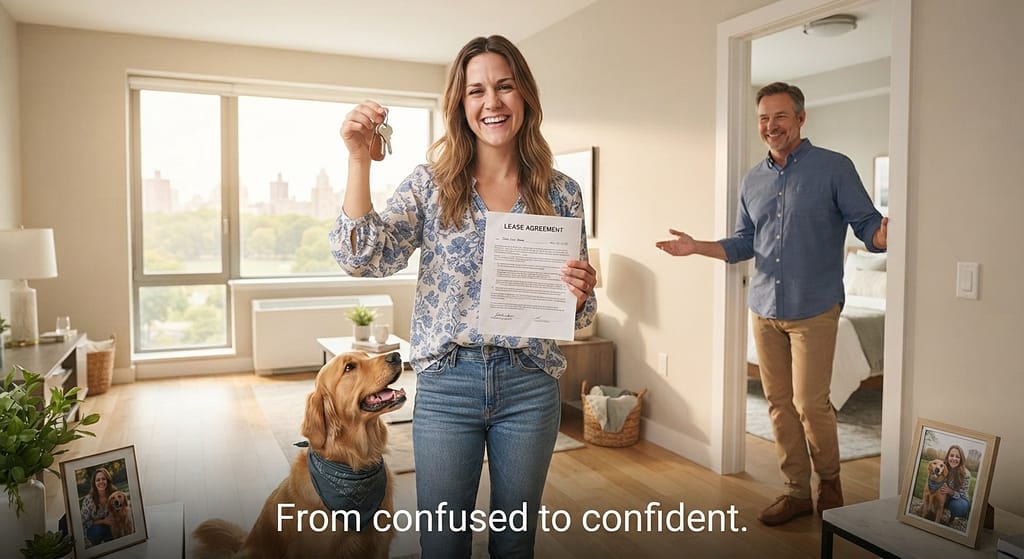
You’re clutching the lease, your dog is wagging their tail at your feet (or your cat is judging you from the carrier), and the landlord slides a piece of paper across the table that looks less like a rental agreement and more like a ransom note.

There it is. The Financial Fine Print of Pet Ownership.
You see a $400 Pet Deposit**. You see a **$50 Monthly Pet Rent. Maybe you even see a $250 Non-Refundable Pet Fee.
Your brain short-circuits. Wait, am I paying for a security deposit OR am I paying rent for my dog? Is this legal? Can I get this money back? And most importantly—how do I avoid paying all of this without sleeping in my car?
We’ve navigated this jungle more times than we care to admit.
We’ve been bled dry by corporate landlords and charmed by mom-and-pop property owners.
And we’re here to tell you: Knowledge is power, and negotiation is your superpower.
Welcome to your ultimate guide to decoding pet fees.
By the time you finish reading this, you won’t just know the difference between a deposit and rent—you’ll know exactly how to talk your landlord into lowering them, waiving them, or swapping them entirely.
Let’s dive into the money pit, shall we?
The Jargon Buster: What Are You Actually Paying For?
Before we suit up for negotiation, we need to understand the battlefield.
Landlords love to use these three terms interchangeably, but legally and financially, they are vastly different.
Let’s break them down like we’re explaining it to a golden retriever (slowly and with lots of treats).
1. The Pet Deposit (The Safety Net)

Think of this as a security deposit specifically for your furry friend. It is a one-time, upfront payment.
- The Vibe: This is your money being held hostage.
- Refundable? Usually, yes! Assuming your dog doesn’t develop a taste for drywall or your cat doesn’t turn the carpet into a scratching post, you should get this back when you move out.
- The Amount: Typically ranges from $200 to $500, depending on the property and the size of your pet.
- The Fine Print: Legally, in many states, this money must be held in an escrow account. It’s not the landlord’s money to spend; it’s a safety blanket for them if they have to repair pet-related damage.
2. The Pet Rent (The Subscription Model)

Ah, the “Netflix for your dog.” This is a monthly recurring charge added to your base rent.
- The Vibe: This money is gone. Poof. Into the void.
- Refundable? Absolutely not. Think of it as a convenience fee.
- The Amount: Usually between $25 and $75 per pet, per month.
- The Fine Print: Landlords argue this covers the “wear and tear” of having an animal in the unit. We’ll get to why this is often a weak argument later, but for now, know that this is the most negotiable line item on your lease.
3. The Non-Refundable Pet Fee (The Cover Charge)

This is the “bouncer” fee. It’s a one-time payment, just like a deposit, but you will never see it again.
- The Vibe: This is the landlord’s “handling fee” for allowing you to have a pet.
- Refundable? Nope. Not a cent.
- The Amount: Usually $150 to $300.
- The Fine Print: Some landlords charge this instead of a refundable deposit. Some charge it in addition to everything else. It’s often used to cover the cost of deep-cleaning the carpets or fumigating for fleas after you leave.
What Is Your Landlord Charging You?
Let’s make this personal.
We want you to grab your lease agreement (or your memory) and play along. Check the box that fits your situation:
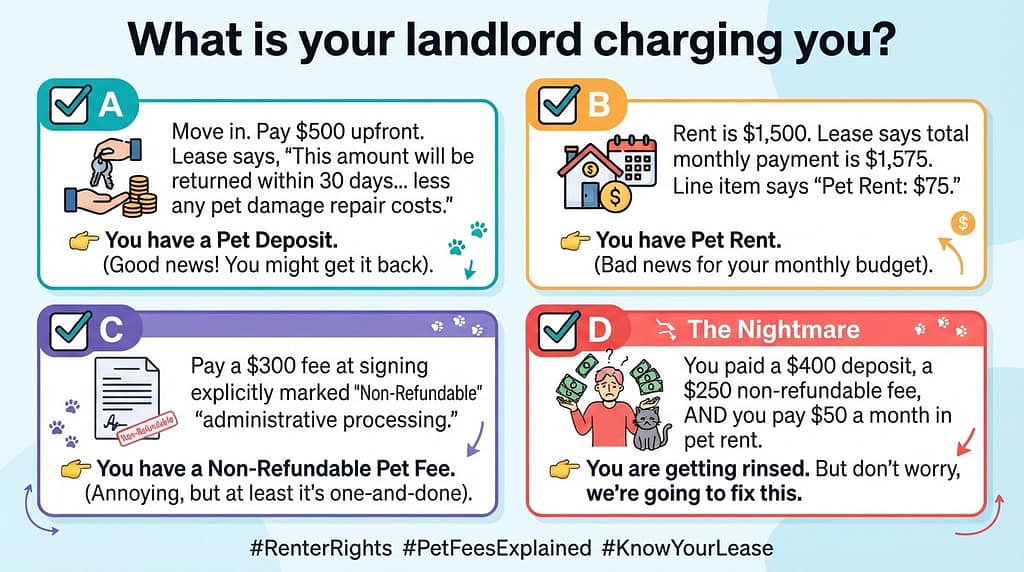
Scenario A: You move in. You pay $500 upfront. Your lease says, “This amount will be returned within 30 days of move-out, less any repair costs for pet damage.”
👉 You have a Pet Deposit. (Good news! You might get it back).
Scenario B: Your rent is $1,500. But your lease says your total monthly payment is $1,575. There’s a line item that says “Pet Rent: $75.”
👉 You have Pet Rent. (Bad news for your monthly budget).
Scenario C: You pay a $300 fee at signing that is explicitly marked “Non-Refundable” and goes toward “administrative processing.”
👉 You have a Non-Refundable Pet Fee. (Annoying, but at least it’s one-and-done).
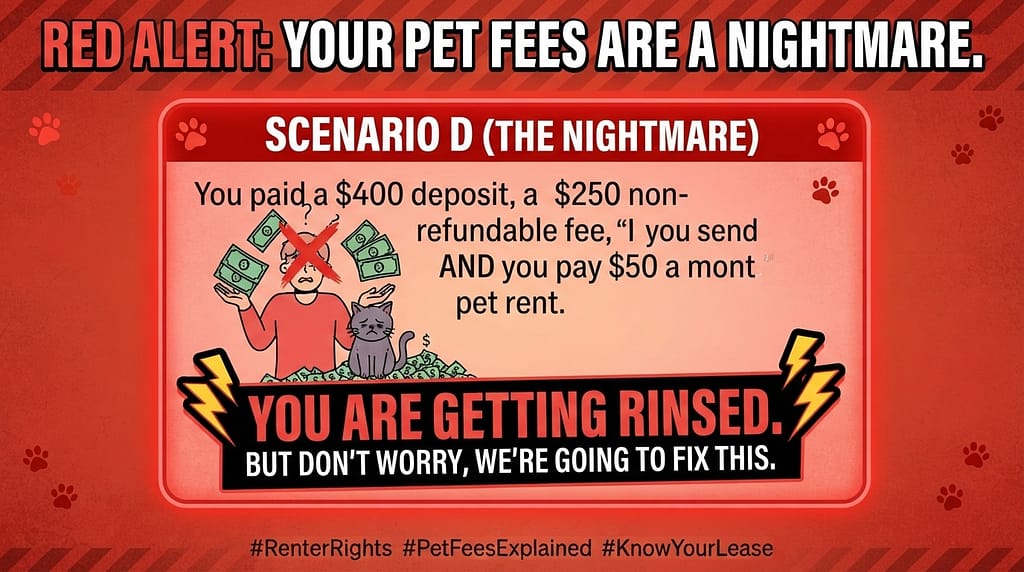
Scenario D (The Nightmare): You paid a $400 deposit, a $250 non-refundable fee, AND you pay $50 a month in pet rent.
👉 You are getting rinsed. But don’t worry, we’re going to fix this.
The Deep Dive: Why Do Landlords Charge So Much?
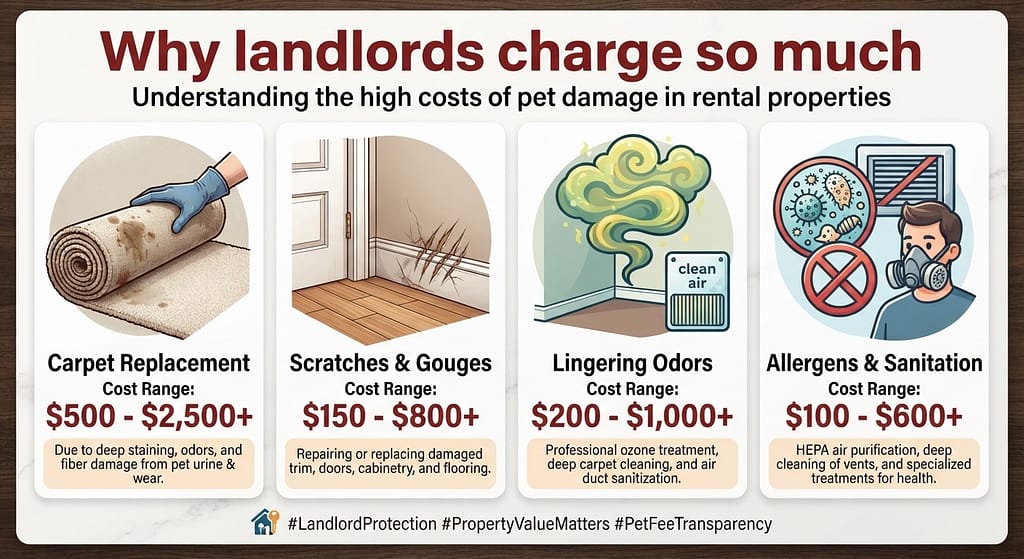
We get it. It feels like a tax on love. Why should we pay extra just because we have a companion?
Let’s put ourselves in the landlord’s shoes for a second (we know, it hurts to do that, but bear with us).
When a tenant moves out, the landlord has to turn the unit over. A pet introduces specific risks:
- Carpet Replacement: Pet urine can soak into the padding and subfloor. Replacing carpet costs $500-$1,500.
- Scratches: Dogs scratch hardwood floors and doors. Cats scratch window screens and door frames. Repairing that takes time and money.
- Odors: Even with the best cleaning, pet dander and smells can linger. They may need to run an ozone machine or repaint.
- Allergens: If the next tenant has severe allergies, the landlord may have to do a heavy-duty duct cleaning.
So, yes, there is a basis for charging extra.
But here is where the rubber meets the road: Pet Rent is rarely justified. A refundable deposit covers the actual damage.
Pet Rent is just a way for landlords to squeeze more money out of you every single month for years, long after any theoretical damage has been paid for.
The Art of Negotiation: How to Slash These Fees
Okay, this is the part you came for. We are going to share our battle-tested negotiation strategies.
We’ve used these to save thousands of dollars over the years, and we know they work.
The golden rule of negotiation: You have the most power after the landlord approves your application but before you sign the lease.
At this moment, they have invested time in you.
They want you to move in. They don’t want to run another background check. Use this leverage!
Tactic #1: The Pet Resume (Yes, We’re Serious)

This isn’t a joke. We’ve created “Pet Resumes” for our dogs, and it works like magic.
What to include:
- A cute picture (we know, it seems cheesy, but it humanizes your pet).
- Vaccination records (show you are responsible).
- Proof of spay/neuter.
- Proof of training (e.g., “CGC – Canine Good Citizen” certificate or basic obedience completion).
- The Gold Nugget: A letter of recommendation from your previous landlord. It says: “Fluffy lived here for 2 years and never damaged the property.”
The Pitch:
“I understand you have a pet fee structure in place. I’ve put together a resume for my dog to show you we are responsible pet owners. He is fully trained, fixed, and we have a glowing reference from our last landlord. Because he has never caused damage, would you consider waiving the monthly pet rent in exchange for a slightly higher deposit?”
We’ve literally watched landlords smile at the picture and say, “Okay, let’s make this work.” It disarms them. It shows you are a serious adult, not a reckless teenager with a puppy.

Tactic #2: The “Swap” (Deposit vs. Rent)
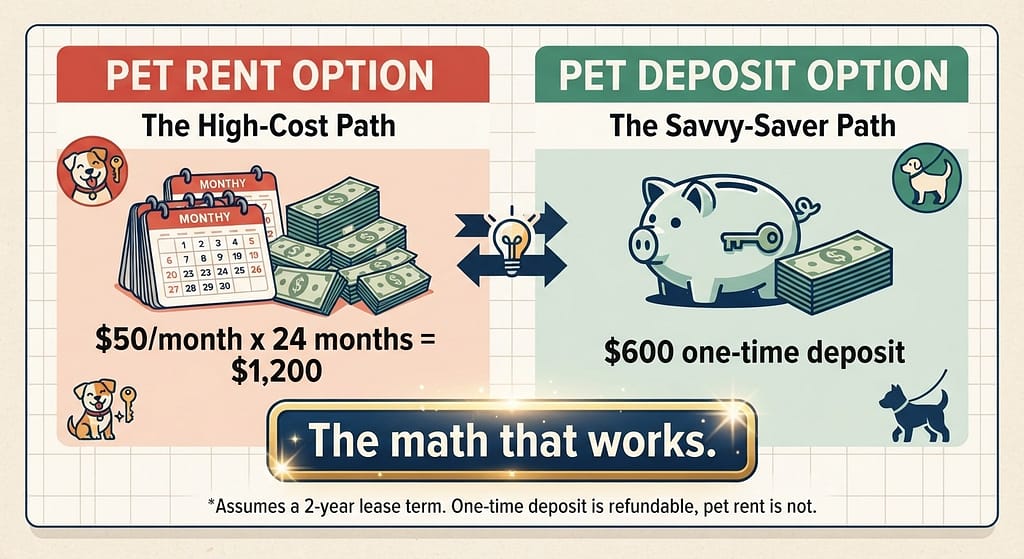
This is our favorite negotiation. It’s a win-win.
The Strategy:
Offer to pay a larger refundable pet deposit in exchange for eliminating the monthly pet rent.
The Math (Show them the numbers):
Let’s say the landlord wants $50/month pet rent and a $200 deposit.
- Over 2 years (24 months), pet rent costs you: $50 x 24 = **$1,200**.
- You say: “I’d like to offer a $600 pet deposit instead, and you waive the monthly rent completely.”
Why they’ll say yes:
They get triple the security cushion upfront. If you destroy the place, they have $600 to fix it. If you don’t, they give it back.
For you, you pay $600 once and save $1,200 over the lease. That’s a $600 profit for you, and they have less risk. Everyone wins.
Tactic #3: The “Renter’s Insurance” Ace Card

This is the secret weapon that many tenants forget to use.
Most landlords are terrified of liability. What if your dog bites the mailman? What if your cat knocks over a candle and burns the building down?
The Pitch:
“I am willing to add ‘Pet Liability Coverage’ to my renter’s insurance policy. It covers up to $100,000 in damages or medical bills caused by my pet. Since I’m removing your liability risk, could we reduce the pet rent or fees?”
Renter’s insurance costs about $15-$20/month.
Adding pet liability is often free or costs a few bucks. If it saves you $50/month in pet rent, you’re coming out way ahead, and the landlord feels secure.
Tactic #4: Timing and Location

We’ve noticed a pattern. Corporate apartments (huge complexes managed by big companies) are usually inflexible.
They have software that forces the $50/month charge. They literally can’t override it.
But if you are renting from a private owner (a “mom and pop”) who owns a duplex or a single-family home? They have total flexibility.
The Strategy:
- For Corporate: Accept the non-negotiable fee, but ask if they have a “pet limit” or a “weight limit” that might allow you to negotiate the amount of the deposit down (e.g., “I have a small 10lb dog, do I really need the $500 deposit for a Great Dane?”).
- For Private Owners: Hit them with the Pet Resume and the Swap tactic. They are emotionally invested in their property and will appreciate the responsible approach.
The Legal Lowdown: Know Your Rights (And Their Limits)
We aren’t lawyers, and we aren’t pretending to be, but we know a few universal truths that you need to keep in your back pocket.
The Service Animal vs. Pet Distinction
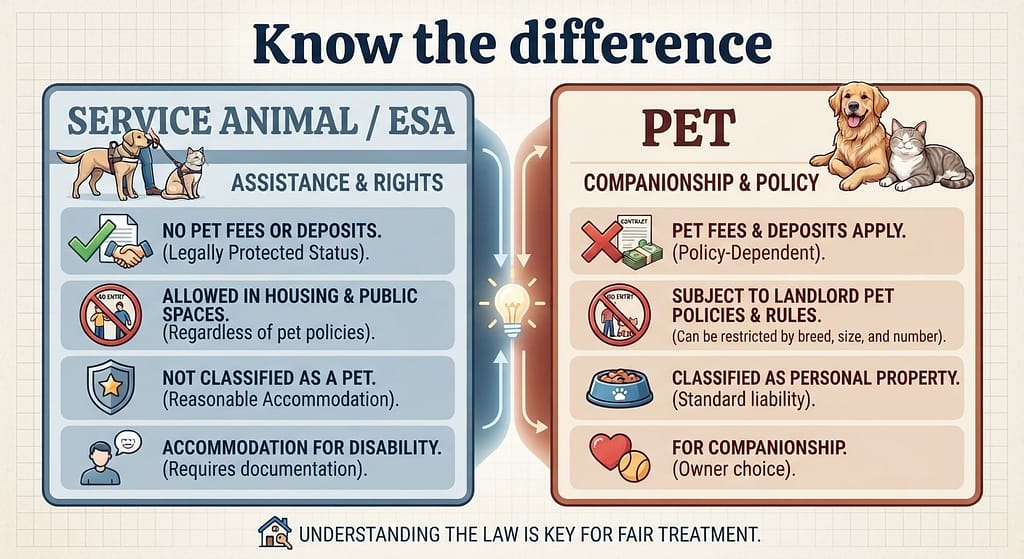
This is a huge one. Emotional Support Animals (ESAs) and Service Dogs are legally not considered pets under the Fair Housing Act (FHA) in the United States.
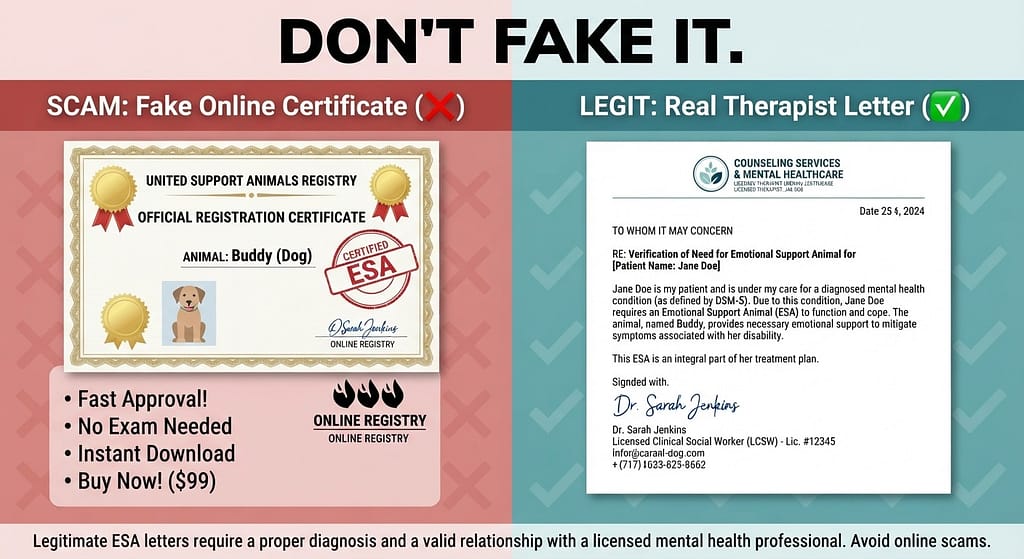
- The Rule: If you have a legitimate ESA or Service Animal with proper documentation (a letter from a licensed mental health professional), your landlord cannot charge you pet rent, a pet deposit, or a pet fee.
- The Caveat: They can charge you for damages. If your ESA chews the door, you still have to pay for it. But the monthly rent and upfront fees are completely off the table.
- The Warning: Don’t fake this. Landlords are cracking down, and there are tons of fraudulent “ESA certificates” online. You need a real letter from a real, ongoing healthcare provider.
State Laws on Deposits

Some states have laws limiting how much a landlord can charge for a security deposit (usually 1-2 months’ rent).
Some states explicitly cap pet deposits (e.g., California limits pet deposits to $500 for non-service animals).
Check your local tenant rights laws before you start negotiating, so you know if their ask is even legal!
The Script: What to Say (Word for Word)
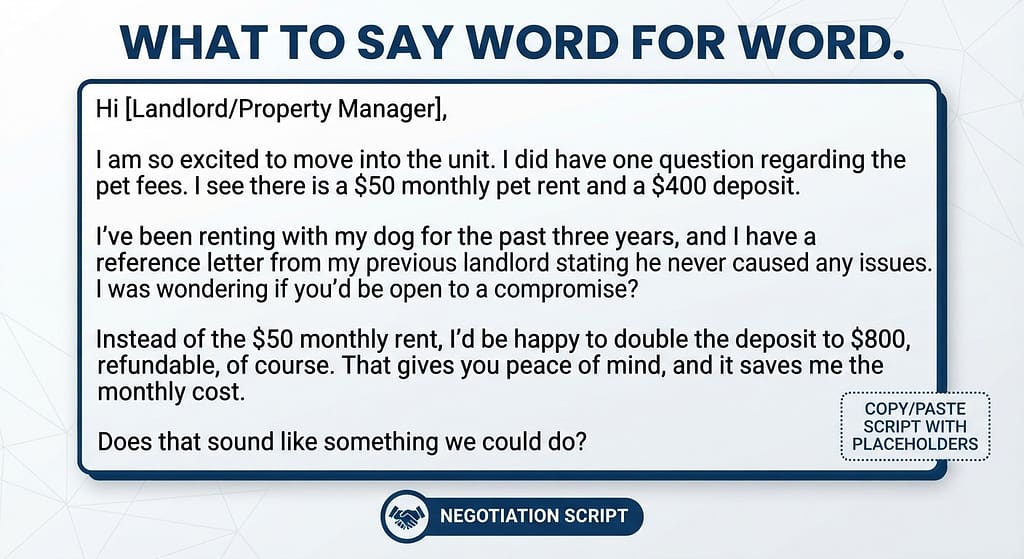
We know that negotiating is awkward. We feel the anxiety, too. So, here is a literal script you can copy, paste, or adapt.
Scenario: You are on the phone or in the office, about to sign the lease.
You: “Hi [Landlord/Property Manager], I am so excited to move into the unit. I did have one question regarding the pet fees. I see there is a $50 monthly pet rent and a $400 deposit.
I’ve been renting with my dog for the past three years, and I have a reference letter from my previous landlord stating he never caused any issues. I was wondering if you’d be open to a compromise?
Instead of the $50 monthly rent, I’d be happy to double the deposit to $800, refundable, of course. That gives you peace of mind, and it saves me the monthly cost. Does that sound like something we could do?”
If they say No (Strictly Corporate):
You: “I completely understand. In that case, would you be willing to waive the non-refundable fee if we increase the monthly pet rent? Or, can we agree that the pet deposit is waived if we pay the monthly rent?” (Try to get one of the three eliminated).
If they say Yes (The Victory):
You: “Amazing! Thank you so much for working with me on that. I’ll get the updated lease signed today.”
The “What If” Scenarios
Let’s play out a few specific situations you might be facing right now.
Q: What if I already signed the lease?
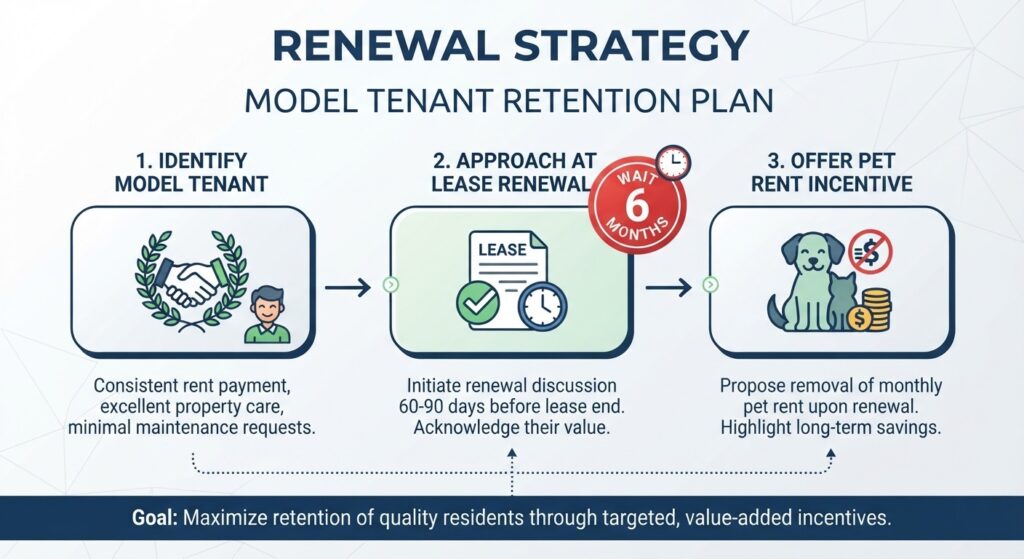
A: It’s harder, but not impossible. Wait 6 months. Pay your rent on time. Be a model tenant.
Then approach the landlord and say, “Hey, we’ve been great tenants. We haven’t had any noise complaints, and we’ve been on time with rent.
I’m looking to renew my lease. Would you consider removing the pet rent as a renewal incentive to keep us here?” Landlords hate turnover.
They’ll often agree to keep a known quantity.
Q: What if I have multiple pets?
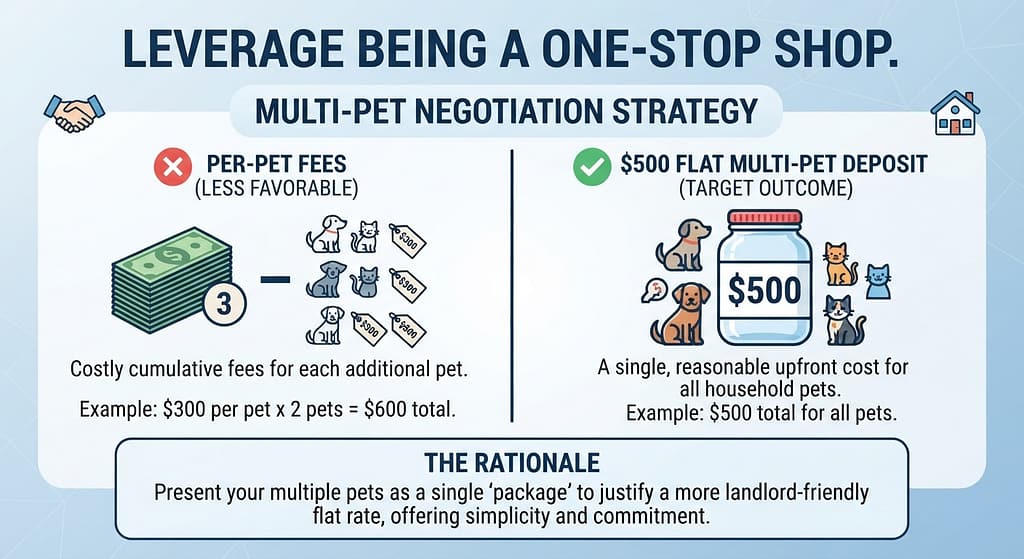
A: This is where you leverage the fact that you are a “one-stop shop” for pet fees.
Offer a flat “Multi-Pet Deposit” (e.g., $500 total) instead of per-pet fees. Also, point out that two small cats do less damage than one big dog. Use logic.
Q: What if my dog is a specific “restricted breed” (Pitbull, Rottweiler, etc.)?
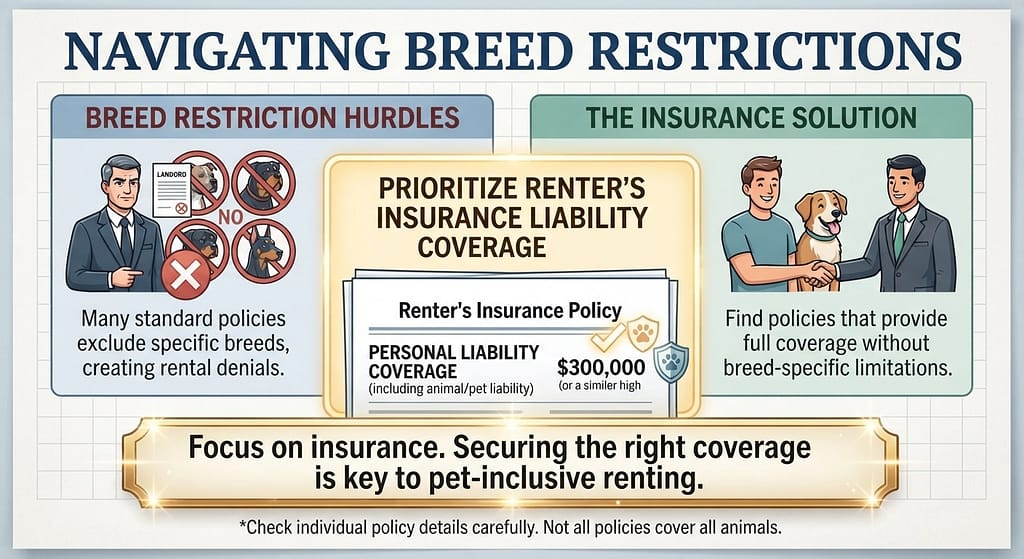
A: Your negotiation isn’t about the fee; it’s about getting approved at all.
Focus entirely on the Renter’s Insurance liability coverage. Tell them: “I have $100,000 in liability insurance specifically covering my dog’s breed.
You have zero financial risk.” That is often the only way to get the lease signed.
The Verdict: Pay Smart, Not Hard
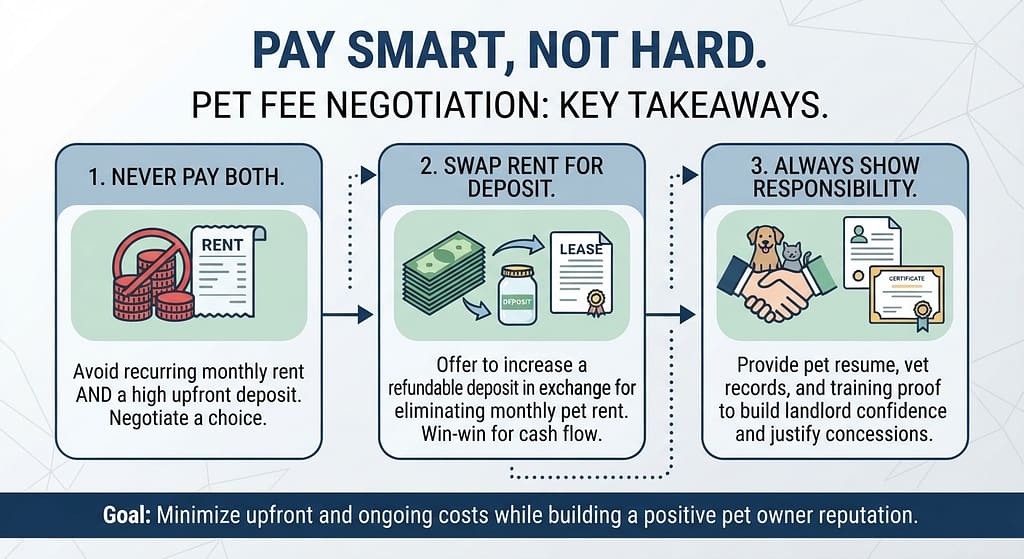
We’ve run the numbers. We’ve done the experiments. And here is our final takeaway for you:
The world of pet deposits and pet rent is a psychological game. Landlords charge them because they can, not because they need to.
Most tenants just sigh and write the check, thinking it’s mandatory.
But you aren’t “most tenants.” You are reading this. You are armed with knowledge.
Our Hard Rule:
- Never pay a non-refundable fee and a monthly rent. Pick one.
- Always offer to swap monthly rent for a higher refundable deposit. It saves you money in the long run.
- Always show your “responsible adult” card (pet resume + insurance).
Yes, finding a pet-friendly rental is tough. It’s a landlord’s market in most cities.
But don’t let the desperation make you timid. A good landlord appreciates a tenant who is transparent, prepared, and financially smart.
You aren’t just paying for your pet to exist; you are paying for the privilege of calling a place home. Make sure you are getting the best possible deal for that privilege.
Now, go forth. Practice your script. Print out that cute photo of your dog. And go save yourself a few hundred bucks.
Your pet can’t say thank you (well, they can with a wag or a purr), so we’ll say it for them: Good luck, and happy negotiating!

🐾 — Apartment Dog Guide (ADG)
Living large in small spaces, one paw at a time. That’s the apartment dog life—see you in the next guide!.


